Graduated with distinction from Lovely Professional University in aeronautical engineering.
Hyderabad:
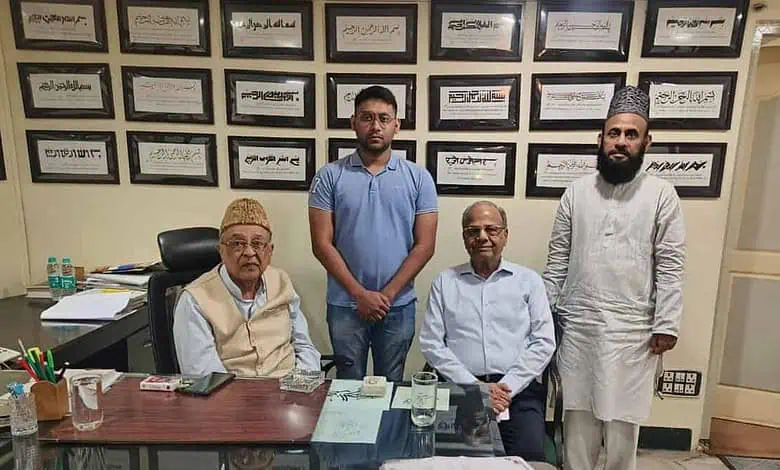
Mohammad Yar Alam, a determined aerospace engineer and son of Former Imam Mohammad Shehriyar Alam of Masjid-e-Mohammedia, has long nurtured a dream of soaring the skies as a pilot. To turn his vision into reality, he enrolled in the prestigious Chimes Aviation Academy in Sagar, Madhya Pradesh, where he embarked on the challenging journey of a pilot training course.
The Rs. 51 lakh program cost, however, posed a significant challenge for the Alam family. Recognizing his son’s unwavering dedication and academic prowess, Mohammad Shehriyar Alam went to great lengths to support his aspirations, mortgaging their family home, liquidating precious jewelry assets, and securing loans from relatives. Despite these efforts, an additional Rs. 26 lakh is urgently needed by end of June 2024 to meet the tuition requirements.
In their quest for assistance, Mohammad Shehriyar Alam and Mohammad Yar Alam approached The Siasat Daily, where they met with Editor Zahid Ali Khan Secretary of Faiz Aam Trust, Iftekhar Hussain. They appealed for financial aid, emphasizing the urgency of their situation.
Moved by the Alam family’s plight, Zahid Ali Khan and Iftekhar Hussain pledged their support, requesting the community to come to Mohammad Yar Alam’s aid. They urged Hyderabadis, particularly those residing abroad, to contribute generously, ensuring that the talented young aspirant can pursue his dream of becoming a pilot.
Mohammad Yar Alam’s academic track record speaks to his exceptional abilities. He graduated with distinction from Lovely Professional University in aeronautical engineering and demonstrated academic excellence in both his SSC and Intermediate studies. Today, he embarks on his journey in the pilot training course, determined to turn his aspirations into reality.
Salva Fatima, a resident of Old City Hyderabad, also aspired to become a pilot. Editor Zahid Ali Khan had personally contributed 16 lakh rupees to Salva Fatima and secured an additional 36 lakh rupees from the government. As a result, Salva Fatima became the first Muslim woman pilot of Telangana.
Zahid Ali Khan and Iftekhar Hussain highlighted that with the community’s financial backing, Mohammad Yar Alam’s dream of becoming a pilot will be realized, inspiring other young individuals to pursue their ambitions with determination. They expressed their confidence in the power of collective support to help Mohammad Yar Alam achieve his dream and soar the skies as a pilot.
Bank Details
Interested individuals can directly send money to his saving bank account given below:
Mohammed Yar Alam Account Number 50100372006386 HDFC Bank, Branch: JEEDIMETLA, IFSC: HDFC0001041 Phone: +917989228679
source: http://www.siasat.com / The Siasat Daily / Home> News> Hyderabad / by Zahed Farooqui / May 21st, 2024
By Nikhil Mandalaparthy. Nikhil is a journalist, community activist, and consultant focused on religious pluralism and social justice in South Asia and North America. He is the curator of Voices of Bhakti, a digital archive that showcases translations of South Asian poetry and art on religion, caste, and gender. He recently served as Deputy Executive Director of Hindus for Human Rights and is currently conducting research as a 2024-25 Luce Scholar.
Editor’s Note: This story was supported by the Pulitzer Center for Crisis Reporting.
___________________________________
kitne pyare hai yeh badshah jis pe hum marte hain yeh haqeeqat hai tasawwur mein unka deedar karte hain unka roza hai beshaq maqaam-e-madad hum ghareeb ki taqdeer ko acche mein badal dete hain
How loving is this Badsha whom we “die” for The truth is: in our imagination, it’s him we see Without a doubt, his tomb is the destination for help; He changes our unfortunate destinies to good.
– Iqbal Sarrang (2002) (Translated by Goolam Vahed, with edits
_______________________________
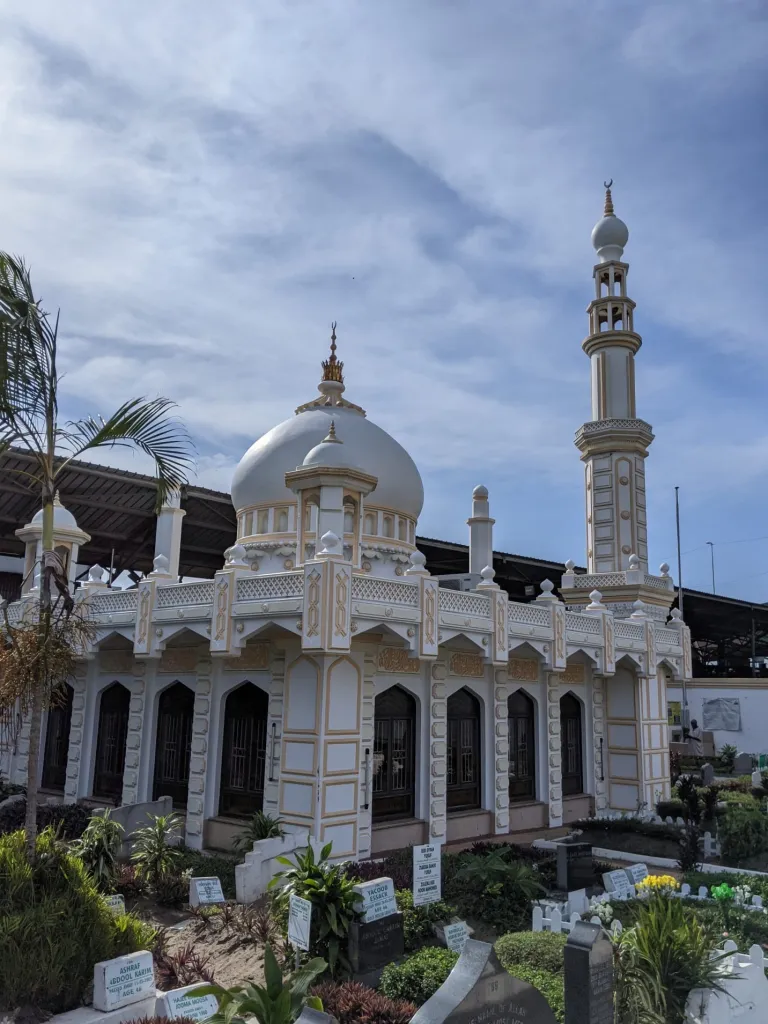
Mazaar of Badsha Peer, Durban, South Africa / Source: Author
In the historic Brook Street cemetery in Durban, South Africa, a gleaming white and gold structure towers over dozens of tombstones. This is the mazaar (tomb) of Sufi saint Badsha Peer. Thousands of miles from his birthplace in southern India, he is said to have found his final resting place here in 1894.
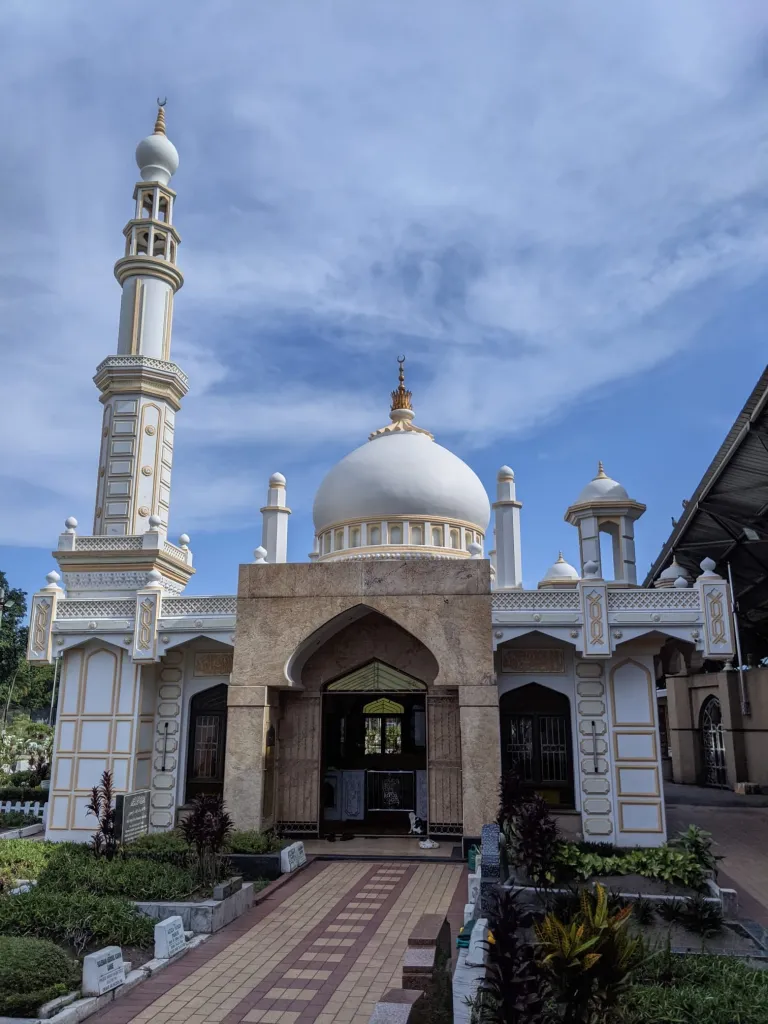
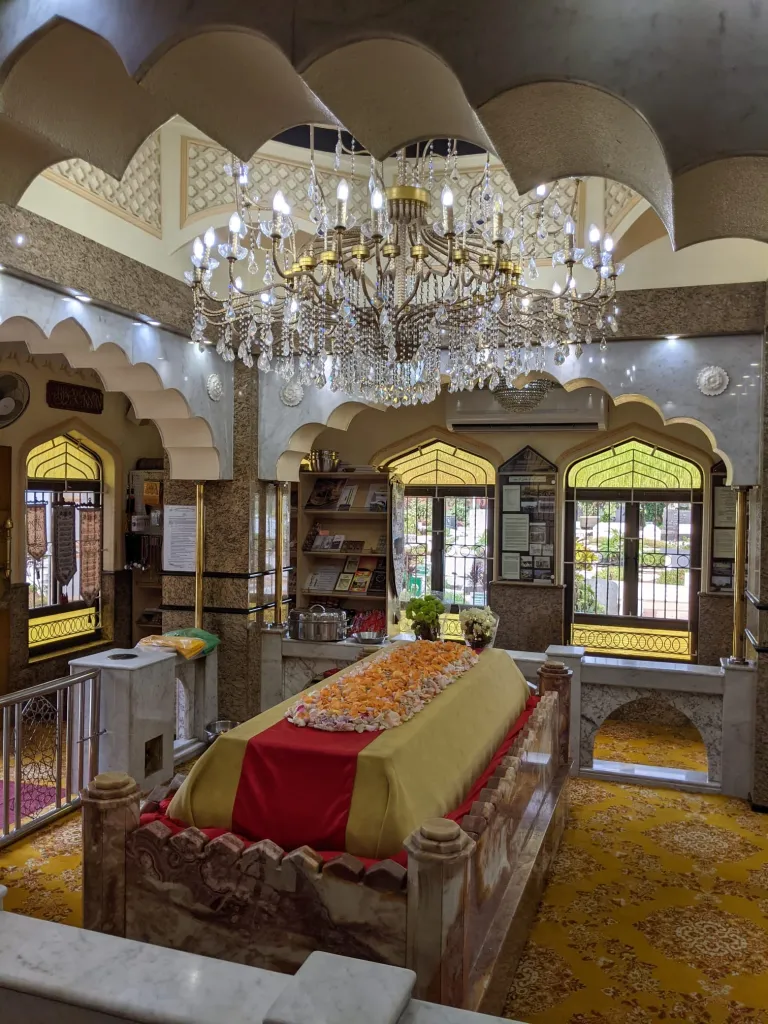
Inside the shrine, an inscription declares that this is “The MAQAAM (Resting Place) Of The King Of Africa – HAZRATH SHAYKH AHMED BADSHA PEER (RA)”.
Visiting Badsha Peer’s shrine challenged much of what I was told about South African Indian identity and history. In my conversations with South African Indians, I was told that most Muslims in the community were Gujarati or Konkani, and that most South Indians were Hindu or Christian. But here I was, at the shrine of a Muslim saint who was also South Indian. I was intrigued—and confused.
Digging deeper, I found that the story of this “King of Africa,” Badsha Peer, is a tale of multiple migrations, across the Deccan, South India, and beyond. His story involves Konkani Muslims and Hyderabadi Sufi teachers traveling to colonial Bombay, and Tamil and Telugu indentured workers making the long and treacherous journey from Madras to South Africa.
Tracing the story of Badsha Peer—and Soofie Saheb, the man who popularized his memory—shines light on how Indian religious, linguistic, and regional identities were transformed in the Deccan and South Africa, during the colonial period and through indenture and migration.
Locating Badsha Peer in History
Pinning down the historical Badsha Peer is difficult. Goolam Vahed, a scholar of South African Indian and Muslim history, describes the saint as having a “sketchy biographical profile and unclear genealogy”.
Ashwin Desai and Goolam Vahed write of a Sheikh Ahmed who arrived from Chittoor (modern-day Andhra Pradesh) or Arni in North Arcot district (modern-day Tamil Nadu) on the first ship from India, the SS Truro, which arrived on November 16, 1860. On the other hand, Nile Green, a historian of Indian Ocean Muslim networks, points to a Sheik Ahmed from Machilipatnam (modern-day Andhra Pradesh) who arrived a month later, in December 1860, on the Lord George Bentinc.
Either way, according to oral tradition and popular anecdotes, Badsha Peer is remembered as arriving with the first indentured laborers from India. A man of great spiritual power, he is popular for the miracles he performed on the colonial sugarcane plantations, such as accomplishing his tasks in the fields while simultaneously meditating all day.
According to Nile Green, South African oral traditions declare that he was “released early from his indenture due to ‘insanity’”, which was later given a Sufi interpretation as “spiritual rapture (jazb).” Following his release, he is said to have lived the rest of his life as a faqir (mendicant) around the Grey Street mosque until his death in 1894.
Muslims like Badsha Peer made up about 10 percent of the approximately 152,000 Indians who were brought to South Africa as indentured workers; over 80 percent were Hindu. Around 44 percent of indentured Muslims departed from Madras, and among these workers, over 60 percent came from four areas: Arcot (31 percent), Malabar (14 percent), Madras (11 percent), and Mysore (7 percent).
Indentured Muslims, like Hindus, largely came from marginalized castes. In his shrine, Badsha Peer’s caste is simply listed as “Muslim” and “Mohamedan”, which is how around half of indentured Muslims named their caste according to immigration records.
However, Desai and Vahed mention Badsha Peer’s caste as julaha (weaver). He may have been from the Dudekula community , a Telugu-speaking Muslim caste associated with weaving and cotton cleaning.
Soofie Saheb and His “Overpowering Influence”
Shrine of Badsha Peer, Durban, South Africa / Source: Author
The reason that Badsha Peer is remembered today is due to the efforts of a non-indentured Indian migrant. This pivotal figure is Shah Ghulam Muhammad (d. 1911), popularly remembered in South Africa as “Soofie Saheb.”
Soofie Saheb was born into a Konkani Muslim family in the town of Ibrahimpatan in Ratnagiri district. The family held a high social status on account of its claim to descend from Abu Bakr, the first caliph of Islam. After studying in Kalyan, he departed for Bombay. Nile Green situates his move within “a much larger migration of Konkani Muslims to the city that had taken place over the previous decades”.
In the early 1890s, Soofie Saheb became a disciple of Habib ‘Ali Shah (d. 1906), a Sufi teacher of the Chishti order. Habib ‘Ali Shah himself was a migrant from Hyderabad who developed a following primarily among Konkani Muslims in Bombay, particularly workers around the Mazgaon dockyard. In 1895, Soofie Saheb was instructed by his teacher to go to South Africa to spread the message of the Chishti order to the indentured Indian population.
Soon after arriving in Durban in 1895, Soofie Saheb “encountered a situation of close proximity and mixing between Muslims and the large majority of Hindu laborers,” as anthropologist Thomas Blom Hansen writes . Faced with the fact that “Muslims participated widely in Hindu rituals and festivals”, Soofie Saheb began to promote a more “proper” Islamic identity for indentured Muslims. Similar efforts would soon take place among the Hindu community as well, led by Arya Samaj missionaries like Bhai Parmanand and Swami Shankaranand.
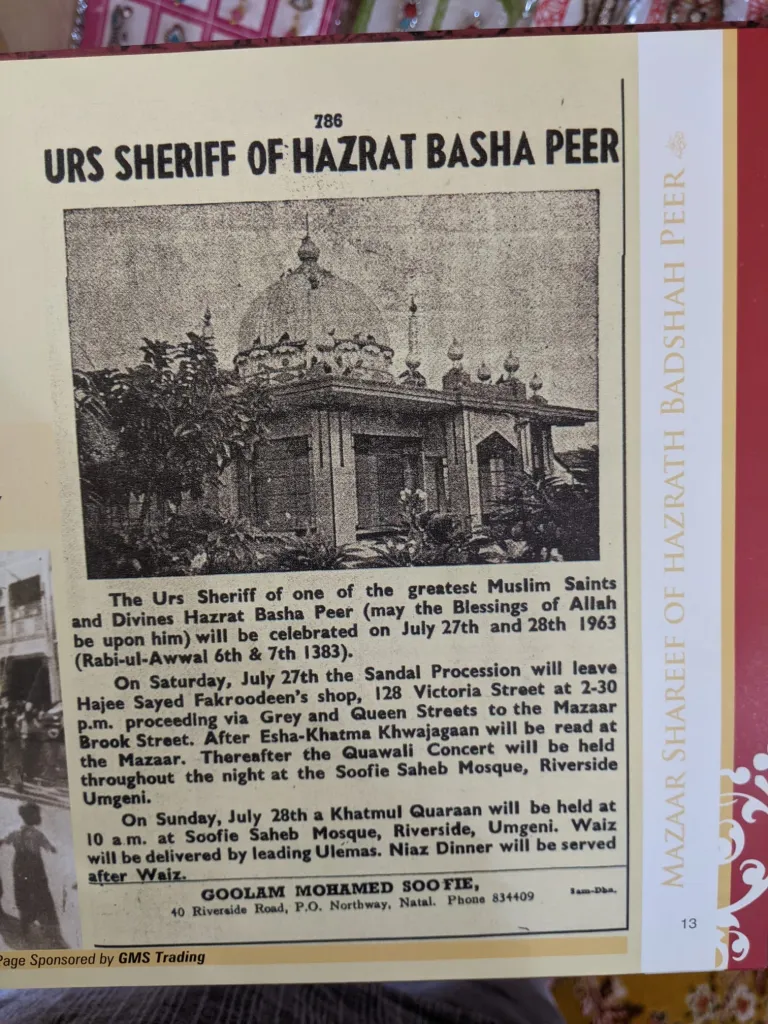
One of the first actions of Soofie Saheb in South Africa was to build a shrine over Badsha Peer’s grave, which he is said to have identified through a dream or vision. Shortly afterwards, in April 1896, he purchased a plot of land on the banks of the Umgeni river, upon which he built a complex that included a mosque, khanqah, madrasa, and Muslim cemetery.
Interestingly, the legal documentation for this purchase was prepared by a young Gujarati lawyer who had arrived in South Africa just a few years prior: Mohandas K. Gandhi. Vahed writes that “Between 1898 and his death in 1911 Soofie Saheb built 11 mosques, madrasas and cemeteries all over Natal.”
Reimagining South Asian Languages and Religions in South Africa
A book published by Soofie Saheb’s madrasa in 1970 includes this quote by a Hindu observer: “there were many Tamil-speaking Muslims who, but for the recitals of the Koran, were by tradition and culture typically South Indian. Soofie Saheb’s mystic personality had an overpowering influence on the Muslim community widely scattered.” (emphasis mine)
This framing positions South Indian and Muslim identities as mutually exclusive, with the suggestion that shifting towards a more explicitly Muslim identity necessitated shifting away from South Indian culture. The framing also implicitly links South Indian and Hindu identities together.
What was the nature of Soofie Saheb’s “overpowering influence” among indentured Muslims in South Africa? As Nile Green has noted, Soofie Saheb promoted the Urdu language as core to Muslim identity, even though few indentured Muslims spoke the language.
Green argues that Soofie Saheb was simply following “specific currents of linguistic change in his own Konkani community in India, in which the use of Urdu spread significantly during the early twentieth century, partly as a result of migration” from the Konkan coast to Bombay. Similar developments had taken place elsewhere in the Deccan, such as the rise of Urdu in Hyderabad State in the 1880s as the prestige language of education and social status.
Soofie Saheb’s efforts made Badsha Peer the most revered Sufi saint in South Africa. At the same time, he promoted a cosmopolitan, Urdu-centric Muslim identity that likely would have been unfamiliar to Badsha Peer himself, as a Telugu- or Tamil-speaking indentured Muslim.
These shifts were perhaps aided by the fact that in decades following Soofie Saheb’s death in 1911, many South Indian associations in South Africa adopted explicitly Hindu orientations.
For example, a year after the Andhra Maha Sabha of South Africa was formed in 1931, the organization became an affiliate of the South African Hindu Maha Sabha. The Andhra Maha Sabha’s logo is a Telugu-script Om, and the organization’s headquarters in the Indian township of Chatsworth includes an elaborate Venkateswara temple, which was built in 1983.
Thus, on one side, Telugu cultural associations in South Africa defined Telugu and Hindu identities as synonymous, while Muslim leaders like Soofie Saheb consolidated an Urdu-oriented Muslim identity.
South Asian Legacies: Shared Devotion at Badsha Peer’s Shrine
Interior of the Shrine for Badsha Peer / Source: Author
Although Badsha Peer is remembered as coming from Andhra Pradesh or Tamil Nadu, Soofie Saheb’s emphasis on an Urdu-centric Muslim identity means there is little to no visible South Indian influence in the rituals and practices associated with his shrine today.
And yet, despite Soofie Saheb’s activities to consolidate a distinct Muslim identity among indentured Indians, Badsha Peer’s shrine became a site for prayer, pilgrimage, and worship for Indians across regional and religious identities. In a way, his shrine provided a conduit for older South Asian practices of multi-religious devotion, such as reverence for Sufi mazaars and dargahs.
From the earliest years of the shrine, non-Muslim devotees played a role—Goolam Vahed notes that in 1917, “A corrugated iron structure was erected by a Hindu, Bhaga, around the dome” of the shrine. In 2002, one of the qawwali groups performing at the saint’s urs (death anniversary) was led by a Hindu singer.
Community archivist Selvan Naidoo, director of the 1860 Heritage Centre, recalls that “In my early childhood days, such was the power of this place that my staunch Tamil mother would often take us there to pray at this great place of indentured reverence.”
This reverence for Badsha Peer continues to this day. Mark Naicker, an interfaith activist in Durban from a Catholic family, shared with me that “sometimes you hear Hindus also go to Badsha Peer … when people have a baby, they would go to that shrine” to seek blessings.
It has been over 160 years since Badsha Peer and the first indentured Indians set foot on South African shores. He is a unique figure in South African Indian history. Unlike most indentured Indians, he was Muslim. Unlike most Indian Muslims in South Africa, he was from southern India. And unlike nearly any other indentured Indian Muslim in South Africa, he is revered as a saint whose power is manifest even to this day.
Badsha Peer’s story, intertwined with that of Soofie Saheb, provides us with a glimpse into how Indian identities were transformed and reconfigured in South Africa. “Muslim” and “South Indian” identities took increasingly divergent paths. And yet, despite these shifts, his memory lives on, drawing devotees from across religious and regional backgrounds who seek the blessings of this “King of Africa.”
source: http://www.maidaanam.com / Maidaanam / Home / by Nikhil Mandalaparthy / June 17th, 2024
The flight had three doctors on board and they managed to stabilise him and take him safely up to the Kolkata airport.
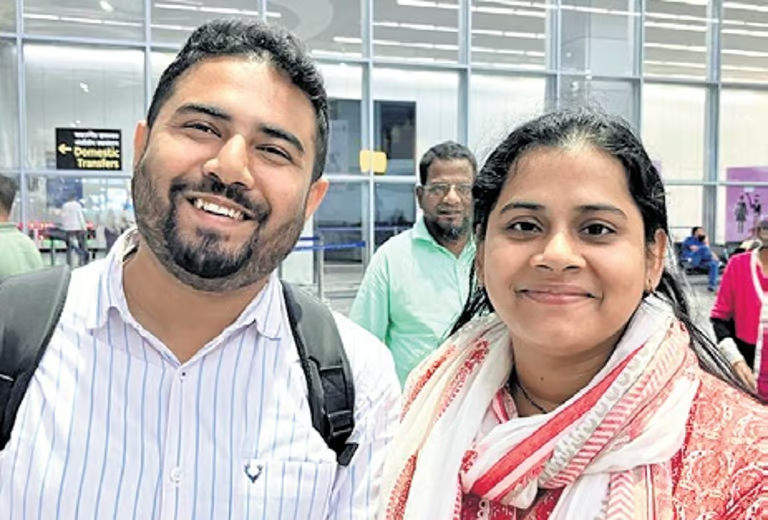
Doctor couple Dr MM Samim and his wife, Dr Naznin Parvin
Bengaluru :
High drama unfolded on an IndiGo flight that had taken off from Bengaluru to Kolkata on Saturday when a flyer in his 40s with preexisting health issues developed an emergency. The flight had three doctors on board and they managed to stabilise him and take him safely up to the Kolkata airport.
Dr MM Samim, who was conferred a gold medal just a day earlier during NIMHANS convocation, and his wife Dr Naznin Parvin, a paediatrician, along with a surgeon from MS Ramaiah Hospital saved the flyer’s life.
Man suffered from chronic liver issue
Their timely action also saved a potential diversion of the flight to Bhubaneswar airport and a disruption of weekend travel plans of 200-plus passengers.
The Flight No 6E 503 took off from Terminal 1 of Kempegowda International Airport at 10.42 am, which was late by 20 minutes. It was an hour later that the flyer, who is from West Bengal and works as a labourer in Kerala, developed breathlessness and threw up. He was travelling with his son to get himself admitted to a government hospital in Kolkata for his chronic liver condition.
Harilakshmi Ratan, a retired chartered accountant seated on 1B, told TNSE, “A flyer seated in the middle (Row no. 16) started vomiting blood. One of the cabin staff made an announcement appealing for doctors on board to assist the patient. Three of them stepped forward and saved his life.”
Dr Parvin, who works at a private hospital in Siliguri, said they rushed to the patient. “He was struggling to breathe and was vomiting blood. His BP was low. We gave him oxygen from the cylinder and also administered drips with normal saline, all of which were available on the flight. The vomiting was brought under control immediately. Soon, the oximeter too showed a stable oxygen level (95),” Dr Parvin said.
Dr Samim, who is the recipient of Best Outgoing Resident in Doctor in Medicine (DM) (Neurology) and who also works at a private hospital in Siliguri, said, “Since the patient was not in a good financial position, I decided it would be better if he reaches his hometown. We had stabilised him too.”
source: http://www.newindianexpress.com / The New Indian Express / Home> Karnataka / by S Lalitha / October 06th, 2024
Renowned social worker Farooq Siddiqui has launched a public awareness campaign urging students and eligible youth to register for the recently announced Prime Minister’s Internship Scheme. The initiative, aimed at providing valuable internship opportunities to one crore young Indians over five years in 500 top companies, has already gained momentum. Companies like Mahindra & Mahindra, Alembic Pharmaceuticals, and Max Life Insurance have listed over 1,000 internship positions as part of the scheme’s pilot phase on the first day of the portal’s launch.
Under the pilot, 111 companies have signed up, offering 1,077 internship positions across key sectors such as automotive, pharmaceuticals, and agriculture. The internship portal has been live for companies to list positions since October 3, and from October 12, eligible candidates can start registering for internships through the government portal http://www.pminternship.mca.gov.in
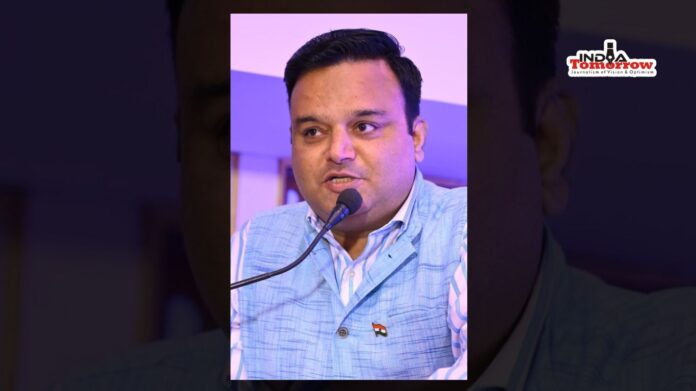
Siddiqui highlighted the scheme’s potential to empower unemployed youth by providing them with hands-on experience in top companies. “This initiative is a game-changer for our young people. I strongly urge NGOs and civil society organizations to help spread the word and encourage eligible candidates to register. This is a unique opportunity for skill-building and career development,” Siddiqui said.
The internship scheme targets youth between the ages of 21 and 24 who are not currently employed or enrolled in full-time studies. Eligible candidates must have completed high school, higher secondary school, or hold a diploma from an ITI, Polytechnic, or a degree in fields like BA, BSc, B.Com, BCA, BBA, or B.Pharma. The program, however, excludes those with higher qualifications such as CA, MBA, and graduates from IITs, IIMs, and other premier institutions.
Interns selected through this scheme will receive a stipend of Rs 4,500 per month via Direct Benefit Transfer (DBT). They will also be covered by the government’s insurance programs—PM Jeevan Jyoti Bima Yojana and PM Suraksha Bima Yojana—at no cost. Additionally, companies will contribute Rs 500 per month, and a one-time annual payment of Rs 6,000 will be made to the interns, bringing the total annual benefit to Rs 66,000.
Siddiqui noted that the first pilot phase, which involves a government investment of Rs 800 crore, aims to place 1.25 lakh youth in internships by December. He further emphasized the importance of reserving opportunities for marginalized groups, such as SCs, STs, OBCs, and the disabled, in line with government policies.
To ensure a smooth process, nodal officers will be appointed by participating companies to address any concerns raised by the interns. The government has also established a negative list of ineligible candidates, including those from families earning more than Rs 8 lakh annually or having a regular government employee in the family.
As the registration date for candidates approaches, Siddiqui stressed the importance of collaboration from all sections of society, urging more companies, banks, and financial institutions to join the scheme and offer internships. “This is not just about internships. It’s about building futures and enabling our youth to contribute to the nation’s economy,” he concluded.
Siddiqui’s call to action has resonated widely, and it is hoped that the collective efforts of the government, companies, NGOs, and civil society will ensure maximum participation in this impactful program.
source: http://www.indiatomorrow.net / India Tomorrow / Home> Education / by India Tomorrow Admin / October 04th, 2024
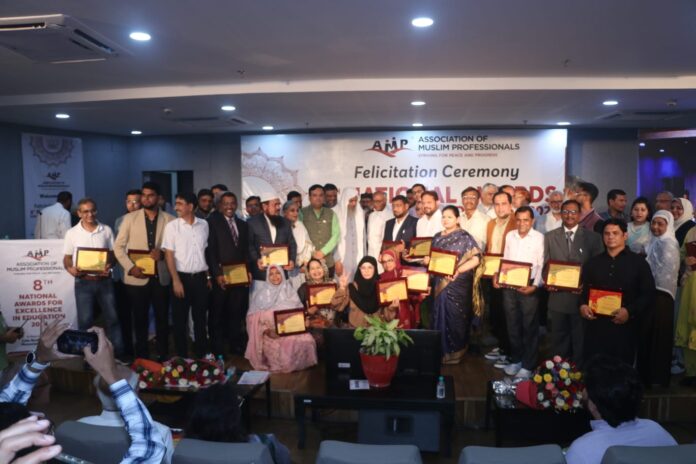
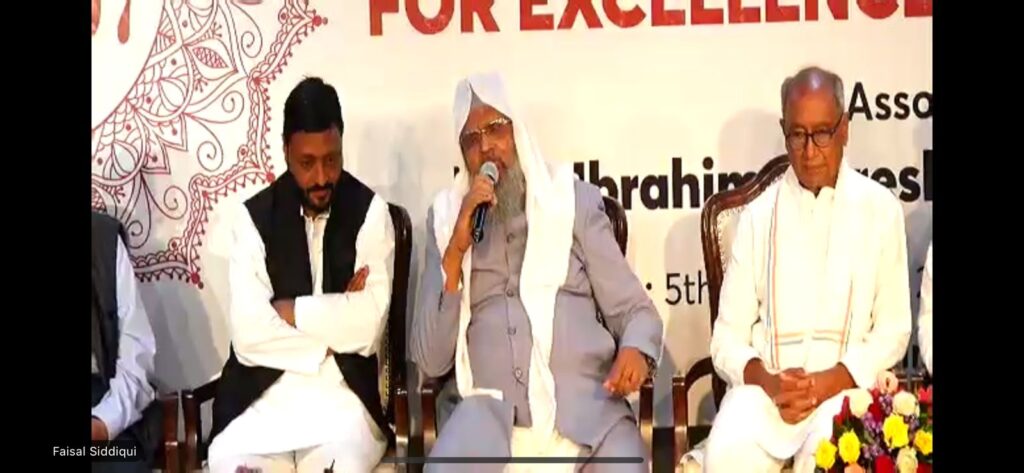
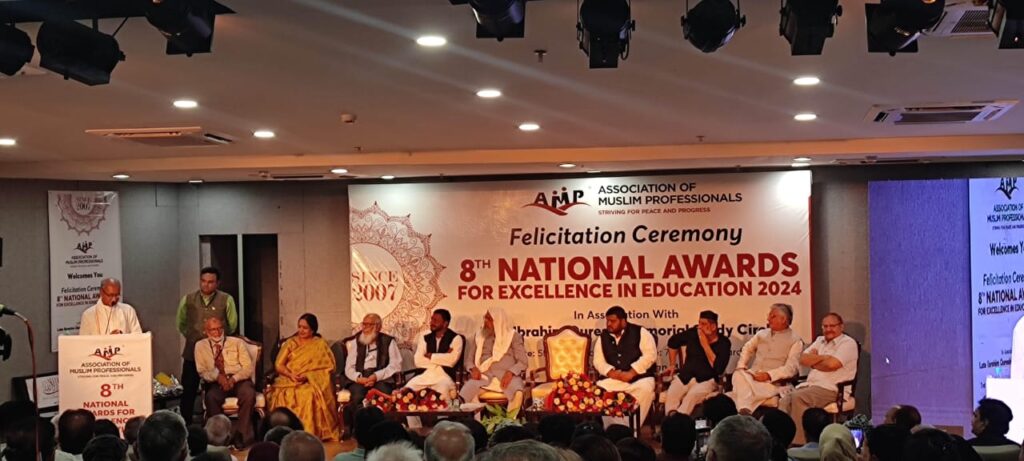
On Teachers’ Day, over 150 educators from around the world were celebrated with the 8th AMP National Award for Excellence in Education 2024 at a distinguished ceremony held at Ravindra Bhawan in Bhopal.
The event was presided over by Bhopal Shahar Qazi Maulana Syed Mushtaq Ali Nadvi, with former Madhya Pradesh Chief Minister and current Rajya Sabha Member Digvijay Singh serving as the Chief Guest.
The ceremony drew attendees from various educational backgrounds, including award recipients who were present in person, special guests, AMP members and volunteers, and members of the academic community. Many other winners participated virtually, and the event was widely followed on social media.
In his address, Bhopal Shahar Qazi Maulana Syed Mushtaq Ali emphasized the profound role of teachers, citing a saying of Prophet Muhammad (PBUH): “I have been sent only as a teacher to you.” He highlighted the Prophet’s impact through education and quoted Allama Iqbal, who praised the fertile soil of Hindustan for nurturing good deeds. The Qazi reminded attendees of the honor and responsibility of being a teacher, suggesting that a dedicated educator can approach the level of Prophets.
Bhopal Shahar Qazi Syed Mushtaq Ali speaking on the occasion, with senior Congress leader and former chief minister of Madhya Pradesh Digvijay Singh on his right.
Digvijay Singh commended the AMP initiative for uniting Muslim professionals to contribute positively to society. He stressed the importance of prioritizing education and healthcare for national progress. Singh noted the underrepresentation of Muslims in government jobs compared to SC/ST categories and highlighted the need for increased professional education within the Muslim community.
Senior Congress leader and former chief minister of Madhya Pradesh Digvijay Singhspeaking on the occasion.
Singh also criticized the state of the education system, pointing to corruption and the prevalence of contract-based teaching positions, which he argued undermine the quality of education. He lamented the shortage of permanent teaching positions and the poor condition of many government schools.
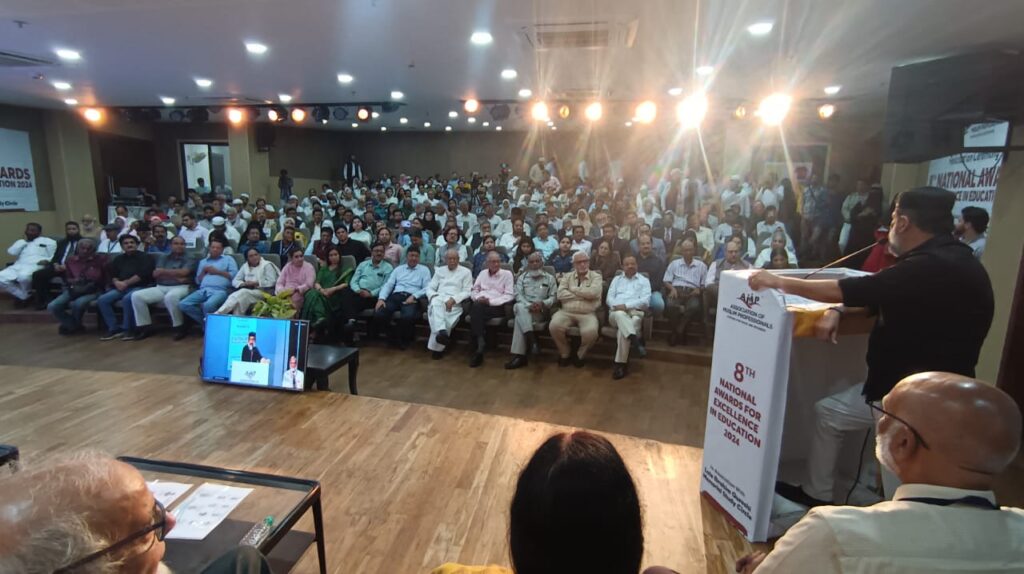
A view of the audience
Prof. Furqan Qamar, former Vice Chancellor of the University of Rajasthan and Central University of Himachal Pradesh, delivered a keynote address advocating for increased participation in higher education and greater public investment to make education more accessible, particularly for rural populations, women, and landless laborers.
Dr. Usha Khare, a National Teacher Awardee and recently retired Principal of Jahangirabad Girls Government School in Bhopal, shared her inspiring journey of advocating for girls’ education in impoverished neighborhoods. She revealed that she donated her prize money from the Kaun Banega Crorepati show to her school and left significant assets upon her retirement.
The awards were presented in seven categories: Primary and Secondary Teachers, College and University Teachers, Principals/Heads of Institutions, Islamic Education (Arabic/Fiqh/Islamic Studies), Educational Institutions, Lifetime Achievement Awards, and the Late Ibrahim Qureshi Memorial Award. Prof. Furqan Qamar was honored with the Ibrahim Qureshi Memorial Award for his exceptional contributions to education.
Lifetime Achievement Awards were given to:
Hazrat Maulana Sayyed Muhammad Aqil, Shaikh-ul-Hadith, Mazahir-ul-Uloom, Saharanpur, UP
Jamaluddin Ahmad Khan, Former Lecturer, Halim Musim Inter College, Kanpur, UP
Sharifa A. Azeez, Correspondent, Crescent Matriculation H.Sec. School, Chennai, TN
Sheila Lawrence, Former Headmistress, Lucknow Christian College, Lucknow, UP
Additionally, 78 educators received Special Jury Awards in various categories, and 50 “My Favourite Teacher” Awards were presented based on votes from students and parents nationwide.
In Bhopal, local awardees included:
*Bushra Parveen, Oakwoods School (Primary & Secondary)
*Dr. Shazia Ali, Campion School (Primary & Secondary)
*Dr. Mohammad Athar, Institute of Excellence (Higher Education)
*Dr. M. M. Malik, MANIT (Higher Education)
*Dr. Sana Khan, Azim Premji University (Higher Education)
*Dr. Siraj Ahmed, MANIT (Higher Education)
*Prof. Dr. Ghayur Alam, National Law University (Higher Education)
*Prof. Asma Rizwan, People’s University (Higher Education)
*Dr. Abid Husain Saify, All Saints’ College of Technology (Higher Education)
*Dr. Faiqa Saulat, Trailblazer International School (Principal/Head)
*Ms. Nikhat Ara, A.U. School (Principal/Head)
The ceremony was also graced by Guests of Honour including MLAs Arif Masood and Atif Arif Aqueel, and Mohammad Wazir Ansari IPS (R), Former DGP – Chhattisgarh. They praised AMP’s significant achievements in education and employment over the past 17 years and commended the thorough selection process and professional execution of the event.
Farooq Siddiqui, Head of the AMP National Coordination Team, hosted the event, reflecting on AMP’s growth from modest beginnings to its present reach across over 200 cities and many countries worldwide.
Kalim Akhtar, Zonal Head – Central India, AMP NGO Connect, presented an English translation of the Holy Qur’an to Digvijay Singh, who accepted it with reverence.
Sajid Qureshi, Acting President of the Ibrahim Qureshi Memorial Study Circle, thanked AMP for their support in organizing the event, and Rafat Iqbal Farooqi, State Head – AMP Madhya Pradesh, offered the vote of thanks to all attendees and the Bhopal Chapter team for their hard work in making the event a success.
source: http://www.indiatomorrow.net / India Tomorrow / Home> Education / by Pervez Bari / September 09th, 2024
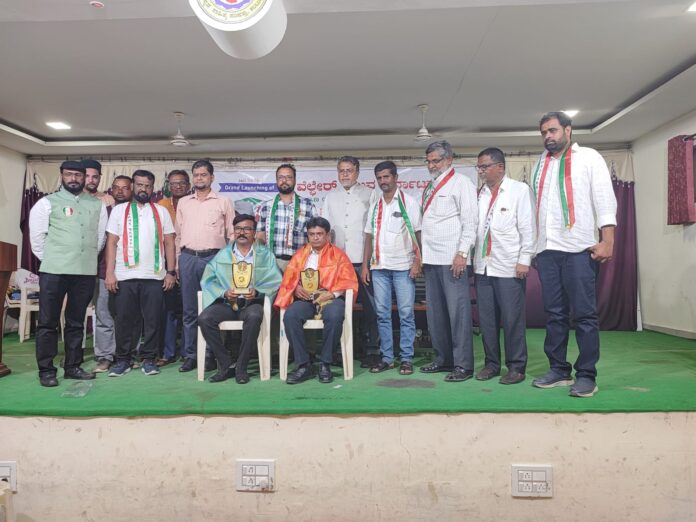
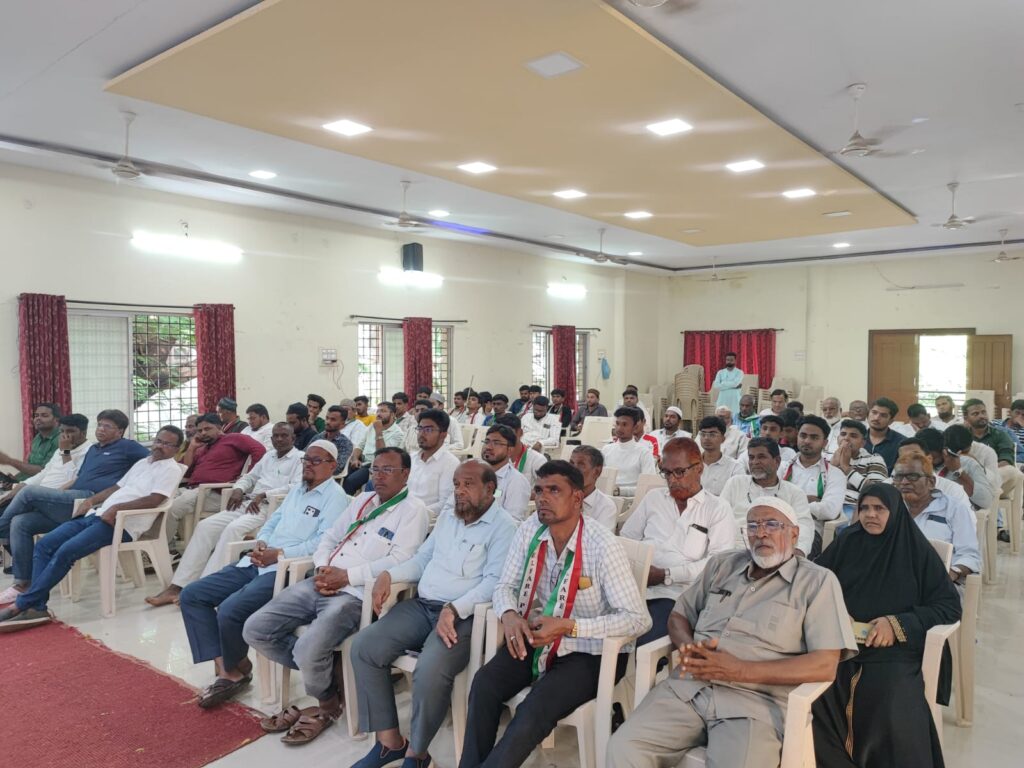
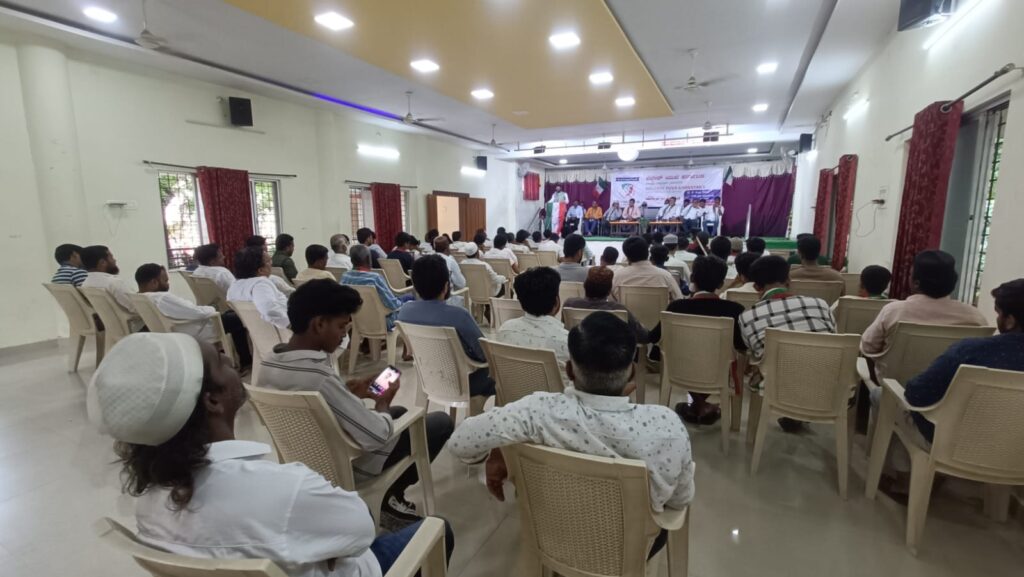
On August 8, 2024, Kalaburgi city witnessed the successful launch of “Welfare Yuva Karnataka,” the youth wing of the Welfare Party of India for the Karnataka State. The event drew enthusiastic participation from youths across various districts of North Karnataka.
The day began with a vibrant rally leading to the conference hall, where participants energetically chanted slogans. Advocate Taher Hussain, the state president of the Welfare Party, officially inaugurated the event. The flag of Welfare Yuva Karnataka was then ceremoniously handed over to Mr. Muhammad Rafiq, the state general secretary of the youth wing.
The assembly saw the participation of hundreds of youths from North Karnataka. The inaugural address was delivered by Mujahid Pasha Khureshi, the state vice president of the party. During the event, two notable achievers from Kalaburgi were honored with the Welfare Yuva Award.
Key addresses were made by Muhammad Rafiq, General Secretary of Welfare Yuva Karnataka, along with state secretaries Riaz Ahmed, Talat Yasmin, Mubeen Ahmed, Asif Bilikudri, and C.H. Salaam. The program concluded with a closing speech by Habibullah Khan, the state vice president. The event was skillfully hosted by Afzal Hussain Humnabad, the district vice president of Bagalkote.
source: http://www.indiatomorrow.net / India Tomorrow / Home> News> Society / by India Tomorrow Admin / September 09th, 2024
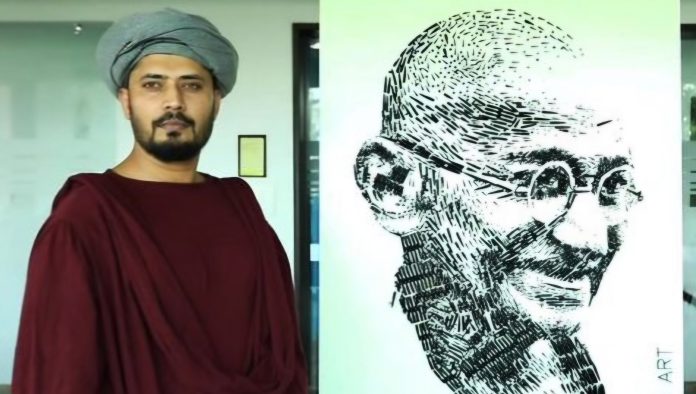
Wajid Khan Artist with the portrait of Mahatma Gandhi he made with nails.
Few artists are as passionately obsessed with Mahatma Gandhi as Wajid Khan, whose love and reverence for Gandhi manifest in extraordinary ways through his art. Wajid’s devotion to the Father of the Nation is evident not only in the subjects of his artwork but also in the innovative techniques he uses to create them. Whether by assembling nails, arranging goggles, or using other unconventional materials, Wajid Khan’s portrayal of Gandhi is a testament to his deep admiration.
Wajid Khan a multifaceted artist—a portraitist, sculptor, inventor, and patent holder—known for pushing the boundaries of traditional art. He specializes in creating intricate works of art using unconventional materials such as iron nails, bullets, metal, stones, automobile parts, medical equipment, iron rods, and more. His passion for creativity is boundless, and his art often reflects his deep emotions and thoughts about the world and the figures who have shaped it.
Among his many talents, Wajid’s ability to carve canvases using iron nails has garnered international acclaim. His work has earned him places in prestigious records such as the Guinness Book of World Records, Limca Book of Records, and Asia Book of Records. His artistic prowess is admired from Mumbai to Dubai, captivating both art connoisseurs and the general public with his exceptional nail art.
Although Wajid has made portraits of numerous iconic personalities, including Indira Gandhi, Jawaharlal Nehru, Sardar Patel, Dhirubhai Ambani, and Nelson Mandela, his fascination with Mahatma Gandhi stands out. His first portrait, fittingly, was of Gandhi—a powerful expression of his love and passion for the man who led India to independence. Wajid meticulously used thousands of iron nails to craft this portrait, each nail symbolizing the unwavering dedication and perseverance Gandhi embodied throughout his life.
Wajid’s connection to Gandhi goes beyond artistic inspiration. His admiration for Gandhi stems from the values of patience and truth that Gandhi represented. “There are many qualities in Gandhiji that impressed me deeply,” Wajid shared in an interview. “His power of patience and his commitment to truth are what stand out the most. For me, those who hold onto patience and never lie are truly great individuals.”
One of the moments that left an indelible mark on Wajid was when he visited a museum and saw letters written by Gandhi in which the leader openly admitted his mistakes. “It takes a big heart to admit one’s mistakes in public,” Wajid reflected. “I greatly admire Gandhi’s patience and steadfastness.”
Wajid’s connection to Gandhi also has personal roots. He fondly recalls stories from his grandfather, who would attend Gandhi’s meetings during the freedom movement in India. “My grandfather used to tell us about the time when he was very young and would participate in Gandhi’s meetings. Enthusiastic crowds would gather to listen to Gandhi, and when they returned, they were always calm and composed,” Wajid recounted. The calm demeanor Gandhi inspired in his followers left a profound impact on Wajid, influencing both his life and his art.
In one of his most ambitious projects, Wajid demonstrated the extent of his dedication to honoring Gandhi. He organized an event where 6,000 people were gathered in a stadium, carefully arranged in a formation that created a massive portrait of Gandhi. This live depiction showcased not only Wajid’s artistic genius but also his ability to bring people together to celebrate Gandhi’s legacy.
Wajid Khan’s artistic journey is a remarkable blend of creativity, innovation, and an unyielding devotion to Gandhi’s principles. Through his portraits, sculptures, and inventive techniques, he continues to keep the spirit of Gandhi alive, inspiring others with the same values of patience, truth, and perseverance that Gandhi embodied.
source: http://www.muslimmirror.com / Muslim Mirror / Home> Indian Muslim> Positive Story / by Syed Zubair Ahmad / October 02nd, 2024
Iqbal Manna, a committed social worker from Brahmagiri, Udupi, has been selected for the prestigious Swami Vivekananda State Award, recognising his tireless efforts to promote Kannada and Tulu languages in Gulf countries. The award is presented by the People’s Council for Human Rights.
Manna has gained recognition for his social and philanthropic activities in Qatar, where he is a founding member of the Qatar Tulu Koota and KMCA Qatar. After returning to India, he continued his involvement with various social organisations.
He has held leadership positions in numerous prominent associations, including the Udupi Giants Group, Haji Abdullah Charitable Trust, Saheban Welfare Trust, Udupi District Muslim Union, Muslim Welfare Association, and the Brahmagiri Hashimi Mosque. His active role in the Udupi District Minorities Forum further highlights his dedication to community welfare.
The award ceremony will be held on September 28 at 5:30 pm at the Lions Bhavan in Brahmagiri, Udupi
source: http://www.daijiworld.com / DaijiWorld.com / Home> Karnataka / by Media Release / September 26th, 2024
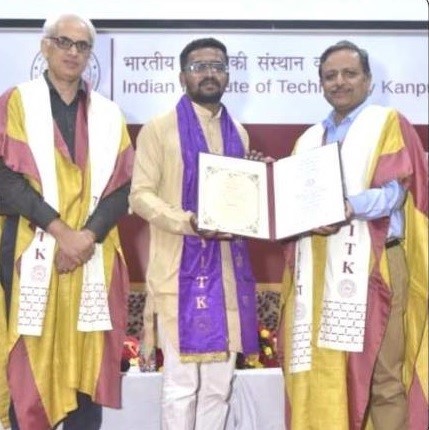
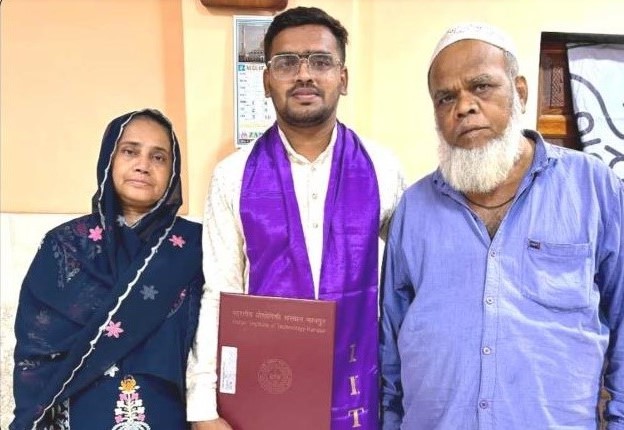
Affan Abdul Aziz Momin, son of a paan shop owner from the slums of Zaitoonpura here, has achieved what many dream of but few attain – admission to IIT Kanpur, one of India’s top engineering institutes. His journey, marked by immense perseverance and sacrifice, saw him rise from humble beginnings in an Urdu medium school to earning a degree in Aerospace Engineering. Today, Affan serves as a Control Engineer at Vestas Wind Technology, a multinational leader in wind turbine manufacturing, showcasing that hard work and dedication can indeed turn dreams into reality.
Affan Momin with his parents
Affan’s path to success was not easy. Financial difficulties threatened to derail his education on more than one occasion. When he secured admission to Defense Institute of Advanced Technology (DIAT) in Pune, his family couldn’t afford fees.
It was then that his sisters made the ultimate sacrifice, selling their cherished jewelry to ensure that their brother’s dreams did not go unfulfilled. This act of selflessness kept Affan’s aspirations alive, allowing him to continue his studies and eventually secure a place at IIT Kanpur.
Even after securing a spot at IIT Kanpur, the financial strain persisted. The family’s resources were stretched thin, and Affan feared his dreams might remain unrealized.
However, the kindness of his BE professor, Dr. Rahul Makade, who paid his admission fees, proved that humanity and compassion transcend all barriers. This support, combined with the monthly stipend Affan received from the government, enabled him to focus on his studies without the burden of financial worries, paving the way for his eventual success.
Affan’s journey is a beacon of hope for the community, illustrating that perseverance, faith, and the support of loved ones can overcome even the most daunting challenges. He encourages others to never give up on education, no matter the difficulties, as help will always come to those who strive sincerely. His story is a reminder that every obstacle can lead to greater success, and that with determination and the right support, even the most improbable dreams can come true.
source: http://www.radiancenews.com / Radiance News / Home> Focus> Markers of Excellence / by Radiance News Bureau / September 02nd, 2024
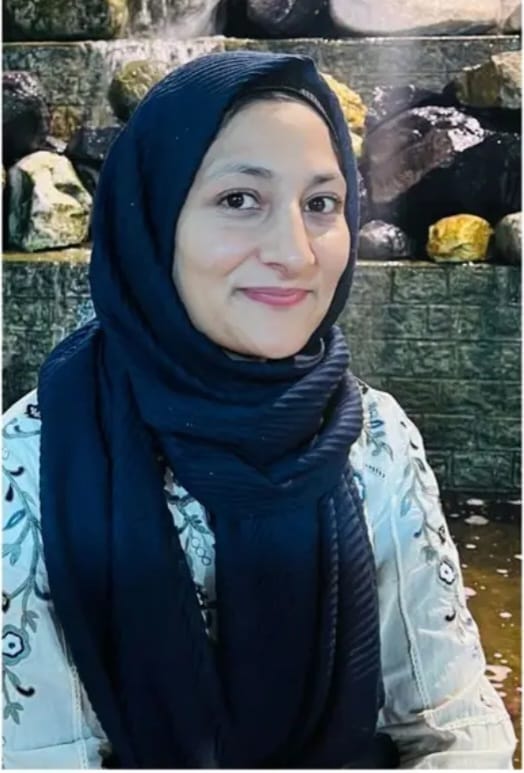
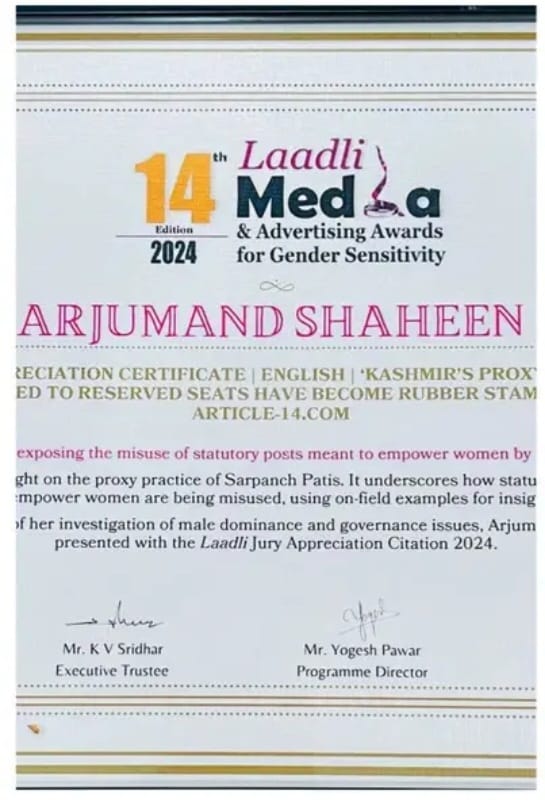
Renowned Kashmiri journalist Arjumand Shaheen has received the Laadli Media and Advertising Award for Gender Sensitivity 2024 for her 2022 report on “Kashmir’s Proxy Sarpanches.” She was recognized with the Web Jury Appreciation Citation in the English category.
Published by Article-14.com in 2022, the report exposes the misuse of statutory posts meant to empower women through the practice of “Sarpanch Patis.” She earned recognition for her report “Kashmir’s Proxy Sarpanches: Women Elected to Reserved Seats Have Become Rubber Stamps for Men,” which highlights male dominance and governance issues in Kashmiri local bodies.
Speaking to Radiance, Ms. Shaheen said, “I feel honored that my work has been recognized. Media wields significant power in shaping public opinion and attitudes towards gender. To combat existing stereotypes, we need more stories with a gender perspective. The media often focuses on male-centric narratives, so it’s crucial to also highlight women-centric stories to achieve a balanced portrayal. Such stories can inspire change and help combat gender discrimination over time. My piece addresses how the ‘panch-pati’ misuses power and highlights the lack of genuine political participation by women.”
Ms. Shaheen received the award at a ceremony in Mumbai this week wherein she was honored for her role in promoting gender sensitivity through media.
The Laadli Media and Advertising Awards annually celebrate journalists and media professionals who challenge patriarchal and misogynistic attitudes in society.
source: http://www.radiancenews.com / Radiance News / Home> Pride of the Nation> Awards> Latest News / by Radiance News Bureau / September 15th, 2024