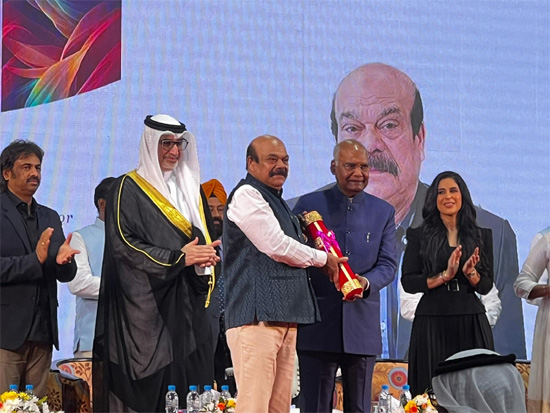
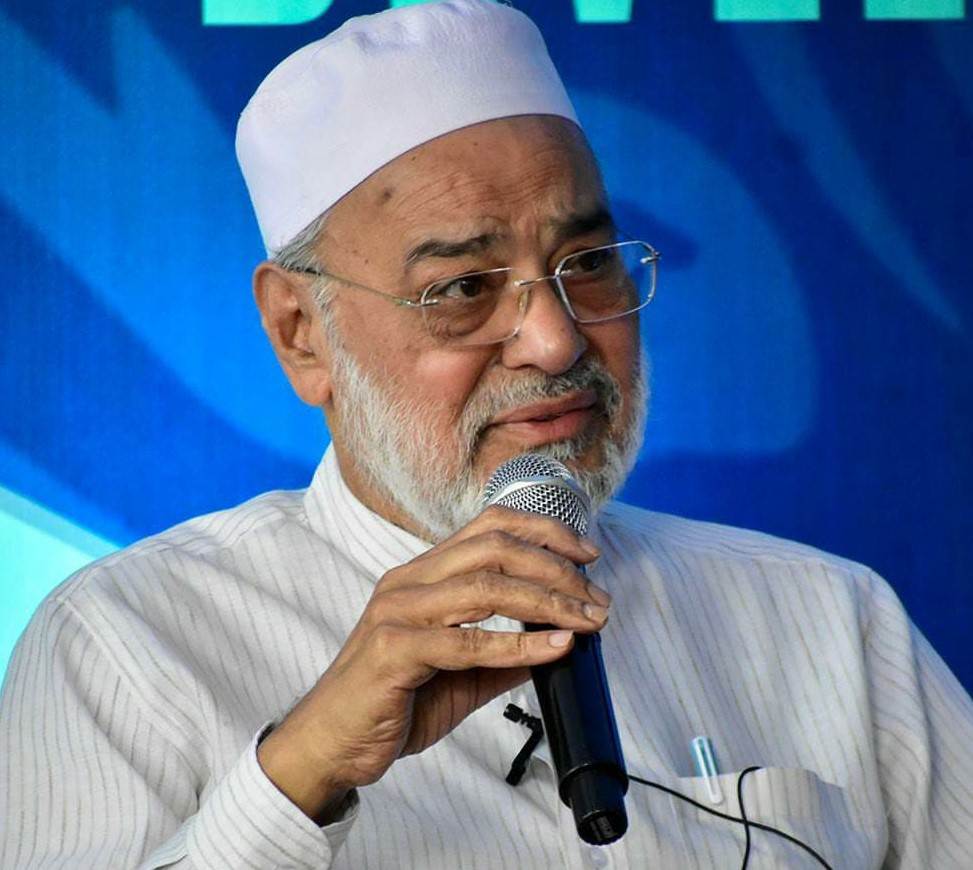
Haji Abdul Razak Kote Hejmady, owner of Metalco Group of Companies was conferred with ‘Best Entrepreneur of Bahrain’ award.
Former President of India Ramnath Kovind presented the award to Haji Abdul Razak.
Abdul Razak, who is the president of Dakshina Kannada Muslim Welfare Association in involved in social and religious works since many years.
Abdul Razak has been residing in Bahrain from the past 47 years. He hails from the Kote family of Hejmady in Udupi district.
He has been the voice of Muslim Community of this Island for three decades and with his vision he established Dakshina Kannada Muslim Welfare Association, which continuously works for the betterment of the community.
Abdul Razak has been a tireless advocate for the Tulu and Kannada communities. His contribution towards various programmes to promote Tulu and Kannada languages and culture has been phenomenal.
source: http://www.daijiworld.com / DaijiWorld.com / Home> Top Stories / by Daijiworld Media Network – Bahrain (MS) / September 23rd, 2023
12-year-old Tania Begum is working as an ambassador of the Foundation for a Drug-Free World – India.
Tania Begum
Hyderabad :
“Who among you smokes?” Standing amidst the bustling Amberpet market, a little girl confronted a group of five to six people with this simple question. As the crowd pointed to one of them, she fearlessly launched into an impassioned speech about the adverse effects of cigarettes.
When not all kids of her age know much about addictions, 12-year-old Tania Begum is working as an ambassador of the Foundation for a Drug-Free World – India. Tania’s mind was sparked by the advertisements on television, prompting her to pose probing questions about drugs to her father. In response, her father, an activist himself, nurtured her curiosity and provided candid, age-appropriate answers to satiate her thirst for knowledge.
Gradually, Tania, the elder sibling in her household, began accompanying her father to various programmes in the city and marathons on Sunday mornings, related to addiction awareness. Witnessing the grim realities of addiction in the lives of many, Tania felt compelled to contribute. She found her voice and purpose in delivering heartfelt speeches during these events.
Reflecting on this unexpected turn of events, Tania’s father, Sallaudin Saikh, admitted, “As an activist, I never wanted my daughter to be part of any campaign. I even tried to dissuade her.” However, Tania’s passion only intensified as she delved deeper into her studies, devouring news articles, books, and YouTube videos on the subjects of addiction and drugs.
“I loved watching Doraemon, a cartoon with cool gadgets that help people. I always wished I had similar tools to fight addiction and drugs in real life,” Tania said. Her wish came true when a foundation gave her posters and booklets to help with her mission. It was like having a real-life Doraemon by her side.
When her video, showcasing her dedication to the cause, was shared on the social media platform, Drug-Free World – India, an international organisation approached her. They were so impressed that they appointed her as their youngest brand ambassador at the astonishing age of just seven. Armed with posters and booklets from the organisation, the young campaigner began spreading awareness in schools, colleges, markets, events, and wherever her tiny voice could make a big difference. With unwavering support from her parents and a dedicated team of two more individuals, Tania embarked on a mission to educate her community.
In her eyes, alcohol stood out as the most prevalent addiction in Telangana, followed closely by painkillers. She could rattle off a litany of drug names and toxic substances that many adults were unaware of.
Tania held a strong conviction that celebrities promoting such substances were setting a harmful example. “I couldn’t fathom how many young people, much like herself, might fall into the trap of addiction influenced by these stars,” she said. She took to Twitter to voice her concerns and request these celebrities to reconsider their participation in such advertisements. Instead of support, her account was banned, and she had to create a new one to continue her advocacy.
Tania’s dedication to combating addiction continues to evolve as she sets her sights on addressing the growing issue of student addiction, particularly concerning the rising prevalence of e-cigarettes among children her age. Having read about this concerning trend, she has taken it upon herself to gather information and raise awareness about the dangers posed by e-cigarettes.
Closing liquor shop near school Tania’s dedication knew no bounds. During her time at her previous school, Unison International, where she studied up to the 5th grade, she noticed a liquor shop in close proximity. Disturbed by the sight of her fellow students falling prey to addiction, she took it upon herself to approach the shop owner and advocate for its closure. With the support of her friends, she embarked on a daily mission to educate customers about the dire consequences of addiction. Their relentless efforts ultimately led to the shop’s closure, a testament to Tania’s indomitable spirit and unwavering commitment to creating a drug-free world.
source: http://www.newindianexpress.com / The New Indian Express / Home> Good News / by Renuka Kalpana, Express News Service / September 17th, 2023
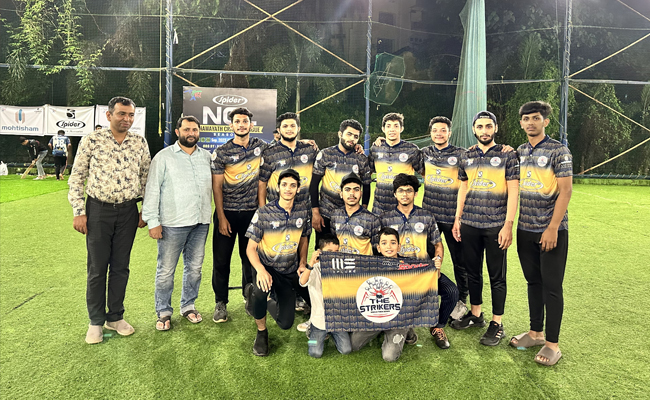
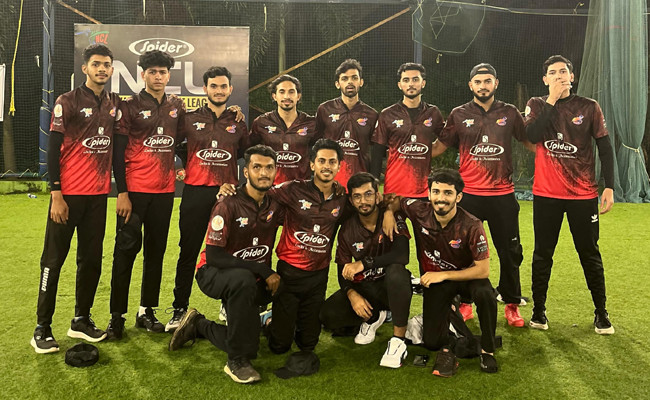
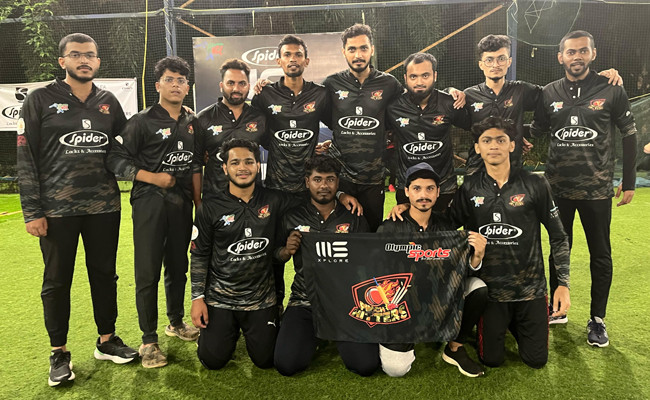
The third edition of the Nawayath Cricket League (NCL) commenced in Mangaluru on Monday, September 18, held at the ‘Perfect Pass’ sports arena in Falnir.
This three-day cricket tournament is exclusively organized for students and young professionals hailing from Bhatkal and its surrounding areas who are currently residing in Mangaluru.
The event is being overseen by students residing in the Bhatkal Jamatul-Muslimeen (BJM) hostel. Seven teams have entered the competition, which will come to a conclusion with a closing ceremony on September 20, following the final game.
The tournament format comprises a group stage where each of the seven teams competes against the others.
The top four teams from this stage will progress to the next round, which mirrors the format of the Indian Premier League (IPL), featuring Qualifier-1, Eliminator, Qualifier 2, and the Grand Finale.
The tournament boasts ‘Spider Group’ as its title sponsor, with prominent Bhatkal businessmen Arshad Mohtisham, of Mohtisham Complexes Pvt. Ltd., Imtiyaz Damda of ILFA Realtors and Aziz Akrami of Spider Group also being notable sponsors.
source: http://www.english.varthabharati.in / Vartha Bharati / Home> Karavali / by Vartha Bharati / September 19th, 2023
Nooniya Basti under Mahingaon Gram Panchayat in Kishanganj district of Bihar is largely inhabited by Shershabadi Muslims, who trace their origins to Bangladesh.
It is in this conservative milieu, where girls are not allowed to even step out of their homes unchaperoned, that Ziratunnisa Khatun, 14, and her friends have been leading a campaign on family planning since the last two years.
The Kishori group members of Nooniya Basti interact with older women showing them samples of contraceptive pills, Copper T and condoms and telling them about the merits of keeping a five-year gap between children (Photo: Ajitha Menon\WFS)
“Our group comprises girls between 12 and 18 years and we have been trained to create awareness on the need for family planning, the ill effects of child marriage, related maternal health issues and the importance of good nutrition, water conservation and sanitation,” informs an articulate Nasera Khatun, 16, President of the Nooniya Basti Kishori group.
Since October 2012, activists of the Bihar Voluntary Health Association (BVHA) have been running the Kishori programme, as part of the Department of International Development (DFID) supported Global Poverty Action Fund project, ‘Improving Maternal Health Status in Six States in India’, initiated by Oxfam India.
Shares, Meraj Danish, Thematic Coordinator-BVHA, Kishanganj, “I remember how tough it had been for us to convince the elders in the Shershabadi community to give permission to their adolescent daughters to get involved in our maternal health intervention.
“We drew them in by facilitating their access to rations given to teenage girls under the government’s Rajiv Gandhi Scheme for Empowerment of Adolescent Girls (Sabla scheme).
“The scheme provisions for three kilos of rice, two kilos of lentils and 40 iron supplement pills in a month to every out-of-school girl in the 11-14 age group and all girls between 14 and 18 years.
“As we managed to rope in more girls into Sabla, the trust quotient between us and the community increased. These were people who were anyway battling with poor infant and maternal health, anaemia and lack of nutrition in adolescents, so eventually they came around and agreed to let their girls attend our training sessions.”
Girls, for whom family planning had been a taboo subject, were in for a huge surprise at the training sessions conducted by the BVHA volunteers.
“The meetings were a real eye-opener. As we listened to the volunteers, we soon figured out the reasons behind our mothers always feeling weak and lacking energy. We realised that most of our brothers and sisters and, in fact, we ourselves, were suffering from the ill-effects of under nutrition.
“We also understood the need for family planning and the fact that spacing between children is critical for ensuring the good health of the mother and child. Above all, we learnt to improve our eating habits as well as maintain proper personal hygiene,” elaborates Habiba Khatun, 17.
Nooniya Basti’s Kishori group began its family planning advocacy by first speaking to their own family members, relatives and friends.
“We used to carry samples of contraceptive pills, Copper T (intrauterine device) and condoms and go door-to-door, talking to our mothers and their friends. Rather than insisting on use of contraceptives to limit the number of children, we told them about the need to have at least a five-year gap between each child,” explains Tanzera Khatun, 16, adding, “this automatically brings down the number of children per couple and removes any concerns regarding forced family planning.”
Till a couple of years back, most women living in and around Nooniya Basti had no clue about family planning and were mostly bogged down by three-four children, born within just a year of each other. Consequently, the mothers and their children used to be very weak and sickly.
“This is why the women immediately related to our conversations regarding the need for the body to fully recover between pregnancies and showed a keen interest in knowing how to use contraceptives to ensure spacing between children. By and large, we spread the message that it was alright to use contraception to achieve spacing between children even if family planning per se was taboo,” reveals Sabina Khatun, 16.
Of course, it certainly was not always smooth sailing for the girls. Many women were quite unwilling to talk to “children” on issues of family planning and contraception.
“The fact that we could talk proficiently about the use of contraceptive pills and their possible side effects and demonstrate how to use Copper T and condoms added to our creditability in their eyes. After a few interactions, during our house visits, there was no hostility or shyness and the women could voice their different issues and concerns openly before us,” adds Ruksana Khatun, 16.
Whereas the community women have benefited from the Kishori group’s active engagement, the girls too have learnt a lot in the process. This has prepared them well for the future and set them apart from their lesser fortunate peers across the country.
“Thanks to this intervention, most of us have become vocal against early marriages. Moreover, we have become particular about eating nutritious food and taking iron supplement pills to fight anaemia,” points out Nasera Khatun.
The other advantage for this group has been in the form of access to better education. “Once the community elders saw how well the girls were faring, it was possible for them to seek permission to join mainstream schools to acquire better quality education, along with studying at the local madarsa. Many girls in the group are now attending regular school,” says Danish of BVHA.
At present, there are three Kishori groups in Kishanganj. Though there are about 20 girls in each, the health awareness campaign related to family planning and contraception is spreading effectively across several villages in the district, as the peer and friend circles are absorbing the knowledge and experiences of the core Kishori units and putting them to good use by reaching out to women of their own localities.
by Women’s Feature Service
source: http://www.weekendleader.com / The Weekend Leader / Home / by Ajitha Menon, Kishanganj / Vol.6, Issue 12 / May 23rd, 2015
The Canadian Indian Muslims Association is helping people integrate into Canadian society.
Members of the Canadian Indian Muslims Association gather at a previous event. (Canadian Indian Muslims Association/Facebook)
When Ali Nizami moved from India to Canada 26 years ago, he struggled to find his belonging in a new country as an Indian Muslim.
“Even though there are so many Indians in the city and in Canada, Indian Muslims share a slightly different culture. Those subtle differences make a huge impact on people when they’re trying to connect with somebody,” said Nizami.
With a lack of organizations in Calgary for that specific community, he also felt alone.
He’s trying to change that for others — whether they’re a new immigrant or have been in Canada for a while.
He co-founded the Canadian Indian Muslims Association two years ago in Calgary. Since then, it’s grown to nearly 300 members across the country, but mostly in Calgary.
Islam is India’s second-largest religion, making up 14.2 per cent of the country’s population, according to the Pew Research Center. It follows Hinduism, which makes up 79.8 per cent of the population.
“We are a minority within a minority,” said Nizami.
Ali Nizami (left) with other members of the Canadian Indian Muslims Association at an Eid event. (Canadian Indian Muslims Association/Facebook)
Still, Indian Muslims are the second biggest Muslim population in the world, says the research centre.
The goal of the organization, says Nizami, is to bring the often underrepresented and neglected community together so it’s easier for Indian Muslims to integrate into the bigger bubbles of Canadian society.
“There’s no voice, there’s no platform. That’s what we’re trying to change. That’s the gap we’re trying to close.”
Nizami says the community is a strong entity in India, and they want to bring that to Canada.
The organization provides career mentorship and support for new immigrants. Nizami says the services and events are not only for Indian Muslims — they’re here to help anyone who needs it.
‘There are lots of Muslims in India, too’
Mir Ali and his wife Humaira Fatima moved to Calgary a year and a half ago. Before that, they lived briefly in Mississauga, and in Chicago for seven years.
They say of all the cities they’ve lived in across the world, they couldn’t find an organization that was focused on promoting Indian culture in addition to Islamic culture — until they heard of the Canadian Indian Muslims Association.
By connecting with people from the same background and with shared interests, they say the organization helped them find their belonging in Calgary.
A few months ago, they officially joined the organization as members.
Spouses Mir Ali and Humaira Fatima are new members of the Canadian Indian Muslim Association. They say joining the organization has made the integration into Calgary easier. (Submitted by Mir Ali)
“They were very open and welcoming,” said Ali. “It’s like an extended family to us right now.”
Fatima says she hopes working with the organization will spread more awareness about the community across the country.
“Whenever I wear a headscarf, people think that I’m not from India, but I’m from Pakistan,” said Fatima. “Not everybody is aware that there are lots of Muslims in India, too.”
Saima Jamal, co-founder of the Calgary Immigrant Support Society, says the community is getting increasingly marginalized in India because of their religion, and that’s now spreading to Canada.
“The Indian Muslims that are here in Calgary, they have been facing it. They’ve been feeling it,” said Jamal.
“The Indian Muslim community decided, you know what, we’re going to make a positive step in all of this. We’re going to help new immigrants that are coming in who are Indian Muslims. And we won’t just stop there — we will help anybody coming in that needs help.”
Grand Iftar dinner event
To celebrate Ramadan, the Canadian Indian Muslims Association is hosting what they believe is one of the biggest Iftar dinner events in Calgary, on April 9. It’s sold out at 350 tickets.
Together, attendees will come together to pray, break their fast for Iftar with “good Indian food,” listen to speeches from organizers and socialize with the community.
“Ramadan is the time to come together. It’s the time to reflect on your own self. Ramadan is the time to celebrate and that’s all we are trying to do — live the spirit of Ramadan,” said Nizami.
Moving forward, Nizami says the organization is also planning a food bank drive and a blood drive. Everyone is welcome to those events, he says, no matter how they identify.
source: http://www.cbc.ca / CBC NEWS / Home> News> Calgary / by Karina Zapata / April 08th, 2023
Mr. Abdul Basit Anwar, former Secretary Jamaat-e-Islami Hind and former Ameer Halqua JIH Andhra Pradesh (united) passed away at a hospital in Hyderabad on August 17, following a brief illness. He was 73. While he was conducting a Qur’ān class during the Arkan Ijtima of JIH Hyderabad, he felt some unease and was admitted to hospital on August 16.
He was Zonal President of SIO Andhra Pradesh. During his last days, he was serving the organisation as Patron of Tarbiyatgah, Telangana.
His funeral prayer was offered at Masjid Darus Shifa Hyderabad after Zuhr Prayer and laid to rest at Sultan Shahi Graveyard on August 17.
A large number of Muslims and their leaders including JIH Ameer Syed Sadatullah Husaini, JIH Secretary Muhiuddin Shakir, Ameer Halqua Telangana Dr. Muhammad Khalid Mubashiruz Zafar, Ameer Halqua A.P. Muhammad Rafeeq, President All India Majlis Tameer-e-Millat Ziyauddin Nayyar, Ameer Amarat-e-Millat-e-Islamia Telangana Muhammad Husamuddin Jafar Pasha and others attended Mr. Anwar’s funeral prayer.
Zaika-e-Nizamuddin, run by 11 women of Delhi’s Nizamuddin basti, is carrying forward the 700-year-old legacy of culture and cuisine.
Members of Zaika-e-Nizamuddin
The awe-inspiring neighbourhood of Nizamuddin is located in the heart of Delhi. One of the oldest parts of the capital city, this bustling area comprises the World Heritage Site of Humayun’s Tomb, the vibrant seven centuries-old settlement of Hazrat Nizamuddin Basti and the 70-acre Sunder Nursery, among other landmarks. It also has a delectable cuisine, that is distinct in its rootedness and flavour, which is integral to Delhi’s food scene.
A women’s collective—Zaika-e-Nizamuddin (ZeN)—is carrying forward this 700-year-old legacy of culture and cuisine. As the name suggests, it is the flavours (zaika) of Nizamuddin that the group curates. Swati Batra, Women’s Livelihood coordinator of the initiative, says, “Zaika-e-Nizamuddin was initiated in 2012 under the Nizamuddin Urban Renewal Initiative of the Aga Khan Trust for Culture (AKTC) in response to a study conducted under the initiative’s ECCD (Early Childhood Care and Development) component. The study revealed more than 50 percent of the children under the age of six in Nizamuddin Basti are malnourished. Further exploration highlighted junk food to be one of the major causes of malnourishment in children. ZeN came into existence when a group of mothers was brought together to make and supply healthy homemade alternatives to the junk snacking.”
What makes the dishes made by this group of chefs different from what one eats at Jama Masjid? “That food is more commercial, and laden with oil and spices . We, on the other hand, are simple home cooks. We don’t have a degree in culinary skills,” says Fatima Shahjahan, a member of the collective. “Our food is loved because we make every dish from scratch with age-old recipes. The taste upholds the living heritage and also gives a peek into the culture of Nizamuddin,” says another member, Kulsum. “It looks simple, but it has struck a chord with many,” says ZeN member, Noorjahan.
The group started its catering wing in 2015, and since then it has grown into an independent women’s enterprise and provides food beyond Nizamuddin. They were invited to Park Hyatt, Hyderabad, and JW Marriott Mumbai for special food festivals in 2019 and 2020. The group recently got registered as an LLP company with 11 women members as partners.
The product repertoire of ZeN includes home delivery, picnic baskets, catering, pop-up restaurants and live counters with dishes like khichda, salans, koftes, laddoos, namkeens and more. They also participate in several food exhibitions and have a weekend stall in Delhi’s nature hub, Sunder Nursery. “The main value proposition is that every order is made exclusively (from scratch), using fresh ingredients (no refrigeration) and age-old recipes (no internet),” says Batra.
It is empowering to see the ‘bajis’ (elder sister in Urdu) of Nizamuddin sport aprons and headgears to make nihari and haleem using their grandmother’s recipes in a commercial bawarchi khana (kitchen). It has been a transformative journey for 11 illiterate women, who have never done any work outside their homes, apart from being domestic helps. To work on something of their own has been empowering. “It wasn’t as difficult to form a group as it was to keep the group together, especially during phases of low income. All the women come from a difficult reality and investing time into something without any immediate income has been very trying. They faced a lot of resistance from their families initially. But fortunately, the members held on to the hope and stuck around. Now they are partners of their firm,” says Batra.
The AKTC team responsible for incubating and anchoring the group tried to keep the women active during lean periods and the initial phase (when the quantum of business was lesser) by involving them in different kinds of training, regular meetings and organising exposure visits. When they started out, the women made around ₹200 a month. They are now earning up to ₹6,000 a month per person. There is also a communal kitty that they circulate among themselves. Over the years, ZeN has been able to create a place for its brand in the multi-faceted food space of Delhi. It has a small but loyal customer base who appreciate the quality of the food along with the journey of the enterprise.
“ZeN works with the objective of creating sustained, dignified, and enhanced incomes for its women members through promoting the indigenous cuisine of Basti Hazrat Nizamuddin,” emphasises Batra. As the group coordinator receives an order from a customer she puts in the duty of the chef(s) according to an internal roster. The chef(s) in charge procures fresh meat and vegetables and prepares the order which is finally delivered by a local delivery boy working with the group. Bigger or difficult orders are made under the supervision of group leaders.
The collective works on a flexible model where the members can choose the number of hours they want to devote. If a member decides to not take up the order, the one next in line in the roster gets it, and so on. Every member has a work passbook that records their daily duties. At the end of every month, the chefs’ income, according to the work they have done, is transferred directly to their bank account.
The pandemic was challenging and the collective is still coming to terms with it. “It was a huge and disappointing speed breaker, and the kitchen remained closed for months. Concealment of Nizamuddin, after it was marked a ‘red zone’, made everything worse. The annual turnover reduced by more than 20 percent in FY 2020-21 compared to FY 2019-20. The enterprise also lost many hard-earned customers,” rues Batra.
The catering service re-started after a break in July 2020 after collecting customers’ responses through a survey on their willingness to place orders. During the second wave, ZeN launched a new product idea of simple home-cooked food. The food received encouraging response and was mostly ordered by Covid-positive patients across the city. “The biggest learning has been to take feedback constructively and continue to work in a systematic manner with constant efforts towards improvement. For community enterprises like these, teamwork is very important,” says Batra, revealing that Zaika-e-Nizamuddin is planning to scale up in the future by considering collaboration with cloud kitchens and delivery partners while maintaining their authentic value proposition. “I can’t say any more on this topic. Just keep a watch out for us going big,” she smiles.
ZeN can be contacted through their Instagram page: @zaika_e_nizamuddin. They deliver across Delhi-NCR and orders can be placed via WhatsApp on 9891543356.
source: http://www.lifestyle.mint.com / Mint / Home> Mint Lounge> Food> Discover / by Medha Dutta Yadav / March 28th, 2022
Maulvi Baqir was among the first to be arrested when the British Army entered Delhi on September 14, 1857.
Maulvi Muhammad Baqir was Editor, Founder and Owner of “Delhi Urdu Akhbar“. He was shot dead on September 16, 1857 for writing articles in Nationalist tone. Maulvi Muhammad Baqir was the first journalist to lay his life during the Independence Movement of India and the Freedom Struggle of India.
Maulvi Baqir, his name sometimes also spelled as Maulvi Maqar, started the first Urdu newspaper of Delhi, Delhi Urdu Akhbar, in 1835 – a year after the British government amended the “Press Act” and allowed publications.
“Delhi Urdu Akhbar” survived for nearly 21 years, proving to be a milestone in the field of Urdu Journalism. With the help of this newspaper, Maulvi Muhammad Baqar played key role in highlighting social issues as well as bringing political awakening in public and uniting them against foreign rulers.
When the Indian revolutionaries started the first war of national independence in 1857, he dedicated his newspaper to the national cause. Soon after the revolt or mutiny broke out in Meerut on May 10, 1857, Baqir gave his newspaper a new name “Akhbar uz Zafar” (Paper of Zafar) to pay tribute to Mughal Emperor Bahadur Shah Zafar who was leading the mutinying sepoys and the revolt against the British.
A staunch supporter of Hindu Muslim unity, Journalist Maulvi Baqir on June 04, 1857, printed articles in his newspaper appealing to both the communities to unite and come together, “Don’t miss this opportunity, if missed, no one will come to help, this is a good opportunity for you to get rid of British rule”.
Mohammad Baqir was used to publish his newspaper on Sundays, instead of Saturdays as a mark of his own rebellion and protest against the British, who observed Sabbath – a day of religious observance and abstinence from work, kept by Jewish people from Friday evening to Saturday evening, and by most Christians on Sunday.
Baqir was among the first to be arrested when the British Army entered Delhi on September 14, 1857. Two days later, on September 16, he was produced before Major William S.R. Hudson who ordered to shoot him dead without trial. Major Hudson shot dead Maulvi Baqir on the same day, making him the first Indian Journalist to lay his life for the country.
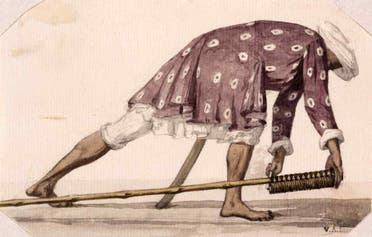
It is said Maulvi Baqir was tied to the mouth of a cannon which is then fired by Major William Hudson. Some historians however have disputed this claim. Nonetheless his contributions and sacrifice were later immortalised in Russian artist Vasily Vereshchagin ‘Suppression of the Indian Revolt by the English’ painting portraying the woes of freedom fighters and the brutal way Maluvi Baqar was claimed to have been executed.
source: http://www.ummid.com / Ummid.com / Home> Life & Style / by Ummid.com News Network / September 16th, 2023
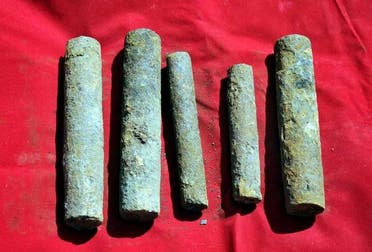
These were the first iron-cased rockets used in the military thus paving the way for rockets use around the world. (Supplied)
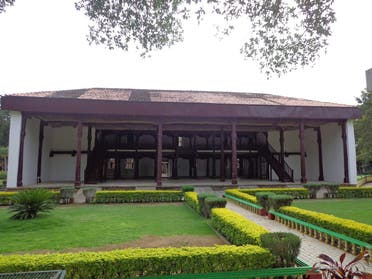
More than 1,000 unused rockets of India’s freedom fighter Tipu Sultan’s era found toward the end of July this year, will now be showcased at a newly created rocket gallery at the museum at Shivappa Nayaka Palace in Shivamogga city in the state of Karnataka.
The gallery, named as Bidanur Rocket Gallery after the famous Bidanur Fort at Nagar in Hosanagar taluk of Shivamogga district, will open to receive visitors in October.
Visitors will be able to feast on the rockets used by Tipu Sultan, the illustrious son of Karnataka, who was known as “Tiger of Mysore” for his daring acts against the British who ruled India then.
India rocket musuem
Bidanur served as an important administrative centre of Mysore State (renamed as Karnataka) and Tipu Sultan had even established a mint and an armory here.
Speaking to Al Arabiya English, R. Shejeshwara, Assistant Director of the Department of Archaeology, Museums and Heritage, said that the findings were discovered during a field excavation at a farmer’s well in Nagara village in Hosnagar Taluk, Shivamogga district, conducted by Department of Archeology, Museums and Heritage.
He said, “the shape of a cylinder and having a fuse at one end reveal that these rockets were used during the eighteenth century AD during Tipu’s time. Each unused rocket is of 7 to 10 inches in length and 1 to 3 meter in diameter and are rusted because of continuous exposure to soil moisture”.
India rocket musuem
Shejeshwara further said that like the earlier rockets found in 2002, those recovered recently also are iron-cased with black powder, a mixture of sulfur, charcoal and potassium nitrate filled inside. The 15-member crew of archaeologists, excavators and laborers took three days to unearth the armory and the ammunition.
Shejeshwara said that after the fourth Anglo-Mysore War, it is likely that Tipu’s army, stationed in Nagara, could have dumped the rockets in the well to prevent them from getting into the hands of the East India Company.
The media spotlight on the recent findings speaks volumes about how this powerful 18th century ruler of Mysore is remembered. Mysore under Tipu stood as a bulwark against the British.
Tipu conceptualized, designed and manufactured cylindrical iron tubes that ensured for great compression of the filled gunpowder and consequently, greater range (nearly 2 km). The brave freedom fighter then fastened them to swords or bamboo poles to provide stability, that would, in turn, lead to better accuracy.
Fitted with sharpnels that traveled a considerable distance, these air-borne weapons would target the enemy with edges of the sharpnels facing them.
India rocket musuem
These were the first iron-cased rockets used in the military thus paving the way for rockets use around the world.
The first rocket, which was fired by Tipu Sultan in 1792 against the British forces, is displayed at the British Museum. Though the British lost the war, they have exhibited the rocket.
After being the victims of these innovative locally-crafted rockets, the British eventually adopted the technology. Tipu Sultan wrote a military manual called Fathul Mujahideen in which he explains that 200 rocket men were assigned to each Mysorean cushoon (brigade).
Little wonder then the credit for developing the first-ever iron-clad rockets goes to Tipu Sultan and they were successfully deployed for military use.
In the Battle of Pollilur (the Second Anglo-Mysore War in 1780), Tipu’s rockets set afire the East India Company’s ammunition dumps. It was the British Army’s one of the worst ever defeats in India.
India rocket musuem
It may be recalled that a set of 24 rare and rediscovered preparatory paintings depicting the Battle of Pollilur was sold to a bidder for £769,250 at the Sotheby’s biannual Arts of the Islamic World Sale in 2010. The Britishers described these rockets filled with gunpowder on swords as “flying plagues”.
Tipu took advantage of them and established four taramandalpets (star-cluster bazaars, a name that refers to the pattern of mid-air explosions of these rockets that then pounded shrapnel on the enemy) at Srirangapatna, Bidanur, Chitradurga, and Bangalore to conduct research on Mysore rocket technology.
The armory in Kalasipalyam in Bangalore was among the four that were constructed by Tipu Sultan to store ammunition. The 18th century armory that housed the famed rockets of Tipu Sultan is hardly known.
After the death of Tipu in 1799, the British Army discovered as many as 600 launchers, 700 serviceable rockets and 9,000 empty rockets at Tipu’s fort.
One of the major beneficiary was the Royal Artillery Museum in Woolwich in the UK. The powerful ruler was killed in the fourth Anglo-Mysore war in 1799 after a slew of victories in battle against the British.
http://www.english.alarabiya.net / AlArabiya News / Home> Life > Travel & Tourism / by Aftab Alam Kola / August 09th, 2018
A small coastal town in south eastern Tamil Nadu, which has produced gems like Dr. K.V.S Habeeb Mohammed, the famous Tamil preacher, is a model in other respects too. Predominantly a women dominated town, with no cinema hall, no wine shop and even there is no police station. Almost zero crime rate but high literacy…
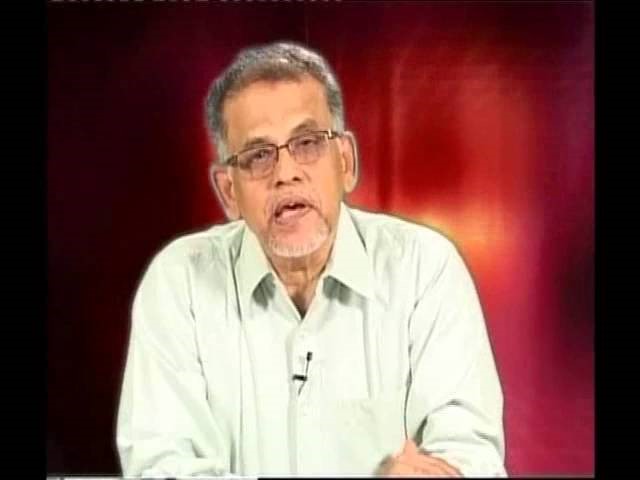
Dr. K.V.S Habeeb Mohammed
A small coastal town in south eastern Tamil Nadu, which has produced gems like Dr. K.V.S Habeeb Mohammed, the famous Tamil preacher, is a model in other respects too. Predominantly a women dominated town, with no cinema hall, no wine shop and even there is no police station. Almost zero crime rate but high literacy rate and God-fearing atmosphere are prominently visible features of the town. Travelers and explorers like Marco Polo and Ibn Battuta have mentioned in their diaries and famous documentarist and filmmaker Benoy K Bhel has also captured Kayalpattinam in his lenses.
Kayalpattinam is one of the coastal towns that had trade relations with Egypt and Arabia since long time. Obviously these became the entry points of Islam in India in the early times itself. Islam has left a lasting impact on this trade town. Rich Muslim traditions, Sufi heritage and centuries-old Arab connections are visible prominently. Kayalpattinam’s contribution to the Islamic spirituality and culture of the region is immense and invaluable. It has produced several religious scholars, great spiritual masters and offered a great space for local and international traders through several centuries. Kayalpattinam has contributed much to the Tamil literature.
Of the forty thousand population there are 1177 females for every 1000 males. The Arab lineage is evident in their features: complexion, physical features and culture. The town has about 30 mosques, one in each street. Madrasas and educational institutions especially imparting education to women like Aroosul Jannah Women’s Islamic college, Ayisha Siddiqua women’s Islamic college, Al Kulliyathun Nasuhiyya women’s Islamic college, Muaskarur Rahman Women’s Islamic college, are few names worth mentioning. Maqbara, tomb of Kazi Syed Alauddin, is another notable place. There are separate lanes for women to pass by, separate counters for them at shops.
The son of Kayalpattinam Dr. K.V.S. Habeeb Mohammed is a famous paediatrician, renowned speaker and author of more than 50 books. His TV talks, lectures and interfaith debates are valuable contribution to the harmony in the entire Tamil population. He is presently based in Chennai.
source: http://www.radianceweekly.net / Radiance Viewsweekly / Home> Miscellaneous / by Mohammed Atherulla Shariff / September 12th, 2023