CSPS Inaugural Citizens’ Dialogue on “The Idea of Democratic Citizenry”
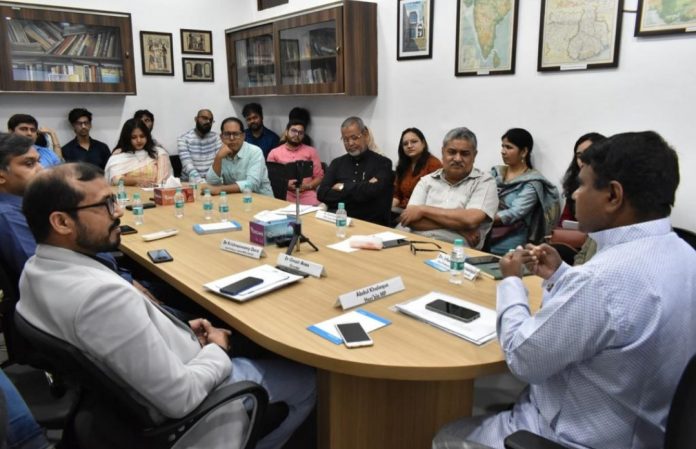
In a bid to foster meaningful discussions on inclusiveness, democratic principles and citizenship, the Centre for Studies of Plural Societies (CSPS) organized its first-ever ‘Citizens’ Dialogue,’ bringing together prominent scholars and experts in the field.
The keynote address was delivered by Mr. Abdul Khaleque, Hon’ble Member of Parliament from Barpeta, Assam. The session delved into the complexities surrounding citizenship, with a particular focus on the context of Assam, shedding light on historical, legislative, and legal events that have shaped the discourse on this critical matter.
The ‘Citizens’ Dialogue’ event, held under the aegis of CSPS, commenced with an introductory session led by Ms. Simmi Bhandari, a research intern at the institute. Dr. Omair Anas, Director of CSPS, emphasized the importance of inclusiveness and dialogue in a democratic society, where multiple stakeholders need to engage to find common ground. He highlighted the significance of plurality, a core value upheld by CSPS, in promoting an open platform for discussions and debates.
Dr. Irfanullah Farooqi, Assistant Professor at South Asian University, moderated the session, emphasizing the need to address pertinent questions concerning democracy and citizenship in contemporary times.
In his insightful address, Mr. Abdul Khaleque tackled the complexities of citizenship in the context of Assam, touching upon historical and political factors that have shaped the discourse in the state. He discussed the National Register of Citizens (NRC) and the Citizenship Amendment Act (CAA), shedding light on their implications and how various groups have reacted to these developments. Mr. Khaleque pointed out the flaws and issues with the NRC process, presenting compelling statistics that illustrated the challenges faced by different demographics following its completion.
Drawing attention to a unique identification system in Assam known as ‘d-voter,’ which marks individuals as suspected illegal foreign migrants, Mr. Khaleque highlighted the difficulties faced by those labeled as such. The burden of proof placed on these individuals has led to a rigorous verification process, often resulting in harassment and exhaustion. He also underscored how ethnic lines, particularly associating the Bengali identity with stigma and contempt, create fault lines around the concept of citizenship in Assam.
Following his talk, the floor was opened for a stimulating question and answer session with the audience. Discussions focused on the precarious experiences of minorities in Assam and the implications of delimitation concerning the electorates in the state. Mr. Khaleque explained how ethnic intolerance against Bengalis contributes to their alienation and lack of trust in the state’s institutions.
Dr. Sheeba Naaz, Research Coordinator at CSPS, expressed her commitment to continue the tradition of ‘Citizens’ Dialogue’ to keep everyone engaged in meaningful discussions. She conveyed her gratitude on behalf of CSPS to Mr. Abdul Khaleque and all participants for contributing to a successful and intellectually stimulating dialogue.
The Centre for Studies of Plural Societies (CSPS) set a precedent for fostering inclusive and informed discussions with its inaugural ‘Citizens’ Dialogue’ on “The Idea of Democratic Citizenry.” Mr. Abdul Khaleque’s keynote address shed light on the complexities surrounding citizenship in Assam, presenting a historical, legislative, and legal perspective on the matter. The event served as a platform for thought-provoking exchanges, emphasizing the importance of plurality and dialogue in a democratic society. As CSPS looks forward to continuing this tradition, the engagement and participation of scholars and experts pave the way for a more informed and progressive understanding of democratic principles and citizenship in the ever-evolving landscape of India.
source: http://www.muslimmirror.com / Muslim Mirror / Home> Positive Story / by Muslim Mirror Network / July 30th, 2023
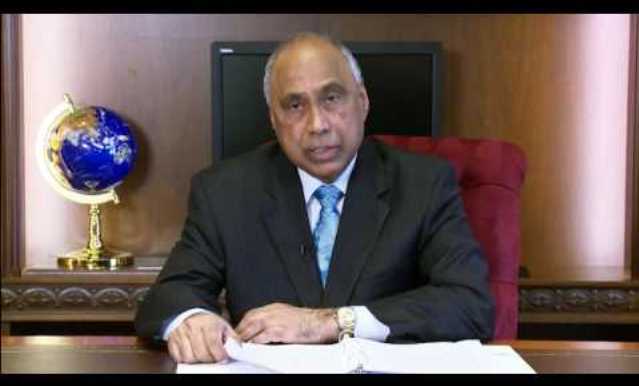
In the realm of Indian Muslims and the Indian Muslim diaspora, the name of Frank F. Islam commands instant recognition and reverence. An illustrious entrepreneur, philanthropist, and a prominent civic and intellectual figure, he has become an indomitable force for the advancement of Indian Muslims through his unwavering commitment to education. His influence extends far and wide, gracing numerous boards and councils at prestigious institutions such as Johns Hopkins University, American University, and George Mason University.
His philanthropic endeavors have left a mark of grandeur on his alma mater, Aligarh Muslim University, where he has erected the splendid Frank and Debbie Islam Management Complex. Not stopping there, his native village, Kaunra Gahni, bears witness to his magnanimity with the establishment of the Frank and Debbie Islam Health Clinic, a project dedicated to the betterment of its people.
As the visionary leader of FI Invest Group, a venture he founded after selling his information technology firm, QSS Group, in 2007, Mr. Frank Islam exudes a profound understanding of global economic affairs. His keen eyes closely monitor the economic activities of two colossal nations, the United States and India, while he remains deeply immersed in the intricacies of American politics and economy. His connections with former President Barack Obama and the current President Joe Biden stand testament to his prominence in political circles. An accomplished writer, he has penned two books, solidifying his intellectual prowess.
Undoubtedly, the economic condition of a country charts its future trajectory, and in this domain, Mr. Frank F. Islam emerges as a seasoned expert. In this exclusive interview with Alize Najaf, he graces us with invaluable insights into the economic dynamics of India and beyond.
AN: Your dedication to uplifting Indian Muslims through education and philanthropy is truly commendable. Could you share with us some of the impactful projects you’ve undertaken in this regard?
Mr. Islam: Certainly. I’ve had the privilege of contributing to the development of my alma mater, Aligarh Muslim University, by constructing the Frank and Debbie Islam Management Complex. Additionally, in my native village Kaunra Gahni, we’ve established the Frank and Debbie Islam Health Clinic, which aims to provide essential healthcare services to the community.
AN: Your journey as an entrepreneur is remarkable. How did you establish the FI Invest Group, and what advice would you give to aspiring young entrepreneurs?
Mr. Islam: Building a strong and talented team has been pivotal to my success in business. Aspiring entrepreneurs should surround themselves with like-minded individuals who share their vision and values. It’s essential to believe in oneself and the team while daring to dream big. Woody Allen once said, “90% of life is just showing up.” I believe in focusing on the remaining 10% and maximizing efforts to achieve one’s goals.
AN: Turning our focus to economics, the relationship between the United States and India is growing stronger. Is the strategy to counterbalance China a driving force behind this development?
Mr. Islam: While China’s influence is a factor in strengthening U.S.-India relations, it’s not the sole driving force. The convergence of India and the United States is based on shared interests and values as the world’s largest democracies. From artificial intelligence to climate change, there are numerous common areas of focus.
AN: Agriculture plays a significant role in the economy of developing countries. How important is agricultural production for a country’s economic development?
Mr. Islam: Agricultural self-sufficiency is vital for any nation to sustain its population without relying heavily on imports. The Covid-19 pandemic taught us the value of self-reliance during supply chain disruptions. While developed economies rely less on agriculture for employment, developing nations often have a larger population dependent on the sector.
AN: The economic reforms introduced by Dr. Manmohan Singh and Prime Minister Narasimha Rao are often credited with changing India’s economic trajectory. What is your view on their impact?
Mr. Islam: The economic reforms of the 1990s were transformative for India. They set the country on a path to becoming the fifth-largest economy and beyond. Prime Minister Rao and Dr. Singh’s vision played a pivotal role in this positive transformation.
AN: What are your predictions for India’s economic growth in the next five years?
Mr. Islam: All indications point to substantial economic growth for India in the coming years. According to the IMF, India is expected to contribute 15% to global growth this year. The organization further estimates a 6% growth rate for India in the current year, setting the stage for further progress.
AN: India’s economic growth still lags behind China’s. What factors do you think are responsible for this difference?
Mr. Islam: China had a head start in initiating economic reforms, while India opened its economy later. China’s unwavering focus on manufacturing and global investments played a significant role in its economic growth. However, India possesses the potential to surpass China with appropriate policies and continued reforms.
AN: It’s evident that your expertise in economics is vast. Do you have any plans to contribute to India’s economic progress?
Mr. Islam: After selling my company, my wife and I founded our family foundation to dedicate ourselves to philanthropy. We believe in giving back to society, primarily focusing on education and healthcare in Uttar Pradesh, my home state. By supporting institutions like Aligarh Muslim University, we aim to contribute to India’s progress from the grassroots level.
AN: Thank you, Mr. Frank F. Islam, for sharing your insights and expertise with us. It has been an enlightening conversation.
Mr. Islam: Thank you for having me, Alize. It was a pleasure discussing these critical economic matters.
source: http://www.muslimmirror.com / Muslim Mirror / Home> Interviews / by Alize Najaf / July 30th, 2023
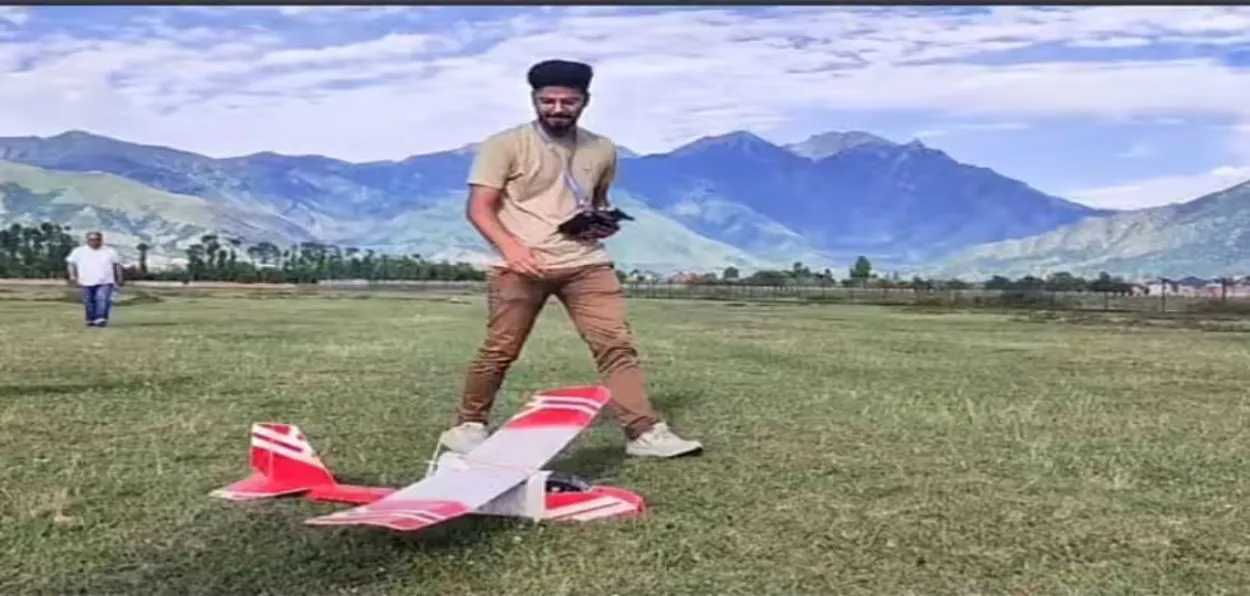
Abaan Habib with his drone in a location in Himachal Pradesh
New Delhi :
Optimism and hope fills the hearts and minds of today’s Kashmiri youth and they are ready to take off on the fight of their dreams. Abaan Habib is one of them; he has developed an extraordinary drone that can transport blood for medical emergencies from one hospital to another.
After years of hard work, Abaan Habib, a resident of Zakura area of Srinagar, created the flying machine that has the potential to save countless lives and improve access to health care in remote areas and during natural calamities.
Abaan said he was inspired to work out his invention after he saw the devastation and human suffering in the 2014 floods that nearly drowned the city of Srinagar.
Abaan says, “After witnessing the devastating floods of 2014, I wanted to find a solution to transferring blood samples and pouches between hospitals.”
He worked hard on his drone technology for five years. Initial tests conducted in Himachal Pradesh were successful as the drone connected 20-25 hospitals to the central hospital, covering a distance of over 70 km.
He says: My message to the youth is to follow your passion. Only through the persistence and dedication of young minds can a society bring about meaningful change in the world.
Abaan’s drone experiment also extended to inter-state connectivity, connecting hospitals in Shimla with Chandigarh. Aban decided to debut the drone in Himachal Pradesh first, collect data and demonstrate its benefits before expanding its use to the Kashmir Valley.
The geographic conditions of both states present unique challenges in providing timely blood transfusions to patients in need. Aban recognized this and took advantage of this void in the atmosphere. We can take advantage of the atmosphere to help the needy.
Abaan not only worked on the project but also collaborated with corporate entities outside Kashmir. These collaborations have provided additional expertise and resources to further develop and implement its drone technology.
However, to run the drone service on a commercial scale, he says, he needs financial support.
Abaan Habib hopes that with his drone, he will not only be able to save lives but also create business and career opportunities for the youth of the valley.
Abaan’s drone invention holds great promise in revolutionizing healthcare access in remote areas. As Abaan tries to secure funding and navigate regulatory challenges, the potential impact of its technology cannot be overstated.
With every step forward, Abaan brings us closer to a future where life-saving medical equipment can reach even the most inaccessible areas, offering hope and a chance for survival to those in dire need.
This project of his was presented by Habib Abaan last year. At that time he was a 12th standard student at Green Valley Educational Institute in Kashmir. He said, “We have a tinkering lab at school, which helped me a lot in understanding the process and learning the art of making drones.”
My parents gave me freedom and therefore my idea of education is quite different from others. Unlike other parents, my family did not force me to choose a career like a doctor or an engineer. They allowed me to go as I pleased. My inclination was towards drone technology.”
He says, “I have seen many natural calamities in Kashmir since my childhood, one such natural calamity was the flood of 2014 when Kashmir was flooded. People required relief supplies and we saw how the government machinery failed miserably due to lack of infrastructure. They were very disturbing scenes, everyone knows that this effort of dropping aid from helicopters is not enough.”
It was then that I thought of drones and how helpful they could be in such situations. If we build small drones that are autonomous and equipped with artificial intelligence to deliver relief supplies to disaster areas, they can deliver aid without much cost.
Abaan Habib said that JKEDI and JKTPO encouraged him but he is yet to receive any financial support from the government.
Abaan Habib also went to Gujarat to attend an event organized by DRDO where we showed off his drone to the then Army Chief General Makund Major Naravane. “He appreciated my efforts,”
He says young entrepreneurs should be prepared to face rejection or failure; spend their money and not fall for loans and subsidies, for he believes “debts are the root of failures.”
Abaan;s father H U Malik told Rising Kashmir that they are operating at 25 locations in Himachal Pradesh and they want to replicate the same model in Kashmir keeping in view its geographical conditions.
“Even Abaan is working to link SKIMS Hospital; SMHS with GMC Baramulla and for that fly van has already been designated for the project,” he said.
Malik says it is his son’s dream to see this project working in Kashmir. “We want to connect SKIMS hospital with other tertiary, district hospitals of the valley. We appeal to concerned authorities to help us and we are ready to follow all SOPs in this regard,” he said.
source: http://www.awazthevoice.in / Awaz, The Voice / Home> Story / by Aasha Khosa / July 20th, 2023
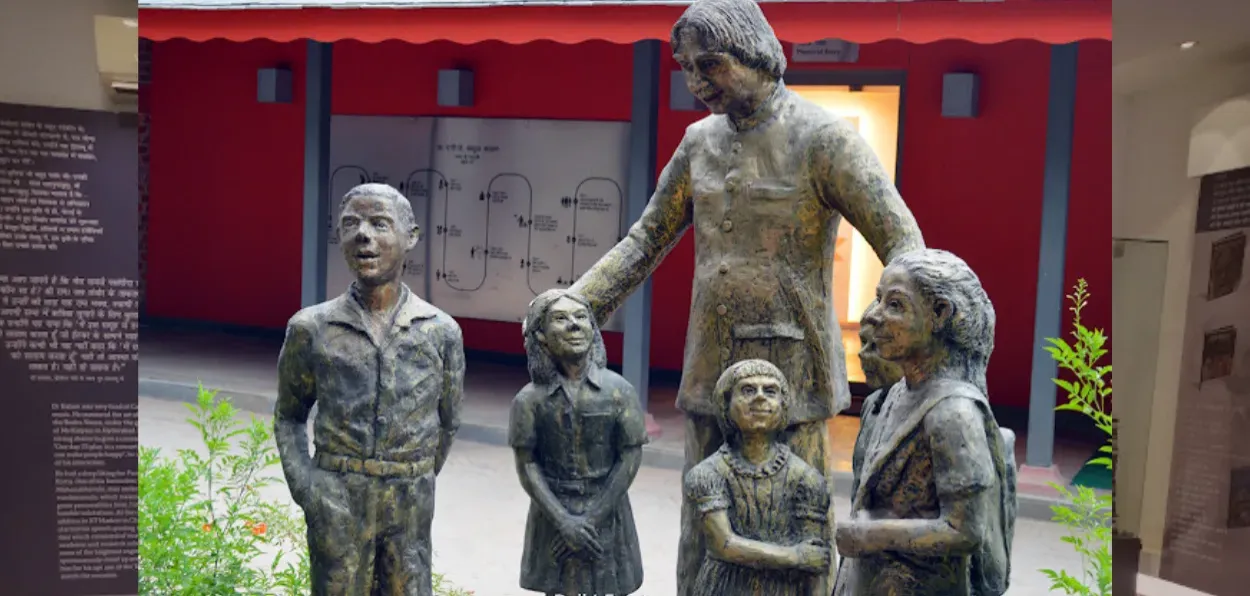
A P J Abdul Kalam with children: an exhibit from the National memorial at Rameshwaram
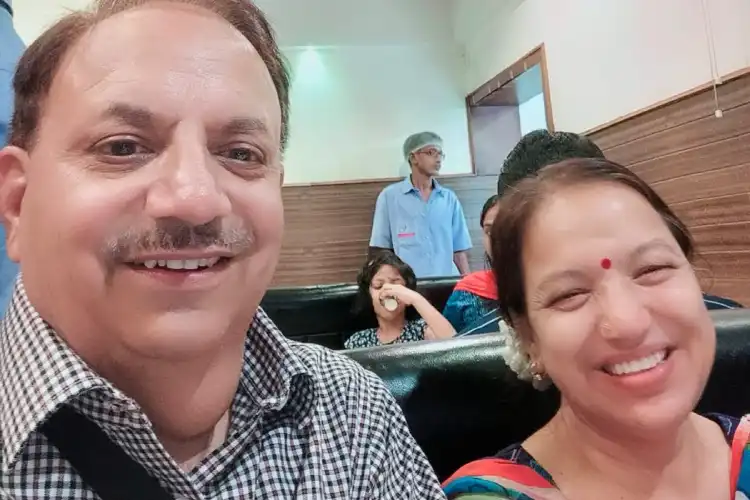
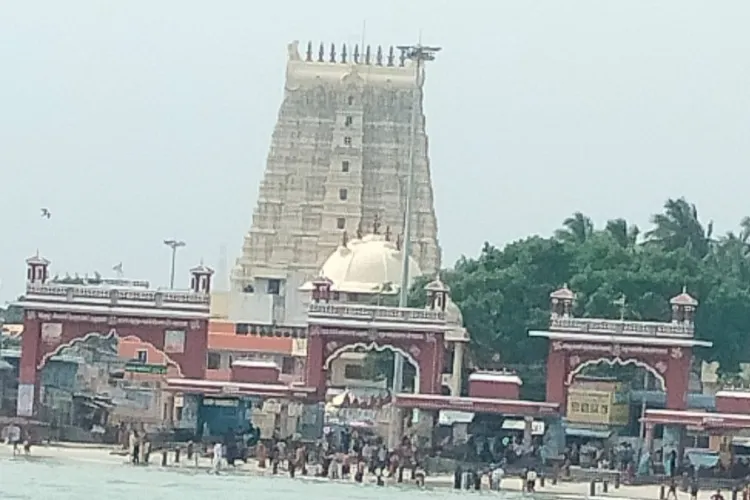
In mid-December, when Suman and her husband Diwan Arora of Sonepat, Haryana, left for Rameswaram in Tamil Nadu, for performing the pilgrimage to one of the holiest sites of Hindus, little did they know that their journey would also take them to another sacred place – a memorial to the son of the soil Avul Pakir Jainulabdeen Abdul Kalam aka Dr. A P J Abdul Kalam.
“I didn’t feel like leaving the place,” said Suman, a retired central government official of her experience of visiting the National Memorial for the 11th President of India A P J Abdul Kalam, located in his native city of Rameshwaram.
Suman said that the moment she removed her shoe to enter the National Memorial she experienced a surge of positive energy inside her. She and other tourists paid obeisance to the People’s President at his resting place inside the memorial.
“I was visiting the place after I visited the temple; there I felt I had entered another sacred place,” she told Awaz-the voice.
Suman and Diwan Arora in Rameshwaram
On her maiden journey to South India, Suman said she was as much awestruck by the grandiosity and architecture of temples – Rameshwaram, and Meenakshi at Madurai as with the simplicity and grandeur of the life of the great Indian – A P J Abdul Kalam.
“Seeing the incredible architecture of the temples was a great experience. Visiting the Museum of President Abdul Kalam was no less. It was also like a pilgrimage.”
Though not hyped as much as many other places, the museum is on the Tourism map of Rameshwaram city. According to Aroras, even the local auto-rickshaw drivers who offer tour packages to visitors, recommend the museum as the first place.
Suman said although their tour was in connection with the seven-day Bhagwad Gita path (Narration of the Bhagwad Gita) and was organized by a religious group, a friend had advised her to visit the museum at any cost. “After visiting the place, I can never thank my South Indian friend enough,” Suman said.
Dr. A P J Abdul Kalam’s memorial, Rameshwaram
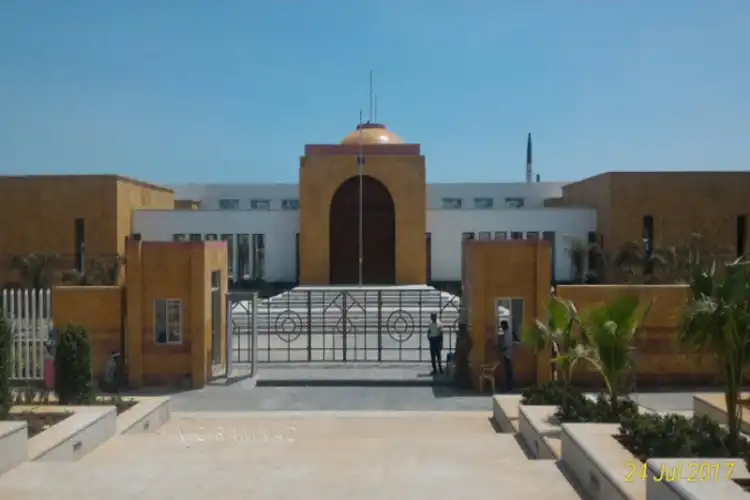
Kalam’s grand-nephew APJMJ Sheik Saleem told Awaz-the voice that so far one crore people have visited the museum that was set inaugurated by Prime Minister Narendra Modi on July 27, 2017.
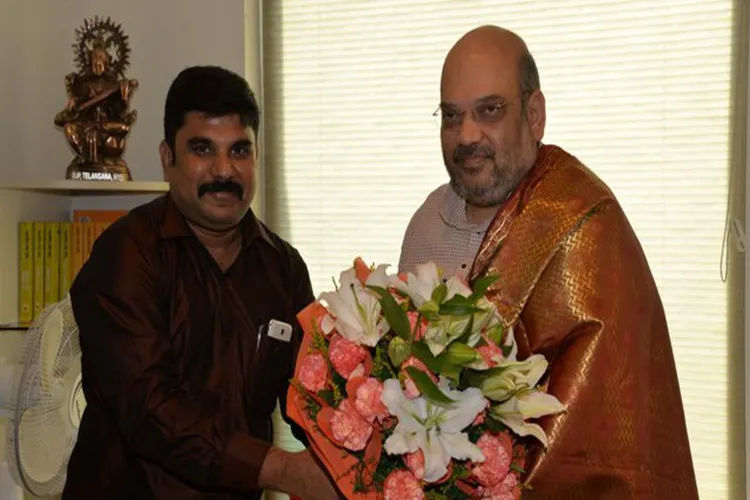
Sheik Saleem who recently joined the BJP runs his business and a Foundation for social work. He says he is privy to people’s devotion and love for his ancestor as they visit his memorial.
“The museum is visited by at least 7,000 visitors per day and so far about one crore have paid their obeisance to the people President,” Saleem told Awaz-the Voice.
“Earlier people came to our city for pilgrimage to the (Rameshwaram) temple but now the pilgrimage is combined with the visit to the national memorial for APJ Abdul Kalam,” he said.
“I have seen people coming to the place and feeling there is something great there. Many visitors do stand silently in front of the memorial, some bow their heads, and others simply go in the prayer mode as if they are seeking His blessings,” the former President’s grand-nephew said.
APJMJ Sheik Saleem with Home Minister Amit Shah
He said it’s touching and a humbling experience to see how much Indians cutting across religions or other barriers loved Dr. Kalam.
Suman, her husband, and many in their group spent nearly two hours inside the memorial. Visitors must enter barefoot and not use cameras or mobiles to click the pictures. All this adds to the sacredness of the space.
Saleem said since the place sees a high footfall, the cameras are forbidden simply because if everyone starts clicking there will be chaos.
Diwan Arora said the pilgrimage jatha comprised 300 people from Punjab and Haryana who visited Rameshwaram for “Bhagwat sapthah’ the weeklong narration of the Bhagwat Gita.
Meenakshi Temple and the Sea at Rameshwaram
Besides the museum, A P J Abdul Kalam’s childhood home has also been converted into a museum that his elder brother maintains. “It’s a smaller collection of photos and family memorabilia. The place is visited by at least 4,000 persons per day,” Sheik Saleem said.
The national museum maintained by the DRDO narrates the story of the life of India’s missile man from a newspaper hawker in the coastal city to India’s missile man and the most popular President. It showcases pictures and models of missiles, rockets, and the Pokhran Nuclear test that Kalam was involved in. His favourite Veena which he played every morning sitting on the bare floor even in Rashtrapati Bhawan is also displayed in the museum.
Dr. A P J Abdul Kalam lived in the Rashtrapati Bhawan from 2002 to 2007. He became the most loved and respected head of the nation to get the sobriquet of People’s President.
Kalam was a respected scientist specializing in aerospace engineering. His simplicity and dedication to serving the country motivated many youths to follow his path and he became an inspirational figure for the youth of India.
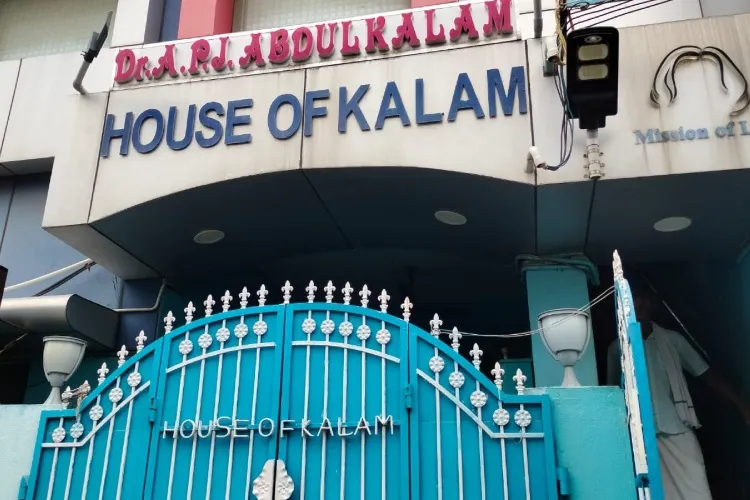
House of Kalam: the private Museum dedicated to the memory of Dr. APJ Kalam inside his ancestral house in Rameshwaram
Inside the memorial, one can see the selected photos, paintings, miniature models of missiles, etc. The memorial is less than 1 km from Rameswaram.
The museum’s exhibits narrate the story of his life and achievements. It’s located on Mosque Street and is open from 8 a.m. to 7 p.m.
A. P J Abdul Kalam was born and brought up in Rameswaram and became a scientist and worked for DRDO and ISRO before being chosen to become India’s 11th President by the then NDA government headed by Atal Bihari Vajpayee.
He passed away suddenly while attending the IIT Shillong convocation on July 27, 2015, and was laid to rest at Pei Karumbu, Rameswaram on 30 July.
According to the statement of the Museum, Dr. Kalam always reflected the simplicity, depth, and calmness of Rameshwaram throughout his life, and it’s showcased in his memorial. Dr. APJ Abdul Kalam National Memorial was inaugurated by Prime Minister of India Narendra Modi on 27th July 2017.
The memorial is spread over 2.11 acres of land, the memorial is constructed on the gravesite of Dr. Kalam, where his mortal remnants were put to rest on July 27, 2015. To pay tribute to India’s missile man, The Defence Research and Development Organisation (DRDO), with which Dr. Kalam had been associated for several years of his life, came up with an initiative to construct his memorial.
pix07
The memorial was constructed in a record time of nine-month at the cost of Rs 120 crore,
The Museum is also included in the recommended place in Rameshwaram by the Trip Advisor company.
On its website, people who visited the place have rated it very highly. Their comments in the review section show that the People’s President continues to be in the heart of Indians even after his passing away. For example, Saurabh from Patna, Bihar, says:
..must visit place for everyone. I’m a huge follower of Bharat Ratna Late APJ Abdul kalam sir. It was inaugurated by Our prime minister in 2017. Here you can learn many things about Bharat Ratna APJ Abdul Kalam sir.
I visited this and will recommend every people to visit this place and should remember the person who shape and sculpt the Indian defense and space research organisation.
A Tourist from Bangladesh wrote in the same section: “A scientist and leader has been honoured in the best way in his birthplace “
Another tourist to the museum from Hyderabad wrote:
.. A fitting tribute to the great son of India. Amazing that a man with such humble origins and from a very small town rose to the highest office in this country. A must-visit for students and youth who can take inspiration from the great man’s life. Plenty of Photographs, a peek into the life of Dr. A.J.P. Abdul Kalam.
A visitor from the NCT of Delhi wrote on Trip Advisor’s website :
Not only a memorial but a temple or place of worship where you can motivate yourself how an innocent boy who was used to distributing newspapers in a nearby area has become India’s first citizen. The place is full of photographs, a replica of missiles, statues, Samadhi, and many more … a calm environment despite of rush of school children.. A must-visit place at Rameshwaram.
source: http://www.awazthevoice.in / Awaz, The Voice / Home> Story / by Aasha Khosa, New Delhi / July 27th, 2023
While the response to the film in Kerala and neighbouring Tamil Nadu has been tepid, it seems to have opened the floodgates of abusive comments, both for and against.
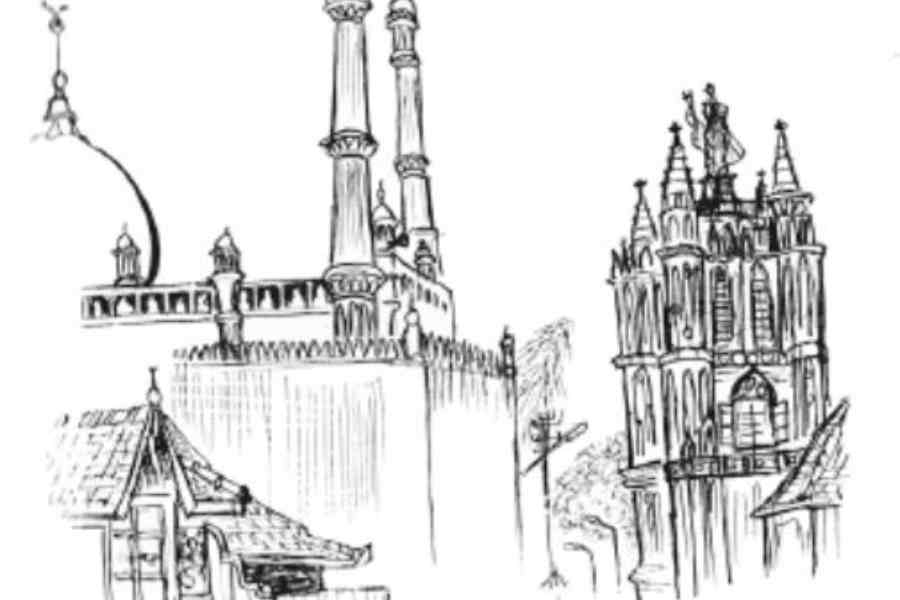
A sketch by EP Unny that he tweeted shows a church (extreme right), a mosque and a temple “cuddling into” Palayam in the heart of Thiruvananthapuram, the Kerala capital. The sketch was a part of Spices & Souls: A Doodler’s Journey Through Kerala, published by DC Books, Kottayam, in 2001 /. Sourced by the Telegraph
Academy award-winning sound designer Resul Pookutty and cartoonist E.P. Unny have inspired many tweets highlighting communal harmony in their home state of Kerala, contrasting with the hate being spewed on social media following the release of The Kerala Story.
While the response to the film in Kerala and neighbouring Tamil Nadu has been tepid, it seems to have opened the floodgates of abusive comments, both for and against.
Against this background, Unny, chief political cartoonist at The Indian Express newspaper, has tweeted one of his old sketches that depicted a temple, mosque and a church that stand side by side at Palayam in Thiruvananthapuram as an exemplar of communal amity.
By Sunday evening, Unny’s tweet, dated May 5 and posted under the hashtag #KeralaStory, had been viewed by 2.97 lakh people, shared by 561 and drawn comments from 223.
Pookutty too, on May 5, exhorted people to share stories that would fit two hashtags he had created: “Guys if you have your own story of #brotherhoodinKerala share it here under the #MyKeralaStory.”
Lok Sabha member Shashi Tharoor shared Unny’s tweet and commented: “Proud to represent Thiruvananthapuram constituency. The Palayam example is one I often cite in my speeches. Beautifully drawn by @unnycartoonist.”
The image Unny tweeted was drawn in 2000 for his travel book Spices & Souls, commissioned by DC Books and published in 2001.
“I was not reacting to the film at all because I have not seen the film. If I had seen the film, I might have done a cartoon on it,” Unny told The Telegraph on Sunday.
Unny had already, before the controversy over The Kerala Story broke, been planning to tweet the screen grab of the sketch to commemorate the 150th anniversary of the Palayam church.
“I had a screen grab of this image and thought I would tweet it at some point since I had read sometime in March that this was the 150th year of the Palayam church,” he said.
“This in itself is remarkable with a temple, a church and a mosque adjoining each other in the Thiruvananthapuram landscape.”
Soon after, a storm began brewing over The Kerala Story, which controversially suggests that Malayali women are being lured into conversion and radicalisation by the Islamic State.
“That was when discussions started about this film and highly polarising comments were made around it. That was why I tagged #KeralaStory while tweeting it (the sketch),” he said.
“What I was responding to was the noise made around this film by people, many of whom had not seen it,” Unny said.
Pookutty’s tweet found immediate acceptance, with Carnatic vocalist and activist T.M. Krishna tweeting: “Singing in innumerable temples across the length and breadth of Kerala for over two decades and always having people who belong to diverse faiths sharing in the music. People from whom I learnt a lot! Will be singing Guru in Kollam tomorrow.”
“Guru” is a reference to social reformer Sree Narayana Guru, whose verses Krishna has been singing for several years.
Pookutty’s hashtag #MyKeralaStory has led to several stories about communal amity in Kerala being shared.
Shanmugavel Shankaran, a netizen, tweeted a picture of a Muslim couple who had married off their adopted Hindu daughter to a Hindu man at Kanhangad in Kasargod district.
P. Abdullah and his wife Khadeeja had adopted Rajeshwari after she was orphaned at the age of seven. The couple educated the girl and brought her up as a Hindu.
A man named Zafri tweeted: “Rightly said, Resul. There are so many stories of love to share. Recently attended the Nikah ceremony of my sister in Trivandrum. Our stay, our commuting as well as the marriage reception arrangements taken care of by the groom’s non-Muslim friends. #MyKeralaStory.”
Many tweeted a video clip of a Hindu wedding at a mosque that was recently shared by Academy award-winning composer A.R. Rahman. The video is about how the Cheruvally Muslim Jamaal Mosque in Kayamkulam, Alappuzha district, held a wedding for Anju and Sharath Sasi on January 19, 2020.
The event happened after the bride’s mother, a widow, sought help from the mosque committee for her daughter’s marriage. The committee fully sponsored the Hindu wedding, held on the premises of the mosque.
A man named Raj P. tweeted: “I looked after a child with a severe illness on a ventilator. The family couldn’t meet the expenses. Their church raised some money to help them. The neighbourhood mosque committee heard about this, collected funds from Muslim families, and helped the child. #mykeralastory.”
Many stories have been shared also about how Malayalis had cut across religious communities to help one another during the devastating floods of 2018.
source: http://www.telegraphindia.com / The Telegraph Online / Home> India / by K.M. Rakesh, Bangalore / May 08th, 2023
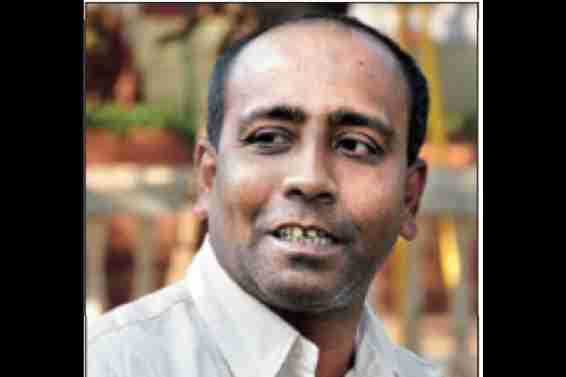
Moumita Chaudhuri meets Mamoon Akhtar, the good samaritan of Howrah’s Tikiapara and gets to know a lot about his social moves and motives.
Mamoon Akhtar / Photos, courtesy Akhtar
Tikiapara is a downtown area in Bengal’s Howrah district, off NH22. Narrow lanes full of pedestrians and vans dangling dangerous iron rods and bars trundling through them, cars and bikes honking incessantly, piles of garbage and small iron manufacturing units. Amidst all of this stands Rebecca Belilious English Institution.
The English medium school is for the poor children of Tikiapara, Pilkhana and the neighbouring Bankra town.
Mamoon Akhtar is the principal and founder of the school. That day he is not in his office. He is attending to an elderly woman who is seeking a fee waiver for her ward. “The school fees are highly subsidised — Rs 100-150. Mamoon Sir believes that education should not be free. But if someone cannot pay, he will never turn a student down,” says Tapan Mandal, a member of the school staff.
The principal’s room has a single bed, a small sofa, a table and a chair. “Sir, spends his days and nights here,” says Mandal. “I have often spotted him sweeping the school premises at daybreak,” he adds.
Akhtar himself is a school dropout. After Class VII his father could not afford to pay the fees. However, he did not give up studying. “I started teaching primary students in my area and with that money completed my Class XII,” he tells The Telegraph.
Tikiapara in the 1990s and early 2000s was apparently a den of criminal activities.
Akhtar started his school with six children in 1999. “A room in my house a few hundred metres away from here, that was it,” he says. The story goes thus. One day, Akhtar was passing a slum when he saw a man was beating up a woman; she was refusing to sell drugs and he was egging her on. A little boy stood watching. When the brawl ended, Akhtar went up to the boy and told him he shouldn’t idle away his time and the boy said he would have liked to go to school except that nobody seemed keen to send him to one.
Akhtar asked the little chap to come to his house and he became his first pupil. Akhtar says, “The next day he came back with his friend. The third day, two more; on the sixth day, there were six children who wanted to study. I felt God was saying something to me. I cleaned up the front room of my mud house and started a school.”
There were no funds. Akhtar asked his students to bring old newspapers, broken items and discarded things from their homes or their neighbours’. He says, “I would sell the rags to the kabadiwala and with the money buy books, notebooks and stationery. I also requested the educated youth in the area come and teach. I paid them a small salary — Rs 100 per month.” The first funding for the school came from Lee Alison Sibley, the wife of the then US Consul General George Sibley. “I had seen her photograph in the newspaper and wrote to her asking for help for the school. Initially, she refused but she sent me a note appreciating my efforts. I wrote to her again and asked if she could help with some notebooks and pencils.” A few days after that, Lee visited the school with a journalist. She gifted a cheque of Rs 10,000 with which the school got its first toilet for the girl students.
Akhtar continues, “The journalist reported my story and one day I got a call from a Mumbai-based man called Ramesh Kacholia. He sent Rs 12,000 for cement flooring and windows. On completion, Akhtar found that he had spent Rs 8,000. He returned the rest to Kacholia.
The school was formally registered in 2007 as Samaritan Mission School High. By then, many organisations had come forward with grants. The Kacholia family stood by and connected Akhtar to Vidya Shah of Edelweiss Capital, an international investment company. These two associations have stood by the school and Akhtar through all these years. Once the school was in place, Akhtar turned to improving the living conditions of the people of Tikiapara. The students were from the nearby slums, children of labourers from Bihar and Uttar Pradesh. Their parents were auto drivers, domestic help, property dealers and so on. Most of the children were first-generation learners.
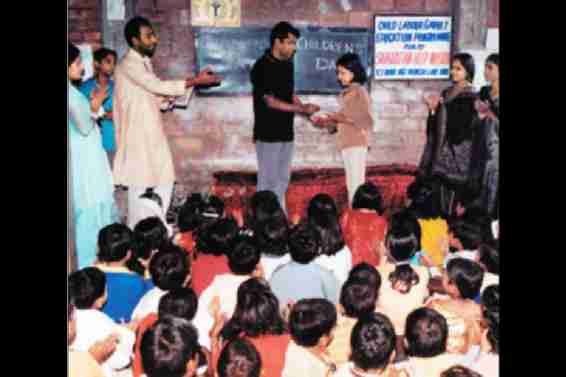
LIGHT HOUSE: The first school started by Mamoon Akhtar
Once the school was in place, Akhtar turned to improving the living conditions of the people of Tikiapara. The students were from the nearby slums, children of labourers from Bihar and Uttar Pradesh. Their parents were auto drivers, domestic help, property dealers and so on. Most of the children were first-generation learners.
Akhtar started a vocational training programme for women. The Howrah police and the administration too supported his endeavours.
In 2014, the wheels turned for Akhtar. The Rebecca Belilious English Trust of Howrah handed over their school building and clinic to him. “It belonged to a Jewish family by the name of Rebecca Belilious,” he says.
The building was renovated with funds from corporates. Akhtar named the five floors of the school building after Savitribai Phule, C.V. Raman, Swami Vivekananda, Ishwarchandra Vidyasagar, B.R. Ambedkar and Baba Amte. The clinic at the Rebecca Institute has now been turned into a small hospital that caters to the people of Tikiapara. Soon there will be a hostel for girls; Akhtar feels the slums in the neighbouring area are not safe for girls. A galpo ghor or storytelling room will start for the children of the primary school as they still do not have a library.
Akhtar’s first school has also gotten better — smart classrooms, science and computer labs, sports such as archery, basketball, football are encouraged. Children can also opt for NCC training. In 2015, Akhtar opened a third school named Samaritan Public School in the slums of Bankra in Howrah.
Students from his first school cracked the 2022 NEET examinations and one student qualified in the WBJEE exams last year. From six students, the number of children attending these three schools is now 6,300.
source: http://www.telegraphindia.com / The Telegraph Online / Home> Culture / by Moumita Chaudhuri / July 23rd, 2023
Prof Faizan Mustafa was vice chancellor of NALSAR at Hyderabad before returning last year to Aligarh Muslim University’s law faculty.
Prof Faizan Mustafa was appointed on the recommendation of the search committee headed by former Chief Justice of India Dipak Misra
Patna:
Prof Faizan Mustafa of the law faculty at Aligarh Muslim University (AMU) was on Tuesday appointed vice chancellor of the Chanakya National Law University (CNLU) in Patna.
The appointment was made on the recommendation of the search committee headed by former Chief Justice of India Dipak Misra, said Prof SP Singh, social sciences dean and facilitator of the search committee.
Prof Mustafa returned to AMU last year after spending a decade at the National Academy of Legal Studies and Research (NALSAR) as its vice-chancellor. He was previously the founder vice chancellor of National Law University, Odisha.
He also served as dean and registrar at the AMU.
Mustafa is the recipient of both Commonwealth Scholarship as well as Fulbright Fellowship. He was conferred the SAARC’s ‘Best Law Teacher Award’ in 2014 and has delivered lectures in almost 32 countries of the world like USA, UK, Australia, Germany, China, Germany, Israel etc. He also runs a YouTube channel, Legal Awareness WebSeries, which has over 700,000 subscribers.
CNLU vice chancellor Justice (retd) Mridula Mishra congratulated Prof Mustafa for his appointment as vice chancellor of the university set up in 2006.
source: http://www.hindustantimes.com / Hindustan Times / Home> Education> Admissions / by Arun Kumar / July 18th, 2023
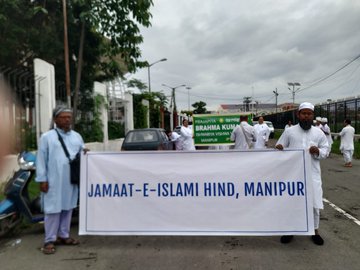
In Manipur, the Muslim community has emerged as a crucial peacemaker amidst the ongoing conflict between the two largest groups: the majority Hindu Meiteis and the minority Christian Kukis.
Meities account for about 53.5 percent of Manipur’s total population while 42 percent of the population belongs to Kukis. The rest are Muslims and other groups. The clashes between the two groups began when Kukis, who are Scheduled Tribes and live in hilly areas of the state, protested against the Manipur high court order granting ST status to Meities. Kukis felt that privileges available to them by virtue of being ST would be grabbed by Meities who are in majority and have control over the state government.
When the violence between the two communities began on May 3, Meities living in Kuki dominated and Kukis residing in Meitie-majority areas began fleeing to protect their life and property. There was so much hatred that in many cases, it were the neighbour attacking their neighbour of the opposite group.
Manipuri Muslims, who are called Pangals and are converts from the Meitie community, were targeted by Meitie Hindus in May 1993. About 140 Muslims were reported to have been killed in the 1993 violence. Muslims also suffered huge loss of their properties.
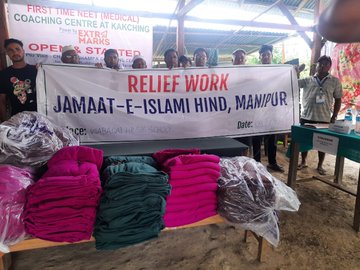
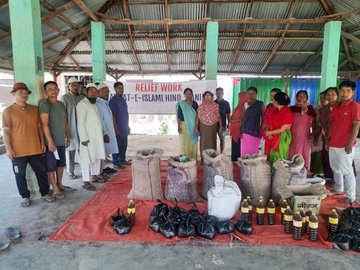
But the Muslims forgot what had happened with them in the past and came forward to offer a helping hand to Meities as well as Kukis at the risk of their own safety because both the groups had warned Muslims not to give help to their opponents. Ignoring the threats, Muslims offered, food, shelter, clothes and other relief materials to the victims irrespective of the group they belonged. In the process, many Muslims were attacked and sustained injuries. However, no Muslim was killed.
An incident worth mention occurred on May 4 when Kuki individuals sought shelter in the Muslim-dominated area of Hatta Golapati in the state capital of Imphal. The Meitei Muslims bravely opened their doors, risking their safety, to save the lives of more than 3000 Kuki people. Subsequently, the Meitei Muslims handed them over safely to the security forces. In this endeavour, men, women, and children from Hatta Golapati played a significant role. Women cooked food for the refugees, while men and children provided clothes, food, and other necessities.
Similarly, in the neighboring Churachandpur district, the Meitei people rushed to KWAKTA Village, where approximately 20,000 Muslims reside. Although the local Muslims are not financially well off, the they collected grains, vegetables, and other essentials from their homes and mosques to feed the victims. The Kwakta Muslims prevented the Kukis from attacking nearby Meitei villages and also stopped the Meitei from attacking Kuki villages near Kwakta. Tragically, many Kwakta Muslims were injured in crossfire and bomb blasts.
Throughout their relief efforts, the Muslim civil society and Muslim student organizations have been diligently collecting relief material from Muslim families and distributing it in the refugee camps.
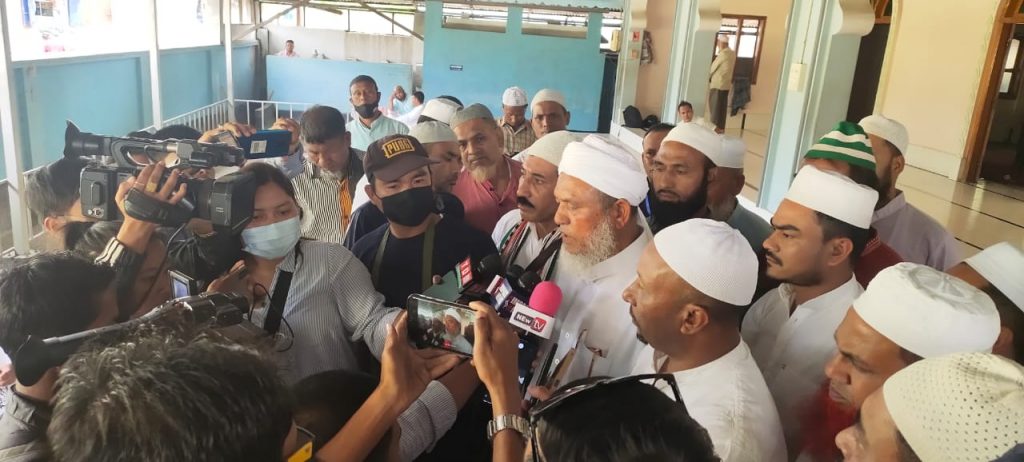
Moulana Syed Ahmad, President of Jamait Ulama-i-Hind, Manipur, and SM JALAL, President of All Manipur Muslim Organisations Coordinating Committee, an apex body of all Muslim Civil society in Manipur, addressed the media recently. Speaking to the media, Moulana Syed Ahmad, President of Jamait Ulama-i-Hind, said, “We have always lived in brotherhood, as children of one father and mother.” The violence has targeted the co-existence and peace of both communities, which have been living peacefully since the inception of the state of Manipur.
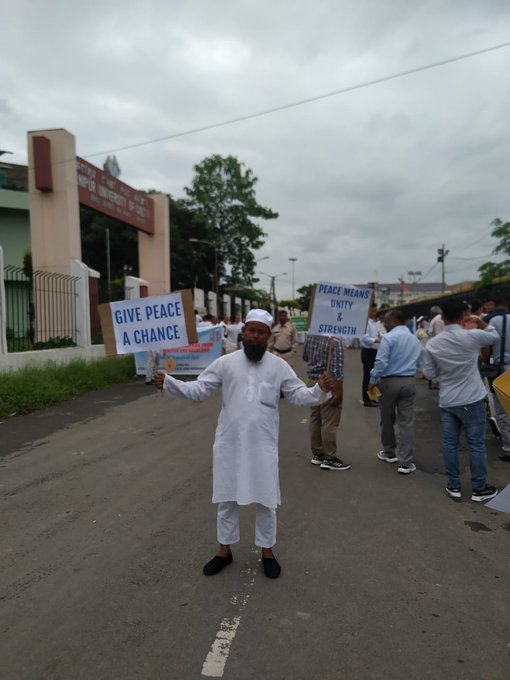
Notably, many interfaith groups have also stepped forward to promote peace and harmony under the banner of “INTERFAITH FORUM FOR PEACE AND HARMONY.” This forum has organized meetings, rallies, and prayers, appealing for peace, with participation from various groups, including Jamaat-e-IslamiI Hind, Catholics, Baptists, Federation of Madrasa Sana Mahi (Meitei religious group), International Society for Krishna Consciousness, Brahma Kumaris, and Vishnu Gaurav, etc.
In this time of crisis, the collective efforts of the Muslim community and interfaith organizations are providing a glimmer of hope for peace and reconciliation in Manipur.
At least 150 people are reported to have lost their lives, 400 are wounded, and more than 60,000 have been displaced from their homes. The authorities, including the army, paramilitary forces, and police, are still struggling to quell the escalating violence even after more than two and a half months when the violence began.
source: http://www.indiatomorrow.net / India Tomorrow / Home> Human Rights> Communalism / by Syed Ahmed Ali / July 26th, 2023
Engineer Mohammad Yousuf founded the Help Handicap Foundation in 2001
Hyderabad:
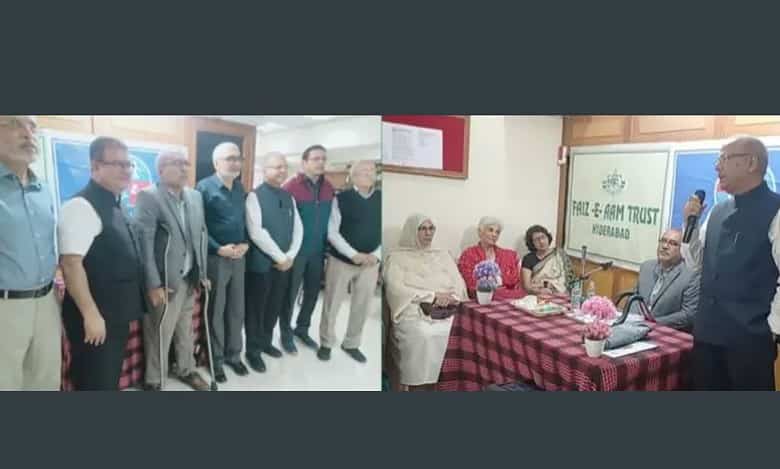
Faiz-e-Aam Trust, Hyderabad organises a special gathering in the honour of Engineer Mohammad Yousuf, Director, Federal Transit Administration, Office of Infrastructure, Safety and Asset Innovation on Saturday. The event was by prominent personalities of Hyderabad. Yousuf emphasized that strong thinking and high intentions can overcome even the biggest challenges, and disability should not hinder a person’s path to success.
The event commenced with a warm welcome by Mr. Rizwan Hyder, Trustee, Faiz-e-Aam Trust, who also conducted the proceedings. Engineer Muhammad Yousuf, who contracted polio at the age of two, narrated his journey of overcoming obstacles. Despite facing numerous challenges, he pursued BS degree in Electronics and Communication Engineering plus an MS degree in Computer Engineering from USA with the timely financial assistance from Faiz-e-Aam Trust, marking a significant turning point in his life.
Engineer Mohammad Yousuf founded the Help Handicap Foundation in 2001, which later became the EquallyAble Foundation based in Michigan USA. The foundation operates in 12 countries, including India, providing extensive support to the disabled community. Through Faiz-e-Aam Trust, the foundation extended financial assistance of Rs 35,58,710 to 142 individuals, including students and patients, and facilitated employment for 1,000 disabled people. Additionally, the foundation grants $5,000 to students with disabilities pursuing higher education abroad.
Expressing his admiration for Engineer Mohammad Yousuf, Mr. Zaheeruddin Ali Khan, Managing Editor of Siasat, commended his relentless efforts in empowering disabled individuals worldwide. He emphasized that Engineer Yousuf’s determination and commitment have made a significant impact on the lives of disabled people across 120 countries.
Dr. Naseeruddin paid tribute to the invaluable services of Engineer Muhammad Yousuf and Iftikhar Hussain, Secretary of Faiz Aam Trust. Mr. Iftikhar Hussain shared how the trust assisted Mohammad Yousuf during his pursuit of higher education in America. He expressed his delight in witnessing Mohammad Yousuf’s success and his return of the financial assistance to the trust.
Mr. Iftikhar Hussain highlighted Faiz-e-Aam Trust’s journey, which started with Late Zulfiqar Hussain’s vision in 1982 and has grown into a strong force of aid and support. The trust annually provides more than Rs 1 crore to help meritorious students and those in need. He also acknowledged the trust’s collaboration with Siasat Millat Fund, contributing to the assistance of victims of communal riots and disasters across Hyderabad, Telangana, and various parts of the country.
The gathering was organized in honor of Engineer Mohammad Yousuf and was attended by prominent personalities of the city, including Zaheeruddin Ali Khan, Rizwan Hyder, Ali Hyder Amir, Syed Haider Ali, Khalil Ahmed, Ayub Salahuddin, Ms. Zainab, Ms. Rubina, Ms.Shahnaz, Shaheed Hussain, Ms. Marwat Hussain, Mr. Salman Tayyabi, M.A. Siddiq, Dr. Ibrahim, Qazi Zainul Abedin, Prof. Khwaja Nasiruddin, Haroon Zai, Qari Siddiq Hashim, Ahmad Bashiruddin Farooqui, and other members of Faiz Aam Trust. The event witnessed a large gathering of staff and attendees who were moved by the inspirational stories and noble efforts of Engineer Mohammad Yousuf and the trust.
source: http://www.siasat.com / The Siasat Daily / Home> News> Hyderabad / by Zahed Farooqui / July 21st, 2023
Owing to a lack of study material in Urdu, only 38 candidate out of the 25,000 who opted for Urdu medium, qualified for the Group-I preliminary exam in October 2022.
Educationist from Telangana, Mohd Khaja
Hyderabad:
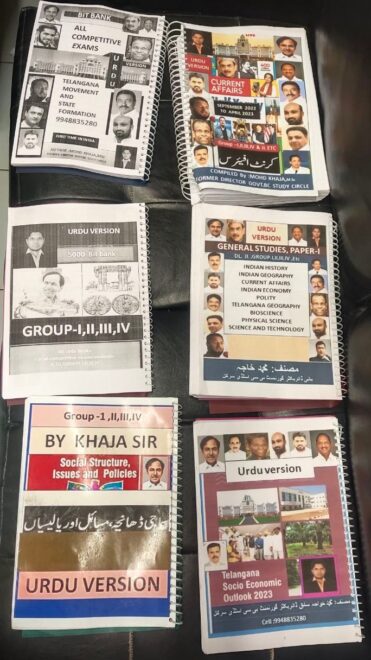
In an effort to make study material for Telangana State Public Service Commission (TSPSC) available in Urdu language, a renowned educationist has covered the entire syllabus in ten volumes.
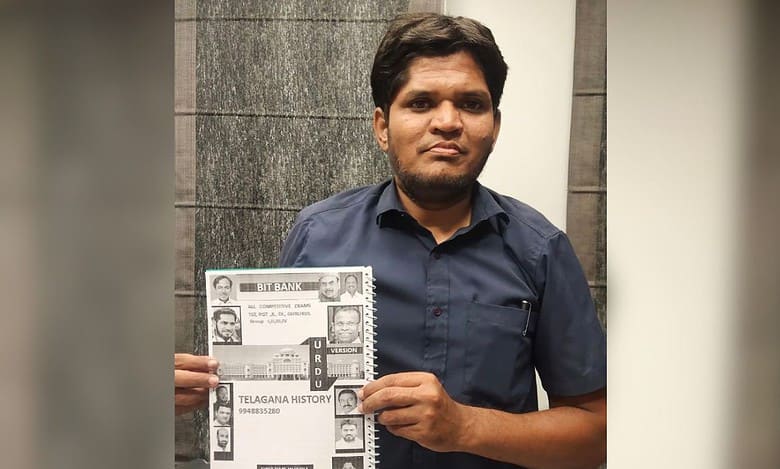
Mohammed Khaja, founder and director of BC Study Circle, has not just compiled the material, but also converted the same in ‘speaking mode’ using AI tools. Hailing from Adilabad, Khaja envisions an exclusive IAS Study Circle for those coming from Urdu-medium backgrounds.
Owing to a lack of study material in Urdu, only 38 candidate out of the 25,000 who opted for Urdu medium, qualified for the Group-I preliminary exam in October 2022.
Ever since, the state government declared Urdu to be the second state language, Khaja took up the initiative of compiling study material in Urdu, for those who struggle to follow the vast syllabus in English or Telugu language.
Besides the TSPSC syllabus, Khaja has also compiled a ‘bit bank’ for Telangana History and Telangana Movement in the Urdu languages.
Books in Urdu, for competitive exams, compiled by Khaja
“Many students from Urdu-medium background face difficulties while preparing for various competitive exams,” said Khaja. “It is difficult to find the updated syllabus in Urdu.”
“While they prepare for the exams, it takes a lot of time for them to collect the material or study in other languages. Hence, they fail to qualify,” added Khaja.
For the students to overcome this barrier, Khaja has been preparing the study material since 2021.
While Telugu academy books are priced at Rs 400, Khaja’s material can be availed for almost half the price. Khaja further said that the idea of a AI-powered ‘speaking’ module for both English and Urdu medium syllabi would make the preparation easier.
On July 23, 500 copies of ‘5,000 bit bank’ (Urdu) were distributed among Urdu-medium students at The Siasat Daily‘s office in Abids.
The ‘bit bank’ covers topics like Indian History, Indian Constitution, Indian Geography and Economics, Telangana geography, Biological Sciences, Physics, Chemistry and current affairs updated till June 2023 were distributed for free.
Nearly 1,000 people participated in the launch of ‘bit bank’ and many reviewed the book, stating that the consolidated data was simple to understand and would consume less preparation time.
For more information and related queries, contact Mohd Khaja on 9948835280.
source: http://www.siasat.com / The Siasat Daily / Home> News> Telangana / by Masrath Fatima / July 24th, 2023