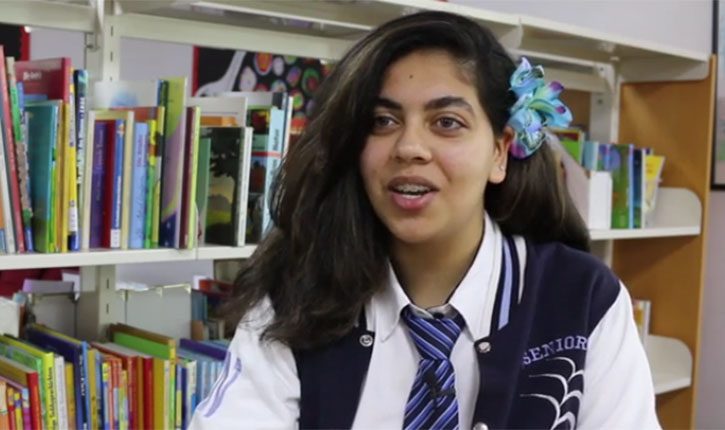
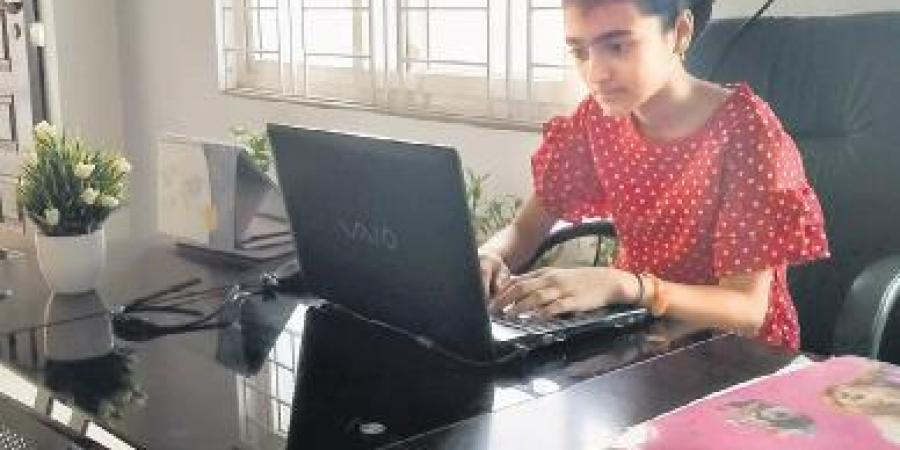
Simone has been a student at the Uptown School in Mirdif for all of her grade school years and has managed to keep straight A’s.
Dubai:
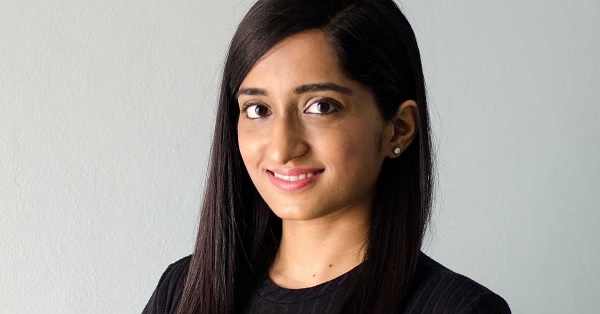
A Dubai-based Indian teen has been offered acceptance letters from seven prominent US-based universities, including Ivy League schools such as Dartmouth College and the University of Pennsylvania, the media reported on Sunday.
Other high-ranking universities, such as University of California in Berkeley, John Hopkins, Emory, George Town and George Washington University, have also offered Simone Noorali, 17, a spot, reports The Khaleej Times.
She has been a student at the Uptown School in Mirdif for all of her grade school years and has managed to keep straight A’.
“I honestly think there is no secret to being accepted into these many universities. The whole process is about discovering yourself. Everyone has something unique to offer,” she told Khaleej Times.
“While applying to universities, it forced me to look back at my life and try to figure out the reason behind everything I did. I had explained all of that eloquently to universities in my college application essays,” said Simone, who is also the head girl at her school.
Besides keeping her grades on top, Simone is also an accomplished pianist, has written a book on human trafficking in India called “The Girl in the Pink Room” that is being used for educational purposes, is part of the school’s Model UN programme.
Simone’s father, Sameer Noorali, said his daughter is a “prime example” of how students can get into prestigious universities without parents having to buy their way in.
When asked which university she would choose, Simone said her decision would be based on which varsity offers the best programme in international relations and economics.
source: http://www.ummid.com / Ummid.com / Home> Education & Career / by IANS / April 28th, 2019
Zarin Begum Yusuf Khan has scored 65.86 per cent from old syllabus.
Her father is a mechanic, while her mother is a home maker.
She plans to complete her articleship and then peruse CA final exams.
A24- year old girl, Zarin Begum Yusuf Khan, from Mumbra has topped the country in the charted accountancy (CA) intermediate examination in the old syllabus with 65.86 per cent. The exams were held after many delays due to Covid-19 and 4094 students took the exam. The results were announced on February 08.
Struggle behind CA topper Zarin Khan’s journey
Zarin Khan stays in a modest 300 sqft house with her parents and three younger siblings. She said that she used to study in the kitchen of her house throughout the night. She did an internship with a Thane-based company for a year which helped her to pay for her CA classes.
“I didn’t believe that I have topped. I was not expecting to be a ranker, let alone be the first in the country. I had applied in 2017 and took a two years gap. I interned at a company for one year and used the money for CA classes. With my family’s support, I took the exam last year. I was scared and nervous before appearing. In the lockdown, I got more time to concentrate on my studies as there was less disturbance. I used to study all night to focus better as in the morning as there is too much noise as our house is near a road,” said Khan.
CA topper Zarin Khan’s Plan
Zarin is the first generation of learners to pursue a professional course in her family. While her father, who has studied till class 9, is a mechanic, her mother is a homemaker. Both her brothers took their Class 10 board exams last year. While her younger sister has completed BSc and is working. “No one in my family is well educated. It was in 2017 after I completed my graduation that I decided to apply for CA. I’ll complete my articleship and then peruse CA final exams,” said Khan.
source: http://www.indiatoday.in / India Today / Home> News> Education Today / by Mustafa Sheikh, New Delhi / February 14th, 2021
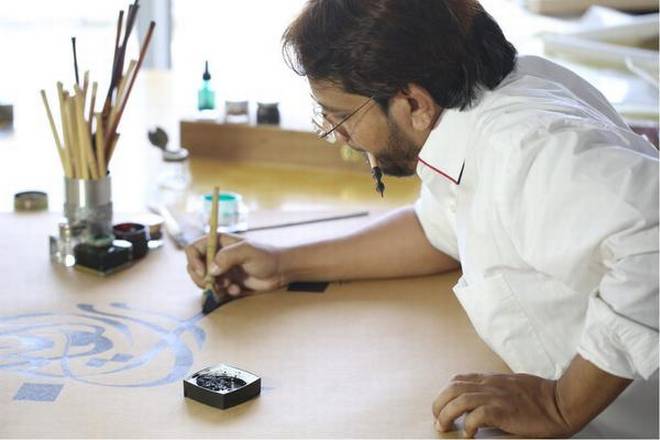
Muqtar Ahmed at work. Photo: Special Arrangement/THE HINDU
A 24-year-old with a global presence and her teacher are among a few keeping the art of Arabic calligraphy alive in India
Bee Bee Laisa, a final year Engineering student in Bengaluru, has a dream. The 24-year-old wants to transcribe a copy of the Koran in Arabic. “I have always been interested in art and drawing, but it was only when I started learning English calligraphy that I was introduced to the art form in Arabic, which would help me transcribe the holy book,” says Laisa.
And so began her journey in 2016, as a student of the Institute of Indo-Islamic Art and Culture (IIAC) at Richmond Street, Bengaluru, to learn Arabic calligraphy. Also known as khat, this centuries-old art form is held in high regard by Muslims because of its association with the dissemination of the Koran before the era of printing presses.
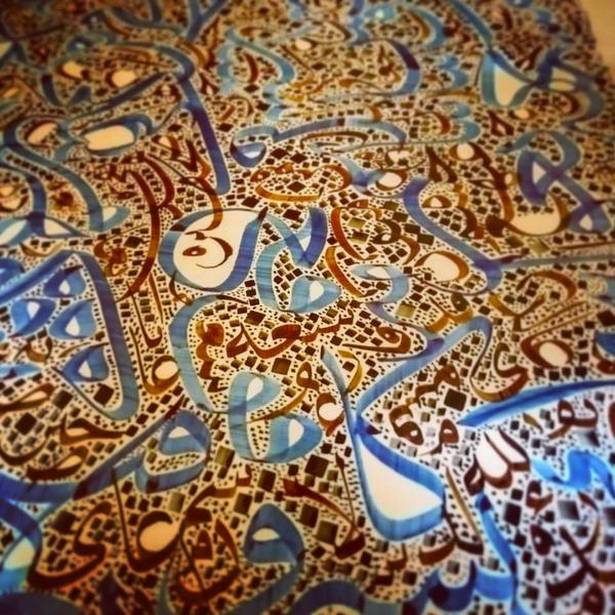
In the past five years, Laisa has mastered the decorative script thuluth considered one of the most difficult fonts, and naskh (used to write the Koran). Her talent has been recognised on several international and local platforms: her calligraphic artworks of Koranic verses and Islamic phrases have been exhibited in Japan, UAE, and Jaipur since 2017.
Calligraphy alphabet sampler by Bee Bee Laisa. Photo: Special Arrangement/THE HINDU
It is a huge leap forward for Laisa, whose father works as a banana delivery vehicle driver in Bengaluru. Laisa says calligraphy has helped improve her concentration and also use her drawing skills in her Civil Engineering classes.
“Calligraphers can’t have any dot or line out of place; this has helped me present spotless drawings for my coursework as well,” she says.
The school uses traditional materials to teach the art, including wooden or reed pens (qalam) and inks from plant-based resins. As per tradition, strands of raw silk are placed inside the inkpot (likka), to help regulate the amount of ink on the qalam tip, and also to prevent spills onto the paper.
“We use a paper called muqahar for the final version. Though it is commercially available, calligraphers also learn how to prepare their own muqahar sheets,” says Muqtar Ahmed, the principal and tutor at of the IIAC.
__________
Built to be timeless
The process of making muqahar was perfected in the 17th Century by Turkish calligraphers, and Arabic calligraphy students still learn it today.
Paper is stained with natural dyes (like tea or floral decoctions) and then coated with a tempering mixture of alum crystals dissolved in egg whites. It is then burnished to get a glossy finish.
“Muqahar paper, if made correctly, can last up to 700 years,” says Ahmed.
__________
Devoted to the art
Ahmed is the man guiding Laisa in her mission. He has the distinction of being the only Indian to have earned his Ijazah (Masters diploma) in Arabic calligraphy from the Turkey-based Research Center for Islamic History, Art and Culture (IRCICA), under the auspices of the Organisation of Islamic Cooperation (OIC). He has trained over 500 students through the school’s weekly courses, and has started online classes during lockdown.
“Calligraphy takes a long time to learn, and one only gets better with continuous practice,” says Ahmed.
His own encounter with the art form is a tribute to his tenacity. As an Intermediate school graduate in a small village in Telengana, he started learning Urdu and Arabic calligraphy and decided to make his career as a scribe for an Urdu publication in Bengaluru, in 1990.
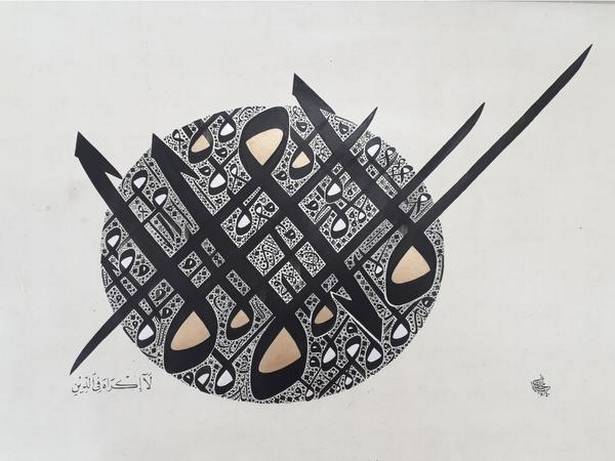
Arabic calligraphy by Muqtar Ahmed. Photo: Special Arrangement/THE HINDU
“I used to write entire pages of articles in the column style, before the computers came in,” he says.
Most of the commercial calligraphy that was done for Urdu and Arabic journals before automated printing lacked the aesthetic values of the original art form, he says.
“I’d like to revive Arabic calligraphy among young people and show them how this can not only be an art but also a way to remember the divine in our life,” Ahmed says.
When he lost his job in 1994, Ahmed decided to research how other calligraphers, especially those outside India, were sustaining their craft. He set up a small commercial press to keep his home fires burning, and kept looking out for masters in calligraphy.
“I realised that it is not a language transforming tool, but an art that has a different respect globally,” he adds.
Among the people who helped him were Washington-based Syrian font designer and calligrapher Maamoun Sakkal, and Mohamed Zakariya, the first Westerner to earn calligraphy diplomas from IRCICA in Turkey.
In what sounds like an incredible process today, Zakariya, who is based in Virginia and does not use electronic communication, tutored Ahmed over postal correspondence for three-and-a-half years.
“I used to send my completed exercises from Bengaluru, and he would reply with his comments and corrections by post. Mr Zakariya didn’t charge me any fees for the tuition, and I feel very fortunate to have been his student,” says Ahmed.
Zakariya also introduced Ahmed to his own master Hasan Chalabi from IRCICA, who invited him to Turkey in 2008. After several visits to Istanbul to learn the art, Ahmed earned his Masters degree in 2013.
Paying it forward
“My professors advised me to start teaching calligraphy in India after I graduated, so that I could rekindle the old majesty of the art. When Mr Syed Mohamed Beary [a local real estate developer] heard of this, he sponsored the establishment of the institute in Bengaluru, and put me in charge of it. I’m glad to see that though it is a very difficult field to excel in, at least 15 of our students are being recognised for their calligraphy,” says Ahmed.
Ameerul Islam and Abdul Sattar, two of his students, have set up a branch of the institute in Hyderabad. IIAC’s curriculum covers the Arabic scripts riqa (for newcomers), naskh and thuluth and nastaliq in Urdu. Learning any two scripts thoroughly is ideal for a calligrapher, says Ahmed.
Bee Bee Laisa. Photo: Special Arrangement/THE HINDU
Bee Bee Laisa’s aim of transcribing the Koran is shared by her teacher. “In fact it is the ultimate goal of every Arabic calligrapher,” says Ahmed. “But it is a huge project, because there are at least 600 pages to be transcribed. If we do something with our hands, it is priceless,” he says.
source: http://www.thehindu.com / The Hindu / Home> Society> History & Culture / by Nahla Nainar / February 19th, 2021
Compiled by Parveen and her research group, this book is for PhD, MSc students, research scholars
New Delhi: ‘100’ year journey of Jamia, today Shatabdi Foundation Day
New Delhi:
Jamia Millia Islamia has come out with scientific information and research regarding the coronavirus pandemic. Shama Parveen, an associate professor at Jamia university, has made public this information related to the Covid-19 pandemic through a special book.
The book describes anti-virals and other drugs, natural compounds and corona vaccine.
The coronavirus pandemic has affected almost every part of the world. This has resulted in the loss of lakhs of lives. In these difficult times, the book on ‘The Covid-19 Pandemic: Epidemiology, Molecular Biology and Therapy‘ by Shama Parveen provides readers with a comprehensive description of the Covid-19 pandemic, Jamia Millia Islamia said in a statement.
Parveen is an associate professor at the Centre for Interdisciplinary Research and Basic Sciences at Jamia Millia Islamia in New Delhi. She completed her Ph.D (Microbiology) in ‘Molecular Epidemiology of Respiratory Syncytial Virus’ from the Department of Microbiology, All India Institute of Medical Sciences (AIIMS), New Delhi.
She is also involved in clinical and basic research in the molecular biology of human viruses such as dengue, chikunguniya, zika, hepatitis and respiratory syncytial virus and now SARS-CoV-2.
Parveen said:
“The book is divided into 11 chapters focusing on various aspects of Covid-19. This includes topics such as pathogens (morphology, genome, protein, structural protein genes and replication), global epidemiology, transmission, risk factors, clinical expression, management, immune response, and pathogenesis.
“The book also describes the diagnosis of Covid-19, therapeutic agents (antiviral and other drugs, natural compound) and corona vaccine.”
Compiled by Parveen and her research group, this book is for PhD, MSc students, research scholars, post-doctoral fellowship and colleagues published by Bentham Science, Singapore, and is also available online.
Her work on clinical research is concerned with the analysis of viral strains around the world, focusing on their changing evolutionary potential and oncological epidemiology. Basic research involves cloning, expression, purification and structural characterization of various viral proteins and identification of related potential inhibitors.
Parveen has published more than 50 papers in journals of international repute. She was awarded the prestigious “Sayeeda Begum Woman Scientist Prize” in 2018 for her significant scientific contribution. She is also a member of the National Academy of Sciences India (NASI), Allahabad
source: http://www.ummid.com / Ummid.com / Home> India / by IANS / February 06th, 2021
Ruha Shadab is a doctor and a graduate from the Harvard Kennedy School where she was on a full-tuition scholarship. Shadab has worked as a doctor in low-income neighborhoods in Delhi and later moved on to work on systemic issues of healthcare, as a part of the Government of India.
LedBy, India’s first incubator for Indian Muslim Women helps them by providing leadership workshops, 360 degree advisory framework, and executive coaching.
Dr Ruha Shadab (30) is the founder of LedBy Foundation, India’s first and only leadership incubator focused on empowering Indian Muslim Women by providing leadership experiences to undergraduates and postgraduates. Launched in 2019, LedBy was incubated at Harvard University and was pre-seed funded by them as well.
Dr Ruha has been quite an achiever all her life – she pursued her medical degree, worked as a physician for a few years, then decided to join public health and worked at the Clinton Health Access Initiative (CHAI), worked with NITI Aayog and then made her way to Harvard with a full-tuition scholarship to pursue a master’s degree in public policy. At Harvard, Dr Ruha realised the need to do something for Indian Muslim women given the specific challenges that they faced, and also found the medium to address the problem.
From a religious majority to a religious minority
To understand why Dr Ruha felt the need to start an initiative for Indian Muslim women, it is imperative to understand her early influences.
While Dr Ruha is originally from India, she was born and raised in Saudi Arabia and she spent the first decade of her life there before moving to Delhi/NCR.
Narrating an incident that left a deep impact on her, which eventually led her to start this initiative, she says, “Twenty years ago, it was on Diwali that my family and I moved back to India. While driving from the airport to our home I saw every house on the way lit up and children on the streets bursting fire crackers. This suddenly took me back to the Diwali’s in Saudi and I realised how my friends there, the minority, never celebrated it in this way.” After a few years, she saw Eid in a similar light as Diwali.
She says, “In Saudi, as part of a monolithic society, one does not even think of what the minority is feeling. And then I moved to India where so many things just hit me so hard.” That is when she understood what being a Muslim woman, especially in a multicultural society like India, felt like.
It was not like there were not enough Muslim women, but they were hard to find in the mainstream.
“It was tiring, after a point of time to be the only Muslim woman in school, college, workplace. There was no one who shared a similar background as me whom I could look up to and aspire to be and that is what I wanted to change,” she says. During Dr Ruha’s stint as a clinical physician, she says, “At the hospital I worked at, I would see so many young Muslim girls with large families. Without saying it was right or wrong, what I saw was that there was an issue that needed to be addressed.”
Dr Ruha believes that there is a lot of talent in them [Indian Muslim women] but what they lack is 3 A’s: agency, access, and avenues. LedBy is looking to change that. If you have the privilege of knowing, you do not have the luxury of not doing,” says Dr Ruha.
LedBy works closely with high potential college-going Muslim women in India and provides them with three things – leadership workshops, 360* advisory framework, and executive coaching. “For all these three things we have very skilled women, across regions and religions, on-board to help the younger women realise and achieve their potential,” says Dr Ruha.
“We have been able to get coaches, mentors, and facilitators from across the globe. Being a virtual program helps breaks barriers,” she says. It is a summer program of four months in which 24 women are selected on merit. To be eligible to apply for this programme, you must identify yourself as an Indian Muslim woman, no more than two years away from completing a full-time undergraduate degree (that means, is in 3rd or 4th years of a 4-year program; 2nd or 3rd year of a 3-year program) or are in a full-time postgraduate program of one or two years duration, and physically reside in India.
For the 24 women who were part of the first cohort – what stood out were the connections that they made and the validation that their ideas and dreams received from others at the programme. While for Ammara Gul Qaisar, a student at Lady Shri Ram College, the programme “represents the power of human connections”, for Sahreen Shamim the programme allowed her a chance to delve into her dreams and find ways of realising them.
With an office based in Noida, Dr Ruha says that everything that they do is virtual and in a sense COVID-19 only helped in pushing it towards being online.
The university has issued a notification on January 28 constituting a committee for drafting the curriculum and regulations.
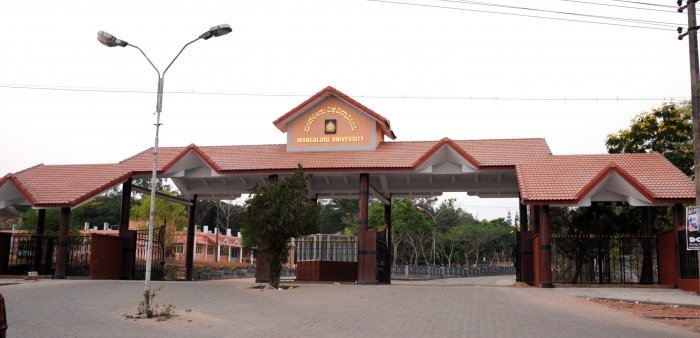
The university has issued a notification on January 28 constituting a committee for drafting the curriculum and regulations to introduce the courses in Beary art forms. The committee is headed by Prof Uday Barkur, Dean of Faculty of Arts at Mangalore University.
Karnataka Beary Sahithya Academy Chairman Rahim Ucchil said that the Academy had written to the university to introduce courses in Beary art forms like ‘Duff’, ‘Burda’, ‘Mehandi’, ‘Oppana’, and ‘Kolkali’ on September 16, 2020. The university has accepted the request and constituted a committee the draft the regulations. The introduction of the courses will help in saving the art forms and promoting it, he added.
Beary is an ethnic Muslim community, mainly concentrated in coastal Karnataka, and has its own language and culture.
The committee constituted by the university comprises organisers of Beary programmes Bashir Baikampady and Ahmed Bava Moideen, teachers Abdul Razak Ananthady, Haidarali, language expert S B Darimi, writers K M Siddique Montugoli and Mariyam Ismail, ‘Duff’ teacher Noor Mohammad, ‘Oppane’ and ‘Kolkali’ artist Rahis, artiste Zulfikar Ahmad, member coordinator Aboobakkar Siddique, Academy President Rahim Uchil said.
The courses in art forms will help in warding off the feeling of inferiority among a few people on the art forms. If it is introduced as a course, it will help in passing on the art forms to the future generation. It may be recalled that the Academy had recently introduced Beary script and numerals. Beary script has 13 vowels, 33 consonants and nine numerals. The Academy had released a calendar with all 12 months in Beary language.
The academy intends to submit a proposal on introducing Beary language as the third optional language in schools from sixth standard onwards. The Chairman said that Beary language has a history of 1,400 years and is spoken by over 20 lakh people.
source: http://www.deccanherald.com / Deccan Herald / Home> State> Karnataka Districts / by Naina J.A , DHNS / February 06th, 2021
Rahmathunnisa, currently an MCom student at Bengaluru City University, is the first from her family to attend college. On Saturday, she bagged eight awards- five gold medals and three cash prizes for BCom at the Bangalore University convocation.
Rahmathunnisa, who was a student of BBMP First Grade College said she has always been a government or an aided school student and credits her success to paying attention to the classes in college.
She plans to crack competitive exams, and says her family is supportive of her studies.
Rahmathunnisa’s father passed away when she was only three years old, and she grew up with her mother, a homemaker, and three elder sisters and an elder brother. The brother is now into aluminium fabrication, while the elder sisters are married.
In all, 319 gold medals and 90 cash prizes were awarded to 19 meritorious students during Bangalore University’s convocation ceremony. A total of 184 PhD degrees were given in different disciplines. Due to the Covid-19 situation, only gold medallists, prize winners and PhD awardees were invited in person.
source: http://www.thecognate.com / The Cognate / Home> Education / by Rushda Fatima Khan / February 01st, 2021
Zunaira Khan, 14, who runs her own tech company, dreams of expanding it and turning into an investor.
Hyderabad :
Zunaira Khan, a 14-year-old from Hyderabad is anything but your average teenager. She is a tech-savvy genius. A tech entrepreneur and software developer she got her first client at the tender age of nine. At the age of 11, she started teaching BTech students. Zunaira started her own website ‘ZM Infocom’ — a software development and consultancy firm — when she was just 12.
The wonder kid has developed business, mobile, and web applications for clients such as Licious, Fooditnow, Daily Ninja to name a few. The tech girl started learning at the age of seven and developing software from the age of eight. “My mother is a professional software developer. At the age of six, my sister and I after school, we used to be in her office.
When I was seven, I asked her to teach me coding and, she taught me everything,” says the spunky teen who lives in Nacharam industrial area with her family. Zunaira has also been conferred with the title of ‘Digital Ambassador’ of Delhi Public School. She says, “I feel good when I get these recognitions and the biggest award I get is the satisfaction in my parents’ eyes.”
How does she manage school and work? Zunaira’s hobbies are reading books and singing songs, and she says, “At the beginning, it was a bit difficult, but my principal and teachers are supportive. So after school, I give five to six hours to my company, then I study.” What is her advice to those chasing their dreams? She replies: “The secret of my success is that you need to believe in yourself.
You need to find your interest. You need to share everything with your parents because they are the ones who will show you the way. Start small, but think big and that big should be the goal.” What does the future hold for her? “Right now we are a service-based company, but I want to also make it product-based. I wish to provide maximum employment and I want to make this company reach the highest level… I also see myself as a big investor.”
Zunaira will be seen in the upcoming episode of Byju’s Young Genius show on Network 18 with actor Rajkummar Rao which will be telecast on February 6 where they talk about their first paychecks. The shooting for the show was in Mumbai and the starry-eyed girlscomments, “It was a big honour for me to meet Rajkumar Rao.”
— Tamanna S Mehdi tamanna@newindianexpress.com @tamannamehdi
source: http://www.newindianexpress.com / The New Indian Express / Home> Cities> Hyderabad / by Tamanna S. Mehdi / Express News Service / February 04th, 2021
“It is heartening to know today that the Muslim students are excelling not only in their education but in every walk of life. Diamonds are always formed and picked from the dark coal mines. This is an apt situation for the Muslim community in contemporary India. However, the good tidings are around the corner and there is no need to be pessimists. We need to brave the adverse circumstances to march towards the path of progress and advancement,” said Siasat News Editor Aamir Ali Khan.
Khan was speaking on the eve of a ceremony held yesterday at Mehboob Husain Jigar Hall at Siasat compound to distribute merit certificates and awards to 540 Muslim students of Telangana state who were succeeded in getting admissions for MBBS for the current academic year.
Khan said, “Medical profession is a sacred mission and to do justice to its sacredness is the need of the day.” He said the doctors today increase the anxiety of the patients by their unethical and commercial behavior. He advised the young students – girls and boys – to “work with a missionary zeal to serve the humanity”.
The awards were given to those Muslim students who obtained admissions in Government, private, and Minority medical colleges in Telangana through the convener quota.
Speaking as an honorary guest, Director MS Education Academy Anwar Ahmed said, that the Muslim students are doing extremely well in Engineering, Medicine, and IIT’s these days. He informed that MS Educational Academy is helping Muslim students for civil services. Nine students have succeeded in the first phase of preliminary exams. The introductory note was delivered by M A Hamid and presented the report. Another honorary guest Engineer Syed Haider Ali distributed the awards among the students. A large gathering of the students and their parents from the city and other districts attended this ceremony.
source: http://www.siasat.com / The Siasat Daily / Home> News> Hyderabad News / by Mohammed Hussain Ahmed / January 27th, 2021
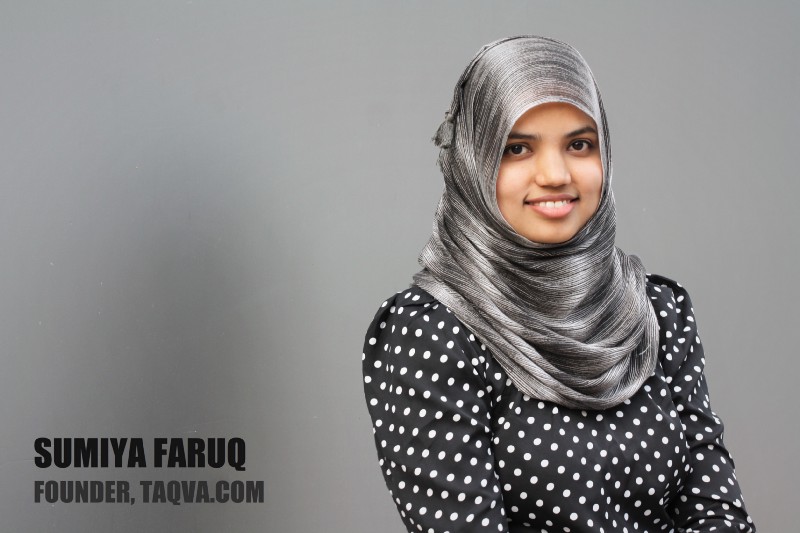
While the majority of children today are born with gadgets loaded with raunchy music and sensual dance videos, 25-year-old Sumiya Faruq wants to change the way kids are growing up.
Meet the Hyderabad-based entrepreneur and founder of Taqva — the single largest video repository of Islamic content, who is fast replacing irrelevant music and inappropriate videos with faith reviving content, inspiring the younger generation to honour integrity, morals, values, ethics, and principles to adopt righteous behaviour.
Started as a way to help toddlers and kids of the digital era to find a safe online audio-visual zone, and to shield young minds from exposed danger of inappropriate video content that has now overtaken creative online space with distracting adverts, and illicit pop-ups, Taqva was created to provide virtuous online space for families and children, where scholarly erudition of faith, etiquettes and mannerisms are being taught at the forefront, gradually but firmly establishing reverential consciousness of God.
Realising the monumental threat to the 21st-century children being exposed to explicit online content, Sumiya recalls the earlier times where the online space was still non-existent.
“During my childhood, my parents used to have a collection of cassettes and CDs containing Islamic content. We used to exchange and share these collections with friends and relatives. Over time, this practice changed as the content was being available and accessible by anyone on the internet, thanks to content sharing websites such as YouTube, Vimeo, etc. But unfortunately, these sites are like a jungle. You can find any and every type of content on there and it’s possible for a person watching Islamic videos to get lost in that jungle and get into “haraam”/ forbidden zone. Even the advertisements on these channels could be distracting and often have forbidden content.”
“Internet has become a huge jungle where kids might soon end up learning things that are completely inappropriate for their age,” says Sumiya Faruq, who also holds a Masters degree in Psychology and a Bachelor’s degree in Computer Science & Engineering.
Taqva, a video-aggregation platform of beneficial videos was created to jeopardise the great peril of early exposure to illicit websites. Created and curated with the assistance of volunteers from various parts of the world. Taqva comes with the ability to link the best of videos from content sharing websites such as YouTube, Vimeo, Vine, etc.
The videos are suggested by a group of enthusiastic volunteers who analyse the Islamic videos’ quality of content, such as the content’s suitability, reliability, and authenticity, along with various other important parameters.
“There are various categories of Islamic videos on Taqva such as — Quran recitation, Tafseer, Hadiths, Islamic reminder videos, Prophetic stories, Inter-faith debates, Revert stories, Islamic cartoons for kids, etc” adds Sumiya.
However, Taqva’s major USP is the Kids section, which is a huge collection of Islamic cartoons for Kids. It is one of website’s most viewed sections — a testimony that its audience love it.
Gaining a popular momentum, Sumiya and her team are making their online presence felt by marketing their brand using social media as their marketing tool. Taqva is available and active on major platforms such as Facebook, Instagram, Twitter and Pinterest, as “TaqvaOfficial” added Sumiya who has created a niche of her own with her brainchild — Taqva, which is an exclusive one-stop destination for all Islamic Videos.
Today, Taqva has become the YouTube of Islamic videos. “Currently, we are reaching to 50,000+ users and have over 20,000 active followers on Social Media outlets such as Facebook, Instagram, Twitter & Pinterest. Our Target viewership for Taqva is definitely, all the Muslims across the globe — and of course, many non-Muslims too! We want Taqva to be the go-to website for Islamic Videos” says Sumiya, who believes Taqva.com is an “Islamic” video hub.
“It has been designed to be intuitive, easy to use and clutter-free. Also, it’s Ad-free and all the videos are neatly categorised into several relevant categories making it easy for users to browse Islamic content says Sumiya excitedly. The Taqva team also curates posts based on Islamic quotes, mainly from the Quran and the Hadith (authentic sayings of the Prophet), featured videos and shares them on social media platforms such as Twitter, Facebook, and Instagram.
“We are not biased towards any particular school of thought. We fundamentally believe that there is only One Islam, the religion completed by our Prophet” she further explains.
With Taqva, this determined entrepreneur is sure to influence and change the way Muslim families are engaging with online platforms. The enterprising youngster who also works full time at a Multinational corporation as a software engineer aims to extend her team of dedicated volunteers, to help identify and list the best of Islamic content being produced in various languages across different countries.
“By 2020, we envision Taqva to become the largest video repository of Islamic Content reaching to millions of Muslims across the world,” she adds.
source: http://www.thecognate.com / The Cognate / Home> Startups / by Hajira Firdouse / March 02nd, 2018