Dr. Maryam Afifa Ansari, who has secured admission for a postgraduate course in neurosurgery at Osmania Medical College, Hyderabad, is set to become the youngest neurosurgeon from India’s Muslim community following completion of her degree in three years.
She had gotten 137th rank in the All India NEET SS exams held in 2020.
Interestingly, Ms. Ansari, who has left many amazed with continuous successes, has been educated in Urdu medium schools till 10th class.
She studied till seventh class in the Tahzeen High School in Malegaon, Maharashtra. Then, she moved to Hyderabad and took admission to Princess Durrushawar Girls High School. She was a topper in her school in the 10th class examination and also a gold medalist.
After completing intermediate from MS Junior College, Hyderabad with the top rank, Afifa managed to take admission in MBBS at Osmania Medical College free of cost.
She received five gold medals during her MBBS course. After completing her course in 2017, she succeeded to get admission for a masters course in general surgery in the same college for free.
In 2019, she completed a postgraduate degree, MRCS, from Royal College of Surgeon, England.
In 2020, she did the Diplomate of National Board course. This is a special postgraduate degree awarded to the Specialist Doctors in India. After scoring high in the 2020 NEET SS exams, she was granted free admission in MCH at the Osmania Medical College.
Speaking to Muslim Mirror, she said ” my success is a gift from Allah and a responsibility’ .
She would try to serve the community through her profession, she added.
‘Don’t give up, never let anyone say you can’t do it… Prove them wrong, by achieving it, she said in her message to Muslim girls.
Ms. Ansari’s continuous hard work has helped her cross every hurdle on the path of success. She is an inspiration for the young generation in India.
source: http://www.muslimmirror.com / Muslim Mirror / Home> Featured / by Muslim Mirror Special Correspondent / January 11th, 2021
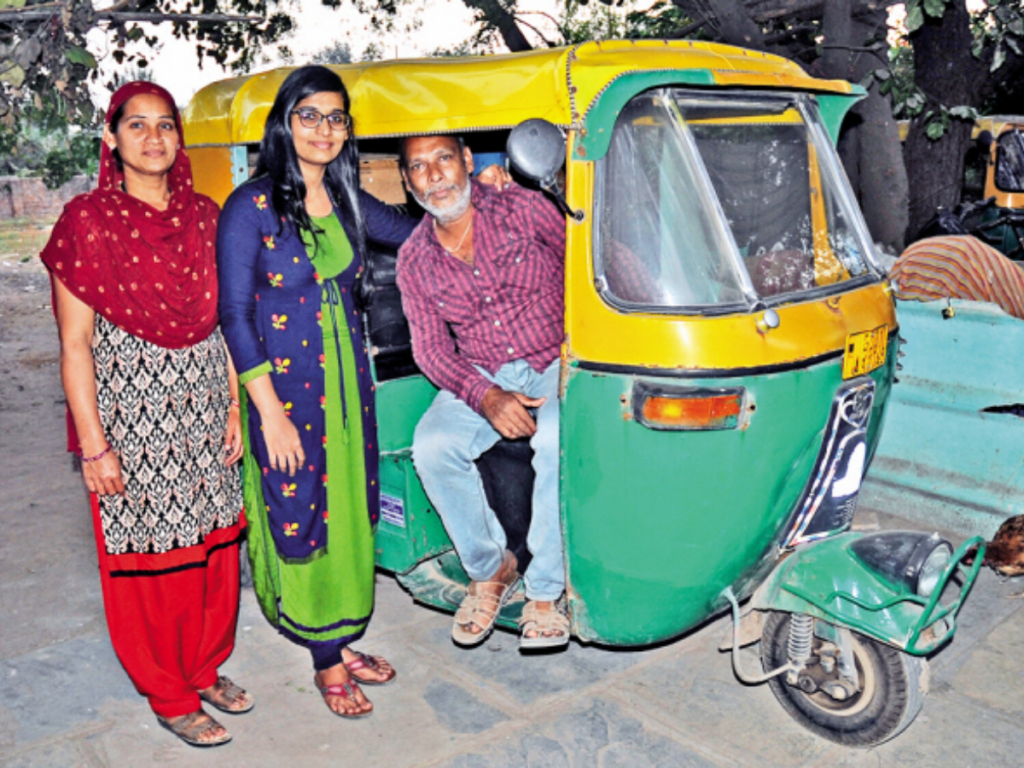
Muskan Sheikh (centre) with her family. Her father in the auto
Ahmedabad :
Muskaan Sheikh is all smiles as she made it to the Top 25 in the country who cleared the Company Secretaries (CS) Foundation Programme Examination held in December.
While her All India Ranking (AIR) is 24, she ranked fifth in Ahmedabad Chapter with 77.50%. The results were declared on Monday.
A student of SLU College where she is pursuing her second year in BCom studies, Muskaan says she has leaped closer to pursuing her dreams of joining a large corporate and helping her family come out of their financial troubles.
Her father is a rickshaw driver whose work has been affected, like many others, in the Covid-19 induced lockdown.
She lives in an one-room house in Behrampura in Satya Jivan Leprosy Colony, a special housing colony built for people suffering from leprosy. Her father’s yearly income is less than 1 lakh.
Sheikh’s grandparents, who passed away some time ago, were victims of the deadly disease.
source: http://www.timesofindia.indiatimes.com / The Times of India / Home> City News> Ahmedabad News / TNN / January 19th, 2021
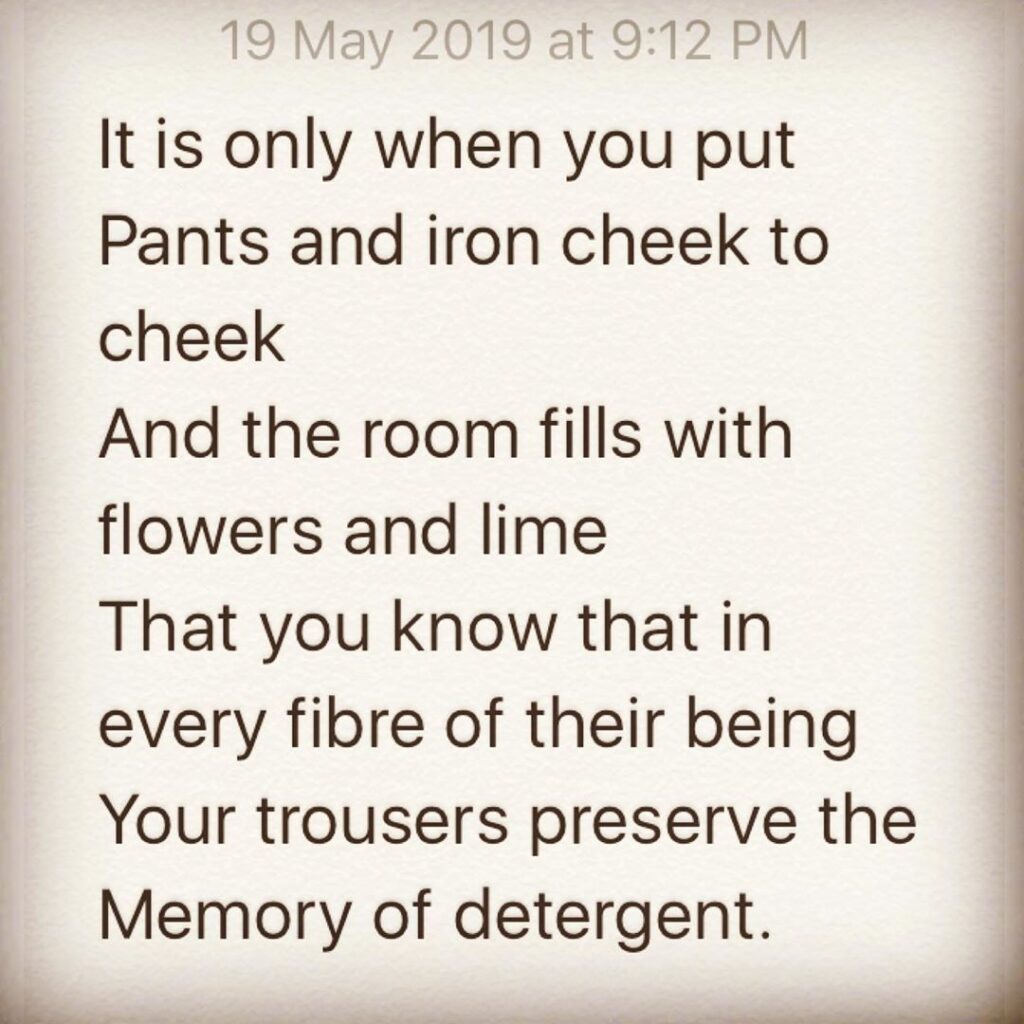
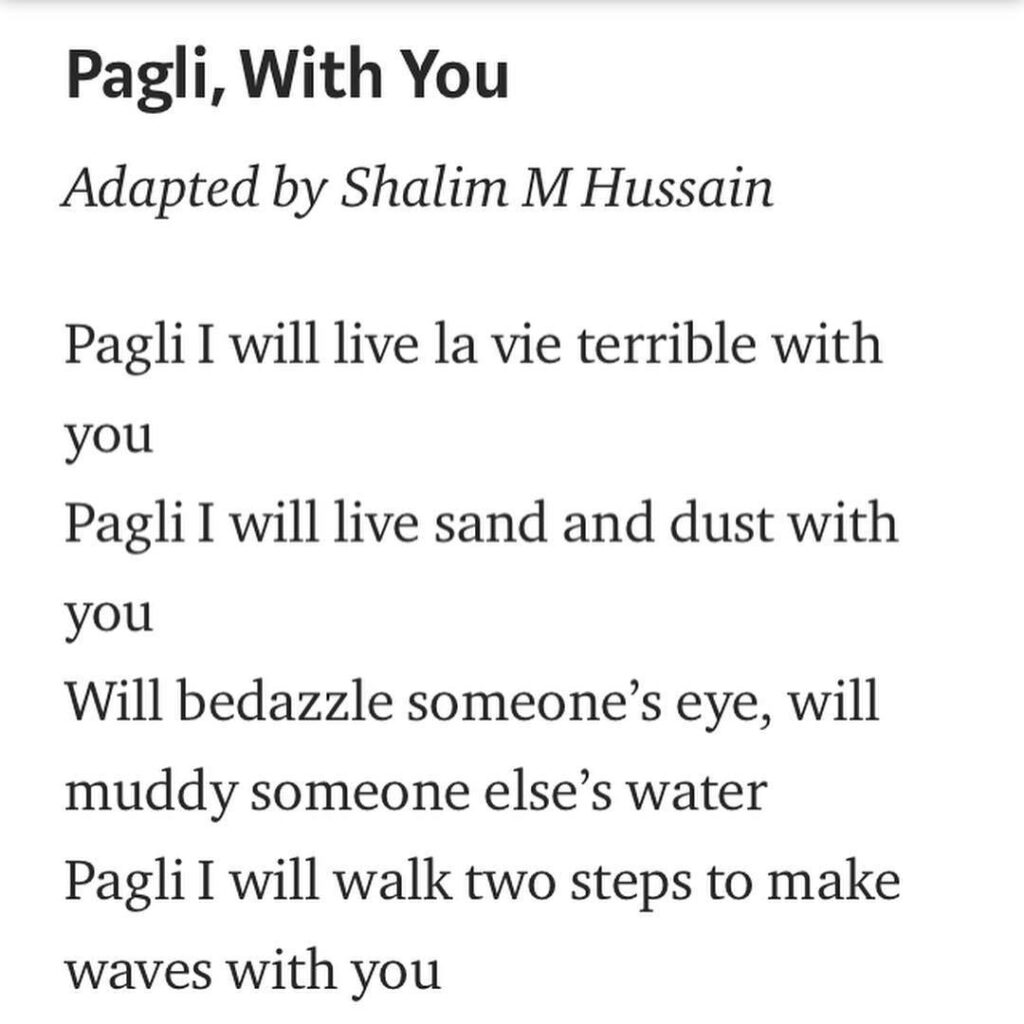
Delhi-based poet Shalim M. Hussain’s Miyah poetry provides the metaphorical loudspeaker to the long-ignored voices of the Bengali-Muslim migrants living in the riverine plains of the Brahmaputra by documenting their stories of love, loss, celebration and injustice
Nana I have written attested countersigned And been verified by a public notary That I am a Miyah Now see me rise From flood waters Float over landslides March through sand and marsh and snakes Break the earth’s will draw trenches with spades Crawl through fields of rice and diarrhea and sugarcane And a 10% literacy rate See me shrug my shoulders curl my hair Read two lines of poetry one formula of math Read confusion when the bullies call me Bangladeshi And tell my revolutionary heart But I am a Miyah See me hold by my side the Constitution Point a finger to Delhi Walk to my Parliament my Supreme Court my Connaught Place And tell the MPs the esteemed judges and the lady selling Trinkets and her charm on Janpath Well I am Miyah. Visit me in Kolkatta in Nagpur in the Seemapuri slums See me suited in Silicon Valley suited at McDonalds Enslaved in Beerwa bride-trafficked in Mewat See the stains on my childhood The gold medals on my PhD certificate Then call me Salma call me Aman call me Abdul call me Bahaton Nessa Or call me Gulam. See me catch a plane get a Visa catch a bullet train Catch a bullet Catch your drift Catch a rocket Wear a lungi to space And there where no one can hear you scream, Thunder I am Miyah I am Proud.
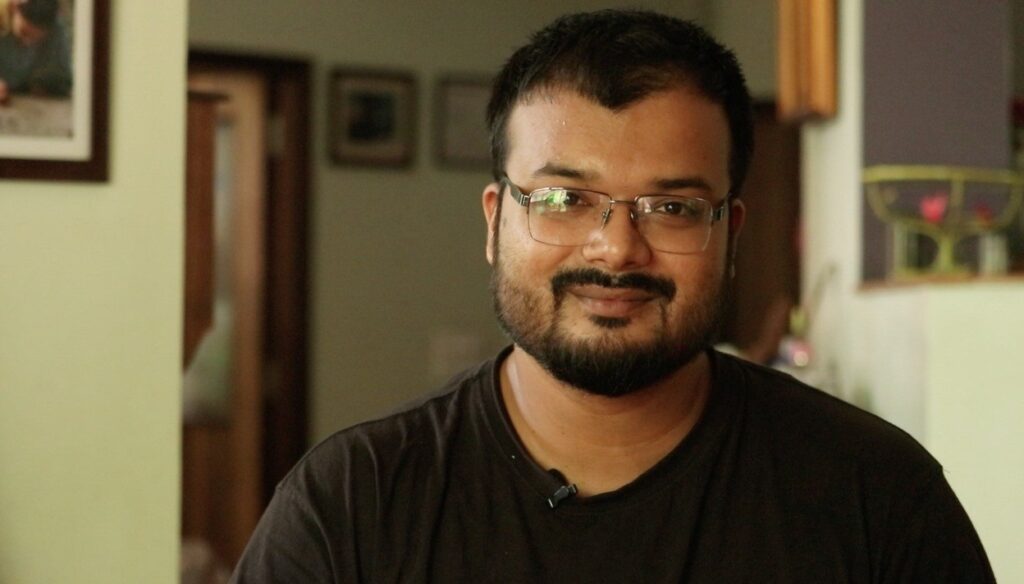
Shalim Muktadir Hussain is not an easy man to get a hold of. He belongs to the long tradition of Bengali-Muslims who have been sharing their lived experiences through the genre of Miyah poetry. The genre originates from the Bengal Partition-era migrants residing in Lower Assam, locally known as Char-Chapori. With stories of love, loss, celebration and injustice, it has historically served to lift up the long-ignored voices of the Bengali-Muslim migrants living in the riverine plains of the Brahmaputra and document their interactions with the world outside the region. But Hussain’s activism isn’t limited to the written word – the first time that I’m able to get in touch with him, he is attempting to rescue his fellow Miyah poets, who have been arrested on account of their ‘divisive’ poetry. I try again, and this time, I catch him in the middle of helping the victims of a bus accident. This humanitarian spirit shines through in his poetry, which I was first acquainted with at Godrej Culture Lab’s Migration Museum, a one-day pop-up that shed light on partition-era struggles. Months later, he shares his views on the Miyah genre, the under-representation of Assamese voices, and more.
Tell us about your personal journey as a poet. My journey with Miyah poetry, or the current phase of assertive Char Chapori poetry, started in 2016. Prior to it, I had been publishing poems for more than a decade. My first book of poems was published in 2017. Poetry as an art form came organically to me; I was looking at the world through a unique lens and had the ability to present this vision through carefully chosen words. Over the past few years, there has been a steady flow of literature from the Chars. This includes a strong collection of poems which depict the lived experiences of residents. Miyah poetry, in my opinion, is a continuation of the genre of Char Chapori poetry and its evolution. When the president of Char Chapori Sahitya Parishad, Hafiz Ahmed published the poem Write Down I am a Miyah on Facebook in April 2016, I responded to it with my composition titled Nana I have Written. Other poems were written in response to our poems and a small body of poetry emerged within a week. I realized that these were written primarily in Assamese and our local dialects which had to be translated to English so I started translating them and sent them out to literary journals and blogs. In the last couple of years, I have been writing poems in both English and the local dialect and translating both my own and works of other poets. Since then more translators have also emerged and by translating their works into other widely read languages such as English and Hindi, we have been able to reach wider audiences.
Do you think stories from Assam are under-represented? The national media focuses only on certain parts of the country. However, if the maximum potential of social media is harnessed, stories from not just Assam but other states too can find representation. Poetry is very personal for me, when I write about the land I was born and other fiction, the stories come from my personal experiences. The documentary films I have been involved in spotlight the performing arts of the Char Chaporis. According to me, all narratives – creative, journalistic, archival and academic are equally important. Miyah poetry gives a holistic view of life in Assam and the Chars.
How has digital media been helpful in popularising Miyah poetry? Digital media has aided in increasing reach and accessibility. For instance, one the offshoots of Miyah poetry is music videos and audio-visual recording of the poems. In August 2016, three poets started Itamugur, a YouTube channel named after a hammer-like instrument used to break hard clumps of earth before preparing the fields for sowing. That it is less aggressive and has a more meaningful purpose than a regular hammer is a telling quality of what they stand for. Their Bhatiyali music videos which have drawn great attention to the stories of the Char-Chaporis.
Do you think spoken word is more powerful to bring attention to the art form? I am just getting acquainted with spoken word but yes, it has played a huge role in the spread of Miyah poetry. We have read our poems at different venues and received great response from the audience.
Have you been able to change people’s perception about the community through this device? We have been able to change the perception of many people — even the residents of Assam — who didn’t know much about life in the Chars. Since Miyah poetry talks about lived experiences of love, loss, and celebration, it has been successful in bringing the ordinary life in the Chars to light. Until a couple of months ago, the representation of the Bengal-origin Assamese Muslims in media wasn’t positive; they were portrayed as thieves, dacoits and rapists. Today, we are representing ourselves appropriately through poetry regardless of others’ opinions. The narrative has definitely shifted.
You have explored various fields as a writer, poet, professor and filmmaker. Which one do you prefer? I like being a professor. One can communicate in real-time with their audience, which puts a lot of responsibility to be careful with the selection of material that should be used in the class and the language of communication. Writing allows me to tell my own stories, so there’s more freedom. As far as film-making is concerned, I wouldn’t call myself as a filmmaker. There are some art forms I think should be documented, and I do my best.
What is the future of Miyah poetry, according to you? As long as Miyah poems are written, the tradition will remain alive. In the absence of organisational structure, independent poets write poems and share them on social media platforms. There isn’t a formal definition of ‘Miyah Poetry’ which we abide by; poets themselves decide if their work qualifies to be termed in this genre. It is democratic, as no one decides if a work is a ‘real’ poem or critiques it as a good or bad poem. Every Miyah poet is an individual and each voice is precious for us.
*To reproduce the above poem in any form, copyright permission must be sought from Shalim.
source: http://www.vervemagazine.in / Verve / Home> Arts & Culture> Library / by Ojas Kolvankar / August 28th, 2019
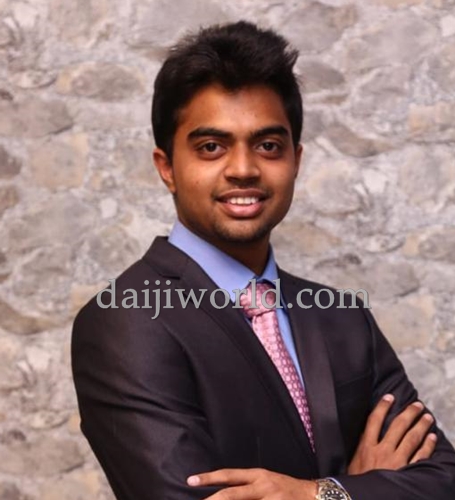
A future surgeon in the making, Syed Mohammed Adnan has done the city proud by bagging an array of gold medals and ranks in MBBS from Rajiv Gandhi University of Health Sciences.
In the recently announced results, Adnan secured the first rank in physiology, third rank in pediatrics, sixth rank in ophthalmology, and ninth rank in forensic medicine, totally four ranks in MBBS.
A former student of Expert College, Mangaluru, Adnan is the son of Dr Syed Ashraf and Nazma Tabassum Ashraf, and grandson of Syed Abubaker and the late M Azeezuddin.
pix: daijiworld.com
A brilliant, hard-working student, Adnan’s dedicated all his time and energy to following a strict study schedule while pursuing his goals.
He bagged free admission to Al-Ameen Medical College, Vijayapura along with winning a scholarship from Karnataka government for four years.
For his accomplishments, Adnan will be felicitated with a gold medal by his college on the day of convocation on February 7.
Asked about his plans for the future, the young doctor said that he wants to become a surgeon and help the underprivileged and economically weaker sections of society who do not have the means to access healthcare.
Here’s wishing Adnan all the best in his endeavours!
source: http://www.daijiworld.com / DaijiWorld / Home> Top Stories / by Daijiworld Media Network – Mangaluru / January 17th, 2021
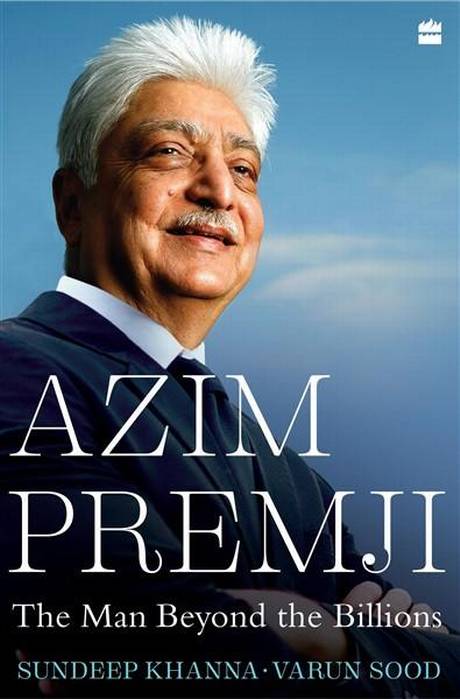
How Azim Premji expanded his business from vegetable oils to info-tech and put his money where his heart is
The story of a person can be inspiring. The authors have chosen their subject well, for, everyone knows of Azim Premji, but few truly know what makes the man.
A book about such a person, if well-written, may possibly inspire the reader into action. In this case, soon after you read the book, it’s difficult not to look up the Azim Premji Foundation website, to see if it had any volunteering opportunities, even if you have done nothing like it before!
In chronicling any life, it is easy to get mired down with mind-numbing detail that comes your way if you are sifting through 50-odd years’ worth of the protagonist’s hits and misses. The authors have done well to stick to the most interesting parts of Premji’s life. Two things stand out across events and across time: his integrity and a penchant for frugality.
Zest for austerity
His insistence on paying for personal calls made on his office phone is legendary. His friends know of his love for cars but also about his unwillingness to spend fanciful amounts on one.
He once wanted to buy a Fiat that was registered in Wipro’s name. He got the finance department involved in the discussion as he wanted to play by the rules and pay for the purchase. But with depreciation, the car’s value was zero to the company. The transaction did not go through.
At one point, his friends were agog with excitement at his purchase of a Mercedes, but it was… hold your breath… a second-hand one!
At another time, when his team was preparing to welcome clients on a visit to headquarters, and took Premji over the arrangements that included meals from a five-star hotel, he quipped, “If our cafeteria is good enough for our employees, it should be good enough for clients too!”
It’s probably the same zest for austerity that had him pleased while on a U.S. visit, when two of his senior-most executives bought lunch for the three of them at a Burger King outlet for less than $7.50! And, this was a man who didn’t bat an eyelid when an employee of the vegetable oils business lost ₹25 lakh in a year in a trading position.
A long journey
The book chronicles the journey of Wipro from the time the Premjis put down roots in Mumbai. It throws light on the man’s spirit of entrepreneurship, as the company cautiously experimented with opportunities — expanding from vegetable oils to engineering products, computer hardware, tech services and consumer care and lighting. It also does not shy away from some of Wipro’s missteps such as the investment in financial services, a business which withered away despite the group’s entry into the space after much thought and preparation.
His management style
While doing justice to the man’s talent for perseverance, the authors have touched upon his management style that many say cramped some CEOs under his chairmanship. His taking over as CEO in 2005 after the abrupt exit of Vivek Paul, said to have been primed for the post, or his decision to have a joint CEO structure soon after, at a time when competitors were blazing ahead, had raised eyebrows in the world of IT services at the time.
The reader may get the sense that the authors occasionally sound deferential when talking about the man or his family. But, it’s difficult not to be overawed by someone who has never sold a single share in his company but who chose to give away $21 billion worth of wealth to his foundation, leaving his two sons with shares valued at about ₹65 crore. How can one give away so much wealth and still, on the morning the news about the latest transfer to the foundation breaks, irritably ask an employee — who speaks of congratulatory messages overwhelming social media — “What’s all the fuss about?” ?
This book is a must-read for anyone who can read English.
Azim Premji: The Man Beyond the Billions; Sundeep Khanna, Varun Sood, HarperCollins, ₹699.
bharatkumar.k@thehindu.co.in
source: http://www.thehindu.com / The Hindu / Home> Books> Reviews> Profile / by K Bharat Kumar / January 16th, 2021
Shabera Ansari, a resident of Indore, is posted as DSP (Women’s Cell) at Dewas in Madhya Pradesh.
New Delhi:
Parents in middle-class Muslim families generally believe that their children would hardly get a government job. Hence, they find it better to engage them in some work rather than letting them pursuing studies. But a young woman from a middle-class family has busted such myths by becoming the Deputy Superintendent of Police.
Shabera Ansari, a resident of Indore, is posted as DSP (Women’s Cell) at Dewas in Madhya Pradesh and her father is posted as a Sub-Inspector at a police station in Indore.
Shabera said she had a normal childhood and there were never big dreams to pursue. When she went to college, at the age of 19, marriage proposals started coming in but fire in the belly to do something egged her on. Finally, she joined the police forces and became a DSP. Currently, she said, she is preparing for civil services exams.
The young woman said that soon after passing her out of a government school in Indore, she enrolled in a college and started preparing for Union Public Service Commission (UPSC) examinations along with her regular studies.
From SI to becoming DSP
She was selected as Sub-Inspector in 2013, and in 2018 posted as Trainee DSP in Sidhi.
Shabera’s family originally hails from Ballia in Uttar Pradesh, but settled down in Indore about 30 years ago due to his father’s job in state police.
“I was an average student in school and also failed in Mathematics once,” she told IANS with a chuckle.
“A marriage proposal came when I was just 19. I was scared and decided to do something. I started my journey and never looked back. I started preparation for the state government services during college and tasted success in the first attempt… I have continued studying ever since,” she said with confidence.
Shabera further added:
“My mother always supported me. Initially, it was not clear if I will opt to join the police, though there was always an interest since my father is in police service.”
A Successful Journey
Surprisingly, Shabera is the first woman in her family to crack state civil service exam and has now become an inspiration for her community.
Many times, she was honoured as chief guest in various functions, including school programmes where she interact with children who are always curious to know about her journey.
“I always try to encourage children and motivate them to do something in life,” Shabera said.
“Little children seem very fond of taking selfies with me,” she smiled.
She said:
“I often do counselling of children of Muslim families, especially boys. I tell everyone to trust themselves and study seriously; hardwork will definitely change things.”
Shabera said she also got to learn a lot from her father. It could be a coincidence that Shabera was incharge of a police station during lockdown where her father was posted.
In fact, her father had gone for some work to Uttar Pradesh when the lockdown was imposed and he got stuck. Shabera tried to somehow bring her father back but to no avail. Eventually, the police authorities issued direction that he could do duty from wherever he was stuck.
She said that she had many times gone out on patrol duty at night with her father. However, once back home, she used to cook for him.
She said that her father respects her as an officer but Shabera has to many times remind him that she is an officer at office not at home.
source: http://www.ummid.com / Ummid.com / Home> Life & Style / by Mohammad Suaib / IANS / January 17th, 2021
Khurja (Bulandshahr District) UTTAR PRADESH / NEW DELHI :
New Delhi:
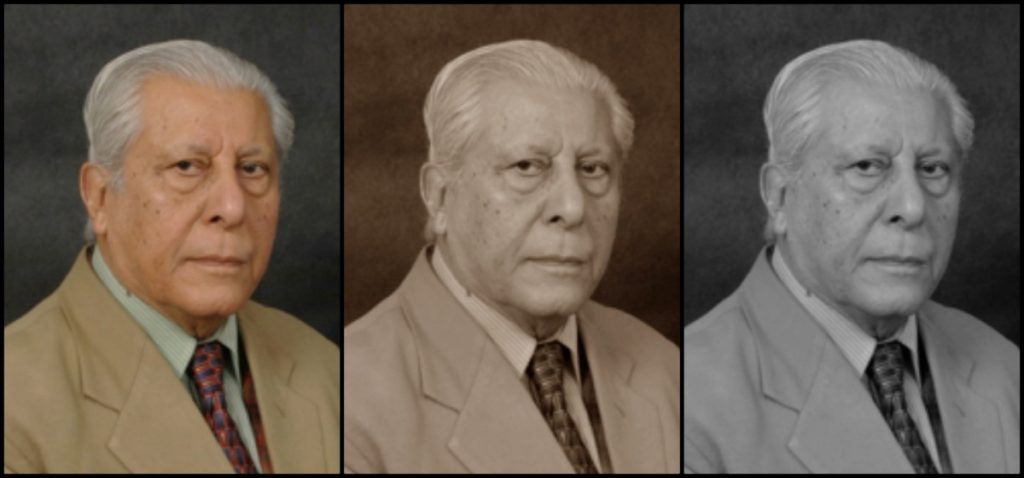
Islamic scholar, prolific writer and senior ideologue of Jamaat-e-Islami Hind (JIH), Dr Muhammad Rafat, who recently retired as a professor from Jamia Millia Islamia has passed away on Friday evening at the Al-Shifa Hospital, New Delhi.
He was 65 years of old and is survived by three sons, two daughters and his widow. His widow-Nusrat-is the daughter of former President of the JIH and a well-known Islamic scholar, Maulana Syed Jalaluddin Umari.
In the presence of hundreds of mourners, he was laid to rest today at the graveyard in Shaheen Bagh area. His funeral prayer was be held on Saturday evening here at the JIH Markaz mosque (Masjid Ishat-e-Islam).
Expressing condolences over his death, JIH President Syed Sadatullah Husaini said: “The demise of Dr Rafat is a great loss for the Muslim Ummah, the Islamic Movement and the entire country. He was a leading intellectual, tremendous leader, firm ideologue and a benevolent mentor. He was an erudite scholar of Islam and a prolific writer. He was blessed among many qualities with a razor sharp memory and an unmatched ability to give speeches on a myriad of topics without any notes in such a coherent manner that it would appear as if he is reading a written essay. He led an extremely simple life and had a very pleasant disposition. He was a teacher of theoretical physics. This subject of science has a deep connection with philosophy, so he made a direct study of philosophy and important ideas of science from its original sources. As one of the foremost ideologues of Jamaat, he always upheld and acted on the basic and core principles of Islam. May Allah forgive his sins and grant him the highest Paradise.”
A native of Khurja in Bulandshahr district of the Western UP, Dr. Rafat did his MSc in Physics from the Aligarh Muslim University in 1976 and PhD from IIT-Kanpur. He joined Jamia Millia Islamia in 1985, one year after receiving his PhD degree. He retired as Professor- Department of Applied Sciences and Humanities from the Jamia Millia on July 31, 2020.
Dr. Rafat, who was associated with the Islamic movement ever since his student days, was a member of the Central Advisory Council, the highest decision-making body of the Jamaat-e-Islami Hind from 1999 till his death. He wrote more than 15 books on various subjects in Urdu and English languages.
Besides being director of the Centre for Study and Research (CSR) of JIH, for the last two years, he had also previously worked as chairman of the JIH’s Tasneefi Academy (Authors Academy) and all India secretary of the Jamaat’s Tarbiyah Department (Training Dept.). He also served as the JIH President of Delhi and Haryana from 1995 to 2011. He had also worked as honorary editor of Urdu monthly, Zindagi-e-Nau, an Islamic research magazine, from 2009 to 2019. Besides, he headed several important committees of the JIH for policy-formulation and the creation of new institutions and allied organizations.
source: http://www.muslimmirror.com / Muslim Mirror / Home> Indian Muslim / by Special Correspondent / January 09th, 2021
Nalgonda District Collector Prashant Patil meets Bashira.
KTR also asks authorities to provide better education to her siblings
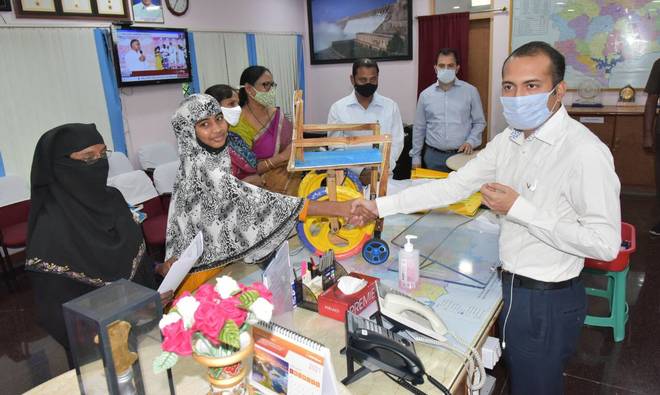
A Class IX student of Government Girls High School in the town, Sk. Bashira, is not only winning appreciation for her prototype at the Telangana School Innovation Challenge (TSIC-2020) in Hyderabad, but IT Minister K.T. Rama Rao, understanding her family situation, also directed the authorities here to allot a 2BHK house.
Mr. Rama Rao who inspected her prototype – hydraulic lifting wheelchair – had interacted with Bashira and learnt about the family – a father attacked by paralysis, working mother and two other siblings in school.
Officials here said the Minister had phoned District Collector Prashant J Patil and instructed him to initiate the procedure to confirm one unit for the poor Muslim family. On Tuesday, Bashira brought her science model to the Collectorate along with her teacher Poornima, head mistress Pushpalatha and mother Imtiaz, and explained the model to Mr. Patil.
Bashira said her bedridden father Qayyum Basha, who had been a construction worker, was the source of inspiration for her hydraulic lifting wheelchair. Mr. Patil assured the family of a 2BHK unit at Gollaguda, and also said her younger sister Sk. Sameera who is in Class V at the Police Lines School now will be admitted to the Kendriya Vidyalaya in the next academic year. And brother Nagulmeera’s education will also be guided.
Appreciation
Impressed, Mr. Patil also said the young girl will be presented a certificate of appreciation on the Republic Day. Hydraulic lifting wheelchair – developed by Bashira-Jainab-Shameem team of students is currently among the TSIC-2020 top-25 teams. They will be participating in the State-level grand finale soon.
source: http://www.thehindu.com / The Hindu / Home> News> State> Telangana / by Staff Reporter / Nalgonda – January 05th, 2021
He moved away from politics in 1962 and resumed his academic career at Aligarh Muslim University.
Aligarh (UP):
Noted scholar Jamal Khwaja, one of the last surviving members of the 2nd Lok Sabha, passed away at the age of 92 after a prolonged illness, according to his family.
Khwaja died on Thursday and his last rites were performed the same night.
He was elected to Lok Sabha from Aligarh in 1957.
He led the Indian cultural delegation to Afghanistan in 1960.
He moved away from politics in 1962 and resumed his academic career at Aligarh Muslim University.
Khwaja joined the department of philosophy at AMU in 1953. He was the Dean of Faculty of Arts at AMU in 1980.
He authored more than a dozen books, including Five Approaches to Philosophy, Quest For Islam and Living the Quran in Our Times.
Khwaja is survived by three sons and a daughter.
source: http://www.thewire.in / The Wire / Home / by PTI / December 25th, 2020
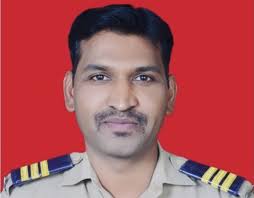
Head Constable Iqbal Abdul Rashid Sheikh attached to the Solapur district cyber cell has won first place at national level competition onCCTNS-(Crime and criminal tracking network and system) and (ICJS- Interoperable Criminal Justice system) organized by the National Crime Records Bureau, New Delhi.
A total of 260 police department employees from various Districts across India participated in the competition.
On December 16, Shri Ajay Kumar Bhalla (Central Home Secretary, Government of India) declared the name of Iqbal shaikh and other winners of this cctns/icjs through video conference.
The video conference was attended by Shri J. Kishan Reddy (Minister of Home Affairs), President icjs Agrawal, Delhi Police Commissioner, all senior officers of India.
Speaking with Muslim Mirror Iqbal informed that NCRB organises competition of all the District Cyber cells to know the functioning of the cell and the actual situation of Cyber crimes in their respective areas. He said, total 6 entries had been sent from Maharashtra, among these 6 myself, Police Inspector Pande, Police Naik Kulkarni (Pune) topped this national level competition.
I am working since last 10 years with the Cyber cell. Through my 15 pages Power Point presentation and I tried to explain our functioning and way of working , results etc fortunately which was selected for highest place, he added.
It is notable that Maharashtra Home Minister Shri Anil Deshmukh has congratulated Iqbal and other officers on his Facebook page and expressed happiness over this excellent performance. Director General of police IPS Subodh Kumar have given cash prize of one lakh to HC Iqbal for bringing laurel to Maharashtra police
Police Constable Gajanan Mali says that our colleague Iqbal has made us proud by winning first place for our district at national level competition. It’s his labour ,dedication and sincerity towards duty.
36 years old Iqbal Shaikh had joined police department in 2003 . In 2019 he also won first in Akhil Bhartiye Kartavye Melava (investigation and Observation examination).
source: http://www.muslimmirror.com / Muslim Mirror / Home> Indian Muslim / by Muslim Mirror / December 24th, 2020