Deora Village (Dharbanga District) , BIHAR / Mumbai, MAHARASHTRA :
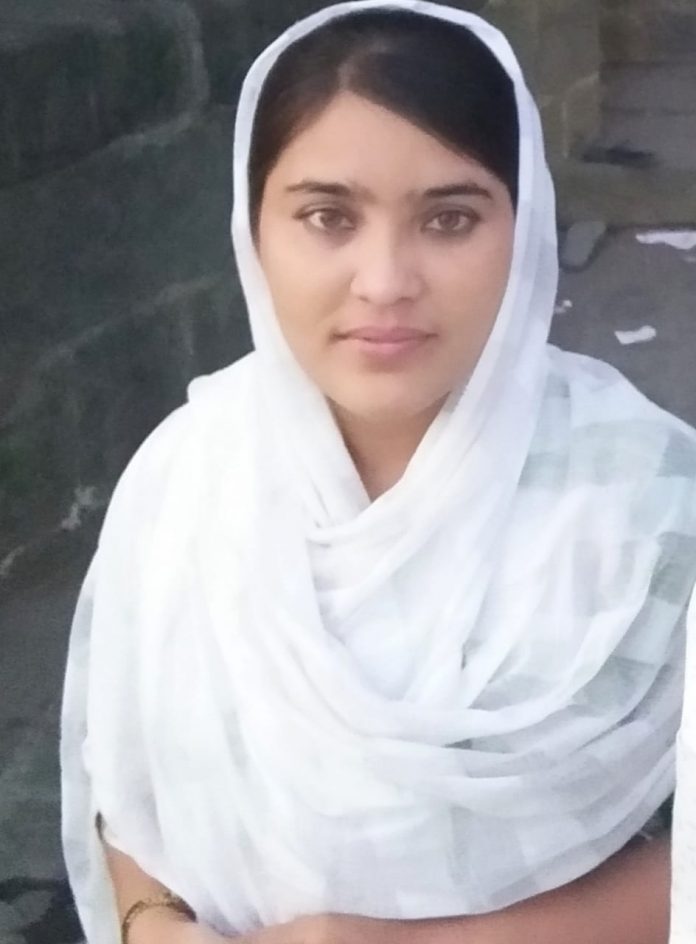
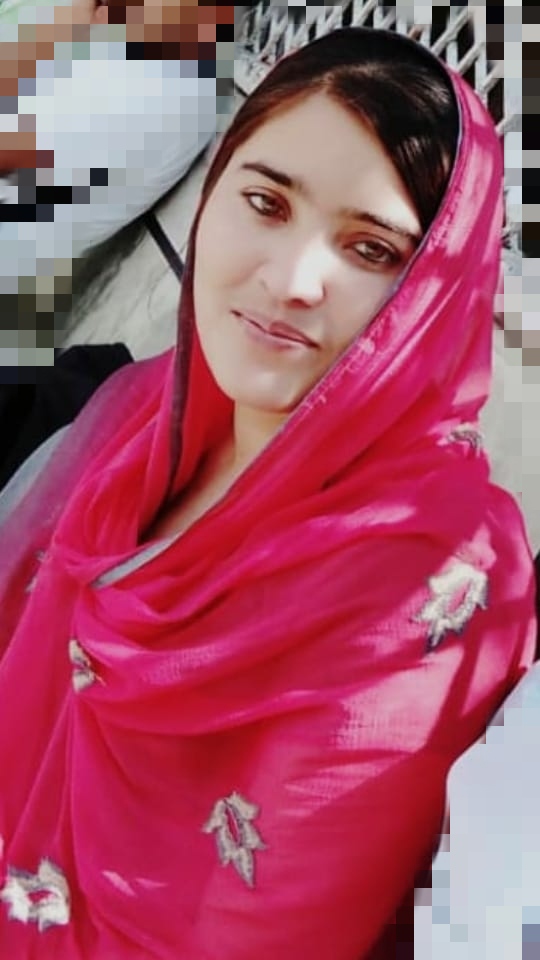
Sadiya Shaikh is an undergraduate student getting her bachelor’s in Sociology-Literature in English from Rizvi College in Bandra.
It was the startling lack of discernment of the privileged and the problem of illiteracy in India, especially in Bihar, that prompted her to come to the aid of the community in any which way she could.
Eighteen-year-old Sadiya Shaikh was born in Darbhanga district of Bihar. Sadiya’s parents had decided to move their family to Mumbai, Maharashtra when she was only a toddler, to ensure that the children got the life and education they deserved.
She was visiting her hometown during the lockdown when she managed to establish the accessible, well-stocked, and only library her village has.
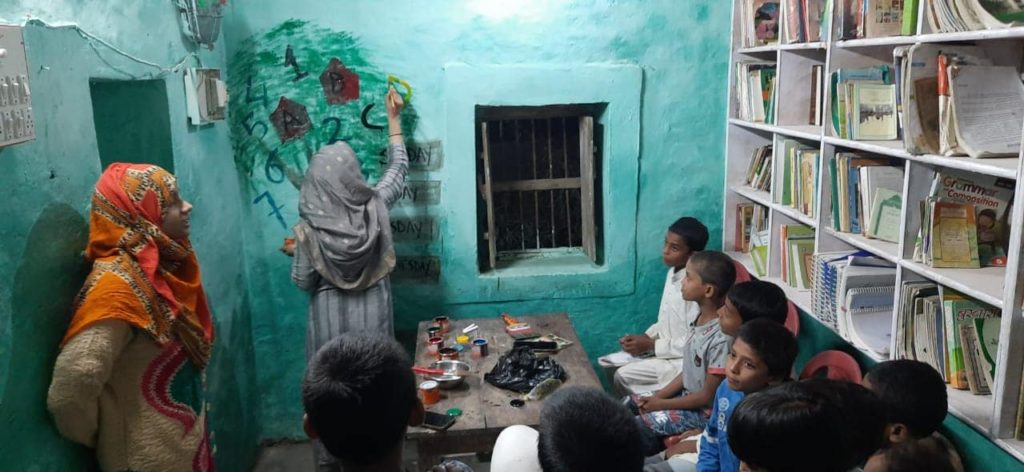
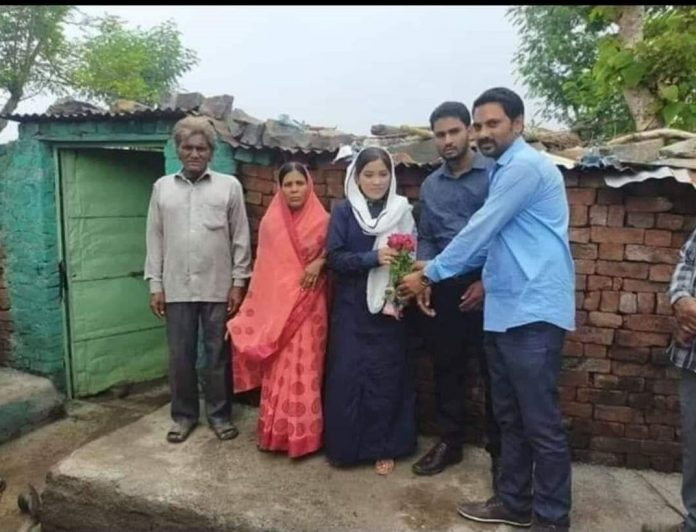
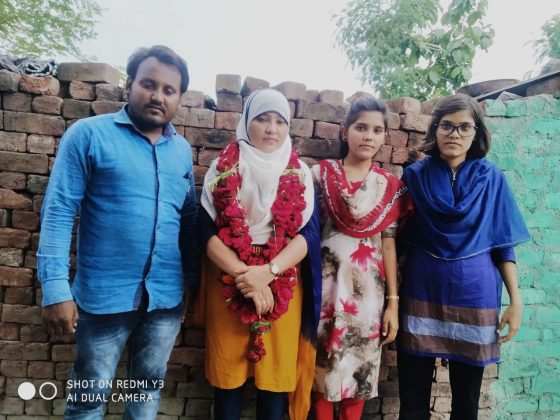
The Maulana Azad Library in Deora village of Darbhanga District is an initiative taken up by young Sadiya with help from her family and friends to sow the seeds for inclusive education for all the students in the community who cannot afford the luxury of getting appropriate and established means of instruction.
Deora stands at a total population of 3,446 persons and 631 houses. While the village literacy rate stands at 40.9%, the female literacy rate is a staggering 18.6%.
The close linked relationship between illiteracy and poverty has challenged the development of the people of Deora for a long time therefore, the library is of service to the students of all grades along with school textbooks, there is accessible material for aspirants of competitive examinations, along with a couple of trained professionals who help to tutor the children, who, even though, are enrolled in schools, cannot afford to go and own the required textbooks and other study materials.
“Few sections of our society have benefitted the most from the library, the youth who used to wander during the evening, now sit in the library and study, along with them, the elderly also use the library as a space to sit and read the daily newspaper,” Nawaz, a resident of Deora and a daily visitor of the library said to Maktoob.
The library has books pertaining to the school boards in the state and NCERT (National Council of Educational Research and Training) books from standard one to 12.
Nawaz said his village doesn’t even have a well-established government school.
“Even though there is a private school just out of the village, most families cannot afford to send their children there, and even when they somehow arrange to pay the high-end fee they still cannot afford to buy the books and other school material, so the public library has ensured the well-being of such children by providing them these books at zero-cost along with the facility of issuing the required textbooks and taking them home to read,” he added.
The library has books pertaining to the school boards in the state and NCERT (National Council of Educational Research and Training) books from standard one to 12.
Akbar Ali, a second year BCom student told Maktoob that with the establishment of Maulana Azad Library, an atmosphere to study has been created in his village.
Sadiya Shaikh is an undergraduate student getting her bachelor’s in Sociology-Literature in English from Rizvi College in Bandra. She aspires to get her Postgraduate Degree from the Jamia Millia Islamia (JMI), Delhi.
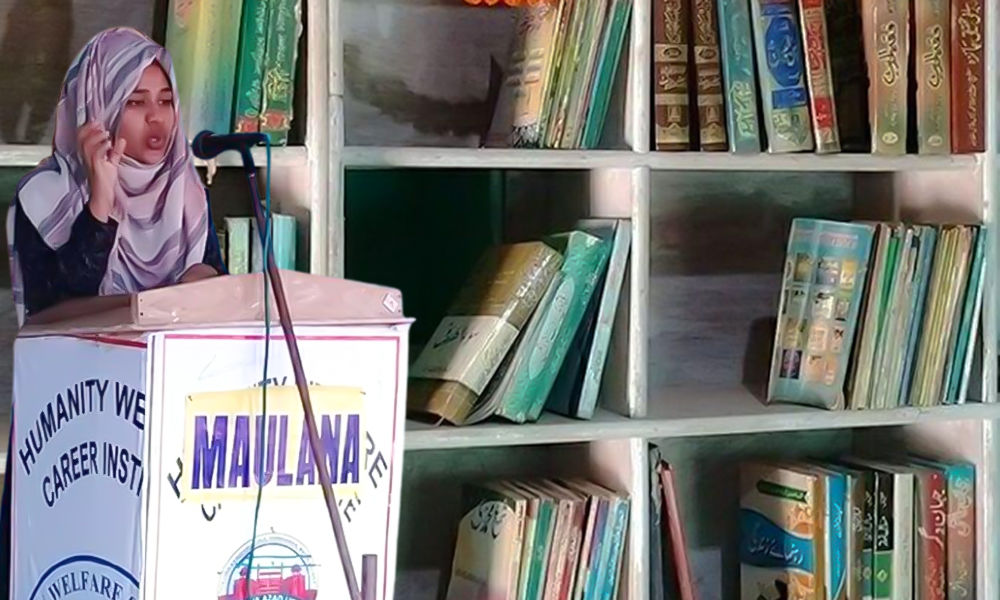
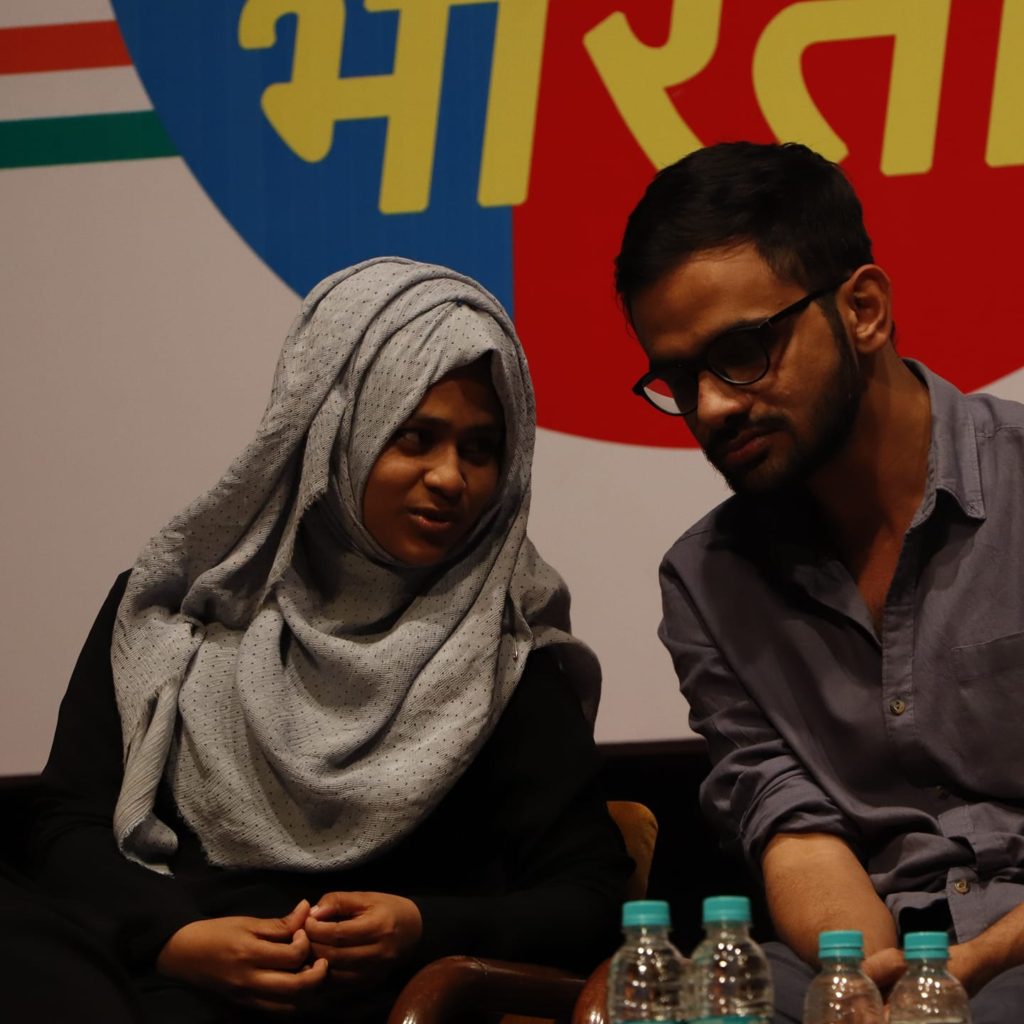
She considers her education to be the informant that made her acquainted with the social and political predicament that threatens the minorities and women in India. Sadiya was an active participant in the anti-CAA-NRC-NPR protests and has been applauded for the various speeches she delivered disputing the law at various public-speaking events, one of which was in company with activists Umar Khalid and Kanhaiya Kumar.
Sadiya was an active participant in the anti-CAA-NRC-NPR protests and has been applauded for the various speeches she delivered disputing the law at various public-speaking events, one of which was in company with activists Umar Khalid and Kanhaiya Kumar.
Moving forward, Sadiya has her sights set on helping the women in her community and creating employment for the ones who are bound to the four walls of their household.
Sadiya believes that for any social change to be brought about, it’s the privileged and the educated members of the community who need to step up and stand in allyship with the marginalised, and only through education, can they stand a fair shot with the favoured class.
“Development of one person in a society consisting of under-privileged is no development at all. It is when the fortunate ones uplift the disadvantaged and curb inequality, does real development take place,” Sadiya told Maktoob.
“During the lockdown, many children didn’t have access to any regular means of instruction so the books from the library proved to be very beneficial, they also provided newspapers for older students and adults at Maulana Azad Library”- Rahela who lives near the library says.
source: http://www.maktoobmedia.com / Maktoob / Home> Features / by Sania Javed / December 04th, 2020
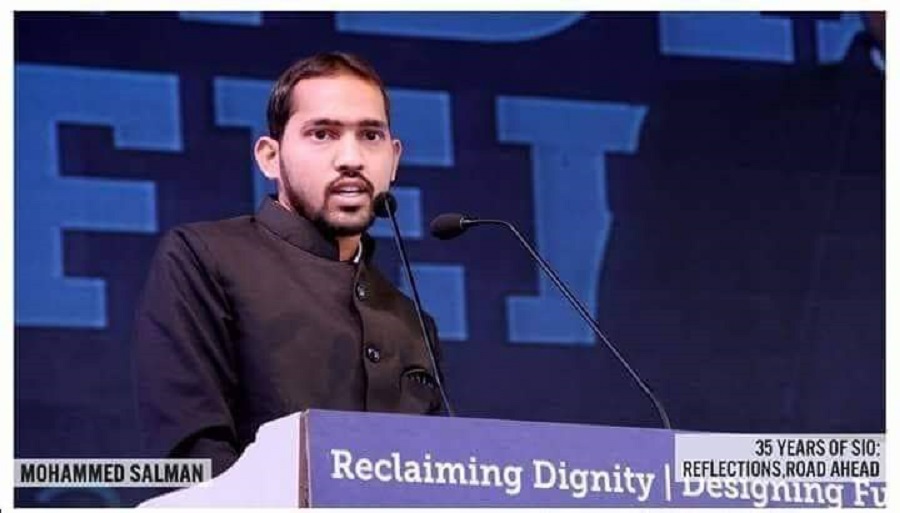
Mohammed Salman Ahmed has been elected as the national president of SIO.
A native of Maharashtra, Mohammed Salman Ahmed holds a masters degree in Engineering.
New Delhi :
The Students Islamic Organisation (SIO) of India has elected Mohammed Salman Ahmed as national president. A native of Maharashtra, he holds a masters degree in Engineering. His election was held recently at a meeting in Vijayawada, Andhra Pradesh in which other office-bearers of SIO were also elected.
Elected delegates from all the state units gather every two years to elect the president, general secretary and members of the Central Council. This year the elections were held with special precautions due to the Covid-19 pandemic, with some parts of the election being conducted online.
SIO is a national students’ organisation – and the largest organisation of Indian Muslim students – spread across the length and breadth of the country, and visible in prominent campuses of India like JNU, HCU, Jamia, AMU and other state universities. SIO is primarily active on students’ welfare and education centric issues and challenges. In recent years it has consistently worked on issues related to access and quality of education, including raising questions regarding discrimination and prejudice in educational institutions.
Syed Ahmed Muzakkir, who was previously Director of SIO’s Centre for Educational Research & Training, was elected general secretary. Muzakkir holds a masters degree in Economics from the University of Malaysia.
The national secretaries who form part of the central leadership are Nihal Kidiyoor, Dr. Naseem Ahmed, Tahoor Anwar, Rameas EK, Musab Qazi, Fawaz Shaheen and Abdul Hafeez.
Members of the Central Advisory Council, the apex decision-making body of the organisation, were also elected. They are: Amjad Ali (Kerala), Dr. Talha Faiyazzuddin (Telangana), Abdullah Azzam (Bihar), Usama Hameed (AMU), Zulqarnain Haider (Delhi), Salman Khan (South Maharashtra), Musaddiq Mubeen (Rajasthan), Dr. Luqman Ahmed (Telangana), Osama Akram (Telangana), Shujauddin Fahad (North Maharshtra), Abdul Quddus Suhaib (Karnataka), Ehtesamul Abrar (Jharkhand) and Muhammad Saeed TK (Kerala).
All the office-bearers, including the president, will hold their posts for two years.
source: http://www.clarionindia.net / Clarion India / Home> India> Indian Muslims / by Clarion India / December 02nd, 2020
Telangana University awarded PhD to three research scholars on Tuesday, among them two are from Telugu department and one is from Botany
Nizamabad:
Both research scholars are Muslims, their mother tongue is Urdu but they choose Telugu language as their career and obtain PhD from Telugu department of Telangana University.
Telangana University awarded PhD to three research scholars on Tuesday, among them two are from Telugu department and one is from Botany. These two research scholars’ are Syed Afreen and Shaik Akbar Pasha. Afreen researched on ‘Observation on Telangana female novelists’, and Akbar Pasha researched on ‘Development of Warangal district literature’.
Telugu department senior professor and Arts department Dean Prof Kanakaiah guided these scholars.
Syed Afreen, research scholar said that being Muslim and by having their mother tongue Urdu, they grown in Hindu people locality and speak Telugu language very well, also having interest in Telugu literature and had done Ph D in Telugu language.
source: http://www.telanganatoday.com / Telangana Today / Home> Telangana> Nizamabad / by Telangana Today / November 24th, 2020
JNU’s former professor of Arabic, Janab Faizanullah Farooqi passed away today. He was not well and tested positive for Corona a week ago and was under treatment at Fortis Escorts Hospital in Sarai Jullena. He breathed his last at 2 am early this morning.
Tadfeen (burial) will insha Allah be at 3 pm at Jadid Qabristan Ahle Islam (Behind Old ITO Delhi Police Headquarters) .
Faizanullah Saheb taught at Centre for Asian and African Studies, Jawaharlal Nehru University till his retirement in 2017. He was a great scholar and critic of Arabic and Islamic Studies and a poet of Arabic, Persian and Urdu.
In his house in Abul Fazal Enclave in south Delhi, he used to run a maktab teaching children to read and memorise the Quran.
Reacting to his demise, Dr Zafarul-Islam Khan tweeted, “I am sad to know about the untimely demise of my old friend Prof. Faizanullah Farooqi. He was a distinguished scholar of Arabic who enriched teaching of Arabic in India and enhanced Indo-Arab relations. He had translated most parts of my Arabic book on methodology of research which is available in Urdu as “Usool-e Tahqiq”. He leaves behind a rich legacy and many sad hearts. May his soul rest in peace.”
He was awarded the President of India Certificate of Honor for his services to Arabic language in 2019. He is survived by his wife Farzana Khatoon, daughter Amna and two sons Irfanullah and Abu Talha.
I am sad to know about the untimely demise of my old friend Prof. Faizanullah Farooqi. He was a distinguished scholar of Arabic who enriched teaching of Arabic in India and enhanced Indo-Arab relations. He had translated most parts of my Arabic book on methodology of 1/nQuote Tweet
Milli Gazette@milligazette · Jul 22
JNU’s former professor of Arabic Faizanullah Farooqi passes away. Tadfeen (burial) will insha Allah be at 3 pm at Jadid Qabristan Ahle Islam (Behind Old ITO Delhi Police Headquarters). @Muslims_India @jnu_in
Joshi Sanghvi Village, Loha Taluka (Nanded District),MAHARASHTRA :
Waseema with her parents
Born and brought up in a small village called Joshi Sanghvi in Loha Taluka of Nanded District of Maharashtra, Waseema Shaikh struggled at every step and braved the odds to be where she is today.
In the recently announced results for the Maharashtra Public Service Commission (MPSC) exam, Waseema secured 3rd rank. She is now undertaking training for the post of Deputy Collector.
Joshi Sanghvi is a small village with a population of about 3000 people and there are no opportunities for girls to study because they are married off as soon as they reach puberty. After class 7, the girls are forced to drop out of school. The maximum a girl can study in Joshi Sanghvi is till class 10. There is no college in the village, just a Zilla Parishad school in Marathi medium.
Waseema, the 4th child of her parents who are poor farm labourers, was passionate about studies. Despite having no electricity in their hut, she topped in the SSC board in her Taluka in 2012. And for college, she had to walk at least 6 kilometres every day as there was no transport available. However, when the exams for XII of junior college approached, she stayed at a relatives’ house and wrote the exams.
But graduation was again an uphill task as she would have to move away from home and stay in a hostel which her family could not afford.
She opted to study from an Open University and thus pursued her graduation from Yashwantrao Chavan Maharashtra Open University again in Marathi medium. Though her mother tongue is Urdu, Waseema is comfortable studying Marathi. She became the first graduate in her family of 6 siblings.
Her parents are both farm labourers and after her father fell sick, affecting his mental capabilities, the burden fell on the shoulders of her mother.
Her mother and elder brothers encouraged her to study despite the situation in the village where relatives kept advising them to get Waseema married off like her elder sister.
Waseema appeared for the MPSC exams for which she prepared through self-study as she could not afford coaching classes. She passed the exams, but her ranking was just good for a Class II post and she was appointed as a sales tax officer for the Maharashtra Sales Tax Office in Nagpur.
However, it was payback time for Waseema. She put her brother back in college to pursue his B.Sc degree and then appeared for the MPSC exams as was his ambition. She is also taking care of her younger 2 sisters’ education, who like her want to appear for the state civil services.
But evidently, a class II job was not enough for her so she appeared again for the MPSC and ranked among the top 5, scaling her position to that of Deputy Collector.
Waseema with her siblings
“The situation in my village where girls are not encouraged to study and forced into marriage, violence against women, poverty and poor infrastructure in the village often set me thinking what I can do to change this situation? Besides, my friend who was very good at studies and wanted to study further was married off when we were in class 9. This upset me a lot,” Waseema told TwoCircles.net.
It was this desire to empower girls and women which motivated her to appear for the MPSC exams.
Sanghvi Joshi village has a sizable Muslim population as it was in the erstwhile Nizam state of Hyderabad and now acceded with the Marathwada region.
Today the village is proud of their daughter who is the first person from their village to reach that level. She has become the idol for many young girls who are in school.
“Many girls used to come up to me to talk about their concerns when their parents wanted them to stop their studies or when their parents were looking for matches. I used to give counselling to the parents and persuade them to let their daughters study,” Waseema said.
She said she was pained that girls’ education is never a priority for parents.
Waseema said that parents of girls should become aggressive about the educational rights of their daughters. “The percentage of women in civil services is very less and I think to increase this we should have reservations, free coaching, scholarships exclusively for women so girls will be encouraged to aspire for civil services,” she said, and added, “Proper guidance, hard work, consistency in study hours, the best utilisation of resources available are equally important.”
“But I am fortunate that my mother and my brother encouraged me and I am so grateful to my brother who sacrificed his education for me when anyone else in his place would think it futile to educate a girl,” Waseema said.
It was her brilliant academic performances year after year that gave confidence to her mother and brother to let her pursue her dreams.
Waseema wishes to be posted in a rural backward place like her village so she can work for their betterment. “I want to develop the villages and help the people come out of their poverty. I have known what it is to be poor and experienced the hardships so I can empathise with the people”, Waseema said.
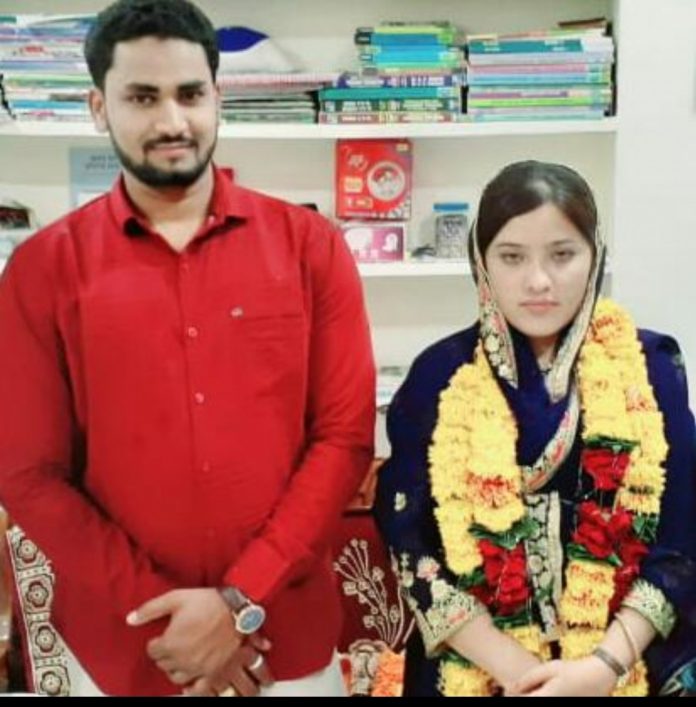
Waseema got married on June 8, a few days before her MPSC result, to Shaikh Haider who is also a Maharashtra Public State Services (MPSC) aspirant. “Yet again Allah has been kind to me, my spouse and my in-laws are supportive of my career and are proud of me,” she said.
waseema and Haidar
source: http://www.twocircles.net / TwoCircles.net / Home> Indian Muslim / by Nikhat Fatima, TwoCircles.net / July 01st, 2020
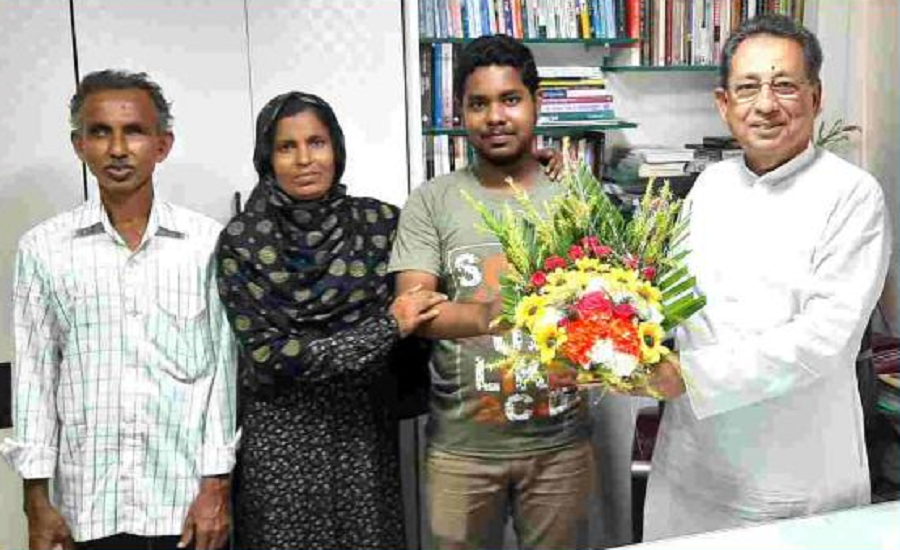
Nurul Islam, general secretary of Al-Ameen Mission (right), with a successful student and his parents.
SPECIAL REPORT
With 63 residential campuses in 20 of the 23 districts of West Bengal, Al-Ameen Mission is mentoring 17,000 students; so far it has produced 3,000 doctors, 2,800 engineers and hosts of civil servants, professors and lawyers.
A SILENT revolution in education is taking place in West Bengal which the rest of India may not be aware of. What is significant about this revolution is that it is happening in the marginalised section of Muslims.
The Al-Ameen Mission, a Howrah-based charitable organisation, has been spearheading a movement for over three decades to educate those who can’t afford quality education. Its success graph is increasing each year. This year, 378 students mentored by Al-Ameen have been selected for medical education (310 for MBBS and 68 for BDS).
This figure is after the first round of counselling held on July 16, 2020, when Clarion India interviewed Nurul Islam, the founder general secretary of the organisation. He is expecting another 100 students to be selected in subsequent rounds of counselling.
A total of 516 students of Al-Ameen have cleared NEET, an all-India written test for admission to medical colleges. Out of that, 378 have already been selected. This is no mean achievement considering the fact that two-thirds of them come from a background where becoming a medical doctor is just unthinkable.
Al-Ameen has been achieving this success year after year. In 2019, its 407 students secured admission in medical colleges for MBBS and BDS education. As many as 370 students were successful in 2018; 115 in 2017; 393 in 2016; 223 in 2015; and 212 in 2014.
Al-Ameen mentors both boys and girls. Thirty per cent of its students come from families who are very poor and categorised by the government as below poverty line. Forty percent are from lower middle income groups. The rest belong to the middle and upper middle income group. That means 70 per cent students enrolled here come from poor families.
Al-Ameen’s journey started in 1986-87 with only seven students. The aim was to give modern education with moral values in a full residential system where students from all strata of society, irrespective of their economic conditions, would stay and learn together. Students coming from the poorest sections of society were given free education. Donations and zakat were collected to meet up with the expenses. Gradually, the name of the mission spread far and wide and people came along and a movement started.
Nurul Islam says that in the 80s when he started his mission, the percentage of Muslim students in medical and engineering colleges of West Bengal was hardly two to three per cent. “But because of Al-Ameen’s efforts that percentage is today between 20 and 30 percent,” he claims.
Admission criteria
The current strength of Al-Ameen is 17,000 students. It admits students from Class V to XII. Those preparing for competitive exams also stay here beyond 12th. Merit is given top priority for admission. A common admission test is conducted for all its branches at 63 residential campuses in 20 of the 23 districts of West Bengal. Those who qualify are called for an objective test followed by interviews of their guardians.
A substantial number of seats are reserved for orphans and meritorious students of very poor families. They are also given special financial aid. In 2019, about 32,000 students appeared for admission tests to classes V to XII. Nurul Islam says his institution is able to accommodate only up to 20 per cent applicants.
Residential facility
Al-Ameen is essentially a residential institution. Those selected are required to stay in one of the 63 campuses that it runs throughout West Bengal. They are taken care of by everything: from education to food to accommodation. A strict discipline is followed by everyone alike from students to teachers to general staff.
Howrah, where it is headquartered, has four campuses in which 3,000 students are living. Al-Ameen also has campuses outside West Bengal: One in Patna, one in Ranchi and one in Tripura. There is one more in Assam which temporarily is not functional.
Scholarship scheme
Fees of the students are determined as per financial capacities of their families. Being a charitable organisation, Al-Ameen gives 100 per cent subsidy in the fees and even takes other responsibilities of education and upbringing of a deserving student if deemed fit. At present, Al-Ameen’s fee structure is divided into three categories:
25 per cent students pay zero to 25 per cent fee. Their subsidy is funded by zakat from across the country;
40 per cent pay fee ranging from 26 percent to 60 per cent. This subsidy is funded through general donations of the public;
35 per cent pay between 61 per cent and 100 per cent.
Focus on school education
Besides preparing students for medical and engineering, Al-Ameen is also focused on basic education of students under its guardianship. This year, 2,223 of its male and female students appeared for Class XII exams of states as well as Central boards. Not only all succeeded, 81 of them even occupied their positions within the rank of 20.
The background of all the successful candidates is noticeable: 605, or 27 per cent, are from poor and BPL families; 775, or 35 percent, from lower middle income groups; and 843, or 38 per cent from middle and upper middle income groups.
Similarly, 1,777 boys and girls took exams for Class 10. Fifteen of them occupied their positions within the rank of 20. Their background: 627, or 35 per cent, come from poor and BPL families; 680, 38 percent, from lower middle income groups; and 470, or 27 per cent, from middle and upper middle income groups.
23,000 Alumni
During the last 34 years of its existence, Al-Ameen has developed a strong base of alumni. They number 23,000, according to Nurul Islam. Out of that, 3,000 are doctors and 2,800 engineers. The rest are in various other fields such as civil services, academia, law and media.
The boys and girls hailing from the most backward areas and lowest strata of society, he says, are now dreaming to become doctors, engineers, civil servants, teachers, professors, researchers, lawyers or journalists.
Nurul Islam calls it a “Silent revolution”.
“Silently, a revolution is taking place. Al-Ameen has become the conduit in this whole churning of transformation which may be defined as a silent revolution,” he says.
A look at the list of Al-Ameen alumni bears testimony to what Nurul Islam is claiming. The list includes successful professionals and academicians in prestigious institutions. What is heartening is their background. Most of them belong to economically poor sections of society. But for this educational movement, they would have remained poor and uneducated. But today, they are respectable members of society and source of inspiration for others.
Some of the notable alumni are listed below:
Md Arif Shaikh, Senior Research Fellow at Harish Chandra Research Institute, Prayagraj, UP.
Dr Safina Begum, MS, Senior Resident at Fort Gloster State General Hospital, Howrah, West Bengal.
Dr Nargis Molla, MS, Specialist Medical Officer (Gynaecology), Dhaniakhali Rural Hospital, West Bengal.
Magfura Parvin, Senior Research Fellow, Vidyasagar University, Midnapur, West Bengal.
Dr Sk Altaf Hossien, MD, DNB Post-Doctoral Fellow, National Institute of Mental Health and Neurosciences (NIMHANS), Bangalore.
Dr Khandekar Fariduddin, MS, Assistant Professor, Malda Medical College and Hospital, Malda, West Bengal.
Dr Hibjul Ali Khan, MS, Assistant Professor, College of Medicine & Sagore Dutta Hospital.
Dr Md Hadiuzzaman, MS, MCH Senior Resident, SSKM Hospital.
Akram Hoque, MBA, Founder Editor, The Policy Times.
Ali Ahmed Alamgir, WBCS, Assistant Labour Commissioner.
Jahangir Mollick, WBCS (Exe), Deputy Magistrate and Deputy Collector, West Bengal.
Shayan Ahmad, WBPS, Deputy Superintendent of Police, West Bengal.
Sk Samsuddin, WBPS, Deputy Superintendent of Police, West Bengal
Ramjan Ali, WBCS, Assistant Commissioner of Revenue, West Bengal.
Dr Kader Ali Sarkar, Assistant Professor, Visva-Bharati University, Santiniketan, West Bengal.
Dr Mukandar Sekh, Assistant Professor, Aliah University, Kolkata.
Md Golam Mortoza, Chartered Accountant, Senior Executive (Finance), Management Development Institute, Murshidabad, West Bengal.
Dr Md Samim Reja, MVSc, Veterinary Officer, Domjur Block, Howrah, West Bengal.
Healthcare unit in Khalatpur
Recently, Al-Ameen has opened a healthcare facility at its main campus of Khalatpur in Howrah district. It is run mainly by its alumni, some of whom are today established medical practitioners. They regularly visit the healthcare unit and give their services to poor and needy people of the locality.
source: http://www.clarionindia.net / Clarion India / Home> Big Story – Special Report / by Shaheen Nazar – Clarion India / November 23rd, 2020
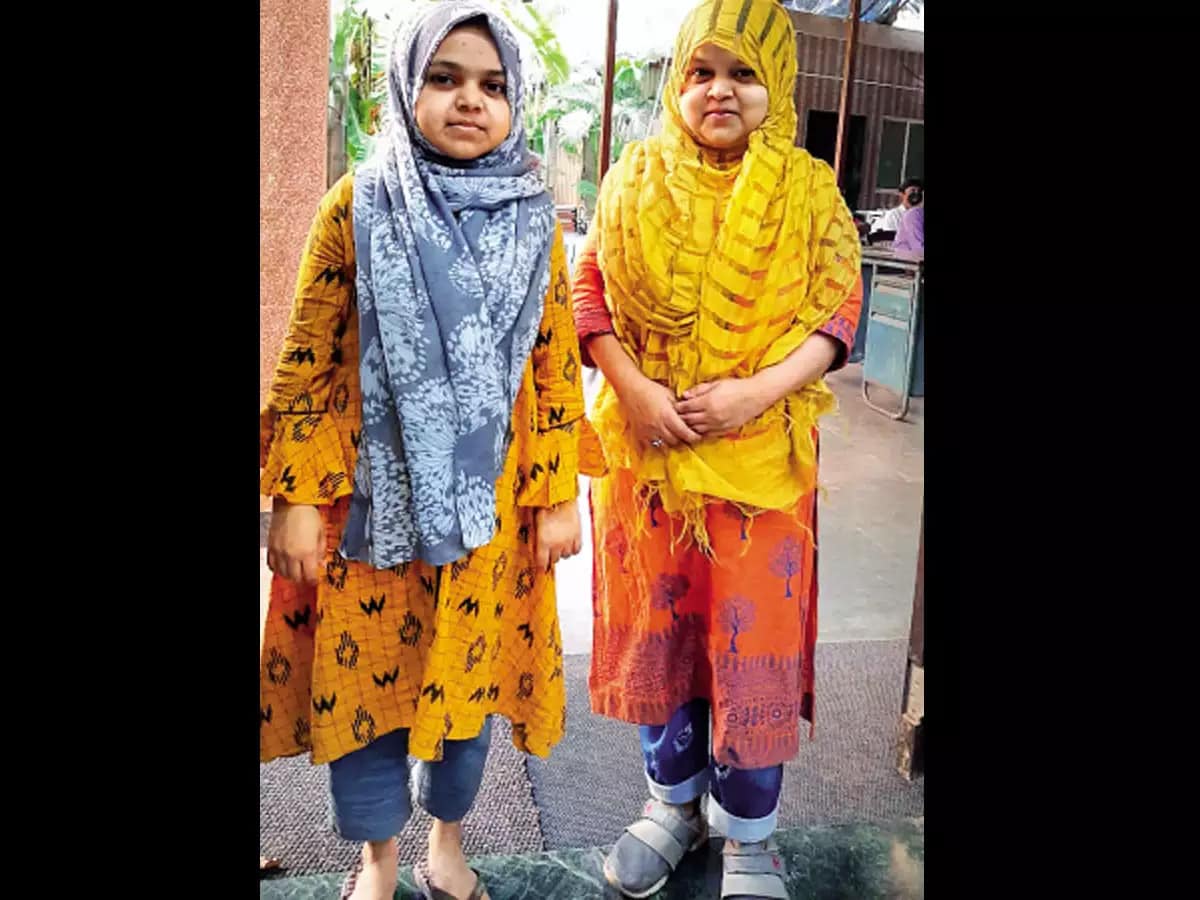
For years their diminutive stature made some wonder if they would do anything meaningful with their lives, but the Idrisi sisters—Zubaida (23) who is 3.5-foot tall and Humaira (22) who is 3.9—have already become mini-celebrities in their Nagpada neighbourhood. They qualified in this year’s medical entrance exam (NEET) and recently secured their MBBS admission; Humaira has got into Topiwala Nair Medical College at Mumbai Central and Zubaida at Government Medical College in Jalgaon.
The Idrisi sisters who live with three other siblings and parents—father Ahsanullah who is a tailor and mother Rukhsar a homemaker—in the crowded Kazipura near Nagpada junction could have not made it to the MBBS course but for a chance meeting with Ashfaque Moosa of Khidmat Charitable Trust last year.
A local NGO runs a dispensary in a corner of P T Mane Garden at Nagpada, which Zubaida and Humaira visited to pick up medicine for their grandmother. Moosa, who is called Ashfaque Bhai, was at the dispensary then and asked the two about their education. On hearing that they had abandoned their dream to be doctors and subsequently graduated in science from the nearby Maharashtra College, Ashfaque Bhai told them not give up on it. “If a six-footer needs 600 marks in NEET to get into MBBS, you need less than half of that,” he joked. On further enquiries, the sisters found their condition was covered in the reserved category of “differently disabled” and they could take a shot at NEET.
“Ashfaque uncle hamari gudiyon ke liye farishta bankar aae (Ashfaque uncle came as an angel for my dolls),” says the sisters’ burqa-clad mother Rukhsar. “He showed them the path and my beloved daughters never looked back since the day they met him.”
Ashfaque Bhai says the girls had full support of their poor parents but were discouraged from even trying to clear NEET. “Someone told them to become lab technicians or join BUMS, a Unani medicine course. But I saw the burning desire in them and that desire only needed a proper direction,” says Ashfaque Bhai who helps arrange scholarships for needy and deserving students.
Next, with a revived MBBS dream in their eyes, the sisters landed up at a coaching institute in Ghatkopar and were almost turned away by a staffer citing their “inadequate” height when the director saw them and asked them to wait. Their photographs were sent to the institute’s headquarters in Kota, which approved their admission with 60% concession in fees. Every day, the sisters would travel by crowded local trains from Byculla to Ghatkopar and back, till the lockdown began. They even took help of lectures on YouTube. “They got so involved in studies that I had to remind them about dinner and lunch,” says their mother. “My dolls have made us proud.”
Rukhsar says she and her husband found out about the insufficient growth hormones in Zubaida and Humaira after they turned five and stopped growing. One doctor said their treatment would cost over Rs 11 lakh. “We had no money to go for costly treatment but I wanted my daughters to get educated and stand on their feet as I didn’t want them to depend on anybody’s mercy or charity,” says Rukhsar.
Career counselor Kazim Malik, who knows the sisters well, says they will need to work hard to complete MBBS, which they have resolved to do to achieve great heights.
Mohammed Wajihuddin, a senior journalist, is associated with The Times of India, Mumbai. This piece has been picked up from his blog.
source: http://www.siasat.com / The Siasat Daily / Home> Featured News / by Mohammed Wajihuddin / November 30th, 2020
Aimed at helping the visually impaired, it fits into a smartphone’s port
Four students from the Indian Institute of Technology – Madras have come together to develop a handy device for the visually impaired.
The assistive device fits into the port of a smartphone and helps them to type, learn and read braille content. It also allows them to self-navigate through space and recognise people and objects.
Four students — Sundar Raman P., Adil Mohammed K., Shivam Maheshwari and Andrea Elizabeth Biju — got together to develop the device. While Sundar is a final-year electrical engineering student, Adil and Shivam are pursuing second- and third-year engineering design. Andrea is a second-year student of aerospace engineering.
The students improvised on an existing product that allows the visually impaired to read PDF files on their phone. But it is a cumbersome exercise as the reader must carry a separate device. Sundar said the aim was to leverage the smartphone’s capability, as most people carry one today.
The team came up with Cube, a compact device that fits into the smartphone’s charging port or earphone jack. It has four refreshable braille cells (24 dots) on one side and a camera on the other.
The camera on the device, along with the smartphone’s camera, is used to capture and process (computer vision) a wide field of view to provide the user navigation information through tactile braille cells about the proximity and nature of the obstacles.
The refreshable braille cells project symbols to convey time, proximity to obstacles etc. and help in learning and typing on the smartphone in braille.
Currently, the visually impaired rely on slow audio feedback to type. But Cube intends to change that, said Sundar. The device can be folded to the back of the phone using a flexible connector.
Vishnu Suresh, a fourth-year student of Integrated MA in English Studies, who tried it out, said being able to type on the phone was like typing on a braille typewriter. “It has a keyboard through which we can type the way we type on a braille typewriter. It is perfect,” he said
source: http://www.thehindu.com / The Hindu / Home> News> Cities> Chennai / by R Sujatha / Chennai – November 26th, 2020
Reigning champion Mohsin Ahmed of Bengaluru has established lead at the end of the first scoring round of the eighth edition of the annual global contest Indian Crossword League, popularly called IXL.
Ahmed is followed by Chennai’s Ramki Krishnan at the second position. Ramki has won the contest four times in the last seven editions, an IXL release said on Sunday.
Three overseas players Sowmya Ramkumar (3rd), Philip Coote (6th) and Koh Ting Sween Kenny (7th) have also made it to the top 10.
The contest, which was open to Indians across the world earlier, has been thrown open to foreigners from this edition, the release said.
There will be eight more weekly online rounds before the offline ‘Grand Finale’ to be held in Bengaluru, the date for which will be decided later.
The top 30 participants on the cumulative leader board will take part in the final.
Started in 2013, IXL has been acknowledged as one of its kind by the Limca Book of Records, the release said.
source: http://www.deccanherald.com / Deccan Herald / Home> City> Top Bengaluru Stories / by PTI / September 07th, 2020
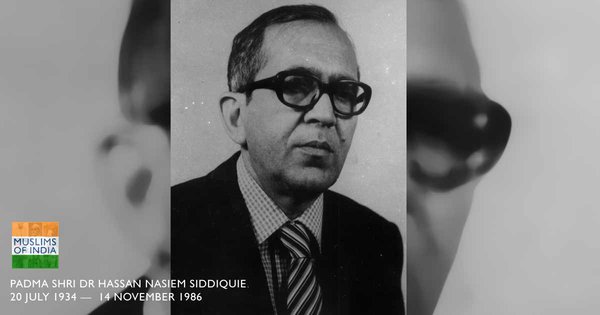
A scientist, a visionary, a family man. He was responsible for pioneering research work in the field of Marine Geology.
Dr. Siddiquie was born on 20 July 1934 to M. A. Siddiquie, a civil surgeon, and his homemaker wife Ahmedi Begum in Bijnor, Uttar Pradesh in India. The eldest of 6 sons and two daughters, he completed his intermediate studies from Osmania University (Hyderabad) then went on to acquire BSc and MSc (Geology) degrees from Aligarh Muslim University (Aligarh). He started his career at a young age, as a geologist with Geological Survey of India, Kolkata. After 17 years of service in GSI, he was offered the position of Head of Geological Oceanography Division in CSIR’s National Institute of Oceanography in Goa. Here he served in various capacities and later became Director in 1985.
After an impeccable career and service to the nation, he passed away on 14th November 1986 after a massive heart attack. He is survived by his wife Talat and three children.
Dr. Siddiquie left behind a legacy of extensive research and survey work done in the exploration of petroleum and minerals, infrastructure development, exploration of polymetallic nodules, studies on sediments, studies on Foraminifera, paleoclimatic studies and Antarctica He was associated with several oil projects which included piping, route identification, bathymetric and shallow seismic surveys for ONGC and Oil India. He is also credited with the initiation of managanese nodule program in India and this coordinated program was reported to have earned India a place among the seven registered Pioneer Investors of the International Seabed Authority of the United Nations.
He served as the deputy leader of the first Indian expedition to Antarctica and he coordinated the marine science programs for Dakshin Gangotri, the permanent Indian station in the southernmost continent. He authored several peer-reviewed research papers and articles throughout his career.
For his work and efforts he was awarded the Shanti Swaroop Bhatnagar Prize (1978), the Padma Shri (1983), National Mineral Award and the State Award of the Government of Goa (1986 Posthumously).
H. N. Siddiquie was the member/ fellow of various boards and councils including the elected member of Indian National Science Academy and the National Academy of Sciences, India. Indian Geophysical Union has instituted the Dr. H. N. Siddique Memorial Lecture series in his honor.
A tall, handsome man of friendly demeanor; he had an impressive personality. He was also very religious and adhered to the tenets of Islam. A mentor and inspiration to many; he is still remembered, admired and respected by all who met him.