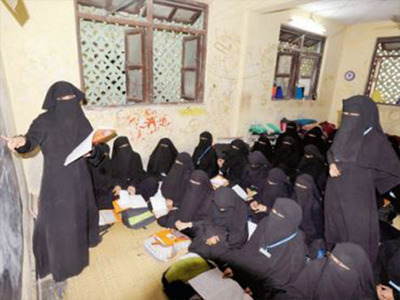
Over a dozen students, all clad in burqas, are in a small classroom.Their teacher, dressed identically, keeps a close watch.Everyone is on the floor while books on Hadith (traditions of the Prophet), commentaries on the Quran and tomes on fatwas line the walls.
This is the Madrassa Jamiatul Mominath in Moghalpura, which is the city’s first and only institute that trains women to become muftias. Instruction is imparted in the Darul Ifta, or fatwa department.
Fatwa is an opinion that Muslims seek on a range of subjects, including marriage, menstruation, divorce, adoption, property issues, and rituals like namaz and roza.Countless madrassas in the country–such as UP’s Darul Uloom Deoband–run training courses, but most of them are for men.
“There are several questions that women hesitate to ask muftis. We thought women would be more comfortable discussing their issues with muftias. That’s why we introduced this one-year course 12 years ago,” said Hafiz Mastan Ali, Jamiatul Mominath’s founder.
Set up in 1991, the madrassa has 2,500 students today , of whom 400 are hostellers. The muftia course began with only five girls, but this year, the department is training 15.So far, the madrassa has produced 318 muftias.
The fatwa department’s head, Nazima Aziz, said making girls muftias is empowerment. “Once an alima (female graduate) completes fazila (post-graduation), she is eligible for the fatwa course.”
Aziz explained that the course is divided into five segments: prayers, women’s personal issues, limitations (what women can and can’t do), property issues and current issues. ” A fatwa is given in the light of Quran commandments and the Prophet’s traditions. Muftis try their best to be neutral while giving judgments on disputes. If someone is not satisfied with the decision, he or she can consult another mufti or muftia,” she said.
The girls share Aziz’s opinion on the importance of their role. A muftia in the making, Suraiya Shakeel Khan wants to help women. “I can guide people on religion.” Khadeeja Fatima feels she would get more respect in the community once she becomes a muftia. Most of them, like Aziz, are in favour of setting up more Darul Iftas for women across the country .
Interestingly, Aziz and her students backed the All India Muslim Personal Law Board (AIMPLB)’s stand on triple talaq. “Talaq in one sitting should be discouraged, but it cannot be banned as that will be tantamount to interference in sharia laws,” said Mohammed Hasnuddin, head of Mominath’s fatwa department for men. “We don’t agree that talaq is a sword dangling over the heads of women. It’s an option to end an oppressive marriage and should be used as last resort.”
source: http://www.timesofindia.indiatimes.com / The Times of India / News> City News> Hyderabad News / by Mohammed Wajihuddin / TNN / January 09th, 2017
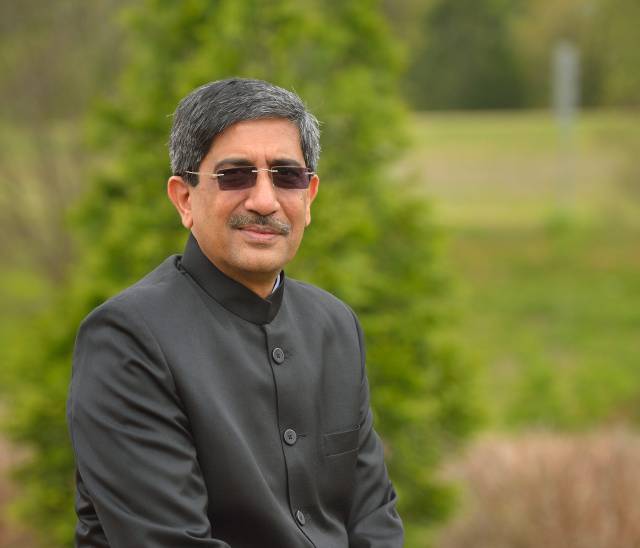
Ikhlas Khan. Photo courtesy of Ole Miss Communications
Ikhlas Khan, director of the National Center for Natural Products Research at the University of Mississippi School of Pharmacy, is the winner of AOAC International’s 2018 Harvey W. Wiley Award, which recognizes lifetime scientific achievement.
AOAC International develops global quality standards for microbiological and chemical materials, ranging from food to pharmaceuticals in an effort to ensure public health. Khan, who has been with the university since 1992 and directed the natural products center since 2017, has spent much of his career developing standards for dietary supplements.
“I’m very pleased to receive this award,” Khan said. “AOAC is the top organization for chemical standards, and I appreciate this recognition of my work in this area.”
As part of the honor, Khan will deliver the Wiley Award address and chair the Wiley Award Symposium at AOAC’s annual meeting in August in Toronto.
The Harvey W. Wiley Award has been given to one person a year since 1957, with past recipients including scientists from government, industry and academic institutions from around the world.
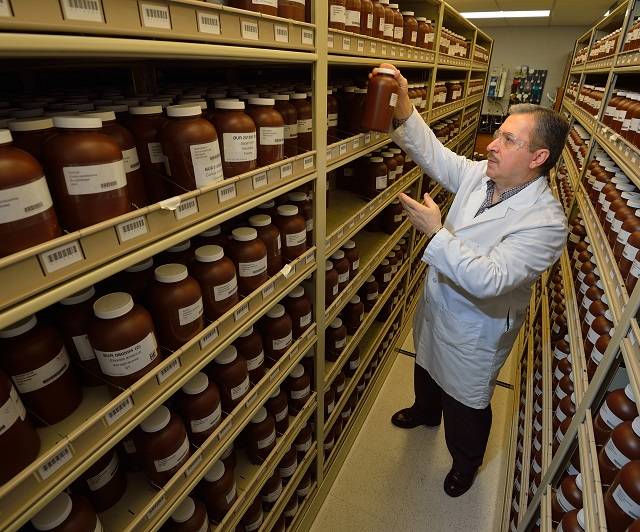
The National Center for Natural Products Research maintains a repository with more than 18,000 natural product specimens, derived extracts and pure compounds. Photo by Robert Jordan/Ole Miss Communications
Story by Sydney Slotkin Dupriest, courtesy of Ole Miss Communications
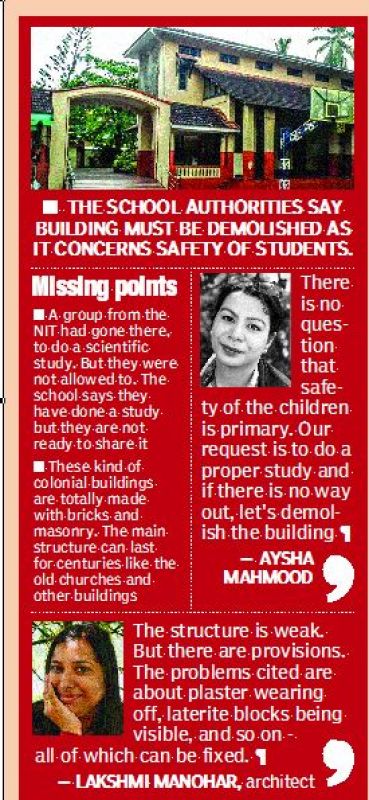
Aysha Mahmood, alumnus of St Joseph’s HSS, is campaigning for safe keep of 150-year old building.
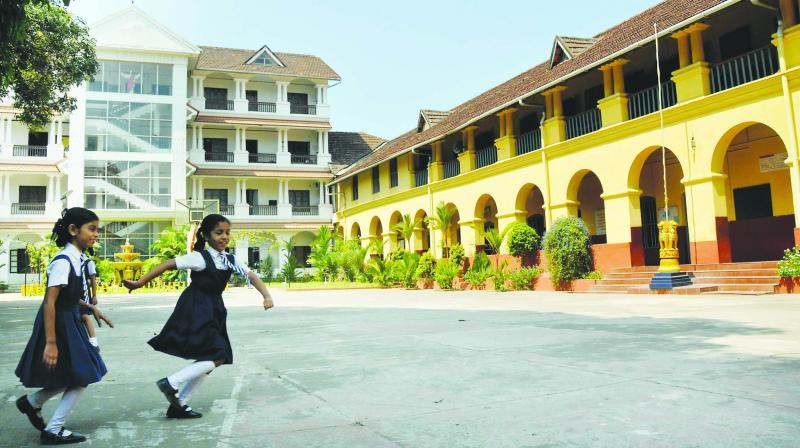
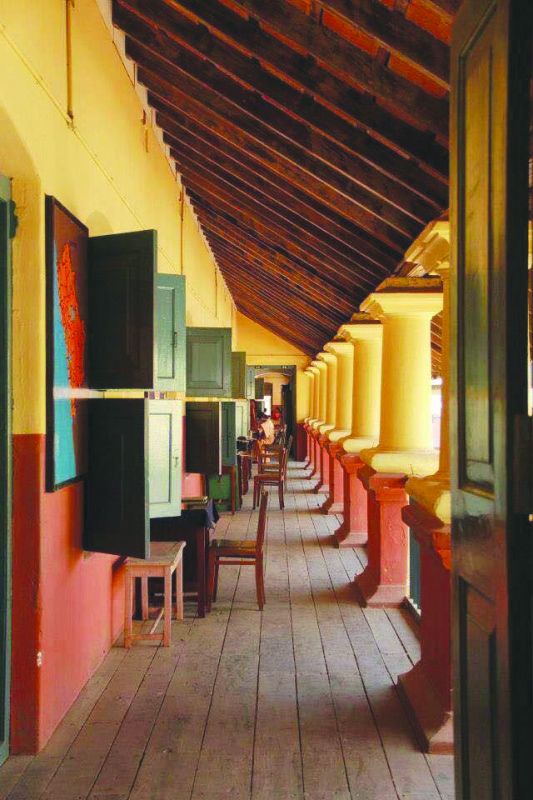
Children at St Joseph’s Anglo Indian Girl’s Higher Secondar School, the first school for girls in Malabar, built in 1862. (Photo: Venugopal)
Thiruvananthapuram:
It was a chance meeting. Aysha Mahmood had come to her hometown, Kozhikode, to take part in the Offir Food Fest. She has been settled in Taiwan for a while, but couldn’t stop reacting to stories from home that shocked her.
Two years ago, she heard her beloved alma mater – St. Joseph’s Anglo Indian Girls’ Higher Secondary School – will have its oldest building demolished. A few of the alumni had then got together, spoke to the school and the idea had slowly died down. Now, after a chance meeting with someone she knew, Aysha heard the plan was back on.
Frantically, she gathered together some of the old girls who studied there, tried talking to the school, and finally had to start a petition online to save the old, old school – 155 years old.
“Some time back they celebrated the 155th anniversary of the building, now they are planning to pull it down, and in its place, build a glass and steel structure,” she says, remembering another old building that is no longer there. It was the boarding house where Aysha had spent many happy days. The building had a library in the centre which had a lot of really old Reader’s Digest magazines.
It was not accessible to the girls. But like in Enid Blyton novels, the girls found an old door from their dressing area that led to the library. Aysha’d sneak in, after opening the rusty hinge, and stay there with her torch or a candle, reading those old, old Reader’s Digest magazines.But that building and the library had got pulled down. Now there is only the original convent and this building they are planning to demolish, left of the first school for girls in Malabar, built in 1862. “We have very few 100 plus year old buildings left in Kozhikode. One reason they give for demolishing the building is space constraints. That they cannot have smart classrooms there. But there are architects interested in conserving it, who say, it can be done. We could add modern amenities, restore the building. A group from the NIT had gone there, to do a scientific study. But they were not allowed to. The school says they have done a study but they are not ready to share the report.”
The school has been giving the reason that it concerns the safety of the students. “But we feel that is an excuse,” says Abdul Hameed, an electrical engineer who runs an architectural consultancy. He got involved only because of his love for his hometown.
“We suggest we can get the best structural engineers from NIT, to ascertain the safety of the building. And then do a programme to restore it. The funding – can be thought out later. These kind of colonial buildings – were before concrete, so it is totally made with bricks and masonry. The main structure can last for centuries like the old churches and other buildings across the world. But maintenance should be done.”Abdul, with the collector, the new building’s architect, and a few others are planning to meet the headmistress on Monday. “Lots of people are calling. Venu IAS, former tourism secretary, K.K. Muhammed, former ASI director, have all shown their interest,” Aysha says.
Her petition has collected 2574 signatures as this is written. But she adds, “There is no question that the safety of the children is primary. Our request is to do a proper study and if there is no way out, let’s demolish the building.”There might be a way out. Architect and another alumnus of the school Lakshmi Manohar has just come back from a visit to the school on Saturday evening.
“We just wanted to meet the old teachers and find out what the issue is. According to us, the structure is weak. But there are provisions. They showed us the old classrooms. There are more students now, so the space is less, to take class. It is all congested. Their requirements need one or two floors more to the building. The question is whether the structure has the strength to withstand the extra floors. That’s what we should evaluate. The problems they cite are about the plaster wearing off, the laterite blocks becoming visible, foundation troubles, and so on – all of which can be fixed. But I am not a conservation architect. We should bring a technical expert to study the condition and tell what the situation is,” she says.
‘A collective memory which shaped Kozhikode society’
The St. Joseph’s building, since 1862, has played an undeniable role in making education attainable and accessible to girl children from all walks of life- par caste and creed. It contains the collective memory of thousands of women and girls, panning almost six generations. It has played alma mater to a large section of Calicut society- ensuring quality education. Keeping that heritage alive is of high importance.
Those interested in the demolishing of the building may be of the opinion that it affects the modern outlook of the management or that it is a threat to the safety. Both concerns can be addressed if the right people are involved.
There is a large Architects Guild active in Calicut that specialises in the restoration and strengthening of historical and heritage buildings. We must be prepared to give them a chance to present their expert opinion and help in this matter. The professors of NIT Architecture Department have made known their availability and deep interest in studying the building and presenting their proposal for the same.
While it does need some work, respected architects who have assessed it generally opine that the building is structurally sound. They feel that it could be refurbished at a cost lesser than that required for demolishing and rebuilding.The restoration will only add to the historical value and character of the school. A building that is 150 years old must be considered an asset to the city. In a world where characterless and soulless skyscrapers and steel-glass embodiments are dime a dozen, buildings like these serve as a place of solace for the soul and soothing to the sight. They embody our past and our culture. Caretakers of our colonial architecture and history must know that the St. Joseph’s School and its many buildings are rich and heavy with these values.To conclude, I think preserving buildings like these is essential because of the collective memories, Calicut and its people attach to it.
Generations are emotionally attached to this school building in which they have spend a big part of their childhood. It has had a formative and a positive role to play in all our lives and it will be the saddest day in our lives to see it being pulled down. (Excerpts from the online petition of Aysha Mahmood)
source: http://www.asianage.com / The Asian Age / Home> India> All India / CRIS / February 23rd, 2018
Arwa Imtiyaz Bhat is not a coach or player, but performs a more important role for deaf and mute sportspersons in Srinagar
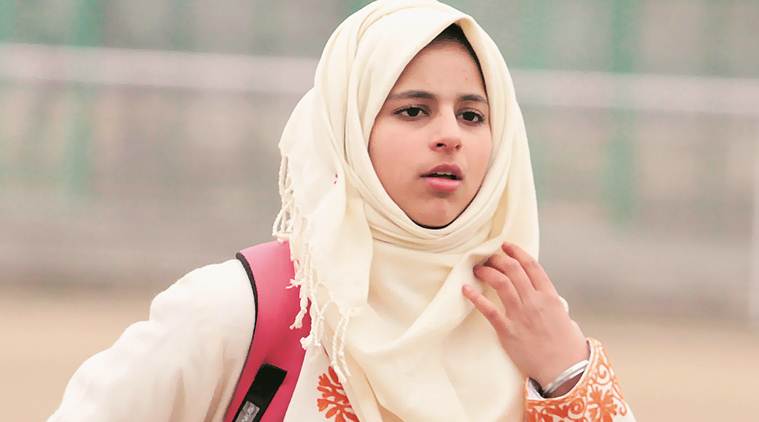
‘I will keep fighting for them, their rights.’ (Express photo by Shuaib Masoodi)
It’s a white winter morning in Srinagar, and a 16-year-old girl has set out from her cramped home on the city’s outskirts to help a group of badminton players prepare for a tournament at the indoor stadium.
Arwa Imtiyaz Bhat is not a coach, or a player. But this Class X student performs a more important role. She translates the sound of silence.
The players are among the around 250 sportspersons registered with the J&K Sports Association for the Deaf, and Arwa, who is well versed in sign language, is their voice, their mentor. Often giving up classes at school, she’s accompanied J&K teams to tournaments across the country, from Delhi to Chennai, fielding calls from worried families, helping liaise with organisers and officials.
She says the reward is not money — she’s not paid any — but moments such as those last December when the J&K team won four gold, three silver and two bronze medals in the National Games for the Deaf in Ranchi.
“My mother Rehana can’t speak or hear. Her brother Mohammad Saleem, a good badminton player, is also deaf and mute. And ever since I can remember, I have seen them struggle, facing discrimination outside and within our family. I could not stand that, and decided to do whatever I could to help anyone in that situation… I learned how to communicate in sign language from my uncle who had undergone training in Delhi,” says Arwa.
It hasn’t been easy, she admits, especially convincing parents of deaf and mute children to let go.
“When the J&K deaf team was planning to go to Ranchi, the parents sought an assurance from me that they would be safe and secure. I had to finally give them a guarantee. At times, I have had to fight with the families of players for permission to let them play,’’ she says.
According to Waheed ur Rehmad Parra, secretary, J&K Sports Council, Arwa is an inspiration.
“I am surprised by the dedication of this girl. And I try my best to help out and speed up paperwork of any team with which this girl is involved. She is an inspiration for all of us, and she should never feel that she has been let down by the system,” he says.
“There are very few people in the world who really care about deaf and mute children such as mine,” says Nazir Ahmad Bhat from Baramulla, whose two sons Mohammad Ashraf and Showkat Ahmad are sportspersons.
“Whenever my children go for any sports activity, Arwa keeps me informed, even when they are outside the state. At times, we call her so many times every day for information about my sons, she never loses patience,’’ says Bhat.
But for Arwa, who dreams of becoming a doctor, and her family, all of this has come at a cost.
“Last year, I had to accompany these players to different parts of Kashmir and various offices of sports organisations. I missed a lot of classes and was reprimanded by my teachers,” says Arwa.
At home, Arwa’s parents say it’s time someone showed similar concern for their daughter.
“I am an autorickshaw driver, and I want to provide my children, especially Arwa, with a good education. But I struggle to do that because I find it very difficult to keep my house running,’’ says Arwa’s father, Imtiyaz Ahmad Bhat. Arwa’s younger brother Abu Zar is a student of Class V but her elder brother Arbaz dropped out of school in Class X four years ago after he met an accident.
“I don’t think my dream of becoming a doctor will ever come true because I belong to a very poor family. At times, my father doesn’t have money to even deposit my school fees. This is why I was moved from the Fayaz Educational Institute in Naikbagh to the Government High School in Nowgam. But I will still try to complete my education,’’ says Arwa.
Yet, at the end of the day, Arwa says the joy that she sees on the faces of her players is what makes her go to sleep with a smile.
“Whenever they win any game or event, I hug them. At that moment, many of these players struggle to control their emotions and finally break down… I will keep fighting for them, their rights. Here, I am the only person who can highlight their misery.’’
source: http://www.indianexpress.com / The Indian Express / Home> India / by Mir Ehsan / Srinagar / February 05th, 2018
Develop a cost-effective automated toy-making machine
A team of six students from S.R. Engineering College (SREC) in Warangal bagged the top prize at a national-level problem solving competition for their automated toy maker innovation meant for rural toy makers.
College principal V. Mahesh said the competition was organised by Indo-Universal Collaboration for Engineering Education (IUCEE) Student Consortium for Advancement and Learning in Engineering Education at Tyagaraja college of Engineering between January 5 and january 7 at Madurai.
The winning students were Paul Vineeth Reddy (4th year ECE), K. Enosh (3rd year Mech), S. Sirihasa (3rd year CSE), Md. Imran Ahmad (3rd year Mech) K. Sricharan (3rd year EEE) and D. Vinay (3rd year ECE).
The award was given to SREC students for developing a cost-effective automated toy making machine that increases productivity four-fold.
The competition saw entrants from 30 colleges across nation, who were asked to submit a solution to a specific problem or challenge. The participants from SREC visited a nearby village to identify the existing problems. They generated multiple ideas and finally decided on a cost-effective solution for toy makers.
“It is indeed a challenge and what gave us immense satisfaction is solving a problem” the students said. Explaining their idea and innovation, the students added that the automated machine would allow toy makers to make 40 toys per day, boosting their productivity. In the conventional manual method, they could produce a maximum of 10 toys.
The machine will have a grinder, conveyor belt, rollers, block cutter, die punch and a furnace.
source: http://www.the hindu.com / Home> News> States> Telangana / by Special Correspondent / Warangal Urban District – January 11th, 2018
Socially disadvantaged marginal groups such as Adivasis (Tribals) and Muslims living in the remote district of Birbhum of West Bengal are being severely neglected in terms of educational development as well as economic and political empowerment. Abject poverty has reduced them to the level of the most backward people of society. Not only are they unaware of the benefits of education, social awareness and self-employment, but they also lack in the basic issue of feminine hygiene.
Although the problems of the Tribals and Muslims are different because of their different cultural context, it is clear that at the grassroots level, both communities require serious efforts at social upliftment if they are to compete with the rest of society. To this effect, a team of passionately devoted women has taken it upon itself to create awareness of empowerment and the need for self-reliance among the tribal and Muslim women of these areas.
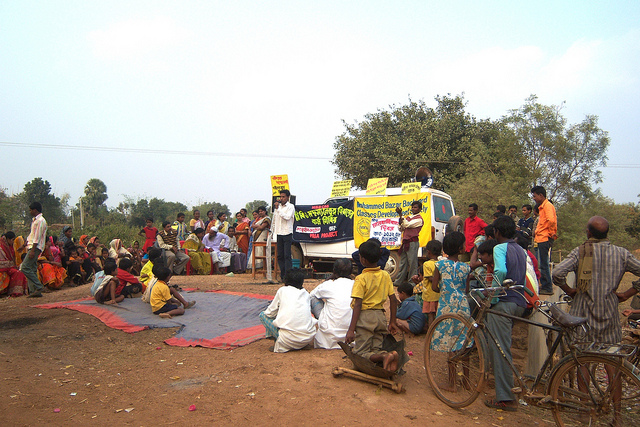
An awareness programme of MBBDS at Purana Gram Panchayet Area
The Mohammad-Bazar Backward Classed Development Society of Birbhum District of West Bengal (MBBDS), targets people from the marginally weaker sections of society, mainly the Tribals and Muslims women. The society is both headed and managed entirely by women. Speaking to TwoCircles.net, Ayesha Khatun, head of MBBDS confirmed that the Secretary and President are both Muslim while the rest of the six members comprise four Muslim and two Adivasi women.
In the remote villages of Birbhum, Muslim women groups run schools, training programs, health and hygiene awareness, HIV prevention programs and promote Self-Help groups
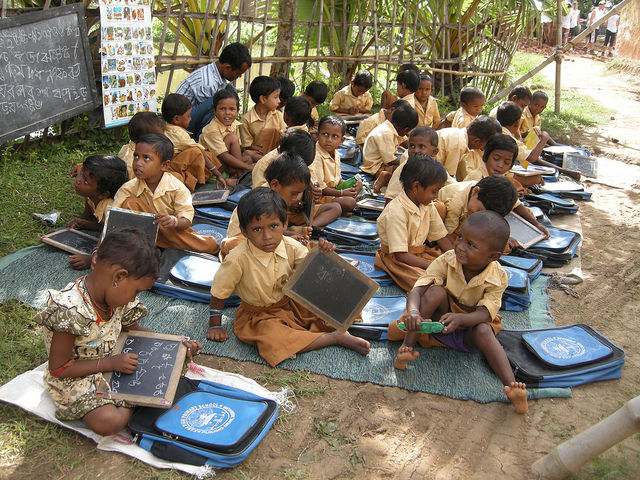
The main areas of operation of MBBDS are concentrated in Purana, Bharkatta, Sekada gram panchayets in Birbhum and Shikaripara in Jharkhand. They are also active in projects for Muslim girls’ education in Murshidabad and Howrah districts. They have been running the Kanadighi Prathyahik Bidyalaya, a school, under the Purana Gram Panchayet in Birbhum since 2003. More than 250 students who were dropouts are getting education there. Another school, Jambani Cluster Child Growth Centre for Tribals under the Deucha Grampanchayet, has enrolled 78 students up to now.
A school for Tribals at Jambani by MBBDS
MBBDS also supports a school along the Ganges River bank, an area affected by land erosion. As a result of the land erosion, people are losing their homes and living in very poor and inhumane conditions. Their main occupation is bidi making. Ayesha Khatoon sees education as the way forward, and so has established a school in Akheriganj which has 71 students at present. Another school is being run in Panchpara, Sultanpur of Howrah district near Kolkata.
Panchpura of Howrah district is a Muslim dominated area. According to research conducted by the MBBDS, most of the residents are refugees of the Bhagalpur riots. Since it is a low-lying area, it is easily flooded during the rainy season and so the school dropout rate was very high as children were unable to go to school. Also, there is no electricity or a road network connecting the area to major cities. So, the MBBDS has provided a school for basic education to the poor Muslims.
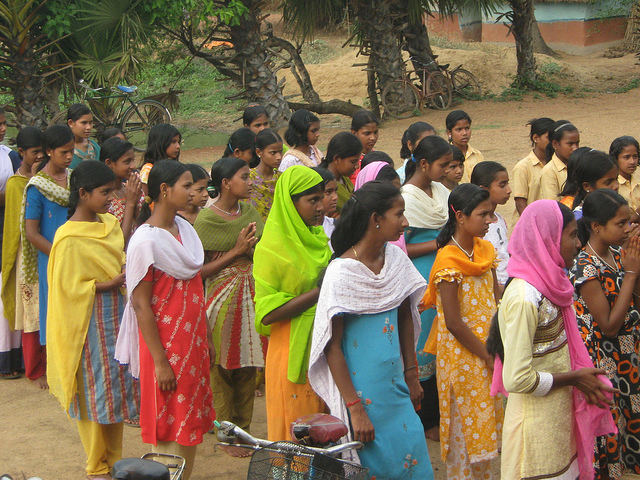
Muslim girls at an education camp
Though they belong to the Hindu community `Adivasis’ are locally called `Santhal’. Their culture and lifestyle is vastly different from that of Muslims, and they even speak their own language, ‘Santhali’. The Birhum district is mainly dominated by the Tribals but there are a few Muslim pockets too.
The MBBDS has taken some initiatives which may help both communities:
• Provision of Elementary schools for Adivasi children in the area
• Health awareness: diarrhea and malaria prevention programs
• Built a nutritional garden
• Vocational training: tailoring and stitching; making of low-cost sanitary napkins; `Kantha Stitch’ (traditional hand embroidery particular to Bengal); hand batiks.
• A Pond for fish reproduction
• Training programs to develop leadership abilities in women
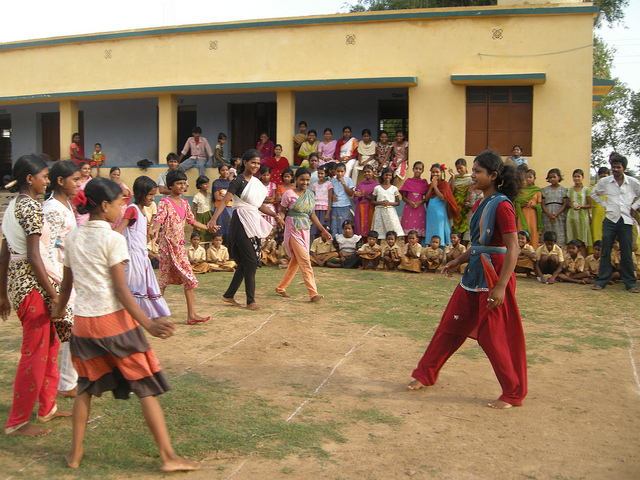
• Sports training (volley ball, khokho, kabadi)
• Provision of adult education to teenage girls
• HIV/AIDS Awareness Programs
• Awareness and Prevention of child marriages
The MBBDS has opened up a school which provides free study materials, free coaching, free uniforms, and even free food. There have been generous donations from internationally renowned organizations such as Association for India’s Development (AID), Hope Foundation, American Jewish World Service (AJWS), Dining for Women (DFW), PRIYA, to name a few.
The grinding poverty in these remote areas has forced the people to work as menial laborers earning daily wages while their women earn a living as sex workers. As these areas are located along the National Highway, truck drivers stop by to rest and find willing partners, for a small price. Hence, the risk of HIV/AIDS is very high. In order to combat this deadly trend, Ayesha Khatun has created an awareness program highlighting the dangers of unprotected sex.
Mumtaz Khatun, student of Rokeya Mission is a national-level Kabaddi player
There is also one pre-primary school in the area which encompasses at least 6-7 villages including Heruka, Sahanagar, and Kaldighi. Ayesha Khatun hopes that education will pave the way for these under-privileged communities to interact and assimilate with society and building schools is the first step in this direction.
Ayesha Khatun’s Society bought nearly an acre of land and built a school from the Fifth standard to Secondary Level. The Rokeya Mission School in Puranagram Muslimpara (Mohammadbazar area) has 109 students enrolled to date. The school provides leadership and self-help group training, family life education and counseling besides the other facilities named above. Mumtaz Khatun, a student of Rokeya Mission School has been selected to be a member of the National Kabadi Team: a real achievement indeed.
Ayesha Khatun, the inspiration behind this noble mission comes from an educated and elite background. She has seven other siblings: five brothers and two sisters who all hold Postgraduate degrees. She has a double Masters degree herself. Her father, Mohammad Minhilal was a school teacher. Ayesha Khatun was very impressed with the teachings of the Quran and the life of the Holy Prophet in her teenage years. She believes that Islam gives women equal rights and that the Quran should be followed and implemented correctly. It was after reading the Quran and its interpretation that Ayesha ventured to do social service.
Ayesha Khatun strongly believes in the social upliftment and political empowerment of women. The three-tiered Panchayet system already has a 50% reservation for women. She thinks that if women took the initiative and availed the opportunity to take part in politics, society and especially Muslim women would greatly benefit from this.
Besides being a social worker, Ayesha Khatun is also a writer. She has won the Rokeya Award from Bharatiya Bhasha Parishad, Young Writers Award from Bharatiya Sahitya Academy and Ila Chand Award from Bangiya Sahitya Parishad.
Edited by Ozma Siddiqui
source: http://www.twocircles.net / TwoCircles.net / Home> Articles> Indian Muslim> Women / by Zaidul Haque, TwoCircles.net / April 08th, 2012
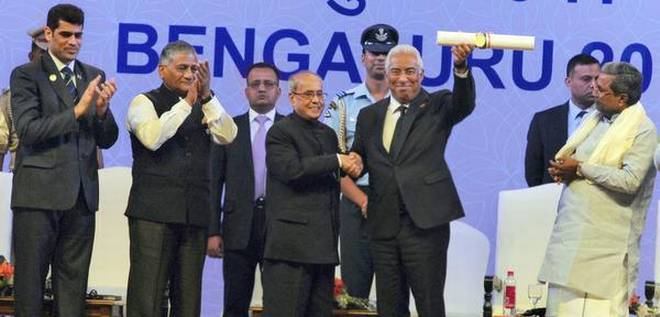
President Pranab Mukherjee honours Dr. Antonio Costa, Portugal Prime Minister, who received the Pravasi Bharatiya Samman, as Suriname Vice-President Michael Ashwin Adhin and Union Minister V.K. Singh look on, in Bengaluru on Monday. | Photo Credit: G R N SOMASHEKAR;G R N SOMASHEKAR –
Winners of Pravasi Samman Awards include Portugal Prime Minister Dr. Antonio Costa
Her son was three years old when she realised that there was no school she could send him to. British and American schools were too expensive and she didn’t want to send him to a local school.
That prompted Zeenat Jafri to start the second Indian school in Saudi Arabia — International Indian School — in 1982 with her husband. She was among the 30 people feted for her achievement on Monday during the Pravasi Bharatiya Divas, when the Pravasi Samman Awards were given away by President Pranab Mukherjee.
The 64-year-old MBA graduate from Bhopal, who was given the award for her contribution to the field of education, said she started the school from her house, gradually scaling it up to now educate 12,000 people.
Another person of Indian origin who was recognised with the award was Ariful Islam, coordinator and nodal point in the Embassy of India in Libya.
The electrical engineer relocated from India to Libya in 1980 following a pact between the two nations. He has seen his adopted country go through the worst of times, but continues to live there alone, though his family has moved back to Aligarh. “I have spent half my life there. We have successfully rescued many Indians,” he said.
The rescuer
The most recent episode he was involved was in the rescue of three abducted Indians from the IS in a dramatic operation in 2016 from the deep Libyan deserts.
Among the organisations that were awarded were the Singapore Indian Association in the category of community service.
The event saw double the number of awardees as it was being held after an interval of two years.
Among the other prominent winners of the award were Portugal Prime Minister Antonio Luis Santos da Costa, Labour Member of the European Parliament representing the West Midlands Neena Gill, British politician Priti Patel and Mauritius Minister of Finance and Economic Development Pravind Kumar Jugnauth.
Nisha Desai Biswal, Assistant Secretary of State for South and Central Asian Affairs in the United States Department of State, who was also among the 30 awardees, said persons of Indian origin, who were building bridges and connecting in an “increasingly divided world,” retained strong ties with India, she said.
source: http://www.thehindu.com / The Hindu / Home> News> National / by K.C. Deepika / Bengaluru – January 10th, 2017
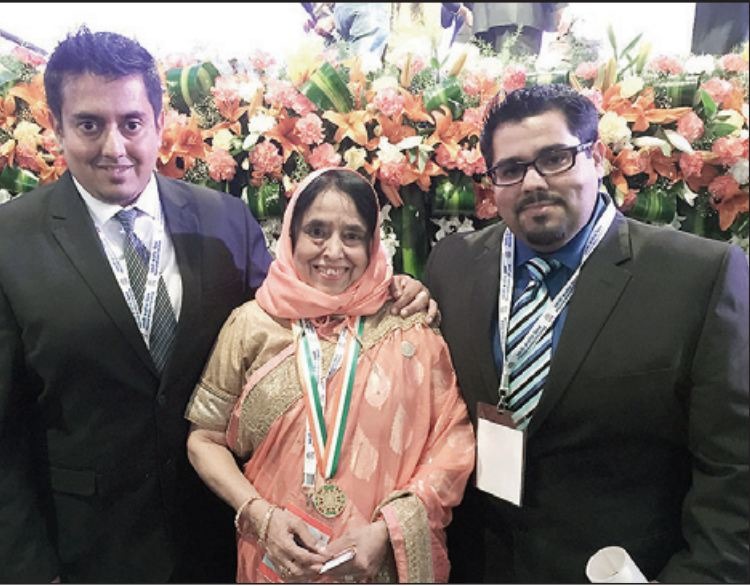
Zeenat Mussarat Jafri with her sons at the Pravasi Bharatiya Divas in Bengaluru on Monday
Bengaluru :
“A Muslim from Saudi Arabia being recognized and awarded by the BJP government. This is India.” This is how Syed Mohsin rejoiced when his mother was conferred the Pravasi Bharatiya Samman 017 in Bengaluru on Monday.
Zeenat Mussarat Jafri, 65, was given the award by President Pranab Mukherjee for providing quality education to children of Indian expatriates in Saudi Arabia. She started the first Indian school in Riyadh in 1982. “My mother is also the first woman of Indian origin from Saudi Arabia to get the Pravasi Samman,” Mohsin’s elder brother Syed Mudassir told TOI.
A native of Lucknow and a former teacher at Kendriya Vidyalaya, Zeenat went to Saudi Arabia in 1979 with her husband Musarrat Jafri, a former DRDO scientist who later joined the Saudi government as a chemical expert.
Zeenat said: “I was moved by the plight of Indians living in Riyadh. Most of them had left their children behind in India because of a lack of educational opportunities. We wanted to do something and that’s when we met Indian Prime Minister Indira Gandhi when she visited Riyadh in 1982. We requested her to speak to Saudi authorities and get permission to start a school for Indian children. We got the green signal.”
Zeenat established the International Indian School in Riyadh from the family’s savings. From the first batch of 20 students in 1982, the school now has 12,000 students and is affiliated to CBSE. “I get angry when people pull their children out of schools. I want them to complete graduation,” said Zeenat, who is running the school for the past four decades.
But what’s more Indian about Zeenat and her husband Jafri is that they haven’t given up their Indian citizenship.Since Saudi Arabia does not allow for dual citizenship, they have accepted permanent resident status. “I am an Indian and I will always be an Indian,” she said.
source: http://www.timesofindia.indiatimes.com / The Times of India / News> City News> Bangalore News / by Rakesh Prakash / TNN / January 10th, 2017
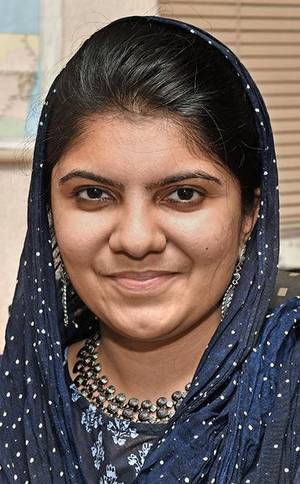
Nagercoil girl Masha Nazeem will receive the prestigious National Youth Award for her contributions to science and technology.
The annual award is instituted by the Ministry of Youth Affairs and Sports and is given to recognise outstanding work and achievements of youngsters and further motivate them to excel in the field on National Development and Social Service.
“I am very excited to be selected for this award,” said 24-year-old Masha, who with her father Khaja Nazeemudeen, a government employee, is all set to receive the award from Prime Minister Narendra Modi on January 12.
Hailing from Nagercoil in Kanniyakumari district Masha is the elder of two siblings. She developed a keen interest in science from the time she was nine years old.
“It all happened because of my father, he would enroll me in every possible contest in school, one of them was a science exhibition. I didn’t even know my name was on the list,” she said. Masha, then a class five student, made a burglar alarm which impressed her teachers and won her the first prize.
From then on, there was no stopping, Masha went on to invent 14 socially useful gadgets such as a flameless seal marker, which is now used by State government officials, hi-tech train toilet system, fuel dispensers, anti sinking alarm amongst others.
Three of her innovations are in the process of getting patented. She has also won several awards and accolades including the State Youth Award 2016.
Innovation centre
To provide free hands on training to young inventors and help them turn their ideas to reality, she setup Masha Innovation Center, a research laboratory and workshop in her hometown.
“There are many students who are creative and have ideas but get stuck in only learning theory taught in schools. While theory is important, they must also be encouraged to have practical experience. This is my aim and I hope more students benefit from it,” she said.
source: http://www.thehindu.com / The Hindu / Home> News> Cities> Tiruchirapalli / by Staff Reporter / Chennai – January 12th, 2018
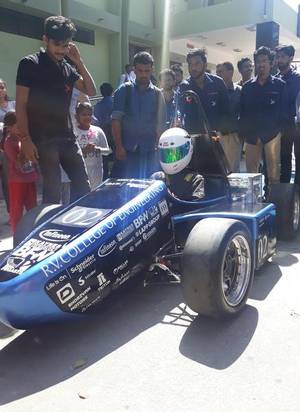
Ashwa Racing, a brand under Ashwa Mobility of RV College of Engineering, Bengaluru, on Saturday launched three new race cars on the combustion (AMF RZX8- CO), hybrid (AMF X8-HY) and electric (AMF-RZX8 -ELE) platforms for the 2018 race season.
Undergraduate students, who conceived, designed and build formula race cars, would be competing in national and global events in the coming months.
The combustion vehicle (210 kg without driver) development is headed by team captain Sweekruth Shetty, project manager Rakesh H.N, chief engineer Prateek Bhustali. The racing hybrid vehicle (300 kg) development is headed by team captain Asfan Khan, project manager Suhas B.U., chief engineer Uday Naik and chief communication officer Tarun Kasa.
The electric vehicle (200kg) development is headed by team captain Pranave Nanda, project manager Rahul S.D., chief engineer Gautam Singh and chief communication officer Srivatsa Deshpande.
The combustion and electric divisions of Ashwa Racing would be competing in Formula Bharat, which will be held in Coimbatore in Tamil Nadu from January 24 to 28, 2018.
source: http://www.thehindu.com / The Hindu / Home> News> Cities> Bengaluru / by Special Correspondent / January 15th, 2018