Category Archives: Education

Allahabad University scientists find ‘fisetin’ slows down brain aging

Allahabad, UTTAR PRADESH :

The results of the AU study conclude that fisetin can protect the brain from damage induced by aging. (HT)

A team of scientists at the Allahabad University has established that a natural compound called fisetin, found in strawberry, apple, onion and cucumber, can restore brain functions which deteriorate during aging.

A team of scientists at the Allahabad University has established that a natural compound called fisetin, found in strawberry, apple, onion and cucumber, can restore brain functions which deteriorate during aging.

The findings of the team, led by Prof SI Rizvi from the department of biochemistry at AU, have been published in the latest issue of American research journal Life Sciences.

Scientists acknowledge that oxidative stress is a major factor responsible for age-related changes in living organisms. Oxidative stress is the condition when the damage, due to the toxic form of oxygen molecules, exceeds the capacity of the body to repair such damage.

“It is a paradox that oxygen, which is essential for life, becomes the cause of aging,” said Prof Rizvi.

“In human body, most of the oxygen is consumed by the brain. Therefore, it is the brain that becomes more vulnerable to oxidative stress. With increase in age, brain cells degenerate leading to diseases and loss of brain function,” he said.

Through experiments, the research team analysed a host of biomarkers of aging, including pro-oxidants, antioxidants, mitochondrial function, expression of genes, and apoptosis cell death.

The results of the AU study conclude that fisetin can protect the brain from damage induced by aging.

“The study was carried out on rats of different ages and also on those which were chemically induced to age faster,” said Prof Rizvi.

Fisetin was given to rats of old age and the effect was compared with the younger ones. Fisetin-treated old rats were protected from brain damage.

Among all anti-aging strategies being explored, caloric restriction is the most promising which, in common terms, can be defined as less food intake.

Caloric restriction has been effectively tested in small organisms like fruit fly and earthworms. The strategy becomes difficult to implement in humans where several ethical issues are involved.

Scientists have stumbled upon a class of compounds which mimic the effect of caloric restriction. With the use of these compounds, known as caloric restriction mimetics, the body feels like it is food restricted without the need of eating less.

According to Prof Rizvi, fisetin works as a caloric restriction mimetic in showing its anti-aging effect on rats. “Scientists are hopeful that compounds exhibiting caloric restriction mimetic effects will prove to be good anti-aging drugs,” he said.
Several experimental drugs are being tested in Prof Rizvi’s lab for possible anti-aging effects. “Although an increase in human lifespan may not be possible, it may increase the health span,” Prof Rizvi added.

source: http://www.hindustantimes.com / Hindustan Times / Home> Cities> Lucknow / by K. Sandeep Kumar , Hindustan Times, Allahabad / January 08th, 2018

Learn photography online in nine Indian languages

Lovedale, Nilgiris (Ooty) , TAMIL NADU :

IqbalMohamed01MPOs07jan2018

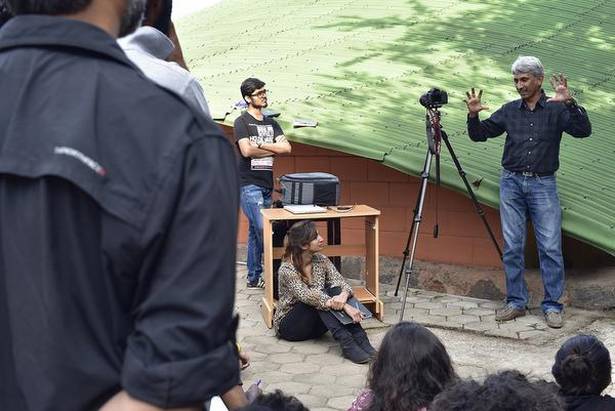
Language is no barrier to learning the nuances of photography at the Light and Life Academy

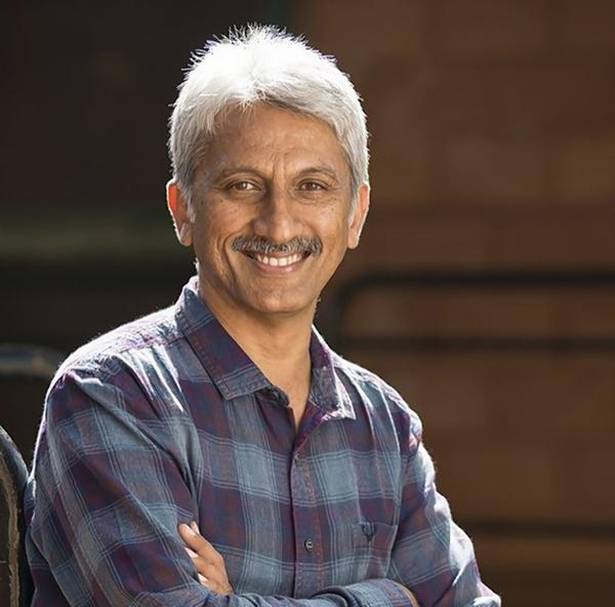
It is 6 am, and I watch Iqbal Mohamed quietly set up his camera in front of the big glass windows in his living room and wait for the sun to rise. We are at the Light and Life Academy (LLA) in Lovedale in the Nilgiris, and I learn that he does this every morning. “No two sunrise is the same,” he offers by way of explanation. Mohamed doesn’t say very much. He prefers to let his photographs do the talking, laughs his more vocal wife Anuradha.

The photographer founded LLA in 2001 as a full-facility photography institute. The inspiration was his alma mater, the Brooks Institute California. He worked in Hollywood with some of the biggest names in photography, and in India, winning considerable acclaim, before setting up his school. LLA, which maintains high standards of professionalism and excellence, has added immensely to the pool of talented photographers in the country. And the alumni have now helped him realise another dream — to set up an online course called ‘Get Creative with Photography’.

Seamless lessons

IqbalMohamed02MPOs07jan2018

They want to reach out to more people who take pictures as a serious hobby, says Anuradha. “But we did not want it to become just another random photography course. Mohamed’s book, Portrait & Function Photography, in eight Indian languages, was enthusiastically received, and that made us think of an online programme that was serious, structured and professional,” she adds. LLA online was born after three long years of hard work. The programme is available in English and nine Indian languages (Tamil, Telugu, Malayalam, Kannada, Hindi, Marathi, Gujarati, Oriya and Bengali). “Prahlad Kakar advised us on how to create the video tutorials, all shot in campus, and make them not just informative, but also entertaining,” she says.

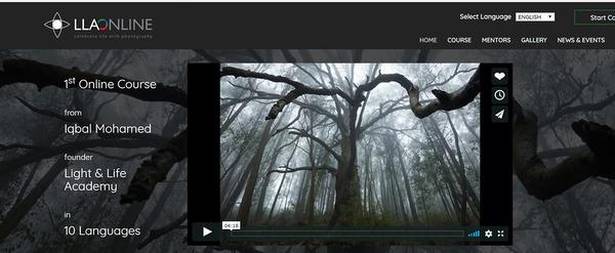
I click on the online programme to see how it looks, and the screen fills up with a haunting photograph of trees. Even to my unprofessional eye it is a stunning image. It is one of Mohamed’s photographs.

Nattily dressed LLA alumni present the lessons. Each one is an acclaimed photographer, says Anuradha, with considerable pride. “Without them, this course would not have been possible.” These include Shaheen Thaha (celebrity, fashion and architecture), Mihir Hardikar (food and beverages), Ajit SN (automobile and underwater), Punya Arora (editorial and underwater fashion), Satish Kumar (automobile) and Ankit Gupta (architecture and travel).

Getting into the details

IqbalMohamed03MPOs07jan2018

The online tutorial begins with clear, concise and simply-worded instructions. Then comes the fun part. I ask Anuradha if can see/hear the lesson in Bengali. I follow it up with a class in Tamil, Hindi and Kannada! The dubbing is perfect and as someone who has only taken pictures on her mobile phone, even I can understand everything. ‘Getting Ready & Exposure’ is the first lesson, followed by ‘Shutter’, and two sessions each on ‘Lenses and Apertures’, four sessions on ‘Light’, a lesson on ‘Colour’, and finally one on ‘Composition’.

Each of the modules explains the concepts and is supported by images. At the end of each class, an assignment is given that the students have to complete and upload in a week. Their homework is critiqued by mentors and peers, and only then can they proceed to the next class. If required, they are allowed to re-shoot. “This way they share ideas and learn from each others’ mistakes,” explains Anuradha, who emphasises that a strict protocol and system is followed and those signing up for the course have to be committed. There is no skipping lessons.

Offline vs online

IqbalMohamed04MPOs07jan2018

Online students have access to more than 500 stunning photographs by over 90 LLA alumni to give them an idea of what they can do with their cameras. Mohamed oversees their work and comments when necessary. The first set of students have already completed two assignments and the results have been promising, says Anuradha. Once they get feedback, they will launch other programmes, she adds.

Prahalad Muralidharan, CEO of LLA Online, explains that it was challenging to replicate the successful methods of their full-time courses on to the online platform. “After brainstorming and countless revisions, we finally found a way to do it. With peer-group interaction, an online forum and professional feedback, LLA Online is as close as it gets to LLA in terms of learning on an online platform!” he says.

The course includes 10 sessions over 10 weeks. The fee is ₹10,000. The full time courses at LLA can go up to ₹6,65,000. Details: llaonline.in or call: 97511-51999

source: http://www.thehindu.com / The Hindu / Home> Life & Style / by Pankiaja Srinivasan / January 05th, 2018

Four students of MANUU UGC training centre clears NET

Hyderabad,  TELANGANA :

Hyderabad  :

Four students from Maulana Azad National Urdu University’s UGC Net Coaching Centre have cleared National Eligibility Test conducted by Central Board of Secondary Education , New Delhi in November 2017.  One of these students has also cleared JRF.

The results were declared on January 3.

The successful MANUU students are Md Mustaquim Raza (Urdu-NET & JRF), Nafia Zainab Iftikhar (Arabic-NET), Mohammad Mushtaq Khan( Management-NET) and Qhudsia Wajid (English-NET).

Maulana Azad National Urdu University is a central University , providing higher education through Urdu medium. The UGC NET Coaching Centre has been established under the Equal Opportunity Cell of the University. It is providing free coaching to students from minorities and other scheduled communities.

UGC funded NET Coaching Centre has provided coaching to about 50 students for about two months. Students from the University and outside were admitted through entrance test.

Dr. Mohammad Aslam Parvaiz, Vice Chancellor, MANUU, while congratulating the successful students said that the University proposes to provide long term coaching to the students next year to ensure higher results.

source: http://www.thehansindia.com / The Hans India / Home> Telangana / January 05th, 2018

Akbaruddin lends a helping hand to special children in Hyderabad

Hyderabad, TELANGANA :

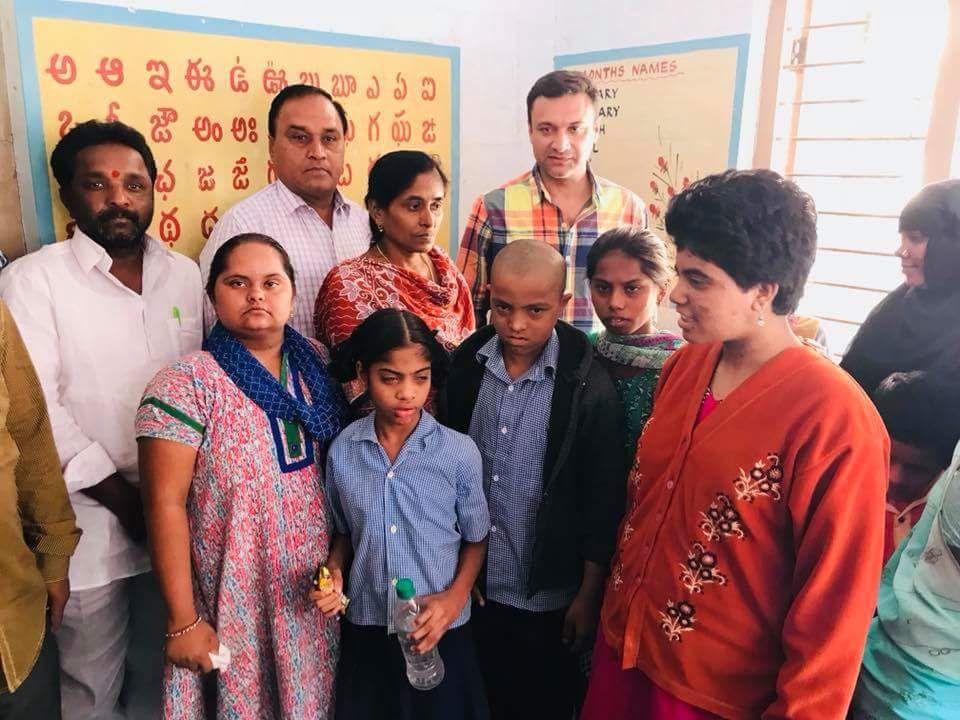
MIM leader Akbaruddin Owaisi along with the children of Bhavita.

Managed under Sarva Siksha Abhiyan (SSA), the resource centre provides facilities to 30 children with various kinds of disabilities.  During a recent visit to Bhavita, Akbaruddin was informed that the children had only one teacher and did not have access to playing and learning equipment .

Hyderabad:

As a noble gesture, MIM senior leader and MLA from Chandrayangutta, Akbaruddin Owaisi has adopted Bhavita, a resource centre for children with special needs located in Jangammet Falaknuma Government Junior College premises.

Managed under Sarva Siksha Abhiyan (SSA), the resource centre provides facilities to 30 children with various kinds of disabilities. During a recent visit to Bhavita, Akbaruddin was informed that the children had only one teacher and did not have access to playing and learning equipment.

On his direction, the Deccan College of Physiotherapy has taken Bhavita under its management and has provided learning and playing equipment worth Rs 5 lakh.

A physiotherapist and an instructor have been roped-in for the children, who will visit the centre on a daily basis, said Dr Aditya, Principal Deccan College of Physiotherapy, which is run under Owaisi Group of Hospitals.

The MIM leader has provided sports equipment and provisions for occupational therapy including an ultra sound, stimulator, bolsters, walking aids, elbow crutches, wobble board, skill games for kids and wedges which could help teachers and instructors to train the children.

Majority of the children at Bhavita suffer from cerebral palsy, muscular dystrophy, congenital deformities and intellectual disabilities. According to Dr Aditya, such children need proper care and treatment that would create an enabling atmosphere for them to grow like normal children.

Akbaruddin said he wanted the Centre to be strengthened and children to utilise the new facilities that had been made available to them.

“Whatever they need I am ready to provide from my side. I will also take up the issue of Bhavita Centre with the District Collector to provide more space for these children in the Falaknuma Campus,” he said.

Akbaruddin Owaisi has also donated Rs 50 lakh for improvement of infrastructure, establishment of labs, libraries and restoration of buildings in Falaknuma and Golconda Government Junior and Degree Colleges.

source: http://www.telanganatoday.com / Telangana Today / Home> Hyderabad / by Naseer Giyas / January 02nd, 2018

Many facets of an activist

GUJARAT / Mumbai, MAHARASHTRA :

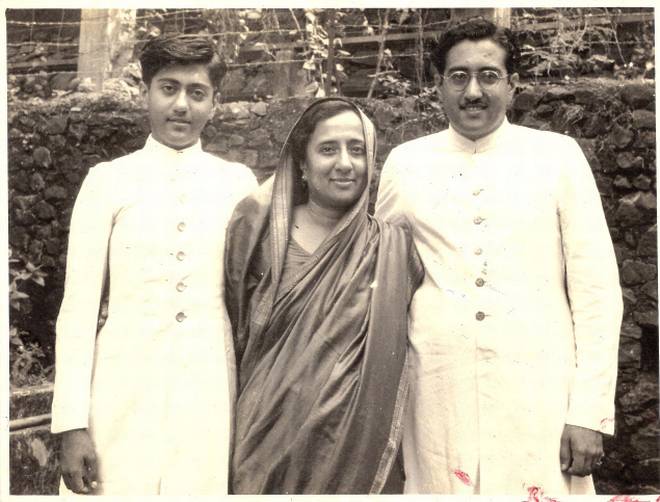
ducationist par excellence: Kulsum Sayani (Centre) with her sons, radio broadcaster Ameen Sayani (left) and Hamid Sayani. (Courtesy: Sayanis)

She was inspired by Mahatma Gandhi to unite Hindi and Urdu. Kulsum Sayani also worked tirelessly for adult literacy…

“Each one, teach one”, one of the most effective schemes to promote education today was popularised by a woman few remember, but who was a pioneer in the field of adult literacy in India.

Kulsum Sayani’s name might not ring a bell for many but her life and work are truly remarkable. Mother of the well-known radio personality Ameen Sayani, Kulsum was born in 1900. Her inspiration was none other than Mahatma Gandhi. Her father, Dr Rajabally Patel, was the personal physician to Gandhiji and Maulana Abul Kalam Azad.

During the several protest meets organised against the visit of the Prince of Wales to Bombay in 1921, the city had become volatile. The result was baton charges, arrests and martial laws. There were dozens of people wounded, and seriously injured.

Describing those trying times, Kulsum Sayani wrote, “A new Congress hospital was founded to care for the wounded. My late husband Jan Mohamed Sayani was the first physician to be put in charge of it. We had a small Saxon car with the Red Cross badge prominently showing on it. My husband would go to the hospital daily, practically on totally deserted roads lined up with policemen on both sides. I would be sitting by the phone until he called from the hospital telling me of his safe arrival.”

Sayani’s interactions with Gandhiji and the importance attached to education in her family made her realise the need to eradicate illiteracy. In 1938, with a capital of Rs. 100 she employed two teachers and made the rounds of Muslim localities to get students. Considering the conservative attitude towards female education even now, imagine the effort it must have taken on Sayani’s part to convince families about the importance of educating girls at that time. There were times people used to slam their doors on her face, exclaiming, “Why should women learn to read?”

Her tireless efforts proved that there was a tremendous need to work in the field of education, which needed a more organised set-up. Her experience made her a part of several committees, which were formed to increase literacy among adults in Bombay, now Mumbai. She was associated with the first National Planning Committee that was set up by the Congress government in Bombay in 1938. The Bombay City Social Education Committee, formed in 1939, asked Sayani to take over their 50 centres catering to Muslim women. Slowly and steadily the classes grew and reached 600 in number. Of course, her efforts were not limited to the Muslim community alone. She was also appointed the general secretary of the All India Women’s Conference in 1944 and worked for the empowerment of women.

But it was in spreading the word on education that she is best remembered. The New Delhi edition of ‘The Times of India’ (March 10, 1970) noted, “From 1939 when she (Kulsum Sayani) took charge of the Bombay City Social Education Committee five lakh adults have become literate through one of the five languages – Urdu, Hindi, Gujarati, Marathi and Telugu. Her days are a mad rush of dashing to schools to enthuse children into teaching adults and her nights are spent dreaming up new schemes of literacy.”

Dedicated

Sayani was very pragmatic and initiated several schemes to spread literacy, notably including “Each one, teach one”. She used to visit several schools and encourage young students to devote 15 minutes every day to teach one adult. Under the scheme, students were supposed to teach and read one new alphabet every day to any adult in their family, neighbourhood or domestic helpers. Highly conscious of the importance of moral values, she encouraged students to request adults to tell them a folk tale or a story from the epics.

“The lower middle-class women, who are forced to work, have no help but to abandon their children to the streets after school, while the fashionable ones have no time left for children after bridge and mah-jong parties,” she once said.

Another literacy initiative she initiated was reading out aloud. School students were encouraged to gather friends and adults and each one had to read out aloud. This, she believed, was necessary to improve the confidence and interest of neo-literates. To ensure the success of these schemes she used to visit three to four schools every week meeting and egg students on.

During the freedom struggle hundreds of political prisoners languishing in jails improved their Hindustani by reading out aloud ‘Rahber’, the newspaper she brought out. ‘Rahber’, started in 1940, was aimed at the new learners. It was published in three scripts – Nagari, Urdu and Gujarati. The language of ‘Rahber’ was Hindustani, a mixture of Hindi and Urdu. Those were the times when the Hindi supporters were using heavy Sanskrit words and the proponents of Urdu were lacing the language with Persian and Arabic in their efforts to distinguish the two languages and establish their superiority.

Support

Gandhiji was in favour of Hindustani written in the Nagari or the Urdu script. ‘Rahber’ sought to take forward Gandhiji’s idea of Hindustani. In a letter dated June 16, 1945, Gandhiji addressed Sayani as ‘Beti Kulsum’ and wrote: “I like the mission of ‘Rahber’ to unite Hindi and Urdu. May it succeed.” The newspaper was read by hundreds of political prisoners lodged in jails across the country; anyone interested in learning Gandhiji’s Hindustani picked up the paper.

When the Constituent Assembly deliberations began in the months leading to India’s Independence, the language controversy erupted again. A letter dated July 22, 1947, from Gandhiji to Sayani, shows his resolve to stick with Hindustani. He wrote: “Heaven knows what is in store for us. The old order changeth giving place to new. Nothing is settled. Whatever is decided by the C.A., Hindustani with the two scripts remains for you and me.”

Sayani also represented India at several international forums on education across the world. She attended the UNESCO conference in 1953 in Paris (France) and shared ideas and gained new perspectives after talking with representatives from several countries. Her other interest was to promote peace and increase understanding between India and Pakistan. Her well known status as an activist helped her get audiences with top leaders in both the countries. Among Pakistani politicians, she directly met Pakistani presidents, Ghulam Mohammad and Ayub Khan, among other senior leaders.

In India, her reputation as ‘Rahber’s’ editor helped her get appointments with Nehru, B.G. Kher, V.K. Krishna Menon, Rafi Ahmed Kidwai and Indira Gandhi. She received encouragement and support from politicians of all hues in India for her efforts to forge a friendship with Pakistan. However, after the passing away of Nehru and Rafi Kidwai, who shared her concerns on improving relations with Pakistan, she devoted her energies to propagating Hindustani.

Sayani’s life is an inspiration to many. Married when she was only 18, she managed her family and pursued her social interests with equal elan. Her sons, Hamid and Ameen, both radio broadcasters, created their own identity. Ameen Sayani attributes his “basic grounding in clear and credible communications in Hindustani” to his involvement in assisting his mother in bringing out ‘Rahber’.

Old age and bureaucratic red tape forced her to stop ‘Rahber’ in 1960 after she had single-handedly brought it out for 20 years. She continued to be associated with the Hindustani Prachar Sabha and organised several lectures and seminars

She never lost focus from her lifelong passion to eradicate illiteracy. She received the Padma Shri in 1960 and was also awarded the Nehru Literacy Award in 1969.

Sayani, who died in 1987, belonged to an era when people believed in giving their best to the nation without expecting anything in return.

(© Women’s Feature Service)

source: http://www.thehindu.com / The Hindu / Home> History / by Danish Khan / August 14th, 2010

Bengal Madrassa Teacher’s Son Tops Jadavpur Varsity to Bag 2 Gold Medals

Sonakur (Nadia District) , WEST BENGAL :

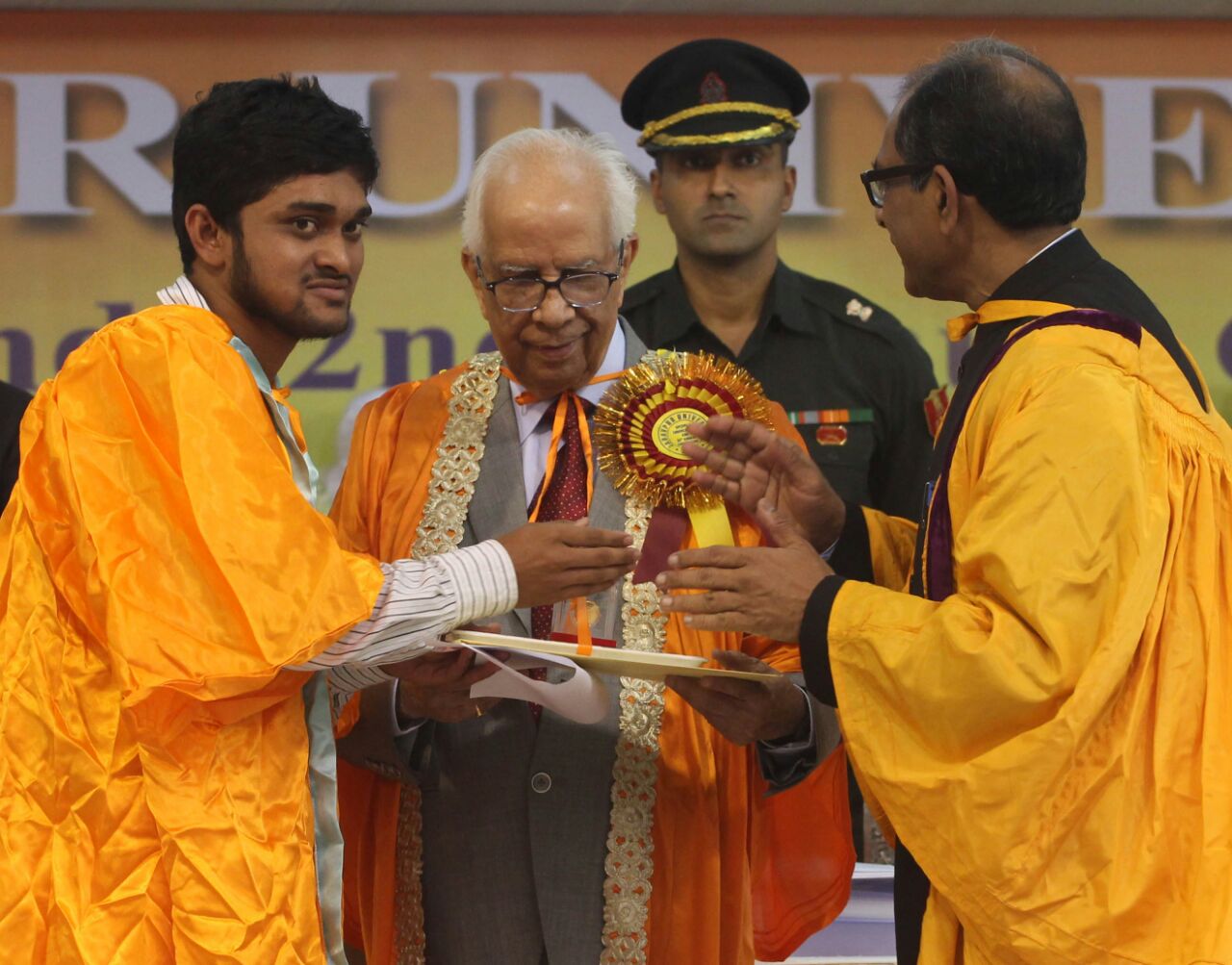
Irfan Habib receives his degree from West Bengal governor K N Tripathi. Caravan Daily
Irfan Habib receives his degree from West Bengal governor K N Tripathi. Caravan Daily.

Kolkata :

It’s not every day that someone from a remote village bags a double gold medal at the convocation ceremony of one of India’s finest universities. Meet Nadia’s Irfan Habib, son of a madrassa teacher, who has beaten all odds to top the Jadavpur University’s undergraduate programme in Mathematics.

The 22-year-old travelled all the way from Sonakur, a village in Bengal’s Nadia district, to pursue his dream of mastering mathematics. Talking to Caravan Daily, he said, “My mathematics teacher has played a vital role in influencing my career choice. He is the best Mathematics teacher in the world. It was he who motivated me to take it up as my major subject.”

Irfan bagged two gold medals during the 62nd Convocation of the University. “I secured 93 percent in B Sc to top my department. But, I have not just topped my department but also all the other departments of the University. Hence the two medals,” said he.

The convocation was attended by former President of India Pranab Mukherjee, West Bengal Governor Keshri Nath Tripathi and Vice Chancellor Suranjan Das. An excited Irfan gushed, “I can’t express my happiness on being awarded in the presence of the former president Pranab Mukherjee.”

He said, “I come from an average middle-class Muslim family, which believes that education is the only way out to emerge triumphant in life. My father is a senior madrassa teacher and mother is a homemaker. And to be honest, I had never thought of taking up mathematics for my higher education till I met my teacher who has played a vital role in shaping my career graph.”

Irfan did his schooling from FrontPage Academy, a residential institution situated in North 24 Parganas. “It was here that I met teachers who helped me script my success story. It was under their guidance that I scored 90.6% and 91.2% for Secondary and Senior Secondary Examination,” says the young boy, who aspires to earn a doctorate in Abstract Algebra.

Irfan’s elder sister also is pursuing her masters in mathematics. On being asked if mathematics runs in their blood, he laughed and said, “No, No. It is just a coincidence that both of us have taken up mathematics.”

On being asked if he faced any discrimination or difference in the quality of education once he shifted base to Kolkata, he said, “Not really. Jadavpur University and my professors have been very accommodating and kind to me. They have helped me out on many occasions. In fact, before joining the University, I had heard tales of the ragging sessions of the University. However, contrary to the belief that we have, I have witnessed no such ragging sessions within the University premises.”

source: http://www.caravandaily.com / Caravan / Home> Community> Editor’s Pick / by Shabina Akhtar , Caravan Daily / December 27th, 2017

AMU research scholar receives ‘Prof C V K Baba Award’ for best thesis…

Aligarh, UTTAR PRADESH :

Ms Farhana Zaidi (Phd student, Department of Physics, Aligarh Muslim University—AMU) has been conferred with the ‘Prof C V K Baba Award’ for the best thesis of the year during a ‘Department of Atomic Energy-Board of Research in Nuclear Sciences’ sponsored symposium on Nuclear-Physics held at Thapar University in Patiala.

The award was given by Indian Physics Association.

Ms Zaidi is also a recipient of Young Physicist Award—2 017, S N Ghoshal Award for Best Young Physicist and Pratyasa Kumar Basu Memorial Award for best presentation.

source: http://www.goonjtimes.com / GoonjTimes / Home> AMU / December 30th, 2017

AMU scholar bags first prize for her paper at YPC 2017

Aligarh,  UTTAR PRADESH :

Aligarh :

AMU research scholar Farhana Zaidi from Department of Physics received the first prize from The Indian Physical Society (IPS) for her paper on ‘Nuclear Medium Effects in Neutrino Nucleus Scattering at J Lab and Minerva Energies’ at the 35th Young Physicists’ COLLOQIUM (YPC 2017), Saha Institute of Nuclear Physics, Kolkata.

The second and third prizes were awarded to research scholars from the Tata Institute of Fundamental Research.

Zaidi’s paper was selected from 17 entries submitted by research scholars from all over the country, which were reviewed by three referees. After a 25-minute paper presentation, Zaidi answered questions on her research.

Earlier, she also received S N Ghoshal Award for the best young physicist and Pratyasa Kumar Basu Award for the best young scientist at the event.

With the award, Zaidi has also received cash, popular books on science and IPS lifetime membership.

source: http://www.twocircles.net / Two Circles.net / Home> Youth / by TCN news / August 19th, 2017

The Extraordinary Life Of Educationist Begum Zaffar Ali | #IndianWomenInHistory

JAMMU & KASHMIR :

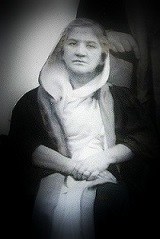
Begum Zaffar Ali. Credit: Wikipedia

In the year of 1987, Begum Zaffar Ali, the first woman matriculate of Kashmir was awarded a Padma Shri for her extraordinary perseverance in being a women’s liberation activist and working towards empowering women through education. Brought up in a conservative setting where women’s movements, ideologies and bodies were controlled by the patriarch of the family, the perseverance towards creating awareness regarding education was certainly extraordinary.

Early years

Born in 1900, Begum Zaffar Ali was an educationist, women’s liberation activist and a social worker. She was also a legislator. Her maiden name was Syyeda Fatima Hussain, she was the daughter of Khan Bahadur Aga Syed Hussain the first matriculate of Kashmir, later Governor, Judge of the First High Court of Jammu and Kashmir, and Home and Judicial Minister during Maharaja Rule. Her mother Syyeda Sakina Sadaat belonged to a Sayyid family of Sabzevar Iran, which was an affluent business family in Kashmir.

Even though the place was largely conservative and Purdah was considered an essential part of a woman’s life, her parents were mostly supportive of her natural inclination towards academics and encouraged her in her quest to be more informed and performing well in studies.

She had a Christian governess from Europe to familiarise her with formal education and there was also a separate tutor to teach Begum Zaffar Ali and her siblings religion. She was taught housekeeping, home science training, health education, society, family and childcare by her home governess.

Marriage and involvement with activism

She was married to her cousin – Agha Zaffar Ali and had three children. She managed to spare sufficient time for her education. Her husband was supportive of her endeavour and actively encouraged her to pursue academics and challenge herself.

In 1925, she was invited to join as a teacher at the girls’ school run by Miss Mallinson and Miss Bose in Fateh Kadal area of Srinagar. Despite her initial reluctance, she decided to join and started taking classes along with her children from their home tutor.

It was during this period she started her participation in social movements, and at a personal capacity started looking out for the girls she was teaching in schools. She taught them to maintain personal hygiene and inculcated good habits and etiquettes in them. Begum Zaffar Ali was not subtle about her love for education and she was suggested by the home tutor to take the matriculation exam.

Initially, she was hesitant as no woman in the Valley had passed the matriculation before, but putting her initial hesitation aside and giving precedence to her love for education, she decided to appear for the examination in 1930. She successfully passed in the second division in the exam and was celebrated for breaking the glass ceiling.

Since she was the first Kashmiri woman to achieve this feat, she was awarded a gold medal for the same.

Social Activism

She completed her graduation in 1938, immediately after which she started pursuing her post-graduation. As a credit to her qualifications, she served as Head Mistress for several different schools in the Valley. A staunch believer in women’s rights, Begum Zaffar Ali literally went door to door to raise awareness regarding girls’ education in the Valley and persevered to empower them through education. Shortly after, she was also appointed as Inspector of Schools in Kashmir, rewarding the passion she displayed as an educationist.

Begum Zaffar Ali was a fine orator, and would often indulge in public speaking to create awareness for the cause she backed. She would speak at several public events and in schools and inspired adulation among girls in the Valley for the very same reason. Her strong presence in public life and consciousness of Kashmir was further strengthened by the Teachers Club.

Teachers Club organised events and public gatherings, and Begum Zaffar Ali was instrumental in laying the foundation for it. She was a key member along with Tara Devi, the Maharani of Kashmir. The purpose of the club centred around discussion of women’s issues and their rights and she was actively involved in the conversation regarding women’s movement in India. She was the general secretary of the Ladies Club. Pre-Independence, she was also the secretary of All India Women’s Conference .

She later left the conference after a chance meeting with Muhammad Jinnah and his sister Fatima Jinnah, she directed her efforts towards the emancipation of women and their liberation.

She held several posts in the Department of Education and served in various capacities. She served as principal in several schools, she served as an education officer, she served as chief education officer as well as the chief inspector in schools of Kashmir.

As a chief inspector, she also introduced mid-day meals in school. Before her retirement, she was also appointed as the Deputy Director Education Kashmir for her relentlessness in the matter of empowerment through education. She was also a member of the Social Welfare Advisory Board, Jammu and Kashmir.

Later years

Begum Zaffar Ali also established a technical training centre for women of limited means in the Valley, in the capacity of Deputy Chairman of the advisory board. Between 1977-82, she also became a member of the Legislative Assembly and tried to bring out various reforms for education and women’s emancipation along with other social issues. The policies she endorsed were by and large progressive and directed towards the upliftment of women.

In 1987, she was the recipient of Padma Shri, India’s highest civilian award for her social work and her perseverance in working for women’s liberation and education. However, later in a televised protest in Doordarshan, she returned the award citing the then Government’s harsh and unfair policies as a reason.

Image Credit: Academy of American Poets

Death

Begum Zafar Ali died in 1999 at the age of 99 at the residence of her son Agha Shaukat Ali  in the United States of America. Her grandson Agha Shahid Ali an award-winning Kashmiri-American poet, wrote a poem in memory of her which was included in the collection The Veiled Suite : The Collected Poem . 

source: http://www.feminisminindia.com / Feminism In India.com / Home> History / by Shruti Janardhanan / November 14th, 2017

HPS students represent India at U.N. session at Bonn

Hyderabad, TELANGANA :

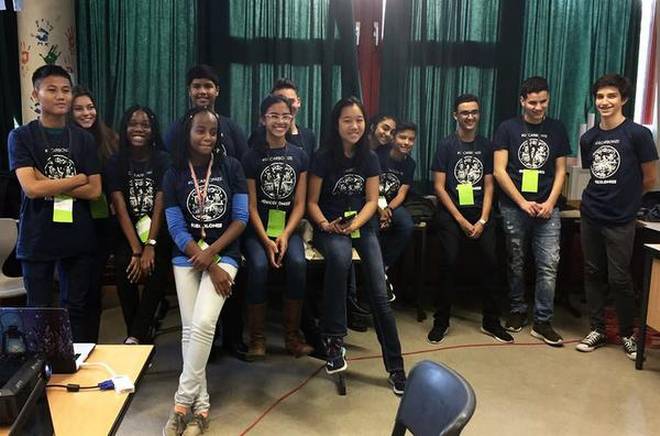
The students of Hyderabad Public School, Begumpet, who took part in the 13th Conference of Young Climate Activists.

A team of nine students and their facilitator from Hyderabad Public School, Begumpet, represented India for the first time in the 13th Conference of Young Climate Activists in the run up to the 23rd United Nations Climate Summit at the headquarters of United Nations Framework Convention on Climate Change at Bonn in Germany last month.

The students led by Tharunimm Jamal shared with the gathering at Bonn a report on climate change in India. The report was the result of four months of painstaking efforts by the students preparing blogs, researching and gathering information on climate change, a release said.

It added that Mr. Jamal presented India’s voice in green peace rally at Bonn and made some presentations on climate challenges facing the country. On return, Mayor Bonthu Rammohan met the team and presented it appreciation letters on behalf of the GHMC.

source: http://www.thehindu.com / The Hindu / Home> News> Cities> Hyderabad / by Special Correspondent /  Hyderabad – December 23rd, 2017