Category Archives: Education

National bronze for Bengal rowing teens

Kolkata, WEST BENGAL :

(From left) Md Rahmat Ali and Sanglap Bose practise in Rabindra Sarobar. (Sanat Kr Sinha)

Rabindra Sarobar:

Two teenage rowers from Calcutta have ended a seven-year wait for Bengal by winning bronze in the junior national championships.

Sanglap Bose, 16, and Md Rahmat Ali, 15, finished third, missing out on silver by two seconds and gold by six.

The 38th edition of the event was held in Odisha’s Jagatpur between November 14 and 19.

The last time any male rower from Bengal made it to the podium in the junior nationals was in 2010 when Kapil Pincha won bronze in single sculls in Hyderabad in 2010.

“We finished first in the heats but couldn’t hold on to our nerves in the finals,” Bose, a Class XI student of Julien Day School, Bhowanipore, said.

The team completed the race in 3 minutes and 40 seconds. Telangana came first, followed by Madhya Pradesh.

Bose and Ali , a Class X student of Kendriya Vidyalaya, Ballygunge, practise at the Bengal Rowing Club.

“Junior nationals are more competitive than the sub-juniors. The 1km watercourse is a big challenge for our rowers because all watercourses in Calcutta are smaller,” Rajesh Agarwal, rowing captain, Bengal Rowing Club, said.

The teens had been preparing for the tournament since July. They practised early morning and in the evening.

In the pairs, two rowers have an oar each, compared to double sculls where each rower has two oars. “You need a certain level of physical strength to do well in pairs. The hours at the gym are as important as the practice sessions on water,” Agarwal said.

A low carbohydrate protein rich diet and a complete bar on junk food was also part of the preparations.

Ali stands at 5 feet 7 inches and weighs 52kg. Bose is 5’5″ and weighs 63kg.

“The immediate reaction after the race was that of disappointment. But we badly wanted a medal. We had aerated drinks after six months to celebrate the podium finish,” Ali said. His rowing career started at the club in 2014, a year after Bose had joined the club.

The two rowed together for the first time in 2016 and won gold in the state championships held at the club in January. They followed it up with gold in double sculls in the national sub-juniors in Chennai in June. “They keep pulling each other’s leg but on a boat they complement each other perfectly,” Agarwal said.

source: http://www.telegraphindia.com / The Telegraph, Calcutta,India / Home> Calcutta / by Debraj Mirta / December 02nd, 2017

Humaira Gowher, A Kashmiri Scientist who is making Kashmir proud worldwide

Srinagar, JAMMU & KASHMIR / Indiana, USA  :
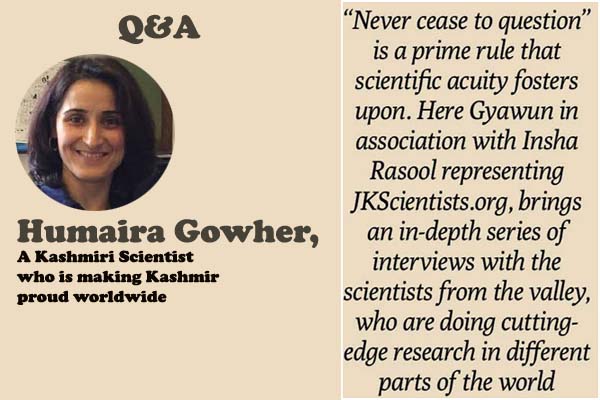
HumairaGowherMPOsaug2017

“Never cease to question” is a prime rule that scientific acuity fosters upon. Here Gyawun in association with Insha Rasool representing JKScientists.org, brings an in-depth series of interviews with the scientists from the valley, who are doing cutting-edge research in different parts of the world.

Early inquisitiveness metamorphosed a Kashmiri girl into an expert in molecular biology research at Indiana, USA.Bringing the first in the series, here we discuss with Humaira Gowher, about her early life in Kashmir, her motivations and aspects of science that she finds most exciting and more importantly, the expertise she brings to University of Purdue, West lafayette, USA. Her research currently focuses on understanding the regulation of DNA methylation in development and disease.

Tell us about yourself

My name is Humaira Gowher. I was born and raised in Srinagar until I was 19. I was always lucky being among the first few batches to attend Caset Experimental School, headed by Prof C. L. Vishen, a visionary and an exceptional educationist. He followed Montessori style of primary school teaching. Back then, it was unknown in our part of the world. It was through discussions about inventions and discoveries in Vishen’s classroom, I treasured the feeling of becoming a scientist. The further excitement in the science of life was added by lectures from Physics and Biology professors.

I received my college education from Aligarh Muslim University, where I graduated with Bachelors (Hons) and Master’s degree in Biochemistry. I was again blessed with mentors including Prof. Imrana Naseem, Ms. Aziza Rizvi, who instilled the love for biochemistry and sports during my college years. The supporting culture of the Women’s College wiped every tear and healed wounds of separation from the homeland. Women’s College, AMU, was and still continues to be a place where you experience personal freedom. It creates a no judgment zone for young teenagers, who are given different opportunities to excel in cultural, sports, or academic championships, and I am thankful for those opportunities.

What motivated you to study at IISc, which is the finest institute in India? How comfortable was the transition from AMU to IISc and did your background in biochemistry helped you to adjust there? Share your experience with us; especially in what way did it help you to shape up your career?

During my second year in the Biochemistry Master’s program, I was exposed to experimental research as a summer trainee for a couple of months in Dr. S. E. Hasnein’s lab at the National Institute of Immunology, New Delhi. I always wanted to become a scientist, however, the experience in Dr. Hasnein’s lab gave me a realistic feel of what that means and I yearned for it more than ever. I was looking forward to getting my PhD degree from a premier institution in India. I applied to the Indian Institute of Science, Bangalore and based on my high score in GATE and my performance in a series of interviews at IISc, I was able to secure a position as a PhD student in the Department of Biochemistry.

I stayed in the program for 2 years but due to family reasons, I had to move to Germany where my husband was placed in a Computer Engineering program in Essen-Duisburg University. I continued my PhD thesis work in Germany in the Department of Biochemistry, at Justus Liebig University. The field of research, “Epigenetics”, offered to me was the one I had acquired experience in and was close to my heart. It was very easy to work hard and publish, simply because I enjoyed doing it. With prior experience from IISc, I was able to finish my thesis in 2 ½ years and was awarded Summa Cum laude (Award of Excellence) for publishing 7 first author peer-reviewed manuscripts during this time.

After completion of your PhD, what kept you motivated in Science and how did you choose your position at the National Institute of Health (particularly in terms of place project and funding)?

Motivation to do science comes only from the passion to do it. It needs tremendous perseverance to stay in science given that you have to put up with failures and success is a rare occurrence. The act of doing the experiment excites me and I worry little about its failure. Similarly, I worry less about the experimental result that does not support my hypothesis, because if it does not, then I have more to do and figure out why which often is the fun part.

Like anyone else’s, my life was not just about doing science and publishing papers. It had all the other elements that helped balance it. After I finished my PhD, I continued to work in the same lab as a research associate for 2 more years until my husband got his degree. In 2005, after our first born, Hana Khan, turned 2, we decided to cross the Atlantic to continue our exciting journey. I was offered a post-doctoral fellowship at the National Institute of Health to work with Dr. Gary Felsenfeld’s, while my husband was easily assimilated in the Big IT world in the United States, thus helping us reach our respective career goals. Dr. Felsenfeld is a pioneer in chromatin biology and epigenetics. With my previous experience and his lifetime of expertise, I was looking forward to the most exciting and stimulating time in my scientific career. NIH provides a well-funded environment for your ideas to take the shape of an experiment with little to worry about the cost of doing it. Of course, one has to justify the experiment and make sure it is well-designed and expected to minimally open new ways of thinking in your field. Around Gary, at NIH, I found myself rubbing shoulders with people who had received the highest laurels for their achievements in science, had experienced the growth of knowledge, and understood the complexity of these systems.

Could you tell us about the most exciting project that you have worked on so far. How did the research community respond to the outcome of that study? 

Most exciting project….nothing I did until now was less exciting, so it is a tough question. Well, few things I discovered had more impact on the scientific world than others. During my PhD, my work was the first to show that the short catalytic domain of the mammalian DNA methyltransferases Dnmt3a and 3b are active without their large N-terminal part, which led to characterization, crystallization, and many studies of these enzymes by ours and multiple other labs around the world. My current lab continues to work on understanding the regulatory potential of these enzymes during development and in cancer. During my postdoc, my work on the regulatory elements of the genome called insulators was indeed very exciting given that these elements can control the expression of genes that are megabases away from them. It introduced me to the field of chromatin folding and architecture and its role in the regulation of gene expression, which I continue to work on.

What were the critical factors and considerations that you contemplated about while opting for the position at Purdue University, West Lafayette, USA?

I worked at NIH for some years and after gaining some experience decided to take the next step, which was to establish my own research program. In the US, most of the scientific research is supported by universities and medical schools. With my interest in teaching biochemistry, I was inclined to take a position at a state university, if offered. In 2011, due to an economic downturn in the US, only few positions were open and I was competing with over 400 applicants for each position. It took a few rounds of application and few more years and finally in 2013, I was offered a position of Assistant Professor in the Department of Biochemistry at the Purdue University. During my interview, I not only had to consider Purdue for the potential to do the research I wanted to, but also for possibilities for my husband to find a job in the vicinity and an environment where I could raise my children with dignity. Although Purdue offered my husband a possibility to work at the university under a faculty recruitment and retention program, but he got few offers from private industry in Indianapolis which was only an hour away. Purdue is one of the more diverse university campuses I have seen, which is reflected in the diverse population of students attending the neighborhood schools, thus providing a viable solution for my 10yr old Hana and 6yr old Ahmed.

What obstacles and challenges did you face while setting up your laboratory in the initial years?

Setting up a new lab has many challenges. It is like a small business and you have some investment, which you have to spend correctly to ensure the return. To make a decision on hiring people is the most challenging job since I never did it before. You interview a bunch of people for a position and hope you are looking for the right thing. I did take a lot of advice from my senior colleagues and my mentors while making these decisions. Nevertheless, of course, it did not work well every time. The other challenge is time management; you have much more responsibility now, teaching, service, research, home front, kids and yourself too…. switching hats and changing roles and doing it to its best is what drains you in initial years. Then I figured out the best possible ways of doing it. I also needed time to analyze the data, write papers, write grants, write lectures, write, write, write…something I was not previously used to at that scale.

In the recent decade, research has broadened immensely. How different does it feel to mentor a current lot of students as opposed to the training that you received at your time? What is your idea of mentoring in the current academic setting?

I agree that research has broadened and perplexingly, it is intricately connected, which makes it challenging. A student today requires knowing much more than when I started my graduate school. In research, every new idea comes from what we know from the previous research and it is challenging to keep it all together and carve your niche, which is unique. I encourage my students to read more and present the research from other peer-reviewed publications to get them to the speed. Since I traveled various continents during my education, I was exposed to various kinds of mentoring techniques, which are of course influenced by the social setup too. The objective of effective mentoring in an academic setting is to provide your mentee with all information you have acquired through your experiences and help him/her strategize his/her career path. To be able to help your mentee realize their true potential and in an honest but polite manner help them meet the reality. I mentor undergraduate, graduate, post-doctoral fellows and some high school students too. It is the most rewarding feeling when you get a Thank You card from your mentee and he/she got admission in the top school or got a job they wanted. My personal struggles in achieving and retaining the academic position come to a full circle through these achievements.

You have also written a book “How Do I Sing Nursery Rhymes in the Kashmiri Language? ” tell us something about how it happened

I left home, Kashmir, when I was about 19, a long time back. Wherever I went I simply cannot leave behind the person who my culture made out of me, my language, my hospitality, my favorite food, clothing, jokes, curses, poems, music…all that had compiled my personality in those 19-20 years. A couple of decades later, I find myself struggling with transferring this emotional relationship to all that is Kashmiri in me to my kids. Truth is that you know a culture when you can laugh at its jokes that is when you can speak its language. The Kashmiri diaspora in the United States decided to have an annual meeting to celebrate Kashmiri language, art and culture. Many of my friends complained that it was difficult to raise children bilingual with both Kashmiri and English as spoken languages. Most of us also agreed that at the baby/toddler stage, the introduction of English language happens through Nursery Rhymes and that our kids didn’t have a Kashmiri version of the popular rhymes to tune in. We thought it would be easy to have popular English rhymes translated to tune in Kashmiri so that they can simply sing them on the same rhythm.

I took this on me and thanks to a hidden poet gene (from my mother), I was able to translate six common Nursery Rhymes to English keeping the original tune in mind. My own kids could sing these within hours given that the words simply rhymed with the tune that they memorized as babies….it was truly satisfying.

What advice would you give to the students in research who are looking forward to becoming independent researchers?

If excelling is what you work toward, it is enough to advance you towards your goals.

Principals take charge

Patna, BIHAR :

Patna:

Padamlata Thakur and Ejaz Ali Arshad on Wednesday took charge as principals of Magadh Mahila College and Patna College respectively.

The Patna University issued the notification for the appointments on Tuesday night.

Thakur who took charge as 22nd principal of Magadh Mahila College was earlier working as head of the history department and she was also the coordinator of the Department of Women’s Studies.

Arshad, who was appointed principal of Patna College, had served as vice-chancellor of Maulana Mazharul Haque Arabic and Persian University, Patna, from February 2014 to February 2017.

Arshad whose tenure completed this year as VC of Maulana was working as head of Urdu department at Patna University. Arshad had also worked as dean students’ welfare at Patna University.

Thakur said: “It is a proud moment for me to become the principal of Magadh Mahila College which is one of prestigious educational institutions of Patna University.”

Thakur said she had called a meeting of teachers, staff and members of college students’ council to discuss ways for academic and infrastructure development.

“My first priority will be to look into students’ issue. As MMC is a women college, ways to strengthen gender-sensitisation cell will be a priority and so is girls security,” she said.Arshad said his priority was to restore the glory of Patna College. “Improvement in academics and infrastructure facilities will be my top priority.”

source: http://www.telegraphindia.com / The Telegraph, Calcutta,India / Home> Bihar / by Special Correspondent / November 02nd, 2017

National Education Day celebrated at Farooqia College of Pharmacy

Mysuru, KARNATAKA :

FarooqiaCollegeMPOs01dec2017

Mysuru :

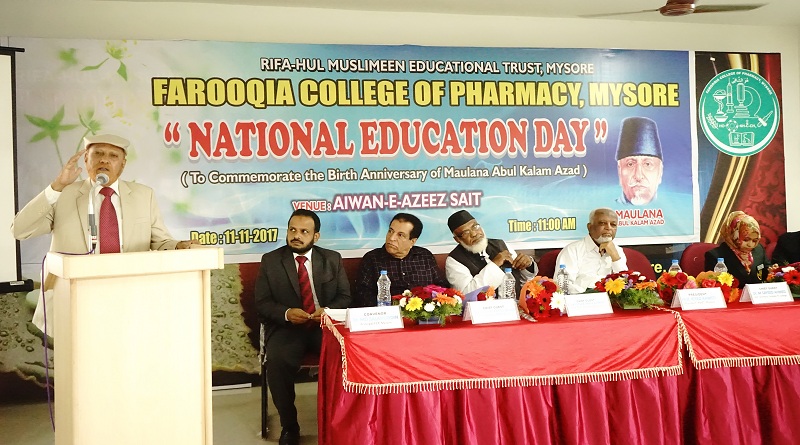
The National Education Day to commemorate the birth anniversary of Bharat Ratna Maulana Abul Kalam Azad was celebrated at Farooqia College of Pharmacy at Tilaknagar here recently.

Speaking on the occasion, Taj Mohammed Khan, secretary of Farooqia Educational Institutions, encouraged the students to follow the footsteps of Maulana who fought for the freedom of India and brought a revolution in education with his reforms as first education minister of post-independent India.

Dr M Sayeed Ahmed, secretary of Farooqia PU College, who was the chief guest, gave a detailed power-point presentation on Maulana’s life.

He said it is Maulana who first opposed the partition and separation of India and Pakistan. Maulana was a firm believer in the co-existence of religions. His dream was that of a unified Independent India where Hindus and Muslims can live peacefully.

Kolar Mustafa said that nowadays the institutions like UGC, AICTE and IITs are still running without modification in their regulations due to the broad based think tank of Maulana Abul Kalam Azad.

President of RMET Prof Riyaz Ahmed in his presidential remarks briefed about the post- independent educational system and highlighted Maulana’s simplicity, who didn’t amass property and wealth for his own family members and relatives even though he was an education minister for 10 long years.

Prizes were given away to Essay Competition winners on “Life of Maulana Abul Kalam Azad after post-independent India.”

Maryam Postdar, a D Pharma student, recited verses from the Quran. Principal Dr MD Salahuddin presented a video documentary on Maulana Abul Kalam Azad’s Life.Sara Ateeq, vice-president, Pharmaceutical Society and others were present.

source: http://www.citytoday.news / City Today / Home> Headlines> Mysore / by CT Bureau / November 30th, 2017

BMC-run Urdu school goes online to help girl students realise their dreams

Mumbai, MAHARASHTRA :

Mumbai :

An army officer, a policewoman, a teacher, a civil engineer, a management executive, a doctor, a beautician. These are some of the jobs that Class X girls of the BMC-run Imamwada Urdu School aspire to.

Their school, on its part, is taking all possible initiatives to compete with private educational institutions to ensure the students inch closer to the dream job. In an attempt to enable its students, the school has started a blog, a Facebook  page and a WhatsApp group for parents, and begun posting You Tube videos. It’s mobile app is at the trial stage.

Around 200 girls travel as much as 20km in dedicated BEST buses from Govandi and Sion to reach the school located in Bhendi Bazar. Their bus fare is paid by Aaisha Bai Trust, an NGO, and school teachers. “To keep up with the changing era, we need to update our students and make sure that they can compete with others. We are therefore trying to provide them with all the facilites we can,” said Shah Fakeer Ahmed, head master of the school.

“Last year, our students’ pass percentage in Class X was 76.9. We are working very hard to increase it. These girls come from various parts of the city and we have seen an increase in the number of admissions, from 217 students last year to 350 this year,” said Mohammed Aslam, an assistant teacher who is credited with taking up the web initiative for the school. “We want our students to be experts in using the latest technology for their career.”.

The school, located opposite Mughal Masjid, has two playgrounds, a garden, a sewing class for students, a science laboratory and a digital classroom. “Our students are brilliant and we expect them to reach great heights,” said Imran Khan, another teacher.

School authorities send announcements, results and attendance reports on WhatsApp. Currently, as many as 115 parents are on the group. The app, being developed by a Hyderabad firm, will be used to send notices, day-to-day activity details and results, said a teacher. The school has posted YouTube videos on the annual day, plays and activities.

The enthusiasm is palpable among students. Govandi’s Sakeen Bano said, “I am studying hard and want to join the Indian army to serve the nation.” She was her school’s best NCC cadet last year. Saira Khan hopes to ‘teach in the same school’. Sayyed Muskan and Rahe Huda want to become doctors. Shaikh Saober wants to be a police officer. The school is compiling records of its successful students for inspiration. One such recent example is Dr Rehnuma Khan, who holds MD (Unani).

source: http://www.timesofindia.indiatimes.com / The Times of India / News> City News> Mumbai News / Schools & Colleges News / by Mateen Hafeez / TNN / Novmeber 25th, 2017

St Paul’s lift basketball title in inter-school championship

Hyderabad, TELANGANA :

Nihal Kumar and Majid Ali Khan showed their shooting prowess by scoring  12 and 10 points respectively.

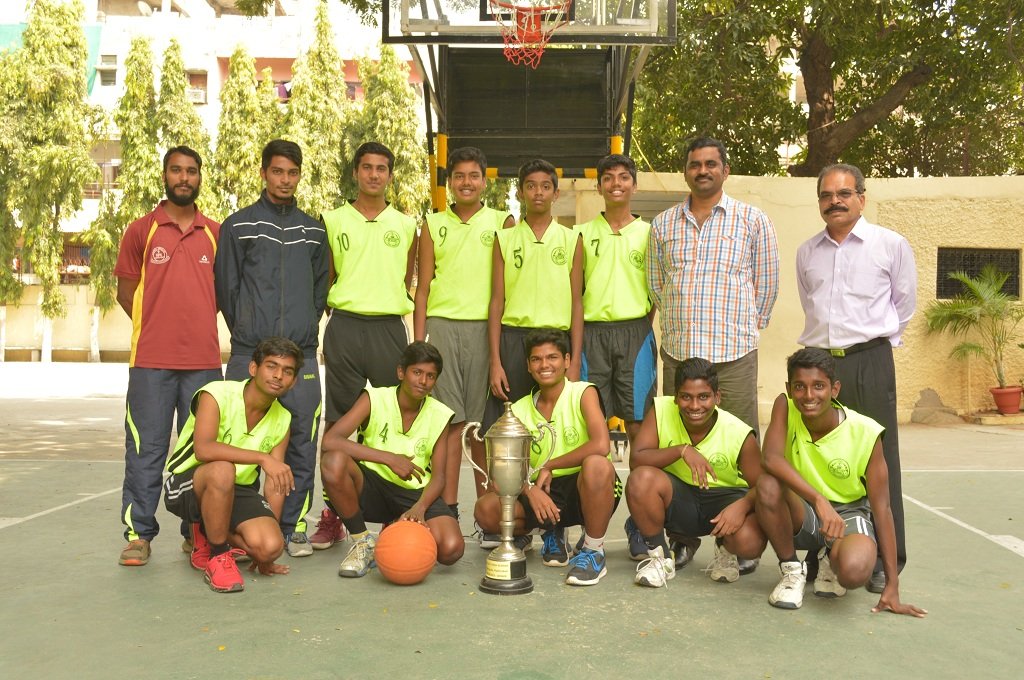
St Paul’s High School team that emerged winners of the inter-school basketball championship.

Hyderabad:

 St Paul’s High School defeated All Saints High School 30-25 in the summit clash to lift the Under-17 Inter-School SSC Clusters Basketball Championship, being organised by School Games Federation, Hyderabad Zone, at the Victory Play Ground here on Sunday.

Nihal Kumr and Majid Ali Khan showed their shooting prowess by scoring 12 and 10 points respectively while Shankar shone for the losing outfit with a 10-point show.

Result:

Final: St. Paul’s High School 30 (Nihal Kumar 12, Majid Ail Khan 10) bt All Saints High School 25 (Shankar 10).

source: http://www.telanganatoday.com / Telangana Today / Home> Sport> Other Sports / by Telangana Today / October 30th, 2017

Trial advocacy team represented by Indian American Shahina Khan won over Georgetown University

Hyderabad, TELANGANA / Chicago, USA :

ShahinaMPOs29nov2017

Chicago:

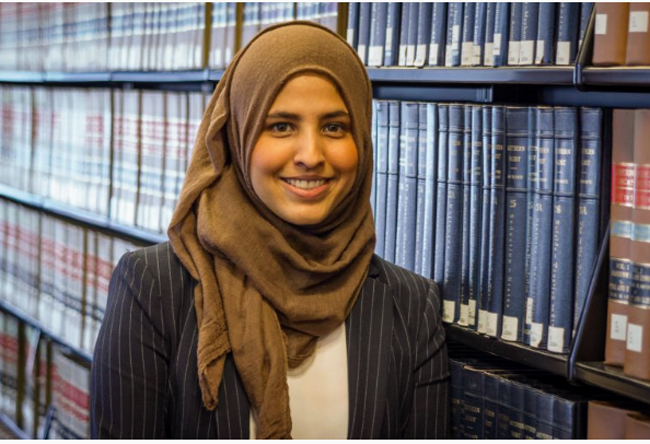
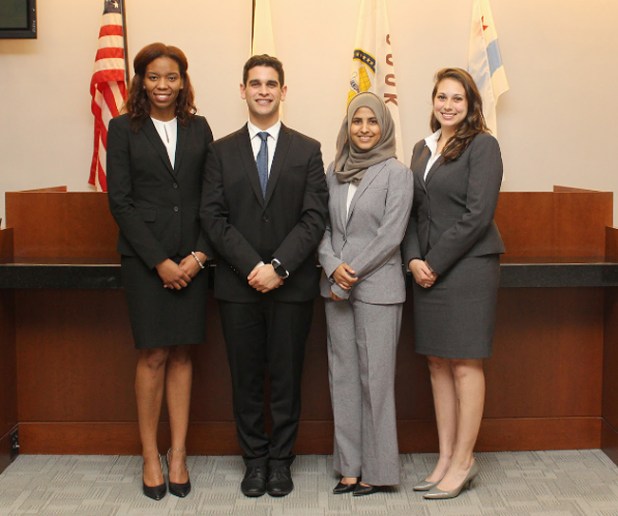
The Chicago-Kent trial advocacy team represented by Shahina Khan, 3rd year JD student with three other students in the National Civil Trial Competition Championship 2017, held at Santa Monica and Los Angeles, Calif. Chicago-Kent won over Georgetown University Law Center, Drexel University Thomas R. Kline School of Law, and American University Washington College of Law twice in the quarter and semi finals rounds.

In the finals, Chicago-Kent got 1st runnerup to the team of Stamford University Cumberland School of Law. She also the recipient of prestigious J.J. Bittenbinder Award in UIC and the Obama Award for her championship in extra and co curricular activities during High School years .

Shahina02MPOs29nov2017

Shahina Khan belongs to the aristocratic and respectable family of old Hyderabad Estate. She is the daughter of Engineer. Ameer Mohammed Ali Khan, Practicing Consultant of IDOT, and grand daughter of President’s Gold Medalist, Late Nawab Wajid Ali Khan, Superintendent of Police, Ex. AP, India.

Shahina Khan’s great grand father, Late Abul Faiz Mirza Mohammed Ali Baig, was an eminent lawyer in pre and post independent India Hyderabad. He was the President of Bar Councils, Civil and Criminal courts, Hyderabad, India. He was one of the few eminent lawyers of India who had an opportunity to write the constitution of India.

Shahina Khan is the President for Criminal Law Society, Muslim Law Student Association and member of Trail advocacy Team ( 2017-2018).

Earlier to this, she also served as the Vice President for these associations. She graduated from University of Illinois at Chicago in 2015 with a bachelors in Criminal law with honors. She is doing her internship in Cook County State’s Attorney’s Office, Chicago. She wants to pursue a career in Criminal Litigation.

source: http://www.siasat.com / The Siasat Daily / Home> News> NRIs Corner / November 02nd, 2017

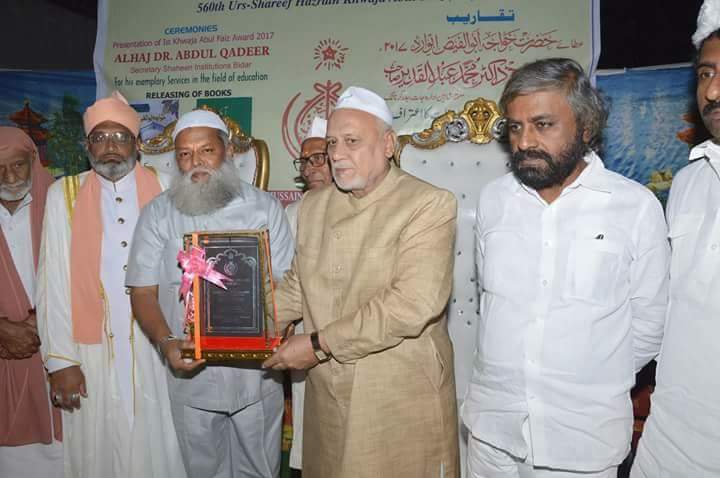
Dr. Abdul Qadeer of Shaheen Group conferred with “Hazrat Khwaja Abul Faiz R.H Award” for his unmatched educational service.

Bidar, KARNATAKA :

AbdulQadeerMPOs29nov2017

Gulbarga :

Dr. Abdul Qadeer, Secretary Shaheen Group of Institutions, Awarded with “Hazrat Khwaja Abul Faiz R.H Award” for his excellent educational service.

Dr. Abdul Qadeer has been awarded with “Hazrat Abul Faiz RH Award” Dated on 26 November 2017. This award presented to him on 560th death anniversary of Syed Khaja Abul Faiz RH. Dr. Abdul Qadeer, has been awarded for his excellent educational services and it has been presented by Syed Shah Hussain Shabir Hussaini sajjada Nasheen Dargah Hazrat Ganj bakhsh Rahmatullah Alai, Gulbarga.

During this occasion special guest were Honorable Minister Sri, Eshwar Khandre District In-charge Minister Bidar, Honorable Mohammed Rahim Khan MLA, Deputy Commissioner Dr. HR Mahadev, Senior Editor Mr. Shiv Sharnappa Valli, Honorable Mohammad Faheemuddin Sarika district wakf advisory committee were also present.

Dr. Abdul Qadeer in his impression recall Bidar history and said, Bidar was one of the biggest educational hub, it was the capital of various Kingdom in the past and it also had Asia’s biggest universities famously known as Mahmood Gawan University, wherein students from different countries used to come, to learn various educational courses.

Dr. Abdul Qadeer said Bidar’spast makes us proud for its excellent history and I believe in future we will achieve the same and we are making an effort to achieve it once again. Here in Shaheen Group of Institution, we are focusing on the regions like Bidar, which has very poor educational level, with this effort, we are not only getting the student from Karnataka but also we are getting from various country. Today Bidar has become well known place in education and various people throughout the world are attracting toward it.

source: http://www.deccandigest.com / Deccan Digest / Home> News / November 28th, 2017

Samima Khatun: Multiple-medal winner in National Paralympics for West Bengal, but no recognition or rewards

Basant Village(Nalhati Block) Birbhum District, WEST BENGAL :

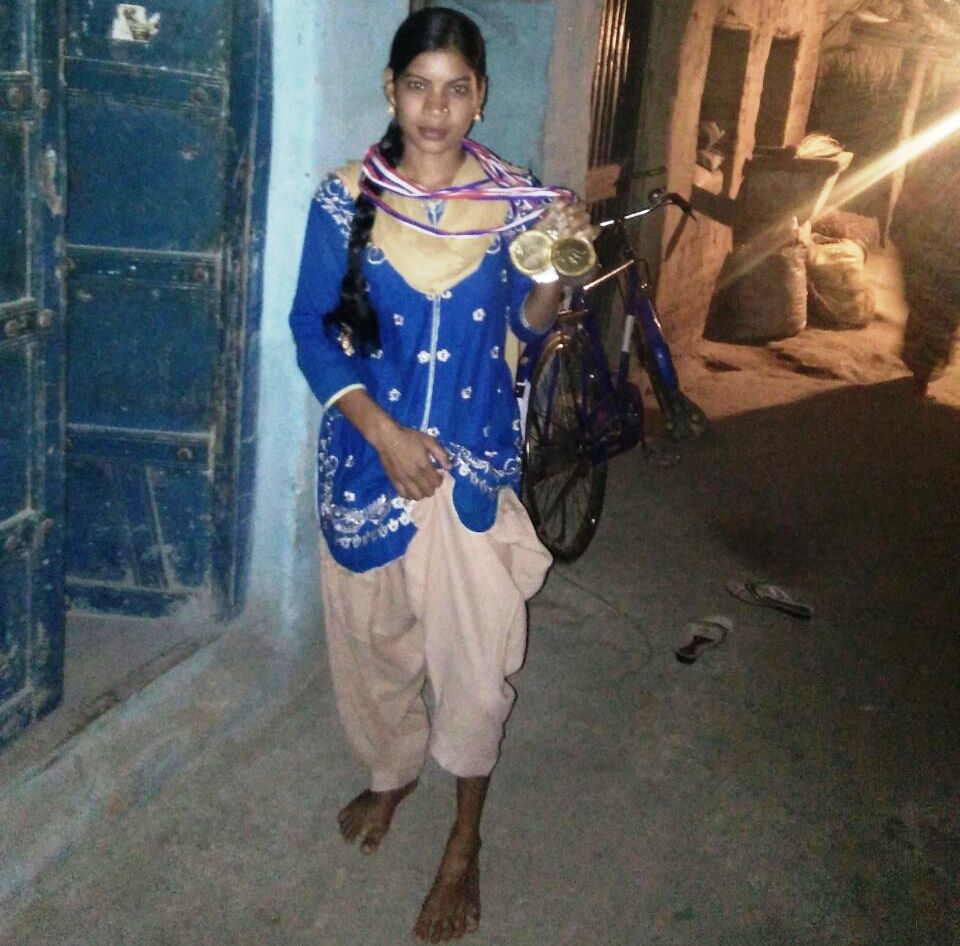
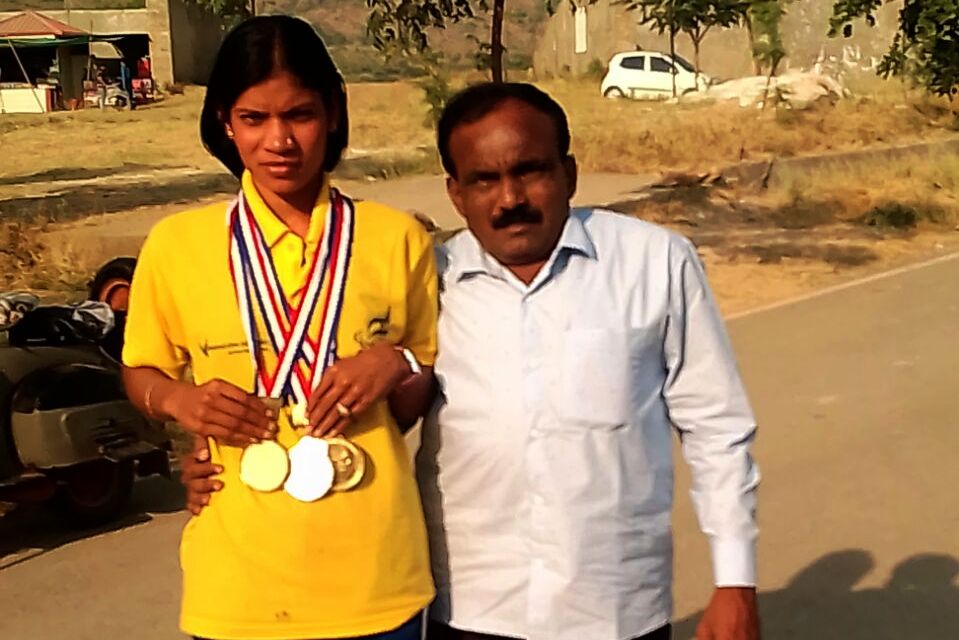
Samima Khatun with her medals in her home.

It is a well-known fact in India that compared to cricketers, sportspersons belonging to every other discipline have to struggle to make their name and earn a livelihood. The situation gets worse with athletes, and more so when they are physically handicapped. But as we showed last week, even among such struggles, there are enough shining lights like Bodruddoja Saikh. And among the many students that he has trained, Samima Khatun would surely rank among the top: with more than 15 medals in National Paralympic games in the past four years including four this year, Khatun should have been hailed as a role model for millions of physically handicapped citizens of this country. Instead, despite all the laurels that she has brought to West Bengal, she is still struggling to ensure that she and her family’s future is slightly better than it is now.

In fact, the news of her amazing achievements barely made it to national media and except for a small news item in The Telegraph, Khatun’s name did not even make it to the news portals.

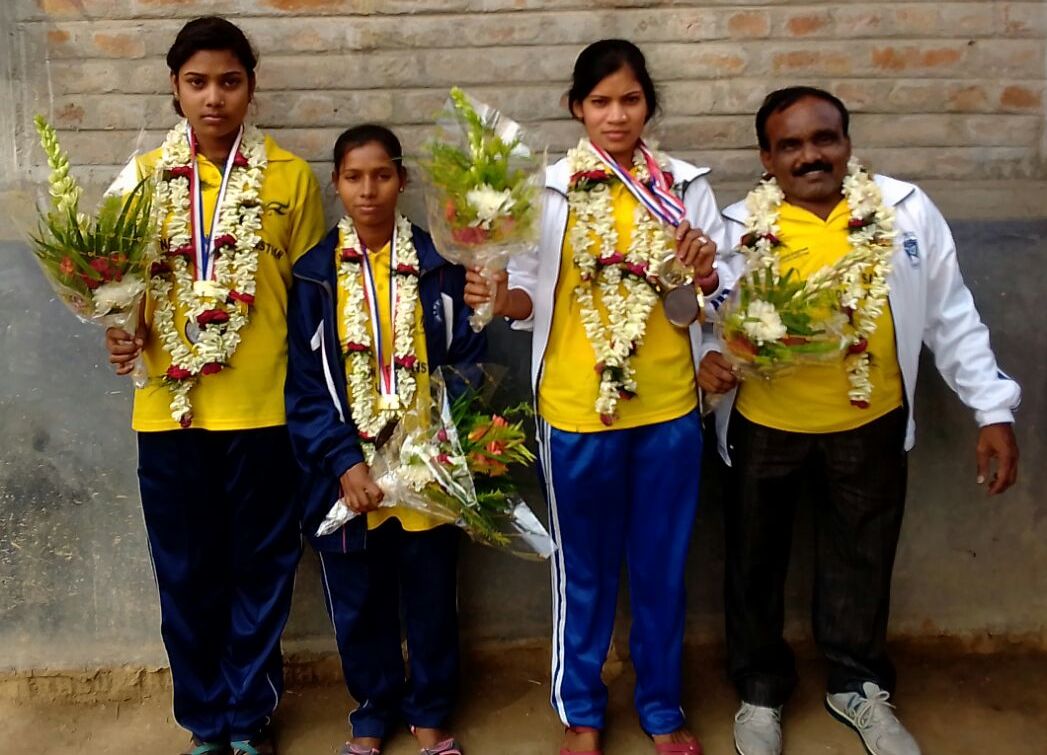
Khatun, who is 16, won four medals at the National Championships held in Udaipur this year. Samima was among the three participants to the said Championship who participated from Bengal who won two gold, one silver, and one bronze. The other two are Reshmita Maal from Gobindapur village, a graduation first-year student in a nearby college situated in Nalhati, and Saina Khatun, an eighth-grade student of Koitha village. Reshmita secured two silvers and one bronze and Saina one bronze.

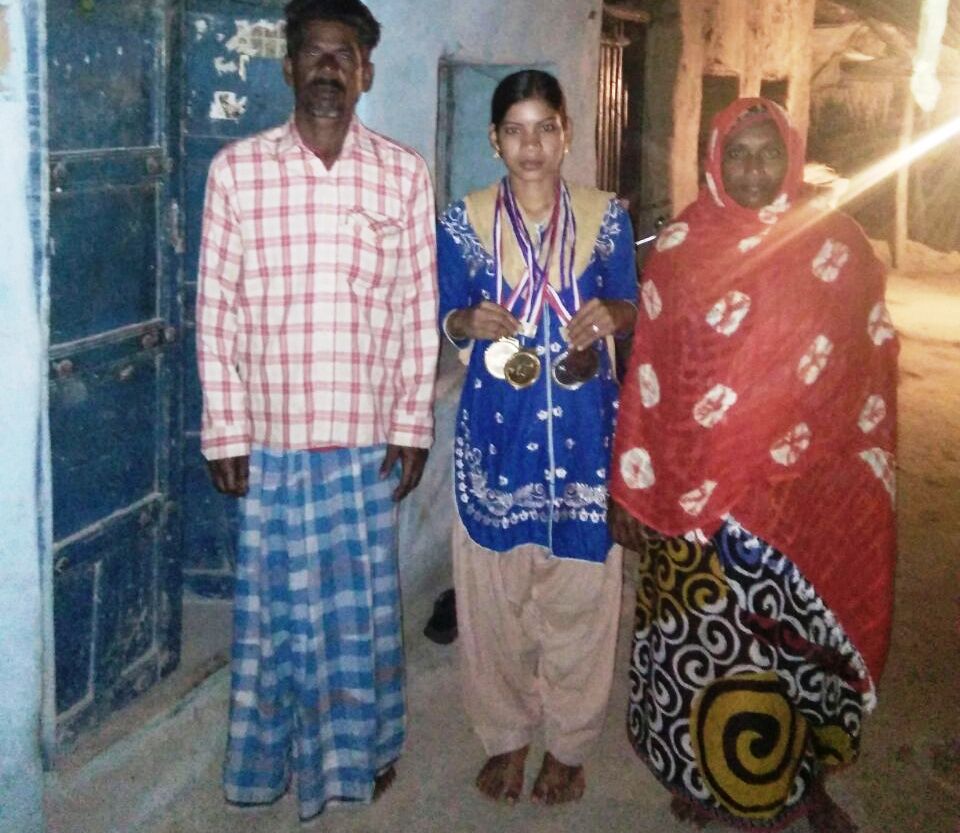
Samima with her parents in her home.

Samima hails from Basanta village of Nalhati block of the Birbhum district and is the daughter of Maijuddin Mondol, who works as a daily wage labourer and earns about Rs 200 per day. Samima completed her Matriculation from a nearby Madrasa, Nalhati High Madrasa School and is currently enrolled in the eleventh-grade (Science) for her Higher Secondary from Nalhati High School for Girls.

According to her parents, she is a patient of Genu Varum, or bandy-leg, an irredeemable deformity in the legs, mostly from the knees to the ankles which she got at the time of her birth. “Even if it is remediable, we are unable to spend the money needed for the operation. It is very hard for me to run a family of six members with an income of Rs 200 rupees per day and we can only dream of spending so much money for her treatment”, her father said.

Resmita, Saina and Samima are being felicitated in their locality with their Coach

After securing her position in the State-level Swimming Championship in 2013 held in Kolkata’s Kumartuli, Samima set out her journey into the National level championships under the guidance of Bodruddoja Saikh. Since then, she has succeeded to retain her position in the National Championships for the last four years held in four different cities of India. In 2014, she won two gold, two silver that was held in Indore, Madhya Pradesh; two gold, two silver, and one bronze in Belgaon, Karnataka for 2015 and two silver and two gold for 2016 in Rajasthan’s Jaipur.

In her early days, she used to practice swimming in her village pond. “When I was in my eighth standard, one day I was swimming in the nearby pond of my village. There my present Coach (Saikh) saw me and asked me whether I would like to swim under his guidance as a part of the competition. After that, whatever I have achieved now only for his insistence and influences,” she said. She started practising swimming in a lonely pond near Nalhati, quite far away from her village.

Bodruddoja Saikh spoke to TwoCircles.net about the tribulations that they faced at the start. “It was very tough for me to train her in the village pond as many adults would stand with their mobiles to capture her photos. Even locals would rebuff me for doing these sorts of things with a Muslim girl.” He added, “But when Samima won some competitions and news about it came out in papers, people left rebuking me. Since then, I started taking my students to a pond quite far from the villages near Nalhati to train them.”

Samima with her Coach, Bodruddoja Saikh.

When she was asked whether there was any problem with her parents to allow her swimming, she said, “We are very poor. So my parents allowed me to do what I am doing so that I can help them financially in order to get rid of poverty.”

But the bitter truth is that even after bringing laurels to West Bengal at the national level competitions, the Bengal government did not pay any attention to the girl or to her family. Though local administration did facilitate the winners this year after their return, no financial help was assured to them and the students are way too poor to afford training in the reputed clubs. Though other states have sanctioned some money for the winners at the national level, Bengal government is yet to think over that. Saikh lamented, “The Haryana sanctioned Rs 3 lakh for gold winners, Rs 2 lakh for silver winners and Rs 1 lakh for bronze winners. Recently, even the Bihar government implemented the same. But our government has done nothing like this. If the government does so, then lakhs of physically deformed children may get enthusiasm to devote themselves to these sorts of sports.”

Samima’s father also urged the same. “If benevolent persons come forward to help my daughter to achieve her ultimate successes, then we would be grateful to all of them,” he added.

PS: If TwoCircles.net readers would like to help Samima and her family, the bank details of the family are as follows:

Name: SAMIMA KHATUN
A/C NO— 35188578498 (STATE BANK OF INDIA)
NALHATI BRANCH, BIRBHUM.
IFSC CODE—SBIN0008540.

source: http://www.twocircles.net / Two Circles.net / Home> Indian Muslim> Lead Story> TCN Positive / by Mirza Mosaraf Hossain, TwoCircles.net / November 24th, 2017

Little scientists showcase talents at Children’s Science Congress

Kodagu, KARNATAKA :

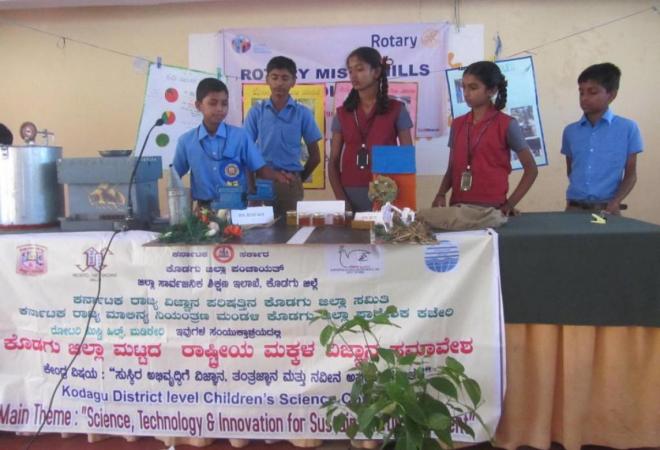
Students showcase their talents at the Childrens science Congress.

The district-level 25th Children’s Science Congress was organised by the departments of Science and Technology and Education at Rotary Children’s Science Centre here on Wednesday.

The Science Congress was meant for primary and High School students. The students presented project reports on ‘sustainable development through Science and Technology’ based on local issues.

The topics included natural resources, cleanliness and hygiene, agriculture, environmental conservation and waste management.

Inaugurating the convention, District Scouts and Guides Patron K T Mathew called upon students to develop a scientific temper. He added that students should know about the research, inventions and achievements of veteran scientists.

State Pollution Control Board Regional Office Environment Officer G R Ganeshan, Rotary Misty Hills president H T Anil and Vijnana Parishat district committee Secretary T G Premkumar also spoke.

10 best teams in the district-level will take part in the state-level Science Congress to be held in Mysuru from November 29 to December 1. The first 30 teams getting selected in the state-level will be eligible to take part in the National Children’s Science Congress to be held in Ahmedabad, Gujarat between December 27 and 31.

District Committee Vice President M E Mohiddin, Kodagu Vidyalaya Bharatiya Vidya Bhavana, Madikeri, Principal E Shrinivasan and Education Coordinator G Shreeharsha were present.

source: http://www.deccanherald.com / Deccan Herald / Home> District / DH News Service / Madikeri – November 22nd, 2017