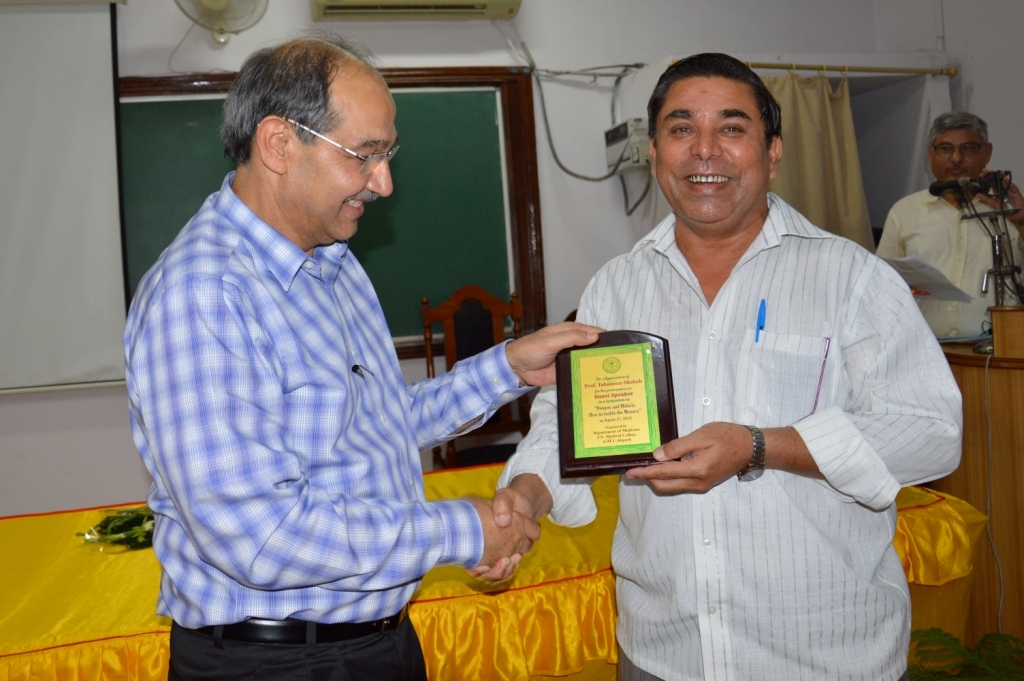
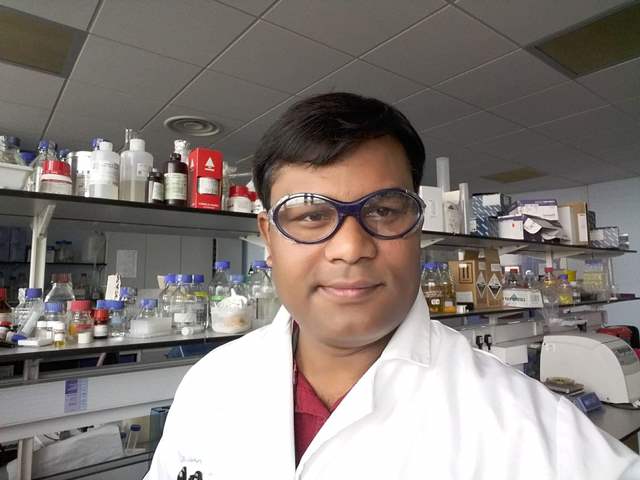
The Vice Chancellor of the Aligarh Muslim University, Professor Tariq Mansoor has appointed Professor Tabassum Shahab as the Pro-Vice Chancellor of the University, till further orders, in addition to his own duties. Prof Mansoor has made this appointment in exercise of the powers vested in him under Section 19(3) of AMU Act 1920.
Prof. Tabassum Shahab, a senior faculty member in the Department of Paediatrics, Jawaharlal Nehru Medical College passed MD (Pediatrics) in 1981 from Madhya Pradesh and joined the Department of Pediatrics in March 1984.
Prof Shahab has published a number of research papers in important national and international journals such as Indian Pediatrics, Indian Journal of Pediatrics, Journal of Tropical Pediatrics, etc. He has also supervised 16 theses for MD Pediatrics and delivered lectures on important developments in the field of paediatric research at national level conferences and seminars. He has also served as a nodal officer of WHO and UNICEF’s global polio eradication programme.
Prof Shahab has also proved his mettle in administrative capacities as Nodal Officer, Minority Students’ Affairs, President, Gymkhana Club in University Games Committee, Chairman of Department of Pediatrics and Provost, Hadi Hasan Hall.
source: http://www.twocirlces.net / Two Cirlces / Home> Indian Muslim / TCN News / October 29th, 2017
Here is a very special tribute from team Kootathil Oruthan to the one person who, Till date continues to inspire everyone with his words and deeds and raised India to its heights – Honorable Dr. APJ Abdul Kalam.
Nawab Shah Alam Khan, Chairman of Hyderabad Deccan Cigarette Factory expired today at 1 am.
He was also the chairman of Anwarul Uloom Educational Society and many more educational societies.
He converted Anwaruloom from a small educational institute into an educational hub. Today about 18,000 students attend schools and colleges run by society.
An engineering college ‘Nawab Shah Alam’ was named after him.
He is survived by seven sons
Nawab Mehboob Alam Khan
Nawab Qader Alam Khan
Nawab Zahed Alam Khan
Nawab Mohammed Alam Khan
Nawab Mehmood Alam Khan
Nawab Ahmed Alam Khan and
Dr. Mustafa Alam Khan.
He was born in a Jagirdar family in 1921 and expired at the age of 96.
Namaz-e-Janaza will be performed at Masjid E Salima Khatoon, Himayath Nagar after Asar prayer today.
For further details contact +91-9849030244
source: http://www.siasat.com / The Siasat Daily / Home> Hyderabad> Top Stories / October 23rd, 2017
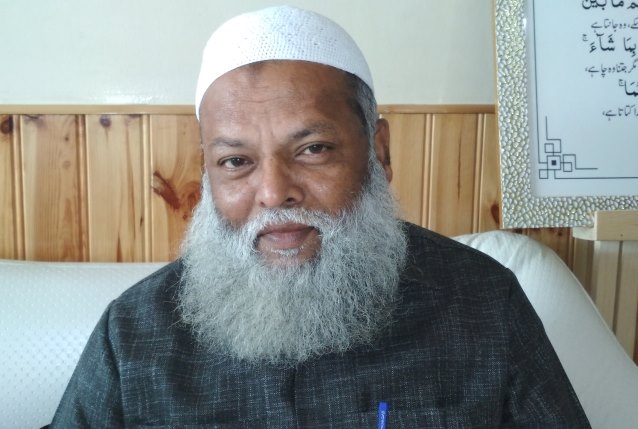
Dr.Abdul Qadeer, the founder of Shaheen Group of Institutions.
When Dr. Abdul Qadeer, an engineer by profession, had begun teaching 17 students in one room in in Bidar district – the northernmost part of Karnataka – in 1989, he would have even imagined that his effort would take the shape of an education revolution. The institute set up in a room with an aim of “shaping an ideal seat of learning that is accessible to one and all” has now turned into Shaheen Group of Institutions, which runs nine schools, 16 pre-university colleges and a degree college with branches in Bangalore and Mysore.
In 2012, it sent 71 students government colleges that offer professional courses. The number went up to 89 in 2013, 93 in 2014, 111 in 2015 158 in 2016 and 2000 in 2017.
More than 90% of the identified students have been gaining admission in professional courses every year and 1764 students have obtained free Government seats in Medical, Engineering and other professional courses since 2008. Over 900 Shaheenians had cracked MBBS, setting a new record of success.
One of the Shaheenians secured third medical rank in the KCET last year.
Shaheen Group of Institutions accommodate over 16,000 students from across the country in different courses. Its students topping in different examinations is nothing new. Shaheen has consistent growth securing seats in government colleges through Karnataka Common Entrance Test (KCET) that offer admissions in various undergraduate as well as professional courses.
For this “selfless service towards society”, its founder Dr Qadeer he has been conferred on several awards such as Gurukul Award (2004), District Level Rajyotsava Award (2008), Shikshana Ratna Prashasti from Chitradurga math (2011), Dr. Multaj Khan Award (2012) for communal harmony, Karnataka Urdu Academy Award (2012).
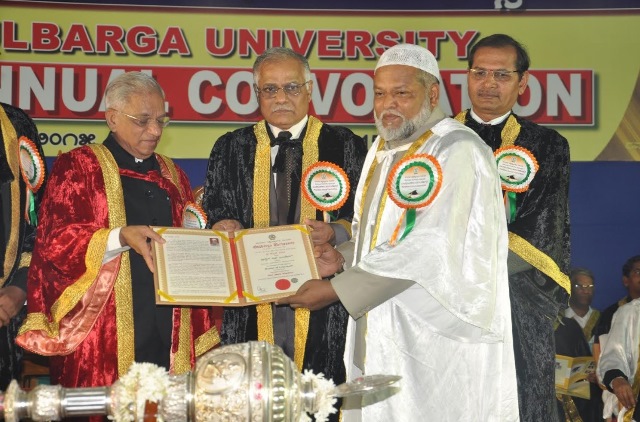
He has been also awarded with Honorary Doctorate Degree for his service in the field of Education, Arts, Culture and Health Care by the Gulbarga University in their 33rd Annual Convocation Day.
Khushboo Khan spoke to him for MuslimMirror.com on his initiatives, challenges he faced and his 25-year-old journey as an educationist. Excerpts:
KK: Tell us about your transition from a technocrat to an educationist.
Dr.Abdul Qadeer: I wanted to educate my younger brother Abdul Hannan. We got him admitted to Darul Huda, Hyderabad, but came back within the three days with many excuses. I realised that he is not at all interested in studies. It was a turning point of my life. I decided to facilitate thousands of families whose children drop schools due to the lack of interest and weakness in studies.
I established an elementary school on December 1, 1989 in my one-room accommodation with just 17 students. When the number of students started rising, we shifted the school to a rented accommodation.
Now after 28 years, we have our branch in Bangalore, Aurangabad, Bidar with 17,000 students from 25 states all over the country. Students from at least eight gulf nations also come to study here.
Around 1,000 Shaheenians are studying in different medical colleges of the state and the country
KK: How do you prepare students?
Dr. Abdul Qadeer: We make them hardworking and disciplined. We provide students such a competitive atmosphere where they learn to compete. We also discourage tuition culture as we consider it a kind of sickness. Bidar is a tuition-free district in the country. The tuition trend has no more been into existence here for the past 15 years. Our teachers find out the weakness of students and help them improve. Now, other institutions also following our pattern.
KK: What are the challenges you faced in this journey of 28 years?
Dr.Abdul Qadeer: When you try to do something new and break an existing trend, you face opposition and criticism. I also faced the same but ignored them and continued to move towards the goals. When we started getting success, the people’s perception also changed and now they appreciate our efforts.
KK: Do you have students belonging to the Muslim community only?
Dr.Abdul Qadeer: No, we have students from different communities. In fact, we have non-Muslim students in large number. Parents value the quality education we impart. They appreciate the environment of the Shaheen’s campus.
We believe enrolment of diverse ethnicity would strengthen brotherhood in the country and cultural values. I believe Hindus and Muslims are two arms of Shaheen who would take this country to global success.
Gulbarga University has conferred Honorary Doctorate to Dr. Abdul Qadeer during the 33rd Annual Convocation.
KK: The Shaheen Group majorly concentrates on providing education till pre-university. You don’t have medical, engineering and colleges that offer professional. Why?
Dr.Abdul Qadeer: Well, we don’t find any need to set up new medical or engineering institutions as we have more prestigious colleges run by our Indian government that have nominal fee structure. We need to work on good schooling so that students would become focused and productive. Only a few institutions in the country are providing a good education without any external distraction, while rests are in the money-making business.
KK: Do you have any arrangement to bring students from madrasa background in the mainstream?
Dr.Abdul Qadeer: Yes. Along with the universal education, we initiated a course for Hafizs (those who have completely memorized the holy Qur’an). It’s an effort to impart them modern education so that they can become lawyers and teachers as well can compete in the modern arena.
Shaheen schools have regular classes to teach Qur’an so that students can get both educations without any external burden. I have seen many of the institutions that are giving both the knowledge with the ratio of 50:50 but the effort was not less than a boon.
KK: Do you have only hostellers or day scholars as well?
Dr.Abdul Qadeer: Actually, most of our students are from outside the city or from different states – especially Bihar. Therefore, it is convenient for them to stay in Shaheen’s accommodations.
KK: Why does the Shaheen Group mainly focuses on science, not humanities?
Dr.Abdul Qadeer: We are making efforts to provide arts education to students come here from religious seminaries so that they can appear in civil services examinations and get themselves enrolled in law and teaching courses.
KK: What is the fee structure of Shaheen?
Dr.Abdul Qadeer: It’s Rs 1 lakh per annum, but for Hafizs it is around Rs 36,000. In addition, we give concession to 20 % students who have weaker financial conditions. I request to all capable people and institutions to please help those students who are not economically well-off.
KK: You said the institution does not allow students to use mobile phones, internet and other gadgets to avoid the chances of distraction. How will they become tech savvy and aware of what is happing in the world?
Dr.Abdul Qadeer: I think they are already living in a world where they get chances to interact with people from diverse background. We allow them to make difference between right and wrong which automatically leads them to better understanding of the world.
KK: Where do you see the Shaheen Group five years down the line?
Dr.Abdul Qadeer: At present, Shaheen dominates over 6% medical seats in the state and 0.3 seats in the country. We want this to improve both at state and national levels.
source: http://www.muslimmirror.com / Muslim Mirror / Home> Education / by admin – Muslim Mirror Staff / October 17th, 2017
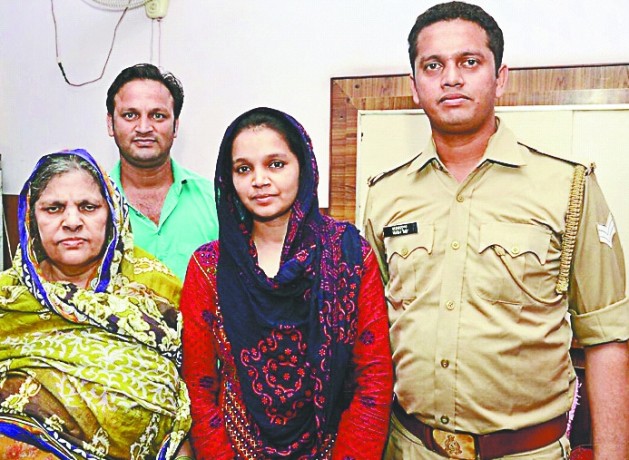
At the age of four, Anjum Saifi lost her father who was gunned down for standing up against extortionists in a market at Muzaffarnagar in western Uttar Pradesh where he had a hardware shop. She has a faint memory of how her father used to ask her to become a judge.
Her happines knew no bounds on Friday when she saw her name in the list of successful candidates who cracked civil judge junior divison exams conducted by the Uttar Pradesh Service Commission.
Her eyes were moist as becoming a judge for Anjum, who is now 29, was significant not because it was her dream, but for the reason that it was the wish of her father, who lost his life in 1992.
“My father died fighting for what was right. His sacrifice will not go waste. My only aim has been to uphold his values and keep people’s faith in righteousness intact. Now god has given me the power to initiate that change and I will try to make a difference in whatever capacity I can. I wish he was here to see it happen,” the only daughter among five sons told The Times of India.
Rasheed Ahmad, her father, was killed in broad daylight after he protested against goons who were extracting money from a hawker.
Cracking the prestegious examination was not an easy job for the young woman. She had to face “unspeakable hardships” all these years. The entire family went through a lot to see the realization of the father’s dream.
It was a struggle at many fronts, monetary concerns were just a small part. They had to even withdraw the case pertaining to his murder because the priority was to educate children and not put their lives at risk.
An overwhelmed Hamida Begum added, “Today, I am a content woman. The seed of values and principles that my husband had sown into my children has started yielding fruit.”
Anjum’s eldest brother Dilshad Ahmad, who is now 40, did not marry because he had to support his family after his father’s death.
source: http://www.muslimmirror.com / Muslim Mirror / Home> Editor’s Pick / by admin – Muslim Mirror Staff / October 16th, 2017
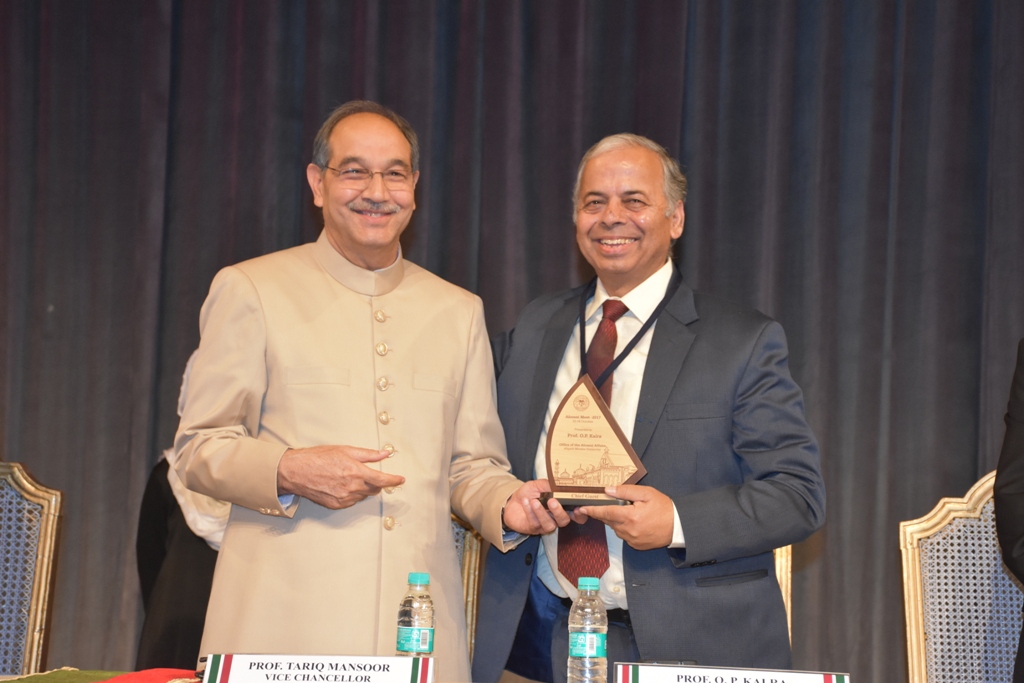
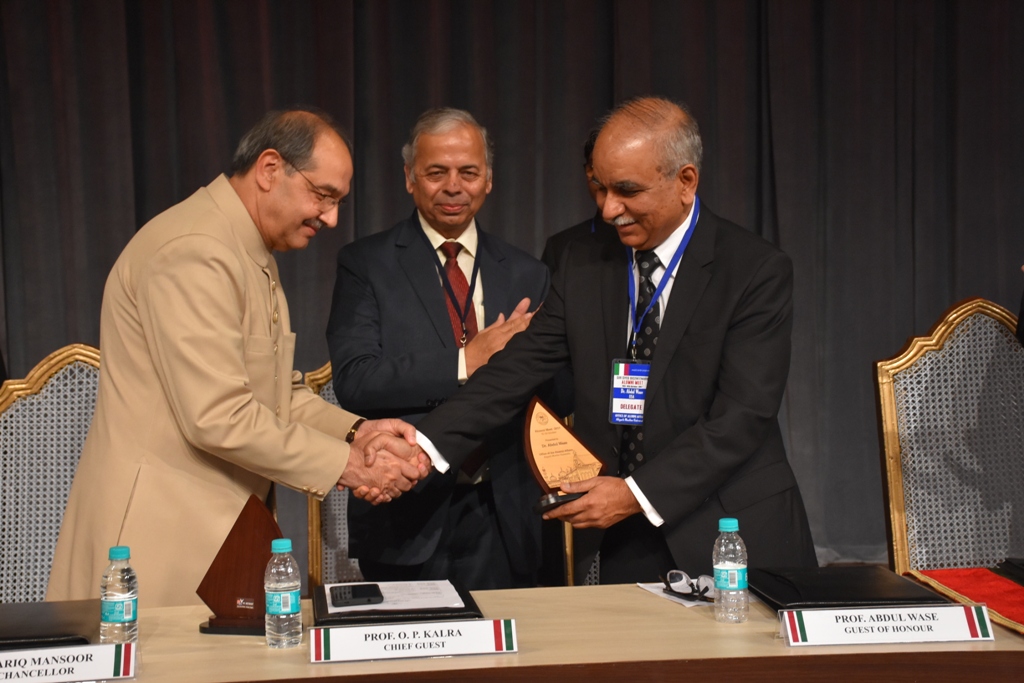
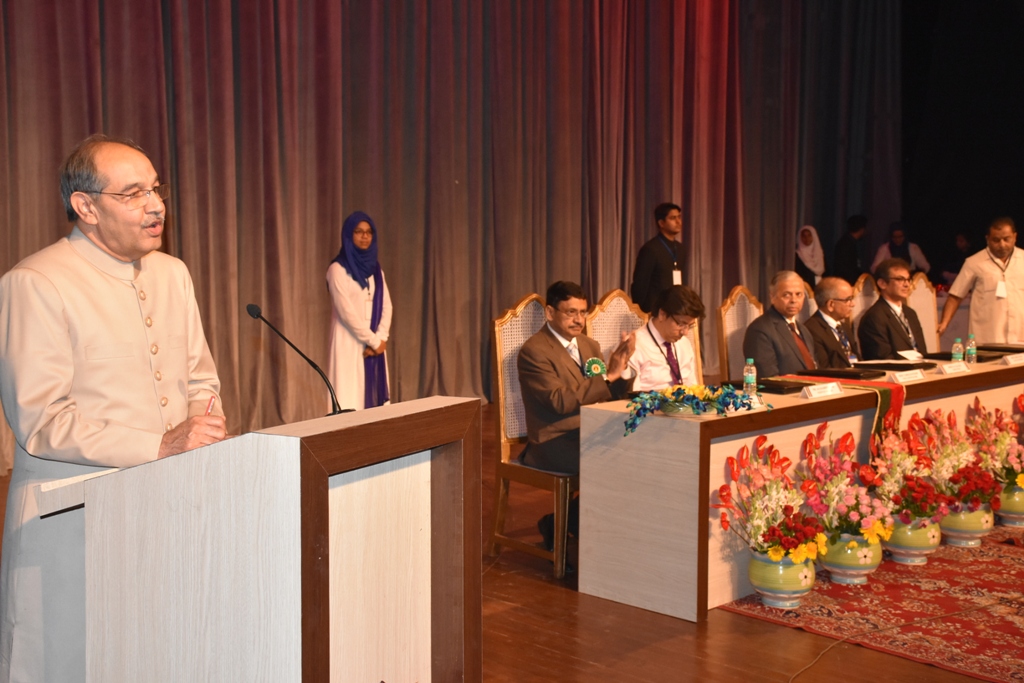
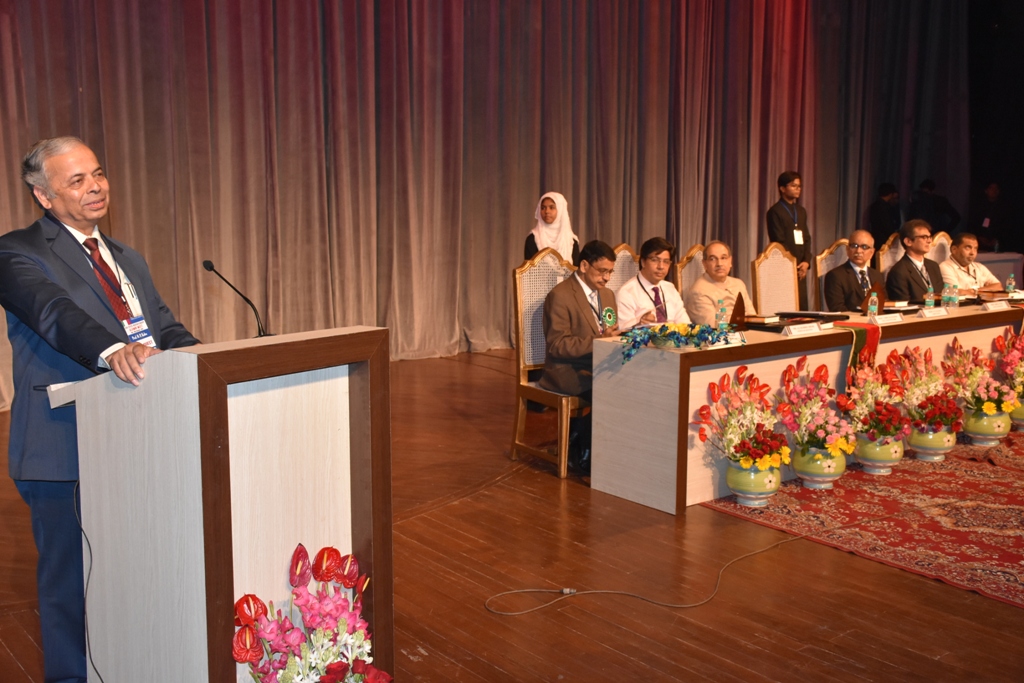
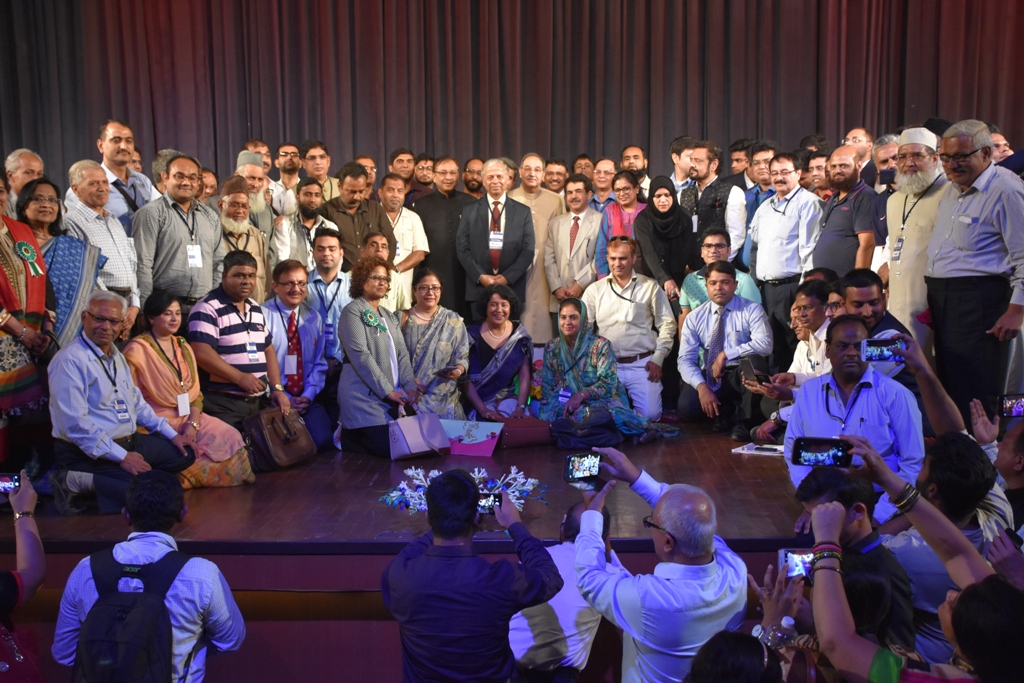
Hundreds of Aligarh Muslim University (AMU) alumni from across the world who attended the Sir Syed Bicentenary AMU Alumni Meet 2017 at the university’s Kennedy Hall Auditorium were caught up in nostalgia as the meet concluded with a valedictory function. AMU Vice Chancellor, Professor Tariq Mansoor after thanking the alumni for their visit said that the university will soon have ‘Distinguished Alumni Awards’ in national and international categories.
He pointed out that there is a plan to introduce alumni meets for all the faculties separately, which will be organised under the aegis of a central body of university’s Alumni Affairs Committee. “However, the idea is subject to change and discussions and has yet to be finalised,” said Prof Mansoor.
The Vice Chancellor further said that AMU is also planning to connect children of Alumni with the university through internships and other programmes. “Children of many alumni living in different parts of India and abroad are attending universities in various parts of world, we would like them to connect with the alma mater of their parents through special programmes,” said Prof Mansoor adding that many universities have been doing this and it can be done in AMU too.
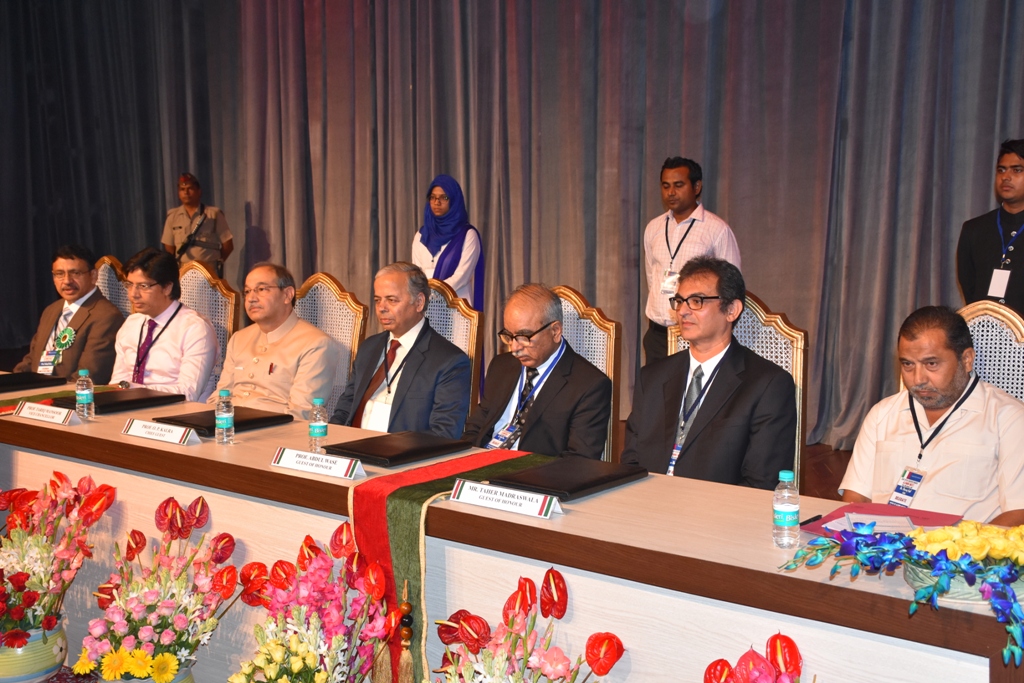
Prof O P Kalra (Vice Chancellor, Pt H L Sharma University of Health Sciences), who attended the function as the chief guest said that he came to Aligarh to appear in the MBBS entrance exam with hardly any money and a place to stay. “I stayed in a Gurudwara and was selected in the waiting list for admission in MBBS,” said Prof Kalra adding that my candidature for admission was selected in AMU’s Jawaharlal Nehru Medical College and Banaras Hindu University’s Medical College at the same time.
“My father advised me to attend AMU and taught me Urdu,” recalled Mr Kalra pointing out that a few years ago he visited his hostel room and found a research scholar of Sanskrit from a Muslim background residing in his room. “This is exactly what Sir Syed’s vision was,” he said adding that a student from a Hindu background like him learnt Urdu in AMU, while a Muslim boy becomes a researcher scholar of Sanskrit in the same University.
USA based Dr Abdul Wasey (senior cardiologist) pointed out that the revelation of the Holy Quran began with the word Iqra, urging humanity to read in the name of Lord who has created them. He added that the religious scriptures invite people towards knowledge and wisdom and Sir Syed with his efforts led people to the light of knowledge from the darkness of ignorance.
He urged students to not get distracted and to keep focussing on their goals. “If you keep your focus and work hard with determination, success will sure come,” said Dr Wasey.
USA based entrepreneur, Taher Madraswala said that he reached New York with just $90 in his pocket and worked hard to put a 100 million dollars company. “My success has been because I was groomed by my teachers in the Zakir Hussain College of Engineering and Technology and I was loved by my seniors and juniors,” he said.
Madraswala urged students to gain knowledge in the 20s, apply that knowledge in the 30s, chase money in their 40s, enjoy the hard earned money in their 50’s and do charity when they retire.
Ali Harris Shere (Vice President, Britannia) said that his education in AMU shaped his value system and taught him to respect people. Recollecting a meeting with Bollywood superstar, Salman Khan; he said that the actor soon recognised his AMU background after meeting him. “Salman Khan told me that the ethos of AMU were reflecting in my conversations,” said Shere.
He urged students to keep their hunger for knowledge, have proper mentorship, be visible with their achievements, understand the importance of networking and to have fresh perspectives to succeed in life.
On the occasion, a newsletter and a book, ‘Sir Syed – Bharat ke Anmol Ratan’ authored by Ikhlas Ahmad Sherwani was released by the Vice Chancellor.
A special attraction of the meet was a session of AMU’s women achievers in which Prof Yasmin Saikia (Arizona State University), Arifa Khanam (Senior journalist), Sabiha Said (Vice President, KPMG), Tasneem Rasol Boaz (Indian Railway Traffic Services), Nuzhat Parveen Khan (Dean, Faculty of Law, Jamia Milia Islamia), Ghazala Kohkan Shamsi (New York, USA) and Taab Siddiqui (Owner, Harvest Gold Food India) were the panellists.
Meanwhile a session on Aligarh Open University, a platform through which AMU alumni spread all over the world share knowledge and experiences with current university students was also organised. Earlier, in the day students associated with the University Drama Club performed a play on Sir Syed.
A troupe of ‘Ahmadi School for Visually Challenged’ sang the Tarana and the National Anthem. Dr Shariq Aqeel conducted the programme, while Prof Suhail Sabir proposed the vote of thanks.
source: http://www.twocirlces.net / Two Circles / Home> Indian Muslim / October 17th, 2017
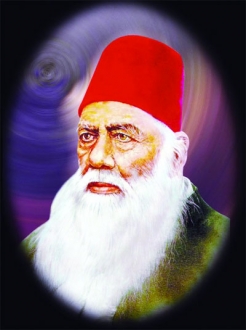
As we celebrate the 200th birth anniversary of Sir Syed Ahmad Khan, it’s a good time to remember his contributions to society as a social reformer, educationist, and philosopher
Sir Syed Ahmad Khan was born into a noble Syed family in Delhi, which was then the capital of the Mughal empire. His family was well connected and both his maternal and paternal side of the family had connections with the Mughal court. Sir Syed was raised by his mother, Azis-un-Nisa, with a disciplined upbringing. His mother laid strong emphasis on modern education. He was well versed with Persian, Arabic and Urdu and his education consisted of orthodox religious subjects as well as modern subjects like mathematics and astronomy.
Sir Syed was also well-known for his physical strength. He enjoyed swimming and archery and was particularly good at both. He was born at a time when there were a lot of rebellious Governors and religious insurrections aided and led by the East India Company. Together, these factors were diminishing the power of the Mughal empire. He saw this as an opportunity and used his education prowess to stand up and make an impact in such dire circumstances.
Social reform: Sir Syed is referred by many as the “man who knew tomorrow”. He played a very influential role in bridging the gap between the Oriental and the Western world. He knew what changes were required in the society in order to move forward and keep up with the rest of the world. He dedicated his life to strike a balance between tradition and modernity and strived for traditional Oriental and Western scholarship.
Emphasis on English: Sir Syed encouraged the society to keep up with the rest of the world by stressing on the importance of English language. Many of his contemporaries were against his ideology and felt that this was a disservice to their own culture. However, Sir Syed saw the importance of English as a step through which the society could make major advancements.
At that time, most knowledge about modern arts and sciences were available only in English. Previously, Muslim scholars had adopted the use of Persian and Greek language to study science and art. Sir Syed argued that people shouldn’t disregard a whole treasure of knowledge in English just because English was the language adopted by the Westerners. He rightly believed that there is a lot of benefit that can be gained from learning the language. His advocacy of English didn’t mean he wanted to move people away from the Arabic language.
Sir Syed was, in fact, a strong supporter of Arab culture and Arabic language. He stressed on the importance of another language, English, because of the plethora of knowledge bases it opens up.
Sir Syed was also very practical with his school of thought. After the revolt in 1857, he saw how the British empire was taking shape and that English education style was taking charge. He realised that learning English was absolutely necessary in order to keep up in those days and that was a school of thought that was very different than other scholars of his era. This was one of Sir Syed’s biggest social policies.
Modern, pragmatic views: Another important factor that differentiates Sir Syed’s social policy is that he always stood by his principles and defended what he thought was right. He did not succumb to pressure from the people around him. His advocacy of English was, of course, one example of that. Sir Syed also proposed a modern take on Islamic education, which included present-day science. This was not the norm at that time. He also had forward-looking views on women and their rights. He was a strong voice, defending women’s rights and recognised their potential to contribute to the society, which again never used to be the case. Sir Syed was termed as a “collective individual” by French sociologist Pierre Bourdieu. He successfully managed to take up roles of a free-thinker, an administrator, reformer, educationalist, religious scholar and a devout family man.
Educational reform: As mentioned earlier, Sir Syed was a major proponent of Western style education and gaining a modern outlook of the world. He believed that this was the fundamental driving force the Muslim community needed in order to match the rest of the world. He displayed his devotion to education by founding various educational institutions in India and also contributing to the community by writing his own journal and writings on different topics.
Dedication to scholarly work: Sir Syed was himself one of the most respected scholars of his time. Despite heavily being involved in the political scene and being an active social reformist, Sir Syed always found time for his academic pursuits. His topics of interest included history, politics, archaeology, journalism, literature, religion and science. Sir Syed felt like the future of Muslims would be in jeopardy if they continue to avoid modern science and technology. That is why he published many writings that promoted a liberal, rational and pragmatic train of thought. Most Muslim scholars disagreed with his views on issues such as jihad, polygamy and animal slaughtering but Sir Syed stood his ground and stuck by his belief. He started facing increasing pressure from orthodox Muslims about his views and, hence, he eventually stopped discussing religious subjects and instead focused on improving the education system.
Sir Syed was then posted in Aligarh in 1864 and that is where he founded the first scientific association in India called the Scientific Society of Aligarh. Sir Syed gathered Muslim scholars from different parts of the country and modeled it after the Royal Asiatic Society. The society held several conferences and even collected and spent money for different educational causes. The purpose of this society was to translate Western works into Indian languages so that Indian scholars can learn from the Western world. Sir Syed was appointed as the fellow of Calcutta University in 1876 and fellow of Allahabad University by the Viceroy in 1887.
Bridging education and politics: Sir Syed was the leader of the Aligarh movement. He founded the Mohammadan Anglo Oriential College in 1875 and this came to be known as the Aligarh movement. This move marked the birth of the first Muslim university in South Asia and drove modern Muslim education to make a large political impact on Indian Muslims in all parts of India. Sir Syed modeled this college after Oxford and Cambridge after he took a trip to England. He wanted to build a college that aligned with the British education system without compromising on any Islamic values. This movement encouraged poets and writers to switch from a romantic style of prose and poetry to a more cultural and political mindset which influenced the common life of Indian Muslims. Aligarh Muslim University is a creation of this movement.
In 1878, Sir Syed was nominated to the Viceroy’s Legislative Council. He later asked the education commission to establish more colleges and schools across the country. He also organised the All India Mohammadan Educational Conference in Aligarh where he encouraged people to give more importance to modern education and Muslim unity. Sir Syed’s valiant efforts never went unnoticed.
(This is the first article in a two-part series on Sir Syed Ahmed Khan. The second part will appear in these columns on Tuesday, October 17. The writer is a well-known linguist, author and columnist)
source: http://www.dailypioneer.com / The Pioneer / Home> Columnists> OpEd / by M J Warsi / Monday – October 16th, 2017
In a development that is something Bihar should be proud of, Dr Mumtaz Naiyer, a UK-based scientist from Kishanganj district, has come up with an ‘exciting’ discovery on path to develop new type of vaccine to treat global viruses.
He along with other scientists from the University of Southampton has made a significant discovery in efforts to develop a vaccine against Zika, Dengue and Hepatitis C viruses that affect millions of people around the world.
In a study published in Science Immunology, researchers have shown that natural killer cells (NK cells), which are a fundamental part of the body’s immune system, can recognise many different viruses including global pathogens such as Zika, Dengue and Hepatitis C viruses, through a single receptor called KIR2DS2.
The Southampton team have shown that this NK cell receptor is able to target a non-variable part of the virus called the NS3 helicase protein, which is essential in making the virus work properly. Unlike other proteins, the NS3 helicase protein does not change, which allows the immune system to grab hold of it and let the NK cells deal with the threat.
Lead researcher Salim Khakoo, professor of hepatology, said the findings are very exciting and could change the way viruses are targeted by vaccines but warned that the research is still at an early stage, and animal studies/clinical trials will be needed to test the findings.
It is very exciting to discover that other viruses similar to Hepatitis C, such as Zika virus, dengue virus, yellow fever virus, Japanese encephalitis virus and in fact all flaviviruses, contain a region within their NS3 helicase proteins that is recognised by exactly the same KIR2DS2 receptor.
“We believe that by targeting this NS3 helicase region, we can make a new type of vaccine based upon natural killer cells, which can be used to help protect people from these infections,” said Khakoo.
In an exclusive interview with MuslimMirror, Dr Naiyer, a postdoctoral scientist at the University of Southampton who the first author of the paper, talked at length about his roller coaster journey from Bihar to the United Kingdom and study.
Here are the excerpts:
MM: Please tell us about your journey from Bihar’s one of the most backward districts of Kishanganj to the University of Southampton, United Kingdom?
Dr Naiyer: I was born in one of the remotest village of Kishanganj in Bihar. The place earlier was referred to as ‘Kala Pani’ because of sheer backwardness and no access to mainland India. You can consider my small village as ‘Kala Pani’ with no access to schools etc. So much so, electricity in my village arrived in 2016 after 70 years of independence.
I was born in the 80s in a humble family of farmers. My parents were illiterate but had great quest for education. I was youngest among my siblings with five elder brothers and two sisters. The eldest brother did not attend school, one studied up to class V and three attended college. One of them did masters and later PhD in English literature.
My father passed away when I was 8 years old. It was extremely difficult for my mother to support us. As madarsas are cheaper, my mother even asked me to attend the Islamic seminary and become an ‘Aalim’ (Islamic scholar). After my father’s demise, one of my eldest brothers Mr Zainul Abedin had to discontinue his studies to support the education of two younger brothers.
As there were no schools nearby, I studied at home and a single teacher used to teach all the children in the village. I was directly admitted to standard three in a government school, which was 4 km away from my village. There were no roads and the situation in rainy season was like a nightmare. There was a strict discipline in our family for education. No matter how bad the day, one cannot miss the school.
I studied up to high school in my village. After that, I moved to Patna. Since my medium of instruction was Hindi till high school, it was difficult to switch to English books at 10+2. Contrary to my elder brothers who studied arts, I choose science with biology, physics and chemistry. I had a dream to become a doctor as I had seen young children die in my village without medical facilities.
However, after repeated attempts I could not clear Premedical Test (PMT) conducted by Central Board of Secondary Education (CBSE) and Bihar Combined Entrance Examination (BCEE). I moved to Delhi from Patna in the year 2000. I cracked BDS (Bachelor of Dental Surgery) entrance examination of Karnataka and B.Pharm (Bachelor of Pharmacy) entrance examination of Jamia Hamdard, New Delhi. Unfortunately, I could not afford any of these two. Then, I decided to do a simple B.Sc. course.
I appeared in the entrance test of B.Sc. (Biosciences) at Jamia Millia Islamia, New Delhi, and I got selected for the course. That year, Jamia had lauched B.Sc. (Biotechnology) programme. The central university gave us an option to choose either of the programme. In addition, those who were top in the merit list have an option to choose biotechnology. I choose biotechnology.
Teachers were very supportive. Till that time, I had no predefine goals for an academic career like this. But later, I attended lectures of prominent academicians and scientists in my university. That changed my attitude completely towards higher education.
Surviving in a metro city like Delhi was not an easy job. The money I used to get from my family was not enough. I used to give tuitions in the posh colonies of Delhi to earn some bucks and support myself. Apart from that, I received Merit Scholarship by Central Wakf Board, Ministry of Minority Affairs, Government of India, for consecutive two years at bachelors level. I must say my brothers tried their best to support me throughout my academic journey.
After my bachelors, I joined Jamia Hamdard, New Delhi in its master’s programme in biotechnology, which was one of the best in the capital. Here too, my teachers were very supportive and encouraged me to do pursue research. I got training in institutions like Institute of Genomics and Integrative Biology (IGIB), New Delhi. I got an exposure to quality research at my masters level. I was the recipient of Tasmia Merit Scholarship for best academic performance at masters level university exams in Jamia Hamdard.
My M.Sc. final year was full of turmoil. I lost my mother just a month before my final year’s examination and my family was going through financial crisis. Somehow, I managed to continue my studies.
I appeared in national level exams like National Eligibility Test (NET) jointly conducted by CSIR-UGC. I was awarded NET -Lectureship and Junior Research Fellowship by the UGC to pursue Ph.D. I also cleared GATE with 97 percentile.
After my masters, I joined National Centre for Cell Science (NCCS), Pune, an autonomous institution of the Department of Biotechnology, Government of India, for my Ph.D. This is one of the top biotechnology research institutes in India. It is also a national cell repository. One of the best Immunologists in the country Dr Bhaskar Saha who is also a Shanti Swaroop Bhatnagar Awardee mentored me.
During my Ph.D., I gained knowledge in molecular immunology and cell signaling. I worked on Human Visceral Leishmaniasis also called Kala-azar. My research work ‘Identification and Characterisation of Interleukin-10 Receptor Antagonist’ was published in the journal ‘Human Immunology’. The financial support was provided by the UGC for five years in which I was awarded Junior Research fellowship (JRF) for two years and senior research fellowship (SRF) for three years.
At the end of my Ph.D., I received offers for postdoctoral fellowships from University of Montreal, Canada; John Hopkins University, Baltimore, Maryland, USA; National Institute of Health, Bethesda, USA; and Imperial College London, UK. Previously, Khakoo lab was in Imperial College London, which was later shifted to University of Southampton where I work now since March 2012.
Although I had options to join other labs in the USA and Canada, I decided to join Professor Khakoo’s lab for my postdoctoral research as my research goals were best matched with the objectives of Khakoo lab.
At University of Southampton, I started working on clinically important viruses such as Hepatitis C virus, Dengue, Zika, etc. and tried to understand how Natural Killer cells – which are fundamental part of body’s immune system – can clear the viruses.
MM: Tell us about your research.
Dr Naiyer: This is a well-presented study and a significant advancement in this field that identifies the important role of the receptor KIR2DS2. Since I come from India, which has thousands of cases of dengue each year, I can understand the suffering of patients with dengue. Nothing would give me greater pleasure than to ease the suffering of these dengue-affected patients.
Natural Killer Cells play important role in fight against cancer and viral clearance. Our study focuses on how a single vaccine can be effective against multiple viruses. Our findings, which was recently published in prestigious journal “Science Immunology” also suggests that this strategy for virus therapeutics could be easily translated into the field of cancer.
2. What kind of encouragement did you find from your family and friends?
Dr Naiyer: My family was supportive. My brothers would often say, ‘Do not think about money, you just focus in your studies and leave rest to us’.
I had a very healthy competition with my friends and some of them genuinely motivated me.
MM: given the literacy rate of your area, what did inspire you to select this stream in higher studies?
Dr Naiyer: During my growing up years in the 90s, the sentence I often hear in my surrounding was “padh likh kar kuch nahi hota” (education gives you nothing). Most of the parents would send their school going to children to Delhi, Mumbai, Punjab and other metro cities of India to earn money and livelihood. That was such a discouraging period for education in my area called Seemanchal, which resulted in very high number of unskilled labour force.
Nevertheless, I was never tempted to leave my school or studies and determined to prove that education is the most powerful tool. Despite hardship, I keep going systematically. Even during my bachelors and masters in Delhi, people from my area would say “kab tak padhte rahoge miyan” (how long would you study)?
MM: Why did not you go for engineering and other short-term professional courses like others belonging to humble family background do to support their families?
Dr Naiyer: As I said before, I wanted to become a medical doctor, so engineering or any other short-term courses were never in my mind.
MM: What are your future plans?
Dr Naiyer: I want to contribute more to science and use my knowledge and expertise against the serious threats to humankind posed by dangerous viruses such as Zika, Dengue, Ebola, etc.
I would like to establish my own lab and become a principal investigator. If given the opportunity, I would like to return to India and want to contribute to the Indian science.
MM: Is there anybig project in your mind?
Dr Naiyer: I am contemplating to write grants for my own funding to support my research work. I shall apply for grants in Medical Research Council, UK, and Wellcome Trust, UK.
MM: Where do you want to see yourself 10 years down the line?
Dr Naiyer: After 10 years, I want to see myself as a successful scientist who has contributed a bit for the welfare of humankind by doing high-level science. I want to become an expert in my field.
Do you have any plan for the educational upliftment of your area, especially for Muslim youth?
Dr Naiyer: This is interesting question. I would definitely plan and would happy to contribute for the educational upliftment of my area. I along with some other friends from Bihar are trying to develop a unique platform where we can support meritorious students from Seemanchal (Bihar) irrespective of their financial conditions.
I have a dream to establish school/colleges, hospitals and healthcare in every block of Seemanchal. I would also focus in girls/women education. I would share the road map at appropriate time.
MM. Do you want to give any message to the youth of the community?
Dr Naiyer: Our community has some deeper problems and the youth are looking for microwave solutions. Our community has limited resources, please use them effectively. You must work hard, and should not waste time and resources.
The message I would pass to the youths is that there is no short cut for success. You cannot bypass the stairs of education and reach on the top through a side-lift. If you try, it would be disastrous for your career. Do not fear failures as failures are there to make you strong.
source: http://www.muslimmirror.com / Muslim Mirror / Home> Health / by admin – Muslim Mirror Staff / October 10th, 2017
Rich tributes were paid to princess Durru Shehvar, the daughter-in-law of the seventh Nizam, Mir Osman Ali Khan, on Firday as part of her 11th death anniversary. The princess was the daughter of last islamic ruler of Turkey Khaleefa Abdul Majeed.
As part of the tribute, Quran recitation was held at Masjid-e-Asifia, Purani Haveli in which Prince Mufakham Jah and Prince Rafat Jah attended along with the board members of Princess Durru Shehvar Children’s Medical Aid Society that included Anis Hussain, Dr Habib Ghatala, Syed Sultan Mohiuddin and Rasheed. Princess Durru Shehvar Hospital senior staff M Najumuddin, Dr Abdul Wajid and Shaik Yousuf Ali were also present.
Mufti Muzaffar Uddin Imam o khateeb Masjid Mashk Shah offered the prayers and Syed Shah Moinuddin Alvi and Dr Masihuddin made the arrangements.
“The Princess was fond of providing medicare to the poor and needy. She set up the Durru Shehvar Children’s Hospital at Purani Haveli and took personal interest in the hospital and visited it whenever she came to Hyderabad.
She was a highly respected and well-educated woman, the princess was fluent in French, Turkish, English and Urdu. She also established a junior college for girls in her name, Baghe-jahan-ara in Yakutpura,” remembered a member. Mufakham Jah met the participants who attended the congregation and thanked for their joining in the programme.
source: http://www.thehansindia.com / The Hans India / Home> Telangana / September 29th, 2017
The Prince of Arcot, Nawab Mohammed Abdul Ali, has been elected unopposed as president of Muslim Educational Association of Southern India (MEASI), the parent body of New College (autonomous), Royapettah.
The Prince, who was elected during the 115th annual general body meeting of MEASI, will serve as president for three years.
Abdul Ali succeeded U M Khalilullah, a senior chartered accountant who served MEASI as its honorary secretary and president for two terms.
Apart from New College, MEASI also administers MEASI Academy of Architecture, Institute of Management, Institute of Information Technology and College of Education and Chartered Accountant Academy among others. MEASI, a pioneer educational Institution in Tamil Nadu, has a strength of 6,000 members on its roll.
T Rafeeq Ahmed, an educationist and a businessman, and Elias Sait, a chartered accountant, were elected honorary secretary and treasurer respectively, along with other office-bearers and executive committee members. tnn
source: http://www.timesofindia.indiatimes.com / The Times of India / News / TNN / September 20th, 2017