Category Archives: Education

My achievement will inspire Valley’s youth: Kashmiri who got 10th UPSC rank

Handwara (KASHMIR) , JAMMU & KASHMIR :

Bilal Mohiuddin Bhat from remote border district of Handwara in North Kashmir had appeared for the UPSC examination four times.

Bilal Mohi Ud Din Bhat, ranked tenth in the Union Public Service Commission’s civil services examination for 2016, had his heart set on the prestigious administrative services since childhood.(Handout)

Jammu and Kashmir’s Bilal Mohi Ud Din Bhat, ranked tenth in the Union Public Service Commission’s (UPSC) civil services examination for 2016, had his heart set on the prestigious administrative services since childhood. “If you are determined to push the limits, nothing is impossible,” he says. His achievement, Bhat feels, “will mean a lot to the people of the Valley and inspire the youth to make a career in the civil services.”

Someone who believes “everything is well within your reach if you are determined to get it,” Bhat is a 2013 batch Indian Forest Service (IFS) officer who has been posted as deputy conservator of forests in Lucknow since 2015. This was his fourth civil services attempt and topping it is a “dream come true,” says Bhat, delighted at this “good opportunity to serve the country.”

Last year Jammu and Kashmir’s Athar Aamir ul Shafi Khan was ranked second in the 2015 national civil services exam.

Bhat said he could not believe he had made it to the top 10 ranks when the results were announced, “but was glad” with the ranking in the “country’s toughest exam”. The news had taken a few minutes to sink in, he said.

On what his achievement meant, Bhat’s response was that it meant a lot not only to him but to the people of the Valley. “I’m sure our achievements will inspire the youth of the Valley to make a career in civil services and work for the country’s progress.” He felt he was now “responsible for working for people and among people. I want to become a good officer who has the ability to identify and anticipate the problems of the people and to solve them.”

Talking about his home in the remote border district of Handwara in north Kashmir, Bhat says it is a place of peace and solace. “My dada and dadi (grandparents) live there. I often go to visit my village to take their blessings and those of other relatives. The scent of the old house reminds me of techniques of construction which were suitable for us.”

He said the village women struggle for amenities of life, “it’s tough for them.”

When asked about the unrest in J-K, his response was,”let’s not make it political.”

After passing Class 12 in J-K, Bhat did a five-year veterinary course from Jammu and worked as an administrative officer in the J-K Administrative Services between 2011-13 as a commercial tax officer. With his heart set on becoming an IAS officer, however, he started studying in earnest for the civil services examination and in 2013 became an IFS (forest service) officer.

He comes from a family of achievers. His father, GM Bhat, retired as an administrative officer in the J-K government. “We are four brothers and a sister who is eldest among all and is a teacher. My elder brother is a joint director in science and technology in J-K, another brother is a cardiologist posted in Boston, USA. His third brother is a consultant in the medicine department, also in J-K.

On his future plans, this young topper says “I will keep working hard and serve the country to the best of my ability as a civil servant.”

source: http://www.hindustantimes.com / Hindustan Times / Home> Education / by Rajeev Mullick, Hindustan Times, New Delhi / June 02nd, 2017
MIT assistant professor completes Okha-Dibrugarh solo ride ahead of schedule

Manipal , KARNATAKA :

S S S Shameem
S S S Shameem

MANIPAL:

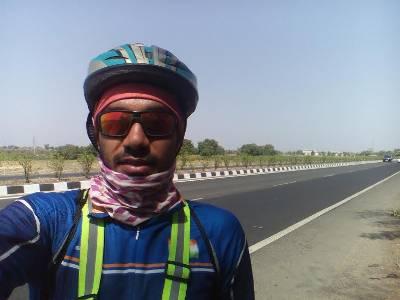
There was no heart break the second time round for intrepid cyclist  S S S Shameem, assistant professor  of MIT, Manipal University. Having fallen agonisingly short of attempted solo cycling journey from Kanyakumari to Kashmir, a 3,500-kms ride in 23-days in 2016; Shameem successfully completed Okha (Gujarat) to Dibrugarh (Assam) solo cycling expedition covering 3,400-kms, a journey that started on May 15 and ended on May 29.

This solo cycling expedition which he decided to complete in just 20 days was not for any record, but to spread message of unity and humanity in a greener and healthier way. Shameem’s endurance and past experience in such long distance cycling events saw him cover the distance in just 15-days. Shameem said, “I just managed those extra miles each day, helping me shave off a good five-days from my earlier journey schedule of 20-days.”

If the Okha to Dibrugarh journey saw Shameem cover 3,400-kms, for his journey from Manipal to Okha he travelled a hectic 2000+ km which saw him undertake a roller-coaster journey of 50 hours. Starting with Gujarat, and followed by Madhya Pradesh, Uttar Pradesh, Bihar, West Bengal , and Assam; each state had its own surprising flavour. During this journey, he passed through six states and UTs, 35 districts, and many cities, NHs, check-posts.

Risk factor of cycling in particular sensitive parts of UP and Bihar was a matter of worry for him, though it turned out all safe and sound without any issues. “Constant support of parents, wishes of friends paid off, and I could finish the feat without any major challenges,” he said. Factoring the summer heat and aiming to cover sufficient distance, he spent most of the day resting while covering major part of the route during early morning, late afternoon, evening, and night hours.

The distance covered daily was around 200km to 300 km. With heat, causing irritation; modified schedules; and focus on extra mileages, Shameem could not enjoy beauty of the nature around; nor could he stop at places to interact with people as he wanted. Throughout the journey; he was getting offers for help and support from many. Since such offers would consume time, forcing him to travel additional distance to reach to them; Shameem avoided it all.

source: http://www.timesofindia.indiatimes.com / The Times of India / News> City News> Mangalore News / by Jaideep Shenoy, TNN / May 31st, 2017

Winning laurels: For the first time ever, 50 Muslim candidates clear UPSC civil services exam

Lucknow,  UTTAR PRADESH :

50 muslim candidates made the cut in the UPSC civil services exam 2016 and 10 figured in the top 100 rank

Lucknow:

The Union Public Service Commission (UPSC) results on Wednesday brought cheers to 1,099 successful candidates. Among those who made the cut were 50 Muslims – the highest number ever to have cleared the exam.

Ten Muslims figured in the top 100 rank and six Muslim women also came out with flying colours in the exams. Jammu and Kashmir led from the front with Bilal Mohiud Din Bhat bagging the 10th rank and 13 others cracking the exam.

“It’s heartening. The credit goes to several non-profit and social organisations which have been relentlessly working for literacy, creating awareness and highlighting the importance of education in the community,” says Salam Siddiqui, former principal of Mumtaz Inter College. Sure enough, among the 50 successful Muslims, 16 candidates were mentored by the Zakat Foundation of India (ZFI) – a charity organisation providing free coaching for civil services exams.

The wake-up call for the community came in the form of the Sachar Committee Report, which was released in November 2006, say educationists. Painting a dismal picture of Muslims in India, concern was expressed in the report over the poor representation of Muslims in government sector jobs.

In 2016, 36 Muslims had cleared the exams, while the number stood at 38 in 2015, 34 in 2014 and 30 in 2013. Although Muslims comprise 13.4% of the total population, they have very little representation in the top government services, often due to lack of education and unavailability of resources. Consequently, the percentage of Muslims clearing the examinations remained roughly around 3% in the last few years.

In 2013, a total of 1,122 candidates had made it to the prestigious civil services, of which 34 or 3.03% were Muslims. In the 2012 UPSC result, only 31 Muslims could make it to the final list out of 998 successful candidates, which translates to 3.10%. In the civil services, Muslims comprise about 3% in Indian Administrative Service, 1.8% in Indian Foreign Service and around 4% in the Indian Police Service, according to data culled by organisations working in the field of literacy and employment.

“But when you compare these figures with the fact that Muslims comprise about 14% of the population, 3% is not a very encouraging figure,” says Agha Pervez Masih, administrator of Lucknow Guidance Centre, a free coaching centre at Halwasiya Market in Hazratganj run by the Aaaghaz Foundation.

The community, he feels, still has a long way to go and a respectable proportionate representation according to population share would be reached when 170-180 Muslims make the mark in the civil services exams.

source: http://www.hindustantimes.com / Hindustan Times / Home> Education / by M. Tariq Khan / June 02nd, 2017

Twin joys for Bidar boy

Bidar, KARNATAKA :

It’s a double reason for G Naseer Hussain to feel on top of the world. A student of Shaheen PU College here, the boy has secured 3rd rank in the CET for admission to a course in Indian Systems of Medicine and Homoeopathy and 4th rank in the CET for admission to a course in veterinary science.

Naseer is the son of Mehboob, a lawyer, and Ruksana Begum, residents of Sindhanur in Raichur district.
The student has scored 59/60 in chemistry, 58 in physics, 56 in biology and 38 in mathematics. The boy said he used to dedicate 14 hours a day for studies and attended the training programme for CET and NEET in his college. He wants to realise his dream of becoming a doctor and is waiting for the NEET result.

source: http://www.deccanherald.com  / Deccan Herald / Home> States / DH News Service, Bidar / May 31st, 2017

ICSE results 2017: Muskan Abdullah Pathan, Ashwin Rao score 99.4% to become joint toppers

Pune, MAHARASHTRA :

ICSE results 2017: Muskan Abdullah Pathan of Pune’s Hutchings High School and Ashwin Rao of St Paul’s English School, Bengaluru were declared as the joint toppers.

ICSE results 2017: Muskan Abdullah Pathan of Pune’s Hutchings High School and Ashwin Rao of St Paul’s English School, Bengaluru were declared as the joint toppers. (Deepak Gupta/HT photo)

Muskan Abdullah Pathan of Pune’s Hutchings High School and Ashwin Rao of St Paul’s English School, Bengaluru were declared as the joint toppers in the Council of Indian School Certificate Examination’s (CISCE) ICSE or Class 10 exam on Monday.

Both of them scored 99.4% marks.

Nearly 1,76,327 candidates registered for the Indian Secondary Certificate Examination exams this year.

The results for the ICSE and Indian School Certificate (ISC) were delayed this year as the exams began at least a week later than usual because of the assembly elections that were held in five states. Last year the results were declared on May 6.

Candidates can check their results by clicking on the ‘Results 2017’ link on the council’s website – www.cisce.org – or by logging on to the careers portal https://careers.cisce.org/helpdesk/login.aspx. They can also access them by sending a text message to 09248082883.

The CBSE 10th result 2017 will also be announced soon. The Central Board of Secondary Education declared the Class 12 board examination 2017 on Sunday.

source: http://www.hindustantimes.com / Hindustan Times / Home> Education / by HT Correspondent, Hindustan Times – New Delhi / May 29th, 2017

Students go innovative, price of their drone dips

Bengaluru , KARNATAKA :

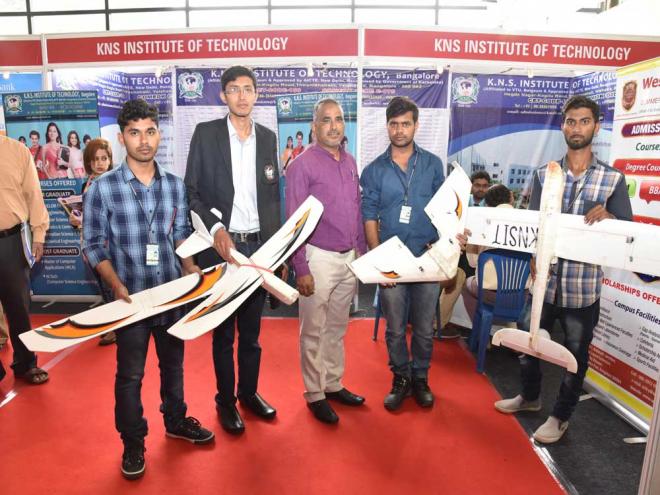
KNS Institute of Technology students display the drones designed by them at Eduverse, the ninth edition of Jnana Degula education expo organised by Deccan Herald and Prajavani, at Jayamahal Palace Hotel grounds on Sunday. DH photo

An unmanned aerial vehicle (UAV) at Rs 1,500? Students of KNS Institute of Technology have done it, without much fanfare. They plan to enhance the design to customise the drones for surveillance and transporting goods.

The makers of the plane – Inayatullah, Debabrata Mondal, Premkumar Singh and Syed Junaid – represented their college along with vice principal Nayeem Ahmad at Jnana Degula-Eduverse event organised by DH and Prajavani.

Inayatullah said the plane was made of simple polymer materials (expanded polyolefin and polystyrene) and can carry 350 gm payload. “It can fly for an hour at a speed of 45 km per hour. We have used a propeller made of composite material with aluminium coating so that it can fly at a height of 500 feet and withstand force of up to 85 newtons,” he said.

The team is also working on a plane specifically designed for surveillance.“While the 45 kmph plane can be improvised to make it a delivery drone, we are working on a plane that flies slower, at 36 kmph, providing opportunities for deeper surveillance of a particular area,” Mondal said.

Inayatullah said the cost of the UAVs will come down further if produced on a large scale. “The UAVs produced by government agencies cost a lot. Our planes are disposable. The army can use the surveillance drone and does not have to worry if one of them is lost or destroyed,” he said.

The planes can be controlled by a 2.4GHz radio frequency device, which has a range of 2.5 km. “The remote controller cost us Rs 3,500. Considering that it is the plane and not the device that is susceptible to damage, we think ours is the most affordable UAV,” he said.

“The turbo is imported from China for Rs 90 and sold in India for Rs 250. The same turbo can be made in India at a cost of Rs 40. Nearly 95% of the materials were imported from China. After a detailed study, we found the cost will come down to Rs 600, if we make these materials in India,” Inayatullah said.

source: http://www.deccanherald.com / Deccan Herald / Home> City / DH News Service / Bengaluru – May 29th, 2017

20 SSLC, PU toppers from Palike schools feted

Bengaluru, KARNATAKA :

Bengaluru :

Though BBMP schools and colleges registered a decline in overall pass percentage in SSLC and PU exams this year, 20 students from Palike high schools and pre-university colleges scored marks ranging from 88% to 98% in the recent exams.

The civic body on Thursday released the list of 20 toppers from SSLC and PU categories. Most of the students who scored well are from Srirampuram BBMP High School and PU College and the Byraveshwaranagar High School and PU College. In SSLC, Nisarga of Srirampuram BBMP High School scored 98.24%, Bhumika K of Herohalli BBMP High School scored 92.16% and Shashikumar of BBMP High School Byraveshwaranagar got 91.84%.

In the PU exams, Rukhsar Banu of BBMP PU college, Pa­darayanapura scored 94.83%, Umme Saira of BBMP PU College on Dispensary Road scored 94.66% and Harshitha M of BBMP PU College at Byraveshwaranagar got 94.66%. The BBMP standing committee chairperson on education Nazima Khanam felicitated the 20 students at a ceremony at the BBMP head office on Thursday.

source: http://www.deccanherald.com / Deccan Herald / Home> City / DH News Service / Bengaluru – May 26th, 2017

A generous teacher

Meerut, UTTAR PRADESH / Baroda, GUJARAT / NEW DELHI :

Perfection pursuitUstad Hashmat Ali Khan

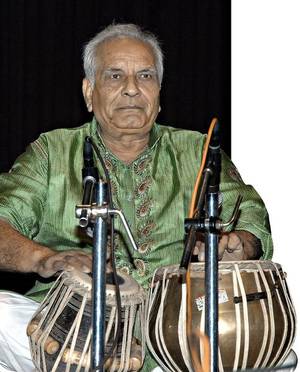
Tabla exponent Ustad Hashmat Ali Khan, passed away recently

The sudden demise of Ustad Hashmat Ali Khan, a renowned tabla exponent and a revered Guru of Ajrada Baaj, came as a shock to the music fraternity.Ajrada Baaj is one of the six main schools of tabla playing. Ajrada Gharana is known for or what is the specific ‘Nikas’ of the Bols in this style. The Aalap like Peshkar, the varied Quayedas of his Gharana, the Rela, Fard, Gat, Paran, where all three of them joined the demonstration together.

Many a times, Hashmat Ali Khan, would share his childhood memories of the Baroda Darbar, where his grandfather Ustad Shafi Khan was a ‘Mulazim’ as a musician like Aftab-e-Mausiqi Ustad Faiyaz Khan, the legendary vocalist of the Agra Gharana, Ustad Nisar Hussain Khan and Kanthe Maharaj. The ICCR had sent him to Gayana to teach the art of tabla and propagate Hindustani music there. He had joined the Bharatiya Kala Kendra, as a faculty member, way back in 1972. He remembered how Ustad Hafiz Ali Khan encouraged him to join this institution when Naina Devi interviewed him. As a thanks giving gesture, he used to go to his place after dinner, to make young Amjad (Ustad Amjad Ali Khan) practice sarod with his tabla Sangat.

Ustad Hashmat Ali Khan established the Tabla Academy of Ajrada Gharana in 2008 and trained a number of students including his own grandsons Zuheb, Zaheen and Zargham.

Remembering father

Ustad Akram Khan remembers him fondly. “We all had dinner and watched cricket together discussing the game. He was fond of cricket. He was so affectionate as a father but equally strict as a teacher. A strict disciplinarian, he would make us do regular riyaz at least for 4-5 hours a day. He took it upon himself to spread the Ajrada Baaj at home and abroad. He conceived the Peshkar and kayda, as a raga. As one does Badhat in raga sequentially (silsilewar) Rishabh, Gandhar, similarly in peshkar or kayda. Like in a raga, you cannot use swaras other than those prescribed for the raga.

“Unhone is Khazane ko baantne mein koi kanjoosi nahin barti”. He was not a miser in spreading the treasures of his Gharana. I only hope that the next generation takes benefit of all that he has bequeathed so generously!”

source: http://www.thehindu.com / The Hindu / Home> Features> Friday Review / by Manjari Sinha / May 26th, 2017

Experts suggest how you can make the right career choices

Bengaluru , KARNATAKA :

Bengaluru :

The two-day Times UniverCity (TU) will commence on Saturday at St Joseph’s Boys’ High School. The event is specially designed to help students explore different career options after pre-university.

TOI speaks to two of the speakers, Danish Sait and Saad Khan, about role models, advice they’d like to give the youth and the importance of bringing people from different backgrounds to a common platform.

Danish Sait

Focus on learning, not on earning

On role models: Mentors play a bigger role than role models. Role models may influence you with trends and goals. A mentor will help you build a foundation for the launch pad; they aren’t the destination, they’re travel agents.

Advice: I read this quote many years ago: `You get what you work for, not what you wish for’. Patience, persistence, perseverance are three important words. Focus on learning, and not on earning. Know your weaknesses. There is no absolute route to succeed. Build relationships, don’t be impulsive, don’t be shy to ask, have fun.

Views on the event: It’s an excellent initiative, great way to bridge the future with the present. There’s abundant information available on the internet. Unfortunately, we don’t spend enough time to pick the skills we need in the real world. This should help fix that in a tiny manner.

Saad Khan

Understand importance of hard work
On role models: Role models can inspire you to work towards your passion, but you shouldn’t lose focus from yourself and just become a follower. If someone inspires you, it should be about their work and not who they are as people.

Advice: My humble advice to all young people is to first understand the importance of hard work.Most people working with me are young and it’s rare to see a consistent drive.Fatigue and confusion set in early while they pursue their first job and it almost seems that they want things to happen fast. We are all so used to Google answers on our fingertips that working hard to find a solution is beyond us now. A quote on my school notice board has always been with me that Success comes before work only in a dictionary.

Views on the event: It is a fabulous initiative. Students know a lot about what is going on in the world today via social media. What I feel they can learn is to deal with situations and problems in the real world, professionally and personally and Times UniverCity is a wonderful platform for the same.

source:  http://www.timesofindia.indiatimes.com / The Times of India / News> City News> Bangalore News / TNN / May 20th, 2017

IIT-H develops biodegradable nano-particles to treat cancer

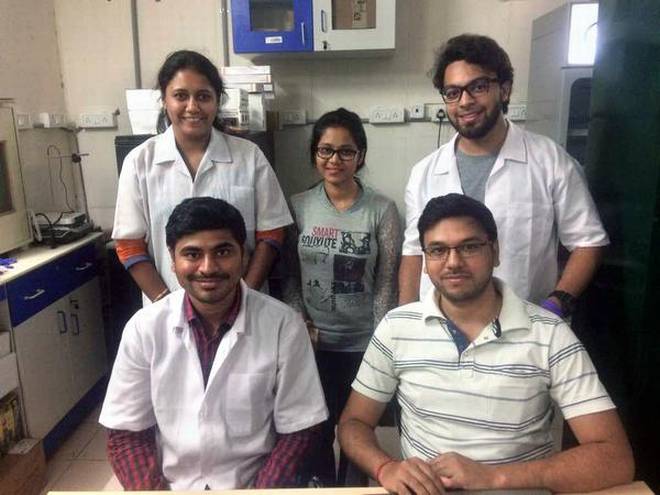
Some of the members of the IIT-H team working to make cancer treatment better, on the institute’s campus in Hyderabad. | Photo Credit: Mohd Arif;Mohd Arif

Team working on finding alternative to chemotherapy

The Indian Institute of Technology-Hyderabad (IIT-H) has developed biodegradable non-particles that could be instrumental in treating cancer.

A team led by assistant professor Aravind Kumar Rengan has been working on finding alternative ways to chemotherapy and radiotherapy for cancer treatment to minimise side-effects caused by these therapies. He designed a novel nano system which kills the cancer cells by photothermal therapy.

The group is currently working on making more cost-effective nano particles for photothermal therapy, integrating these particles with cancer specific drugs to have an enhanced effect in killing cancer.

The team members involved in the research are Tejaswini Appidi, Syed Basseruddin, Deepak Bharadwaj, Anil Jogdand, Sushma, Anula — all Ph.D. scholars; junior research fellow Rama Singh, and postdoctoral fellow Surya Prakash Singh.

Photo thermal therapy is a treatment procedure where light (photo) energy is supplied by means of an external laser to nano particles which absorbs this energy and converts it to heat (thermal) energy. This heat generated by irradiation of laser would increase temperature within the tumour and result in the death of cancer cells.

No side-effects

The important aspects of the research is that the treatment procedure has no side-effects, since the nano particles would be accumulated in the tumour region, and also the irradiation is specific to particles, which means the heat is generated only within the tumour and not elsewhere in the body.

Also, the laser used to provide light energy would not harm the healthy cells around the tumour region as these healthy cells would not absorb this light energy as they remain transparent to this irradiation.

The nano particulate system is very unique in its own way. The particles, after generating the heat required to kill the cancer cells, will degrade inside the body and further breakdown into much smaller particles which will be excreted from the body.

“This procedure had very good results in experiments carried out in mice, and is expected to show the same in humans too. This treatment is now under clinical trials and once the trials are completed, this would be available as an alternative treatment procedure to cancer,” Dr. Rengan told The Hindu.

Dr. Rengan was recently awarded the prestigious INSA award in the young scientist category for his outstanding research in treatment of cancer by photothermal therapy using biodegradable particles.

source: http://www.thehindu.com / The Hindu / Home> News> Cities> Hyderabad / by R. Avadhani / May 19th, 2017