Category Archives: Education

Young, veiled and free: Meet Uber Delhi’s first woman driver

In the backdrop of security-related suspicions associated with the cab service Parveen’s large green eyes peeping out from her trendy hijab, hold promise.

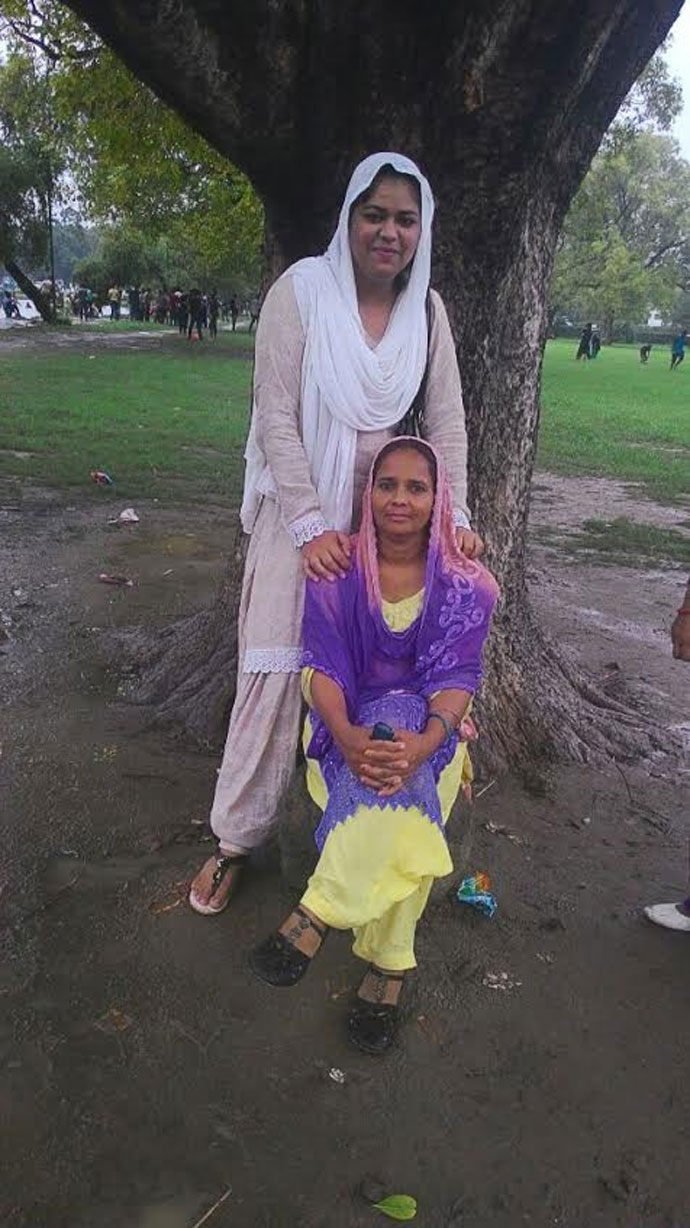
“Today in the morning I dropped two young boys to Anand Vihar,” says Zamarrud Parveen, a pleasant surprise in her black-and-white hijab and bright yellow salwar kameez behind the wheel during my last Uber ride. “They started talking to me and asked where I was from. I told them I grew up in Bijnor, UP (Uttar Pradesh).” She changes gears and breaks into a proud chuckle. “They said, ‘Seriously?! We’re also from there, but we didn’t think any girl from there would ever choose this profession.’ I just laughed and asked them why. I said I loved driving! They had no idea what to say after that.”

The spirited 21-year-old says she is presently the only woman driver at Uber in Delhi and has been with the company for two months now. In the backdrop of the infamy and security-related suspicion associated with the cab service – given an incident of rape, sexual harassment and the general misbehaviour of male drivers with female passengers – Parveen’s mugshot with large green eyes peeping out from behind her trendy hijab, pops up on the app, with promise.

ZamarrudParveen01MPOs21aug2015

“I love the niqab. I’ve always worn it,” she says. “I usually wear a full burqa and niqab to college and everywhere, but while driving I only wear the niqab with ordinary clothes because it becomes difficult to drive,” adds Parveen, who is simultaneously pursuing a BA pass course from Jamia Millia Islamia and hopes to one day complete her MA and teach Islamic Studies, her favourite subject. “When I told my college friends about my job as a taxi driver, they didn’t believe me. Because of the way I am in college – always in a full burqa and niqab and all,” she says. “They only believed me when I showed them my visiting card. But they were really happy.”

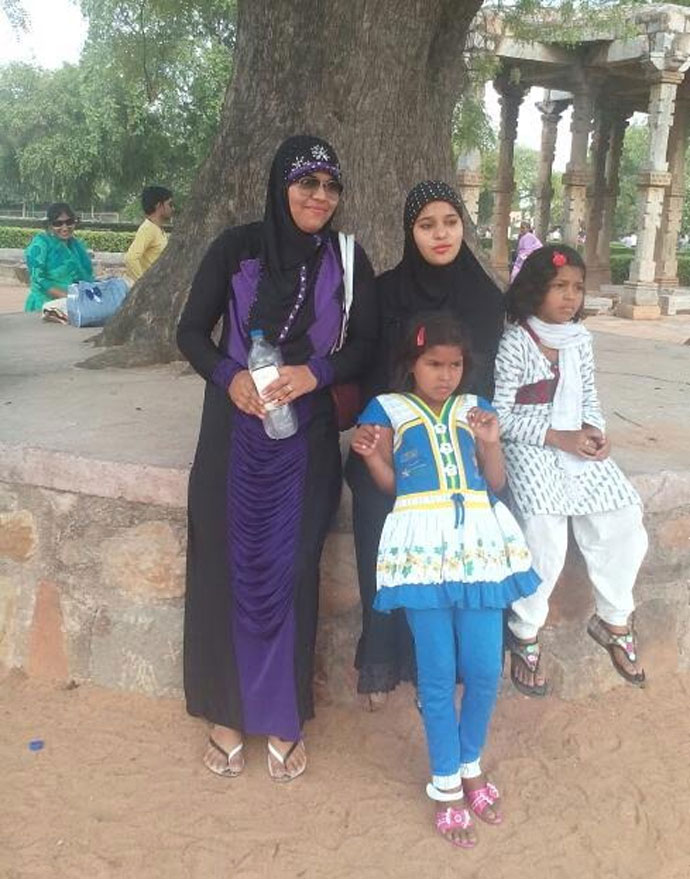
Parveen grew up in a conservative mohalla in Bijnor and lived there until she graduated from the eighth grade, from Muslim Kudrat Girls Intercollege. She moved to Delhi, along with her mother and three younger sisters (Zoya, 19 and married, Shafaq, 12 and Ufaq, 10) and presently lives on rent in a one-room home where her father, a construction labourer had lived for 20 years. After graduating from school, Parveen was encouraged by her mother to learn how to drive and enrolled herself at Sakha Consulting Pvt Ltd. “My family is very supportive. My mother always wanted to learn how to drive, but couldn’t because she grew up in a conservative background… and culture. But she told me, ‘So what if I couldn’t drive? You must.'”
ZamarrudParveen02MPOs21aug2015

Parveen chose to take the job at Uber because they were offering to pay her a higher salary than her employers at Sakha. “I had a commercial licence so they were happy to take me,” she says. The country can expect more women like Parveen since Uber is working on recruiting close to 50,000 women drivers, who are presently being trained by the organisation, iCare Life. “They will be footing the bill to get them training and licences – learners’, permanent and commercial,” says Parveen, who enjoys her weekdays on the road. “This job is very convenient, if I have some personal work I can just go offline, finish my work and go back online.” She usually logs in at 7am, goes off between noon and 4pm and officially logs out for the day by around 7 or 8pm. This routine, she says, allows her to do namaz five times a day and spend time with her family.

The once shy, young girl, instructed as a child, as most girls in her neighbourhood were, never to speak to people or leave the house, felt liberated in Delhi and claims the course at Sakha helped her become exponentially more confident. “When I was young I couldn’t speak to or even stand in front of people. In Delhi, I spoke to more people, Sakha gave me training in self grooming, English classes, self defence and that really helped me open up.” The course at Sakha also had a week of law classes, in which Parveen learned different acts and “my rights out in the world and at home”.
ZamarrudParveen03MPOs21aug2015

But though Parveen has the support of her family, breaking out of an orthodox Muslim community was something her mother bravely battled. Ghazala Parveen defied all odds (and a disapproving mother-in-law) to educate herself and her three daughters. She graduated from class 10 after marrying her husband Habib-ur-Rahman and conceiving her eldest daughter Parveen. “You know what people think of women – by 18 or 19, get her married and that’s her whole life. Just chulha, chaaka, bachche, that’s it,” says Parveen. “But my mother was just completely different. The amount of turmoil she’s been through in her sasural, I don’t think anyone else would be able to. Her mother-in-law didn’t like girls at all. But my ‘abbu’ always wanted to have daughters.” Parveen’s three younger sisters all study in an English medium school near their home in Madanpur Khadar in Kalindi Kunj.

Being a lady taxi driver in a veil is not the only power statement Parveen is making. She’s also breaking the sexist stereotype associated with women behind the wheel. “During training, my sir used to say ‘jab tak gaadi thukegi nahi, seekhoge nahi (you won’t learn how to drive until you bang the car)’,” she says. “I used to say ‘aisa kisne bola hai‘. In the three years I have been driving I haven’t even touched another car with my car; no scratch, nothing.” She smirks, “Bhagaai bhi bohot hai. (I’ve driven very fast too).”

Parveen is happy with the response she’s got from passengers so far. “Most male passengers remain calm and silent. I don’t think they have anything to say,” she says. “Others are friendly and speak to me nicely. They definitely say this is the first time they’ve seen a lady driver. I love hearing that.”

The ambitious and dynamic Parveen is a powerhouse of resistance and part of a new generation of formidable women. Riding the wave of defiance her mother set in motion, Parveen is chatty and respectful, polite and witty. She is firm in her beliefs (“I have been allowed to even have a love marriage, but I’d prefer to be in an arranged marriage so my family can intervene if I have any marital trouble) and determined to achieve her goals (“I want to learn and when I become a teacher, I one day want to give other people the opportunity to learn”). At 21, her salary of Rs 15,000 per month, smacks full in the face every “how can you even educate the girl child” taunt from ladies in Bijnor. And her resilience is truly inspiring.

As she drives aggressively through the barriers of patriarchy, Parveen – who once successfully juggled her job, fasting for ramzan, an ailing mother and exams in college – says, “I love driving on the highway. It’s liberating when the car runs at 100-120km/h. I’m responsible for my own safety. And I absolutely love it.”

source: http://www.dailyo.in / Daily O / Home Page> Politics> Out of Order / by Asmita Bakshi @asmitabee / August 20th, 2015
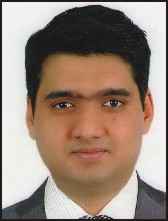
Dailyo spots Jamia student, only woman driver at Uber in Delhi

The only woman driver at Uber in Delhi is a student from Jamia Millia Islamia, according to a report from dailyo.in. The reported pointed out that Zamarrud Parveen who grew up in Uttar Pradesh’ Bijnor has joined the company for two months now.

The hijab wearing Parveen, is also doing a BA pass course from Jamia. When asked about her future, she told the daily that one day she plans to complete her MA and teach Islamic studies, her favourite subject. “When I told my college friends about my job as a taxi driver, they didn’t believe me. Because of the way I am in college – always in a full burqa and niqab and all. They only believed me when I showed them my visiting card. But they were really happy,” she told the daily.

It was a few months ago when she moved to Delhi, along with her mother and three younger sisters (Zoya, 19 and married, Shafaq, 12 and Ufaq, 10).  The family live lives on rent in a one-room home where her father, a construction labourer has lived for 20 years, according to the report.

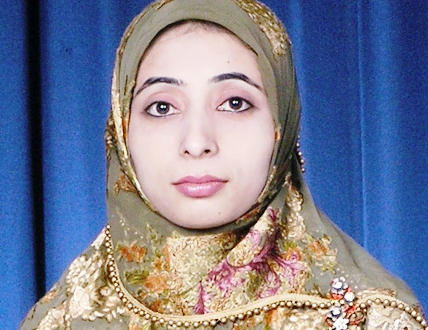
CAPTION: Photo of Parveen via dailyo.in

source: http://www.okhlatimes.com / Okhla Times / Home> JMI /OT Campus Reporter-JMI / OT – August 20th, 2015

Kalam’s Parting Gift to Children: A Sequel to Ignited Minds

KalamMPOs14aug2015

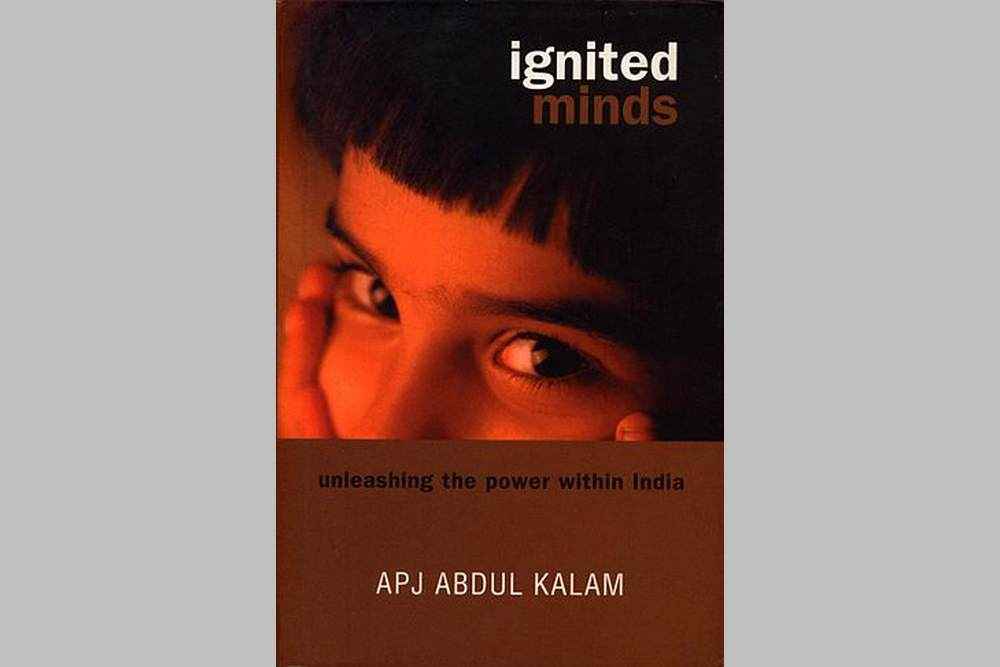
A number of new books by late A P J Abdul Kalam, including a sequel to his ever-popular Ignited Minds, are lined up for publication in the next few months.

Puffin Books will publish My India: Ideas for the Future, billed as a sequel to Ignited Minds. It will be a collection of insightful and thought-provoking speeches from Kalam’s post presidency years.

Organised into seven sections, the speeches in this collection are a roadmap for children, and adults alike, to follow their dreams and contribute to a better India, the publishers said.

Drawn from Kalam’s addresses to parliaments, schools and universities across the world, these speeches include his thoughts on nation building, poverty, failure, science and self-confidence in the 21st century.

Scheduled to be published later this year, My India: Ideas for the Future is a book that will inspire, invigorate and empower many generations to come, the publishers said.

Brought out in 2003 by Penguin, Ignited Minds: Unleashing the Power within India went on to become a bestseller. The book examines why, given all our skills, resources and talents, we, so obviously capable of being the best, settle so often for the worst.

Kalam offers no formulaic prescription in Ignited Minds. Instead, he takes up different issues and themes that struck him on his pilgrimage around the country as he met thousands of school children, teachers, scientists and saints and seers in the course of two years: the necessity for a patriotism that transcends religion and politics; for role models who point out the path to take; and for confidence in ourselves and in our strengths.

Puffin had recently published Reignited: Scientific Pathways for a Brighter Future, co-authored by Kalam and his aide Srijan Pal Singh, in which the writers worked to inspire a new generation of Indians in careers in science.

HarperCollins will also be taking through to publication one of Kalam’s last projects,Advantage India, co-authored with Singh, which draws upon some remarkable examples from his life to illustrate how India could have a winning edge.

The book will deal with subjects like Make in India, Skill Development, Digital India, Smart Cities project, rural development models and new energy policies.

Known for his visionary ideas grounded in practical experience, Kalam published numerous books including Wings of Fire, Target 3 Billion, Life Tree: Poems, Mission 2020, Beyond 2020 and Turning Points, his highly readable account of his presidency.

Written in straight-forward, accessible language, each book shares his passion to help India and Indians dream big, and offers an action plan to help realise these goals.

The power of true spirituality, of faith that inspires good deeds and thoughts, the very special relationship between a teacher and a disciple, all of these are enshrined inTranscendence, a book that HarperCollins just published by Kalam, co authored with Arun Tiwari.

The book is about the unique spirituality-science fellowship that was formed between Kalam and Pramukh Swamiji Maharaj, who is one of the most inspiring spiritual figures of modern times and the fifth spiritual successor of Bhagwan Swaminarayan.

In The Family and the Nation (with Acharya Mahapragya), Kalam said how any task of nation building had to begin at an individual’s first training ground, the home. In A Manifesto for Change (with V Ponraj), he took up the crucial subject of how we should elect our leaders, and how those we elect should carry out their duties.

Kalam was also reportedly working on a book in Tamil with a vision for the growth of Tamil Nadu and completed seven chapters.

The book was titled Ennathil Nalamirunthal Kanavu Tamilagam Uruvagum, Puyalai Thandinal Thendral and seven chapters of it were completed after detailed discussions, co-author of the book and scientific advisor to Kalam when he was President, V Ponraj said.

Says Udayan Mitra, Associate Publisher at Penguin Random House who worked as Kalam’s editor for more than 10 years,

“Kalam managed to inspire the millions of people who met him, listened to his speeches, and read his books – and he ignited their minds.

“Having had the privilege to know Kalam personally and to have published his books for over a decade, I will miss him dearly, as I know the entire nation will. But his dream and his extraordinary personality will live on in his books, and it is in their pages that we will be able to find Kalam in our midst again, and celebrate his vision anew.”

Meanwhile, Kalam’s aide Singh is also mulling an idea of incorporating the unfinished lecture on ‘Creating a Livable Planet Earth’ at IIM-Shillong into a book.

source:  http://www.outlookindia.com / Outlook / Home> News / by Zafar Mudasser Nofil / New Delhi – July 31st, 2015

Mysurean bags Rs.1 crore European fellowship

SyedUsmanTaqiMPOs14aug2015

Mysuru :

Syed Usman Taqui of Mysuru has been awarded Erasmus Mundus Fellowship amounting to 1,29,900 Euros (almost equivalent to rupees one crore) to pursue his Doctoral Programme in Membrane Engineering for a period of three years beginning November 2015.

He is the youngest to top the Global Ranking List. The Erasmus Mundus doctorate in Membrane Engineering (EUDIME) is a prestigious European Fellowship programme designed to implement at international level — excellence, innovation, mobility and multidisciplinary in investigation approaches related to membrane science and technology. The consortium includes six leading partner institutions from Portugal, Netherlands, Czech Republic, France, Belgium and Italy.

Syed Usman Taqui pursued his Master Degree in Membrane Engineering under the Erasmus Mundus Master’s Scholarship amounting to 48,000 euros (rupees thirty-four lakh) during 2012-14, then the youngest to be selected among fourteen from all over the world.

Usman’s elder brother Syed Raihan Taqui was the youngest and one among the three from Asia to be awarded Erasmus Mundus Scholarship from European Union to pursue his Master’s Degree majoring in Education Management in 2007.

Usman Taqui is the son of Ayesha Nasreen and Prof. Syed Akheel Ahmed, former VC of Yenepoya University and former Dean and Syndicate Member of University of Mysore.

Usman carried out his project at the Department of Chemical Engineering Technology (IIT), Mumbai, during his undergraduate days. He has bagged numerous prizes and awards from the institutions he studied.

source: http://www.starofmysore.com / Star of Mysore / Home> General News /  Saturday – August 08th, 2015

Inauguration of Mysore University Centenary celebrations: PREZ. Visit – Behind the scenes

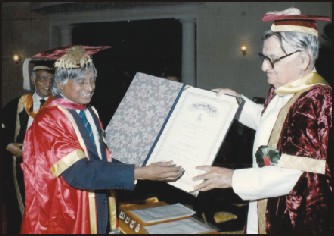
 A file photo of former President of India Dr. A.P.J. Abdul Kalam receiving the Honorary Doctorate from the then Governor-Chancellor Khurshed Alam Khan during the 75th Convocation of University of Mysore on Feb.25, 1995. The then Vice-Chancellor Prof. M. Madaiah is partly seen.
A file photo of former President of India Dr. A.P.J. Abdul Kalam receiving the Honorary Doctorate from the then Governor-Chancellor Khurshed Alam Khan during the 75th Convocation of University of Mysore on Feb.25, 1995. The then Vice-Chancellor Prof. M. Madaiah is partly seen.

by N. Niranjan Nikam, Senior Journalist & Consultant, Centenary Celebrations 

It was an oft repeated utterance for the past one year. “We are on the threshold of celebrating the Centenary of the University of Mysore.” July 27 is the Foundation Day. It was on the same day in 1916, 99 years ago that the University of Mysore was founded. The day to herald the year-long celebrations had finally arrived. The hard work, dedication, devotion, sincerity and above all, commitment to the cause of the celebration of centenary on the part of the Vice-Chancellor Prof. K.S. Rangappa has made it possible.

The day dawned with a slight drizzle in the morning and we were worried. The clouds cleared at the right time. Hectic activity was going on to prepare the stage. Last minute instructions were flying back and forth. The countdown had begun for the arrival of the President of our country.

As the clock struck one, people started arriving. There was palpable tension in the air for most of us involved in organising the event. “Will the 10,000 seating capacity Amphi Theatre that was all decked up to receive the President be filled?” was the question uppermost in all our minds. However, the VC was fully confident that there would not be an inch of space left.

By 2’O clock, his predictions had come true. It was a sight to behold. The hard work of the past one year was paying off. I was worried whether the side wings would be occupied. But it was a joy to see every inch of space filled and also to see the real commoners and students sitting patiently for the arrival of the President.

Meanwhile, early in the morning, the names of the dignitaries who were to be seated in the front two rows had been identified and all their names pasted on the sofas. The students of the University College of Fine Arts, who were singing the Centenary Theme Song, came to the venue three hours before and rehearsed with the compere Prof. C. Naganna. The audio-visual team had set up their equipment and were testing. Lot of content had been provided to them to play while the audience waited for the function to commence.

The Police Band arrived well in advance and as the place for them was already earmarked, they went straight there and took up the position. Instructions were given to them that the moment the President arrives and walks to the centre of the dais to his designated chair, the National Anthem should be played.

Even as the clock ticked, came the news from the State Protocol Deputy Secretary that there would be a delay of at least half-an-hour as the President was visiting the Chamundi temple. It was also disclosed that he would change his dress at the Mandakalli Airport to dhoti and jubba to offer pooja to Goddess Chamundeshwari and then would change to formal dress at the Guest House of Abdul Nazir Sab State Institute of Rural Development (ANSIRD) on Lalitha Mahal Road. Hence, the delay was inevitable. We had no choice and hence we took the available time to fine tune the programme.

Backstage

First to arrive was R.V. Deshpande, Higher Education Minister and Pro-Chancellor, University of Mysore. Then the other dignitaries started arriving. All the six former Vice-Chancellors and Eminent Lexicographer Centenarian Prof. G. Venkatasubbaiah had arrived and were seated in the newly-furnished green room in the Amphi Theatre at Manasagangotri.

The messages were coming from the State Protocol Officer every ten minutes about the President’s convoy. Finally, the President arrived. The tall figure of Governor and Chancellor Vajubhai Rudabhai Vala emerged from the car and I thought that the President would be coming next. But when the diminutive figure of the President, Pranab Mukherjee, neatly dressed in a close-collared coat stepped out from the same car, our joy knew no bounds, as at last our objective to have the function on the day the University was founded (July 27, 1916), had been achieved.

However, more drama was to unfold. The State Protocol Officer, the moment he arrived, announced that the Vote of Thanks had to be dropped, as the President was running late and he had to be in Bengaluru for the next function in the evening. The instructions to him had come in the form of a message from the President’s Secretariat. I had to run to tell the Police Band that they had to play the National Anthem the moment the President finished his address.

Just a few days before the function, the VC had to visit the Rashtrapati Bhavan to finalise the programme details with the President’s Secretariat. He told me, “I had spent a pleasant half-an-hour when I had gone to invite the President earlier. But sitting with Private Secretary, who was insisting on every minute details, made me sweat.” The VC had suggested two more names for the President to honour but it was turned down. Even though the VC had made a promise to the two prominent personalities, it had to be dropped.

Former Prime Minister H.D. Deve Gowda, who was also to participate in the function, opted out at the last minute as he had to go to Delhi. The VC then wrote to the President’s Secretariat to include the name of Registrar Prof. C. Basavaraju. Incidentally, his name had been proposed along with other dignitaries to be included in the first list itself. The President’s Secretariat had, however, instructed us to drop his name to be seated on the dais. The permission was given at the last minute to seat the Registrar on the dais.

The decision to publish the book “Era of Enlightenment” (One hundred years of History of University of Mysore), penned by historian and former Vice-Chancellor of Goa and Mangalore Universities, Prof. B. Sheik Ali, was a really good one. However, the decision to also honour him was dropped as the President’s Secretariat said that there would not be enough time to do it as the list was already long. Hence, the VC had to reluctantly leave out his name.

It was also a momentous sight when the President saw the two centenarians Dejagow and Venkatasubbaiah. He looked at them open-mouthed as I escorted them and Prof. Rangappa briefed about their achievements.

The VC had asked the President’s Secretariat that Chief Minister Siddharamaiah should felicitate the President. But they were clear that the VC himself should felicitate the President.

In spite of the delay, the minute-to-minute programme was adhered to the last minute. One of those in the President’s Secretariat in the Navy Uniform, who was also giving instructions to us, told me in Hindi, “Kya Sir, aap itne buzurg log ko laye hain (referring to the two centenarians). Maine aisa function kahan be dekha nahin hoon.”

Even as the inauguration ended on a grand note by evening as we were mulling on the success, came the news that the former President Dr A.P.J. Abdul Kalam was no more.

The memories went back to 1995 when the Missile Man, and the Teacher as he would like to be remembered, was conferred the Honorary Doctorate by the University of Mysore.

Incidentally, Dr. Kalam was to inaugurate the Children Science Congress, in January next, during the Indian Science Congress to be hosted by the University of Mysore. Now, it is not to be.

NOTE: All things considered, it would have been most appropriate to have seated Prof. B. Sheik Ali on the stage since he was a Professor and Head of the Department of History in Manasagangotri, was the VC of two Universities; more than that he had authored the centenary remembrance book “Era of Enlightenment,” apart from being a venerable old man of 90 years age.— Ed

source: http://www.starofmysore.com / Star of Mysore / Home> Feature Articles / Friday – July 31st, 2015

Arabi-Farsi University affiliation for city madrassa

Bareilly :

Khwaja Moinuddin Chisti Urdu, Arabi-Farsi University in Lucknow has approved the recognition to degrees offered by Manzar-E-Islam Madrassa of Dargah Ala Hazrat. With this affiliation, children studying at the Dargah Ala Hazrat madrassa in Bareilly can go on to study at a university.

As madrassa marksheets are not accepted as valid at universities, students of the madrassa seldom make the transition to modern universities. Officials of Dargah Ala Hazrat are seeking similar affiliation from Jamia Millia Islamia University, Mahatma Jyotiba Phule (MJP) Rohilkhand University and Aligarh Muslim University (AMU). This madrassa is already affiliated to Jamia Hamdard University, Delhi.

“Khwaja Moinuddin Chisti Urdu, Arabi-Farsi University has now given affiliation to our madrassa. As the focus of the madrassa is more on religious teachings, the students do not get proper modern education, including lessons on English, Mathematics, Science, Computer Applications and other subjects,” said Mufti Mohammed Salim Noori of Manzar-E-Islam madrassa.

He added that at this madrassa, students get “alim” (considered to be of intermediate level) degree to students who pass out from here. However, as it is not accepted in most of the varsities, the children of the madrassa are seldom able to take admission in universities for modern education. For moving to modern universities, these students are required to take enrolment in a proper school and have to clear an intermediate exam. “Appearing for intermediate exams from school is a long and tedious process. However, as we have entered into tie-up with this varsity, the students holding alim degree of our madrassa will directly get admission and they need not to again give intermediate exams from a school,” said Maulana Subhan Raza Khan alias Subhani Miyan, chairperson of Dargah Ala Hazrat.

For seeking admission in varied courses of Khwaja Moinuddin Chisti Urdu, Arabi-Farsi University and Jamia Hamdard University, the madrassa students will have to either come in the merit list or clear the entrance exams.

The officials of the shrine added that after Ramzan, they will also approach authorities at Jamia Millia Islamia University, MJP Rohilkhand University and AMU for similar affiliation for the betterment of students studying in madrassa. The affiliation has made the madrassa students happy. “I am excited to study in a university as I will get an opportunity to become part of nation’s mainstream. We will be in a better position to take on the world,” said Mohd Khalid, a student.

source: http://www.timesofindia.indiatimes.com / The Times of India / Home> City> Bareilly / by Priyangi Agarwal, TNN / June 28th, 2015

Seminar on Dejagow

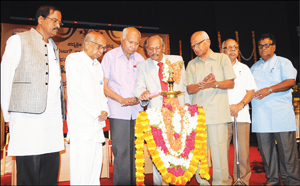
Noted writer Dr. K.S. Nisar Ahmed is seen lighting the lamp to inaugurate the Seminar on ‘Nadoja Dejagow - Baduku mattu Baraha’ at Kalamandira this morning as (from left) retired VC of Sanskrit University Prof. Mallepuram G. Venkatesh; Senior researcher Dr. Chidananda Murthy; littérateur Dr. C.P. Krishnakumar; Retired Director, Kuvempu Institute for Studies (KIKS) in Kannada Dr. D.K. Rajendra; Legal expert Dr. C.K.N. Raja and Kadamba Rangavedike president Rajashekar Kadamba look on.
Noted writer Dr. K.S. Nisar Ahmed is seen lighting the lamp to inaugurate the Seminar on ‘Nadoja Dejagow – Baduku mattu Baraha’ at Kalamandira this morning as (from left) retired VC of Sanskrit University Prof. Mallepuram G. Venkatesh; Senior researcher Dr. Chidananda Murthy; littérateur Dr. C.P. Krishnakumar; Retired Director, Kuvempu Institute for Studies (KIKS) in Kannada Dr. D.K. Rajendra; Legal expert Dr. C.K.N. Raja and Kadamba Rangavedike president Rajashekar Kadamba look on.

Mysuru :

Kalamandira on Hunsur Road in city, which was the venue for conduct of a seminar on ‘Nadoja Dejagow – Baduku mattu Baraha’ this morning, turned into a venue for hundreds of littérateurs from across the State to fall to the feet of former Vice-Chancellor of University of Mysore Nadoja Prof. Dejagow, who is on the threshold of turning a centenarian, to seek his blessings.

Inaugurating the seminar, noted writer Nadoja Dr. K.S. Nisar Ahmed described Prof. Dejagow as the best of those who studied under Kuvempu and lauded Dejagow for the simplicity in his language in his works which amount to nearly 290 and over 40 on Kuvempu alone.

Stating that Prof. Dejagow was one of the few, who fought relentlessly for Kannada even after retirement, Dr. Nisar Ahmed added that Dejagow was a fighter to the core when it came to struggle for Kannada.

Describing Prof. Dejagow, who mastered the art of writing quality works, as an encyclopedia on Kuvempu, Dr. Nisar Ahmed stressed on the need for functioning of the Centre of Excellence for Study in Classical Kannada at Manasagangotri.

Retired Director, Kuvempu Institute for Studies (KIKS) in Kannada Dr. D.K. Rajendra, presided.

Senior researcher Dr. Chidananda Murthy spoke on ‘Kannada Horatagararagi Dejagow,’ retired VC of Sanskrit University Prof. Mallepuram G. Venkatesh spoke on ‘Sahitiyagi Dejagow,’ Legal expert Dr. C.K.N. Raja spoke on ‘Shikshana Tagnaragi Dejagow’ and littérateur Dr. C.P. Krishnakumar (CPK) spoke on ‘Adalithagararagi Dejagow.’

MLAs Vasu and G.T. Devegowda, former KEA Chairman R. Raghu and hundreds of littérateurs including admirers of Prof. Dejagow were among those present.

source: http://www.starofmysore.com / Star of Mysore / Home> General News / Sunday – July 12th, 2015

Encouraging women to become entrepreneurs

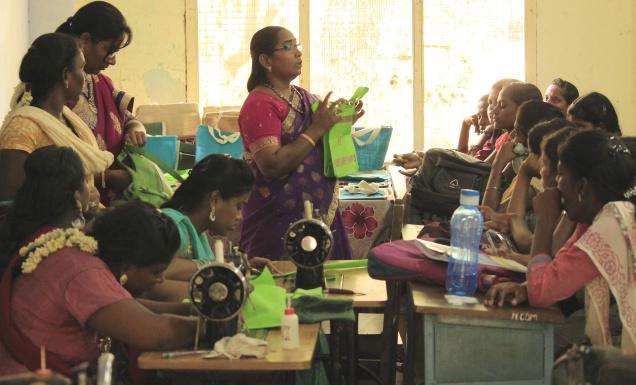
Jute making workshop at Queens Mary's College in the city. Photo: Paul Joshua
Jute making workshop at Queens Mary’s College in the city. Photo: Paul Joshua

Dhanalaxmi teaches jute-bag making and helps student start their own businesses

Over 100 students of Queen Mary’s College learnt the nuances of jute bag-making from Dhanalaxmi, who has been encouraging woman to become entrepreneurs. The owner of IVERS Bags, Dhanalaxmi has been in this business for the past 11years. Five years ago, she started helping others start their own businesses. She has been training self-help groups and NGOs in making and marketing jute bags and jewellery.

“A few years ago, when the IT scene was bad, one couple from the IT industry approached me, asking me to train them in the art. Today, they run a successful jute business,” she said.

In the session conducted at the college, students from corporate secretaryship, sociology, zoology and B.Com departments walked away with certificates presented by Akathar Begum, principal, on successful completion of the workshop.

“These are the bags we have made. Dhanalaxmi ma’am also gave us a kit box with materials to try more designs at home,” said a student showing off a table full of sling bags, pencil pouches and tambulam bags made by her.

Dhanalaxmi is ready to conduct training for groups and individuals . “This is an eco-friendly product and helps reduce the use of plastic. People should make a switch to jute product.”

Dhanalaxmi can be contacted at 92831 35238/98405 33611.

source: http://www.thehindu.com / The Hindu / Home> Features> Downtown / by Flavia Plaidus / Chennai – July 04th, 2015

AMU Scholar awarded ‘Young Scientist Research Fellowship’

DrNuzhatMPOs09jul2015

Aligarh,  UP :

Aligarh Muslim University Scholar, Dr Nuzhat Parveen has received ‘Young Scientist Research Fellowship’ with a research grant of Rs 32, 79,000 awarded by Science and Engineering Research Board (SERB), Ministry of Science and Technology, Govt. of India.

She will work on Nanotoxicology at Cytogenetics and Molecular Toxicology Laboratory, Section of Genetics, Department of Zoology, AMU, Aligarh.

Dr Parveen was awarded PhD and M phill degrees from AMU on topics entitled ‘Mitigation of the genomic instability caused by iron induced free radicals through some antioxidants in vivo’ and ‘Genotoxic effects of anti-malarial drugs on human chromosomes in vitro’ respectively under the supervision of Dr G G H A Shadab, Section of Genetics, Department of Zoology.

Earlier, Dr Parveen was awarded ‘Young Scientist Fellowship,’ by Council of Science and Technology, U P (CST-UP) with a research grant of Rs 10, 80,000.

She has participated in 26 National and International conferences and presented 9 papers (3 oral and 6 posters). She has also attended several workshops and hand-on trainings on several latest aspects related with her research. She has published 13 research papers in the peer-reviewed journals of National and International repute and 5 chapters in book.

Dr Parveen is also a life member of Indian Society of Cell Biology and Indian Science Congress Association.

source: http://www.aapkatimes.com / Aapka Times , News Express of India / by Admin / July 03rd, 2015

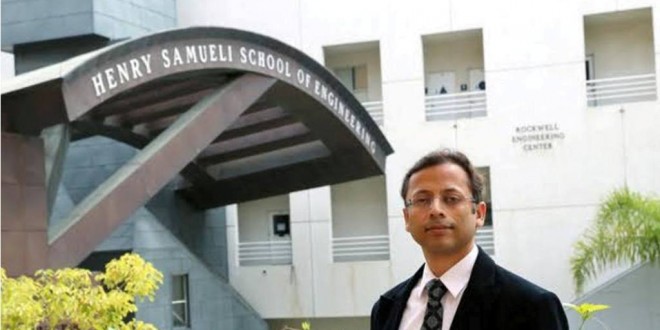
AMU Alumnus Wins Blavatnik National Award for Young Scientists

Alumnus of the Aligarh Muslim University, Syed Ali Jafar wins Blavatnik National Award for Young Scientists

Aligarh, UP:

AMU Alumnus Wins Blavatnik National Award for Young Scientists on 4th July, 2015. An alumnus of the Aligarh Muslim University, Syed Ali Jafar, a computer scientist at the University of California Irvine (UCI), USA, who has changed the world’s understanding of the capacity of wireless networks, has won the 2015 Blavatnik National Award for Young Scientists in physical sciences and engineering. One of the three winners chosen from amongst 300 candidates from highly ranked American universities and research institutions, Jafar will receive a $250,000 unrestricted cash prize and a medal in September at New York’s Museum of Natural History.

“I am incredibly honored and humbled to be recognized on the national stage – from such an amazing cohort of extremely accomplished finalists – by such an illustrious jury of the nation’s most distinguished scientists,” Jafar said. “I am deeply indebted to my brilliant students and collaborators, who are my true miracle workers. It is my hope that this recognition will lead to broader exposure to and appreciation of both the beauty of information theory and the tremendous impact it has on our lives. It’s also a ‘shot in the arm’ for me to continue taking on challenging problems in our research group.”

A professor of electrical engineering & computer science, Jafar explores the fundamental performance limits of wireless communication networks. Determining network capacity – the maximum data rates that can be reliably supported – is the holy grail of network information theory, according to Jafar and others. And with the rapid growth of wireless communication networks, the quest has taken on unprecedented urgency. Jafar’s research group has gained worldwide recognition for its numerous seminal contributions to this topic, including its groundbreaking work on interference alignment in wireless networks. This research found that data rates are not limited by the number of devices sharing the radio frequency spectrum, a discovery that changed the thinking about how wireless networks should be designed.

“Syed Jafar revolutionized our understanding of the capacity limits of wireless networks. He demonstrated that each user in a wireless network can access half the spectrum without interference from other users, regardless of how many are sharing the spectrum,” said one of the judges, Paul Horn, senior vice provost for research at New York University. “This is a truly remarkable result that has a tremendous impact on both information theory and the design of wireless networks.”

Jafar became interested in science in high school. “Einstein’s E=mc2 captured my imagination,” he said. The equation made him wonder about how something so profound could be so simple and beautiful – and it became his lifelong dream to pursue beauty through science. As a graduate student studying information theory at the California Institute of Technology, Jafar found similar elegance in the formula describing the capacity of an information channel. He realized that much about the capacity of communication networks was still unknown and made it his life’s work to solve the mystery.

The Blavatnik National Awards for Young Scientists program, established by the Blavatnik Family Foundation with the guidance of the New York Academy of Sciences, recognizes America’s most innovative and promising young faculty scientists and engineers. The organization’s judges include Nobel laureates, National Academy of Sciences members and National Medal of Science recipients. They select three laureates annually, one each in life sciences, chemistry, and physical sciences & engineering.

Jafar earned a B.Tech. at the Indian Institute of Technology in Delhi, an M.S. at Caltech and a Ph.D. at Stanford University, all in electrical engineering. He’s a fellow of the Institute of Electrical & Electronics Engineers, and he recently received the UCI Academic Senate’s Distinguished Mid-Career Faculty Award for Research. Jafar was also recognized as a Thomson Reuters Highly Cited Researcher and included by ScienceWatch among the World’s Most Influential Scientific Minds in 2014.

Syed Jafar grew up in Aligarh, a city that is home to the Aligarh Muslim University. His father, late Prof. Syed Jafar Raza Zaidi and mother, Dr. Shabnam Zaidi, were both university professors, in the departments of Hindi and English at the AMU, respectively. Syed Jafar finished his secondary school examination at AMU’s STS High School (Minto Circle) in 1991, and the senior secondary exam in 1993. As the University topper in AMU’s senior secondary exam he received the University Gold Medal.

The University of California, Irvine is currently celebrating its 50th anniversary. UCI is the youngest member of the prestigious Association of American Universities. The campus has produced three Nobel laureates and is known for its academic achievement, premier research, innovation and anteater mascot. Led by Chancellor Howard Gillman, UCI has more than 30,000 students and offers 192 degree programs.

source: http://www.educationanalysis.in / Education News & Analysis / Home> Events / Aligarh, U.P. / July 06th, 2015