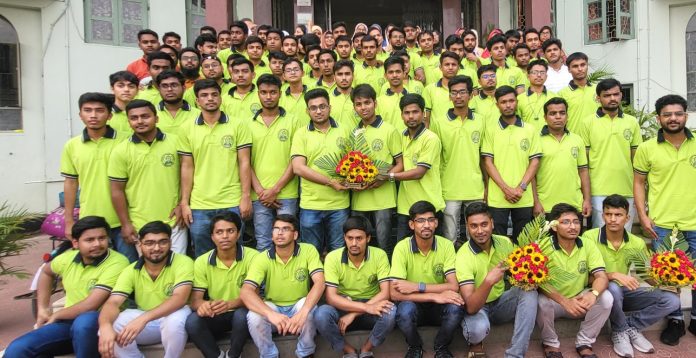
Over 600 students from West Bengal’s Al-Ameen Mission, spanning across 70 branches, achieved remarkable success by excelling in the National Eligibility-cum-Entrance Test (NEET) 2023.
This year’s topper from Al-Ameen is Ariful Haque, who achieved a score of 682 out of 720 in the NEET examination. He secured a rank of 1339 at the All India level.
Among the girls, Suhana Sultwa emerged as the topper, securing a score of 675 out of 720 in the examination. She obtained a rank of 2260 at the All India level.
A total of 494 boys, accounting for 79% of the qualified candidates, and 132 girls, making up 21% of the qualified candidates, have successfully passed the examination this year.
As per Al-Ameen’s data, out of the successful candidates, 27% (167 students) belong to poor and below-poverty line (BPL) families, 35% (218 students) come from the lower-middle-income group, and 38% (241 students) are from the middle and upper-middle-income group.
In the previous year, more than 500 students from Al-Ameen Coaching Academy successfully cleared the NEET examination and secured admissions into different medical colleges.
Al-Ameen Mission, established by M. Nurul Islam, is a renowned organization based in Howrah, West Bengal. It has an impressive track record of producing more than 3500 doctors (MBBS & BDS) and 3000 engineers, along with numerous researchers, administrative officers, teachers, and professors.
Operating across 20 districts in West Bengal, Al-Ameen Mission runs 70 coaching institutes. It provides education to approximately 17,000 residential students and employs a dedicated team of over 3000 teachers and non-teaching staff. The primary campus of Al-Ameen Mission is located in the Howrah district of West Bengal, specifically at Khalatpur (Udaynarayanpur).
source: http://www.muslimmirror.com / Muslim Mirror / Home> Education> Indian Muslim> Positive Story / by Muslim Mirror Staff / June 18th, 2023
The AMU student, Sami Saud, said that by capturing ECG readings remotely, the device wirelessly transmits the data to a cloud-based platform.
Aligarh:
In a novel development, Sami Saud, a final-year M.Tech. student at the Department of Computer Engineering, Aligarh Muslim University (AMU) has developed a portable single lead ECG device as a part of his dissertation.
Sami, who is working on his dissertation under the supervision of Prof. M. Sarosh Umar, worked on the device in collaboration with the industry expert, Arif Shouqi from Google.
He said that the device promises to transform the landscape of remote cardiac healthcare with accuracy records, boasting an awe-inspiring 99 per cent precision compared to traditional medical-grade ECG machines.
“The gadget demonstrates the immense potential of computer engineering in tackling real-world challenges and the functionality of this groundbreaking device is both ingenious and straightforward,” he said.
Sami said that by capturing ECG readings remotely, the device wirelessly transmits the data to a cloud-based platform. On this digital frontier, advanced machine learning algorithms work tirelessly to classify heart conditions and predict the likelihood of heart attacks based on the acquired data. Early detection and proactive management of cardiac issues are now within reach.
Sleek, Portable Design
The portable ECG device embodies usability and convenience, and with its sleek and portable design, it adapts seamlessly to any healthcare environment, making it a versatile asset for hospitals and home monitoring. Through the wireless Bluetooth connectivity, users can access their ECG results in real-time on their mobile or laptop devices. Sustainability and cost-effectiveness have been embedded into the very fabric of this groundbreaking invention.
The device’s rechargeable capability eliminates the need for wasteful disposable batteries, while its impressive 9-day battery life ensures extended usage without constant recharging.
This achievement underscores the transformative power of computer engineering in addressing critical challenges in the medical domain.
Sami’s father, Saud Saghir, is also an alumnus of Aligarh Muslim University.
source: http://www.ummid.com / Ummid.com / Home> Science & Technology / by IANS / June 13th, 2023
Ayesha had started preparing for the UPSC in her 12th grade, when a professor spotted her as a potential candidate. He made a case for it to her and her parents and convinced them.
Mumbai: Anjuman-I-Islam President, Dr Zahir I. Kazi felicitates Sayyed M. Hussain (Alumni – A.I’s Allana Jr. College of Science & Commerce, CST) All India ranking 570 and Kazi Ayesha Ibrahim, All India ranking 586, for successfully qualifying UPSC Exam 2023, at Anjuman-I-Islam’s Ahmed Zakaria Hall, CST, in Mumbai on Friday, 26 May 2023. (Photo by Bhushan Koyande)
Mumbai:
Two success stories coming out of the UPSC exams this year, Kazi Ayesha Ibrahim (rank 586) and Sayyed M Hussain (rank 570) have broken through the stereotypes and have emerged as a hope and inspiration for their community.
Ayesha had started preparing for the UPSC in her 12th grade, when a professor spotted her as a potential candidate. He made a case for it to her and her parents and convinced them.
Then came the years-long struggle, starting in 2017. “It takes a lot of hard work, there’s no doubt about that. But it is possible to study for 15 to 16 hours a day. I’ve done it,” said Ayesha.
Despite being a Muslim woman and stereotyped at every turn, she stuck to her books, using the disadvantages her way to study more and get better.
“My parents have always emphasised gaining knowledge. And there is no better match for gaining knowledge than the UPSC, with the diverse subjects we have to learn,” she said.
“What happens to girls is that many of them have a lack of exposure. All my sources of information were only from books,” said Ayesha.
Ayesha also lost the support of her institute after the prelims due to a change in administration, leaving her to study alone in the confines of her home, without any outside guidance.
She will be attempting the UPSC exam again, hoping to get a rank fit to get her into the Indian Foreign Services (IFS). In the meantime, she will accept the post she is offered.
After the results were released on Tuesday, Ayesha was felicitated for the achievement along with Hussain at an event organised by the Anjuman-I-Islami, of which Hussain is a former student.
Hussain, too, has a long history of struggle that ended in his scoring the 570th rank. He got through the prelims exam four times, only to fail in the main exam. He was fifth time lucky.
“It was very difficult at first. I repeated my mistakes,” he said. “Then I started teaching others for the exam, making some money so I could support myself and my family. That helped me.”
The son of a dock worker, who earns ₹18,000 a month, he said, “I’ve seen my dad struggle in the hot sun for 18 hours a day, so I found my situation easy.”
The journey was a lot more emotionally fraught for him than financial, dissuading him with every failure. But he persevered. “I am satisfied with my results, but now that I’ve gotten so much love from so many people, I wish I’d studied a little more.”
Hussain recounts a story of a call he received from a fellow resident of his area, Dongri, resounding with hope that he too could pass the exams after a few failures. His success has inspired the community.
source: http://www.hindustantimes.com / Hindustan Tims / Home> Cities> Mumbai News / by HT Correspondent / May 27th, 2023
A minor planet in the solar system, which earlier bore just the number 5718 CD4, has now been named after Kollam based scientist, Dr Sainudeen Pattazhy, reports Ramesh Babu.
Pattazhy was surprised when a representative of the Jet Propulsion Laboratory, run by the space agency NASA, telephoned him on Wednesday evening. “I’m not a space scientist and initially thought someone was pulling my leg,” he told Hindustan Times. “But the official explained that my name was chosen after going through my research papers.”
Pattazhy, who teaches zoology at a local college, has carried out pioneering research on many environment related issues such as the phenomenon of ‘red rain’ —which occurred in Kerala in 2001—the control of mosquitoes, the eco biology of ‘sacred groves’, and the health hazards posed by mobile phone towers.
Pattazhy’s suggestions on the health hazards posed by mobile towers are still pending with the Union Ministry of Environment. According to him, the radiation would affect people residing within 300 metres of the towers.
The minor planet — to be henceforth known as ‘5718 Pattazhy’ — was discovered by US-based space scientist Dr R Rajmohan in 1989. There are around 400,000 ‘minor planets’ or asteroids in the solar system, of which 185,685 have well defined orbits and have been allotted numbers by the International Astronomical Union (IAU). Around 14,000 of them have been given names.
“It seems the discoverer of the planet forwarded my name after going through my work,” said Pattazhy, adding that he had no idea why he was chosen.
source: http://www.hindustantimes.com / Hindustan Times / Home> India News / by Ramesh Babu, Thiruvananthapuram (headline edited) / May 02nd, 2008
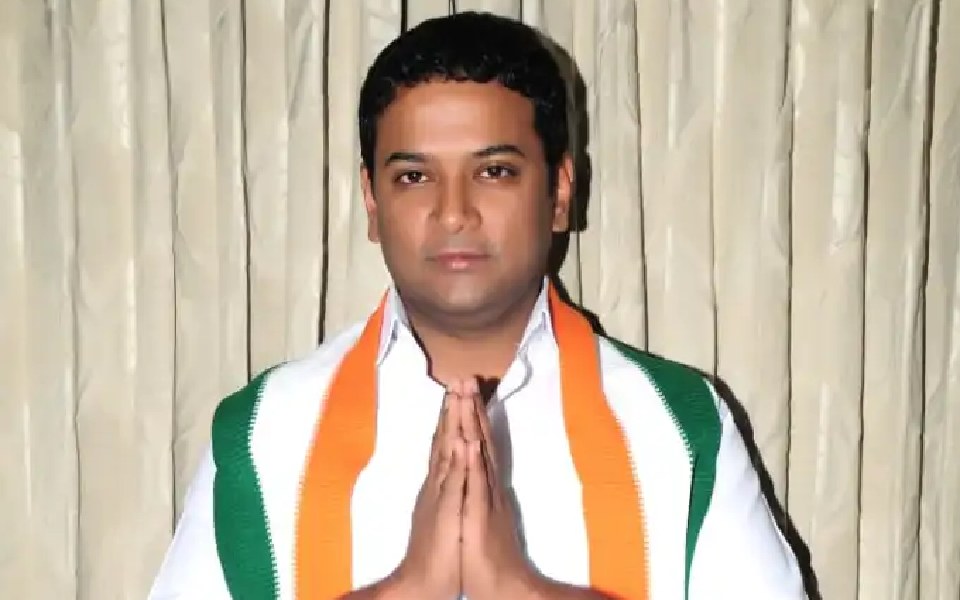
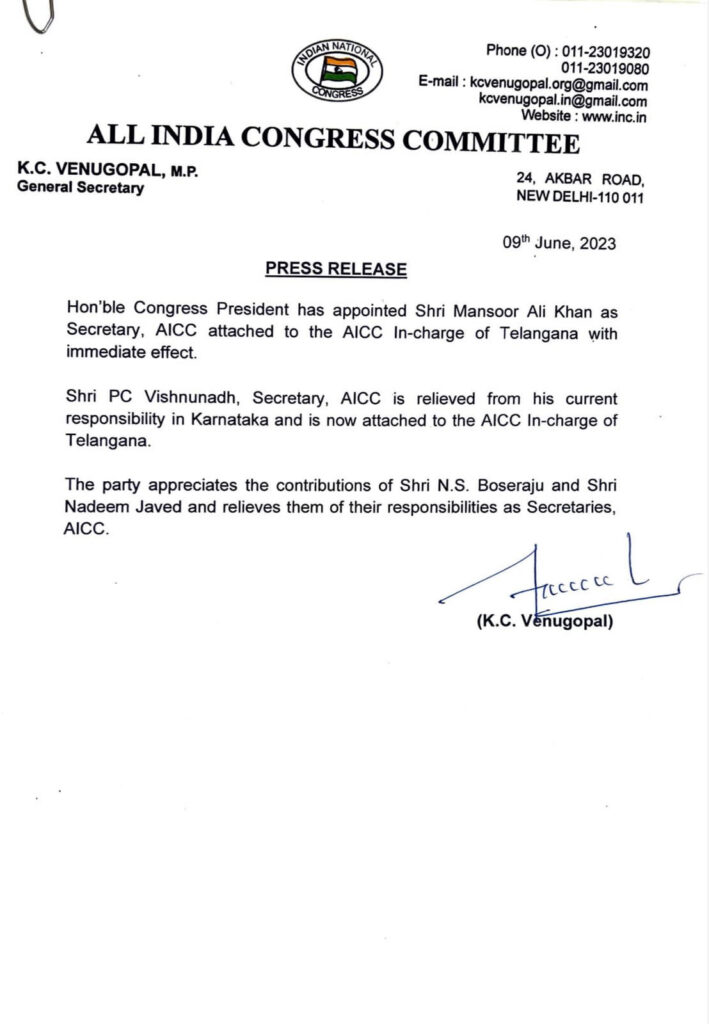
In a significant development, Congress President Mallikarjun Kharge has appointed Mansoor Ali Khan as the Secretary of the All India Congress Committee (AICC) attached to the AICC In-charge of Telangana.
The appointment is effective immediately, according to the release.
Simultaneously, PC Vishnunadh, who previously served as the Secretary of AICC in Karnataka, has been relieved from his current responsibilities and has now been attached to the AICC In-charge of Telangana.
While relieving, both N.S Boseraju and Nadeem Javed from their responsibilities as Secretaries, AICC, The All India Congress Committee appreciated contributions of both the leader during their tenure as Secretaries of AICC.
source: http://www.english.varthabharati.in / Vartha Bharati / Home> India / by Vartha Bharati / June 09th, 2023
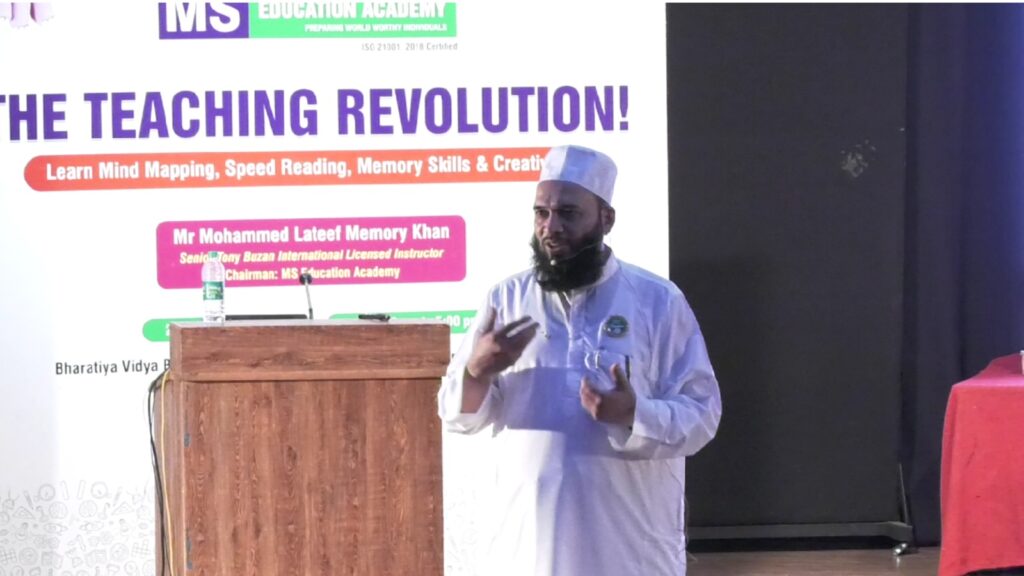
Renowned expert Mohammad Lateef Khan, Chairman of MS Education Academy, conducted the training sessions.
MS workshop
Hyderabad:
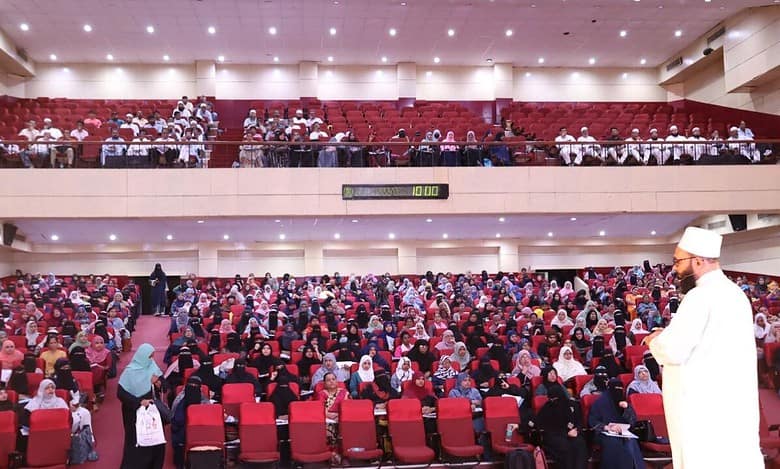
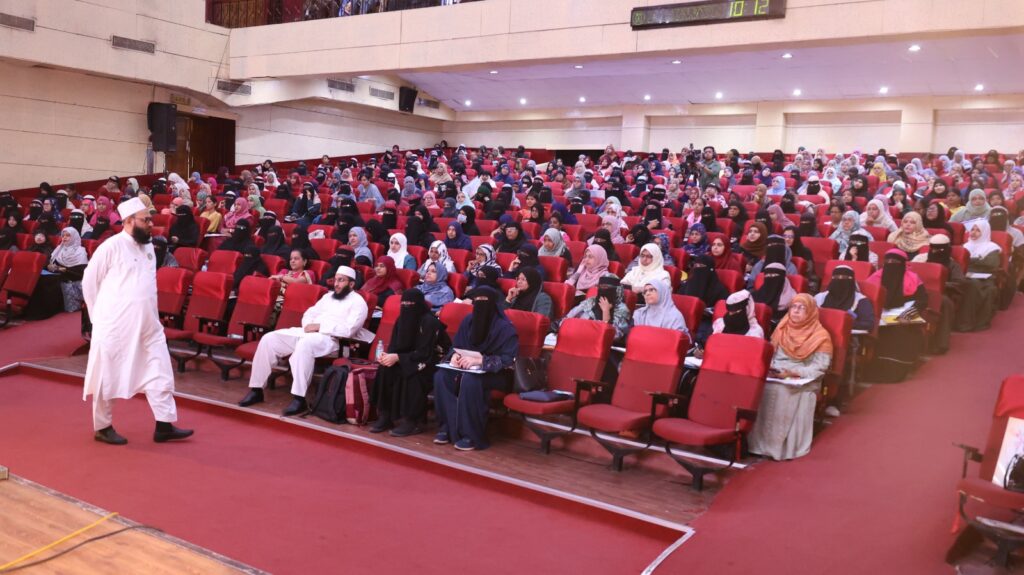
MS Education Academy organises a three-day workshop on mind mapping, memory skills, and speed reading for 650 teachers at Bharatiya Vidya Bhavan. Renowned expert Mohammad Lateef Khan, Chairman of MS Education Academy, conducted the training sessions. Khan, who received formal training from Tony Buzan, a world-renowned expert in mind mapping and memory management, is one of the few licensed instructors in Tony Buzan Mind Mapping, Memory Skills, and Speed Reading.
Following the completion of the workshop, Khan expressed confidence in transferring these techniques to the students after equipping the teachers with enhanced mental abilities. He highlighted the rarity of the skills being taught, emphasizing the changing world and the importance of utilizing the brain effectively in the era of artificial intelligence.
Khan shared his gratitude for the opportunity to provide this training to teachers, mentioning his extensive travel and coursework to acquire knowledge in mind mapping, memory skills, speed reading, and creativity. His goal is to impart these opportunities to the entire MS staff across all schools, ultimately benefiting all MS students.
The three-day workshop was designed to engage participants throughout the day. Initially, the staff members were unaware of what they would learn, but their interest and energy levels increased as the workshop progressed. Khan noted their enthusiasm, suggesting that they were eager to apply their newfound knowledge to enhance the mental abilities of the students. He emphasized the importance of thinking in defining an individual’s identity and expressed the desire for students to develop higher thinking skills and excel in facing new challenges. Khan highlighted the need for organized teaching and a comprehensive curriculum to achieve these goals.
With gratitude to Allah, Khan mentioned the development of a comprehensive curriculum on memory skills and mind mapping within MS Education Academy. He expressed optimism that this curriculum would lead to improved academic results and extraordinary achievements among students.
Lateef Khan expressed his appreciation for the rare acquisition and training of these skills, acknowledging the conferred title of “Memory Khan” by the Indian Islamic Cultural Centre (IICC) on November 26, 2017. The title and certificate were awarded to Khan by the chief guest, Suresh Parbhane, Union Minister for Commerce and Industry, at the conclusion of a week-long memory workshop at the Indian Islamic Cultural Centre.
The workshop concluded with the participants enriched and inspired to apply their learnings in the classroom, fostering an environment of enhanced mental abilities and academic excellence among MS Education Academy students.
source: http://www.siasat.com / The Siasat Daily / Home> News> Hyderabad / by Zahed Farooqui / June 06th, 2023
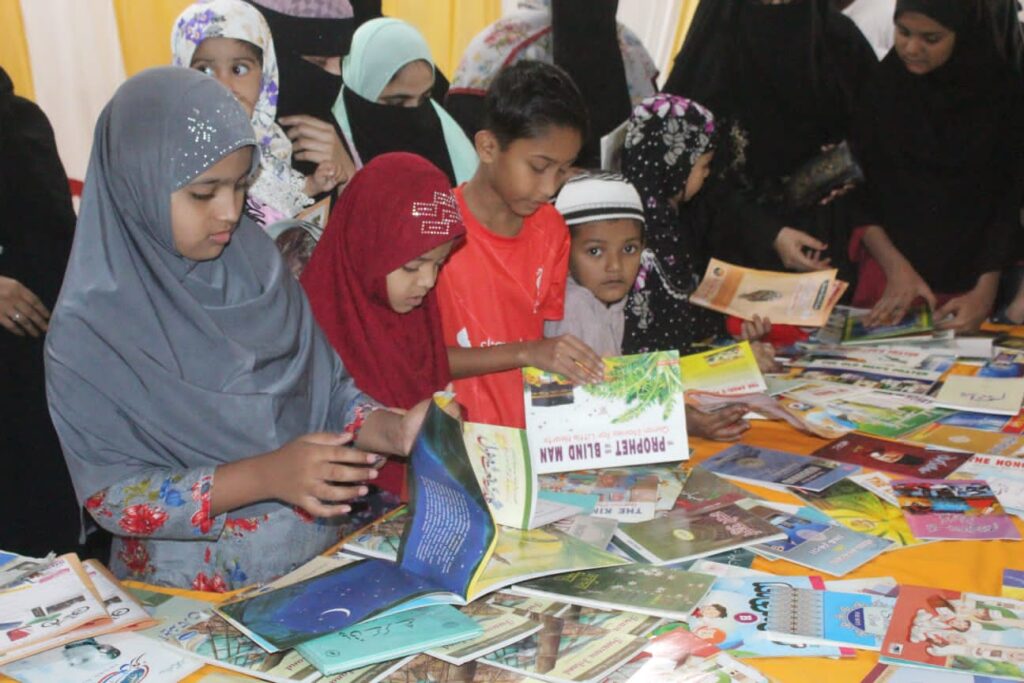
Books have been Maryam’s passion ever since she learnt to read. She turned her passion into a mission of starting a library for children with the books from her own collection.
Two years ago, Maryam had amassed nearly 150 books of her own when she started her very first library in the balcony of their home in Baijipura called Dr APJ Abdul Kalaam Library.
How it began
It was during the lockdown, with no school or homework to occupy her time, that she noticed many idle children in her neighborhood. Inspired by this observation, Maryam approached her father, Mirza Abdul Qayyum, who runs the popular bookstore called Mirza World Book House.
The first library in the balcony of Maryam’s house
Mirza, being an avid reader himself, readily agreed to support his daughter’s idea. Mirza is also affiliated with the Read and Learn Foundation (RLF), a movement dedicated to promoting reading habits, particularly among children. Starting a library for children aligned perfectly with the foundation’s objectives.
Thus, Maryam and her father gathered around 300 books, including donations, and set up the first library named Dr APJ Abdul Kalam Library, located in the balcony of their home in Baijipura. The library inauguration was attended by local children, and from that day forward, they began visiting the library, borrowing books, and returning them within a week.
More libraries for more children
The library was a hit and soon Maryam and her father were thinking of starting another library in another locality. Thus, the second library was started under the aegis of RLF in Rahemaniya colony with another 300 books. Here also the response was good.
Seeing the enthusiasm of the little girls and boys, Maryam resolved to have more libraries and her father assured her that he would support her. Maryam wanted to reach out to the children dwelling in slums. Her aim was to have at least 10 libraries for that year.
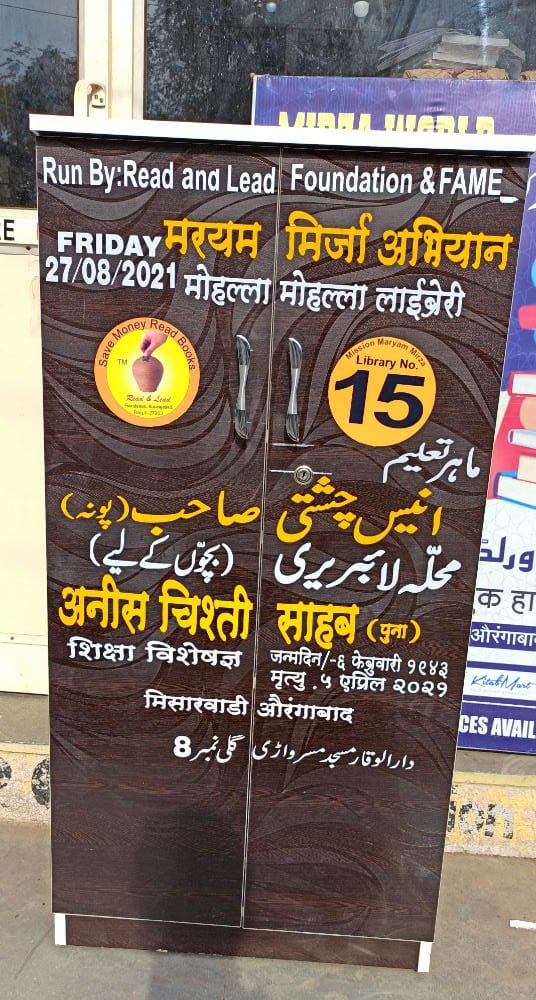
Supporting her were her elder sisters too who, like, were students in college. Maryam started collecting funds from the people to set up the Mohalla libraries. The neighbours and other donors began contributing with small amounts and with each Rs.5000/- collected, Maryam purchased a cupboard, books and some stationery to maintain the records of the library.
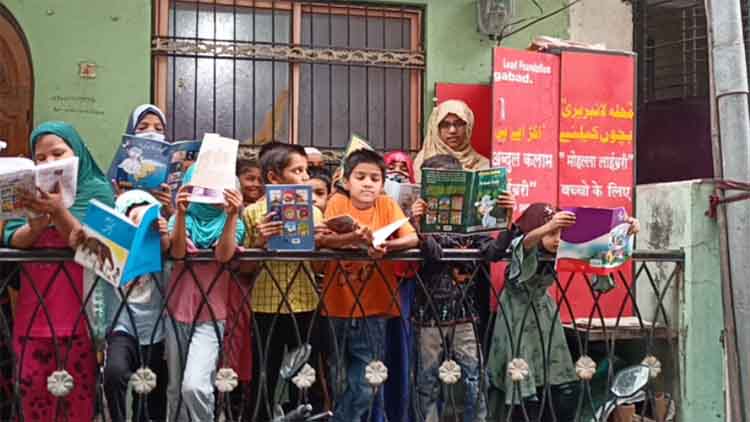
Some of the places where the libraries have been set up are the anganwadi centre of the mohalla, a place in the school yard, a mosque, or a room in the house of a generous well-wisher. In a span of 14 months Maryam had 31 libraries functioning including one in her own school.
“In some localities we needed to put in more work”, shared Maryam with Twocircles.net. “Sometimes the people of the locality were not very responsive to the idea of having a library. They did not see any use to having a mohalla library. We motivated them by explaining the importance of reading and how it develops the personality of their children”.
While in some areas the people were very cooperative, they offered space to run the library and even offered cool drinking water to the children who come to read in the library.
Managing the libraries
There are nearly 30 children who are involved in the day-to-day functioning of the libraries in different Mohallas. The library is open for an hour daily in the evenings offering books in English, Hindi, Urdu, and Marathi.
There are books of general knowledge, adventure stories, and biographies of historical figures.
“The USP (unique selling proposition/ point) of these libraries is that Urdu and Marathi – the two regional languages are getting readers, apart from encouraging the reading habit in children.” Says Maryam’s father, Mirza Abdul Qayyum Nadvi
felicitated by her school teachers
The children take their responsibilities seriously, ensuring that borrowed books are returned on time and in good condition. Their dedication has impressed not only the adults but also the neighbors, who sometimes assist the children in maintaining the libraries. Additionally, Maryam and her father conduct awareness campaigns on various topics such as educating girls and eradicating child labor.
Maryam aims to establish 50 libraries by the end of 2023. The mohalla libraries are named after Urdu writers, poets and other well-known personalities. Some libraries are named after the parents of the generous donors who sponsor a complete library.
Her efforts have inspired similar initiatives in other towns surrounding Aurangabad, such as Jalna, Beed, Jalgaon, and Ahmednagar.
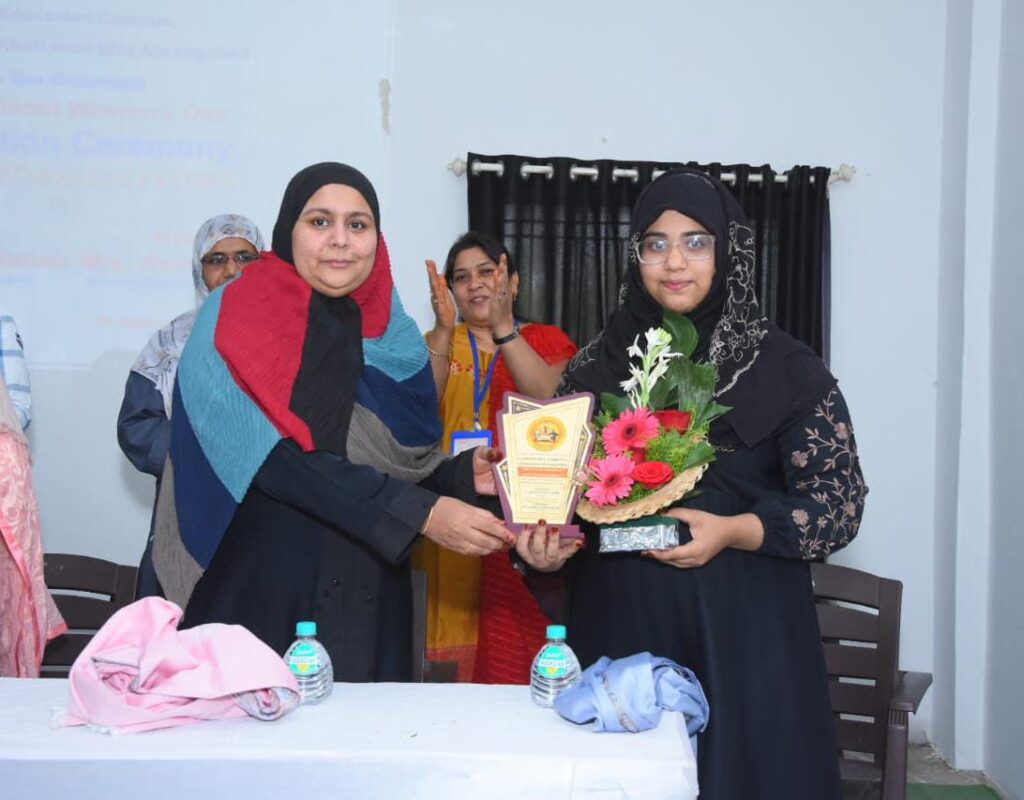
Receiving the FAME Award in Aurangabad
Recognition and awards
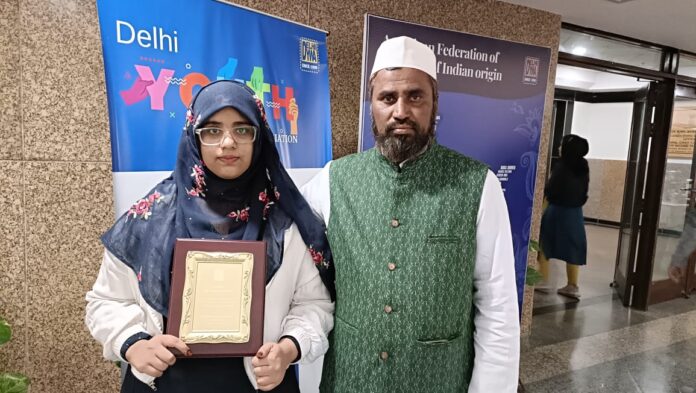
Maryam’s remarkable achievements have not gone unnoticed. In 2022, she was honored by the American Federation of Muslims Indian (AFMI) Origin, The award was presented to her in New Delhi at the hands of the former Lieutenant Governor of Delhi, Najeeb Jung.
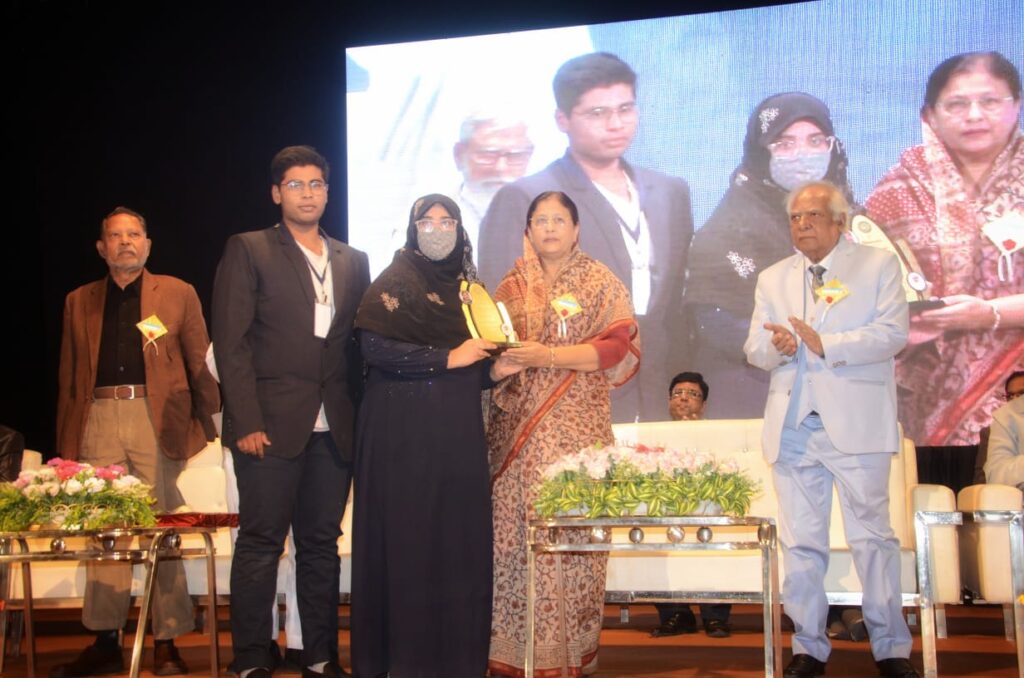
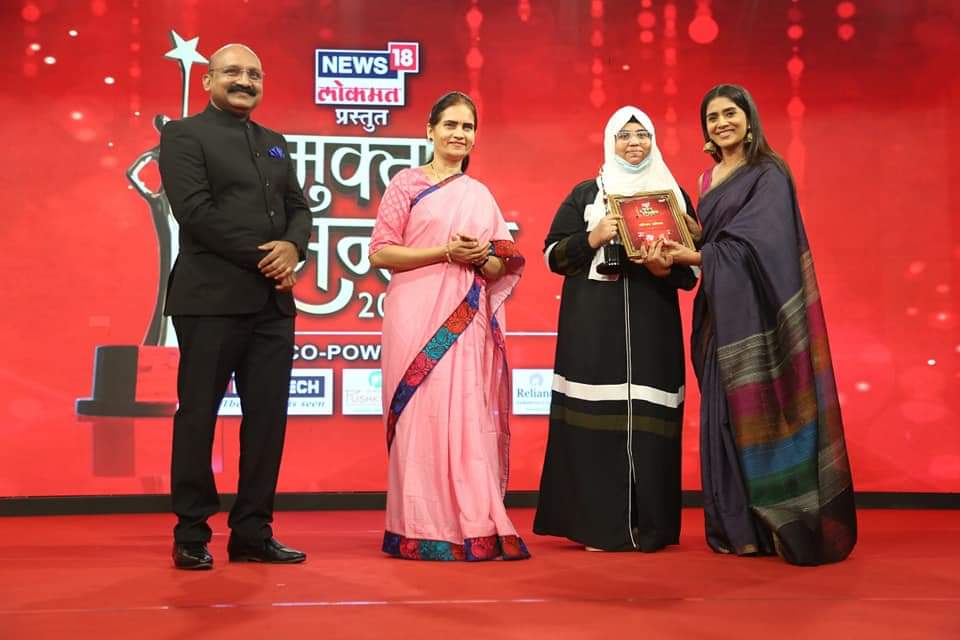
In May 2023, she received the Mukta Samman from News 18 Lokmat in Mumbai.
At the awards ceremony Maryam quoted Safdar Hashmi’s poem ‘Kitabein’ to a thundering applause.
Receiving the Mukta samman award in Mumbai
Despite the recognition and accolades, Maryam remains grounded, acknowledging that her father’s bookstore has greatly benefited from her library project, as most of the books are purchased from there.
Looking ahead, Maryam aspires to become a neurosurgeon. Her favourite books are the Harry Potter series. And when she is not reading, she likes drawing and colouring.
source: http://www.twocircles.net / TwoCircles.net / Home> Children / by Nikhat Fatima, TwoCircles.net / May 31st, 2023
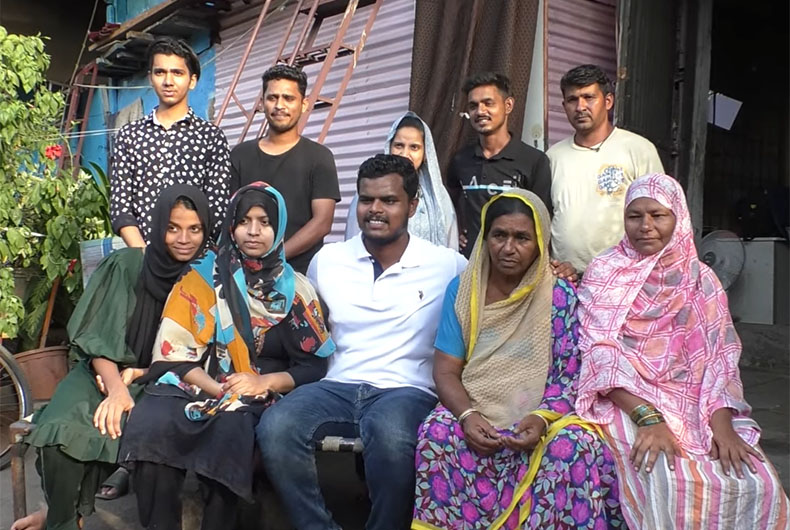
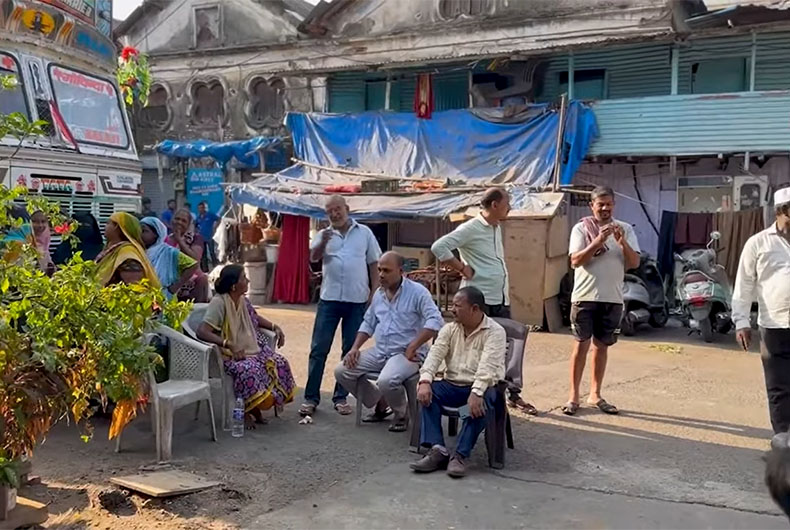
Syed Mohammed Husain lives at the Wadi Bunder slums in Mumbai with his extended family, which includes his maternal grandmother, parents, elder brothers, and their wives and children.
UPSC Civil Services 2022 Toppers:
A total of 04 students of Haj Committee of India (HCoI) Coaching Centre, including Mumbai Dock worker’s son Sayed Mohammed Husain, have cleared the 2022 UPSC Civil Services Exams the result of which was declared Tuesday.
Syed Mohammed Husain lives at the Wadi Bunder slums in Mumbai with his extended family, which includes his maternal grandmother, parents, elder brothers, and their wives and children.
Hussain’s father started as a labourer loading and unloading goods from trucks at the dockyard and went on to become a supervisor. Tuesday however brought the family the moment they were waiting for since the last five years.
It was when Husain cleared the UPSC 2022 Civil Services exams in his 5th attempt and secured 570th rank.
“The last failure really broke me. I spent a lot of time in a mosque contemplating about my situation and came out resolved to give it another shot,” Hussain said while talking to reporters after his success in the coveted Civil Services exams.
Road to Civil Services
Syed Husain obtained school education till 7th at Khoja Isna Asheri Jamaat School in Dongri, and later took admission in St Joseph High School to clear SSC board exams. After completing graduation in Commerce from Mumbai’s Elphinstone College, he started preparing for the civil services exams.
Besides taking help from various coaching classes in Pune and Delhi, Husain is also a beneficiary of the Haj Committee of India Residential Coaching Centre.
Others from HCoI Civil Services Coaching Classes who cleared this year’s Civil Services exams are Qazi Ayesha Ibrahim (Rank 586), Taskeen Khan (Rank 736) and Md Burhan Zaman (Rank 768).
Ayesha Qazi
In total contrast to Husain, Ayesha Qazi is a daughter of a businessman, and belongs to a well to do family residing in Kalwa, Thane area of Mumbai Suburbs.
Ayesha completed her SSC from JVM New English School and later passed HSC exams from Abdullah Patel Junior College, Mumbra. She started preparing for the Civil Services Exams in 2019 after graduation in Arts from Joshi Bedekar College, Thane.
The UPSC announced the final result of Civil Services Exams Tuesday, and recommended a total of 933 candidates from different parts of India for IAS, IPS, IFS, IRS and other Civil Services Posts.
Among the 933 candidates who cleared this year’s CSE a total of 30 are Muslims.
source: http://www.ummid.com / Ummid.com / Home> India> Education & Career / Zohair M. Safwan, ummid.com / May 24th, 2023
The list is topped by Waseem Ahmad Bhat who secured AIR 7.
UPSC
The Union Public Service Commission (UPSC) today declared the results of the Civil Services Examination (CSE) 2022. In the list of top 10 UPSC toppers, one Muslim candidate has secured a place.
Out of the total 933 candidates who have made it to the final list, a significant number of 29 candidates belong to the Muslim community.
The top three ranks in the UPSC CSE 2022 have been secured by talented women. Ishita Kishore has emerged as the topper, followed by Garima Lohia in the second position and Uma Harithi N in the third position.
Following is the list of UPSC CSE 2022 Muslim toppers:
Waseem Ahmad Bhat (All India Rank-7)
Naveed Ahsan Bhat (AIR-84)
Asad Zuber (AIR-86)
Aamir Khan (AIR-154)
Ruhani (AIR-159)
Ayasha Fatima (AIR-184)
Shaik Habeebulla (AIR-189)
Zufishan Haque (AIR-193)
Manan Bhat (AIR-231)
Aakip Khan (AIR-268)
Moin Ahamd (AIR-296)
Mohammad Idul Ahmed (AIR-298)
Arshad Muhammed (AIR-350)
Rashida Khatoon (AIR-354)
Aiman Rizwan (AIR-398)
Mohamed Riswin (AIR-441)
Mohd Irfan (AIR-476)
Sayed Mohammed Husain (AIR-570)
Qazi Ayesha Ibrahim (AIR-586)
Muhammed Afzel (AIR-599)
S Mohammed Yakub (AIR-612)
Mohd Shada (AIR-642)
Taskeen Khan (AIR-736)
Mohammed Siddiq Shariff (AIR-745)
Akhila B S (AIR-760)
Md Burhan Zaman (AIR-768)
Fathima Haris (AIR-774)
Iram Choudhary (AIR-852)
Sherin Shahana T K (AIR-913)
The journey to becoming a successful UPSC CSE candidate begins with the preliminary examination. Held on June 5, 2022, the preliminary exam acts as a screening test, enabling candidates to proceed to the subsequent stages of the selection process. The results of the preliminary examination were announced on June 22, paving the way for qualified candidates to move forward.
The main examination, conducted from September 16 to 25, represents the second stage of the UPSC CSE. This stage comprises a comprehensive written examination that tests candidates’ knowledge and understanding of various subjects.
Following the evaluation of the main examination papers, the results were declared on December 6. Candidates who successfully cleared the main examination became eligible for the final stage – the interview round.
After the interview process, which concluded on May 18, the Union Public Service Commission has finally released the highly awaited final results of the Civil Services Examination 2022 today.
This year, a total of 933 candidates have made it to the final list. As usual, most of the UPSC toppers are likely to opt for IAS. The list can be viewed on the official website of UPSC (click here).
source: http://www.siasat.com / The Siasat Daily / Home> News> India / by News Desk / May 23rd, 2023
Earlier, Mohammed Faizan Ahmed and Mohammed Haris Sumair, who secured All India Rank 58 and 270, respectively were also students of MS IAS Academy.
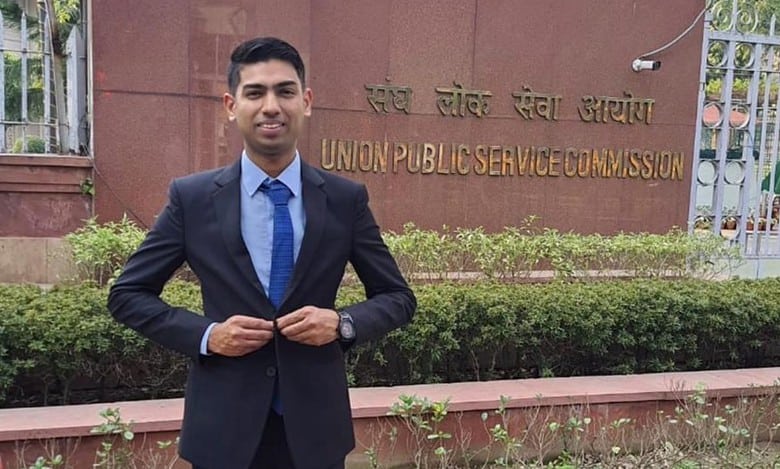
The Union Public Service Commission (UPSC) today announced the Civil Services Examination (CSE) 2022 results. Among the successful candidates, Mohammed Burhan Zaman, a student of MS IAS Academy, has achieved an All India Rank (AIR) of 768.
Mohammed Burhan Zaman who hails from Kolkata is the third student of MS IAS Academy who cleared the UPSC civil service examination in the past three years.
Stages in UPSC CSE 2022
The Civil Services Examination is one of the most challenging and prestigious competitive exams in India. It consists of multiple stages, and candidates need to excel in each phase to secure a coveted position in the civil services.
The journey began with the preliminary examination held on June 5, 2022. Serving as a screening test, the preliminary exam determines the eligibility of candidates to proceed to the subsequent stages of the selection process. The results of the preliminary examination were declared on June 22, opening the doors for qualified candidates to move forward.
The main examination, conducted from September 16 to 25, forms the second stage of the UPSC CSE. It comprises a comprehensive written examination that evaluates candidates’ knowledge and understanding of various subjects.
After the evaluation of the main examination papers, the results were announced on December 6. Candidates who successfully cleared the main examination became eligible for the final stage – the interview round.
Following the interview process, which concluded on May 18, the Union Public Service Commission has finally released the final results of the Civil Services Examination 2022 today. This year, a total of 933 candidates have made it to the final list. Among these candidates, Mohammed Burhan Zaman from MS IAS Academy has secured a place in the final merit list.
MS IAS Academy’s performance
It is worth noting that MS IAS Academy has consistently produced successful candidates in the UPSC CSE in recent years. In the 2022 examination, nine students from the academy passed the preliminary exam. Out of these, three students successfully cleared the main examination and progressed to the interview stage. Among them, Mohammed Burhan Zaman secured a position in the final merit list.
On this momentous occasion, Mohammed Lateef Khan, the Chairman of MS Education Academy expressed his happiness.
Earlier, Mohammed Faizan Ahmed and Mohammed Haris Sumair, who secured All India Rank 58 and 270, respectively were also students of MS IAS Academy. Both of them have been selected for the Indian Administrative Service (IAS)
source: http://www.siasat.com / The Siasat Daily / Home> News> India / by News Desk / May 23rd, 2023