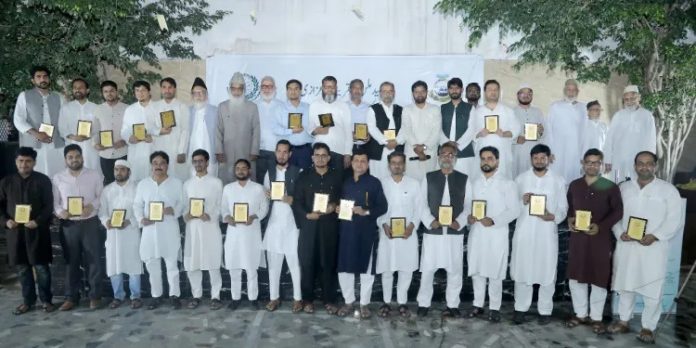
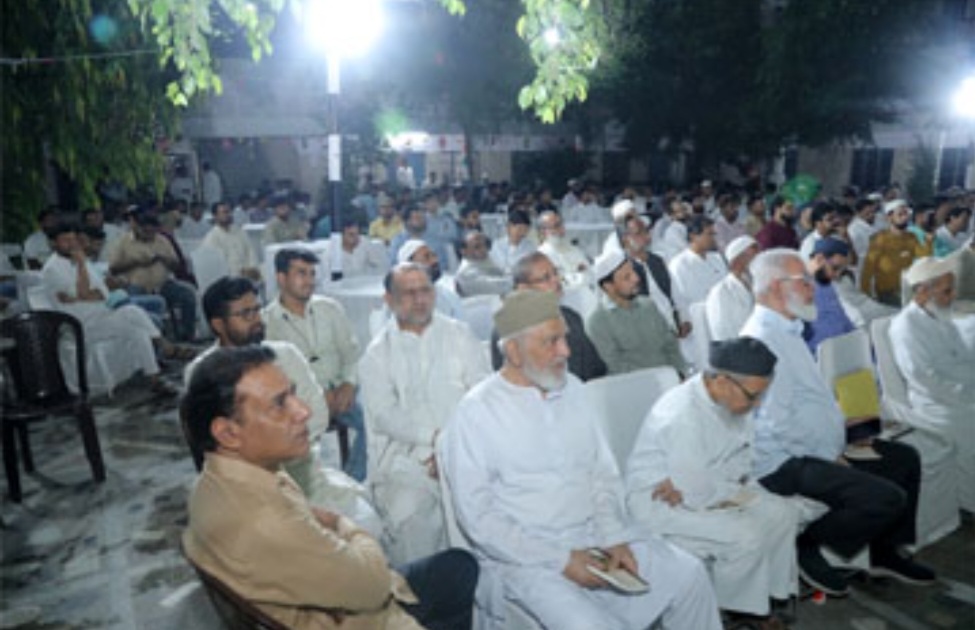
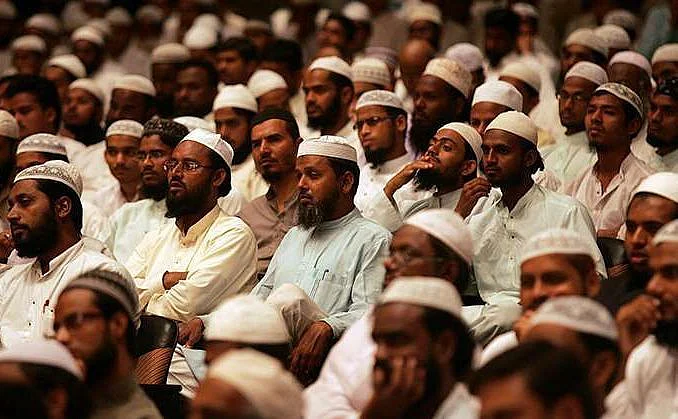
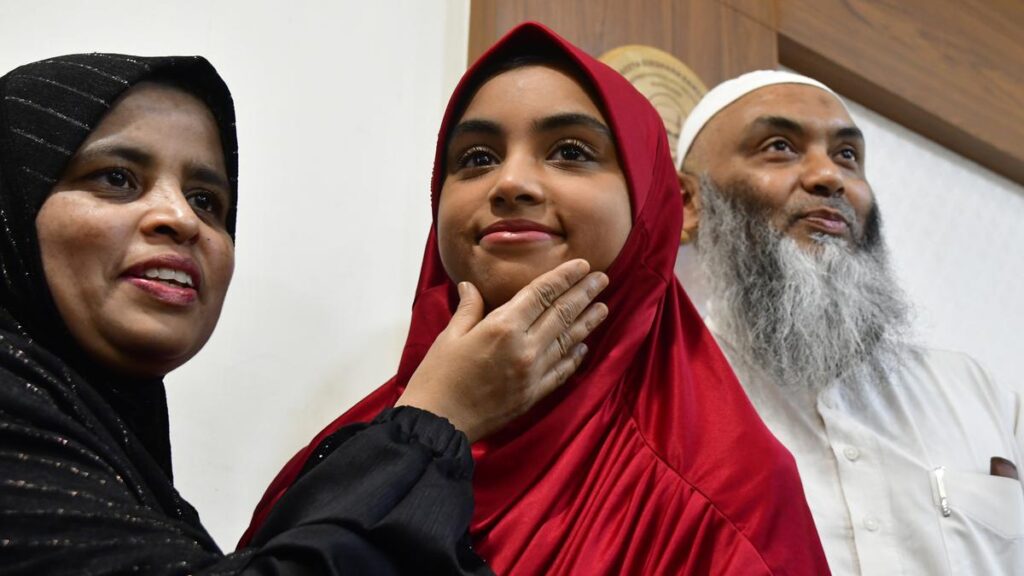
Dozens of alumni of Jamiatul Falah, one of the South Asia’s finest institutions of Islamic studies, were felicitated in New Delhi on Sunday for obtaining PhD from prestigious universities in different streams, smashing the perception and prejudices built around the institution of madrasa.
The speakers enlightened the general public about the contributions made by the institution in inculcating religious teachings and moral regeneration among the students.
The distinguishing feature of the graduates of the Jamia is that they maintain good relations with each other, keep in touch in a systematic manner and always strive for the welfare of the Jamia, said Maulana Muhammad Tahir Madani, the renowned Islamic scholar and Nazim of Jamiatul Falah while addressing the gathering on the occasion.
He said that Jamiat al-Falah is not just the name of an educational institution or a center or an educational institution but it is an educational movement from which many generations have benefited and this process continues.
Jamia alumni are our brand ambassadors and the university has paid special attention to women’s education so that they can play an important role in the formation of a righteous society, he added.
The secretary of the Delhi unit Old Boys Association Mohammad Ershad Alam Falahi said that Jamiatul Falah was established by a group of dedicated scholars to promote knowledge and achieve greater goals for the common good. He compared the effort to the process of creating new clothes by using old fabric, letter by letter.
Rafat Kamal Fallahi, the President of the unit, thanked the audience and appreciated the Association for presenting the accomplishments of the Delhi Unit and discussing future plans. He assured everyone that the Old Boys Association would continue to extend its support in the progress and development of the community.
Asim Akram (Abbu Adeem) Falahi’s book, ‘Quran, Saransh Hindi Ek Taarak,’ was also released during the event.
source: http://www.muslimmirror.com / Muslim Mirror / Home> Education> Indian Muslim > Positive Story / by Muslim Mirror Special Correspondent / May 07th, 2023
Green Valley National School and PU College, Shiroor has scored 100% result for the 11th consecutive year in ICSE Grade X Exams with an outstanding performance taking the school performance to a higher level.
Out of 63 students all the students have registered good results 100% pass and first class in all subjects. 20 students have secured High Distinction and 43 students have secured High first Classes.
MARIAM INAYATULLAH is a topper scoring 472 (94.4%). SOHAIL AHAMED ANWAR scored 470 (94%) and come second. MOHAMMED SAOUD secured the third position with 466 (93.2%).
While continuing the tradition of excellence and 100% results, students have secured an all-time record in high first class.
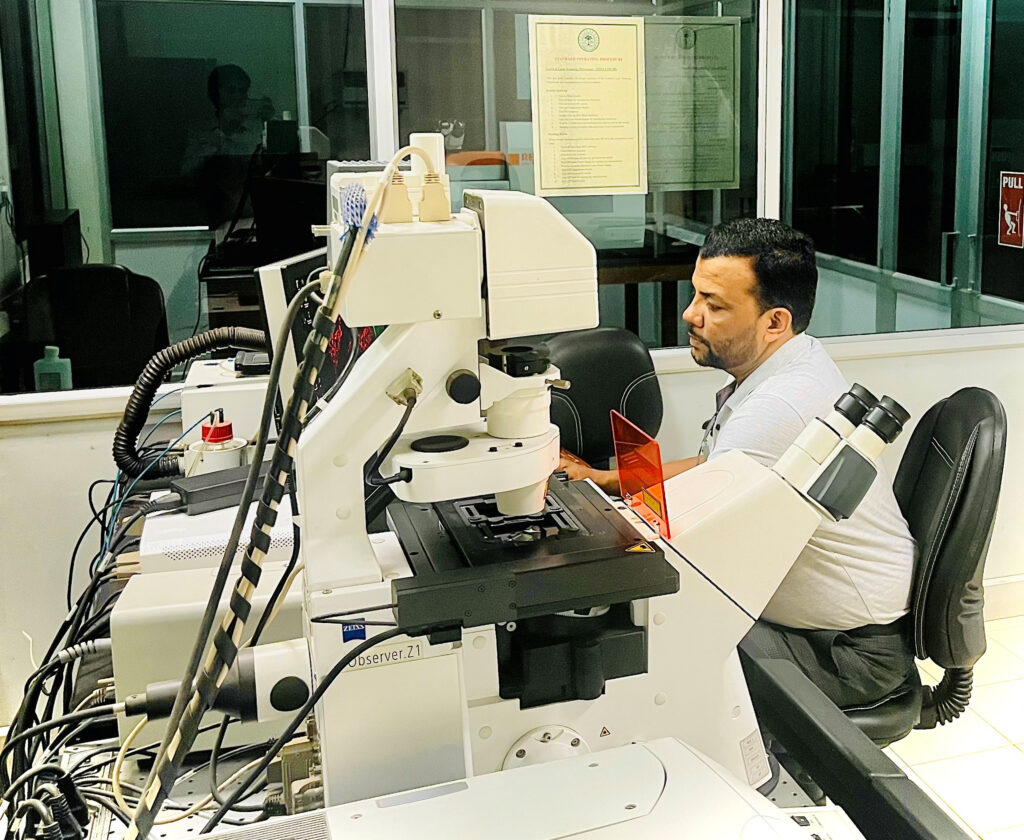
In a big breakthrough in the field of cancer prevention, Dr Hifzur Rahman Siddique, Department of Zoology, Aligarh Muslim University, in coordination with Dr. Keigo Machida, University of South California, USA, has discovered a common mechanism that activates disruption of a single RNA binding protein, MSI-2 binding to mRNAs of the cancer-causing proteins and significantly reduces the synthesis and accumulation of these proteins, reducing HCV infection and proliferation. The single RNA binding protein (named MSI-2) helps to accumulate multiple cancer-causing proteins in patients and helps to proliferate Hepatitis C Virus to promote liver cancer.
Dr. Siddique and the team who have identified this protein by analyzing the liver tissues of 374 liver cancer patients, said, “As we know, alcohol and cholesterol-rich high-fat diet and hepatitis infection promotes cancer initiation, but the exact molecular mechanism is unknown. In this research work, we have discovered that MSI-2 protein helps to accumulate multiple cancer-causing proteins and supports HCV proliferation to aggravate the disease.”
Dr Siddique said that Liver hyperplasia is also reduced in the animal model predisposed to viral infection fed with alcohol mixed cholesterol-rich high-fat diet. This is a very exciting discovery and could serve as a potential therapeutic target for the drug design and give direction to the management strategy for this deadly disease.
“The study has been recently published in Cell Death Discovery (April 2023, available at www.nature.com/cddiscovery),” he added.
Dr Siddique and his team had earlier discovered the molecular pathway that promotes the abnormal division of Cancer Stem Cells that are responsible for cancer therapy failure and Cancer reappearance/recurrence. Their study was then published in the prestigious journal Nature Communications 11 (2020) and found a place in different national and international dailies.
He said that the liver is considered the powerhouse of the body and due to the change in lifestyle, chronic alcohol consumption, high-fat diet, and hepatitis virus infection, the incidence of liver cancer is increasing fast. More than 350 million people are currently infected with hepatitis viruses, out of which 70 million are infected with Hepatitis C. It is estimated that approximately 40 million people are chronically infected with Hepatitis B and 6-12 million people with Hepatitis C. The situation worsens when Hepatitis infection occurs in an alcoholic person.
He said that the discovery is significant in the treatment of liver cancer as blocking the identified protein has an immense effect on liver cancer in the animal model and also stops the accumulation of the number of human cancer-causing proteins, the proliferation of hepatitis viruses and improving recovery.
Dr Siddique has been working on Cancer Stem Cells for a decade and has established a dedicated lab to initiate pioneer research on Cancer Stem Cells at AMU with a team of 10 researchers and collaborators from the USA, Russia, China, the UK, India, etc.
Recently, he got a Patent for his herbal formulation to prevent liver cancer and expecting some extramural grant from the Government of India for further clinical research.
source: http://www.amu.ac.in / Aligarh Muslim University – AMU / Home> AMU News / by Public Relations Office / May 01st, 2023
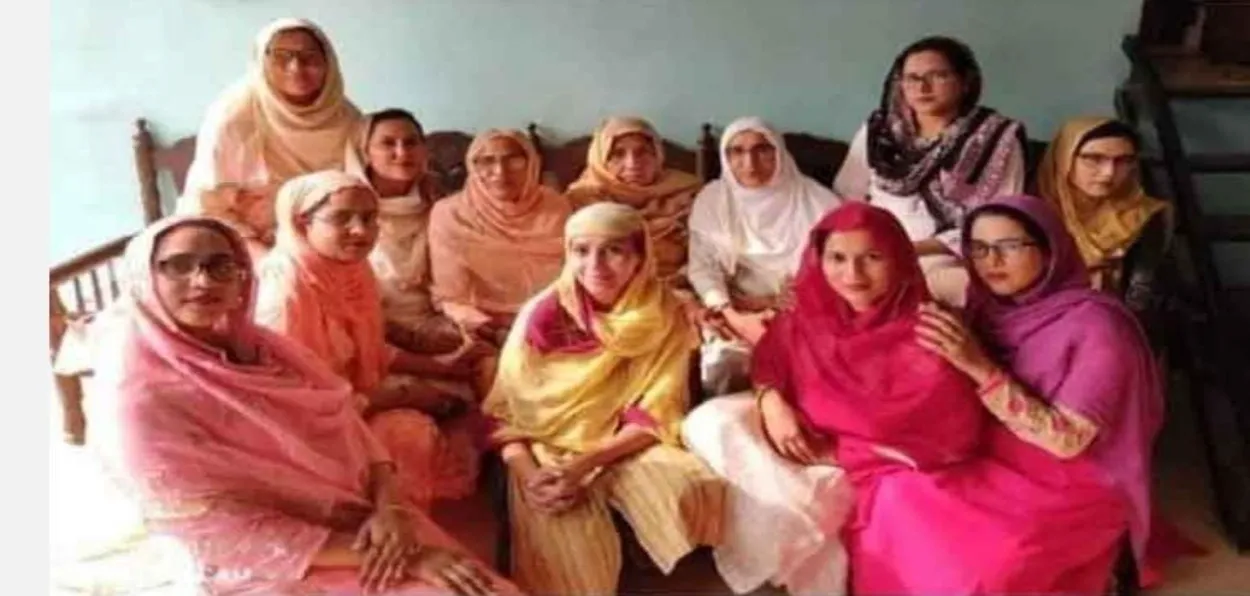
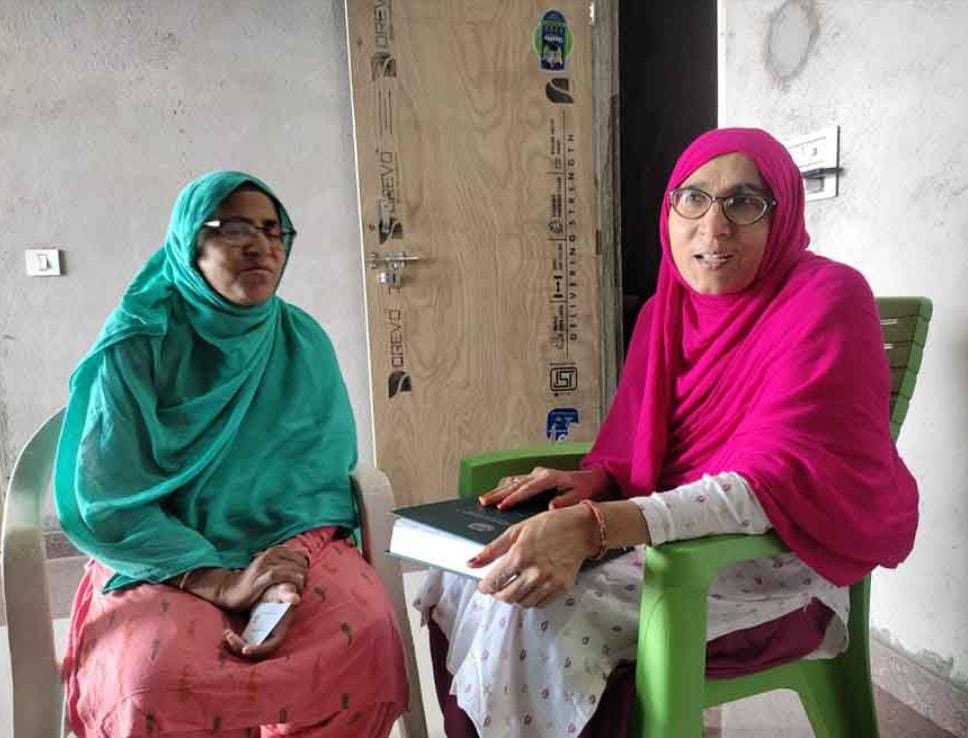
When I met Shabnam and her elder sister Nafisa after a flight of 37 steps of a half-built high-rise building on the Nuh-Tawadu road, I couldn’t gauge the high spirits of these two women, their nine sisters, and late father Niyaz Khan in our brief meeting.
Niyaz Khan, a former revenue officer in the Punjab Waqf Board, has left this world, but he is remembered for bringing about the change in the mindset of Muslims in Nuh through his act of giving a good education to all his 11 daughters.
Not only he educated his daughters but 8 of them became teachers and are carrying on the mission of spreading education in one of the most backward areas of India.
In a conversation with Awaz-The Voice, Shabnam says, “I and my sisters who are teachers make efforts to ensure that girl students in our respective schools do not give up on their studies midway and drop out of school. We also make extra efforts to see that besides retaining the numbers, more girls are enrolled in the school.”
Shabnam says that to retain girl students they call the parents of students to school to make them aware of the importance of education.
Shabnam, who worked in an NGO for a long time before joining the government school, says, “Due to my experience with an NGO, I face lesser difficulties in this job (retaining girl students in school) in comparison to other sisters. My experience of working on child education in an NGO is helping me.”
She says that increasing the number of students helps in upgrading schools. Shabnam is now TGT i.e. Trained Graduate Teacher in Rithoda vuillage. The primary school where she worked earlier has since been converted into a middle school.
Shabnam and Nafisa
Shabnam’s elder sister Nafisa says that many parents come to consult her and all her teacher-siblings. They ask them how to ensure a good future for their daughters. “Many times strangers stop them at the bus stand for paying compliments and telling us that they want their daughters to be like us.”
Nuh remains one of the most backward districts of Haryana, where women are struggling to rise amidst diehard patriarchy, old-fashioned thoughts, rampant illiteracy, and a lack of basic facilities. The dropout rate of girl students is the highest in the state.
Although there are many schools and colleges in Nuh, it has no university and women must go outside for higher education.
Asif Ali Chandaini, General Secretary of Mewat Vikas Manch, says, about 70 to 80 percent of the population of the district survives by doing petty and menial jobs. In such a situation, parents have financial constrains, and safety of daughters as issues in their minds while deciding on educating their daughters. In the end they prefer to keep their girls at home.
Defying such conservative traditions in the decade of nineties, Niyaz Khan decided to send his daughters for higher education.
Nafisa, the eldest of the sisters, who spoke with Awaz-the voice said their father had a transferable job. As long as the family was living outside Mewat, he did not face any problems in educating his daughters. However, after he met with an accident, took voluntary retirement and shifted permanently to Nuh in 1993, he faced stiff opposition to sending his daughters to colleges and universities.
Her father was a resident of Chandaini village, about four kilometers from Nuh. The people there are progressive and clear about the aware of education.
Praising her father and grandfather, Shabnam says, “Both were very great people. Dada (paternal grandfather) never stopped us from going to college and school. In the nineties, when the environment was worse than what you see today, he not only continued to give higher education to his daughters but also sent them out of Nuh for studies.”
Shabnam has also studied law; her husband is a practicing advocate in Sohna.
Despite the regressive environment around them, Niyaz Khan’s eight daughters became teachers. They are employed in government schools. Shabnam says teaching was their choice.
Shabnam has five children. One of her daughters has a Master’s degree in Fine Arts from Banaras. Her other children are also into masters and other higher education courses.
Nafisa’s elder son is pursuing a Ph.D. in Physics.
Shabnam and Nafisa say that they care least about others’ opinions when it comes to their children’s education. “Our children are moving forward by choosing their careers. We are only supporting them,” they said almost in unison.
According to Nafisa, the children of the younger sisters are also pursuing education at different levels.
She tells that things are changing for Mewati Muslims on the education of girls. However, the change is quite slow.
Nafisa says that there is a trend of girls dropping out after fifth or eighth standard and being sitting at home.
Many parents prefer to send their daughters to Maktab, local Madrasa, instead of sending them to school.
Shabnam’s disciple Mohammad Rafiq, who has done his Ph.D. on the topic of Mewat’s female Sarpanch, says that the picture of Mewat can change if the authorities present these eleven sisters as ‘role models’.
The 11 sisters becoming the face of women’s education and empowerment can bring down the dropout rate significantly. However, both the sisters do not agree on this.
They feel the thrust on women’s education has to begin from their homes of Muslims.”Everything cannot be left to the government; the politicians of Mewat have to show willpower,” Shabnam says.
She said once she invited the local politicians to a meeting of Urdu teachers, but none of them came. She also this was the most discouraging since most of them are her relatives.
Despite this, they do not show any special seriousness towards education.
Niyaz Khans’s daughters:
Nafisa: JBT & B.Ed, Govt Teacher
Shabnam: MA, LLB, JBT, government teacher
Afsana: JBT, MA, B.Ed.
Farhana: JBT, MA, B.Ed. government teacher
Shahnaz: JBT, MA, B.Ed teacher in private school
Ishrat: B.A
Nusrat: Lecturer in JBT, MA, MEd and employed in a Polytechnic
Ana: JBT, MA B.Ed, Govt Teacher
Razia: MBA and working in private sector
Nazia: Diploma in Architecture, works in private sector
Bushra: MA, B.Ed
source: http://www.awazthevoice.in / Awaz, The Voice / Home> Stories / by Malick Asghar Hashmi / May 04th, 2023
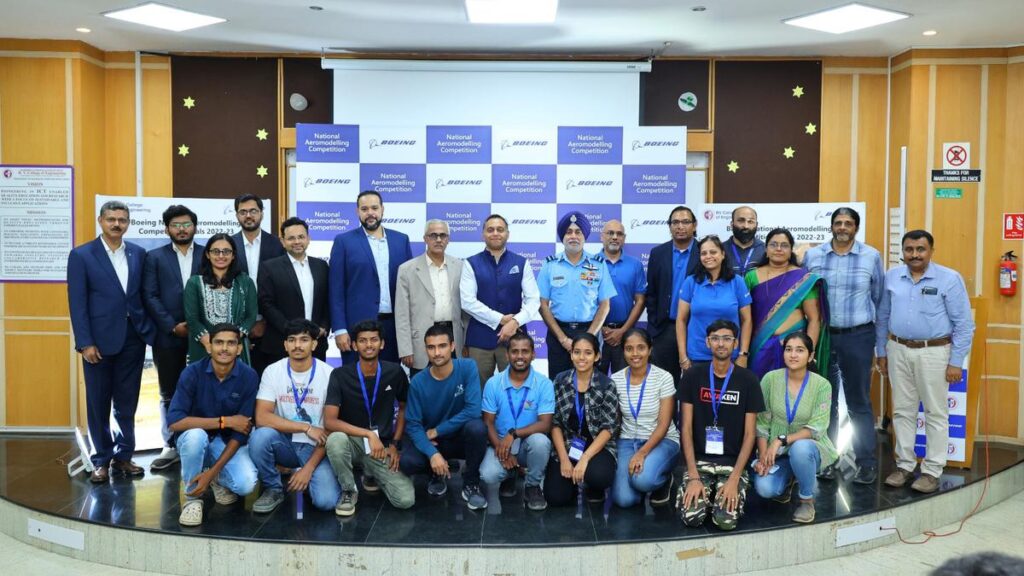
Winners of the 2023 Boeing National Aeromodelling Competition. 39 finalists from 12 teams were selected for the finale, which was held at R.V. College of Engineering in Bengaluru.
Bengaluru:
This year’s competition attracted close to 2,200 students across India.
Boeing announced the winners of the 8th annual Boeing National Aeromodelling Competition in India, on May 3.
This year’s competition attracted close to 2,200 students across India, and saw a two-fold increase in participation across zonal and national rounds. 39 finalists from 12 teams were selected for the finale, held at R.V. College of Engineering in Bengaluru.
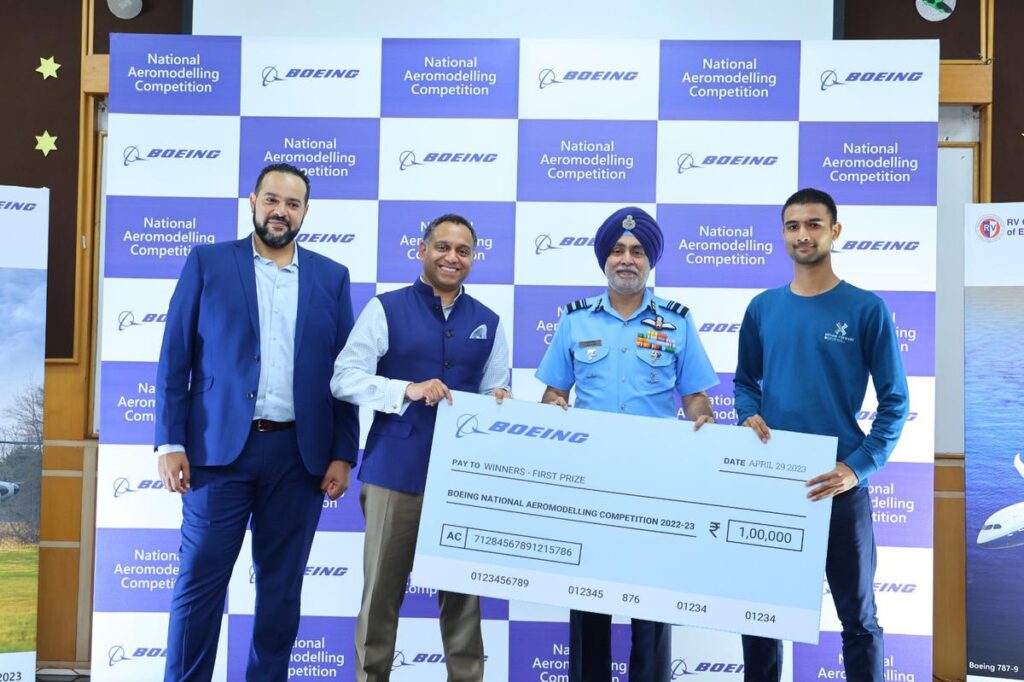
Arshad Khan (right) from Rabindranath Tagore University, Bhopal won the 2023 Boeing National Aeromodelling Competition. The finale was held in Bengaluru
Arshad Khan from Rabindranath Tagore University, Bhopal was declared winner of the competition.
Sharanya Acharya Nishmithe, Aman Kumar Srivastav and Gagan G. Nayak from Nitte Mahalinga Adyanthaya Memorial Institute of Technology (NMAMIT), Nitte, Karnataka bagged the second spot
Divyamshu, Rathan Raj K. Nancy and Anantha Krishna, also from NMAMIT-Nitte, took the third spot.
The zonal rounds of the competition were held at IIT Kanpur, IIT Bombay, IIT Kharagpur, and IIT Madras. The top three teams from each zone then travelled to Bengaluru for the finale.
The competition started as an annual event in 2013 to provide a nationwide platform for students who have a keen interest in aerospace engineering and related fields. The competition allows them to demonstrate their skills and creativity in designing, building, and flying fixed-wing aircraft models of different types and sizes.
Salil Gupte, president, Boeing India, said, “This national aeromodelling competition provides an excellent platform for young aviation and technology enthusiasts to present their creativity, and engineering and design skills. It is a testament to our commitment to encourage engineering talent to pursue careers in aerospace and defence in India.”
Ahmed Elsherbini, managing director, Boeing India Engineering & Technology Center, and chief engineer, Boeing India, said, “Aeromodelling competition plays a crucial role in the aerospace sector. It brings fresh perspectives, new ideas, and a willingness to challenge conventional thinking. With the aerospace industry constantly evolving, student innovation can be a driving force in the development of new technologies and sustainable solutions.”
Over the years, Boeing has strategically invested in developing talent for the aerospace sector in India.
Its programs, including Boeing University Innovation Leadership Development (BUILD) Program, the Boeing HorizonX India Innovation Challenge, and the Accelerated Aircraft Maintenance Engineers (AME) Apprenticeship program, have all helped empower entrepreneurs and contributed to building a skilled frontline workforce for India.
source: http://www.thehindu.com / The Hindu / Home> News> Cities> Bengaluru / by The Hindu Bureau / May 03rd, 2023
Mishkat Noor said she studied for five-six hours while preparing for UPMSP matric exams 2023. Photo Credit: TV9
Mishkat Noor is a student of Canossa Convent Girls Inter College, Ayodhya. Thanking god, she gave credit for her success to her parents. Her father is a teacher at a madrasa.
New Delhi:
The UP Board today declared UPMSP Class 10 and 12 results 2023 and also released list of toppers for both the classes. Priyanshi Soni has topped UPMSP matric exam 2023 with a score of 590 out of 600 marks. Two students have secured the second position with 587 marks. Their percentage comes out to be 97.83 per cent. The name of those two students are Kushagra Pandey and Mishkat Noor.
Mishkat Noor is a student of Canossa Convent Girls Inter College, Ayodhya. Thanking god, she gave credit for her success to her parents. Her father is a teacher at a madrasa.
She said she studied for five-six hours while preparing for UPMSP matric exams 2023. However, even after attaining such good marks, Mishkat is not satisfied with her result. She said she could have scored more marks had she not made a mistake which cost her two marks. Talking to media, Mishkat said she wanted to become a doctor.
The toppers of UP Board will be awarded cash prize and a laptop. They will receive a cash prize of Rs 1 lakh, as per reports. Uttar Pradesh Chief Minister Yogi Adityanath congratulated students on clearing the board exams and wished them luck for their better future.
Top 10 toppers at state level and district level will be honoured at the district level, the chief minister said in his tweet.
This year, more than 31 lakh students sat for UPMSP matric exam 2023. The overall pass percentage for Class 10 stands at 89.78 per cent and that recorded among girls is 93.34 per cent.
Students who are not satisfied with their UP Board result 2023 can apply for scrutiny on the official website of the UPMSP at upmsp.edu.in. The UPMSP will re-evaluate sheets of those who apply for scrutiny and check if any question remained unchecked.
Those who have failed in or two subjects will be able to apply for compartment exam to pass Class 10 or 12 in which they studied. They will be issued revised marksheet if they clear their compartment exam.
source: http://www.news9live.com / News9Live.com/ Home> by Education & Career / by Nikhal Jha / April 25th, 2023
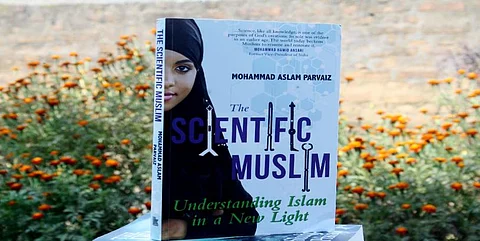
Wealth of Muslim community and government spending on the rituals of Islam for centuries would have been better utilized for establishing universities and technical and research institutes.
Title: The Scientific Muslim: Understanding Islam in a New Light
Author: Mohammad Aslam Parvaiz
Publishers: Konark Publishers
Pages: 184
Price: Rs 595
These are undoubtedly troubled times for India. Never before were the minorities, Muslims in particular, made to face such vicious communal hostility. The Hindu rightwing is at its aggressive best, combining facts with fiction to attack almost everything Muslims hold dear – their prayers, festivals, dress, even cuisine. Muslims are constantly provoked. If they respond even verbally, they face more wrath. It could not have been worse.
Hats off to Mohammad Aslam Parvaiz for coming out with his book on the problems Islam faces now. No, this is not a book about how to deal with Hindutva forces; far from it. A man of science, Parvaiz complains that Muslims across the world have jettisoned Islam’s true nature by sticking to parts of the Quran while ignoring much of what it says on how one must lead one’s life.
As a student of spirituality, I am convinced that the book will make waves in India and much of the Islamic world.
Ignoring Quran
The Quran, the author says, tells people how to lead a peaceful and meaningful life. While it asks those who read it to understand and explore nature, these intellectual pursuits are almost missing in those who claim the Quran to be their guidebook.
Parvaiz moans that Muslims born in Muslim households are taught to ‘read’ Quran without understanding it. Over the last many centuries, Muslim society has cherry-picked certain verses of Quran as binding on them. These include five-time prayers, fasting during Ramzan, offering ‘zakat’ and making a pilgrimage to Mecca. The Quran, he says, is much more. By deserting the Quran, “we ‘Muslims’ have deserted Islam”.
This is the main reason the Muslim society seems to have turned its back to scientific principles in which it once excelled, giving a tough competition to Europe. A sizeable section of Muslims even feels that contemporary education churns out atheists. The result? Ignorance about Quranic teachings coupled with limited ‘religiosity’ has led to the curriculum which is followed in most madrasas today.
In the process, Muslims are widely misunderstood by others. Non-Muslims think a Muslim must be one who sports a beard and a skull cap, goes to a mosque to pray five times a day and slaughters animals to eat. But these are visible symbols. Parvaiz contends that the one who follows the guidance given in the Quran and grooms himself accordingly is alone a true Muslim.
Also, some Muslim rulers had a knack of not tolerating any criticism about themselves or their religious beliefs. Consequently, wars and persistent battles rendered the once-prized academic atmosphere unfavourable.
Based on the Quran, Muslims must draw a road map for acquiring knowledge in every sphere and put it to the service of humanity. Parvaiz details what all the Quran says for human betterment. For instance, it underlines that one must meet his needs judiciously and avoid extravagance. As long as the Muslim followed the divine way, they ruled over the world and promoted justice, equity, peace and public welfare. When they began to neglect the Quranic system, it led to their disgrace and humiliation.
Islamic decline
Unfortunately, Muslims are at present unable to understand or act on the Quran. According to the author, the wealth of the Muslim community and government spending on the rituals of Islam for centuries would have been better utilized for establishing universities and technical and research institutes.
The absence of these is a key reason for the decline of Muslims as a productive part of the society or country where they live. “Their love for wealth, progeny and glory have made them indifferent to patronizing knowledge… It is time that we transcend sectarianism and shed false notions about our understanding of Islam and our intellectualism.”
According to the author, one reason why Muslims were hooked to a ritualistic lifestyle is because of the birth of a plethora of confusing and contradicting literature based on different sects that began to flourish. Slowly, Islam began to get diluted.
Also, some Muslim rulers had a knack of not tolerating any criticism about themselves or their religious beliefs. Consequently, wars and persistent battles rendered the once-prized academic atmosphere unfavourable. Muslim mobs in 1857 plundered the library of Delhi College, tearing apart books on English and science; Arabic and Persian books were looted.
Parvaiz without doubt has complete faith in the Quran. Yet he tears to shreds those who he feels are following it selectively, ignoring all that it has said about how to be in tune with Divine creations. “Soulless rituals cannot provide any food for thought. These may arouse our sentiments. Yet they cannot produce those Muslims who may lead communities of the world.”
He goes on: “Today, Muslim localities are notorious for their filth and rubbish. We throw all rubbish outside our homes and shops. The drainage system is rotten. We encroach upon roads, making life difficult for everyone. We erect all sorts of barriers on roads. We generate various forms of disorder. The industrial smoke coming out of small- scale work units in every house and alley adversely affect the entire atmosphere. All this amounts to disobeying God’s commands.” (It is another matter that much of what the author says about Muslim neighbourhoods can be said to be true for areas populated by other communities in India too.)
Way forward
Parvaiz explains what needs to be done. “Water, air, earth and all that is inside the planet are God’s signs. As Muslims we should not even think of disrespecting or destroying these signs.” His complaint is not directed at one section or country of Muslims. “No group, community or country of Muslims has ever prepared its progress model which is in accordance with the Quranic principles of justice, equity and selfless service.”
God, he says, has subjected everything to His laws. Indeed, all creatures who abide by divine commands can be called believers. Lip service and verbal claims alone will not and cannot help Muslims discharge their duty towards God. In real life, humans who are blessed by God seek to hold and hoard resources provided to them. Ownership and monopoly, he warns, are satanic concepts.
Parvaiz feels that the time has come to free Muslim educational agenda from religious and sectarian bias. Muslims should welcome all beneficial branches of knowledge. Character development has to be encouraged. One needs to train and produce Muslims who will follow Islam in full and not confine it to only a mosque or prayers.
“Islam will be their guide and mentor in every activity of life. This is the Muslim community which lost its way one thousand years ago.”
Non-Muslims too must read this eye-opener of a book as much as Muslims.
(The reviewer is a veteran journalist and author)
(Published under an arrangement with South Asia Monitor)
source: http://www.thenewsagency.in / The News Agency / Home> News Pops> India / by M R Narayan Swamy / April 28th, 2022
Just an 11-year-old girl astonishes the world with her extraordinary development skills. She recently created an AI Application that uses advanced models to determine eye diseases or serious conditions such as Melanoma, Cataracts, etc. Read below about this creative Kerala-origin girl.
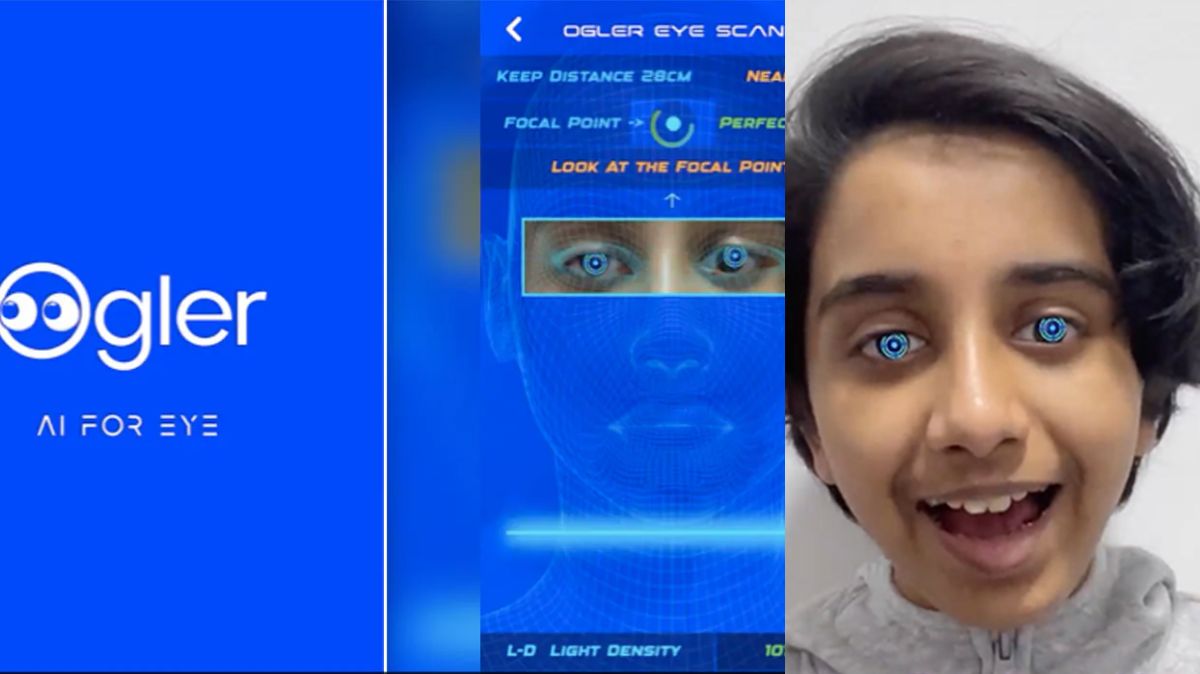
An 11-year-old Dubai-based girl called Leena Rafeeq has designed a modernistic application integrated with Artificial Intelligence (AI). This young girl from Kerala proclaimed that this smart app can locate common eye disorders and symptoms. Moreover, this can be determined through a unique scanning method built into the app and only the iPhone supports this advanced model so far.
iPhone users will be able to check their eye-related problems and conditions with 70 per cent accuracy. The intelligent app that has been going viral for a couple of days has been named ‘Ogler EyeScan’ by Ms Leena Rafeeq. She was just 10 when she built it and now after so much research at the age of 11, she exuberantly launched it.
Self-taught Techie
On a social media platform called LinkedIn, she vividly presented the model. She further expounded the workings of her self-made in an online video that she posted online after which several viewers are impressed with her knowledge and skill set.
She asserted that this AI-based application has the capability to evaluate various parameters. The specifications include light and colour intensity, distance and look-up points in order to track down the eyes.
It scans the human eyes within the available range of the frame and this is possible through the “advanced computer vision and machine learning” used in this model’s design.
Features of ‘Ogler EyeScan App’
Leena Rafeeq explains her exceptional achievement and said that the Ogler EyeScan App can also identify any light burst issues. Additionally, this app will first check the eye positioning inside the scanner frame and after that through advanced technological scanning procedures, it can identify some of the common eye problems.
Built with Machine Learning Algorithms and Computer Vision Systems, eye conditions like Arcus, Melanoma, Pterygium and Cataracts can be checked however 70% accurate results have been recognized till now.
How AI App is developed?
Ms Rafeeq told that this smart technology app was developed natively with high-level programming developer ‘SwiftUI’ without the involvement of any third-party libraries or packages. She also reveals that she dedicated herself for almost six months to conducting research and development to come up with this initiative.
Along with this, she continued her learning about different eye conditions, computer vision, algorithms, machine learning models and other advanced levels of Apple iOS development which involves sensors data, AR, CreateML, CoreML and many such tools.
It is notable that the Ogler EyeScan is supported solely in iPhone 10 or Apple phones with iOS above 16. The app is under review on the App Store and this young girl hopes that her model gets listed soon.
Appraisal of her Project
This young Kerala girl leaves many flabbergasted by the invention of such a little girl. People congratulated her as she attains this level at this age. A user commented that this is a pretty good example of how AI can be effectively used in the health sector.
Another goes on to say that this is such an amazing creation and wished her good luck with her future endeavours. They all wished her positive reviews on her app. Ms Rafeeq responded that the model accuracy is “almost 70 per cent”.
However, she is handling some difficulties with the presence of glare and burst from lights caused by the distance required for capturing scans through the phone device. She has implemented metrics and detection for light-related issues so that the users will be able to re-scan. Her current focus is on training more elegant models. As soon as Ogler is accepted by the Appstore, she will be releasing an update in the software.
source: http://www.jagranjosh.com / Jagran Josh / Home> Current Affairs> Science – Technology Current Affairs / (headline edited) April 2023
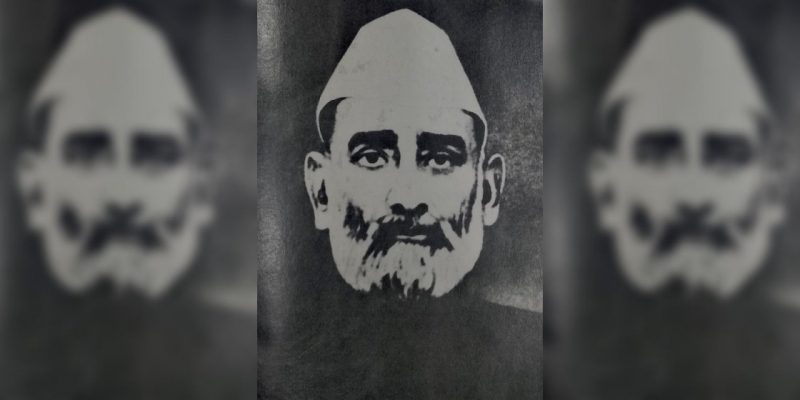
Abdul Bari is not a name that many Indians remember, but Munawwar, a committee member of the Tata Motor Workers’ Union in Jamshedpur, Jharkhand, holds the name in high esteem.
“I don’t see a leader like Abdul Bari [coming up] in the near future,” he said. “It is because of his efforts that we still get high tea at just six paisa.”
“Once, Bari went to the Tatas and he was offered tea. He asked them to first offer it to the workers, and then made an agreement which is still benefitting us. Upma, aloo chaap, samosa all for six paisa in the company’s canteens.”
Asked how they pay six paisa when currency that small no longer exists, he says, “We get token of Rs 2 or more and keep using it for weeks.”
Munawwar visits Bari’s grave every year on March 28, the death anniversary of the pre-independence labour leader, to offer flowers. This duty, he says, was assigned to him by the Tatas.
Thinking of labour in the days of capital
Despite the large numbers of workers who struggle to earn a square meal a day, major political parties remain hostile towards them. In the 55-page Congress manifesto, the words ‘worker’ or ‘workers’ appear 15 times; in the BJP’s 45-page manifesto, the words appears only five times – four while referring to Asha and anganwadi workers. ‘Labour’ figures 21 times in the Congress manifesto, and only twice in the BJP’s.
The Congress does talk about ending the workers’ exploitation and improving working conditions. The party’s manifesto details new schemes and promises to implement old ones related to organised, unorganised and contractual labour. But it is anyone’s guess how schemes that have been on hold for so long will suddenly spring to life.
Dilip Simeon, a founding member of the Association of Indian Labour Historians and former professor of history at Ramjas College, says that nobody talks about labour now because “in today’s context, the labour movement is influenced by communal sentiments”.
“If labour is with the BMS [Bharatiya Mazdoor Sangh] and Shiv Sena, then this is the weakness of the movement; if the labour movement wants to regain its power, then it has to face this challenge.”
Before independence, Simeon says, regardless of community, “leaders came together to advance the struggle of workers in India. Abdul Bari, Maneck Homi and Hazara Singh were their leaders. A Muslim, a Parsi and a Sikh could all be leaders of a workers’ movement.”
“Abdul Bari was so trusted that workers would start their protest first and then ask –what’s our demand?”
Bari was born in 1882, in Bihar’s Shahabad district. He was a student at Patna University in 1919 and was later appointed as a professor of history there, before he started studying law.
He quit to join the Khilafat movement, and actively participated in Gandhi’s civil disobedience movement and salt satyagraha. Bari did not restrict himself to the cause of one social group; he supported several political parties, including the Socialist Party and Swaraj Party, in parallel with the Congress. In addition, he was the voice of the labour movement in India and president of the Jamshedpur Tata Workers’ Union.
What Gandhi said about Bari
The journalist Afroz Alam Sahil has written a book on Abdul Bari, Professor Abdul Bari: Azaadi ki Ladaai Ka Ek Krantikaari Yodhha (Professor Abdul Bari: A Revolutionary Warrior of the Freedom Struggle). The author reveals several stories which won’t be found Indian history books. One such story is around Bari’s mysterious murder, and Gandhi’s reaction to it.
According to a report published by the Times of India on March 31, 1947, Bari was shot dead in the evening of March 28 while on his way home from Khushrupur, 24 miles from Patna. He was then the president of the Bihar Provincial Congress Committee. Following his death, a complete strike was observed, and Tata closed all its plants except essential ones.
Gandhi, in a speech on March 29, 1947, mentioned that he was struck by Bari’s simplicity and honesty. Gandhi added that he was planning to be more closely associated with Bari, and make an appeal to keep his short temper in check as it was not befitting of the highest office in Bihar. Gandhi referred to Bari in the same speech as “a very brave man with the heart of a fakir”. He declared that Bari’s death was the result of an altercation that had ensued between Bari and one Gurkha member of the anti-smuggling force, who was a former member of the Indian National Army.
The author mentions in this book that Bihar’s first Prime Minister (Premium) Barrister Muhammad Yunus had disclosed in an interview to the Orient Press of India that Bari had threatened to disclose the names of some prominent Congress leaders who were involved in the Bihar carnage – just three days before he was killed.
Yunus also said that Gandhi’s statement was given in haste. In his speech, Gandhi had told the audience that there was no politics of any kind in the death, and that it would be unjustified to associate the whole Indian National Army with Bari’s killing just because of one man’s actions.
In another incident discussed in the book, Gandhi arrives at Fatuaha station near Patna in the early morning of March 5, 1947. He travelled from Calcutta to Patna. Bari, chief minister Srikrishna Sinha and others welcomed him on the platform. As soon as Gandhi saw Bari, he laughed and said, “How is it that you are still alive?”
“This book is an attempt at bringing back his identity not just as a leader of the labour movement but a prominent leader of the freedom struggle of India,” the author says. “Professor Bari was one of the biggest leaders of the labour struggle in India. But limiting his role to even that would be unjust, because he was present in every chapter of the independence movement….The speciality of Abdul Bari is that he questioned his own party Congress when it came to the rights of workers.”
In a speech, Bari said, “We are in Congress to serve the poor of this country not to respect Gandhi, Rajendra Babu and Shri Krishna Babu…Lakhs of Indians who walk with them are not there to make them kings but to achieve freedom for this country.”
According to Sahil, “He criticised Gandhi and Rajendra Prasad many times because he was wholeheartedly committed to this struggle. He wanted to organise an all India conference for workers. He had formed the All India Mazdoor Sevak Sangh. He mentioned this in a letter written by him to Sardar Vallabh Bhai Patel on 22 June 1946.”
Why commemorate leaders like Bari today? Sahil has the answer. “Today when Muslim youth talk about Muslim representation, they must read more about Bari, the symbol of Hindu-Muslim unity, in order to understand their own political history and determine how it influences their future.”
Afshan Khan is a Delhi-based freelance journalist.
source: http://www.thewire.in / The Wire / Home> Analysis> Labour / by Afshan Syed (headline edited) / May 01st, 2019
The results of the 2nd PU exams in Karnataka were announced on April 21.
Tabassum Sheikh, 2nd year PU arts topper with her parents Abdul Khaum Sheikh and Parveen Modi, after the results of 2nd PU exams in Karnataka were announced, in Bengaluru on April 21, 2023. Tabassum is a student of NMKRV PU College for Women, Jayanagar. | Photo Credit: Murali Kumar K
The results of the 2nd PU exams in Karnataka were announced on April 21 by Ritish Kumar Singh, Principal Secretary in the Department of School Education and Literacy, and Ramachandran, Chairman of Karnataka School Examination and Assessment Board.
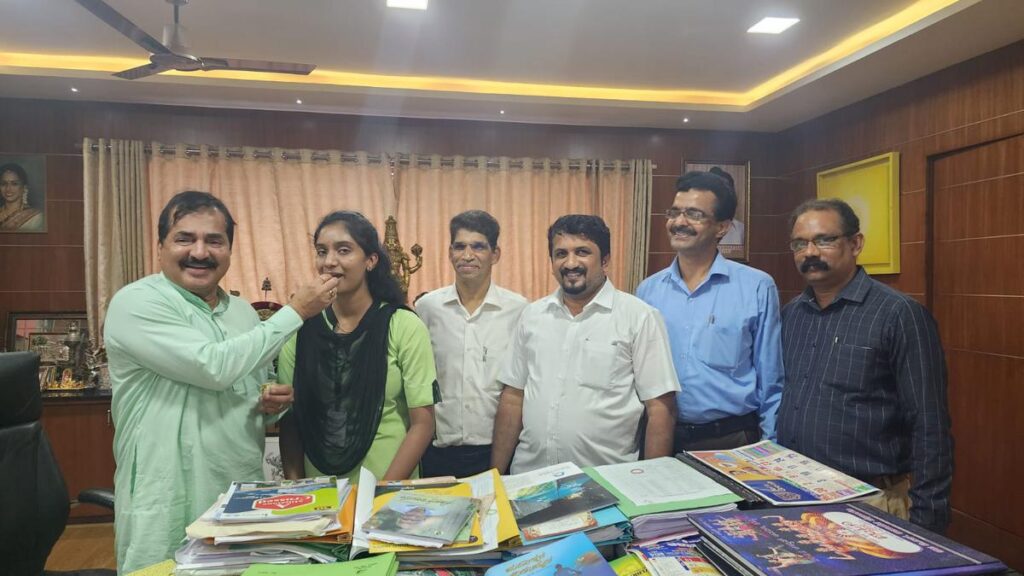
M. Mohan Alva, chairman, Alva’s Education Foundation, Moodbidri offering sweets to Ananya K.A., who topped the commerce stream in the second PU exams in Karnataka. The results were announced on April 21, 2023.
Ananya K.A. , commerce student, Alva’s PU college, Moodabidri is the topper in Karnataka scoring 600 marks out of 600. She hails from Kushalnagar in Kodagu district. She joined Alva’s PU College under the institution’s scholarship scheme
In the arts steam, Tabassum Sheikh, NMKRV PU College, Bengaluru is the topper with 593/600 marks.
S.M. Koushik from Gangothri PU college, Srinivaspura, Kolar district, and Surabhi S. from R.V. PU college, NMKRV campus, Bengaluru are the toppers in the science stream with 596 marks for 600.
How PU students performed as compared to last year
At 74.67%, the pass percentage in the II PU exams shot up by 12% from the previous year.
Of the 7,02,067 students who appeared for the exams, 5,24,209 have cleared them. A total of 4,79,746 (78.97%) regular students, 33,833 (48.42%) repeaters and 10,630 (43.02%) private candidates passed.
The pass percentage in the arts stream (1,34,876 students) was 61.22%, in commerce (1,82,246 students) was 75.89%, and in science (2,07,087 students) was 85.71%.
This year too, the pass percentage of girls is higher than boys — 2,82,602 girls (80.25%) passed against 2,41,607 (69.05%) boys. The performance of rural students was better than those in the urban areas — 1,19,860 (74.79%) rural students passed against 4,04,349 (74.63%) urban.
A total of 1,09,509 students got distinction (above 85%), 2,47,315 students got first class (60% to 85%), 90,014 students got second class (50% to 60%) and 77,371 students secured more than the minimum marks to pass (35% to 50%).
source: http://www.thehindu.com / The Hindu / Home> News> India> Karnataka / by The Hindu Bureau (headline edited) / April 21st, 2023