Category Archives: Education

Five KU students invent rice cooker that sucks starch

Srinagar, JAMMU & KASHMIR :
Srinagar :

Five students from University of Kashmir have invented an automatic rice cooker. Apart from working automatically, the rice cooker also sucks out starch from the rice.  

The group of inventors said, “Rice cookers accessible these days are giving us undesirable food. They prepare food without expelling the destructive material like starch which can cause medical issues among some people.”

The main goal of this invention is to suck out the starch from the rice which is unhealthy for the diabetic patients.

Earlier, the people who used to cook rice in cooking pots, used to drain out starch from the rice manually which avoided health problems like diabetes, obesity etc. It was researched by innovators that diabetic patients were advised by doctors not to consume rice made in rice cookers as it doesn’t drain out starch.  

“The cooker is designed as such that it prompts the user whether to suck out the starch from rice or not because healthy people need starch for their body,” said Jehangir Hameed, a member of the group, who is currently pursuing M. Tech.

The rice cooker will cook food with a single text message sent by a user through the mobile phone. It will monitor the starch status of the rice being cooked. It will consistently screen the starch status and will expel when it is being discharged out of the rice.

Working of the project

It has inbuilt rice bowl and water tank which are controlled utilizing controllers and hence no physical intervention is required while cooking or keeping the prepared food warm.

The device is fully automatic as it is controlled by GSM and IoT based technology. The rice cooker is programmed and configured to receive a command from a mobile phone to cook rice for people ranging from 1 to 12.

With predetermined chambers for water and rice, it will automatically put the rice and water for cooking. At every stage of cooking, the device will send an alert to the user about the number of people for whom rice is cooked. When the food is cooked, it will again send a message to the user that the food is ready.

Jehangir said, “It’s good for everyone. People who work outside, or a student who lives in a hostel, people coming from outings and sports activities after being exhausted, have no capacity to prepare food. With a single text from a mobile phone or other source, it will accomplish the cooking work itself.”

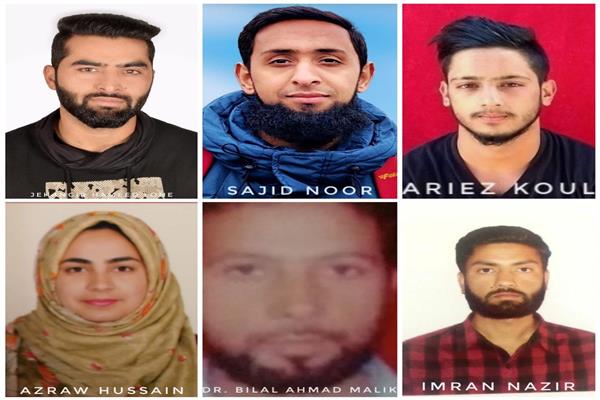
Apart from Jehangir, Azraw Hussain, Sajid Noor, Ariez Koul and Imran Nazir are part of the project along with Dr. Bilal Ahmad Malik, the Scientific Officer from University of Kashmir.

The patent authority of India has accepted and published the details of their patent on the invention.

The innovators want support from government or private companies in order to convert their prototype into a marketable product.

source: http://www.risingkashmir.com / Rising Kashmir / Home / by Insha Latief Khan / November 03rd, 2021
New book focuses on caste system among Muslims

Shirva (Udupi District) / Mysuru, KARNATAKA :

Muzaffar Assadi’s book examines the ways in which the social space was documented during colonial times

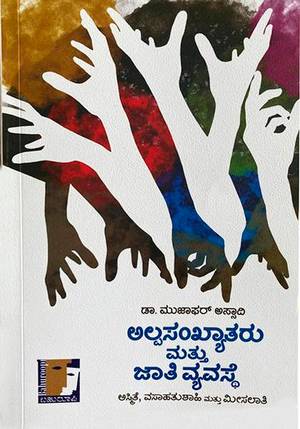
The cover of the book written by Muzaffar Assadi.  

Muzaffar Assadi, professor of political science in the University of Mysore, has brought out a new book on caste among Muslims, a relatively unexplored area.

In the book Alpasankyakaru Mattu Jati Vyavaste: Asmite, Vasahatushahi Mattu Meesalati (Minorities and Caste System: Identity, Colonialism and Reservation), the author argues that Islam, one of the semitic religions known for its established rules and framework, is now tested against the remnants of caste practices.

Multiple factors

The book, which runs into 264 pages and is published by Bengaluru-based Bahuroopi, explores practices of caste that are not just the result of conversion but inherent in the logic of trade, the class interest of retaining property, social mobility from Central Asia, social identity, and political expansionism.

The author says that colonialism, while documenting various castes, did make a distinction between Hindu social order and Muslim social order. In the latter case, social space for internal mobility, spaces for enlisting as ‘Ashrafs’ (Sheikh, Sayyed), and for continuing traditional occupation was available. And social hierarchy and social distancing continued to perpetuate.

Noting that colonialism created new castes, Prof. Assadi pointed out that the larger agenda of documenting, enlisting caste was ultimately meant to hegemonise, control, and dominate. The book focuses significantly on the way Muslims became subaltern classes during the colonial rule.

“With the experience derived from colonial encounters, Indian Muslims were castigated and condemned again and again for their social backwardness. This was backed by enlisting hundreds of castes among Muslims, although enlisting remained incomplete,” the author argues.

Post-Independence

The legacy continued after the Independence with reports on backward classes/ethnographic studies identifying and enlisting social groups, known for practising caste. “This culminated in identity politics, demand for affirmative action and reservation policy,” Prof. Assadi notes.

The author painstakingly unearths issues of caste among Muslims by referring to material from history, including the colonial census reports, gazetteer, travelogues, missionary works, police records and writings of Muslim scholars. The book comes at a time when there is a demand to re-enumerate castes and a growing urge for enhanced reservation.

source: http://www.thehindu.com / The Hindu / Home> News> States> Karnataka / by Naghesh Prabhu / Bengaluru – November 28th, 2021

Children Excel In Muaythai

Mysuru, KARNATAKA :

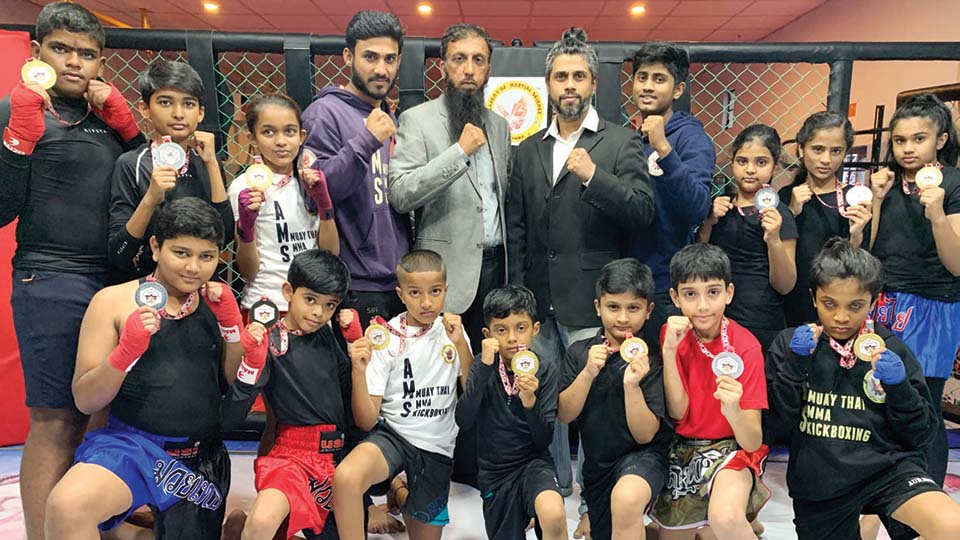
Thirteen young Muaythai athletes of the Academy of Martial Science and SMITE Academy of Martial Arts, under the banner of Mysore Combat Sports Association (MCSA), participated in the Youth Muaythai Gala held at Bengaluru to commemorate the Children’s Day (Nov. 14). The team won 7 gold, 5 Silver and 1 Bronze medal.

The event was hosted by Muaythai Association of Karnataka and sanctioned by Muaythai India (MTI).

This event also served as selection trials for the upcoming National Championships to be held in December where athletes from over 25 States are expected to participate.

Seen in the picture (standing from left) Praful Raghavendra (12 years, -80 kgs: Gold Medal), G.M. Chandramouli (15 years, -35 kgs: Silver), G.M. Durgashree (12 years, -37 kgs: Gold), Kiran (Coach), Kru Syed Tanveer Ahmed (Founder Director, SMITE and International Referee), Kru Vikram (Secretary, WBC Muaythai India and Secretary, MCSA), Kru Samarth (Coach), S.K. Advika (10 years, -37 kgs: Silver Medal), Falkia Khan (14 years, -40 kgs: Silver) and H.R. Theeksha Bharuni (12 years, -57 kgs: Gold); Kneeling from left: Aryan Raj (13 years, -56 kgs: Silver), Ankush P. Mathad (11 years, -30 kgs: Bronze), Ayaan Ali (9 years, -30 kgs: Gold), Abhik K. Athrey (8 years, -25 kgs: Gold),  Mohammed Hasen Khan (8 years, -32 kgs: Gold), Raaid Tanveer Syed (10 years, -30 kgs: Silver) and Kshaminaam Kanthraj Urs (10 years, -42 kgs: Gold).

source: http://www.starofmysore.com / Star of Mysore / Home> Sports / November 22nd, 2021

Bengaluru Teacher Mehreen Mushtaq Wins Global Award In Artificial Intelligence

Bengaluru, KARNATAKA :

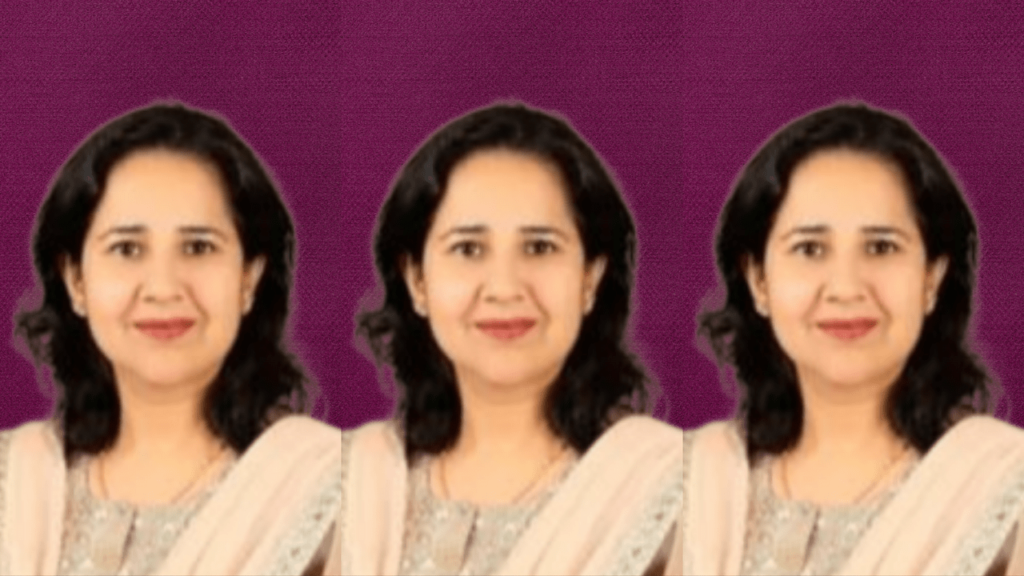
Mehreen Mushtaq Shamim, a teacher from Bengaluru’s Delhi Public School has bagged an award in Artificial Intelligence (AI) at the Intel AI Global Impact Festival.

She was selected as one of the four winners of ‘AI impact shapers: Teachers with innovative AI teaching learning practices’. Mehreen has been teaching AI in DPS East for nine years now. The CBSE curriculum had introduced AI as a subject for classes 9-12 in 2019.

Mehreen is credited with empowering 1,218 students with practical knowledge of AI and training over 250 teachers in AI-related multi-disciplinary pedagogies. 

“I introduced students to Bootcamps that give them advanced lessons in AI. I could mentor students and inspire them into creating projects, three of which are now pending patents. Our students are interested in technology and can think out of the box very well. If guided in the right direction, they can do wonders,” TOI quoted Mehreen as saying.

Mehreen, who has a masters in computer applications, said the more she learnt about AI, the more passionate she got about the subject. “Knowing the power of AI, I now want to encourage children of other streams — not just science — to take up the subject and upskill themselves,” she added.

The first Intel AI Global Impact Festival was launched on October 15, 2021. It saw the participation of 20 countries from around the globe and the display of more than 200 AI-led social impact innovations. The other winners from the AI Impact Shapers category were from Singapore, South Korea and Poland.

source: http://www.thecongnate.com / The Cognate / Home> Inspiring / by Rushda Fatima Khan / October 30th, 2021

Assam’s legal luminary Abdul Muhib Mazumder dies at 89

Hailakandi / Guwahati, ASSAM :

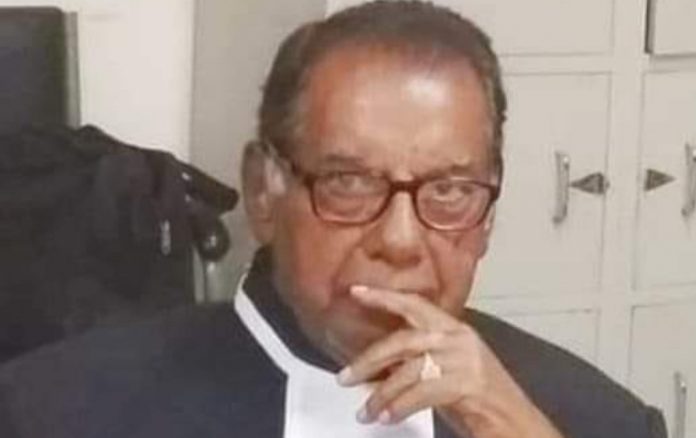
Abdul Muhib Mazumder

Guwahati :

Abdul Muhib Mazumder, former Law Minister of Assam, breathed his last at the wee hours of Wednesday. He was suffering from old age ailments. Mazumder was born in Hailakandi town of Assam on August 20, 1932. His father, Abdul Matlib Mazumder, was a leading freedom fighter and a Cabinet Minister of Assam during 1946-1970.

After studying at Government Victoria Memorial High School in Hailakandi he obtained his B Sc (Hons) degree from Cotton College, Guwahati, and his MA and LLB from Aligarh Muslim University. While in college and university, he was an outstanding debater and won many awards in debating competitions. He married Alamara Mazumder on June 3, 1962 and had three daughters.

Mazumder was a Senior Advocate of Gauhati High Court as well as the Supreme Court of India. He initially worked with Fakhruddin Ali Ahmed, former President of India and a senior lawyer of Gauhati High Court, and Jagadish Medhi, a leading legal authority. He was Senior Government Advocate for several years. He was also a Lecturer in Economics and Political Science at Pragjyotish College, Guwahati (1956-1961) and at Gauhati University Law College (1961-1980).

He became Advocate General of Assam in 1980 and served in that capacity up to 1983. Later, he also served as the Advocate General of Arunachal Pradesh (1991-1996).

Mazumder entered politics in 1970s and represented LA-6 Hailakandi four times as Member of Legislative Assembly (MLA), during 1983-1991, 1996-2001 and 2011-2016. Incidentally, the same constituency had been represented by his father from 1946 to 1972. He became a Cabinet Minister of Assam in 1983 in the Congress Ministry headed by Hiteswar Saikia looking after law, power and municipal administration departments till 1985.

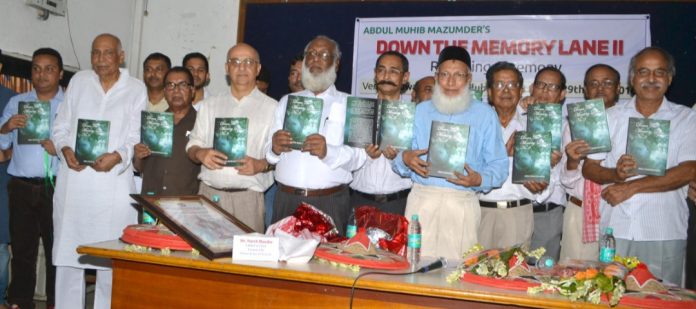
Abdul Muhib Mazumder (3rd from left) at the launch of his autobiography in Guwahati on July 29, 2016. Harsh Mander, Hafiz Rashid Ahmed Choudhury, and Justice Aftab Hussain Saikia are 4th, 5th, and 7th from left in the photograph. (File Photo)

In 1990s, Mazumder formed a new party called UPPA (United Peoples Party of Assam) and again became a Cabinet Minister of Assam in 1996 in the AGP-led coalition ministry headed by Prafulla Kumar Mahanta, looking after irrigation department till 2001. Subsequently he disbanded UPPA and became the President of Samajwadi Party in Assam. Later he came back to Congress. Mazumder was Deputy Leader of Opposition (1986-1991) and formerly Vice Chairman, State Planning Board of Assam. Other posts held by him were Member, State Security Commission; Member, AICC; Vice President APCC; Chairman APCC Minority Cell; and Adviser Minority Department of APCC among others.

Among his landmark cases was his defence of the late Prime Minister Indira Gandhi against her prosecution by the Tirkha Commission in 1977-78 in the High Court. Two other landmarks in his career were drafting of the IMDT Act (Illegal Migrants Determination by Tribunal Act) 1983 and Assam Accord 1985 as the then Law Minister of Assam.

Mazumder’s autobiography, Down the memory Lane, was published in four volumes. At one of the launches of the autobiography in Guwahati on July 29, 2016, Harsh Mander, then Director of Centre for Equity Studies & Special Commissioner to the Supreme Court of India in the Right to Food Case, was the chief guest. Interestingly, all the legal stalwarts on the dais that day including Justice Aftab Hussain Saikia, former Chief Justice of the J&K High Court, happened to be all his students at one time or the other.

Commenting on the demise of Mazumder, Hafiz Rashid Ahmed Choudhury, Chairman of the Bar Council of Assam, Nagaland, Mizoram, Arunachal Pradesh, & Sikkim, said, “Many successful lawyers of today learnt their ABCD of law under the guidance of Abdul Muhib Mazumder. Whenever any lawyer went to him for guidance, he was always ready to help them. His absence will be felt by everyone connected in any way with the legal process in the region.”

source: http://www.muslimmirror.com / Muslim Mirror / Home> Indian Muslim / by Nurul Islam Laskar / November 03rd, 2021

Meet Rafiq, once a tea vendor, now professor at Kannur University

Echome Village (Panamaram Panchayat), KERALA :

Rafiq Ibrahim has beaten heavy odds to earn a doctorate, spurred by a love of reading, reports M A Rajeev Kumar

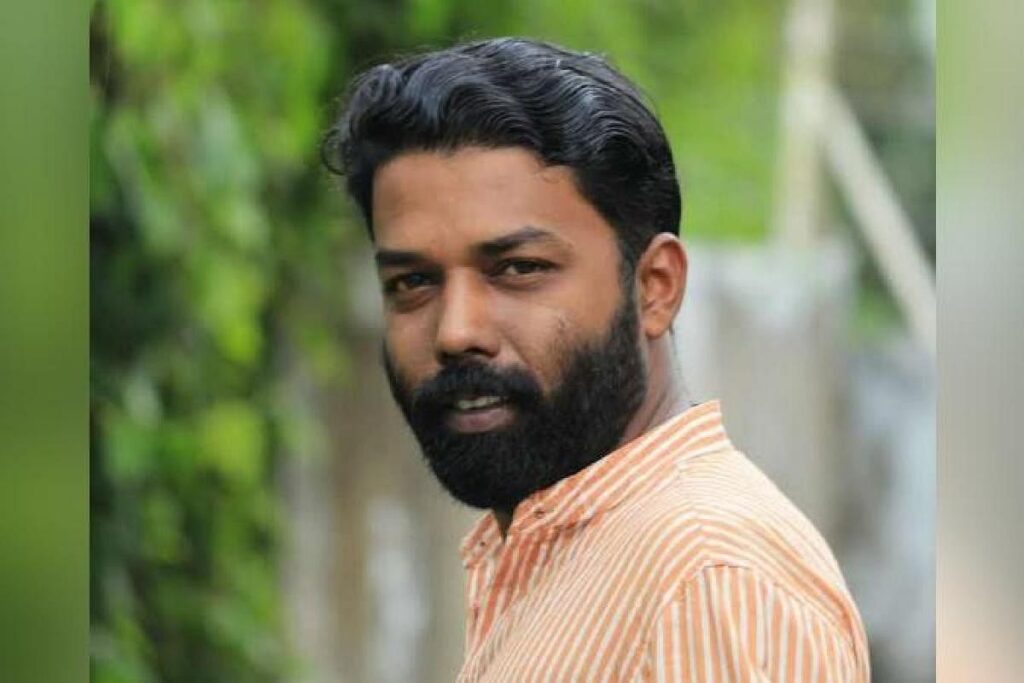
Rafiq Ibrahim

Wayanad :

Rafiq Ibrahim used to call Echome, in Panamaram panchayat, a dead village. “During my childhood, I watched with amazement how time stood still there, almost oblivious of the world outside,” says the 34-year-old. 

The son of a tea-shop owner, Rafiq had a difficult childhood, and at times stared at poverty too. But he persevered to get better at life. He sold tea, went as a cleaner in jeeps and worked in a hotel. At one point, he even had to discontinue his studies. Through all that, he kept reading books, and managed to earn a doctorate. On November 6, Rafiq joined the Nileshwar campus of the Kannur University as an assistant professor in the Malayalam department.

“I am not a hero,” Rafiq says. “But the reality should not go unaddressed, as there are thousands of underprivileged people like me.”  Like his father, Ibrahim, his mother, Nabeesa, too did not attend school. Though the conditions at home were not too conducive for studies, both Rafiq and his older sister, Bushara, passed the SSLC examinations. “Though I had a first class, my first thought was to try some manual jobs in the area. Once out of school, boys would work in a jeep as a driver or a cleaner, and girls would be married off. That was how it was in Echome,” he says.

Caught in debt, however, his father had to sell the tea shop and the income of the family dried up. So he went to a friend in Mysuru, at 19, and became a tea vendor. He had joined a BSc course then, and completed the first-year examinations. But he was pulled down by typhoid and had to return home. “As the condition at home remained the same, I went to Wandoor in Malappuram district where I got a job in a hotel at the bus stand,” he recalls. 

Rafiq started reading books and magazines at the book shops there during his free time. “I found that reading keeps me happy, and took a liking to the ideas expressed by great writers,” he says. However, Rafiq lost his job yet again as the hotel eventually had to be closed down after the authorities decided to renovate the bus stand. “During my journey back home, I read an article by Sunil P Ilayidom about politics of identity and class. That instilled a spark in me,”  he says.

Rafiq then worked as a salesman at a footwear shop in Kalpetta. He worked there for two years, and the situation improved as his sister got a teaching job in a parallel college. Encouraged by his friends, he joined the BA Economics course under Calicut University. “During that period, I read plenty of books at the district library in Kalpetta,” he says.

Later, he attempted the entrance examination for the MA Malayalam course at the Sree Sankara Sanskrit University in Kalady with the sole aim of meeting his idol, Sunil P Ilayidom, who was the head of the Malayalam department. “I enjoyed every moment there, and the atmosphere helped me change my outlook as a student and human being,” he says. 

From there, things became a lot easier for Rafiq, going on to complete his MPhil, and earning a doctorate in ‘literary form and cultural history’ under the guidance of Ilayidom. Rafiq says his life is an example of generosity changing fortunes. “All that people require to come up in life is a helping hand at the right time.”

source: http://www.newindianexpress.com / The New Indian Express / Home> Good News / by M A Rajeev Kumar, Express News Service / November 14th, 2021

Poverty couldn’t rob of their dream to become doctors, thanks to Al- Ameen Mission

Khalpur (Topsia) / and Bojdahara (Bankura) / Howrah, WEST BENGAL:

Md Hossain  studied under street light once; he will be a doctor via Al-Ameen.

Md Hossain has proved that to be successful, poverty or any other hindrance do not matter. Overcoming all difficulties in the way, he has cracked the medical entrance examination (NEET) this year; merit being the only arsenal he has. His mother, Akhtari Begam, on hearing the news, bursts into tears. So did his mentor Uma Chakraborty. The General Secretary of Al-Ameen Mission, M. Nurul Islam has expressed great satisfaction.

Hossain comes from Khalpar slum, adjacent to G.J Khan Road, Topsia. The lackluster slum lies at the backyard of the posh Science City. Dire poverty engulfs every family of the neighbourhood. Almost all the families earn livlihood from leather industry; even children are not spared. They are anemic, lacking vitality. Md Hossain, grew up in this sort of circumstance. His family is big; seven brothers and sisters, parents. Mohammad Sahabuddin, his father, cannot work as he is old now. A tiny rented space adjacent to a Club Room in the G.J Khan Road; the nine souls huddle inside. The income of his eldest brother, Mohammad Aftab cannot meet the expense of the family. The minimum rent curtails usage of electricity. Hossain had to study under the street light. A volunteer of a non governmental organisation, Uma Chakraborty saw this. She understood that this talented boy would go a long way.

She contacted M. Nurul Islam and convinced him about this meritorious student. He admitted Hossain in the Paikpari campus in class V with minimum monthly fees. Hossain, at that time, vowed to become a doctor and serve the society. So began his journey. In the Madhyamik examination, he scored 94.70% marks. Then he moved to Khalisani branch and secured 84.20% marks in the Higher Secondary examination. He took coaching for the NEET from Uluberia campus. His All India Rank is 22,227 and the score sheet is 592 out of 720 marks. Hossain’s dream to become a doctor is taking shape now. Reacting to his successful journey, tears ran down from his mother’s cheeks. She expressed her gratitude to M. Nurul Islam and Uma Chakraborty. But for these two persons, this would have been impossible to achieve, she said.

Mohammad Hossain too did not forget his past. The architects for his achievement are M.Nurul Islam, Uma Chakraborty and Piyali Chowdhury, one of the organisers of the NGO. He also said, he is very satisfied with the result and want to serve the poorer section of the society. Naturally, Nurul Islam too is very happy. He said, Al-Ameen Mission was established mainly to nurture the minority Muslim community and bring them into the mainstream education system. Many boys and girls from remote parts of Bengal have become doctors and engineers through the Mission. Mohammad is one of them. He has cracked the Medical Entrance examination. We are overwhelmed by his success.

Asmatara Mondal lives in Bogdahara, Bankura. According to her, with Al-Ameen’s constant support, her mission has been accomplished. Her NEET score is 569 with rank 34384 (AIR).

Her mother, Manwara Mondal is no more. Her father, Rahamat Ali Mondal, a small farmer, with much difficulty raised nine of his children- six daughters and three sons. Asmatara dreamt of being a doctor while she was studying in her village school. The concrete step towards fulfilling her goal came in 2017, when she was admitted to Al-Ameen Mission and passed out H.S from the Medinipur campus. She came to the Khalatpur campus to take coaching for NEET preparation. Last year, when a lockdown was imposed, she had to leave the campus. But the preparation continued. For NEET 2020, Asmatara got her examination centre in a school located in Howrah- a long distance from where she lived. While she started for the destination at the dead of night, her car had a breakdown in Tarakeswar. To cut the long story short, the Mission took the initiative to take her to the exam centre by a car. Her NEET score was 457. Again she came to the Mission for preparation during the lockdown in November last year. With a couple of other students she started the preparation. But again there was a lockdown and she was compelled to return to her home. Through the Zoom meeting, she remained in contact with Mission authorities. Now that the dream has been fulfilled, Asmatara says categorically, without Al-Ameen Mission this would have been impossible to achieve. Minimum fees, maximum care- that is what one gets here.

My brother Robial Mondal had also helped me. Presently, he too is preparing to take NEET from the Mission. Hard work is the key to success. Indeed, all out effort and the blessings of Allah makes all the difference.

source: http://www.muslimmirror.com / Muslim Mirror / Home> Indian Muslim> Positive Story / by Muslim Mirror Network / November 08th, 2021

Kozhikode boy shortlisted for International Children’s Peace Prize

Kozhikode, KERALA :

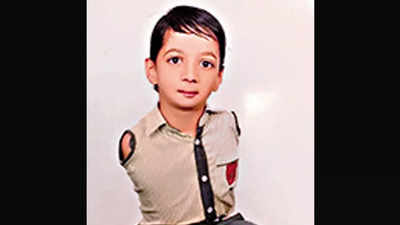
Aasim was born without both hands

Kozhikode : 

Muhammad Aasim , a 15-year-old disabled boy who had been waging a battle to get his village school at Velimanna upgraded to a high school, has been shortlisted as one of the three finalists for this year’s International Children’s Peace Prize awarded by Kids-Rights Foundation, an international children’s right organisation based in Amsterdam.

The other two finalists are teen brothers from Delhi Vihaan and Nav Agarwal who had been working towards tackling the waste menace in the national capital through their NGO One Step Greener and Christina Adane, an 18-year-old girl born in the Netherlands and now living in the UK, who had led a campaign for free school meal provision to be extended through the holidays.

The finalists were announced by Archbishop Desmond Tutu, who is a patron of the prize. In his message, Tutu said the finalists show, through their values and determination, just what children can achieve in campaigning to improve the rights of others worldwide.

The International Children’s Peace Prize is annually awarded to a child who has made a special effort to promote children’s rights and better the situation of vulnerable children.

The three finalists were selected from 169 nominations received from 39 countries.

Aasim was born without both hands

Nobel Peace Prize laureate Kailash Satyarthi will award the prize to this year’s winner on November 13 during a hybrid ceremony to be held at The Hague.

Aasim, who was born without both hands and has 90% disability, has been spearheading the campaign to upgrade the Government Mappila UP School at Velimanna to a high school.

Acting on a letter written by Aasim, then chief minister Oommen Chandy had issued an order to upgrade his school to a UP school in 2014.

But after he reached seventh standard in 2018, wheelchairbound Aasim took up the fight to upgrade the school, which is just 250 metres away from his house, to a high school as it was difficult for him to travel to faraway schools. After his repeated pleas and even protests failed to evoke a positive  response, Aasim filed a petition in the Kerala high court which directed the education department to upgrade the UP school to a high school.

But the state government challenged the order and now his petition is before the consideration of the Supreme Court.

“Aasim has been continuing his studies privately at home for the last two years and has not enrolled in any other school. He hopes that his fight to uphold the basic right of education will succeed and will help and inspire all other children,” his father Mohammed Saeed said.

Aasim, who writes with his leg, is a recipient of the Ujjwala Balvam award initiated by the state women and child development department.

source: http://www.timesofindia.indiatimes.com / The Times of India / Home> News> City News> Kozhikode News / TNN / November 06th, 2021

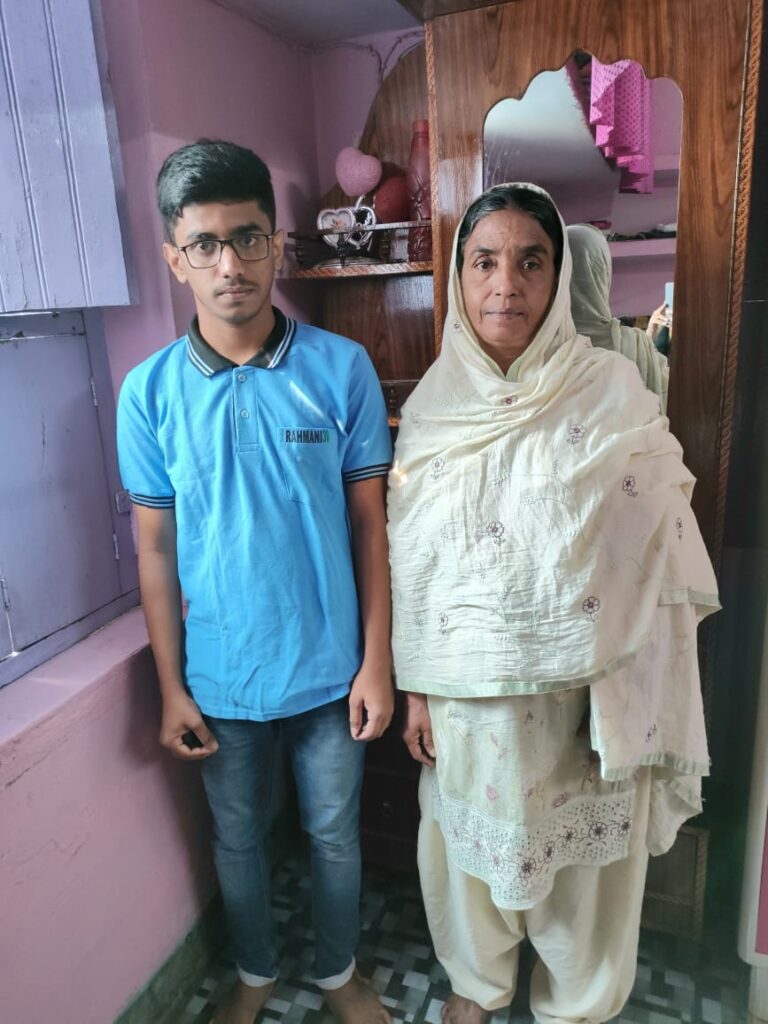
Bihar’s NEET topper Zeya Bilal credits success to Rahmani 30

Pandaul Village (Madhubani District), BIHAR :

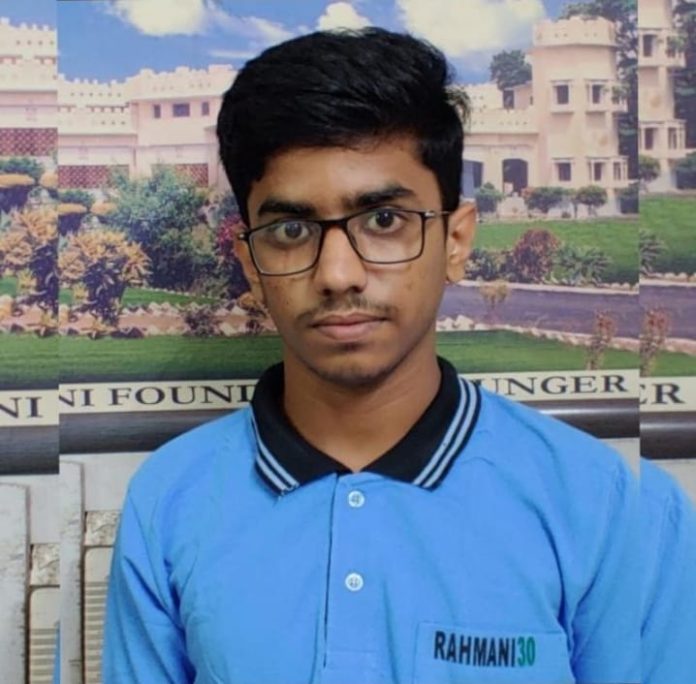
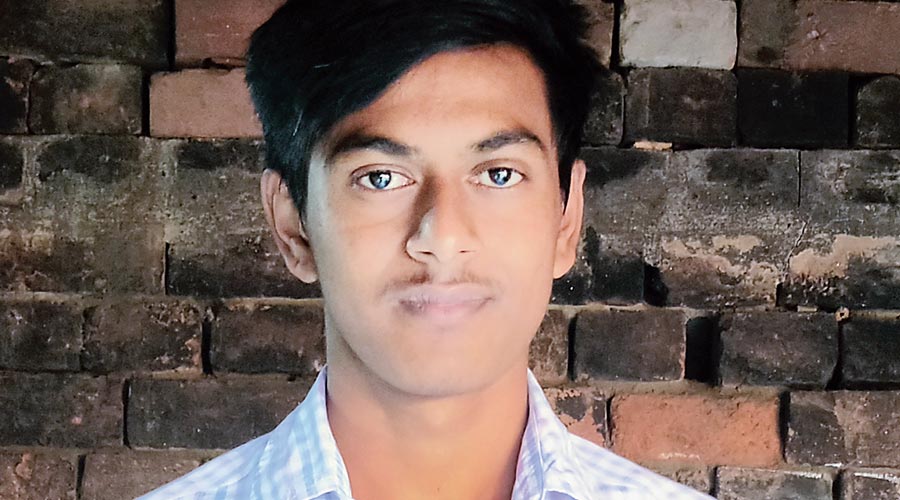
Belal’s All-India Category Rank (OBC) is 3rd. He will turn 18 on November 28 and is a product of renowned Rahmani 30 of Patna, Bihar. | Picture by arrangement

Mohammad Zeya Belal from a remote village in Bihar has topped the list of successful candidates from Bihar in this year’s NEET. A Rahmani 30 alumni, Belal credited his success to the positive environment at the institute founded by late Maulana Wali Rahmani.

Bihar :

Mohmmad Zeya Belal is a brilliant student. He has topped the list of successful candidates from Bihar in this year’s NEET – the top medical entrance test of India held by the National Testing Agency (NTA). His All India Rank (AIR) is 19th with a score of 715 out of a total of 720. He answered just one question incorrectly out of 180 questions.

His All-India Category Rank (OBC) is 3rd. Belal will turn 18 on November 28. He is a product of renowned Rahmani 30 of Patna.

Belal hails from Pandaul, a remote village in the Madhubani district of Bihar, some 180 kilometres north of the capital Patna. Interestingly, he has cracked the toughest engineering entrance test JEE (Advanced) meant for the IITs. Even more importantly, he got admitted to the top-ranked Indian Institute of Sciences, Bangalore after clearing the Kishore Vaigyanik Protsahan Yojna – a test meant to tap the young scientists.

Belal told TwoCircles.net that he is interested in medical studies and is raring to get admission at AIIMS, New Delhi, India’s top medical studies college.

Belal is the youngest of three brothers. One of his brothers Abdullah Ansari works in Guwahati and the eldest one is a teacher.

Belal said his elder brother is like a mentor for him as “our father Mohammad Masud Alam Ansari, who was a Physics teacher, died in 2010.” Belal was 7-years-old at that time. His mother Ruhi Khatoon is a housemaker.

Belal passed his 10th from S.K. High School, Pandaul with 90% marks and 86.2% in his 12th. He got to know about Rahmani 30 from his senior Nafe Faiz. His studies at Rahmani 30 was a mix of offline and online education amid the Covid-19 lockdown.

Belal is all praise for his teachers at Rahmani 30. He aspires to be a cardiologist after completing his MBBS. “I want to thank Atul sir for his continuous support. He is an academic chief there and keeps away from any limelight,” he said.

Belal cites two things as U.S.P. of Rahmani 30. “The environment for self-study and group discussions are its hallmark. The group discussion is a big help in doubt clearing,” he said.

Belal believes in focused and disciplined studies. He was focused to succeed in NEET though he cleared JEE (Advanced).

He said that that he had to study Mathematics for his Physics preparation which helped him crack the engineering test too.

His mother Ruhi Khatoon told TwoCircles.net said that she didn’t have to tell Belal to study. Her only complaint with Belal is that he doesn’t eat well. She is ecstatic about her son’s success and distributed sweets in the village.

Bilal with his mother Ruhi Khatoon at their home. | Picture by arrangement

Belal’s brother Abdullah said that it was Amir-e-Shariat late Hazrat Maulana Wali Rahmani’s efforts that brought success for all the students of Rahmani 30. “Belal was helped immensely by Atul sir there,” he said,” he said, adding, “The environment at Rahmani 30 is quite helpful for organized studies.”

“Despite the absence of our father, I didn’t have to force Bilal to study. He would always do it on his own,” he said.

Belal said that he follows sports but cites a lack of time for not pursuing it fully. His scores at NEET (National Eligibility cum Entrance Test) give a picture of what he has achieved. His percentile obtained in Physics is 99.9969565. He obtained 99.9942368 percentile in Chemistry and Biology he got 99.9987049 percentile. The cut-off marks for qualifying as per Medical Council of India is 50th for unreserved and EWS (Economically Weaker Section) category which falls between 720-138 number. For OBC (Other Backward Castes) it is 40th percentile which falls 137-108 marks.

Tausif Alam has studied with Belal for quite some time and himself has been allotted a seat in IIT, Delhi. Talking about Bilal’s success, he said, “Belal has a completely different mind. He is both a hard worker and a smart working boy. We all knew that he would do better. We all are happy that he achieved such a feat.”

On the night when the NEET results were announced, discussions went on till 3 o’clock. In 2020, fifty students of Rahmani 30 qualified NEET and got admission in different government medical colleges for MBBS. This year the number is expected to be better.

Sami Ahmad is a journalist based in Patna, Bihar. He tweets at @samipkb. 

source: http://www.twocircles.net / TwoCircles.net / Home> Lead Story / by Sami Ahmad , TwoCircles.net / November 04th, 2021

Bidi-rolling part of Sohail Anwar’s NEET journey

WEST BENGAL :

The 20-year-old scored an all-India 12,550 rank in the just-declared NEET medical results, scoring 616 out of the possible 720.

Sohail Anwar / Telegraph picture

Successful NEET aspirant Sohail Anwar, 20, knows the fundamentals of biology and bidis. 

A few months ago, Sohail would spend afternoons helping his mother Keshbanu Biwi, 44, roll bidis for a local manufacturer in Jadavnagar, Murshidabad. His father Bani Israel, 48, was a hawker of bedsheets in villages but lockdown dampened sales. His family’s income did not exceed Rs 10,000 a month, so everyone had to pitch in.

Sohail scored an all-India 12,550 rank in the just-declared NEET medical results, scoring 616 out of the possible 720.

“My brother Saeed, who is two years elder to me, has always been my inspiration,”  Sohail said on Tuesday, when asked by this paper about his success, which places him  among candidates eligible for top medical colleges in Bengal.

Two years ago, Saeed secured admission to Murshidabad Medical College. Besides studies, Saeed tutors medical aspirants in Behrampore town.

“Saeed and my uncle Samirul, a WBCS officer, have been a huge support and inspiration,” added Sohail, adding he misses his brother. 

How did he manage to crack NEET while rolling out bidis? ‘I could not prioritise on one thing, both were equally important,” says Sohail, who helped his mother in the afternoons and studying on his own in the evenings and nights.

Sohail’s father Bani Israel said he was “fortunate and grateful to god” for his sons.

“I have not been able to do more for my boys than give them two rooms, four brick walls and a tiled roof. I cannot ask for more than what they have already done,” Bani said softly. 

The head of an eight-member family, Bani feels academic success of this scale in his home “is like a dream”

Sohail passed his higher secondary with 83 per cent from a high madrasa in Malda and got coached for NEET from Al-Ameen Mission,  Howrah. He devoted two years to NEET coaching. “That paid off,” he said. 

He added that  he will continue helping his family in their chores till the next phase of his academic career becomes clearer.

source: http://www.telegraphindia.com / The Telegraph Online / Home> West Bengal / by Alamgir Hossain, Behrampore / November 03rd, 2021