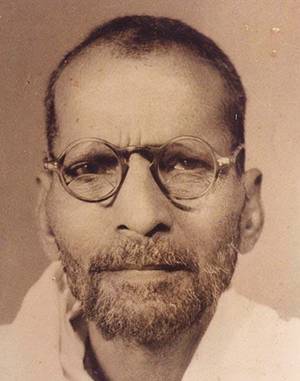
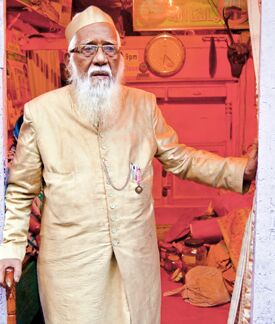
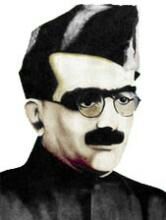
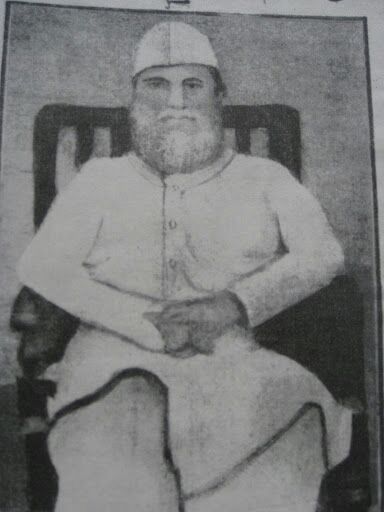
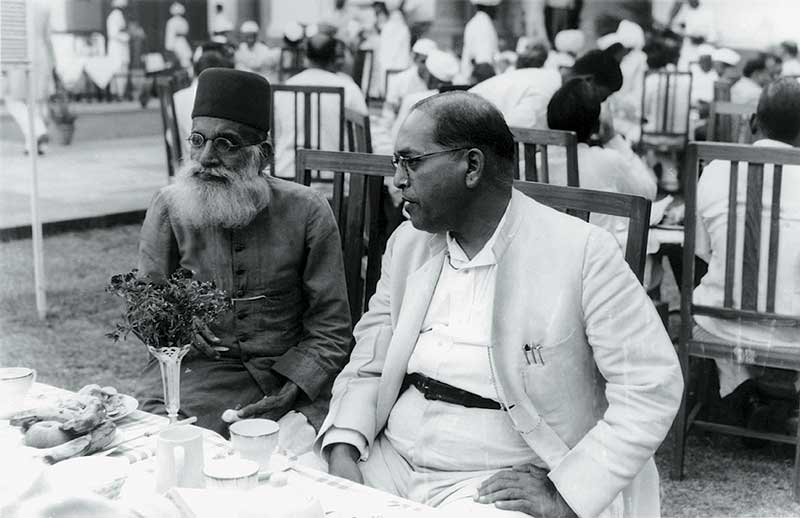
Muslim Vellori, a prominent but not so well-known freedom fighter, did not restrict his public role to the freedom struggle but also played a prominent role in social service
The name of Muslim Vellori does not ring a bell now, but for an older generation of Bangaloreans, particularly Muslims in the city, that name is remembered with a sort of awe as he was a valiant freedom fighter. Born Mohammed Abdul Wahid Khan in 1883 in Ganjam near the historic town of Srirangapatna, Khan grew up to be known as ‘Muslim Vellori’ as he spent most of his childhood studying in a madrasa (Islamic seminary) in Vellore. Even though his father was in the army, Vellori grew up to develop an aggressive anti-British sentiment.
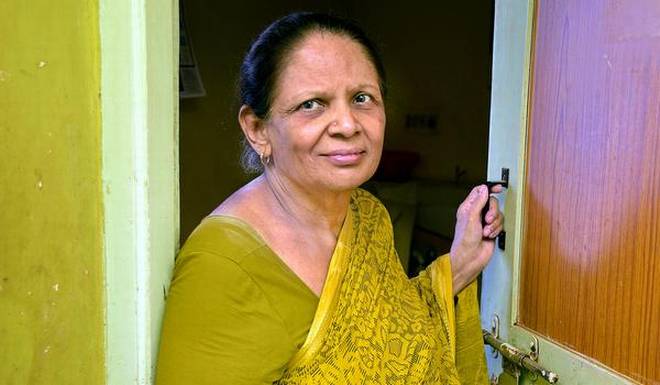
Vellori began working in a shipping company owned by his relatives in Bombay (now Mumbai) after completing his studies in Vellore. His granddaughter Dr. Shakira Khanum, who now teaches in Al-Ameen College, recalled an incident that Vellori had narrated to her. “Once, in Bombay, a Britisher made fun of his beard. My grandfather, who hated the British, was so livid that he almost shot the man,” said Khanum. Working in a shipping company at the time also ensured that he was among the few privileged Indians who could travel as his work took him beyond the shores of India. Vellori travelled to Burma, Sumatra and Java (now part of Indonesia), Mauritius, Ceylon (now Sri Lanka), Madagascar and to several cities in the Middle East. It was during his travels that he met Mahatma Gandhi in Durban. Gandhi and Vellori supposedly became quite close and the former had a formative influence on Vellori’s life.
As Vellori came of age, he came to acquire a reputation of being a fiery orator and through the course of his life took part in many anti-colonial struggles all over the country. He is particularly remembered for his role during the Khilafat movement (1919-1922) where he met many prominent freedom fighters including Mahatma Gandhi, the Ali brothers: Mohammed Ali and Shaukat Ali, Dr. Mukhtar Ahmed Ansari, Hakim Ajmal Khan, Saifuddin Kitchlew. Even the great poet Mohammed Iqbal is supposed to have lauded him for his passionate speeches when he exhorted the audience to support the Khilafat movement in Mumbai. Vellori was jailed several times for his provocative speeches and was even incarcerated in Bangalore Central Jail between 1924 and 1927. Even in prison, he is supposed to have been a recalcitrant internee and often questioned the authority of the jailers.
Vellori did not restrict his public role to the freedom struggle but also played a prominent role in social service. He raised funds to found orphanages in Mysore (now Mysuru) and Cuddapah (now Kadapa). Considering that he was close to several Congress leaders in the state and was recognised as a prominent Muslim leader who staunchly opposed the two-nation theory, he was nominated to the Mysore Legislative Council and was a member in the 1950s during the chief ministership of Kengal Hanumanthaiah. In later years, Jawaharlal Nehru called on him when he visited the state. Towards, the end of his long life Vellori became bitter as he was marginalised by the state leadership of the Indian National Congress and was ignored by the Muslims of the state who no longer felt that he was a suitable leader. An early resident of Jayanagar, Vellori died on Oct. 31, 1977.
(Information for this article has been gleaned from a short booklet published by Vellori’s granddaughter, Dr. Shakira Khanum, who teaches Hindi at Al-Ameen Degree College in Bangalore. Dr. Khanum has also painstakingly collected much of the supporting evidence for her grandfather’s illustrious life including a letter from Tulsidas Jadhav, who was Gandhi’s secretary briefly, attesting to Vellori’s close connections with the father of the freedom movement.)
source: http://www.thehindu.com / The Hindu / Home> Society> History & Culture / by Vikhar Ahgmed Sayeed / August 02nd, 2018
To commemorate the celebrations of 150th year of the `Sepoy Mutiny’ described by historians as the first war of Independence in India, the Institute of Objective Studies, New Delhi, will bring out next year, a book on the `Role of Muslims in Freedom Struggle’ focussing on the participation of freedom fighters belonging to the Muslim community in various struggles and their contribution in making our country free from the clutches of the British rule.
Divided into six chapters, the book will narrate the sacrifice of Muslims all over the country. Each chapter pertains to a cluster of the then Presidencies comprising a few states.
A team of professors and research assistants, led by one author, has been working on the book, identifying the descendants of Muslims who had participated in the freedom struggle.
The sixth chapter comprises three States, Tamil Nadu, Kerala and Karnataka. Details about contribution to the cause of freedom movement by Muslim freedom fighters hailing from these States are now being compiled by J. Raja Mohammed, former Assistant Director of Government Museums.
“I adopt a four-pronged strategy for compiling the data and details about the freedom fighters. Interviewing the family members, collection of details from the Madras Achieves, verification of fortnightly reports sent to the British Collectors between 1857 and 1947, and above all press clippings from newspapers including The Hindu , The Mail and Swadesamitran and a few Muslim journals, to present an authentic chapter in the book,” Dr. Raja Mohamed told The Hindu here on Wednesday
source: http://www.thehindu.com / The Hindu / Home> News> National> Tamil Nadu / by M. Balaganessin / March 23rd, 2006
Remembering the past S Rahima, daughter of A M Shahul Hameed. | Photo Credit: M MOORTHY
A film industry stalwart’s daughter recalls the glory days of Central Talkies in Tiruchi
The glossy reprints on S Rahima’s bed are all that remain of a golden era that once defined her life as the daughter of film producer and theatre owner AM Shahul Hameed. The black-and-white pictures, taken in shooting spots and actors’ homes, hark back to a time when the sheen of show business was cemented by real relationships.
For movie buffs in Tiruchi, Central Talkies on Eda Street, Gandhi Market, once used to be the theatre to catch big banner productions of the day.
Started by Shahul Hameed in 1947, the 22,000 square foot complex opened for business with Payithiyakaran, the Tamil film produced by and starring N S Krishnan, the actor’s first assignment after his acquittal in the Lakshmikanthan murder case.
“My father was already constructing the theatre when he was running his rice business in the 1940s,” says Rahima. “Everything, from equipment to seating, was imported from England.”
Shahul Hameed also marketed films through his company called Central Talkies Distributors.
“He was the sole distributor of the 1958 Hindi film Madhumati in Tamil Nadu (starring Dilip Kumar and Vyjayanthimala Bali). He screened it at a special matinee show for the family in Central Talkies. Madhumati ran for over 100 days in the State, without dubbing,” says Ms Rahima.
Philanthropists
Shahul Hameed was the son of A Mohamed Hussain, a freedom fighter and prominent syrup merchant in Gandhi Market. Interestingly, though partially obscured by encroachments, it is still possible to see a plaque with Hussain named as the benefactor who gifted the Gandhi Market arch to the city of Tiruchi in 1928.
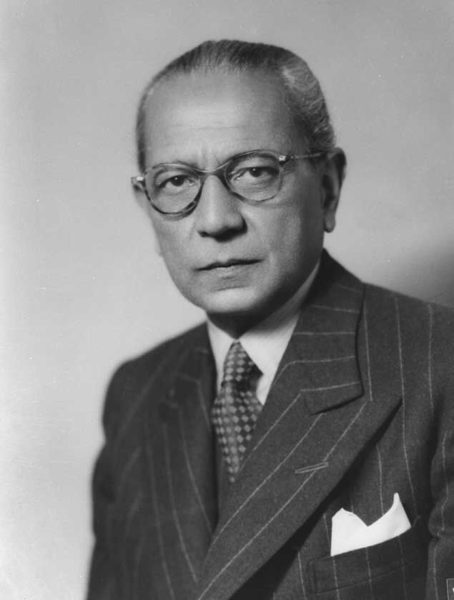
A.M. Shahul Hamid, movie producer and theatre owner, in an official portrait after receiving the Khan Bahadur title from Lord Mountbatten in 1945. | Photo Credit: SPECIAL ARRANGEMENT
Son Shahul Hameed made his name as a rice merchant, with his Hameedia Rice Mill based in Ariyamangalam. “Like my grandfather, my father was a philanthropist who would readily donate to any worthy public cause,” says Rahima, who is one of seven children born to Shahul Hameed’s second wife.
“He was honoured for his services to the British Government during the Second World War with the title of Khan Bahadur and a gold medal by [the last Viceroy of India] Lord Mountbatten in 1945.”
After Independence, then-Prime Minister Jawaharalal Nehru lauded Shahul Hameed’s generous donation of several truckloads of rice to the Indian troops fighting the Indo-Chinese war in 1962.
Central Talkies also brought the merchant into contact with prominent Indian film personalities.
“Quite early on, my father had gained a reputation as a saviour of films that were stuck in production due to financial problems,” says Rahima. “He helped TR Ramanna to successfully complete the production of Koondukili (1954), and Chinnappa Thevar’s Thaikkupin Tharam (1956), but only as a friendly gesture. Father never indulged in moneylending, because it is against our religious beliefs,” she says.
Becoming a producer
In 1962, Shahul Hameed helped actor-director AP Nagarajan with money to complete the shooting of his directorial debut Vadivukku Valaikappu, starring Sivaji Ganesan, Savitri, VK Ramasamy, MN Rajam and others.
After much persuasion, Shahul Hameed eventually agreed to Nagarajan’s request to produce the film Navarathri in 1964.
“All the stars were signed on for a salary of ₹3 lakhs each,” remembers Rahima. “In those days, you could buy a bungalow for ₹1 lakh in Thillai Nagar.”
A landmark 100th film for Sivaji Ganesan, the movie earned positive reviews for the nine distinct roles essayed by the thespian. It was subsequently remade in Telugu in 1966 with the same title and Akkineni Nageswara Rao in the lead, and in Hindi in 1974 as Naya Din Nayi Raat with Sanjeev Kumar.
Tragedy strikes
The success of Navarathri led to Nagarajan proposing his next film, a mythological, to be produced by Shahul Hameed, in 1965. Originally advertised as Siva-Leela, this was to be later renamed as Thiruvilaiyadal.
“These days, people would probably object to a Muslim producing a Hindu mythological film, but my father never let class or creed affect his friendships,” says Rahima. “He took a personal interest in the film’s production.”
Inspired by the Thiruvilaiyadal Puranam, a collection of 64 Saivite devotional stories written in the 16th century, the film was a critical and commercial success, running for over 25 weeks in theatres.
But it also had a thread of tragedy attached to it, for this was to be Shahul Hameed’s last production.
“A few days after the completion of filming, my father fell sick due to a heart ailment, and passed away on May 20, 1965, at the age of 58. It was as if the light went out of our life immediately,” says Rahima.
Finale
While Thiruvilaiyadal did well, winning awards and setting new standards for Tamil epic films, the lives of Shahul Hameed’s family members were thrown into turmoil.
“My husband Mohamed Kasim had been running the Central Talkies on lease on behalf of my father. Though we initially had a good run, with major films releasing here, my husband was unable to sustain the business due to rising rents,” says Rahima.
Mounting debts forced Shahul Hameed’s heirs to close down Central Talkies in 1983. The complex was sold in 1993.
“The trauma of losing Central Talkies affected my husband’s mental health badly, and he was confined to bed for 18 years,” says Rahima, who nursed him until his death on August 29, 2002.
Living in dire straits in rented accommodation near the Airport, Rahima, now a 70-year-old who suffers from age-related ailments, is supporting an adult son with neurological problems. Protracted property disputes have estranged her from her relatives, says Rahima.
The days of glittering movie premieres are a distant memory. Finding money to pay the bills is a daily challenge for this senior citizen.
source: http://www.thehindu.com / The Hindu / Home> Entertainment> Movies / by Nahla Nainar / August 31st, 2018
Ironically, in our present day India, even freedom fighters are judged on the basis of their religion. Many people believe Muslims didn’t contribute to India’s Independence from the British rule. To make it worse, there are not many sources available that disclose Muslims’ contribution to India’s Independence.
To break the myth of every person who believes Muslims have given no contribution to India’s history, we have tried to come up with a list of 11 Muslim fighters who fought for India’s Independence and are still present somewhere in India’s history.
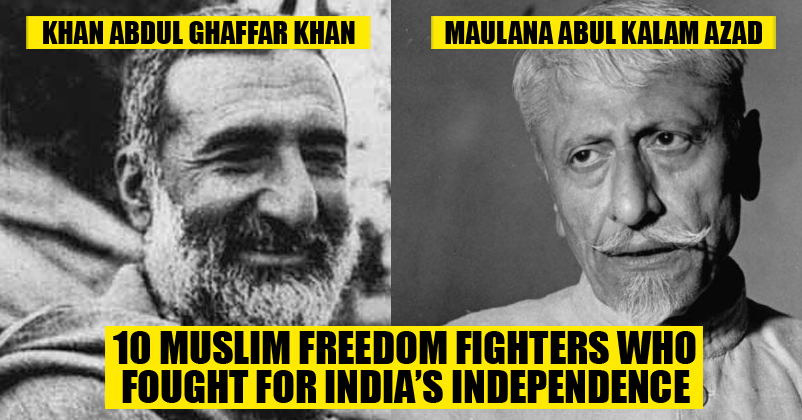
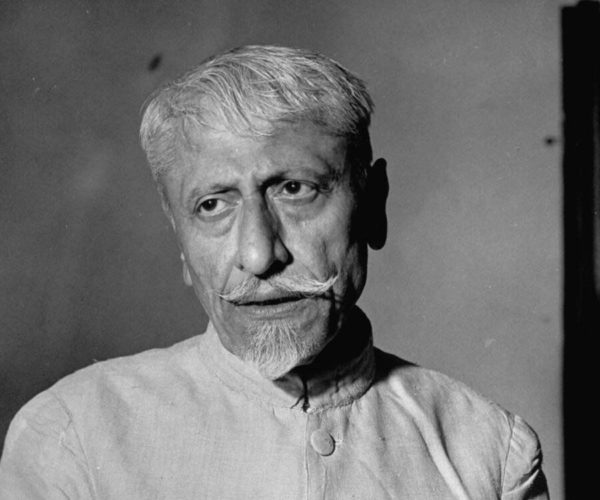
Maulana Abul Kalam Azad
One of the greatest freedom fighters of India, Maulana Abul Kalam Azad, is our first name of Muslim Freedom Fighters. His service to the nation didn’t just stop after India became independent, he continued serving India till his last breath. He first took part in India’s Independence aged just 16. In his second stint as Congress President, He started the Quit India Movement. He was the first education minister of India. He was conferred a Bharat Ratna in the year 1922. Maulana Abul Kalam Azad, after serving the country for over 50 years, breathed his last on 22 February 1958.
Dr. Zakir Husain
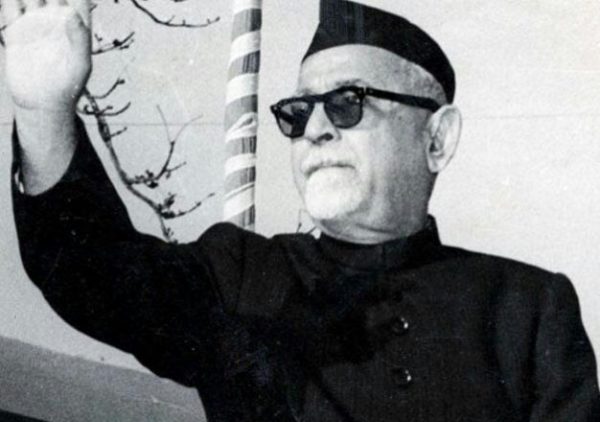
Another Bharat Ratna awardee, Dr. Zakir Husain was the third president of independent India and also the first Muslim president of India. He was a stern follower of Mahatma Gandhi’s non-violence policies. He believed that education was essential to make the Indian youth capable of fighting against the British and thus focused on empowering the education system. He acted as the Vice Chancellor of Jamia Millia Islamia for 22 years (1926-48) and made it one of the finest educational institute of India. He died on 3 May 1969 becoming the first Indian president to die on duty.
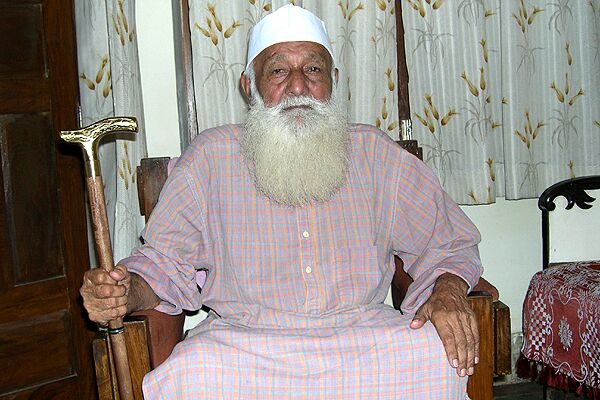
Syed Mohammad Sharfuddin Quadri
A forgotten hero of India’s freedom struggle, Syed Mohammad Sharfuddin Quadri is included in our list for his supreme acts of nobility. He joined India’s freedom struggle during the Salt Satyagraha movement in 1930. He ably supported Mahatma Gandhi in every struggle and was imprisoned in the same cell as Mahatma Gandhi. Even after independence, he stayed away from politics and still continued to contribute his bit to the nation. He died on 30 December 2015, at the age of 114, 8 years after getting awarded with a Padma Bhushan.
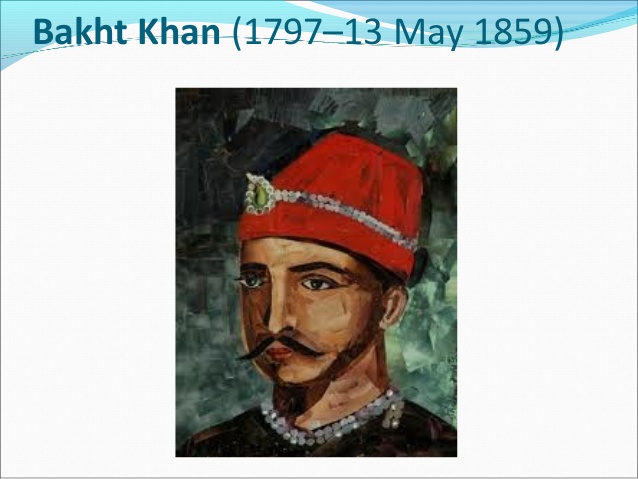
Bakht Khan
Hailing from Bijnor district of Uttar Pradesh, Bakht Khan was a major part of the rebellion of 1857. An experienced army-man, Bakht Khan served as a Subedar in the Army of East India Company. Bakht Khan took command of the rebel forces. He lacked ammunitions, food and other necessities and still managed to improve the standard of rebellion forces drastically. His strong and powerful rebellion activities prompted the British rulers to launch a man hunt. In May of 1859, the British had their prime target, Bakht Khan, shot dead.
Muzaffar Ahmed
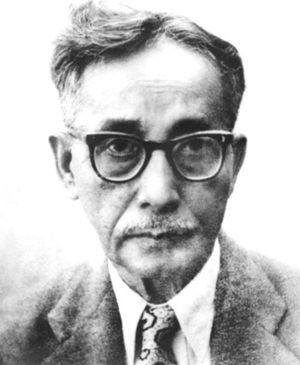
Born in the present day Bangladesh, Muzaffar Ahmed initiated a magazine Navayug to promote the nationalist feeling amongst the Indian youth. He was one of the founders of the communist party of India. He was jailed several times for his involvement in various conspicuous deaths of British officers. The headquarters of Communist Party Of India in Kolkata is named after him. He died in Kolkata in the year 1973.
Mohammad Abdur Rahiman
Born in the Thrissur district of Kerala in the year 1898, Mohammad Abdur Rahiman was known for his heroics in restoring peace in the riot affected areas of 1921. He was jailed for two years for the same. He practised Salt Satyagraha and was again sentenced for rigorous imprisonment for 7 months. He mobilised the Muslim masses against the two nation theory of Muslim league Party. Soon after addressing a public meeting at Kodiyathur on 23 November 1945, he breathed his last.
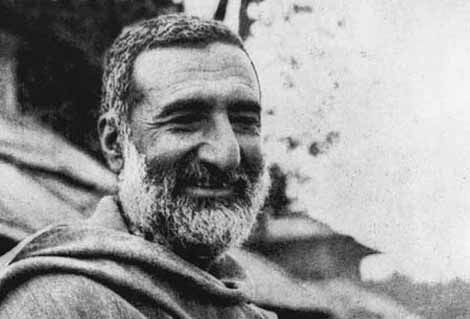
Khan Abdul Ghaffar Khan
Known as ‘Frontier Gandhi’, Khan Abdul Ghaffar Khan was one of the major reasons behind the Britishers leaving India. He pioneered the famous Khudai Khidmatgar (“Servants of God”) movement in 1929 and it successfully guided it to its Destiny. After independence, he opposed the partition of India but failed. He moved to Pakistan and started a movement for a separate Baloch province. He was jailed many times for the same cause. He died in 1988. During that period, a war was going on between the Afghani rebels and soviet forces. However, both sides halted their proceedings to lend a tribute to this legend.
Abbas Ali
Inspired by Bhagat Singh and Chandrashekhar Azad, Abbas Ali joined the Indian freedom movement in his teenage after completing his education. He joined the Indian National Army (INA) or the ‘Azad Hind Fauj’ and was subsequently court-martialled and sentenced to death. However, before he could serve his punishment, India attained independence and Abbas was eventually set free. He was in jail for over 50 times all throughout his life and stayed in jail for 19 months when Indira Gandhi imposed the emergency. He died on 11 October 2014 due to a heart failure.
Asaf Ali
When tons and tons of freedom fighters were getting jailed everyday, Asaf Ali stepped up and fought their legal battles to bail them out. He was even jailed alongside Jawaharlal Nehru. He participated in the ‘Quit India Movement’ and did everything he could for helping India achieve independence. On 1 April 1953, Asaf Ali died in Bern (Switzerland) while serving as India’s representative. A postal stamp was issued in his honour in 1989.
Maulana Mazharul Haque
Born in Patna district of Bihar on 22 December 1886, Maulana Mazharul Haque was known for his his social works during the famine of 1897. He became the Vice Chairman of Bihar Congress Committee and started taking part in the freedom struggle. He played a major role in making the Non-Cooperation and Khilafat Movements and the Champaran Satyagraha a success. He died in January 1930 before which he donated every single bit of his property for encouraging education. In his honour, in April 1988, the Maulana Mazharul Haque Arabic and Persian University was founded at Patna.
Not just these 10, there are many many more of such brave souls who fought for their nation while being active followers of Islam. Maghfoor Ahmad Ajazi, Saifuddin Kitchlew, Moulvi Mohammad Baqir, Vakkom Majeed and many more names can be added to this list.
Yes patriotism is a religion in itself and tagging it with another religion is completely unacceptable. Do let us know if you know about other such Muslim Freedom Fighters in our comments section below.
source: http://www.rvcj.com / RVCJ / Home> Extras / by Kashif Sheikh / February 13th, 2017
Bijnor, Rohilkhand (Mughal Empire) / BRITISH INDIA :
On India’s independence day we remember a forgotten hero from our history
Bakht Khan: Winner of a lost battle
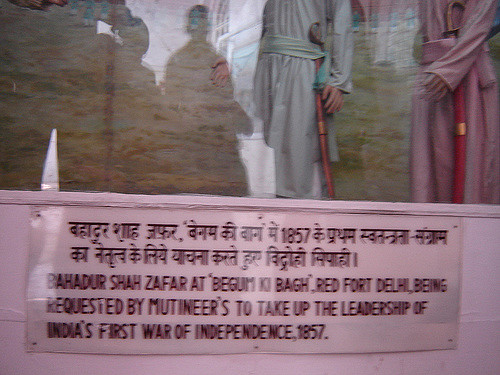
Second of July 1857, a hot humid day some one hundred and fifty-five summers ago, a contingent of about 250 men in their Bareilly regiment uniforms arrives in Dilli of the time, the world renowned Red Fort to be precise. Mounted on their horses, they march past the Laal Purdah [1][entrance to the private chambers of the last Mughal King]. The General of the regiment marches too albeit without the customary bowing down of his head; much to the outrage of those present at the court. But what happens next would seem rather more sacrilegious. That unbending commander of the arriving regiment, a tall and corpulent man of Rohilla stock appears least caring about the sensation he creates and the protest that comes his way, he moves forward and ‘salaams’ the King as if he is an equal.[2] But the King, Zille Sub-haani, Khaleefatur Rehmani, Khudawand e Majaazi, Hazrat Abul Zafar Sirajuddin Bahadur Shah Zafar is helpless.
The man in the eye of this little storm was General Bakht Khan, Commander of the Neemuch brigade, of the Army of East India Company, among the true heroes of 1857, who had arrived to make a fight against the Company which till now he had served.
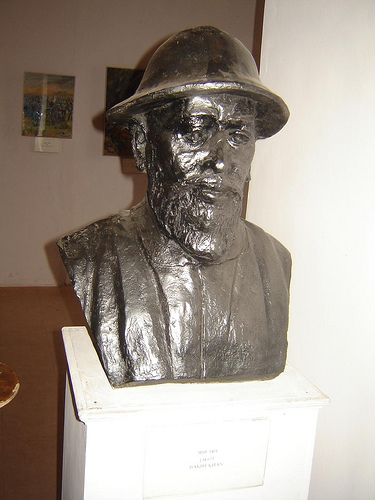
General Bakht Khan’s bust in Red Fort museum.
He was described as “a much garlanded and battle hardened veteran of Afghan wars, with huge handlebar moustache and sprouting sideburns…. Known personally to several of the British officers” [3] His reputation as an able administrator and a shrewd military strategist had reached Delhi much before his arrival.
The poor Mughal King, after much reluctance, decides to award the just landed General ,a royal sword and a buckle but Bakht Khan still refuses to present the ‘nazar’ (a mandatory monetary gift to be offered to the King) when meeting him. Soon after, this Khan then begins to give a piece of his mind to the king, he begins, “Your good for nothing princes [sons] enjoy full powers over your military. Give all the power to me as no one else but I know the norms of the English army, who knows them better than me?” This was blunt and undiplomatic at its best, but the man in question, meant business. He was duly appointed the Governor General of the army, effectively displacing Mirza Mughal the headstrong son of Zafar.
Reading literature about 1857 revolution became quite an obsession with me since a teenager, our shared history of the sub-continent, India, Pakistan and Bangladesh. A familiar heritage we possess, a common thread running through our past. History is journalism with hindsight and this special journalism about 1857 period transports us to a novel world inducing in us a sense of déjà vu. It was through these readings that I ‘discovered,/em>’ Bakht Khan. But it was not love at first sight; I must tell you, what with his being a man with a pot belly that did not make him a fine horseman! Add to it the derision he was subjected to contemptuously for the reason of his being a Wahabi. But more surprising were the contradictions that I began noticing in various descriptions about him. A few, mostly historians from the east, respected him as one of the bravest soldiers and the real hero of 1857 Ghadar while the rest seem to scorn him just for being a Wahabi. This term in itself is quite controversial, even today, just as it was in those days.
Wahabism is the name given to Islamic philosophy instituted by Muhammad ibn Abdul Wahab Najdi[1703-1792] in 7th Century Arabia; the intention was to practice Islam it in its purity just as Prophet Muhommad (peace be upon him) did. William Dalrymple elaborates General Bakht Khan‘s Wahabism thus, “Like a Wahabi ,” he says, “Bakht Khan disdained earthly rulers, whom he regarded as unIslamic, and longed instead for a properly Islamic regime.” [4] He cites his Wahabist thoughts to be a cause of his failure. Interestingly , Bakht Khan fought under a king who was the embodiment of everything a true Wahabi abhors.
What is astonishing is that in almost every account about the man, his being a Wahabi is essentially stressed, perhaps to draw attention to his real or imagined fanaticism. Some of the earlier prominent revolutionary figures like Syed Ahmed Shaheed and Shah Ismaeel Shaheed were self-proclaimed Wahabis. Let’s see what Bakht Khan‘s Wahabism was like.
His Wahabism was said to have been inspired by his spiritual mentor, Moulvi Srafaraz Ali, a master teacher of Algebra and Geometry and with a thorough knowledge of Tafseer[Quranic interpretations] and Hadeeth [Prophet Muhammad‘s sayings]. Moulvi Sarfaraz Ali was entitled as Imam of Mujahideen and his orations exhorted people to join this revolution. It was he who had motivated his initially reluctant disciple Bakht Khan to join this momentous struggle. In the pre- revolution time, Moulvi Sarfaraz Ali was regarded as one of the brightest jewels in Delhi’s intellectual crown, by no less than Sir Sayyed Ahmad Khan himself. So it was Moulvi Sarfaraz Ali who urged Bakht Khan to fight against the infidel Christians for the honor of his country. Interestingly this ‘accusation’ of his being a Wahabi also betrays probable renaissance Islamic nature of the revolution of 1857.
Being a Wahabi, Bakht Khan was against the veneration of Sufi shrines, which was/is quite a rampant practice among a large section of the Indian Muslims. The Wahabis disapprove of it as being nearer to idol worship and a tendency picked up from their Hindu brothers. What is important to be noted and not to be overlooked is; this Wahabism of Bakht Khan and his mentor Moulvi Sarfaraz Ali was borrowed not from Abdul Wahab Najdi of Saudi Arab but from Shah Waliullah Muhaddith Dehalvi [1703-1762], the father of Islamic reform movement in India. This reform movement aimed at eliminating all non-Islamic innovations and practices from the religion and restoring a strict Islamic monotheism, among Indian Muslims. Shah Waliullah, was the first one to translate Quran into Persian and anticipated many modern, social, economic and political thoughts, such as social reform, equal rights, labour protection, and welfare entitlement of all.
Where is Indian account of 1857 war of freedom?
P.C. Joshi in his work, Inquilab 1857 makes a significant observation about this term, Wahabi. He says that, “The use of the term Wahabi is not at all correct, because the political ambitions and social views of allegedly Indian Wahabis , were not based on Abdul Wahab of Najad but on the man who came before him. He was Shah Waliullah [died:1762]. That’s the reason, some supporters of Islamic renaissance like, Ubaidullah Sindhi [1861-1948], Ghulam Sarvar and [Hakeem]Ajmal Khan have preferred to call themselves as Waliullahi or the followers of Shah Waliullah. But I have maintained this word due to its popular use and historical importance.” [6] His Wahabism thus had Indian roots. Hence despising the Rohella Subedar as a Wahabi is to belittle the efforts he made for a unified fight against our former rulers. It is unfair to the man in question who is among the real heroes of the mutiny. Noted historian Irfan Habib too condemns the practice of labeling and cornering him as a Wahabi and describes Bakht Khan as, “the republican minded commander–in-chief in Delhi, who is most unfairly portrayed as a Wahabi in some modern accounts.” [7]. Wahabi or not, what is important to notice, is that he struggled for unity among the different religious sects and led the Fauj-e-Hindustani and fought for a unified and free India. Barun De admires this General of Bareilly for providing the quintessential unity that was severely lacking among the ranks of the rebels. He terms Bakht Khan a true leader and lauds his efforts at unifying different forces of the time, as worth studying. [8]
My attempt here is to present a brief sketch of this Great General as a figure who, till his last struggled for the dream of a Free and Unified India where harmony among the different ethnic groups was his top priority.
His Origins:
Bakht Khan was of Rohilla [Afghan] stock. His grandfather Ghulam Qadir Khan came to Lucknow to make a living. His father Abdullah Khan, said to be a very handsome man, was married to an Awadh Princess. Bakht Khan was formerly a Subedar in the 8th Foot Artillery at Bareilly and had served the British for over forty years and fought bravely in Afghan wars. He had progressed quite rapidly and was appointed in a high-ranking position there. Interesting to note, is his close friendship with many British officers, under whom he had served and imbibed the art of war. Colonel George Bourcheir was educated in Persian by him, and who describes his tutor as, “very fond of English society …..[and] a most intelligent character.”[9] But quite a few disagreed and called him, a fat guy, socially ambitious and an incompetent horseman, probably the worst insult for a soldier, in those times. His commanding officer, Captain Waddy [BHA], describes him thus, “ He is sixty years of age and is said to have served the Company for forty years; his height 5 feet 10 inches; 44 inches round the chest ; a very bad rider owing to a large stomach and thick thighs but clever and a good drill” [10] When the revolution began he was already in his native town of Bareilly and his fame as a fine administrator and a brave and especially able army commander had spread in the country. He had arrived in Delhi with a huge contingent of 7000 [according to another source, 14000] cavalry and hundreds of infantry and a treasure from Bareilly.
Bakht Khan as an Administrator:
It is indeed quite fascinating to know Bakht Khan’s efforts in trying to enforce some kind of sense and sensibility, onto the madness of loot, plunder and sheer chaos of the Delhi of 1857 uprising. He tried every trick in the book to restore law and order amid that disturbing pandemonium .Munshi Jeevan Lal, [11] the overweight Mir Munshi [Chief Assistant] of Resident of Delhi, Sir Thomas Metcalfe [who was working as a British spy, describes how General Bakht Khan went about restoring order amidst that unprecedented anarchy spread after the arrival of the rebels, in the capital. It’s a human thing to love admiration; but when it comes from the enemy, it becomes doubly significant.
Munshi Jiwan Lal in the notes to his British Masters appreciates measures taken by Bakht Khan. There were to be no taxes on salt and sugar, looting [by the just arrived rebel soldiers]had to be stopped else their plundering hands would be cut off, shopkeepers were to be given full protection and even encouraged to use weapons[if they had none, then would be duly provided from the state armory], soldiers were to be removed from the Dilli bazaars as it created difficulties for the general public and relocated in camps outside Delhi gate, their salaries were to be restored and promises of jagirs were made to them in return of their services to the army. He further informs that the General’s men had also killed three spies working for the British [M.Baqar Ali, father of Muhammad Husain Azad, the famous Urdu writer, too, had complained in his first report that, he is followed by the spies of Bakht Khan wherever he goes,[12]
The Metcalfe’s Munshi tells his masters that General Bakht Khan was soft spoken to his men but also remained firm that, they should not cross their line of duty even in the smallest measure. Impressive army parades were conducted by him from Delhi Gate to Ajmeri Gate. Many important petitions from various kings, Nawabs, Rajas, and officials of courts, were forwarded to the King and replies were received through the office of Governor General Bakht Khan; chief among them were, Qudratulla Khan, Risaldar of Awadh, Khan Bahdur Khan, Rao Tula Ram. A ruqqah was also addressed to the Patiala Rajah, conveying pardon of the King for his faults, many other such instances of accessing the King through the General can be found in different accounts of history. [13] Here he was playing the role of a keen diplomat. His honest and sincere attempts at running the administrative affairs efficiently at court and his diplomacy with the men of importance are discernible from these accounts. The steps he took to restore a sense of sanity in those insane times are evidently commendable but somehow go unnoticed by his critics.
Bakht Khan as a military strategist:
The General was a shrewd military strategist. What he achieved at the battle field of Delhi becomes more significant considering the dire circumstances he worked in. He had little support from his own army factions and was constantly attacked and maligned by some hostile elements from within. His strategies on the battle field, his trying to sabotage the passages that took supplies to their camp, invention of rota system and his playing the mind games with the enemy, all are indeed splendid. Richard Barter gives tribute to this great man thus: “Thanks to the system organized by Bakht Khan…..We were scarcely able to stand….” [14] He was speaking, worn out at the battle ground along with his soldiers, thanks to the new General’s machinations. Their frustration grew to the extent that some of the British soldiers seeing no sign of relief wanted to kill themselves on purpose, and some even did.
Be it propelling a contingent to Alipore or setting up a new rota system intended to engage the British forces on a daily basis, and which meant leaving them no respite from the combat, General Bakht Khan always worked on new strategies to defeat his enemy. Soon after his arrival, on the ninth of July he made a massive attempt to destroy the British forces and one of his strategies was to clothe his men in British white uniforms. This took the opponents by surprise and a deep access was gained into their camp. Such regular expeditions by Bakht Khan frustrated the enemy to the extent that, they began losing all hope of capturing Delhi again. He succeeded as he knew the British tactics inside out .His long service to them had at last, paid off.
“Mutineers” or Freedom fighters?: Museum at Red Fort continues to insult our heroes by calling them “mutineers.”
But unfortunately the fact that Bakht Khan’s attempts had been gaining success went unreported, unrealized at Delhi court due to the absence of a parallel intelligence system like their adversary had. The British had knit an intricate network of spies throughout the city and at the Red Fort. Reports about every single move of the King, the parleys held at the court, the movements of the rebel forces and their strategies planned for the future attacks, reached the British ears without fail. Many prominent and respected people were on their payroll. But sad to say, no such system was in place, at the other end of the battle camp. W. Dalrymple observes sharply, “The lack of intelligence reaching the city meant that no one among the rebels realized how successful Bakht Khan’s tactics were proving” [15] They didn’t know how fragile the British forces had become and what a tremendous pressure Bakht Khan‘s tactics had put on them. Unfortunately this ignorance about his success was perceived to be his seeming failure and this set his detractors buzzing. Mirza Mughal had nursed a grudge since the General caused his removal from the military affairs. Bakht Khan’s undiplomatic ways too didn’t help. He was ruthless enough to ask the princes to keep away from military and administrative affairs as he believed ‘everyone knew that they were good for nothing fellows’. It was but an ugly truth.
Bakht Khan informed the king that Prince Khizar and others were stashing away the taxes collected from the city traders and due to this salaries of the army could not be paid. Prince Khizar was asked to return the booty. The commoners were pleased with him while the Mughal princes vowed vengeance. Undoubtedly Bakht Khan was a man of the world but he was not at all, worldly. He frequently failed to decipher his detractor’s nasty plans and eventually became a victim to their malice.
The Neemuch brigade-his force- was well-known for its valor; but the two of its generals Ghaus Khan and General Sidhari Singh [supporter of Mirza Mughal] parted ways, from Bakht Khan, as they couldn’t digest the fact that, an officer of the similar rank as theirs should get so much importance from the King. During the battles he was left alone to fend for himself. A most ridiculous charge of his being a British spy also came along. All this put him under great pressure and he had to issue a statement denying all these charges. Whether it was failure to capture the army bastions at Alipur, Manali Bridges and the Ridge and almost all the failures were wrongly attributed to the General. Zafar too now was infected with doubt and the devious designs of his foes resulted in Bakht Khan’s removal as Governor General by the end of July. A Court of Administration was established to run the affairs of the Mughal Darbar. The General and his Bareilly brigade kept their distance from it but their assaults grew weaker and the tremendous pressure that he was able to put on the British began to diminish. Dalrymple remarks, “…the end of Bakht Khan’s military system brought instant relief to the British on the ridge”. [16]. It is indeed saddening that such lowly games of selfishness and rivalry did the good General in and ultimately caused the struggle for freedom, a catastrophic damage, giving a boost to the enemy. Richard Barter joyously announced that, “And so, when we were scarcely able to stand, the attacks ceased, as if by a dispensation of Providence, and gave our force the repose they so much needed.”[17]. The one man who possessed the potential for defeating the enemy was thus, rendered impotent.
As no intelligence about the success of the good General’s methods reached the court and Delhites, it led to huge misgivings about his military forays. Resentments, against this good soldier soon began to build up. As mentioned earlier, he was accused of being a British stooge himself. His own colleague from the Neemuch Brigade Sidhari Singh accused him thus. Other former co-workers too were not far behind. Gauri Shankar [who was himself a British spy] and Talyar Khan, on 20th August, arranged for a Sikh to proclaim that Bakht Khan provides all information about the court happenings to the enemy. But the truth was found out and the witness was rejected for his false claims. The General himself issued a public statement denying this in the presence of Mirza Mughal and other army generals.
The ever eternal quintessential factors of jealousy envy and contempt did this great warrior in. Quite perceptibly his disenchantment began to grow. He became more cautious but continued to be at the forefront of the war and the biggest headache for the British. He marched towards Najaf Garh separate from the Neemuch brigade as his own soldiers refused to take orders from him (and resultantly was smashed by their rivals). Like before, the General was unjustly blamed for this fiasco, as well. Nevertheless Bakht Khan still remained defiant. He was unrelenting and rejected Zafar’s suggestion of opening the gates of Delhi, if the British could not be defeated. He elaborated on some new strategies and it was quickly reported by the spies present at the court to the Gora Sahibs. Needless to add this rendered his plans useless. His failures thus began mounting up. Yet he succeeded in defeating the opponents at the Delhi Gate even in those final hours, and kept a strong vigil at the Ajmeri Gate till the last moments of the war.
Despite his failures, more due to the non co-operation of his team than his own faults, what he did achieve was the delay in recapturing of Delhi by the British, as long as he could. The erstwhile Dilli would have been rounded up, quite early in the day, had it not been for the efforts of General Bakht Khan Rohilla.
Memorial for British soldiers at Delhi Ridge. No memorial for Indian soldiers though.
His military achievements despite the hostilities he faced were amazing; be it capturing three hundreds of British horses taking supplies to their masters, or one of his final determined attacks with his Bareilly and Neemuch troops, which forced the British to make a hasty retreat, from Hindu Rao’s house. Bakht Khan’s advance up to the house of Hindu Rao was no mean achievement; it threatened to cut off the British troops from their camp.[18] Had he been supported efficiently by his own people at the time, his success rate would have been much higher. Miyan Muhommad Shafi , in his famous work, Pehli Jang-e-Azadi-Waaqeyaat wa Haqaayeq, blames this sorry state of affairs on the conspiracies hatched against Bakht Khan by the unfortunate and unreasonable Mughal Princes, who conspired against him, unaware of their approaching terrible end. He says, “The courtiers created havoc each and every time and put blame on him for everything going wrong, without providing him with any kind of general support. All this and the corruption at the court and among the army rank and noncompliance of the troops, disheartened this most able of the fighters, Bakht Khan and after being relieved from his various significant positions , he got reduced to taking care of his own original regiments alone. This turn of events and colossal difference of opinions, among the different elements at the court, led eventually to the downfall of Delhi, the arrest of Zafar and slaughtering of his sons, not to mention hundreds and thousands of Delhites being butchered and displaced, forever.”[19] But in the mayhem of 1857 mutiny what was more tragic perhaps, was the ruin of Shehar e Dilli and its uniquely rich Ganga –Jamuni Tehzeeb. It died forever.
It was but for Bakht Khan‘s efforts that the rebel forces cold hold on for a longer period. It is an irony that they all blamed him; his enemies could be found easily on both sides of the divide. When the scene grew bleaker and the British forces entered the city gates, he continued persuading Zafar to join him in the inevitable retreat as the area outside Delhi was still under the rebel control and help could be at hand. The former Subedar in his last ditch attempt, insisted to Zafar, that, the name and status of Mughal King would surely bring victory to the Indians. Never say die spirit of Bakht Khan is here for all of us to see. The fragile eighty year old King Zafar, last descendant of the Timuri lineage had even agreed initially. But schemers like Hakeem Ahsanullah Khan, the court physician and Mirza Ilahi Bakhsh, father in law of Zafar’s deceased heir Mirza Fakhru, superseded the Khan one more time, eventually leading the last Timur to be a hapless royal British prisoner.
At this juncture, Bakht Khan speculated on the reasons of their defeat. He explicated that, their choosing of Delhi as their bastion of the battle was erroneous from the day one. He also faulted the princes and especially Mirza Mughal who’s imprudent handling of the affairs at the battle field did greater damage to the cause. This Prince was the one who possessed no experience of any war and had taken up the cudgels only for bragging about his bravery.[20]
Bakht Khan’s administrative skills added to his superb military zeal had proved to be a deadly combination for the enemy. Alas, his spirit was broken by his own men and he had to retreat and disappeared. There are different theories about his departure. It is said he went to Awadh and fought against the British, one more time. A few others opine that he was killed in a battle and a few more say he escaped to Nepal, never to be seen again. This last version seems more authentic.
The Hindu-Muslim equation of the time and Bakht Khan’s role in it:
In his legendary fight at Delhi of 1857, Bakht Khan’s zealous efforts at maintaining Hindu-Muslim unity are outstanding. More so as he is accused of being a Wahabi; this becomes doubly significant.
A general peace had always prevailed among the Hindus and Muslims of Delhi. Turmoil seemed to brew when Hindu sepoys killed five butchers for slaughtering some cows. The fear of inter-communal clashes strengthened the already existing general disillusionment among the Delhi masses [especially among the Ashraaf or high class people] about the rebellion and the uncouth rebels, popularly called, Purabiya or Tilanga. The British were sitting with their fingers crossed, hoping for a bloody game to begin on the day of approaching Baqrid. They expected violence, as Muslims would slaughter the cow which would anger Hindus as it is deemed holy in their religion. But to the disappointment of the British, Bahadur Shah Zafar himself assured a group of Hindu generals about his intention of banning the practice of sacrificing a cow, with immediate effect. Bakht Khan through his order of 30th July saw to it that this order was strictly implemented. He thundered that whoever was found guilty of slaughtering cow, ox, or buffalo, would be considered an enemy of the state and of the king respectively, and would be punished with death![21]
He didn’t stop at that. He sent out a written proclamation to Delhi’s Kotwal on 31st July and 2nd of August 1857 to the effect that, every morning and evening, it should be announced to the people that this order against cow slaughter should be strictly followed, and anyone found guilty would be severely punished. He also saw to it that an alleged fanatic Moulvi Muhammad Sayyed found enticing people for jihad was reined in. The restraining of the fanatic elements and banning cow slaughter were big steps towards restoring communal peace and harmony, at the time and proved a great boost to restoring trust. Hindu Muslim enmity had to be avoided at any cost, so as not to allow the enemy to make a profit out of it. Bakht Khan made it the central point of his fight and this is admirable.
However the Good General is also blamed for drawing together Delhi ulemas [supposedly against the wishes of King Zafar ]and making them sign a fatwa to urge the Muslims to fight against the British, taking it to be their religious duty. But it must be noted that, it was a call for a mutual struggle, for the honor of the motherland. Barun De makes a valid point, when he articulates, “All listened to the call of dharma or deen. In this sense, Christianity was the symbol of intrusive colonialism, seen as a bourgeois crusade for market globalization, much as it is being seen by neoconservatives today [22) This was something quite remarkable about the 1857 revolution. We can call it a golden period of proverbial Hindu-Muslim harmony.
1857, Ghadar
Here in lies an amazing story of the people, fighting an enemy hundred times stronger than them. These people were the poor, the workers, the weavers, the peasants; all joined hands together to resist the injustice they were subjected to, since last hundred years or so. More admirable is the fact that, despite huge caste disparities, clan conflicts, geo-ethnic varieties and most of all those bona fide religious differences, Hindus, Muslims and Sikhs became united for the cause of India/Hindostan. Esteemed historian Irfan Habib finds this assimilation exceptional. The astonishing fact, he says is that, “…on many occasions largely Hindu contingents elected Muslim officers and, similarly, contingents with a largely Muslim composition chose Hindus as their officers. The fact that this was not anywhere done consciously makes it a particularly notable example of inter-religious solidarity among the Bengal Army sepoys.” [23]
This message of unity in diversity is indeed the most outstanding lesson; we get to learn from 1857 uprising. The little armies from all over India grouping in Delhi to fight under the leadership of a Muslim King, is a grand testimonial in itself. This Muslim King had been a titular figurehead of the erstwhile India, for quite some time, but still thought to be a figure of authority. It was a matter of belief, of faith, for the Indians. They still believed or wished to believe in Bhadur Shah Zafar being Baadshah-e-Hindostan.
At the risk of digression, allow me to drift and explore this phenomenon a bit more. It was a fact that all army contingents, from all over the erstwhile British Raj territories, moved towards Delhi and gathered at the Lal Qilaa to win blessings from a Muslim king. Today this may seem beyond belief but back then, in 1857; it came most naturally to the Indians of the time. William Dalrymple astutely remarks that, “The rip in the closely woven fabric of Delhi’s composite culture, opened in 1857, slowly widened into a great gash, and at Partition in 1947 finally broke into two. As the Indian Muslim elite emigrated en masse to Pakistan, the time would soon come when it would be almost impossible to imagine that Hindu sepoys could ever have rallied to the Red Fort and the standard of a Muslim emperor, joining with their Muslim brothers in an attempt to revive the Mughal Empire.” [24]
It was due to the unmistakable aura that surrounded the Mughal Empire. Bahadur Shah Zafar possessed that unique trait of being a Benevolent Baadshaah who alone had the power of rendering a sense of strong unity among the varied regions and natives of India.
Now coming back to our General, he proved to be a perfect foil to Bahadur Shah Zafar. H.L.O.Garret, keeper of the records of the government of Punjab, in his 1933 account of the rebellion enlightens us that Bahadur Shah Zafar was only a nominal ruler of a dying Delhi; he duly informs, “The actual military operations were directed by Bakht Khan, on whom a royal decree conferred the title of Commander-in –Chief.” [25] C.T. Metcalfe notes that despite Bakht Khan’s removal from his post at the Delhi Durbar, King Zafar trusted him all along and used to urge him to put up a brave fight as before.[26] Bakht Khan’s endeavors in executing the commands of his king at putting up a unified frontagainst the colonizers, is something fascinating. But strangely enough we do not find many mentions to him in our history books.
The year 1857 strikes a resonance in our hearts even after one hundred and fifty five years. We identify with this first war of independence. The Mughal authority had eroded long before this date; but many critics say, what died in 1857 was hope; hope for freedom, for unity. After 1857, India could never be the same again. The unique aura of Mughal Mystique died too in September of 1857. This aura symbolized a most beautiful land, varied and various in so many ways yet presenting an amalgamation so unique so endearingly rich that the world still fails to offer another such prototype. Bahadur Shah Zafar was an unwilling and hesitant hero standing at complete disparity with the General. The General believed in action. It is this action that makes General Bakht Khan Rohilla a True Hero and those among us who wish to dismiss him as just a sundry character, for them let me quote T.S.Eliot here, They know and do not know, what it is to act or suffer,
They know and do not know, that action is suffering,
And suffering is action.
It is action, our striving for it and the resultant suffering that teaches us the ways of surviving/winning life. It is our action, our Karma that makes our destiny.
In this regard Bakht Khan became a winner of the war, despite losing the battle.
—
Asma Anjum Khan is Assistant Professor of English in Maharashtra
Bibliography:
1-Lal Purdah- the Red colored curtain at the doorway to the Mughal king’s private chambers.
2-Memoirs of Hakeem Ahsanullah Khan-p.8
From:The Last Mughal- William Dalrymple, 284
3-Bourchier, Eight Months,44n],from: The Last Mughal, William Dalrymple,285
4-Ibid-286
5-ibid-285
6-Inquilab 1857, P.C.Joshi, Urdu Translation, pub: Taraqqi Urdu Taraqqi Urdu Bureau ,secondedition1983,105[References]
7-Irfan Habib, History from Below- Frontline, issue dated, June 29,2007,pg.16
8-Baun De ,Frontline issue dated ,June 29,2007,Pg 9 (Scholars Iqbal Husain and Rajat Kanta Roy too endorse his views.)
9-Bourchier-Eight Months,44,[quoted in Last Mughal,285]
10- H.L.O. Garret, The Trial of Bahdur Shah Zafar,King by Committee,8[ quoted in Gimlette’s post script to the Indian Mutiny]
11–Metcalfe,Two Native Narratives, Narrative of Munshi Jeevan Lal
12-William.Dalrymple,The Last Mughal,302
13-H.L.O.Garret, The Trial of Bhadur Shah Zafar, The Physician’s Testimony ,[Hakeem Ahsanullah Khan was the royal physician]
14-Barter Richard, The Siege of Delhi,36, The Last Mughal.
15-William Dalrymple-The Last Mughal,292
16-Ibid,294
17- Barter Richard, The Siege of Delhi ,[from:William.Dalrymple, The Last Mughal, 294]
18-William Dalrymple, The Last Mughal,357
19-Miyan Muhommad Shafi,Pehli Jang e Azadi –Waqyaat wa Haqaayeq,Urdu,288-89, edition,2007
20- Ameer Ahmad Alavi,Bahadur Shah Zafar,[Urdu]Lucknow, 1955,138-9,[ through [P.C.Joshi, Inquilab 1857-112-114,Urdu , ed.1983,Taraqqi Urdu Bureau ]
21-Press List of Mutiny Papers, no.120/143, 7 Zilhaj,21-RY,29 July 1857
and
Press List of Mutiny Papers, no.111,[c] 332,8 Zilhajj 21 –RY,30 July,Spear,pg.207 [from Iqbal Husain]
22-Barun De, The Call of 1857,Frontline ,issue dated, June 29,2007,pg.8-9
23-Irfan Habib, History from below ,Frontline issue dated June 29,2007,pg.14
24-William Dalrymple, The Last Mughal, 484
25-H.L.O.Garret, the Trial of Bahadur Shah Zafar, King by Committee, 7
26-C.T.Metcalfe, Two Native Narratives of the Mutiny in Delhi,[1974] 213
The following books helped too in making of this essay:
1-1857 ke chashm e deed Halaat[Almaroof Daastaan e Ghadar]-Syed Zaheeruddin Dehalvi.ed:2006
2-The Other Side of Medal by Edward Thompson, translated by Shaikh Hassamuddin, first edition,1982,Urdu Academy New Delhi Publication
3-Bakht Khan [Marathi]–by Iqbal Husain,2008, National Book Trust ,edition 2010]
source: http://www.twocircles.net / TwoCircles.net / Home> Articles / by Asma Khan for TwoCircles.net / August 15th, 2012
In the morning I woke up to messages of hope and happiness as is usual on India’s (71st) Independence Day. Family groups were full of photographs of our younger children dressed in saffron and green, as they went to their schools to celebrate Independence Day.
We watched the speech of Prime Minister Narendra Modi from the Red Fort, and posted messages and stirring poems on Twitter and Facebook. There was so much happiness and bonhomie, when suddenly I got a link to a tweet from a friend:
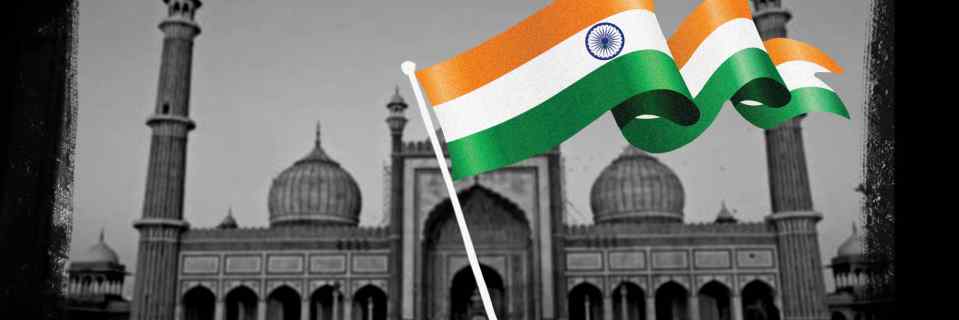
A bunch of people waving the flag in Delhi’s iconic Jama Masjid is hardly anything I should be upset about. In fact, the national flag on the historic Jama Masjid instills pride in me.
Why then, was I upset?
I was upset at the words that were deliberately aimed at hurting and demonising the community that prays in that mosque.
“71 साल बाद जामा मस्जिद दिल्ली की छाती पर चढ़कर हमने कार्यकर्ताओं के साथ राष्ट्रीय ध्वज फहराया, वन्दे मातरम”
“After 71 years, along with karyakartas (workers) I have climbed onto the ‘chest’ of Jama Masjid, and waved the national flag. Vande Mataram.”
Inherent to his speech is the message that the mosque, and by extension Muslims, have never hoisted the tricolour.
By the way, the call Madar e Watan Bharat ki Jai was given by Azimullah Khan in 1857, while fighting in the first war of Indian Independence. Honoring our motherland is not new to us. Perhaps Mr Singh (who tweeted the message) had missed this tweet by Sumer about flag hoisting at the Jama Masjid.
How Jama Masjid Area Celebrates I-Day
Mr Singh and his companions were 71 years too late, as the Indian Flag has been flying proudly in the hearts of every Indian, regardless of their religion. But yes, we fly the flag with love and respect, because we are Indians, not because we want to ‘otherise’ Indians.
Many flag-hoisting ceremonies were held in the Walled City. Flags were hoisted in homes, offices and public areas on 15 August.
As Abu Sufiyan, a resident of Old Delhi says, they came at noon, hoisted the flag, and left. No one objected or opposed them as flags were being hoisted everywhere. But he adds, “the enthusiasm with which Independence Day is celebrated in Old Delhi, where Red Fort is located, would be difficult to find anywhere else. They (Mr Singh and companions) may have climbed onto the steps of Jama Masjid after 71 years, but we have been hoisting the flag every year, in and around Jama Masjid.”
Sheeba Aslam Fehmi who runs the Walled City Café and Lounge at a little distance from the Jama Masjid, posted on her Facebook page this 15 August:
“We, living in and around Jama Masjid area, are used to several hoisting of the Tricolor on 15th August each year. Not only at the public spots like Azad Hind Hotel, right behind the main Gumbad of the Historic Jama Masjid, we have flags of all sizes on full mast at various establishments including all the schools, hotels, shops etc.
I just spoke to the local MLA Asim Ahmad Khan who has hoisted the Indian Flag at various spots in his constituency where Jama Masjid is located.
The celebrations and merry making is on since the day of full dress rehearsal only. Patriotic songs are played loudly in the narrow alleys of Jama Masjid.
If you want to witness the people’s celebration of the Independence day, come, take a stroll in the Jama Masjid bylanes.”
Ashok Mathur says, “I have been celebrating Independence Day since 11 AM today, and hanging over not one but many roof tops in the Pahari Imli and Matia Mahalarea of my Muslim friends flying kites, with music and fanfare, which started with the whole group singing the national anthem at the beginning… since I was a vegetarian among all others, someone quickly got kaddu ki sabji and chana from his home nearby… it was the tastiest kaddu that I have ever had… this is the spirit with which we live here.”
Role of Jama Masjid in India’s Freedom Struggle
Today, let’s examine the role of Jama Masjid in India’s Freedom Struggle.
As Hilal Ahmed, Assistant Professor, Centre for the Study of Developing Societies says, “The Red Fort and Jama Masjid have always been the symbols of political inspiration for Indian masses, irrespective of religion or caste, during the colonial period. Leaders from different backgrounds and ideologies used the mimbar (pulpit) of the mosque to deliver political messages. From Swami Shradhanand of the Arya Samaj to Gandhi, Nehru and Azad – leaders of all sects delivered speeches here.”
He adds:
It is worth noting that Jinnah never delivered any speech inside the Jama Masjid, though he participated in a procession of the League in 1946. Unfortunately the Hindu right-wing want to convert everything into ‘Hindu and Muslim’. Making Jama Masjid an anti Hindu/India symbol is part of this political campaign.
Hilal Ahmed, Assistant Professor, Centre for the Study of Developing Societies
1857 Uprising
The Jama Masjid has not only been a place for congregational prayers since the time it was built in 1650, but also a witness to India’s history. Since it had been such a symbol of togetherness and rebellion against British power in 1857, after the uprising, the British occupied the mosque and stopped people from offering prayers within its premises. Its gateways were guarded by British Indian troops to prevent entry.
The Jama Masjid was used as a mess, with horses tied along its corridors, with alcohol being freely consumed by the troops.
In the months of May-September, the sepoys and natives of India rose up against the East India Company, under the banner of Mughal Emperor Bahadur Shah Zafar. Fierce battles were fought in the summer and monsoon months of 1857, in and around the walled city of Shahjahanabad. Jama Masjid, as the centre of Shahjahanabad, was also central to this fight.
The mosque was the focal point for gatherings during the siege of Delhi in the 1857 Uprising.
It was on the walls of Jama Masjid that posters were put up by the forces who were trying to create a communal divide among India’s people. These were immediately taken down upon the then Mughal emperor Bahadur Shah Zafar’s orders. Maulvi Mohammad Baqar countered these posters in his newspaper The Delhi Urdu Akhbar, in which he said that Hindus and Muslims were ahl e watan (compatriots), and had been living together for a thousand years.
It was as a result of this that the British confiscated Jama Masjid and planned its demolition. It was only in 1862, following innumerable petitions by Muslims, that the British government returned the mosque to the original inhabitants.
Secular Nature of Jama Masjid
The nationalist movement and Hindu-Muslim unity took giant steps forward after World War I during the agitation against the Rowlatt Acts, and the Khilafat and the Non-Cooperation Movements. As if to declare before the world the principle of Hindu-Muslim unity in political action, Swami Shradhanand, a staunch Arya Samajist, was asked by Muslims to preach from the pulpit of the Jama Masjid at Delhi, while Dr Saifuddin Kitchlu, a Muslim, was given the keys to the Golden Temple, the Sikh shrine at Amritsar.
The entire country resounded with the cry of ‘Hindu-Muslim ki Jai’.
It was this mosque where, on 4 April 1919, Swami Shraddhanand, dressed in saffron robes, addressed the people gathered there, asking them to unite, saying that the need of the hour was Hindu-Muslim unity, against the common enemy, the British.
He started his speech with a Vedic mantra to which the congregation replied ‘Ameen’. He went on to exhort all Indians to purify their hearts with the ‘water of love’ of the motherland in ‘this national temple’, and become brothers and sisters.
I wish he would come back and again deliver a speech on unity only this time the common enemy is hatred and those who preach hatred.
It was in this mosque that Maulana Abul Kalam Azad delivered his historic speech in October 1947, which reminded them of their sacrifices for India, and exhorted them not to leave their motherland since the Prophet had said, ‘Allah had made the whole world a mosque’, and so the question of pure (Pak) and impure land does not arise.
In fact it was contrary to the ideals of Islam:
“Musalmano’n, my brothers,
Today you want to leave your motherland. Have you thought of the result of this step? … Close the door from which communalism has entered…”
(24 min onwards)
“Where are you going? And why are you going? Behold, the towers of this historic Masjid bend to ask you: lift up your gaze and see. The dome of this Shahjahani mosque asks you where you have lost the pages of your history. The sacred relics of your ancestors ask you, in whose care you are leaving them?”
“The sounds of ‘Allahu Akbar’ echoing from this mosque, ask you, on whose mercy are you leaving them? The walls and doorways of this mosque call out to you, again and again. O! those who are leaving, a time may come when you could lose your identity…
Don’t you remember that it was only yesterday that your caravans had performed ‘Wuzu; (Ablutions) on the banks of Jamuna. And today you are afraid to live here.
Remember that you have nourished Delhi with your blood.”
A simple study of literature written about the Freedom Struggle in the 19th and 20th centuries, will reveal that indeed not only Delhi, but India has been and is being nourished by the blood of Muslims. They are as much Indian as anyone else. 71 years ago, India was divided. I was not born then, but I am living now, and I will fight bigotry and hatred.
This Independence Day, let’s pledge to get freedom from hatred, bigotry and attempts to divide Indians on religious and sectarian lines.
Hindi hain hum watan hai Hindustan hamara.
(Rana Safvi is the founder and moderator of the popular #shair platform on Twitter, which is credited for reviving popular interest in Urdu poetry. She tweets@iamrana. This is an opinion piece and the views expressed are the author’s own. The Quint neither endorses nor is responsible for them.)
source: http://www.thequint.com / The Quint / Home> Big Story> Hot News> Videos / by Rana Safvi / August 15th, 2018
India’s contribution to the Allied war effort is nowhere more evident than in Britain’s greatest battle, fought in Imphal and Kohima
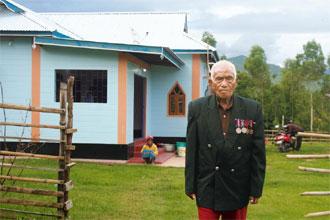
War veteran L. Achung Kom. Photo: Ratan Luwang/Mint
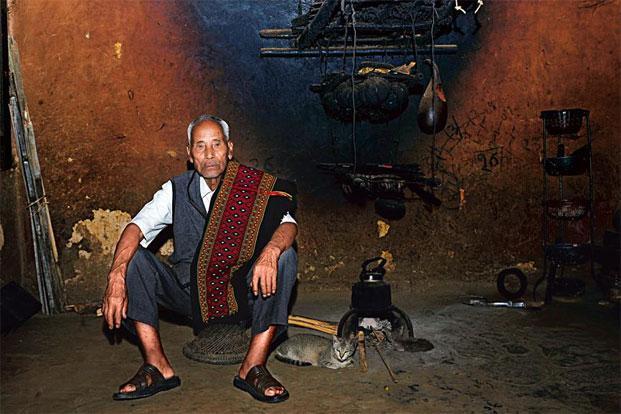
Sitting in a wooden chair on the verandah of his Manipur village home, 91-year-old Nehkhosong Singsit (Nehkhosong Kuki, according to army records) wasn’t expecting visitors when we walked in unannounced through the front gate, past a small lawn, and stood in front of his cheerful, sloping-roofed house.
As his daughter helps her father into a shirt, Singsit’s son, Paogin, a retired bank employee, narrates the fascination his father had for the army uniform; as a 19-year-old, Singsit enrolled in the British-commanded Assam Regiment in 1943.
Other than the need to earn a living, the promise of owning an army uniform was the prime motivation when army recruiters came prospecting to their village at the height of World War II. “Back then, people of our Kuki tribe would wear scanty clothes and my father felt a natural attraction for the army uniform. It stood out for him,” says Paogin.
Singsit would soon be called to action on the battle front when the British-led Allied forces faced a seemingly indomitable enemy in the Imperial Japanese army that was waiting to overrun Allied-held positions in Manipur and beyond.
Nehkhosong Singsit. Photo: Shamik Bag/Mint
As a sepoy, Singsit’s brief was to provide security to the British colonel who led the regiment of primarily Indian soldiers when the Japanese offensive began on 8 March 1944. The Japanese firing was relentless, and one of the bullets found its mark in his dear friend, sepoy Vaiphei. The Japanese began using his body as a shield, firing from behind him—a ploy that Singsit felt was both tactical as well as psychological.
“I saw my friend’s dead body getting ravaged by bullets. The disrespect shown to the dead was shocking,” says Singsit, his voice firm, though his body is now bent over by age. “The other motive of the Japanese was to demoralize us by exhibiting the dead body of someone belonging to our own land.”
In later months, after the Allied forces scored a hard-fought, decisive victory, Singsit would be charmed by Japanese prisoners of war held at Meiktila in Burma (now Myanmar) doing pencil-sketch portraits of his colleagues and him for an extra roti or bidi. War, he found out, can also be about conflicting emotions.
In the early 1940s in Manipur, a princely state yet to merge with an India then under British rule, the issue of land, and sense of belonging, was often defined ethnically by the locals.
Following his honourable discharge from the army in 1949, Singsit preserved the uniform as a treasured memorabilia of the “fierce” three months between March and July 1944, when the Allied forces clashed with the Japanese. But he had to burn the same uniform voluntarily a couple of decades later.
A violent anti-India secessionist movement led by the Mizo National Front (MNF) was brewing in neighbouring Mizoram in the mid-1960s and Mizo underground military recruiters often visited Manipur villages dominated by Kukis, with whom they shared a close bond. “The Indian Army had a strong presence in our area. I was afraid that if they raided my home and found the uniform they might have misunderstood me for a Mizo militant. I felt extremely sad burning the uniform, but the Indian Army personnel didn’t know, nor would they have cared about my role as an Indian soldier in World War II,” says Singsit.
Epic scale
Forty kilometres from Imphal, Singsit’s rural home is a short drive off what some refer to as “The Road of Bones”. Beyond the insistent beauty of the land of cloud-collected hills, meandering rivers and green fields, is the sobering backdrop of the dead. Around and away from the 138km stretch of road from Imphal in Manipur to Kohima in Nagaland is where around 70,000 soldiers and civilians committed their lives to the cause of world domination over those three tragic months. The battles fought in the tough terrain of Manipur and Nagaland and spread over a 600-mile (around 965km) area have since been recognized as among the biggest—and bloodiest—battles fought by Indian forces.
Seventy years on, when diplomats and participants from Britain, Japan, the US, Australia and India gathered in Imphal on 28 June to commemorate the Battle of Imphal/Kohima—declared in 2013 as Britain’s greatest battle by the country’s National Army Museum, over other notable battles like Waterloo and D Day/Normandy—the memory of the dead, and a prayer for peace, hung like a veil over the proceedings.
Y. Kawamura at the India Peace Memorial in Red Hill, Manipur. Photo: Ratan Luwang/Mint
Delegate followed delegate in remembering the thousands who lie interred at multiple cemeteries in the region, including those maintained by the Commonwealth War Graves Commission (CWGC) in Imphal and Kohima. In just two cemeteries in the two cities, over 2,500 Indian soldiers are named; many more lie in cemeteries and memorials spread across the region.
Y. Kawamura at the India Peace Memorial in Red Hill, Manipur
While Scott Furssedonn Wood , the British deputy high commissioner in Kolkata, spoke about the “epic” scale of the battle where 200,000 soldiers and airmen from Japan, Britain, India, the US, Australia, New Zealand, Africa and Canada fought in harsh conditions, others, like Kolkata-based US consul-general Helen LaFave, brought up the issue of missing American soldiers and the continuing search for them. Y. Kawamura, charge de’affairs and minister and deputy chief of mission, embassy of Japan, spoke of eternal peace.
At the extreme end of ferocity, Japanese and Allied troops engaged in almost hand-to-hand combat in the Battle of the Tennis Court, fought around the strategically positioned deputy commissioner’s bungalow in Kohima. The Battle of Kohima saw 4,064 British and Indian casualties, according to the CWGC.
In Manipur, casualty-heavy battles were fought at Nungshigum, where three squadrons of the Royal Indian Air Force supported artillery operations to flush out the Japanese; at Kanglatongbi, where a vastly outnumbered Allied unit held out determinedly against the enemy’s design to capture a supply depot; and at Sangshak, where, from 21-26 March 1944, the first battle of World War II was fought on Indian soil. The six-day battle saw the 2nd and 3rd Guerrilla Regiments of the Indian National Army (INA) fighting alongside the Japanese.
The Japanese army was known for its ruthlessness and innovative ways of thwarting the enemy, like mimicking bird calls and creating tools that relentlessly sent out the rat-tat-tat sound of machine-gun fire. “Often (Japanese) soldiers stood out in the open with their guns with total disregard to their own safety,” writes Arambam Angamba Singh, co-convener of the 70th anniversary of the Battle of Imphal event, in the official souvenir.
While a Reuters report on the Battle of Imphal/Kohima topping 2013’s Britain’s Greatest Battles poll describes the country’s forces in the World War II campaign spread over North-East India and Burma as what many consider “The Forgotten Army”, similar opinions have been voiced in India on the collective amnesia regarding the Indian contribution to the Allied war effort.
This is nowhere more apparent than in the list of surviving Manipuri World War II veterans maintained by the state’s Rajya Sainik Board, under the Union ministry of defence. The list reveals 626 Manipuri (mainly Kuki tribesmen) World War II survivor-soldiers right after the war ended in 1945; 17 are living. The Manipur state government led by chief minister Okram Ibobi Singh actively associated with the high-profile, 28 June commemorative event in Imphal, and officials of the co-organizer, Manipur Tourism Forum, expressed hope of benefiting from “war tourism”. But none of the Manipuri World War II veterans have reportedly received any pension or honorarium from the state government, though other states have done so, according to the secretary of the Sainik Board.
Seated across a small wooden table on the balcony of the Sainik Board office in Imphal, the secretary, retired army officer Sarat Singh, maintains a World War II dossier and deals with the daily travails facing the elderly war veterans and, more often, their widows. Many, it is reported, died in penury. On the day we meet, the secretary had shot off yet another letter to the Manipur government requesting the release of the monthly honorarium suggested by the Union government. “The state government is not law-bound to pay and it’s entirely up to them,” he says.
Since many of the Indian Allied forces personnel were recruited specifically to serve on the battle front during World War II, and were discharged after the war ended and they were no longer required, they were denied a pension. When the British too left India, the war veterans, especially in Manipur, remained beyond the pale of public consciousness and the state exchequer.
Yet there were stellar performances in the war theatre. Squadron leader K.K. Majumdar successfully flew the first bombing mission solo in Burma’s Toungoo, becoming the first Indian officer to receive a coveted award in World War II. In Imphal in May 1944, a message from Air Marshal Sir John Baldwin commended: “For the first time in India’s history, squadrons of fighters and dive bombers manned by Indian pilots have operated in strength against the enemy.” Abdul Hafiz, a Jemadar with the 9th Jat Regiment, posthumously wona Victoria Cross—Britain’s highest gallantry award—for his heroism in the Imphal battle.
Rows of graves of Indian Muslim casualties and lines of inscriptions on pillars with the names of Indian soldiers who were cremated mark the gracefully maintained World War IIcemeteries at places like Imphal and Keithelmanbi, stark testimony to the price paid. “I’m hoping still that the government will compensate the World War II veterans for their role,” says Singh.
Nobody’s men
At 95, Khupkolam Vaiphei knows he does not have much time left.
Khupkolam Vaiphei, 95, a former sepoy of the Assam Regiment who fought in the Battle of Imphal/Kohima. He lives in a village in Manipur’s Senapati district. Photo. Shamik Bag/Mint
Hard of hearing, the former sepoy of the Assam Regiment who was on the frontlines during a vicious battle against the Japanese forces in Manipur’s Jessami village, bristles with indignation when recounting the indifference displayed by successive political establishments. “During World War II, Indian public and leaders protested against the use of Indian Army personnel in the British war effort and demanded an assurance from the British that India will be given independence if we assisted in the war. Yet we have not received a single rupee since our discharge. We fought for the British, but did we not play a role for India?” he wonders aloud, his deep baritone resonating across the tin-roofed outer room of his house, atop a small hillock in Senapati district’s Phovaibi village.
Back then, Vaiphei’s emotions too were defined by the codes of Kuki community living. His weary, creased countenance seems to age a hint more when he remembers the night—after three whole days in trenches against non-stop Japanese firing—his closest childhood friend and fellow trooper, Lalneilam, was killed in a sniper attack. “From having our food to answering nature’s call, we did everything inside the trenches, such was the Japanese firepower. Lalneilam, though, went out but never returned.”
After over two gruelling months of fighting back, the Japanese started retreating. Vaiphei was among those who followed the enemy, wanting to push them back to Burma, from where they had come. On one occasion, they came across a bunker with Japanese soldiers inside. Two were captured. They had been holding two young Naga Angami girls hostage to serve them. While the British leader of Vaiphei’s battalion wanted to keep the two Japanese alive as prisoners of war, two Naga soldiers defied orders and killed them with their bayonets. “They couldn’t tolerate the insult and dishonour that their Naga sisters went through,” says Vaiphei.
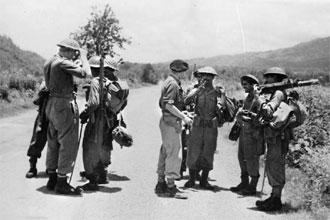
The two arms of the 14th Army during the Battle of Imphal/Kohima. Photo: Wikimedia Commons
This British victory was particularly significant because it was the first time the Japanese army faced defeat, says Hugo Slim , author and leading scholar at the Oxford Institute for Ethics, Law and Armed Conflict, University of Oxford, UK. He is the grandson of the much-feted Lieutenant General William Slim of the British 14th Army, which led the Allied counter-attack. “The Japanese were a brilliant army and considered invincible,” Slim adds on the sidelines of the Imphal commemoration, co-organized by the 2nd WW Imphal Campaign Foundation, which hosts excavation and trekking tours across Manipur’s known World War II battlegrounds. “This battle stopped the Japanese advance across Asia. The two empires clashed and soon afterwards the empires disappeared. It was a very long and complicated battle against an enemy that wouldn’t surrender and had to be fought till death,” Slim says.
Yet the Japanese campaign against British India, known as the U-go Operation and often viewed as a critical misadventure by the infamous commanding officer, Lieutenant General Renya Mutaguchi , had its share of Indian supporters. The small Manipur town of Moirang is one area where the Netaji Subhas Chandra Bose -led Azad Hind Fauj, or the Indian National Army (INA), backed by the Japanese army, set up a “liberated zone” within British-occupied India, hoisting the INA flag during the thick of the Japanese campaign on 14 April 1944.
As in many other conflict zones in Manipur and Nagaland, a little digging has turned up wartime effects like mortars, rifles, helmets and bullets in Moirang. The INA Museum here is a treasure trove for war enthusiasts. Some glass cases display Japanese and British grenades and bullets side by side, neutralized in the academic air of the museum.
L. Ibomcha. Ratan Luwang/Mint
Ninety-six-year-old L. lbomcha, a former deputy speaker of the Manipur assembly, was a supporter of the INA and, by extension, its collaborators, the Japanese army. Age has slurred his speech but it has not impaired his memory. As we gather in the drawing room of Ibomcha’s Moirang home, he says: “For three months Moirang was a peaceful and happy town under INA and Japanese occupation. I mobilized people and collected money and rations for the soldiers. Moirang got a taste of freedom three years before the rest of India,” he narrates.
A little away from Moirang, in the hilly village of Kom Keirap, L. Achung Kom, a villager who looks younger than the mid-90s he says his age is, waited expectantly for Japanese representatives at the Imphal event to grace his home. He looks a little dejected when we alight from our car.
As someone who had assisted the Japanese in 1944, he had, earlier in the day, greeted Kawamura in Japanese when the latter visited Red Hill, the site of a bloody face-off about 20km from Imphal. With both sides launching a vigorous air campaign, 1944 was the first time that Kom saw an aircraft flying over paddy fields.
“This year’s commemoration brought the memories back to the Manipuri psyche and the changes it made to Manipuri society. It catapulted Manipur from a 19th century civilization to a 20th century state,” Manipur governor V.K. Duggal says.
Kom aided the Japanese campaign, ferrying goods and procuring rations and local liquor for the military men. Till some years back, his kitchen still had half a mortar, used to grind food—it was taken away by local authorities. While he remembers the Japanese fondly as people who would keep their gaze down when local women passed by, he is not as enthusiastic recollecting a role he had to play. Digging graves, says Kom, was hard work. “Besides, I didn’t like the presence of the dead,” he adds.
In the battle-scarred plains and hill tracts of Manipur, the dead are buried deep but the mine of memories is just a scratch away.
source: http://www.livemint.com / Live Mint / Home> Leisure / by Shamik Bag / July 05th, 2014
His poetry reflected his passionate love for his country and his goal of total freedom from the British rule.
B.R. Ambedkar with Maulana Hasrat Mohani at Sardar Vallabhbhai Patel’s reception in 1949.
On our 72nd Independence day, let us remember the freedom fighter, revolutionary, the poet, the maulana, and the Krishna bhakt: Maulana Hasrat Mohani and celebrate the diversity of India in all its glory.
If the African-American Civil Rights Movement in the United States was fuelled by ‘We shall overcome’, in India that honour would go to ‘Inqilaab Zindabad’ coined by Hasrat Mohani (1875 – 1951). It became the chant of Indian revolutionaries.
Though Mohani is remembered today for his romantic ghazal Chupke chupke raat din, his poetry reflected his passionate love for his country and his goal of total freedom from the British rule. He along with Ram Prasad Bismil got the proposal for Poorna Swaraj (complete Independence) accepted by the Indian National Congress in 1921.
Rasm e jafa kaamyaab dekhiye kab tak rahe,
Hubb e watan mast e khwaab dekhiye kab tak rahe,
Daulat e Hindostan qabzah e aghyar mein
Be adad o be hisaab dekhiye kab tak rahe!
(How long will tyranny succeed, let us see
Till when will freedom be a dream*, let us see
Hindustan’s riches are in the clutches of plunderers
Till When will this continue, let us see.)
[*dream here alludes to awakening of Indians from their slumber]
Maulana Hasrat Mohani was a very complex but extremely interesting personality. He was born in a zamindar family in Mohan near Unnao (Uttar Pradesh) in 1875, and was named Fazlul Hasan. ‘Hasrat’ (longing) was his nom de plume or ‘takhallus’ and Mohani as he hailed from the village Mohan. His early education was in his village and he matriculated from Government High School, Fatehpur. He went on to join the Mohammedan Anglo Oriental College, Aligarh (now Aligarh Muslim University).
Hasrat Mohani was a very active participant in the freedom struggle and was jailed many times. A lot of his poetry is composed during his imprisonment.
Hasrat Mohan was an ardent supporter of Bal Gangadhar Tilak and when he died, the poet penned these lines:
Jab tak wo rahe dunyaa meN raha ham sab ke diloN par zor unka
ab rah ke bahisht meN nizd-i-khuda huro’N pe kareNge raj Tilak –
(As long as he stayed in this world he ruled our hearts
Now in Paradise, closer to God, the houris will be his court.)
Although Hasrat was a romantic poet, he was an active member of the Indian NationalCongress, the Muslim League and the Communist Party of India.
One of his popular verses is:
Gandhi ki tarah baith ke kaate’nge kyun charkh
Lenin ki tarah de’nge duniya ko hila hum
Why should we sit and spin yarn on the ‘charkha’
Like Lenin we will shake the world.
The revolutionary was also a romantic poet and today no ghazal mehfil is complete without a rendition of his evergreen couplet:
“Chupke Chupke raat din aansoo bahana yaad hai
Ham ko ab tak aashiqii kaa vo zamaanaa yaad hai”
(Shedding tears in silence, day and night, I remember
Those days of being in love, I still remember.)
His appeal across nations can be judged from these two stamps by India and Pakistan.
We often talk about his role in the Independence Movement, and his romantic ghazals but rarely do we talk of his devotion to Shri Krishna. According to Prof C.M. Naim, he wrote his first poem on Krishna in Urdu, when he was in Pune during Janmashthami in 1923.
Hasrat Mohani also wrote many verses in praise of Shri Krishna in Bhasha. He visited Brindaban as many times as he went for Hajj to Mecca (11 times) such was his devotion to Shri Krishna.
So while on the one hand, he wrote:
Mose cheR karat nandlāl
lie Thāre abīr gulāl
DhīTh bha’ī jin kī barjorī
auran par rang Dāl-Dāl
ham-huN jo de’ī lipTā’e-ke Hasrat
sārī ye chalbal nikāl
Nandlal keeps teasing me without end;
There he lurks, ready to pour colors on me.
Having safely sprayed others so many times,
He is now set in his bullying ways.
But what if I should embrace him, Hasrat,
Then squeeze him dry of his fancy tricks?
( verse and translation C M Naim’s article ‘the Maulana who loved Krishna )
On the other hand, he wrote innumerable naats and munajats in praise of Prophet Mohammed.
Khyaal e yaar ko dil se mita do Yaa Rasool Allah
Khird ko apna diwaana bana do Yaa Rasool Allah
Remove all thoughts of any other than you O Allah’s Prophet
Make my intellect, crazy for you O Allah’s Prophet
(The answer can be found in his Sufi leaning and learning. Sufism is the path of Bhakti, which has bound Hindus and Muslims together in a syncretic culture, which we call Ganga Jamuni.)
He was a disciple of Hazrat Shah Abdur Razzaq Farangi Mahalli in the Qadria Sufi Order. Sufism believes in losing oneself in the Beloved to achieve salvation and the love of Radha Krishna is a beautiful example of the same.
We can find the answer in the “Iintroductory note to Divan 7) where he refers to the god Krishna as Hazrat Srī Krishna ‘Alaihi-Rahma and claims that in doing so he is follow- ing the path of his spiritual mentors, particularly Hazrat Sayyad Abdur Razzaq Bansawi, whom he mentions.”
Hasrat’s poetry written near Makkah for pilgrimage:
ek khalish hoti hai mehsoos rag o jaan ke qareeb
Aan pahunche hai magar manzil e jaana’n ke qareeb
(A strange pain near my jugular vein I can feel
I have reached my destination near my Beloved)
The music we hear comes from one source, it’s just that we are unable to hear beyond the first few notes. Let’s pause and listen today. To my heart, to your heart and our beloved nation’s heart. I am sure they all want the same thing: peace, prosperity and glory of our great nation where we can live without fear and hatred.
Rana Safvi is an author, historian, blogger and is engaged in documenting of India’s Syncretic past.
source: http://www.newscentral24x7.com / News Central 24×7 / Home / by Rana Safvi / August 15th, 2018
Over 1000 war rockets of Tipu era have just been found in a fort in Karanataka. Tipu Sultan was the first warrior in history to have used rockets in his warfare against the British.
Recall Tipu Jayanthi celebrated by the Karnataka Government under Siddaramaiah and the violent opposition it evoked from the BJP and Hindutva forces who overlooked Tipu Sultan’s fierce fight against British rule and only focused on his Islamic identity. An Union Minister publicly refused to participate in the Tipu Jayanti celebrations.
The fanatical opposition to Tipu Sultan by BJP and its top leadership has been so intense that it did not even accept the speech of President of India Ramnath Kovind who while addressing the Karnataka Assembly appreciated Tipu Sultan, among others, and flagged his pioneering role in employing the first ever rocket in the history of warfare against the British.
In their blind opposition to Tipu Sultan just because he was a Muslim, the BJP leaders of Karnataka did not hesitate even to diminish the dignity of the President of India by refusing to acknowledge his speech and dismissing it as as a draft prepared by the then Karnataka Government. Even Prime Minister Narendra Modi while campaigning for BJP candidates in the Karnataka elections sarcastically said that the Congress Government was celebrating the Jayanti of “Sultans”.
Let us be mindful of the fact that a sketch of Tipu Sultan finds a prominent and place in the calligraphed copy of the Constitution where the sketch of Lord Ram, Akbar and other outstanding figures of Indian mythology and history occupy a hallowed place.
It is not that President Kovind is the first President of our Republic who invoked Tipu Sultan’s glorious legacy. Earlier President K. R. Narayanan in his speech delivered at the banquet hosted by the President of the French Republic, Jacques Chirac, on April 17, 2000 in Paris referred to the correspondence exchanged between Tipu Sultan and Napoleon Bonaparte for the purpose of forming a grand alliance to defeat the British and throw them out of India.
In an appendix of the publication, The Sword of Tipu Sultan, authored by Bhagwan Gidwani, there is a text of letter written by Napoleon to Tipu Sultan bringing out the strategic affinity and understanding between India and France in the late 18th century.
Napoleon wrote in the letter to Tipu Sultan : “You have already been informed of my arrival on the borders of the Red Sea, with an innumerable and invincible Army, full of the desire of delivering you from the iron yoke of England.”
Before the letter could reach Tipu Sultan, the British intelligence succeeded in intercepting it. Then President Narayanan in his aforementioned banquet speech rsaid: “…Napoleon’s demarche perhaps underlined the strategic affinity that links India and France and the responsibility we hold in creating a more equal and democratic inter-national order in the multipolar world.”
It is all the more significant to note that the concept of ” creating a more equal and democratic inter-national order in the multipolar world ” was taken up by Narayanan by invoking Tipu Sultan along with Napoleon who is a national hero for the French. I recall that the leadership of France deeply appreciated this speech and thanked the then Indian President for contextualizing the strategic dialogue started between the two countries in the 21st Century by referring to the strategic understanding forged in the 17th Century.
Abdul Kalam in his writings published before he became President of India had outlined Tipu Sultans stellar contributions as the first warrior in history of warfare for having used rockets against the British who were completely on the defensive. The account given by President Kalam of the rockets used by Tipu Sultan in his war against Britishers makes a fascinating read and the younger generation should be educated about it. He also refers to the Royal Artillery Museum, London that has exhibited the rockets used by Tipu Sultan with the claim the he became the first warrior to do so.
It is rather fascinating to note that the French Revolution and its ideals deeply impacted Tipu Sultan and he celebrated the Revolution with great fervour. Possibly he was the first monarch in India who remained wedded to the enduring ideals of the Revolution- liberty, equality and fraternity- and planted a tree in Srirangapatnam to commemorate it. He enlisted himself as a member of the Jacobin Club which constituted one of the prominent political formations of the Revolution proclaiming egalitarianism and affirming a social order informed by liberty, equality and fraternity.
His strategic vision encompassed in its scope a modern navy which he founded in 1796 and set up two dockyards where ships could be used and equipped with necessary facilities for conducting warfare. It greatly supplemented his military capability based on his land based armoury and armed forces.
His critical understanding that a strong economy could sustain a strong military paved the way for him to take manifold measures to augment and expand trade and commerce and set up a chain of industries. His farsightedness in understanding the danger posed by the advancing British forces in the 18th century stood him out as an unparalleled leader with a firm grasp over military and strategic affairs. British historians have recorded his accomplishments with admiration. And recorded the fact that the conditions of the peasants of Mysore were far better than their status in the British provinces of that era.
Historians have recorded that Tipu Sultan liberally gave grants to numerous Hindu shrines and respected the faith of others. Such a legacy rooted in respecting all religions makes Tipu Sultan relevant for our contemporary period which is witnessing majoritarian tendencies.
He relentlessly fought against British occupation and aggression and eventually attained martyrdom. His heroism and bravery to fight against colonial subjugation constitutes an important portion of Indian history. It is important to celebrate that legacy and enrich it.
Jawaharlal Nehru in his Discovery Of India wrote “Haider Ali and Tipu Sultan .. inflicted a severe defeat on the British and came near to breaking the power of the East India Company.” Such a glorious phase of Tipu Sultan who almost broke the power of the East India Company and who remained wedded to ideals of French revolution inspires India of twenty first century. We need to immortalize it by affirming its enduring value which is far above party politics and ideological rivalry.
As the twenty first century India faces threat from Hindutva forces engaged in lynching people and polarizing them in the name of cow protection, love jihad and religion we need to reinvigorate the legacy based on liberty, equality and fraternity which remained at the heart of the French Revolution, guided Tipu Sultan and inspired our freedom fighters and the framers of our Constitution to shape the destiny of India based on progressive values.
(S.N.Sahu served as Officer on Special Duty to late President of India K.R.Narayanan and also as Director in Prime Minister’s Office under Manmohan Singh).
source: http://www.thecitizen.in / The Citizen / Home / by S.N. Sahu / July 30th, 2018
Rifa-e-aam was where literary events were held to provide Rifa (happiness) to people
During struggle for independence, this club became the centre of anti-British activity
Rifa-e-Aam, Lucknow
Lucknow:
The city of adab (etiquette) and tehzeeb (manners) was also an indispensable part of India’s freedom struggle. The Nawabs of Awadh or the rulers who governed the state of Awadh during 18th and 19th centuries conspicuously nurtured syncretism, which became an integral part of the culture in the Ganga-Jamuna belt.
Nawabs were the great connoisseurs of art, music, and architecture. Numerous monuments were built during their time. One among those was Rifa-e-Aam, where literary events were held to provide Rifa (happiness) to people. When the signboards outside several clubs and gymkhanas signalled ‘dogs and Indians’ to stay out, Rifa-e-Aam welcomed dissenting voices, credit for which goes to the liberal Raja of Mahmudabad. The historic Lucknow Pact of 1916, between the Congress and Muslim League was signed here.
During India’s struggle for independence, this club became the centre of anti-British intellectual activity. In 1936, Anjuman Tarraqi Pasand Mussanafin-e-Hind or Progressive Writers’ Movement was born in this building, under the leadership of Syed Sajjad Zahir and Ahmed Ali. Soon a number of eminent progressive litterateurs like Saadat Hasan Manto, Ismat Chughtai, Faiz Ahmad Faiz, Mulk Raj Anand, to name a few, joined the movement. To cap it, presidential address was delivered by Munshi Premchand.
During my recent visit to Lucknow, I asked the person who ferried me around the city, to take me to this forgotten monument, tucked away in the crowded lanes of Qaiserbagh. When Google map ditched us due to poor network and left us amidst the labyrinth of congested by lanes, the human version of Google maps – paanwala (tobacco seller) helped us locate it. There stood the dilapidated structure which once upon a time heard the speeches of Mahatma Gandhi, Pandit Nehru, and many other visionaries.
The ground in the front of the monument is now a bus station. Lakshmi Narayan parked the car and since it had rained that morning, he asked me to get off from the other side to avoid a stagnated pool of water and filth. At present, one part of the decrepit structure is inhabited by a family of nonagenarian – C P Pandey, who was appointed as the caretaker of the club. The other portion is managed by the association and the only thing common between them is the illegal construction and encroachment, around which stands the cracking monument of Rifa, donning a lugubrious look.
I spent some time envisioning the past associated with it and wondering who is responsible for such sorry state of affairs today. Is it the people, ignorant of the past or the authority which has turned a blind eye to misdemeanour? Perhaps lack of pride in our glorious heritage.
I finally left with a heavy heart remembering Faiz and hoping one day Rifa would be restored.
source: http://www.travel.manoramaonline.com / OnManorama / Home> Travel> Reader’s Discovery / by Pragya Srivastava / July 17th, 2018