Category Archives: Green Products

Birds of Bengal at Sweden auction

Patna, BIHAR /  Calcutta, BENGAL :

The paintings by Zayn al-Din were commissioned by Mary Impey, an English natural historian and patron of the arts in Bengal
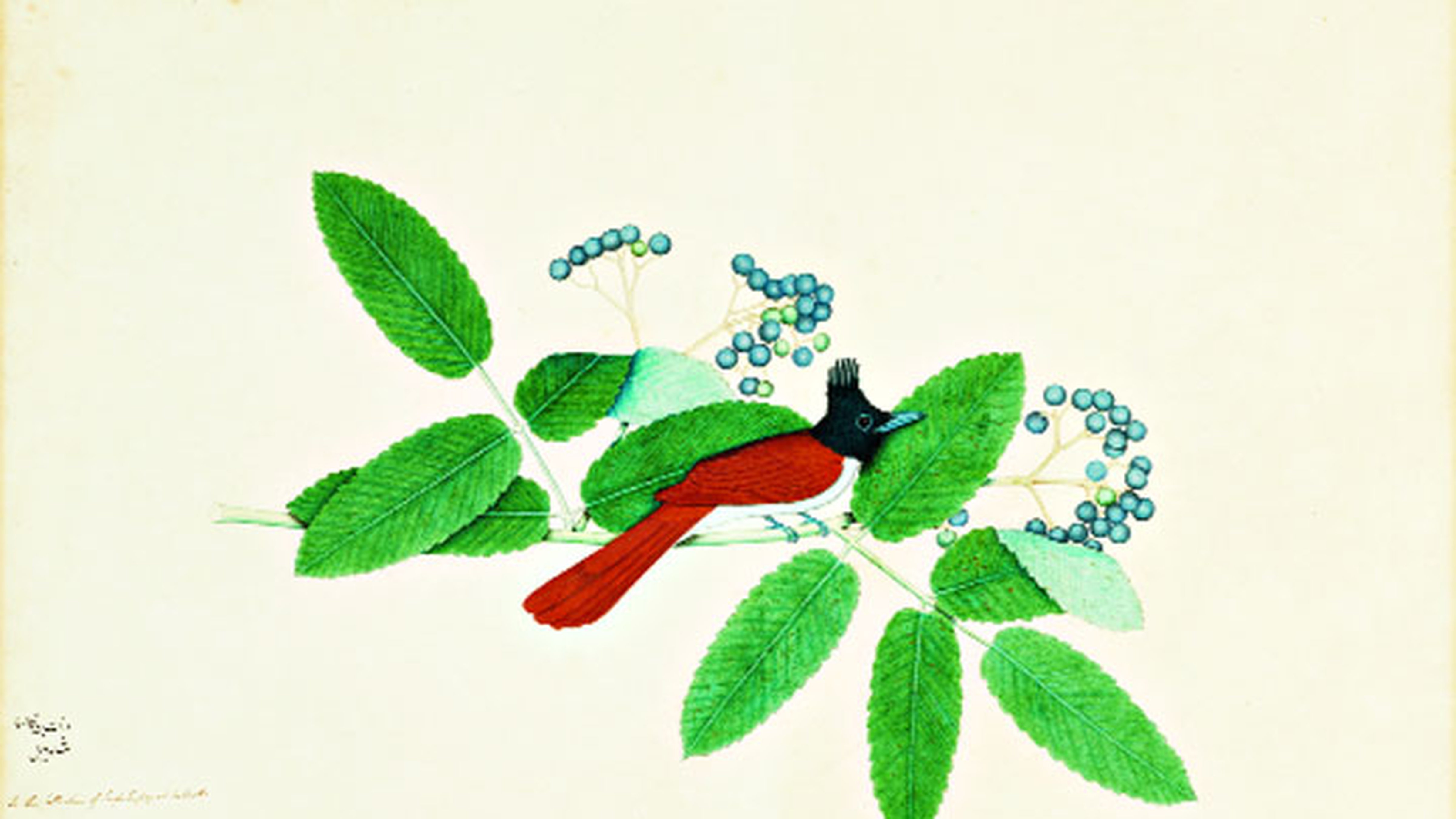
Falsa Tree with King’s Nightingale was painted on a 53.5cm x 75cm canvas by Zayn al-Din in 1782 . / Picture courtesy: Stockholm Auction House
Falsa Tree with King’s Nightingale was painted on a 53.5cm x 75cm canvas by Zayn al-Din in 1782 . /
Picture courtesy: Stockholm Auction House

Two watercolour and pencil-on-paper artworks painted in Calcutta in the late 18th century by one of the most famous exponents of the Company School of Art will go under the hammer at the world’s oldest auction house in Sweden on June 12.

The paintings by Zayn al-Din were commissioned by Mary Impey (March 2, 1749 -February 20, 1818), an English natural historian and patron of the arts in Bengal. She was the wife of Elijah Impey, the first chief justice of the Supreme Court at Calcutta (1774-82), who had infamously sent Maharaja Nandakumar — a highly-placed officer in the nawabi administration — to the gallows on charges of perjury.

Falsa Tree with King’s Nightingale, dated 1782, and Parrot in a Parkar Tree, dated 1779, have been in the possession of a Swedish family for long.

“We are immensely proud to present these rare artworks. We are not sure how they reached Sweden. They have been in the same Swedish family for a long time and this is the first time that they reach the market,” Victoria Svederberg Bojsen, a specialist in classic and modern art at the Stockholms Auktionsverk (Stockholm Auction House), founded in 1674, told Metro over phone from Stockholm.

“The estimate price is Euro 51,000 (Rs 40 lakh) to 61,500 (Rs 48 lakh). However, we believe they will reach an even higher price. Our hope is naturally that they will now be returned to India where they originated,” she said.

Birds are the subjects of both the paintings. Falsa Tree with King’s Nightingale is a 53.5cm x 75cm canvas.

The inscriptions on both pictures read: In the Collection of Lady Impey of Calcutta. Painted by Zayn al-Din Native of Patna 1782.

“Both paintings include a description of the subject in Persian — Darakht ban falsa, Shah Bulbul in the first and Madna Tota, Darkaht Pakar in the other. The artist’s name is also written in Persian,” said Nandini Chatterjee, associate professor of history at the University of Exeter in the UK.
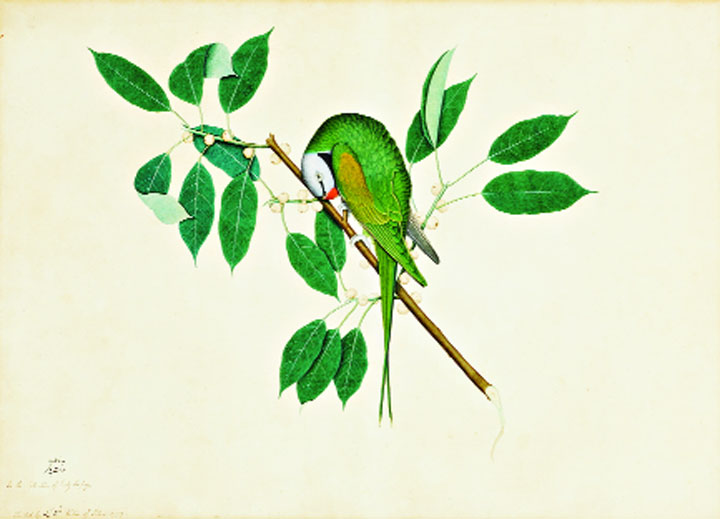
The painting (right), titled Parrot in a Parkar Tree, is signed and dated 1779. The inscriptions on both artworks read: “In the Collection of Lady Impey of Calcutta. Painted by Zayn al-Din Native of Patna 1782”. / Picture courtesy: Stockholm Auction House
The painting (right), titled Parrot in a Parkar Tree, is signed and dated 1779. The inscriptions on both artworks read: “In the Collection of Lady Impey of Calcutta. Painted by Zayn al-Din Native of Patna 1782”. /
Picture courtesy: Stockholm Auction House

Metro had sent the images to Chatterjee, who is part of a research on two sets of natural history drawings produced between the late 18th and early 19th centuries in Calcutta. The drawings are held at the Victoria Memorial Hall and the Royal Albert Memorial Museum & Art Gallery in Exeter.

The Impeys moved to India in 1773 after Elijah Impey was made the chief justice of Bengal. They set up a menagerie at their house in Calcutta’s Middleton Row. When they shifted to Fort William two years later, they started a collection of native birds and animals on the extensive gardens of the estate.

Mary Impey commissioned several local artists to paint the fauna and flora they had collected. Her three principal artists were Sheikh Zayn al-Din, and brothers Bhawani Das and Ram Das. All three had come from Patna.

Together, Zayn al-Din and the Das brothers painted more than 300 artworks, half of them of birds. The collection, often known as the Impey Album, is an important example of Company style painting.

“With the decline of the Mughal courts, the artists sought the patronage of Europeans. These artists had to change their traditional techniques to suit their new masters. These revisions included a more accurate representation of the subject and a change in perspectives,” said Jayanta Sengupta, the curator of the Victoria Memorial.

Little is known of Zayn al-Din, the artist whose works will be auctioned in Sweden next month. He is known for his extraordinarily detailed paintings for the Impey Album. His drawings of mountain rats, hanging bats, parrots and storks serve as interesting zoological studies and are now preserved at the Ashmolean Museum in Oxford.

“The artworks from the Impey Album rarely reach the international market and the few that have been sold previously at Christies, Sothebys and Bonhams have fetched between $80,000 (Rs 55.5 lakh) and $140 000 (Rs 97.7 lakh),” Bojsen said.

The real study of the Indian subcontinent’s natural history is said to have started with the Mughals. Baburnama — the memoirs of the first Mughal ruler — has beautiful illustrations of birds and animals. Shah Jahan also took a keen interest in the flora and fauna.

With the fall of the Mughals, the artists sought the patronage of Europeans. Calcutta became a thriving centre of the (East India) Company school of painting.

“India was an unknown land for Europeans and along with its indigenous archaeology and history, they also wanted to explore its abundant flora and fauna. Imperial documentation differs from its Mughal predecessor in scale and systematic approach,” Sengupta said.

“Mary Impey was part of a circuit of Europeans who commissioned paintings of Indian natural history. Apart from the pictorial documentation of flora and fauna, the extensive notes kept by her about their habitat and behaviour were of great use to later biologists,” he said.

The collection went to England with the Impeys in 1783 and were sold at a London auction in 1810. Several pieces are in various museums, including the Metropolitan Museum of Art in New York and the Victoria and Albert Museum in London.

“The style of inscription, and the handwriting is identical to other paintings all around the world. I do not believe Zayn al-Din’s name is in his own handwriting. It was probably written by a British collector, maybe Lady Impey herself. Many such British Orientalists (and perhaps some of their spouses) knew Persian,” Chatterjee said.

Some of Zayn al-Din’s works are at the Royal Albert Memorial Museum too. “But those have his name written in English and Bengali, perhaps by a collector who was interested more in the vernacular language, than Persian, which was the Mughal language of administration and courtly culture,” Chatterjee said.

source: http://www.telegraphindia.com / The Telegraph, online edition / Home> West Bengal / by Debraj Mitra in Calcutta / May 28th, 2019

Dubai-based Indian boy finalist in Google Science Fair

Chennai, TAMIL NADU -INDIA / Dubai, UAE :

Shaamil Karim, a grade 11 student at the Indian High School Dubai, was selected from thousands of entries.

Dubai,Shaamil Karim,Indian High School Dubai

Karim’s project detects if a car or person is passing by and makes the next street light brighter and the previous light dimmer, saving energy.(Shaamil Karim/ facebook)

A Dubai-based Indian boy has ranked among the top 100 regional finalists for the Google Science Fair global contest for his project to make street lights smarter, the media reported.

Shaamil Karim, a grade 11 student at the Indian High School Dubai, was selected from thousands of entries, Gulf News reported on Saturday.

His project detects if a car or person is passing by and makes the next street light brighter and the previous light dimmer, saving energy.

Karim, a 15-year-old computer whizkid who originally hail from Chennai, said his father was his inspiration to come up with a solution for power wastage.

“We were at a park late at night and all the lights were switched on. My dad said, ‘Can’t we do something about this?’ I decided to do my project to make street lights smart,” he told the Gulf News.

Karim added that his project would be around 63 per cent cheaper than infrared-based sensors.

The global 20 finalists are expected to be announced this month.

source: http://www.hindustantimes.com / Hindustan Times / Home> Education / by Indo-Asian News Service, Dubai / May 26th, 2019

A family’s love for indigenous breeds of cattle

Uppinakote Village (Udupi District) KARNATAKA :

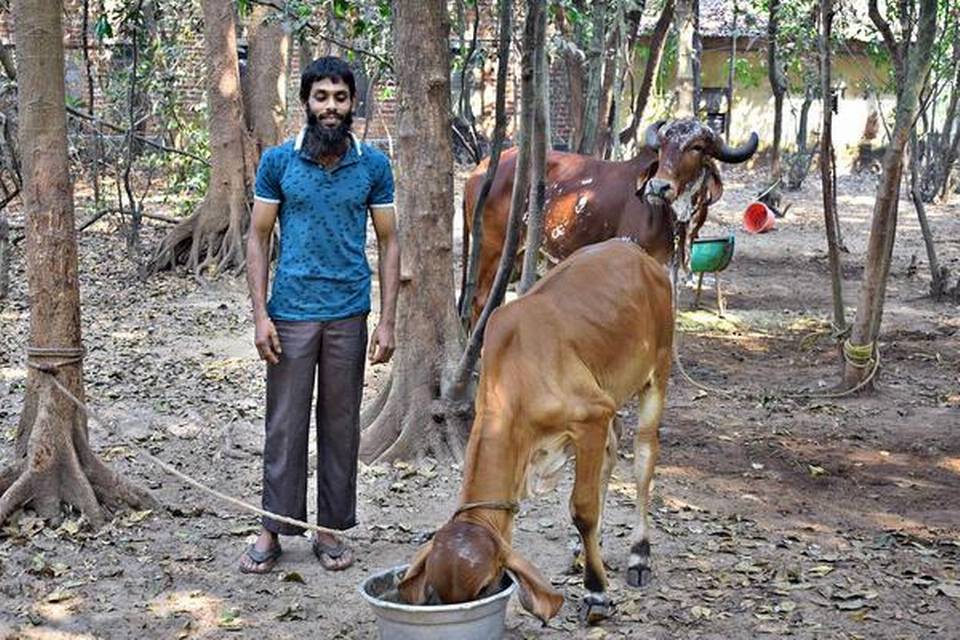
Mohammed Irshad Abideen tending the indigenous breed of cattle in his farm at Uppinakote village in Udupi district.

23 head of cattle are being reared in a farm house near Udupi

Three generations of a family have been conserving and breeding indigenous breeds of cattle here. The family has 23 head of cattle of Gir, Sahiwal, Red Sindhi, and Ongole breeds at Uppinakote village, about 18 km from Udupi. They are being reared in the farm house of 36-year-old Mohammed Irshad Abideen. His younger brothers, Naushad Ahmed, Mumshad Alam, and Sheik Mudassar, are supporting him in running the farm house.

Explaining their love for native breeds of cattle, Mr. Abideen said his grandfather Hanif Shah Saheb used to rear Malnad Gidda. His father, Jainulla Abideen, who used to rear Jersey and HF breeds for some time, later shifted to Malnad Gidda, Punganur, and Sahiwal breeds.

Mr. Abideen was engaged in helping his father ever since he completed his second year pre-university course. However, the family’s interest in indigenous cattle took a leap when Mr. Ahmed, who works as an engineer in Saudi Arabia, had gone to attend a bull show in Brazil about nine years ago.

“Naushad saw that most of the bulls were from India. We then decided to rear and breed only indigenous breeds of cattle,” he said.

More longevity

“The indigenous breeds of cattle are less prone to ailments, have more longevity, and provide better quality of milk,” said Sheik Mudassar.

“A Sahiwal cow gives 16 to 19 litres of milk daily, while a Red Sindhi gives 15 to 16 litres, and a Gir cow 13 to 15 litres of milk. I sell them at ₹70 a litre. Many people come to buy the milk as it is good for health,” said Mr. Abideen.

The breeding of indigenous cattle is lucrative. “We sell a male calf for ₹30,000 and a female for ₹50,000. We make a profit of ₹15 lakh to ₹20 lakh a year,” he said. The family grows corn and grass for their cattle on 2.5 acres of land taken on lease.

Many come to his farm seeking guidance. “We guide them in rearing and breeding of cows. We want our indigenous cattle breeds to thrive,” he said. Sultan, the Ongole bull, reared here, bagged the champion trophy at the Cattle Mela held at Sindhanur in Raichur district in January.

source: http://www.thehindu.com / The Hindu / Home> News> States> Karnataka / by Ganesh Prabhu / Uppinakote (Udupi District) / March 14th, 2019

Dr Najma Heptulla inaugurates National Unani Conference

NEW DELHI :

The National Unani awards were presented on the first day of the two day conference

The National Conference on Unani Medicine kicked off on Monday with much fanfare in the presence of a galaxy of dignitaries.

“Unani Medicine can offer the right solution for many health challenges we are facing due to lack of treatment of many diseases and paucity of resources”, said Dr. Najma Heptulla, Governor of Manipur, inaugurating the two-day conference organized by the Central Council for Research in Unani Medicine (CCRUM). It is a part of the 3rd Unani Day celebrations.  Dr. Heptulla urged the Unani fraternity to progress and evolve with the changing times, adapt to new techniques of health research and contribute new approaches to health management. She said that Manipur has the treasure of over 500 medicinal plants and invited scientists to visit the state for research. 

Addressing the conference themed on ‘Unani Medicine for Public Health’, Minister of State (IC) for AYUSH, Shripad Yesso Naik enlightened the audience on concrete steps taken by the Ministry of AYUSH to promote Unani Medicine.

The Lifetime Achievement Awards were conferred on Prof. Naeem Ahmad Khan, Aligarh Muslim University, Aligarh and Prof. M A Jafri, Jamia Hamdard, New Delhi for Best Academician and Best Researcher in Unani Medicine respectively

“Our efforts are focused to tap the real potential of AYUSH systems in imparting preventive, promotive and holistic healthcare to the people,” he said. Paying tributes to Hakim Ajmal Khan, whose birth anniversary is celebrated as Unani Day on 11thFebruary every year, he described him as a versatile genius.

Highlighting the strengths of Unani Medicine and other AYUSH systems in his address, Union Minister for Minority Affairs Mukhtar Abbas Naqvi said that the AYUSH systems are golden key to health and wellbeing. India is the strongest hub of Traditional Medicine which is one of the reasons medical tourism is flourishing in the country. He stressed on Integration of Unani Medicine in Mainstream Healthcare in line with the government policies and initiatives for mainstreaming of AYUSH in national healthcare.

On this occasion, AYUSH Awards for Unani Medicine were conferred on various Unani scientists and experts in recognition of their contributions for research, teaching and practice of Unani Medicine.

The Best Research Paper Awards were presented to Dr. Arshiya Sultana, Associate Professor, National Institute of Unani Medicine, Bangalore for Clinical Research and Dr. Noman Anwar, Research Officer (Unani), Regional Research Institute of Unani Medicine, Chennai for Drug Research in Unani Medicine. The Young Scientist Awards were conferred on Dr. Jamal Akhtar, Research Officer (Unani) Scientist – III, CCRUM for Clinical Research and Dr. Nasreen Jahan, Associate Professor, National Institute of Unani Medicine, Bangalore for Drug Research in Unani Medicine.

The Best Teacher Awards were presented to Prof. Tanzeel Ahmad, Aligarh Muslim University, Aligarh for Clinical Research, Prof. Mohd Aslam, Jamia Hamdard, New Delhi for Drug Research and Prof. Khalid Zaman Khan, Aligarh Muslim University, Aligarh for Literary Research in Unani Medicine. The Lifetime Achievement Awards were conferred on Prof. Naeem Ahmad Khan, Aligarh Muslim University, Aligarh and Prof. M A Jafri, Jamia Hamdard, New Delhi for Best Academician and Best Researcher in Unani Medicine respectively.

source: http://www.medibulletin.com / MediBulletin / Home> Alt Medicene / by MediBulletin Bureau / February 11th, 2019

AMU researcher publishes book

Aligarh, UTTAR PRADESH :BookBrassicaceaeMPOs27dec2018

Aligarh :

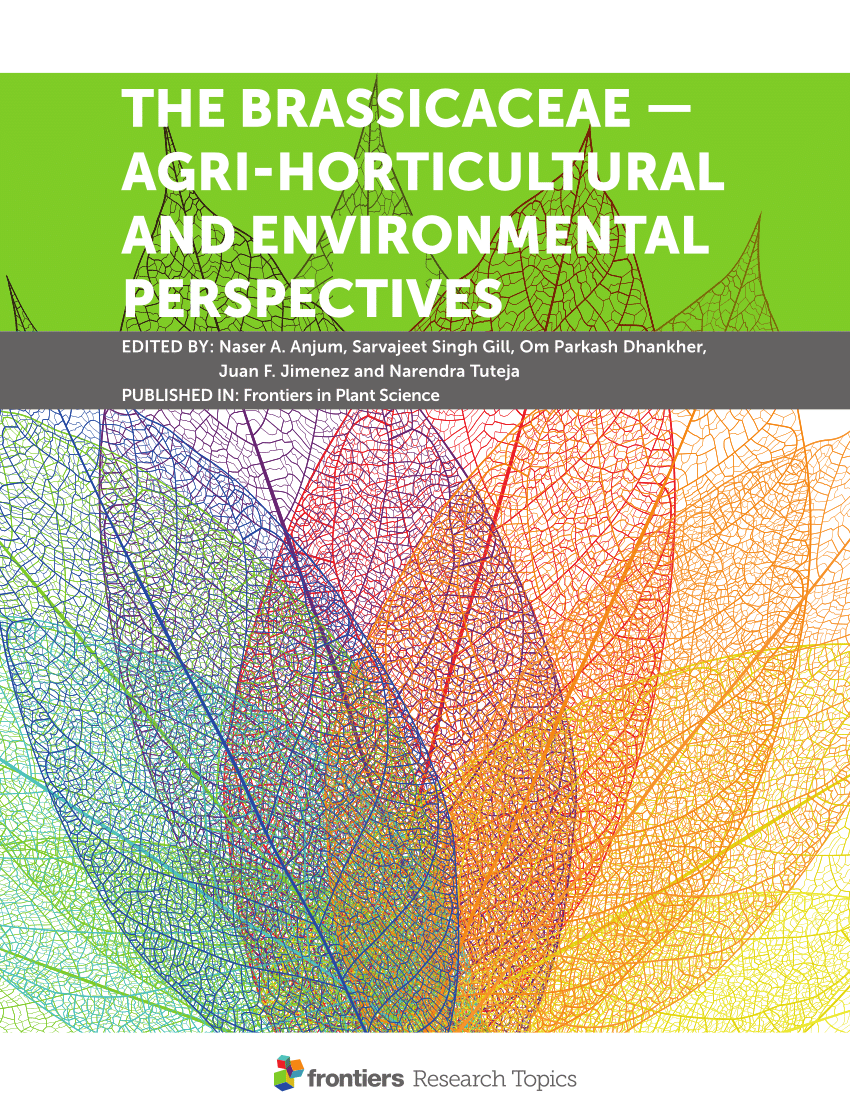
Dr Naser A Anjum, a DBT-RLF researcher (Scientist-D) in the Department of Botany, Aligarh Muslim University edited “The Brassicaceae – Agri-Horticultural and Environmental Perspectives” in collaboration with Prof Om Parkash Dhankher (University of Massachusetts Amherst, USA), Prof Juan F Jimenez (Instituto Potosino de Investigación Científica y Tecnológica, San Luis Potosí, Mexico), Dr Sarvajeet S Gill (MD University, Rohtak) and Dr Narendra Tuteja (ICGEB, New Delhi). The Frontiers Media, Lausanne, Switzerland has published the book.

The book covers Agri-Horticultural and Environmental role of members of Brassicaceae, an angiosperm family that includes model plants such as Arabidopsis, Alyssum, and Brassica, developing model generic systems like Boechera, Brassica, and Cardamine and several cultivated plant species including radish, rocket, watercress, wasabi, horseradish, vegetable and oil crops.

According to Dr Anjum, the book is available at https://www.frontiersin.org/research-topics/3959 for free consultation and download.

source: http://www.amu.ac.in / Aligarh Muslim University / Home> AMU News / Public Relations Office,  Aligarh Muslim University / December 26th, 2018

Polytechnic girl from Wayanad wins laurels at ‘Startup Yatra’

KERALA :

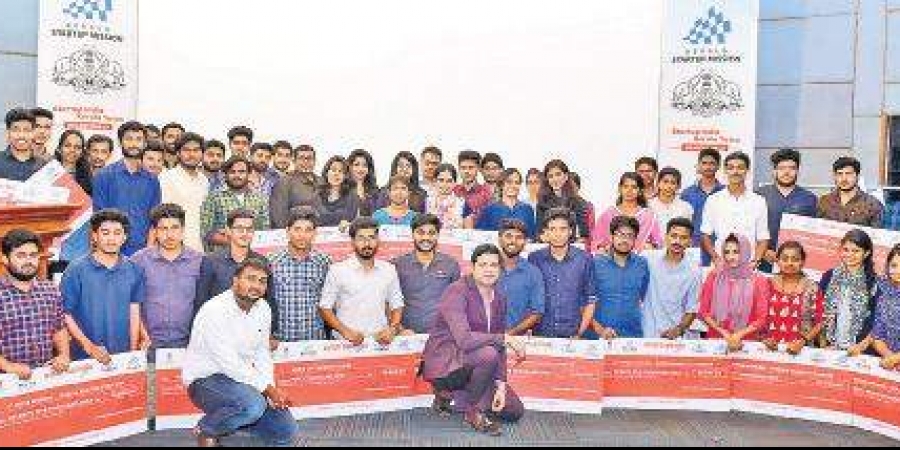
The first and second runners-up received Rs 50,000 and Rs 25,000 respectively.

Winners of the grand finale of the Startup Yatra with Kerala Startup Mission CEO Saji Gopinath in Technopark, Thiruvananthapuram on Tuesday | Express

Thiruvananthapuram  :

Final year Mechanical Diploma Polytechnic student Arunima CR from Wayanad, who developed a solid waste cleaner that helps clean up water bodies sans manpower, bagged the Best Womenpreneur Award at the grand finale of the ‘Startup Yatra’ held at Technopark on Tuesday.

According to Arunima of Government Polytechnic College, Meenangadi, who won the award that carries a cash award of Rs 75,000, “Solid waste cleaner can also clean drains and remove solid waste from water sources, including streams, rivers and ponds. Significantly, it can avoid the workers’ direct contact with waste materials.”

The event marked the conclusion of the state-wide initiative by the Kerala Startup Mission (KSUM) to nurture aspiring entrepreneurs in Kerala’s tier 2 and 3 cities and help them realise their startup dreams. An Android app developed by Rashida V P from Kasargod for farmers in agriculture sector emerged the first runner-up. Andrea Antony from Kottayam won the second runner-up for her idea Min_Rov (Mind Rover), a concept for functioning a brain-control wheelchair.

The first and second runners-up received Rs 50,000 and Rs 25,000 respectively.

Around 80 innovative ideas were pitched in the finale by as many as 180 participants and 20 ideas notched-up honours. Heroes of the eight boot camps held in various districts were given a cash award of Rs 50,000 each.

The winners included :

Devi V S (Thiruvananthapuram), Jithin J (Kollam), Thomas Syriac (Kottayam), Sachu Sivaram S (Ernakulam), Varsha J (Thrissur), Mohammed Shaheer (Kozhikode), Aneesh (Wayanad) and Harris (Kasargod).

Other awards:

Best Technology Startup:  Winner  Amal C Saji (Ernakulam), First Runner-Up-Rahul KS (Ernakulam), and Second Runner-Up Annie Sam Varghese (Thiruvananthapuram); Best Social Startup: Winner – Risvan Ahammed K (Kasargod), First Runner-Up – Ushanandini (Ernakulam), and Second Runner-Up- Nowrin N (Thiruvananthapuram); Best Sustainability Startup: Winner- Kevin R (Kottayam), First Runner-Up – Amaljith S B (Thiruvananthapuram), and Second Runner-Up – Ragesh (Kottayam).

source: http://www.newindianexpress.com / The New Indian Express / Home> Cities> Thiruvananthapuram / by Express News Services / November 28th, 2018

Hanan Hamid walks on the ramp at Kerala Khadi show, meets CM Pinarayi Vijayan

KERALA :

Hanan, who became a social media star after Malayalam daily Mathrubhumi ran a news report about her struggle to run her family, received support from CM Pinarayi Vijayan. He said she was a symbol of courage and determination and that the state must rise to support her.

Hanan walked the ramp in the state capital as part of the state-level inauguration of the Onam-Bakrid Khadi Mela 2018.

Hanan Hamid, the 21-year-old final year student of chemistry whose resolve to fund her education by selling fish and doing odd jobs had made her a darling among the social media in Kerala, met Chief Minister Pinarayi Vijayan in the state capital on Wednesday. She also walked the ramp for a fashion show organised by the Kerala Khadi Board in Thiruvananthapuram.

Hamid, whose onerous circumstances were reported by the local Mathrubhumi newspaper recently, initially received a lot of bouquets from those on social media. However, certain people on Facebook began spreading rumours that Hamid’s story was fabricated as part of a marketing stunt for a film and that it was akin to cheating the people of the state. The 21-year-old subsequently became a victim of dangerous levels of cyber-harassment and abuse. Two people, who were at the centre of the false rumours, were arrested by the Kerala Police and charged under relevant sections.

During the controversy, Hamid received support from the chief minister and leaders from all parties. The CM said she was a symbol of courage and determination and that the state must rise to support her. During her trip to Thiruvananthapuram, Hamid told reporters that she was a ‘daughter of the government’ and that she was assured of protection from the state. She thanked those who backed her story.

Hanan is Khadi’s face for Onam-Bakrid expo

She walked the ramp at a fashion show organised in the state capital as part of the state-level inauguration of the Onam-Bakrid Khadi Mela 2018. At the event, she met the chief minister and Sobhana George, vice-chairperson of the Kerala Khadi Board. George told reporters that Hamid was symbolic of the hundreds of hard-working women labourers toiling in the Khadi sector in the state.

source: http://www.indianexpress.com / The Indian Express / Home> India / b y Express Web Desk , Kochi / August 02nd, 2018

Green lessons from a businessman

Allapra (Kunnathunad Taluk – Ernakulam Distirct ), KERALA :

Mr Nizar has won the district-level best innovative farmer award in aquaponic farming.

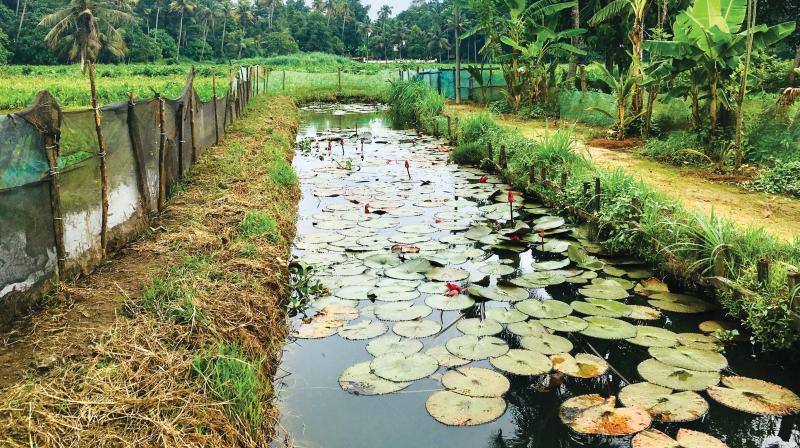
Scenes from the compound of Nizar’s plywood unit

Kochi :

At a time when green experts debate impacts of highly polluting plywood companies in Perumbavoor area, a plywood unit owner from there has bagged the state’s award for best innovative farming. Nizar M. M. from Allapra is a role model for entrepreneurs on how to convert a polluting industry environment-friendly and farming on its premises.

The more than four acres of land where the plywood unit is situated has been developed as an organic aquaponic fish, vegetable and dairy farm by spending Rs 50 lakh.  Mr Nizar has won the district-level best innovative farmer award in aquaponic farming. “We’ve initially taken up farming at the plywood company compound to minimise damage to the environment. Later, it has been expanded, and now the four-acre organic farm produces vegetables, fish and milk,” he said.

Nizar021MPOs18jul2018

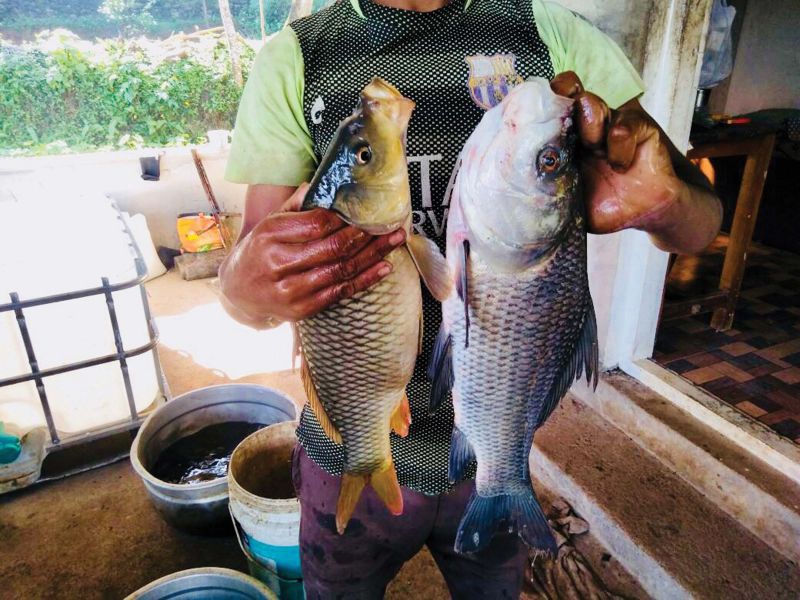
“The aquaponic farm was set up on an experimental basis spending `1 lakh, six months ago. Now, fishes from the farm are being sold at markets in Perumbavoor and the 20-20 food security market at Kizhakkambalam. Milk of the six indigenous Vechur dwarf cows on the farm is a most sought after.”

Fishes are given only organic feeds and waste from the fish ponds is used as organic manure for corn, sugarcane and vegetable cultivation.  There are plans to develop the aquaponic farm at an estimated cost of Rs 6 lakh with a government subsidy of Rs 2.5 lakh.

Mr Nizar also plans to set up an organic coconut oil manufacturing unit and a goat farm soon.

The more than 100 migrant workers of the plywood unit are staying in the company compound, and their food is being made of organic vegetables and fishes from the farm.

source: http://www.deccanchronicle.com / Deccan Chronicle / Home> Lifestyle> Pets and Environment / by Smitha N, Deccan Chronicle / July 13th, 2018

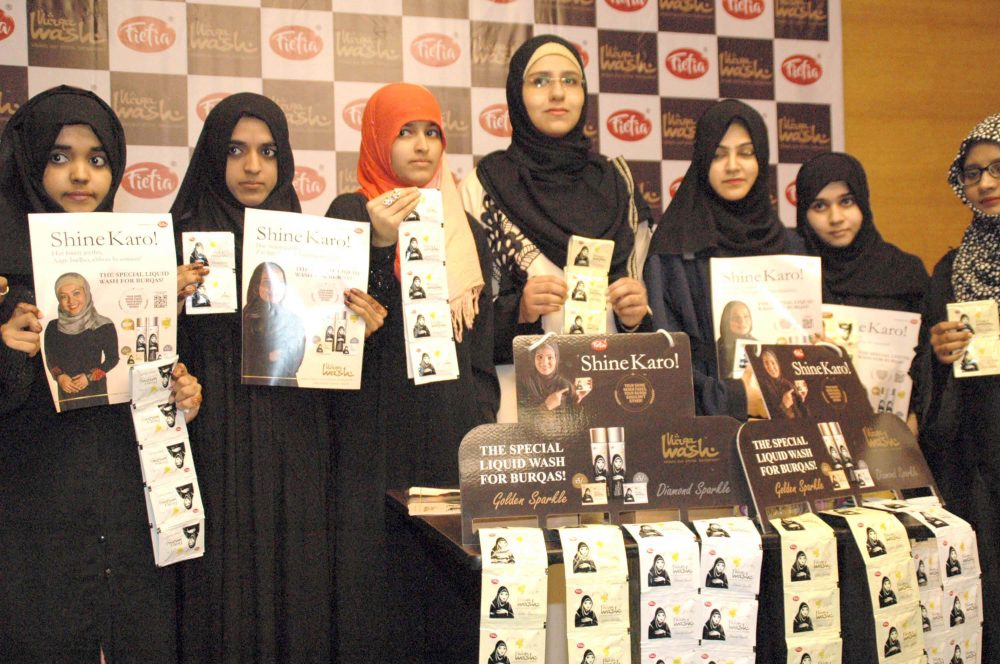
‘Vurqa Wash’ a special liquid wash for Burqas

Hyderabad, TELANGANA :

VurqaWash02MPOs12jul2018

Hyderabad :

Hyderabadi girl Mahanoor Khatoon (C), launching her unique invention ‘Vurqa Wash’ a special liquid wash for Burqas, in Hyderabad on Wednesday. UNI PHOTO

source: http://www.siasat.com / The Siasat Daily / Home> Hyderabad> Photo News / July 12th, 2018

Meet the ‘mango man’ who has grown 300 varieties of mangoes on one tree

Malihabad (Lucknow District)  , UTTAR PRADESH :

HajiKalimullahKhanMPOs09jul2018

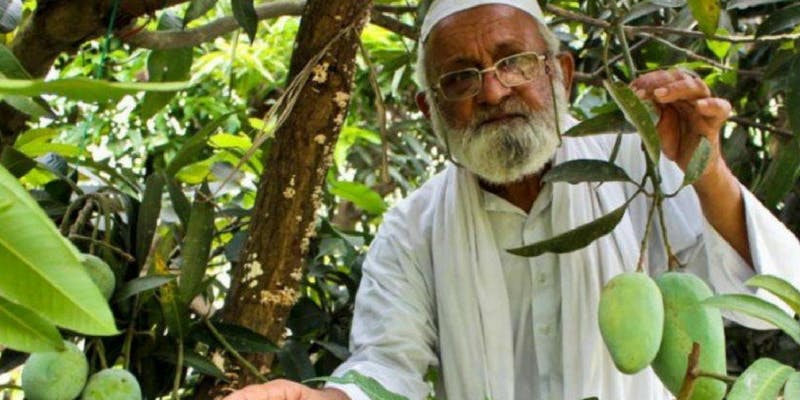
Last year, when newspapers and social media woke up to the news of a certain mango variety being dedicated to Prime Minister Narendra Modi, everyone’s attention shifted to 78-year-old “Mango crusader”. Hailing from Malihabad in Uttar Pradesh, Haji Kalimullah Khan is a mango cultivator who is either growing varieties of mangoes, experimenting with its flavors, naming a celebrity over each of the indigenous brands, or growing 300 varieties of mangoes on a single tree. Yes, you heard it right!

This sixth standard pass-out has pioneered the art of cultivating mangoes. He says,

Mango cultivation runs in our family, and we have been doing this for the past 300 years. Our ancestors in our rajwadas used to have huge mango orchards that grew beautiful hybrids. I cultivated a mango tree at the age of 17, which had seven varieties of mangoes in it, and all had different tastes and flavours.

Since then, I have been trying to grow new hybrids every year to show that it is possible to introduce newer varieties, he told NDTV.

Father of eight children, Kalimullah grabbed the headlines when he named a mango variety after Prime Minister Narendra Modi, and called it “NaMo Aam“. A hybrid of Kolkata’s Husn-e-Aara and Lucknow’s Dussehri, he plans to grow the variety at Modi’s hometown. In the past, he had dedicated mango varieties to yesteryear actor Nargis Dutt, Bollywood actor Aishwarya Rai Bachchan, Cricket prodigy Sachin Tendulkar, and Anarkali, the popular character in the movie “Mughal-e-Azam.”

Source: AmarUjala
Source: AmarUjala

“The ‘NaMo’ mango will remain even when we are gone and will remind people of Narendra Modi and his success. We wish to meet him once. We will be very happy if he visits us once and sees the ‘NaMo aam’ ripen, he told Zee News .

He also grows a certain breed of guava, which on ripening becomes as red as an apple. Kalimullah is also the recipient of the Padma Shri award

source: http://www.yourstory.com / YourStory / Home> Social Story> Think Change India / June 07th, 2018