How Azim Premji expanded his business from vegetable oils to info-tech and put his money where his heart is
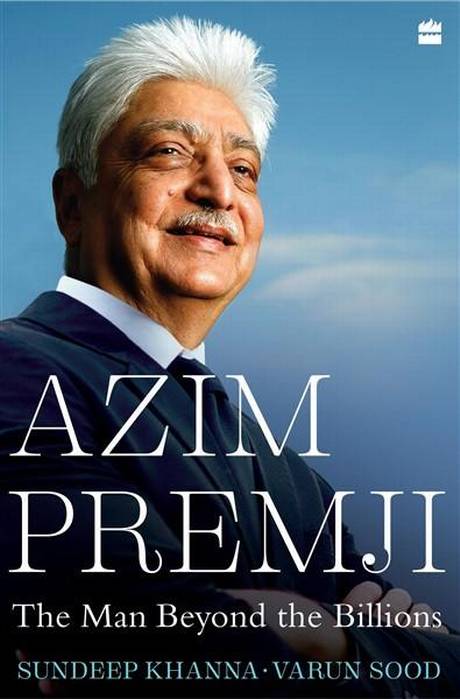
The story of a person can be inspiring. The authors have chosen their subject well, for, everyone knows of Azim Premji, but few truly know what makes the man.
A book about such a person, if well-written, may possibly inspire the reader into action. In this case, soon after you read the book, it’s difficult not to look up the Azim Premji Foundation website, to see if it had any volunteering opportunities, even if you have done nothing like it before!
In chronicling any life, it is easy to get mired down with mind-numbing detail that comes your way if you are sifting through 50-odd years’ worth of the protagonist’s hits and misses. The authors have done well to stick to the most interesting parts of Premji’s life. Two things stand out across events and across time: his integrity and a penchant for frugality.
Zest for austerity
His insistence on paying for personal calls made on his office phone is legendary. His friends know of his love for cars but also about his unwillingness to spend fanciful amounts on one.
He once wanted to buy a Fiat that was registered in Wipro’s name. He got the finance department involved in the discussion as he wanted to play by the rules and pay for the purchase. But with depreciation, the car’s value was zero to the company. The transaction did not go through.
At one point, his friends were agog with excitement at his purchase of a Mercedes, but it was… hold your breath… a second-hand one!
At another time, when his team was preparing to welcome clients on a visit to headquarters, and took Premji over the arrangements that included meals from a five-star hotel, he quipped, “If our cafeteria is good enough for our employees, it should be good enough for clients too!”
It’s probably the same zest for austerity that had him pleased while on a U.S. visit, when two of his senior-most executives bought lunch for the three of them at a Burger King outlet for less than $7.50! And, this was a man who didn’t bat an eyelid when an employee of the vegetable oils business lost ₹25 lakh in a year in a trading position.
A long journey
The book chronicles the journey of Wipro from the time the Premjis put down roots in Mumbai. It throws light on the man’s spirit of entrepreneurship, as the company cautiously experimented with opportunities — expanding from vegetable oils to engineering products, computer hardware, tech services and consumer care and lighting. It also does not shy away from some of Wipro’s missteps such as the investment in financial services, a business which withered away despite the group’s entry into the space after much thought and preparation.
His management style
While doing justice to the man’s talent for perseverance, the authors have touched upon his management style that many say cramped some CEOs under his chairmanship. His taking over as CEO in 2005 after the abrupt exit of Vivek Paul, said to have been primed for the post, or his decision to have a joint CEO structure soon after, at a time when competitors were blazing ahead, had raised eyebrows in the world of IT services at the time.
The reader may get the sense that the authors occasionally sound deferential when talking about the man or his family. But, it’s difficult not to be overawed by someone who has never sold a single share in his company but who chose to give away $21 billion worth of wealth to his foundation, leaving his two sons with shares valued at about ₹65 crore. How can one give away so much wealth and still, on the morning the news about the latest transfer to the foundation breaks, irritably ask an employee — who speaks of congratulatory messages overwhelming social media — “What’s all the fuss about?” ?
This book is a must-read for anyone who can read English.
Azim Premji: The Man Beyond the Billions; Sundeep Khanna, Varun Sood, HarperCollins, ₹699.
bharatkumar.k@thehindu.co.in
source: http://www.thehindu.com / The Hindu / Home> Books> Reviews> Profile / by K Bharat Kumar / January 16th, 2021
This new card game created by two Bengaluru-based women, who hail from Kerala, celebrates Malayali culture, Mollywood and more.
The game needs at least four players and can be played by anyone aged 18 and above
Bengaluru :
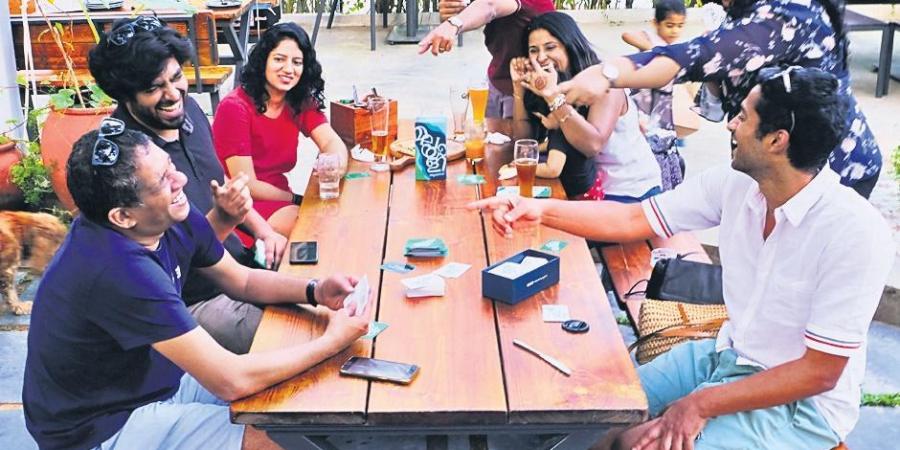
You may take a Malayali out of Kerala but you can’t take the love for Malayalam pop culture out of a Malayali. Or so it seems from this new game developed by two Bengaluru- based women who hail from God’s own country. Called Malayali Aano, the new game by Sona Zainab Harris and Rose Mary Jacob is a cardbased game that draws heavily from Malayali pop culture, popular phrases, movie characters, food, stereotypes and other such trivia.
Those who have played the popular party game Cards Against Humanity need no introduction to the rules of Malayali Aano, whose tagline is: ‘A party game for devil’s own people’. It consists of 500 cards, of which 100 have questions on them while 400 have statements, movie dialogues, or phrases that could work as an answer. One player picks a question card, others throw the quirkiest answers from the 10 they possess into a pile. The player that poses the question reads out each question- answer pair, laughter ensues and the most creative or whackiest answer wins.
A minimum of four players is mandatory, with more being merrily encouraged. “Each statement in the answer card is iconic in its own way but when set to the context of another question, it can incite a laughter riot. Since we’ve picked out trivia from the 1980s to now, the nostalgia factor is high as well.
Any player aged between 18 and 45 will find something to remind them of their childhood, adolescence, first romance, parental relations or their connection to Kerala,” says Harris, the founder and creative director of Backflip Design Studio. But it is not just fun and games.
It also helps bring up important conversations. “When you hear certain dialogues – for example, ‘You are just a woman’ from the film The King – you don’t think much in the context of the plot. But isolating such things and using it in the game makes people see that it could be problematic too. Humour can help break barriers with topics like sexism, classism, misogyny, etc,” says Jacob, who is also the founder and curator of the popup My Cup of Tea.
The two women took a month to develop the content of the game. It makes use of, what Jacob and Harris refer to as, a “Manglish” script. There is also a leaflet with a QR code that can be scanned to understand the translation and reference of the answer cards. The game is meant for those aged 18 and above, with some players even finding it to be an effective ice breaker with their parents.
“One player told us he never thought he would talk to his father about the topics included in the game. But they had a good laugh about it, so it can help different generations bond better too,” says Harris.
source: http://www.newindianexpress.com / The New Indian Express / Home> Cities> Bengaluru / by Simran Ahuja / December 29th, 2020
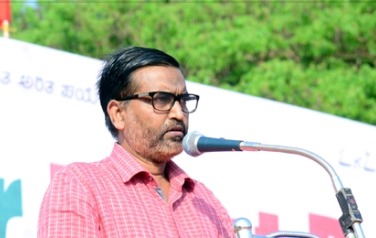
Karnataka is mourning the demise of KM Shareef, the former National President of Popular Front of India. With his demise, the community has expressed grief and a great sense of loss for he was a voice that spoke in favour of the oppressed.
Since the year 2000, KM Shareef – known in the public sphere as a writer, critic, translator, author, orator, and journalist – has been working tirelessly on the social front.
After graduating with a BSc degree, he spent four years in Dubai as a career person.He was a student of Mittabailu Jabbar Ustad, the general secretary of the Samasta Kerala Jamiatul Ulema, from whom he secured religious education.His father, the late Abdullah Haji, served as a Mudarris for 30 consecutive years in the Mittabailu Jamath.
KM Shareef, who advocated towards creating a united struggle for the empowerment of Dalits, Muslims, and other marginalized communities, sought to unite these communities and struggled towards realizing this objective throughout his lifetime in the organizational setup.He emphasized the need to politically empower these communities and stressed the importance of alternative politics in this regard.
In 2003, he served as the convener of Coastal People’s Union, an organization that was established as a coalition of various Muslim social organizations across Coastal Karnataka.
He played a prominent role in establishing ‘Prastutha’, a fortnightly news magazine in 2007, and also served as the editor-in-chief of the publication.Through this media publication, he constantly wrote on behalf of exploited communities.
His writings delved into issues affecting the country, through which he warned that the country was endangered by communal fascism, capitalism, and imperialism.
He has been instrumental in bringing new press campaigns through the Prastutha publication and introducing newfacets of journalism to the press.He was constantly encouraging and inspiring budding young talents to read and write.
Opposing the exploitation of women in society, he has consistently asserted that dowry is a social evil and one of the main causes contributing to women’s atrocities and exploitation in the country.
His Kannada research work, ‘ಶಾಂತಿಗಾಗಿವಿವಾಹ'(Marriage for Peace), is by far the most prominent among his written works. In this book, he objectively outlines how dowry is in effect across the country and in what manner it is weaponized to commit atrocities against women.
When he was the President of the Karnataka Forum for Dignity (KFD), he organized a series of state-wide, anti-dowry campaigns and encouraged young people to organize simple weddings and dowry-free marriages.
In 2006, KM Shareef spearheaded theKFD campaign ‘ಕೋಮುವಾದಿಫ್ಯಾಶಿಸ್ಟರಿಂದಕರ್ನಾಟಕವನ್ನುರಕ್ಷಿಸಿ'(Protect Karnataka from Communal Fascists), across Karnataka. When the ‘VidhanaSoudhaChalo’ convention was held in Bangalore on the occasion ofconcluding the campaign, a delegation headed by KM Shareef had met with the then Chief Minister Kumaraswamy and filed an appeal.This historic campaign, which occurred amid a series of sustained attacks against minorities in coastal Karnataka, resulted in the KFD organization becoming a household name in Karnataka.
KM Shareef, who sought no limelight or fame in the public sphere, was known for his straightforward, simple personality and disciplined disposition.
He was in constant contact with other leaders who were activelyfightingtowards social justice in the activism circle.He continued to hold close associationswith Dalit leaders, progressive figures, human rights activists, thinkers, and writers.
He was a man who had already possessed farsighted vision and ideas towards Muslim empowerment, when he presented his paper titled, ‘Education and Empowerment of Muslims’ during the Second Beary Literature Conference.
KM Shareef is survived by his wife, three sons, three daughters, and a multitude of relatives, friends, and well-wishers.
source: http://www.prasthutha.com /Prasthutha.com / Home / December 22nd, 2020
After observing that several non-Covid-19 patients are dying due to delay in accessing medical treatment, a city-based biochemist is helping them in a unique way.
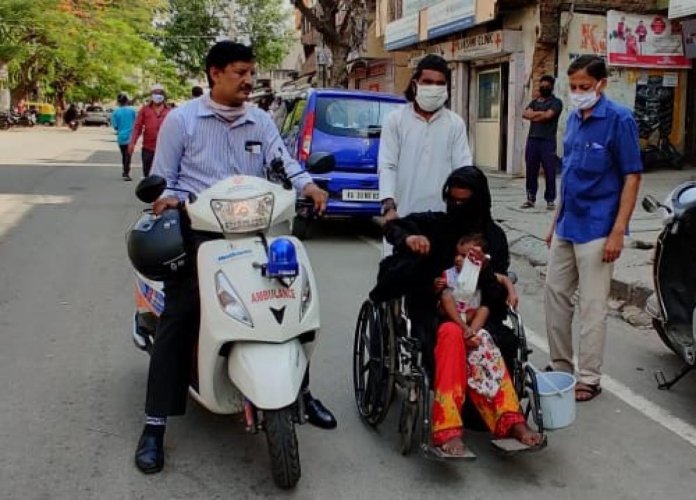
Dr Syed Moinuddin Shabbir, a clinical biochemist at Santosh Hospital in Fraser Town, has turned a two-wheeler into a bike ambulance to treat needy patients at their home. He also provides medicines to poor patients based on prescriptions from their doctors.
“After the lockdown was imposed, people were facing problems in even buying provisions. Many senior citizens and children were finding it difficult to access hospitals. I started with providing medicine to poor patients,” he said.
The problems were exacerbated in containment zones where people had to struggle for simple check-ups like blood pressure and glucose levels. “I went to containment zones on the bike and did what was needed,” Shabbir said, listing Padarayanapura, Frazer Town, Bharathinagar, Indiranagar, Vijayanagar, and Thanisandra as some of the areas where he has treated people.
In Shivajinagar, 40 people in one building had tested positive for Covid-19. Shabbir could not take his bike there, but he managed to send the necessary medicine to the people.
The demand for his services did not come down with the lifting of the lockdown but has only increased.
“At least 50 people contact me through Facebook or WhatsApp,” he said.
Shabbir said charitable organisations have come forward to fund his work, which has benefited about 5,000 people and cost him Rs 3 lakh.
source: http://www.deccanherald.com / Deccan Herald / Home> City> Life in Bengaluru / by Manohar M ,DHNS, Bengaluru / September 04th, 2020
Barwad Village, Chikodi Taluk (Belgaum District), KARNATAKA :
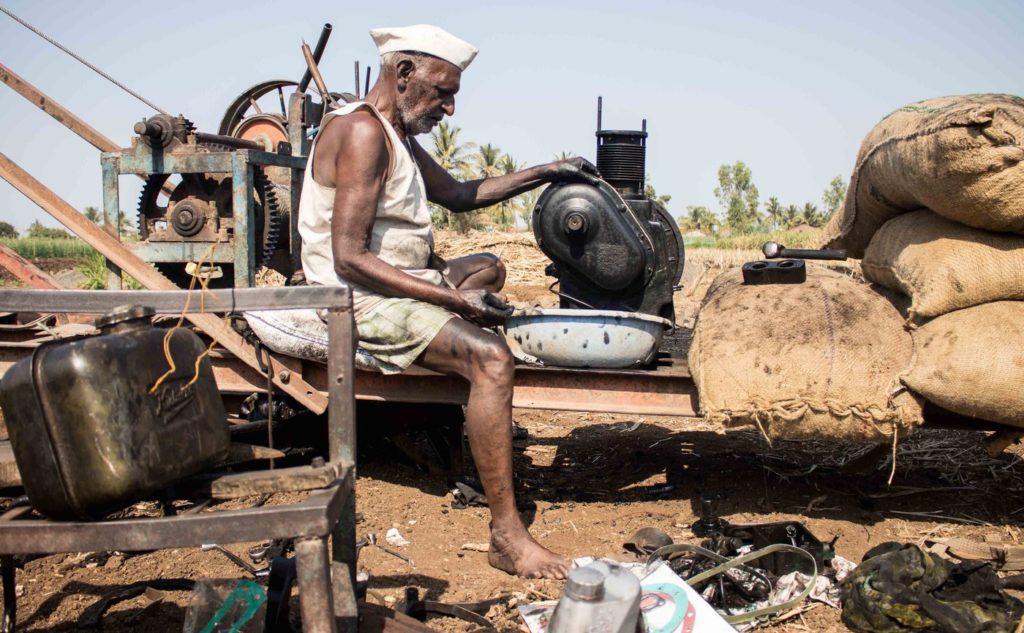
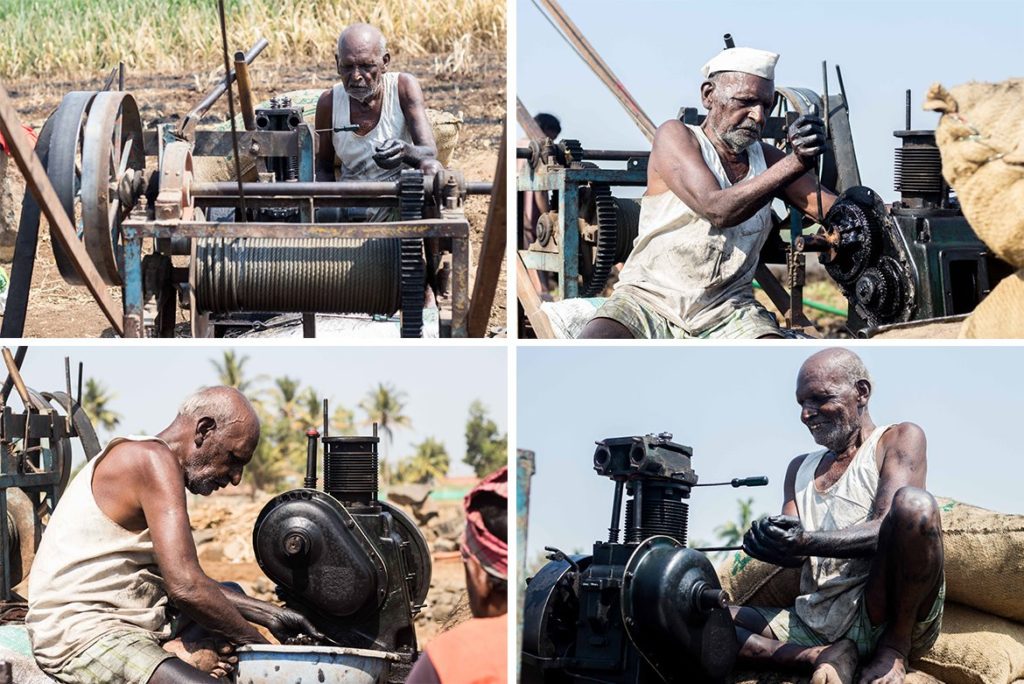
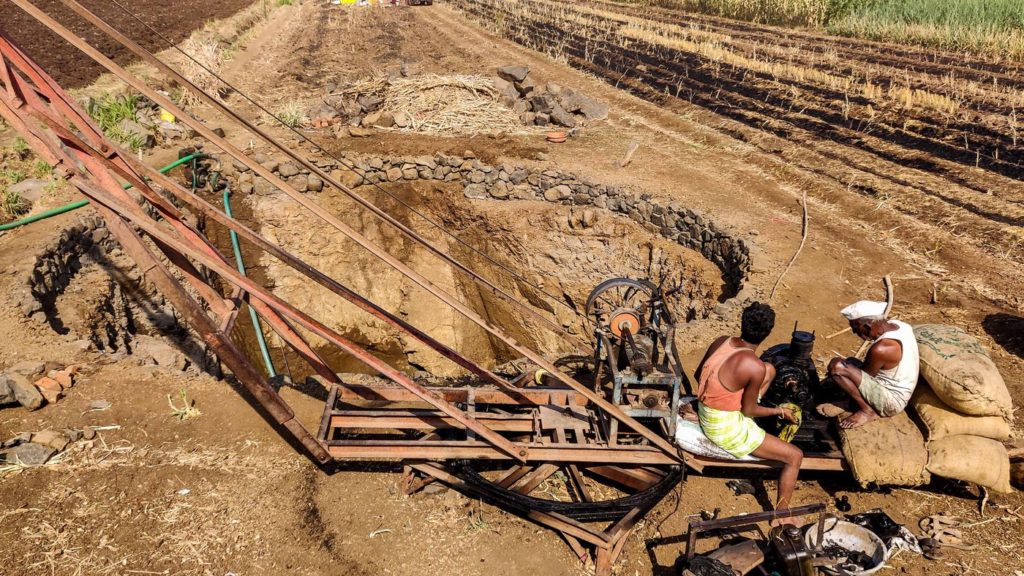
Shamshuddin Mulla is known in the villages of Belgaum and Kolhapur district as a master mechanic with over 70 years of experience. Not many after him, he says, will have his passion for this grimy work.
“I will die with a paana [spanner] in each hand,” says Shamshuddin Mulla. “Death will be my retirement!”
That may sound dramatic, but Shamshuddin has indeed spent a large portion of more than 70 years wielding a spanner and other tools. Using them to repair all kinds of engines – water pumps, borewell pumps, mini excavators, diesel engines and many others.
His expertise in bringing all this faltering or silent farmland machinery to life is in high demand in the villages of Karnataka’s Belgaum district and Kolhapur district in Maharashtra. “People call me only,” he says, with a hint of pride.
Farmers and other clients come to Shamshuddin seeking his signature technique to diagnose a mechanical problem. “I just ask the operator to rotate the handle and from that I can identify what’s wrong with the engine,” he explains.
Then the real work starts. It takes him eight hours to repair a troubled engine. “This includes the time from opening to reassembling,” Shamshuddin says. “Today, the [engine] kits come with readymade materials, so it’s become easier to repair them”.
But countless hours of practice have gone into achieving his eight-hour average. Now 83, Shamshuddin estimates he has repaired more than 5,000 engines in 73 years – engines used for drawing water from the river, for extracting oil from groundnuts and oilseeds, moving stones from construction sites and wells, and for various other purposes.
Shamshuddin Mulla, 83, is known in the villages of Belgaum and Kolhapur district for his signature techniques. While working unperturbed in the heat when we meet, he gets several calls from hardware dealers in Kolhapur city, and says, ‘The dealer just has to tell me the name of the client who visited me, and ask for the parts required’
It is difficult, he says, for many farmers to find skilled mechanics because the company-appointed technicians don’t usually go to their villages. “It’s expensive too to invite the company’s mechanic,” he adds. “And it takes them time to reach remote villages.” But Shamshuddin can reach the ailing engine much faster. The farmers also consult him when younger technicians are unable to diagnose or repair the machines.
No wonder then that in his village, Barwad in Chikodi taluka of Belgaum district, Shamshuddin is known as Shama mistri, an expert mechanic. It’s to this village that people carry their small silent engines to be brought to life, or from where Shamshuddin travels out to the fields and workshops where broken engines await his expert touch.
The engine-manufacturing companies value Shamshuddin’s skills too. He can repair the machines manufactured by big companies like Kirloskar, Yanmar and Skoda, as well as several local companies. “They consult me on making improvements to the engines, and I always tell give them feedback,” he says.
For example, engine handles were not sturdy and compact earlier. “People had to rotate the handle [crankshaft] several times, and this would hurt them and cause injuries. I advised some companies to improve the handles. Now many of them provide three gears instead of two,” he says. This improves the balance, timing and movement of the handle. Some of the companies with branches in Kolhapur district, he adds, invite him to their celebrations on occasions like Independence Day, Republic Day and the company’s anniversary.
The months of March, April and May are the busiest for Shamshuddin, when he repairs around 10 engines every month – for a fee ranging from Rs. 500 to Rs. 2,000 for each repair job, depending on the complexity of the breakdown. “Before it rains, many farmers get wells drilled on their land, and that’s when a lot of engines need repair,” he explains. During the rest of the year, his repair work continues but the calls are less frequent.
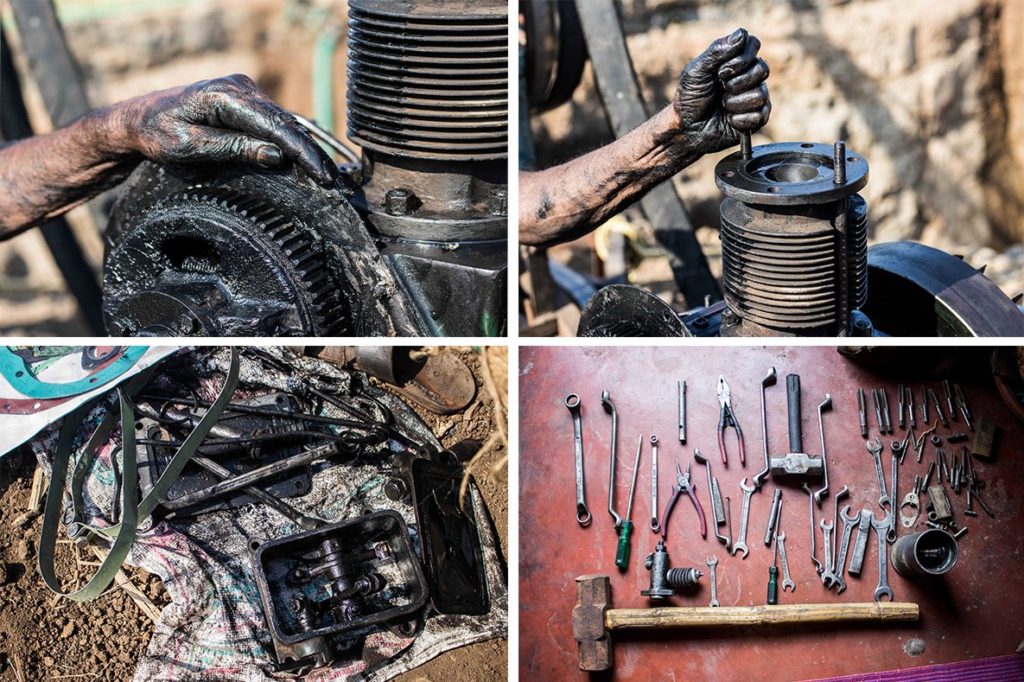
Top row: Shamshuddin says not many in the younger generation are willing to dip their hands in sticky black engines. ‘I’ve never used any gloves, what will I do by using them now?’ he asks. Bottom row: A dismantled engine’s innards (left) and some of the tools (right) which Shamshuddin has bought over seven decades. He is very particular about the right kind of equipment, and prefers carrying his own set of tools for any repair work
When he isn’t away repairing engines, Shamshuddin looks after his two-acre farm and cultivates sugarcane. He was only about 7 or 8 years old when his father Appalal and mother Jannat, who were farmers, shifted to Barwad from Pattan Kodoli in Kolhapur’s Hatkanangle taluka. To help with the family’s earnings, at the age of around 10, in 1946, Shamshuddin started assisting a mechanic in Barwad. Ten hours of work fetched him Re. 1 every day. The family’s poverty prevented him from studying beyond Class 1. “Had I completed my education, I would have been flying an airplane today,” he says with a laugh.
Shamshuddin recalls going by bullock cart every fortnight to Hatkanangale village, where freight trains halted – around 30 kilometres from his village – to purchase diesel for engines in the mid-1950s. “Back then, diesel cost one rupee per litre, and I used to buy three barrels [a total of 600 litres] each time.” Shamshuddin was known as ‘Shama driver’ in those days, whose job was to maintain the machines.
In 1958, a few mechanics from Kolhapur city came to Barwad to install an 18-horsepower engine for drawing water from the nearby Dudhganga river to the fields. Then 22, Shamshuddin carefully observed them at work to try and understand how an engine worked. “It required crude oil worth two rupees every day,” he recalls. The engine malfunctioned the following year after getting submerged in the rising river water. The technicians were called back and Shamshuddin used the opportunity to polish his own skills. When the machine went under water again in 1960 (it was eventually replaced by a newer version), he repaired the engine on his own. “From that day onward, my name was changed from ‘Shama driver’ to ‘Shama mistri’,” he says, proudly.
An incident in 1962 convinced Shamshuddin that it was the right time to further explore the world of engines. A farmer from Barwad had commissioned him to buy an engine for his field. “I went all the way to Ghunaki village [around 50 kilometres away] in Hatkanangle taluka to the company warehouse and brought the engine for Rs. 5, 000,” he says. It took him 20 hours over three days to assemble it. “A mechanic from the company inspected it afterwards and said it was done perfectly,” he recalls.
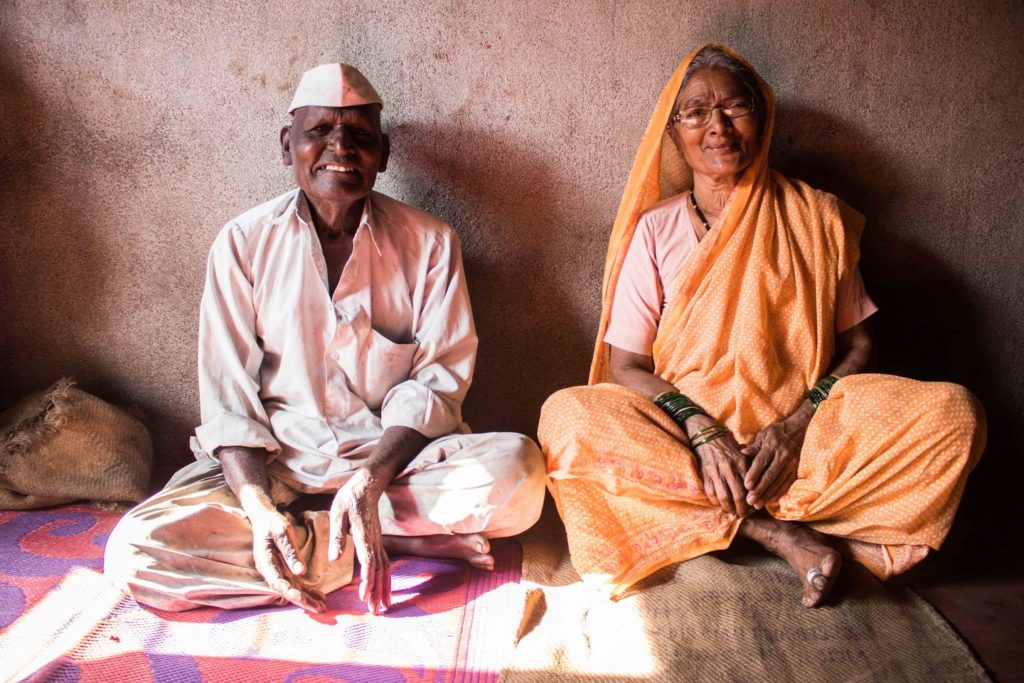
At their home in Barwad village: Shamshuddin and his wife Gulshan, who says, ‘For me, agriculture is better than repairing machines’
Over time, Shamshuddin’s reputation as a skilled mechanic kept growing. He had by then worked as an apprentice to another mechanic for five years, earning Rs. 2 a day. When he started repairing engines on his own, his income went up to around Rs. 5 a day. He would travel on his bicycle to the nearby villages of Chikodi taluka in Belgaum (now Belagavi). Today, his customers contact him by phone and ferry him in their vehicles.
But the craft of repairing engines also has its risks. “Once [in the 1950s] I got hurt while working. You can still see the wounds on my back. They will never heal,” Shamshuddin says. A few months ago, he went through an angioplasty procedure in a Kolhapur hospital. “The doctors asked him to rest for six months, but there is no one who can repair engines,” says his wife, Gulshan. “Within two months, people started bothering him to come and repair their engines.”
Gulshan, who is her mid-70s, helps with cultivating sugarcane on the family’s two acres, and they sell the cane in the market. “He asks me to learn how to repair and even teaches it sometimes, but I am not interested in it much. For me, agriculture is better than repairing machines,” she says, laughing.
Their sons have not taken to Shamshuddin’s craft either. (He and Gulshan don’t have any daughters). The eldest, Maula, 58, has an electric motor shop in Barwad. Isaq, in his mid-50s, helps look after the farm. Their youngest son, Sikandar, died about a decade ago.
“I went out, observed people and learned this art,” Shamshuddin says with a touch of sadness. “We have the knowledge and resources in our home today, but no one even wants to touch an engine.”
For big and heavy engines, Shamshuddin travels directly to the site. Here, he is at Gajabarwadi village of Belgaum district, repairing a diesel engine used to lift stones during well-digging
The situation is similar outside their house too. “No one wants to get their hands dirty with the kalakutt [black, grimy] engine oil. The younger generation calls it ‘dirty work’. How will you repair an engine if you don’t want to touch the oil?” he asks with a laugh. “Besides, people now have a lot of money, and if an engine doesn’t work, they usually buy a new one.”
Still, over the years, Shamshuddin has trained about 10 to 12 other mechanics from nearby villages. He is proud that they too can now easily repair engines, though none of them are as skilled as he is and occasionally seek his diagnosis of the problem.
When asked for advice for the younger generation, Shamshuddin smiles and says, “You should be passionate about something. You have to love what you do. I love engines, and that’s what I spent my entire life on. From my childhood, I wanted to examine and repair engines, and I think I have achieved that dream.”
This is when he declares – “I will die with a paana (spanner) in each hand” – but then clarifies that those words are borrowed from a mentor mechanic he met when he was a teenager, whose passion for repairing engines Shamshuddin still recalls. “He would travel hundreds of kilometers for this work,” he says.” The mentor [whose name Shamshuddin can’t fully recall] had told him once about dying with a spanner in his hands. “It inspired me, and that’s why I work even at the age of 83. Death will be my retirement!” reiterates Shama mistri.
source: http://www.ruralindiaonline.org / Pari – People’s Archive of Rural India / by Sanket Jain / August 07th, 2019
At age 24, this college dropout helps companies like Airtel, Truecaller and Justdial protect their users’ personal data. Incredibly, however, he learnt all the necessary skills not through formal courses, but research on Google!
Meet Ehraz Ahmed, a 24-year-old, independent data security researcher from Mysuru, Karnataka, who since last year has protected the data of 700 million users by helping companies like Airtel, Justdial and Truecaller detect major flaws in their data security architecture. Simultaneously, he runs a fintech and a web security company.
What’s particularly remarkable about this first-year engineering college dropout is that he learnt all the necessary skills not through formal courses, but research on Google. A real online prodigy, Ehraz is looking to protect the data of 1 billion users by the end of this year. So, how did this ethical hacker and serial entrepreneur get to where he is today?
Early Days
“I began using computers when I was just 10. I remember accompanying my brother to the local cyber cafe paying Rs 30 an hour and playing games like Counter Strike or browsing the internet. Besides playing games, I was exploring different facets of the online world from social media sites like Orkut to finding ways of building a website because my elder brother was a web developer. I would peek into the source code of the websites he built and try to learn things independently through Google. Whatever I have learnt about computers, web security and the online world is through Google,” Ehraz tells The Better India.
It was while playing Counter Strike with his friends when Ehraz found his first opportunity at entrepreneurship. Understanding the craze for the game amongst his friends, at age 14 Ehraz started a game server hosting venture. However, besides providing online gaming servers for players to connect and play the game for just Rs 200 per player, his venture also began offering web hosting services to different websites.
The reason he ventured into the world of entrepreneurship this early was because of a few tragedies in his life. As an 8th grader, he recalls witnessing his brother meet with a serious road accident. Two years later, his father suffered a heart attack.
“My interest in my venture had dimmed after my father’s heart attack. I lost interest in my studies as well. That’s when I put everything on hold to make a fresh start. I wanted to stand on my own feet by doing something better and more significant than what I was doing. These incidents made me realise the value of time and money. Life is short and there is so much left to do not just for yourself but others as well. Nonetheless, by this time, I had grown into a competent web developer, picked up real-life entrepreneurial skills and began understanding some of the basic nuances of data security,” he recalls.
Meanwhile, by the early 2010s, discussions surrounding data security in the online world had begun to take off in India. One day during high school, he read a post on Facebook by a security researcher who was listed in Google’s Hall of Fame for finding a flaw. This researcher was even paid for it. This inspired him to learn how he could do the same.
That’s when he began targeting companies that offered bug bounties to hackers who would help them find flaws in their data security architecture. By the age of 16, Ehraz got listed in 50 Security Researcher’s Hall of Fame for finding security breaches in companies like Facebook, Microsoft, Apple, Adobe, Blackberry, Soundcloud, and EBay. These Halls of Fame are listings compiled by major tech companies of online security researchers who helped find these flaws.
Besides recognition and a certificate, there was monetary compensation involved which depended on the magnitude of the flaw found. In India, however, he observes that the concept of bug bounties are still very new and not many companies operating here have that facility for freelance security researchers.
His first hall of fame listing was on Facebook, where he discovered a cross-site scripting vulnerability that could have allowed attackers to steal a user’s browser cookies. With this, any hacker could log in to a user’s account without a password and users are vulnerable to extortion and blackmail.
Ehraz Ahmed: The ethical hacker who has helped companies like Airtel address their user data vulnerabilities.
Serial Entrepreneur
“Although I was good at finding security flaws, I was not making enough money from it. Not all companies offer bug bounty programs, while only a few provide monetary rewards. But most of them do acknowledge your efforts in finding that flaw,” he says.
Looking for ways to make money, one day he found someone trading in the financial markets talking about making money in a Facebook post. It piqued his interest and he began exploring this field. Ehraz admits that it took him a while to figure out how it all works because he was sifting through hundreds of blogs.
“It wasn’t the most efficient way of learning, but I wasn’t interested in studying courses. My interest lay in obtaining that raw information about how to navigate this world. In the initial years, I lost a lot of money trading from my brother’s account. Since I was still under 18 during my PUC days, I couldn’t really open my own trading account,” he recalls.
By the time he enrolled into an engineering college at the age of 20, in Mandya, to pursue a course in computer science engineering, he started a fintech company called Voxy Wealth Management that engaged in offering financial advice and analytic services to traders and other consumers who wanted to manage their stock portfolios.
But travelling 80 km up and down from Mysuru to Mandya everyday, attending classes and running a fintech company was becoming very stressful. Although he finished his first semester with good marks, when the time came to enroll for the second semester, he began questioning why he was studying these heavy theoretical courses.
“What am I learning all this for? Completing these courses felt like climbing a mountain, reaching the top and then seeing nothing. I had already begun earning money through my company. Meanwhile, I was already getting job offers because of the work I had done detecting security flaws across different websites. I eventually figured out engineering college wasn’t meant for me and before the second semester in 2017, I decided to drop out to start a web security company as well,” says Ehraz.
After launching Voxy Wealth Management, he started Aspirehive—a web security company that offers solutions for small and medium-sized companies—in December 2017.
Unfortunately, as he was making his way simultaneously in the world of financial markets and web security, another tragedy struck home.
In April 2018, his elder brother met with another road accident. He suffered an injury and upon recovery, his brother expressed a desire to start a company together. Following this conversation, he began work on launching a new company called StackNexo.
The premise for StackNexo is to offer all web services and solutions on a single platform. He describes it like an Amazon for users wanting to start their own website.
“We seek to provide all necessary services for starting your own website on one platform instead of compelling you to visit different websites for domain services, hosting services, etc. This is for entrepreneurs or users looking to start their own website without the necessary IT expertise. I have partnered with 20 companies like Stackpath, Cloudflare and Google to integrate their services on our web platform. I have spent over a year developing this platform and our plan is to launch the company in two months,” he says.
Protecting people’s data
While working on all these companies, Ehraz also began reading news of major data breaches in Indian companies last year. Using his expertise, he decided to help.
His work commenced in August 2019, and by December he had safeguarded user data of over 700 million users. In Airtel, for example, which is India’s second-largest telecom network, Ehraz had found a security flaw that could have allowed hackers to steal sensitive data of 320 million users. By December, he had discovered and reported data breaches to 10 companies, including Truecaller, Justdial and Nykaa.
By the end of this year, his objective is to protect the data security of 1 billion users. His work in this regard hasn’t stopped. Most recently, he detected and reported a major security flaw in a company called Thrillophilia that risked sensitive data of 2 million users.
“We don’t fix data breaches, but find them, report and notify the said company via email. With Airtel, for example, I began scanning their My Airtel app. I found a very simple flaw in the their application programming interface (API), which hackers could exploit to gain access into users’ personal data (address, location, IMEI, sex) through their mobile number. It took me just 15 minutes to find this flaw and access all this confidential data. Honestly, I was shocked to find such a basic flaw. Moreover, I am an Airtel user and it scared me how vulnerable their data was to this breach. With a user’s IMEI number, hackers can organise spear phishing attacks into your system using just a simple SMS,” he says.
With Truecaller, he had found a vulnerability on the app’s backend attached to the user’s profile picture. With this breach, if a user is trying to find out about who’s calling from an unknown number, a hacker could mine their location, figure out their IP address and their identity. As a result of this breach, nearly 150 million users were at risk here. Another major Indian company he assisted was Justdial, which has over 165 million users.
Through the breach he detected, hackers could log into a user’s Justdial account, access their JD pay (their payment gateway) and divert payments away from a particular merchant into another account. He approached the company and got this major flaw fixed.
Most small companies/startups, he believes, don’t focus on data security, and instead look towards getting the venture off the ground and earning all the money back that was invested. But these breaches are not restricted to small startups.
Just a couple of weeks ago, Big Basket suffered a major data breach.
“Government must make data security auditing mandatory. Secondly, we don’t have the legal architecture in place for independent security researchers like me to disclose to companies about major flaws in their data security. Indian companies, particularly the major ones, don’t have a responsible disclosure policy in place. Without such a policy, companies get intimidated when we find flaws and begin questioning us even though our intentions are good. There are no laws to govern and protect security researchers like us. International companies, meanwhile, are a lot more accessible and we can easily help them find flaws without any threat of a blowback. Indian companies have to start promoting bug bounty programs so that independent researchers can help them find flaws,” he says.
After all, there isn’t a bigger commodity out there than user data.
(Edited by Yoshita Rao)
source: http://www.thebetterindia.com / The Better India / Home> The Better Home / by Rinchen Norbu Wangchuk / November 30th, 2020
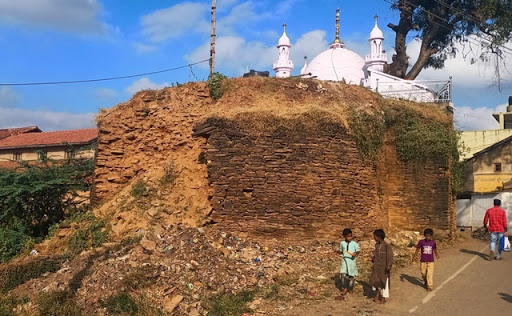
From, the sky-kissing palaces in the city, to the dust-biting burials in the graveyard, there is something in common; that’s brevity. The spacious chambers, the courtyards, the pavilions, gardens, and everything that once added stars to the beauty of the palaces is now in ruins. Their patrons have shifted themselves permanently to the graveyards to become one with the earth. Their relentless pursuit of worldly pleasures yielded them nothing but a fistful of dust for their mouths.
Wandering aimlessly inside the graveyard of Shahnur town, of Haveri District, I threw glances at various burials. At one of the corners, there were a few graves with monolithic sarcophaguses, with intricate floral patterns and calligraphy etched on them. Their presence in the graveyard was unobtrusive, suffused with weed and vines. When enquired, they belonged to the Nawabs of Shahnur. To the other side there were graves built with stones, crumbling to the ground, as though the time has wreaked havoc on them. Those were the graves of their kith and kin. The graveyard is also replete with countless burials of town dwellers, of recent times. There is a single cubicle, four-walled structure, with a large dome and minarets. That was a tomb of wife of one of the Nawabs, who belonged to the lineage of Prophet (PBUH).
Those who would strut about with arrogance are no more, and their descendants are hard to locate; like the beetles on a tree, that run away in all directions, when it is shaken. The time has also played a cruel game, as there are no chronicles to portray their life and time of the past. Only the legends make rounds inside the city, glorifying few of them as equal to saints and others are portrayed in lowlight.
I cringe, and often falter as I walk through those ruins. Their whines and whimpers are unbearable to my heart. Everyone thinks they are soulless; stone, mud and water; however, like everything else in the universe, they have life, embedded in their each element. They want them to be buried next to their masters, rather live a burdensome life. The pitiful wails, however, fall on deaf ears. I become their sole companion in grief, as we both believe we have so much in common to share with.
source: http://www.muslimmirror.com / Muslim Mirror / Home> Indian Muslim / by Anees Maniyar / December 07th, 2020
Reigning champion Mohsin Ahmed of Bengaluru has established lead at the end of the first scoring round of the eighth edition of the annual global contest Indian Crossword League, popularly called IXL.
Ahmed is followed by Chennai’s Ramki Krishnan at the second position. Ramki has won the contest four times in the last seven editions, an IXL release said on Sunday.
Three overseas players Sowmya Ramkumar (3rd), Philip Coote (6th) and Koh Ting Sween Kenny (7th) have also made it to the top 10.
The contest, which was open to Indians across the world earlier, has been thrown open to foreigners from this edition, the release said.
There will be eight more weekly online rounds before the offline ‘Grand Finale’ to be held in Bengaluru, the date for which will be decided later.
The top 30 participants on the cumulative leader board will take part in the final.
Started in 2013, IXL has been acknowledged as one of its kind by the Limca Book of Records, the release said.
source: http://www.deccanherald.com / Deccan Herald / Home> City> Top Bengaluru Stories / by PTI / September 07th, 2020
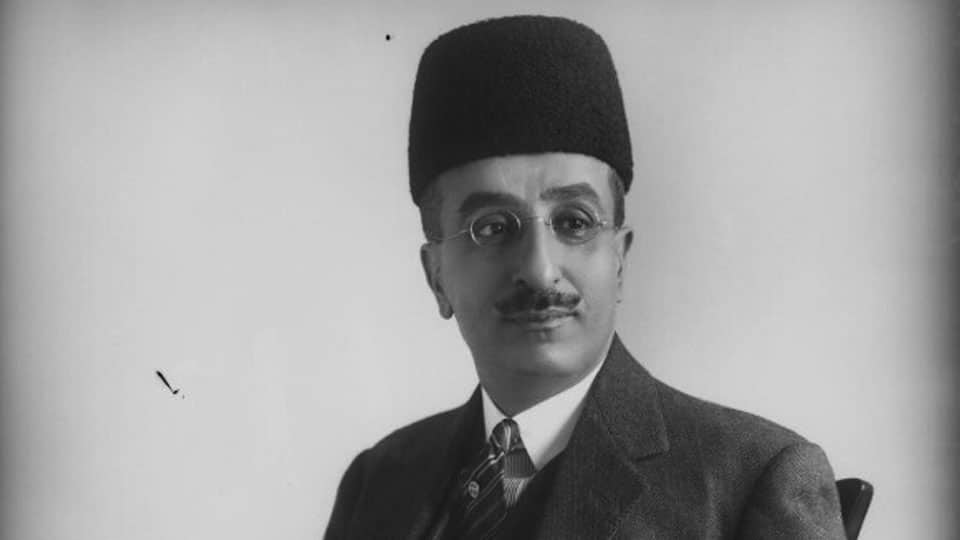
October 24th was the 137th birth anniversary of Sir Mirza Ismail, one of the Dewans of the erstwhile Mysore State who later went on to become the Dewan of the Princely States of Jaipur and Hyderabad too.
To mark this event, the Anjuman-E-Hadiqatul Adab, Mysuru, conducted a webinar that was well-received by the large number of viewers who logged in. I can say with some confidence that the Anjuman requires no introduction to most Mysureans because it is well-known for the annual Eid Milan get-together which it has been hosting over the past fifteen years to promote communal harmony and camaraderie among people of different faiths.
This event is as old as my column is because it is with my report of the first Eid Milan, which I filed for Star of Mysore, that my column was born! However, this year’s Eid Milan unfortunately could not be conducted because COVID-19 wiped out all celebrations from the entire face of this earth. Let’s all hope that things will change for the better before it is time to hold the Eid Milan next year.
Niranjan Nikam, the well-known senior journalist, who again does not need any introduction to most Mysureans, was the principal speaker at the webinar. He spoke on ‘The Unknown side of Sir Mirza Ismail,’ a topic which I suggested because I felt that by being slightly unusual, it would certainly be a crowd-puller! And Niranjan rose up to the expectations of his large virtual audience admirably well. Through some very painstakingly collected and well-curated references, Niranjan brought out many very interesting anecdotes from the life of Sir Mirza which were very noteworthy because I don’t think they are known to present day Mysureans.
Although it is understandable and expected too, that any speaker worth his salt will come well-informed and well-prepared for his talk, it quickly became evident to me that Niranjan was privy to much inside information which left me more than a little amazed. Take for instance the revelation that upon his death, the body of Sir Mirza that had already been interred was once again exhumed when there was a hue and cry from many grieving members of the public that they did not get a chance to see it and pay their last respects to their dear leader.
The body was once again displayed on a platform of sand for many more hours till late in the night and till all the people assembled there were satisfied that they had paid their homage to the man before it was interred into the grave once again. I have never heard of anything like this having happened, anywhere in the world in connection with the death of any public figure. DVG, the well-known Kannada writer, in his account about Sir Mirza has said that among the mourners was a frail old lady who was weeping bitterly saying that Sir Mirza, once while on his morning rounds, in response to her humble plea summoned one of the municipal engineers and ordered him to immediately provide a water tap to the street she lived in!
R.K. Narayan, the famous writer says in his autobiography, ‘My Days’ on page 138 that when his writing was not very paying, with him having got just 40 pounds for his book ‘The Dark Room’, it was Sir Mirza who got him a free railway pass and a government grant and commissioned him to write his book on Mysore, which Narayan was keen on writing.
As Niranjan’s talk progressed, the pieces of a most interesting jigsaw puzzle began to fall in place one by one. Niranjan revealed that his wife Pamela and he were associated for over ten months with the production of a book on Agha Aly Asker, the paternal grandfather of Sir Mirza, written by Sir Mirza’s very charming and graceful nephew Maj. Mohammed Mirza’s wife Syeda Mirza who stays in Bengaluru. The book which the speaker had brought with him, says that Sir Mirza who shared a very close working association and more significantly a very intimate friendship with the then Maharaja of Mysore, Sri Nalwadi Krishnaraja Wadiyar, would not have been a part of the history and growth of Mysore if his very enterprising grandfather, Agha Aly Asker, as a sixteen-year-old lad had not overheard a conversation between two people who were sipping tea in a chaikhana at his hometown, Shiraz in Iran. Learning that there was a great demand for Arab horses in the court of the Maharaja of a distant kingdom called Mysore, he decided to try his luck in selling them where they were in demand. So, he wasted no time in buying two hundred fine steeds and setting sail with them to India from Iran in the year 1824. The most surprising fact is that every one of those two hundred horses survived this long and arduous journey over sea and land, reaching Bangalore, alive and kicking!
The man who sold the horses to the Maharaja endeared himself to his customer and settled down in Bangalore which soon became his ‘Karmabhumi’ according to the writer Syeda Mirza. At that time Mummadi Krishnaraja Wadiyar, the then Maharaja of Mysore was about to become a victim of the very vicious Doctrine of Lapse imposed on Indian royalty by a very scheming British regime by which it could annex any kingdom if the ruler did not have a direct heir. It is reported that Agha Aly Asker became very close to the Maharaja because he could through his good relationship with Sir Mark Cubbon, the British Commissioner, get the Crown to restore the kingdom’s reins into the Maharaja’s hands, which understandably must have been a very difficult task. Meanwhile Sir Mark Cubbon commissioned Aly Asker to build more than a hundred bungalows around High Grounds, Richmond Town and the Bangalore Cantonment, many of which still stand in testimony to his abilities. We also have the Ali Asker Road named after him in Bengaluru on which his own house too still stands, although in a very vestigial state.
The close relationship between his family and the Mysore royal family continued down the line with his grandson, Sir Mirza Ismail becoming the classmate of the young Maharaja Sri Nalwadi Krishnaraja Wadiyar at the private royal school that was being run in the Summer Palace in Bangalore. Sir Mirza, who graduated from the Central College, Bangalore in the year 1905 and held many high posts was the first Indian to become the Private Secretary to the Maharaja. At the age of forty-two, he also went on to become the youngest Dewan of the State of Mysore in the year 1926 after A.R. Banerjee relinquished office.
His love for Mysore was so intense that in a speech that was aired on All India Radio, which can still easily be found on its archives in the internet, Sir Mirza says: I want Mysoreans to wash with Mysore soap, dry themselves with Mysore towels, clothe themselves in Mysore silk, ride Mysore horses, eat abundant Mysore food, drink Mysore coffee, sweetened with Mysore sugar, equip their houses with Mysore furniture, light them with Mysore lamps and write on Mysore paper!
Sir Mirza in his autobiography, ‘My Public Life’ says that the passing away of his dear friend, the Maharaja was the greatest sorrow that he had known! Towards the last phase of his active public life Sir Mirza seemed to have lapsed into a slightly disillusioned frame of mind. Here in Mysore he was seen by his detractors as a Muslim who was unusually close and influential with a Hindu Maharaja only because of his childhood friendship. At Jaipur he was seen as anti-Hindu while at Hyderabad he was seen as anti-Muslim because he did not support its existence as an independent State, without integration into the Indian Union!
It is said that once when the Maharaja and he were doing their morning rounds together on horseback, Sir Mirza, for reasons best known to him, expressed his desire to step down from his post. The Maharaja smiled and pointing towards the Chamundi Hill said: “You can do it when I go there.” He meant the cremation ground at the foot of the hill! And, that is how it was. Sir Mirza’s death came calling at the age of seventy-five while he was still very active. His demise was mourned not only here at home but across the world too, with newspapers in many countries writing about his very productive life.
Reporting on Sir Mirza’s resignation as Dewan of Mysore, The Ceylon News on May, 12th, 1941 said, Truth is a paradox and so is greatness. Sir Mirza too was a man of paradoxes. He was an autocrat with democratic instincts. A dictator with a weakness for having a constitution. A capitalist with socialist leanings. An idealist with an intense practical outlook. A dreamer with the astute mind of a businessman. A most charming man but a very stern and strict official. A perfect host but an indifferent friend. And he had no bosom friends, except the late Maharaja of Mysore!
The most amazing thing that Niranjan revealed in his talk was that the grand-old-man of India, Sir C. Rajagopalachari, fondly known as Rajaji, the first Indian to become the Governor General of India, at the time of the imminent partition told Sir Mirza to accept the invitation of Mohammed Ali Jinnah and go over to Pakistan. When a shell-shocked and very outraged Sir Mirza angrily asked him why, he said, “that way we will have someone in Pakistan who will love India and thus ensure that the Pakistanis too will do the same!” A wry but a terrific compliment indeed !
e-mail: kjnmysore@rediffmail.com
source: http://www.starofmysore.com / Star of Mysore / Home> Columns, Over A Cup of Evening Tea / November 07th, 2020
First time ever Central Wakf Council has awarded the Mutawallis of Wakf Institutions for their Excellence in the management of Wakf Institution.
Sajjada Nashin and Mutawalli Dr. Syed Shah Khusro Hussaini Sahab of Dargah Hazrath Khaja Bandanawaz RH bagged this prestigious national award by the Ministry of Minorities Affairs through the central Wakf Council which was presented by the Janab Mukhtar Abbas Naqvi-Hon’ble Union Minister of Minority Affairs.
On Behalf, Janab Syed Ali al Hussaini received the award who is the Janasheen of Hzt Khaja Bandanawaz Darga & Pro-Chancellor KBN university.
The Darga has many modernized up-to-date systems like AC rooms for Visitors, Mist Cooling system in open area, Airconditioning inside the tomb, Cleaning machines, Cabbie for Old people, Research center and much more.
3 Awards per zone were to be distributed in four zones East West North South Out of the Five States in south zone Karnataka Bagged 2 awards out of 3.
127 years old “The Muslim Orphanage Bangalore “ also bagged this award from Karnataka, A gesture of appreciation from the minority ministry Govt of India.
source: http://www.gohash.in / Go Hash / Home> Gulbarga / July 31st, 2019