Category Archives: Karnataka (under research project)

A family’s love for indigenous breeds of cattle

Uppinakote Village (Udupi District) KARNATAKA :
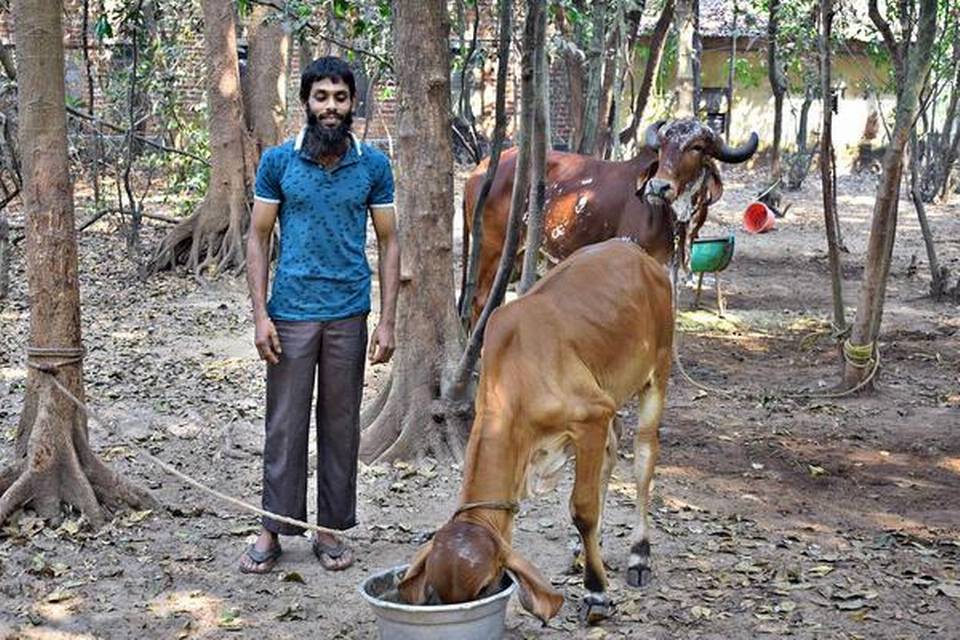
Mohammed Irshad Abideen tending the indigenous breed of cattle in his farm at Uppinakote village in Udupi district.

23 head of cattle are being reared in a farm house near Udupi

Three generations of a family have been conserving and breeding indigenous breeds of cattle here. The family has 23 head of cattle of Gir, Sahiwal, Red Sindhi, and Ongole breeds at Uppinakote village, about 18 km from Udupi. They are being reared in the farm house of 36-year-old Mohammed Irshad Abideen. His younger brothers, Naushad Ahmed, Mumshad Alam, and Sheik Mudassar, are supporting him in running the farm house.

Explaining their love for native breeds of cattle, Mr. Abideen said his grandfather Hanif Shah Saheb used to rear Malnad Gidda. His father, Jainulla Abideen, who used to rear Jersey and HF breeds for some time, later shifted to Malnad Gidda, Punganur, and Sahiwal breeds.

Mr. Abideen was engaged in helping his father ever since he completed his second year pre-university course. However, the family’s interest in indigenous cattle took a leap when Mr. Ahmed, who works as an engineer in Saudi Arabia, had gone to attend a bull show in Brazil about nine years ago.

“Naushad saw that most of the bulls were from India. We then decided to rear and breed only indigenous breeds of cattle,” he said.

More longevity

“The indigenous breeds of cattle are less prone to ailments, have more longevity, and provide better quality of milk,” said Sheik Mudassar.

“A Sahiwal cow gives 16 to 19 litres of milk daily, while a Red Sindhi gives 15 to 16 litres, and a Gir cow 13 to 15 litres of milk. I sell them at ₹70 a litre. Many people come to buy the milk as it is good for health,” said Mr. Abideen.

The breeding of indigenous cattle is lucrative. “We sell a male calf for ₹30,000 and a female for ₹50,000. We make a profit of ₹15 lakh to ₹20 lakh a year,” he said. The family grows corn and grass for their cattle on 2.5 acres of land taken on lease.

Many come to his farm seeking guidance. “We guide them in rearing and breeding of cows. We want our indigenous cattle breeds to thrive,” he said. Sultan, the Ongole bull, reared here, bagged the champion trophy at the Cattle Mela held at Sindhanur in Raichur district in January.

source: http://www.thehindu.com / The Hindu / Home> News> States> Karnataka / by Ganesh Prabhu / Uppinakote (Udupi District) / March 14th, 2019
Home chefs bag honours in cooking competition

Bengaluru, KARNATAKA :

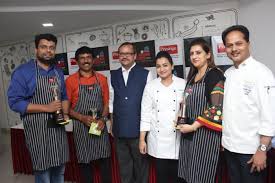
Out of 250 participants, seven home chefs made it to the finals.

From left) Bijesh K V, Manas Ranjan Raut, Dinesh Garg, Chef Shazia Khan, Fahima Zahid and Chef Abhijit Saha at The Cooking Studio.

On Thursday at The Cooking Studio, the seven finalised flexed their culinary muscles to impress the judges and take home the first prize.

The competition was judged by Masterchef and runner-up Shazia Khan, Executive Chef of Taj Vivanta Chef Selvaraju , Chef Abhijit Saha, Founding Director and Chef, Avant Garge Hospitality, and Dinesh Garg, Executive Vice President, Sales and Marketing, TTK Prestige Ltd.

After an intense 90-minute round of cooking one savoury and one dessert using the Prestige equipment, TTK Prestige announced Bijesh K V as Bengaluru’s best home chef 2019.

The IT sales executive also won a voucher of TTK Prestige products worth Rs 50,000.

Fahima Zahid, a homemaker, and Manas Ranjan Raut, ex-Airforce Junior Warrant Officer and fitness trainer, won TTK Prestige products worth Rs 30,000 and Rs 20,000 as first and second runner up, respectively.

The winning dish prepared by Bijesh was Spiced Kiwi Rice, Orange Chicken with a dash of honey and Choco Orange Mug Cake with an Indian spice twist. Fahima prepared Chicken Changezi and Coconut Pana Cotta with Mango Coulis.

Manas cooked Paneer Spinach Mozerella Crispy Ball and Caramel Carrot Halwa Truffles.

Celebrating his win, Bijesh said, “This has been the most phenomenal learning experience for me. I have always been passionate about food and I am so pleased that my dishes were well appreciated.’’

Chef Shazia Khan said, “I was very impressed by the quality of dishes prepared by the participants. I was particularly struck with how Bengalureans have begun to experiment with different cuisines and embrace different kinds of food. It was a difficult choice as all the finalists were accomplished cooks, but our winners displayed risk, great technique and skill in their cooking, which ultimately enabled them to stand out from the others.”

source: http://www.deccanherald.com / Deccan Herald / Home> MetroLife> Metrolife Cityscape / DH News Service, Bengaluru / March 01st, 2019

World War II spy first Indian-origin woman to get Blue Plaque in UK

London, UNITED KINGDOM :

The Blue Plaque scheme run by English Heritage honours notable people who lived or worked in particular buildings across London.

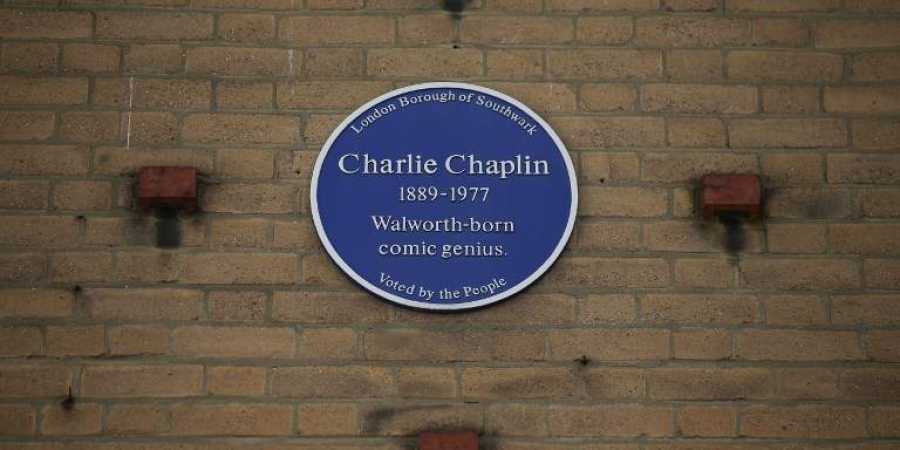
A Blue Plaque about Walworth-born comedian and actor Charlie Chaplin is seen near East Street Market in south London on September 1, 2017. (Photo | PTI)

London :

Britain’s World War II spy Noor Inayat Khan was on Monday confirmed as the first Indian-origin woman to be honoured with a Blue Plaque at her former London home.

The Blue Plaque scheme run by English Heritage honours notable people who lived or worked in particular buildings across London.

Khan’s plaque is set to go up at 4 Taviton Street in Bloomsbury, where she lived as a secret agent during the war. Khan, the daughter of Indian Sufi saint Hazrat Inayat Khan, was an agent for Britain’s Special Operations Executive (SOE) during World War II and was captured and killed by the Nazis in 1944 at just 30 years of age.

“It is from this house that she left on her final and fatal mission. Noor gave her life in the fight against fascism and her message of peace and tolerance of all religions is even more relevant today,” said Shrabani Basu, Chair of the Noor Inayat Khan Memorial Trust (NIKMT).

“The blue plaque will be a wonderful addition to the area that has a special association with Noor. It will be the first Blue Plaque for a woman of Indian-origin in Britain and is a real honour,” said Basu, who has been campaigning for the plaque since 2006 as the author of ‘Spy Princess: The Life of Noor Inayat Khan’.

Taviton Street is close to Gordon Square, which the NIKMT chose for the installation of a memorial bust in 2012 of the spy, a descendant of the 18th century Mysore ruler Tipu Sultan.

The Blue Plaque at her home is expected to be installed following building approval within the next few years.

“The Blue Plaques Panel have agreed that Noor Inayat Khan should be commemorated with a plaque. Once a nomination has been approved, it can take a further two or three years for a plaque to be unveiled,” an English Heritage spokesperson said.

“Noor Inayat Khan has deserved recognition for years. A hero who joined Britain’s effort to fight tyranny,” said Tom Tugendhat, Chair of the UK Parliament’s Foreign Affairs Committee. Born in September 1914 in Moscow to an Indian father and American mother, Khan was raised in both Paris and Britain.

As a Sufi, she believed in non-violence and also supported the Indian Independence movement but she felt compelled to join the British war effort against fascism. She went on to become the first female radio operator to be infiltrated into occupied France, where she was tortured and killed at Dachau concentration camp.

The SOE was an underground force established in Britain in 1940 by war-time Prime Minister Winston Churchill to “set Europe ablaze”.

It recruited men and women to launch guerilla war against Adolf Hitler’s forces.

Historial records show that despite being repeatedly tortured and interrogated, Khan revealed nothing and was executed by a German SS officer and her last word was recorded as “Liberte” or freedom.

She was later awarded the George Cross, the highest civilian decoration in the UK, in recognition of her bravery.

In recent months, Khan was also a frontrunner of a campaign for an ethnic minority personality to be honoured as the face of a redesigned GBP 50 note until the Bank of England announced that the note would feature a scientific figure.

Major Indian figures to be honoured with Blue Plaques in London include Mahatma Gandhi, Jawaharlal Nehru and B R Ambedkar, who spent time in the city during the Indian national movement against Britain’s colonial rule.

source: http://www.newindianexpress.com / The New Indian Express / Home> World / by PTI / February 25th, 2019

Surayya Abrar new head of Kodagu Women’s Congress

Kodagu, KARNATAKA :

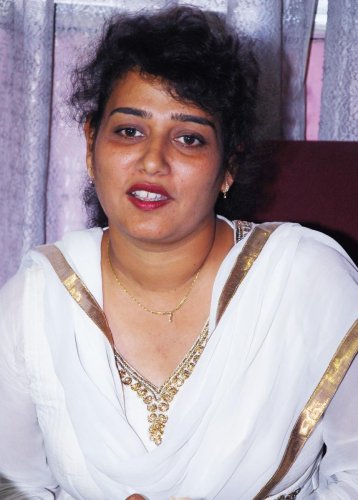
Surayya Abrar
Surayya Abrar

Surayya Abrar has been elected as the president of Kodagu Women’s Congress unit.

Surayya had served as the chairperson of Madikeri Urban Development Authority in the past.

Pushpalatha was serving as the president of Kodagu Women’s Congress unit in the past.

source: http://www.deccanherald.com / Deccan Herald / Home> State> Mangaluru / by Adithya K A / DH News Service, Madikeri / February 04th, 2019

Muslim organization donates Rs 50 lakh to Kodagu flood victims

KARNATAKA :

Madikeri:

The Jamiat Ulema-e, a Muslim organization, on Thursday distributed Rs 50 lakh among nearly 350 . The funds were distributed at function organized by the organization at Kaveri Kalakshetra in Madikeri.
“Humanism is above religion and each one should cultivate humanity,” said Maulana Mufthi Ifthkar, president, Karnataka Jamiat Ulema-e.

Hajarath Maulana Mufthi Shamsuddin, secretary of the organization, said, “We have come forward to help the people in need and no religion will come in the way of this godly act.”

Download The Times of India for Latest

source: http://www.milbankmonitor.com / MilBankMonitor.com / Home> World News / by Milbank News Writer / February 06th, 2019

Justice Nazeer dissents: Four key questions, larger bench is needed in Ayodhya case

Beluvai (near Moodbidri) KARNATAKA / NEW DELHI  :

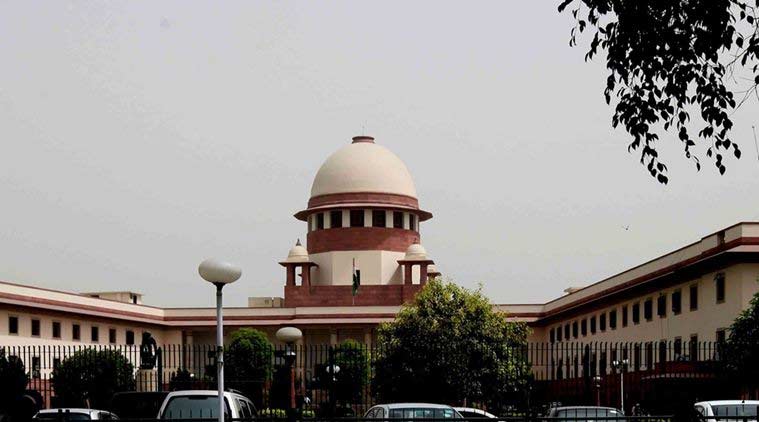
Justice Nazeer said that considering the “Constitutional importance” and “significance” of the issue, the Ram Janmabhoomi land dispute case should be referred to a larger bench.

The majority verdict by other members of the bench, comprising Chief Justice Dipak Misra and Justice Ashok Bhushan, said that this observation was made in the context of land acquisition.

The observation in the 1994 Ismail Faruqui case that a mosque is not an essential part of Islam and namaz by Muslims can be offered anywhere, “even in open” was arrived at “without undertaking a comprehensive examination,” Supreme Court judge Justice S Abdul Nazeer said Thursday.

The majority verdict by other members of the bench, comprising Chief Justice Dipak Misra and Justice Ashok Bhushan, said that this observation was made in the context of land acquisition.

Disagreeing with this in his 42-page dissenting judgment, Justice Nazeer said that considering the “Constitutional importance” and “significance” of the issue, the Ram Janmabhoomi land dispute case should be referred to a larger bench.

Justice Nazeer referred to the Srirur Mutt case which had observed that “what constitutes the essential part of a religion is primarily to be ascertained with reference to the doctrines of that religion itself”. Ismail Faruqui needs to be brought in line with the “authoritative pronouncements in Shirur Mutt,” he said.

Justice Nazeer posed four key questions.

First, whether in the light of Shirur Mutt, “an essential practice can be decided without a detailed examination of the beliefs, tenets and practice of the faith in question” ; second, whether the test for determining the essential practice is both essentiality and integrality; third, does Article 25 (Freedom of conscience, practice and propagation of religion), “only protect belief and practices of particular significance of a faith or all practices regarded by the faith as essential” ; fourth, do Articles 15 (prohibition of discrimination on grounds of religion, race, caste, sex or place of birth), 25 and 26 (freedom to manage religious affairs) read with Article 14 (right to equality) “allow the comparative significance of faiths to be undertaken”.

Justice Nazeer also referred to a string of rulings on similar issues that have been referred to a larger bench: a three-judge bench of the SC has referred the matter relating to polygamy including Nikah Halala, Nikha Mutah, and Nikah Misya to a Constitution Bench; a two-judge Bench had has referred the matter in relation to the policy decision permitting Ram Leela and Puja once in a year in public parks to a Constitution Bench; and, most recently, a three-judge bench considering the question relating to banning the practice of Female Genital Mutilation (FGM) has referred the matter to a larger bench.

The issue of referring the observation of 1994 verdict had cropped up when the three-judge bench headed by the CJI was hearing the batch of appeals filed against the Allahabad High Court’s 2010 verdict by which the disputed land on the Ram Janmabhoomi-Babri Masjid area was divided into three parts.

Justice Nazeer said that this 2010 verdict has been “expressly and inherently” affected by the questionable observations made in Ismail Faruqui case.

The issue of referring the observation of 1994 verdict had cropped up when the three-judge bench headed by the CJI was hearing the batch of appeals filed against the Allahabad High Court’s 2010 verdict by which the disputed land on the Ram Janmabhoomi-Babri Masjid area was divided into three parts.

A three-judge bench of the high court, in a 2:1 majority ruling of 2010, had ordered that the 2.77 acres be partitioned equally among three parties — the Sunni Waqf Board, the Nirmohi Akhara and Ram Lalla, the deity.

source: http://www.indianexpress.com / The Indian Express / Home> India / by Kaunain Sheriff M / New Delhi / September 28th, 2018

3,000 books in top honcho’s library

Bengaluru, KARNATAKA / Silicon Valley, USA  :

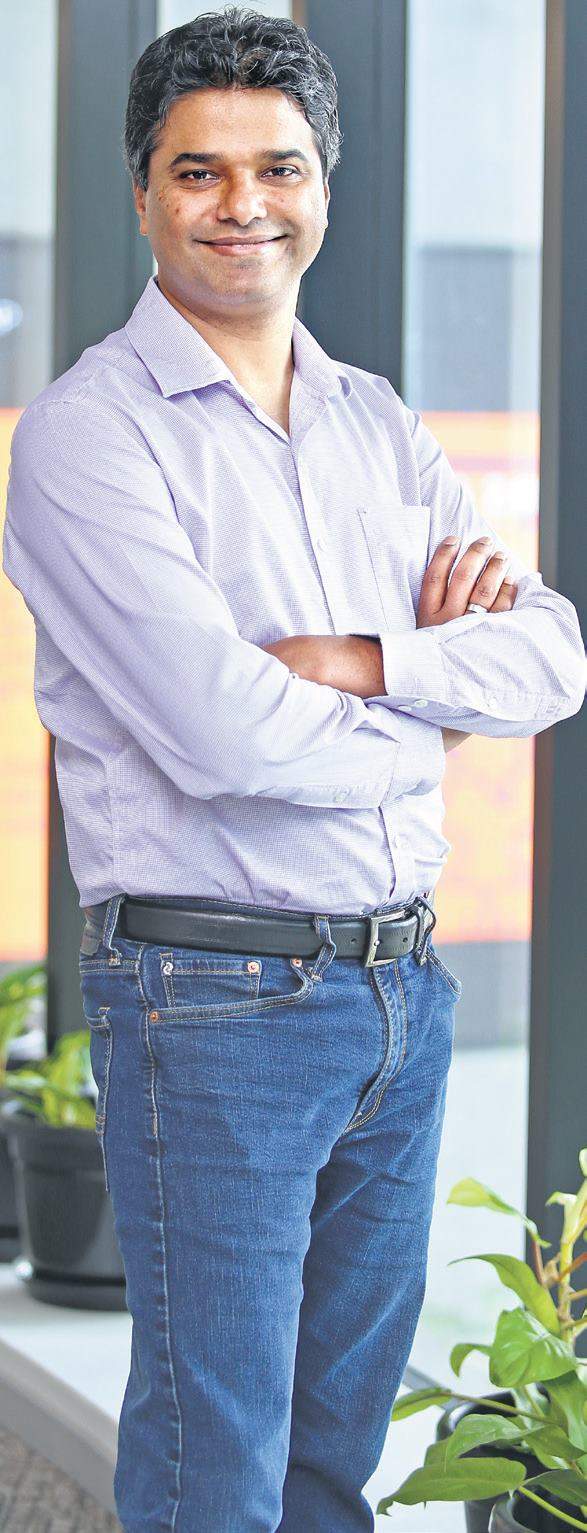
As senior vice-president of SAP, V R Ferose’s job has taken him to as many as 40 countries.

Ferose01MPOs30jan2019

Bengaluru :

As senior vice-president of SAP, V R Ferose’s job has taken him to as many as 40 countries. With back-to-back meetings and tight schedules, Ferose rarely has had any time to explore the places. But the corporate honcho has found a unique way of understanding cultures: Visiting bookstores. In fact, he even planned an entire vacation to visit the world’s largest independent bookstore – Powell’s Bookstore in Portland, USA.

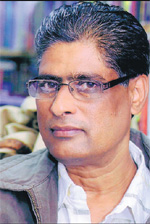
VR Ferose
VR Ferose

As a child, Ferose read magazines such as Reader’s Digest and comics, but his reading habit didn’t really take off until college. “My wife Deepali was a voracious reader, and gifted me Eric Segal’s The Class. That is when I got hooked to reading,” he says.

Today, he has more than 3,000 books in his collection, but Ferose reveals that he doesn’t have a particular way of organising these books. “Currently I am cataloguing my 100 rarest books.

I have always wanted to organise my books properly, but never found the time. Also, I find there is fun in randomness and the hunt for finding a book is a part of the experience,” he says.People may call him crazy for his quirky hobby, but his wife has always been supportive. To an extent. He explains: “I have no more place in my home or office. Sometimes, my wife gets frustrated when books pile up in our wardrobes.”

So in order to strike a balance, Ferose does what most booklovers would find hard to do: “I have started giving away books – every time I buy a book, I give away one!” says the senior corporate professional.
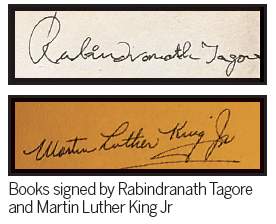
On a visit to the Nobel museum in Stockholm, he found that every chair in the cafeteria was signed by a Nobel Laureate. This then sparked off another idea: to collect books signed by Nobel Laureates.

Over a decade, Ferose managed to expand his collection of such books to 67. This collection includes Geetanjali signed by Tagore, My Experiments with Truth signed by Gandhi, Effects And Self Fertilization In The Vegetable Kingdom signed by Darwin, Where Do We Go From Here signed by Martin Luther King and Profiles In Courage signed by John F Kennedy.

Ferose03MPOs30jan2019

His favourite, however, is Man’s Search for Meaning by Victor Franklyn. “It was hard to get a signed book by him, since he rarely signed books. Getting this copy from a book dealer was a high point,” he explains.

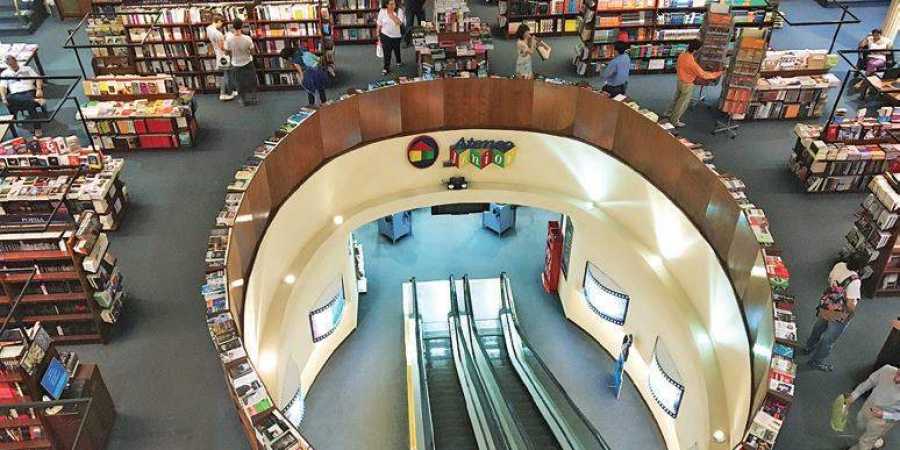
His favourite bookstores are all over the world, from Mystery Pier Books in LA (where every book is a true first edition) to El Ateneo in Buenos Aires (considered to be the most beautiful bookstore in the world) to Bookworm in Bengaluru. Collecting books, however, isn’t just a hobby for Ferose. “It’s also about focus and constant learning. A hobby allows me to stand out in the crowd and it’s something I lean on in good times and bad. As they say, books are uniquely portable magic,” he says.

source: http://www.newindianexpress.com / The New Indian Express / Home> Cities> Bengaluru / by Simran Ahuja / Express News Service / January 08th, 2019

HC judge elevated to Supreme court

Beluvai (near Moodbidri) / Bengaluru, KARNATAKA :

It was a proud moment for the Karnataka High Court as two of its judges were elevated to the Supreme Court.

Bengaluru :

It was a proud moment for the Karnataka High Court as two of its judges were elevated to the Supreme Court. In a rare instance, one of the judges has been elevated even before becoming the chief justice of a high court.

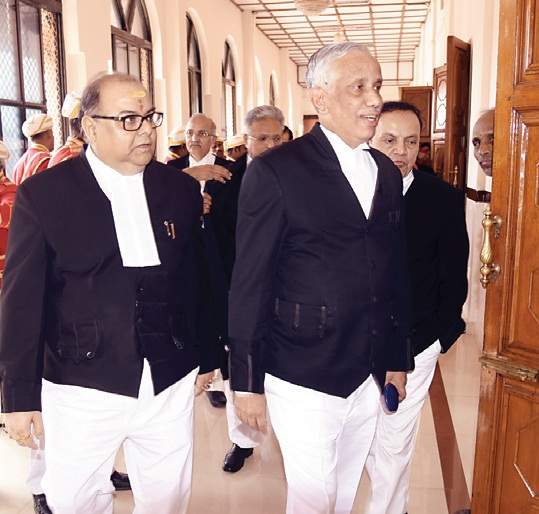
Chief Justice Subhro Kamal Mukherjee, Justice S Abdul Nazeer (right) after a farewell programme at the High Court on Thursday | Vinod Kumar T

The elevated judges are Justice S Abdul Nazeer from the Karnataka High Court and Justice Mohan M Shantanagoudar, who was recently transferred from Karnataka High Court as chief justice of Kerala High Court. They will be sworn in as judges of the Supreme Court on Friday. Both the Judges will have a six-year tenure in the apex court.
Justice Nazeer is perhaps the third judge elevated directly to apex court before becoming the chief justice of a high court.
Earlier, Justice S Rajendra Babu, former Chief Justice of India and Justice N Venkatachala, former Lokayukta were elevated directly as judges of the Supreme Court from the Karnataka High Court.
“I have become emotional.. the reason is my elevation to the apex court and also heading towards Delhi, leaving all the legal fraternity of the state. The real power of courts lie in the trust and confidence reposed by the people and the power vested with them to decide or punish the guilty. Continuing efforts are needed by the bar and bench to keep the faith of people in judiciary,” Justice Nazeer said, while thanking his mother for “raising him to this level despite poverty.”
A warm farewell was given to Justice Nazeer by both the Bar and bench on Thursday. His elevation was described as a proud moment for the Karnataka High Court by those who were on the dais as well as those who were in attendance.

source: http://www.newindianexpress.com / The New Indian Express / Home> Cities> Bengaluru / by Express News Service / February 17th, 2017

Rare language ‘Nawaiti’ gets own software

KARNATAKA :

This is expected to boost the writing of people belonging to Nawayat community from Bhatkal, who use the Persian script to write their unique language ‘Nawaiti’ — a rare language and script.

Karwar :

A 1,000-year-old language is complete only now after a team of software engineers from Mumbai developed three of its characters to crack its Unicode script.

This is expected to boost the writing of people belonging to Nawayat community from Bhatkal, who use the Persian script to write their unique language ‘Nawaiti’ — a rare language and script.

Nawayat is an Indian-Muslim community, which lives in Bhatkal of the Uttara Kannada district.

Mohammed Mohsin Shabandri, a community member, pointed out that due to three missing characters in Unicode fonts, people were not able to write as they pronounced.

“About three years ago, we decided to develop these three characters and called a meeting of Nawaiti-speaking people. After eliciting their opinion and conducting proper research, we finalised three new characters,” he said.

“Nawaiti is an endangered language. Three months ago, we approached a software development firm in Mumbai. After studying the language, they developed phonetic characters and its software, which is called ‘Nawayat language solution’,” he said.

source: http://www.newindianexpress.com / The New Indian Express / Home> States> Karnataka / by Arunkumar Huralimath / Express News Service / January 16th, 2019

Sahitya Akademi honour for Rahmat Tarikere

Samatala Village, Tarikere Taluk, Chikkamagalur District – KARNATAKA :

RahamatTarikereMPOs08jan2019

Tarikere, the Dean of the Languages Discipline at the Hampi Kannada University won the award for his work Kattiyanchina Daari.

The others who have been chosen for the awards are former union minister Veerendrakumar (Malayalam), Aurobindo Uzir (Bodo), Arun Sakhardande (Konkani), Gopi Narayan Pradhan (Nepali), Vanita (Punjabi), Mangat Badal (Rajasthani), Mithila Prasad  Tripathi (Sanskrit), Laxman Dubey (Sindhi), Sheen Kaaf Nizam (Urdu), Bani Basu (Bengali), Esther David (English), Dhirendra Mehta (Gujarati), M Borkanya (Manipuri), Manoj (Dogri), Uday Prakash (Hindi), Nanji Nadan (Tamil), Keshada Mahanta (Assamese), Basher Bashir (Kashmiri), Ashok R Kelkar (Marathi) and Pathani Pattnaik (Oriya).

Tarikere told Deccan Herald: “I had authored this book in 2006 itself. The joy is manifold as the award comes at a time when Kannada University is celebrating the 19th ‘Nudihabba’. I dedicate the award to the university”.

source: http://www.deccanherald.com / Deccan Herald / Home> State / by New Delhi – Hospet / DHNS / December 20th, 2010