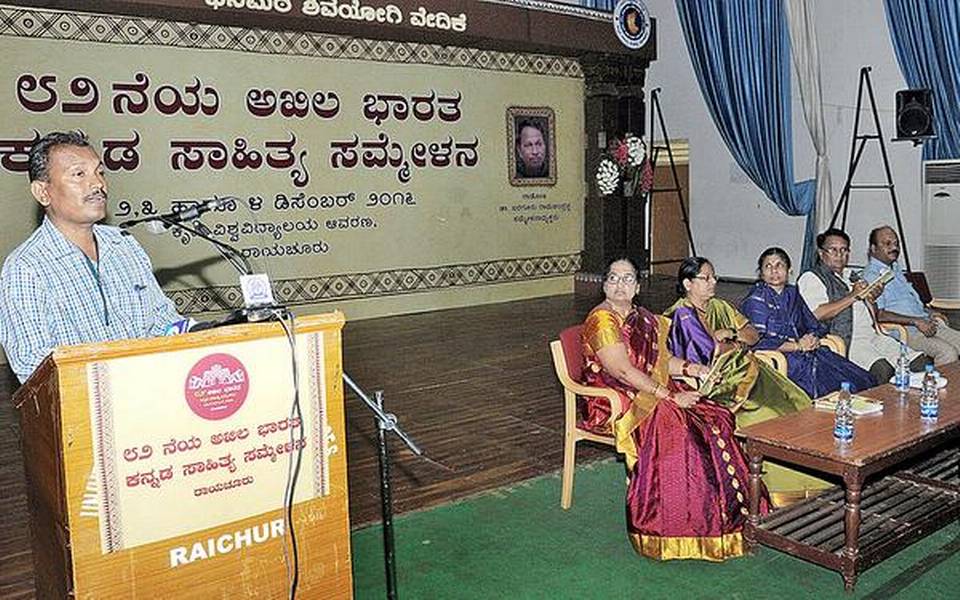
Dastagirsab Dinni, writer, speaking at parallel venue at the 82nd Akhila Bharata Kannada Sahitya Sammelan in Raichur on Sunday.
Terming triple talaq, restrictions on going to masjids, bigamy and other Islamic practices as shackles, Dastagirsab Dinni, a progressive writer, stressed the need for raising voices against Islamic fundamentalistic forces, for women’s liberation.
He was speaking on Muslim sensitivities in literature at a session on multiple dimensions of literature at the 82nd Akhila Bharata Kannada Sahitya Sammelan in Raichur on Sunday. The writer went on to point out prevalent anti-women practices which were indeed not preached by Prophet Mohammed.
“Prophet Mohammed did not oppose women offering prayers at masjids, but our fundamentalists are doing it. Muslim women are increasingly opposing the practice of triple talaq and bigamy practices. Some are even fighting against these anti-women practices in courts. Literature should voice their woes,” he said.
Pointing at the standard approach of fundamentalists towards progressive Muslim writers, Mr. Dinni went on to give a long list of Muslim writers who in one way or the other had to face the wrath of fundamentalism for their radical writing.
“Salman Rushdie, Taslima Nasreen, Sara Abubakar, Safeera, Bhanu Mushtaq and others Muslim writers were under attack from Islamic fundamentalists as they questioned the anti-women and other ill-practices of Islam.
“The attacks indeed gave rise to more resistance rather than curbing the existing opposition,” he said.
He added that Mumtaz Begum, Bolvar Mohammed Kunhi, Fakir Mohammad Katpadi, Ramzan Darga, Jameer Ulha Sharif, Rahamat Tarikere, Abdul Rashid and other Muslim writers have continued to question reactionary practices and resist the attack on freedom of expression.
He called upon young Muslim writers to continue the tradition of questioning fundamentalistic practices in Islam so that the process of emancipation of women could get quickened.
source: http://www.thehindu.com / The Hindu / Home> News> States> Karnataka / by Kumar Buradikatti / Raichur – December 05th, 2016
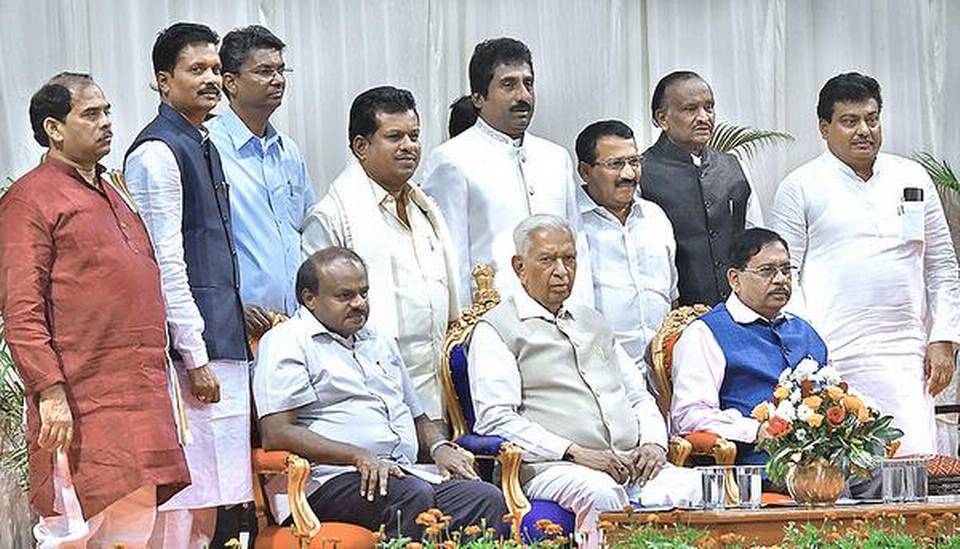
Governor Vajubhai Vala, Chief Minister H.D. Kumaraswamy, and his deputy G. Parameshwara posing for a photographs after the swearing in of eight new Cabinet Ministers at the Raj Bhavan in Bengaluru on Saturday.
R. Shankar, Ramesh Jarkiholi dropped from the Ministry
The long-awaited expansion of Karnataka Cabinet materialised on Saturday, with eight Congress legislators — seven of them hailing from the north Karnataka — being sworn in by Governor Vajubhai R. Vala.
While this fills the Congress quota in the coalition government’s Cabinet, Janata Dal (Secular) has chosen to keep its options open on its quota of two Ministers.
Ahead of the 2019 general elections, the decision of the Congress to give prominence to north Karnataka has assumed significance as the JD(S) is largely focussing on its electoral base in the southern districts of the State. This is also aimed at addressing the constant complaints of neglect of the people of north Karnataka.
While M.T.B. Nagaraj (Hoskote, Bengaluru Rural) is the lone MLA to become Minister from the southern part of the State this time, the other newly sworn-in ministers are M.B. Patil from Babaleshwar in Vijayapura district; R.B. Timmapur, MLC; Satish Jarkiholi from Yemkanmardi in Belagavi district; C.S. Shivalli from Kundgol in Dharwad district; P.T. Parameshwar Naik from Huvinahadagali in Ballari district; E. Tukaram from Sandur in Ballari district; and Raheem Khan from Bidar North.
All eight were administered the oath of office and secrecy at the Raj Bhavan in the presence of Chief Minister H.D. Kumaraswamy, Deputy Chief Minister G. Parameshwara and several Congress and JD(S) leaders. All eight are of Cabinet rank.
Forest Minister R. Shankar and Municipal Administration Minister Ramesh Jarkiholi have been dropped from the Ministry.
Protest
There were rumblings of discontent from some legislators not inducted into the Cabinet even as the oath-taking ceremony was on. Supporters of the Congress MLA, Ramalinga Reddy, protested near the Raj Bhavan to demand his induction into the Cabinet.
With the Ministry’s size fixed at 34, the Congress has filled its full quota (22) and the total strength of the Council of Ministers has increased to 32. Only two seats are vacant and both belong to the JD(S) quota.
Of the eight inducted, four have become Ministers for the first time. Mr. Satish Jarkiholi, Mr. Patil, Mr. Thimmapur, and Mr. Naik had served in the previous Siddaramaiah government.
Caste equation
The Congress struck a balance by providing fair representation to all major castes/communities. There are two Ministers from Kuruba community (Mr. Shivalli and Mr. Nagaraj), two from the Scheduled Castes (Mr. Naik and Mr. Thimmapur), two from the Scheduled Tribes (Mr. Tukaram and Mr. Satish Jarkiholi), one from Lingayat (Mr. Patil), and one Muslim (Mr. Khan).
To contain dissidence, the Congress has given postings to 31 legislators, including eight Ministers, nine parliamentary secretaries, and 19 heads to boards and corporations. The Congress has recommended to the government names of 19 MLAs to appoint as heads of various government boards and corporations.
The party has appointed three MLCs and six MLAs as Parliament Secretaries. Sharanappa Darshanapur, MLA for Shahpur in Yadgir, has been appointed as Deputy Chairman of the Planning Board.
Senior leader and former Minister H.K. Patil has been appointed as Chairman of the campaign committee of KPCC. He has replaced Minister for Water Resources and Medical Education D.K. Shivakumar.
Jewargi MLA Ajay Singh has been appointed as the special representative of the government in Delhi, while V. Muniyappa, MLA, is the Political Secretary to the Chief Minister.
source: http://www.thehindu.com / The Hindu / Home> News> States> Karnataka / by Special Correspondent / Bengaluru – December 23rd, 2018
Before I set out on a journey to Turkey, I decided to visit the Turkish Martyrs Graveyard Memorial in Ballari, built in memory of Turkish Prisoners of War (PoW) of the First World War.
Turkish Memorial
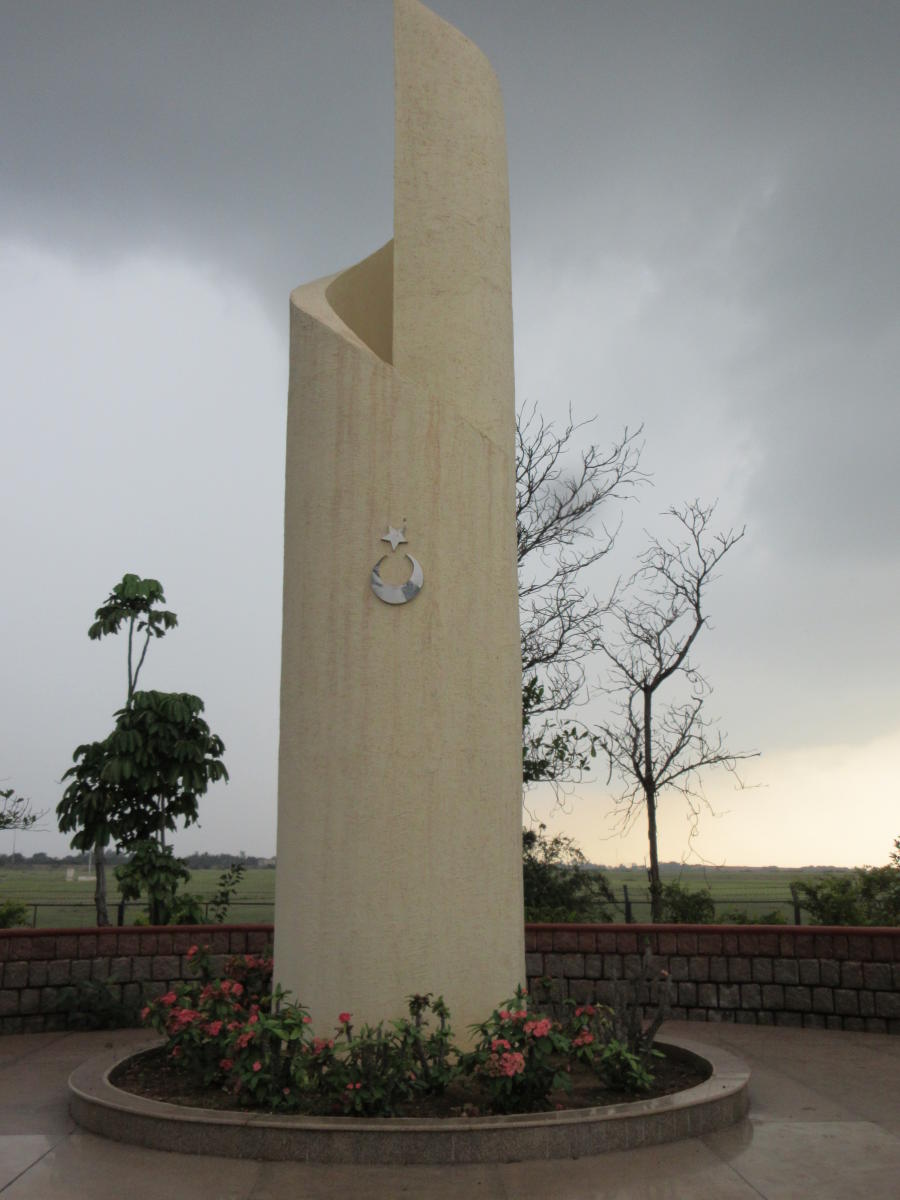
The memorial is actually a spiral column built over a rectangular platform. Indian and Turkish flags flutter on both sides. The cylindrical spiral structure in white is surrounded by fountains, multi-coloured floral plants with Ashoka trees and rose plants on the border. The memorial is located close to the airport.
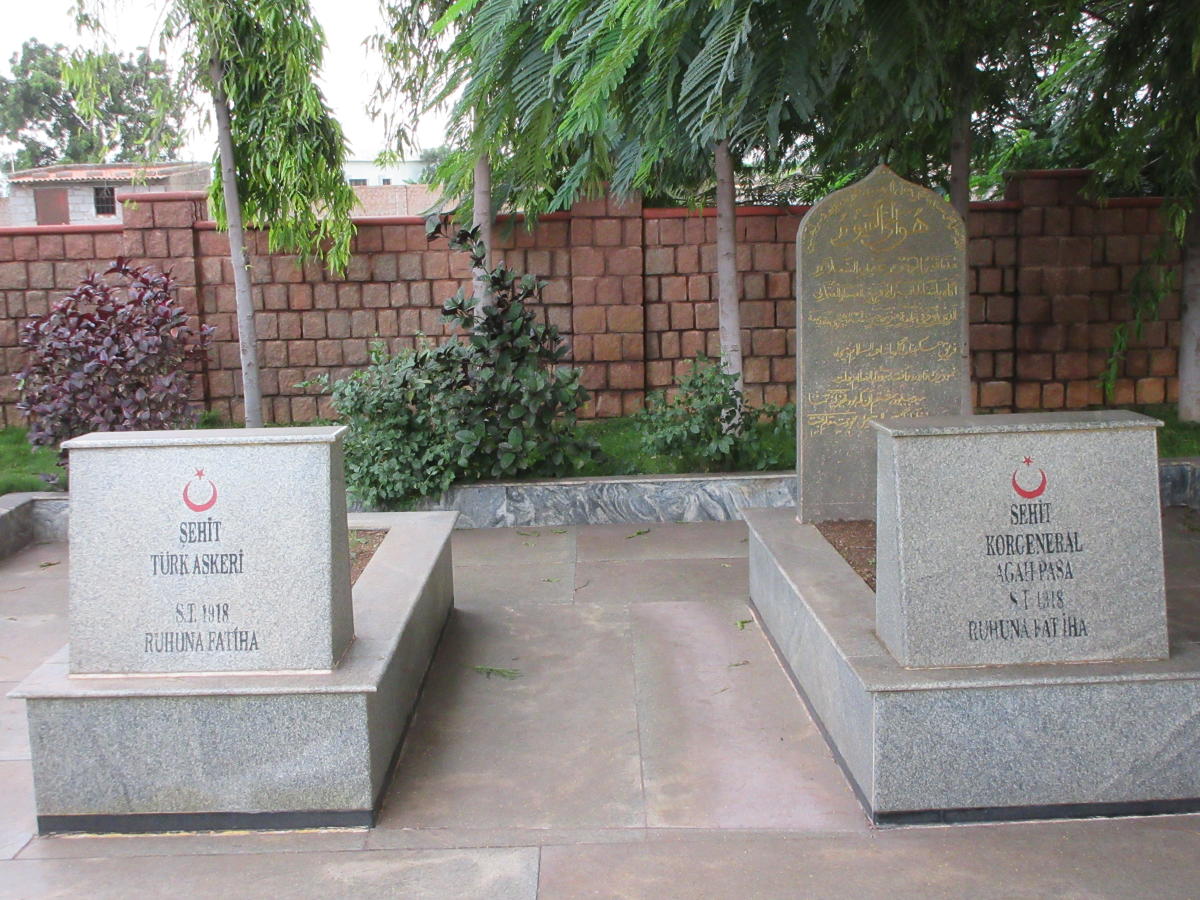
There are two marble-dressed graves on its left side. A memorial plaque on one of them refers to General Agha Pasha Abdussalam, the prince from the Ottoman ruling family of Turkey, buried there. The second one refers to Turk Askeri.
The epitaph on the memorial (it also has a Turkish translation) reads: “Here lie the Turkish martyrs brought to India in the year 1918 as prisoners of war during World War I from the Suez Canal front where they had fought. God bless them all.”
Turkey is a nation straddling eastern Europe and western Asia. Suez Canal is a sea-level waterway in Egypt connecting the Mediterranean Sea to the Red Sea through the Isthmus of Suez. And Ballari is in South India. These contradictions increased my curiosity to unearth the links.
A tale of tragedy and futility of war silently unfolded when I began digging deep into history. I realised that the memorial traces its roots to the brutal first world war.
Tale of tragedy
After about a century since the war ended, the memorial in Ballari stands tall silently reminding the greed of rich belligerents trying to get richer by inflicting large-scale violence, brutality and futility.
Austria and Hungary declared war on Serbia on July 28, 1914, over the assassination of a leader, triggering the first world war. A web of entangling alliances and the manoeuvrings of diplomats and generals dragged ambivalent nations into an unnecessary war.
The war pitted the Central Powers—led by Germany, Austria-Hungary and Turkey—against the Allies—led by France, Great Britain, Russia, Italy, Japan and the United States. The Allies won the war which claimed maximum lives in the history.
The Allies captured soldiers of rival forces, while soldiers of the Allies were taken captive by the Central Powers. About 1.5 lakh soldiers from Turkey were taken captive by the British forces. Turkey had detained 34,000 British soldiers.
The two sides had a common problem, lack of prisons to keep captive soldiers. And they were unwilling to keep rival soldiers in their motherland.
About 8,000 soldiers from Turkey, Germany and Austria, in British captivity, were placed in British colonies, in Egypt, India, Burma (now Myanmar).
Sumerpur in Rajasthan; Ahmednagar, Belagavi and Ballari in Bombay province; Kata Pahar in Bengal and Burma were chosen for the detention of prisoners.
Soldiers from Austria and Germany were interned at Ahmednagar, Christian citizens and women at Belagavi, and Turkey soldiers at Sumerpur, Ballari and Burma.
The British establishment shipped the prisoners from the port city of Basra in Iraq to Karachi and later sent them to Kolkata by train. One team was sent to Burma, while the second one to Sumerpur, Ahmednagar, Belagavi and Ballari.
The entire exercise was ironical and a large number of soldiers died on the way to Karachi from Basra. Hundreds of them were injured while being shipped. All these met with gory and gruesome deaths due to hunger, starvation and a lack of treatment.
Conflicting theories
Historians consider their journey as a procession of deaths. Many of them, who had survived starvation before reaching India, lost their battles against changing weather conditions and food.
Hundreds of them fell prey to infectious diseases as prisoners from different nations were housed collectively. In the Egyptian camps, a contagious eye spread relatively quickly blinding prisoners.
As many as 137 soldiers were kept at Allipuram Jail in Ballari. There are conflicting theories on how they died. One theory says a trigger-happy British officer massacred them en masse. The second theory quotes plague as the cause for the deaths.
Locals claim that there used to be hundreds of graves of Turkish soldiers in the area until the 1980s. A major part of the remains was erased during the expansion of the Bellari Aerodrome.
Commemorating sacrifice
The Turkish Embassy in Delhi negotiated with the Indian government for a memorial to commemorate the sacrifice made by the soldiers for the nation ten thousand miles away from their motherland. As a result, the Turkish Martyrs Graveyard came up in 1980.
Since then, the Indian and the Turkish flags are hoisted twice a year – on August 15 and January 26.
Details of Turkey soldiers in Ballari come from the lone report of Red Cross Society. A high-level committee at the Geneva convention in 1971 decided to send the Society teams for reports on charges of brutalities meted out to soldiers at camps.
A team visited Ballari, Egypt and Myanmar as part of the decision. The team members visited Ballari on March 17, 1971, and submitted a report regarding the medical facility, food, physical and mental health of the prisoners. The most common complaint from the prisoners was that they hardly heard anything from their family members.
Due to isolation, the futility of war and uncertain future, most of them became mentally ill. They had converted a hall meant for prayer to play games. They also used the hall as a coffee house, played Dice Chess Dominoes, consumed Turkish coffee without milk and demanded books in the Turkish language for reading.
In the end, the report expresses confidence that the Turkey soldiers would surely say that the British establishment took proper care of them in India once they reached their hometowns. However, it is not known even today if they returned to their hometown.
The ordeal of soldiers from England and India in Turkey prisons was no different. There are memorials all over the world commemorating sacrifices made by foreign soldiers. Most of these soldiers laid down their lives for the British imperialism.
These memorials never reveal why wars were fought; why soldiers were killed; why they were shipped and interned in different continents; what happened to their families after their deaths. These memorials also mirror inhuman acts of war.
(Translated by Jagadish Angadi)
source: http://www.deccanherald.com / Deccan Herald / Home> Spectrum> Spectrum Top Stories / by Rahamat Tarikere / December 19th, 2019
The 13th Kodagu district Kannada literary meet will be organised at government PU College premises in Napoklu on December 22 and 23, said Kannada Sahitya Parishat district president B S Lokesh Sagar.
He told reporters here on Thursday that Madikeri tahsildar Kusuma will hoist the National flag at 8 am on December 22. Napoklu gram panchayat president K M Ismail will hoist the Kannada flag.
Exhibition stalls will be inaugurated by CMC president Kaveramma Somanna at 11 am.
The formal inaugural programme will be held at Jagadatmanada G Maharaj Sabhangana at 11.30 am. Zilla panchayat vice president Lokeshwari Gopal will inaugurate the programme.
The main stage, ‘Mahabaleshwara Bhat Pradhana Vedike’ will be inaugurated by zilla panchayat president B A Harish. Kannada Sahitya Parishat state president Dr Manu Baligar will inaugurate the literary convention.
Bharadwaj K Anand Theertha will preside over the literary convention. MLA K G Bopaiah, MLC Sunil Subramani and MLC Veena Acchaiah will take part. Cultural programmes will be inaugurated by social worker Sanket Poovaiah.
ZP member Latif will inaugurate Janapadotsava at 9.30 am on December 23.
An open forum will be held at 2.30 pm. The valedictory programme will be held at 4 pm, said B S Lokesh Sagar and added that various literary events will be held on both the days.
Kannada Sahitya Parishat district honourary secretary K S Ramesh, taluk president Kudekal Santhosh and office bearer Kodi Chandrashekhar were present in the press meet.
source: http://www.deccanherald.com / Deccan Herald / Home> State> Districts / by Adithya KA / DH News Service / Madikeri – December 20th, 2018
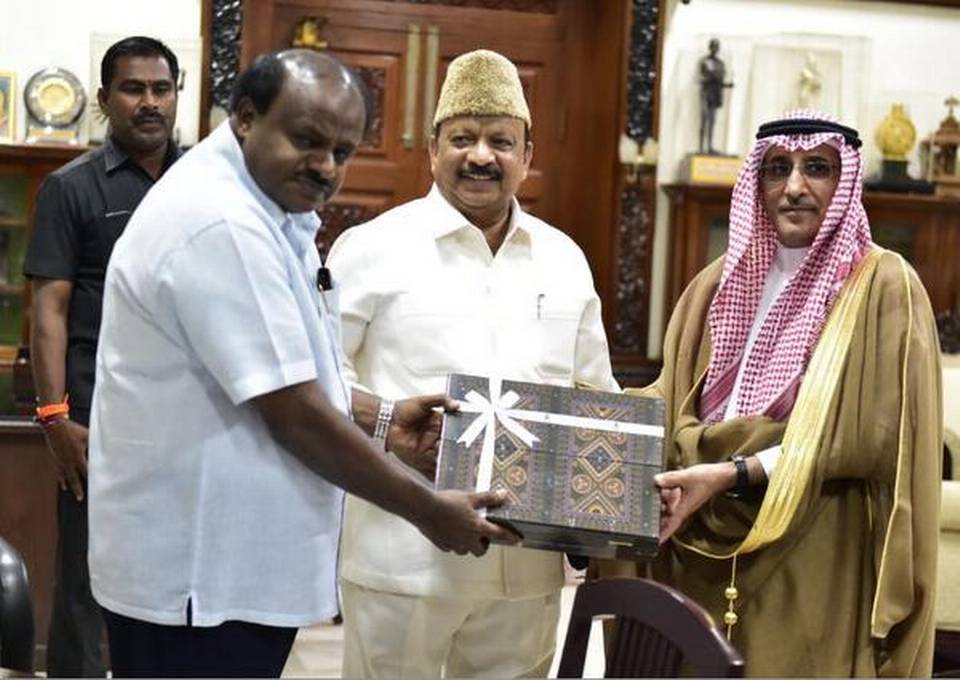
Saudi Arabia Ambassador to India Saud Mohammed Al-sati shared this information when he called on Chief Minister H.D. Kumaraswamy, along with Karnataka State Haj Committee Chairman and former Minister Roshan Baig, on Tuesday. | Photo Credit: the hindu
About a 100 years ago, a woman philanthropist from Bengaluru had set up a school for girls in Mecca, Saudi Arabia.
On Tuesday, many people in Bengaluru were in for a pleasant surprise when Saudi Arabia Ambassador to India Saud Mohammed Al-sati shared this information during a meeting with Chief Minister H.D. Kumaraswamy. The ambassador informed that they had all the records pertaining to the woman, named Saulath Unnisa, and expressed a desire to honour her family members if they could be located.
Karnataka State Haj Committee Chairman and former Minister Roshan Baig told The Hindu that they would try to trace the family. “These days, we take a five-and-a-half hours flight to Jeddah for Haj or Umra. But back then, pilgrims would have to take a ship from Bombay and sail for a fortnight to reach Mecca. It is a great contribution by the lady at that time,” he said.
Saudi consulate in city
Meanwhile, one of the long-standing demands of pilgrims and the large Kannadiga diaspora in Saudi Arabia for a consulate in Bengaluru could be fructifying shortly.
According to Mr. Baig, around 50,000 pilgrims travel from Karnataka annually for Haj and Umra. This is apart from a large number of people employed in Saudi Arabia.
The ambassador is learnt to have told Mr. Kumaraswamy that work on establishing the consulate is in progress, and it is waiting for approval from the Ministry of External Affairs. The ambassador said that the number of people seeking a visa to Saudi Arabia had doubled, and that it was the reason for opening a consulate. Currently, residents of Karnataka have to travel to Mumbai for the paperwork.
Mr. Kumaraswamy welcomed the move to open a consulate in Bengaluru, and also invited Saudi Arabian businessmen to invest in Bengaluru.
source: http://www.thehindu.com / The Hindu / Home> News> Cities> Bengaluru / by Special Correspondent / December 04th, 2018
Wipro Limited Chairman Azim Premji receives the highest French civilian distinction, Chevalier de la Legion d’Honneur (Knight of the Legion of Honour), from Ambassador of France to India Alexandre Ziegler, in Bengaluru on Thursday.
Azim Premji, philanthropist and Chairman of Wipro Limited, on Wednesday received the highest French civilian distinction, Chevalier de la Legion d’Honneur (Knight of the Legion of Honour) from Ambassador of France to India Alexandre Ziegler.
Speaking on the occasion at the Wipro campus, Ziegler said the award was bestowed on Azim Premji for his outstanding contribution to developing the information technology industry in India.
“Also, for his economic outreach in France, and his laudable contribution to society as a philanthropist through the Azim Premji Foundation and Azim Premji University,” he said.
TheLegion d’Honneur , instituted in 1802 by Napoleon Bonaparte, is the highest civilian award given by the French Republic for outstanding service to France, regardless of the nationality of the recipients.
The President of the French Republic is the Grand Master of the Order of the Legion of Honour.
In his acceptance speech, Premji said he is extremely honoured by the award bestowed on me. “The vibrancy of the French democracy and its diversity is an inspiration to all across the world,” he said.
Wipro’s association with France spans over 15 years and the company enjoys a close relationship with several French organizations. Nearly 65% of Wipro’s employees in France are locals.
France is a key market for Wipro and the company is committed to continues investments there. Large French digital companies already have a strong footprint in India, employing over 1.3 lakh people at their R&D centres and facilities.
source: http://www.deccanherald.com / Deccan Herald / Home> Business> Business News / by N.V. Vijayakumar / DH News Service, Bengaluru / November 28th, 2018
Relatable ‘I wanted to write stories about people like you and me.’ | Photo Credit: Poornima Marh
‘My characters’ Muslimness is secondary to the story’
Andaleeb Wajid is a household name in Bengaluru, with a large oeuvre —18 novels and counting — that spans genres like Young Adult, romance, sci-fi and horror. Recently, a couple of her books have been optioned by film production houses. Wajid started off with slice-of-life stories about young Muslims but has broadened her scope with each book. Over the years, she has honed her craft well but is still writing from the heart. Excerpts from an email interview:
You are one of the most prolific published authors in the country today. What drives your pace and output?
I write constantly and consistently. After I wrote my first novel Kite Strings, I took a break, waiting for it to get published. When that happened three years later, I realised I’d been an idiot not to have been writing in that time. So I got down to writing continuously, making up for lost time!
Does contemporising your stories with its mainly Muslim milieu come easy or do you work at setting up and sustaining a specific atmosphere?
The Muslim milieu part was not deliberate at first, I was just writing stories from the lens through which I perceived the characters. But things changed along the way. If you read my earlier books like My Brother’s Wedding and the more recent ones like The Crunch Factor or Asmara’s Summer, there’s a decided shift in the way my heroines behave and think. There is lesser assimilation of what society expects and more assertiveness in the characters. This was a deliberate choice. I wanted to write stories everyone could relate to, and not just a ‘this is what happens behind closed doors in Muslim houses’ story which exoticises and otherises Muslims.
You are a publisher’s dream because you play a major part in promoting your work on social media and off it. Is this part of the job for you?
Well, I like to be involved in all the aspects of publishing because, at the end of the day, I want more peopleto read my books. I’m happy that there are new mediums available today to promote books.
It’s a combined effort — publishers have social media teams who come up with some excellent book-related creatives, and I try to push them as much as I can, on the different platforms I’m comfortable with.
The Muslimhood of your characters is kept light… is this deliberate?
Yes. My characters’ Muslimness is secondary to the story and sometimes, even incidental. Some of my recent books (It Waits, Night at the Warehouse) don’t have Muslim characters at all because I think the story comes first, everything else is secondary.
Continuing with Muslimhood, there is no mention of the problems Muslims face today in any of your books. The conflicts are all internal, not external. Would that be a conscious decision to steer clear of controversy?
To be honest, I haven’t given this much thought. I wanted to write stories about people like you and me. I’ve lived quite the cocooned and privileged life and have not faced the amount of discrimination others have faced. Maybe that has shaped my consciousness into writing narratives that are ‘normal’ rather than filled with conflict. Then, I don’t like controversies because at the end of the day, I don’t want anything to come in the way of my writing.
“I am flabbergasted when I meet with questions like, why didn’t you write this book in Urdu? How come you wear a burkha? There seems to be a big disconnect between my work and my personal appearance.” This is what you had told me years ago, in an interview for your first book, Kite Strings. Have things changed for you since then? Or have you changed?
Both. Things have changed because I think people have stopped seeing my burkha when they see me, which is what I’d wanted all along — people to focus on my work and not my appearance. I too have changed in the sense that I’m more tuned in to the world around me, especially in the current political climate. If I don’t feel comfortable wearing a burkha somewhere, I don’t. The choice is mine and it always has been, actually. I just didn’t know that with as deep a conviction as I know it now.
Tell us about the MAMI Word to Screen sessions you attended last year and this year.
MAMI Word to Screen is a great opportunity for content creators from films and web series to learn about authors and their books. Two of my books were shortlisted last year and I had to pitch them on stage, for producers and content creators. I went in with no idea of anything and came back having learned quite a bit. This year, my books were only longlisted, which meant I didn’t have to do the stage bit but could still meet producers and others who showed interest. Seema Mohapatra’s StoryLoft Productions has already optioned Asmara’s Summer and The Crunch Factor to adapt for web and feature film, and there’s been a lot of interest from platforms and production houses like Netflix, Amazon, Sony Pictures, etc. Apart from these, a few production houses like Hotstar, Jio have picked up some of my work for reading and evaluation; but of course, these things take time.
What’s up next?
As of now, there’s House of Screams, which was published by Penguin Random House last month. I have a romance novel, A Sweet Deal, which will be published by Fingerprint next year. I’ve pitched a couple of ideas to my publishers and I’m waiting for the go-ahead before I can start working on them.
The interviewer is a manuscript editor and novelist based in Bengaluru.
source: http://www.thehindu.com / The Hindu / Home> Books> In Conversation / by Sheila Kumar / November 10th, 2018
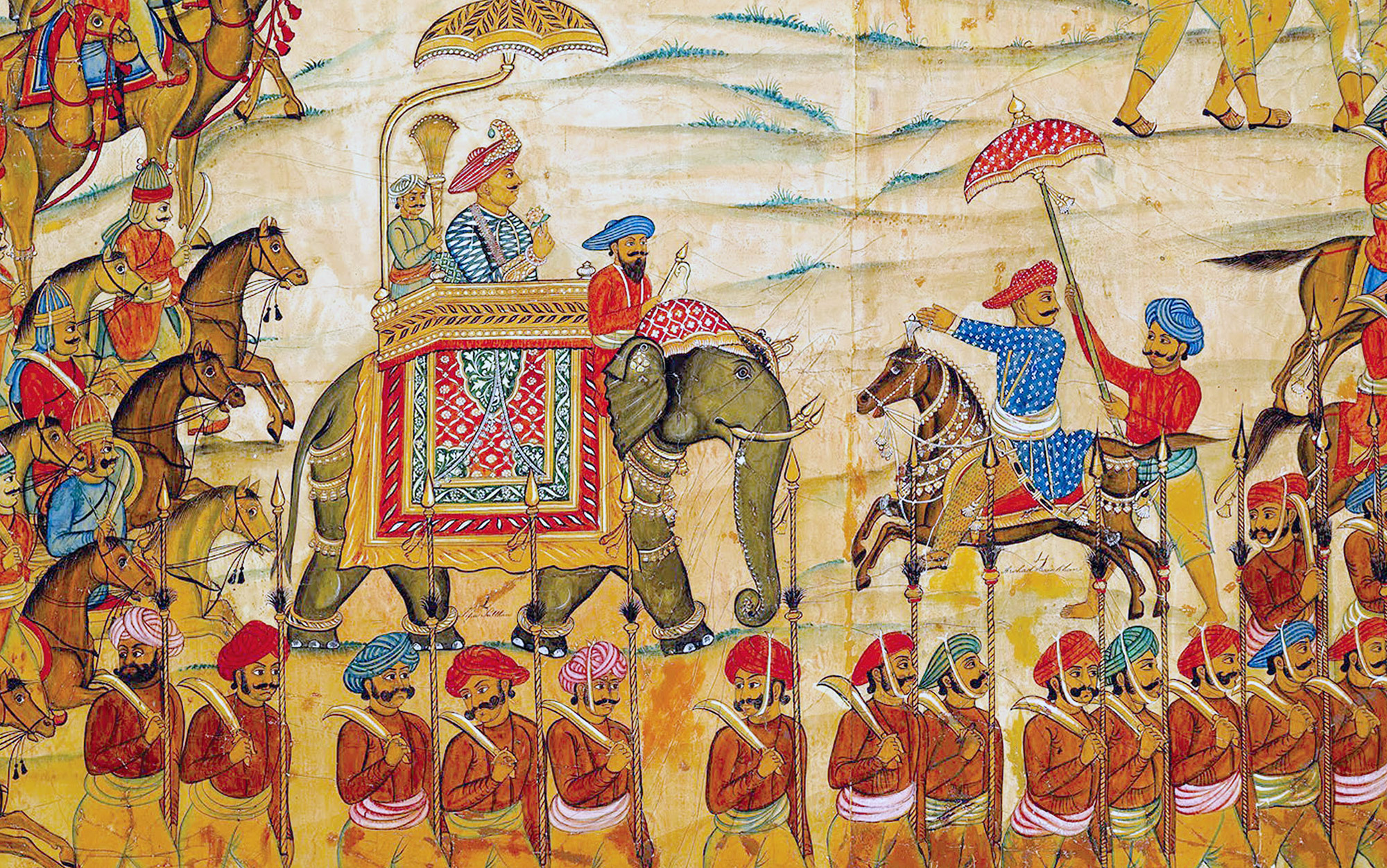
Tipu Sultan, son of Haider Ali, on an elephant in a detail from ‘The Battle of Pollilur’, 1780, a mural at Daria Daulat Palace, Seringapatam. Photo by Bridgeman Iages
If the sultan of Mysore had had a bit more luck, George Washington might be known as the Haider Ali of North America
If the sultan of Mysore had had a bit more luck, George Washington might be known as the Haider Ali of North America. As the ruler of Mysore, a kingdom in what is now southwestern India, Haider fought a series of wars with Great Britain in the latter half of the 18th century, at the onset of the Age of Revolution. While Haider was fighting his last battles against the British, Washington was leading the forces of the nascent United States from the harsh winter at Valley Forge to the final victory at Yorktown.
The circumstances of Haider’s childhood did not seem to mark the young man out for greatness. Born around 1720, Haider soon lost his father, a mercenary officer who died on campaign. Haider followed his father’s path, becoming an officer for the Wodeyar dynasty that ruled Mysore. After many years of service, he grew indispensable to the ruling family, sidelining it entirely by the 1760s. It was a dangerous time to come to power in South Asia. The British East India Company was expanding its power throughout the Subcontinent, at the expense of rulers from Bengal in the east to Haider’s neighbours in the south. Allied with France, however, Haider held off the British advance for another two decades, dying in 1782, just a year before the US triumphed in its own rebellion against Britain.
Haider and Washington never communicated directly with one another, but they fought against a common enemy, and shared a common ally. Like the Mysoreans, the American rebels were members of a global coalition funded by the French government, which saw both uprisings as a chance to humble Britain. In the Seven Years’ War (1756-1763), Britain had ended nearly a century of conflict with its imperial rival in North America by seizing France’s vast territories in Canada and the Mississippi River Valley. Some French observers tried to minimise the extent of the defeat. Voltaire dismissed loss of North America as ‘a few acres of snow’. Yet French policymakers were well aware that Britain had greatly increased its power. Too weak to confront it again on its own, the French government wove a network of alliances, playing on resentments against Britain’s growing control of global trade and rapidly expanding empire. Beginning in the mid-1770s, it sent money and military advisors to both Mysore and the US, aiming to avenge its defeat by stoking colonial rebellions against Britain.
The alliance with France proved critical to the survival of the fledgling US. The memory of French aid, and particularly of the dashing Marquis de Lafayette’s assistance to Washington, has for more than two centuries served as a symbolic origins story of close Franco-American relations. During the Revolutionary War, however, Americans saw themselves not just as allies of France, but as part of a coalition that included Mysore.
Even after the US made peace with Britain in 1783, the American fascination with Haider and his son and successor, Tipu Sultan (1750-1799) lived on. Mysore’s rulers became familiar references in American newspapers, poems and everyday conversation. Yet, within a generation, Americans lost their sense of solidarity with the Indian Subcontinent. Mysore remained under British control, written out of the story of the American Revolution. The US turned its attention to the interior of North America, and to becoming an imperial power in its own right.
Even before the Revolutionary War, American interest in South Asia was lively. In fact, Americans’ rebellion against Britain in part grew out of the connections between America and the Subcontinent. Before the 1770s, Americans were cheerleaders, rather than critics, of British imperialism. The Philadelphia-born poet Nathaniel Evans (1742-1767) commemorated the victory of the East India Company at the Battle of Plassey in 1757, in which Robert Clive had seized control of Bengal:
The world to British valour yields
How has bold Clive, with martial toil
O’er India born his conqu’ring lance?
Sharing in Britain’s glory in this way seemed natural to Americans, who were proud to be part of the British Empire. The East India Company’s growing influence in Bengal enabled it to export large quantities of South Asian goods, particularly textiles, to American ports such as Boston and Charleston. Colonial elites displayed them in their homes with pride, signs that they were part of a global British empire growing rich from the spoils of the Subcontinent.
While Americans were free to purchase these imperial commodities, they were not free to join British merchants in South Asia. Britain’s colonies served to provide the motherland with raw materials. They were not supposed to have direct economic relations with each other, but rather to send their exports to the great trading centre of London. New England merchants in particular resented being pushed to the side of the mercantile system. Following military victories by the East India Company in South Asia, the company’s economic power within the British Empire, including North America, grew even greater, and so too did New England merchants’ resentment.
In 1773, the British government issued the Tea Act, a bill in effect subsidising the East India Company so it could sell tea to North America more cheaply than any other company. The Tea Act was meant to save the Company’s struggling finances, which were sinking under the cost of its expensive wars. By allowing the Company to sell its tea without paying the heavy taxes normally due on tea exports to the colonies, British officials thought they could help the Company while also keeping Americans happy. Because of the taxes levied on it, tea was expensive in the colonies, and tea-loving New Englanders often resorted to buying theirs on the black market. If the Company no longer had to pay these taxes, it could pass the savings on to thirsty American consumers.
Seeing themselves as victims of Britain’s imperial oppression, Americans sympathised with the empire’s other victims: South Asians
The colonists, however, did not respond as the British expected. By granting the East India Company an exemption from the tax, Parliament had confirmed that the tax on tea, passed without Americans’ consent, was there to stay for all other merchants. And the smugglers that the British government hoped to cut out of the tea business were influential members of New England society. On 16 December 1773, economic self-interest combined with principled opposition to taxation inspired a group of protestors to attack a Company shipment of tea, dumping its contents into the ocean.
The Boston Tea Party marked Americans’ growing opposition to British rule, and the beginning of a new perspective on South Asia. The British government retaliated by stripping Massachusetts of its right to self-government. Outraged colonists met in 1774 to form the First Continental Congress. The following year, armed conflict between colonial militias and British soldiers broke out at Lexington and Concord, and the American Revolution was underway. Americans started to see themselves as victims of Britain’s imperial oppression. They were soon sympathising with the empire’s other victims, particularly South Asians.
The American revolt against Britain quickly took on international dimensions. In 1776, the Continental Congress declared independence, transforming the former British colonies into the United States of America. American agents were soon busy seeking international recognition and goodwill from countries including Morocco, the Netherlands and, most importantly, France, Britain’s imperial rival. Within a year, the French government began sending aid to the fledgling US. A year later, in 1778, France and the US officially became allies.
The Continental Congress recognised that it was not France’s only partner against Britain, and looked for ways to cooperate with Mysore, France’s South Asian ally. In 1777, on the advice of Thomas Conway, an Irish-born French military advisor, the American patriots contemplated sending troops to join the French military expedition to the Subcontinent. The provisional American government lacked the resources for such a scheme, so instead it encouraged American privateers to attack the East India Company’s shipping to weaken Britain’s economic grasp on South Asia.
Different state governments also made friendly gestures toward Mysore. In 1781, the Pennsylvania legislature commissioned a warship named theHyder-Ally, an eccentrically spelled tribute to the Sultan of Mysore. This ship sailed the North Atlantic only, far from the Indian Ocean. Its existence, however, demonstrated the affinity American elites felt for Mysore’s cause. Philip Freneau, an ally of Thomas Jefferson and one of the country’s leading poets, wrote a poem in honour of the Hyder-Ally and its namesake, the sultan of Mysore:
From an Eastern prince she takes her name,
Who, smit with freedom’s sacred flame
Usurping Britons brought to shame,
His country’s wrongs avenging.
Clearly, nothing prevented these 18th-century Americans from seeing faraway Asian peoples as exemplars of liberty.
Despite Freneau’s optimistic vision, freedom’s sacred flame did not save South Asia. By the early 1780s, it was becoming clear that Britain would lose the war. Many Americans happily imagined a post-war world in which the East India Company would no longer be a significant force. Britain, however, managed to hold on to its territory in the Subcontinent, resisting the combined forces of Mysore and France.
France’s military support for Mysore and the US helped drive it into crippling debt and push French society toward its own, more radical revolution. Meanwhile, Britain’s finances survived the conflict intact, allowing it to continue an aggressive policy in the Subcontinent after 1783. The cash-strapped French, however, could maintain only a token military presence in the region. The situation left Mysore’s new ruler, Tipu Sultan, to his own devices. He resisted mounting pressure from the British for nearly two decades, succumbing only in 1799. He died beneath the walls of his citadel as he fought a last-ditch battle against the East India Company.
The American government adjusted to the new realities of South Asian politics. New England merchants eagerly sought to trade directly with the Subcontinent. In the first years after the end of the Revolutionary War, they relied on the French colony of Pondicherry on the southeastern coast of the Subcontinent as a port. They soon realised however that they could not enter the region’s most lucrative markets without the permission of the British East India Company. They lobbied for the establishment of American consulates to foster goodwill for American interests. Responding to their pressure, the US government created its first consulate in South Asia in 1792, in Calcutta. Two years later, in Madras, they added another. American consuls in the region were responsible only for relations with the Company. They had no contacts with independent South Asian states such as Mysore, which the American government, like the French, left to fend for itself.
Only recently an enemy of the British empire, America had won independence and become Britain’s junior partner in empire
On a state level, American interest in Mysore disappeared. But many Americans remained fascinated by Haider Ali and Tipu Sultan. When Tipu sent a team of ambassadors to Paris in 1788, in an unsuccessful attempt to restore the Franco-Mysorean alliance, Jefferson, then the American minister to France, reported on the event with keen interest. Like Jefferson, a wide range of Americans were eager to learn more about Mysore. American newspapers of the 1780s and ’90s reported on the country’s desperate struggle with Britain. American textbooks, including Jedidiah Morse’s influential The American Universal Geography (1793), included sections on Mysore. Haider and Tipu seem to have approached the status of household names. In Williams vs Cabarrus (1793), a lawsuit brought before a circuit court in North Carolina, the two parties disputed a wager made on a horse race. One of the horses was named ‘Hyder Ali’ in tribute to Mysore’s former ruler.
Even in the wake of Tipu’s final defeat, in 1799, his struggle for an independent Mysore continued to echo in the imagination of Americans. In his sermon on 4 July 1800, John Russell, a Baptist minister in Providence, warned his audience about the dangers of British imperialism. While many Americans, such as Alexander Hamilton, advocated for closer ties to Britain, Russell insisted that Britain could not be trusted. The ultimate example of British injustice, he argued, was its conquest of Mysore. Deeply moved by what he saw as Tipu’s heroic resistance, Russell told his congregation of Tipu’s death at the hands of British soldiers: ‘here the full heart must have vent… [Tipu Sultan] defended his power with a spirit which showed he deserved it. His death was worthy of a king.’
For Russell, Tipu’s end ought to warn America about the mortal dangers of empire. By the early 19th century, however, America had embarked on its own imperial project. American missionaries fanned out across North America, travelled to the Levant, and poured into South Asia, writing glowing reports back home on the work that the British were doing to ‘civilise’ the world, including the Subcontinent. Only recently an enemy of the British empire, America had won independence and become Britain’s junior partner in empire.
American diplomats, merchants and missionaries in South Asia accepted Britain’s empire in South Asia, working alongside it to profit from local trade or proselytise to potential converts. Over the following decades, foreign policy officials, commercial interests and religious groups pushed for the US to acquire a colonial empire of its own. Just like the British empire Americans had once rebelled against, the US became an imperial power, with colonies stretching from Puerto Rico and Guantánamo in the Caribbean to the Philippines in the Pacific.
Today, with military bases in more than 70 countries across the globe, the US remains an empire. Yet, the generation of Americans who fought for independence from Britain and laid the foundations of America’s identity saw the US as an anti-imperial cause and nation. The founding generation and the children of the founders were fascinated with Mysore and its leaders because they thought Haider Ali and Tipu Sultan embodied American values of resistance to empire and aspiration to freedom. If later generations of Americans had continued to see Haider and Tipu as heroes, had continued to identify with underdogs and anti-imperial causes, then the US, and indeed the world, might look quite different today.
source: http://www.aeon.com / Aeon / Home> Essays / by Blake Smith / Edited by Sam Haselby / December 07th, 2016
___________
Blake Smith is a postdoctoral fellow at the European University Institute in Florence, Italy. His research, focusing on the French East India Company, has appeared in scholarly journals such as French Cultural Studies and the Journal of the Economic and Social History of the Orient, as well as popular media such as The Wire and The Appendix.
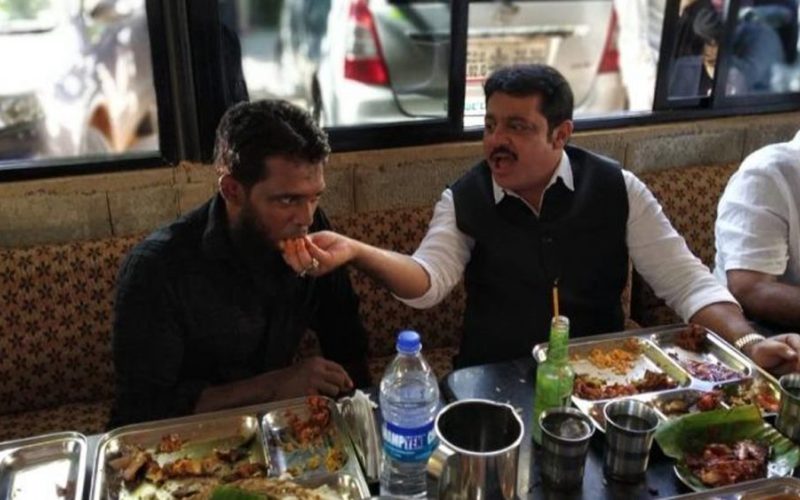
Impressed by the culinary skills of a Mangalurucook, Karnataka minister gifts a cash of 25,000 as a tip and a pilgrimage to holy Makkah to perform Umrah.
According to reports, the Minister for Food and Civil Supplies BZ Zameer Ahmed Khan on Thursday (October 18) was in the coastal district for an official review meeting.
He went to ‘Fish Market,’ a seafood restaurant in Lower Bendoor for lunch along with the President of Wakf Committee UK Monu, Former MLA Mohiuddin Bawa and UT Iftikhar Ali, brother of minister UT Khader.
Haneef Mohammed, the 48-year-old chef and co-owner of the restaurants served the minister the local delicacies such as stuffed Pomfret and Green Tawa Pomfretalong with rice preparations.
Such was the flavour and aroma of the sumptuous meal that the minister made the cook sit next to him, fed him a mouthful from his own plate.
“As I entered, the minister greeted me warmly. He made me sit next to him, fed me a mouthful of food and told me that he had never eaten such an appetising course of fish,” said the father of six, reported TNM.
Post lunch, he promptly handed over a hefty tip of Rs 25,000 to Haneef with a promised that he would pay for his Umrah(Islamic pilgrimage) as well.
Haneef, who has been a chef for the last 18 years, serving fish as his speciality said he never come across by such benevolent offer.
He distributed Rs 25,000 out of the tip to all the employees at his restaurant.
The legislator, who holds the post of Minority Welfare alongside the portfolio of Hajj and Wakf, famed for his generosity.
source: http://www.siasat.com / The Siasat Daily / Home> Bangalore> Featured News> News> Top Stories / by Safoora / October 23rd, 2018
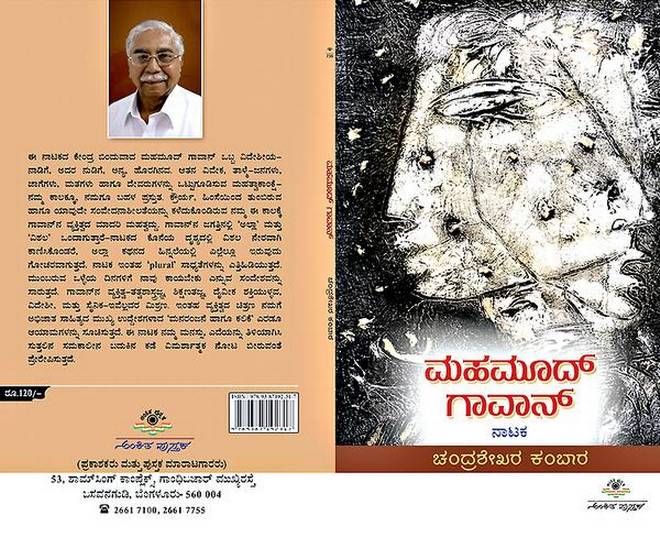
Chandrashekhar Kambar’s new historical play, Mahmoud Gawan, based on the life of the merchant who arrived in Bidar and later became the Prime Minister of the Bahmani Sultanate, will be released on Sunday
The word “global” is something that we come across not infrequently in literary discussions in recent times. It seems to be used in a very complimentary manner too. When we study it more closely, we see its multiple uses, ranging from the highly complimentary to the particularly disturbing connotations (especially, in the political and economic aspects of the so-called “globalization” phenomenon). Depending on the context, the philosophy implied in this use is vastly interesting.
In this context, dipping into pardonable autobiography, I must confess that my early acquaintance with the kind of writings I found in Chandrasekhar Kambar (this was back in 1964) was very new to my navya taste-buds of those days. This was around the time he wrote HelatiniKela . But, by the time Jokumaraswami arrived, I had begun to sense the fascinating spread of his literary intentions. The play seemed to insist on a message of passion (closely related to sexuality, the body, as well as the body politic!). The legitimacy of this passion was far more powerful than any petty legal correctness, or any mundane understanding of what constitutes the “moral” in our society. I was of course reminded of Lawrence. Kambar was utilizing passion as a powerful motive-free force, and constantly pushing at obstructions in its way. I became an avid follower of Kambar’s growth as a writer. His use of “sexuality” as a central and powerful theme and his struggle out of its grasp.
The latter part of his career witnesses an attempt to cover areas of creativity which could not be accommodated inside the constrictions of this strong force (note, however, a sliver of this sexuality is noticeable even in his latest play,Mahmoud Gawan ). I would assert that it is this constant and consistent presence which turns all of Kambar’s writing into his legitimate oeuvre.
Here was a writer, who, on the one hand was close to the North Karnataka folk and at the same time could engage the political and the modern predicament of our lives. You see this everywhere beginning from Helatini Kela , Rishyashringa , or Jokumaraswamy to the recent works like Shikharasoorya , Shivana Dangura orMahmoudGawan . I would like to go back to what I began with, the idea of the “global” in relation to Kambar’s works. In what sense is Kambar global? It is true that at least in one of the recent novels globalisation and neo-colonialism figure predominantly (in Shivana Dangura ).
Could we try to identify an effort, more indirect, and subtler perhaps, to highlight an earlier moment in history, a moment that marked the international and inter-cultural ferment that characterised North Karnataka in his play, Mahmoud Gawan ? Interestingly, the choice of language in Gawan is not the kind of North Karnataka folk that Kambar worked with in say Helatini Kela or Jokumaraswami. I would describe the language of Gawan as Kambar’s idea of “neutral” Kannada, a conscious avoidance of the folk dialect. Again, look at the choice of the central figure in this play, Gawan. Hee is a foreigner, a non-Kannada person. He enters the world of Bahamani politics in the North Karnataka of fourteenth and fifteenth centuries. All these, I would venture to suggest, point towards a movement, a possibility, beyond the strictly local and Kannada contexts. In other words, Kambar is found testing his talent in handling something beyond what could be identified as exclusively Kannada, Karnataka. The significance of this kind of language use is for Kambar like playing a field without his arch-player—the folk tongue! Does he succeed in working this language, playing in this new field? Perhaps in a manner that is different from say Jokumaraswamy , where he is using sexual passion in order to design and project the drama experience, he is trying to move into other spaces in which his choice of an “other” Kannada could function adequately. This kind of language lends itself more easily to translation across other linguistic contexts. The absence of localism in itself is a strong pointer towards achieving such a global presence.
Could we simply say perhaps that Kambar moved from passion to politics—apparently, it seems so. This also begs the question, why? It is my opinion that an author like Kambar, a writer of immense literary imagination, constantly feels the need to move out of his familiar area of creativity and attempts to work in other new areas. As a result, politics becomes the main driving force in a play like Gawan . Overall, he succeeds in creating a layered experience of such historical and political play-fields. In Gawan , you see an extension of the literary Kambar, of Kambar’s entire literary oeuvre. And to say that is to acknowledge a serious happening in contemporary Kannada literature.
Finally, I invite my reader to look at Mahmoud Gawan, the protagonist. Here is a foreigner, theoretically foreign to the land and its language. His wisdom and his calming presence, his overarching ambition to unite people, places, religions, and gods—these are things crucially and painfully relevant to us and our times, times of cruelty and abhorrent insensitivity. In times where you see the cream of the population failing to respond to the degradation of all that is human, all that is noble and valuable in human experience.
In Gawan’s cosmos, Allah and Vitthala still fuse brilliantly—one as the implied presence and the latter as the explicit presence in the final scene. The play moves towards a certain sense of legitimization of this conclusion, the hope of better times to come. In a way, the encompassing presence of Gawan—the philosopher, educator, the saint, foreigner, and a soldier—should take us back to the classical idea of the function of literature, what literature should do—“to educate and entertain.” A closer look at the play would also perhaps clear our hearts and minds, making us look around at our own times with a sharply critical eye.
(Mahmoud Gawan by Chandrashekhar Kambar will be released on October 28 at 10. 30 a.m., Indian Institute of World Culture, B.P. Wadia Road, Bangalore).
(The author is a critic and musician of repute)
source: http://www.thehindu.com / The Hindu / Home> Features> Friday Review / by Dr. Rajeev Taranth / October 26th, 2018