Category Archives: Leaders

Justice Mohammad Rafiq sworn in as Chief Justice of Himachal Pradesh HC

Sujangarh (Churu District), RAJASHTHAN :

Justice Mohammad Rafiq practised exclusively in Rajasthan High Court in Jaipur in almost all branches of law specially conducted constitutional matters, service matters etc

Justice Mohammad Rafiq administered the oath of office by Governor Rajendra Vishwanath Arlekar, as Chief Justice of Himachal Pradesh High Court, at Governor House in Shimla on Thursday. Pradeep Kumar

JUSTICE MOHAMMAD Rafiq was sworn in as the new Chief Justice of Himachal Pradesh High Court in Shimla on Thursday. He was administered the oath of office by Governor Rajendra Vishwanath Arlekar in a ceremony held at Raj Bhawan. Chief Minister Jairam Thakur and his wife Dr Sadhna Thakur was also present on the occasion.

Justice Mohammad Rafiq was born on May 25, 1960, at Sujangarh in Churu district of Rajasthan. He completed his B.Com in 1980, LL.B in 1984 and M.Com in 1986 from University of Rajasthan. He later joined the Bar and practised as advocate after enrolment with the Bar Council of Rajasthan on 8th July, 1984. He practised exclusively in Rajasthan High Court in Jaipur in almost all branches of law especially conducted constitutional matters, service matters, land acquisition cases, land revenue cases, preventive detention cases, customs and excise matters, railway claims cases, tax matters, company matters and criminal matters before the High Court.

He worked as assistant government advocate for the State of Rajasthan from July 15, 1986, to December 21, 1987, and deputy government advocate from December 22, 1987, to June 29, 1990. He appeared before the High Court as panel advocate for various departments of the state government for five years i.e. from 1993 to 1998. He also represented the Union of India as standing counsel from 1992 to 2001 before the High Court. He also represented the Indian Railways, Rajasthan State Pollution Control Board, Rajasthan Board of Muslim Wakfs, Jaipur Development Authority, Rajasthan Housing Board and Jaipur Municipal Corporation before the Rajasthan High Court.

He was appointed as additional advocate general for the State of Rajasthan on January 7, 1999, and worked as such till his elevation to the Bench. He was appointed as Judge of the Rajasthan High Court on May 15, 2006. He also worked as Acting Chief Justice of Rajasthan High Court twice; from April 7, 2019, to May 4, 2019, and from September 23, 2019, to October 5, 2019. He was also the executive chairman of the Rajasthan State Legal Services Authority and the Administrative Judge of the Rajasthan High Court prior to elevation as the Chief Justice. He was the Chief Justice of the High Court of Meghalaya from November 13, 2019, to April 26, 2020. Justice Mohammad Rafiq was administered the oath of office of the Chief Justice of Orissa High Court on April 27, 2020, on being transferred from the Meghalaya High Court. He was administered the oath of office of the Chief Justice of the High Court of Madhya Pradesh on January 3, 2021, on being transferred from the Orissa High Court.

Urban Development Minister Suresh Bhardwaj, Judges of Himachal Pradesh High Court, Justice Vijay Kumar Shukla from Madhya Pradesh High Court, GoC-in-C, ARTREC Lt. General Raj Shukla, Advocate General Ashok Sharma, Chairman of various commissions, DGP Sanjay Kundu, Mayor Satya Kaundal, Chairmen and Vice-chairmen of various boards and corporations, Vice Chancellors, Seema Rafiq, wife of Chief Justice and family members of Chief Justice, senior officers of the state government and other prominent people were also present on the occasion.

source: http://www.indianexpress.com / The Indian Express / Home> Cities> Shimla / by Express News Service, Shimla / October 15th, 2021
BENFA: Changing Lives

Bengaluru, KARNATAKA :

Bengaluru-based BENFA helping poor people.

Bengaluru :

AS they say – think individually, act globally – BENFA is doing just that. BENFA (Bengaluru Friends Alliance) was born with the common goal and the collective efforts of a group of doctors to help the underprivileged section of society. The organization extends financial help to the poor and helps them overcome their financial hurdles in education and healthcare.

Talking about the organization Dr. Saleem Mehkri, Vice President and Trustee, said, “We were already into helping poor Muslim population with their education and health issues.

Then, it was planned by Dr. Suhel Pasha to establish an umbrella organization to facilitate their charity works on a large scale. The organization primarily addresses a large number of poor Muslims and deserving non-Muslims, too.”

Dr. Suhel Pasha, President, BENFA, said, “Twenty percent of the city’s population lives in slums with the lowest standard of education, inefficient healthcare, lack of necessities, and most importantly low standard of living. Even today, one-third of the slum dwellers fall below the poverty line with an income of less than Rs. 2500 per month. So, to help these poor populations, BENFA was established in October 2020.”

BENFA is a registered charitable trust focusing on education, healthcare, and socio-economic empowerment of underprivileged parts of society. How BENFA assists in empowering the disadvantaged? Answered Abdul Mateen, BENFA General Secretary, “We have recently launched a micro-credit scheme to provide loans to the deserving women and men to start their small trades. The loans we give are free of interest. So, they have to return only the principal loan amount without any interest.”

Dr. Saleem informed, “We have launched schemes not only to empower poor men and women financially, but we also aim to empower them through adult education schemes. We provide education and training to unemployed youngsters/adults as per their skills and help them get government or private jobs. We have helped students to pay their fees and paid hospital bills too.”

According to Dr. Saleem, around five people are benefitted every week through their microcredit scheme. So, how does the organization arrange its finances? Replied Dr. Saleem, “We have around 500 members, including 400 male members and 100 female members, who voluntarily contribute and help run the organization successfully. Nobody is forced to contribute.”

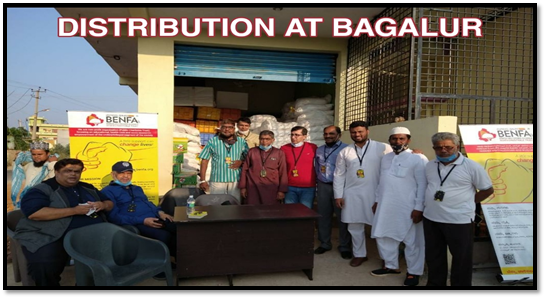
Besides these programmes, BENFA actively distributes rations during Eid-Ul-Fitr, performs Qurbani/sacrifices during Eid-Al-Adha, and distributes meat amongst low-income families. Furthermore, BENFA has several groups focusing on different areas, namely-BEEP for education, BHCP for healthcare, BSSP for socio-economic support, BMCS for microcredit schemes, and BALP for adult learning programs.

That is not all. BENFA is slowly and steadily adding more to its activities for the betterment of society. Lately, in collaboration with the field experts, BENFA has organized several webinars related to health and education topics. Pointed out to Dr. Suhel, “We organized webinars to educate people on several issues that focus on health, education, amongst others. We also organize career counselling for youth. We invite experts to address the relevant topics.”

BENFA also played an active role amidst the raging COVID 19 by supplying oxygen to the patients. As Dr. Pasha said, “We supplied oxygen cylinders during COVID 19 and spread awareness regarding the vaccine and also organized a webinar to help people prepare themselves during COVID crisis.”

Dr. Saleem urged people to join the organization as members to extend help to a large number of underprivileged people.

source: http://www.indiatomorrow.net / India Tomorrow / Home> Development> Features / by Rashida Bakait / October 16th, 2021

Former Kerala Jamaat-e-Islami Hind President Expires

Kozhikode, KERALA :

Former Kerala Jamaat-e-Islami Hind President T K Abdullah.

Kozhikode :

Former president of the Kerala Jamaat-e-Islami Hind (JIH),T K Abdullah, passed away today at the age of 92.

He is survived by his wife Kunjamina, sons TK Farooq and TK Iqbal, and daughter Sajida.

A senior Islamic scholar, he was a member of JIH’s Markazi Majlis-e-Shoora, or the Central Advisory Council, the top decision-making body of the Jamaat, from 1972 till now. He was also a member of the Kerala JIH’s State Advisory Council.

A founder member of the All India Muslim Personal Law Board (AIMPLB), he was JIH’s state president from 1972 to 79 and from 1982 to 1984. 

He was also a state executive member of the Ittihadul Ulema.

Abdullah sahib was also the Chief Editor of Islamic Encyclopaedia that Islamic Publishing House, Kozhikode, is publishing.

He was born to a great Islamic scholar Tharakandi Abdurrahman sahib, and Fatima, in 1929 in village Ayencheri in Kozhikode district. 

Abdullah sahib obtained his early education at Vazhakadu Darul Uloom, Thirurangadi Jumma Masjid, Pulikkal Madinathul Uloom and Aliya Arabic College, Kasargod.

He joined Prabodhanam in 1950 and became its deputy chief editor in 1959. When Prabodhanam became a weekly in 1964, he was appointed its first Chief Editor and continued in the same position till 1995.

He, later on, joined the JIH Kerala mouthpiece Bodhanam quarterly journal as the Chief Editor.

When the government banned the Jamaat in 1992 after the demolition of the Babri Masjid, Abdullah sahib was imprisoned along with many other JIH leaders. 

He also helped translate two volumes of Maulana Maududi’s Tafhim-ul-Quran (explanation of the Quran) from Urdu to Malayalam. Besides, he wrote several books, including Nazhikakallukal (Mile Stones) and Iqbaline Kandethal (Finding Iqbal).

In addition, his autobiography was published by the name “Nadannu Theeratha Vazhikal”.

Many of his speeches, articles, and sermons were compiled and published.

source: http://www.indiatomorrow.net / India Tomorrow / Home> Inspiring Personality / October 15th, 2021

Urdu activist Qayyum Nadvi’s low-cost library idea stuns delegates of international library conference

Aurangabad, MAHARASHTRA :

Gulbarga ( Karnataka) :

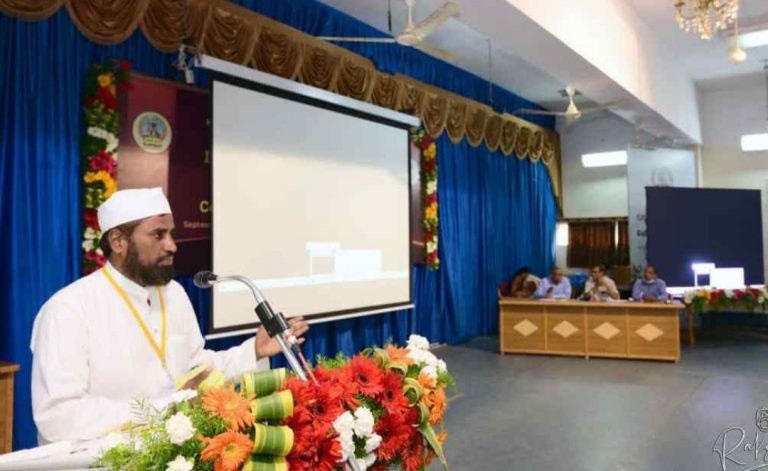
At an international library conference, noted Aurangabad based Urdu activist and President of Read and Lead Foundation, Mirza Abdul Qayyum Nadvi has stunned the library experts by presenting the idea of low-cost library scheme which he  called as “Micro Library, Micro Funding”.

He was speaking at  the two-day International Conference on  “Visualizing Librarianship in the 21th century’, Connecting Minds and Creating Future,”  held at the Gulbarga University here.

 Sharing his experiences, Mirza Nadvi said merely a budget of Rs. 10,000/ is quite enough  to set up a well-equipped  Mohalla library  with useful informative  books for children  which can be opened at housing societies, complexes, schools,  and religious places. From where he got this idea, he said his school going daughter Maryam Mirza’s dreamt of opening a Mohalla Library for children in his locality who were killing their time during the last lockdown.  He realized his daughter’s dream and opened the first library in his own locality in the historic Aurangabad city. Now this experiment has caught the imagination of book-loving people and inspired others to follow the suit. Mirza Nadvi highlighted the efforts of his daughter Maryam Mirza who became a pioneer in the country to launch Mohalla Libraries for children.

She launched the first children’s neighborhood library with her own 300 books and in a short span of just eight months, 19 neighborhood libraries have sprung up in the city, he said. The participants of the conference lauded and praised Maryam for her movement.

Mirza Nadvi was especially invited by the Indian Library Association, Delhi to address the conference. It was 66th annual conference of the Indian Library Association organized in collaboration with Gulbarga University and other organizations. The Conference assured Mirza Nadvi of all help in his daughter’s mission of spreading knowledge through libraries.  

source: http://www. muslimmirror.com / Muslim Mirror / Home> Exclusive Reports> Indian Muslim> Media / by Special Correspondent / October 01st, 2021

Book on “Internal Security of India and Disaster Management”

WEST BENGAL :

pix: facebook.com/ oxford university press

New Delhi:

His own experience with cracking the Civil Services Examination (CSE) prompted Syed Waquar Raza, a serving IPS officer, to pen a one-stop guide on internal security and disaster management for future aspirants.

In addition, his 14 years in uniform have given him an opportunity to closely study the security challenges about which there a general idea but cannot be delved deeper “in the dust and grime of everyday policing”.

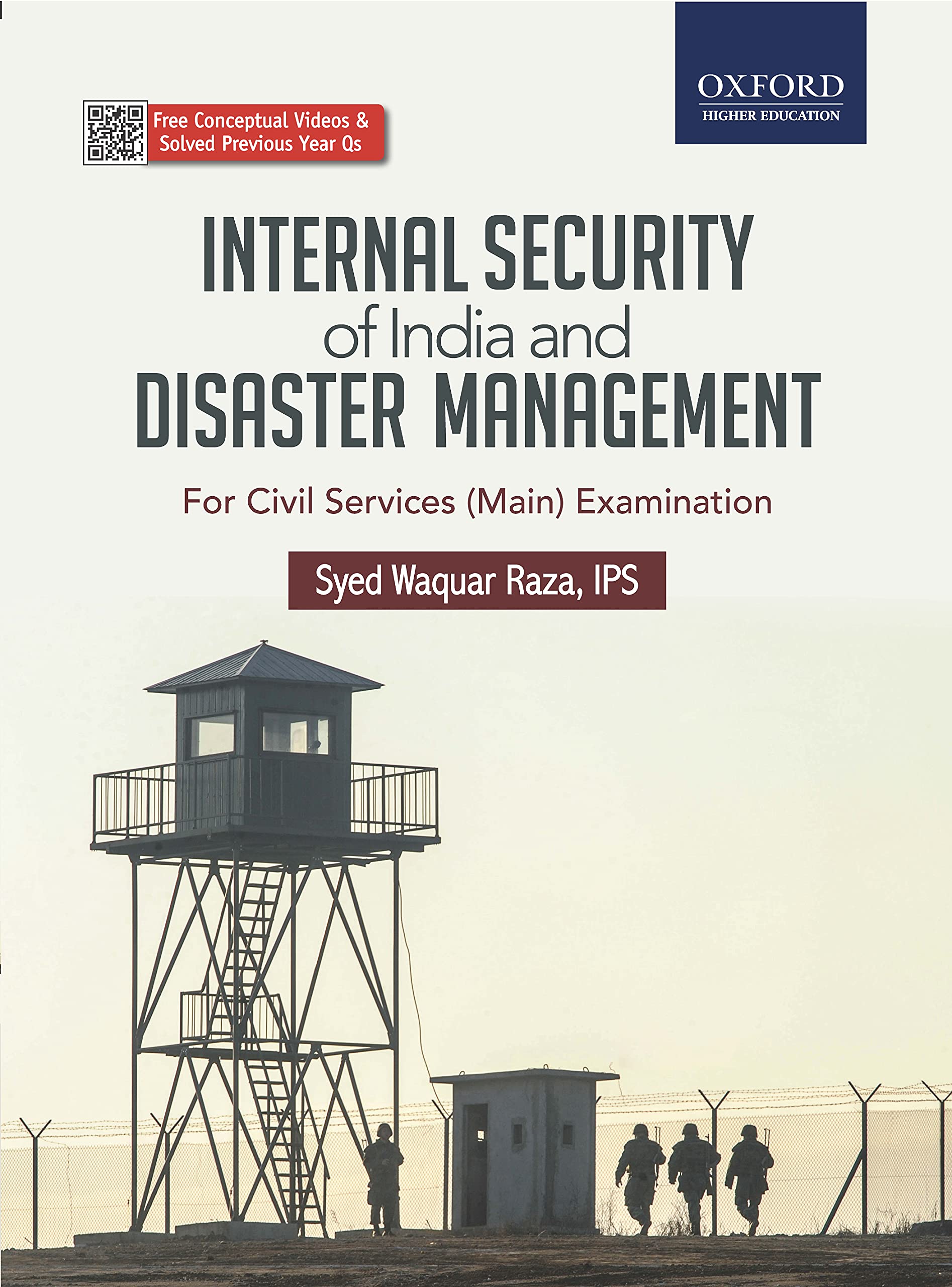
pix: amazon.in

“Internal Security of India and Disaster Management” (Oxford University Press) has been primarily intended for aspirants of the UPSC Civil Services examination, but “any reader interested in the myriad internal security challenges that India faces will find the book useful and instructive”, Raza told IANS in an interview.

However, beyond generalities, he sidestepped a question on the fresh challenges posed by the situation in Afghanistan, saying service rules did not permit him to do so.

Studying the questions from previous years’ examinations showed that the subject required an analytical understanding of the various challenges along with knowledge of current developments.

“My own experiences of working in different capacities at various places of West Bengal such as in LWE-affected areas, bordering districts, and CID gave me the opportunity to observe closely the various aspects of internal security challenges that India faces today.

Also, as a first responder in times of disasters, the nature of policing job provided me with valuable insights in aspects of disaster management,” Raza said.

“Though I have been working as an IPS officer for over 14 years now, the journey of writing a book provided me with an opportunity to closely study various topics related to security challenges, about which we do have a general idea, but would not have got a chance to delve deeper in the dust and grime of everyday policing.

My aim was to write a book covering the internal security and disaster management portions of UPSC Civil Services syllabus that would be a one-stop solution for the aspirants and would relieve them of the necessity to search and sift materials from various sources, including the Internet. I hope my effort will be helpful for the aspirants,” he added.

He expands on this in the Preface.

“Authors often face the dilemma about which chapters to include, what topics to cover in the chapters, how much to include in each topic and what to exclude. I have tried to throw the net wide, so that an aspirant does not have to look for multiple learning resources – available online and offline – but can solely rely on this book for covering virtually all topics related to the internal security challenges that India faces today, as well as the various types of disasters and their management efforts. At the same time, I have tried to provide just the optimum depth of topics so that the aspirant gains the confidence to answer any related question to the examiner’s satisfaction,” Raza writes.

While writing the book, he relied heavily on articles of many security experts and think tanks including IDSA, CLAWS, ORF, etc. He also referred to books such as “India after Gandhi” by Ramchandra Guha, to understand the historical context of many of India’s current security challenges.

“The Internet provides an excellent tool to search, verify and cross-check facts and figures. Government websites such as that of the Ministry of Home Affairs also provide valuable and up-to-date information related to our internal security challenges,” he said during the interview.

Question: Hitherto, Internal Security in India has focused on three broad areas: Terrorism, Secessionism and Maoism. Have the developments in Afghanistan following the US withdrawal added a new dimension to this and how can the Indian state best cope with the challenge?

“Yes, the current developments in Afghanistan have been a cause of concern for India. It has the potential to cause regional instability and a possible spill-over effect in terms of a surge in terrorism in Jammu and Kashmir. China and Pakistan too have been eager to increase their footprints and influence in Afghanistan. However, the UNSC resolution 2593 requires that Afghan territory should not be used for terrorist activities, and it specially refers to UN-proscribed terrorist organisations such as the LeT and the JeM,” Raza said.

“India has been keenly following the current developments in Afghanistan. It seeks a broad-based and inclusive government in Afghanistan. India has helped build over 500 infrastructural projects worth over $3 billion, which has generated tremendous goodwill for India, among the Afghan people. Owing to her historical friendship and ties with the people of Afghanistan, India should continue supporting the common people there with humanitarian assistance,” he added, declining to go further due to service restrictions.

This does not take away from the value of the book, with important key words highlighted in each of its 18 chapters; maps, diagrams and tables included for conceptual clarity, boxes provided for topics of recent relevance; quick revision provided at the end of each chapter; and conceptual videos for each chapter linked by QR code for easy access.

In sum, this book is a must read not only for CSE aspirants but for the general public too.-IANS

source: http://www.muslimmirror.com / Muslim Mirror / Home> Book Review / by IANS / October 08th, 2021

A new species of fruit fly named after Siruvani

Siruvani, TAMIL NADU / Aligarh, UTTAR PRADESH :

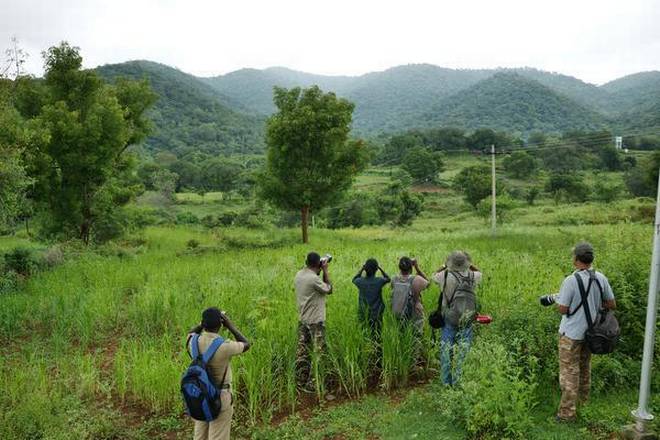
A team of naturalists participating at a forest department survey   | Photo Credit: Special Arrangement

A new species of fruit fly discovered for the first time has been named after Siruvani in the Western Ghats

A fruit fly has created a buzz with its maiden show in Siruvani, a biodiversity hotspot of the Western Ghats. It turns out to be a new species that has been reported, named, and documented for the first time ever. The fruit fly is now scientifically named as Euphranta siruvani, after the place where it was first collected.

A research student at Annamalai University, H Sankararaman, first spotted this unusual visitor on a light trap which he had set up to capture moths at a non-forest space near Siruvani. “The fruit fly was attracted towards light and I was lucky enough to have spotted it. It has a distinct V-shaped black band on its forewing,” recalls Sankar.

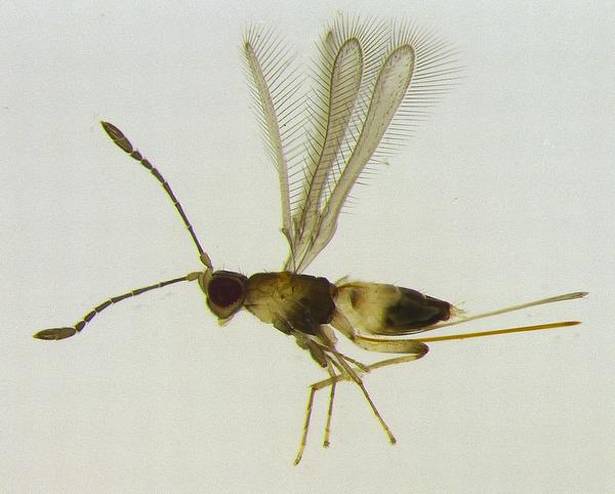
Euphranta siruvani   | Photo Credit: Magnolia Press. Zootaxa

The discovery now appears in Zootaxa journal in a paper authored by David K J and Sachin, K, ICAR-National Bureau of Agricultural Insect Resources (NBAIR), Bengaluru, DL Hancock from the UK, Sudhir Singh from Forest Research Institute, Dehradun and H Sankararaman from Annamalai University. According to David, there are 104 recognised species in the genus Euphranta that are distributed across the world. “Of this, 14 are recorded so far from India. The discovery of Euphranta siruvani is the brand-new addition to the checklist.”

“This fruit fly is a rare species and a valuable addition to the diversity,” says David K J, scientist at ICAR-NBAIR, one of the National Institutes with several taxonomists of international repute. “We first check with the regional/world catalogue, then refer to available literature, and connect with authorities around the world over mail before confirming it as a new species,” explains David.

A species can be named after the ‘type locality’ (the place from where the holotype was collected), a specific characteristic feature, after the collector or after an eminent taxonomist for his contributions. In this case, they chose the place, a thriving ecosystem of rich fauna and flora and also the source of drinking water for Coimbatore.

Omyomymar hayati   | Photo Credit: Magnolia Press. Zootaxa

Apart from the fruit fly, additionally a brand new fairy fly species was found at Siruvani. The species Omyomymar hayati is named after Professor Mohammad Hayat of Aligarh Muslim University for his contributions to insect taxonomy.

“I have described several species after the type locality for example Acidoxantha galibeedu in 2014 based on specimen collected near Coorg. Later, I had collected the same species from other parts of Karnataka and Kerala. Similarly, may be the E.siruvani can be seen across the Western Ghats and Kerala in South India. We have to study further to understand its distribution,” explains David, who has identified and described 28 new species of fruit flies of India.

The genus Euphranta comprises many fruit/seed infesting species, including Euphranta cassiae that feeds on the pods of Kanikonna (Cassia fistula) trees. “There are 5,000 species of fruit flies across the world. In India, we have nearly 290 species so far; we keep adding to the list.”

K D Prathapan, an expert on beetles, who works at Kerala Agricultural University, says fruit flies have an average lifespan of three to four weeks. “By infesting fruits, they damage the reproductive capacity of plants. Some species breed in bamboo shoots. And then there are cucurbit fruit flies that are pests of cucurbits such as cucumber, gourds, and pumpkins.”

The study of fruit flies is important for the agricultural economy, as they infect mangoes, melons, gourds, and guavas, says Sankararaman. “It lays eggs in fruits and the larvae feed on the pulp. We are yet get insights about the biology of the species discovered in Siruvani.”

K Mohan Prasath, founder of Act for Butterflies, says there are also many parasitic insects that are helpful to farmers in pest control. Mohan and his team have compiled a list of over 1,000 species of moths across Tamil Nadu and plan to bring it out in a book form soon. “We hope such discoveries build interest in entomology that covers insects, butterflies, and moths. Identification of new species is especially relevant now as there is habitat destruction of many species because of climate change.”

source: http://www.thehindu.com / The Hindu / Home> Sci-Tech> Environment / by K Jeshi / January 12th, 2021

Soha Bags Fourth Title Of The Season At AITA Women’s Tennis Event

Bangalore, KARNATAKA :

Soha bags fourth title of the season at AITA women’s tennis event

Bengaluru:  

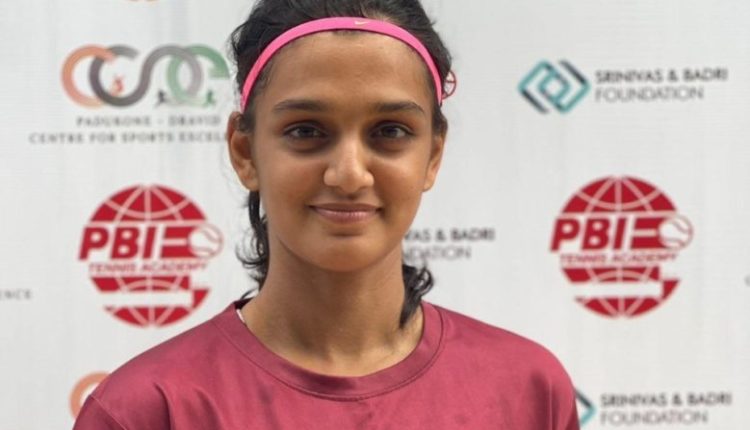
Soha Sadiq came back from a set down to beat Akanksha Nitture of Maharashtra in the final as she bagged her third singles crown of the season at the AITA women’s tennis tournament played under the aegis of KSLTA here on Saturday.

The top seed from Karnataka beat Akanksha 4-6, 6-3, 6-1 to end the tournament with a fine double. Overall, this was Soha’s fourth title of the season as she and Akanksha had won the doubles crown on Friday.

After heavy rains had delayed the start of the final by more than two hours, the 23-year-old Soha dominated the proceedings from the start and was soon 4-1 up. However, she lost the momentum which was quickly grabbed by her opponent as third seed Akanksha went on to win five games on the trot to take the first set, according to information reaching here.

The second set saw both the rivals fight hard for each point until the sixth game with the scores being level. It was then that Soha stepped up on the gas and closed out the set at 6-3.

Soha, after a 2-1 lead, broke Akanksha’s serve in the fourth game of the decider which saw both of them reach deuce five times before the latter succumbed. There was no stopping Soha from that point as she just marched away with the set and the match.

“I am happy to win my third singles title of the season. I didn’t expect it to be a three-setter but luckily I found my rhythm when I needed it most,” Soha, who has just graduated in Commerce from Mount Carmel’s College, was quoted as saying by the KSLTA in a release.

Results (Seedings in pre-fix, States in brackets)
Women’s Singles (Final): 1-Soha Sadiq (KAR) bt 3-Akanksha Nitture (MAH) 4-6, 6-3, 6-1.

(IANS)

source: http://www.ommcomnews.com / Ommcom News / Home> Sports / by Ommcom News / October 09th, 2021

Indian Muslim women urged to plan career in civil services

Patna, BIHAR :

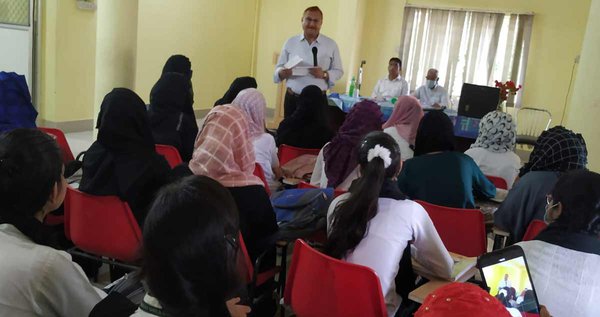
M.W. Ansari, former Director General of Police, Chhattisgarh speaking

Patna:

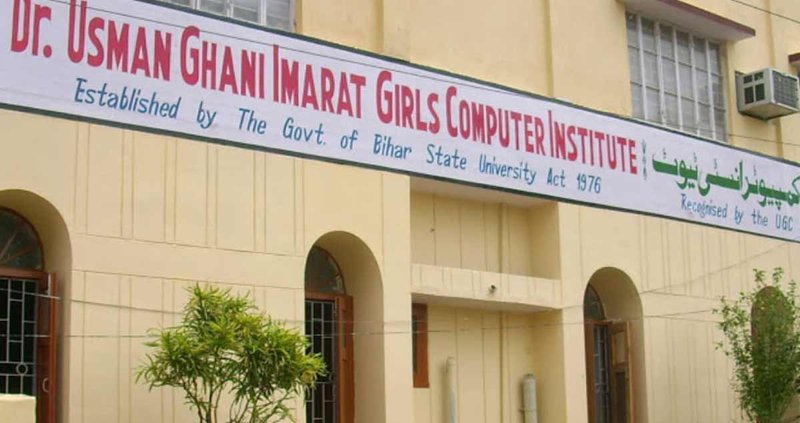
A career awareness program on civil services was held at Dr. Usman Ghani Imarat Girls’ Institute in Patna on 26 September 2021.

The program started with recitation of the Holy Quran.

While talking on ‘What is Civil Services’, Mohammad Naushad Ansari, Hon’y vice chairman of the Institute, through a power-point presentation, elaborated details on the profession of civil services, the rewards and challenges of being in civil services. He emphasised that all graduates are eligible to appear in this exam. They can definitely crack and get a good rank provided they plan their preparation under good guidance and work very hard. It is seen that a good number of candidates qualifying in civil services exams come from lower strata of the society. “Civil Servants of different services are the officers behind implementation of government development plans. They are the people who keep law and order, and work as a link between the public and the government”, he stated.

The chief guest, Mr. M W Ansari, former Director General of Police, Chhattisgarh spoke on the topic ‘Career in Civil Services: Criteria, roles and opportunities’. He stated that the prestige, power and the status that one acquires after entering civil services is immense and unparalleled. Besides, this service provides opportunity to serve the society and the nation at a larger scale. More than 10 lakh students apply for this exam each year. The number of aspirants is increasing every year. This year 761 students have cracked this prestigious exam, out of which only 31 students are from the Muslim community. It is too low considering their population. We require good number of quality institutions, proper guidance and good mentors so that chances of success brighten considerably. In particular, he pointed out that the proportion of Muslim women in these services is negligible. The community cannot prosper without bringing quality education among their women. He also appreciated the contribution of Dr. Usman Ghani Imarat Girls’ Institute in imparting education to the weaker sections of the society with limited resources. In the question and answer session he advised the students that the preparation for Civil Services exam should start from tenth class itself. Bihar had been contributing a good number of Civil Servants every year and this year’s topper in the exam is from Bihar only.

Mr. Khurshid Anwar Arfi, Senior journalist, renowned author of many books and Hon’y chairman of the institute, in his presidential address, emphasised that the community must focus on quality education which should enable new generation to successfully face the modern challenges. The other area of attention should be job-oriented courses and professional educational.

This institute offers various courses viz., BCA, BBA, B Lib. Sc, DCA, Diploma in Dress Designing etc which gives immense opportunity to girls to gain access into good professions and earnings.

He informed that the institute has a plan to organise similar career guidance programs and will be providing all the assistance needed to the Civil Services aspirants for state as well as for UPSC exams.

He thanked all the honorary members of the institute including Mr. Enam Khan, Secretary of the institute, for dedicating his time and energy for the institution’s development.

He also thanked all the teachers and, in particular, Mrs. Ruby Nishat, for offering her services to the institute voluntarily for over two years.

He acknowledged and offered dua for Late Maulana Wali Rahmani who worked hard for development of Institute’s building and infrastructure.

The program was attended by a large number of students, teachers and others. The welcome address was delivered by Mrs. Rupa Sharma, Principal of the Institute and vote of thanks was given by Mrs. Nuzhat Ghousiya . The girls put forward various questions and got enlightened. They noted down details of study plan for the exam and also felt ignited to write this exam.

Dr. Usman Ghani Imarat Girls’ Institute, Patna was established and run by Imarat-e-Shariah Educational & Welfare Trust, Bihar. It is one of the Knowledge Resource Centre of Maulana Mazharul Haque Arabic & Persian University, Bihar.

Union Public Service Commission (UPSC) is India’s premier central recruiting agency for central government public servants.

source: http://www.milligazette.com / The Milli Gazette / Home> News> Education & Careers / TheMilli Gazette Online / September 27th, 2021

Meet Sadaf Chaudhary, who wants to serve country by becoming an ambassador

Roorkee (Haridwar District), UTTARAKHAND :

Roorkee girl Sadaf Chaudhary secured the 23rd rank in the UPSC exams.

UPSC topper among Muslim aspirants, Sadaf Chaudhary of Roorkee uttarakhand, who secured the overall 23rd rank, is of firm opinion that improvement in the education of girls in India will bring great social change and calls for the society to provide special attention to the education of girls.

The ambience at Sadaf Chaudhary’s home at Roorkee, Uttarakhand is of glee. There is a continuous rush of local people at her home at Green Park Colony who are visiting to congratulate Sadaf. Sadaf’s pictures are being shared on social media. In the last few days, Sadaf has seen a change in her life. Cell phones of her family members are ringing continuously. No one in Sadaf’s family was able to sleep in the last three days owing to celebrations at their home.

Twenty-seven-year old Sadaf is the eldest daughter of Israr Ahmed and Shahbaz Bano of Roorkee. Her father Israr Ahmed was a former manager at Gramin Bank at the Deoband branch. In the recently announced UPSC 2020 results, Sadaf has secured all over India 23rd rank. She has got the highest rank among the Muslim aspirants.

Talking to TwoCircles.net, Sadaf said that she wants to become an Indian Foreign Service (IFS) officer like IFS Sneha Dubey.

Considering her 23rd rank and OBC quota, Sadaf has a good chance of getting into IFS.

Sadaf said that she chose International Relations as her subject in UPSC as she is “interested in foreign service.”

“I was getting a good salary at an MNC where I used to work. I left that job and worked hard for two years to clear UPSC,” she said.

Sadaf said that “one of the daughters of the country IFS Sneha Dubey is being praised all over the country, I want to follow in Sneha Dubey’s footsteps.”

She said that if the country that she can do a better job as an IAS officer, “I will be mentally prepared for that as well.”

On the day when UPSC results were announced, Sadaf’s mother was praying all day.

Recalling the tense atmosphere at their home before the announcement of the result, Sadaf’s younger brother Mohammad Shad said, “Last year Baji (Sadaf) missed cracking the exams by a few numbers so this year the atmosphere at the home was tense.”

Sadaf said that her UPSC result is beyond her expectations. “I was sure that I will qualify this year.”

To her credit, Sadaf didn’t take any coaching for her UPSC exam. “I have been preparing for last twenty years,” she said.

Recalling her childhood, Sadaf said that as a kid she would go to her grandfather’s house (in Saharanpur, Uttar Pradesh) with her mother during summer vacations. “He had a school there and during the summer vacations I would study everything,” she said, adding, “I got the benefit of regular studies.”

Talking about her strategy of cracking UPSC, Sadaf said she “actually had none.” She said after having breakfast in the morning, she would sit down to study as long as she could. “I would review and assess my preparations once a week.”

She said that she would always try to understand the toppers and what they read as she is fond of reading. “Everyone thinks I enjoy reading, That’s alright, I enjoyed the books, I love them. Books are like friends to me. Reading is my hobby and that has made me successful without coaching,” she said.

The passion for civil services runs through the family. Sadaf’s younger sister Fatima is also preparing for UPSC. “You will have to come here once again because Saima is also very talented and is preparing for UPSC under the guidance of Sadaf,” Sadaf’s brother Sikander Ali told TwoCircles.net. “Fatima is more talented than me and always tops the class,” quips Sadaf.

Sadaf’s mother Shehbaz Bano said that Sadaf is very diplomatic and applies diplomacy at home. Sadaf laughs. “I just get my work done. That’s what diplomacy is,” she said.

Talking about her mother, Sadaf said that she herself admitted her mother to college. Her mother had gotten married after higher secondary. “I would always check if Ammi is reading her books,” she said.

“I realized that Ammi wants to study but couldn’t as she was a mother. I persuaded her to study. So, when I took admission in College, Ammi also took admission in BA. As I completed my Chemical engineering from Jalandhar, Ammi also completed her BA,” Sadaf said.

Sadaf credits her success to a good environment for studies at her home. “We all like to study. My brother recently got a 96.5 per cent and he is not happy with that,” she said.

Sadaf said the assessment done by the schools during the Corona period was not totally correct. “I think studies should be done diligently and there should be a clean competitive environment at home,” she added.

Speaking on Sadaf’s success, her uncle Nadeem Pradhan is full of pride, saying, “Those people and relatives who said girls shouldn’t be sent outside to study are saying now that our daughter has done wonders.”

Pradhan said successful stories always change the mindset of society.

“Today only 40 per cent of girls are able to study. If this number increases, a great social change will take place,” Sadaf said, adding, “We have to give special attention to the education of girls.”

source: http://www.twocircles.net / TwoCircles.net / Home> Lead Story / by Aas Mohammad Kaif, TwoCircles.net / September 27th, 2021

An empire’s fall: cause and effect

DELHI / INDIA :

History proved beyond doubt that every Empire that evolved and flourished across centuries created its own grave-diggers. As is the case, the historians of all hues since the 18 Century have debated the causes of the decline of Mughal Empire. The notion of decline envisages a prior state of perfection, efflorescence, harmony, and cohesion, in contrast to corruption, moral degradation, and loss of ethical values, principles, and customs. Hence, historians wish to understand the phenomenon of change and its causes. For instance, social decay, deterioration of the previous order, and belief and long spells of chaos and disorder are considered the causes of such decline.

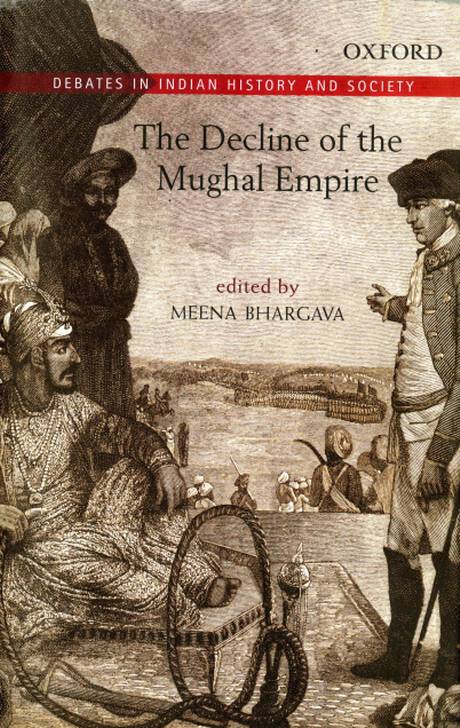
The OUP’s The Decline of the Mughal Empire, edited by Meena Bhargava provides a series of coherent answers to this question through a collage of ideas brought forth by many eminent historians as part of its Debates in Indian History and Society series. While there were divergent views and debates among historians about the withering of the “mammoth imperial banyan tree”, this collection attempts to focus on different paradigms or assumptions that have shaped interpretations on the decline of Mughal Empire.

According to the authors, the causes of the decline of the Mughal Empire can be grouped under the following heads: a) deterioration of land relations; b) emergence of regional powers as successor states; c) selfish struggle of nobles at the court; d) lack of initiative in modern weapons; e) lack of control over the bankers of the state and above all f) Aurangzeb’s Deccan campaign.

Unlike Emperor Akbar who preferred paying his officials’ salaries directly from the state treasury, his successors Shahjahan and Aurangzeb opted for jagirs (temporary allotment of lands to officials for their services – which may be according to the satisfaction of the Emperor) and Paibaqi (revenue from reserved lands which was sent to the central treasury). While the jagirdars tried to extract as much from the land by oppressing the peasants within a short period, the zamindars (who were given powers to manage the lands belongs to the state by managing the peasants and delivering the state’s prescribed share to the treasury) became a subordinate class within the ruling elite of the Mughal Empire. There was a constant clash of interest between the nobles at the Emperor’s court and zamindars. Consequently the main danger to law and order came from zamindars who refused to pay the revenue and had to be cowed down or destroyed by force.

The politics that emerged upon the collapse of the Mughal Empire was two kinds. In one class the ‘succession states’ like Hyderabad, Bengal and Awadh, which were really fragments of the Empire, had to stand on their own as the central government decayed and became powerless to assist or assert. In the second category were the Maratha confederacy, the Jats, the Sikhs and the Afghans. Their origins as polities were independent of Mughal Empire.

Mysore under Hyder Ali and Tipu Sultan stood outside these two categories, and was in some ways most remarkable. It made a conscious attempt to implant Mughal administrative institutions in an area that had only been nominally a part of Mughal Empire. At the same time, it was the first state in India to make a beginning towards modernisation, first and foremost in the realm of the military and in the manufacture of weapons, but also in commerce, where the English East India Company’s practices were sought to be imitated.

The nobles found that their careers were not linked to talent and that loyal and useful service was ‘no security against capricious dismissal and degradation’. Their (selfish) struggle necessarily ranged them in factions, each group or bloc trying to push the fortunes of its members and hinder the success of its rivals. However, only some of them could establish their dominance . In order to sustain their power in court, these nobles had surreptitious relations with regional governors, zamindars and other chieftains. It is the case of Mushid Quli of Bengal who through his clout among the nobles at the court, effected reforms in revenue which ultimately led to the formation of a new, regional ruling group.

The period of imperial decline coincided with the increasing involvement of banking firms in revenue collections at regional and local levels. It brought bankers, more directly than before, into positions of political power all over India. In contrast to their earlier policies, the bankers extended trade and credit transactions to newcomers, the Dutch and the English. Ironically, the Jagat Seths (Imperial Treasurers) who helped the East India Company to overthrow Nawab Sirajuddaula, were cut to size by the same Robert Clive who stopped the allowance of Seths as ministers of the Nawab in 1770. Ultimately, they ceased to be Company Bankers by 1772.

In a sense, the Deccan Campaign became Aurangzeb’s Waterloo. In his eagerness for further expansion, Aurangzeb exposed to incessant raiding districts in the Deccan that were formerly secure from outside attack. Unlike Emperor Akbar, who assimilated Rajputs within his kingdom, Aurangzeb was unable to effectively assimilate the Maratha, Bedar, Gond or Telugu warrior chiefs formerly living in areas beyond the reach of direct administration by a Muslim state as imperial elites. Failure to sustain imperial officers in the province resulted in intensified disorder and defiance of imperial authority. Even though they were stationed in the Deccan, the Mughals failed to defeat the Marathas. It was these protracted wars that produced the signs of decline, namely an imbalance between the number of jagirdars and the jagirs available, peasant revolts and disloyal nobility. Together with the emergence of regional dynastic rulers who pioneered processes of growth and regeneration, the Mughal Empire did not fall — it was simply swallowed by a larger political organism. The Company was waiting on the wings to gobble them up whole soon.

For students of history, this attempt is really an opportunity to understand the inherent contradictions that prevailed under the Mughal Empire, which ultimately led to the emergence of British colonial rule in India.

THE DECLINE OF THE MUGHAL EMPIRE: Edited by Meena Bhargava; Oxford University Press, YMCA Library Building, 1, Jai Singh Road, New Delhi-110001. Rs. 795.

source: http://www.thehindu.com / The Hindu / Home> Books> Reviews / y V.B. Ganesan / July 28th, 2014