Category Archives: Leaders

A Begum & A Rani: Hazrat Mahal and Lakshmibai in 1857’ review: Giving an obscure figure of the 1857 revolt her rightful place

Awadh, UTTAR PRADESH:

Juxtaposing the life of Begum Hazrat Mahal, who worked behind the scenes, with one of the most well-known heroes of the time, Rani Lakshmibai
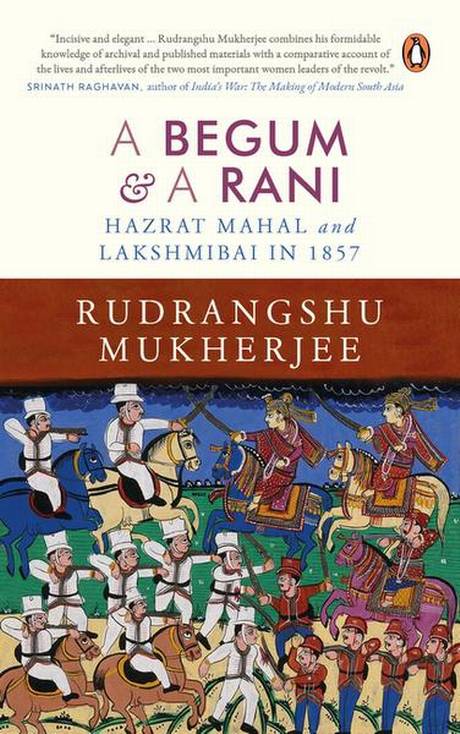
The villain in Rudrangshu Mukherjee’s A Begum & A Rani: Hazrat Mahal and Lakshmibai in 1857 is certainly the British, but it is also time and memory. Mukherjee places Begum Hazrat Mahal, an obscure figure who was integral to the mobilisation of the 1857 revolt — taught to students as “India’s first war of independence” — alongside Rani Lakshmibai, whose life has spurred not just biographies but hagiographies, calcified by myth and movies, the 2019 Kangana Ranaut shriek-historical, Manikarnika: The Queen of Jhansi, notwithstanding.

The book, divided into four parts — Origins, Rebellion, Leadership, Afterlife — is attempting two important correctives.

The first is to give Begum Hazrat Mahal of Awadh her rightful place in history. Daughter of an African slave, she was briefly married to Awadh’s king Wajid Ali Shah, then divorced and left behind in Awadh, as Shah moved to Calcutta after the British annexed Awadh in 1856. She helped mobilise the military and administration of Awadh, which became the war theatre’s centrepiece after Delhi was vanquished by the British. This story is also important to counter the narrative that the 1857 revolt was a pastiche of mindless and uncoordinated violence, because it was meticulously planned. Mukherjee quotes generously, indulgently, with page-long historical anecdotes which could have been paraphrased or woven into the narrative. There are too many anecdotal jolts for a seamless read.

Eventual move

The second objective is to inject some history into the hagiography of Rani Lakshmibai. Mukherjee notes how she wasn’t the ready rebel we think of today. That she even wrote to British officials asking for help, declaring her support to their regime, and it was only when she was pushed against circumstances that she eventually took to the battlefield with vigour, dying in it, memorialised by it.

This is a clever framing here that Mukherjee employs, because there isn’t enough information on Hazrat Mahal to carry an entire book by itself. There isn’t even an available description of how she looked. Her role in the rebellion is behind-the-scenes, and her obscurity is thus, double.

To resurrect her, by pairing her with the most coveted figure of the rebellion — Rani Lakshmibai — is thus necessary, because Mukherjee gets to not just tell their stories, demystified or dusted, but to speak to the larger villainy of historic memory — who gets written about and why?

Putting it in context

Mukherjee is a master of context, providing a sense of the time, even as he is hazy on the details of main events, recounting them as historical facts and not narrations, preferring a depth of detailing around the event over the grip of a historical plot. That said, a map would have been helpful to make sense of the geographic dump of names.

It must be noted, though, that Lakshmibai and Hazrat Mahal never met, and in the 140-page book, their paths, and the paths of their rebellion also don’t cross, as if they were happening in different times, different places.

Sometimes, as a result, the book feels disjointed — that the only reason for having these two stories together is not that they will tangle, but that through comparison, each one’s story deepens, darkens.

Placing these figures side by side, the urge to compare them comes but naturally. Mukherjee’s insistence on Hazrat Mahal’s oblivion comes short of calling her more important and interesting than Rani Lakshmibai. That Rani Lakshmibai fought on the battlefield while Hazrat Mahal fled to Nepal is enough to deify the former, and forget the latter, he finds unfair. That Lakshmibai and her son were receiving pensions from the British government, while Hazrat Mahal who died in obscurity and her son, both refused it, he finds telling. That history is besotted with blood, he finds tragic. That historians can puncture history’s myopia, he finds hopeful. Thus, this book.

A Begum & A Rani: Hazrat Mahal and Lakshmibai in 1857; Rudrangshu Mukherjee, Penguin Random House India, ₹699.

The writer is a critic with a weekly online newsletter titled prathyush.substack.com

source: http://www.thehindu.com / The Hindu / Home> Books> History> Reviews / by Prathyush Parsuraman / October 02nd, 2021
Benevolent Kerala parliamentarian is beacon of light for poor tribal pupils

KERALA / Dubai, UAE :

P.V. Abdul Wahab, the IUML leader, successfully implements Indian government’s development plan in Malappuram district.

It’s a dawn of a new era for a group of poor tribal pupils amid these unprecedented viral times at Nilambur taluka — a cluster of villages — in north Kerala’s Malappuram district.

They are back to learning and continuing their school education, which have been suspended since March 2020, when the Covid-19 pandemic struck and resulted in the closure of schools.

Many of the pupils had virtually forgotten in-classroom teaching.

To make matters worse, they were cut off from the rest of the world because of the unavailability of Internet connectivity and lack of smartphones.

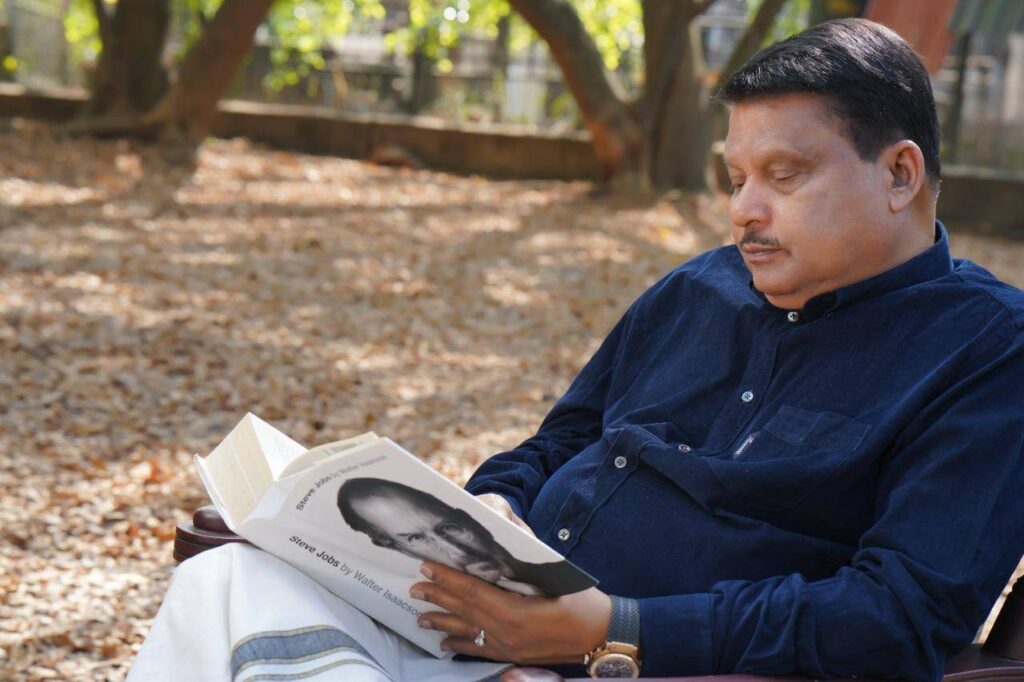
P.V. Abdul Wahab, a sitting member of the Rajya Sabha (RS) — the Upper House of Indian Parliament — and a non-resident Indian (NRI), who has been living in the UAE for the past four decades, told that their education suffered since March 2020.

“Some of them could barely remember the names of their schools because the prolonged break had almost wiped out their memories of the campus,” he said.

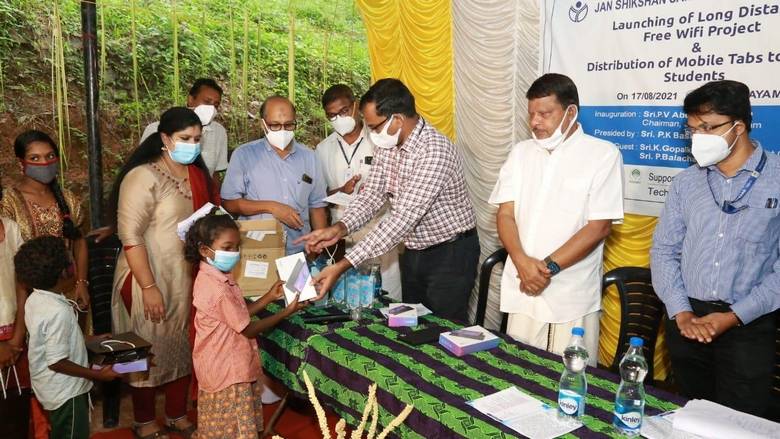
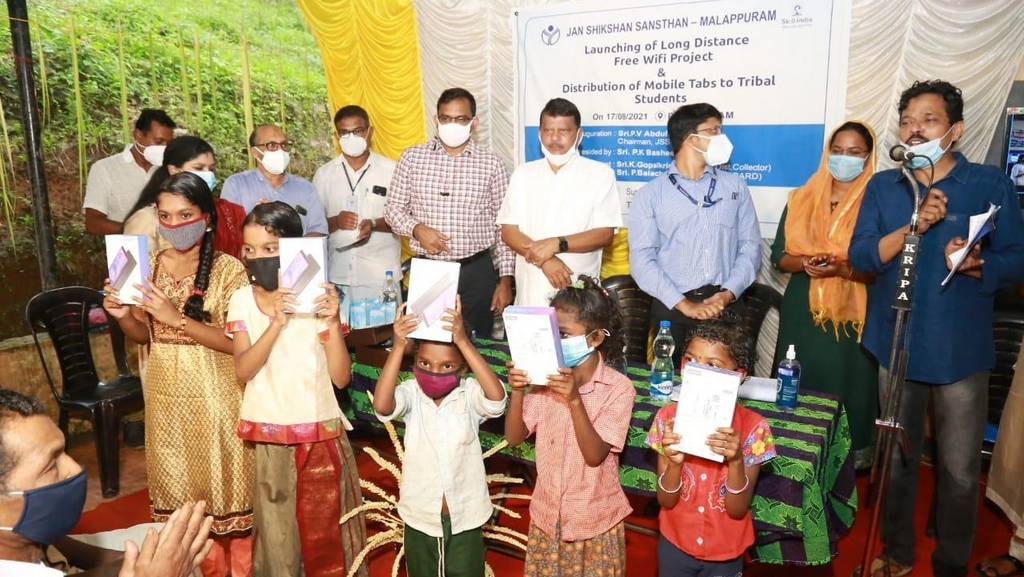
Wahab, who belongs to the Indian Union Muslim League (IUML), which is a potent political force in the district, has arranged for the distribution of Internet-enabled tablets for the tribal pupils under the Indian government’s Jan Shikshan Sansthan (JSS) initiative.

He has been a three-term RS MP and heads the JSS initiative in the district.

So far, around 150 tablets have been given to the tribal pupils, who are overjoyed at being able to reconnect the world at large and continue with their education.

Wahab has been involved with the tribal villages of Karulai gram panchayat as part of the Indian government’s Saansad Adarsh Grama Yojnna, a developmental scheme, and has adopted four villages in the district.

“They live in the middle of the forest in small houses and most of them are unemployed,” Wahab said.

“The only source of economic sustenance is the forest produce that the male tribals collect and sell. Healthcare facilities are abysmal and most of them lack basic amenities such as access to electricity or even telephones,” he added.

The tribal villages are neither well-connected with other parts of the district or the southernmost Indian state and a majority of the locals don’t want to venture out for jobs.

The tribals of Nilambur are a rare exception to Kerala, whose ambitious and enterprising people have been heading out to other parts of India, Arabian Gulf or across the world for better financial prospects.

“But we’re trying to provide employment opportunities for them through specialised training in the hospitality, plumbing and electrical industries,” said Wahab, who has four-decade-long experience in the Middle East, and enjoys a filial bond with Nilambur.

In the UAE, he established the Bridgeway group of companies and along several other firms in his native India; his sons now look after the businesses.

He said the boost on the telecom and education fronts in these tribal villages because of the JSS, which helped instal over 10 basic towers to ensure 5 GHz wireless connectivity to the settlements. “The project aims to create a sustainable social and economic ecosystem for tribal people through a high-speed internet connection,” said Wahab. “It offers a total solution for the digital affairs of the inhabitants of the colonies. This allows them to interact directly with stakeholders and other public servants,” he added.

In the pre-Covid-19-pandemic era, tribal pupils only had access to single-teacher primary schools. The teacher taught all subjects and took four classes simultaneously.

After Grade IV, the tribal pupils would drop out because they were reluctant travel outside their native village.

To make matters worse, the devastating Kerala floods in 2018 and 2019 also destroyed half a dozen computers, a printer and a projector in the school.

The natural disaster was followed by the contagion, which struck a rude jolt as it denied poor tribal pupils’ basic education.

However, the sufferings appear to be a thing of the past, as the poor tribal children can look to a better and prosperous future, thanks to Wahab’s initiative to make the government’s scheme a roaring success.

source: http://www.khaleejtimes.com / Khaleej Times / Home> World> Rest of Asia / by Nithin Belle, Pune / August 26th, 2021

MS Academy to felicitate its UPSC CSE toppers

Hyderabad, TELANGANA :

Hyderabad: 

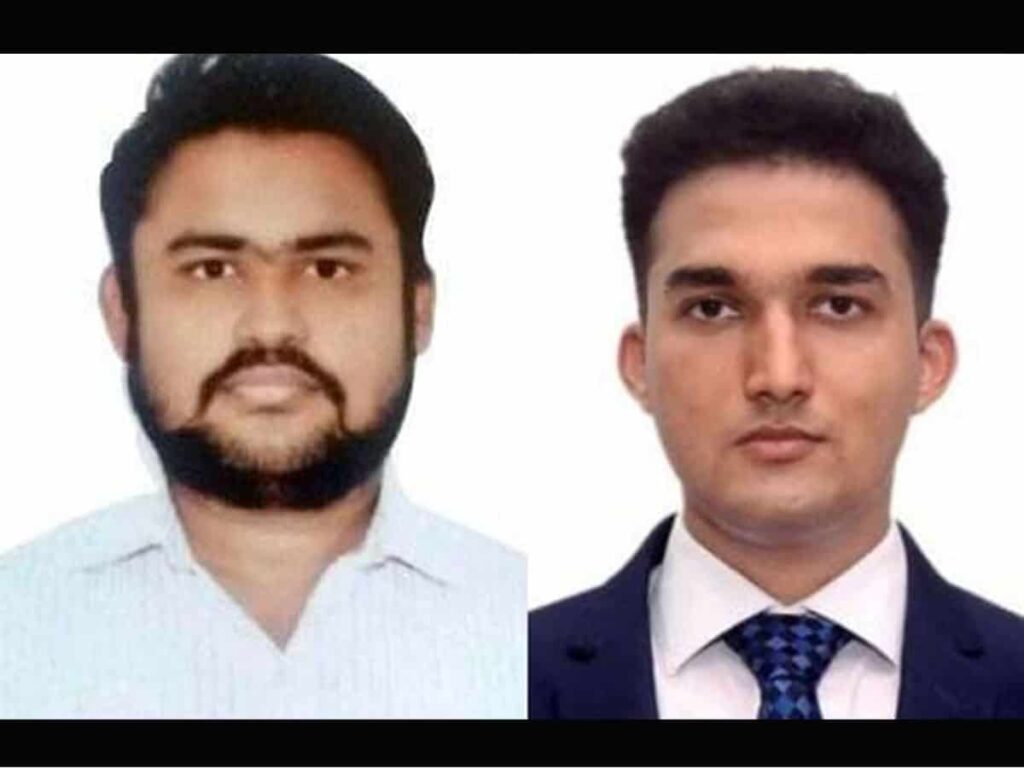
MS IAS academy will arrange a two days’ felicitation program in honour of its toppers Faizan Ahmed (AIR 58) and Md Haris Sumair (AIR 270) who have passed the UPSC civil services exam 2020.  The program “Dream Big 2021”  will be held on 4th and 5th October.

According to details given by the MS Education Academy Senior Director Dr Mohammed Moazzam Hussain, the first day of the program on October 4 will begin in Mallepally campus of the MS IAS Academy at 10 am by giving a warm welcome to both the toppers.  They will address the school, college, and academy girls and boys.

In the afternoon, from  2 p.m. to 3 p.m. both of them will meet the media persons and answer their questions.

In the evening, these distinguished students will be felicitated in the MS Corporate office at Masab Tank.

On 5th October from 10 a.m. to 1 p.m. the toppers will be felicitated by the MS students at Metro Classic Garden Function Hall at Aramghar.

In this second day’s program, both of them shall address a motivational program to the students of MS school, college, and academy.  They will shed light on how to prepare for UPSC and other state civil services examinations.

source: http://www.siasat.com / The Siasat Daily / Home> News> Hyderabad News / by Mohammed Hussain Ahmed / October 03rd, 2021

Mysuru Lad Emerges Canadian National Champion – 2021

Mysuru, KARNATAKA / Vancouver, CANADA :

Vancouver:

Mysuru-boy Mustafa M. Raja, who won the Provincial Championships in British Columbia last month and was selected for the Nationals to be held in Montreal, Quebec, did well and emerged National Doubles Champion. Mustafa also came third in Singles.

The 14-year-old played consistent tennis all week at the 14-and-under Nationals held at the Carrefour Tennis Centre from Sept. 20 to 26.  Tournament was held outdoors on clay courts.

In the Doubles finals, Mustafa and his partner Eric defeated Owen and Scotty. Mustafa and Eric came back from one set down and held their nerves to win the Nationals with the score of 2,6 6,4 and 10-7.

In the Singles, Mustafa lost to Adam in the semi-finals but won the match for the third spot against Andy Kepche with the score of 6,1 and 6,1 to get the third spot.

Mustafa, representing British Columbia, also won silver in the team standings of the provinces. 

Mustafa was awarded a trophy for the National Doubles Champion, trophy for the third place in Singles and a silver medal for the provincial standings. With this performance, Mustafa will break into top 5 Singles rankings in Canada. Mustafa trains at the Tennis Centre in Vancouver and goes to Sullivan Heights Secondary School.

Mustafa, son of Murtuza Raja and Farida Raja, earlier train at the Nagaraj Tennis Centre in Mysuru for seven years and attended Excel Public School in Mysuru.

source: http://www.starofmysore.com / Star of Mysore / Home> Sport / October 01st, 2021

Former Sterling Theatre Owner Abdul Jabbar Passes Away

Mysuru, KARNATAKA :

Mysore/Mysuru:

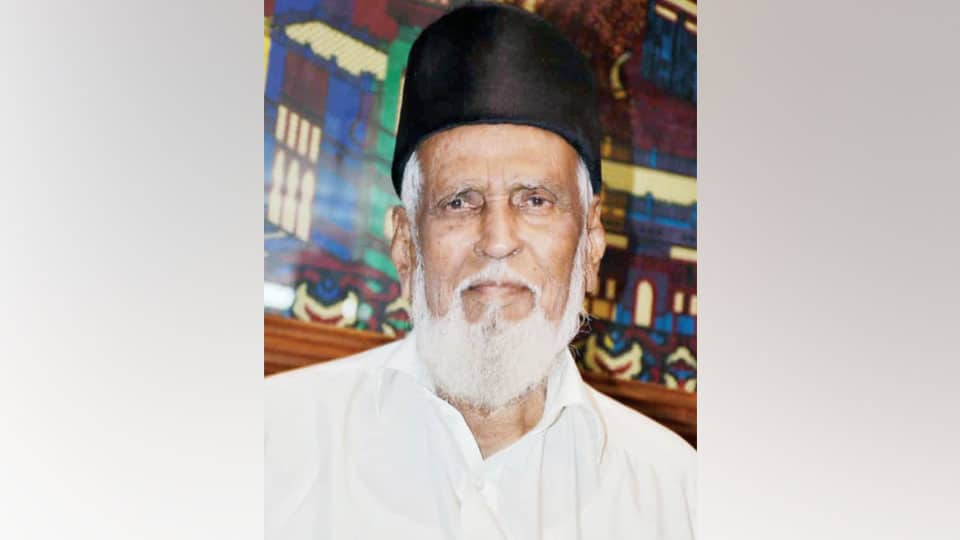
Alijanab Abdul Jabbar (90), former owner of Sterling Theatre in city and Secretary of Masjid-e-Rahmania at Agrahara, passed away yesterday morning in city.

A PWD Contractor and a resident of Siddapa Square, he leaves behind his children, relatives and friends.

Namaz-e -Janaza was held at Rahmania Masjid in Rahmania Mohalla this morning followed by the burial at the Muslim Burial Grounds on Mysuru-Ooty Road, according to a family sources.

source: http://www.starofmysore.com / Star of Mysore / Home> News / February 03rd, 2021

Hundreds march for greener Mangaluru as part of Bearys Group walkathon

Mangaluru, KARNATAKA :

Mangaluru :

The ‘Green Walkathon – 2021’ organized by Beary’s Group was initiated in front of Mangala Auditorium of Mangalore University on Saturday September 25 morning.

The Green Walkathon, which is a part of the International Green Week – 2021 that started from in front of the university’s Mangala Auditorium moved towards Beary’s Turning Point at Deralakatte.

Mangalore University vice-chancellor, Dr P Subrahmanya Yadapadithaya, said that the environment will automatically become clean if our minds are clean. “We are following the policy of keeping our lives ahead of nature. For our lives to be saved, nature is very important. Therefore, we should join hands to conserve nature,” he stated.

Speaking after presiding over the programme, Beary’s Group president, Syed Muhammad Beary, felt that there is a need to create awareness to encourage a clean and green city. “Nature offers us several gifts. But it is important what we give in return to nature. We cut down many trees when constructing a house or building but we do not take care to plant a tree. Nature becomes green only if we keep planting the saplings. The walkathon is aimed at creating awareness about love of nature and clean environment,” he stated.

Syed Muhammad Beary said that environment in the world keeps on changing and it has cast grave influence on the hman beings. “Therefore, the humans have to strive to protect our earth. We are nothing in front of nature. We are not bigger than nature. We will survive only if we preserve nature,” he stated.

BIT principal, Dr S I Manzoor Pasha, welcomed, BEADS principal A R Ashok Mendonca, Dr Azuz Mustafa, Venkatesh Pai, Santosh D’Souza, BIT – ECE head of the department, Dr Abdulla Gubbi and others were present.

source: http://www.daijiworld.com / Daijiworld.com / Home> Top Stories / by Mohan Kuthar, Daijiworld Media Network – Mangaluru (SP) / September 25th, 2021

AMU Scholar’s Works Cited In Cambridge Publication

Aligarh, UTTAR PRADESH :

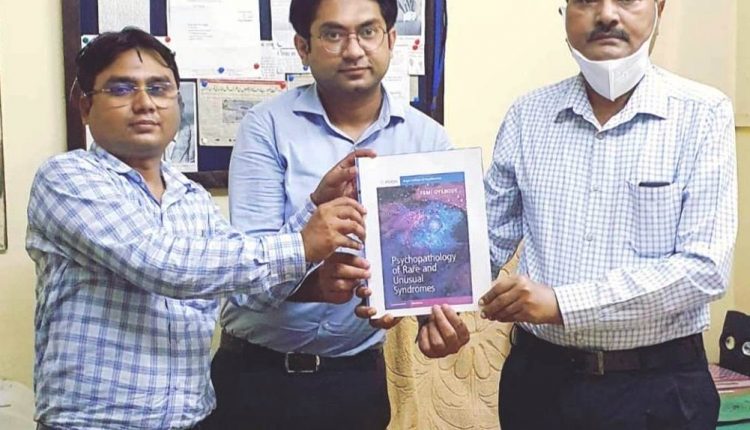
Dr. Faisal Shaan with Prof. S.A. Azmi and Dr. Shravan

Aligarh :

Acknowledging the research credentials and academic potentials of AMU faculty members, a book, “Psychopathology of Rare and Unusual Syndromes”, written by Femi Oyebode and published by Cambridge University Press, UK, has cited two published papers of Dr Faisal Shan, Senior Resident, Department of Psychiatry, JN Medical College, Aligarh Muslim University.

Prof S A Azmi (Chairman, Department of Psychiatry) congratulated Dr Shan for the achievement saying his success is a matter of pride for the department and the university.

source:http://www.indiaeducationdiary.in / IndiaEducationDiary.com / Home> Academics / by India Education Diary / September 23rd, 2021

Sania Mirza-Shuai Zhang win Ostrava Open women’s doubles title

Hyderabad, TELANGANA :

Sania Mirza won her first title of the season as she and her Chinese partner Shuai Zhang (Source: Sania Mirza / Twitter)

Sania Mirza won her first title of the season as she and her Chinese partner Shuai Zhang beat the pair of Kaitlyn Christian and Erin Routliffe in the women’s doubles final of the Ostrava Open on Sunday.

The second seeded Indo-Chinese duo defeated the third seeded pair of American Christian and New Zealander Routliffe 6-3 6-2 in the summit clash in one hour and four minutes.

The 34-year-old Sania and Zhang had defeated the Japanese pair 6-2 7-5 in the semifinals of the WTA 500 event.

It was Sania’s second final of the season, following a runner-up finish at the WTA 250 Cleveland event in the USA last month with Chirstina Mchale.

source: http://www.indianexpress.com / The Indian Express / Home> Sports> Tennis / by PTI / September 27th, 2021

31 Muslims crack UPSC 2020 Civil Services Exam, 03 among top 100

INDIA :

In 2019, 42 Muslims had cracked the exam whereas in 2018 just 27 Muslims had made it to the final result.

UPSC Civil Services Result 2020: 

A total of 31 Muslims have cracked the Civil Services Exam (CSE), also known as IAS exam, the result of which was declared late in the night Friday.

This is another dismal performance of Muslim candidates when just 31 Muslims have made to the final list of candidates who will join the civil services cadre.

In 2019, 42 Muslims had cracked the exam whereas in 2018 just 27 Muslims had made it to the final result.

Among the 31 Muslims who cracked the UPSC Civil Services Exam this year 03 – Sadaf Choudhary (rank 23), Faizan Ahmed (rank 58) and Dheenah Dastageer (rank 63), are in top 100 the list of which was released on the official website upsc.gov.in in PDF.

Also among the UPSC toppers are Ria Dabi, sister of 2018 UPSC Civil Service topper, Tina Dabi. Ria Dabi has secured 15th rank in the UPSC 2020 exams.

The Union Public Service Commission (UPSC) on Friday declared the results of exams held in 2020. A total of 761 candidates have been recommended by the Union Public Service Commission for appointment in the bureaucracy of the country.

Shubham Kumar, a resident of Katihar district of Bihar, has emerged as the UPSC 2020 topper. Kumar has done civil engineering from IIT Bombay and hails from Katihar in Bihar.

Apart from Shubham, Jagriti Awasthi and Ankita Jain have secured the second and third positions respectively in the Civil Services Examination.

“UPSC 2020 List of Muslim Candidates”

1) Sadaf Choudhary (Rank 23)

2) Faizan Ahmed (Rank 58)

3) Dheenah Dastageer ((Rank 63)

4) Md Manzar Hussain (Rank 125)

5) Shahid Ahmed (Rank 129)

6) Shahansah K S (Rank 142)

7) Mohammad Aaquib (Rank 203)

8) Shahnaz I (Rank 217)

9) Waseem Ahmad Bhat (Rank 225)

10) Bushara Bano (Rank 234)

11) Md Haris Sumair (Rank 270)

12) Altamash Ghazi (Rank 282)

13) Ahmed H.Choudhury (Rank 283)

14 ) Sara Ashraf (Rank 316)

15 ) Mohibullah Ansari (Rank 389)

16) Aneez S (Rank 403)

17) Zeba Khan (Rank 423)

18) Faisal Raza (Rank 447)

19) S Mohammed Yakub (Rank 450)

20) Sabeel Poovakundil (Rank 470)

21) Rehan Khatri (Rank 478)

22) Mohd Javed A (Rank 493)

23) Altap Mahd. Shaikh (Rank 545)

24) Khan Aasim Kifayat (Rank 558)

25) Syed Zahed Ali (Rank 569)

26) Shakeerahmed Tondikhan (Rank 583)

27) Mohamed Riswin (Rank 589)

28) Muhammad Sahid (Rank 597)

29) Iqbal Rasool Dar (Rank 611)

30) Amir Bashir (Rank 625)

31) Majid Iqbal Khan (Rank 738)

source: http://www.ummid.com / Ummid.com / Home> India> Education & Career / by Ummid.com News Network / September 25th, 2021

Fahadh Faasil-starrer ‘Joji’ wins top honour at Swedish International film fest

KERALA :

“Joji”, which released on Amazon Prime Video, is inspired by Shakespeare’s tragedy “Macbeth” and presents a “twisted version” of the plot.

Fahadh Faasil in ‘Joji’. (Photo | YouTube screengrab)

Mumbai :

Fahadh Faasil’s Malayalam feature film Joji has won the top honour at the Swedish International Film Festival, the actor announced on Thursday, September 23, 2021.

The 39-year-old actor shared the news on Facebook, revealing that the Dileesh Pothan-directed film won the best international feature film award at the film gala.

“Good News from Sweden ! JOJI won The Best International Feature Film Award @ the Swedish International Film Festival (SIFF) 2021,” he posted.

Joji, which released on Amazon Prime Video, is inspired by Shakespeare’s tragedy Macbeth and presents a “twisted version” of the plot filled with greed, ambition, murder and mystery, set in a plantation family in Kerala.

The crime drama revolves around Faasil’s character Joji, an engineering dropout living with his iron-fisted father and two brothers.

When his father falls ill, Joji looks forward to finally getting his share in the property but his dreams are dashed when his father starts recuperating, forcing him to take an extreme step.

At the time of the film’s release, Faasil told PTI that the movie is not expansive like the source material.

“The film’s narrative is not a direct adaptation of Macbeth. We were deeply inspired by it and we were trying to set something inspired by ‘Macbeth’ in today’s scenario. 

“‘Joji’ is not as large as Macbeth…The drama happens within the family. I thought the emotions of Macbeth were more relative to the story,” Faasil had said.

Joji marked the third directorial collaboration between Pothan and Faasil.

The duo earlier worked on 2016 comedy-drama Maheshinte Prathikaaram and National Award-winning feature Thondimuthalum Driksakshiyum (2017).

Faasil will next be seen in Allu Arjun-starrer Pushpa as well as Kamal Haasan-starrer Vikram, also featuring Vijay Sethupathi.

source: http://www.newindianexpress.com / The New Indian Express / Home> Entertainment> Malayalam / by PTI / September 23rd, 2021