Category Archives: Leaders

Ebrahim Alkazi’s legacy bears testimony to cultural links between Saudi Arabia, India

Pune / Mumbai, MAHARASHTRA / NEW DELHI :

Ebrahim Alkazi will continue to live in the hearts of Saudis and Indians who are on the quest to deepen the friendship and cultural heritage they share.
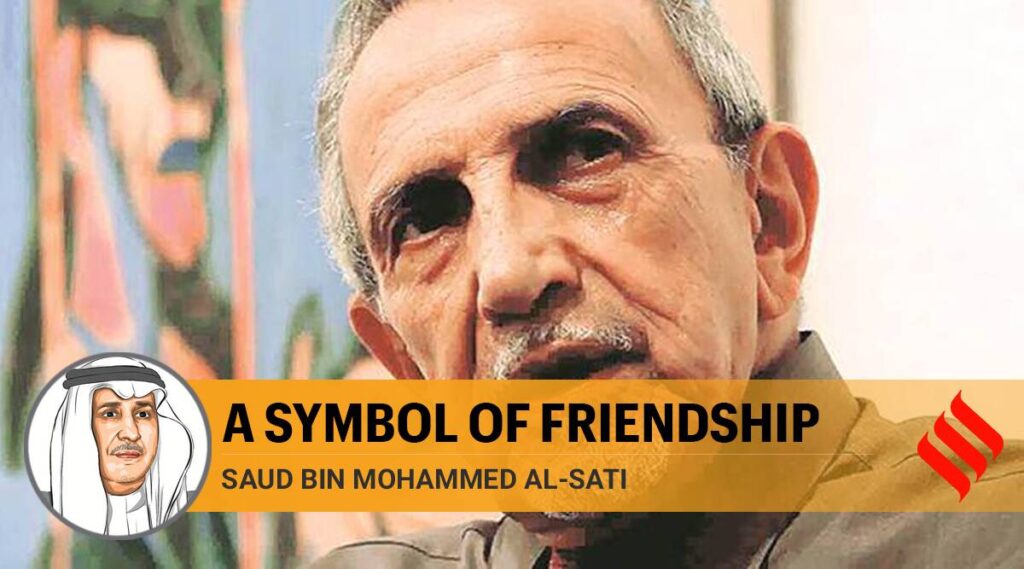
Ebrahim Alkazi (1925-2020)

Last week, we lost Ebrahim Alkazi, a legend of Indian theatre with Saudi Arabian roots. I fondly remember my first experience of meeting him in the spring of 2014 at his house in New Delhi. I was touched by his unique character and his passion for the arts. He greeted me with a few words spoken in the distinct Qassimi dialect. Alkazi was also a noted art connoisseur and collector, credited for fundamentally transforming Indian theatre and having etched a name for Indian theatre worldwide. His legacy will forever remain a testament to the rich intellectual and cultural links between Saudi Arabia and India.

Alkazi’s father, Hamad, was a trader from Unaiza in Saudi Arabia’s Qassim region, who subsequently settled in Pune where Ebrahim was born in 1925. Despite his early immersion in theatre, he gradually pursued his love for visual arts. He showcased the avant-garde artist in him throughout India, the US and Europe through his path-breaking work before becoming the director of the National School of Drama in Delhi and the Asian Theatre Institute in 1962. He will always be remembered for his contributions in the field of arts that resonate with our cultural bonds. The strings that bind Saudi Arabia and India are many and have become stronger and more diverse over time. However, the cultural ties that the two countries share are perhaps the deepest. Pre-Islamic Arab poetry has many references to Indian swords and several other Indian goods.

The two countries have a fascinating history of intellectual exchanges. Science, arts, literature, and languages – the mutual influence has indeed been profound. For instance, many Indian texts in the field of medicine, mathematics and astronomy were translated over the centuries into Arabic. The father of Indology is none other than the Arab scholar Al-Biruni. His monumental work Ta’rikh al-Hind is undoubtedly the most comprehensive pre-modern encyclopaedic work on India.

Another notable text, the Panchatantra, was translated by the Arabs who took it to Europe and the rest of the world, as were Hitopadesha and Chanakya’s Arthashastra. India’s famous medical treatises such as Charaka and Susruta were translated into Arabic as well.

The Arab travellers were also prolific writers and wrote extensively on India, its people and diverse cultures. Writers such as Sulaiman, Ibn-ul-Faquih, Al-Masudi and Al-Idrisi documented in great detail their impressions of south India, its people, customs and traditions. The world-famous Arabian Nights also called Alf Laila in Arabic and Adventures of Sindbad the Sailor too describe southern India. According to Ibn Nadeem, a 16th-century Arab writer, Sindbad was written in India.

These deeply-rooted cultural ties have continued to grow. For instance, Yoga has become an increasingly popular sport in Saudi Arabia. Since November 2017, the International Yoga Day is celebrated in an open area in the centre of Riyadh. In 2018, India was a guest of honour at our annual cultural festival of Al Janadriyah. The theme of the Indian pavilion at the festival was “Saudi ka Dost Bharat” (India is a friend of Saudi Arabia). This last decade has been seminal in expanding our friendship into a strategic partnership.

A most significant milestone in our ties with India was the visit of His Royal Highness Crown Prince to India in February 2019, which re-affirmed the deep commitment of the two nations to strengthen their strategic engagement.

Our shared cultural bonds are also deepened by the religious ties between our peoples. The annual pilgrimage to Makkah has facilitated the exchange of cultures and traditions as well. But above all, our ties have been strengthened by pioneers like Ebrahim Alkazi. He will continue to live in the hearts of Saudis and Indians who are on the quest to deepen the friendship and cultural heritage they share.

This article first appeared in the print edition on August 12 under the title “A symbol of friendship”. The writer is the ambassador of the Kingdom of Saudi Arabia to India

source: http://www.indianexpress.com / The Indian Express / Home> Opinion> Columns / by Saud Bin Mohammed Al Sati, Ambassador Kingdom of Saudi Arabia to India / August 12th, 2020
‘I’m glad I listened to my father,’ says hockey Olympian Zafar Iqbal

Aligarh, UTTAR PRADESH / NEW DELHI / Ghazibad District (U.P) :

Hockey Olympian Zafar Iqbal on how his life has unfolded, from being the son of an academician to his days spent on the golf course today

The general impression of a hockey player in India is that of a talented sportsperson from the hinterland, modestly educated, and fighting poverty and lack of resources in the stuggle to reach the top. Zafar Iqbal breaks the mould in more ways than one.

The former Executive Director (Properties and Facilities) with the erstwhile Indian Airlines is one of the few in the sport to have managed a life outside hockey post-retirement. He credits his parents and upbringing for helping him get the balance right all through, in his articulate, but gentle manner.

“My father never stopped me from playing sports, but he was quite strict when it came to studies as well. He knew there was fame and popularity in sport; money, not so much, and so wanted us to be self-sufficient enough to manage our lives even after our sporting days were over. I am glad I listened to him,” says the 63-year old, who says he has worked enough in his life to be able to sit back and enjoy retirement.

How the world knows him

One half of the famous Shahid-Zafar pair that tormented teams’ defences for years, the talented left winger would set up the legendary Mohammed Shahid for his stylish goals. They needed little or no communication to know exactly what needed to be done.

The subtle stickwork, though, was always backed with a strong understanding of physics, thanks to his degree in civil engineering from Aligarh Muslim University and an even stronger realisation that the sport would always be his passion, but not something that would help him lead a life of comfort in the long run.

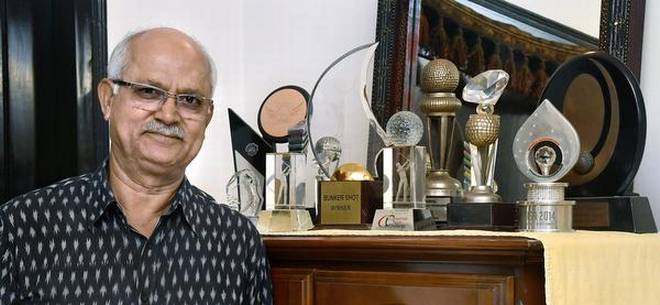
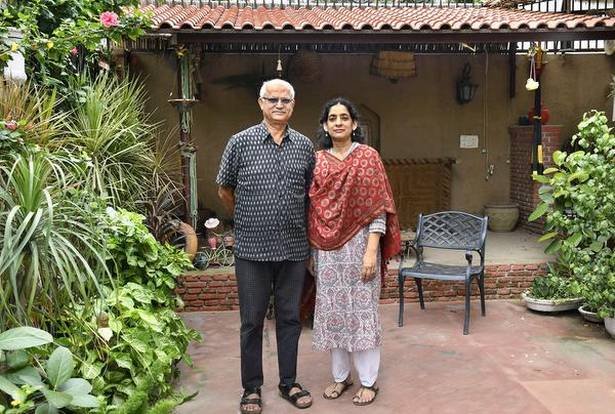
A resident of Vaishali in Ghaziabad – he moved to the house once he had retired – Iqbal’s major commitment through the day now is to golf. “I started learning golf a few years before retiring and I am still not satisfied with my game. I wake up around 4.30 in the morning and from 5.15 to almost 11.30-12, I am at the golf course. It’s the best part of my day,” he says, laughing.

As the son of Prof. Shahbuddin, dean of the science department at Aligarh Muslim University, Iqbal did not lack resources or an atmosphere of learning at home. Today, he’s surrounded by books on history that he enjoys, and has read the texts of all the major religions, including the four Vedas.

Having made his national debut in 1977, and getting his degree in 1978 – the same year he joined Indian Airlines – he was finally free to pursue hockey full-time. “That was also at my father’s insistence. I had job offers from the Indian Railways and Uttar Pradesh State Electricity Board, but he advised me to join the airlines, saying that I might not get immediate rewards but would surely be successful in the future. I realised he was right when I was finally appointed ED,” Iqbal recalls.

Players off the field

He talks about how he tried to push his teammates as well to have a life outside the sport. “I used to tell them to continue with their studies and office work after active sports, because not everyone can be a coach or administrator for life. Unfortunately, there were many, much bigger players who could not rise to a senior post. I told them it might be tough initially, but office work is no rocket science. Also, as players we are used to quick decisions on field, so it is easier for us to make the switch. They didn’t listen to me, though,” he rues.

It was in 1977 that he moved to Delhi and decided to make it his home. “For me, coming from a small town like Aligarh, Delhi was this huge, fast place where everything was big and far. In AMU everything was available at your doorstep; here, I had to travel 16 km by bus, every day, from the Indian Airlines Colony in Vasant Vihar for training at the stadium. But when I see it now, I feel it was so laid-back then,” he exclaims.

It wasn’t just the distance that awed the 22-year-old. His training camps with Indian Airlines at the National Stadium were equally overwhelming. “Players like Ashok Kumar, Aslam Sher Khan, B.P. Govinda – whose photographs we kept in our rooms and pockets – were suddenly our teammates. Inam-ur-Rehman, my idol, was the coach. He was a disciplinarian, treating everyone equally, regardless of his achievements on the field. That helped inculcate respect for the game and discipline on the field,” Iqbal admits.

The presence of other sportspeople also helped. The National Stadium, he explains, used to be a multipurpose venue with a track for athletics and no turf in the main arena. It had the likes of the legendary athlete Sriram Singh training there. “The hockey field was on the left and cricket on the right, with Bishan Singh Bedi and many more practising. It was all open and we used to interact,” he says.

Old ways

Empty roads, few vehicles, no paranoia about hygienic food or water, the absence of pollution – the Delhi he remembers is restricted to nostalgia now. Even the most secure areas of the city – in and around Parliament, which he had to cross to reach National Stadium – had easy access, including Race Course Road, which he recalls used to be open to the public back then.

“I sometimes wonder what progress we have actually made. Everyone seems to be running all the time and everyone is addicted to mobiles. We seem to have become breathing mechanical bodies,” he says.

The discipline of a sportsperson, though, continues to guide his life. Iqbal is a member of two golf courses in NCR – Army Golf Club and the Noida Golf Course – but also visits the one at Hindon. On a week-long break to Chennai to visit his son, Yasir, an assistant professor of physics at IIT, he still managed to find people who would help him play his daily round, at the Cosmopolitan Club. He hasn’t the same luck in Mumbai though, when he visits his daughter, Samia, who moved to the city for her work as a copywriter.

For the rest, he is happy to accompany wife Fauzia (who also retired from the commercial department of what was Vayudoot and consequently Air India) around or spend time occasionally with his friends.

As a member of the governing body of the Sports Authority of India, as well as consultant with the University Grants Commission in the sports curriculum committee, he has stayed in touch with sports administration, pushing the agenda of games as an essential part of the development of a person.

As a former India coach (1993-94), selector (over three tenures), and government observer for many years, he has given back to the sport that helped him become an Olympic champion. But in his pursuit of golfing excellence, Zafar Iqbal continues to live a sporting life.

This ends our 10-part series on former sportspeople who are based in Delhi.

source: http://www.thehindu.com / The Hindu / Home> News> Cities> Delhi – Now & Then / by Uthra Ganesan / September 04th, 2019

Hyderabad: Prof Ainul Hasan new MANUU Vice-Chancellor

Allahabad, UTTAR PRADESH / Hyderabad, TELANGANA :

Gachibowli: 

Noted Persian scholar Prof Syed Ainul Hasan is the new Vice-Chancellor of Maulana Azad National Urdu University. According to a communication received from the Union Education Ministry to the varsity, the President in his capacity as the Visitor of MANUU appointed Prof Hasan, as the fifth VC of MANUU for a five-year term.

Prof Ainul Hasan is a professor, Persian & Central Asian Studies, Jawaharlal Nehru University, New Delhi. Earlier, he also served as the Dean, School of Language, Literature and Culture Studies, JNU. He is also the president, All-India Persian Scholars’ Association. He has more than 34 years of teaching experience and produced 87 research scholars.

A visiting professor of Rutgers State University, New Jersey (US) under Fulbright, Prof Hasan authored 13 books. He is a specialist in Indo-Iran, Indo-Arab relations and comparative literature.

Prof S M Rahmatullah, In-charge VC and Prof Siddiqui Mohd Mahmood, Registrar I/c, congratulated Prof Hasan on his appointment. They hoped that under his leadership MANUU will attain new heights of academic excellence.

source: http://www.telanganatribune.com / Telangana Tribune / Home> Hyderabad / by Telangana Tribune / July 24th, 2021

Rumana Sultana from Murshidabad tops West Bengal Higher Secondary exams 2021 by scoring 499 out of 500

Murshidabad, WEST BENGAL :

Daughter of teacher couple ranked fifth in Madhyamik, dreams of becoming a doctor.

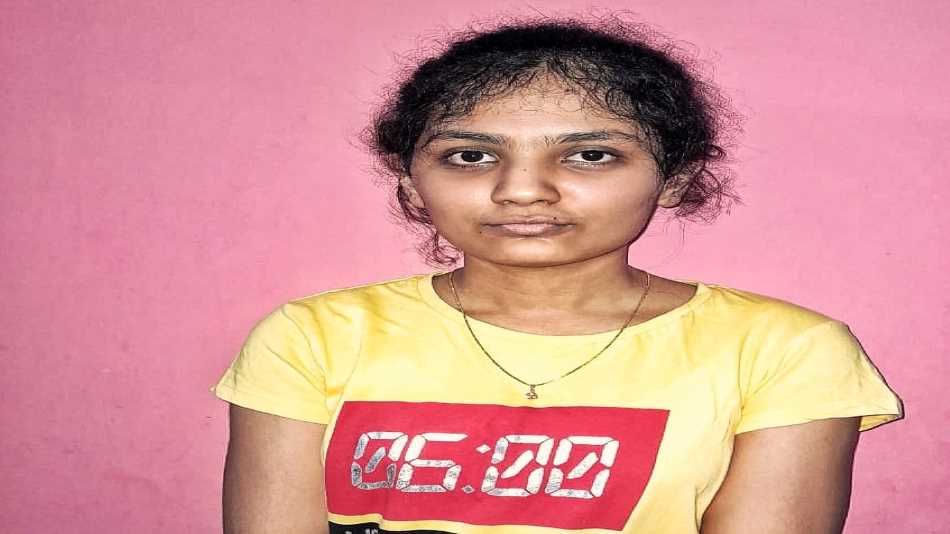
A girl has topped West Bengal Higher Secondary exams alone for the first time. Image Source: ABP Education picture.

Rumana Sultana, a student of the science stream from Kandi Raja Manindra Chandra Girls’ High School from Murshidabad, has scored the highest marks in the West Bengal Higher Secondary (HS) 2021 exams.

Rumana scored 499 out of 500 marks — 99 in Bengali, 100 in English, 100 in bioscience, 100 in chemistry, 99 in physics, and 100 in maths.

“I am very happy for her. This is an all-time record. This is the first time that a girl student has topped the Higher Secondary exams alone and this is also the first time that a student from a minority community has topped the exam. We congratulate her,” said Mahua Das, the president of West Bengal Council of Higher Secondary Education (WBSCHSE), which conducted the HS exams and declared the result on July 22.

The Murshidabad girl’s dream is to become a doctor. She hopes to crack the medical entrance exam and if not she plans to study biology.

Apart from studying, Rumana loves writing poetry. She had ranked fifth in Madhyamik (Class X) 2019, scoring 687 marks.

Rumana comes from a family of teachers. Her father Rabiul Alam is the headmaster of Gaisabad Achala Vidyamandirin Bharatpur, Murshidabad. Mother Sultana Parveen is also a teacher.

Her feet firmly on the ground, Rumana regrets not being able to write the exams and does not to give too much importance to her top score. “My Madhyamik and Class XI results were good. That helped. I would say I was expecting to do well but did not expect to top,” she signed off.

source: http://www.abpeducation.com / ABP Education / Home> Education News /by ABP Education Correspondent / July 22nd, 2021

Jamia Millia Islamia Professor Selected For Visitor’s Award 2020 For Biological Research

NEW DELHI :

Professor Mohd Zahid Ashraf will receive this award under the Biological Sciences category. His work, as per a JMI statement, has contributed towards developing strategy for an early diagnosis and treatment of thrombosis at extremely challenging environmental conditions at high altitudes.

New Delhi:

Professor Mohd Zahid Ashraf (Source: JMI)

Jamia Millia Islamia (JMI) Professor Mohd Zahid Ashraf, Head, Department of Biotechnology will be conferred with the Visitor’s Award 2020. The professor will be awarded for his research on resolving the mystery of blood clotting on exposure to hypoxia at high altitudes. Professor Ashraf will be awarded by President Ram Nath Kovind at a function to be organised at the Rashtrapati Bhavan.

Professor Ashraf will receive this award under the Biological Sciences category. His work, as per a JMI statement, has contributed towards developing strategy for an early diagnosis and treatment of thrombosis at extremely challenging environmental conditions at high altitudes.

“The outcome of his research has given insights to our understanding of blood clot formation on ascension to mountains, sports, pilgrimage and soldier’s working under hostile environments,” the JMI statement said.

Congratulating Professor Ashrah, the Vice Chancellor of JMI Najma Akhtar said that it is a recognition for the research accomplishments by the university and Professor Ashraf’s achievements will motivate other faculty members towards pursuit of excellence in research along with academics.

The Vice Chancellor said that the university is committed towards the government’s mission to increase science education, research and promote STEM.

Jamia Millia Islamia Professor Selected For Visitor's Award 2020 For Biological  Research
JMI professor to be awarded Visitor’s Award

Professor Ashraf is an elected Fellow of National Academy of Sciences, Allahabad and the Indian Academy of Sciences, Bangalore. He is a member of distinguished Guha Research Council.

Professor Ashraf, the JMI statement says, is also the recipient of ICMR’s Basanti Devi Amir Chand and DBT’s National Biosciences Award for his seminal work on high altitude related thrombosis in the Indian population.

This is the second time a JMI Professor has been selected for the Visitor’s Award. Earlier in 2015, the Cosmology and Astrophysics Research Group headed by Professor M Sami of Centre for Theoretical Physics, JMI had also received the Visitor’s Award for research carried out in the field of contemporary issues in Astrophysics and Cosmology.

source: http://www.ndtv.com / NDTV / Home> Education / by Mridusmita Deka / July 19th, 2021

Mukhtar Abbas Naqvi appointed Deputy Leader of House in Rajya Sabha

Rampur, UTTAR PRADESH / NEW DELHI :

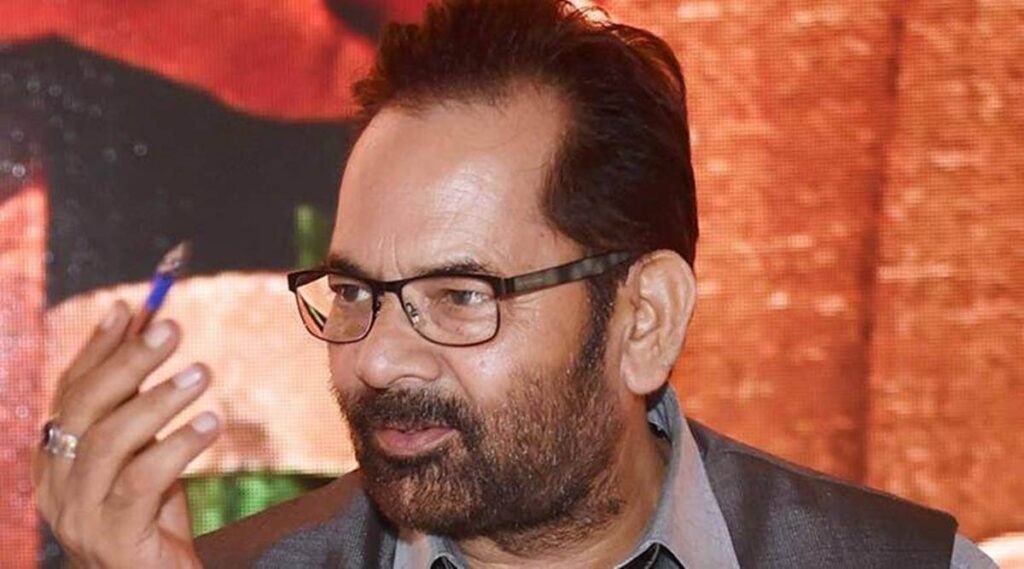
Prime Minister Narendra Modi on Monday appointed Union Minister Mukhtar Abbas Naqvi as Deputy Leader of the House in the Rajya Sabha. (File photo)

The appointment of Naqvi, who is known to have cordial relations with leaders of parties across the political spectrum, assumes significance at a time when the Opposition is aiming to target the ruling dispensation over a host of issues.

Prime Minister Narendra Modi on Monday appointed Union Minister Mukhtar Abbas Naqvi as Deputy Leader of the House in the Rajya Sabha.

Union Parliamentary Affairs Minister Pralhad Joshi informed Rajya Sabha Chairman M Venkaiah Naidu that the Prime Minister has directed him to inform that Naqvi, Union Minister of Minority Affairs, has been appointed Deputy Leader of the House in Rajya Sabha.

Naqvi succeeds Piyush Goyal , who has been named Leader of the House in Rajya Sabha. The minority affairs minister is known for his knowledge of parliamentary affairs, and has served as minister of state for parliamentary affairs during the first term of the Modi government.

Naqvi hails from Uttar Pradesh’s Rampur and was elected to the Upper House from Jharkhand. He was MoS for Information and Broadcasting and Parliamentary Affairs in the Atal Bihari Vajpayee government. He joined the BJP in 1986 as a student leader, and emerged as a prominent Muslim face of the party.

The appointment of Naqvi, who is known to have cordial relations with leaders of parties across the political spectrum, assumes significance at a time when the Opposition is aiming to target the ruling dispensation over a host of issues, including handling of the second wave of COVID-19, rise in fuel prices and farmers’ stir.

source: http://www.indianexpress.com / The Indian Express / Home> India / by Express News Service, New Delhi / July 20th, 2021

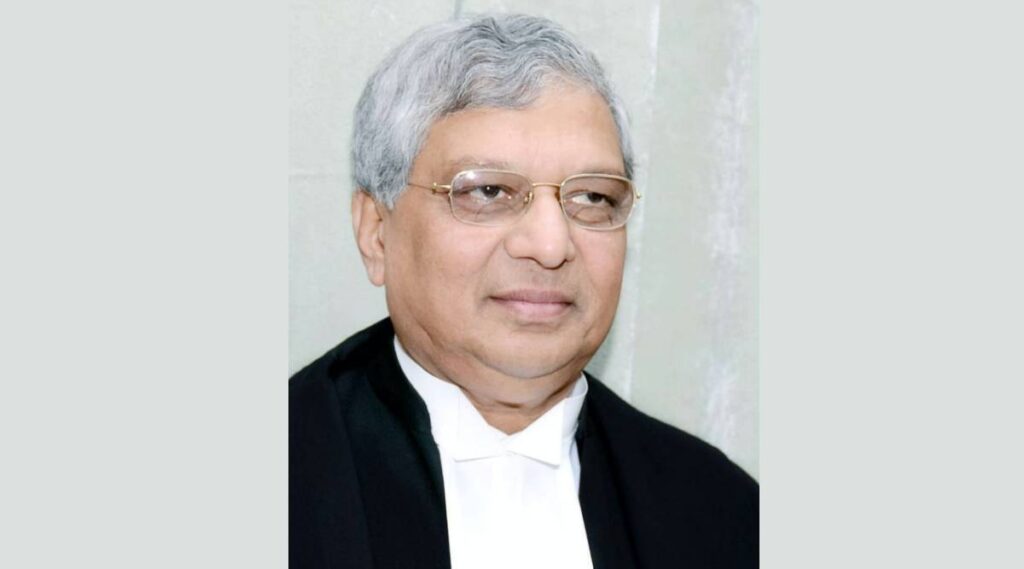
Retired Allahabad HC judge Justice Shabihul Hasnain is new DERC chairperson

UTTAR PRADESH / NEW DELHI:

(Photo: Bar & Bench)

Hasnain will fill the vacancy created after the retirement of Justice (retd) Satyendra Singh Chauhan, who too was a judge at the Allahabad HC. Singh retired on July 4 upon turning 65.

Chief minister Arvind Kejriwal Saturday announced retired Allahabad High Court judge, Justice Shabihul Hasnain as the next chairperson of the Delhi Electricity Regulatory Commission (DERC).

Hasnain’s appointment comes at a crucial time when the commission is gearing up to announce the annual tariff order, which determines the electricity charges of domestic and industrial consumers.

“Delhi govt approves the appointment of Justice Shahibul Hasnain (Retd) as the new Chairman of Delhi Electricity Regulatory Commission (DERC) Providing cheap and uninterrupted power supply is one of the key priority areas for Delhi Govt My best wishes to him for a successful stint,” Kejriwal tweeted.

A law graduate from Lucknow University, Hasnain was enrolled as an advocate in 1984. He was elevated as an additional judge in the Allahabad HC in 2008 and took oath as permanent judge in April 2010 and served in that capacity till retiring in January, 2020.

Apart from a chairperson, the DERC can have two members. Currently, former officer of the Indian Forest Service Dr A K Ambasht is the lone member of the commission. Days before his retirement, Chauhan had written to Lieutenant Governor (L-G) Anil Baijal, seeking an extension.

Before Chauhan, who was appointed in July, 2018, the appointment of Krishna Saini to the post of DERC chairman was a flashpoint in the AAP-Lieutenant Governor ties as then L-G Najeeb Jung had struck down the appointment in September 2016 citing lack of his prior approval. As a result, the post had remained vacant for nearly two years.

source: http://www.indianexpress.com / The Indian Express / Home> Cities> Delhi / by Express News Service, New Delhi / July 17th, 2021

Remembering Mir Syed Ali Hamdani (R.A)

IRAN / KASHMIR (J&K) :

Syedus Saadat Salaar’e Ajam: Dast’e ou Maemar’e Taqdeer’e Ummam

(Syed of Syeds and a leader of Iran; who shaped the destiny of nations) (Allama Iqbal)

Many great saints, sages, and savants came to Kashmir for promoting and propagating ‘Islam’. Among these personages, ‘Syed Ali Hamdani (R.A)’ is the most prominent and is considered as the founder of Islam in the valley.

Syed Ali Hamdani enjoys the prestige of being Najeeb-ur-Tarafaen Syed- ( a true Syed whose lineage has never seen non- Syed) with his father Syed Shaha-bu-deen Hamdani, a decedent of Imam Hussein (A.S) and his mother Syeda Fatima, a decedent of Imam Hassan (A.S). Born on 12 Rajab-ul-Murajab 714 AH (12 October 1314 A.D) in Hamadan (Iran), and died on 6th Zilhujjah 786 AH (19 January 1384 A.D) in Kunar (a province in Afghanistan), Syed Ali Hamdani was Sufi Saint of Kubravi order, a scholar, a theologian, a socialist, a writer, a poet, and a preacher par excellence.

Having several titles, ‘Ali Sani’, Amir-I- Kabeer, Shah-e-Hamdan, Qutub-ul-Aktaab, etc. Syed Ali Hamdani belonged to an educated family and received basic education under the supervision of his maternal uncle Ala-ud-Daula Semnani for thirteen years. For Spiritual training, Syed Ali Hamdani proceeded to Sheikh Shrafuddin Mahmud Mazdigani who instructed him to set out on a journey, meet the saints, get guidance from them, and spread the message of Islam. He traveled frequently, spent the better part of his life traveling, and contributed enormously to the dissemination of the Islamic message.

According to tradition, he toured around the world three times and carried teachings of Islam to many countries, which include China, Afghanistan, Uzbekistan, Pakistan, etc. He also chose the valley of Kashmir and sowed here the seeds of love, peace, and harmony that influenced masses to accept the message of Prophet (PBUH), that is – ‘There is no God but Allah. Muhammad (PBUH) is the messenger of the God.’

The valley of Kashmir is blessed in the sense that Syed Ali Hamdani came here thrice and made it the center of his activities. He came to Kashmir for the first time during the reign of Sultan Shihab-ud-din in 774 A.H (1372 B.C) and stayed here for a brief period of four months.

Sultan Qutubudin (brother of Sultan Shahabuddin) welcomed the second visit of Hamdani in 781 AH (1379 A.D). This time Hamdani was accompanied by 700 missionaries who assisted him in establishing mosques, seminaries, and centers of preaching across the length and breadth of the valley. This visit was thus, a landmark in the growth of Islam. After spending 2years, he went back to Turkistan via Ladakh.

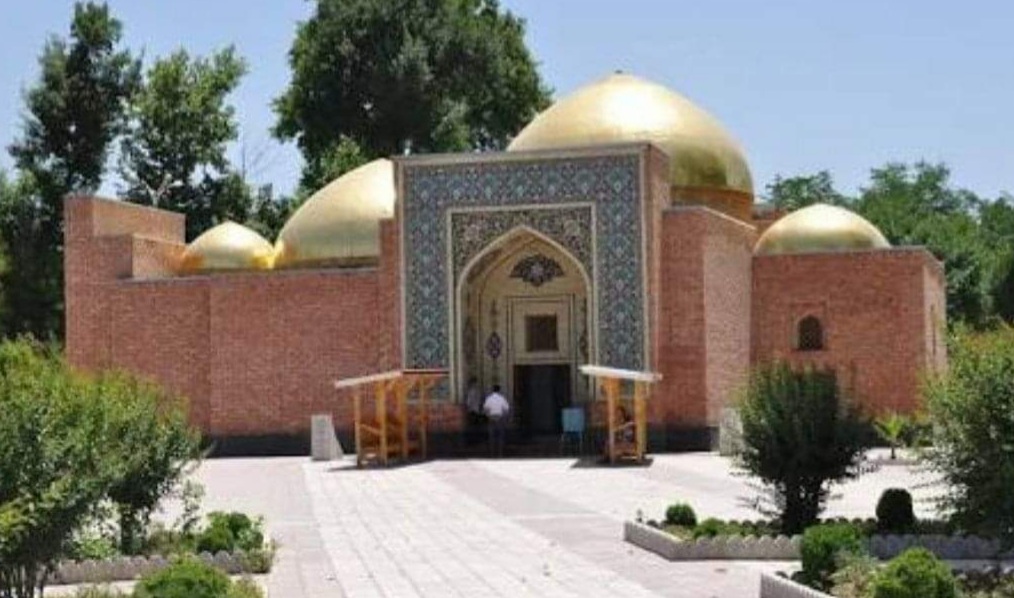
He visited the valley again in 785AH (1383 A.D) but had to return earlier on account of illness. On return from this visit, he reached Kunar and after few days bade adieu to materialistic life (on 6th Zilhujjah 786 AH). His earthly remains were taken to Kolab in Khitlan (Tajikistan) and buried there.

Before leaving Kashmir, he deputed his son Mir Muhammad Hamdani (r.a) to take forward the sacred mission of enlightening the hearts of people with the faith of Islam. Mir Muhammad Hamdani later institutionalized the Islamic mission in Kashmir. He supervised the construction of famous institutions like, Khankah e Maula (Srinagar), Khankah e Faizpanah (Tral), Khankah-I-Aala (Pulwama), Khanqah, (Wachi Shopian), etc, which played an important role in spiritual, social, and educational reforms throughout the history of Kashmir. Even at present, these institutions continue to be the fountainheads of excellence and spirituality.

Hamdani’s economic impact on Kashmir is incredibly profound. His role in the economic upliftment of the Kashmiri nation is historic and crucial. He aimed to make Kashmiri self-sufficient by imparting skills. Thus, along with religious preachers, he brought with him numerous artists and artisans who settled down in Kashmir and taught the craft of Pashmina textile and carpet making to the local population. The establishment of the shawl industry and its subsequent prevalence in this part of the world has been possible because of him. The introduction of the craft, handicraft, calligraphy, Copper-work, and Silverwork in Kashmir is also the benevolence of Hamdani on the Kashmiri people. He familiarized people with trade and commerce on the pattern prevailing in central Asia that boosted them economically. In addition, he revived agricultural, irrigational, and industrial systems by suggesting new techniques. In this way, Hamdani changed the life patterns of the Kashmiri people and shaped the destiny of Kashmir. Apart from appreciating Hamdani’s role in Kashmir’s Islamic revolution, Allama Iqbal immortalized his socio-economic, and cultural contribution as- Khitah ra ‘aan shah’e darya aasteen; Daad ilm wa sannat wa tehzeeb wa deen (Shah Hamdan provided (to Kashmiris) knowledge, industry, culture, and religion through his inclusive approach and oceanic vision).

Hamdani was a man of letters and despite having a busy schedule, he proved to be a great poet and writer. In poetry, he used pen names; ‘Ulai’ and ‘Ali’ and Chihli-Asrar is one of his anthologies consisting of 40 poems mostly based on spirituality. He wrote hundreds of pamphlets in Arabic and Persian to reach the maximum audience and to preserve his ideas, philosophy, and message (which include guidance for Kings and rulers) for the future generation. Abdul Wahab Noori, author of the book Fatuhaati Kubraviyah quotes Syed Ali Hamdani saying; ‘I have not been appreciated in this world but hundred years after my death, people will start benefiting from my writings and appreciate my value’. And without any doubt, these pamphlets exist as documents of guidance for all. These writings are scattered in different libraries of the world and scholars in particular and people, in general, are benefited from them.

Among these writing, Awrad-Fathiyah is one of the great Arabic works of Syed Ali Hamdani. It is a reflection of Hamdani’s concern for Muslims of Kashmir. Syed Ali Hamdani on noticing unsure faith and witnessing the plight of Kashmiri Muslims asked them to recite Awrad loudly to reinforce the belief and to get rid of sufferings by invoking Almighty Allah.

So immense is the contribution of Syed Ali Hamdani that one column will not suffice to cover it. A detailed account of his role in the preaching of Islam and influence on different aspects of the lives of Kashmiris has brought forth many books. Nevertheless, what is important for us is to understand his message, imbibe his teachings, and practice them in everyday life besides bearing in mind his multi-dimensional role.

source: http://www.muslimmirror.com / Muslim Mirror / by Zeeshan Rasool Khan / July 17th, 2021

South African-Indian Islamic Scholar Mufti Ebrahim Desai Passes Away

INDIA / Durban, SOUTH AFRICA :

Mufti Ebrahim Desai, the world-renowned South-African-Indian Islamic scholar, and jurist, who established the Darul Iftaa Mahmudiyyah in Durban, South Africa where he trained students to become muftis passed away Thursday 15 July in Durban. He was 58.

Mufti Ebrahim Desai had been issuing fatwas in various fields for more than 25 years, mainly through the askimam.org website.

Born on 16 January 1963 in Richmond, South Africa, Mufti Desai memorized the Quran at the Waterval Islamic Institute and studied traditional Dars-i Nizami course at the Jamia Islamia Talimuddin in Gujarat, India. He specialized in fiqh (Islamic jurisprudence) under Mufti Ahmed Khanpuri and also studied with the former Grand Mufti of Darul Uloom Deoband, Mahmood Hasan Gangohi, the author of the multi-volume Fatawa Mahmudiyyah.

Mufti Saheb taught Fiqh, Principles of Fiqh, Tafsir, Hadith at Madrasah Ta῾limuddin, Isipingo Beach, South Africa for 10 years. He also headed the Fatwa Department at Jamiatul Ulama, KwaZulu-Natal. He was a senior Sheikhul Hadith at Madrasah In’aamiyyah, Camperdown for another 10 years. In 2011, Mufti Ebrahim Desai Saheb moved to Durban permanently and laid the foundation for Darul Iftaa Mahmudiyyah, Sherwood, Durban. In the early 1990s, he started Ask Imam Fatawa Portal, an online Islamic questions and answers database of Darul Iftaa Mahmudiyyah.

Mufti Desai was an Islamic finance expert who served as sharia advisor to various Islamic financial institutions.

He was featured among The 500 Most Influential Muslims compiled by the Royal Islamic Strategic Studies Centre and referred to as the “South African Grand Mufti of Indian descent.”

Mufti Ebrahim Desai had authored two books, “Introduction to Hadith: A general introduction to Hadith and its sciences” and “Introductions to Islamic Commerce”. His fatawa have been compiled in a book titled “Al-Mahmood”. Another compilation of his talks at the Shariah Compliant Business Campaign is also available titled “Shariah Compliant Business Campaign”. The latest compilation of contemporary verdicts is also available titled “Contemporary Fatawa”.

Muslims around the world expressed their sadness over his death.

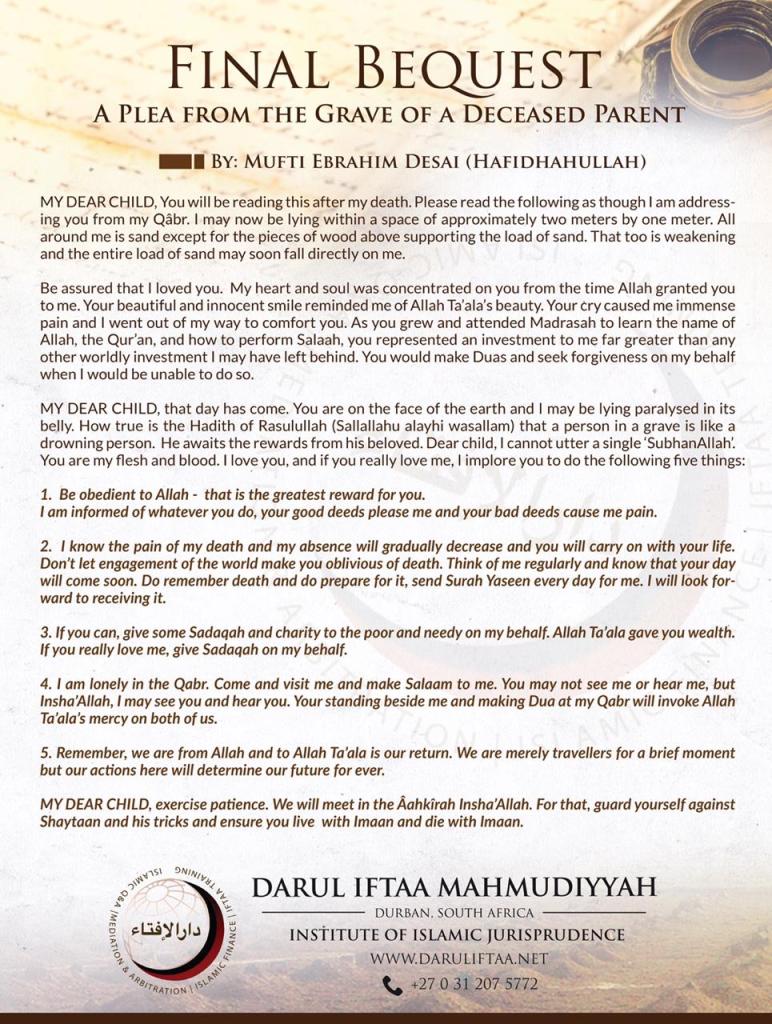
Final Bequest: A Plea from the Grave of a Deceased Parent by Mufti Ebrahim Desai

source: http://www.thecognate.com / The Cognate / Home> News / by Shaik Zakeer Hussain / July 16th, 2021

Mangaluru: Harekala Hajabba among Beary Academy’s award winners

Mangaluru, KARNATAKA :

Mangaluru: Harekala Hajabba among Beary Academy's award winners -  Daijiworld.com

Mangaluru :

Karnataka Beary Sahitya Academy has chosen nine persons with considerable achievements to their credit in their respective fields, for the honorary awards and honorary felicitations pertaining to the year 2021.

Harekala Hajabba has been chosen for his achievements in the field of Beary language and education sector. Hussain Katipalla, a famous singer, has been chosen for his contribution to the field of Beary art and literary fields. Dr E K A Siddique Addoor has been picked for enriching Beary culture and social service fields.

Honorary awards comprise Rs 50,000 cash component, felicitation, and award plaque.

Ashraf Apolo from Beary music sector, Dr K A Muneer Bava from Beary organizational sector, Mariam Fauzia B W, Beary woman achiever, Zulphi Beary from Beary Youth talent sector, Muhammed Basheer Ustad from Beary Duf field, Mohammed Faraz Ali from Beary young talent sector, have been selected for the Beary honorary felicitation. The felicitation comprises Rs 10,000 in cash, felicitation, and citation.

Academy president, Rahim Uchil, said that the awards function will be held at Shivamogga after fixing a date of the chief minister, Shivamogga district in-charge minister, and Kannada and culture department minister, after the Covid situation eases substantially.

source: http://www.daijiworld.com / DaijiWorld.com / Home> Karnataka / by Daijiworld Media News Network (SP) – June 30th, 2021