He has been transferred from the Transport Department
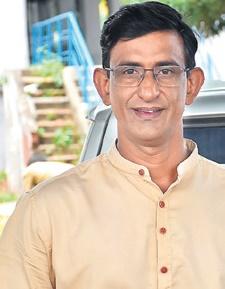
The State government, on Wednesday, appointed senior IAS officer Anjum Parwez as the new Managing Director of the Bangalore Metro Rail Corporation Ltd. (BMRCL).
Mr. Parwez will relieve Rakesh Singh who has been holding the post as concurrent charge for over three months. Mr Parwez is a principal secretary ranking officer and is transferred from the Transport Department. He told The Hindu that expediting the ongoing phase II Namma Metro project will be his priority.
Challenges ahead
The new MD has various challenges before him including the timely execution of the metro tunnel network between Dairy Circle and Nagawara which has faced several hurdles in the past, resumption of metro work between Kalena Agrahara and Swagath Cross Road that was stalled and expediting much delayed 58-km Outer Ring Road – Airport metro line to Kempegowda International Airport (KIA).
“After taking the charge, I will study the developments in the Namma Metro project and measures will be taken to expedite the ongoing projects. Focus will also be given to integrating various modes of public transport in the city, thereby shifting people using private modes of transport to public transport,” he said.
With BMTC
Mr. Parwez, a 1994 batch IAS officer, has also worked as the MD of the Bangalore Metropolitan Road Transport Corporation (BMTC).
Senior IAS officer Rajender Kumar Kataria has been placed in concurrent charge of principal secretary of the Transport Department, the post that fell vacant after Mr. Parwez’ transfer.
source: http://www.thehindu.com / The Hindu / Home> News> Cities> Bengaluru / by Special Correspondent / Bengaluru – July 15th, 2021
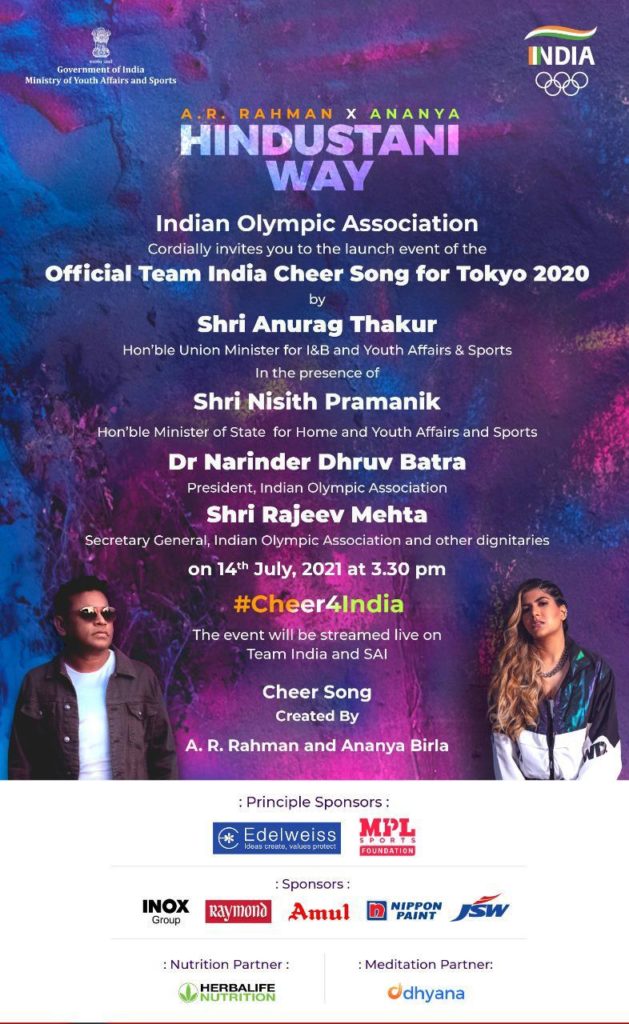
Tokyo Olympics: Anurag Thakur to launch official Team India Cheer song for Tokyo Games created by A R Rahman, Ananya Birla [Pic credits: India Today]
Tokyo Olympics: Anurag Thakur to launch official Team India Cheer song for Tokyo Games created by A R Rahman and Ananya Birla – The Indian Olympic Association will launch the official l Team India Cheer song for Tokyo Games created by A R Rahman and Ananya Birla on Wednesday at 3.30 PM. Sports Minister Anurag Thakur (Union Minister of I&B and Youth affairs, Sports Minister) will launch the official song in presence of IOA President Narinder Batra, Rajeev Mehta (IOA secretary) and MoS for home, Youth affairs and Sports Nisith Pramanik. The event will live stream on Team India and SAI.
Music maestro AR Rahman has teamed up with young singer Ananya Birla to work on ‘Hindustani Way’, a song that aims to boost the morale of Indian players who are all set to participate in Tokyo Olympics 2020.
“All of us are really excited to have made this special song and hope our athletes can feel the entire nation rooting for them, the Hindustani way, when they hear it. It was a pleasure working with Ananya on this project and we hope to convey all our support and best wishes to Team India through it! Jai Hind,” Rahman, who has composed the track, said.
Tokyo Olympics: Anurag Thakur to launch official Team India Cheer song for Tokyo Games created by A R Rahman and Ananya Birla
The track is jointly written by Ananya, Nirmika Singh, and Shishir Samant.
Expressing happiness on singing such an inspiring song, Ananya said, “It is a true honour to write and sing a song to cheer our Indian Olympic contingent at Tokyo 2020. The grit and fortitude of the Indian Olympic team in the face of such a challenging year is inspiring.”
“It was surreal to have had the opportunity to collaborate with my role model, AR sir on such a prestigious project, from whom I have learnt so much. We are here cheering, the Hindustani Way,” she added.
The Tokyo Olympics will be held from July 23 to August 8. The event was slated to be held last year, but it had to be postponed due to the COVID-19 pandemic.
#Cheer4India | Launch of The Official Team India Cheer Song for Tokyo 2020
(with ANI inputs)
source: http://www.insidesports.co / Inside Sport / Home> Latest Sports News / by James Kuanal / July 13th, 2021
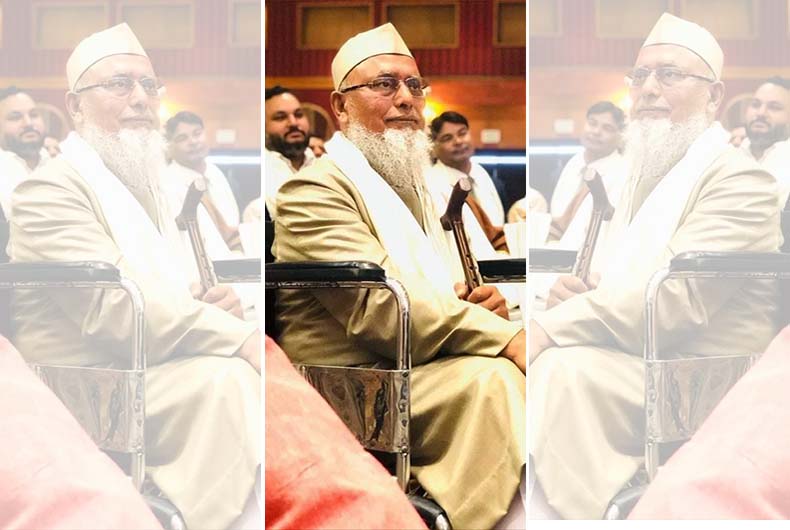
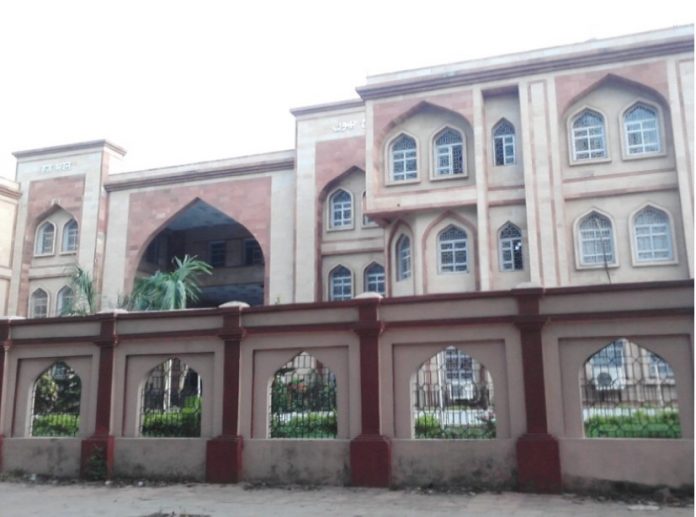
Sheikh Amini started his services as the Chief Editor of Al-Daie and the teacher of Arabic literature at Darul Uloom Deoband from 15th Shawwal 1402 AH (6th August 1982).
Sheikh Waheeduz-Zaman Kairanavi (1930-1995) was one of the few exemplary teachers of Arabic language and literature whom the 20th century witnessed in India. During his long teaching services at Darul Uloom Deoband, not only he trained his students how to speak and write eloquent Arabic language but he also trained them how to live an ideal life in the society as a good human being. He educated them in the way that wherever they went, they became the cause to enhance the glory and reputation for him and for their seat of learning, i.e. Darul Uloom Deoband.
Waheeduz-Zaman Kairanavi always encouraged his students and wished to see them at the peak of success. Whenever an opportunity of exposure and publicity came to him, he always pushed his students forward to let them prove their mettles.
In 1982, when there was a vacancy for Chief Editorship of Arabic Islamic fortnightly Magazine, Al-Daie, published from Darul Uloom Deoband, he preferred one of his capable and qualified students, Sheikh Noor Alam Khalil Amini (1952-2021), then the teacher of Darul Uloom Nadwatul Ulama, Lucknow to take this important responsibility. Later, the scholars of Arabic language and literature witnessed how ideal this choice was!
“Early days as Editor”
Sheikh Amini started his services as the Chief Editor of Al-Daie and the teacher of Arabic literature at Darul Uloom Deoband from 15th Shawwal 1402 AH (6th August 1982). As the Chief Editor, he published the first issue of the magazine on 7th Muharram 1403 – 25th October 1982 and went on to work tirelessly for 40 years (1403-1442 AH) as Chief Editor of the magazine. His standard Islamic, academic, literal and thoughtful write-ups for Al-Daie, in a well-expressed and eloquent Arabic language, enhanced the beauty of the magazine.
Moreover, collecting the standard and thoughtful articles by Arab writers and the excellent publication of Al-Daie in accordance with his amazing fervor, the magazine took no time to reach the peak of its success. Not only the Indian sub-continent scholars, but also the Arab scholars, poets and the men of letters welcomed the magazine with open arms.
Thus, the magazine played a key role, as a mouthpiece of Darul Uloom Deoband, in introducing Deobandi thought (Which is strictly following the path of Ahlus-Sunnah Wa-Al-Jamah) and presenting the institution’s academic activities in the Arab world.
“Columns on important subjects”
Sheikh Amini had fixed several columns in Al-Daie such as Kalimatul-Muharrir, Kalimatul-Adad, Al-Fikr Al-Islami, Dirasaat-Islamiyyah, Ilaa-Rahmatillah, Mahalliyat, Anba’aul-Jamiah, Ishraqah etc.
Besides these columns, there were also some other columns like Isdaratun-Hadithah, Al-Adabul-Islami, Al-Aalamul-Islami etc. in Al-Daie, if articles on such topics were included for publication.
Sheikh Amini used to write for the columns like Kalimatul-Muharrir, Kalimatu-lAdad, Al-Fikr Al-Islami, Ilaa-Rahmatillah, Isdaratun-Hadithah and Ishraqah in an eloquent Arabic language in the light of reliable references and accurate statistics. For the Kalimatul-Muharrir, it was his practice to write a brief article on current issues related to India or the Muslim world containing one or two pages sometimes. At the end of the article, there used to be written [Al-Tahreer] in the brackets. Next to it, the time and date were noted to let the readers know at what time and date the article was written. It was his practice to write the time and date at the end of his any write-up.
For the second column: Kalimatul-Adad, mostly he wrote a detailed article on social, political or Islamic burning issue. The article sometimes was on virtues of the month of Ramadan and fasting -Sawm, greatness of the migration of the prophet Muhammad (SAWS), need and importance of prayer etc. Article of this column sometimes revealed the cunningness of America and its illegitimate child, Israel.
He also used to show up the positive and negative aspects of the steps taken by the leaders of the Muslim and Arab world. He never hesitated to express his opinion about the stand and the decisions of the Indian government on any grave issue. The article would consist of 5/6 pages and sometimes even more pages than that. The Urdu translation of some of the articles written for this column is now part of his Urdu book “Kiya Islam Paspa Ho Raha Hai?”
“Al-Fikrul-Islami”
He had great love for the scholars of Deobandi school of thought as they were true flag bearers of Islam. It was his mission to introduce their academic works and prominent services for Islam in Arab world. For this purpose, he translated Urdu books of those prominent scholars and published on the pages of Al-Daie in parts under the column of Al-Fikrul-Islami. This series continued for many years.
In this way, he translated dozens of books into Arabic language. The books are published from Darul Uloom Deoband and its Sheikhul Hind Academy. For few years, he had stopped writing for the aforesaid column. For this column, Abu Aaidh Al-Qasmi Al-Mubarakpuri (the patronymic of the famous Islamic scholar and teacher of Darul Uloom Deoband, Sheikh Muhammad Arif Jameel Qasmi Mubarakpuri, who is Assistant Editor of Al-Daie too) is translating “Tafseere Usmani” nowadays. This is a great and well-known Quranic commentary (Tafseer book) of Allamah Shabbir Ahmad Usmani (May Allah grant him Jannah!). As of Shaban 1442, the translation of the first 4 parts has been published under this column.
“Obituaries”
Sheikh Amini also wrote hundreds of articles for the column, “Ilaa-Rahmatillah”. Under this column, he wrote on famous scholars, thinkers, preachers, poets, men of letters and social and political personalities who had passed away in the near past from the Indian sub-continent as well as Arab world. In this article, he used to write the account of the deceased’s life, his services and the scholarly works etc. Like his other articles, the article of this column also had distinctive method as well as uniqueness and singularity of expression. The article would encompass all the features of the life of the diseased. The article used to be very lengthy. Sometimes, it was like a short biography of the diseased. He wrote on almost three hundred personalities as of March 2010.
Some articles written for the said columns were translated into Urdu language by the author and by some of his students and got them published in various Urdu magazines and newspapers. The readers liked them very much. They showed their desire that these Urdu articles should be compiled in the form of a book. Considering the sentiments of the readers, the author published the collection of 37 articles namely “Pase Marg Zindah” in 932 pages in May 2010. Of the same series, another collection of 24 articles namely “Raftagane Naa-Raftah” is soon to be published.
“Book Reviews”
Under the column of “Isdaratun-Hadithah”, he used to write a review on newly published books. His review too was very inclusive, comprehensive and lengthy. In this column, he used to elaborate the value of the reviewing book, its publication, introduction of author and his works in detail. As an example, the review of “Tohfatul-Alma’aee Commentary of Sunan Al-Tirmidhi” of Mufti Sa’eed Ahmad Palanpuri (Rahimahullah) can be read. This review is published with Tohfatul-Alma’aee, at the end of the 8th volume of the book.
The column: “Ishraqah” was on the last page of the magazine. Its remainder part used to be published on the last pages just back to the last one. For this column, Sheikh Amini used to write a well-grounded and demonstrative article, be on academic, religious, social or political topic, in the light of his thought, knowledge, experiences and observations or some situations and incidents influencing him. It was decorated with applicable idioms, appropriate synonyms, and beautiful similes. This article used to be the sample and model of an eloquent Arabic literature. It was highly valued and appreciated not only by the Indian readers of Al-Daie, but also by Arab scholars. It is pleasing that the hundreds of articles written for this column have been compiled and published this year namely: “Min Wahyil-Khaatir” in five huge volumes. It consists of 2600 pages as a whole. It was published just few weeks before the sad demise of Sheikh Amini. It is a precious and valuable gift for those who have interest in Arabic language and literature to read.
It is appropriate to record here that before the publication of Al-Daie, Darul Uloom published a quarterly magazine namely “Dawatul-Haq” as its mouthpiece, under the editorship of Sheikh Waheeduz-Zaman Kairanavi. After abolishing its publication, “Al-Daie”, a fortnightly magazine, was launched. Its first issue was published on 11th Rajab 1396 (10th July 1976), under the editorship of Sheikh Mufti Badrul Hasan Qasmi (ex-teacher of Darul Uloom Deoband and currently resident in Kuwait). Following his resignation, Sheikh Amini was appointed as its Chief Editor and the teacher of Arabic literature at Darul Uloom Deoband as stated above. Previously Al-Daie was published as a fortnightly magazine; but the governing body of Darul Uloom decided to convert it into monthly. Then from Safar-Rabiul Awwal 1414 AH (August 1993), it is regularly published as a monthly magazine.
May Allah accept the efforts of Sheikh Amini and grant him His choicest place in Jannah! Aameen!
[The writer, Khursheed Alam Dawood Qasmi, works at Moon Rays Trust School in Zambia, Africa. Sheikh Noor Alam Khalil Amini died on May 3, 2021 in Deoband.]
source: http://www.ummid.com / Ummid.com / Home> Life & Style / by Khursheed Alam Dawood Qasmi / June 11th, 2021
The Pulitzer Prize-winning journalist was covering the situation in Kandahar over the last few days.
Noted Indian photojournalist Danish Siddiqui was killed on Thursday night during a clash between the Afghan special forces and Taliban attackers . Tolo News, a leading news channel of Kabul, reported that Mr. Siddiqui, working for Reuters news agency, was covering the clashes between the two sides in Kandahar over the last few days and he died in Spin Boldak district, which has a contentious international border crossing between Pakistan and Afghanistan.
In a statement, the Ambassador of Afghanistan to India Farid Mamundzay conveyed his condolences to the Siddiqui family and Reuters. “Deeply disturbed by the sad news of the killing of a friend, Danish Siddiqui, in Kandahar last night. The Indian journalist and winner of Pulitzer Prize was embedded with Afghan security forces. I met him 2 weeks ago before his departure to Kabul,” he said.
Mr. Siddiqui was travelling in an armoured humvee with Afghan soldiers and he had shared videos over the past few days that showed the vehicle coming under attack on several occasions. In his last report filed on July 13 from Kandahar under highly difficult circumstances, Mr. Siddiqui had recorded the experience of Afghan commandos who conducted a raid to save a kidnapped policeman. The border crossing in Spin Boldak had hit the headlines after the Taliban reportedly occupied it temporarily. In response, Afghan forces launched attacks which soon escalated into a war of words between Afghanistan and Pakistan. Reporters of news channel France24 said that the injured Taliban fighters were being treated in Pakistani hospitals.
Compassionate coverage
Mr. Siddiqui was known for his compassionate photographic coverage of current developments in South Asia. In recent years, his photographs of the Rohingya refugees who were displaced by the Myanmar military from the Rakhine province, drew global attention to the plight of the displaced community that is currently living in camps in Bangladesh. The photographs of the Rohinyga refugees was recognised with a Pulitzer Prize.
Earlier this year, he used innovative methods like drones to capture the scale of the second wave of COVID-19 in India. His photographs that showed funeral pyres burning in open spaces drew global attention to the tragedy that India faced during March-May 2021.
Minister’s condolence
In a message of condolence, Information and Broadcasting Minister Anurag Thakur shared an image captured by Mr. Siddiqui during his assignment covering the Rohingya tragedy. “Danish Siddiqui leaves behind an extraordinary body of work. He won the Pulitzer Prize for Photography and was embedded with the Afghan Forces in Kandahar. Sharing one of his pictures below. Sincere condolences,” said Mr. Thakur.
source: http://www.thehindu.com / The Hindu / Home> News> International / by Special Correspondent / New Delhi – July 16th, 2021
Azhar says he was poor himself when he started the initiative. He is still working from Hyderabad because he feels that hunger has swelled after the lockdown.
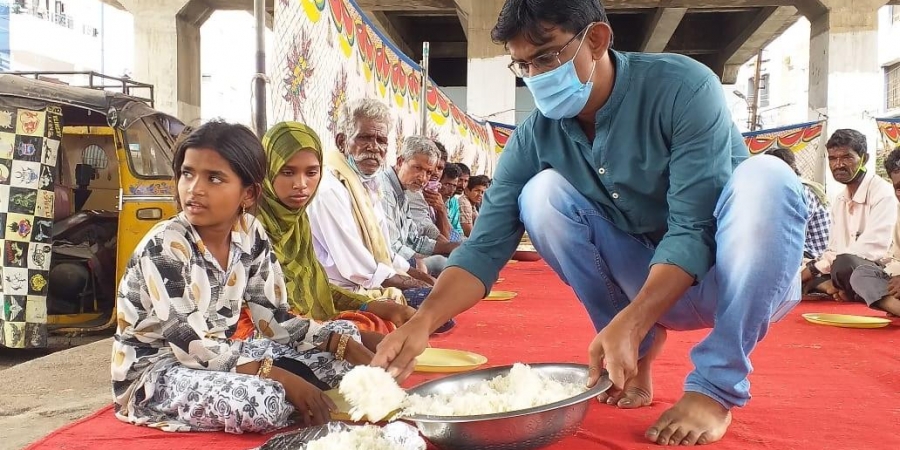
Azhar Maqsusi, a social activist from the city, whose initiative ‘Hunger Has No Religion’ by Sani Welfare Foundation feeds about 1,500 people every day in five cities across the country was granted the United Kingdoms Commonwealth Points of Light Award recently. The award recognises outstanding individual volunteers – people who are making a change in their community.
“Azhar’s contribution to society is incredible and has meant the difference between a meal or no meal for millions. There are many similar missions of selfless sacrifice and service, some emerging as a result of the pandemic, but the powerful ‘Hunger has no Religion’ has run for eight years, reaching the most vulnerable and delivering a powerful underlying message to all. I cannot be happier for him and members of the Sani Welfare Foundation,” said Dr Andrew Fleming, British Deputy High Commissioner, Hyderabad.
“I am thankful that I have been chosen by the almighty to feed people. I have fed the poor for 10 years now and will continue this until hunger is eradicated,” Maqsusi said. “I am also thankful for the support of my family, friends and others who have recognised my service,” he added. Azhar says he was poor himself when he started the initiative. He is still working from Hyderabad because he feels that hunger has swelled after the lockdown.
source: http://www.newindianexpress.com / The New Indian Express / Home> Good News / by Express News Service / July 06th, 2021
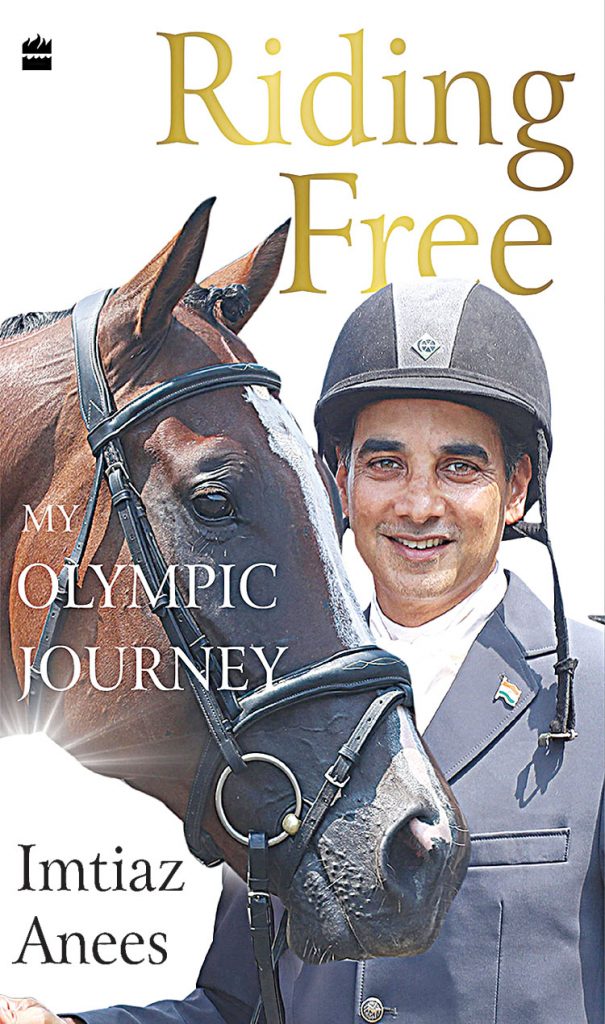
HarperCollins is proud to present the story of an Indian equestrian rider and his Olympic dream ‘RIDING FREE: MY OLYMPIC JOURNEY’ by Imtiaz Anees.
“The story of a true sportsman whose heart beats for his country. The pulse and emotion of this book are totally relatable. A beautiful real-life story of struggle, relationships, dreams and how Imtiaz overcame all hurdles to reach his goal.” – Sania Mirza, Indian Tennis Player, Olympian, Arjuna Awardee.
“A gentleman’s gentleman, Imtiaz’s cool and clam disposition hides the grit and determination – the dedication and discipline that built the foundation for him to compete with the best at an international level.” – Karan Johar, Film Director.
“It’s one thing to have a dream. It’s entirely another thing to follow your dream with passion and courage. Don’t miss this story of Imtiaz in his quest towards his Olympic dream.” – Viren Rasquinha, Former Indian Hockey Captain, Olympian, Arjuna Awardee.
“Imtiaz’s story is as heart-warming as it is inspiring. It’s so much more than sports – it’s about the power of dreams, self-belief, teamwork and perseverance. I must admit I have a soft spot for any story with animals in it. The bond between man and horse makes this story truly special.” – Alia Bhatt, Film Actor.
“The gap between the impossible and possible is your commitment to do what you want to achieve and enjoy the journey. Think unreasonable, believe, work hard and see how the universe comes together to make it happen. My memoir is about achieving the impossible and I truly hope it inspires you enough to ‘Never give in’.”- Imtiaz Anees.
“Imtiaz’s single-minded pursuit of his Olympic dream, the challenges he counters, the people who offer support to him and the milestones he achieves reads like a work of fiction. Riding Free proves that nothing is impossible if you dare to dream and match it with hard work. We are excited to be publishing this incredible story on the eve of the Tokyo Olympics.” – Sachin Sharma, Senior Commissioning Editor, HarperCollins India.
Here is an extract from the book:
My heart was pounding as the starter began the countdown: ’10-9-8-7-‘
This was the most exciting moment of my life-the realization of my boyhood dream and the culmination of many hours of hard work, figuring out how to tackle whatever obstacles the course threw at me.
I was where thousands of eventing riders around the world dreamt of being. At the greatest sporting event in the world-the 2000 Sydney Olympics-and ready to start the cross-country event.
‘6-5-4-3-‘ the countdown continued, and then it was ‘2-1’ and off we went! Spring Invader, my horse, leapt forward on cue and we were thundering down the course, while I had thoughts for nothing but the first jump coming up and getting the take-off and landing right.
About the book
‘My heart was pounding … yet I was sitting still! This was the most exciting moment in my life and the culmination of my boyhood dream. I was where thousands of eventing riders around the world had dreamt of being-the Olympics.’
This is the story of a young boy with an impossible dream-competing at the Olympics. From the age of four, Imtiaz Anees took to horse-riding like fish to water. It soon became a passion, one that continued through his life, beginning with his first competitive win at the age of six, eventually winning multiple equestrian events both nationally and internationally. Imtiaz is the only Indian rider to complete an equestrian three-day event at the Olympics, in Sydney in 2000, at the age of thirty, in an elite sport long associated with royalty and wealth and primarily the army in India.
In Riding Free, Imtiaz re-traces the major milestones of his riveting twenty-year-long journey. The stories he tells are heartfelt, emotional and inspirational for the next generation of dreamers-a way to ‘give back’, in small measure, the enormous goodwill and help he received from all kinds of people in his Olympics journey. Behind Imtiaz’s success are also the struggles and setbacks that pushed him to work harder and achieve peak performance. In a sport where the result depends on both man and animal, the deep bond Imtiaz shares with his horses will leave animal lovers spellbound. Here is a story that will inspire every athlete to ‘never give in’
Imtiaz Anees is an equestrian Olympian, trainer, competitor, NBC commentator, qualified Level 2 instructor and coach educator. As the only equestrian Olympian in India, he wants to share his knowledge and experience with all other riders and offers internship programmes to teach equine management. He runs an equestrian training centre-Seahorse Equestrian, a boutique stable with sixteen horses, located on a beautiful beach in a small fishing village in Nargol, Gujarat.
source: http://www.theweek.in / The Week / Home / by PTI / by PR Newswire prnewswire.com / July 12th, 2021
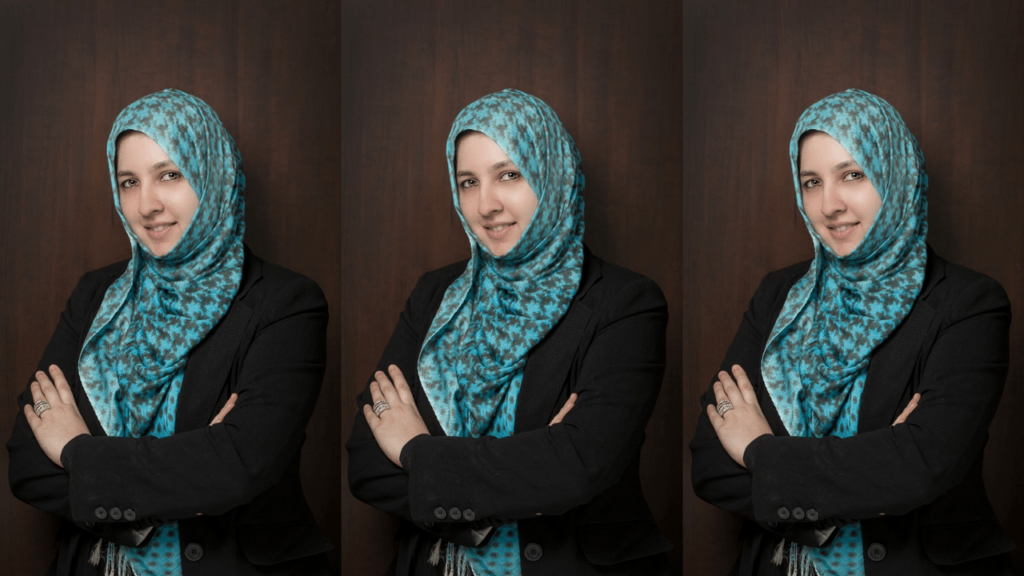
Noor Ayesha, Founder-CEO, Iqra International School
“Women should give themselves a chance, there’s so much that they are capable of, we need to leave behind a legacy and contribute to our ummah and the world at large.”
Noor Ayesha is an award-winning educator, an empowering leader, a mother of three, and the founder of a school that nurtures more than 650 children. Iqra International School – awarded the ‘Most Promising school for Quality Education in Bangalore’ was founded by Noor Ayesha with the aim of delivering value-based education in order to cultivate in each child, the aspiration to ‘learn and live values’.
“To be a great leader, you have to be a great reader,” says Noor Ayesha. She believes that Muslims moved from the golden age to the “dust age” due to the gradual fading of value-based education guided by Islamic principles.
Noor Ayesha was conferred with the Rashtriya Shiksha Ratan Award by The Indian Society for Industry and Intellectual Development and the ‘Fakhr-e-Watan’ Award for her academic and social services. She has been a speaker at the Eldrok Summit 2019, Early Childhood Association Summit 2019, Asia Education Summit 2016, Asia Leadership & Services Awards 2016, and at various MFERD conferences. She has also been chosen as the Global Goodwill Ambassador of India for Global Goodwill Ambassadors (GGA).
She believes that one must always have goals – professional, personal, and spiritual. “When you have determination and passion, Allah makes ways. Always,” she says.
Ayesha, along with her team at IIS has disproven the prejudiced notion that the niqab and hijab are obstacles to development and that veiled women are incapable. “We are proof that Muslim women are no less than anyone,” she asserts. She also strongly believes that there is “no shortage of capacity in the Muslim society but there is a need to unearth it and move forward.”
She efficiently managed the school single-handedly for many years, with the support of her team, comprising only of women. “Many of them who thought nothing of themselves are now leading the institution and representing Iqra at various conferences.” Ayesha gladly affirms. “Women should give themselves a chance, there’s so much that they are capable of, we need to leave behind a legacy and contribute to our ummah and the world at large.”
She points out that the inherent flaws in the existing education system have resulted in educated individuals leading privileged lives but vehemently failing in giving back to society, which she believes is the primary purpose of education. At Iqra, students are instilled with a sense of responsibility towards society, along with the quality education they acquire.
Iqra International School is a dream come true for Ayesha’s father, who has always envisioned being able to educate the children of the community. “We felt that a mosque’s imam would be better at his role of a leader if he was additionally equipped with worldly knowledge,” she explains. The school was set up as a result of Ayesha’s commitment to fulfilling her father’s dream and the dire need for a school that would nurture students with Islamic values along with quality education, with the added advantage of facilitating students with a campus that is within the city.
The school was conferred with the ‘Best Innovative International Preschool in Bangalore’ award at the Asia Education Summit & Awards 2016, the ‘Most Promising School for Quality Education in Bangalore’ award at the Asia Leadership and Services Awards 2016, ranked No.1 in India for “Individual Attention to Students” at the India School’s Merit Awards 2016, ranked No.1 in India for ‘Holistic Development’ at India’s School Merit Award 2017, awarded Excellence in Flexible Education Programme at The India K12 Awards 2019, declared “Brand of the Year” in National Brand Awards 2019, and was conferred with the International School Award 2019-2022 by the British Council.
“As a school, we are in no competition with any other Islamic schools, as we are all working towards the same beautiful cause – ‘nurturing children to learn and live Islam’,” Noor Ayesha asserts. “We just do our very best and leave the rest in His (God’s) hands.”
Iqra International School provides quality education with the IGCSE curriculum, seamlessly integrated with the QIAS (Quran, Islam, and Arabic Studies) curriculum. They also have an intensive hifdh program for students who perform exceptionally well in the Quran classes. The school also has 25- 30 students from other faiths, who have no problem with learning the Quran, the Arabic language, or using the Islamic salutation of peace.
“Alhumdulillah, two years ago, 3 of our brilliant students became huffadh. All 3 students were excellent in the IGCSE academics as well. I must also mention how good they were at football. Most of our football championships were won with two of them scoring the highest goals. Pursuing religious knowledge only makes it easier to become brilliant at gaining worldly knowledge. A balance between the two could be gained and this was proven by these children who made it possible,” she narrates.
The majority of Iqra’s staff have their own children studying at Iqra. “Even before a problem gets addressed by parents we would’ve already found a solution to it or in many cases solved it because we are all mothers ourselves with our own children studying at our school”, Ayesha says.
They also make sure students get ample exposure to other global cultures and beliefs by conducting inter-faith programs, inter-school competitions, Mock United Nations (MUN), and other such activities.
Before establishing Iqra, Ayesha conducted extensive research in the field of international education, particularly Islamic education, including the works of Dr. Dawud Tauhidi’s Tarbiyyah project that elaborates the purpose of Islamic education – its ideal impact and practicality.
“It’s not just the name ‘international’, our school has been international in all aspects from day one, from the research to the books and the curriculum,” she says.
The project has been completely funded by her father, from its inception until recently. Ayesha explains that the biggest challenge they faced was the difficulty in finding experienced teachers. In order to solve this, they set up ISTARI (Iqra Staff Training and Research Institute), as a result of which, they’ve been able to train and hire passionate and well-trained teachers.
“The trust and support from our school parents and the entire Iqra community, in general, has been immense right from the beginning, and that has helped Iqra reach wherever it has today, Alhumdulillah,” she contends.
Currently, Noor Ayesha is the Founder-Managing Director at Iqra International School, Director at Fantasy Group, Founder & CEO at OURAH, Director at Iqra Games Village, Director at the Centre of Integrative Medicine and Clinically Applied Hijamah Therapy(ICAHT), and Vice-Chairman in the Universal Educational Trust.
She is also the Member of the Advisory Board at Aspire Residential Public School, Kochi, Patron Principal at Early Childhood Association (ECA), Member of the Advisory Board at Eastern Public School, Bhopal, Member of the Islamic Educators Communication Network operated by Islamic Schools League of America (ISLA) and Council of Islamic Schools in North America(CISNA).
She completed her schooling in Baldwin Girls’ High School, Bachelor in Computer Science Engineering from Visvesvaraya Technological University, and MBA in HRD and Project Management from Cardiff Metropolitan University, Wales UK. She is currently pursuing her Doctorate in Educational Leadership and Policy from July 2021 at the University of Toronto, Canada.
source: http://www.thecognate.com / The Cognate / Home> People> Rushda Fathima Khan / July 12th, 2021
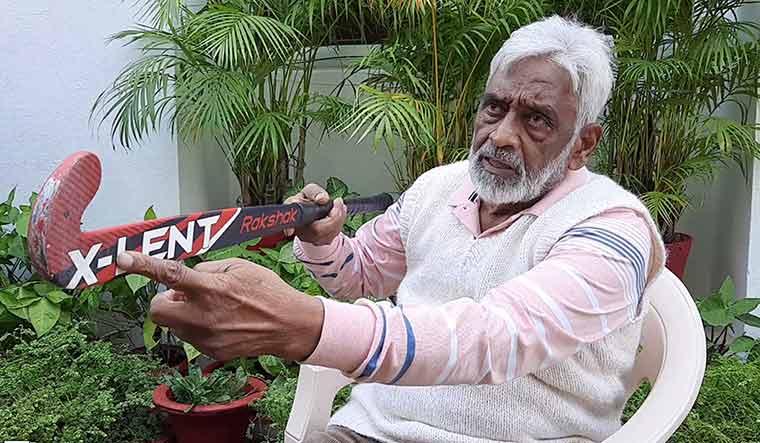
Great memories: Olympian hockey player Inam ur Rehman | Mujeeb Faruqui
We came from a modest background and my father (Abdur Rahim Siddiqui) was a religious, honest, disciplined and upright man. I got the virtues of devoutness, honesty and truthfulness from him and they have stood me in good stead. I would like to narrate an incident from my early playing days as an example. I was playing for East Bengal in 1963. A night before we were scheduled to play a crucial match against arch rivals Mohun Bagan, which was the top club then, I was called to the home of the Mohun Bagan president Dhiren Dey, the owner of Dey’s Medicals.
I was offered a Rolex to not score the next day. I said: ‘Dada, you keep the watch and if a goal is to be scored tomorrow, I will score it.’ As it turned out, I scored and East Bengal went on to become champions that season. This incident later became public and brought all the Bhopal players a lot of respect in Bengal. I played 10 years in Bengal, though I joined Mohun Bagan the next year at higher wages.
I was instrumental in Mohun Bagan winning all four major national tournaments in 1964. As a result, I was called up to the 1964 Olympic trial camp. During the camp in Jalandhar, Ashwini Kumar, the president of the Indian Hockey Federation, offered me a job with the Punjab Police (Kumar was a senior cop) though I was still only a student. But, keeping in mind the focus on education in my family—my siblings studied till doctorate level—I refused as I was not yet a graduate.
Kumar was unhappy and this resulted in me not being selected in the Olympic side despite being highly rated and performing outstandingly against Olympics host Japan the previous year. There was also the historic reason of Bhopali players migrating to, and doing well for, Pakistan. The resultant negative sentiment further hampered my chance of making it to the 1964 team.
In retrospect, I feel that my decision to refuse Kumar’s offer turned out to be a historic blunder not only for me, but for all Bhopal hockey players. He had made me an irresistible offer that would have allowed me to continue my studies. I was also offered an attendant to take care of all my needs, but naive as I was, I simply decided to say no. Had I said yes, the negative sentiment against Bhopal players may have reduced and many more talented Bhopal players would have found places in international and Olympic tournaments.
I was included in the Mexico 1968 camp and this time, luckily, our coach was dada Dhyan Chand. I was dropped again, but Dhyan Chand refused to sign the team list unless I was selected. Thus, a Bhopali made it to the Olympic squad after 20 years. But, I was not fielded in any of the initial matches. Then there came a crucial match against Japan, which we had to win to get into the semi-final and I was included in the team given my record against them.
The Japanese team walked off to protest a penalty stroke awarded to us after I was pushed down, and were disqualified. The movements by me that could have led to goals were then calculated and we were awarded five goals. I was not fielded in the semifinal and the Indian team lost to Australia. Then for the bronze medal, I played again and we easily beat Germany (2-0). Pakistan won gold; we were far better than Pakistan and would have easily beaten them had we reached the finals. I later joined Indian Airlines and formed its first team by drafting in seven boys from Bhopal. I captained the team for many years and it became one of the top teams in India.
As told to Sravani Sarkar
source: http://www.theweek.in / The Week / Home> The Week / by Inam Ur Rehman – as told to Sravani Sarkar / July 18th, 2021
The coaching and guidance center run at the Haj Bhawan under the Minority Welfare Department of the Bihar government provides residential preparation for government jobs and academic examinations. The Haj Bhawan started offering guidance first in Bihar civil services and is helping students in police inspector’s job test. Lately, the center has been in news for the success it has achieved.
Bihar :
Unlike other Haj Bhawan’s in the country, the Haj Bhawan of the northern Indian state of Bihar is not sending Muslim pilgrims to Mecca for Hajj. The Bhawan is doing a different and sometimes a more urgent and laudable one. It is in news for sending minority students on a job journey to secure top level state jobs.
The coaching and guidance center run at the Haj Bhawan under the Minority Welfare Department of the Bihar government provides residential preparation for government jobs and academic examinations. The Haj Bhawan started offering guidance first in Bihar civil services and is helping students in police inspector’s job test.
Fifty-three of Haj Bhawan’s coaching and guidance center’s candidates were declared successful in the recently announced result of Bihar Public Service Commission’s examination for the top civil state job. Out of nearly 1400 successful candidates, 101 were Muslim candidates.
Similarly, fifty-three Haj Bhawan’s candidates were selected for the post of Sub Inspector in Bihar Police. Importantly, 19 successful candidates in the BPSC exam and 11 in the police exam are female.
Of late, the Bihar government’s initiative to provide ‘coaching’ to the students for government job examinations has been quite a success. Bihar has also seen the success of privately run Rahmani 30 for Muslim students for engineering and medical entrance tests.
Maulana Mazharul Haque Arabic and Persian University is the nodal agency for the government’s state coaching scheme. While the facilities are free here, only Rs. 3500 are charged as mess fee. For those whose candidates whose families cannot even afford that and are economically weak, the mess fee is waived off.
This coaching and guidance center was established in the financial year 2006-07. Initially, it struggled but since the year 2010, it has been bringing success to the state. Till 2019, 1517 candidates have been selected for jobs from here out of 4777 selected candidates for coaching. In 2019-20 the centre gave coaching to 860 and in 2020-2021, the number of students who received coaching was 568.
The centre promises to provide free residential coaching for the jobs offered by Bihar Public Service Commission, general police jobs like sub-inspectors and constables, jobs offered by Railways and staff selection commission. The centre also provides coaching for the preparation of the University Grants Commission’s exams like the National Eligibility Test (NET) and Junior Research Fellow (JRF). It also gives coaching for Teachers Eligibility Tes (TET).
However, the success in Bihar Public Service Commission’s exam is getting all the accolades to this center at Haj Bhawan. The center conducts entrance tests for its different coaching programmes. For the BPSC jobs, each year 150 candidates are selected out of nearly 1000 candidates who sit for its entrance test. The entrance test is advertised in the local newspapers and on social media too.
Features of the Center Mohammad Rashid Hussain is the coordinator of this coaching and guidance centre. He has studied at Jawahar Lal Nehru University (JNU) and Hamdard Study Circle. He did his masters in Persian and Central Asian Studies from JNU, and qualified for JRF and SRF. Hussain later moved to Hamdard Study Circle. In 2007, he cleared the BPSC examination and joined Bihar Administrative Service.
Talking to TwoCircles.net, Hussain said that he has adopted the model from Hamdard Study Circle. “The 24 hours open library, test series, lectures by the top experts and online-offline study materials are the salient features of this center,” he said.
He said that the environment of group study is quite helpful. “Discipline is quite strict here. No one needs to go outside to get anything related to their studies,” Hussain said, who also works as CEO of Bihar Haj Committee.
According to Hussain, the mock interview preparation at the Centre is quite successful. “So much so, that even non-minority students approach us for the interview and this service is provided to them,” he added.
Hussain said that the girl candidates get maximum safety measures at the Centre, and “this keeps them focused in their preparations.” The girl candidates are provided separate rooms, mess and prayer hall. There are two female wardens for them.
What inspires candidates at the Centre Mohammad Adil Bilal got 22nd rank in BPSC’s examination and would be a Deputy Superintendent of Police (Dy SP) after training. Adil’s father teaches English at a college in Darbhanga.
Talking about his success, Adil said that the coordination between seniors and juniors at the Centre “worked wonders for him.” He said that seniors were very helpful in pointing out the shortcomings and suggesting ways for improvement.
Razia Sultan, an engineer by profession, was also selected for the post of Dy SP. In fact, it is claimed that she is the first Muslim lady in Bihar to get this post directly. She joined the center after clearing the mains examination.
Talking to TwoCircles.net, she said that “she got a lot of motivation here.” She appreciates the guidance for the interview.
Noorjahan, another successful candidate, told TwoCircles.net that she got the best training here in personality development. She quotes an oft-repeated saying by the center’s coordinator Mohammad Rashid Hussain that “a ship is safe at the harbour but it is not made for the harbour,” as very motivating.
“This inspired me to work hard,” she said.
Another successful candidate, Sima Khatoon has done her Computer Engineering from Jamia Millia Islamia, New Delhi. She has been selected for Panchayati Raj Officer.
Talking to TwoCircles.net, she said that that “any Muslim girl can achieve success.”
She is all praise for the facilities and guidance that was provided to her at the Centre. “Allah has listened to my prayers for a platform to work for social welfare,” she said.
More works needed Afzal Hussain of Bihar Rabita Committee, which works for the minority community, told TwoCirlces.net that the success at Haj Bhawan is “commendable and its success needs to be emulated.” He said that the six centres supposed to impart coaching to minority students for job examinations at Patna, Darbhanga, Motihari, Kishanganj and Bhagalpur should also be developed along the lines of Haj Bhawan.
Social activist Nashoor Ajmal said that while the success at Haj Bhawan is welcome, “we should seriously think about the abysmal representation of Muslim community in government jobs while their population constitutes almost 17 per cent in Bihar.”
Experts and successful candidates are of the opinion that more efforts are needed and such initiatives should start at the Masjid committee level in the state.
Ajmal added the government of Bihar should work for the educational upliftment of the Muslim community by conducting special drives.
Sami Ahmad is a journalist based in Patna, Bihar.
source: http://www.twocircles.net / TwoCircles.net / Home> Lead Story / by Sami Ahmad, TwoCircles.net / July 02nd, 2021
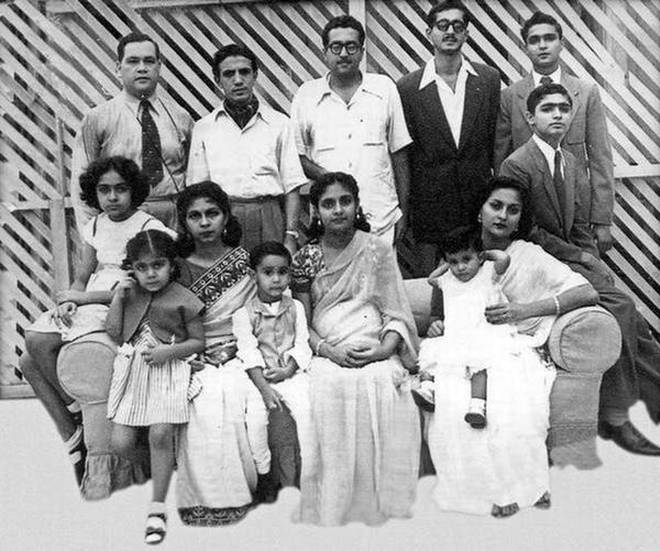
The Padamsee extended family with Ebrahim Alkazi and Alyque Padamsee standing second and fourth from left, respectively | Photo Credit: From ‘Enter Stage Right – The Alkazi/Padamsee Family Memoir’ . courtesy the Alkazi Theatre Archives
The Alkazi and Padamsee clans have played, and continue to play, an extraordinary role in the history of modern Indian theatre
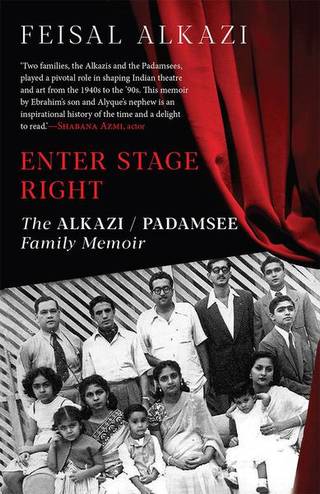
“Oh god, it’s a page turner!” That was the cry from various family members on reading the first draft of Feisal Alkazi’s family memoirs published earlier this year. Titled Enter Stage Right — The Alkazi/Padamsee Family Memoir (Speaking Tiger, 2021), it is an irresistible, exciting read. The narrative details are gripping, the pace exciting, and viewing the times described in the book of the two families in pre- and post-Independence India through the lens of Feisal allows us to enter a world that we can relate to from stories that our parents and grandparents told us of the times they lived through.
Legendary names
Both names are legendary; the Alkazi and Padamsee clans contributed hugely to the formation and recognition of modernism in both Indian theatre and art. It all started when Bobby, or Sultan, Padamsee, the eldest Padamsee brother — the two families had 17 siblings between them, several of whom would distinguish themselves in theatre and the arts — had to return to Bombay after just six months as a student at Oxford due to the outbreak of World War II. What followed was a period of creative efflorescence as
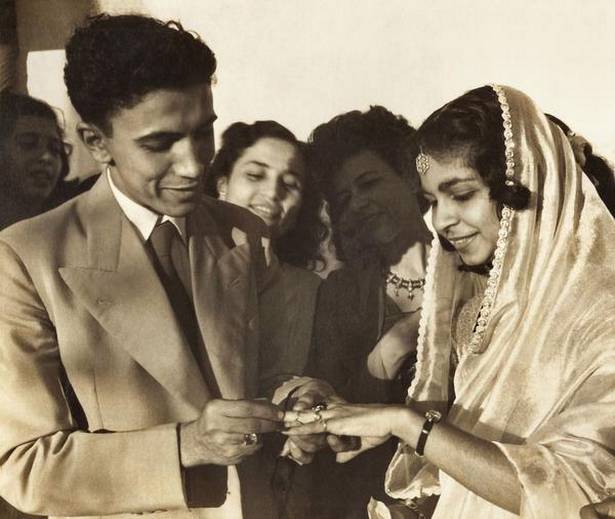
E. Alkazi weds Roshen, October 1946 | Photo Credit: Photo Credit: From ‘Enter Stage Right – The Alkazi/Padamsee Family Memoir’ . courtesy the Alkazi Theatre Archives
Bobby penned more than 100 poems, drew, painted watercolours and, one day in 1943, gathered a group of keen college students around his mother, the Padamsee matriarch Kulsumbai’s, horseshoe-shaped dinner table weighed down with mouth-watering Khoja cuisine. Bobby announced a plan to launch their own theatre group, the aptly named Theatre Group, as an alternative to commercial theatre, inspired by the group theatre movement of 1930s’ New York. One of those in attendance at that dinner was the young Ebrahim Alkazi.
Human angle
The group would flourish over the next few years, and court controversy with productions like an adaptation of Oscar Wilde’s Salomé, in which Bobby’s 19-year-old sister, Roshen, performed the risqué dance of the seven veils. Bobby would die by suicide aged just 24 in 1946, but the group went on, reaching its zenith in the coming decades, and three of his disciples married his sisters to found a cosmopolitan clan — including Ebrahim, who married Roshen. These were heady times of enormous intermingling, set in the dying days of the Raj and the dawn of Nehruvian India. The search for a new way of living creatively through a rich cultural life that was looking for a unique national identity drew in a very intense and close-knit community and family theatre with a galaxy of close friendships between authors, poets, painters, musicians and actors. As Feisal comments in the memoir, “Going to London together in 1947, there was a Roman Catholic like [F.N.] Souza, a Muslim like my dad, a Jew like Nissim Ezekiel, great friends like Krishna Paigankar and Akbar Padamsee, the idea that they were from different communities was not in anybody’s mind at all… we were always in and out of each other’s houses as well, in my family it was all the artists as well as the theatre people. We grew up with that — it gives a human angle to all these great giants that art historians write about.”
The cover of ‘Enter Stage Right — The Alkazi/Padamsee Family Memoir’
After training at the Royal Academy of Dramatic Art in London in 1947, Ebrahim returned home and rejoined Theatre Group. However, following a rift with others in the group, he left and founded his own Theatre Unit company at the Bhulabhai Desai Memorial Institute in the 1950s. The Institute played an important role in nurturing modern Indian art and drama, and Ebrahim
found a space for uninhibited creativity there, before he moved to Delhi in 1962 to head the National School of Drama for 15 years. Over the years, his contribution to widening the scope, subject matter and audience for Indian theatre would be extraordinary, as would those of his brother-in-law Alyque Padamsee, Mahesh Elkunchwar, and Safdar Hashmi. Alyque, known for directing productions ranging from the English version of Girish Karnad’s Tughlaq to Jesus Christ Superstar, has also been called the father of Indian advertising, and played Jinnah in Richard Attenborough’s Gandhi. His first wife was Pearl Padamsee, a stage and film actor, director — her oeuvre included Godspell, the first big musical produced in Mumbai — and producer. Their daughter, Raell Padamsee, runs her own production house, ACE, in Mumbai.
Home to stage
The rich family legacy also continues through Ebrahim’s son Feisal, who started devising plays with friends in Barry John’s Music Theatre Workshop in the early 80s. Although theatre is his first love, Feisal wears many hats — theatre and television director, author, educationist, counsellor, filmmaker and founder of Ruchika Theatre. His works include Noor, a sympathetic, gendered lens on Noor Jahan and Mumtaz Mahal; A Quiet Desire, the story of Rabindranath Tagore and of his brother and sister-in-law Kadambari; the adaptation of Kipling’s The Jungle Book into a coming-of-age story, retitled Yeh Bhi Jungle, Woh Bhi Jungle, in which the character Mowgli epitomises every important transition of adolescence in his search for identity.
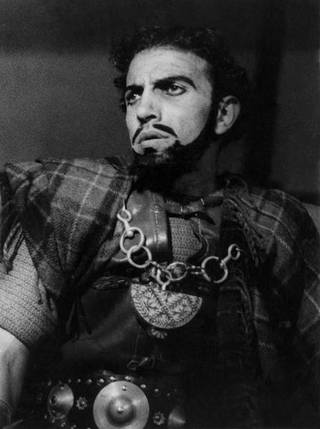
E. Alkazi as Macbeth in a production directed by him | Photo Credit: From ‘Enter Stage Right – The Alkazi/Padamsee Family Memoir’ . courtesy the Alkazi Theatre Archives
Along with his sister, Amal Allana, and her husband, Nissar Allana, Feisal has strongly believed in the mixing of generations in creative work. “I make it a point that the infusion of the next generation in all the years of Ruchika is so crucial. All our kids are there and the people who started it… to keep the generations going and learning from each other.” Radhika, Feisal’s wife, an accomplished actress and arts educator, says, “It was so new to me, this world — in the family, in the home, in the drawing room — your furniture would be on stage, your clothes would be on the stage.” When Zohra Sehgal worked with Feisal in the Ruskin Bond serial Rusty, she found herself wearing a costume that was from Radhika’s trousseau. Feisal recalls her saying, “Hamare gharon mein aise hi chalta hai” (This is how it is in our homes).
The story of these two families, who played such a vital role in the history of theatre and art, is an imperative chapter in the country’s socio-cultural history.
The writer is a Delhi-based artist, arts educator, curator and researcher.
source: http://www.thehindu.com / The Hindu / Home> Society> Spotlight / by Kristine Michael / July 10th, 2021