Category Archives: Leaders

Why the victory of Ashraful Hussain in Assam is poetic justice

ASSAM :

The young poet represents an unapologetic Miya voice, one that the state’s new chief minister has described as a threat to Assamese identity and culture.
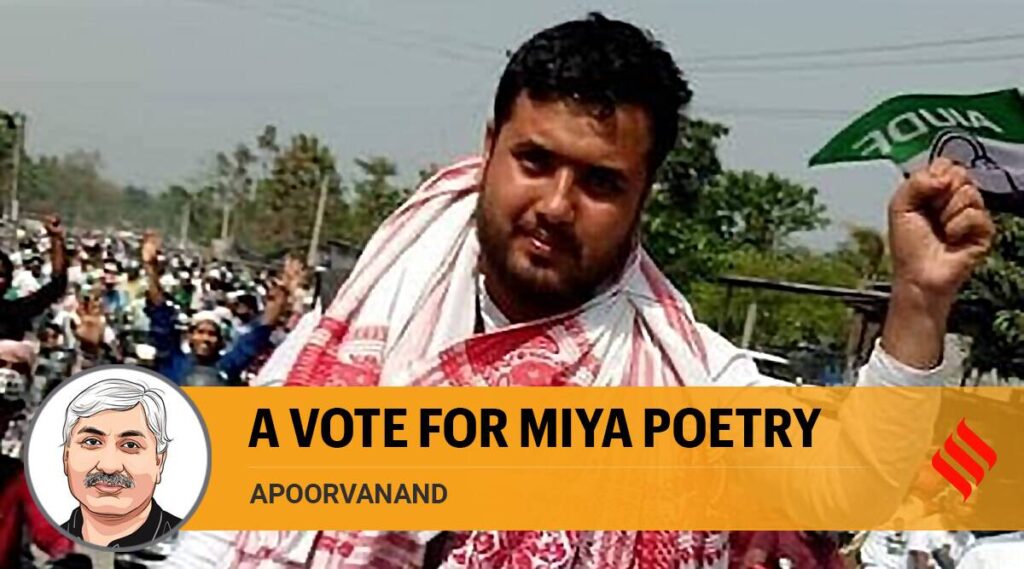
Ashraful Hussain (Twitter/Ashraful Hussain)

In an act of poetic justice, the people of Chenga, a constituency in lower Assam, have sent AIUDF’s Ashraful Hussain, a young Miya poet, as their representative to the newly elected Assam assembly. He is only one of 126 MLAs but the significance of his presence is that he represents an unapologetic Miya voice — one that the state’s new chief minister Himanta Biswa Sarma has declared as a threat to the Assamese identity and culture.

It has been said that the organisational skills of Sarma forced the BJP to prefer him as the new chief minister over the outgoing one but his brazen anti-Muslim and anti-Miya stance in the last five years can be a reason as well. He has openly said that his party did not want votes of the Miya Muslim community and that he wanted another NRC to identify these “outsiders”.

Ashraful Hussain’s victory has to be understood in this context. The word “Miya” is a slur used to describe Muslims who migrated from East Bengal to Assam over several decades, starting from the 19th century, and who live on the Char Chaporis (shifting riverine islands) of Assam. But Ashraful and his fellow poets have reclaimed it and turned it into a badge of honour. A poem written in 2016 by Hafiz Ahmed, the president of the Char Chapori Sahitya Parishad, took Assam by storm and inspired fellow poets. He wrote, “Write down/I am a Miya/My serial number in the NRC is 200543/I have two children/Another is coming/Next summer. /Will you hate him/As you hate me?”

Younger voices like Ashraful Hussain found courage in these plain words of their elder. “Who are they? Why can’t they be allowed to speak and sing the way they do? Ashraful writes: “And though I was born in Assam and pride in/Calling myself an Assamese/The language doesn’t slide down my tongue/My father wears a blue-checked lungi/My mother wears a saree/My sister wears mekhela or churidar/And me, brother, I wear jeans pants.”

For this audacity to make themselves visible and lay a claim for a space in Assam’s cultural landscape, the Miya poets had to pay a price. In 2019, FIRs were lodged against them and they had to go into hiding. I recall a meeting at the Press Club in Delhi organised by the writers of Delhi in their support. Ashraful was supposed to read his poems there but he could not come.

These were the charges against them: The Miya poets were writing in an artificial language, there was nothing like a Miya dialect and they were fracturing the Assamese identity. The truth was that the Miya poets had broken the myth of one single Assamese voice. The people of the Char Chapori use dialects of Mymensingh, Pabna, Tangail, and Dhaka, regions now in Bangladesh, with the influence of Assamese as well as other local languages of Assam.

The question before the people Ashraful calls “choruwa, bhatiya, immigrant shaykh, neo-Asomiya, Mymensinghia” in one of his poems was to describe themselves. Who are they?

Shalim Hussain, a Miya poet, asked, “So what do we call ourselves then? If and only if it is impossible for us to be known simply as Indians or Assamese let us be called ‘Miya’. The difference between Miya and Bangladeshi must be clearly demarcated.” He explained, “… in Assam Miya is a derogatory term used for a specific community — Assamese Muslims of Bengal origin. ‘Miya’ is a matrix within which fall descendants of people who migrated from Tangail, Pabna, Mymensingh, Dhaka, and other districts of present-day Bangladesh. However, there is a class angle to the equation too. An educated Bengal-origin Assamese Muslim who also speaks Assamese might be able to camouflage his ‘Miyaness’. Since I am university educated and speak decent Assamese, I might not be called a Miya, at least until I make it explicit. My cousin, on the other hand, who drives a cycle-rickshaw in Guwahati, will always be one. My class privilege might protect me from the feelings of disgust reserved for my cousin.”

So, it was not for a literary career but to identify with their lesser privileged brothers, who have to face this slur daily, that Ashraful and his colleagues decided to call their poetry Miya poetry.

Ashraful is a soft-spoken, shy person but he has with great grit and determination stood for those who are threatened by the process of the NRC. His poetry gave voice to his people but in the real world of democracy, they needed representation where it mattered. So, he decided to go to his people and ask them, “If he sings for them, can he also be given the authority to speak for them as their representative?” The people of Chenga overwhelmed him with their mandate. A greenhorn in politics, he defeated AGP’s Rabiul Hussain and Sukur Ali Ahmed, a longtime sitting Congress MLA, by more than 50,000 votes.

In the assembly, he will take oath as the representative of his people after the man who wants them disenfranchised takes oath as the Chief Minister. Ashraful Hussain will have the company of his poetry to respond to the violent politics of erasure: “I have grown a bud and two leaves on my hands/I have learnt to write two lines/I have learnt to open my mouth and say/… In the name of my mother who died/In a detention camp, I swear/That this voice in my throat will grow louder/And some day rustle the folds in your ears. /I swear sir, I swear by my dead mother.”

Let us thank the people of Chenga and celebrate this vote for Miya poetry.

source: http://www.indianexpress.com / The Indian Express / Home> Opinion> Columns / by Apoorvanand / May 13th, 2021
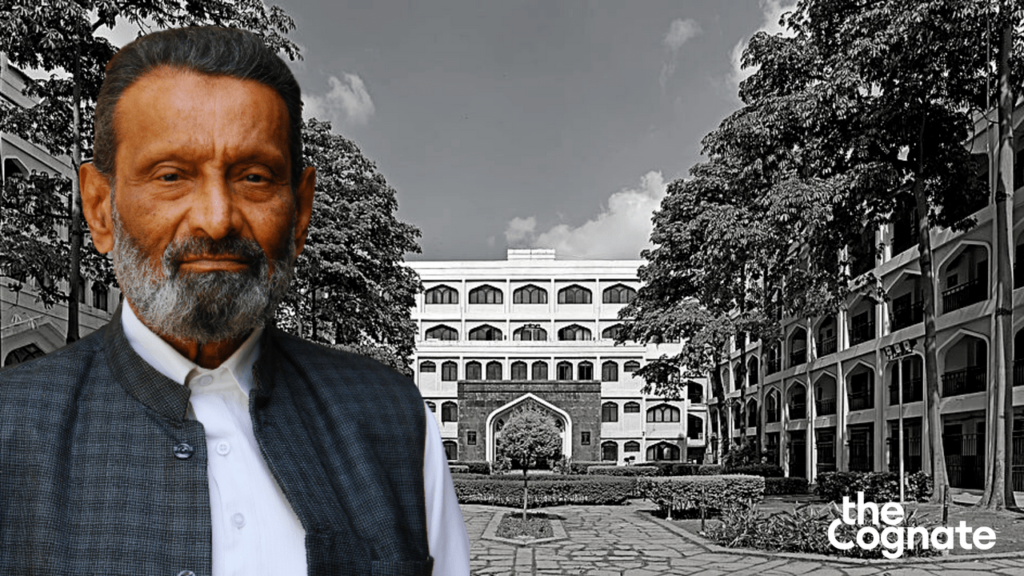
Dr Mumtaz Ahmed Khan, Founder Of Al-Ameen Educational Society Passes Away At 86

Bengaluru, KARNATAKA :

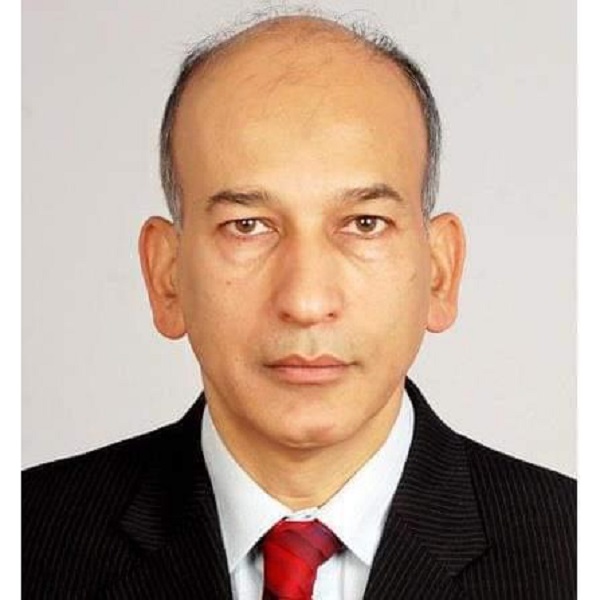
Renowned educationist, founder of Al-Ameen Educational Society and Daily Salar newspaper, and former Pro-Chancellor of Aligarh Muslim University, Dr Mumtaz Ahmed Khan passed away Thursday evening in Bengaluru. He is survived by his wife, one son, and two daughters. He was 86.

Widely referred to as ‘Baba-e-Taalim’, Dr Mumtaz Ahmed Khan founded the Al-Ameen Educational Society in 1966. The Al-Ameen group of Institutions now number more than 200 in Karnataka and all over the country. In Bengaluru, the Al-Ameen institution has various colleges catering to varied streams from pre-university, degree, post-graduation Institute of Management, College of Pharmacy, and Law College to the Al-Ameen College of Education.

Born on 6 September 1935 in Trichy in Tamil Nadu, Dr Khan did his MBBS at Madras University, Chennai in 1963. After getting married he continued his postgraduate studies, M.S. specializing in surgery at Stanley Medical College, Chennai. He moved to Bengaluru in 1965.

In 1966 at the age of 31, he started the Al-Ameen Educational Society also sometimes referred to as the Al-Ameen Movement, which was a pioneering effort to impart education, especially within the state’s Muslim community.

Dr Khan was one of the founders, trustees of ‘Salar’, an Urdu daily newspaper from Bengaluru since 1964; he was also Pro-Chancellor/Treasurer of Aligarh Muslim University.

He is a recipient of several awards like Karnataka Rajyothsava award (1990), Kempegowda Award, Junior Jayees Award and Public Relation Society of India Award.

‘Dr Mumtaz Ahmed Khan Award’ given every year in recognition of exemplary services by members of the community is named after him.

source: http://www.thecognate.com / The Cognate / Home> News / by Shaik Zakeer Hussain / May 28th, 2021

Hyderabad NGO to Set Up Four Oxygen Generation Plants

Hyderabad, TELANGANA :

The first plant is expected to be up and running in Hyderabad next month,” Prof Amirullah Khan, coordinator of Sahayata Trust informed. — IANS

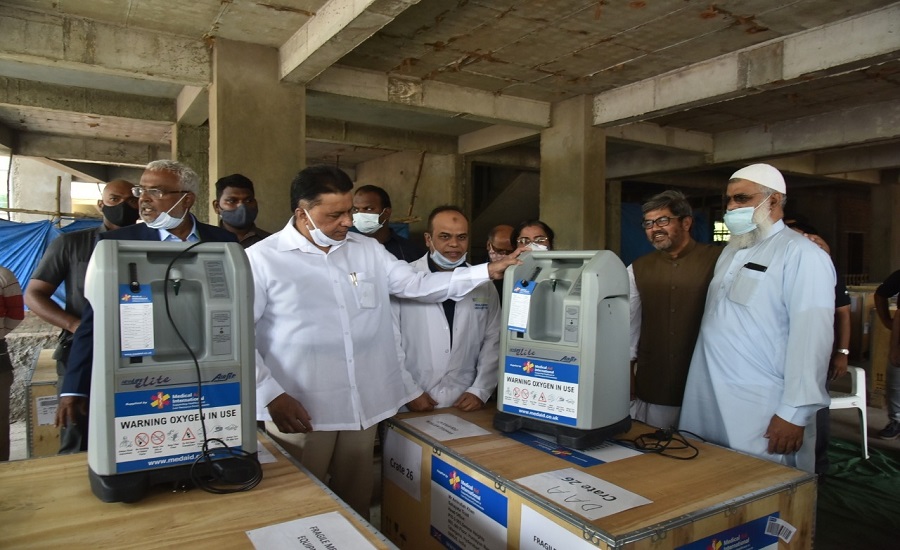
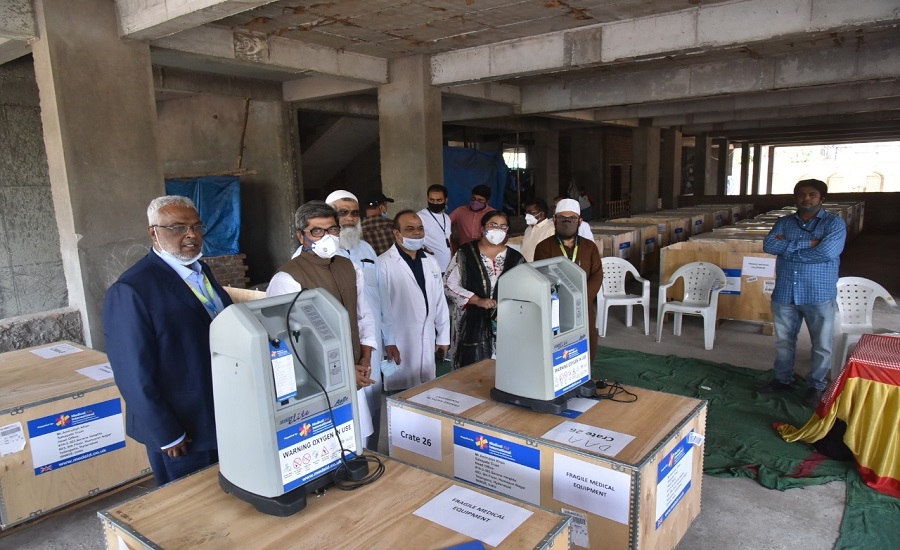
The NGO is also receiving 400 high quality oxygen concentrators from different charities in the United Kingdom and the United States which is described as the world’s largest donation of oxygen concentrators.

Hyderabad :

Sahayata Trust, a Hyderabad-based NGO, plans to set up four medical oxygen generation plants to cater to the requirements of hospitals treating Covid patients.

Each plant will have a capacity of 4,500 litres per day and will come up at a cost of Rs 1 crore each. Two plants will come up in Hyderabad and one in Gujarat. The NGO is yet to decide on the location for the fourth plant.

“The first plant is expected to be up and running in Hyderabad next month,” Prof Amirullah Khan, coordinator of Sahayata Trust, told IANS on Monday.

The development economist said the NGO would be importing the plants. He said these plants would meet the requirements of various hospitals treating Covid or other critically ill patients.

He pointed out that the NGO is also receiving 400 high quality oxygen concentrators from different charities in the United Kingdom and the United States. He described it as the world’s largest donation of oxygen concentrators.

The devices will be allocated on a per-need basis to different NGOs across Hyderabad, Lucknow, Allahabad, Delhi, Ranchi, Bhopal and other cities. — IANS

The first consignment comprising 170 devices arrived in Hyderabad from the UK by a special flight of Qatar Airways on Friday. The second consignment of 270 concentrators is scheduled to arrive next week.

Sahayata Trust has started distributing concentrators to different healthcare organisations in Telangana and other states. “The relief effort will add oxygen to the efforts of NGOs scrambling to procure oxygen to save as many lives as they can,” said Sahayata Trust CEO Syed Aneesuddin.

The devices will be allocated on a per-need basis to different NGOs across Hyderabad, Lucknow, Allahabad, Delhi, Ranchi, Bhopal and other cities. The organisation included Access Foundation, Safa Baitul Maal and SDIF.

Different NGOS across international borders have joined hands for the noble cause at a time when several lives are being lost across India due to shortage of oxygen cylinders and oxygen concentrators during the second wave of Covid-19.

Donation of concentrators is a meticulously coordinated relief effort by UK-based charities managed by the Indian diaspora including Maahir Charity, Deccan Medical College Alumni Association, and Medical Aid in coordination with the US-based Indian Muslim Relief & Charities (IMRC), the parent body of Sahayata Trust.

Syed Aneesuddin thanked Hyderabad Member of Parliament Asaduddin Owaisi who played an important role in helping the consignment reach India within a short span of time.

“These are high quality oxygen concentrators with dual outflow of oxygen enabling two patients to use the same machine at a time. We are training people to use the device using the device manuals received from England. This is a daunting task to coordinate the allocation as well as train and equip the personnel to handle the device in a very short time, especially since every passing minute increases danger of loss of life for people struggling to find oxygen support,” said Amirullah Khan.

India needs about one lakh oxygen concentrators. “The government has been able to import only 1000 from the USA, which means there is a deficit of 99%. In such savaging times, the import of 400 units is a small but significant effort in saving more lives”, said former civil servant Prof Amirullah Khan.

He thanked the state and central governments for waiving the import duty on the equipment. He also thanked Chief Secretary Somesh Kumar for taking up the matter on an urgent basis and Commissioner Commercial Taxes Neetu Prasad who went out of the way working late at night to grant ‘real-time approval’. Due to her personal interest in expediting the process, the consignment was ready for pickup within three hours after arrival. — IANS

source: http://www.clarionindia.net / Clarion India / Home> Editor’s Pick> India / by IANS / May 24th, 2021

Sohail Razzack, Former MD, Gandour India, Passes Away

Hyderabad, TELANGANA / NEW DELHI :

Sohail Razzack.

He was also a member of the Governing Body of Delhi Education Society which runs a number of schools in Delhi including the Anglo Arabic School

New Delhi :

Former Managing Director of Gandour India Food Processing  Pvt. Ltd, Cherlapally, Hyderabad, Sohail Razzack, passed away in New Delhi on May 11 of cardiac arrest. Sohail was the only son of late Hakim Mohammed Abdur Razzack (Founder Director, CCRUM) and Tabiba Ummul Fazal. He was 58 years old.

Born in a respectable Maulvi khandaan of Hyderabad, Sohail Razzack grew up in Delhi and did his schooling from St Xavier’s High School. He went on to do MBA from XLRI, Jamshedpur.

Well known in the FMCG sector, Sohail Razzack, an international marketing and business professional, served in the corporate world and worked with several multinational companies in India and overseas like Cadbury India Limited, SmithKline Beecham, Sprint RPG, Black and Decker and ICI Paints. As Director, Marketing and Export of Pinehill Arabia Food Limited, Sohail Razzack was responsible for expanding the Indomie brand of instant noodles in the Middle East and North Africa region.

As MD, Gandour India, a leading food processing manufacturer in the Middle East, North Africa and India, Sohail’s business acumen led to the rise in popularity and sale of Safari Chocolates, Yamama cakes, Tourist wafers and other confectionary items that the 160-year-old company is famous for.

Coincidently, his first job as Field Sales Executive where he successfully launched Cadbury’s Dollops ice cream and his last as MD, Gandour India, were based out of his hometown, Hyderabad.

Sohail  was also a member of the Governing Body of Delhi Education Society which runs a number of schools in Delhi including the Anglo Arabic School. He taught and lectured at several management institutes across India, and was a popular and admired teacher and mentor.

A dreamer and romantic at heart, Sohail had three passions, Mohammed Rafi, cricket and travelling.

A die-hard fan, Sohail had a Rafi song for any occasion. No trip to Mumbai would be complete without having offered fatiha at Rafi Sahib’s grave. He had even visited the late singer’s birthplace at Kotla Sultan Singh. Sohail’s passion and deep curiosity for exploration led him to travel extensively around the world either for pleasure or to personally promote the brands he worked for, even in the smallest, most remote corners of the country. He had recently started documenting his travels to share with the world but alas, Allah had other plans for him.

Sohail was an honest, humble, down to earth and God fearing person. He emphasized on forgiveness and charity as great virtues. Always willing to lend a helping hand, he touched the lives of many people with his infinite wisdom, guidance and generosity. He will be greatly missed.

He leaves behind his mother, wife, two sons, two daughters, and several family members who loved him dearly.

May Allah grant him forgiveness and elevate him to the highest place in Jannat ul Firdaus. Aameen.

source: http://www.clarionindia.net / Clarion India / Home> Indian Muslim / May 17th, 2021

Nagpur Covid Hospital Run by Jamaat Lauded for Doing Excellent Job

Nagpur, MAHARASHTRA :

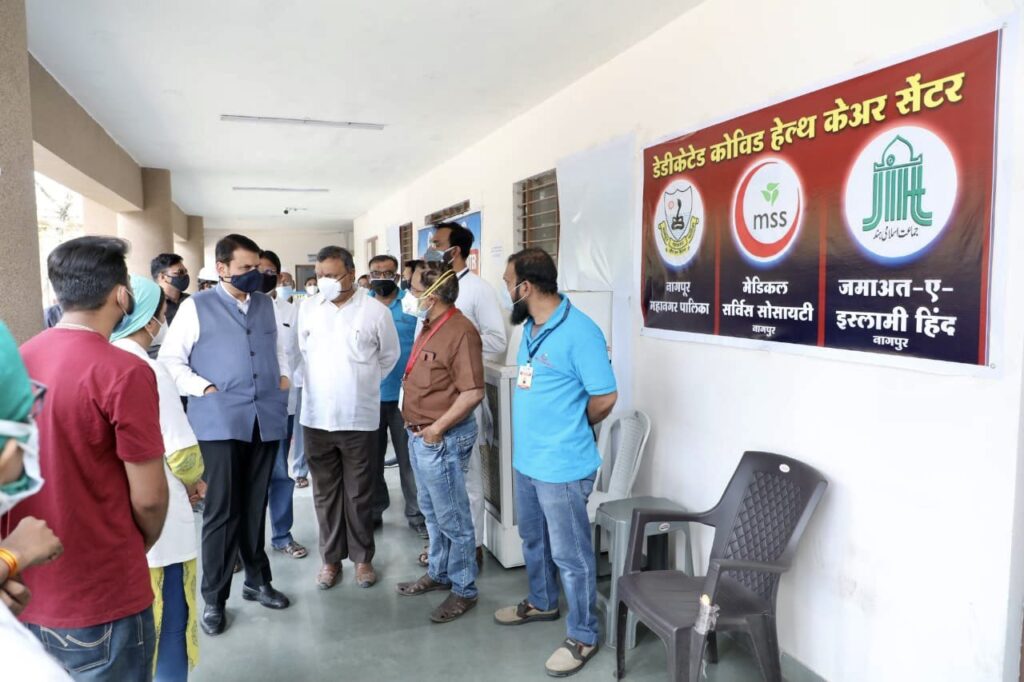
Former Chief Minister of Maharashtra Devendra Fadnavis visited the Dedicated Covid Health Center and commended the people associated with it.

The successful experience has encouraged the organisers to plan a full-fledged hospital after the pandemic is over.

New Delhi :

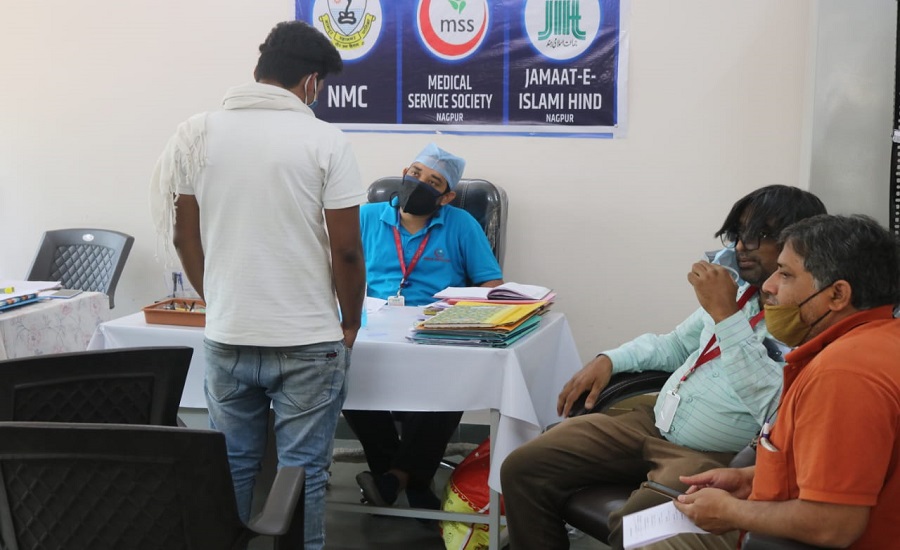
A Dedicated Covid Health Center being run by Jamaat-e-Islami Hind in Maharashtra’s Nagpur city for the last 50 days has treated up to 500 patients, say the organisers of the Centre. The 78-bed Centre or hospital is today a boon not only for the people of the city but the entire Vidarbha region as well as neighbouring Madhya Pradesh and Chattisgarh as Nagpur shares borders with the two states and serves as regional hub of medical services.

When this hospital was launched on April 1, Maharashtra was reeling under the second wave of coronavirus pandemic. Nagpur was the worst-hit in the state. Every day 8,000 new positive cases were being reported here while the health services had totally collapsed. The hospital came as a big relief as it started offering free service with dedicated staff and volunteers.

The hospital is run from a building owned by the NMC. “The building was lying unused. The NMC wanted to launch a Covid hospital but they were unable to do it. We offered our services, to which they agreed. So it’s a joint venture of the Jamaat as well as NMC. MSF, or Medical Service Society, an NGO run by the Jamaat, is the third partner,” Dr. Anwar Siddiqui told Clarion India over the phone from Nagpur. Siddiqui is in-charge of the hospital and heads the Jamaat-e-Islami in Nagpur.

The hospital was launched on April 1.

The Jamaat is bearing all the cost of running the hospital. The NMC has provided just three doctors. Rest of the 14 doctors and a host of nurses and other staff have been arranged by the Jamaat. According to Siddiqui, four doctors, including himself, are giving free service while the rest of the doctors and workers have been hired.

The hospital has been receiving mostly chronic cases. It’s notable that during the last 50 days just eight patients have died here. Rest of the patients have been discharged after treatment. “Our recovery rate is best among all the Covid centres of NMC. The Commissioner of Nagpur appreciated us saying that even after observing Ramzan fast you people are giving your services so diligently,” Siddiqui said.

The commissioner is not alone in acknowledging the dedication of people running the facility. Former Chief Minister of Maharashtra Devendra Fadnavis was among a host of dignitaries who visited the hospital and commended the people associated with it. He said in a tweet, “Today our society needs such people and organisations who understand the pain and grief of people and who try to overcome their problems. We are glad to know that the Jamaat has come forward for this work and is trying to help out during this huge pandemic”.

Other notable dignitaries who have visited the hospital are state’s health minister Rajesh Tope, state unit president of Congress Party Nana Patole, Mayor of NMC Dayashankar Tiwari and local MLA.

The 78-bed Centre or hospital is today a boon not only for the people of the city but the entire Vidarbha region as well as neighbouring Madhya Pradesh and Chattisgarh.

Initiatives like this are a sending positive message about the Muslim community which of late has been at the receiving end given the communally surcharged atmosphere created by vested interests. National media, especially Hindi newspapers and TV channels, have given good coverage to the hospital.

Siddiqui said the hospital has drawn the attention of one and all. “A number of individuals and voluntary organisations run by non-Muslims are coming to us with donations and items like face masks, sanitisers and oxygen cylinders.”

The management committee of Nagpur’s Jama Masjid has declared that the weekly Friday collections at the mosque will be sent to the hospital as long as this facility continues.

The hospital has been launched with three months’ planning. That means it will run until the end of June. Siddiqui said his team is ready to extend it for three more months if need arises. Health experts are warning that a third wave of Covid is imminent. However, right now new cases are coming down. For the last five to six days, the hospital is receiving less number of patients. “For the first 45 days all the 78 beds were fully occupied. Now our occupancy is between 60 and 65,” he said.

While hospitals and clinics elsewhere faced shortage of oxygen cylinders, the Jamaat faced no such crisis. “We had bought 100 cylinders soon after the first wave. We were already refilling and supplying them to needy patients. Therefore, supply of oxygen to our hospital has never been an issue” he said.

The experience of running this temporary facility has made the organisers realize the need to have a regular hospital. “Once the Covid pandemic is over we will start working on a full-fledged hospital. Our community especially needs it direly,” Siddiqui said.

source: http://www.clarionindia.net / Clarion India / Home> Big Story / by Shaheen Nazar, Clarion India / May 21st, 2021

Lucknow’s Biggest Eidgah Aishbagh Turns into Covid-19 Vaccination Center

Lucknow, UTTAR PRADESH :

The Aishbagh Eidgah, which is the biggest Eidgah in Lucknow, will now double up as a COVID-19 vaccination centre. This will be the first religious establishment in the state capital which will be providing jabs against COVID-19 to the people. Till now vaccines were being administered only in hospitals in Lucknow. Two inoculation centres — one for ages 18-44 and another for people aged 45 and above — have been set up at the Eidgah.

Beneficiaries of all age groups above 18 years, who have registered on the CoWin portal, will be able to get the jab here. The officials of the All India Islamic Centre will also be assisting people with online registration for getting the vaccine shot. The nodal officer for COVID-19 in Lucknow, Roshan Jacob, reached Aishbagh Eidgah on Thursday to take stock of the preparations. “It is a very good initiative that has been taken by the Islamic Center. This will facilitate the people to get vaccinated,” she said.

Meanwhile, Imam Idgah, Lucknow and Chairman of Islamic Center of India, Maulana Khalid Rashid Farangi Mahli said, “People should keep in mind that along with precaution for prevention of epidemics like COVID-19, the best and most effective thing is vaccination. Lucknow has a lot of population, especially old Lucknow. Keeping in mind the population, two centres have been made at the ground of Eidgah. One center is for people between 18 years to 44 years and one center is for people aged 45 years or more.”

“The huge space here helps in maintaining social distancing and also lowers the risk of transmission of infection. There are a lot of people who are unable to register themselves for vaccination, our team at Islamic Centre of India will help such people in getting themselves registered online for the jab,” he added.

Meanwhile, the fresh cases of COVID-19 infection continue a downward trend in Uttar Pradesh as 6,725 new infections were reported in the last 24 hours. Additional Chief Secretary (Health) Amit Mohan Prasad said 13,590 patients were discharged in the last 24 hours, while there were 11,6434 active cases in the state. Of these, 82,801 were in infected home isolation. The recovery rate in the state has risen to 91.8 percent. The positivity rate in the state has come down to 2.4 per cent, while 238 corona-infected people died in the state. In the last 24 hours, 2,91,156 samples were investigated in the state.

source: http://www.in.news.yahoo.com / Yahoo! News / by News18 / Thursday 20th, 2021

Jamia professor, who put out Twitter request looking for a bed for herself, dies of Covid

According to colleagues and friends, Dr Nabila Sadiq, a PhD scholar from JNU, was teaching and helping students with their thesis until April 20.

NEW DELHI :

Dr Nabila Sadiq

Nearly a week after she tested positive for Covid — and sought an ICU bed for herself on Twitter — a 38-year-old assistant professor from Jamia Millia Islamia died at a Faridabad hospital on Monday night.

According to colleagues and friends, Dr Nabila Sadiq, a PhD scholar from JNU, was teaching and helping students with their thesis until April 20.

Ten days before Nabila’s death, her mother Nuzhat (76) had also died of Covid-related complications. Her father was hospitalised for Covid but was eventually discharged and is under home quarantine.

Friends and family said Nabila wasn’t aware of her mother’s death, and died “worrying” about her parents.

Among her last tweets, on May 2, was: “At this rate no one will stay alive in Delhi at least.”

Laraib Neyazi (27), an MA student from Jamia, said, “When I came to know about her health, I rushed to her home with other students, and we started looking for a bed. We found one at Alshifa hospital, where she also tested positive for Covid. Two-four students would always stay at the hospital. Meanwhile, we rushed her mother to Sanjay Gandhi Hospital but she passed away. We didn’t tell Nabila because she was critical…”

Students said Nabila was a caring teacher who loved writing poems, and discussing politics and gender theory. Her students helped perform her mother’s last rites on May 7. Around the same time, Nabila’s health deteriorated.

Waqar, a student from JMI, recalls calling “every hospital in Delhi-NCR to get an oxygen bed”.

“Her friends helped us get a bed at Fortis Hospital in Faridabad. However, her oxygen levels dropped to 32%. After a CT scan, the doctor said her lungs were damaged. I received hundreds of calls every day from her colleagues, relatives and friends asking about her health. We didn’t know what to do” said Waqar.

“Every student who was pursuing gender studies wanted to do their PhD under her mentorship. She helped so many people during the pandemic. We would talk to her and tell her that her parents were missing her, hoping she would feel better and recover. But on Saturday night she was put on a ventilator,” said Waqar.

Nabila’s doctors said she wasn’t responding to medicines and treatment. She died around 11 pm on Monday.

On Tuesday, her students and friends performed her last rites at Mangolpuri, where her mother was buried ten days earlier.

Nabila’s father Sadique (80), a retired professor who taught at Aligarh Muslim University and JNU, was told about his daughter’s death in the afternoon.

He told his family members: “I think she loved her mother more and left with her… leaving me alone here.”

Nabila’s colleague and friend Tarannum Siddiqui said she feels helpless because Sadique is alone. “I have known Nabila and her family for seven years. They helped me last month when I had Covid. When Nabila was admitted to the ICU, I sent her messages on her phone. I knew she wasn’t reading them but I was waiting for her to recover, read those texts and meet me. She was an honest woman. We both taught gender studies. I can’t believe she has left me. JMI has lost a great academician,” said Tarannum.

Manasi Singh, a professor from the Central University of Gujarat, said she has known Nabila for 18 years. “We pursued our Master’s and PhD at JNU together. She was a good friend and a great scholar. I would watch her seminars online and admire her work. She was jovial and I loved her child-like innocence,” said Singh.

source: http://www.indianexpress.com / The Indian Express / Home> Cities> Delhi / by Jignasa Sinha, New Delhi / May 19th, 2021

Builders of Bengal: Begum Rokeya

Pairaband Village (Rangpur), BENGAL (British India):

A PAST WE MUST PRESERVE | She was a pioneer of women’s education and feminist writing who started the first school for education of Muslim girls in Calcutta

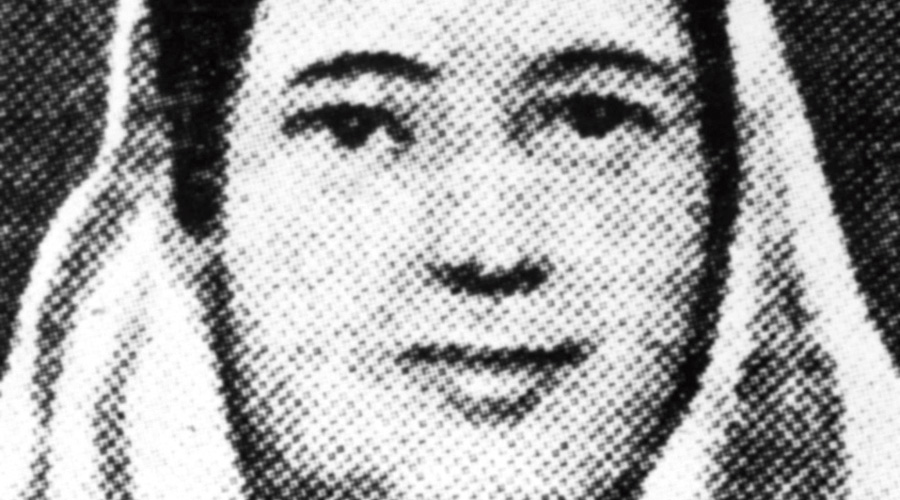
Begum Rokeya, 1880-1932 / File picture

Rokeya Sakhawat Hossain, popularly known as Begum Rokeya, was a pioneer of women’s education and feminist writing who started the first school for education of Muslim girls in Calcutta. She considered education to be crucial to women’s emancipation.

She was born in 1880 at Pairaband village in Rangpur, now in Bangladesh. Her elder sister Karimunnesa, who was a poet who wrote in Bengali, was a great influence on her life. Rokeya at 18 was married to Khan Bahadur Sakhawat Hussain, who was 38 and the deputy magistrate of Bhagalpur.

A liberal man who spoke Urdu, he encouraged his young wife to continue her studies in Bengali and English and to write.

Rokeya chose to principally write in Bengali and her works uphold the equality of men and women. Matichur (1904, 1922) is a two-volume collection of her essays on her thoughts about women and society, Padmarag (1924) is about the oppression of Bengali wives and Abarodhbasini (1931) is a robust critique of the severe forms of purdah for women.

Ten years before the American novelist Charlotte P. Gilman published Herland, Begum Rokeya wrote her feminist utopia Sultana’s Dream in 1905. Written in English, it is a novella set in Ladyland, ruled by women.

A few months after her husband’s death in 1909, Begum Rokeya started Sakhawat Memorial Girls’ High School in Bhagalpur, with five students. She moved the school to Calcutta in 1911, where it is still located, but is run by the government.

In 1916, Begum Rokeya founded Anjuman-e-Khawateen-e-Islam (Islamic Women’s Association) to hold discussions on women, education and progress. She advocated change in Muslim women’s lives and spoke up against rigidity and conservatism.

She went from door to door to ask Muslim families to send their daughters to school. She was engaged till the very end of her life in ideas and activities that would lead to the empowerment of women. She passed away on December 9, 1932, shortly after presiding over a session of the Indian Women’s Conference.

Bangladesh observes Rokeya Day on her death anniversary every year.

source: http://www.telegraphindia.com / The Telegraph Online / Home> Culture> People / by Chandrima S. Bhattacharya / March 28th, 2021

Aligarh Muslim University senior professor dies of Covid

Aligarh, UTTAR PRADESH :

The incident takes the number of serving and retired faculty members who have died because of Covid or Covid-like symptoms to at least 39.

Professor Mohammad Nasiruddin, 55, from the department of pharmacology died on Sunday / File picture

A senior professor of Aligarh Muslim University has succumbed to the coronavirus disease at the varsity’s Jawaharlal Nehru Medical College, according to officials, taking the number of serving and retired faculty members who have died because of Covid or Covid-like symptoms to at least 39. 

Professor Mohammad Nasiruddin, 55, from the department of pharmacology died on Sunday.

Professor Shahid Ali Siddiqui, principal of Jawaharlal Nehru Medical College, said Nasiruddin had tested positive for Covid-19 and had been admitted to the hospital two weeks ago.

Students of the AMU have submitted a memorandum to vice-chancellor Tariq Mansoor urging him to set up separate vaccination centres on campus for university staff and students.

At least 18 serving and 21 retired AMU faculty members have died of Covid or Covid-like symptoms.

On Sunday evening, AMU students took out a candle march in memory of the serving and retired faculty members.

AMU proctor professor Wasim Khan told reporters on Sunday “according to available information, none of the AMU teachers who lost their lives to Covid-19 had been vaccinated”. He said the authorities would consider the students’ demand for separate vaccination centres for them and university staff. 

source: http://www.telegraphindia.com / The Telegraph Online / Home> India / by PTI, Aligarh / May 18th, 2021

Shahid Jameel quits as head of virus genome sequencing group

Aligarh, UTTAR PRADESH / NEW DELHI :

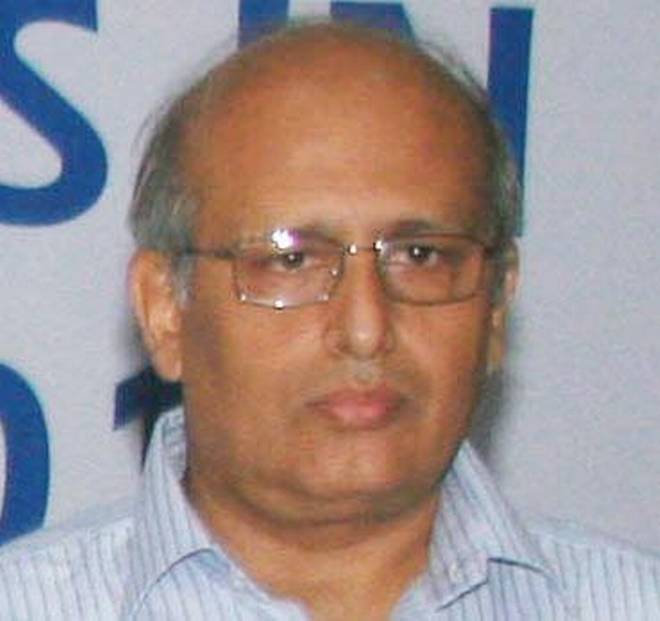
Virologist Shahid Jameel. File   | Photo Credit: Eswarraj R

The eminent virologist did not give any reasons for his departure

Shahid Jameel, eminent virologist and head of the advisory group to the Indian SARS-COV-2 Genomics Consortia (Insacog), resigned from his post on Friday.

Dr. Jameel confirmed to The Hindu that he’d quit but did not give any reasons for his departure.

Multiple scientists who are part of Insacog — a group of 10 laboratories across the country, tasked with tracking evolving variants of the coronavirus — told The Hindu that Dr. Jameel’s decision appeared to be sudden as he hadn’t communicated reasons for his resignation to consortium members but one of them cited “government pressure” as a potential reason.

Dr. Jameel, who is Director, Trivedi School of Biosciences at Ashoka University has been critical of aspects of the government’s handling of the pandemic.

On May 13, in an invited opinion piece for the New York Times, Dr. Jameel summarised India’s response to the multiple waves and the uneven vaccination rollout and concluded by saying “scientists were facing stubborn resistance to evidence-based policy-making. On April 30, over 800 Indian scientists appealed to the Prime Minister, demanding access to the data that could help them further study, predict and curb this virus. Decision-making based on data is yet another casualty, as the pandemic in India has spun out of control. The human cost we are enduring will leave a permanent scar.”

The Insacog, setup in December, faced initial challenges with funds and equipment but since March has considerably accelerated sequencing samples from all over the country for variants. It has been tracking international variants of concern as well as discovered the so called ‘Indian variant ‘ (B.1.617) that is believed to be instrumental in India’s devastating second wave.

source: http://www.thehindu.com / The Hindu / Home> News> National / by Jacob Kohsy / New Delhi – May 16th, 2021