Category Archives: Leaders

The Revolt of 1857: Maulavi Ahmadullah Shah, the Rebel Saint of Faizabad

The Maulavi of Faizabad managed to keep the city free from British rule for almost a year until his death at the hands of British agents on June 5, 1858.

Faizabad (Ayodhya District), UTTAR PRADESH :
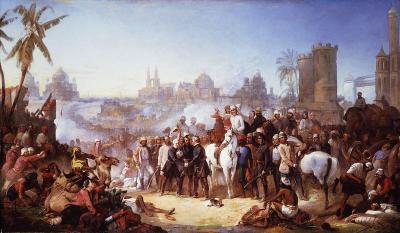
The Relief of Lucknow, 1857, by Thomas Jon Barker. Photo: Wikimedia Commons

Ahmadullah Shah, born in 1787, more famously known as Maulavi of Faizabad, was one of the leading figures of the great Indian revolt of 1857. In the Awadh region, Maulavi Ahmadullah Shah was known as the ‘Lighthouse of Rebellion’. Hailing from a noble warrior family of Awadh in Faizabad, he grew up to be a political leader committed to armed revolutionary insurrection against British rule in India.
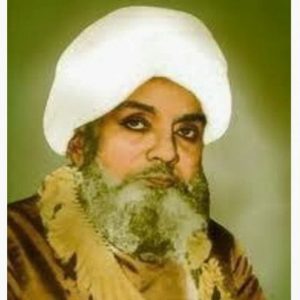
Maulavi Ahmadullah Shah. Credit: YouTube screengrab

During the freedom struggle, Maulavi made Faizabad the centre and launched revolts in all of the Awadh region. He made the local mosque Masjid Sarai located in Chowk area of Faizabad his headquarters. As he liberated Faizabad and the larger part of Awadh region, he used the premises of this mosque to hold meetings with rebellion leaders.

Maulavi Ahmadullah Shah kept Faizabad free from British rule for almost one year, until his death at the hands of British agents on June 5, 1858.

According to researcher and historian Ram Shankar Tripathi, “With being a practicing Muslim, he was also the epitome of religious unity and Ganga-Jamuna culture of Faizabad. In the revolt of 1857, royalties like Nana Sahib of Kanpur, Kunwar Singh of Arrah fought alongside Maulavi Ahmadullah Shah. Maulavi’s 22nd Infantry Regiment was commanded by Subedar Ghamandi Singh and Subedar Umrao Singh in the famous Battle of Chinhat.”

Tripathi narrates, “Maulavi wanted Raja Jagannath Singh of Pawayan, a zamindar in district Shahjahanpur of Uttar Pradesh, to join the anti-colonial war. On June 5, 1858, with prior appointment, he went to meet Raja Jagannath Singh in his fortress-like house. On arriving at the gate, he was greeted with a volley of gunshots from Jagannath Singh’s brother and retainers. The Maulavi breathed his last on the spot.”

“The martyr’s head was severed and carried in a piece of cloth with blood still oozing from it to the district magistrate, Shahjahanpur, by the zamindar. The district magistrate was at lunch with his friends. But the depraved feudal lord rushed in and presented the severed head of the hero on the dining table of the district magistrate. With a reward of Rs 50,000, he returned home, flying atop the flag of loyalty.”

According to another historian Roshan Taqui, “Maulavi use to bring out revolutionary pamphlets mobilising the masses to do ‘Jihad’ against the British. Maulavi was arrested by the British in January 1857 and was held captive in Faizabad, but three months before the revolt broke out in Lucknow on June 3,  he escaped and launched a war against the British in Awadh region including Faizabad, Lucknow and Shahjahanpur.”

“During the revolt, the revolutionaries appointed him as chief of 22nd Infantry Regiment that fought the famous battle of Chinhat in Ismailganj of Lucknow on June 30, 1857, against British forces led by Henry Lawrence. Britishers were badly defeated in this war,” informed Roshan Taqui.

British officers like George Bruce Malleson and Thomas Seaton have made mentions about courage, valour, personal and organisational capabilities of Maulavi Ahmadullah Shah. Malleson has repeatedly mentioned Ahmadullah in the History of Indian Mutiny, a book written in six volumes covering the revolt of 1857.

source: http://www.thewire.in / The Wire / Home> History / by Arshad Afzal Khan / June 05th, 2018
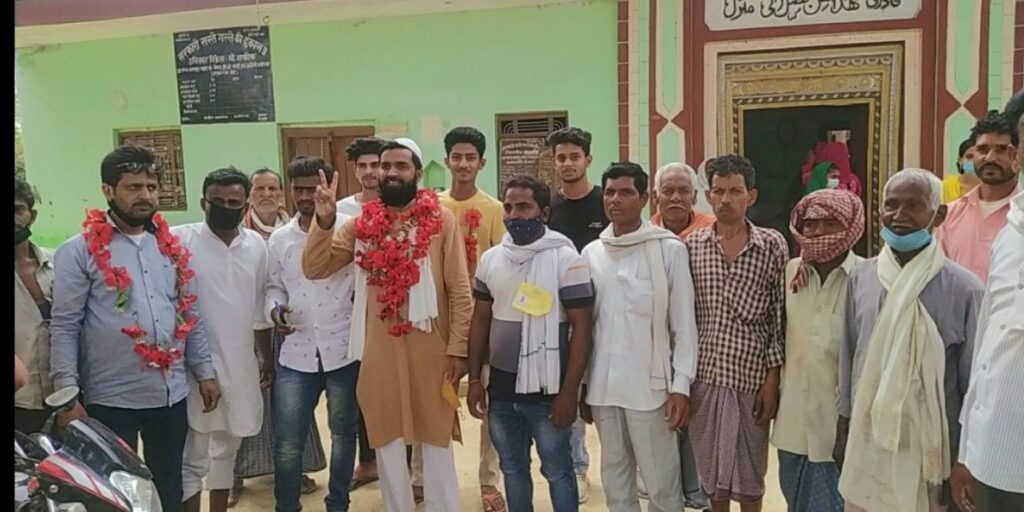
Ayodhya: Muslim Cleric Wins Panchayat Poll in Hindu-Dominated Village

Hafiz Azeemuddin is part of the only Muslim family in Rajanpur village.

Rajanpur Village (Ayodhya ), UTTAR PRADESH :

Hafiz Azeemuddin after winning the election. Photo: Special arrangement

Ayodhya: 

In an unprecedented show of brotherhood that reaffirms the syncretic soul of Ayodhya, a Muslim cleric who is part of a lone Muslim family in Hindu-dominated Rajanpur village in Ayodhya district won the gram pradhan election with a thumping margin, defeating six other candidates in the fray — all from the majority Hindu community.

Hafiz Azeemuddin, who considers the panchayat poll victory as his Eid gift, attributes his success to his Hindu brethren, who reposed faith in his leadership. This win, however small it may be, once again buried the concept of majority-minority vote-bank politics in what may be considered the symbolic epicentre of Hindutva — Ayodhya.

Azeemuddin and his 27 family members are the only Muslim voters in the village. He received 300 of the total 600 votes polled. “I am sure that of the 200 votes I secured, only 27 will be from Muslims – because in my village there are only 27 Muslim voters,” Azeemuddin told The Wire.

Rajanpur village, which comes under the Mawai police station area of Rudauli assembly constituency in Ayodhya district, has proved that bonhomie and trust between Hindus and Muslims continues to live on.

Azeemuddin is a farmer by profession and graduated from an Islamic madrasa. He also taught in a madrasa for ten years before moving on to take care of his family’s 50-bigha farm.

Reacting to this election result, where Hindu voters came together in favour of a Muslim candidate, Girish Rawat , a local, said, “This is an example of how the fabric of communal harmony is intrinsic to our society.”

“We have not voted on the base of religion, we have voted for the person who would be good for us. Despite being religious Hindus, we voted for a Muslim cleric. This shows to what extent our souls are secular,” said Shekhar Shau.

“It is a manifestation of our pluralism. It is quite obvious that our idea of a syncretic India survives despite all the odds. Let us strengthen such bonds of harmony and fraternity,” said Athar Hussain, secretary of the Ayodhya Mosque Trust.

source: http://www.thewire.in / The Wire / Home> Politics> Religion / by Arshad Afzal Khan / May 12th, 2021

One Muslim Secures Seat In Puducherry Out Of 10 Who Contested

PUDUCHERRY :

Out of the 10 Muslims from different political parties who contested in the Puducherry 2021 elections, one candidate – A. M. H Nazim from the DMK (Dravida Munnetra Kazhagam) won the Karaikal South seat with 17,042 votes. 

The other Muslim candidates who contested include A Mohamad Kassim, R Anifa and C K Ummer Master from SDPI (Social Democratic Party of India), N Sharmila Begum, M Faritha Begum, and A Mohamed Yousuf from NTK (Naam Tamilar Katchi), S Mohamed Seedique from AMMK (Amma Makkal Munnetra Kazagam), A Fazil from DMDK (Desiya Murpokku Dravida Kazhagam), Adv V P Abdul Rahman from AINRC (All India N.R. Congress) and two independent candidates- Mohamed Saleem and Reyaz Ahmed. 

In the Puducherry elections, the All India NR Congress won ten seats and its ally BJP six seats. The AINRC alliance is set to form the next government in Puducherry. The Congress-led Secular Democratic Alliance (SDA) saw DMK win six seats, while the Congress was reduced to two seats.

Kazi Syed Karimuddin : Tribute to a great legend

Yavatmal (Vidharbha ) ,MAHARASHTRA :

Vidarbha has been a fertile soil for many social reformers and intellectuals. It has played an active role in the nation’s destiny and its social, cultural and political rivulets have flown into and enriched the great sea of national civilization. One such luminary who emerged from Yavatmal was Kazi Syed Karimuddin. He rose to be a great criminal lawyer of the region and played a critical role in the drafting of the Indian constitution.

Kazi Karimuddin was born on 19 July 1899, at Darwah in Yavatmal district of Maharashtra to Kazi Syed Nasiruddin and Dayanath Begum. He had his school education at Mohamedan High School, Amravati. He graduated from Morris College, Nagpur and obtained his postgraduate degree in economics from Aligarh Muslim University. He later qualified for law.  He married Qadirunnisa Begum (May 24, 1926) .


Kazi Karimuddin had an active presence in social, legal, judicial and political circles in Yavatmal. He was Vice Chairman, District Council (1924-28) Sub-judge (1928-31) President, Anjuman Middle School (1932-37) and Public Prosecutor (1939-45). He was member of Constituent Assembly (1947-50) and of Madhya Pradesh Assembly (1947-52) (at that time Madhya Pradesh was known as the Central Province). Following that, he was a member of the Rajya Sabha (the upper house of the Indian Parliament) from 1954 to 1958. He died on 14 September 1977.

Kazi Karimuddin moved an amendment in the Constituent Assembly on the lines of American Constitution to make right to privacy a fundamental right but Dr. B.R. Ambedkar gave it only reserved support. Article 20 provides that no person shall be convicted of any offence except for violation of a law in force at the time of the commission of the act; that no person shall be prosecuted and punished for the same offence more than once; and that no person accused of any offence shall be compelled to be a witness against himself.

Endowed with rare forensic skills, Kazi Karimuddin’s vast experience and insights gave him an uncanny knack for unraveling the anatomy and pathology of crimes. He was always apprehensive of the pervasive scope of the intrusive lens of the state as well as private agents. He considered privacy a vital constituent of a healthy constitutional polity since India’s large population of minorities had become vulnerable due to the emerging communal situation.

He wanted that the following be added as clause (4) in article 20: “ The right of the people to be secure in their persons, houses, papers and effects against unreasonable searches and seizures shall not be violated and no warrants shall issue but upon probable cause supported by oath or affirmation and particularly describing the place to be searched and the person or things to be seized.”

He said: “This is very important amendment. You will be pleased to find that this finds place as article 4 in the American Constitution and in the Irish Constitution there are clauses (2) and (5) which are similar and in the German Constitution there are article 114 and 115 on the same lines. In the book of Dr. Ambedkar—Minorities and States—on page 11, item No. 10, a similar provision has been made. What is the situation in India today? …Arrests are made without warrant and searches without justification. We are being governed by lawless laws and there is no remedy for the redress of grievances on account of unauthorized arrests and searches.”


Dr. Ambedkar pointed out that this clause was already in the Criminal Procedure Code, and was therefore a part of Indian law, but also acknowledged that it may be desirable in the interests of personal liberty to ‘place these provisions beyond the reach of the legislature’. Despite Ambedkar’s support the amendment was negatived.

However the Karimuddin amendment in the Constituent Assembly re-emerged through the process of judicial engineering in Kharak Singh v. State of U.P where the court discussed the relationship between surveillance and personal liberty (personal liberty being guaranteed by the Constitution) and found that unauthorised intrusion into a person’s home would interfere with her right to personal liberty. The court recognised “the right of the people to be secure in their persons, houses, papers, and effects” and declared that their right against unreasonable searches and seizures was not to be violated.

Kazi Karimuddin was also the key persona in the deliberations on the Uniform Civil Code in the Constituent Assembly. He argued: “The people outside and the members of the Constituent Assembly must realize that a Muslim regards the personal law as part of the religion and I really assure you that there is not a single Muslim in the country—at least I have not seen one—who wants a change in the mandatory provision of religious rights and personal laws, and if there is anyone who wants a change in the mandatory principle, or religion as a matter of personal law, then he cannot be a Muslim.”

Kazi Karimuddin had three sons and five daughters. Though he was a staunch opponent of the UCC, he was a very progressive and forward-looking Muslim who educated his children at the country’s premier educational institutions. Since Yavatmal did not have adequate facilities for higher learning, he sent his daughters to Hyderabad to pursue postgraduate courses at Osmania University which was a renowned educational hub for women.

His sons-in-law also excelled in their respective fields: Nizamuddin Ahmed (LLM) was trained in UK in Labour Law and retired as Deputy Commissioner- Labour, Maharashtra; Syed Mukassir Shah was former Chairman of the Andhra Pradesh Legislative Council;  Justice M.M. Qazi was former Chairman of the Maharashtra Administrative Tribunal and retired judge of Bombay High Court; and Dr Mirza Basheer Baig was an orthopedic surgeon (FRCS) in UK.

The life of Kazi Karimuddin serves as a beacon to modern day Muslims who are now at the most challenging crossroads in history.

source: http://www.muslimmirror.com / Muslim Mirror / Home> Indian Muslim / by Moin Qazi / May 13th, 2021

A Nawab, an Englishman and a maestro

Bhopal, MADHYA PRADESH :

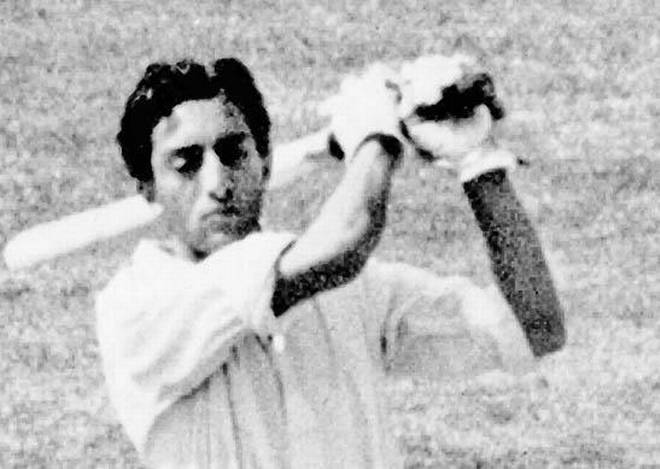
The Nawab of Pataudi. It was one of India’s greatest triumphs…with a most remarkable man leading the way… (Published in The Sportstar on October 19, 1985) PHOTO: THE HINDU ARCHIVES  

Cricket and music? Yes, they are perfectly in tune with each other

It was January 1973. India was playing England in a Test series. Ajit Wadekar was leading India, while Tony Lewis was the English captain. The Nawab of Pataudi had been inducted into the team after a fine show in a tour match. The two teams had wound their way to Chennai (then Madras) for the third Test. The series was tied one-all. And the match at Chepauk was crucial.

But this story is not about cricket and the unflappable Pataudi’s exploits with the bat or of Wadekar’s marshalling of his troops on a turning Chepauk pitch. In those days, Test cricket was played over six days with a rest day after three days. I was a student of the Indian Institute of Technology, Madras. The institute had a music club (still does), and a violin concert by Lalgudi Jayaraman had been organised for Sunday evening.

The ace violinist had just begun his concert and essayed the varnam, when suddenly there was a minor commotion at the entrance. In walked Pataudi with Tony Lewis (Monday was a rest day). They proceeded to the front row, where two seats had been hastily vacated for them, and sat in rapt attention while Lalgudi, after a courteous bow to acknowledge their presence, proceeded with his concert. We later learned that Tony Lewis was a part-time musician and violinist, and Pataudi wanted to expose him to how India had adapted this instrument for its classical music.

Even in those pre-WhatsApp days, word of the great man’s presence in the Central Lecture Theatre spread like wildfire on the campus and the hall which had till then only a sprinkling of listeners, fast filled up and was soon overflowing. Concert over, Pataudi and Tony Lewis exchanged a few pleasantries with the maestro and left.

I dare say that Pataudi had unwittingly acted as a catalyst to convert quite a few of the Pop, Rock, Blues and Jazz aficionados among the young IITians to serious listeners of Indian classical music.

srinivasan.bhashyam@gmail.com

source: http://www.thehindu.com / The Hindu / Home> Opinion> Open Page / by S. Bhashyam / May 09th, 2021

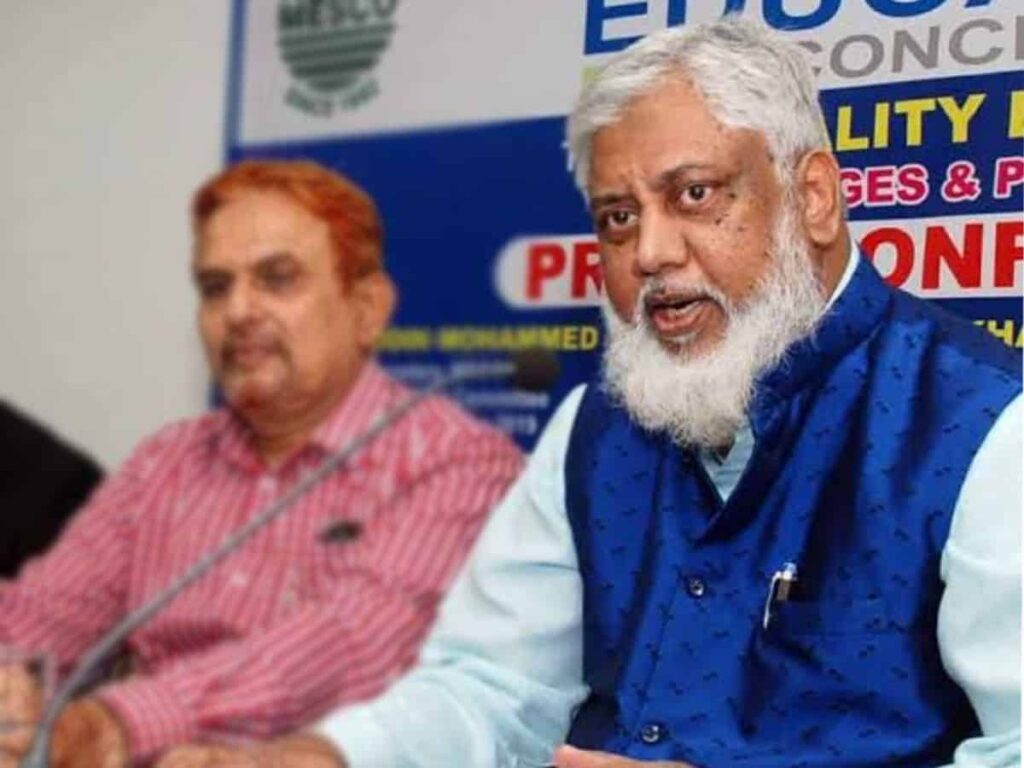
Iqtidar Alam Khan’s Latest Books on India’s Medieval History Unearth Hidden Secrets

DELHI :

Iqtidar Alam Khan’s Latest Books on India’s Medieval History Unearth Hidden Secrets

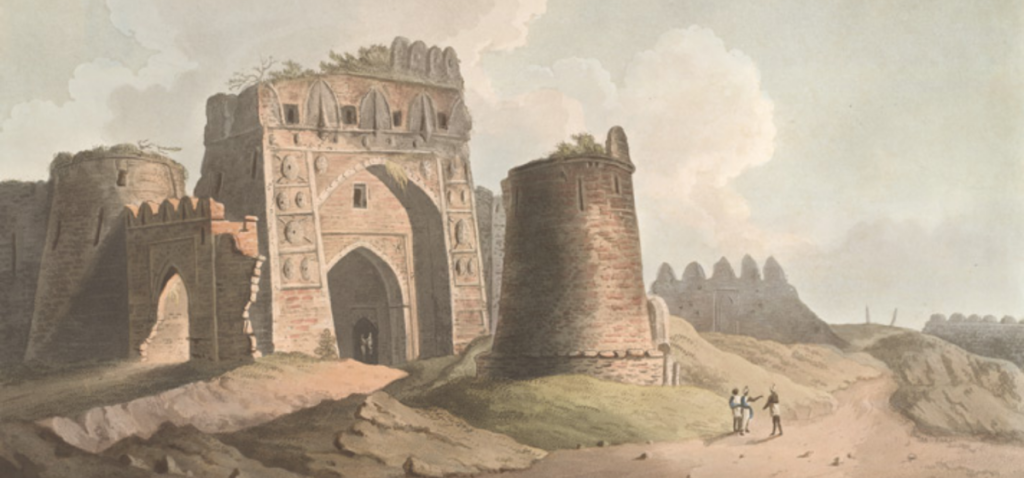
A painting of west gate of Firozabad fort, near Delhi. This fort was built by Feroz Shah Tughlaq in the 1350s, but destroyed by later dynasties. Photo: Wikipedia/Public domain

Iqtidar Alam Khan’s first slim book, a biography of Humayun’s brother Mirza Kamran was published in 1964; his latest book, slightly bulkier than the first, has been published in early 2021 when he is nearing 90, with nearly a dozen authored and edited volumes in-between. Quite an emphatic comment on how prolific he has been in his distinguished career as a historian of medieval India! Add a very distinct quality of the huge range of themes and the empirical solidity of his researches and one begins to appreciate the indelible imprint on the study of medieval Indian history he has left for his own and future students.

Professor Iqtidar Alam Khan was an alumnus and later faculty of the department of history at Aligarh Muslim University when it shone like the pole star in the study of medieval Indian history under the leadership of frontline scholars like Professors Mohammad Habib, Nurul Hasan, K. A. Nizami and Irfan Habib; he himself added to its lustre, evident in his extensive explorations of different facets of his discipline. This, when he always avoided drawing attention to himself.

The range of his explorations is amazing: biographies of two Mughal nobles, “Turko-Mongol theory of kingship” which had a decisive influence on Mughal notion of sovereignty, the system of revenue assignment of Akbar.

The classic essay on “Akbar’s nobility and the evolution of his religious policy”, which was a sort of watershed intervention in 1968 in that it set new terms for the study of the Mughal “religious policy” and has stood the test of time, some feeble recent challenges notwithstanding, the pioneering studies of gunpowder, guns and artillery and not least the bringing to attention some Persian language texts. However, all this work pertained to the Mughal period of Indian history.

Attention to detail 

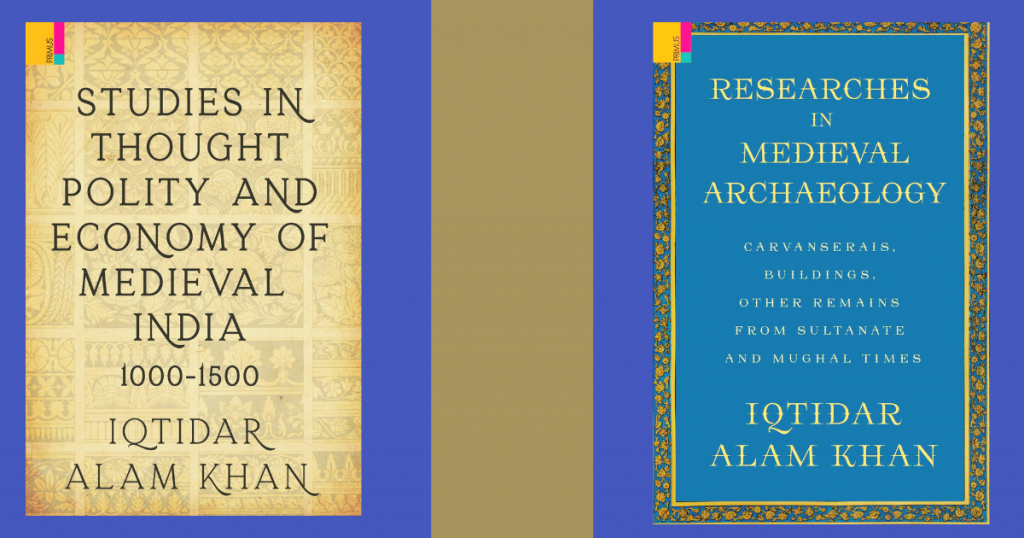
This current year has, however, revealed two hitherto unknown facets of his scholarship with the publication of two books in quick succession, both by the venerable publishers, Primus: Studies in Thought, Polity and Economy of Medieval India 1000-1500 and, hard to believe, Researches in Medieval Archaeology.

The first brings to us his mastery of various themes from the Delhi Sultanate era with the same eye for empirical soundness of every detail as his works on the Mughal period, though still tied to the Court and its outliers except for a revisit to Alberuni’s ‘concept of India’.

It is the second work that takes us literally to the ground level, taking us through the dust and grime of small buildings, remains of centuries-old Sarais (inns), waterworks, indigo vats, dykes and fascinatingly the ‘city’ built by Sultan Muhammad bin Tughlaq which he had named Swargduari, Gateway to Heaven, in district Etah in present day Uttar Pradesh.

Traveling in ramshackle vehicles for nearly two decades, Professor Khan along with his team, dedicated himself to recovering and recording the remains of small, virtually forgotten buildings of various kinds – calling them monuments would be grandiose – in every little detail of location, dimensions, recoverable history from texts and from folklore. It was remarkable labour of love where his age and family’s pleas could not hold him back.

The introduction, besides bringing the reader up to date on the theoretical backdrop of archeological study makes the valuable plea that one should embark on field exploration only after running through all the relevant textual material available for imparting completeness to the exploration.

While for all the sites studied included in the book have almost every kind of technical detail have been recorded, the last and longest chapter, dealing with Sarais is the most fascinating in that it opens up a number of windows to the social history of the period. It reveals that the state took upon itself the task of promoting travel as well trade, and at a certain stage postal service, by constructing inns and rest houses all along the trade routes. The task of constructing inns starts as early as Asoka’s time, for it is mentioned in one of his edicts, but later history on the theme is obscure.

In medieval India, references to these, along with milestones, kos minars resume from Sher Shah’s time and continue into the 18th century. The title Sarai is scattered all over the land with prefixes like Ber Sarai, Arab ki Sarai, Katwaria Sarai, Sarai Kale Khan and numerous others in Delhi itself, not to forget the Mughal Sarai, its history now erased through political diktat.

The very spread of these is suggestive of both the extent of travel and trade and state’s assumption of responsibility for providing security and patronage for it. The lodging and boarding at Sarais were often complementary and at times chargeable.

Luckily for the historian, the travelers at times left some graffiti on the walls noting their identity, several of which have been copied in the book. Where boarding was provided, separate kitchens were run for the Hindu and the Muslim travelers, suggesting that they came from both communities and shared the space but maintained differences in food, which was recognised and accepted by the state.

It also suggests that the difference did not turn into hostility. The book reproduces one graffiti in Devnagari on the wall of a mosque by one Kishan Das wald (son of) Maha Nand Kambu of Agra; he had obviously found shelter at least for a night at the mosque which he appears to have gratefully recorded; this reminds Professor Khan of Goswami Tulsi Das’ reference to “sleeping at a mosque”!

These two books, the second one, in particular, is a delightful revelation of an attractive aspect of an extremely reticent scholar of great eminence: dedication without seeking recompense in the form of the fanfare of recognition, but pure dedication to the unearthing of history’s hidden secrets without a trace of prejudice or preference. Dedication that cuts across compartmentalisation of Delhi Sultanate versus Mughal Empire, economic history versus political history, archeology versus textual narratives and so forth. A dedication that does not tire with age.

We are grateful to Professor Ali Nadeem Rezavi, who as head of the department of history and in-charge of its section of archeology persisted with Iqtidar Alam Khan to collect all his scattered data and reproductions of photographs of remains and graphs prepared to put together in a book; we owe a big debt to him for succeeding in the effort.

Harbans Mukhia taught medieval history at JNU.

source: http://www.thewire.in / The Wire / Home> Analysis> Books> History / by Harbans Mukhia / May 11th, 2021

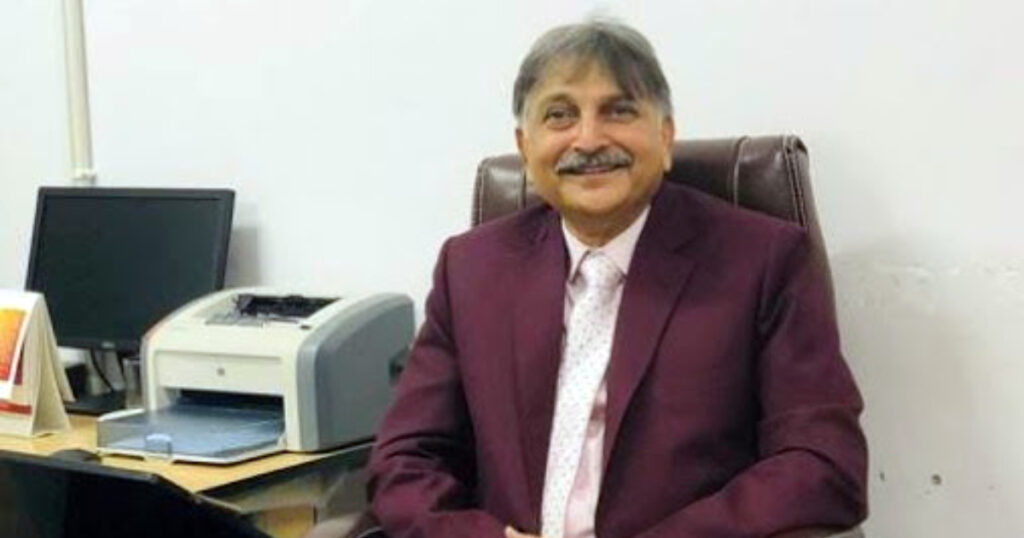
AMU prof Shakil Samdani dies of coronavirus

Aligarh, UTTAR PRADESH :

Aligarh:  

Dean of Faculty of Law at Aligarh Muslim University (AMU), Prof Shakil Ahmed Samdani, died on Saturday at Jawaharlal Nehru Medical College Hospital where he was undergoing treatment for coronavirus, an official said.

AMU spokesperson Rahat Abrar said 59-year-old Samdani was admitted to the hospital in the varsity 10 days ago after he tested positive for COVID-19.

He initially seemed to have recovered but his condition suddenly deteriorated a few days back, the official said.

The teaching staff at the AMU has lost 17 members during the past 18 days. All of them were either suffering from COVID-19 or displaying COVID-19 like symptoms, the spokesperson said.

Professor Rafiqul Zaman Khan (55), till recently the chairman of the Department Computer Science, passed away on Friday at the medical college hospital due to COVID-19.

Two days ago, former dean of the Law Department, Prof Mohamed Shabbir Ahmad (70), died of COVID-like symptoms.

He was the founder-head of the Ambedkar Chair in the Department of Law and had also served as the acting vice-chancellor of AMU, the spokesperson said.(PTI)

source: http://www.firstindia.co.in / First India / Home> India / by First India / May 08th, 2021

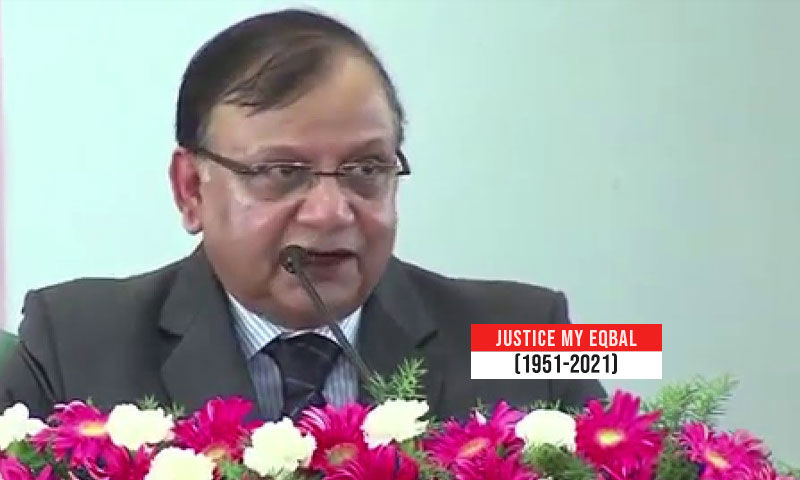
Former Supreme Court Judge Justice MY Eqbal Passes Away

Ranchi, JHARKHAND / NEW DELHI :

Former Supreme Court Judge Justice MY Eqbal passed away today morning at New Delhi.

He was a judge of the Supreme Court from 24 December 2012 – 12 February 2016.

Before that, he was the Chief Justice of the Madras High Court.

Chief Justice of India (CJI) N V Ramana has condoled the passing away of former Supreme Court judge M Y Eqbal before commencing the day’s judicial proceedings.

Justice N V Ramana, Hon’ble the Chief Justice of India expressed deep sorrow at the passing away of former Judge of Supreme Court Justice M.Y. Eqbal. Recalling his association with Justice Eqbal, Justice Ramana described Justice Eqbal as a conscientious professional who stood for humane values. He offered condolences to the bereaved family. When the Bench assembled in Court No. 1 this morning, Hon’ble the Chief Justice made a reference in this regard and offered condolences on behalf of the Supreme Court of India. Justice Eqbal passed away at a private hospital in Gurugram

Justice Eqbal was born on 13 February, 1951, passed B.Sc. from Ranchi University in 1970 and obtained LL.B. Degree in 1974 with distinction winning Gold Medal.

He started his career in Ranchi as an advocate in 1975 practising exclusively in civil side. He was appointed as a Government Pleader in the Ranchi Bench of Patna High Court in 1990. Later, he was appointed as a permanent Judge of the Patna High Court on 9 May, 1996 and then became the Judge of the Jharkhand High Court on 14 November, 2000.

Justice Eqbal, who was also associated with the Jharkhand Legal Services Authority, is the first Judge from Jharkhand to be elevated as a Chief Justice of any High Court in the country.

source: http://www.livelaw.in / Live Law / Home> Top Stories / Live Law News Network / May 07th, 2021

Sanskrit scholar at AMU Prof Khalid Bin Yusuf dies after having COVID-19 symptoms, pneumonia

Aligarh, UTTAR PRADESH :

Prof Yusuf was the first Muslim in India to earn a doctorate on Rigveda, as per the statement.

Aligarh Muslim University (File Photo | PTI)

Aligarh :

Noted Sanskrit scholar at Aligarh Muslim University (AMU) Prof Khalid Bin Yusuf has passed away after a brief illness, a university statement said here on Thursday.

Prof Yusuf (60) was showing COVID-19 symptoms and had acute pneumonia, his family members said.

He passed away on Wednesday night while being treated at a hospital, they added.

Prof Yusuf was the first Muslim in India to earn a doctorate on Rigveda, as per the statement.

AMU Vice Chancellor Prof Tariq Mansoor paid rich tributes to the departed scholar.

During the past fortnight, 13 serving members from the teaching faculty at AMU who were either suffering from COVID-19 or showing symptoms of the infection have lost their lives.

source: http://www.newindianexpress.com / The New Indian Express / Home> Nation / by PTI / May 06th, 2021