Fatima Rafiq Zakaria was awarded the Padma Shri in recognition of her work in education in 2006
Aurangabad, Maharashtra:
Fatima Rafiq Zakaria, a Padma Shri awardee, renowned journalist, academician and chairman of Maulana Azad Educational Trust and Khairul Islam Trust Mumbai, passed away at the Bajaj Hospital in Maharashtra’s Aurangabad due to age-related illness on Tuesday noon. She was 85.
Besides being affiliated to the Maulana Azad Educational Trust and Maulana Azad Education Society, Ms Zakaria was also the executive vice-chairman of the Board of Governors of the Trust’s Institute of Hotel Management which is run in collaboration with the Taj Group of Hotels.
Ms Zakaria, who had played an eminent role in the field of education, was also honoured with the Sarojini Naidu Integration Award for Journalism in 1983.
She was awarded the Padma Shri in recognition of her work in education in 2006.
source: http://www.ndtv.com / NDTV / Home> All India / by ANI / April 06th, 2021
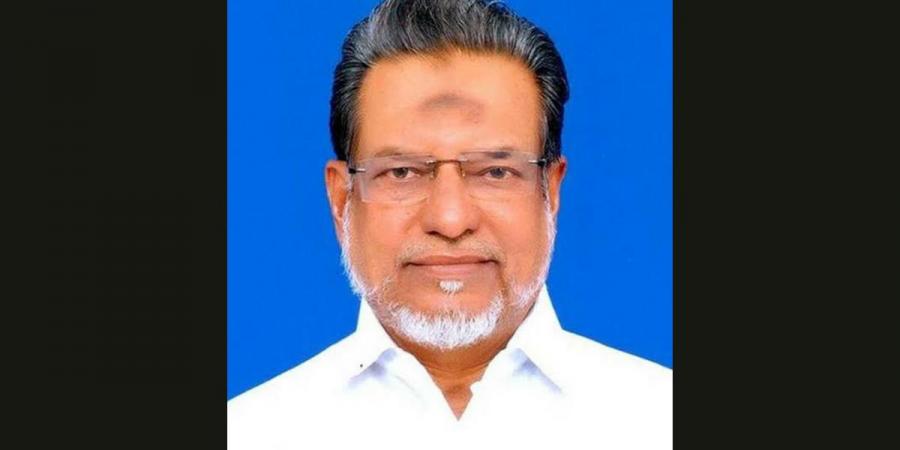
Prominent Islamic scholar and former Vice President of Jamaat-e-Islami Hind Professor KA Sidheeq Hassan passed away today at the age of 75. He was the chief architect of Vision 2026, a flagship project of the Human Welfare Foundation, a public charitable trust working for the development of Muslims.
Prof Sidheeq Hassan worked as an educator in various educational institutions including University College, Thiruvananthapuram and Maharaja College, Ernakulum.
He served as the President of Jamaat-e-Islami Hind, Kerala from 1990 to 2005. Earlier he had held the positions of Chairman of Alternative Investment and Credit Limited (AICL), founding chairman of Baithuzzakath and sub-editor of Probodhanam Weekly.
Sidheeq Hassan was born in Koottil in Eriyad in the Thrissur district of Kerala and was one of the contributing founding members of Madhyamam Daily, a prominent newspaper in Kerala.
He was conferred with many prestigious awards including the Imam Haddad Excellence award, Islamic Online Star of 2010 by Islam Online and Ebrahim Sulaiman Sait Foundation Award.
He is survived by wife VK Zubaida, sons Faslurrahman, Sharafuddeen and daughter Sabira.
source: http://www.thecognate.com / The Cognate / Home> News / by Ghazala Ahmad / April 06th, 2021
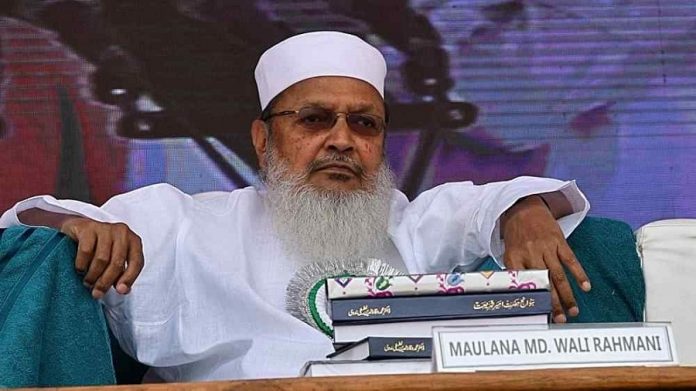
Maulana Wali Rahmani | Photo Courtesy: Clarion India
What set Maulana Wali Rahmani, an Indian Sunni Islamic Scholar, academician and founder of Rahmani30, apart was his efforts towards the promotion of education among Muslim youth. Although Rahmani was a multi-lingual man, he had evident love for the Urdu language. In February this year, he launched a campaign for education among the Muslim community and promotion of the Urdu language.
The well-known torchbearer of India’s Muslim community, who strove to work for the promotion of education, Maulana Mohammad Wali Rahmani would have turned 78-years-old on June 5 this year. On April 3, Maulana Wali Rahmani breathed his last at a Patna hospital after a brief illness and other complications.
Such was his repute and respect among the community that he had 8.5 lakh followers who took the oath of allegiance to him as “Sajjada Nashin” of Khanqah Rahmani in Munger in the Indian state of Bihar. Rahmani became “Sajjada Nashin” of Khanqah Rahmani, Munger in 1991 after the death of his father Sayyid Minatullah Rahmani. At present, Rahmani was the Secretary-General of All India Muslim Personal Law Board (AIMPLB). He was Ameer-e-Shariat, or the head, of the renowned religious organization Imarat-e-Shariah of Bihar, Jharkhand and Odisha. However, what set him apart was his endeavour in the field of education. His organization, Rahmani30, founded in 2008, was his gift to the Muslim community of Bihar, and the country.
Had there been no Rahmani30, hundreds of students might not have heard about him and many poor Muslim students could not have realized the dream of making it to India’s top engineering institutes; the IITs or the Indian Institute of Technology.
The Rahmani30 has since then expanded to NEET or the National Eligibility cum Entrance Test for medical education. Top accountancy and Law entrance tests have also been included now.
Rahmani30 is modelled on Super30 founded by famous mathematics teacher Anand Kumar of Bihar who started selecting 30 poor students and grooms them for IITs. Super30 was a big success. So is Rahmani30. Since its inception, Rahmani30 had the services of Bihar senior police officer Abhayanand, who retired as DGP Bihar. Every year test exams are held for the selection of Rahmani30 and the selected candidates are provided with free residential coaching with food.
Maulana Wali Rahmani was a political personality. His proximity with political leaders got him brickbats too. He was elected to the Bihar Legislative Council on April 7, 1974, and continued till 1996. In 1984 and 1990 he was elected as deputy chairman of Bihar Legislative Council. He was criticized after his (in)famous Deen Bachao Desh Bachao (Save Islam, Save Country) rally at Patna in 2018. Just after the rally, one of its organizers were declared as the candidate from Nitish Kumar’s party for the Bihar Legislative Council. Maulana Rahmani was accused of compromising with Nitish for ‘a seat in Bihar council.’
He, however, was also praised for his bold statements before the top political leaders when the issues related to the Muslim community were discussed.
His birthplace Khanqah Rahmani is a well-known religious place that was founded in 1909 by his grandfather Maulana Mohammad Ali Mungeri, who was a co-founder of Nadwatul Ulema, Lucknow. Maulana Wali Rahmani’s father Maulana Minatullah Rahmani was also a renowned religious scholar who also held the post of General Secretary in All India Muslim Personal Law Board.
Maulana Rahmani got his initial education at Rahmania Urdu School, Jamia Rahmani in Munger, Bihar and then proceeded to Nadwatul Ulema and Darul Uloom Deoband. He also studied at Bhagalpur University which is now known as Tilka Manjhi Bhagalpur University in Bihar.
At the age of 22, Maulana Rahmani joined ‘Naqeeb’, a weekly published by Imarat-e-Shariah. He also served at Jamia Rahmani.
In 1991, following the demise of his father, he was made Sajjada Nashin of Khanqah Rahmani.
He was made Ameer-e-Shariat at Imarat-e-Shariah in November 2015 and held the post till his last breath. Here too, Maulana Rahmani’s focus was on education. He also worked for the better medical facility at Sajjad Memorial Hospital being run by Imarat-e-Shariah.
Although Maulana Rahmani was a multi-lingual man, he had evident love for the Urdu language. In February this year, he launched a campaign for education among the Muslim community and promotion of the Urdu language.
He also campaigned for the upliftment of the Madrasas.
His biography Hayat-e-Wali penned by Shah Imran Hasan states, “Maulana’s untiring efforts and timely steps to save the country’s Madrasas are worth mentioning. He met several dignitaries, including the then Prime Minister Atal Behari Vajpayee and presented before him the case of Madrasas in the context of their roles in the country’s freedom struggle and nation-building.”
Maulana Rahmani was a man who loved to make friends in other Muslim organizations too. He kept Maulana Rizwan Ahmad Islahi, the young Ameer-e-Halqa (Bihar chief) very close to him. Maulana Rizwan recalls that when representatives of Muslim organizations went to meet Bihar Chief Minister Nitish Kumar, everybody wanted Maulana Rahmani to talk to him but he proposed his name (Maulana Rizwan’s). “Such was his generosity,” he said.
Maulana Rahmani will be missed at many places, including at AIMPLB and Imarat-e-Shariah. However, his absence would be felt most at Rahmani30. The passing away of Rahmani poses a challenge for both Imarat-e-Shariah and Rahmani30 to take his dream further.
source: http://www.twocircles.net / TwoCircles.net / Home> Lead Story / by Sami Ahmad, TwoCircles.net / April 05th, 2021
Well known educationist, intellectual, thinker and author of several books, Professor Anees Chishti has passed away in Pune at the age of 79. He was unsung hero of the community who made tremendous contributions in the progress of the community in the country. He will be also remembered for his dawha works as he translated Islamic literature into local Marathi language. He was a close confidant of late Maulana Abul al Hasan Nadvi who launched All India Tahreek e payam e insaaniyat with an aim to dispel misunderstandings about Islam. Chisty was one the pillars of this movement.
According to Anees Chishti’s family, he first suffered a heart attack and then later normal infected by COVID-19. During his treatment at Azam campus Unani hospital Pune He took his last breath and was buried on Monday, April 5, after Isha prayers at Muhammad Jamia Hussaini Masjid in the city.
As news of his demise spread, condolence messages flooded on social media. Many important personalities expressed their grief and sorrow who acknowledged the scholarly and social services of Anees Chishti.
Chisti was born on February 6, 1943 in Pune. His father Shakeel Ahmad was a freedom fighter. He was educated in Pune and Sholapur. Pune is considered the brain of Brahminical forces.
Expressing condolences on the demise of Anish Chishti, PA Inamdar administrator of Azam Campus Pune, said his demise is a great loss to the nation. He said that Anees Chishti was recognized as an authority in Islamic studies and science and literature.
Munawar Pir Bhai from Pune termed the demise of Anis Chishti as a great loss of the society and said that he was a very capable and intelligent person. Traveled to many countries, he had a keen eye on Islam and Allama iqbal. And he described the death of Anis Chishti as his personal loss.
Talha, nephew of Anees Chishti, said that after the death of Maulana Wali Rahmani, he had gone to Lucknow to meet Maulana Rabi Hasni Nadvi.
After returning from the trip, his health deteriorated and on April 5, at around 5.30 pm, he passed away. The personality of Anees Chishti was a person with various attributes. He was a member of the Majlis-e-Shura of Darul Uloom Nadwa tul Ulema, Lucknow and member of the, All India Muslim Personal Law Board.
He was very close to Maulana Syed Abul Hassan Ali Nadvi, a thinker of Islam, and he was the General Secretary of the All India Tahreek e payam e insaaniyat. The movement was launched in the backdrop of Babri masjid dispute which had been used by the communal forces to spread lies about Muslims and Islam in the country.
He was the author of many Urdu, Marathi and English books. His books have been translated into various languages. He was a connoisseur of calligraphy, a teacher of calligraphy, an Islamic scholar, and an educator. Apart from Urdu, many of his books have been published in Marathi.
Mirza Abdul Qayyum Nadvi, a bookseller and activist from Aurangabad, said that he had spoken to Anis Chishti two days before his death. More than 53 of his books have been published. Anis Chishti was fluent in many languages. These included Urdu, Marathi, Hindi, English, Arabic, Persian and other languages. He was a very good man, a man of knowledge, a good teacher, a good writer, a credible writer, an eloquent speaker, a guest lecturer on the panel of high-ranking training institutes. He has received numerous accolades for his books on education, and books on Muslim freedom fighters .and other books. In many countries, his Urdu and English language books are included in the Syllabus.
He trained soldiers at the Indian Institute of Education, College of Military Engineering Pune. He has delivered sermons and lectures on Islamic and scientific and literary topics in different parts of the country. He is survived by a daughter and four brothers. Arguably, his demise made the community further poorer as it was in the shocked after Muslim Personal Law Board General Secretary Maulana Mohammad Wali Rahmani in Patna just two days before.
source: http://www.muslimmirror.com / Muslim Mirror / Home> Indian Muslim / by Abdul Bari Masoud / April 07th, 2021
Reverentially touching another person’s feet or prostrating before that person is common in Hindu culture, but seldom practised by Muslims.
National Democratic Alliance’s (NDA) Muslim candidate in Mannarkkad Naseema P. had one of the biggest surprises of her life when she bent down to touch Prime Minister Narendra Modi’s feet at the Bharatiya Janata Party’s mega election rally held at Fort Maidan here on Tuesday.
Soon after finishing his 45-minute speech that invigorated the large crowd as well as the NDA candidates on the stage, Mr. Modi was preparing to leave the stage when Ms. Naseema walked up to him and genuflected before him.
In an unexpected quid pro quo, Mr. Modi bent down and touched her feet, shared a few words of encouragement with her, and sent her briefly to a world of awe. “It was beyond words for me. I never expected it from a great man like Modiji. It’s still like a dream for me,” said Ms. Naseema.
She said she wanted to have his blessings by touching his feet. “But Modiji surprised me by honouring me. It shows how respectfully he treats women,” said Ms. Naseema.
Ms. Naseema is the only Muslim woman candidate in the NDA. She is contesting on All India Anna Dravida Munnetra Kazhagam banner against the Indian Union Muslim League’s incumbent N. Shamsuddin and Communist Party of India’s K.P. Suresh Raj in Mannarkkad.
source: http://www.thehindu.com / The Hindu / Home> News> States> Kerala / by Staff Reporter / Palakkad – March 30th, 2021
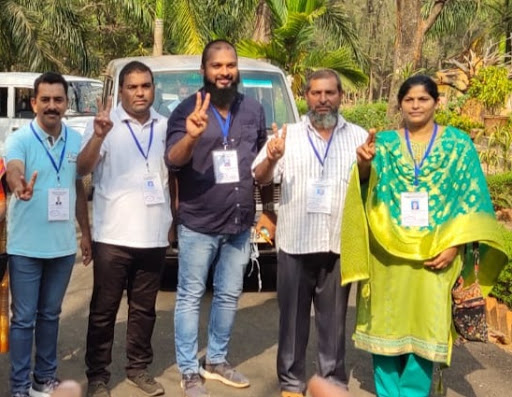
from Left- Idris Shaikh,Sharafat Khan, Sarfaraz Sayed, Vasiyuddin Sayed and Shaizin Shaikh
New Delhi:
As many as five Muslim candidates have emerged as victorious on 5 out of 10 seats in the Valpoi Municipal Council. The winning candidates have been identified as Shaikh Idris ,Sharafat Khan, Sarfaraz Sayyad, Vasiyuddin Sayad and Shaizin Shaikh.
All of them are members of BJP. They were supported by BJP minister Vishwajeet Rane.
As per the media reports, senior BJP councilor Riyaz Beig has also managed to retain his seat in Bicholim municipality .
Elections were held on six municipal councils, the Corporation of City of Panaji (CCP), a Zilla panchayat, and 22 panchayat wards in Goa on 20 March and results were declared on 22 March.
34 years old Sarfaraz Sayed is the youngest among all five Muslim councillors in Valpoi. He has made a history in the town by winning the election with record margin of 489 votes from ward No.6 .and also emerged as a winner with highest margin in the entire state. It is his second consecutive win.
Speaking to Muslim Mirror, Sarfaraz Sayed thanked all the voters for giving great return of his work. He thanked their leader Vishwajeet Rane for supporting them. ”I am committed to work for people. This time also, I will continue the same with full energy and devotion Inshallah, About 130 Hindu voters have also showed their faith in me, I am grateful to them” added Sarfaraz.
Vasiyuddin Sayed ,a social activist ,who has become part of the council for the first time, says helping people who are in need has always been my priority. Now people of my ward have given power to me, now I can continue my work in effective way.
Addressing a press conference, Vishwajit Rane congratulated all the winning candidates of civic polls and said that he is very much thankful for the people of Valpoi for giving a clear mandate to his candidates.
Valpoi is considered a stronghold of BJP minister Vishwajeet Rane who is the son of Sr. Congress leader and Former Chief Minister of Goa Pratap Singh Rane. Vishwajeet won three assembly polls on Indian National Congress ticket but in 2016 he resigned from Congress party and joined BJP as Congress failed to form Government in inspite of getting highest number of seats.
After he joined the BJP, his supporters including Muslims also switched to the party.
source: http://www.muslimmirror.com / Muslim Mirror / Home> Featured / by Muslim Mirror Correspondent / March 24th, 2021
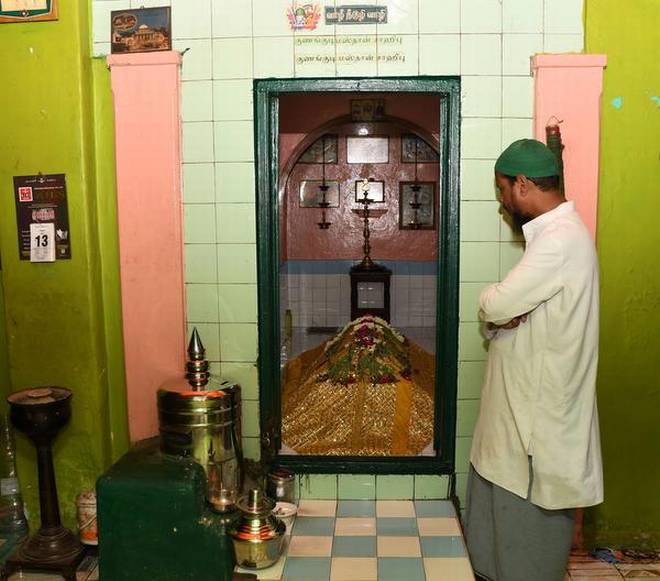
The Hazarath Gunangudi Masthan Sahib Dargah (Kunangudi Mastan Sahib Dargah) at Royapuram in Chennai | Photo Credit: B. Jothi Ramalingam
Written with a knowledge of grammar and aesthetics, their songs are immortal
If you think of the Muslim link to Carnatic classical music, Sheikh Chinna Moula and his descendants and disciples are the first that come to mind. In the 1970s, T.M. Abdul Azeez was a violin accompanist on the Carnatic platform. He is now settled in Kerala, where he teaches music. Abraham Pandithar’s Karunamirtha Sagaram (1917) lists a few Mohammedan names as performing artistes though it is difficult to fathom now if they were performing in the Hindustani or Carnatic styles.
Gulab Mantil is one — he claimed to be a descendant of Mian Tansen of Akbar’s Court and was under the patronage of the Sivaganga rulers. He was adept at various instruments. On Chottu Mian there is no information other than the fact that he was a good singer of Hindustani Music. Nannu Mian and Mirali are listed as brothers, who were noted for their skill on the dholak. Closer home, at Tondiarpet we have the dargah of Kunangudi Mastan Sahib who is propitiated with music of the Sufi variety.
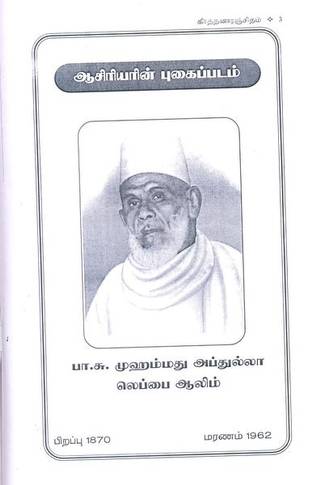
Given this background, it was a revelation when PAK Mohammad Sulaiman walked in with PS Ilyas of Kayalpattinam into the Music Academy a month or so ago. The latter had with him a precious possession — a fragile copy of a book published in 1909. Titled Kirtanaranjitham, it was a compilation of songs composed by his grandfather and Mohammad Sulaiman’s great grandfather, PS Muhammad Abdullah Labbai. It was printed at the Kalarathnakara Press, Madras.
Famous jeweller
A preface to the book gives details of the composer’s antecedents. His grandfather, Sheikh Sadakatullah was a Kazi (judge) at Kayalpattinam and had the privilege of moving about in a palanquin. That made him Pallakku Labbai to the locals. His son, Muhammad Suleiman Labbai got into the precious stone trade and his three sons, of whom the composer was the second, followed him into the business. The first and third sons set up offices in Colombo while Muhammad Abdullah Labbai (1870-1962), the composer, moved to Bombay. He made such a name for himself in the business that jewellers referred to him as Abdullah Jauhari. But his attachment to the dargah where the family prayed, the Shahibu Appa Thaikka at Kayalpattinam, was such that he eventually moved back to take care of it. He is also buried there.
Muhammad Abdullah Labbai has composed around 90 songs as per this book. It is also stated in the preface that the composer presented all of these at the dargah. What is interesting is that some of the songs are still being sung there, though the tunes have changed over time. The book sadly lacks notation (it must be remembered that notation in print was not common practice in the early 1900s). But ragas and talas are provided for every song. The popular ragas are all there, with preponderance for usage of Khamas, Mohanam and Kalyani. There are certain ragas that are not easy to identify. Names such as Desikam, Karnataka Desikam, Mohana Thodi and Nilakambodi are puzzling.
The composer was clearly well aware of the laws of composition and follows the requisites of prosody and alliteration. The language used is Manipravalam — a mix of Sanskrit, Tamil and Urdu/Persian. The bulk of the songs are in the usual kriti structure of pallavi, anupallavi and charanam. The last named are usually three and in some songs, four in number. The mudra of Abdullah appears in all the pieces.
Perusing the songs, you see all the familiar themes of Tamizh Padams — the lovelorn maiden yearning for union with the Supreme, the sending of messages to the divine via swans and companions, berating the Beloved for His heartlessness, and songs of surrender. Besides these, there are songs in the Thevaram format and some structured as Kannis. Certain songs are on specific locations where holy personages are buried, in the manner of kshetra kritis. These include Kayalpattinam, Manjakollai, Kizhakkarai, Saragam/Ervadi in Thirunelveli District, Cannanore in Kerala and Kandy in Sri Lanka.
The book follows the format for music publications of its time. There are benedictory verses in form of kappu, kanni and viruttam. Besides, like the ratha bandams that Tamil scholars of yore indulged in when patterns like chariots could emerge from the way they wrote verses, Muhammad Abdullah Labbai has worked on calligraphy by way of a Chithirakkavi Kattalai Kalithurai. His scholarship came in for praise from several Muslim men of letters, all of whom wrote verses in his praise, which were included in the first edition.
The 1909 publication was reprinted in 1963. This was done with the support of the family business in Colombo. Hussain Bhagavatar of the Panchalingapuram Jam’ath kept the songs in circulation for much of the 20th century. The descendants of the composer are now in the process of bringing out a new edition.
source: http://www.thehindu.com / The Hindu / Home> Society> Faith / by V. Sriram / June 14th, 2018
Appointments to address issue of large number of vacancies in higher judiciary
The Law Ministry on Wednesday notified the elevation of 10 additional judges of the Allahabad High Court as permanent judges while another seven new additional judges were appointed to the country’s biggest High Court.
The Ministry also appointed two additional judges to the Karnataka High Court that has a strength of 62 including the additional judges.
The latest appointments are aimed at addressing the issue of large number of vacancies in higher judiciary that is often cited as one of the primary reasons for the delay in judicial decisions.
As on March 1, of the strength of 1,080 judges across 25 High Courts, there were 419 vacancies.
For example, the strength in the Allahabad High Court is 160 including 40 additional judges but the court was functioning with a strength of 96. Of the 64 vacancies until Wednesday’s appointments, 38 positions were for permanent while 26 posts were that of additional judges.
“The President, in exercise of the power conferred by clause (1) of Article 224 of the Constitution, appointed Justices Ali Zamin, Vipin Chandra Dixit, Shekhar Kumar Yadav, Ravi Nath Tilhari, Deepak Verma, Gautam Chowdhary, Shamim Ahmed, Dinesh Pathak, Manish Kumar and Samit Gopal, to be Judges of the Allahabad High Court,” said the Law Ministry.
It said Mohd. Aslam, Anil Kumar Ojha, Sadhna Rani (Thakur), Naveen Srivastava, Syed Aftab Husain Rizvi, Ajai Tyagi and Ajai Kumar Srivastava were appointed as Additional Judges of the court
Rajendra Badamikar and Khazi Jayabunnisa Mohiuddin were appointed as Additional Judges of the Karnataka High Court for two years with effect from the date they assume charge.
source: http://www.thehindu.com / The Hindu / Home> News> National / by Special Correspondent / New Delhi – March 25th, 2021
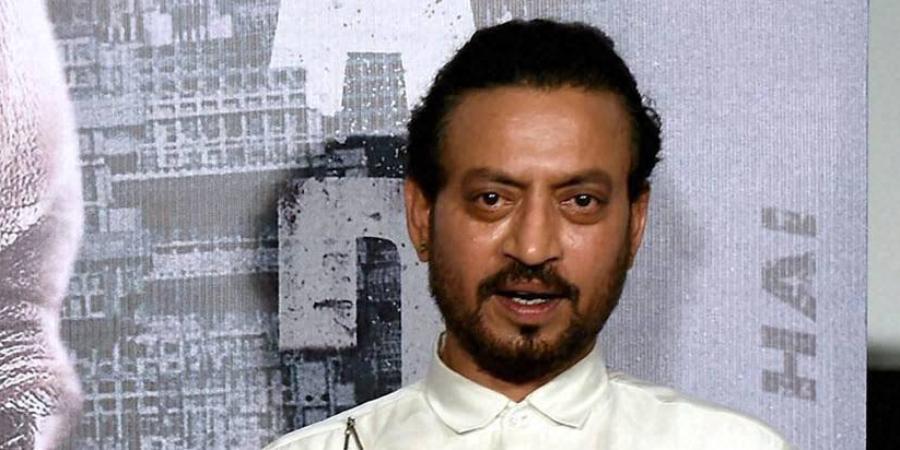
Khan was among the 21 cine personalities who were remembered during the ceremony’s ‘In Memoriam’ segment.
Late Bollywood actor Irrfan Khan (Photo | PTI)
Los Angeles :
The 2021 edition of the Producer’s Guild of America (PGA) Awards honoured the late Indian star Irrfan Khan during its “In Memoriam” segment but got his name wrong.
The awards, considered as an Oscar bellwether, were held virtually on Wednesday.
Khan was among the 21 cine personalities who were remembered during the ceremony’s “In Memoriam” segment.
However, the pre-taped production of the awards committed a gaffe with the actor’s name as it read ‘Irrif Kahn’ instead of Irrfan Khan, reported Variety.
Another typo was spotted when the name of “Minari” star Steven Yeun, who was one of the presenters at the event, was misspelled as ‘Steven Yuen’.
Khan, who straddled both Indian and international cinema with equal elan, died in April 2020 at the age of 54 following a two year-long battle with a rare form of cancer.
In Hollywood, he featured in blockbusters such as “Inferno”, “A Mighty Heart”, “Life of Pi”, “Amazing Spider-Man” and “Jurassic World”.
The “In Memoriam” segment of PGA Awards also paid to tributes to Hollywood great Kirk Douglas, who died at the age of 103 in February 2020, and “Black Panther” star Chadwick Boseman, who passed away in August at 43 after a private four-year-long battle with cancer.
Other prominent names in the segment included Harry Bring, Sue Bruce-Smith, Allan Burns, Kevin Burns, Stuart Cornfeld, Charles Gordon, Buck Henry, Thomas L Miller, Tom Pollock, Rebecca Ramsey, Carl Reiner, Gene Reynolds, Pamela Ross, Ronald Schwary, Lynn Shelton, Fred Silverman and Jamie Tarses.
source: http://www.newindianexpress.com / The New Indian Express / Home> Entertainment> English / by PTI / March 25th, 2021
Mohammedjan represented Ranipet constituency in the Tamil Nadu Assembly during 2011-16. He was the Minister for Backward Classes and Minorities Welfare for a brief period.
AIADMK MP A Mohammedjan
Ranipet :
AIADMK MP Mohammedjan died of a ‘sudden severe’ heart attack on Tuesday in Ranipet while taking rest after hectic electioneering, sources said.
The 73-year-old Rajya Sabha member returned home at noon for lunch after completing a round of campaigning. He took rest at home before getting ready to resume electioneering in the evening.
Suddenly he developed chest pain and was rushed to the Govt District Headquarters Hospital in Walajapet in a car. As the pain was getting severe, he was shifted to an ambulance and given first aid before he reached the hospital, sources stated.
On arrival, doctors performed cardio pulmonary resuscitation but in vain.
“He had a sudden severe heart attack leading to immediate collapse. We tried performing cardio pulmonary resuscitation but found that he had died on the way to the hospital,” Singaravelu, Superintendent of the District Headquarters Hospital, told The New Indian Express.
Subsequently, the body was handed over to his relatives before it was taken to his residence.
Mohammedjan represented Ranipet constituency in the Tamil Nadu Assembly during 2011-16. He was the Minister for Backward Classes and Minorities Welfare for a brief period.
In July 2019, he was elected to the Rajya Sabha along with his party colleague N Chandrasekaran and PMK youth wing leader Anbumani Ramadass.
Later, in the year, he voted in favour of the citizens amendment bill as per the decision of his party. Subsequently, the Jamaat in Ranipet had stripped him of all responsibilities with the organisation.
Mohammedjan had also served as a councillor of Ranipet municipality.
source: http://www.newindianexpress.com / The New Indian Express / Home> States> Tamil Nadu / by Express News Service / March 23rd, 2021