Quraishi said the document has already been submitted to the apex court.
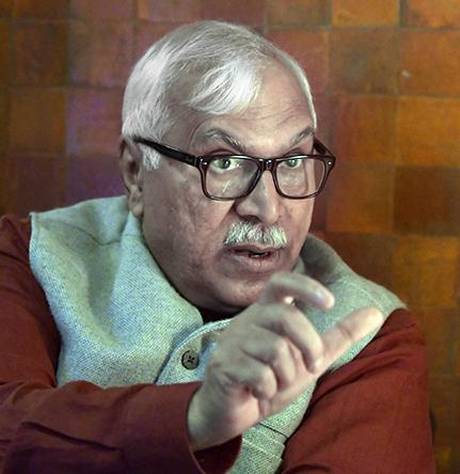
Supreme Court-appointed administrator S.Y. Quraishi on Friday refuted claims of the All India Football Federation that he had sought more time to prepare the draft constitution of the sports body, saying the document has already been submitted to the apex court.
The AIFF had moved an application before the Supreme Court on November 21, seeking continuation of its existing executive committee beyond its term, claiming that the court-appointed administrators are yet to frame a new constitution to conduct elections.
The Supreme Court, in a 2017 order, had appointed a Committee of Administrators comprising Quraishi and Bhaskar Ganguli to formulate the constitution of the AIFF in consonance with the National Sports Code.
“It is completely wrong to say that we have not finalised the draft constitution. We have completed it in December 2019 and given to our lawyer who helped us out. He [the lawyer] has submitted it to the Supreme Court in January 2020 in a sealed cover as directed by the SC,” Quraishi told PTI.
“Many people know it and Bhaskar has gone home to Bengal as we have completed the task given to us by SC. We were to frame a constitution [of AIFF] in consonance with the letter and spirit of Sports Code. We have done that and our job is over,” the former Chief Election Commissioner, asserted.
The AIFF had told its member units that it approached the Supreme Court to allow continuation of the existing executive committee as it will not be able to hold elections next month due to the non-finalisation of the new constitution.
In that letter, the AIFF had said “the Ombudsmen [committee of administrators] filed an application on February 7, 2020 with the Hon’ble Supreme Court, seeking enlargement of time for submission of the Draft Constitution of AIFF”.
“Due to non-finalisation of its constitution in terms of order dated 10th November 2017 passed by the Hon’ble Supreme Court of India, AIFF is not in a position to conduct the ensuing election, even though the four years term of the Executive Committee ends on 21st December, 2020. Therefore, the federation has approached the Hon’ble Supreme Court vide an application filed on 21st November, 2020,” said a letter written by AIFF general secretary Kushal Das and addressed to the presidents of all the affiliated member units.
The four-year term of the current executive committee, led by Praful Patel, ends next month and the AIFF has announced that its Annual General Body Meeting will be held on December 21.
Under normal circumstances, the elections will have to be held during this AGM with Praful Patel, who has been AIFF president since 2008, ineligible to contest as per the Sports Code’s tenure cap.
Quraishi said because of the COVID-19 situation, there might have been some issues in the listing of the case.
“Because of COVID-19, the Supreme Court was taking up only urgent cases initially. We were also thinking what had happened to the sealed document. “I think now, may be the case will come up soon,” he said.
The AIFF says it would wait for the directions of the Supreme Court and accordingly modify the agenda of the AGM. Under the Sports Code, the president of a national sports federation can hold office for a maximum three terms or 12 years. Mr. Patel, former Union Minister, served as acting president for one year after long-time head Priya Ranjan Dasmunshi suffered a cardiac arrest in 2008.
He took over as full-time president in October 2009 before being re-elected for the top job in December 2012 and 2016.
source: http://www.thehindu.com / The Hindu / Home> Sport / by PTI / New Delhi – November 27th, 2020
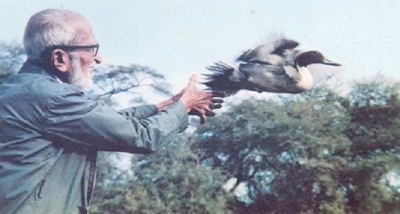
Today is the Birth Anniversary of renowned ornithologist Salim Ali. Born in Mumbai on 12th November in 1896, Sálim Moizuddin Abdul Ali was not only a bird lover but also a naturalist. He is often referred to as the ‘Birdman of India’. He was the first Indian to conduct systematic bird surveys across India and wrote several books that popularized ornithology in India. His research work is considered highly influential in the development of ornithology. He was a well-known environmental crusader who often stood for protecting the wildlife.
Salim Ali played a pivotal role in establishment of Bharatpur Bird Sanctuary (Keoladeo National Park) and prevented the destruction of what is now the Silent Valley National Park. Along with Sidney Dillon Ripley, he wrote the landmark ten-volume Handbook of the Birds of India and Pakistan, a second edition of which was completed after his death.
He was awarded the Padma Bhushan in 1958 and the Padma Vibhushan in 1976, India’s third and second highest civilian honours respectively. Besides the Padma Bhushan and the Padma Vibhushan, Ali received the Gold Medal of the British Ornithologists’ Union in 1967. He was the first non-British citizen to receive the honour.
source: http://www.newsonair.com / All India Radio (AIR), News Services Division / Home> News Highlights / November 12th, 2020
Allah Baksh Sumroo, a premier of Sindh province—equivalent to the current post of a chief minister—was a committed patriot, whom the Muslim League hated to the extreme. Sumroo’s story directly challenges the ongoing communal and divisive rhetoric where Muslims are projected as a comprador class that was wholeheartedly behind the Muslim League’s two-nation theory.
______________________________
The narrative that all Muslims got together to seek India’s partition on the basis of the two-nation theory is now a few decades old. It has acquired salience again, with some hyperventilating neo-nationalists reiterating that all Muslims are traitors as they joined Muhammad Ali Jinnah and his Muslim League to divide India. These people forget that a large number of Muslims, who consciously decided to stay back, had a choice—either to leave and be Pakistanis or stay back in India and choose their homeland. Many opted for the latter. A similar choice was made by many Hindus who decided to stay back in Pakistan. However, staying back in a democratic, secular and plural India was different from opting for a regressive and sectarian Islamist Pakistan. The future of both, who stayed behind, has proved that so tellingly.
Unfortunate political developments and the prevalent communal rhetoric in India has forced me to go back to the history afresh. There is a concerted campaign to malign all Indian Muslims as leftover Pakistanis, who are enemies within the country; the narrative is that these fifth columnists should be shunted out to Pakistan in the so-called national interest. But merely indicting all Muslims for the sake of petty majoritarian politics goes against the facts of history.
We are a nation obsessed with history, more often concerned with correcting the presumed historical wrongs than learning anything from the past. With this compulsive preoccupation, some of us live perpetually in the past. Even so, most people believe that Maulana Azad, an Independence-era leader, fought a lone battle for a united India, while a majority of Indian Muslims vouched for Muhammad Ali Jinnah, the founder of Pakistan, and his Muslim League. This has no factual basis and any extent of living in the past will help unravel actual facts.
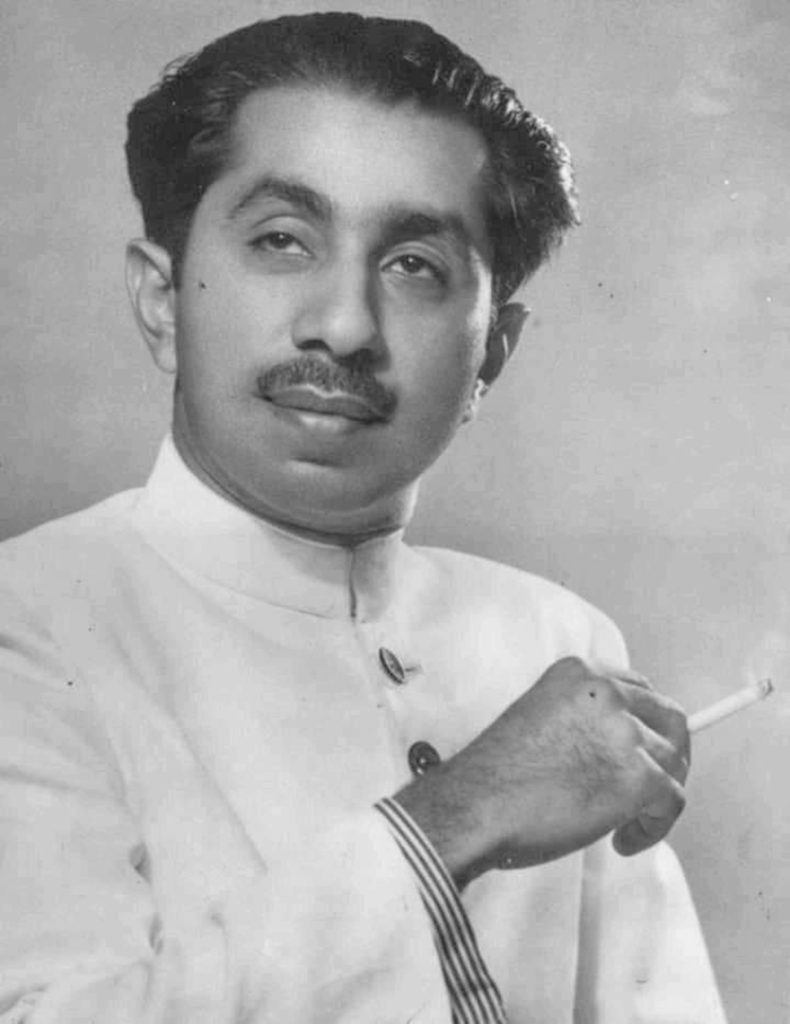
To put the record straight, some unsung heroes from our recent history should be talked about. There are many historical characters that were crucial to countering the politics of hate and division of the country around the time of partition. Among them was Allah Baksh Sumroo, who served as a premier of the Sindh province—equivalent to the current post of a chief minister—for two terms between 1938 and 1942. Sumroo was a committed patriot, whom the Muslim League hated to the extreme. He belonged to a feudal Sindhi family but was known for a frugal living and commitment to democratic values. Sumroo wore khadi even as a young man of twenty. We hear about using flags as a power symbol so often these days, but he never used a flag on his official car even in those feudal and colonial times.
What is important to remember today is his commitment to undivided India. Sumroo emerged as a major challenge to the divisive politics of communalists of all hues, particularly the Muslim League. Azad was undoubtedly a national face, espousing composite nationalism, but he actually derived strength from such regional but powerful voices like Sumroo.
To go into the details of his massive anti-Muslim League politics would require a much longer discussion. Let me just refer to one of the most important episodes in the history of our sad partition of the country. The Muslim League passed a resolution recommending the creation of an independent state of Muslims on 23 March 1940 at Lahore. Soon, Sumroo organised a huge conference of patriotic Muslims between 27 and 30 April 1940 in Delhi, called the Azad Muslim Conference. According to some estimates, there were not less than seventy-five thousand people who gathered from all over India to condemn the Muslim League for its divisive politics.
Most of these people came from a large number of political and social organisations, largely representing the backward and artisanal sections of the Muslim society. This representation at the conference was an indicator that the Muslim League spoke for the ashraf, or the privileged sections of the Muslim society while the majority of Muslims—the ajlaf, or the backward sections—remained almost untouched by the League’s rhetoric. The British identified a collaborative section of the Muslim community, helped in forming the Muslim League but this section largely represented the affluent—the zamindars, and business and professional classes. The leadership that emerged in the League had little clue to the highly differentiated Muslim society they claimed to represent. Azad could see this early. Referring to Indian Muslims at the time, he wrote in his weekly Urdu language newspaper, Al Hilal, in 1912:
The most unfortunate part of their life is that they have a section of elite who are in the forefront and leading them. Those are the self-proclaimed leaders of the community. They have put the crown on their own head, with their own hands, instead of the masses doing the same. They indulged in all sorts of exhibitionism of power and the worst is show of their wealth. And by so doing they had converted the millat [class] of downtrodden men in their community as their slaves and camp followers. And now if anyone tries to question their validity as leaders or defy them, they are successfully suppressed and annihilated by those selfish leaders; as they have the power of money.
Sumroo’s presidential address at the Azad Muslim Conference in April 1940 also exposed the misplaced arguments of the League, particularly in the name of religion and culture. All through his speech he spoke extensively on the shared history and heritage, stressed on the compositeness of Indian nation and nationalism and emphasised that the compact between diverse communities cannot be severed. Strongly condemning the two-nation theory exponents, The Sunday Statesman of 28 April 1940 quoted him saying in his speech:
A majority of the 90,000,000 Indian Muslims who are descendants of the earlier inhabitants of India are in no sense other than the sons of the soil with the Dravidian and the Aryan and have as much right to be reckoned among the earliest settlers of this common land. The nationals of different countries cannot divest themselves of their nationality merely by embracing one or another faith. In its universal sweep Islam, the faith, can run in and out of as many nationalities and regional cultures as may be found in world.
He underlined the long history of shared heritage of Hindus and Muslims, as mentioned in a Hindustan Times report on the same day:
It is a vicious fallacy for Hindu, Muslim and other inhabitants of India to arrogate to themselves an exclusively proprietary right over either the whole or any particular part of India. The country as an indivisible whole and as one federated and composite unit belongs to all the inhabitants of the country alike and is as much the inalienable and imprescriptible heritage of the Indian Muslim as of other Indians.
Sumroo made these detailed references to the shared history and intermixing of Hindu and Muslim cultures over the centuries to counter both the League as well as those who were arguing for Hindutva majoritarianism. He was aware, like Azad, of the forces which threatened the future of united composite India. Sumroo needs to be talked about today more seriously to counter all those who threaten fellow Muslim citizens to go to Pakistan.
In his address, Sumroo provided a counter for another argument put forth by neo-nationalists today—that Muslims asked for Pakistan and once it was granted by dividing the country, all of them should have moved there. This would have settled the issue forever. All those who make such insinuations today need to know what popular Muslim leaders like Sumroo said of the creation of Pakistan:
It was based on false understanding that India is inhabited by two nations, Hindu and Muslim. It is much more to the point to say that all Indian Mussalmans are proud to be Indian nationals and they are equally proud that their spiritual level and creedal realm is Islam. As Indian nationals—Muslims and Hindus and others, inhabit the land and share every inch of the motherland and all its material and cultural treasures alike according to the measures of their just and fair rights and requirements as the proud sons of the soil.
Azad, too, sent a message of support to the Azad Muslim conference as he was not able to attend it. He expressed his solidarity with the conference and wished that the deliberations would be fruitful for the great cause of the freedom of the country and the Muslims.
This fight for composite and inclusive Indian nationalism, which looks so alarming and threatening today, is more than few decades old. Azad and Sumroo challenged these regressive and divisive forces in the 1930s and 1940s. They almost took the battle to the enemy’s camp by organising a huge conference in Delhi, which unnerved the Muslim League leadership. Sumroo was assassinated in 1943. It was suspected to be the League’s handiwork.
We can comprehend his stature and the sense of loss on his death by reading some of the reactions in contemporary press and also the pain expressed by several nationalist leaders. The Hindustan Times described him as follows:
… finest of Sindhis, one of the truest of Musalmans, one of the noblest sons of India who loved his peasants for he loved the land; and he used to wear khaddar even in the twenties, for he loved the poor. Both the Hindus and Muslims looked up to him as a leader … He had an all-India mind and in the midst of division and strife, pinned his faith on an independent united India, and dreamt the dream of the united State of Asia in the years to come …
His murder was seen as a national calamity by several papers. The Amrita Bazar Patrika called him “one of the most vigorous personalities, endowed with a high sense of duty and rare courage of conviction, who easily commanded the respect and admiration of all, even of those who differed from him on some or the other public questions.” Commenting on his death, the newspaper added, “A life so full of promise has been cut short. And India is much poorer today by the death of the young man of 42 whose sturdy patriotism and devotion to duty would be cherished long after the present unhappy situation has ended and India has come into her own.”
The right wing in India often says that Subhas Chandra Bose, a leader of the anticolonial struggle, did not find his rightful place in Indian history. I find it politically motivated and not really a sincere observation. It is people like Sumroo, who seem to be lost in our history records, even in the writings of the so-called liberal and Marxist historians, except for a chapter in a book by Shamshul Islam titled Muslims Against Partition of India.
Another prominent Muslim voice from the past, who can rightfully represent our composite nationalist ethos is Saifuddin Kitchlew, a Kashmiri freedom fighter whose family moved to Punjab. It was his arrest along with Dr Satyapal, a political leader, that triggered the protests leading to the Jallianwala Bagh massacre in 1919. Most of us are oblivious to his contributions as well. Kitchlew had also mourned the loss of Sumroo saying:
At this critical period of the freedom movement in the country the death of a man like Mr Allah Baksh is a thundering blow to the forces of nationalism. Mr Allah Baksh was a thorough going nationalist. Mr Allah Baksh is dead but his work will remain.
It is necessary to know about such men and women from our past as their profiles directly challenge the ongoing communal and divisive rhetoric where Muslims are projected as a comprador class that was wholeheartedly behind the League’s two-nation theory. Azad was surely the prime political figure, an Islamic scholar, who stressed on the composite nationalism. However, he was not fighting a lone battle against the Muslim League, as Jinnah wanted the British and the Muslims to believe. He was hated and derided as a show boy of the Congress party, precisely to show that most of the other Muslims and their leaders were with the idea of Pakistan. This falsehood needs to be exposed, particularly in the midst of the ongoing divisive politics.
S IRFAN HABIB is a historian and author. He was earlier the Maulana Azad Chair at the National University of Educational Planning and Administration, New Delhi.
source: http://www.caravanmagazine.in / The Caravan / Home> Commentary – History / by S Irfan Habib / July 28th, 2020
Piraman Village (Bharuch District) GUJARAT / NEW DELHI :
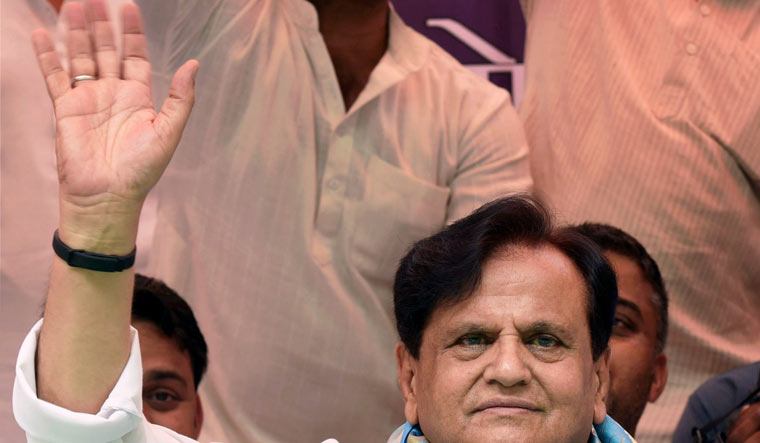
Ahmed Patel was one-point contact person for Congress leaders, workers from Gujarat
Ahmed Patel | PTI
When the COVID-19 pandemic started spreading in India in March, many journalists in Gujarat received a call from Ahmed Patel asking about their well-being and also that of their families.
“Hope you and your family are doing well. Do let me know in case any help is needed,” he said.
Even several Congress workers received a call from him. He personally called up a reputed hospital in Ahmedabad to book a room for his colleague, Rajya Sabha member Shaktisinh Gohil, who tested positive for COVID-19.
On Wednesday, when the nation lost Ahmed Patel of post-COVID-19 complications , for the Gujarat Congress, it is a loss that the party and its leaders cannot even imagine.
Ahmed Patel was the one-point contact person for the leaders and party workers from Gujarat. Ahmed Patel was accessible 24×7.
A three-time Lok Sabha member and five-time Rajya Sabha member, Ahmed Patel was a man who was in New Delhi but did not forget his roots in Gujarat and was ever ready to help Gujarat and raise concerns when it mattered.
He had friends across party lines and Prime Minister Narendra Modi and people of Ahmed Patel’s age called him ‘Babubhai’, a name he got from his native Piraman village in Bharuch district of Gujarat. There is a likelihood that he might be buried beside the graves of his parents in Piraman.
Not many know that Ahmed Patel was instrumental in running many gaushalas (cow shelters) in Gujarat. A Congress leader in Rajkot, Dr. Hemang Vasavda, recalled how during drought Ahmed Patel aided gaushalas and the way he stayed in Kutch during the killer earthquake of 2001 to guide the party workers.
Totally dedicated to the party without aspiring for any post and easily accessible is how former Gujarat Congress president Arjun Modhwadia described Ahmed Patel. “We have lost a friend, philosopher and a guide,” he said.
Tributes came from the young working president of Gujarat Congress Hardik Patel as well. Hardik recalled how Ahmed Patel inspired him before he joined the party over two years ago. “I remember how he offered me mango ras and puri in peak summer in New Delhi when I went to meet him,” he recalled.
Hardik also said that when he was in jail, Ahmed Patel often called up his parents to comfort them and say that lawyers would be arranged for his case.
Ahmed Patel reaching out to party workers and meeting them personally during his visits to Gujarat in their good and bad times is something that the rank and file of Gujarat Congress is not able to forget.
The manner in which Ahmed Patel won the Rajya Sabha election from Gujarat in a nail-biter in mid-2017 strengthened the Congress and it put up a good show in the Assembly election later that year.
source: http://www.theweek.in / The Week / Home> News> India / by Nandini Oza / November 25th, 2020
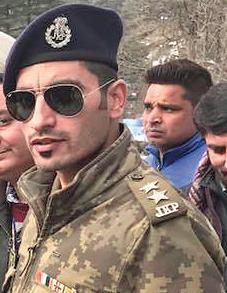
The 33-year-old officer says he chose the location outside his office so that he could monitor and supervise the arrangements.
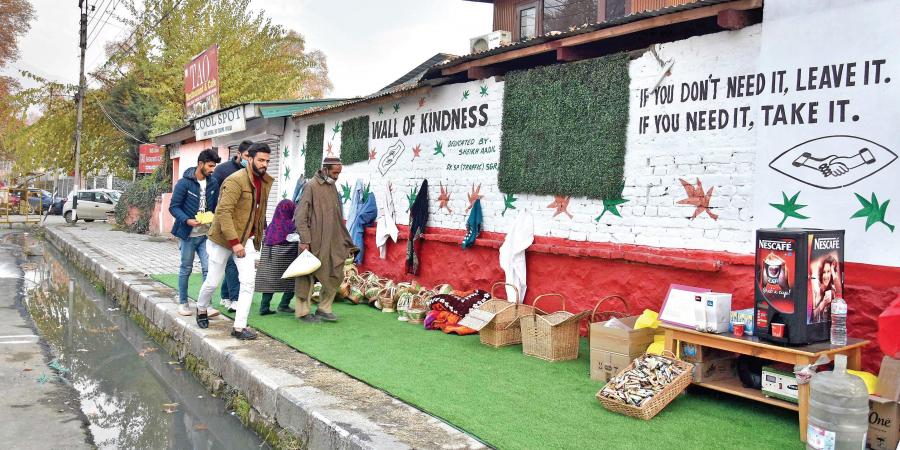
From food items to hangers filled with warm clothes, ‘Wall of Kindness’ in Srinagar brings warmth during this harsh winter | Zahoor Punjabi
As the mercury drops to 2 degree Celsius on a windy Saturday evening in Srinagar, a youngster, Zubair Ahmad, puts up a blanket on a hanger mounted on the ‘Wall of Kindness’, a unique wall set up for the needy and homeless, outside the office of the traffic police department.
Ahmad is among thousands of residents who have come forward to donate their clothes — jackets, coats, suits, mufflers, among others — for those in need of warm clothes during the chilly winter, as a gesture of their “kindness”.
And the ‘architect’ behind the Wall of Kindness initiative is Sheikh Aadil Mushtaq, a 2015-batch Kashmir Police Service (KPS) officer from Baramulla district who is posted as deputy superintendent of police (DSP) traffic police in Srinagar.
Moved by the deplorable conditions of the poor — hit by two shutdowns, after the abrogations of Article 370 in August last year and the Covid-19 lockdown in March — the young police officer took the initiative on November 13 on the occasion of World Kindness Day. The Wall of Kindness was first started in Mashhad in Iran in 2016 and later, the charity initiative spread to other parts of the world.
Starting from food items to hangers filled with warm clothes to sanitary pads, the Wall of Kindness in the heart of summer capital brings warmth during this harsh winter. Painted in white, the wall has a message, too: “If you don’t need it, leave it. If you need it, take it.” “It is not a new idea. It is a corollary effort. This Wall of Kindness is an interface that I have dedicated to the people of Srinagar,” Aadil says.
The 33-year-old officer says he chose the location outside his office so that he could monitor and supervise the arrangements. According to Aadil, there has been an overwhelming response to the initiative. “Every day, hundreds of people come and donate items such as woollen clothes, food and blankets etc.” The DSP, who is pursuing post-graduation diploma in cybercrime, says with the onset of winter, the arrangements for kangris (earthen hot pots) have also been made at the wall.
A coffee and tea vending machine has also been set up there by the donors. “Any homeless or an underprivileged person can have a cup of tea or coffee to beat the chilling winter,” the officer says, adding that it is being ensured that the items reach the needy only. “My initiative has been successful. The things are reaching the needy and the deserving people, and this was the main purpose of my initiative,” Aadil says. Asked whether people have been hesitant in donating, the officer says: “I have been lucky here. The kind of love and affection I get from people is overwhelming.
Without their help, it would have been impossible. I don’t have to instruct much. People are themselves cooperating and donating items.” “I am not doing it as a police officer. Being a police officer is my second identity. I am a responsible citizen first, and I have certain responsibilities towards the people of Jammu and Kashmir,” says DSP. Aadil says he has been receiving calls from people from Jammu and other places who want to join the initiative and generously donate for the destitute.
The police officer says the winter in Kashmir is harsh and many people struggle in the absence of warm clothing. He said he and other police personnel wanted to help those people. The clothes hanging on the wall catch the attention of people who stop to take a look. Locals have, however, appreciated the initiative. Ahmad, a local who has also donated a pair of blankets, says the initiative should be appreciated to encourage others.
“It hardly matters whether the initiative has been taken by a police officer or a civilian. What matters is that we need to be compassionate towards people, who have been economically hit by two lockdowns since August 5 last year. We need to be compassionate towards each other and help each other in the trying times like Covid-19 pandemic. We should come up with such initiatives regularly,” he says.
Moved by deplorable conditions of the poor in Srinagar, after two lockdowns in seven months, a young traffic police officer sets up a ‘Wall of Kindness’ where people can donate clothes for those in need, reports Fayaz Wani.
source: http://www.newindianexpress.com / The New Indian Express / Home> Good News / by Fayaz Wani / Express News Service / November 22nd, 2020
The Bharatiya Janata Party will do anything it needs to win elections, we are often told.
Yet, there is one thing the BJP does not do, particularly the BJP of Narendra Modi and Amit Shah. It rarely ever gives tickets to Muslims . That costs it a few Muslim-dominated seats. If the BJP’s single-minded purpose was to win seats, it would happily give tickets to Muslims.
By giving some representation to Muslims in their ticket distribution, the BJP could, perhaps, have won state elections in Rajasthan, Delhi, Karnataka, and Madhya Pradesh. You can find Muslims who are all too willing to engage with the BJP at a time when the party has a monopoly over winning elections. Like most communities, Muslims don’t mind being on the right side of power.
It is the BJP that does not respond to Muslim aspirations, because there are things the BJP values more than winning elections, such as ideology. In its post-2014 phase, it has been clearer than ever that the BJP’s ideological purpose is to marginalise Muslims to the point of making them invisible. The Muslim must shut up and stay at home. The Muslim must not be MLA, MP, minister or leader. Muslims must not speak or be heard.
What was such a big deal about blocking traffic on a road or two over the anti-Citizenship (Amendment) Act protests that it caused riots in Delhi? Was the blocking of a road in east Delhi that nobody was really noticing that big a problem for commuters? That is how unacceptable the Muslim political voice is to the BJP.
The BJP doesn’t want Owaisi
It is facetious to say that the BJP wants Asaduddin Owaisi around in politics. The BJP doesn’t want the Muslim beard or cap. My understanding is that it doesn’t want a Muslim standing up in Parliament — because why should Muslims be present in Parliament of a ‘Hindu Rashtra’ in the first place?
For the first time in the history of Bihar politics, the treasury benches do not have a single Muslim MLA. The BJP did not give a single ticket to a community that is nearly 17 per cent of Bihar’s population — every sixth citizen. It is the only party that seeks to actively exclude an entire community from the corridors of power. Do you think they enjoy the sight of five MLAs from the All-India Majlis-e-Ittehadul Muslimeen (AIMIM) in the assembly?
The five seats won by the AIMIM have led to the usual hand-wringing about how Owaisi’s rise is just what the BJP wants. The BJP wants Muslims to vote for a Muslim party just as it wants Hindus to vote for a Hindu party. This is a misreading of the BJP’s agenda. The BJP-RSS have gone out of their way to make secular parties apologetic about seeking Muslim votes. This has been done to silence the voice of the Muslim community in Indian politics and public life. If Indian Muslims now get a voice through Owaisi and the AIMIM, no, that doesn’t serve the BJP’s purpose.
The BJP would rather that Muslims don’t have a vote at all— which is what might be eventually achieved by the ‘chronology’ laws of NPR-NRC-CAA, which could strip many Muslims of citizenship. One look at the attempts in Assam to repeat the National Register of Citizens (NRC) exercise again and again, flogging a dead horse until it comes alive, shows you how the BJP wants to reduce the number of Muslim voters from the electoral rolls. That’s how the absence of Muslim representation from not just the treasury benches but even the opposition benches might be achieved.
The BJP doesn’t need Owaisi
The BJP does not need Owaisi for polarisation because the BJP has anyway maxed the polarisation game. All that fake news against Muslims — like the Palghar lynching of sadhus immediately blamed on Muslims even though there was no communal angle whatsoever — doesn’t need Owaisi. If anything, Owaisi’s nuanced assertion of constitutional nationalism comes in the way of the BJP leaders and supporters’ efforts to portray the Muslim as the Hindu-hating, Pakistan-loving, cow-slaughtering devil.
The larger misreading here is that the Hindu voter votes only on account of religion. If religious identity was enough, Prime Minister Modi wouldn’t need to sell ‘Atmanirbhar Bharat’ or whatever the latest hollow slogan is. The sort of voter who would vote for the BJP because they are repulsed by Owaisi’s face will anyway vote for the BJP. Owaisi’s presence or absence isn’t going to affect the Hindutva-minded voter’s affinity for the BJP.
Who needs Owaisi?
If anyone needs Owaisi, it is the Indian Muslim. The Indian Muslims who are being deprived of a voice in public discourse because the ‘secular’ parties who claim to uphold their interests have also gone silent. In fact, they’re going beyond silence to active collaboration with Hindu fundamentalism, if you see the recent actions of Priyanka Gandhi, Kamal Nath, and Arvind Kejriwal.
At such a time, Owaisi is a force for good in Indian politics. He’s not going to become chief minister or prime minister and he knows it. What he will achieve is the creation of some competition for Muslim votes, which will force the ‘secular’ parties to acknowledge that, yes, India has Muslims and they must be treated with the same dignity by all political parties as any other voter.
The author is contributing editor to ThePrint. Views are personal.
source: http://www.theprint.in / The Print / Home> Opinion / by Shivam Vij / November 20th, 2020
Party in Malappuram upbeat over Muslim women entering the fray
The Bharatiya Janata Party (BJP) has finally found two Muslim women to contest the elections in Malappuram, the only Muslim-majority district in the State.
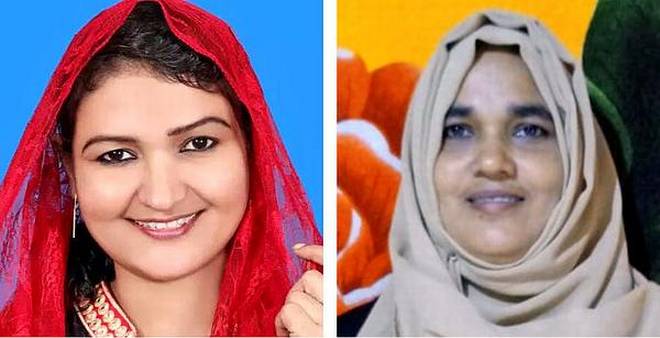
T.P. Sulfath from Wandoor and Ayisha Hussain from Chemmad have become the first Muslim woman duo in Malappuram to contest an election under the BJP’s banner.
Ms. Sulfath filed her nomination for the Wandoor grama panchayat from Ward 6 (Shanti-Koottambara) on Wednesday. Ms. Ayisha will file her nomination on Thursday for the Ponmundam grama panchayat from Ward 9.
The BJP in Malappuram has been upbeat over finding Muslim women to contest the local body elections. Although Ms. Sulfath was offered a district panchayat division, she chose her own grama panchayat as she has been keen on beginning from the grassroots.
Fan of Modi
An avid fan of Prime Minister Narendra Modi, Ms. Sulfath said the progressive policies followed by the BJP had attracted her to that party. “Who else can implement such progressive measures as banning triple talaaq and raising marriageable age for women? There is none in current Indian politics to match Modiji not only in charisma but in efficiency and determination as well,” she told The Hindu.
A mother of two children, Ms. Sulfath prefers to be self-reliant by engaging in a variety of business.
Married at 15, Ms. Sulfath said her life had taught her the bitter lessons of entering into nuptials as a child. Her progressive thoughts have won her many new friends and fans. Youngsters have started approaching her for selfies.
Ms. Sulfath is not certain about staging an upset in a ward where the BJP has a weak base.
“But my candidature sends home the message that the BJP is a safe party. We want a third alternative to end the adjustment politics being played by the United Democratic Front and the Left Democratic Front,” she said.
Ms. Ayisha too is a first timer in the fray. Mother of a 10-year-old girl, Ms. Ayisha too has been a fan of Vajpayee and Modi. Her husband Hussain Varikkottil, who is a district committee member of the Minority Morcha, is also contesting to the Malappuram district panchayat from the Edarikode division under the BJP banner.
source: http://www.thehindu.com / The Hindu / Home> States> Kerala / by Abdul Latheef Naha / November 19th, 2020
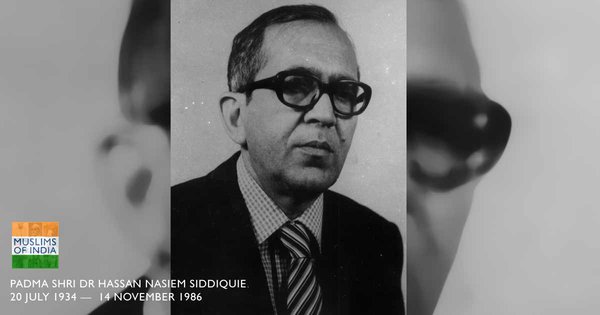
A scientist, a visionary, a family man. He was responsible for pioneering research work in the field of Marine Geology.
Dr. Siddiquie was born on 20 July 1934 to M. A. Siddiquie, a civil surgeon, and his homemaker wife Ahmedi Begum in Bijnor, Uttar Pradesh in India. The eldest of 6 sons and two daughters, he completed his intermediate studies from Osmania University (Hyderabad) then went on to acquire BSc and MSc (Geology) degrees from Aligarh Muslim University (Aligarh). He started his career at a young age, as a geologist with Geological Survey of India, Kolkata. After 17 years of service in GSI, he was offered the position of Head of Geological Oceanography Division in CSIR’s National Institute of Oceanography in Goa. Here he served in various capacities and later became Director in 1985.
After an impeccable career and service to the nation, he passed away on 14th November 1986 after a massive heart attack. He is survived by his wife Talat and three children.
Dr. Siddiquie left behind a legacy of extensive research and survey work done in the exploration of petroleum and minerals, infrastructure development, exploration of polymetallic nodules, studies on sediments, studies on Foraminifera, paleoclimatic studies and Antarctica He was associated with several oil projects which included piping, route identification, bathymetric and shallow seismic surveys for ONGC and Oil India. He is also credited with the initiation of managanese nodule program in India and this coordinated program was reported to have earned India a place among the seven registered Pioneer Investors of the International Seabed Authority of the United Nations.
He served as the deputy leader of the first Indian expedition to Antarctica and he coordinated the marine science programs for Dakshin Gangotri, the permanent Indian station in the southernmost continent. He authored several peer-reviewed research papers and articles throughout his career.
For his work and efforts he was awarded the Shanti Swaroop Bhatnagar Prize (1978), the Padma Shri (1983), National Mineral Award and the State Award of the Government of Goa (1986 Posthumously).
H. N. Siddiquie was the member/ fellow of various boards and councils including the elected member of Indian National Science Academy and the National Academy of Sciences, India. Indian Geophysical Union has instituted the Dr. H. N. Siddique Memorial Lecture series in his honor.
A tall, handsome man of friendly demeanor; he had an impressive personality. He was also very religious and adhered to the tenets of Islam. A mentor and inspiration to many; he is still remembered, admired and respected by all who met him.
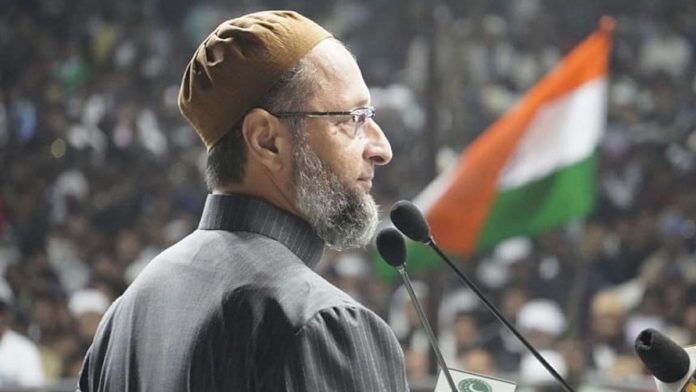
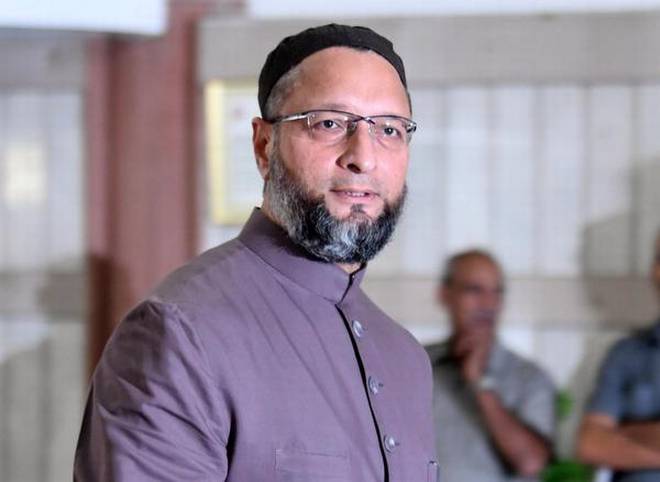
All India Majlis-e-Ittehad-ul-Muslimeen (AIMIM) leader and Hyderabad MP Asaduddin Owaisi. File | Photo Credit: Sandeep Saxena
The young Owaisi, who wanted to be a lawyer, had to file his nomination papers to contest the 1994 Andhra Pradesh Assembly election
The year was 1994. Two years after the demolition of Babri Masjid in Ayodhya, there was turmoil in the All India Majlis-e-Ittehad-ul-Muslimeen (AIMIM), a party established by Abdul Wahed Owaisi. Members were deserting the AIMIM for not being vocal enough on the demolition of the masjid and there was an outcry that educated Muslims were not coming to join politics.
All eyes were on the 25-year-old Asaddudin Owaisi, Abdul Wahed’s grandson, who had just returned from London after completing a degree in law. “If in the early 1990s, you had told me that I would be contesting elections, I would have said you have gone bonkers,” Mr. Owaisi later said. It was a time when he worked at a denim store on Oxford Street, London, and served meals at McDonald’s to cover the tuition fee.
The young Owaisi, who wanted to be a lawyer, had to file his nomination papers to contest the 1994 Andhra Pradesh Assembly election.
Almost a lifetime since, he had been elected an MLA twice and an MP four times from Hyderabad, a seat that his father Sultan Salahuddin Owaisi represented six times. He has recast the archetype for Muslim leadership. Does he regret giving up law to be a lawmaker? “Regret…? I don’t know… It is a very subjective thing. I don’t regret things in life, you look at the good side of it and go ahead,” Mr. Owaisi said.
Rebirth of the party
The AIMIM is the reincarnation of Majlis-e-Ittehadul Muslimeen that opposed Hyderabad’s accession into the Indian union. Once the Hyderabad State was integrated into India, the party was banned and fell into disarray, many of its leaders migrating to Pakistan. Prefixing ‘All India’ to the MIM, Mr. Owaisi’s grandfather resurrected the party. Mr Owaisi doesn’t fail to remind frequently that the AIMIM is a party of those who did not go to Pakistan.
Years later, the same reason that led to Mr. Owaisi’s entry into politics is also a reason for his party’s expansion. The Congress and the Rashtriya Janata Dal (RJD), who were wary of engaging with Seemanchal voters on the question of the Citizenship Amendment Act (CAA) and the National Register of Citizens (NRC), left a vacuum into which Mr. Owaisi walked in, winning five seats in the Bihar Assembly election.
In his speeches across Seemanchal, he repeatedly asserted that he was the only one to tear off a copy of the “unconstitutional” CAA inside Parliament. He spoke of the “betrayal” by the RJD and the Congress. He delivers his speech in chaste Urdu, a language that is not exactly alien to his Bihari audience but definitely not conversational. His speeches were peppered with invocations of ‘Allah’. The Muslim identity is firmly in place, with a long sherwani, a skullcap and a moustache-less beard. The speech was delivered at a pace and pitch, similar to the Friday sermons by the clergy.
Broader alliance
However, Mr. Owaisi insists that he is not a “Muslim leader”. In a recent interview to The Hindu, he said: “We are not an exclusive Muslim party. I, Asaddudin Owaisi, am not a Muslim leader. I don’t want to be a Muslim leader, that is not my ambition or objective of my political journey.” The AIMIM has been working on forging an alliance between the Muslims, the Dalits and other backward groups.
Nor does he want his politics to be limited to Hyderabad. The AIMIM expanded in Maharashtra in 2012, winning in the Nanded Municipal Corporation election. The party’s success earned him the moniker of being a “BJP agent”, a long leap from supporting the Congress-led United Progressive Alliance during the 2018 no-confidence motion. Mr. Owaisi’s persistent indictment of mainstream parties for taking the ‘Muslim vote’ granted, coupled with the other parties’ attempt to look far more Hindu, has had political dividends for the AIMIM.
“They can call me all they want. It is like water off the duck’s back. During my childhood, RSS workers used to come to our home often, abuse us in an attempt to intimidate me. So, it is part of my growing up years,” he said.
Years ago, Mr. Owaisi may have joined politics unenthusiastically. But on November 10, when the Bihar results came, his 10-year-old son, wearing a similar long sherwani, sat on a chair next to him when he addressed his victory press conference. “He is a child. He wanted to sit with me, so how could I deny him,” Mr. Owaisi said.
He claims he was always an average student. He tries to read, but says that he is a very slow reader and its takes long preparations for him before speaking in Parliament. Despite Hyderabad being his base, Mr. Owaisi doesn’t speak Telugu. He says he has tried many times to study the language with a tutor who used to come to his home in Hyderabad. But politics always overtakes his plans.
source: http://www.thehindu.com / The Hindu / Home> News> States> Telangana / by Sobhana K Nair / November 15th, 2020
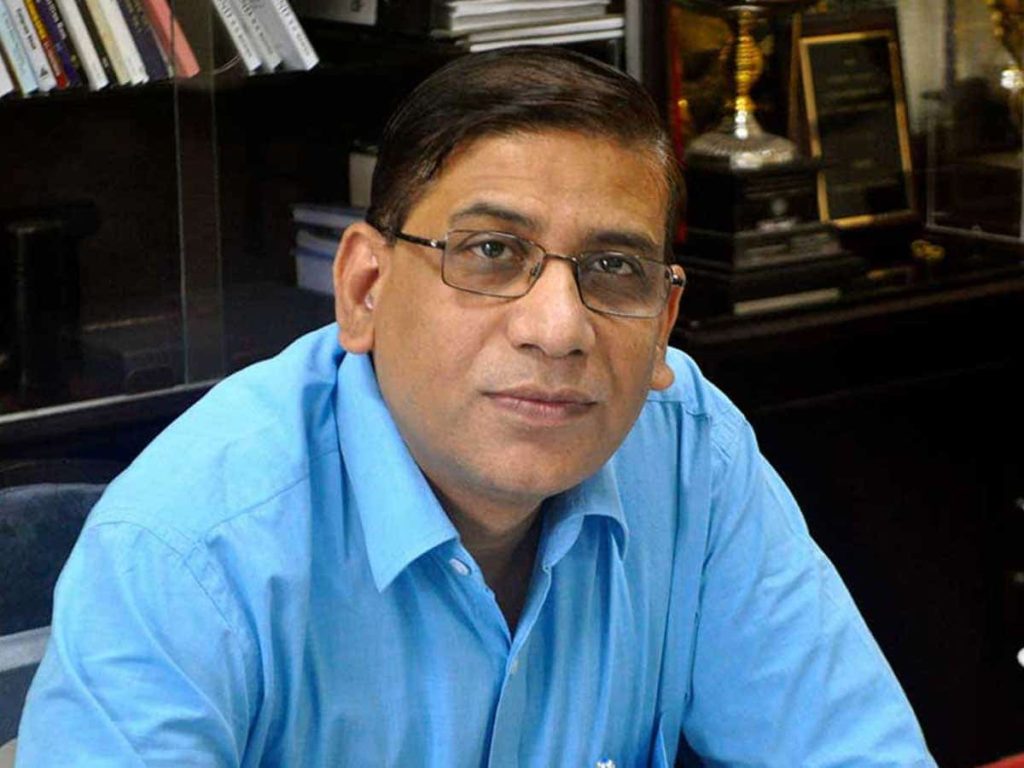
The National Academy of Law Studies and Research (NALSAR), Vice-Chancellor Professor Faizan Mustafa, has been elected president of the consortium of national law universities.
The consortium unanimously elected him president at its annual meeting.
Professor Poonam Saxena, Vice-Chancellor, NLU Jodhpur, was elected Vice President; Professor Vijender Kumar, Vice-Chancellor, MNLU, Nagpur, as convener, admission test for common law (CLAT) 2021; and Professor VC Vivekanandan, Vice-Chancellor, HNLU, Raipur, as a member of the Executive Committee for CLAT-2021.
After Mustafa virtually accepted his new role, he thanked the members for having confidence in him. He thanked the outgoing President, Professor V. Vijaykumar, for his visionary leadership.
Mustafa also thanked Professor Paramjit S. Jaswal, the outgoing vice-president, for his contributions to the issues fought by the consortium and his interventions in the executive committee and meetings of the governing bodies.
He seeks continued support and protection for Vijayakumar, who will continue as a member of the executive committee in his half-time position. The new executive committee will meet soon to finalize the details of CLAT-2021.
The governing body considered and approved the report of the grievance committee chaired by former Chief Justice of India Judge S. Rajendra Babu.
The members also thank Balraj Chauhan, Convener-CLAT 2020, for the successful completion of the process in an unprecedented year of Covid-19.
In his report, Chauhan gave details on CLAT-2020 and thanked the president and the members of the executive committee and governing body.
The governing body also appreciates the efforts of Mustafa, who fulfilled the duties of the secretary in the unusual circumstances of the sudden decision of the National Law School of India University to abandon CLAT 2020.
Mustafa said in his report that as many as eight meetings of the executive committee and six meetings of the governing body were held between September 3 and November 12 and that all decisions were taken in a consultative manner.
He also appreciated the efforts made by Sudhir Krishnaswamy to implement the reforms until the 3rd of September in the format of the CLAT paper and all other related matters.
Out of the 23 NLUs in the country, 22 students are increasing via CLAT.
source: http://www.deccan.news / Deccan News / Home> Local / November 14th, 2020