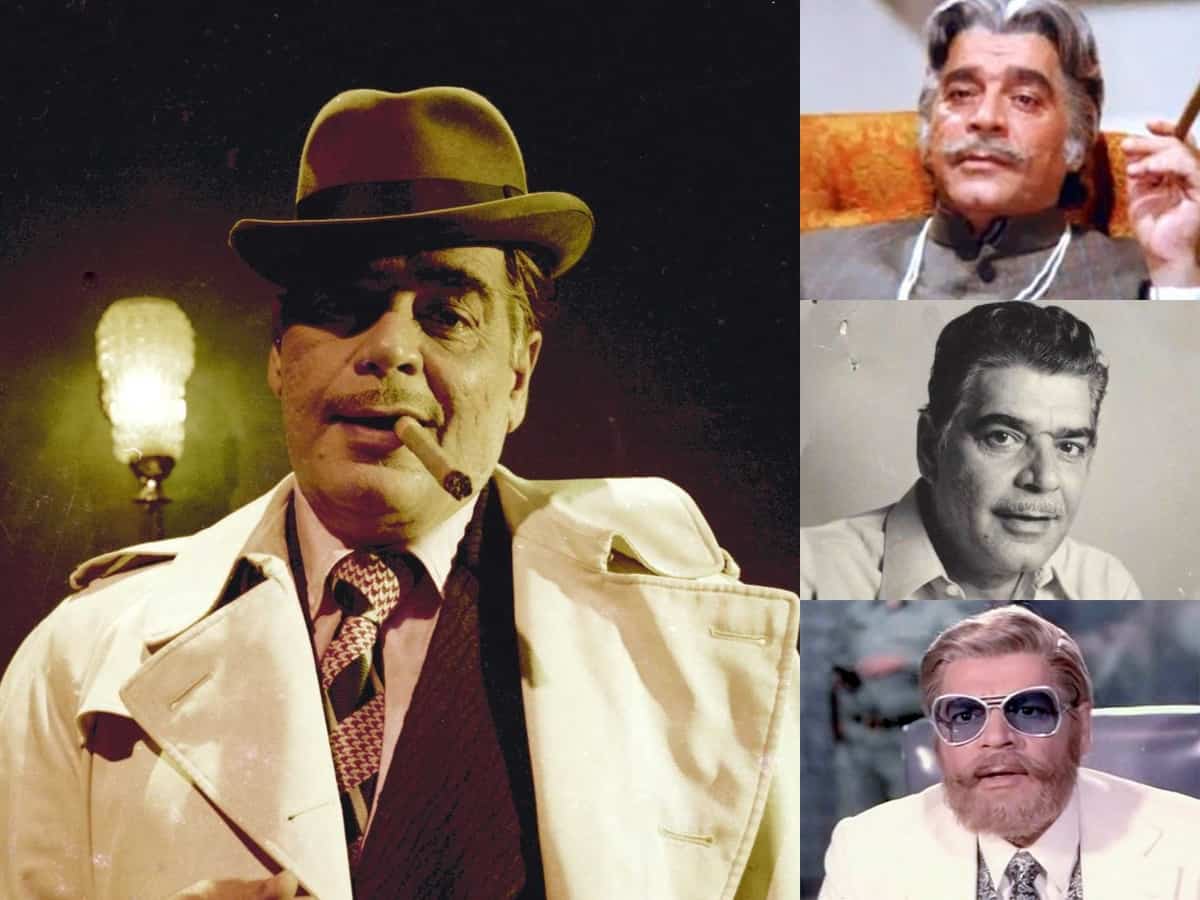
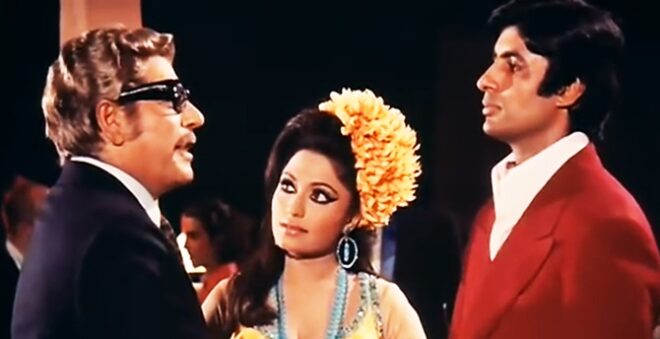
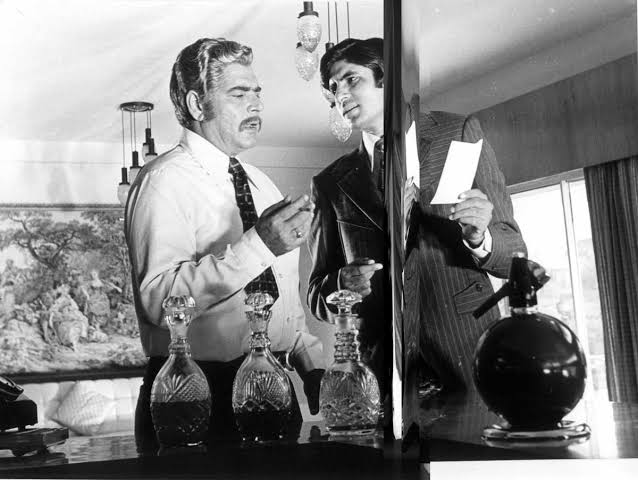
“Sara Shehar Mujhe LION Ke Naam Se Janta Hai” reminds us of the twirling mustachioed daku of Hindi cinema, Ajit. Known for his distinctive performance and incredible dialogue delivery, actor Ajit was the one who had revolutionised the way of villains’ slang in the world of cinema.
He entertained the audience, especially the movie buffs, for over 4 decades by appearing in more than 200 films.
Ajit’s Family background
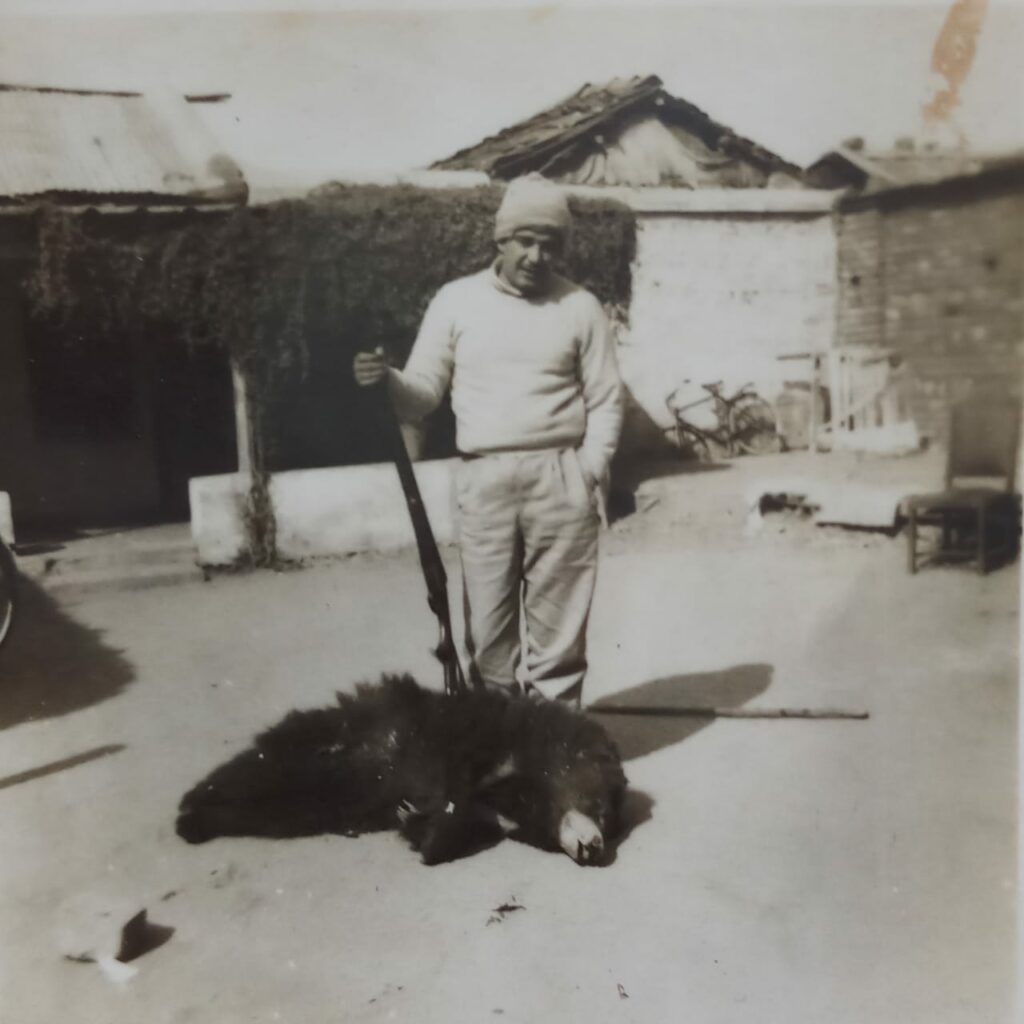
Born on 27 January, 1922 in Golconda, Hyderabad, Ajit was originally known as Hamid Ali Khan. Ajit was his stage name which he acquired after stepping into the world of cinema. His father Bashir Ali Khan worked in the Nizam’s army in Hyderabad.
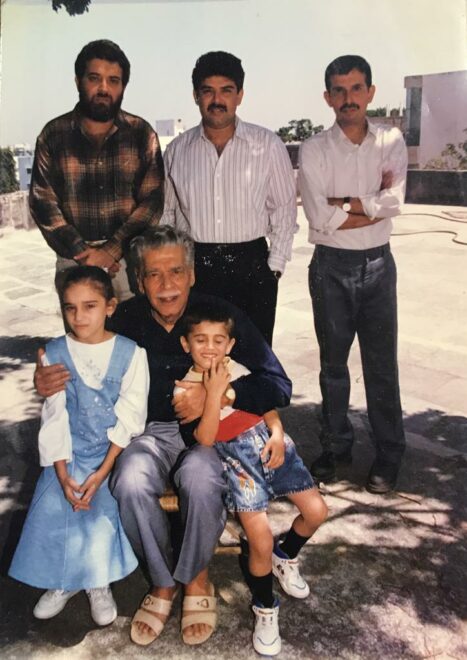
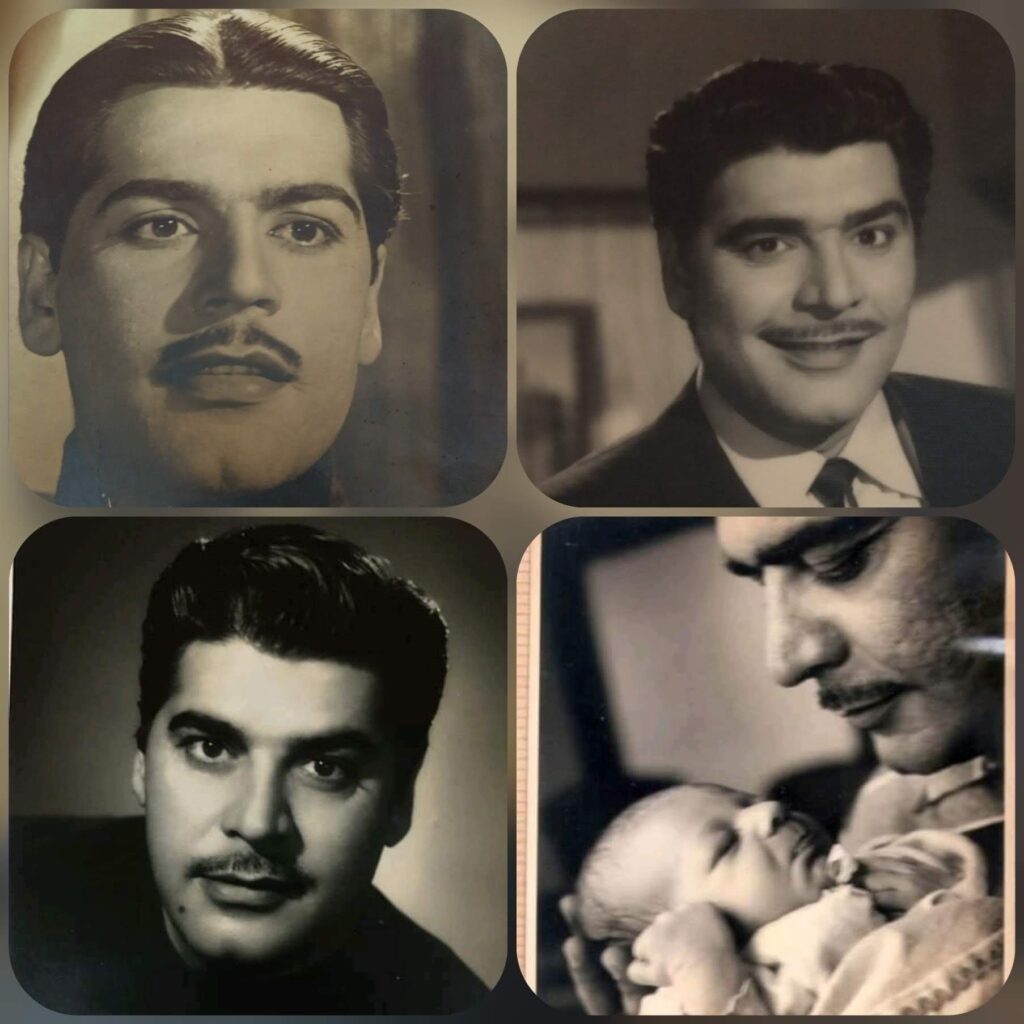
Ajit along with his sons Shahid Ali Khan, Zahid Ali Khan and Abid Ali Khan and grand children Saadia and Saeb.
Ajit did his early education from a Government Junior College, Hanamkonda in Warangaldistrict. He is survived by five sons:: Shahid Ali Khan, Zahid Ali Khan, Abid Ali Khan, Shehzad Ali Khan and Arbaaz Ali Khan.
Journey in the world of cinema
Hamid Ali Khan aka Ajit was fond of acting since childhood. He left Hyderabad and landed in Mumbai to begin his career in the film industry. He was apparently so passionate to get into Bollywood that he reportedly sold his college books to pay for his journey to Mumbai, which is the heart of the Hindi film industry.
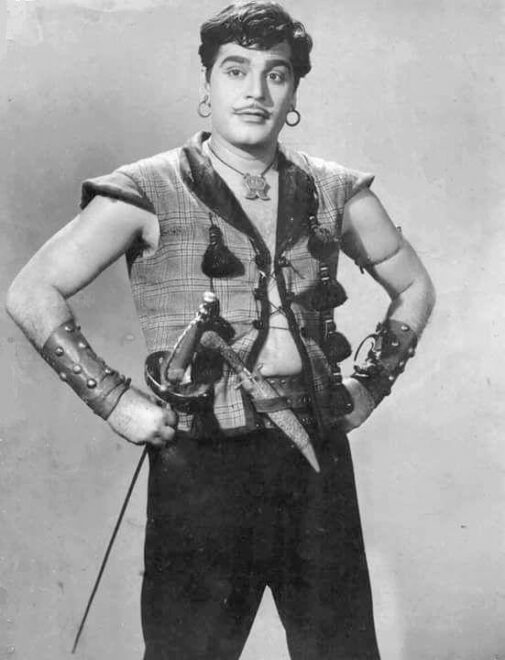
After some struggle, Ajit finally managed to get roles in a few films. He started his acting career with the film Shahe Misra opposite Geeta Bose, which was released in 1946. From 1946 to 1956, Ajit struggled to find his place in the film industry.
After Shahe Misra, he acted in various films like Sikander (with Van Mala), Hatimtai (1947), Aap Beeti (with Khursheed), Sone Ki Chidiya (with Leela Kumari), Dholak (with Meena Shori) and Chanda Ki Chandni (with Monica Desai) as leading hero. Unfortunately, almost all those films flopped as luck did not favour Ajit initially.
In 1950, director K. Amarnath who roped Ajit in his film ‘Beqasoor’ opposite Madhubala, advised him to shorten his film name. Thus on Amarnath’s advise Hamid changed his name to Ajit.
Other films in which he acted as hero include Nastik (1953), Bada Bhai, Milan, Baradari and Dholak. In all of them, his work earned him credibility. However, it would not be enough; Ajit still had to shift to supporting roles in few big ventures of Bollywood like ‘Naya Daur and Mughal-e-Azam’.
When Ajit switched to villainous characters
As most of his films in which he played the leading protagonist roles flopped badly, he chose to switch to antagonist characters. His first movie as a villain was Suraj, followed by films such as Zanjeer and Yaadon Ki Baaraat.
https://www.youtube.com/watch?v=W6d0q1yS2-0
Ajit’s popular dialogues
Known for his peculiar dialogues in a baritone voice, Ajit used to deliver them in Hinglish accent (Hindi+English), something that was never heard before in the industry. Few of his popular dialogues are listed below.
“Lilly don’t be silly” (Zanjeer)
“Saara shahar mujhe Loin ke naam se janta hai” (Kalicharan).
Mera jism zaroor zakhmi hai … lekin meri himmat zakhmi nahi (Mughal-E-Azam).
Rajput jaan harta hai … vachan nahi harta (Mughal-E-Azam)
Kutta jab pagal ho jaata hai toh usse goli maar dete hai (Zanjeer)
Jis tarah kuch aadmiyo ki kamzori baimaani hoti hai … is hi tarah kuch aadmiyo ki kamzori imaandari hoti hai (Zanjeer)
Apni umar se badhkar baatein nahi karte (Zanjeer)
Aashirwad toh bade aadmi dete hai … hum toh sirf rai de sakte hai (Kalicharan)
Zindagi sirf do paon se bhaagti hai … aur maut hazaaron haathon se uska rasta rokti hai (Azaad)
Over the years, his one-liners, iconic drawl and sidekicks — Mona darling and Robert (pronounced Raabert) — gave rise to a whole new genre of ‘Ajit jokes’ that would go on to entertain generations, like the Mona darling-Teja scene in Imtiaz Ali’s Tamasha starring Ranbir Kapoor and Deepika Padukone.
Believe it or not, Ajit gave a whole new definition and look of the villain which has been immortalised in the history of Hindi cinema. Fans especially those from Hyderabad still remember the late actor for his amazing dialogues delivery, antagonist roles and his major contribution to the world of Hindi cinema.
Ajit breathed his last on on October 21, 1998 (he was buried the next morning at about 8 a.m.) , leaving a huge void in the film industry that can never be filled again!
source: http://www.siasat.com / The Siasat Daily / Home> Entertainment>Bollywood News / by Rasti Amena / October 26th, 2020
With only one computer, four students, and just Rs 85 in his pocket in February 2001, Hoque has now emerged as one of the most influential edupreneurs of India. — IANS.
Guwahati :
Mahbubul Hoque, who has set up eight mega educational institutions and a university in 19 years, has turned out to be a guiding light for scores of people in northeast India.
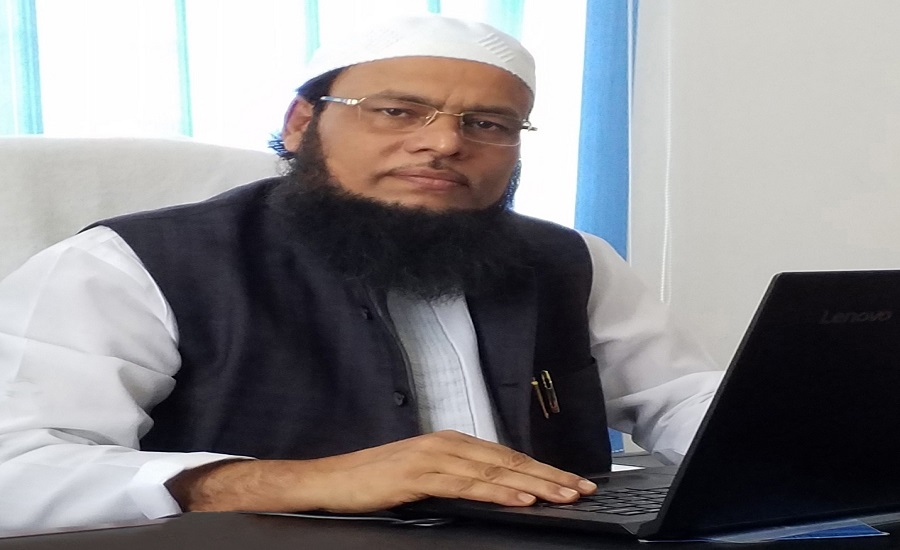
With only one computer, four students, and just Rs 85 in his pocket in February 2001, Hoque has now emerged as one of the most influential edupreneurs of India. He is the founding Chancellor of the University of Science & Technology, Meghalaya (USTM), the first private university on science and technology in the entire northeast.
The university with a student strength of over 5,000 from all the eight northeastern states is empowered by the University Grants Commission (UGC) to award degrees as specified by the UGC.
Besides the USTM, Hoque, being the founding Chairman of the Education Research and Development Foundation (ERDF), has set up nine other educational institutions in the region with a total student strength of 7,500.
These institutions include two CBSE affiliated schools, one AICTE approved engineering college, one law school, one B.Ed. college, one AICTE approved business school, one women’s college, two PCI approved pharmacy colleges in addition to one centre for coaching and guidance centre, and one educational rehabilitation centre.
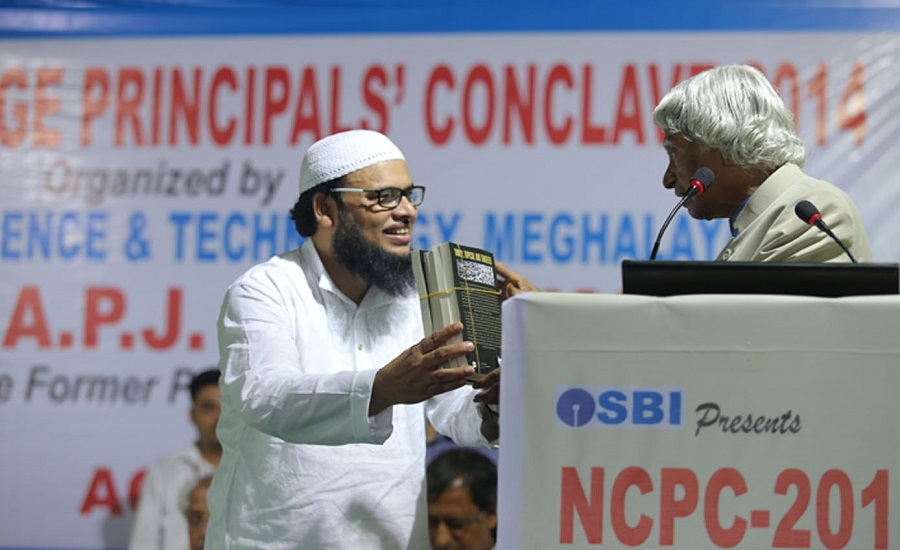
Distinguished personalities including former President A.P.J. Abdul Kalam, Nobel laureate Kailash Satyarthi, former ISRO Chairman A.S. Kiran Kumar and former UGC Chairman Ved Prakash had visited the University of Science & Technology, Meghalaya (USTM) and gave speeches in a number of events and convocations.
Speaking to IANS, Hoque said: “My institutions provide quality education from KG to PG to Ph.D levels. Out of the total number of students, more than 20 per cent belong to underprivileged backward classes who avail free education in each of the institutions where around 750 people work under the ERDF in different positions.”
“After securing the second rank in Master of Computer Applications (MCA) from the Aligarh Muslim University in 2000, I got lucrative job offers from multinational companies, both within the country and abroad. But I returned to my region and started my career as an educational entrepreneur with a strong determination to change the educational scenario of northeast India,” the 47-year-old edupreneur told IANS.
“The key focus of my vision is to provide apt teaching to poor and meritorious students of the northeast region. Of the over 5,000 students currently enrolled in USTM, over 1,200 students are availing free education. Nearly 90 per cent of USTM’s students belong to rural areas, over 38 per cent are tribals and 57 per cent are girls. The university and the other eight institutions run only on the contributions of the students,” Hoque added.
He said that more than 15 vice chancellors from different universities across the country are directly associated with the USTM, while many top personalities, including former President A.P.J. Abdul Kalam, Nobel laureate Kailash Satyarthi, former ISRO Chairman A.S. Kiran Kumar and former UGC Chairman Ved Prakash had visited the varsity and gave speeches in a number of events and convocations.
Terming the USTM as a people’s university, Hoque said it has hundreds of collaborative projects with a large number of reputed educational institutions and universities in India and abroad, including the Jawaharlal Nehru University in Delhi, IIT Guwahati, National Institute Rural Development, North East Space Application Centre, University Grant Commission in Bangladesh, Dhaka University and several institutions in Turkey.
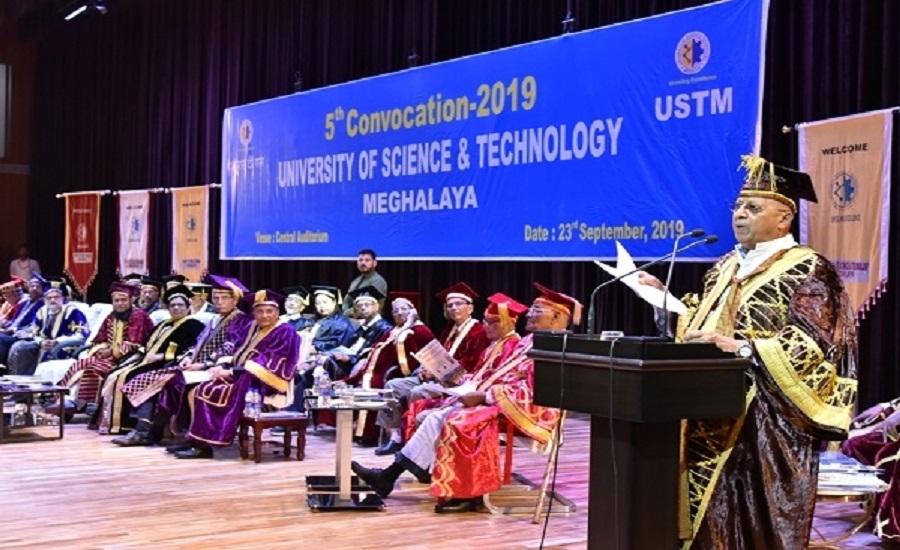
5th Convocaion 2019 of USTM.
Over the years, the USTM has turned into a higher education hub of northeast India.
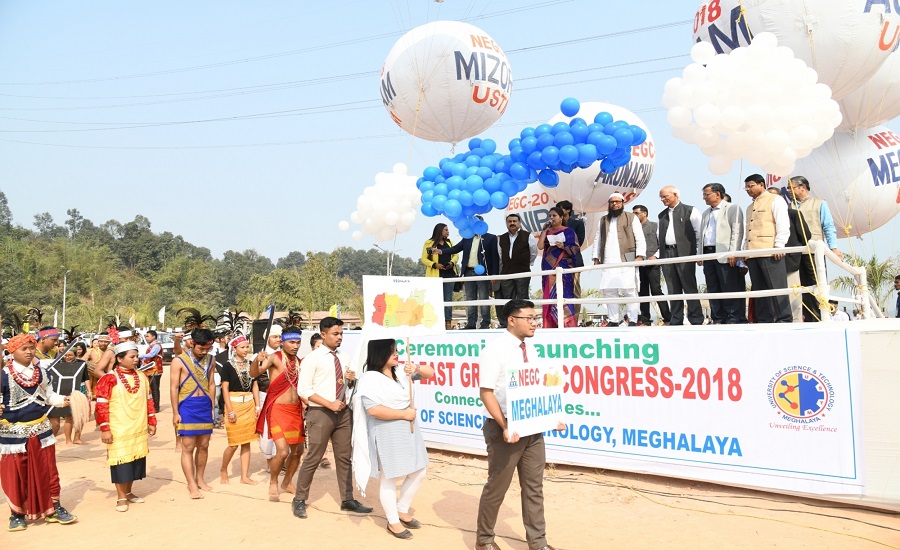
The annual three-day flagship programme — North-East Graduate Congress — sees the participation of more than 10,000 students from over 300 colleges in eight states. More than 30 ethnic communities and languages across the region come together to gain knowledge about the various new career options, enhance their inherent skills.
“This amalgamation of cultural diversity not only creates awareness, but also a sense of inclusiveness and brotherhood thereby paving the way of nation building,” he said.
For his contributions to the field of education, Hoque has received many awards, including the prestigious Shikshacharya Award 2019 bestowed by the Asom Sahitya Sabha.
He said that the USTM, located along the Assam-Meghalaya border in Ri-Bhoi district of Meghalaya, has a strong determination to continue its mission of spreading education to every nook and corner of the region.
The annual three-day flagship programme — North-East Graduate Congress — sees the participation of more than 10,000 students from over 300 colleges in eight states.
“The USTM has charted out a roadmap for its way ahead, ‘Mission Bronze’ – to make it a top university in the east by 2020, ‘Mission Silver’ – to become one of the top universities in the country by 2025, and ‘Mission Gold’ – to become a world class university by 2030,” he said.
Hoque said that ERDF has a plan of establishing a number of institutions for the betterment of education, especially in the rural areas.
He said that some of the upcoming projects include 10 more CBSE affiliated schools in rural and backward places of the northeast region, five B.Ed colleges, a medical college and hospital with allied healthcare institutions, one educational TV channel, and one newspaper each in English and Bangla emphasising on education. — IANS
Source: http://www.clarionindia.net / Clarion / Home> Big Story> Featured> India>Indian Muslims> Spotlight / by Sujit Chakroborty / October 23rd, 2020
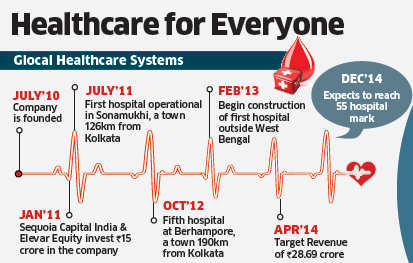
Former Indian Administrative Services officer Sabahat S Azim’s biggest challenge when he launched affordable healthcare chain Glocal Healthcare Systems was to prove that he could make the hospitals profitable.
Former Indian Administrative Services officer Sabahat S Azim’s biggest challenge when he launched affordable healthcare chain Glocal Healthcare Systems was to prove that he could make the hospitals profitable.
Within six months of launching the first Glocal hospital in July 2011 in Sonamukhi, a town 126km from Kolkata, the hospital had reached break-even. A model that the 37- yearold entrepreneur has now replicated in each of his other four hospitals. “They have proved that social good and profit can go hand in hand,” says Sandeep Farias, Founding Partner of Elevar Equity, which invested Rs 15 crore in the company along with Sequoia Capital India in January 2011. Most other hospitals that also offer affordable healthcare take up to two years to become profitable according to industry estimates.
Glocal is now expanding operations beyond West Bengal with plans to open 50 hospitals in Uttar Pradesh, Bihar, Chhattisgarh, Jharkhand and Orissa by December 2014.
It was the untimely death of his father that led Azim, a trained medical doctor, to launch Glocal in July 2010. “My father died due to unnecessary treatments. I thought, if this can happen to me, a doctor and an IAS officer, what about others?” says Azim, who found an early supporter in M Damodaran, the former Chairman of Securities and Exchange Board of India (Sebi), who became the Chairman of the venture. Azim has known Damodaran since his time as Secretary to the Chief Minister of Tripura, a position he held between 2004 and 2006.
“He is my first sounding board for any idea. When I think of introducing something new, my first thought is ‘how will Mr Damodaran react?’” he says. At Glocal, his team has come up with a protocol-driven model, where the computerised system will help the doctor automate diagnosis of 42 diseases, ranging from ischaemic heart disease to malaria, which they identified as affecting 95% of the patients.
Other affordable ventures are also attempting to cater to the semi-urban and rural market. Like Glocal, eight-yearold Vaatsalya also sets up hospitals (smaller than 100 beds) in small cities and towns with a focus on primary and secondary care. However, Vaatsalya leases out pre-existing hospitals and other buildings and upgrades them to high-quality hospitals. Azim, a fan of Fountainhead—Ayn Rand’s paean to individualism, wanted to design a hospital with just essential infrastructure.
Timely backing from investors helped convert the idea into a business. “I had a 30-minute meeting with Sabahat and he spoke about focusing on a limited set of diseases that constitutes 95% of healthcare issues in the country. I was hooked by this powerful idea,” says Elevar’s Farias.
Sequoia’s Managing Director GV Ravishankar says Glocal fit their requirement of backing good entrepreneurs in large and attractive markets. Glocal charges patients around onefifth of the fees a hospital with similar infrastructure would otherwise charge. It charges Rs 10,000 for a caesarean section, which costs about Rs 50,000 in other private hospitals.
Azim points out that he is able to charge lower fees due to lower cost of infrastructure and by eliminating unnecessary procedures. While a typical 100-bed hospital is about 70,000 square feet in size, Glocal has been able to restrict it to 30,000 square feet thus keeping cost of construction lower. At around Rs 8 crore for a 100-bed hospital, a Glocal hospital is built at about 50% of the cost of a private secondary hospital. The company aims to reach over Rs 28 crore in revenue in fiscal year 2014. As Azim begins Glocal’s expansion beyond West Bengal, he is not resting on his laurels. “It has been exciting so far but there is much more work to do,” he says.
source: http://www.economictimes.indiatimes.com / The Economic Times / Home> Business News> Rise> Entrepreneurship / by Radhika P Nair, ET Bureau / January 25th, 2013
An advertisement about an inter-faith couple garnered so much hate online that it had to be pulled down by Tanishq this week. In a temple in Manamelkudi in Pudukkottai, there is no room for such hate. A muslim district councilor has constructed a pathway in and around the temple with paver blocks at a cost of Rs. 5.34 lakhs.
77-year-old Chidambaram, who has been the temple priest at the Muthu Mariamman Temple in Manamkeludi for several decades had just one demand – a pathway around the temple and one that would connect it to the road. When Najimudeen Jahabersadik came to canvass for votes last year, he told him that he would win, and asked just one thing of him – a pathway for devotees.
“Najimudeen delivered his promise. I am extremely happy, my long pending demand has been fulfilled. I feel even happier that the councilor chose to work on a temple first, proves that God is one,” said Chidambaram.
Najimudeen Jahabersadik has been a union councilor for Manamelkudi since 2011. After a few years when elections weren’t held, he came back to power last year as the District Councilor with the DMK.
He says that he won with a margin of more than 16,000 votes, one of the highest margins ever. As soon as he received funds, the first thing he did was use it for constructing this pathway at the Muthu Mariamman Temple.
“The locals faced lot of problems as there was no proper structure around the temple, it was all sticks and stones. Due to COVID, fund allotment took time and the districts received funds very late. I was in Dubai during the lockdown and did this work with the help of the Panchayat President. We first received Rs. 5.34 lakhs and decided to use it for this temple,” says Najimudeen.
For Najimudeen, duty trumps all. He wants to show his thanks to voters through his performance. “As a councilor, everyone is same for me. I want to fulfill promises made to everyone, irrespective of religion, caste or creed. I will try to fulfill the commitments made to everyone in my district,” adds Najimudeen.
The councilor already has atleast 5-6 more projects up his sleeve, mostly road laying, tank work and helping two other temples in the district.
source: http://www.newindianexpress.com / The New Indian Express / Home> States> Tamil Nadu / by Sowmya Mani / Express News Service / October 18th, 2020
Ajmal Foundation’s Super 40 program started with a science topper in board exams (2018) and later prepared students for medical and engineering exams.
Representative image.
New Delhi:
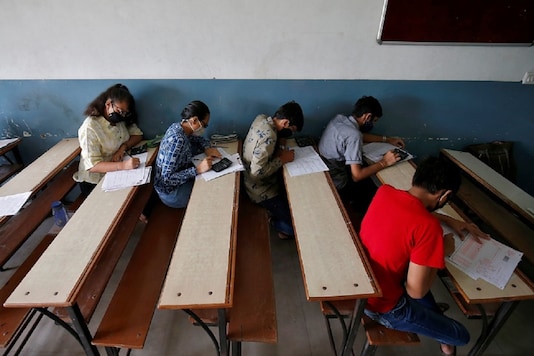
All India United Democratic Front (AIUDF) President Badruddin Ajmal’s integrated educational program with a special focus on students from underprivileged background has fought against all odds to deliver great results in competitive exams such as NEET/ JEE(Main)/(Advance).
On Saturday the MP tweeted: “More than 100 students from our 2-years Integrated Coaching Programme have cleared NEET this year, of which 80+ students likely to get admission in MBBS. My heartfelt thanks to the faculty and other staff members associated with Ajmal Super 40 programme and Ajmal Group of Colleges (sic).”
Badruddin Ajmal was referring to the Ajmal Foundation’s Super 40 program that started with a science topper in board exams (2018) and later prepared students for medical and engineering exams. Eleven students cleared NEET (2019), and more than 100 students cleared NEET in 2020 with 80-plus getting admissions in MBBS.
According to the director of Ajmal Foundation, Khasrul Islam, from 11 students clearing the exam in 2019 to over 80 likely to get admission in MBBS this time, “the result over the year is speaking for itself on how commitment and dedication of teachers and students can make all the difference.”
This year in JEE (Advanced) and (Mains) there were 7 and 18 students clearing the exams, respectively.
The students’ response to Super 40 has been overwhelming over the years. “After seeing the keenness among them to study for medical and engineering, the Foundation increased the sponsored participants from 40 to 160 (80 girls and 80 boys),” he said.
Islam said the key feature of the integrated program is its teachers with most of them being non-Muslims. “About 75% of the teachers are non-Muslims and their dedication is the life of the program. They are committed and available to clear all doubts of the students, who are majorly Muslims, almost 75%”, said Islam.
The Ajmal Foundation is a registered public charitable trust, established in the year 2005 at Hojai, Assam, India. It has 25 educational institutions all over the state of Assam. “The organisation has been working in the fields of modern education, skill development and employment generation, women empowerment, poverty alleviation, relief and rehabilitation, and environmental awareness and health aid programs,” states its official website.
The trustees of the foundation are committed to undertake multifarious schemes and projects in various parts of the country to “serve the downtrodden section of the society.”
source: http://www.news18.com / News18 / Home> News18> India / by Eram Agha / October 18th, 2020
Head of the Indian school in Benghazi, Tabassum Mansoor, led the negotiations with militants in Libya
Tabassum Mansoor
After almost a month of tense negotiations, the hostage situation involving seven Indians in Libya came to an end with their release on October 11.
In the absence of a resident Ambassador in the country, the delicate task of ensuring the safe release of the Indians workers with Al Shola Al Mudea energy company, fell to Tabassum Mansoor, the Principal of the city’s Indian school and a long-term resident of Bengazhi.
The seven men were abducted by militants at Asshwerif while they were on their way to the airport in Tripoli on September 14. A source with knowledge of the operation said the rescue would not have been possible but for Ms. Mansoor, who carried out negotiations with the militants through the Libyan authorities and tribal elders.
Ms. Mansoor, 59, who was born in Gorakhpur, has been in Benghazi for more than three decades. She has mentored the Indian school in Benghazi and it has emerged as the only Indian-led English-medium educational centre in the city.
Recognition for her long-standing commitment to education amid difficult circumstances came from the Libyan authorities when she was inducted as a member of the National Education Council of Libya. Her work in the larger Indian community first came into the spotlight for her efforts during the 2011 evacuation of nearly 3,000 Indians from Benghazi when the city witnessed intense fighting between pro- and anti-Qadhafi forces.
This time too, Ms. Mansoor swung into action when requested by the Indian authorities.
“I can’t explain the terrible time we have been through. We had initially given up hope of seeing Umed again. But it was at that time that we found strength and support from Tabassumji. The Indian Embassy in Tunis provided excellent diplomatic support, but Tabassum Madam handled the local negotiations to free our people,” said an emotional Firoz, brother-in-law of Umed, one of the seven Indians, in an online interview.
Local recognition helped
The local recognition helped the principal in the talks to ensure the safe release of the Indians. Ms. Mansoor declined to speak about her role when The Hindu reached out to her. But a source familiar with the developments said the negotiation with the militants was extremely risky as they are known to be unpredictable. As the negotiations reached their conclusion, Ms. Mansoor went personally to Brega with Libyan security officials where the captors handed over the Indians.
The Libyan support to the Indian-led initiative were lauded by the External Affairs Ministry which expressed “sincere thanks to the Libyan authorities and the tribal elders from the region”.
source: http://www.thehindu.com / The Hindu / Home> National / by Kallol Bhattarcherjee / New Delhi – October 14th, 2020
Senior cleric, Maulana Wali Rahmani runs Rahmani 30, a movement to provide free coaching to students from economically, socially and educationally backward communities.
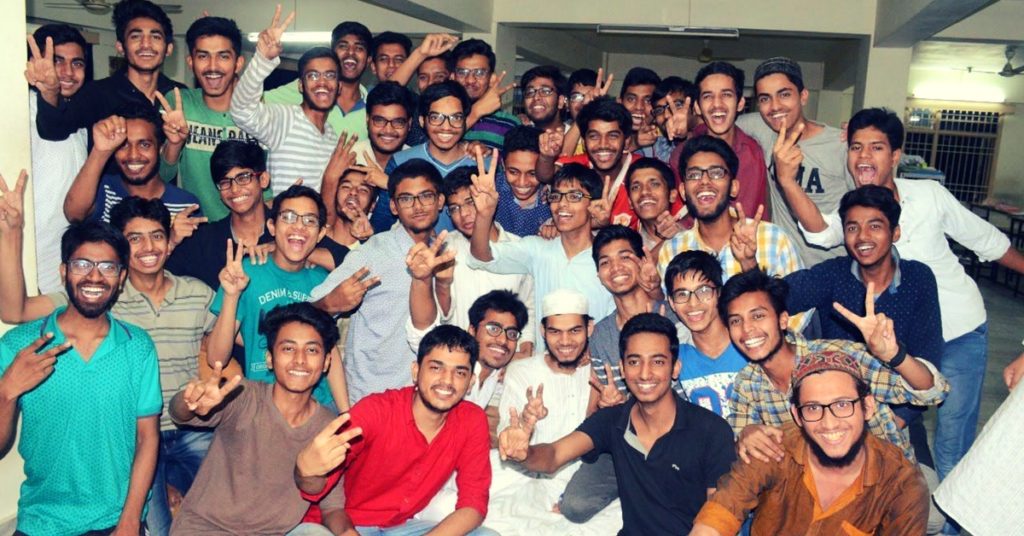
This year, the JEE Main results were yet another raging success for the famous ‘Rahmani 30’, with over 137 of its minority students qualifying for the JEE Advanced exams for admissions to India’s premier engineering institutes–like the National Institute of Technology (NITs) and the Indian Institute of Technology (IITs).
Senior cleric, Maulana Wali Rahmani runs Rahmani 30, a movement to provide free coaching to students from economically, socially and educationally backward communities.
The Rahmani Programme of Excellence includes free residential-cum-coaching programmes for JEE (Main), JEE (Advanced), NEET, chartered accountancy and law entrance exams.
Speaking to The Times of India , Fahad Rahmani, CEO of Rahmani Programme of Excellence, said, “We began in 2008, and till 2017 we have sent 213 students to the IITs. This year’s JEE (Main) results are very encouraging as our overall success rate, including Patna, Hyderabad and Aurangabad centres, is 75% while the Patna centre’s result is 100% (23 out of 23 students).”
The coaching centre which ran in association with Anjuman-I-Islam and financial support from the Memon Chamber of Commerce had coached two batches of JEE aspirants in Mumbai. But unfortunately, the Mumbai centres shut down last year as Anjuman-I-Islam ran into a financial crisis.
Even in the face of the closure of its Mumbai facilities, the authorities weren’t deterred from their will to help students. And so the centre moved to Aurangabad. The programme continues to benefit minority students in Bangalore, Hyderabad, Aurangabad and Chennai.
Rahmani 30 which started with the vision to search, find, house and train deserving students without any stated or implied fees, enrol a student after a screening–this involves a standardised objective written test followed by a behavioural interview for final selection.
Once selected, the students are provided with complete supervised hostel accommodation and nutritious meals during the tenure of coaching.
They are trained with the help of skilled teachers, hired to lecture and demonstrate specialised topics. There is a proper mechanism to measure student progress regularly. Even the lecturer’s progress is measured to maintain transparency between students and the administration and ensure a conducive learning environment. This also helps eliminate any communication issues or cultural misunderstandings and address student grievances.
The students are also thoroughly assisted through the process of applying for various standardised examinations.
As per TOI, over 17 students from the Aurangabad centre have qualified for JEE (Advanced) exams this year. There is hope for the revival of the Mumbai centre nonetheless as activists come together and request Muslim philanthropists and businesspersons to come forward and facilitate it.
(Edited by Shruti Singhal)
source: http://www.thebetterindia.com / The Better India / Home> The Better Home / by Jovia Aranha / May 02nd, 2018
Gujarat, INDIA / Blackburn (Lancashire) UNITED KINGDOM:
Mohsin Issa, 49, and brother Zuber, 48, stunned the City by being named as lead bidders for fight to buy Asda
Walmart, chain’s US owner, announced they had accepted bid from duo today but will retain a minority stake
Last stage of extraordinary rags to riches story that began with them taking over single petrol station in Bury
It comes more than a year after planned merger between Asda and Sainsbury’s was torpedoed by regulators
Two self-made billionaire petrol tycoon brothers have agreed to buy Asda from Walmart for £6.8billion to bring the supermarket back under British control.
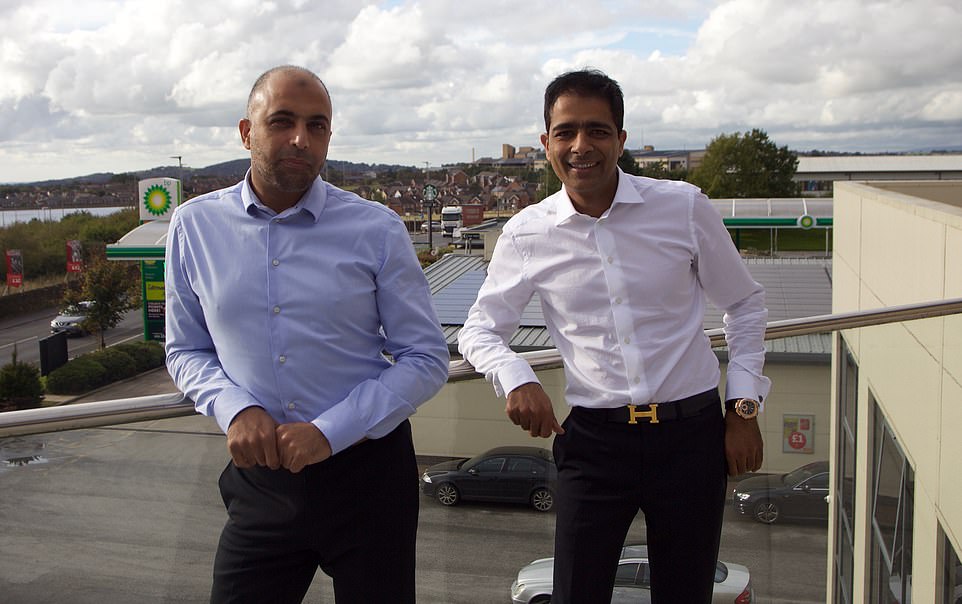
Mohsin Issa, 49, and his brother Zuber, 48, from Blackburn, stunned the City by being named as lead bidders to take over the retail giant alongside private equity firm TDR Capital, and concluded the deal today.
The new owners have committed to keeping the retailer’s headquarters in Leeds and said they will invest to grow its convenience and online operations. Walmart will retain a minority stake in Asda as part of the agreement.
It is the latest stage in the brothers’ extraordinary rags to riches story, which saw them turn a single petrol station in Bury into an empire of 5,900 branches.
The duo, whose parents came to Britain from India ‘with nothing’, built EG Group – previously known as Euro Garages – from one site bought for £150,000 in 2001 into a £9billion giant employing 44,000 staff.
Today’s deal comes more than a year after a proposed merger between Asda and UK supermarket rival Sainsbury’s was torpedoed by regulators.
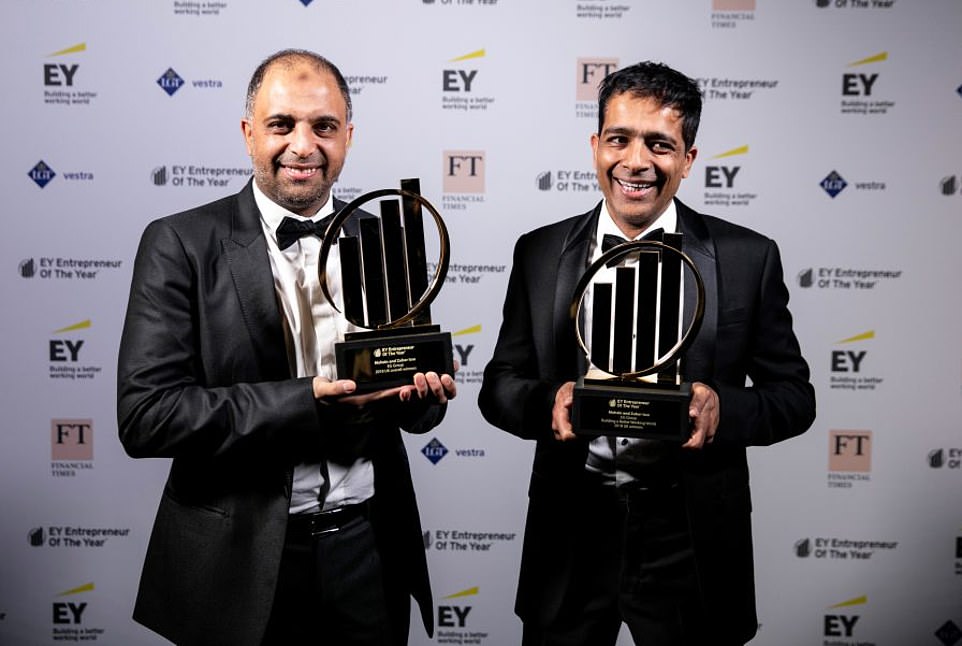
Mohsin Issa, 49, (left) and his brother Zuber, 48, whose parents came to Britain from India ‘with nothing’, today emerged as the winners of the battle to buy Asda The brothers holding trophies at an awards ceremony in London in 2018, which saw them named EY Entrepreneur of the Year
___________________________________________
The billionaire Issa brothers brothers and the rise and rise of EG Group
1970s – Mohsin and Zuber Issa’s parents arrive to the UK from Gujurat, India and the brothers are born not long afterwards in Blackburn, Lancashire.
They work at their parents’ petrol station before it closes.
2001 – The brothers buy their first filling station in Bury, Greater Manchester.
2015 – Private equity firm TDR Capital acquire a 50% stake in their Euro Garages chain.
2017 – Euro Garages buys EFR Group, a Dutch-based forecourt operator, and is renamed EG Group. The new company buys 1,000 garages from Esso in Germany.
2018 – EG Group announces it will buy 800 Kroger convenience stores in the US before buying 1,200 sites in Italy from Esso. Later that year it buys 97 fuel stations in the Netherlands and 540 from the Australian retailer Woolworths.
2019 – In another US expansion, EG buys 54 Fastrac sites in the US and 69 from Certified Oil.
2020 – EG becomes KFC’s largest franchisee in Europe after buying 145 KFC outlets in the UK & Ireland.
___________________________________________
Asda has seen its fortunes improve recently with trading strengthening through 2020, as shoppers have spent more money on groceries during the pandemic.
In the quarter to June, Asda saw online sales double but the new owners will be tasked with expanding its digital business further to take advantage of soaring demand and make ground on rivals, such as Tesco, who have a larger slice of the market.
The new owners will also face the challenge of keeping prices low amid tough economic conditions for shoppers and potential new tariffs on EU-imported foods, with the other big four supermarkets all announcing a raft of price cuts in recent months.
EG Group has sealed the deal after its offer was favoured by Walmart ahead of a move by US private equity firm Apollo.
Last week, a third bid from Lone Star Funds, fronted by former Asda executive Paul Mason, was dropped after failing to meet the price of its rivals during the latter stage of bidding.
Walmart sought a sale after the UK’s competition regulator blocked its merger with Sainsbury’s amid fears the move would push up prices and reduce product quality.
The US grocery started new discussions over a sale of Asda in February, but saw these halted due to disruption as a result of the coronavirus pandemic.
However, the auction process restarted in July as Walmart sought to exit the UK, 21 years after first purchasing the Leeds-based retailer.
Blackburn-based EG Group, formerly known as Euro Garages, already runs forecourt convenience stores for Spar and French hypermarket chain Carrefour.
The deal will have to pass through regulators, although it is expected to be given the green light.
Last week, EG Group announced a trial involving three ‘Asda on the Move’ convenience stores at its petrol forecourts.
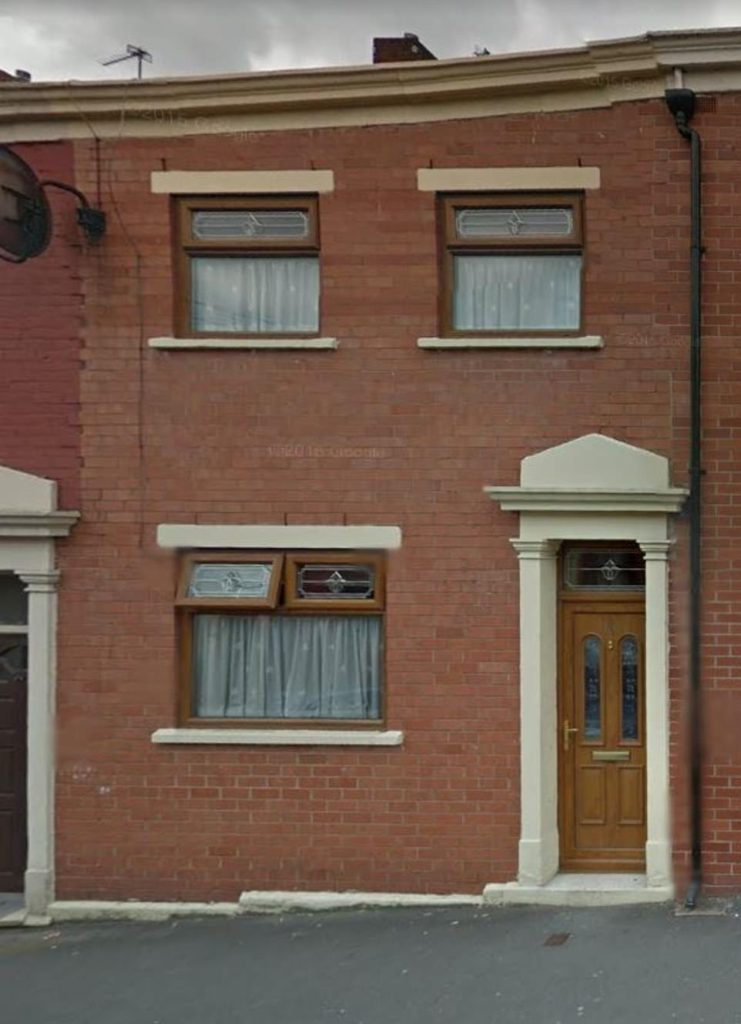
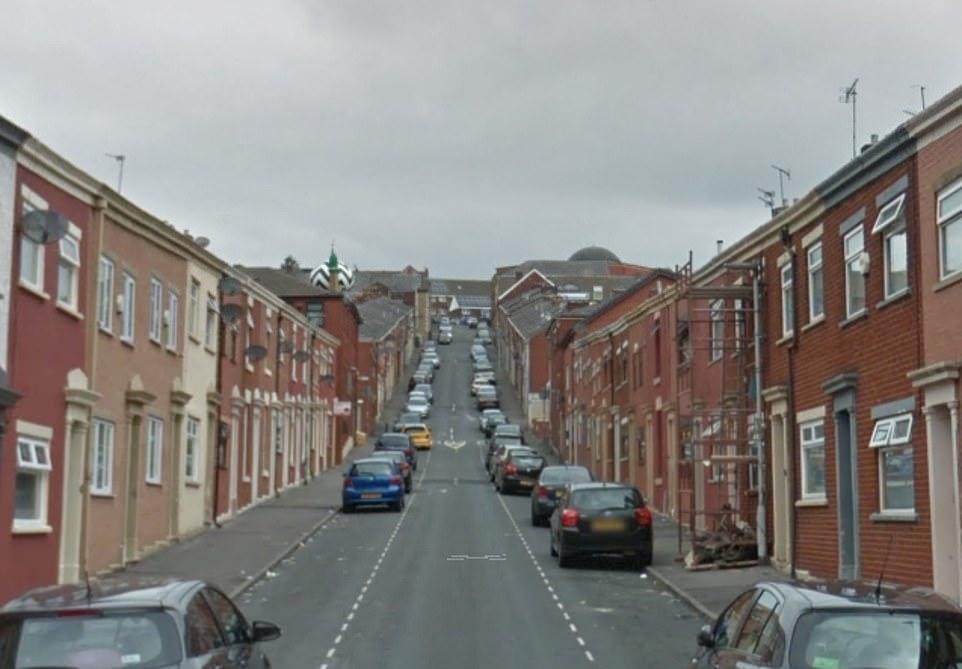
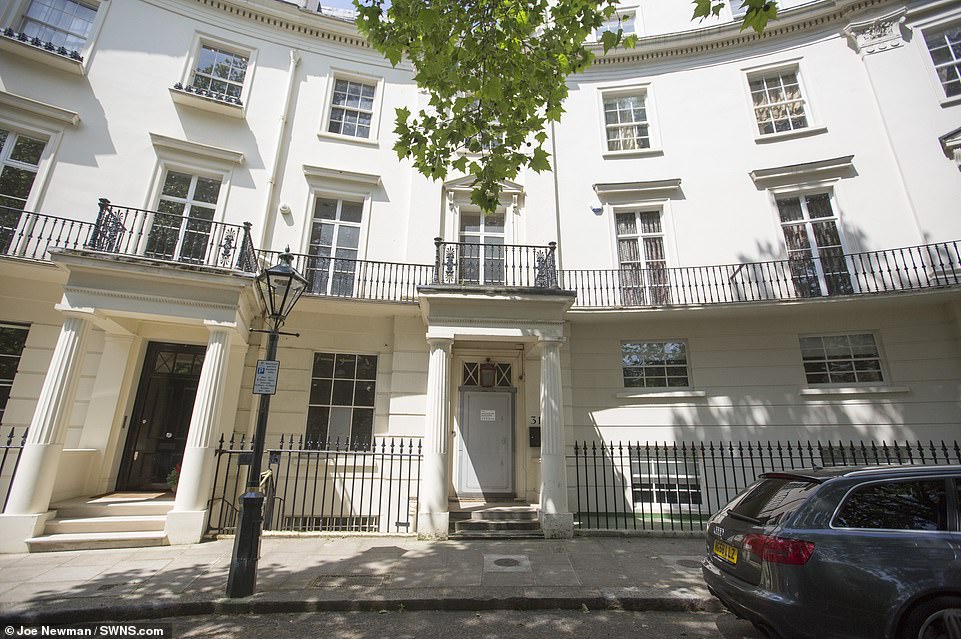
The £115,000 terraced house where the brothers grew up in Blackburn. They were born in the town after their parents moved from Gujurat, India A wider view of the road in Blackburn where the brothers grew up. Their company is still based in the town They are now worth an estimated £3.56bn, including a £25m Kensington townhouse (pictured) and a private jet that is kept in a hangar at Blackpool Airport alongside Donald Trump’s personal helicopter
______________________________
Asda history: How Britain’s third-largest supermarket began as a Yorkshire family butcher
1950s: The Asquith family (W.R. Asquith) open a butcher’s shop in Knottingly, West Yorkshire, which was eventually expanded to seven shops.
1958: They travel to the USA to visit Piggly Wiggly, probably the world’s first supermarket.
1963: The Asquiths open the UK’s first self-service supermarket in Wakefield, West Yorkshire.
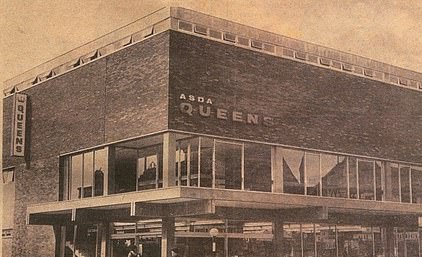
The first Asda supermarket, which was opened in 1965 in Wakefield, West Yorkshire
965: Peter Asquith built his first new supermarket from scratch, next to a large car park, knowing that cars would change the way people shop. Associated Dairies were employed to run the in-store butchery operation and the name Asda was born by combining ASquith and DAiries.
1966: Asda becomes the first major food store to sell general merchandise.
1968: Associated Dairies buys out the Asquith Brothers.
A newspaper article about one of the first ever Asda stores
1999 Asda is bought by Walmart.
2020 (February): Walmart says it is looking for a buyer.
______________________________
The Issa brothers are now worth an estimated £3.56bn, including a £25m Kensington townhouse and a private jet that is kept in a hangar at Blackpool Airport alongside Donald Trump’s personal helicopter.
They are also building five identical mansions just three miles from the £115,000 Blackburn two-up two-down where they were raised. Mohsin is expected to live there with his wife, Shamim with whom he shares two grown-up children.
As the children of immigrants who moved to Blackburn from Gujurat, India, in the 1970s, Mohsin and Zuber Issa – who were born in the former mill town – quickly learned the importance of hard work.
Their first experience of business was selling petrol from their parents’ filling station, where they would have their big idea that would revolutionise the industry and make their millions.
Petrol sales were in decline and fuel duty on the rise, cutting into already wafer-thin fuel margins and leading to hundreds of operators leaving the market.
At the time most garages – if they sold food at all – offered a measly selection of pre-packaged sandwiches, crisps, sweets and chocolate.
But the Issas realised fuel sales still had a purpose in creating a captive market at petrol stations, who could then be offered appetising food rather than the gruel offered elsewhere
The brothers struck franchise agreements with brands including Starbucks, Subway and KFC, before embarking on a buying spree to snap up sites that had previously become vacant.
They now own Europe’s largest forecourt operator, Euro Garages, which in 2019 reported revenues of more than £17.9bn.
The firm is now the largest Subway franchisee in Europe and earlier this year bought a group of 146 KFC stores.
Describing the secret of their success, Zuber told the Financial Times: ‘We wanted to create a destination where you could get fuel, food-to-go and shopping.
‘This is the formula and it works.
‘We were fortunate that the big players were leaving the market just as we were growing.’
TDR Capital – a London investment firm behind We Buy Any Car and David Lloyd gyms – bought a 50% stake in EG Group in 2015. The Issas retain the remaining 50%.
This prompted a debt-fuelled buying spree that saw the brothers buy thousands of new sites and expand into eight other countries around the world.
‘They never in their wildest dreams would have imagined 5,500 gas stations in nine markets,’ senior executive Ilyas Munshi told the American trade magazine CSP last year.
‘If they had only 20 sites, they would have felt they had done their job.’
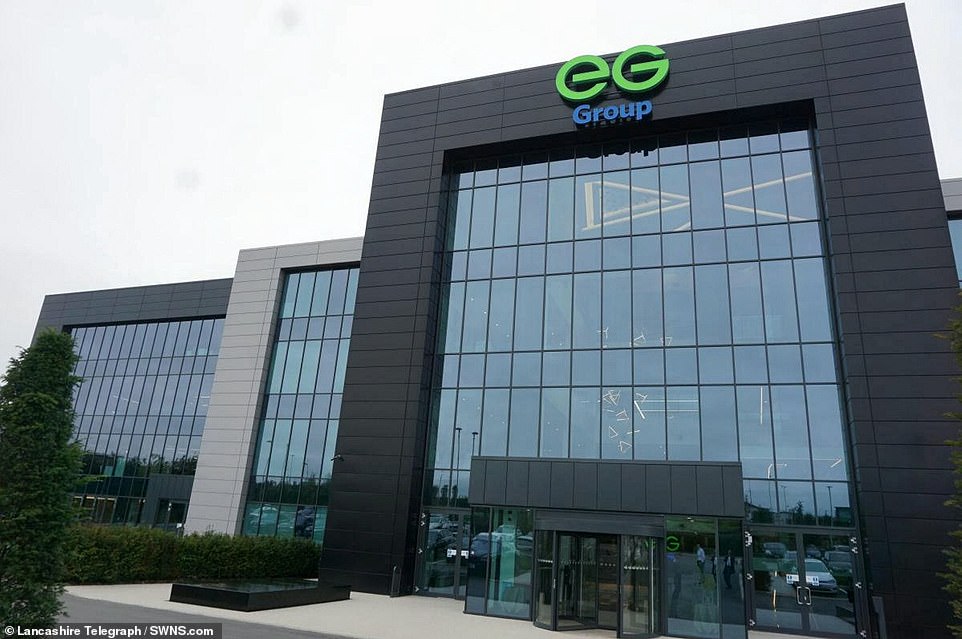
As proud Lancastrians, the brothers have insisted on keeping EG Group’s headquarters in Blackburn, and recently unveiled a new £35m headquarters.
‘People are always asking when we will move to London or Manchester,’ Zuber told the FT.
‘But the quality of life here is great. A lot of people do a few years in London then come to the North West.
‘They want to raise a family and have less pressure. We have got a lot of fantastic people that way.’
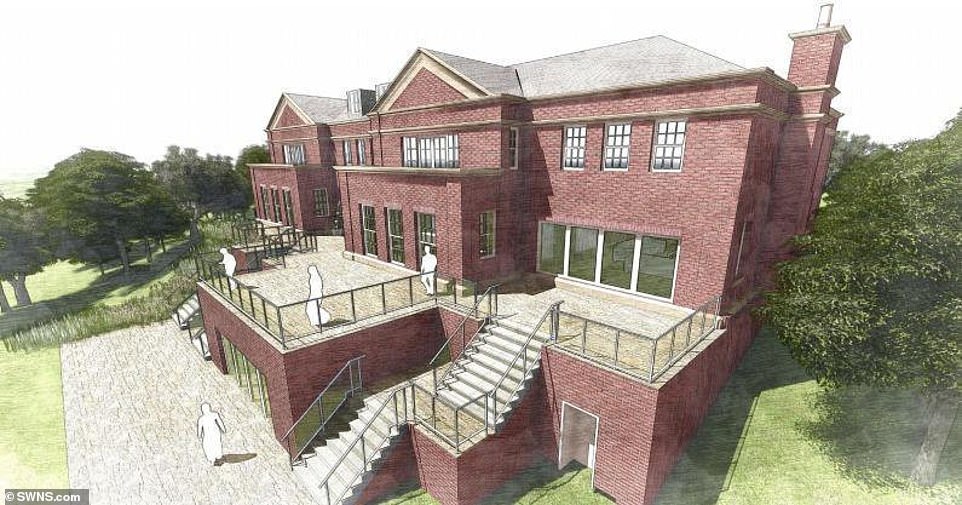
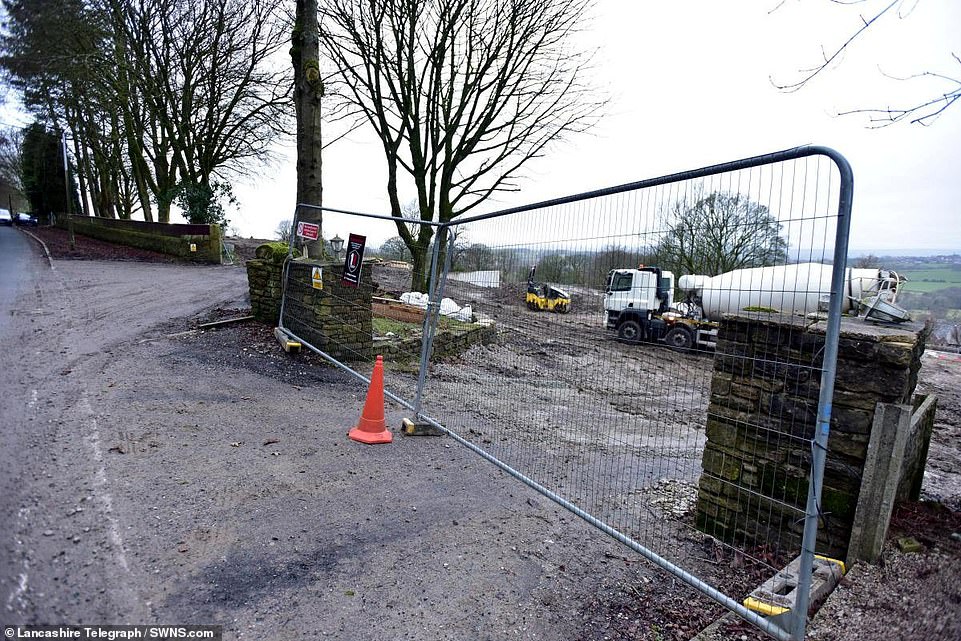
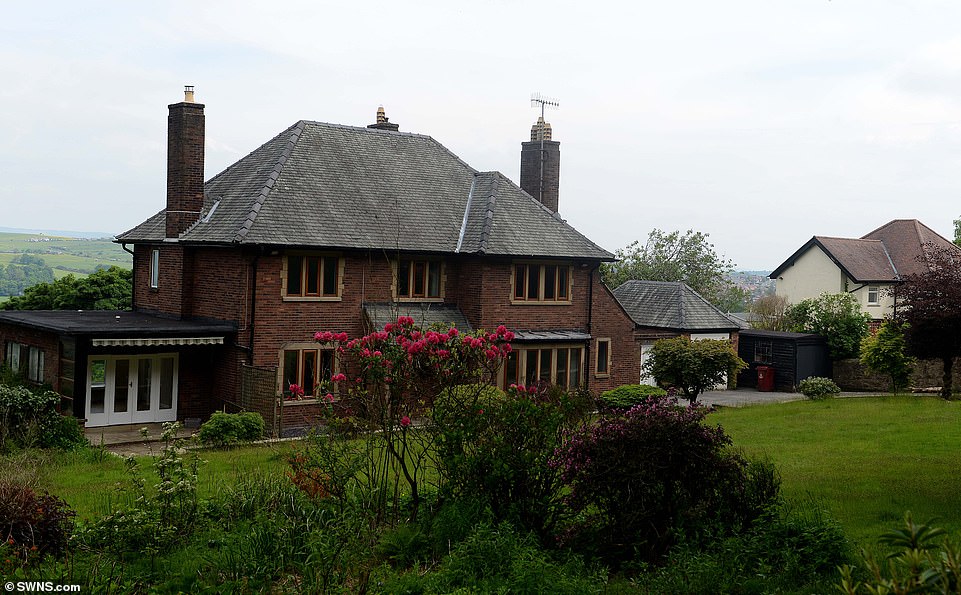
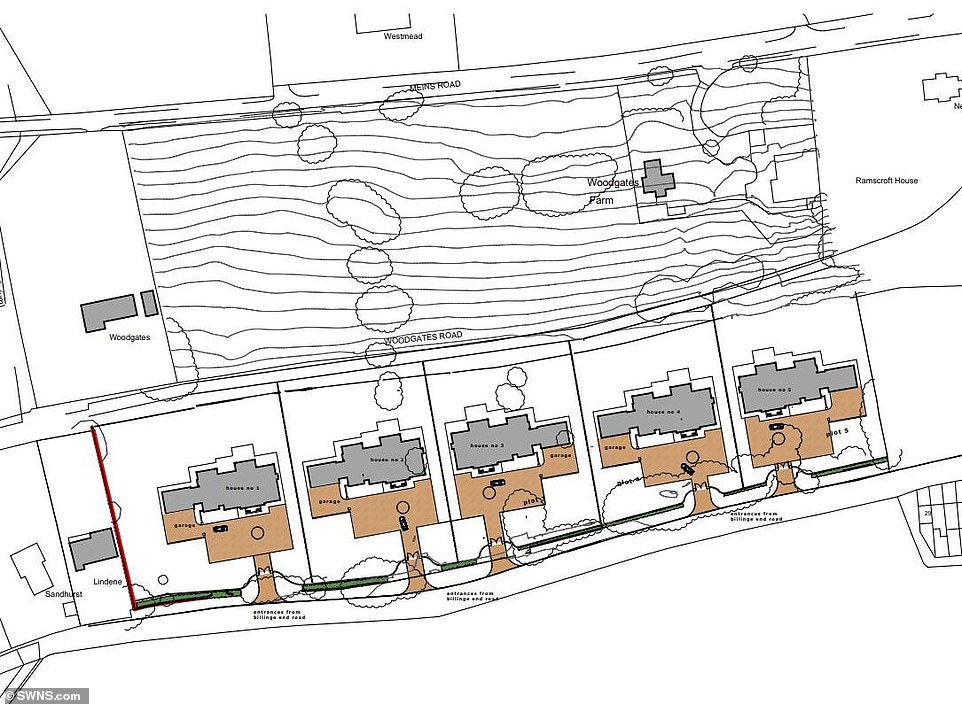
Architect’s plans for one of the five new homes that the brothers are building in countryside near BlackburnPlans for the large houses, which are located on a quiet rural road outside Blackburn where houses sell for up to £1 million, were lodged in April 2018. They are currently a building site Pictured: The homes on Billinge End Road, Blackburn, Lancashire, that was demolished in order to make way for the new houses
Mohsin has a wife Shamim, and their son and a daughter both work for EG. Both brothers rarely give interviews and have adopted a low-key public profile.
They are now building five identical ‘super-sized’ homes three miles from their childhood home.
Despite the fierce opposition, which saw the council face 30 letters of complaint, eight old houses have now been demolished and builders have laid foundations for the five 5,000 sq ft mansions.
Plans for the large houses, which are located on a quiet rural road outside Blackburn where houses sell for up to £1 million, were lodged in April 2018.
They sparked an uproar, with the properties described as ‘not in fitting with the local area’ as the homes stand over 4.5 metres taller with 1,500 square metres of floor space.
But planning permission was granted and pictures taken earlier this year showed builders had already moved in.
In 2017, the pair purchased a £25million mansion in Knightsbridge, which estate agents said could be worth £80million when planned renovations are carried out according to estate agents.
Their Grade II listed Georgian house is also at the centre of a long-running planning row.
The previous owner began digging a basement and left a vast 30ft-deep crater the size of two tennis courts, described by horrified neighbours to ‘Hitler’s bunker’.
When finished the luxury 22,000 sq ft home will have a huge underground car park, a swimming pool, spa, and cinema.
The brothers donate 2.5% of their earnings to charity through the Issa Foundation, which funds hospitals and provides free breakfasts for children in Lancashire.
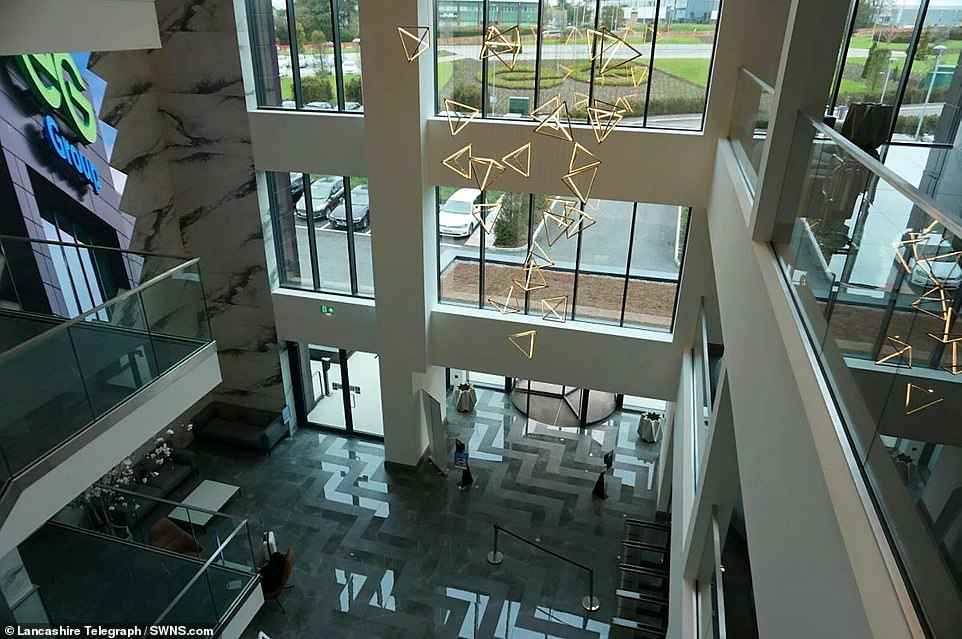
The five new homes will stand over over 4.5 metres taller that the old homes with 1,500 square metres of floor spaceThese new photos show the EG Group’s gargantuan new premises in Blackburn, Lancashire, where the Issa’s were born and raisedBuilding took three years and staff began working there in August, although due to current social distancing only half can be there at once
source: http://dailymail.co.uk / Mail Online / Home> News / by Rory Tingle for Mail Online / October 02nd, 2020
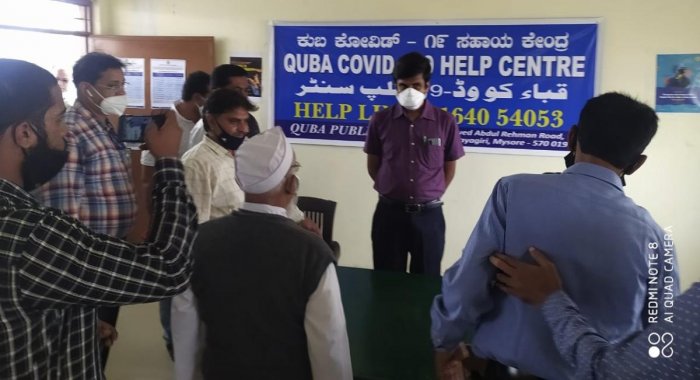
Deputy Commissioner Abhiram G Sankar inaugurates Quba Covid Care Centre at Mysuru recently.
Organisations of the Muslim community has opened three Covid Care Centres (CCC) under the Narasimharaja (NR) Assembly constituency in the city as the number of Covid positive patients is on the rise of late.
It has to be noted that NR segment, where Muslims are a majority, was being discussed over the past one week. District In-charge Minister S T Somasekhar has said that among the active cases, over 50% of the patients were from NR constituency and even most of the deaths related to Covid are from the same segment. There were also talks of ‘mini-lockdown in parts of the segment, citing non-cooperation by the residents.
On July 14 (Tuesday), Quba Covid Care Centre and Quba Covid-19 Care Centre and Quba Covid-19 Help Centre was opened, with its own 24/7 helpline number 91640 54053 at Quba Public School in Udayagiri, in the city. Deputy Commissioner Abhiram G Sankar inaugurated the Quba Covid-19 Care Centre and said this CCC should serve as an example for other districts and cities.
He said, it is an example of cooperation to the government by good citizens. “Particularly in such areas, where Covid-19 pandemic is on the rise exponentially, such positive cooperation will check the spread of Covid and help save critical patients.”
The centre initiated instant door-to-door Covid tests by Dr Nayaz Pasha Dr Shiraz Ahmed. Chaand Saab, ex-mayor Ayub Khan, Zaheerul Haq and Shahab Rahman were present.
The Quba CCC has set up three centres — 200 beds at Farooqia College in Udayagiri, 200 beds at Andalus Public School at Rajeev Nagar and Beedi Workers Hospital at Azeez Sait Nagar — in consultation of religious heads, NGOs and corporators. However, the Quba CCC will accommodate and help patients of all other communities also.
The Quba CCC has two ambulances and is used for ferrying Covid patients and unclaimed bodies.
The centre will provide all facilities like food. Besides, Muslim doctors have offered their services voluntarily. Healthcare workers and beds have to be provided by the district administration.
source: http://www.deccanherald.com / Deccan Herald / Home> State> Karnataka Districts / by T R Sathish Kumar / Mysuru – July 15th, 2020
Ravathurpalayam – Neduvacheri Village (Tirupur District) TAMIL NADU :
Villagers of Ravutharpalayam are aware of the Hindu temple built by a Muslim army commander under Hyder Ali in their locality and worshipping Goddess Mariyamman.
Tirupur :
Villagers of Ravutharpalayam are aware of the Hindu temple built by a Muslim army commander under Hyder Ali in their locality and worshipping Goddess Mariyamman. The temple is located 5 kilometres from Avinashi city in Neduvacheri village in Tirupur district.
Speaking to TNIE, Neduvacheri Panchayat President TG Varadarajan said, “Oral tradition point out the Mariyamman temple was built by a Muslim man. The small temple was built with Hindu style of architecture but has small dome on the top. The small dome instead of Gopuram was very unique.” Kumravel a local resident said, ‘Earlier I never believed that the temple was built by a Muslim man. Later, I got to know the facts from the local historians.
Goddess Mariamman is invoked several times a year to regenerate soil, fertility and protect the community against disease and death. Apart from the local villagers, residents from Coimbatore and Erode also visit the temple to get the blessings of the Goddess . According to Virarajendran Archaeological and Historical Research Centre, Director S Ravikumar, “The temple structure is similar village style Hindu temple. It is built in square type 8 feet by 8 feet.
Historical evidences point out, that Hyder Ali a powerful ruler of Mysore Kingdom, had the big influence over Kongu region such as Coimbatore and Erode in 18th Century. These places were ruled by several army commanders who were also in charge of revenue collection and administration. One such officer named Ravuthar was incharge of this region.
His daughter reportedly fell ill with chicken pox. Despite medical treatment the infection couldn’t be cured. Villagers told him the idea of worshipping Goddess Mariyamman. After he made offering and prayers, his daughter was cured. He immediately built a temple dedicated to the Goddess. Currently the temple is more than 250 years old. The entire locality is known by his name Ravutharpalayam.” Neduvacheri Panchayat secretary Kannan said, “The temple attracts quiet a following in the village. Donors have donated several tracts of the land.”
source: http://www.newindianexpress.com / The New Indian Express / Home> States> Tamil Nadu / by Saravanan MP / Express News Service / October 05th, 2020