Category Archives: Leaders

Princess Esra lends royal touch to book on Nizam

Hyderabad, TELANGANA :

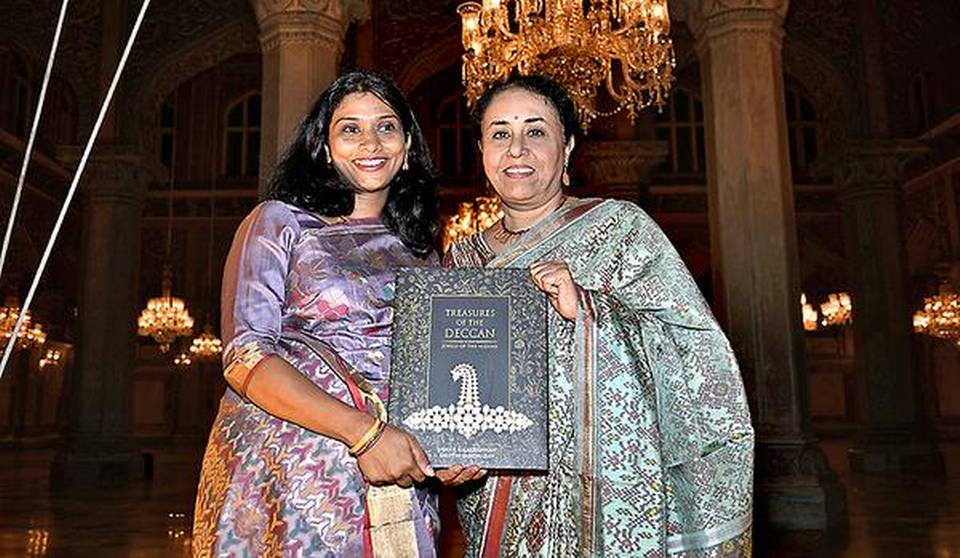
Deepthi Sashidharan and Usha Bala Krishnan releasing a book on Nizam’s jewellery at Chowmohalla Palace on Thursday. | Photo Credit: G_RAMAKRISHNA

Treasures of the Deccan – Jewels of the Nizam released

Princess Esra lent a royal touch to the release of the Treasures of the Deccan – Jewels of the Nizam in Hyderabad’s Chowmahalla Palace on Thursday evening. “I can imagine Alexander Jacob walk into this very same Chowmahalla Palace holding in his hand the 184.5 carat diamond and climb the stairs to meet the Sixth Nizam Mahbub Ali Khan,” said Usha Bala Krishnan, who has co-authored the two-volume work with Deepthi Sashidharan.

The book documents the fabulous collection of the Nizam’s Jewellery, some of which is currently locked up in vaults of banks, while other pieces are in private collections.

The authors made a short presentation about how the book has evolved.

“Earlier, I worked on the Jewels of the Nizam which was more in the nature of a catalogue.

Launching this book in Hyderabad is special, as the jewellery has a special, almost metaphysical, connection to this place,” said Ms. Krishnan who is a well-known historian of jewellery and was commissioned by the Central Government before the jewels of Nizam were put on display in Hyderabad’s Salar Jung Museum in 2001.

“Matching some of the black-and-white photographs with the jewellery that the royalty was wearing at that time was an a-ha moment.

We discovered the jewels in private collection as well as what is known as Nizam’s Jewellery,” said Deepthi Sasidharan who trawled through a vast collection photographs to bring alive the story of Nizam’s jewellery.

source: http://www.thehindu.com / The Hindu / Home> News> States> Telangana / by Special Correspondent / Hyderabad – November 30th, 2018

Azim Premji conferred highest French civilian award

Bengaluru, KARNATAKA :

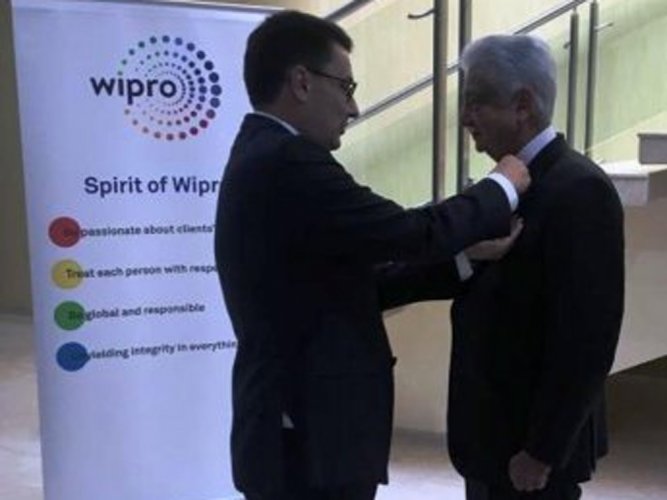
Wipro Limited Chairman Azim Premji receives the highest French civilian distinction, Chevalier de la Legion d'Honneur (Knight of the Legion of Honour), from Ambassador of France to India Alexandre Ziegler, in Bengaluru on Thursday.
Wipro Limited Chairman Azim Premji receives the highest French civilian distinction, Chevalier de la Legion d’Honneur (Knight of the Legion of Honour), from Ambassador of France to India Alexandre Ziegler, in Bengaluru on Thursday.

Azim Premji, philanthropist and Chairman of Wipro Limited, on Wednesday received the highest French civilian distinction, Chevalier de la Legion d’Honneur (Knight of the Legion of Honour) from Ambassador of France to India Alexandre Ziegler.

Speaking on the occasion at the Wipro campus, Ziegler said the award was bestowed on Azim Premji for his outstanding contribution to developing the information technology industry in India.

“Also, for his economic outreach in France, and his laudable contribution to society as a philanthropist through the Azim Premji Foundation and Azim Premji University,” he said.

TheLegion d’Honneur , instituted in 1802 by Napoleon Bonaparte, is the highest civilian award given by the French Republic for outstanding service to France, regardless of the nationality of the recipients.

The President of the French Republic is the Grand Master of the Order of the Legion of Honour.

In his acceptance speech, Premji said he is extremely honoured by the award bestowed on me. “The vibrancy of the French democracy and its diversity is an inspiration to all across the world,” he said.

Wipro’s association with France spans over 15 years and the company enjoys a close relationship with several French organizations. Nearly 65% of Wipro’s employees in France are locals.

France is a key market for Wipro and the company is committed to continues investments there. Large French digital companies already have a strong footprint in India, employing over 1.3 lakh people at their R&D centres and facilities.

source: http://www.deccanherald.com / Deccan Herald / Home> Business> Business News / by N.V. Vijayakumar / DH News Service, Bengaluru / November 28th, 2018

‘Diversity is our strength’

UTTAR PRADESH / MAURITIUS :

AmeenahMPOs29nov2018

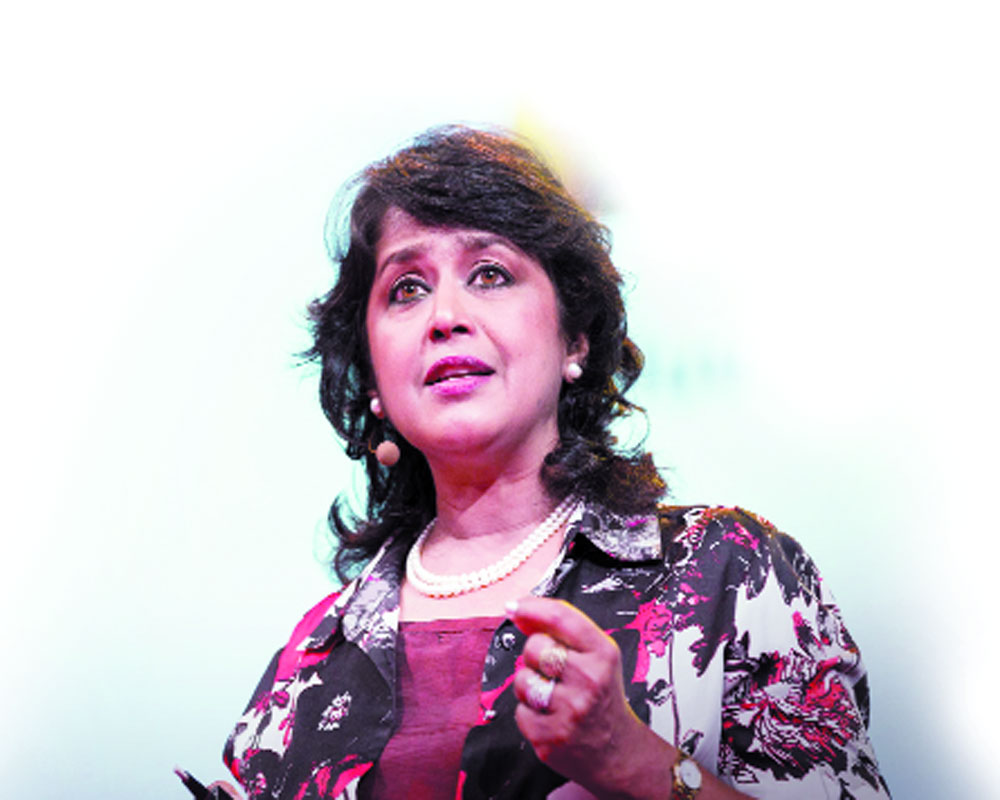
Former President of Mauritius Ameenah Gurib-Fakim tells Asmita Sarkar that there are no two ways forward than making women and minorities part of the progress

She holds many mantles — politician, the first woman President of Mauritius and a biodiversity scientist. Not only that, she is also a proponent of cultural diversity and creating entrepreneurial opportunities for women in Africa. Social media- savvy and with a clear voice, she pushes for saving the planet and its biodiversity.

What is the way forward in Asia and Africa to empower women and other minority sections?

No team can win a football match by leaving 52 per cent of the team on the bench. Women, minorities must all come together with their talents and change their way of doing things. Our diversity is our strength. When it comes to minorities, I am reminded of the words of a great statesman Pierre Trudeau. He stated and I quote, “A just society will be one in which the rights of minorities will be safe from the whims of intolerant majorities”. Countries that have valued immigrants, like the United States, are a classic example. Most of the big brands in the US have emerged from the contribution of immigrants.

As a scientist and politician, how did you envision your expertise in changing the world around you?

Countries need to be technically-driven and this is where scientists have a key role to play in shaping the destiny of their respective countries provided the leadership takes heed. Again those countries that have recognised this technical vision have emerged strong.

Countries need strong institutions and strong leadership to emerge and science and technology are powerful tools. For the first time in 2015, even institutions like the United Nations (UN) have recognised this in the crafting of the UN Sustainable Development Goal’s.

Can you tell us about your link to India?

I am a fourth generation Indian from the diaspora. My forebears came from Ghazipur area in Uttar Pradesh. They left in 1862 to come to Mauritius to work the land and never returned.

Going forward, do you think that conversations around biodiversity have become confined to conservation alone?

May be the conversation has been skewed towards conservation but it is an equally laudable exercise, and one that we cannot shy away from.

What personal struggles did you face while growing up which you wish girls in your country don’t have to anymore?

When I was growing up, I had a set of challenges like girls were forever being denied education. That is no longer the case in my country although I am aware that this still happens in many other countries.

Girls in science were a rarity but is now becoming more common. So hopefully with more role models, it will ease the way for many more to join the efforts for encouraging girls and women in both leadership and power.

What is the way forward for Asia to transition from emerging economies to developed ones without damaging the environment?

Asia is fast emerging but the leadership will have to acknowledge that development must rhyme with sustainability. It is in their interest for their survival, for the prosperity of its people and long term future of their countries.

(The leader will be at the 10th edition of TEDxGateway on December 2 at the DOME @ NSCI Mumbai)

source: http://www.dailypioneer.com / The Pioneer / Home> Vivacity / by Asmita Sarkar / November 27th, 2018

Dr Khalid Siddiqui selected for Lifetime Achievement Award

NEW DELHI :

New Delhi:

Former Director General Central Council for Research in Unani Medicine (CCRUM) Dr Mohammed Khalid Siddiqui has been selected for Life Time Achievement Award on the occasion of World Urdu Day. World Urdu day is celebrated every year on November 9 on the occasion of the birth anniversary of the poet of the east Dr Allama Iqbal by Urdu Development Organisation and United Muslim of India.

This year the function will be held at Ghalib Academy. The programme will be presided over by veteran journalist Jalaluddin Aslam.

National convener World Urdu Day Dr Syed Ahmed Khan told that those who have been selected for the award are Dr Azizullah Sheerani for Munshi Prem Chand Award for constructive literature, Moin Shadab Delhi for Hafeez Meerathi Award for poetry, Dr Razaur Rahman Aakif Sumbhuli for Maulana Ismail Meerathi award for children’s literature and Dr Imran Andaleeb for Qazi Adeel Abbasi award for literature.

source: http://www.siasat.com / The Siasat Daily / Home> India> News / by Rasia Hashmi / September 24th, 2018

Spectacular beauty of a serene mausoleum

Hyderabad, TELANGANA :

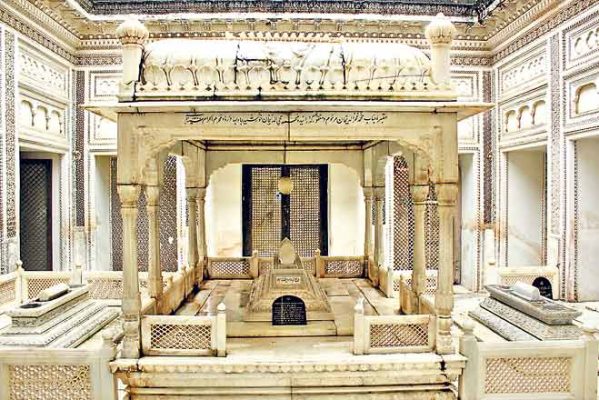
The Paigah Tombs not only symbolise the nobility’s love for magnificient edifices but also represent different styles of architecture.

PaigahTombMPOs26nov2018

Tucked away in the quiet bylanes of the Phisal Banda suburb near Owaisi Hospital, Santosh Nagar, is an architectural marvel, a serene mausoleum which is the final resting abode of erstwhile Hyderabad’s celebrated nobility – The Paigahs. The word Paigah, which means pomp and rank in Persian, was a title given by the second Asaf Jahi Nizam of Hyderabad to the estate of Abul Fateh Khan Taig Jung Bahadur in appreciation of the royal services rendered by him. He was also conferred with the title of Shams-ul-Umra, which gives the tombs their name.

Although the Paigahs were noted and rewarded for their contribution as army officers, ministers and aristocrats, Sir Viqar-ul-Umra is popularly remembered as the man behind one of the finest masterpieces of Hyderabadi architecture – the Falaknuma Palace. Legend has it that the 6th Nizam Mahboob Ali Khan loved the palace so much that Viqar-ul-Umra gifted it to him.

One such masterpiece symbolising the Paigahs’ love for architectural edifices are the Paigah Tombs. The spectacular beauty of the mausoleum is said to have earned it a title of the Taj Mahal of South India among connoisseurs of art and architecture. The Paigah Tombs also include a mosque where prayers are held every day.

The Paigah Tombs were constructed in the late 17th century, and later it was made a family maqbara by his son Fakhruddin Khan Amir-e-Kabir – I. Later, some additions were also made by Sir Viqar-ul-Umra, Sir Asman Jah and Sir Khurshid Jah. The tombs are magnificent structures decorated in stucco work and represented the Mughal, Greek, Persian, Asaf Jahi, Rajasthani and Deccani style of architectures.

PaigahTomb02MPOs26nov2018

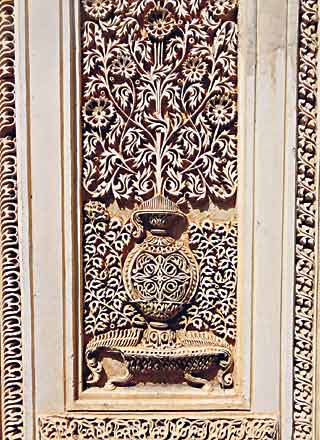
The geometric designs in the Paigah Tombs are unique and the perforated screens are examples of the finest craftsmanship. Some screens have flowers and motifs of fruits; others have serpents, drums, and vases.

There is a great amount of effort put into the detailing of the walls, arches, pillars and even of the graves. Floral and geometric patterns are characteristic of medieval Islamic architecture.

The most striking element of the Paigah Tombs is the intricately carved teakwood doors as entrance to each tomb. The carving of the doors is so fine and so regal it only makes one wonder the way art was encouraged and appreciated in the Asaf Jahi era.

The tomb of wife of Khursheed Jah is the most beautiful of the tombs with exquisite marble inlay work. One can still see the hollows in the marble carvings where precious gems were once encrusted on the grave.

Nawab Bashir-ud-Daulah’s grave stands out with a beautifully carved marble chowkhandi which is adorned by a carved mysterious green stone. Legend has it that the lighting doesn’t strike the place where it is placed.

The Paigah Tombs are under the care of the Department of Archaeology and Museums. As one of the most marvellous symbols of Hyderabad’s rich culture and royal heritage, the Paigah Tombs deserve nothing less than the government’s attention to ensure that it is not just preserved and valued but also promoted and highlighted.

Historian Dr Anand Raj Varma says, “I don’t see much improvement and restoration taking place at the Paigah Tombs; it is in the same state for years now. If you see the entrance, it’s in a very shabby state. There is no significant deterioration but there is also no tourist attraction or promotion of Paigah Tombs either. Most people don’t even know that the Paigah Tombs are located there.”

However, says the historian, the contribution of Rahmatullah, the caretaker of the Paigah Tombs, is appreciable as he keeps it going thanks to his passion and love for the Paigah family and the tombs. “The Tourism Department or the government should take this up as a project. It is the heritage which connects us our past and to our present. It is our treasure, heritage our virasat, and it should be protected,” he adds.

Mohammed Safiullah, managing trustee of The Deccan Heritage Trust, says, “The Paigah Tombs are in desperate need for restoration as the structure is in a dilapidated state and deteriorating. Some places have grown moss all over.  The government should invest in the restoration of the Paigah Tombs because there is a scope of return on investment. Once proper restoration work is done, there will be easily about a 1,000 visitors every day.”

A nominal entry ticket would become a means for generating revenue which would help in future maintenance. Simple things like a cafeteria, a souvenir shop and proper toilets could make it more tourist-friendly.

(The writer is a heritage enthusiast)

source: http://www.telanganatoday.com / Telangana Today / Home> SundayScape> Telangana Diaries / by M D Taher Hussain / November 25th, 2018

Rajasthan Assembly Elections 2018: BSP’s prize catch in dargah town

Ajmer, RAJASTHAN :

Syed Ammad Chishti
Syed Ammad Chishti

In Ajmer North, party fields Ammad Chishti from the Khadim community, which traces its descent to Khwaja Fakhruddin Gurdezi, who accompanied Khwaja Gharib Nawaz on his move to Ajmer around the year 1190.

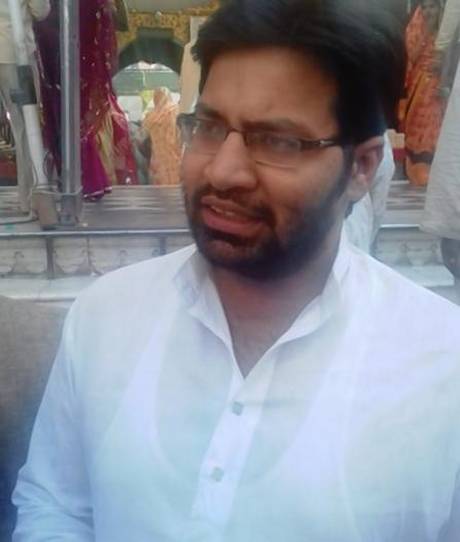
At first glance, Syed Ammad Chishti looks like an urban professional, juggling career and family. But the 26-year-old is the second member of the Khadim community here to contest an Assembly election.

The community of nearly 800 families occupies a prominent position in the hierarchy of the famed 13th century dargah of Sufi mystic Khwaja Moinuddin Chishti here. It traces its descent to Khwaja Fakhruddin Gurdezi, who accompanied Khwaja Gharib Nawaz on his move to Ajmer around the year 1190.

As the custodians of the monument, the Khadims have unrivalled access to the inner sanctum and perform all the rituals and ceremonies at the tomb.

Religious service

As Khwaja Gurdezi was the Khadim-e-Khas (chief attendant) of Khwaja Gharib Nawaz, Khadims consider it their religious obligation to serve the tomb and receive all offerings.

The Mughal emperors, Hindu kings and later the British government had liberally granted jagirs (land grants), honours and rewards to Khadims.

Almost no Khadim family migrated to Pakistan during Partition, staying back to protect the shrine from pillage and plunder.

Abysmal conditions

Mr. Chishti, the youngest municipal councillor of the Ajmer Municipal Corporation, is contesting on Bahujan Samaj Party ticket in the Ajmer North constituency, where the historical dargah is situated.

“I represent the hopes and aspirations of not just the Khadims but all the people residing here,” he told The Hindu.

Syed M. Ayas Maharaj was the first Khadim to contest an Assembly election.

He won on Congress ticket in 1980, defeating Ramzan Khan of the nascent BJP by a margin of 2,825 votes.

Mr. Chishti points to the “pathetic condition” of the dargah area in the foothills of Taragarh, and the BJP government’s alleged neglect.

“We are supplied water once in three days in this area with a high population density. Pipelines from the Bisalpur dam were laid for Ajmer, but the water has been diverted to Jaipur,” he says.

It is not just the 45,000-strong Muslim electorate in Ajmer North that Mr. Chishti is banking upon. “Education Minister Vasudev Devnani has been elected thrice from here. Look what he has done, other than distorting history and changing the school curriculum. People are fed up,” he says.

Mr. Chishti says he will reach out to all the communities, let they be Sindhi, Vaish or Brahmin, with the promise of better living conditions and good governance.

Mr. Chishti, father of a two-year-old boy, says his political ambitions are rooted in his desire to bring about a change.

It was his father, Shamim Chishti, who had introduced the BSP in the dargah area. The young man went to Lucknow to meet party supremo Mayawati with a request for ticket. “Mayawatiji encouraged me to work for people’s welfare. She may address a public meeting in Ajmer on November 28,” he says.

Justice denied

Though Mr. Chishti does not mention it, there is an underlying bitterness among the Khadims over the government’s failure to punish the perpetrators of the 2007 blast at the dargah, in which three persons were killed.

Though the National Investigation Agency Special Court in Jaipur convicted two RSS functionaries in 2017, the Rajasthan High Court suspended their life sentences and released them on bail.

While Wahid Angara Shah, secretary of the Anjuman Khuddam Syedzadgan, a Khadims’ representative body, says politics should be kept out of dargah affairs, Anjuman member Sarwar Chishti, who had lodged the complaint in the blast case, alleges that the NIA had weakened the case after the change of government at the Centre in 2014.

source: http://www.thehindu.com / The Hindu / Home> Elections> Rajasthan 2018 / by Mohammed Iqbal / Ajmer – November 23rd, 2018
Rajasthan Assembly Elections 2018: An entrepreneur’s political foray

Mumbai, MAHARASHTRA / Sikar, RAJASTHAN :

Wahid Chowhan
Wahid Chowhan

In Sikar, a new party finds new nominee

Two decades after taking an initiative for promotion of girls’ education in his native town, a Mumbai-based entrepreneur is testing his fortunes in the Assembly election in the Sikar constituency in the Shekhawati region of Rajasthan .

The Excellence Knowledge City for Girls, established by Wahid Chowhan, has made the dusty district of Sikar one of the educationally advanced ones in the State.

Mr. Chowhan, 70, has been fielded here by the Rashtriya Loktantrik Party, which was floated by Hanuman Beniwal, Independent MLA, recently. Mr. Beniwal wants to create a third front in the State, where the BJP and the Congress have been elected alternately since 1993.

Mr. Chowhan’s college offers free tuition, books and uniforms to girls, and the curriculum is a mix of madrasa teaching and mainstream subjects.

It is probably the first institution which has introduced Sanskrit along with Urdu and Arabic as the languages taught.

While seeking votes, Mr. Chowhan speaks of the difficulties he had faced when he started the college. The local people had suspected that he wanted to corrupt the minds of innocent Muslims or he intended to set up a five-star hotel.

“From the earlier imbalance of girls being deprived of education, we have now reached the opposite extreme. Girls are now highly educated compared with boys,” he says.

The initiative has given an impetus to girls’ education in Sikar. “No girl, especially in the minority communities, stays at home. With higher education, they are all moving up the social ladder,” social activist Ashfaq Kayamkhani says.

Open to both Muslim and Hindu girls, the college offers education in mainstream subjects from science and humanities to business administration. Muslim girls can opt for the madrasa curriculum.

Mr. Chowhan is pitted against Ratan Jaldhari, MLA and BJP candidate, and Rajendra Pareek of the Congress, who was defeated in 2013.

source: http://www.thehindu.com / The Hindu / Home> Elections> Rajasthan / by Mohammed Iqbal / Sikar – November 24th, 2018

Anti-dowry drive: Thousands of Indian Muslims return millions to bride families

JHARKHAND :

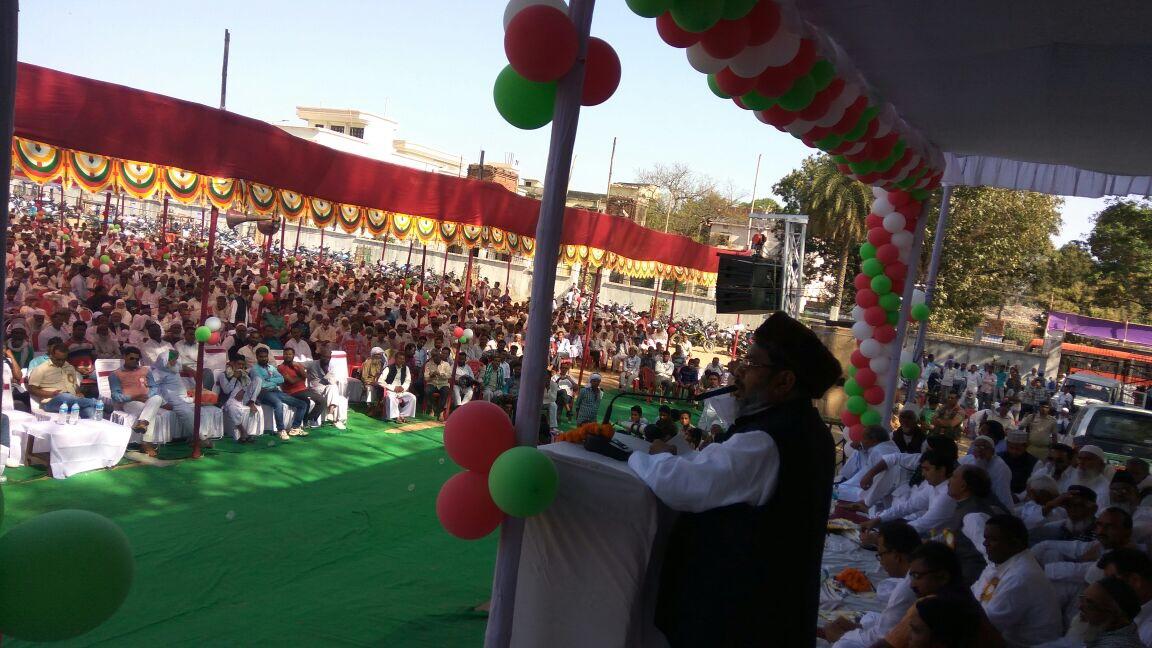
Haji Mumtaz Ali addressing anti-dowry campaign in India’s Jharkhand state. (Supplied)

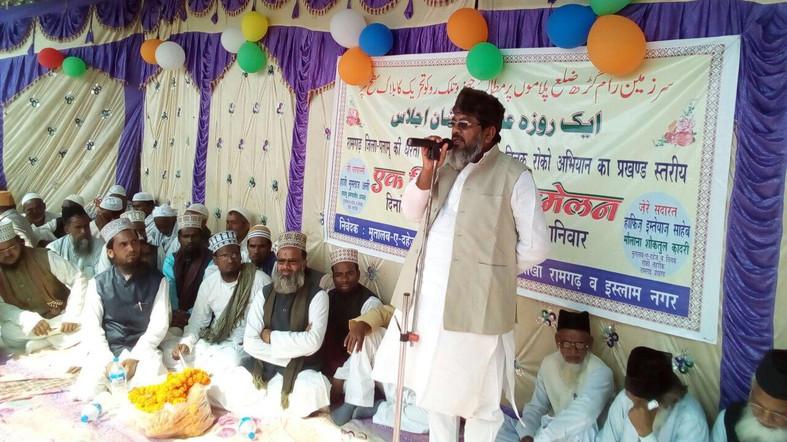
A man in India has launched a massive campaign against dowry, one of the biggest social evils claiming hundreds of lives every year in the country. Such is the impact of the campaign that close to 1,000 Muslim families have now returned dowry to the bride families, expressing regret over their conduct in public and vowing not to repeat it in future.

The credit to this unique campaign straightway goes to Haji Mumtaz Ali who has launched the campaign in the eastern Indian state of Jharkhand. The success of the campaign is underlined from the fact that villages after villages are joining it every day, openly taking an oath not to accept dowry in future.

Initially, the campaign was started in Palamu district but now it has gone beyond its boundary and spread to several others districts as well. But what’s further fascinating about it is that the campaign is not limited to any particular community only as the Hindus too have lent a wholehearted support to this campaign, joining the anti-dowry rallies in large numbers.

“I am happy to inform you that what started as a silent campaign against this social evil two years back has now turned out to be the mass movement. Now it’s not limited to any particular area or the community only but Hindus too are joining us in large numbers,” said Ali who happens to be the brainchild of the campaign.

The peak of the campaign was when the Muslim villagers began returning dowries years after they had taken them at the time of their son’s wedding. (Supplied)

Rs 60 million returned

The peak of the campaign was when the Muslim villagers began returning dowries years after they had taken them at the time of their son’s wedding. According to Ali, close to 1,000 Muslim families have returned dowries worth Rs 60 million to the brides’ families so far, impressed by his appeals to give up dowry.

One of them was Nizamuddin Ansari who returned Rs 40,000 to the bride families. “I regret about taking dowry from my daughter-in-law’s families but feel proud to return it now,” Ansari told an anti-dowry meeting held in Palamu recently.

However, the campaign didn’t reach at this level all of a sudden. Ali had to work hard, day and nights for months during which he held more than 100 such meetings and rallies in entire Palamu division to convince his community members not to take dowry, braving sweltering heat and chilling winter.

But what compelled him to launch the campaign? “I saw many families getting destroyed under the impact of dowry although it was not initially prevalent in Muslim families. I came across many poor families selling their ancestral properties or taking loans on high interest to arrange money to solemnize wedding of their daughters”.

“What was terrible this money was being wasted on arranging decoration, DJ, orchestra and various types of dishes; it was not being used for important works! So I decided to launch a campaign in the society, sooner the better,” Ali said, in a telephonic interview on Thursday.

“I was aware of the economic status of my co-villagers. I knew their financial background just wouldn’t permit them for lavish wedding. They were doing so just because they had taken dowry from the brides’ families. So it was necessary to alert them,” he said.

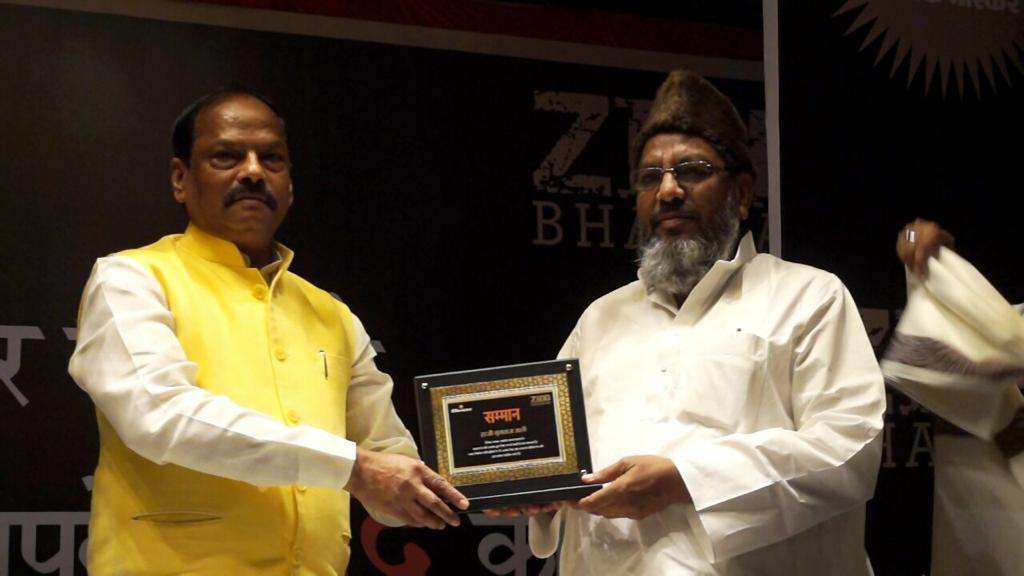
Haji Mumtaz Ali being honoured by Jharkahnd Chief Minister Raghubar Das. (Supplied)

Crowds of villagers

Eventually, Ali launched the campaign in April 2016 but got encouraged to focus on it after seeing huge crowds of villagers attending his each rally and meeting.

“I told the Muslim villagers to fear from the almighty and swear in the name of Allah not to take dowry in future and this ultimately clicked,” Ali revealed, describing his campaign as a “huge success”. Recently, Ali was honored by Jharkhand chief minister Raghubar Das for his campaign against dowry.

Ali is happy to tell that villagers are now opting for “dowry-less” marriages. “Now, the general masses have taken over my campaign. This indicates the success of my campaign, Ali remarked, with his voice exhibiting satisfaction and delight.

Dowry has been claimed hundreds of lives every year in India. As per an official report, a total of 24,771 dowry deaths were reported in India in between 2012 and 2014 with Uttar Pradesh taking the lead with a maximum of 7,048 deaths. This information was given to the Lok Sabha in a written reply by federal minister for Women and Child Development Ministry Maneka Gandhi in April 2016.

The minister further told the House that India recorded 348,000 cases of cruelty by husband or his relatives during this period with the West Bengal topping the chart with 61,259 such cases, followed by Rajasthan (44,3111) and Andhra Pradesh (34,835), as per the National Crime Records Bureau data.

source: http://www.english.alarabiya.net / Al Arabiya – English / Home> Features / by Manoj Chaurasian / Special To Al Arabiya English / November 08th, 2018

Mamata gives Kolkata its first Muslim mayor since independence

Kolkata, WEST BENGAL :

Firhard Hakim, a state minister, is all set to take up the additional role.

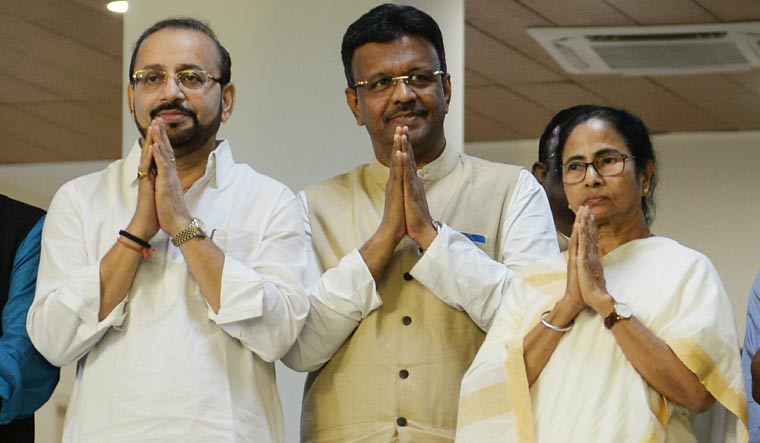
Firhard Hakim and Atin Ghosh along with West Bengal Chief Minister Mamata Banerjee | Salil Bera

For the first time since independence, a Muslim face is all set to become the mayor of Kolkata. Firhard Hakim, the municipal affairs and urban development minister of West Bengal, is all set to take up the additional role of the mayor of the 94-years-old corporation. Chief Minister Mamata Banerjee has also decided to change the deputy mayor by replacing incumbent Iqbal Ahmad with Atin Ghosh, a Member Mayor-in-Council (MMiC).

It was a role reversal in Kolkata corporation as Banerjee had earlier chosen a Hindu mayor and a  Muslim deputy mayor. Syed Muhammad Usman, a Bengal Praja Party member, was the last Muslim mayor of Kolkata in undivided Bengal which had comprised of West Bengal and East Bengal (now Bangladesh). The party was formed by A.K. Fazlul Huqe, who later became the home minister of Pakistan and then the governor of East Pakistan (now Bangladesh)

Hakim is known to be very close to Banerjee and her nephew Abhishek.

A meeting of the corporation councilors was called on Wednesday evening to get Hakim elected. Interestingly, Sovan Chatterjee, who resigned as mayor earlier in the day, has not been invited despite being a councilor.

Chatterjee was very careful while addressing the media shortly after sending his resignation to the corporation chairperson through his personal security staffers. He did not lash out at Banerjee, but hinted at many things

Terming his association with Banerjee for last 40 years as an emotional one, Chatterjee said, “That full moon looks like a burnt chapati today.”

When asked about his future plan of action in politics, Chatterjee said that he continues to be a member and MLA of Trinamool Congress.

“But I would have no hesitation if Mamata di asked me to resign from both,” said he. Replying to a question on whether he would be joining the Bharatiya Janata Party, as such speculation is in the air, Chatterjee said he would not respond to every other rumour.

“You would come to know what would be my future course of action at an appropriate moment,” he said.

Differences between Banerjee and Chatterjee were evident from the words of the latter, who said that instead of resigning on his own, “an instruction was sent to me to resign from the state cabinet”.

“For the last 40 years, whatever she asked me to do, I did all of them even without applying my mind. I am such a follower of her,” Chatterjee said.

After Mukul Roy, he is the second political heavyweight in Trinamool Congress who has distanced himself from Banerjee.

Chatterjee also denied reports that his relation with a college teacher was the reason behind his resignation from the ministry and as the mayor.

“In fact, I am totally in the dark on what the reason was,” said he.

Sources, however, said that Chatterjee would not jump off the TMC boat immediately. He will wait and watch before finalising the future course of action.

source: http://www.theweek.in / The Week / Home> News / by Rabi Banerjee / November 22nd, 2018

Lucknow: Now, ‘water gateway’ to Chattar Manzil unearthed

Lucknow, UTTAR PRADESH :

Slice of history: Nawabs probably used fish-shaped boats for transport in 17th century, says historian.

The ongoing excavation work at Chattar Manzil reached another level on Monday as workers unearthed a ‘water gateway’ leading to this iconic structure.

The UP Rajkiya Nirman Nigam (UPRNN), the construction agency engaged in the restoration of the structure, termed it one of the major discoveries so far.

Officials said workers engaged in the excavation stumbled upon a ‘cylindrical structure’ that was lying buried for years.

On clearing the debris, it was found that the structure made of lakhauri bricks was a tunnel, which connects the over 200-year-old Chattar Manzil to river Gomti, flowing just a few metres away.

“This tunnel is around nine metres beneath the ground,” said Nitin Kohli, the contractor supervising the excavation work.

The task is being performed under the supervision of a high-powered committee comprising Archaeological Survey of India (ASI), Abdul Kalam Technical University (AKTU), State Archaeology Department and officials of the civil engineering department, IIT BHU.

Experts said once they are done with the excavation work, they would explore details like the total length of the tunnel and where it leads to.

Officials said the discovery of the tunnel would unravel another chapter from the history of Chattar Manzil and Kothi Farhatbaksh.

The tunnel would also demystify myths and folklore about the Nawabs using water boats to sail within the palace complex, they added.

However, historians have a different take on this tunnel.

PC Sarkar, a noted historian, said: “The structure seems more of a water gate than a tunnel.”

He said some old timers who have been to Kothi Farhatbaksh (Lakhi Pera), residence of major general Claude Martin, had mentioned the structural uniqueness of the twin structures. “In fact, it is on record that the structures were easily approachable from the northern (river Gomti) side by boat also,” added Sarkar.

“After Nawab Saadat Ali Khan bought the fortress-like structure, it was remodelled into a palace-like structure. However, the river side entrance remained the principal one, with the Nawab adding pavilions in the middle of the river itself,” he said.

He said Gomti was the main channel of transport – the nawabs used barges (boats) of various shapes and sizes, some looking like fishes, crocodiles, for transport in the 17th century. The famous ‘More Pankh’ boats were in vogue during that era, said Sarkar.

He said ‘water gates’ may sound unique now, but they were common in the olden days.

The Lucknow Residency too had a ‘water gate’. But it became defunct when Gomti changed its course and more means of road transport came up, he said.

source: http://www.hindustantimes.com / Hindustan Times / Home> Lucknow / by Oliver Fredrick, Hindustan Times,Lucknow / November 20th, 2018