Category Archives: Leaders

Women who patronised Delhi

DELHI :

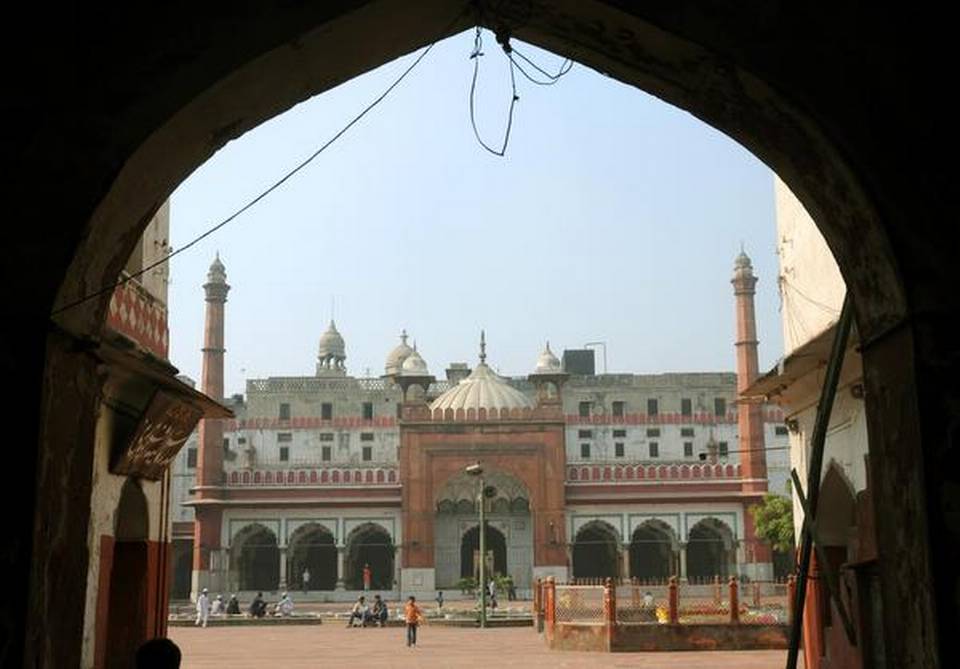
Grand design: A view of Fatehpuri Masjid | Photo Credit: V_V_Krishnan

From Haji Begum to Qudsia Begum, there is a a long list of women who contributed to the city’s grandeur

Women who patronised Delhi and converted it into a centre of art and culture, besides making it verdant and floral by laying parks and gardens, can be traced right from the time of Bega Begum or Haji Begum who built the beautiful tomb for her husband in Nizamuddin, which became the model for the Taj Mahal. After her, the daughters of Shah Jahan made it a paradisiacal city (just as Nur Jahan had done so earlier in Lahore and Kashmir). They were followed by Qudsia Begum and in recent times, in a small way though, by Lady Willingdon, Aruna Asaf Ali, Indira Gandhi and Sheila Dixit, among others. From the mid-17th century, the social and cultural fabric of Shahjahanabad has borne the stamp of women as during the Mughal era they acquired considerable wealth and influence. Much of what survives in Shahjahanabad reminds us of them and their contribution, compiled from different sources.

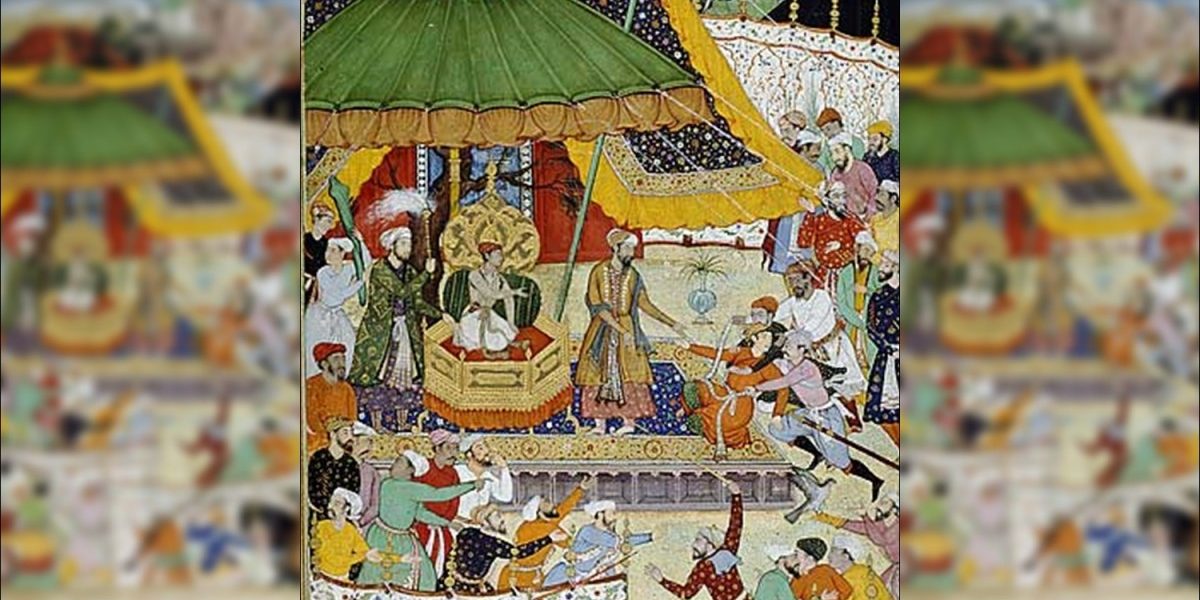
The imperial city was given overall shape under the supervision of Shah Jahan himself. His diktat determined the encircling of the city wall and the two main streets, running north-south and east-west, respectively at their junction of the palace complex (Red Fort) and the congregational Jama Masjid. “Within the limits of this centralised plan, it was mainly individual enterprise that led to the creation of commercial, religious, public spaces and homes.” Among the landmarks of the city were its mosques, three of which were commissioned by the wives of Shah Jahan after the death of Mumtaz Mahal – Akbarabadi, Fatehpuri and Sirhindi masjids named after the three. Akbarabadi Begum of Agra built a grand mosque to the south of Red Fort which was demolished by the British after the Revolt of 1857. Akbarabadi Begum was gifted a garden by Shah Jahan to the north-west of the city which came to be known as Aizzabad or Shalimar Bagh. The Begum then built a sarai within it. It was in this garden that the coronation of Aurangzeb took place on the July 31, 1658, after he had deposed Shah Jahan and also the place where Gen Ochterlony caught a chill that led to his death. Another wife of the emperor, Fatehpuri Begum built a mosque at the western end of the street that led from the Red Fort, which is known after her name. The Sirhindi Masjid, just outside the city wall, was built by the third wife, Sirhindi Begum.

Women of influence

Shah Jahan’s elder daughter, Jahanara commanded great influence and resources. She was well-educated and also had leanings towards Sufism. Jahanara’s wealth enabled her to patronise works of learning, like commentaries on Rumi’s Masnavi and for commissioning architectural projects, in which the pride of place was taken by the moonlight square, Chandni Chowk.

Mughal ladies who continued the tradition of Jahanara and Roshanara were Aurangzeb’s wife, Aurangabadi Begum who built a mosque near the Lahore Gate. The emperor’s two daughters, Zinat-un-Nissa and Zeb-un-Nissa, were also great patrons. Zeb-un-Nissa is the author of poems composed under the alias ‘Makhfi’. A skilled calligraphist, she patronised many writers, poets and learned men and commissioned several important books and tracts. She was buried in the Tees Hazari Bagh, inherited from Jahanara, but her tomb is hard to find.

Her sister Zinat-un-Nissa built a grand mosque beside the Yamuna in 1700 which is called Ghata Masjid now, her tomb, north of the mosque, was demolished in the aftermath of 1857 while the mosque was used as a bakery for British troops.

Story of Sunehri Masjid

Qudsia Begum laid Qudsia Bagh to the north of the city in 1748 whose grand buildings and a mosque were badly damaged during 1857. She also constructed Sunheri masjid near the southern gate of the Red Fort in 1751, whose dome were originally gilt-covered. A noted Shia, she constructed a number of buildings in Jorbagh, at the Dargah of Shah-e-Mardan, the shrine of the footprint of Hazrat Ali. Fakhr-ul-Masjid, near Kashmeri Gate, was built in 1728-29 by Kaniz Fatima in memory of her husband, Shujat Khan, a commander of Aurangzeb’s time who was killed during a military campaign in Kandhar.

Rabia Begum built a palatial house south of the Jama Masjid in the 18th Century. She was the wife of Muhammad Khan Bangash, the Governor of Farukkhabad, Agra and Allahabad. Rabia also commissioned a number of other structures, including Pul Bangash. Some buildings are named after unknown women such as Burhiyas’ (old women’s) mosques, two other anonymous ladies built Mir Afzal’s mosque in the Lal Kuan area in 1806. In fact, there were a large number of mosques and temples built by women at that time. These included three mosques, a Kali temple and several Shiva temples. Mubarak Begum, a dancing girl, built a mosque in Lal Kuan which came to be known as “Randi-ki-Maszid”. But now it is known after her name. She was the chief mistress of Gen Ochterlony. Better known than her and other 18th Century women was Begum Samru, a Kashmiri dancing girl of Chandni Chowk who had married the European military adventurer, Walter Reinhardt ‘Sombre’. His nick name, Sombre, or ‘dark’ was corrupted to Samru. After his death, his begum inherited the estate of Sardhana. She also successfully led military expectations and made astute political alliances.

Zinat Mahal was the wife of Bahadur Shah Zafar who became a powerful influence within the palace, and controlled a good deal of wealth. In 1846, she built a mansion in Lal Kuan Bazar. Her aim was to establish herself in the city, so that when the emperor died, her property and person would not be under the jurisdiction of the new emperor, who might be one of his older sons. So how can one overlook the contribution of women (royal or not) to Delhi’s grandeur?

source: http://www.thehindu.com / The Hindu / Home> Society> History & Culture /  by R.V. Smith / December 10th, 2018
Maulana Asrarul Haq Qasmi is no more

Tarabari, Kishanganj, BIHAR :

MaulanaAsrarMPOs10dec2018

Kishanganj:

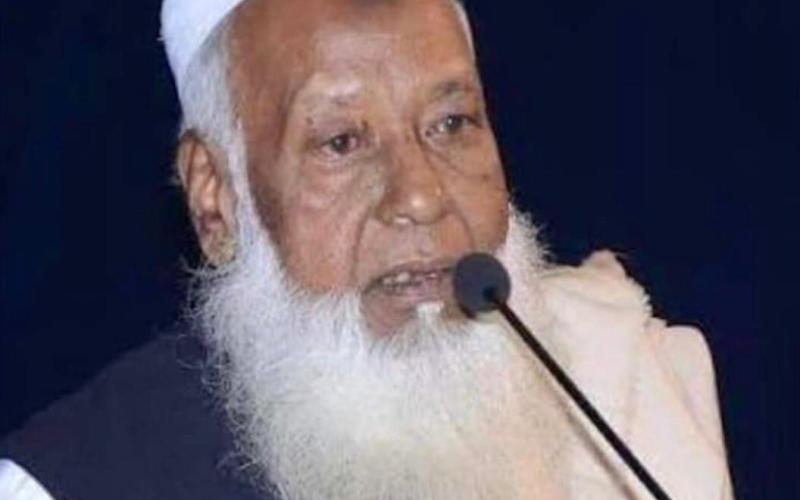
Noted Islamic scholar Maulana Mohammed Asrarul Haq Qasmi, who represented Kishanganj in Lok Sabha passed away today, i.e. on Friday, December 7, 2018 at 3:30 am. He suffered from heart attack. Earlier he was quite well. Yesterday evening he attended a programme at Darul Uloom Suffah founded by him at Kishanganj and addressed students and teachers.

Funeral prayer will be offered after Friday prayers at 3 pm at his home town Tarabari in Kishanganj, Bihar.

Maulana Qasmi is survived by 3 sons and 2 daughters.

He studied Fazil (M.A.) from Darul Uloom, Deoband, Uttar Pradesh.

Maulana set up 163 primary educational institutions and also established Milli girls schools in Kishanganj, Bihar which distributed relief material among the victims of Tsunami and flood in Bihar.

He was the secretary Jamiat Ulema-e-Hind, Member of All India Muslim personal law Board, Vice-President of All India Milli Council, President of All India Talimi wa Milli Foundation. He was also the state president of Jamiat Ulema-e-Hind.

source: http://www.siasat.com / The Siasat Daily / Home> India> News> Top Stories / by Rasia Hashmi / December 07th, 2018

Light on a leading light

NEW DELHI :

Mustajab Malik
Mustajab Malik

Mustajab Malik’s short film “Sir Syed Ahmed Khan” is quite relevant at a time when media circles are abuzz about a possible Bharat Ratna for him.

Many times adverse conditions bring out the best in a human being. So was the case with Sir Syed Ahmed Khan, a visionary and educationist, whose single greatest contribution among others to the posterity stands in the form of Aligarh Muslim University (AMU), the renowned centre of learning.

The 30-minute documentary “Sir Syed Ahmed Khan” is a part of the series “Charagh-e-Hind” directed by Mustajab Malik that traces his life highlighting several important aspects of his personality. “The objective of the series is to inspire the Muslim youth and enable them to change their mindset from ‘we have got nothing’ to ‘we must contribute’,” explains Mustajab, a veteran theatre person. Virendra Vashistha essays the role of Sir Syed and the script is written by Dr. Mohammad Aleem. Born on October 17, 1817 in Mughal nobility, Sir Syed after education joined the civil services. The First War of Independence in 1857, when he was munsif in Bijnor, had a profound impact on his life. Despite suffering personally as many of his family members were either killed or missing, he ensured protection to the women and children left by the British for safekeeping.

“Sir Syed was aware that the 1857 events reflected dissent on the part of Indians and that they were not well prepared for it,” comments historian, Prof. S.M. Azizuddin in the film. “An Essay “On The Causes Of The Indian Revolt” in 1859, the English translation of his discourse, was widely debated in the English Parliament leading many members to demand action against him.

Instead mourning the death of his loved ones, the educationist was deeply hurt by the repercussions on his community and nation. He decided to serve and provide hope in the time of despair. “When Muslims were being targeted and their confidence was at the lowest ebb, he stepped in to guide them in tune with the changing international environment,” remarks Dr. Khwaja Ekramuddin, an Urdu scholar, in the documentary. For achieving that Sir Syed identified knowledge and science as the prime tools and promoted Western style scientific education. He founded a modern madarsa in Moradabad and Ghazipur and the Scientific Society of Aligarh to instil scientific temper apart from having several scientific papers translated into Urdu.

Sir Syed’s meeting with Mirza Ghalib to write the foreword of his edition of Abul Fazl’s Ain-e Akbari, proved a turning point for him. The poet asked him to forget the past and concentrate on current developments and take into account the galloping progress in the West thereby turning him towards social reform.

During his stay in England for nearly two years from 1869 he visited several educational establishments and learning centres inspiring him to replicate them in India. This led to setting up Muhammadan Anglo-Oriental College in 1875. “Educating Muslims meant taking India forward,” comments Pradeep Saxsena, a Hindi scholar. In this cause he was helped by several Hindus in cash and kind. Besides seeking funds, Sir Syed also staged plays to espouse the cause. In 1920, 22 years after his death, it became AMU. The institution enrolled a large number of Hindu students and Babu Iswhari Prasad is among the first batch of graduates.

Sir Syed was swayed by all the British did. “He wanted their help and at the same time criticised them as proved by his essay on events of 1857. Besides he also rebutted the allegations made by Sir William Muir in his book “Life of Mahomet” in writing,” says Mustajab adding “he did not take to the streets protesting or led agitations and instead adopted the civilised method.”

The film highlights Sir Syed’s scholarship by informing the viewers of his 1846 book “Athar-al-Sanadid” which documents the Delhi monuments. “It was a first- of-its-kind attempt. In fact this authoritative work which cannot be ignored by anyone studying Delhi monuments,” comments Syed Ali Nadeem Rezavi, a historian shown in the documentary.

source: http://www.thehindu.com / The Hindu / Home> Friday Review / by S. Ravi / January 08th, 2015

Indywood carnival honours doctors

Hyderabad, TELANGANA :

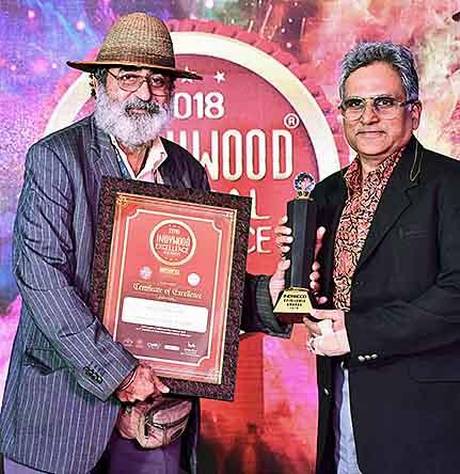
Personality of the year healthcare award being presented to Gauthamadas Udipi at the Indywood medical excellence awards in HITEX. | Photo Credit: K.V.S. GIRI

Twenty five medical practitioners were awarded Indywood medical excellence awards, which was organised as part of Indywood film carnival-2018.

The awards are meant for felicitating healthcare practitioners and organisations who offer healthcare services to the society.

Dr. Gauthamadas Udipi, Professor of Psychiatry was awarded the personality of the year in health care sector, this year.

Indywood’s life time achievement award was given to Dr. Kamini Rao (Golden Pioneer In Gynaecology), Dr. Mohan (Specialist Care Diabetologist) and Padma Shree Dr. Ahmed Ali (Surgical Wizard Of Gastroenterology).

The awards were presented by Mohammed Ibrahim Al Qahtani who is with Saudi Armaco, Saudi Arabia and Ravindra Arora, president of Bharat Cine and TV writer & TV writer association. Mr. Arora is also a committee member of Dada Saheb Phalke Academy, Western India film producers association.

Other awards which were presented during the day were in two categories including medical excellence among individual and organisations of medical excellence.

Winners in the organisations category included Apollo Remote Healthcare Services for largest telemedicine network, Maa ENT Hospital, best ENT care hospital, Grewal Eye Institute as best hospital for opthalmic care, Aster MIMS for excellence in patient care, Fathima Healthcare Group in best overseas healthcare insurance firm and Sai life sciences limited for being leading organisation in integrated CRO.

At the event, Mr. Arora congratulated all award winners and requested them to continue their services in the health care segment, “for that is important to build a healthy India”.

Indywood also awarded media excellence awards-2018.

source: http://www.thehindu.com / The Hindu / Home> News> Cities> Hyderabad / by Special Correspondent / Hyderabad – December 05th, 2018

Tales from 20th century ‘path-breaking’ Muslim women on view

INDIA :

Photo Courtsey: social media

New Delhi, (IANS)  :

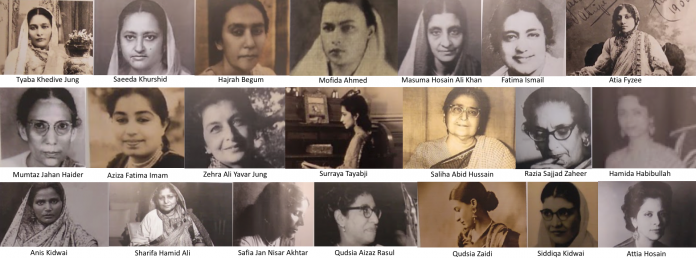
Stories of conviction and contribution of Indian Muslim women, who “gave up the purdah” and were at “the forefront of the nationalist and feminist discourse” in the past century are on display here.

The exhibition on 21 “pathbreakers” opened for public view on Saturday.

Organised by Muslim Women’s Forum at the India International Centre (IIC), the show “Pathbreakers: The Twentieth Century Muslim Women of India” features women who remain largely unheard of and unsung in the mainstream narrative.

During and after the freedom movement, a note on the exhibition said, many Muslim women shed the ‘purdah’ and became partners in the project to build a new India.

They went on to become writers, teachers, artists, scientists, lawyers, educators, political workers, trade unions, MPs, and MLAs.

“With a few exceptions, most of them have been forgotten in time.”

The show, inaugurated by author-filmmaker Syeda Imam (granddaughter of early 20th century writer-educator Tyaba Khedive Jung), embodies the spirit of the active contribution of these women, and as Imam said, “were not in the recesses of home and kitchen”.

Far from the commonly-held impression of silenced, cloistered and acquiescent women, ‘Pathbreakers’ narrates the stories of strong, determined and engaged women, the note said.

Some of these women include Qudsia Aizaz Rasul, the only Muslim woman member of the Constituent Assembly and author of “From Purdah to Parliament: A Muslim Woman in Indian Politics”; Assam’s first woman MP Mofida Ahmed, elected from Jorhat in 1957; and Aziza Fatima Imam, who served in the Rajya Sabha for 13 years starting 1973.

Why Muslim women?

The exhibition of photographs, text and video installations, points to their significant contribution towards the building of the nation, along with their sisters of other communities, through its freedom struggle, independence and beyond.

“A multiplicity of stereotypes are constructed by diverse actors regarding Muslim women. But the fact is there is no undifferentiated amass’ of Muslim women. Like women of all socio-cultural groups, they too are a divergent, shifting composition of individuals, often dumped in popular parlance into one single heap. This homogenisation has to be rejected,” the note read.

The show also projects video recordings of readings from writings of some of the featuring women.

The organisers, however, said while the participating women might seem elite, it is only the first step in identifying and recognising pathbreakers from all sections.

Featured are Anis Kidwai, Atiya Fyzee, Atia Hossain, Aziza Imam, Fatima Ishmael, Hamida Habibullah, Hajira Begum, Mofida Ahmed, Masuma Begum, Mumtaz Jahan Haider, Qudsia Aizaz Rasul, Qudsia Zaidi, Razia Sajjad Zaheer, Saleha Abid Hussain, Sharifa Hamid Ali, Saeeda Khurshid, Safia Jan Nisar Akhtar, Siddiqa Kidwai, Surayya Tyabji, Zehra Ali Yavar Jung and Tyaba Khedive Jung.

This exhibition was first held here in May, and was supported by the UN Women. The current show is open till December 8.

source: http://www.twocircles.net / TwoCirlcles.net / Home> Indian News> Indian Muslim / by IANS / December 03rd, 2018

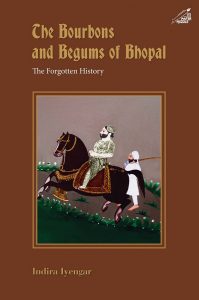
‘Bourbons and Begums of Bhopal’ Flounders Between Academic Research and Family Lore

Bhopal, MADHYA PRADESH :

Indira Iyengar’s book flounders on history, making some foundational conclusions untenable.

Shazi Zaman who has recently written a well-researched book on Akbar and has a detailed account of Akbar’s contact with the Europeans who visited his court, makes no mention of a Bourbon. Credit: Wikipedia

Some books need to be read because they are likely to tell you things you have always wanted to know. Some stories need to be told because they make for riveting narratives or expand your frontiers of knowledge in exciting and dramatic ways.

It is with such noble (and hopeful) intentions that one embarks upon The Bourbons and Begums of Bhopal: The Forgotten History despite its awkward size and substantial weight. In its size and appearance, it is is an unfortunate mix of a book with pictures and copious amounts of running text: too large to carry while travelling and not sufficiently picturesque to qualify as a coffee-table book. Its contents prove to be an awkward mix too, floundering between academic research and family lore.

The Bourbons and Begums of Bhopal: The Forgotten History Indira Iyengar, Niyogi Books Private Limited, 2018.
The Bourbons and Begums of Bhopal: The Forgotten History
Indira Iyengar,
Niyogi Books Private Limited, 2018.

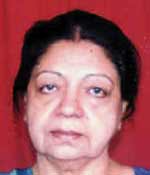
Indira Iyengar’s tale is part family history, part archival research and part anecdotal memoir. It opens with a disarming admission: ‘I am no historian, but I have a story to tell.’ Iyengar’s mother, Magdaline Bourbon traced her lineage to Jean Philippe de Bourbon who left his native France to arrive in Mughal India, sought and received employment in Emperor Akbar’s court, was actively involved in Akbar’s meeting with the Jesuit priests from Goa. For his services, Akbar is said to have gifted him a small principality, Shergarh near Narwar in present-day Madhya Pradesh and the sister of his Christian wife, an Armenian woman (Portuguese by some accounts) by the name of Juliana who apparently also served as a doctor in Akbar’s harem. Thus began the Bourbon line in India which spread its roots from the Mughal court to the princely state of Bhopal where the descendants of this first Bourbon eventually settled down. Being neither Muslim nor Hindu the Frenchmen were viewed as unbiased and loyal to their masters. The stories of their swashbuckling past and alleged purported ‘royal bloodline’ no doubt added to their mystique.

While Iyengar is at pains to establish her ancestor’s descent from the Bourbons of Navarre, historians are divided as to whether Jean Philipe was indeed from the royal house of Bourbon or simply a fugitive Frenchman, a mercenary who found name and fame in distant India, established a lineage and bestowed a legacy. Iyengar seems to be working on the principle that her mother’s version of the family history should suffice and she, as the custodian of that family history, is obligated to tell the story. ‘My mother’s narration of the family was also very interesting,’ Iyengar writes, ‘and I feel it needs to find a place in recorded history’. It is this assertion that proves to be problematic. For, had it been told as a colourful yarn with anecdotes and family portraits or even bits and pieces of trivia and family lore it could have been a charming story – as history it is on decidedly shaky grounds.

Also, while Iyengar’s research in the archives of the Agra Archdiocese may well establish the role of her French forefathers in various administrative capacities, it does not satisfactorily establish Jean Philippe’s link with Duke Charles III de Bourbon (1490-1527), also known as Connetable de Bourbon. The earliest account of Jean Philippe she is able to offer is by Madame Dulhan Bourbon, wife of Balthazar Bourbon; this comes in the form of a testimony made to a British general. Coming from a family member, that too as late as the late-19th century, it carries dubious weight at best. All other accounts, by missionaries, are in the nature of hearsay, urban legends that acquired veneers of half-truths with each telling. Jean Philippe himself is said to have presented a document to Jahangir in 1605 or 1606, according to Iyengar, stating that he was the son of Charles Connetable de Bourbon and that he had to flee France after arranging a mock funeral for himself. Since such a document does not exist, we can only rely on the author’s mother, Magdaline Bourbon’s memory of a ‘certain priest from Bombay’ who possessed the Bourbon family records that were subsequently ‘lost with time’. Shazi Zaman who has recently written a well-researched book on Akbar and has a detailed account of Akbar’s contact with the Europeans who visited his court, makes no mention of a Bourbon.

While Jean Philippe’s relationship with the House of Bourbon may be in dispute, Iyengar’s research in the archives of the Agra Archdiocese shows that there existed a certain Jean Philipe de Bourbon, who was married to a certain Bibi Juliana (referred to in later Jesuit accounts as Dona Juliana Dias da Costa) who helped build the first Catholic church in Agra in 1588 on land gifted by Akbar. Jean Philipe is said to have died in Agra in 1592 leaving behind two sons one of whom, according to Iyengar, was in charge of the seraglio. At the time of Nadir Shah’s invasion, the Bourbons left poor, ravaged Delhi and the clan, by now comprising 300 men and women, sought refuge in the family estate in Shergarh and thence began the southern sojourn of Jean Philippe’s descendents. Mamola Bai, the first woman ruler of Bhopal, offered Salvador Bourbon the position of general in the Bhopal state army. Salvador married a certain Miss Thome and the family then embarked on a long innings serving as confidantes, generals, even Prime Ministers to the Bgeums of Bhopal.

Already carrying two names, a European and a Muslim one, the Bourbons began to wear Bhopali dress and live like the local nobility. However, the fleur de lis in their coat of arms never failed to remind them and their local patrons of their royal past in distant France.

Rakshanda Jalil is a writer, translator and literary historian.

source: http://www.thewire.in / The Wire / Home> Books / by Rakshanda Jalil / October 05th, 2018

Pakeeza Sultan Begum

Noida, UTTAR PRADESH :

PakeezaSultanMPOs02dec2018

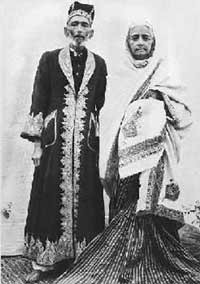
PAKEEZA SULTAN BEGUM, daughter of  Princess Qamar Sultan Begum, the great-grand-daughter of the last successor of the throne of Mughal dynasty Mirza Fatahul Mulk Bahadur alias Mirza Fakhru (who was killed by the British after 1857), thus the direct descendent of the last Emperor of Hindustan Bahadur Shah Zafar, left for her heavenly abode on 20 September 2014.

She was born on 13 November 1937. She was married to the senior advocate of Supreme Court of India late Danial Latifi who had died on 17 June 2000.

She was educated at AMU and taught for some time at Lady Shriram College. Later she joined as librarian in the Indian Council of Cultural Relations under the Ministry of External Affairs where she worked at the Africa desk and retired as director of the foreign cultural centres in the capital. She had moved to Noida a few years back to live with a relative.

Princess Qamar Sultan Begum was recognized by Government of India as a direct descendant of the last Mughal emperor. She used to be invited to attend official functions in that capacity. Qamar Sultan Begum died in June 1993.

Begum Qamar Sultan with her younger brother Hamid Shah in 1963

source: http://www.milligazette.com / The Milli Gazette / Home> Online News> Community News / Published online Oct 04th, 2014 / Print edition: 1 -15th Oct 2014

43 years on, Doordarshan Lucknow still going strong

Lucknow, UTTAR PRADESH / NEW DELHI  :

Serials produced by Lucknow Doordarshan were considered to be the best. Our serials like ‘Neem Ka Ped’, ‘Bibi Natiyon Wali’, ‘Bandhuji’, ‘Akkad Bakkad’ and ‘Hatimtai’ won national awards. ‘Bibi Natiyon Wali’ was praised internationally as well.

It started with the beaming of Ustad Bismillah Khan’s shehnai recitation on November 27,1975. Doordarshan Lucknow begun operations at 22 Ashok Marg, with a temporary studio. Today, at 43, the television channel is going strong with programmes like ‘Namaste UP’, ‘Once more’ and ‘Krishi Darshan’ — all of which have good ratings.

“The building of Doordarshan studio at Ashok Marg is a witness to many historical programmes,” said senior programme executive and deputy director, Lucknow Doordarshan, AP Mishra.

“We can proudly say that serials produced by Lucknow Doordarshan were considered to be the best. Our serials like ‘Neem Ka Ped’, ‘Bibi Natiyon Wali’, ‘Bandhuji’, ‘Akkad Bakkad’ and ‘Hatimtai’ won national awards. ‘Bibi Natiyon Wali’ was praised internationally as well,” he said.

Recalling the talent nurtured by the channel, Mishra said, “The old faces of Lucknow Doordarshan, such as Shobhna Jagdish (news reader) and Nirmala Kumari were very good singers. In fact, they were trained classical singers!”

“The popularity of veteran journalist and news reader Mohammed Noor Baksh and Naresh Srivastava was no less than that of cine stars of the eighties. Both of them are no more, but their legacy continues,” he added.

Former director Vilayat Jafri, who has worked with Lucknow Doordarshan and written the serial ‘Neem Ka Ped’ for it, said, “I came from Delhi to Lucknow in 1986. In Delhi, I had made projects like ‘Bharat Ek Khoj’ (directed by Shyam Benegal) and ‘Tamas’ (by Govind Nihlani). In Lucknow, serials were not being made. I decided to do something for the city — something that could be remembered for long. I had written this story in 1956 (Neem Ka Ped), and decided to make a serial based on it.”

He said he contacted Dr Rahi Masoom Raza for working on the serial’s script and dialogues. “He (Raza) agreed. He wrote the dialogues without charging a single penny because the story was close to his heart — it was about a ‘zamindar’ (landowner) and his people . Dr Raza came from a family of zamindars of Ghazipur, so he was able to understand the subject better than others,” said Jafri.

However, Dr Raza died after writing 24 episodes of the serial. “After that, I decided to pen the dialogues for the next 34 episodes. Interestingly, no one noticed any difference in the writing style. People thought Dr Raza died after completing the serial,” he said.

Mishra said ‘Neem Ka Ped’ is a part of Doordarshan’s glorious past and is still one of the most watched serials ever. “All artists except two were from Lucknow. Doordarshan is still the best medium to promote local talent,” he said.

In the years gone by, Doordarshan went through its own journey of evolution. The channel, which started in black and white, became coloured on August 15, 1982, during the then Asian Games. The first coloured OB van, equipped with four coloured cameras, was introduced in 1987, during the Cricket World Cup (Reliance Cup).

“Today, despite stiff competition from private channels, ‘Namaste UP’ and ‘Once More’ by Lucknow Doordarshan are among top-rated programmes,” said Mishra, adding that DD had also succeeded in maintaining its unique identity, especially when it came to programmes that created awareness on culture, heritage, literature and knowledge.

“Programmes like ‘Vigyan Se Dhyan’ have recorded the highest number of hits on YouTube,” he said.

source: http://www.hindustantimes.com / Hindustan Times / Home> Lucknow / by Anupam Srivastava / Hindustan Times,Lucknow / November 28th, 2018

Meet Dr. Mubeena Ramzan, the first Kashmiri women to feature among world’s 500 most influential Muslims

Sopore,( Baramulla District )JAMMU & KASHMIR :

Dr Mubeena Ramza, head of Ansar-un-nissa' a soio religious organisation (Photo: Auqib Javeed/ TwoCircles.net)
Dr Mubeena Ramza, head of Ansar-un-nissa’ a soio religious organisation (Photo: Auqib Javeed/ TwoCircles.net)

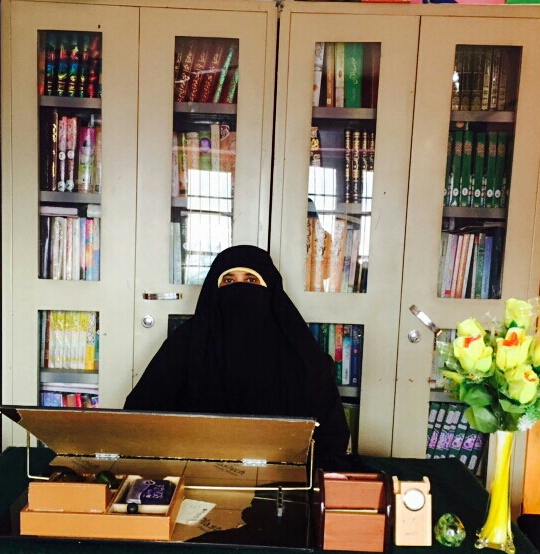
Dr Mubeena Ramzan of Kashmir created history earlier this month when she became the first Kashmiri woman to be enlisted among the 500 most influential personalities in the Muslim world. The list was released by The Royal Islamic Strategic Studies Centre, an independent research entity affiliated with the Royal Aal al-Bayt Institute for Islamic Thought.

The list named Dr. Mubeena from North Kashmir’s Sopore as one among the world’s most influential persons. Dr Mubeena heads the women-only socio-religious organization ‘Ansar-un-Nissa’ and is the Rector of ‘Jamia Islamia Mahdul Muslimat’, which has its branches in Sopore (Baramulla), Baghat (Srinagar) and Sumbal (Bandipora) under the aegis of a registered public trust namely ‘Mahdul Muslimat Educational Trust’ in Kashmir. Dr Mubeena travels extensively across the valley for women’s rights and ensure that women suffering from domestic violence are provided “a vent”. In an exclusive interview with TwoCircles.net, Dr Mubeena talks about her activism, journey and her views regarding role of women in conflict-torn state.

Here are the experts

Could you please tell us a little about yourself?

I was born in Sopore of District Baramulla and had my initial schooling from Islamia High School, Sopore where we were taught Islamiyat, Arabic and Hindi, which broadened our thought process.

Students of the madarsa run by Dr. Mubeena (Photo: Auqib Javeed/ TwoCircles.net)

After pursuing Bachelor’s degree in Islamic Studies, Education, Political Science and Philosophy from Islamia College, Sopore. After that, I completed my B.Ed, Masters degree and Research from University of Kashmir (KU). During my Research in Kashmir University, I had specialised in Islamic Law, Jurisprudence (Fiqh) and Orientalism.
Besides all this, I had learned Islamic Sciences from Hazrat Mufti Muzaffar Hussain Qasimi Sahab, Head Mufti, Darul-ul-Uloom Sopore.

When did the idea of setting up your own institute for women come to your mind and why?

As a scholar, my research on Kashmiri Society and its social evils had made me realise that I must play an active part in mitigating the crisis. The very idea motivated me to quit lectureship in a B.Ed college in Kupwara and started Jamia Islamia Mahdul Muslimat under the aegis of Mahdul Muslimat Educational Trust in 2002, from a rented building in Sopore and took us eight years to purchase a land and built a proper girls-only seminary-cum-skill school there.

The objective was to inculcate education with Islamic integration and impart skills among women. We started another branch in Baghat area of Srinagar city and recently, opened another campus at Sumbal-Hajin area of Bandipora district.

What do you teach to your students?

Jamia Islamia Mahdul Muslimat is a seminary-style girls only institute where besides teaching of religious text we impart worldly education also. But main thrust is on religious scriptures like Quranic exegesis, science of Hadith, Jurisprudence and History.
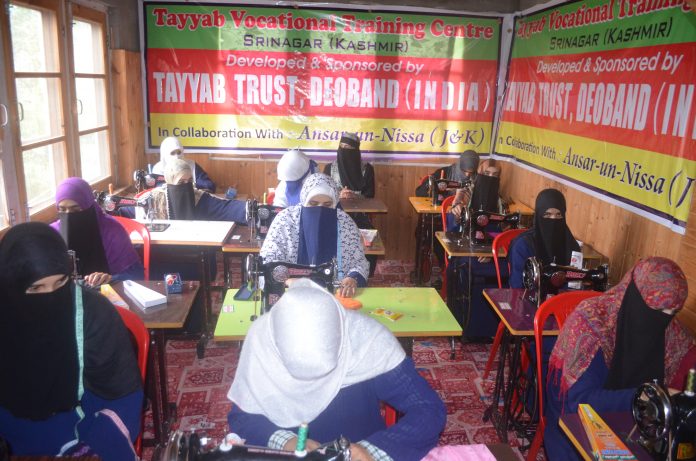
We also teach languages viz, Arabic, English, Urdu and train them in the field of Computers, Cutting & Designing skills to help them become competent and self-reliant.

Tell us about this institute and your journey with it?

We empower our students through education and skills, which boosts their confidence to face different realities of life. I believe that training a girl on these parameters was not possible by mere religious sermons, debates, seminars, etc.

We had to upgrade our religious syllabus on modern lines to make our girl students relevant to the contemporary society. We believe in natural upbringing of students, especially girl. We understand it well that apart from education and shelter, orphans also need motherly love and care. While we try to provide that, we also counsel and guide them regarding their future. This is what our Institute Jamia Islamia Mahdul Muslimat provides.

In 2013, we called a meet of women from different walks of the life-around 100 of them-in Sopore where we decided to have some welfare initiatives among women. And as a result, in March 2014, we floated “Ansar-un-Nissa”, a women welfare body which provides a helping hand to the needy, would-be brides, widows, orphans, and also establishes vocational training centres.

What challenges do you face during your activism in a society that can be patriarchal?

When it comes to a woman who observes Hijab, challenges are tremendous. Women now-a-days is sandwiched between two extremes – Religious and Western. A man is called qawwam in Quran, which means head / protector / sustainers of the family but this status has been misused by some by enslaving women.
I was opposed by so-called Moulvis for starting girls only seminary style institute (Madrassa) as it was in their mind how come a female run a Madrassa. But Alhamdulillah, now their perception has changed as we are successfully running three branches now.

The need of the hour is to have a very balanced approach where woman and man both would take care of their roles and responsibilities. Men and Women are equal, but not similar.

Reportedly, you were associated with Dukhtaran-e-Millat (DeM) of Aasiya Andrabi and later on due to some differences you left from the organisation. What were the differences?

Yes, I was associated with the organisation till 2004. Later on the differences grew with the organization for it being more into political spectrum. I left the organization as I wanted to do activism on academic parameters and started academic activism among women folk.

Do you think there are need for more Muslim women scholars in Kashmir?

Obviously, yes. In the rest of the Muslim world, we have good number of women Islamic Scholars but in Kashmir we are lacking them. We need more and more women scholars in Kashmir in order to educate common women-folk.

You must be knowing that in Ottomans Empire, 40% of contribution to Bait-al-Mal (House of money) was by the women and the oldest degree-granting university in the world i.e., Al-Qarawiyyin University was founded by Fatima al-Fihri, a women.

Women have been the pioneers of the education from the beginning of the Muslim society which is evident from the fact that a great major of Ahadiths (sayings of the Prophet, saws) are quoted by none other than his wife, Hazart Ayesha Siddiqa (r.a).
You have conducted various religious gatherings in different parts of the valley.

What draws you to that endeavour?

There are many issues related to women where she needs to be educated in right perspective. People often gossip about four wives, but no one thinks about having four daughters. Even a mother’s face turn pale now-a-days on the birth of a girl child.

The experiences which I gained after travelling throughout the Valley and beyond it for conduct of various religious gatherings are quite astonishing and still prevalent in this century. Most of the daughters and sisters are being debarred from the property / inheritance while Islam and Islamic law have given them a Right to Inheritance. Remarriage, Widow Marriage is still considered something evil in this Kashmir.

Daughters, Sisters, Wives are being forced to work outside for earnings and height of the things are that now-a-days it is difficult for an unemployed girl to get a suitable match as most mothers prefer to have employed daughter-in-law.

The hadiths of the Prophet (peace and blessing be upon him) about raising girls are beautiful and amazing. Girl children come with great rewards and blessings. If you offer care, love, support and education to your girl child, Paradise awaits you.

At a time when baby girls were deemed a source of shame, even buried alive, the Prophet (peace and blessing be upon him) came to rectify this grave wrong. The Prophet (peace and blessing be upon him) said: If anyone has a female child, and does not bury her alive, or slight her, or prefer his male children to her, Allah will bring him into Paradise. (Ahmad). On one other occasion, The Prophet (peace and blessing be upon him) said, “Whoever supports two girls till they attain maturity, he and I will come on the Day of Resurrection (close to each other) like this –The Messenger of Allah (peace and blessing be upon him) joined his fingers to illustrate closeness.” (Muslim)

These are just examples of how Islam cared for the girl children. The care mentioned in these hadiths and others is comprehensive. It covers the girls’ physical, emotional and mental needs. Such is the care and affection that our daughters deserve. The Prophet (peace and blessings be upon him) commands us to be loving, patient and supportive parents.

You were recently listed as one among the most influential 500 personalities in the Muslim world. Do you have any comments on your selection?

I came to know through my husband about it and I believe that real action and delight comes from helping your people grow. But yes, if your welfare activism is being recognised in any way, it does boost you.

Do you have any personal Muslim women heroes you would like to mention?

Not Hero, but inspiration. Maryam Jameela is one in this regard. She was brought up in a modern society but did not get getting influenced by it. On the contrary, she was able to influence and inspire people with her thought. Yvonne Ridley is other one.

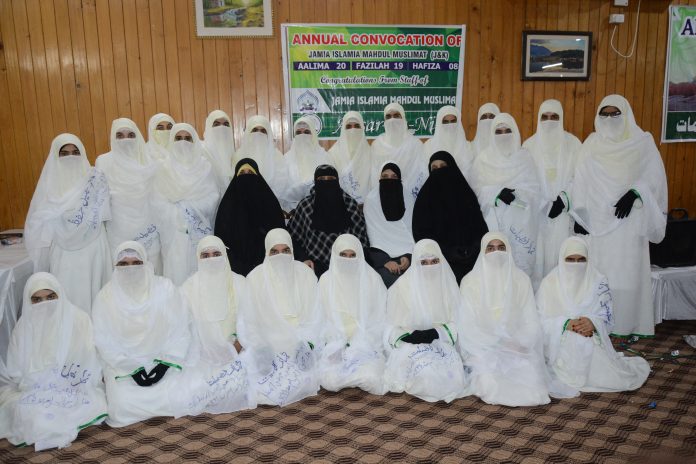
Dr. Mubeena Ramza with her students at the convocation in Srinnagar (Photo: Auqib Javeed/ TwoCircles.net)

Do you have any messages for young Kashmiri Women?

As Muslims, they should believe that their rights, duties and status are justified. They don’t need any westerner or any ragtag activist to tell them their rights as a woman. Those who are rallying behind it are knowingly and unknowingly attempting to overlook the dignified status and rights given to women by their religion.

Islam invites you to a mission based on obedience to Allah and Islam addresses person’s spirit, emotions, belief, etc. West is dragging women from homes, only to fulfil economic and materialistic objectives. It’s intended to commercialize things but Islam gives dignity and status while addressing the soul.

There are some jobs in the field of Education and Health and other suitable fields, where women have a primary role. However, in choosing any job, your home should be your preference. Your family should not suffer at the cost of earning. People in Kashmir nowadays prefer earnings over other things which need to be discouraged.

Almighty Allah says in the Qur’an …..“For Muslim men and women, for believing men and women, for devout men and women, for true men and women, for men and women who are patient and constant, for men and women who humble themselves, for men and women who give in charity, for men and women who fast, for men and women who guard their chastity, and for men and women who engage much in Allah’s praise, for them has Allah prepared forgiveness and great reward” (Al-Ahzab 33:35)

source: http://www.twocircles.net / TwoCircles.net /  Home> Indian Muslim> Lead Story> Women / by Auqib Javeed, Twocircles.net / November 30th, 2018

Mohd Azharuddin appointed as working president of Telangana Pradesh Congress Committee

Hyderabad, TELANGANA :

Former Indian cricket captain and former MP from Moradabad, Mohd. Azharuddin has been appointed as the working president of Telanagana Pradesh Congress Committee.

He will be the fourth working president and appointed ahead of the Telangana Assembly elections. However, he is associated with the party’s ongoing electoral campaign.

Mr. Azharuddin, who is keen on contesting from Secunderabad Parliamentary constituency, said if the party wishes he won’t mind contesting from any other constituency in Telangana.

Speaking to media in Hyderabad after his appointment, Mr. Azaharuddin demanded an apology from Chief Minister K Chandrashekar Rao for “intimidating” a person who questioned him on the unfulfilled promise of 12% reservations to Muslims. He said Mr. Rao should have answered the question instead of intimidating the person who posed it.

Mr. Azharuddin said he was not here to “get something from politics but give back something to the society” after playing cricket for the country for a long time.

Mr. Azharuddin predicted that the People’s front of Congress, TTDP, CPU and Telamgana Jana Samithi will romp home easily and asked people to vote for the alliance.

source: http://www.thehindu.com / The Hindu / Home> News> States> Telangana / by R. Ravikanth Reddy / Hyderabad – November 30th, 2018