Category Archives: Leaders

Inscription traces genealogy of Bahmani Kingdom founder

Bidar, KARNATAKA :

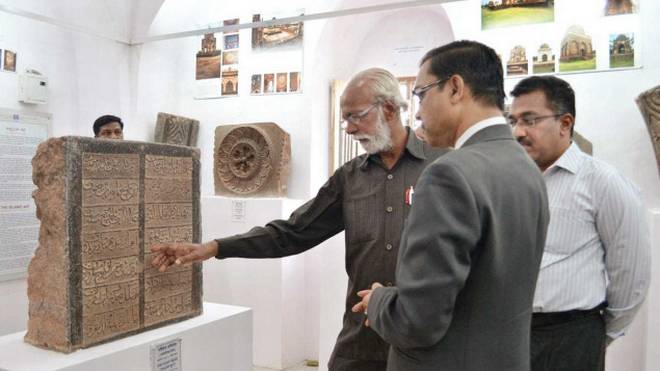
Historian Abdul Samad Bharati showing the stone inscription to visitors in the Bidar ASI museum.— File Photo: T. Gopichand

History textbooks in the State say that Allauddin Hasan Gangu, founder of the Bahmani dynasty, began his life as the slave of a Brahmin in New Delhi. However, other versions of history strongly claim that he hailed from Iran and served in the army of the medieval Delhi kings.

The latest evidence that argues against the slave-to-king theory is a stone inscription unveiled at the Archaeological Survey of India museum in Bidar that opened last month.

The inscription of two sets of seven lines, with neatly carved rectangular borders, starts with hailing King Ahmed Shah Bahmani and how his rule brought prosperity to the region. It speaks of how he was the ninth king of the Bahmani Sultanate founded by Allauddin Hasan Gangu Bahmani . It identifies Hasan Gangu as a descendant of the legendary warrior Esfandiyar Goshtap. It describes him as a proud son of a Bahmani village in Iran. “Experts have dated this tablet between 1350 and 1550,” said Prasanna Kumar, archaeologist with the Bidar ASI office.

“For long, scholars have argued with evidence that Allauddin was a general in Mohammad Bin Tughlaq’s army. He founded the Bahmani Kingdom in Kalaburagi, after rebelling against the Delhi kings in 1347. But, we continue to teach the legend that Allauddin was a slave who became a king by chance. This is unfortunate,” said Abdul Samad Bharati, historian and author of the book ‘Historic monuments of Bidar’. He hoped the Bidar inscription would help change the minds of history writers. “There are two other documents that refute the theory about Allauddin’s humble beginnings, a book published by University of Dhaka that speaks of the life and contribution of the hero and medieval era historian Abdul Mallik Esami, who said Allauddin was an Iranian, who joined the Delhi army,” he said.

International scholars also feel the same. “The whole story of Hasan Gangu being a slave to Gangadhar Shastri is a legend that is not supported by any primary source,” said Sara Mondini, art history scholar from Ca’ Foscari University of Venice, who is on a tour of Ashtur near Bidar. Helen Philon, historian of the Deccan Heritage Foundation, says history books need to accommodate changes over the years. “Farishta, a court historian of the Bijapur Adilshahis accorded legitimacy to such legends and hearsay in the 17 th century. Most historians and writers seemed to have believed Farishta, without considering theories that offered alternative explanations,” she said.

Ashwath Narayana, professor of history in Bangalore University, and a member of the Karnataka state textbook review committee, said history textbooks should change with the emergence of new sources. “If history is an attempt at truth-telling, new research should prompt us to change the way it is written. We will study this inscription and make suitable changes to the history of the Deccan, if need be,” he said.

A stone inscription unveiled at the ASI museum in Bidar is evidence that negates the slave-to-king theory in history textbooks.

source: http://www.thehindu.com/ The Hindu / Home> News> States> Karnataka / by Rishikesh Bahadur Desai / Bidar – April 04th, 2016

Lucknow, recovered

Lucknow, UTTAR PRADESH :

Lessons in conservation at the Sibtainabad Imambara

As a young girl, when I was studying in Lucknow, I would often go to Hazratganj to buy storybooks. Browsing through the collection in the market and buying a book would be the highlight of every week. I only had my eyes on the bookshops and never on the name of the market or the dilapidated gateway, which had once been impressive but now looked the worse for wear.

Even on subsequent trips as an adult, I never bothered to think about it till the day a Lucknow-based heritage activist and lawyer, Syed Mohammad Haider Rizvi, invited me to speak at an inter-faith assembly in Sibtainabad Imambara.

As a devout follower of Imam Hussain, I had visited almost every Imambara in Lucknow for the majlis, or assemblies, to commemorate his sacrifice, but never this one. I wondered why I hadn’t even know it existed. I soon found out.

Origin of the Imambara

Amjad Ali Shah was the fourth Nawab of Awadh and ruled from 1842 to 1847. Since he had a religious bent of mind, as a child he learnt Islamic values of faith and piety. His piety as a ruler earned him the sobriquet of Hazrat. The famous Hazratganj of Lucknow is named after him and that’s the area where he chose to build an Imambara which would also house his mausoleum.

It was started in 1847 and completed after his death by his son Nawab Wajid Ali Shah. It was named Sibtainabad as the two Shia imams Hasan and Hussain (grandsons of the Prophet) are known collectively as Sibtain.

When I entered, I found myself inside a huge open area from where I could see a compound with a beautiful Imambara, a congregation hall for assemblies where Imam Hussain is mourned.

The Imambara architecture comprises a main hall (with additional halls depending on the size) where the mourners gather, a raised shahnasheen (platform) where the taziyas and alams (replicas of the shrine of Imam Hussain and his standard) are kept. A pulpit would be kept on one side for the speakers who would speak of the tragedy of Karbala.

The reason I had never been to this Imambara when I was living in Lucknow soon became clear. Once a beautiful Imambara covered with fine carpets, silk curtains, priceless art treasures and exquisite chandeliers, it was vandalised in 1857 during the First War of Independence. Nawab Amjad Ali Khan lay buried here in a vault under the central hall, forgotten by all.

It was even used as a church by the British officers till 1860, while the Christ Church was being built, and Lord Canning attended a service in the building.

In 1919, it was declared a protected monument by the Archaeological Survey of India (ASI). Despite this, it was sold by one Sultan Bahadur in 1921, who claimed to be a descendant of Nawab Amjad Ali Khan, to the Lucknow Improvement Trust (LIT). The LIT, in turn, allotted the surrounding land for residential purposes. The Imambara fell into disuse and disrepair.

The main Imambara post-1947 was used as a workshop and storehouse for furniture as well as by the government census office. A motor workshop had sprung up outside.

In 2008, Rizvi was appointed the joint mutawalli by the Shia Waqf Board and he started the long fight to free it from encroachment and illegal occupation. He took recourse to judicial avenues and slowly, with the help of Right to Information applications and public interest litigations, he succeeded. Then came the task of restoration, which was undertaken by the ASI.

The splendour inside

The approach to the Imambara is through the gateway and into an open space which gives way to an enclosed court. The Imambara stands on a high platform and its arched façade looks very impressive, with its delicate floral stucco and stained glass doors. The inner walls, which had got blackened with neglect and abuse, have been lovingly restored, and its green and white paintings and stucco work are exquisite. The roof and “its beams, which formed a vault over the grave of the late king, had collapsed in a heap of rubble,” according to a 1945 report. It once again supports beautiful glass chandeliers.

A recurring motif on the archways inside the halls is a painting of the Prophet’s celestial steed, the ‘buraq’, that carried him to heaven on the night of ascension. The master mason, Ansaruddin, traced out the designs and restored the paintings and stucco work very carefully.

Preservation of our heritage is our fundamental duty as it is an important source of history of the era in which these buildings were built. If other ‘lost monuments’ received such dedicated and methodical renovation, they could also be rehabilitated and restored to us.

source: http://www.thehindu.com / The Hindu / Home> Opinion> Columns / by Rana Safvi / November 26th, 2017

‘Baghi Banjara’ traces life, works of Barkatullah Bhopali

Bhopal, MADHYA PRADESH :

Bhopal :

Centered on the life of freedom fighter Maulana Barkatullah Bhopali, a play ‘Baghi Banjara’ was staged at Shaheed Bhawan on Friday. Scripted and directed by Waseem Khan, the play was staged for the first time in the country.

Abdul Hafiz Mohamed Barakatullah, known with his honorific Maulana Barkatullah (7 July, 1854-20 September 1927), was an anti-British Indian revolutionary with sympathy for the Pan-Islamic movement.

The whole journey from birth to death of the great freedom fighter was beautifully shown in the one-hour-twenty-minute-long play.   Barkatullah was born on 7 July 1854 at Itwara in Bhopal.

He fought from outside India, with fiery speeches and revolutionary writings in leading newspapers, for the independence of India. In 1988, Bhopal University was renamed Barkatullah University in his honour. He was educated from primary to college level at Bhopal.

Later he went to Bombay and London for his higher education.  He was a meritorious scholar and mastered seven languages: Arabic, Persian, Urdu, Turkish, English, German, and Japanese. Despite a poor background he topped the list of successful candidates in most of the examinations for which he appeared, both in India and England. He became the Quondam Professor of Urdu at the Tokyo University Japan.

He was one of the founders of the “Ghadar” (Rebellion) Party in 1913 at San Francisco. Later he became the prime minister of the Provisional Government of India established on 1 December 1915 in Kabul with Raja Mahendra Pratap as its president.  He died in 1927 at San Francisco.

The play was presented by mainly young cast of Swabhiman Shikshan Samiti. Suggestive sets, costumes and lights were used.

A patriotic song ‘rang de basanti chola…,’ of movie ‘Shaheed’ (1965) was used in the play. Gaurav Jaat as Maulana Barkatullah, Badra Wasti as Tarik Nigar, Shakeel Chand as Kadar and others  were in lead role.

“For the first time, the play centered on the great freedom fighter is being staged for the first time in India. I don’t know why no play was staged on the tenacious fighter. I wrote the play at the instance of Shriram Tiwari, former director of culture. The writing took one year and the rehearsals lasted for one-and-a-half- months,” said Waseem Khan.

source: http://www.freepressjournal.in / The Free Press Journal / Home> Bhopal / by A Staff Reporter / January 28th, 2017

Save a knight’s remains – Kin of Sir Ali Imam renew demand for heritage tag for neglected 1932 mausoleum

Dipatoli (Ranchi), JHARKHAND :

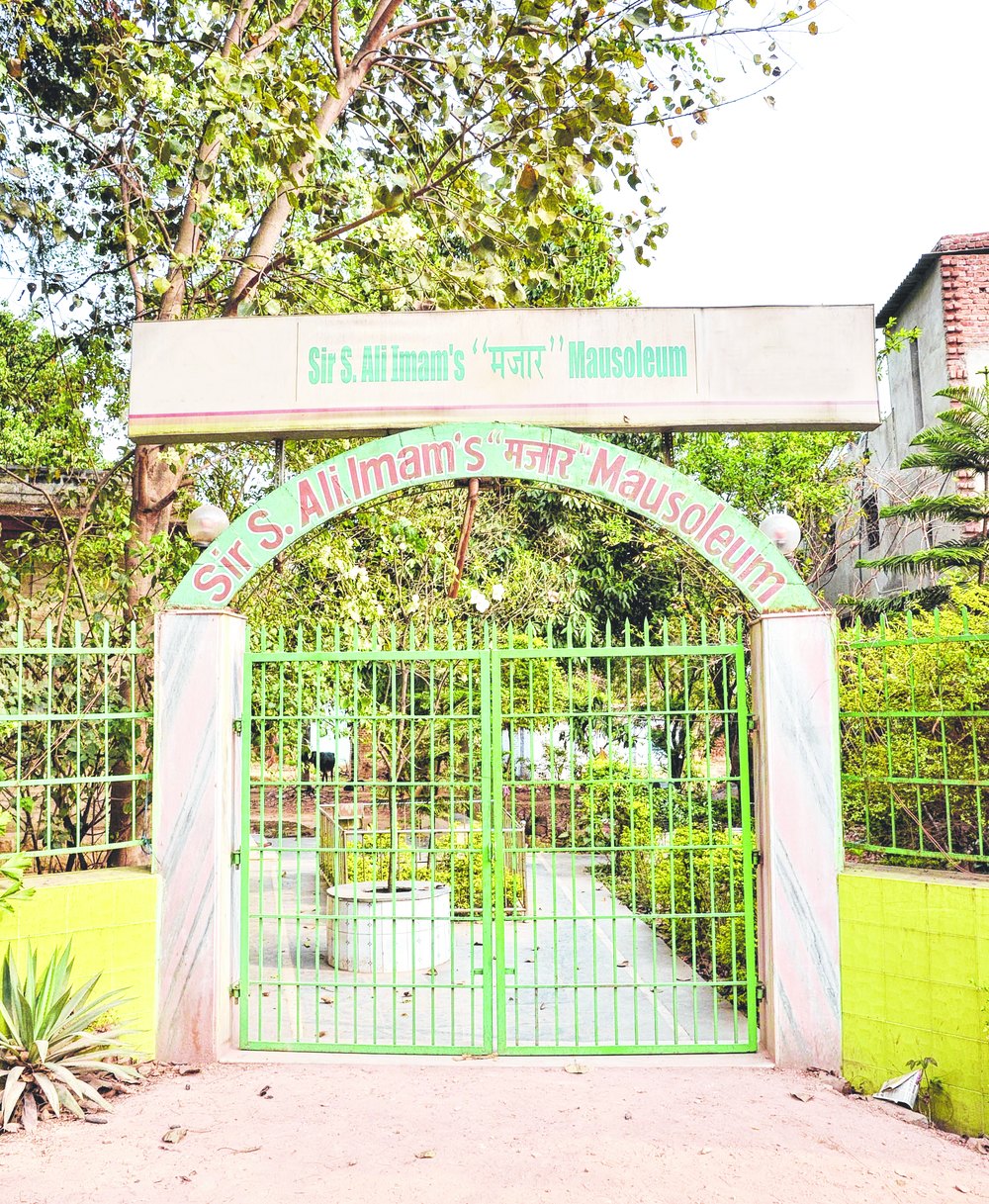
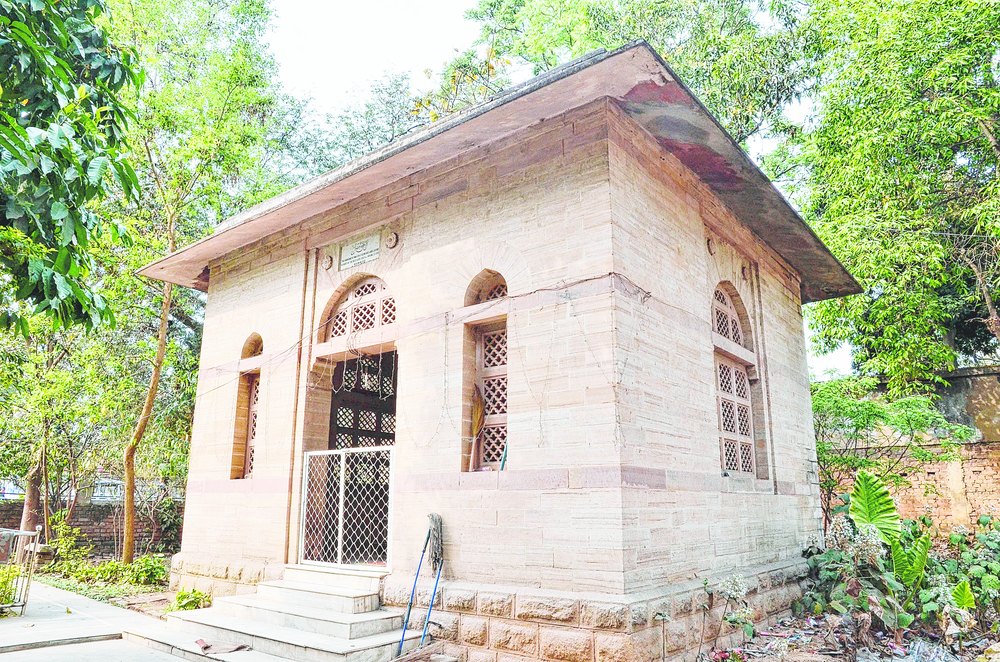
The mausoleum of Bihar's architect Sir Ali Imam on NH-33 near Dipatoli in Ranchi. (Prashant Mitra)
The mausoleum of Bihar’s architect Sir Ali Imam on NH-33 near Dipatoli in Ranchi. (Prashant Mitra)

Jharkhand’s “stepmotherly attitude” towards the mausoleum of Sir Ali Imam, one of Bihar’s prime architects, has prompted the knight’s grandson to resurrect his decade-old heritage status demand for the site that rightly deserves conservation.

In 2005, a memorandum had been signed between the Indian National Trust for Art and Cultural Heritage (Intach) and Birla Institute of Technology (BIT), Mesra, to develop the mausoleum on NH-33 near Dipatoli, Ranchi, into an art and culture centre. But, like most other projects in the state, it sank into oblivion.

In 2012-13, the Archaeological Survey of India (ASI) listed some monuments for protection, including the Jami Masjid and Baradwari Masjid in Rajmahal, Khekparta temple in Lohardaga and Buddhist ruins in Benisagar, West Singhbhum, but the mausoleum was again given the pass.

Such “monumental neglect” has now prompted Askari Imam, the grandson of Sir Ali Imam, and other members of the Sir Ali Imam Trust like grandnephew Bullu Imam to request the Raghubar Das government for a heritage tag.

Justin Imam, the great grandson of the knight, said they were pursuing the matter with the department of art and culture (archaeology) so that a pending report advocating conservation rights for the mausoleum was given active consideration. “A year ago, we had submitted the report to the department. It is obvious no one took interest. We will push the matter again tomorrow (Tuesday),” Justin said.

Former state convener of Intach Shree Deo Singh conceded that Askari Imam had approached him with a conservation request five years ago. “The Trust was then formed for its maintenance. However, after my term as convener ended, the tomb was subjected to utter neglect,” Singh said.

Bullu Imam pointed out that the monument existed in a capital city and yet most people of Jharkhand were unaware of it. “This is so unfortunate,” he said.

MausoleumMPOs06jan2018

“Once the mausoleum is declared a protected site, it will attract tourists from the state and outside,” added voluntary caretaker Chetan who also runs a shop nearby.

State art and culture secretary Vandana Dadel said members of Sir Ali Imam Trust had met her last week and she had assured them that she would look into the matter. “I will send a team to the site so that we can initiate talks with the ASI,” she promised.

Ali Imam, a judge at Patna High Court in 1917, was a law member of the British Imperial Council and was conferred knighthood by the British government. Sir Ali Imam, who played an important part in the constitution of Bihar, died in 1932 after which the mausoleum was built.

_____________________________________________

Correction:

I would like you to make amendment in one of the paragraph. Where you mentioned that Justin Imam the great grandson to Sir Syed Ali Imam. In fact Justin Imam is the great grandson to Sir Hasan Imam who was the younger brother to Sir Syed Ali Imam Saheb.
Sir Ali Imam Saheb great grandchildren are from Late Justice Jafer Imam, Reza Imam and Naqi. Kindly amend the paragraph in your article.

Many thanks
Amina Imam Ahmad / 05th April 2018

__________________________________________

source: http://www.telegraphindia.com / The Telegraph,  Calcutta,India / Front Page> Jharkhand> Story / by Arti  S. Sahuliyar / March 10th, 2015

Eighty years after death, nobody cares for ‘architect of Bihar’

BIHAR :

Unsung hero

Known as one half of India’s legendary barrister brother duo, he has been hailed as the co-architect of modern Bihar.

However, on his 80th death anniversary on Friday, the legacy of Syed Hasan Imam, a nationalist leader, patriot and a freedom fighter, remains forgotten.

Born in 1871 in Neora village near Patna, Imam died on April 19, 1933 and lies interred on the banks of river Sone in Japla, a small village in the border of Bihar and Jharkhand.

After suffering years of neglect and facing encroachment around his tomb, his grandson, Bulu Imam, now living in Hazaribagh, is striving to restore the lost honour.

“Today, on the occasion of his 80th death anniversary, I feel heartbroken to remember the legacy of my grandfather who, instead of being remembered, let alone celebrated for his immense contribution to the cause of Bihar and India at large, has been consigned to oblivion,” said Bulu Imam.

‘Some honour restored’

“We went to his tomb in Japla and cleaned it up on the anniversary and also put a chhadar on it, trying to restore some honour to his forgotten legacy. There were encroachments around the tomb and Hasan Imam’s house,”“ he said.

“I have evicted all the encroachers and now I am trying to preserve the place as his lasting memorial,” said Bulu Imam over phone from Hazaribagh, Jharkhand.

Syed Hasan was educated in Patna and in the UK, and was called to the Bar in Middle Temple in 1892. When he returned to India, he practiced in Calcutta High Court, where he became a judge in 1912.

After the establishment of the separate province of Bihar with Patna as its capital in 1912, and with the Patna High Court opened in 1916, Imam resigned from the judgeship of Calcutta High Court to practice in Patna, according to The India Gazette’s Who’s Who in India, 1927 edition.

He was elected president, special session of the Indian National Congress, in September, 1918. He was also elected as a delegate to the London Conference on the Turkish Peace Treaty in 1921.

He and Sir Al Imam along with barrister Sachchidananda Sinha and Mahesh Narayan were instrumental in getting the British empire grant a separate province of Bihar out of Bengal in 1911, as announced by King George V at the historic Delhi Durbar that year.

Despite his exemplary contributions to Bihar and to India, Hasan Imam remains a forgotten hero, much like his elder brother Sir Ali Imam.

The two brothers or ‘Imam Brothers’ as they were popularly known, will possibly go down in history as ‘faded icons’, much like their fabulous house, all but gone now.

source: http://www.deccanherald.com / Deccan Herald / Home> Metro / New Delhi – April 20th, 2013

Cricket is my bread and butter: Jaffer

Mumbai, MAHARASHTRA :

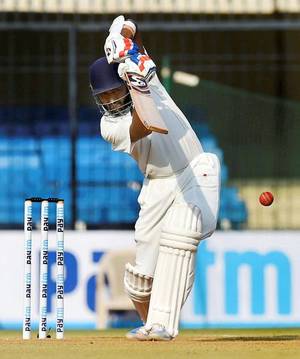
Guiding light: The seasoned Wasim Jaffer, who notched up valuable runs for the new Ranji champion, wants to continue contributing to the fortunes of Vidarbha. | Photo Credit: PTI

Veteran run-machine is convinced Vidarbha has the talent to go places after this momentous triumph

Wasim Jaffer has not lost his appetite to score runs in the Ranji Trophy.

A joy to watch because of the elegant stroke-play he brings to his batting, Jaffer has stacked up impressive numbers. After playing 22 seasons — 19 for Mumbai — Jaffer is on the top of the pile with 10738 runs and some of those helped the team he represented this season to win the Ranji Trophy. And he is ready for another stint.

Injury prevented him from turning out for Vidarbha last season, but he regained fitness and returned to nurture the talented cricketers of the Central India team. He played in nine matches, scored 595 runs, with one century (158 not out against Goa) and three half centuries for an average of 54.09. Two years ago, he played nine matches and scored only 382 runs at 27.42.

The sheer love for the game, which he calls “bread and butter of his life”, enabled him to stretch his First Class career once he was through with his long association with Mumbai with which he won eight Ranji Trophy titles.

After going through the grind of a home First Class season the last two decades, Jaffer kept himself occupied in the Yorkshire, Birmingham and Liverpool leagues for almost 20 years and this season he will be playing in the Lancashire league.

The 39-year-old believes that he took the right decision by opting to play for Vidarbha. “Playing for India is not the be all and end all….I had been there and done it. I just wanted to continue playing. I wanted to stay fit, face fresh challenges and do my bit for other teams. It also helped me to make some money. I don’t do anything other than play cricket.  That’s why I go to UK every year with my family,” said Jaffer.

After being raised in a city rich in cricket culture, Jaffer found the cricketing environment in Vidarbha different.

“There was no quantity, only quality; players were equipped with good skills. There were only 25-30 probables who played across all formats.

“They were happy winning at home and fine with it. When they lost ‘away’ matches, I don’t think they were hurt. It’s here that Chandu (Pandit) played the decisive role. He took them out of the comfort zone and pushed them hard. He did not praise them enough, but criticised them. Two years ago, I found out that when the match was in a 50-50 situation, they did not really go for it and show the killer-instinct. Chandu changed their attitude completely. Vidarbha needed someone like Chandu.”

Jaffer said when Mumbai won the Ranji Trophy in 2003 and 2004, Pandit did not form any committees within the team. “But here we had committees for entertainment, travel, food etc. This helped in team bonding. Chandu also changed room partners to prevent players forming groups. This was one way he took them out of the comfort zone and pushed them really hard.”

The two ex-Mumbai players also impressed upon opener Sanjay Ramaswamy to change his attitude, from being an introvert and not listening to others, to take good suggestions and implement them.

“I also impressed upon Chandu to give opportunities to Aditya Sarwate and what a partnership developed between him and Akshay Wadkar against Delhi. Vidarbha has good players in Lalit Yadav, Rajneesh Gurbani and Akshay Wakhare. Faiz Fazal has years of experience. Someone like Karn Sharma had to sit out.”

Jaffer says that Vidarbha, “having tasted success”, will look for more at all levels. “They have the confidence now. Chandu has instilled that attitude in the team.”

source: http://www.thehindu.com  / The Hindu / Home> Sport> Cricket / by G. Vishwanath / Mumbai – January 03rd, 2018

Akbaruddin lends a helping hand to special children in Hyderabad

Hyderabad, TELANGANA :

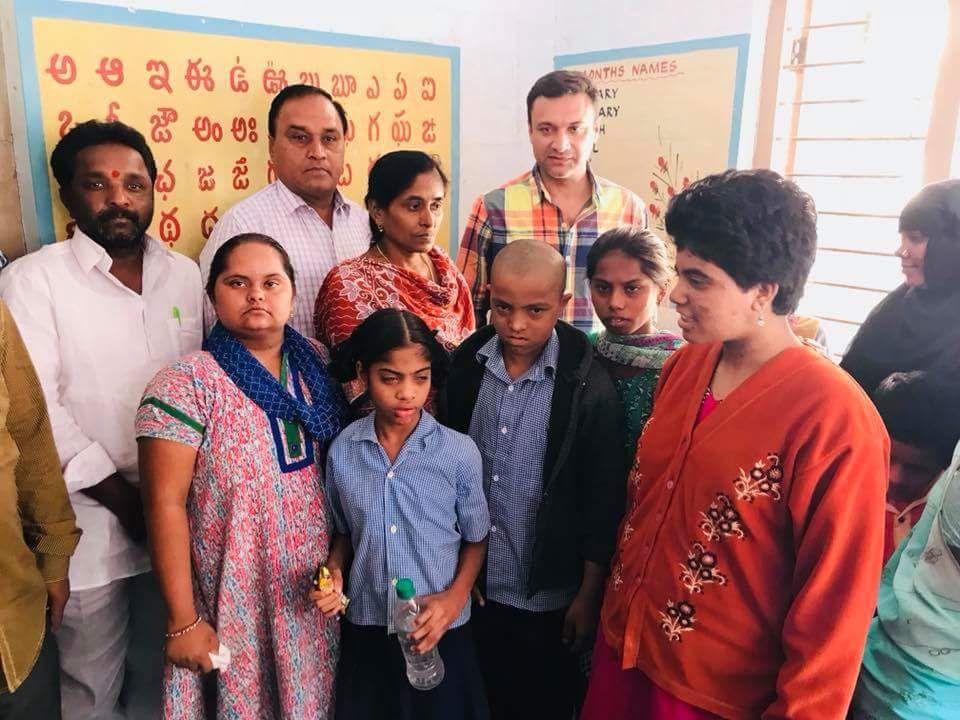
MIM leader Akbaruddin Owaisi along with the children of Bhavita.

Managed under Sarva Siksha Abhiyan (SSA), the resource centre provides facilities to 30 children with various kinds of disabilities.  During a recent visit to Bhavita, Akbaruddin was informed that the children had only one teacher and did not have access to playing and learning equipment .

Hyderabad:

As a noble gesture, MIM senior leader and MLA from Chandrayangutta, Akbaruddin Owaisi has adopted Bhavita, a resource centre for children with special needs located in Jangammet Falaknuma Government Junior College premises.

Managed under Sarva Siksha Abhiyan (SSA), the resource centre provides facilities to 30 children with various kinds of disabilities. During a recent visit to Bhavita, Akbaruddin was informed that the children had only one teacher and did not have access to playing and learning equipment.

On his direction, the Deccan College of Physiotherapy has taken Bhavita under its management and has provided learning and playing equipment worth Rs 5 lakh.

A physiotherapist and an instructor have been roped-in for the children, who will visit the centre on a daily basis, said Dr Aditya, Principal Deccan College of Physiotherapy, which is run under Owaisi Group of Hospitals.

The MIM leader has provided sports equipment and provisions for occupational therapy including an ultra sound, stimulator, bolsters, walking aids, elbow crutches, wobble board, skill games for kids and wedges which could help teachers and instructors to train the children.

Majority of the children at Bhavita suffer from cerebral palsy, muscular dystrophy, congenital deformities and intellectual disabilities. According to Dr Aditya, such children need proper care and treatment that would create an enabling atmosphere for them to grow like normal children.

Akbaruddin said he wanted the Centre to be strengthened and children to utilise the new facilities that had been made available to them.

“Whatever they need I am ready to provide from my side. I will also take up the issue of Bhavita Centre with the District Collector to provide more space for these children in the Falaknuma Campus,” he said.

Akbaruddin Owaisi has also donated Rs 50 lakh for improvement of infrastructure, establishment of labs, libraries and restoration of buildings in Falaknuma and Golconda Government Junior and Degree Colleges.

source: http://www.telanganatoday.com / Telangana Today / Home> Hyderabad / by Naseer Giyas / January 02nd, 2018

Many facets of an activist

GUJARAT / Mumbai, MAHARASHTRA :

ducationist par excellence: Kulsum Sayani (Centre) with her sons, radio broadcaster Ameen Sayani (left) and Hamid Sayani. (Courtesy: Sayanis)

She was inspired by Mahatma Gandhi to unite Hindi and Urdu. Kulsum Sayani also worked tirelessly for adult literacy…

“Each one, teach one”, one of the most effective schemes to promote education today was popularised by a woman few remember, but who was a pioneer in the field of adult literacy in India.

Kulsum Sayani’s name might not ring a bell for many but her life and work are truly remarkable. Mother of the well-known radio personality Ameen Sayani, Kulsum was born in 1900. Her inspiration was none other than Mahatma Gandhi. Her father, Dr Rajabally Patel, was the personal physician to Gandhiji and Maulana Abul Kalam Azad.

During the several protest meets organised against the visit of the Prince of Wales to Bombay in 1921, the city had become volatile. The result was baton charges, arrests and martial laws. There were dozens of people wounded, and seriously injured.

Describing those trying times, Kulsum Sayani wrote, “A new Congress hospital was founded to care for the wounded. My late husband Jan Mohamed Sayani was the first physician to be put in charge of it. We had a small Saxon car with the Red Cross badge prominently showing on it. My husband would go to the hospital daily, practically on totally deserted roads lined up with policemen on both sides. I would be sitting by the phone until he called from the hospital telling me of his safe arrival.”

Sayani’s interactions with Gandhiji and the importance attached to education in her family made her realise the need to eradicate illiteracy. In 1938, with a capital of Rs. 100 she employed two teachers and made the rounds of Muslim localities to get students. Considering the conservative attitude towards female education even now, imagine the effort it must have taken on Sayani’s part to convince families about the importance of educating girls at that time. There were times people used to slam their doors on her face, exclaiming, “Why should women learn to read?”

Her tireless efforts proved that there was a tremendous need to work in the field of education, which needed a more organised set-up. Her experience made her a part of several committees, which were formed to increase literacy among adults in Bombay, now Mumbai. She was associated with the first National Planning Committee that was set up by the Congress government in Bombay in 1938. The Bombay City Social Education Committee, formed in 1939, asked Sayani to take over their 50 centres catering to Muslim women. Slowly and steadily the classes grew and reached 600 in number. Of course, her efforts were not limited to the Muslim community alone. She was also appointed the general secretary of the All India Women’s Conference in 1944 and worked for the empowerment of women.

But it was in spreading the word on education that she is best remembered. The New Delhi edition of ‘The Times of India’ (March 10, 1970) noted, “From 1939 when she (Kulsum Sayani) took charge of the Bombay City Social Education Committee five lakh adults have become literate through one of the five languages – Urdu, Hindi, Gujarati, Marathi and Telugu. Her days are a mad rush of dashing to schools to enthuse children into teaching adults and her nights are spent dreaming up new schemes of literacy.”

Dedicated

Sayani was very pragmatic and initiated several schemes to spread literacy, notably including “Each one, teach one”. She used to visit several schools and encourage young students to devote 15 minutes every day to teach one adult. Under the scheme, students were supposed to teach and read one new alphabet every day to any adult in their family, neighbourhood or domestic helpers. Highly conscious of the importance of moral values, she encouraged students to request adults to tell them a folk tale or a story from the epics.

“The lower middle-class women, who are forced to work, have no help but to abandon their children to the streets after school, while the fashionable ones have no time left for children after bridge and mah-jong parties,” she once said.

Another literacy initiative she initiated was reading out aloud. School students were encouraged to gather friends and adults and each one had to read out aloud. This, she believed, was necessary to improve the confidence and interest of neo-literates. To ensure the success of these schemes she used to visit three to four schools every week meeting and egg students on.

During the freedom struggle hundreds of political prisoners languishing in jails improved their Hindustani by reading out aloud ‘Rahber’, the newspaper she brought out. ‘Rahber’, started in 1940, was aimed at the new learners. It was published in three scripts – Nagari, Urdu and Gujarati. The language of ‘Rahber’ was Hindustani, a mixture of Hindi and Urdu. Those were the times when the Hindi supporters were using heavy Sanskrit words and the proponents of Urdu were lacing the language with Persian and Arabic in their efforts to distinguish the two languages and establish their superiority.

Support

Gandhiji was in favour of Hindustani written in the Nagari or the Urdu script. ‘Rahber’ sought to take forward Gandhiji’s idea of Hindustani. In a letter dated June 16, 1945, Gandhiji addressed Sayani as ‘Beti Kulsum’ and wrote: “I like the mission of ‘Rahber’ to unite Hindi and Urdu. May it succeed.” The newspaper was read by hundreds of political prisoners lodged in jails across the country; anyone interested in learning Gandhiji’s Hindustani picked up the paper.

When the Constituent Assembly deliberations began in the months leading to India’s Independence, the language controversy erupted again. A letter dated July 22, 1947, from Gandhiji to Sayani, shows his resolve to stick with Hindustani. He wrote: “Heaven knows what is in store for us. The old order changeth giving place to new. Nothing is settled. Whatever is decided by the C.A., Hindustani with the two scripts remains for you and me.”

Sayani also represented India at several international forums on education across the world. She attended the UNESCO conference in 1953 in Paris (France) and shared ideas and gained new perspectives after talking with representatives from several countries. Her other interest was to promote peace and increase understanding between India and Pakistan. Her well known status as an activist helped her get audiences with top leaders in both the countries. Among Pakistani politicians, she directly met Pakistani presidents, Ghulam Mohammad and Ayub Khan, among other senior leaders.

In India, her reputation as ‘Rahber’s’ editor helped her get appointments with Nehru, B.G. Kher, V.K. Krishna Menon, Rafi Ahmed Kidwai and Indira Gandhi. She received encouragement and support from politicians of all hues in India for her efforts to forge a friendship with Pakistan. However, after the passing away of Nehru and Rafi Kidwai, who shared her concerns on improving relations with Pakistan, she devoted her energies to propagating Hindustani.

Sayani’s life is an inspiration to many. Married when she was only 18, she managed her family and pursued her social interests with equal elan. Her sons, Hamid and Ameen, both radio broadcasters, created their own identity. Ameen Sayani attributes his “basic grounding in clear and credible communications in Hindustani” to his involvement in assisting his mother in bringing out ‘Rahber’.

Old age and bureaucratic red tape forced her to stop ‘Rahber’ in 1960 after she had single-handedly brought it out for 20 years. She continued to be associated with the Hindustani Prachar Sabha and organised several lectures and seminars

She never lost focus from her lifelong passion to eradicate illiteracy. She received the Padma Shri in 1960 and was also awarded the Nehru Literacy Award in 1969.

Sayani, who died in 1987, belonged to an era when people believed in giving their best to the nation without expecting anything in return.

(© Women’s Feature Service)

source: http://www.thehindu.com / The Hindu / Home> History / by Danish Khan / August 14th, 2010
Muslim family that sheltered Bhagat Singh’s mother

Ludhiana, PUNJAB :

Ludhiana:

Sardar Abhay Singh Sandhu nephew of the great freedom fighter and martyr, Bhagat Singh, said here while talking to media persons that the sacrifices of the families of founding Ulama of Majlis Ahrar-e Islam of Ludhiana are unparalleled in the history of India’s war of independence.

He said “this is the only family which has been continuously fighting against the British from 1857 to 1947.”

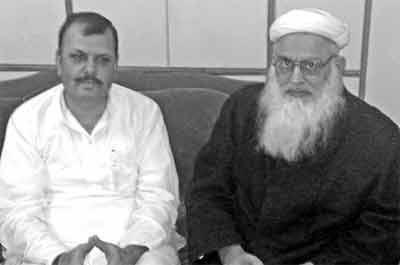
Maulana Habiburrahman with the son of Bhagat Singh’s brother

He said that there are no two views that the crusader of freedom, Raeesul Ahrar late Maulana Habibur Rahman Ludhianvi, while following in the footsteps of his great grand father Shah Abdul Qadir Ludhianvi was in the forefront of the fight against the British rule.

Sardar Sandhu said that he felt proud that ‘our relationship with this family is very old’. This family helped our family at a time when because of the British, people had been keeping a distance from the family members of Bhagat Singh.

He said that Raeesul Ahrar late Maulana Habibur Rahman Ludhianvi had secretly given shelter to his grand mother (Bhagat Singh’s mother) even at the risk of his own life.

He also said that Shaheed Bhagat Singh’s brother, (late) Sardar Kaltar Singhji greatly respected this family because of this reason. He said that what is needed today is that all the heirs of the crusaders of freedom should once again get united and try to set up a clean and honest political system in the country.

Abhay Singh said that Punjab’s Shahi Imam Maulana Habibur Rahman Sani Ludhianvi deserves congratulations for keeping the traditions of his forefathers alive and he salutes the Shahi Imam who enabled Muslims of Punjab to once again achieve a respectable and high place in the field of politics.

In reply to a question he smilingly said that this Shahi Imam is the pride and glory not only of ours but of the entire Punjab.

source: http://www.milligazette.com / The Milli Gazette / Home> Online News / January 02nd, 2013 (Print edition 16-31 December 2009 )

The Maulana who bridged the water divide

Ludhiana, PUNJAB :

In 1929, Maulana Habib-ur-Rehman Ludhianvi forced the British government to end the system of different water pitchers for Hindus, Muslims at

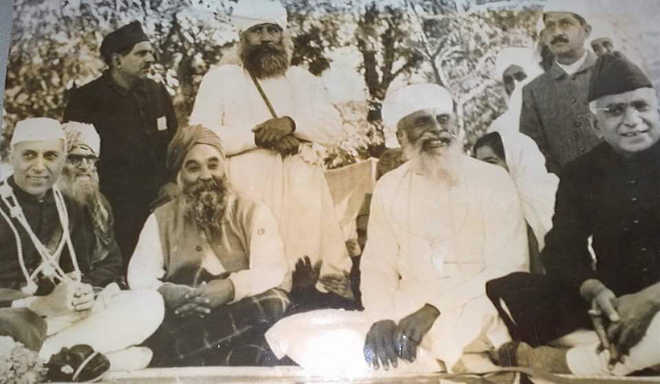
(From left) Pandit Jawaharlal Nehru, Maulana Habib-ur-Rehman Ludhianvi with Master Tara Singh, Satguru Pratap Singh and Saifuddin Kitchlu at a convention at Bhaini Sahib near Ludhiana in 1931. A file photo

When the entire nation was suffering under the Divide and Rule policy of the British, there was one man, who stood up and raised his voice.  Voices calling out Hindu paani lelo, Muslim paani lelo were common at the railway stations as there were separate pitchers of water for the Hindus and the Muslims.

But in 1929, Maulana Habib-ur-Rehman Ludhianvi raised his voice against this and protested at Ghaas Mandi Chowk and, with the help of his volunteers, broke earthen pots.As a result, the British government was forced to install one common pitcher at all railway stations across the country giving the message sabka paani ek hai. In this activity, nearly 50 volunteers were arrested and sent to jail.

“We have heard a lot about our great grandfather. He was instrumental in India’s freedom movement and the Hindu paani, Muslim paani issue was taken up by him,” said Usmaan Ludhianvi Rehmani, the great grandson of Maulana Habib-ur-Rehman Ludhianvi.

Ludhianvi hoisted the Tricolour on the banks of the Ravi to oppose the idea of partition of India and Pakistan. As many as 300 British policemen were sent to stop Ludhianvi from doing so, but he managed to hoist the flag and was arrested and sent to jail for a year.

Even Partition didn’t deter his spirit and he helped thousands of families stranded across the new border in uniting with each other.

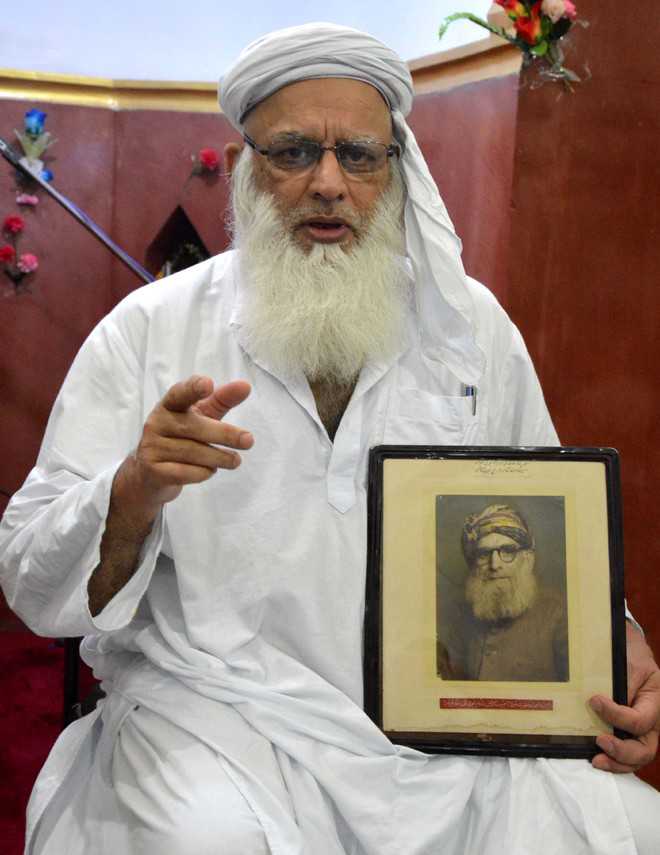
Maulana Habib-ur-Rehman Sani Ludhianvi, Shahi Imam of Punjab

Maulana’s grandfather Maulana Shah Abdul Kadir Ludhianvi in 1857 had issued a fatwa against the British rulers and the present Shahi Imam of Punjab, Maulana Habib-ur-Rehman Sani Ludhianvi, is his grandson.

The Shahi Imam of Punjab, said: “Our ancestors laid down their lives for the country. My only request to the present generation is not to waste the effort of our ancestors and be grateful to them.”Maulana, though not a poet, was well-versed in poetry and used to host poetic evening once a month.

He had spent 14 years of his life in various jails at various places, including Dharamsala, Shimla, Mianwali, Multan and Ludhiana.

source: http://www.tribuneindia.com / The Tribune / Home / Ludhiana – August 12th, 2017