Category Archives: Leaders

Remembering Sir Syed Muhammad Saadulla, the first Premier of Assam

Kolkata, WEST BENGAL / ASSAM :

Sir Syed Muhammad Saadulla was one of the foremost political leaders of modern Assam and the first Premier (also referred to as Prime Minister or Chief Minister) of the Assam province, one of the major eight provinces of British India.
SirSaadulla01MPOsSept2017

The family of Saadulla hails from Sibsagar and claims to be the descendant of the famous Muslim preacher Azan Pir, who came to Assam in the early 17th century to spread the message of Islam. Syed Md. Tayebbullah, the father of Saadulla, moved to Gauhati where he served as a teacher of Arabic and Persian in Cotton Collegiate High School at Gauhati town. Saadulla was born in Gauhati on May 21, 1885. He got his early school education at Sonaram High School at Gauhati. He then joined the Cotton College, Gauhati, and took his Post-Graduation degree in Chemistry from the Presidency College, Calcutta, in 1906. Subsequently he took the Bachelor’s Degree in Law from the Earle Law College at Gauhati in 1907. Besides Assamese and Bengali he was also fluent in Arabic, Persian and Urdu.

Before Saadulla started his legal profession at Gauhati Bar, he served for a short stint as Assistant Lecturer in Chemistry at the Cotton College in 1908. He practiced at the Calcutta High Court. Within a short time, he became an eminent lawyer.

Then he joined politics and became the member of the first Legislative Council in 1913. He was re-elected in 1923. Under the system of Diarchy, he served as Minister of Education and Agriculture from 1924-29. In recognition of his public services, the British government knighted Saadulla in 1928. He, as a member of the Executive Council of the Governor of Assam, also became Minister for Law and Order and PWD from 1929-30, and again served as Minister for Finance and Law and Order from 1930-1934. He was also the Chairman of the Public Accounts Committee from 1933 to 1934.

The Government of India Act, 1935 was adopted by the British Parliament on 2nd August, 1935 and was implemented in 1937. The Government of India Act 1935 made provisions for a Legislative Assembly in each province. In 1937 Assam Legislative Assembly election was held. In the same year Saadulla formally joined the Muslim League in response to MA Jinnah’s appeal.

Saadaulla was elected to the Assam Legislative Assembly from Kamrup South and served as Premier of a coalition government from April 1, 1937 to Sept. 19, 1938. A Congress government led by Gopinath Bordoloi succeeded from Sept. 19, 1938 to Nov. 17, 1939. Saadulla was again re-elected as Premier from Nov. 17, 1939 to Dec. 24, 1941. He, for the third time, became the Premier from Aug. 25, 1942 to Feb. 11, 1946. From 1937-1946 there were 34 Muslim members in the Assam Legislative Assembly, out of the total 108 members (For the list of names see Appendix I).

Saadulla, 6th from left (standing) and his daughter Betty (extreme left, sitting) attending a wedding at Shillong in the 1930s.[Photo courtesy: www.motijan-hazarika-rahman.com]
In 1946, he was re-elected to the Legislative Assembly from Kamrup South constituency and became leader of the Muslim League in the house (See Appendix-II for the list of Muslim members of Assam Legislative Assembly). He became a member of the Constituent Drafting Committee. As a member of the committee he helped in giving special financial assistance for Assam. He also took keen interest in protecting the rights of the minority communities. After the dissolution of the Constituent Assembly or the Provincial Parliament, he retired from public life and settled down in Gauhati. Later, the family of Saadulla moved to Kacharihat and established the Syedbari tea estate that is still run by his descendants.

Saadulla died on Jan. 8, 1955 at the age of 70.

In his later political life, Saadulla was closely associated with the All India Muslim League. He attended the 10th session of the League at Calcutta in Dec. 1917, and served as a member of the Committee which negotiated the Lucknow Accord between the Muslim League and the Congress. In 1946, he attended demand for Pakistan and favoured Assam’s inclusion in Pakistan. He renounced the knighthood in response to the call of the All-India Muslim League in connection with the “Direct Action” call to achieve Pakistan. However, on partition, when Assam opted out of Pakistan, he stayed in Assam and did not migrate to Pakistan.

In spite of his impressive political accomplishments Saadulla today remains the least remembered political figure of the state as he was associated with Jinnah’s All India Muslim League and supported two-nation theory. He was and still today often charged with deliberate settlement of Bengali Muslims in Assam through the scheme, introduced by him, known as the Line System. Thereby, the contributions that he had made in building a modern Assam in his capacity as Premier of Assam is today not acknowledged by the Assamese.

An article in Muslim India (Jan. 1987) sums up the contributions of Saadulla thus: “He was an able parliamentarian, an eloquent speaker, an experienced administrator, moderate and liberal in his approach. Saadulla is regarded as one of the makers of modern Assam. As head of the Assam Government, he took particular interest in planning and development, in rural uplift, in eradication of unemployment, in land reform and in promotion of cottage industries. For the development of the low-lying regions of the Brahmaputra and Barak valleys, he favoured and encouraged immigration of peasants from Bengal and should be given credit for the agricultural development of Assam, particularly the introduction of jute in the Assam valley. His critics charge him with deliberate settlement of Bengali Muslims in Assam.”

In another write-up in The Milli Gazette (16-30 Sept. 2002) Saadulla was described thus: “Saadulla was well-known for his generosity, honesty and ability. He was a matured, widely respected and accepted political leader of his time. He was a friend and guide of the tribal people of North-east India. In his first cabinet itself, he included a tribal leader, J.J.M. Nichols Roy as one of his ministers. He was regarded as an outstanding personality both on account of his experience, ability and honesty… he was in a class different from any other politician in Assam.”

Appendix-I

Muslim members of Assam Legislative Assembly – 1937-46

No.

Name of Member

Constituency

1. Sir Syed Muhammad Saadulla Kamrup (South)
2. Shams-ul-Ulama Maulana Abu Nasr Muhammad Waheed Sylhet Sadr (Central)
3 Abdul Aziz South Syhlet (Central)
4. Abdul Bari Chaudhury Sunamganj(Smlth) Muhammadan
5 Abdul Hamid Khan Dhubri (South)
6 Khan Bahadur Hazi Abdul Majid Chaudhury Karimganj (Central)Muhammadan.
7 Abdul Matin Choudhury Sylhet Sadar (East)
8 Abdur Rahman Habiganj (South-East)
9 Sayed Abdul Rouf Barpeta, Muhammadan
10 Md. Abdus Salam Sylhet Sadar (North)
11 Dewan Muhammad Ahbab Choudhury Sunamganj (East)
12 Dawan Ali Raja Habiganj (North-West)
13. Mohammad Amjad Ali Goalpara (East)
14 Mohammad Amiruddin Nowgong Mohhemedan (East)
15. Ashrafuddin Md. Choudhury Habiganj (South East)
16 Badaruddin Ahmed Darrang Muhammedan
17. Khan Bahadur Dewan Eclimur Roza Choudhury Sylhet Sadar (West)
18 Fakaruddin Ali Ahmed Kamrup North
19 Ghyasuddin Ahmed Dhubri (West)
20 Jhanuddin Ahmed Dhubri (North Muhammadan)
21 Khan Bahadur Keramet Ali Sibsagar, Muhammadan
22 Matior Rahman Mia Goalpara (West)
23. Muhammad Maqbul Hussain Choudhury Sunamganj (West)
24. Khan Bahadur Maulavi Mahamud Ali Sibsagar Muhammadan
25 Mabarak Ali Karimganj (West) Muhammadan
26 Mudabbir Hussain Choudhury. Habiganj (North East)
27 Khan Bahadur Maulavi Mafizur Rahman Sylhet Sadar (South)
28 Munawwar Ali Sunamganj (Central) Muhammadan
29 Muzarrof Ali Laskar Hailakandi Muhammadan
30 Aanwar Ali Barbhuiya Silchar Muhammadan
31 Naziruddin Ahmed South Sylhet (West)
32 Sheik Osman Ali Sadagar Sadagor Muhammadan Constituency. Nowgong.
33 Khan Sahib Maulavi Sayidur Rahman Lakhipur Muhammadan.
34 Muhammad Ali Haidar Khan South-Sylhet (east)

Source: assamassembly.gov.in/mla-1937-46.html

Appendix-II

Muslim Members of Assam Legislative Assembly – 1946-1952

No.

Name of Member

Constituency

1 Muhammad Abdullah Habiganj(South-East)
2 Khan Bahadur Abdul Majid Ziaosh Shams Dhubri (West)
3 Muhammad Abdul Kasham Dhubri (South)
4 Abdul Bari Choudhury Sunamganj (South)
5 Dewan Abdul Basith South Sylhet (Central)
6 Abdul Hai Kamrup (North)
7 Abdul Hamid Sylhet Sadar (Central)
8 Abdul Khaleque Ahmed Sunamganj (West)
9 Abdul Kuddus Khan Goalpara (East)
10 Md. Abdul Latif Karimganj (Central)
11 Abdul Matin Chaudhuri Darrang
12 Abdul Matlib Mazumdar Halakandi
13 Abdur Rasheed Sylhet Sadar (East)
14 Dewan Abdur Rob Choudhury Sylhet Sadar (South)
15 Syed Abdur Rouf Barpeta
16 Afazuddin Ahmed Nowgong (East)
17 Md. Ali Haidar Khan South Sylhet (East)
18 Emran Hussain Chaudhury Sibsagar
19 Maulana Ibrahim Ali Sylhet, Sadar (North)
20 M. Idris Ali Karimganj (West)
21 Md. Mafiz Choudhury Sunamganj (West)
22 Makabbir Ali Mazumdar Silchar
23 Mayeenud Din Ahamed Choudhury South Sylhet (East)
24 Md. Mased Ali Dhubri (North)
25 Khan Sahib Maulavi Mudabbir Hussain Choudhuri Habiganj, (South- West)
26 Mumtazul Muhaddisin Moulana Md. Mufazzal Hussain Karimganj (South)
27 Munawwar Ali Sunamganj (Central)
28 Nasir-ud-Din Ahmed Habiganj (South-West)
29 Md. Nazmal Haque Goalpara (West)
30 Khan Sahib Nurul Hussain Khan Habiganj (South-West)
31 Khan Bahadur Muhammad Roufique. Nowgong (West).
32 Sir Syed Muhammad Saadulla Kamrup (South)
33 Khan Bahadur Sayidur Rahman Lakhimpur
34 Dewan Taimur Raza Choudhury Sylhet Sadar (West)

Source: assamassembly.gov.in/mla-1946-52.html

source: http://www.twocircles.net / TwoCircles.net / Home> Articles> Indian Muslim / by Dr. Syed Ahmed for TwoCircles.net / October 10th, 2011
A man who represented Kalaburgi six times in State assembly

Kalaburagi, KARNATAKA :

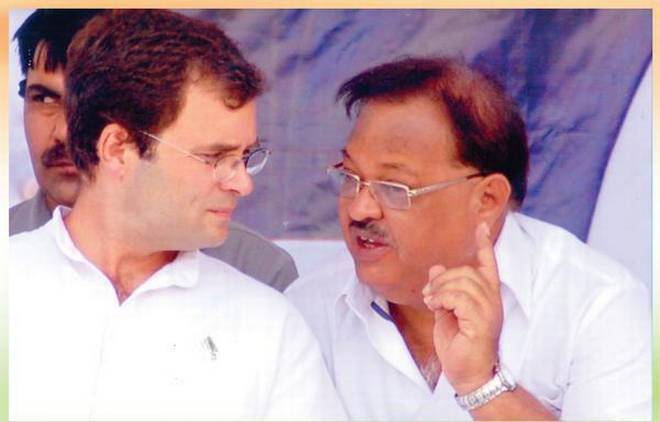
A file photo of Quamar Ul Islam with Congress vice-president Rahul Gandhi. | Photo Credit: Special Arrangement

Quamar Ul Islam, senior Muslim Congress leader from Hyderabad-Karnataka, passed away in Bengaluru on Monday

Quamar Ul Islam, a young engineer, started his political career in the 1970s as a leader of the Indian Union Muslim League (IUML) in Kalaburagi. He won the assembly polls, defeating veteran Congress leader Mohammad Ali in 1978. He continued in IUML and won again in 1989. Later, he joined the Congress and won in 1994.

In 1996, he resigned and join the Janata Dal for a short time to enter the Lok Sabha on a Janata Dal ticket. He quit his Parliament membership to contest the assembly polls again and became a minister for housing in S.M. Krishna’s cabinet.

Considered the senior-most Muslim leader from Hyderabad-Karnataka, he represented Kalaburgi six times in the State assembly. He is the only Muslim leader after Aziz Sait from Karnataka to be continuously elected.

He held the municipal administration and Waqf portfolio for three years in the Siddharamaiah cabinet, and was the first chairman of the Hyderabad-Karnataka Regional Development Board, and has served as chairman of Karnataka Housing Board, Karnataka Minority Commission and Karnataka Slum Board in the past.

He had long lasting relationships with senior leaders such as Ghulam Nabi Azad, N. Dharam Singh and Mallikarjun Kharge.

He founded the Al-Quamar Educational and Charitable Trust, that runs the KCT engineering college, pharmacy and diploma colleges in Kalaburg.

source:  http://www.thehindu.com / The Hindu / Home> News> State> Karnataka / by Special Correspondent / Belagavi – September 18th, 2017

Qamarul Islam, prominent Muslim leader from Hyderabad-Karnataka region, passes away

Kalaburagi, KARNATAKA :

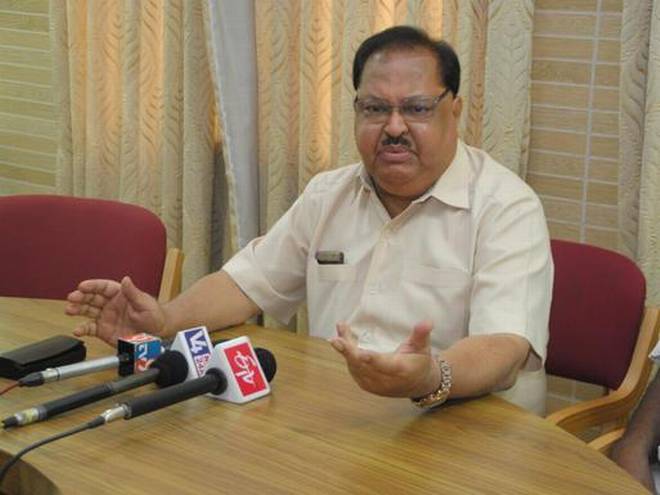
Qamarul Islam was a former Congress minister and prominent Muslim leader from the Hyderabad-Karnataka region. | Photo Credit: File Photo

Qamarul Islam, former Congress minister and prominent Muslim leader from the Hyderabad-Karnataka region, passed away following a brief illness in the city on Monday. He was 69.

Qamarul Islam was admitted to hospital 11 days ago for cellulitis of the leg and poor cardiac function. Dr. Shivaprasad, Senior Consultant and In-charge of Medical ICU, Department of Critical Care at Narayana Health told The Hindu that he had hypertension, diabetes and was also under treatment for Myasthenia Gravis, a neuromuscular disorder. He died of cardiogenic shock and multi organ failure in the hospital at noon on Monday, the doctor said.

Qamarul Islam had a long political career. He represented Kalaburagi (North) constituency and was Walf Minister in Siddaramaih cabinet. But, he was dropped from the cabinet in last year’s reshuffle.

As a mark of respect to the departed leader, the Karnataka Pradesh Congress Committee (KPCC) has cancelled all its scheduled programmes on Monday. A half-day holiday has been declared for all government offices, schools and colleges in Kalaburagi district.

Chief Minister Siddaramaiah, Home Minister Ramalinga Reddy, KPCC president G. Parameshwara, working president Dinesh Gundu Rao, Water Resource Minister M.B. Patil, BJP State president B.S. Yeddyurappa and several other top politicians have condoled the death.

source:  http://www.thehindu.com / The Hindu / Home> News> States> Karnataka / by Special Correspondent / Bengaluru – September 18th, 2017

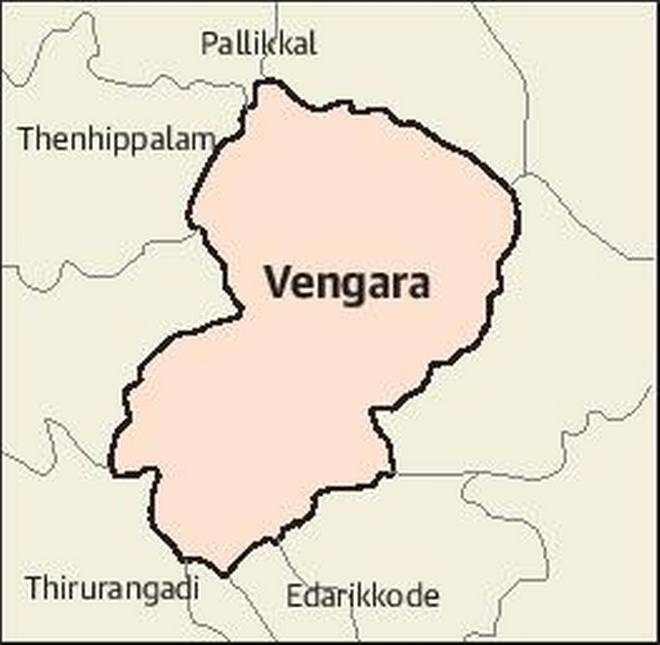
It’s official, LDF to field Basheer in Vengara

KERALA :

BasheerMPOs18sept2017

IUML’s K.P.A. Majeed not to contest

The Communist Party of India (Marxist) has decided to field P.P. Basheer as the Left Democratic Front (LDF) candidate for the Vengara Assembly byelections. However, the selection process in the Indian Union Muslim League (IUML), which is to contest for the United Democratic Front (UDF), was not as calm as in the CPI(M), with its State general secretary K.P.A. Majeed deciding to keep off the electoral fray.

The CPI(M)’s decision was announced by party State secretary Kodiyeri Balakrishnan here. The CPI(M) leadership chose to stick to a party man contrary to expectations that it might experiment with an independent candidate as it had done in Tanur in the 2016 election.

Mr. Basheer had lost to IUML strongman P.K. Kunhalikutty by over 35,000 votes in Vengara in the 2016 polls. The decision to field Mr. Basheer once again was taken after the Malappuram district committee and Secretariat approved his candidature. Mr. Basheer expressed confidence in securing the seat for the LDF.

Mr. Majeed announced his decision to keep off the electoral fray in an interview to a private television channel. He said he had informed IUML president Panakkad Hyderali Shihab Thangal about his decision not to contest.

The decision appears to have been prompted by strong opposition from the younger elements in the party and the Youth League. But Mr. Majeed maintained that he had take the decision since the party was in the midst of its organisational election process.

With Mr. Majeed deciding to pull out of the fray, the IUML leadership will announce its candidate on Monday itself, instead of the earlier deadline of September 20. It is obvious that had Mr. Majeed decided otherwise, the party leadership would have had a tough time in deciding to exclude an old warhorse.

source:  http://www.thehindu.com / The Hindu / Home> News> States> Kerala / by Special Correspondent / Thiruvananthapuram  – September 17th, 2017

Visit of M J Akbar, Minister of State for External Affairs to Senegal (September 6-8, 2017)

NEW DELHI :

Minister of State, Shri M.J. Akbar visited Senegal from 6-8 September 2017 as Special Envoy of Prime Minister Modi.

During the visit, he met President Mr. Macky Sall and handed over a Letter of Thanks from PM Modi for Senegal’s support for the re-election of India’s candidate Justice Dr. Dalveer Bhandari to the International Court of Justice for the term 2018-27, elections for which will be held in New York in November 2017. In this meeting, the newly appointed Prime Minister of Senegal Mr. Mouhamed Boun Abdallah Dionne was also present. Both MOS (MJA) and President Macky Sall discussed various aspects of India-Senegal bilateral relations.

MOS (MJA) handed over a cheque of Euro 50,000/- to the Secretary General of Foreign Ministry of Senegal Ambassador Mame Baba Cisse as India’s contribution to the Dakar International Forum for Peace and Security in Africa, to be held in November 2017. It is to be noted that India supported the Dakar International Forum for Peace and Security in Africa last year as well with a contribution of Euro 50,000/-.

MOS (MJA) gave a talk to Senegalese intelligentsia, academicians, ambassadors accredited to Senegal, and media personalities on “India’s Synergies with Africa” at the West African Research Center (WARC), a think-tank of Senegal.

He also gave a talk on “New India’s Transformation” to the Senegalese businessmen at the Dakar Chamber of Commerce, Industry and Agriculture (CCIAD).

MOS (MJA) visited the ongoing Gandhi Exhibition at the Renaissance Monument where he distributed Mahatma Gandhi souvenirs to young Senegalese Gandhians. He also signed the Visitors Book at the Exhibition.

He also addressed the Indian Community in Senegal during a Reception held in his honour.

He visited Goree Island, an important slave trade point and UNESCO World Heritage site, and signed the Visitors Book at the Slave House at the island.

source: http://www.mea.gov.in / Ministry of External Affairs, Government of India / Home> Media Centre>  Press Releases / New Delhi – September 14th, 2017

NCP’s Adil Faras is new standing panel chairman

Kohlapur , MAHARASHTRA :

Kohlapur :

Adil Faras, Nationalist Congress Party (NCP) corporator from Barai Mam ward, was on Friday elected as the new chairman of the civic body’s standing committee. Faras defeated Jan Surajya Shakti Party’s (JSSP) Mrudula Purekar by 11 votes.

Of the 16 members in the committee, 15 cast their votes by raising hands while one member — BJP’s Prabha Tipugade — remained absent citing health reasons. Faras got 13 votes while Purekar bagged just two.

At present, Congress and NCP are the ruling parties in the KMC with the support of JSSP and independent corporators. The elections to the civic body are scheduled in October-November this year. Hence, the NCP did not want to give up the chance to head the committee which has significant financial powers.

The run-up to the election turned interesting after the JSSP openly criticised NCP leader and former minister Hasan Mushrif and fielded its candidate against Faras.

Various speculations such as rift between the Congress and NCP came to the fore after Purekar decided to contest the election. The Congress has a majority in the committee with 7 members and votes of the party were decisive. Besides, it was also anticipated that some of the NCP corporators were hoping for a career in the BJP by supporting the JSSP corporator. The JSSP had helped BJP candidate Amal Mahadik in defeating former minister of state and Congress leader Satej Patil in the state assembly elections.

A Congress corporator said on the condition of anonymity, “Though there were speculations about rift between the Congress and NCP, both Patil and Mushrif had an understanding to continue the alliance till the next elections. Besides, the party leaders in the House issued a whip to the corporators to cross-vote which led to the win of Faras.”

For the last two days, both the Congress and NCP took the committee members to unknown place and brought them back to the city only on Friday morning to avoid any horse-trading. Sources said Pureker received her own vote along with that of Sambhaji Jadhav of Shiv Sena.

The election to the post of chairman of the transport committee was stayed by district collector and election monitoring officer Rajaram Mane after independent candidate Prakash Naiknaware opposed the nomination of Congress nominee Ajit Powar. Naiknaware said that Powar cannot contest the election since the corporator proposing his name is co-opted and claimed that the nomination of Powar is illegal.

Since Naiknaware has already moved the district sessions court over the issue, Mane stayed the election till the court issues further orders. The election has been stayed till January 9. Being close to Satej Patil, Powar had an upper hand over Naiknaware.

source: http://www.timesofindia.indiatimes.com / The Times of India / News Home> City> Kolhapur / TNN / January 03rd, 2015

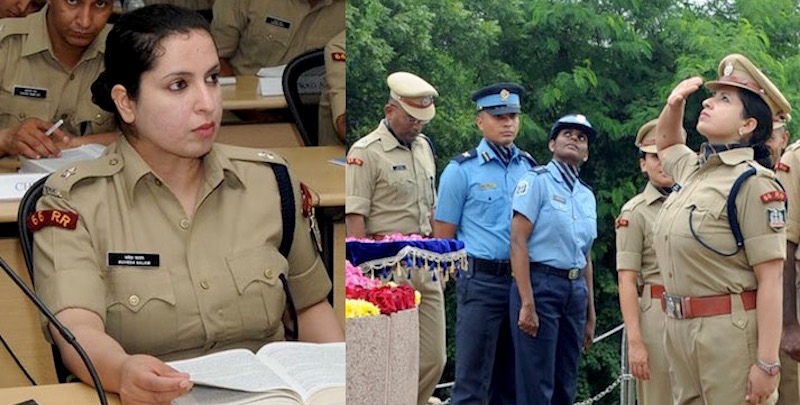
Meet Ruveda Salam – a doctor and Kashmir’s first woman IPS officer

Kupwara, JAMMU & KASHMIR :

Image: Rediff.com
Image: Rediff.com

In 2015, Dr Ruveda Salam became the very first woman IPS officer from Jammu & Kashmir. When Ruveda was growing up, her father often used to say that he wanted his daughter to become an IPS (Indian Administrative Service) officer. That’s when she first thought of becoming one. It inspired her and she decided to aim for it.

“As I have cleared the UPSC (Union Public Services Commission) exam for the second time, I will have to go for training again depending on the cadre. I think I will be posted as a sub-collector. Last year, I was selected to the Indian Police Service cadre. I went for training to Hyderabad. The training was very strenuous. Physically it was very hard. I joined the IPS cadre in Tamil Nadu and was posted as an Assistant Commissioner of Police in Chennai,” Ruveda said in a report in Rediff.com .

Before Ruveda cleared the UPSC (for the first time), she got into medical college, but even while studying medicine she used to read a lot. Ruveda found time to clear the Kashmir State Administrative Service exam. Instead of doing a post graduation in medicine, Ruveda started preparing for the UPSC.

As a young ACP, Ruveda has given motivational speeches to the youth, particularly girls. She encourages them to appear for the IPS exams in Jammu and Kashmir. Ruveda’s role is challenging. It carries a lot of responsibility. “I am in a state where people respect the police. I like it here (Tamil Nadu). When girls see me in uniform they look at me with admiration. I had conducted a workshop for girls in Hyderabad. The girls who attended said they wanted to join the IPS, but were apprehensive about whether their parents will support them,” Ruveda shared.

According to Ruveda, development will lead to peace in Jammu and Kashmir. “Peace and development go together. We should look to the future. Living outside has helped me understand the situation better,” said Ruveda.

source: http://www.yourstory.com / Your Story / Home> Her Story> Think Change India / May 11th, 2016

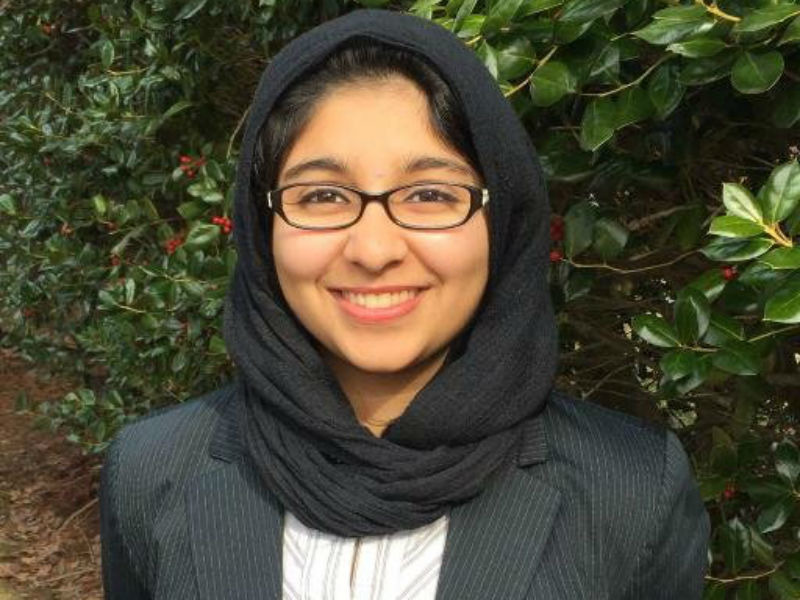
23-year-old Indian-origin woman wins local election in US

Maryland,  USA  :

Raaheela Ahmed / Images Twitter - Raaheela Ahmed)
Raaheela Ahmed / Images Twitter – Raaheela Ahmed)

Highlights

  • Raaheela Ahmed won the school board race in Prince George’s county of Maryland
  • Her father is from India and mother from Pakistan
  • Her victory gains significance as her district has 80 per cent of African-American population

Washington :

A Muslim-American woman, whose parents are from India and Pakistan, has won a key local election in the US state of Maryland which was dominated by anti-immigrant and anti-Muslim rhetoric.

Raaheela Ahmed, 23, won the school board race in Prince George’s county of Maryland by defeating a long-time system administrator by an impressive 15 per cent vote difference.

She had unsuccessfully run for this position four years ago in 2012. Her father is from India and mother from Pakistan. Her victory gains significance as her district has 80 per cent of African-American population.

She was endorsed by the former Republican National Committee Chairman Michael Steel.

“It’s interesting that on the same day Donald Trump was elected as president of the US, I as a hijabi Muslim young woman was also elected to serve in a public office. I think that speaks volumes about the diversity of American opinion, and that American dream is still well and alive,” Ahmed said.

“I’d like to act as a form of inspiration for other minorities that they can achieve what they will, given prayer, circumstance and hard work. This win would not have been possible without the support and belief that other people had in me,” she said.

“For my young minority women, please know that at the end of the day, you are worthy of your highest inspirations. You have to believe that you are able to achieve them, even if societal structures do not yet allow for that. Because one day, those glass ceilings will break. And who knows?” Ahmed said.

source: http://www.timesofindia.indiatimes.com / The Times of India / News> NRI> US & Canada / PTI / November 22nd, 2016

Former Odisha Minister Syed Mustafiz Ahmed passed away

Cuttack, ODISHA :

Cuttack:

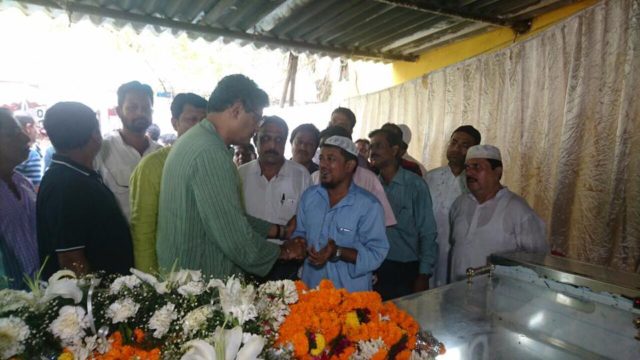
Former Minister and popular Muslim leader of Cuttack city Syed Mustafiz Ahmed passed away while undergoing treatment at a private hospital here on Monday. He was 77 and ailing for past several months. He is survived by his wife and a son.

MustafizaMPOs15sept2017

Beginning his political career as a Councillor of the Cuttack Municipality and later becoming its Vice-Chairman, Ahmed was first elected to the State Assembly from the city constituency as a Janata Dal candidate in 1985.

After retaining his seat in 1990, he was made a Minister in the Biju Patnaik Ministry. Initially in charge of Textiles and Industries, he was elevated to the Cabinet rank and was given the charge of Health and Family Welfare.

Chief Minister Naveen Patnaik, Union Ministers Dharmendra Pradhan and Jual Oram, among many other leaders, expressed their deep condolences to the family of Ahmed, describing him as a gifted organiser, an able administrator and, above all, a sincere social worker, who had donated blood for over a hundred times.

Though a minority community leader, Ahmed was also very popular among other communities in the city for his amiable and sociable behaviour.

source: http://www.orissadiary.com / OrissaDiary.com / Home> City> Cuttack / September 12th, 2017

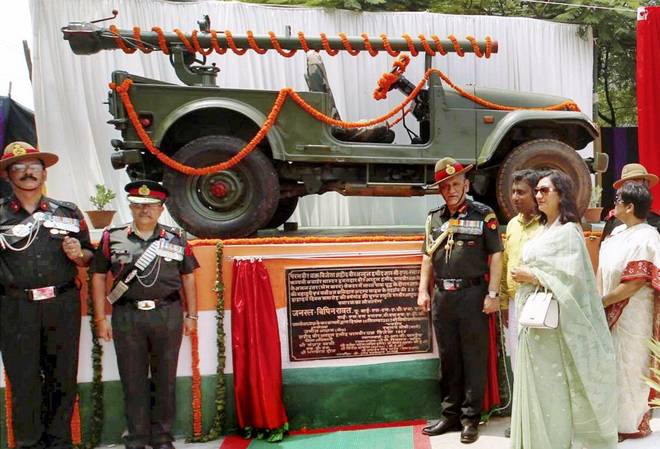
Gen. Bipin Rawat unveils bust of 1965 war hero Abdul Hamid

Dhamupur (Ghazipur District) , UTTAR PRADESH :

Army Chief Gen. Bipin Rawat unveiled a memorial during the anniversary of Param Veer Chakra Havildar Abdul Hamid, in Bhamupur village of Ghazipur on Sunday. | Photo Credit: PTI

Army Chief Gen. Bipin Rawat on Sunday unveiled a bust of the 1965 Indo-Pak war hero Abdul Hamid here in Ghazipur district and felicitated the widow of the soldier who was awarded Param Vir Chakra, the highest wartime gallantry medal.

On the occasion of the 52nd anniversary of his sacrifice, Gen. Rawat and his wife Madhulika met Rasoolan Bibi, wife of Havildar Hamid, and several other war widows and felicitated them. The Army chief also unveiled a memorial in Hamid’s honour in Dhamupur.

Lauding the contribution made by the people of the district to the armed forces, Gen. Rawat said a recruitment drive will be held soon in Ghazipur to encourage the youth to join the Army and contribute to the country’s security.

Hamid had destroyed several tanks of the Pakistan Army during the 1965 war in the Lahore sector.

“Jahan Hindustan ki sena khadi hai, wahan khatra kisi aur se nahi hai [where the Indian Army is present, there is no threat from anyone],” the Army Chief said.

“Hamid is an inspiration for the youth and his extraordinary bravery made the country proud,” he said.

On the Dokalam issue, Gen. Rawat said India and China have held talks and the situation there is under control.

source: http://www.thehindu.com / The Hindu / Home>New> National / PTI / Dhamupur (U.P) / September 10, 2017