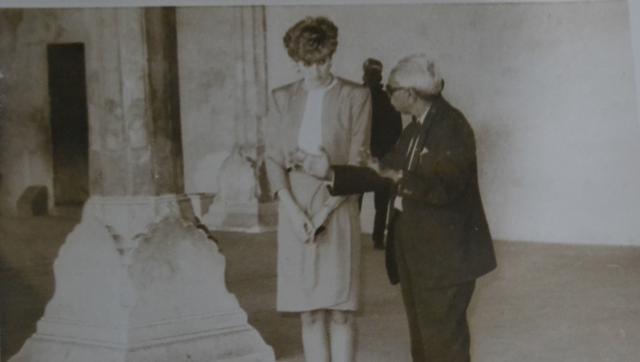
Princess Diana at Deewan-e-Aam at Agra Fort in 1992. (File Photo)
Two guides in Agra have been contacted by British High Commission for the royal couple’s visit on April 16. However, there is still no confirmation as to who will be deputed to guide the Duke and Duchess of Cambridge.
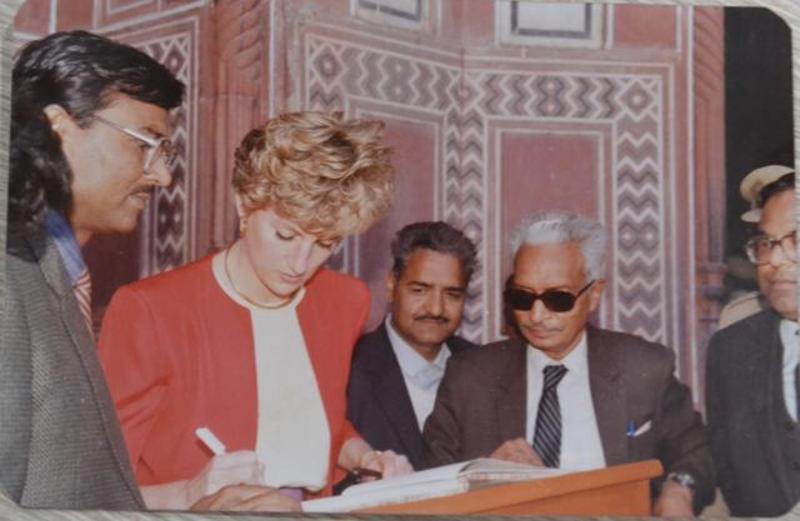
One of them is Varun Rawat, whose father Mukund Mohan Rawat was the official guide to Queen Elizabeth (II) who visited the Taj Mahal in 1961, and Lady Diana in 1992. He was contacted by British embassy about six days ago.
Princess Diana signs the visitor book at Taj Mahal in 1992. (File Photo)
The other guide contacted by British High Commission is Shamsuddin, who is the former president of Approved Guides’ Association.
“My father was the official guide to Queen Elizabeth (II) in 1961 and her daughter-in-law Lady Diana who visited the Taj Mahal in 1992,” Varun said.
“My father used to talk about Lady Diana being a down to earth person with immense interest in the history and architecture of Taj Mahal,” he recollected. “He would tell me how Lady Diana interacted politely with the Taj Mahal ‘khadim’,” Varun said.
Varun had guided former US President Bill Clinton when he visited the Taj Mahal in 2000 and again in 2003.
source: http://www.hindustantimes.com / Hindustan Times / Home / Hemendra Chaturvedi, Hindustan Times,Agra / April 15th, 2016
Heritage The luxuriously embellished, richly coloured dargah is a feast for the senses. Serish nanisetti
Hyderabad, TELANGANA :
The real discovery of Hyderabad heritage begins only when you discard your vehicle and trade it for a cycle or a pair of sneakers. Walking on the road between the Charminar and Purana Pul you might discover the Syed Hazrath Musa Qadri’s Dargah. It is a blink and miss structure on the left side between Koka ki Tatti and Purana Pul on the Hussainialam Road.
A huge green door leads you inside and on the left is the kanqah. In a portion of the kankah lives the family of the 28th descendent of Musa Qadri, who was a descendent of Abdul Lateef Laubali, whose dargah draws a number of pilgrims to Kurnool. Laubali was among the seven migrating Shia saints who came from Baghdad.
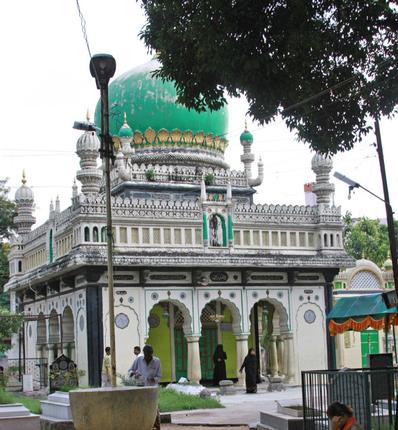
Spiritual abode – The Syed Hazrath Musa Qadri Dargah near Purana Pul / Photos: Serish Nanisetti
Set amidst age-old tamarind trees, is the double-storey green domed dargah of Musa Qadri. According to the inscription, the construction of the dargah was completed in 15 years. “After Syed Hazrath Musa Qadri passed away in 1800 at the age of 63, his son Ghulam Ali Qadri had a dream and saw the shape of the dargah and he set about building it which he finished within 15 years. It was not very difficult as Musa Qadri had 45,000 followers including people like Ghansi Mian after whom the bazaar is named,” says Syed Shah Fazlullah Qadri, the 28th descendent.
Unlike the bulbous domes of Qutb Shahi nobles, this is a flatter much more graceful structure on a rectangular base but with luxurious decoration on the outside as well as inside. Geometrical patterns, vegetal and floral patterns and skilled Persian calligraphy dominate every nook and cranny of the structure. No space is left uncovered. The deep patterns in stucco, which have been created even in the undulating parts of the minarets, mark them out from the earlier tradition of simple geometric shapes.
The upper storey is reached by climbing an arcane claustrophobic staircase where 10 square stones are jammed in a small space. “Nobody comes here. Very few people can climb this,” says Fazlullah’s son as he shows the chronogrammatic calligraphy about Musa Qadri and the intricately wrought spandrels and minarets.
The calligraphy in stone narrates the names of God or tells us a bit about the structure and its creators.
Unlike others, Ghulam Ali Qadri had a sense of history and he wrote the Mashkwatun Nubuwat, a seven-volume history chronicling the miracles of Musa Qadri as well as tracing the lineage back to Huma (Syria) and Baghdad (Iraq). According to the book, it was Syed Shah Piranshah Mohiuddin Thani Qadri who came to pray at the Quli Qutb Shah mosque which was in an open ground and he settled down there.
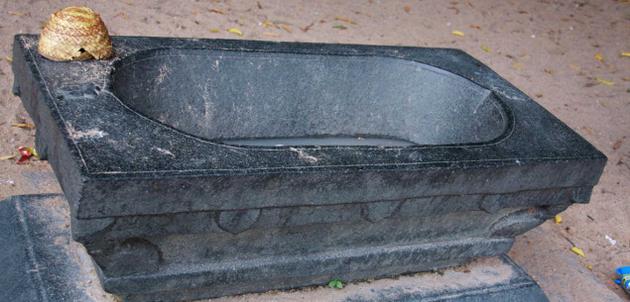
The bowl of wish-fulfilment. / Photos: Serish Nanisetti
Outside the Dargah is a black boat shaped structure carved out of hard granite called qashti hazatmand(ship of wish-fulfilment). “People come here to pray and when their desires are fulfilled the fill this with sherbet and all the people come and finish it off,” says Fazalullah Qadri.
source: http://www.thehindu.com / The Hindu / Home> Friday Review / by Serish Nanisetti / November 19th, 2010
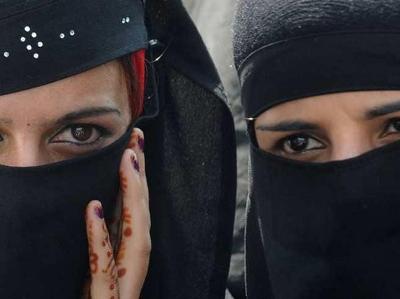
Most victims of the UK hate crimes were Muslim girls and women aged from 14 to 45 in traditional Islam dress. The perpetrators were mainly while males aged 15 to 35 (File photo)
Kochi :
The Kerala high court on Tuesday granted permission to Muslim girls to wear hijab, a customary religious dress, for the All India Pre-Medical Test-2016 but on condition that they should be present at the hall an hour before the exam for frisking if necessary.
The order was issued by Justice Muhammed Mushtaq while hearing a writ petition by one Amnah Bint Basheer challenging the dress code prescribed for the candidates by CBSE in the bulletin relating to conduct of AIPMET-2016.
The judge allowed the plea on condition that the girls shall be present at the hall half an hour before the exam and, if required, the invigilator can search the body.
The petitioner contended that the instructions contained in the AIPMET-2016 bulletin regarding dress code, as per her religious beliefs and practises, would amount to violative of exercise of religious freedom.
The court issued directions to CBSE to permit Muslim girl students to wear hijab for attending the AIPMET .
Last year, a single Judge of the Kerala high court had allowed two Muslim girl students to wear hijab while appearing for the CBSE AIPMT-2015.
source: http://www.timesofindia.indiatimes.com / The Times of India / News Home> India> PTI / April 26th, 2016
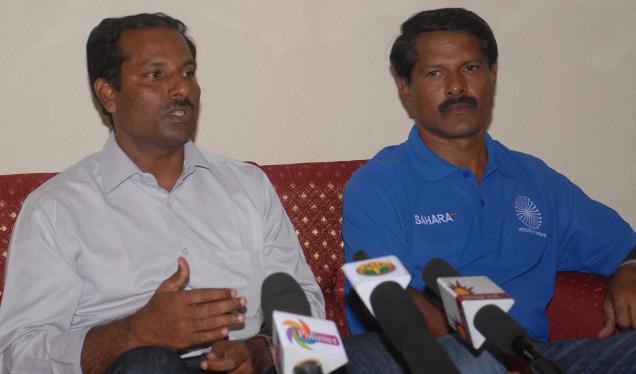
National hockey coaches Md. Riaz (left) and C R. Kumar were felicitated by the Hockey Unit of Tamil Nadu in Chennai on Wednesday. / The Hindu
National hockey coaches, former Olympian, Md. Riaz and international C. R. Kumar, were felicitated on Wednesday by the Hockey Unit of Tamil Nadu (HUTN) at the Mayor Radhakrishnan Stadium.
Md. Riaz was assistant to the Australian coach, Michael Nobbs, at Ordos, where India triumphed in the inaugural Asian Champions Trophy on Sunday beating Pakistan via the tie-breaker by four goals to two.
Complimenting the players for the single-minded devotion in achieving the target against a formidable rival, Md. Riaz said the victory opened a new chapter for Indian hockey.
He was particularly impressed by the role played by Kullu as full back and Sunil and Walmiki in the attack. “These youngsters have a tremendous future,” Md. Riaz noted.
Refusing to be drawn into a discussion related to the prize money fiasco after the return, Md. Riaz felt that the ministry should treat the support staff as part of the players’ group and be made eligible for full cash awards.
At the moment, the assistant coaches get only 50 per cent of what a player gets from the Government as cash incentives.
Although officially defender Rupinder and goal-keeper Sreejesh, who played an outstanding role in the tie- breaker, represent Tami Nadu because of their employment here, Riaz is the only official in the team hailing from the State.
He deserves suitable recognition from the State Government, which has enhanced the cash awards for achievements in international competitions.
C. R. Kumar, the chief coach for the women’s team, is striving his best to carve a new path. India finished fourth in the four-team event, but missed the bronze, which it was defending, went down to Japan after dominating the proceedings.
Ms. Renuka Lakshmi, Secretary, HUTN, welcomed the gathering and congratulated the men’s team for the victory at Ordos. She also expressed her thanks to the Chief Minister, Ms. J. Jayalalithaa, for hiking the prize money to achievers and hoped that the sportspersons in the State would take advantage of the incentives offered by the State Government and strive for excellence in all competitions.
source: http://www.thehindu.com / The Hindu / Home> Sport / by Special Correspondent / Chennai – September 16th, 2011
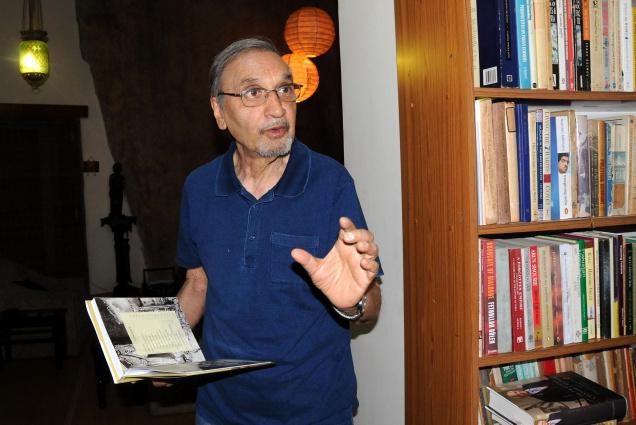
Narendra Luther talks about weaving in amusing legends and fact-filled anecdotes in his new book ‘Legendotes of Hyderabad’
Hyderabad, TELANGANA :
‘Don’t google the meaning of ‘legendotes’ for there is no such word,’ historian Narendra Luther says in the introduction to his new book ‘Legendotes of Hyderabad’ (Niyogi Books; Rs. 995). A combination of legend and anecdotes, ‘legendotes’ is also an encapsulation of nuggets of history, backed by research, presented in the style of a coffee table book illustrated with photographs of people and buildings that provide a window to the past. “To my surprise, the publishers were eager to have more photographs,” he says with a smile, speaking to us ahead of the launch of his book on Thursday in the presence of historian Aloka Parasher Sen.
“During the course of my research on Hyderabad over the years, I came across both legends and anecdotes. Legends are generally considered gossips of history, but some of those are also stuff that makes up history. Former historians, I believe, walked on the highway of history whereas I feel many pieces of history lie scattered in the lanes and by lanes of the city. I collected a few of these and applied tests of historicity and veracity before documenting them,” explains Luther. Narendra Luther focuses both on stories that are now popular knowledge and lesser-known facts that give readers fresh insights into the history of Hyderabad and Secunderabad. “These are not mere ‘he said, she said’ facts put together,” he emphasises.
Luther also prefers to gather information from people than just documents from the archives: “I believe in interviewing people to know about history than merely going through archives; they have given me a wealth of information,” he says, referring to how he got the late Zahid Ali Kamil to share the story of Kazim Razvi, who led the Razakars movement. The author draws our attention to rocks of Hyderabad that are 2500 million years old and as he points out, ‘older than the Himalayas’ and traces the origin of Hyderabad, including the much-debated tale of romance that gave birth to Bhagnagar. “The historicity of Bhagmati has been established beyond doubt,” says Luther, and states his earlier research while penning a biography of Mohd. Quli Qutb Shah that led him to a document mentioning an old seal of ‘qazi of Bhagnagar’. “And in the court of Jehangir, there was a reference to the city of Bhagnagar in the South, established by Quli Qutb Shah in memory of his beloved,” he adds.
The book contains quirky stories of a dog made to sit on a throne by Sultan Tana Shah in recognition of it raising an alarm spotting an intruder, Aurangzeb’s visit to Bhagnagar and Stalin’s orders on the red revolt. There’s also a perceivable effort to make history relevant to the times we live in, in the chapters that detail how the King Kothi got its name, the story of Lal Bazaar in the then Lashkar that later came to be called Secunderabad. “I’ve given historical citations even for amusing stories,” smiles Luther, citing the story of seven kulchas and how the kulcha was represented on the Nizam’s flag. “This was contradicted by the man himself, the first Nizam, who said the ‘circle’ was a moon that denoted his name Kamaruddin (‘Kamar’ in Persian means moon). But later when the sixth Nizam was approving the design of the flag in 1899, issued a written mentioning the big white circle as a kulcha.” Like his previous works, this book too is an ode to Hyderabad.
Hyderabad connection to ‘Jai Hind!’
Did you know that it was a Hyderabadi who coined the slogan Jai Hind? Zain-ul Abideen Hasan was pursuing engineering in Germany at the time when Netaji Subhash Chandra Bose visited Germany and urged Indian students to join his movement to liberate India. Abid Hasan gave up his studies and became Netaji’s secretary and interpreter. ‘Legendotes of Hyderabad’ discloses why Abid came to be called ‘Safrani’ in later years and how he coined the term ‘Jai Hind’ as the greeting for his army and for independent India.
source: http://www.thehindu.com / The Hindu / Home> Features> MetroPlus / by Sangeetha Devi Dundoo / Hyderabad – January 30th, 2014
She’s helped revive traditional weaves and, like the Mahatma, dreams of a loom in every home
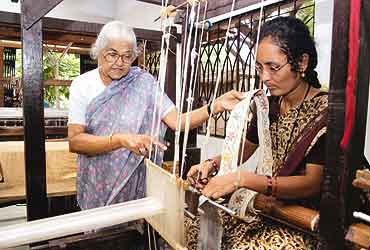
At 75, Suraiya Hasan Bose has energy levels that can put a teenager to shame. But when she chats, she exhibits the languid grace of a long-forgotten nawabi culture. As women work magic on the looms at her weavers’ workshop at Dargah Hussain Shah Wali (a village on the outskirts of Hyderabad), in the adjacent Safrani Memorial School run by her, children race around with unbridled enthusiasm.
Suraiya employs a large number of poor women, many of them widows, from the village. These women are trained to work on himroo, jamawar and paithani—fabrics that were brought into India by the Mughals. “I want to see these women stand on their own feet. I wish to see looms in all their homes and hope they can train future generations too,” she says. Suraiya’s unassuming demeanour envelops the large room as the women go about their work.
On the other side of the fence, the children’s learning curve, under Suraiya’s tutelage, spreads an air of hope. Like the women, students of the school too come from poor households—children of farmers, labourers or vegetable vendors. Suraiya charges them a nominal fee.
Suraiya attributes her passion to her father Badrul Hasan. Mahatma Gandhi too has been her idol. When Gandhi first visited Hyderabad, it was in front of Suraiya’s house that the first bonfire of English mill-made cloth was lit. Suraiya’s father died when she was only five but she had others to look up to. Her uncle Abid Hasan Safrani was the personal secretary to Subhash Chandra Bose and she was married to Bose’s nephew Aurobindo Bose. “My late husband was based in Calcutta, and used to be in and out of jail. Both our families understood the importance of Gandhi’s ideals of preserving traditional handlooms.” It is after her uncle that the weaving society and school are named since he was the one to encourage Suraiya to follow her passion for handspun textiles.
While Suraiya is credited with the single-handed revival of the Nizami-Persian fabrics of himroo, paithani and mashroo in Andhra Pradesh, she has also worked extensively in the village of Kanchanpalli, close to Warangal. In the early ’70s, due to lack of patronage, weavers in Kanchanpalli had almost given up their profession. They merely made decorative calendars woven with portraits. Suraiya encouraged them to make durrees. Today, over 500 weaver families in Kanchanpalli make a living through durrees and other weaves.
In Warangal too, when Suraiya began her efforts to revive weavers and fast-vanishing forms of royal designs, there were just two such families. Following Suraiya’s constant efforts, there are now a thousand families involved in weaving, research and development of textiles. Several of them also come to Suraiya’s workshop to learn the intricate art of himroo. Now, Suraiya plans to train women from the nearby villages of Hafizpet and Miyapur.
Funds are slow to come by but Suraiya believes if the passion is there, money will soon follow. As the school bell rings and children rush out, Suraiya says, “Half my heart is with them. Since they come from the poorer quarters, we also teach them to use cutlery, to speak softly and even pick up any garbage they find on roads and put them into dustbins. We basically want them to be honest and respectful citizens.”
Despite Suraiya’s busy schedule, she is at the school every day at 8 am. “What’s heartening is, marriage is not a priority for the girls passing out from my school. College is. That’s our greatest achievement,” she says, her eyes shining through her bifocals.
Her future plans? Adding weaving classes to the school curriculum. For like Gandhi, Suraiya’s dream is to see a loom in every home.
Contact Suraiya at: Safrani School premises, 1-86, Dargah Hussain Shah Wali, PO: Golconda, Hyderabad: 500008 Tel: (040) 23563792, 23560992.
source: http://www.outlookindia.com / Outlook / Home> Making A Difference / by Madhavi Tata / October 31st, 2005
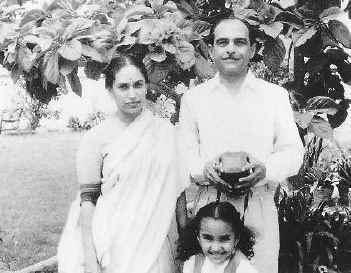
“He never ever mentioned his life with the INA, let alone the story that he had been the one to coin the greeting ‘Jai Hind’. To the rest of the world he might have been a freedom fighter, but to us he was always `Uncle Safrani’.”
Much loved Uncle…
To the rest of the world he might have been a freedom fighter and a soldier who fought alongside Netaji, but to us he was always “Uncle Safrani”.
Only much later did we realise that his real name was Zain-al-Abdin, or Abid Hasan as he preferred to call himself and that the stories he told us of his days in the Indian National Army were actually true.
“Compared to us, Safrani was a man of the world,” says my Mother looking back on the first time they met him, in 1948, on board a ship that was taking them to start the first of the Embassies that were just being opened.
Safrani was bound for Cairo, my parents were due to get off at Genoa and make the rest of the trip by land to Paris.
What they did not know then, was that they had been booked on a cargo ship. Some cabins had been hastily converted to accommodate First Class passengers. It would take the long route, going up the Persian Gulf, stopping at various ports to unload goods.
For my young parents who were leaving the country for the first time, with two small girls, my sister Surya who was two years old and myself, who was five, on a ship belonging to the Sindia Steamship Company as it was known then, Safrani was a wonderful guide. They had never left the shores of India.
He on the other hand was not only a member of the old Hyderabad elite, but had also studied for a while in Germany and travelled all over South East Asia, as Secretary to Subhas Chandra Bose.
“Safrani was one of those men who could make friends with all kinds of people. He was all over the ship. When it docked he would be the first to get off and go straight to the bazaars and return by evening with all manner of beautiful things. He was also a scholar who spent long hours with his Persian and Urdu poetry. There was nothing he did not know and seeing how raw we were, he made it his business to educate us in all the finer points of life. For instance, when we docked at the port of Basra he ran ashore and bought so many carpets that he ran out of money. But this did not worry him, he just made arrangements to borrow money on credit so that he could buy more. ” recalls my Mother.
In the evenings when the ship was at sea, he would take us to the top most deck and point out the stars to us and whisper stories to us about all the ancient sailors like Sindbad who had crossed these very seas. To us, he would become like Sindbad the Sailor himself. During the day, dolphins would follow us racing by our side, while as we made our way into Aden, where the local Indians received us like fabulous guests that had been sent by the newly Independent government of India to conquer the world, Safrani showed us how to be gracious in accepting the hospitality of strangers, who could also be family.
At Port Said, he transformed himself into an Arab prince, bargaining with the chattering hordes of intrepid vendors who climbed up from their small boats into the ship, teaching my parents to sip bitter coffee from small glasses and to taste the sticky sweet lumps of baklava.
By the time the ship sailed into the Mediterranean, Safrani had become the perfect European gentleman, as debonair as David Niven, as effusive as Signor Peperino, with his flowing moustache and his ability to charm the ladies, with his manner of bowing down to kiss a hand. Or as was the case with us to imprint our tender young cheeks with moist and noisy lip-smacking kisses. He became for us the kissing Uncle.
It was also a way in which he kept track of some of his possessions, the beautiful carpets, the pieces of porcelain and small paintings that he had left with us, just as a token of his friendship he said. “I want you to enjoy them as long as you like and when I need to sell something , I will come and collect a carpet or two.”
We were the guardians of his generosity. For though he bought beautiful things with the lavish style of an oriental Pasha, his house was always so full of people that he had quite often to sell them to keep the coffers flowing.
He left one ceramic vase with us. It still stands on a pedestal in a corner, converted now into a lamp stand, its deep blue and copper red tones changing colour with the reflection of the light. “It’s a very rare vase from China. Don’t ever sell it,” he advised, though he himself regularly sold many of his most cherished possessions.
When we lived in Geneva, he happened to be in Berne. His boss at that time was a dog-lover of epic proportions, so every evening as we stood beside him and listened, he talked to the dog, a large Alsatian, who had been left behind in his care, in Urdu, on the telephone.
On another occasion, he told us how the dog had finally died and he was “Chief Mourner” the had conducted the funeral honours. “It was a very touching occasion. I was so moved, I jumped into the open grave and recited some prayers over the dog’s body that I held in my own arms, before laying him into the earth,” he told us. Since he was laughing so much at the memory, we never knew whether any of this was true. Or whether like all the stories he had told us in the past, they were the stuff of the legendary quality that he wove around himself.
“He never mentioned his life with the INA, let alone the story that he had been the one to coin the greeting, “Jai Hind!” remarks my Mother, “Though it sounds very typical of him. He was a free spirit.”
Much later when one of us was passing through Denmark, where he was the Ambassador, we enjoyed the full force of his hospitality. He drove to the airport himself and though when we reached his house, it seemed to be so full of guests that evening, he had to find a room for us, right up in the attic. But as ever it was a fabulous evening. The dinner when it arrived was as full and rich as one of the tables from the days of the old Hyderabad style hospitality. He always managed to have as a hostess, one of his beautiful nieces from Hyderabad, who would quietly attend to the guests and see that no one was without food and drink.
When it was over, he insisted that we should go and enjoy the “Tivoli Gardens,” that was the star attraction of Copenhagen. As we looked at the giant Ferris wheels and the nightly display of fireworks exploding over the skyline of the City, Uncle Safrani had become like Barnum, a grand ring-master presiding over the “Greatest Show on Earth”.
And then we did not see him again.
We had heard that he had returned to his family home after retirement and become a gentleman farmer.
This is my final memory of him.
On a visit to a silk weaving unit on the outskirts of Hyderabad I found that someone had started a small farm, and on it a school for the children of the nearby village.
The owner, who had died some time back had created an enchanted garden of fruit trees. The fields next door were covered with jasmine bushes, dotted with fat creamy jasmine buds, that the children from the school came to harvest in the early morning. The air was filled with their fragrance as all over the field the butterflies were busy doing their own kind of harvesting.
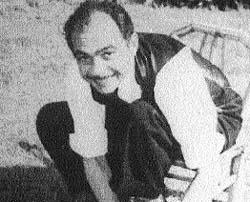
One of this man’s nieces, a really beautiful woman even in her later age, was running a weaving centre. She was pre-occupied in reviving some of the old Hyderabadi silk and cotton weaving traditions and did not have much time to talk. On her table was a photograph of a familiar face, the same moustache, the full lips ready to form themselves into a kiss, the all embracing smile, the jaunty glint in the eye.
“Safrani!” I exclaimed.
The beautiful niece, still glowing in her old age looked at the picture. “My Uncle” she said, quietly.
source: http://www.thehindu.com / The Hindu / Home> Young World / by Geeta Doctor / Online Edition / Saturday – March 23rd, 2002
When we talk of “Freedom Fighters”, we generally mean those people who fought for the independence of India within the country. Many Indians fought for the freedom of the country from outside India too.
Indian National Army
It was Captain Mohan Singh, an Indian officer of the British Indian Army, who first set up the Azad Hind Fouj (Indian National Army) on the defeat of the British by Japan on February 15, 1942.
Abid Hasan
A young enthusiastic and courageous man from Hyderabad also joined this force. His name was Zain-al-Abdin Hasan. He preferred to be called Abid Hasan and later became known as Abid Hasan Safrani.
Abid Hasan’s mother Hajia Begum was anti-British, so her children were sent to Germany for higher studies. And Abid went to do a degree in engineering.
Meeting with Bose
Netaji addressed a meeting of Indian prisoners of war in Germany and asked them to join the INA. Abid met him and was inspired by the charismatic leader. He told Bose that he would join him after finishing his studies. Netaji said tauntingly that if he was caught in such small considerations, he would not be able to achieve anything big in life. Stung by that remark, Abid decided to give up his studies. He became Netaji’s secretary and interpreter.
Abid Hasan was made a major in the INA. Netaji wanted an Indian form of addressing each other. Abid first suggested “Hello” and was snubbed for that. He later suggested “Jai Hind”, which Netaji liked and adopted it as the formal manner of greeting for revolutionaries and members of INA.Later Nehru used it in his Independence Day address from the ramparts of the Red Fort.
The Indian National Army
INA provided a common kitchen for its soldiers irrespective of their religious affiliations. But there were many differences of opinion within its ranks. One of the controversial issues was the design of the national flag. TheHindus wanted a saffron flag, while the Muslims insisted on green. Later the Hindus gave up their insistence. Abid Hasan was impressed by this gesture that he decided to append “saffron” to his name. Since then, he became to be known as Safrani.
After the famous trial of the INA, all the members of the INA were released. In 1946, Safrani came to Hyderabad and joined the Congress Party. The party was riven with factionalism. Disgusted, he gave up politics and joined the Bengal Lamp Company. He was posted at Karachi. On the partition of India, he came back to Hyderabad.
Diplomatic career
In 1948, he was taken into the newly created Indian Foreign Service. On retirement in 1969, he returned to Hyderabad. Safrani passed away in 1984 at the age of 73.
source: http://www.thehindu.com / The Hindu / Home> Features / Online Edition / by Narendra Luther / Saturday – October 20th, 2001
Abid Hasan’s grandnephew recounts the story behind creation of a salutation to replace religion-based greetings for Indian soldiers.
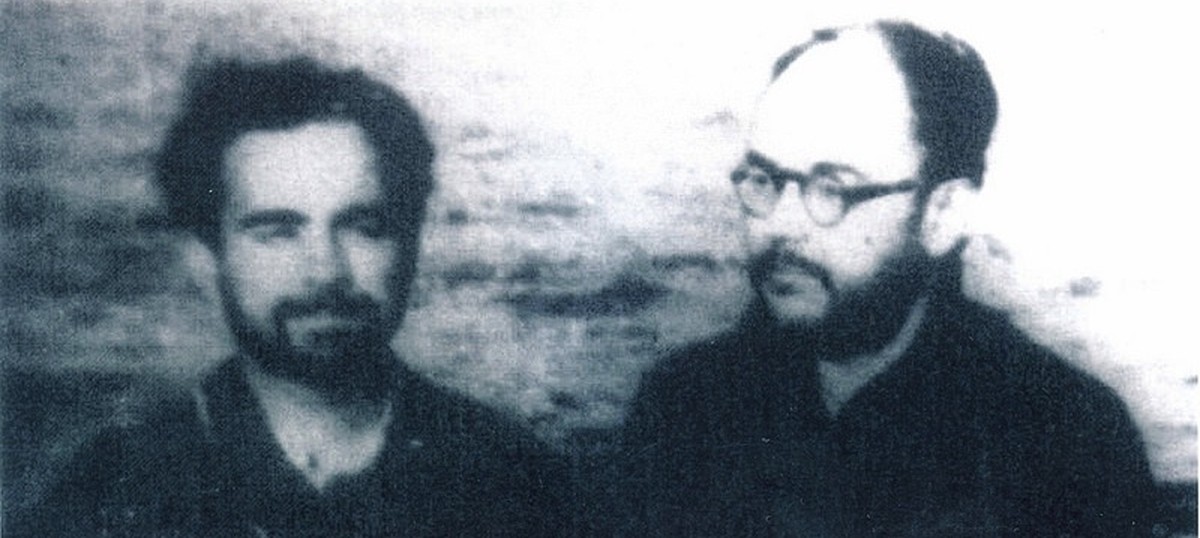
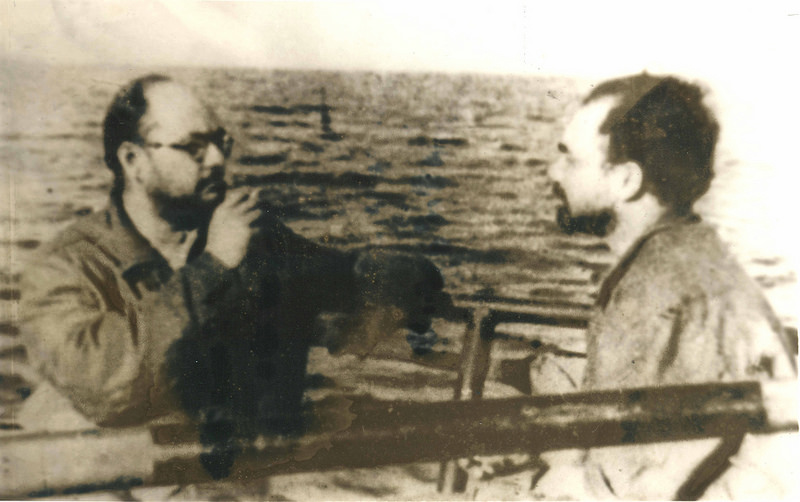
Image credit: Photo courtesy: Anvar Alikhan | Netaji Subhash Chandra Bose with his aide Abid Hasan during their journey to Japan from Germany in 1943.
Netaji Subhash Chandra Bose had a problem. It was 1941. He was in Germany, and was spending a lot of his time in the Konigsbruck prisoner-of-war camp, trying to recruit Indian soldiers captured by Rommel’s army in North Africa into his new Azad Hind Fauj.
But what troubled him was that the soldiers of the Indian Army had historically been organised into regiments based on ethnic and religious lines – the Rajputs, the Baluchis, the Sikhs, and so on. And even here, in the prisoner-of-war camps, they tended to cluster into their own little ethnic and religious groups.
Netaji, however, was very clear that his new Azad Hind Fauj would be a completely integrated army with men of every community and caste fighting shoulder-to-shoulder for an integrated India. After all, how could it be any other way?
But to integrate the soldiers was a complex issue that had to be tackled at many levels. For starters, each community greeted each other with their own salutation: the Hindu soldiers said, “Namaste” or “Ram, Ram ji”; the Muslims said, “Salaam alaikum”, and the Sikhs said, “Sat Sri Akal”. Netaji believed the first thing he had to do was to replace these religion-based greetings with a common salutation that would help bond everybody together.
And this task he entrusted to his aide, Abid Hasan.
The great rallying cry
Hasan was a Hyderabadi who’d been a disciple of Mahatma Gandhi as a teenager, and had spent time at his Sabarmati Ashram. Later, when his contemporaries all went to university in England, Hasan chose to go, instead, to Germany. And it was there that, in 1941, he met Netaji, and dropped out of engineering college to became his aide.
Now, pondering over the task Netaji had set him, Hasan was wandering around the Konigsbruck POW camp, when he overheard two Rajput soldiers greet each other with “Jai Ramji ki”. And that triggered off in his mind the idea of “Jai Hindustan ki”.
This, in turn, led to the shorter, more rousing “Jai Hind”.
Netaji was delighted with Hasan’s idea, which worked so well that “Jai Hind” soon went beyond its original brief to become a rallying cry of the Indian National Army. Later, of course, it would be adopted as the national slogan when, at the time of Independence, Jawaharlal Nehru raised it, stirringly, at the Red Fort.
It is ironic now, in the time of the Bharat Mata ki Jai controversy, to think that Jai Hind was a slogan created specifically to help unite the people of India, rather than divide them.
Later, in 1943, when Netaji was searching for an anthem for his Arzi Hukumat-e-Azad Hind, or the Provisional Government of Free India, he decided on Rabindranath Tagore’s poem, Jana Gana Mana. But to make it more accessible to the common man, Netaji wanted it translated from Tagore’s classical Bengali into simple Hindi. And for that, once again, he turned to Hasan, along with two other INA officers, Mumtaz Hussain and JR Bhonsle, while the tune itself was composed by Capt Ram Singh. Netaji’s vivid brief to them was, apparently, that when the anthem played, it should be so rousing that auditorium itself should shatter in half to reveal the sky above.
It is a mark of the kind of man Netaji was, to combine such a wide sweep of vision, with such minute attention to its details.
Chalo Dilli!
So what became of Abid Hasan?
When Netaji made his historic escape from Germany to Japan by submarine in 1943, he took Hasan along with him. It was the longest submarine voyage in history till then, beginning in the Baltic Sea in a German submarine, transferring off the coast of Madagascar into a Japanese submarine, and then sailing across the Indian Ocean to land in Sumatra, nearly four months later (a voyage that is interestingly portrayed in Shyam Benegal’s The Forgotten Hero, with Rajit Kapur playing the part of Hasan). From Sumatra the two of them were then flown in a Japanese Air Force plane to Tokyo.
Netaji Subhas Chandra Bose with his aide Abid Husain on their famous voyage from Germany to Japan in 1943. Photo courtesy: Anvar Alikhan
Hasan (by then Major Hasan) fought in the historic Battle of Imphal in 1944 – which Netaji believed would be the INA’s great breakthrough into the plains of India at the head of General Mutaguchi’s 15th Japanese Division, culminating in his dream of “Chalo Dilli!” But, unfortunately, everything went wrong.
A spy code-named Silver tipped off the Allies about the attack. The Allied defenders fought back with unexpected desperation; the monsoon broke early, and torrential rains cut off the INA’s and Japanese supply lines, while the Allies managed to supply their troops by air. The expected defection of Indian soldiers from the Allied side to the INA didn’t happen; instead, demoralised INA soldiers and officers began to surrender to the Allies. Also, significantly, the Japanese, invincible until now, were, for the first time, under real pressure on various fronts, both geographical and metaphorical. The tide of the war had imperceptibly, but decisively, turned.
The four-month-long Battle of Imphal (along with the Battle of Kohima nearby) has been voted the greatest battle fought in the history of the British Army. But what that meant for the Indian National Army was that instead of leading to an advance upon Delhi, the battle ended with the long, dejected retreat back to Rangoon, which Hasan orchestrated.
That last, fateful flight
In August 1945, Hasan was one of the key aides whom Netaji picked to accompany him on his final flight, along with SA Ayer, a minister in his Cabinet; Colonel Habeeb-ur-Rahman, his secretary; Colonel Pritam Singh; Colonel Gulzara Singh and Debnath Das. The plan was that they would fly together from Singapore to Tokyo, via Bangkok, Saigon, Taipei, and Manchuria.
But at Saigon Netaji suddenly asked Hasan to remain behind to finish some work, and meet up with him in Tokyo. Ultimately Netaji took off in a Japanese Mitsubishi Ki21 bomber, accompanied only by Rahman.
And the rest we know.
Or don’t know.
It all depends, essentially, on your point of view. (Although it is interesting to note that the top INA officials who were closest to Netaji say that he died in the crash.)
At the end of the war, Hasan was imprisoned by the British and, along with other close Netaji associates, was grilled by British Intelligence about Netaji and his plans. But like the others – including Habeeb-ur Rahman, Pritam Singh and John Thivy, founder of the Malayan Indian Congress – he refused to talk. Some of them were taken away and never seen again; nobody knew whose turn would be next.
After Independence, Hasan joined the newly-formed Indian Foreign Service, and took on the surname Safrani (after the saffron colour in the Indian flag). He would ultimately retire as Ambassador to Denmark – the coast of which he had quietly slipped past at the start of his secret submarine journey to Japan in 1943.
After Independence, Abid Hasan joined the newly-formed Indian Foreign Service, and took on the surname Safrani. Photo courtesy: Anvar Alikhan
He also happened to be (and it’s now time for a disclosure) a favourite grand-uncle of mine.
I asked him once, in an unguarded moment, what really happened to Netaji, and he said, “Arre beta, yeh sab bilkul bakwas hai.” This is all complete nonsense.
But was he telling me the truth?
Or was it just a cover-up for some secret he didn’t want to reveal?
Rudra Veena exponent Ustad Asad Ali Khan, one of the last existing advocate of the Khandarbani dhrupad school, passed away in the wee hours here today.
He was 74.
The classical musician, who represents the 12 generation of Jaipur’s Beenkar Gharana, breathed his last at the All India Institute of Medical Science at around 2:30 am, his adopted son and disciple Ustad Ali Zaki Haidar told PTI.
“I had taken Ustad ji to hospital in the evening for a routine check-up and he was admitted around 7 pm. They conducted routine tests. Around 2:00 am while he was watching TV in his air-conditioned room, I noticed he was sweating. He passed away a little later,” Haidar said.
Ustad Khan who was unmarried is survived by his nephew Haidar whom he had adopted as his own son at a very young age and trained to become his successor, said Pawan Monga, a disciple of the Rudra Veena exponent.
The musician, who received the Padma Bhushan in 2008 underwent training under his father Ustad Sadiq Ali Khan Beenakar. His father, grandfather Ustad Musharraf Ali Khan Beenakar and great-grandfather Ustad Rajab Ali Beenakar were court musicians in the princely state of Alwar where Ustad Asad Ali Khan was born in 1937.
His father later moved to the princely court of Rampur where he undertook to teach him music. For the next 15 years he learnt to play Rudra Veena, practicing 14 hours a day.
Ustad Khan was a artiste of the All India Radio and participated in ‘sangeet samelans’ and musical performances across the country and the world. He has also performed at concerts in Afghanistan, Australia, Holland, Italy, New Zealand, the United Kingdom, the US and other countries.
Ustad Khan has also been a professor of music at Delhi University.
Rudra Veena, an instrument said to be created by Lord Shiva, has remained essentially unchanged for millennia.
It comprises a bamboo piece mounted on two gourds and has 19-24 frets fixed with beeswax with four main and three side strings having a range of four to four and half octaves. Unlike a sitar or sarod, the rudra veena does not have resonance strings.
Ustad Khan used to play dhrupad in tile kharbandi style, which is one of the four ancient styles of Indian music. It is named after Khanda, the Rajput warrior’s traditional sharp curved sword.
source: http://www.danindia.com / DNA / Home> India / PTI / New Delhi – Tuesday, June 14th, 2011