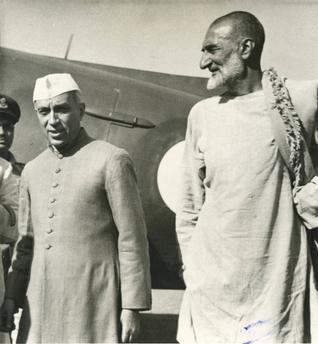
Pandit Jawaharlal Nehru with Khan Abdul Ghaffar Khan at Miranshah during his visit to the North West Frontier in October 1946. Photo: The Hindu Archives
This Independence Day let’s spare a thought for those Muslims who chose to migrate to Gandhi’s India
Taj Mohammad Khan was a young Pathan when India was carved out on communal lines in 1947. He was a Congress activist in Peshawar and was greatly influenced by Mahatama Gandhi and Frontier Gandhi (Khan Abdul Ghaffar Khan). He was a broken man when it became clear that the nation would be divided on communal lines. He was in extreme dilemma whether to stay back in Peshawar, the land of his forefathers, or move to a new place in a new country. And when communal riots broke out post Partition, he decided to leave the homeland for Muslims for secular India. He came to Delhi along with his family and couple of other friends. Today we know him as father of superstar Shah Rukh Khan.
The likes of Taj Mohammad Khan had rejected the two-nation theory with utter disdain. If not thousands, there were many Muslims who shifted to India from newly created Pakistan in 1947 when communal passions were running high.
Many years ago H.C. Shourie, who was the Rehabilitation Commissioner of refugees in Delhi, told this writer that several Muslims families from NWFP region of Pakistan came to India in 1947.They were not ready to live in Jinnah’s Pakistan. That was the region that was not much impacted due to communal violence that engulfed Punjab and Bengal. The local people were close to Gandhiji and Ghaffar Khan. That was the major reason for many Muslims to leave Pakistan and settle in secular India.
Many Hindus, Sikhs and even Muslims migrated to Afghanistan. A former Pakistani diplomat and historian, Nazar Abbas, said that there is a possibility that some Muslims had migrated to India then. “It is a fact that due to Ghaffar Khan, large number of people there were not supporting the idea of Pakistan. As he had a huge support base, I can believe that some of them had shifted to India,” noted Nazar Abbas.
Massive population exchanges occurred between the two newly-formed states in the months immediately following Partition. Once the lines were established, about 14.5 million people crossed the borders. Based on 1951 Census of displaced persons, 7,226,000 Muslims went to Pakistan from India while 7,249,000 Hindus and Sikhs moved to India from Pakistan immediately after Partition. However, the Census failed to identify those Muslims who migrated from Pakistan to India.
Returning to Taj Mohammad Khan and others like him, it goes without saying they would have taken that conscious decision after much thought. Among others, Mohammad Yunus, a close family friend of Nehru-Gandhi family, also came to Delhi with many Muslims. A close relative of Khan Abdul Ghaffar Khan, Mohammad Yunus never returned to his native place. For years together, he was heading Trade Fair Authority of India.
Delhi-based noted theatre activist Dr. Shamshul Islam’s family came from Rawalpindi to Delhi after violence broke out there. His father, grandfather and other close relatives were not ready to live in Pakistan. Islam, who teaches in the Capital’s Satyawati College, says that no member of his family has ever regretted their decision to live in Gandhi’s India.
Shah Rukh Khan has said several times that his father was a Congress activist and was totally opposed to the idea of Partition of the country on the basis of religion. He came to Delhi along with his family members. A lawyer, Taj died of cancer in 1981.
It is rather surprising that the reverse migration, albeit small, but very significant, hardly get any attention from historians. Unlike the general perception that only Hindus and Sikhs migrated to India in the wake of partition of the country in 1947, many Muslims families too decided to shift to India rather than staying in an Islamic country. It is not known whether Hindus or Sikhs too migrated to Pakistan then, but it is a fact that large number of Hindus remained there, especially in Sindh and East Bengal (now Bangladesh).
source: http://www.thehindu.com / The Hindu / Home> Features> MetroPlus / by Vivek Shukla / August 14th, 2015
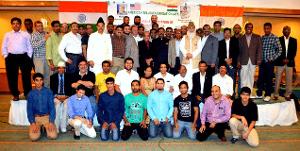
Mohammed Ali Shabbir, opposition leader, Telangana State Legislative Party(India) at a reception organized by American Telugu Association (ATA) and Telangana Association of North America (TANA) in Chicago, USA.
Chicago :
American Telugu Association and Telangana Association of North America, headed by its President Iftekhar Shareef, organized a reception dinner in honor of Mohammed Ali Shabbir, MLC, and Opposition leader of Telangana state legislative council at North Shore Banquets, Chicago.
Shabbir said that the extension of the benefit of 4% reservations, during his tenure as cabinet minister, enabled minority students to make their mark in education and employment. “Success in reservation for minorities, despite multiple legal hurdles and strong opposition from some sections of society, was a milestone,” said Shabbir.
Shabbir said nearly two million Telugu diaspora in the USA have been immensely contributing to the growth of both American and Indian economies and thereby making Telugu people proud. He also encouraged them to invest their savings in their home states. “However, considering the heavy incidence of backwardness in the rural areas of Andhra Pradesh and Telangana, the NRIs, with flair for social service, may use their resources in finding enduring solutions to these problems,” said Shabbir.
“Iftekhar Sharief, who was the first recipient of dual citizenship, continues to be a role model for all NRIs,” said Shabbir and thanked ATA and NATA for arranging the reception.
Iftekhar Shareef, trustee and events chair of the Federation of Indian Association, Chicago, said that the political career of Shabbir reflects the true secular credentials of the Indian voter. “Even though the non-Muslim voters constitute a staggering 92% in his constituency, Shabbir won the elections with thumping majority,” he said.
source: http://www.timesofindia.indiatimes.com / The Times of India / News Home> NRI> US & Canada News / August 13th, 2015
Wipro founder Azim Premji makes it to the tech billionaire’s list
Washington :
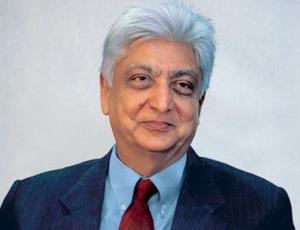
Two Indian tech tycoons,Wipro chairman AzimPremji and HCL co-founder Shiv Nadar are in the Forbes’ first-ever list of the 100 richest people in the technology field, dominated by Americans with Microsoft founder Bill Gates at the top.
Two Indian-Americans tech czars, Romesh Wadhwani, CEO and chairman of Symphony Technology Group, and Bharat Desai, co-founder of IT consulting and outsourcing company Syntel also figure on the list released last week.
Premji, 70, with a net worth of $17.4 billion is ranked 13th on the list followed by Shiv Nadar, 70, in the 14th spot with $14.4 billion.
Wadhwani, 67, is ranked 73rd with a net worth of $2.8 billion while Desai, 62, with $2.5 billion is in the 82nd spot.
Premji’s Wipro, India’s third-largest outsourcer, reported a 10 percent rise in revenues to $1.9 billion in the last quarter, on the back of new business from clients such as ABB and Philip Morris, the magazine noted.
Nadar, Forbes noted, has diversified into healthcare with HCL Avitas, a new firm in partnership with John Hopkins Medicine International, which has opened 10 clinics in Delhi.
Wadhwani has a degree in electrical engineering from the Indian Institute of Technology and a PhD from Carnegie Mellon. His Symphony Technology Group is a collection of 20 companies spanning big data, analytics and software.
Syntel, co-founded by Desai and his wife Neerja Sethi, now generates over $900 million in revenue, has a market cap of over $3 billion and more than 24,500 employees across the globe.
While 51 American billionaires are on the list, tech barons from Asia made a strong showing as well, with 33 people hailing from that region. Forty of the 100 live in California.
Bill Gates, who’s also the world’s richest man, ranks number one among tech tycoons, with a net worth of $79.6 billion.
Number two on the list is Larry Ellison, founder of database software firm Oracle, with a net worth estimated at $50 billion.
The third richest on the list is Jeff Bezos with a net worth of $47.8 billion followed by Facebook founder Mark Zuckerberg in the fourth place with $41.2 billion.
Google co-founders Larry Page and Sergey Brin are ranked fifth and sixth respectively.
Altogether, the world’s 100 richest tech billionaires are worth $842.9 billion.
Just seven women made the list, the wealthiest of whom is Laurene Powell Jobs, the widow of Steve Jobs, with an estimated net worth of $21.4 billion.
Nearly all of the 100 are self-made billionaires: 94 made their own luck, 3 inherited their fortunes, and 3 have inherited fortunes but have been actively expanding them.
source : http://www.timesofindia.indiatimes.com / The Times of India / News Home> NRI> US & Canada News / IANS / August 13th, 2015
He also exhorted the people to set an example of good citizenship and emphasised the need for treating everybody with respect and dignity irrespective of caste, class, gender, religion or region.
File Photo dna Research & Archives
In what can be seen as a message to the ruling AAP, which has often termed his orders “unconstitutional” in the bitter ongoing tussle between the two, Delhi Lt Governor Najeeb Jung today stressed on the need for citizens to live up to the ideals of the Constitution.
“We must live up to the ideals of our supreme document, the Constitution of India,” Jung said in his message on the eve of Independence Day.
The Delhi LG urged people to remember and pay homage to the many who through their sacrifice “delivered this much cherished independence to us”.
“Independence Day must mark an occasion for us to renew our pledge to serve our nation with greater sincerity, commitment and truth in all walks of life,” a L-G House statement said.
He also exhorted the people to set an example of good citizenship and emphasised the need for treating everybody with respect and dignity irrespective of caste, class, gender, religion or region.
source: http://www.dnaindia.com / DNA / Home> News> India / Place: New Delhi / Agency: PTI / Friday – August 14th, 2015
With the 69th Independence Day less than a week away, authorities at Panchala Museum are planning to set up a gallery dedicated to the lives of freedom fighters from the Rohilkhand region.
Officials have started collecting pictures, letters and other memorabilia belonging to those who were a part of the freedom struggle.
Abhay Singh, a professor at MJP and the project coordinator, said, “We are requesting families of these bravehearts to provide photographs and texts related to their lives. We are working on a strategy to gather as many belongings of the freedom fighters as we can and we also plan to appeal to the public through newspapers in this connection.”
“Residents aren’t aware of the kind sacrifices freedom fighters from this region made. With the gallery we plan to highlight their glories in our museum. For instance, FR Rahman alias Chunna Miyan who was known as Gandhi of Bareilly worked for creating communal harmony in the city,” Singh added.
However, setting up of the gallery is subject to the availability of required material.
Shyam Bihari Lal, head of the department of ancient history and culture, said, “The gallery will be set up in the museum only after we receive enough material to put things up on display.”
Many people from the Rohilkhand region, including Bareilly, Shahjahanpur, Pilibhit, Rampur, Badaun, Moradabad, Bijnor and Sambhal played an active role in the freedom struggle.
Bareilly was the headquarter of the Rohilkhand region during the revolt of 1857. In fact, on May 31 that year, freedom fighters killed several British officials including the principal of Bareilly College.
The museum is located on the MJP Rohilkhand University campus. Till now, it was only accessible to varsity students but it will be opened to public from this month.
“There will be no entry fee for outsiders but there will be timings for public visits,” said Singh. He added the final touches are being given to the renovation and beautification work at the museum.
source: http://www.timesofindia.indiatimes.com / The Times of India/ News Home> City> Bareilly / by Priyangi Agarwal, TNN / August 10th, 2015
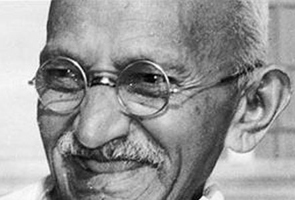
Indian political geniuses Mahatma Gandhi and Emperor Akbar have been listed among the ‘Top 25 Political Icons’ of all time by TIME magazine, along with Tibetan spiritual leader the Dalai Lama and Mao Zedong, the father of modern China.
Released on the 100th birth anniversary of the late US President Ronald Reagan, the TIME list figures names like the great conqueror Alexander the Great and some of history’s most polarising figures like Adolf Hitler and Benito Mussolini.
Gandhi’s experiments with satyagraha — the genesis of the non-violent methods of protest pioneered by him — and his leadership of India’s freedom movement that has inspired many revolutionaries of later years, led him to the top of the list of the 25 all time greats.
Describing Mohandas Gandhi as a figure “few will ever forget”, the prestigious magazine said his struggle paved the way for other social movements including America’s struggle for civil rights.
“While working as a lawyer in South Africa, he pioneered the concept of satyagraha, or, civil disobedience in response to tyranny, helping Indians there campaign for civil rights,” it said.
“Working with Jawaharlal Nehru, the nation’s future prime minister, Gandhi led the country in peaceful protest against foreign domination, exemplified by the 1930 Salt March in protest to a British salt tax. His rise paved the way for
India’s independence in 1947,” it said.
Gandhi, who left behind a universal influence, has inspired leaders like American civil rights movement leader Martin Luther King and South Africa’s anti-apartheid champion Nelson Mandela, and also US President Barack Obama.
The 16th century Mughal Emperor Jalaluddin Mohammad Akbar, a figure who played a major role in unifying the largely scattered fiefdoms in northern India, also finds a place in the elite list.
The ethos of pluralism and tolerance pioneered by the Muslim ruler in a Hindu-majority India underline the values of the modern republic of India, the magazine said.
The third Mughal ruler of India presided over a flourishing of the arts, sponsoring artisans, poets, engineers and philosophers at a time when Europe was still in its
pre-Renaissance stage.
“If ever a leader merited a tautology, it was the Mughal Emperor Akbar the Great. Under Akbar, a fragile collection of fiefs around Delhi grew into the great Mughal
Empire, a diverse and sprawling kingdom across northern India,” the magazine said.
“He was a canny warlord whose conquests gave rise to one of the early modern world’s wealthiest states. Moreover, while a Muslim, Akbar was spiritually curious and hosted religious scholars from Hindu gurus to Jesuits at his vast,
diverse court,” it said.
source: http://www.ndtv.com / NDTV / Home> India / by Press Trust of India / February 06th, 2011
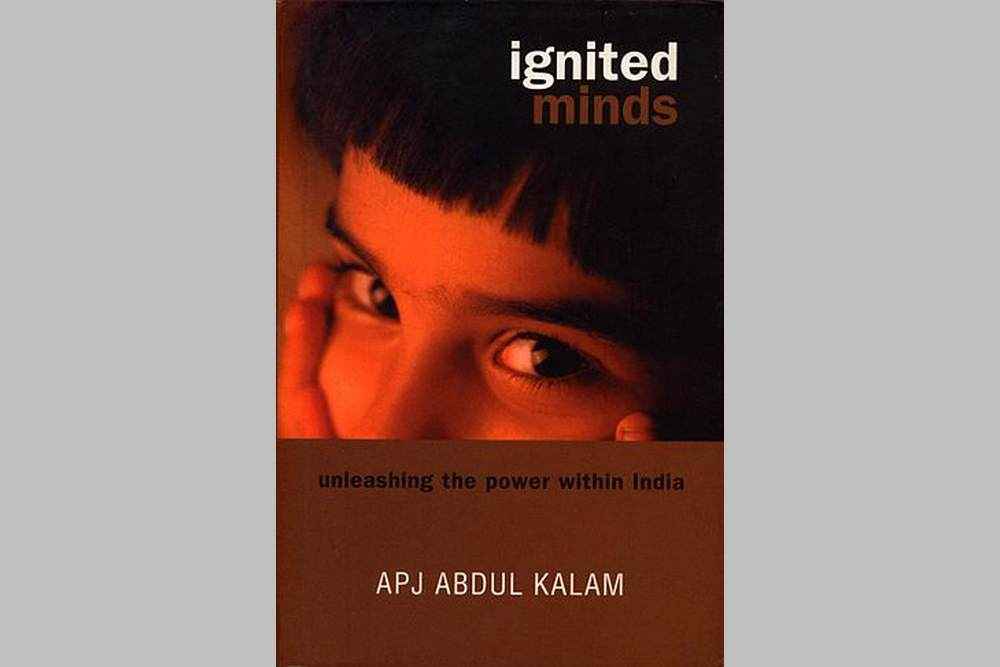
A number of new books by late A P J Abdul Kalam, including a sequel to his ever-popular Ignited Minds, are lined up for publication in the next few months.
Puffin Books will publish My India: Ideas for the Future, billed as a sequel to Ignited Minds. It will be a collection of insightful and thought-provoking speeches from Kalam’s post presidency years.
Organised into seven sections, the speeches in this collection are a roadmap for children, and adults alike, to follow their dreams and contribute to a better India, the publishers said.
Drawn from Kalam’s addresses to parliaments, schools and universities across the world, these speeches include his thoughts on nation building, poverty, failure, science and self-confidence in the 21st century.
Scheduled to be published later this year, My India: Ideas for the Future is a book that will inspire, invigorate and empower many generations to come, the publishers said.
Brought out in 2003 by Penguin, Ignited Minds: Unleashing the Power within India went on to become a bestseller. The book examines why, given all our skills, resources and talents, we, so obviously capable of being the best, settle so often for the worst.
Kalam offers no formulaic prescription in Ignited Minds. Instead, he takes up different issues and themes that struck him on his pilgrimage around the country as he met thousands of school children, teachers, scientists and saints and seers in the course of two years: the necessity for a patriotism that transcends religion and politics; for role models who point out the path to take; and for confidence in ourselves and in our strengths.
Puffin had recently published Reignited: Scientific Pathways for a Brighter Future, co-authored by Kalam and his aide Srijan Pal Singh, in which the writers worked to inspire a new generation of Indians in careers in science.
HarperCollins will also be taking through to publication one of Kalam’s last projects,Advantage India, co-authored with Singh, which draws upon some remarkable examples from his life to illustrate how India could have a winning edge.
The book will deal with subjects like Make in India, Skill Development, Digital India, Smart Cities project, rural development models and new energy policies.
Known for his visionary ideas grounded in practical experience, Kalam published numerous books including Wings of Fire, Target 3 Billion, Life Tree: Poems,Mission 2020, Beyond 2020 and Turning Points, his highly readable account of his presidency.
Written in straight-forward, accessible language, each book shares his passion to help India and Indians dream big, and offers an action plan to help realise these goals.
The power of true spirituality, of faith that inspires good deeds and thoughts, the very special relationship between a teacher and a disciple, all of these are enshrined inTranscendence, a book that HarperCollins just published by Kalam, co authored with Arun Tiwari.
The book is about the unique spirituality-science fellowship that was formed between Kalam and Pramukh Swamiji Maharaj, who is one of the most inspiring spiritual figures of modern times and the fifth spiritual successor of Bhagwan Swaminarayan.
In The Family and the Nation (with Acharya Mahapragya), Kalam said how any task of nation building had to begin at an individual’s first training ground, the home. In A Manifesto for Change (with V Ponraj), he took up the crucial subject of how we should elect our leaders, and how those we elect should carry out their duties.
Kalam was also reportedly working on a book in Tamil with a vision for the growth of Tamil Nadu and completed seven chapters.
The book was titled Ennathil Nalamirunthal Kanavu Tamilagam Uruvagum, Puyalai Thandinal Thendral and seven chapters of it were completed after detailed discussions, co-author of the book and scientific advisor to Kalam when he was President, V Ponraj said.
Says Udayan Mitra, Associate Publisher at Penguin Random House who worked as Kalam’s editor for more than 10 years,
“Kalam managed to inspire the millions of people who met him, listened to his speeches, and read his books – and he ignited their minds.
“Having had the privilege to know Kalam personally and to have published his books for over a decade, I will miss him dearly, as I know the entire nation will. But his dream and his extraordinary personality will live on in his books, and it is in their pages that we will be able to find Kalam in our midst again, and celebrate his vision anew.”
Meanwhile, Kalam’s aide Singh is also mulling an idea of incorporating the unfinished lecture on ‘Creating a Livable Planet Earth’ at IIM-Shillong into a book.
source: http://www.outlookindia.com / Outlook / Home> News / by Zafar Mudasser Nofil / New Delhi – July 31st, 2015
Sania Mirza’s name was today officially approved for the coveted Rajiv Gandhi Khel Ratna award, becoming only the second tennis player to be nominated for the highest sporting honour.
The government also named the winners of the 2015 Arjuna Awards. The list has 17 sports-persons including cricketer Rohit Sharma and shooter Jitu Rai. Gymnast Dipa Karmakar, hockey player P R Sreejesh, wrestling duo of Bajrang and Babita, athlete M R Poovamma, shuttler K Srikanth and boxer Mandeep Jangra are among those who won the Arjuna.
“It’s a tremendous honour for me to be conferred the Khel Ratna award and I feel humbled with the love and respect showered on me by my country,” Sania told PTIfrom Toronto.
“Representing my country in all corners of the world has been my great privilege for so many years and this recognition of my efforts by the government of India is certain to inspire me to earn more laurels for our country. I would like to wish all my fellow Indians a happy independence day,” she said.
Sania, currently ranked world number one in women’s doubles, scripted history by becoming the first Indian to win a women’s doubles Grand Slam title when she and Martina Hingis clinched the Wimbledon trophy earlier this year.
Sania is only the second tennis player after Leander Paes to be named for the top award. Paes had been bestowed the honour way back in 1996 after his bronze medal in the Atlanta Olympics.
The 28-year-old, who has won three mixed doubles Grand Slams in her career, beat competition from squash player Deepika Pallikal, discus thrower Vikas Gowda, track and field star Tintu Luka, rising shuttler P V Sindhu, and hockey captain Sardar Singh for the coveted honour.
The awards will be conferred by the President Pranab Mukherjee on August 29, the National Sports Day.
The Khel Ratna carries a prize money of Rs 7.5 lakh along with a citation, while the Arjuna awards come with a cash prize of Rs 5 lakh and a citation.
Besides doing well on the professional circuit, Sania had also won the gold medal and the bronze medal in the mixed and women’s doubles categories of the 2014 Asian Games in Incheon, South Korea.
The Hyderabadi girl had won the Arjuna award in 2004 and was the favourite for the top award this year. In 2006, she was bestowed the Padma Shri — the country’s fourth highest civilian honour.
Sania’s mixed doubles trophies had come in the Australian Open (2009), French Open (2012) and US Open (2014).
Rohit has been India’s batting mainstay in the ODIs and became the highest individual scorer with a knock of 264 against Sri Lanka last year.
Jitu, on the other hand, has been in splendid form, winning seven international medals in the last one year besides an Olympic quota berth.
Sreejesh was recommended for his outstanding show as India’s goalkeeper. He was part of the team that won the Asian Games gold medal last year, which also fetched the side a direct qualification for next year’s Olympics.
Dipa has been rewarded for becoming the first Indian woman gymnast to win a medal at the Commonwealth Games, while boxer Mandeep has been recommended for his silver medals in the Asian Championships and the Commonwealth Games.
Srikanth has been one of India’s top performers on the badminton court, winning three titles this year.
The list of sportspersons recommended for Arjuna awards: P R Sreejesh (hockey), Dipa Karmakar (gymnastics), Jitu Rai (shooting), Sandeep Kumar (archery), Mandeep Jangra (boxing), Babita (wrestling), Bajrang (wrestling), Rohit Sharma (cricket), K Srikanth (badminton), Swarn Singh Virk (rowing), Satish Sivalingam (weightlifting), Yumnam Santhoi Devi (wushu), Sharath Gaekwad (para-sailing), M R Poovamma (athletics), Manjeet Chhillar (kabaddi), Abhilasha Mhatre (kabaddi), Anup Kumar Yama (rollerskating).
source: http://www.outlookindia.com / Outlook / Home> News / New Delhi – August 14th, 2015
Ten-member gang trying to sell it for Rs.5 crore arrested
Mysuru :
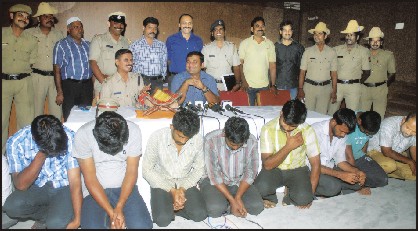
In a meticulously planned and precisely executed operation, sleuths attached to the District Police, seized a 410 year-old Quran, written during Mughal ruler Akbar’s period in the district and also arrested a gang of 10 members who were allegedly trying to sell it for Rs.5crore.
Police have also seized a Ford Ikon car (MH02 AK-4967) from the gang
The nabbed have been identified as S. Nagaraju of Sindhanur, A. Muralikrishna of Sasalamai Camp, Kanakappa Kambli of Yerebeleri village in Gadag district, Kallappa Kambali o Kalaburgi and Sanath of Kollur in Udupi taluk, Ravindra, Vijayendra of Hosanagar in Shivamogga district, Prasad of Heggodu in Sagar taluk, Bhaskar of Sindhanur and Raghu of Karwar.
Addressing a press conference at his office in city yesterday, SP Abhinav Khare said that Police, who came across a video on the antique Quran that the gang was sharing with prospective buyers formed a team to trap the gang.
The Police team, posing as prospective buyers approached five members of the gang near the Railway Station in Hosa Agrahara in K.R.Nagar taluk in the district and nabbed them before nabbing the remaining members in Mysuru city, he said and added that the accused had confessed to have got the antique from some persons in Hyderabad promising to share the proceeds of the sale with them.
Additional SP Kala Krishnaswamy, Rural Dy.SP Vikram Amte led K.R.Nagar Inspector H.N.Siddaiah, DCIB Inspector Gopalakrishna, Saligrama SI Poonacha in the nabbing and seizing operations.
Meanwhile, noted historian and former Vice-Chancellor of Mangalore and Goa Universities Prof. B. Sheikh Ali, who was present at the press conference described the calligraphy as a 604-page book, each separated by a butter paper for better preservation as a piece of Exquisite Art adding that writing in the Quran is legible.
Continuing, Prof. Sheikh Ali said ‘It was written in 1959 of the Hijri calendar, which works out to 1605 A.D. This was around the period when Mughal rule was at its peak in India and the time when Akbar was succeeded by Jahangir.”
He further said that though there is no other information on the last page other than the year in which it is written, there is a sentence that says that the calligraphy is dedicated to the saints.
Interestingly, SP Khare removed his footwear while holding the Quran to pose for photograph before the Quran was carefully placed in a carved wooden stand and covered with a cloth.
source: http://www.starofmysore.com / Star of Mysore / Home> General News / Wednesday – August 12th, 2015
Here we publish the full text of the convocation address delivered by Dr. A.P.J. Abdul Kalam, the then Scientific Adviser to Raksha Mantri and Secretary, Department of Defence, Research & Development, at the 75th Convocation of University of Mysore on Feb. 25, 1995. — Ed.
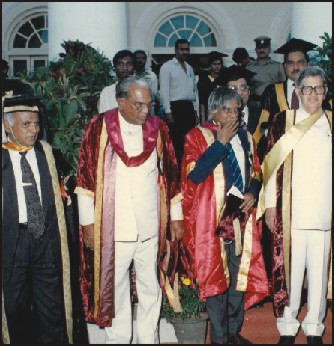
Dr. A.P.J Abdul Kalam (second from right) seen with the then Governor-Chancellor Khurshed Alam Khan, the then Higher Education Minister and Pro-Chancellor D. Manjunath and the then Vice-Chancellor Prof. M. Madaiah during the 75th Convocation of University of Mysore on Feb.25, 1995.
by Dr. A.P.J Abdul Kalam
Dare to Dream: I am indeed delighted and honoured to participate in this 75th Convocation of University of Mysore. I have been thinking about what to share with you on this important occasion when you are entering the most eventful phase of your life after years of learning. I know that for the past twenty-years or so you have been continuously taught various aspects by teachers. I am, therefore, not going to extend this process. Instead, I would like to share with you a few of my experiences, one at a place very close to you and others at Trivandrum and Hyderabad.
These are the experiences where people have dared to dream and met with success. Of course, we have to recognise that success is always the result of sweat of individuals and also coupled with many failures. The place close to you is the site of pilgrimage not only for me but for every one who practices rocketry in our country. Let me first tell you something about this.
First War Rocket: When I was studying in school and college, Srirangapatna interested me for two reasons — the place was the scene of battle against foreign rule and also there was a reference to a new weapon introduced. In 1960, when I visited Srirangapatna with my friends, we were thrilled to walk around this historical town. We searched for the Turukhan-hally Fort built during Hyder Ali – Tipu Sultan times and used for making rockets, way back in 1794. I had a tremendous disappointment when I did not see any permanent evidence or historical recordings in Srirangapatna regarding creation or development of first war rocket in the world.
Later, in 1963, I was at Wallop’s Island, the rocket launch facility of NASA in USA, in connection with a collaborative programme of launching of sounding meteorological rockets for research of upper atmosphere. In the lobby of their command-control centre, I saw a prominently displayed picture. The war dress and the colour of the soldiers’ skin attracted my attention. Some dark complexioned soldiers were firing rockets on their white skinned opponents. The label on the painting read, “The world’s first war rocket.” It was indeed a great pleasure to see an Indian feat acknowledged on the other side of the planet. I felt excited with happiness.
I started reading the history of rockets. I had a dream I must see Tipu’s rockets. Time continued to pass. Rocket technology engulfed me and India’s first Satellite Launch Vehicle SLV-3 was launched. In 1980, we had an opportunity to visit London. There, I saw two of the war rockets captured by British at Srirangapatna, displayed at Museum of Artillery at Woolwich in London with the heading “India’s War Rocket.” Probably, Europe learnt rocketry from our Srirangapatna rocket in the eighteenth century! It was a great thrill to see an Indian innovation on a foreign soil, well-preserved and with facts not distorted.
I got the performance of these 2 kg rockets, 50 mm in dia. and about 250 mm in length analysed by our designers. What a simple and elegant design, effectively used in war ! Surely, Hyder – Tipu Sultan would have had talented men who could look at propulsion, material, ignition and build rockets and fly them for war operations. In fact, when we look back to eighteenth century ambience, it is a technology marvel.
I would like to declare today that this land is the birth place of war rockets in the world and offer it my reverence and respect. The tradition continues.
Prof. Vikram Sarabhai – Man of Vision: Nations advance along the course charted by great dreamers. Let me narrate to you an incidence which occurred in 1968. We were working on the configuration of India’s satellite launch vehicle in Thumba. One day, Prof. Vikram Sarabhai, the then Chairman, Indian Space Research Organisation (ISRO), brought Prof. Curien, President, CNES, France, to our laboratory. France was developing Diamont satellite launch vehicles at that time. After focussing on our planned efforts, as an almost spontaneous reaction, Prof. Sarabhai proposed that we should fly India’s fourth stage of SLV-3 as the Diamont’s fourth stage. We had not flown even a meteorological rocket by that time, but Prof. Sarabhai was aware of the possibilities and trusted the capabilities of his team. His dream of SLV-3 fourth stage getting into a French launch vehicle finally came true in the form of apogee boost motor for APPLE satellite, flown by ARI
ANE, the European launch vehicle. This is the vision ! He gave us a 15-year jump in our efforts. With three experimental Indian Remote Sensing (IRS) Satellites in orbit and their images being received in the USA, Satellite Ground Stations with Indian Satellite Launch Vehicle PSLV launching our own satellite from our own land, his dream visualised in 1965 has taken form through the people born at different times. Nations are thus built by men of vision who dream and prepare ground for the coming generations.
Super Computer and Parallel Processing: In 1986, Dr. V.S. Arunachalam and myself went to US to buy a Super Computer with 400 mega flop speed. The Deputy Secretary in the Department of Defence at Pentagon first put us into long series of technical discussions and then regretted the sale on the pretext that we will use it to develop long range missiles detrimental to the security interests of the world. Travelling back disappointed, Dr. Arunachalam said, “Let us make our own Super Computer.” Today, India has a 32 node 1000 M Flops PACE SPARC 10 machine available for other countries to buy. Once we decide, we work and realise even tough dreams. That is what India expects from you.
A team of young scientists and engineers under the leadership of Dr.G.Venkataraman formed ANURAG, that is, Advanced Numerical Research and Analysis Group, to develop a parallel processing computer specially for aircraft design. At that time, AGNI also was taking shape. The payload of AGNI would re-enter the atmosphere at 15 times the speed of sound. Even at this speed, we had to keep the vehicle under control and while the payload outer temperature goes to 3000 degrees centigrade, inside of payload the ambient has to be less than 30 degrees centigrade. We have in India supersonic wind tunnel. We needed hypersonic wind tunnel for designing the AGNI payload. Various wind tunnel data could provide the loads experienced during the re-entry phase of the system. There were tunnels abroad but once they knew the application, they were refused.
This time our high-tech academic institutions rose to the occasion. Prof. S.M. Deshpande of Indian Institute of Science (IISc.) with five young bright fresh scientists from DRDL with background of mathematics and fluid dynamics, developed Computational Fluid Dynamics Software for Hypersonic Regimes in just six months. This software is the original contribution with minimum computational facility available in the world. No country would have given us this type of software. But it was done through optimum partitioning, sequencing and paralleling the task. This software solution has established that brain-power excels man-made machines, even super-computers.
I have seen that India can build her own super-computer; India can fly its own rocket system within and outside the country. Both the dreams have come out of visions. This convocation ambience, where hundreds of young graduates are entering their professional lives, is ideal for thinking about the need of visions for the next two decades. What could they be?
Vision for the Nation: With the growing population, increasing unemployment, unaffordable medical care and changing value system, our society is going through certain turbulent situation. The society looks forward to prosperity. In a decade or two, prosperity and good life is possible if the nation has the vision. Vision generates progress. As an example, we can study the period between 1857 and 1947; it was the vision of freedom which not only got us independence but during the same period in India, vision of independence generated many leaders of excellence in politics, philosophy, history, science and technology and industry. Again, can we dream for a vision to make this nation great — a nation with prosperity and peace?
Enlightened Citizens: The vision of “Enlightened Citizens” calls for a mission of integrating education, occupation and health care as one single entity. For development of self, society and nation, it is essential that hundreds of clusters of villages are divided into multiple blocks of 20,000 families. And each block can be considered as a progress group with certain number of hospitals, schools and agriculture farms which could be growing cash crops, aromatic plants or fish farms.
The experience in Kerala and Tamil Nadu indicates that integration of education and occupation resulted in small families, in addition to promoting self- sustained good life. This enlightened citizen package can be extended to the whole country.
Networking of Major Rivers: We recently conducted a workshop on the subject based on Dr. K.L. Rao’s report “National Water Grid” and Capt. Dastur’s proposal of “Garland Canal.” This has all the dimensions of becoming an important vision for the nation. Nation can aim at linking multiple rivers resulting in water distribution, flood and drought control, navigation and power generation.
Above all, this will bring together the country as it happened during the independence movement, with potential revolution in agricultural output and employment generation. Experts have indicated that this is the right time to take this as a major programme as technology exists today and the country has the capability to finance such a programme.
Today we have: satellite mapping of water resources and river flow aspects; capability to use nuclear energy for large tunnelling in mountains to direct the river flows and technological strength in mechanical, civil and communication engineering. It may be a 20-year programme for the nation.
Energy Everywhere: Similarly, the third area is “Energy Everywhere.” We believe by year 2000-plus, we will have to generate almost 50% more power. Probably, we will have to look for environment clean power. In addition to hydro and thermal energy, the non-conventional energy and nuclear energy has to contribute to power generation for which technological innovation is essential. Even hydro and thermal energy would need newer technologies so that they can provide affordable electrical energy.
Conclusion: Friends! Vision for the nation is in front of you. These dreams are bigger than the individual or group of people. Great things do not just occur; you have to dream about them and work to realise them. You can be a partner to the visions for the country and begin to experience dreams coming true. What you are is God’s gift to you. What you make out of yourself will be your gift to God. I wish you a challenging profession in your respective fields and recall the famous lines:
“The chances have just begun
The best jobs haven’t been started,
the best work hasn’t been done.”
source: http://www.starofmysore.com / Star of Mysore / Home> Feature Articles / Saturday – August 01st, 2015