Category Archives: Leaders

Fake or real? A royal riddle

A mighty fracas is raging between the descendants of Nawab Wajid Ali Shah in Calcutta and an Iranian woman who claims to be married to a scion of the Awadhi family. Hemchhaya De investigates the rumpus
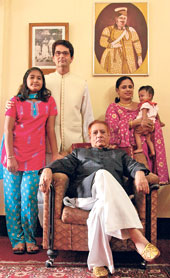
REGAL ROOTS: Shahebzade Wasif Mirza and his family pose before the portrait of Nawab Wajid Ali Shah;

A king-size portrait of Nawab Wajid Ali Shah will catch your eye the moment you step into the grand, old living room of Wasif Manzil on Talbagan Lane in Calcutta. “That’s my ancestor,” says Shahebzade Wasif Mirza, a dignified septuagenarian, pointing at the portrait — the pièce de resistance in a room bristling with Awadhi heirlooms.

“Satyajit Ray once asked me, ‘Why did the Nawab choose to move to Bengal after his kingdom was annexed?’ At that time, he had just made a film calledShatranj Ke Khiladi,” recalls the patriarch, a registered descendant of Wajid Ali Shah (1822-1887). “I told Ray that perhaps the Nawab felt he would get the respect he deserved only in Bengal.”

For Shahebzade Mirza, it’s a matter of family honour that he takes on what he calls “pretenders” to the Awadh legacy. In recent months, he has been fighting a fierce battle against Fay Ary, an Iranian woman who divides her time between Monaco, Paris and Dubai, and claims to have married a direct descendant of Nawab Wajid Ali Shah and his second wife Ronakara Begum.
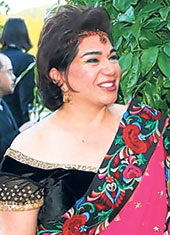
Fay Ary
Fay Ary

But she refuses to disclose her late husband’s name for “fear of being drawn into family feuds.” Ary also wishes to do something for the underprivileged in India through her charity organisation, Royal Awadh Cultural and Heritage Foundation (RACH).

“All this sounds very nice. But she calls herself Her Royal Highness Princess Jehan Ara Fay Ary. I have the complete family tree and she figures nowhere. I’d like to know where her imaginary kingdom is located,” says Mirza. In a recent letter to the French ambassador to India, Jerome Bonnafont, he complained against Ary and RACH. “Our objection is to the use of our family’s name …for large monetary gains,” wrote Mirza.

Fay held a charity auction in Paris this May where her “personal collection of jewellery” went under the hammer. “We don’t know what she auctioned as her Awadhi legacy. And we don’t know where the proceeds are going,” says Ibrahim Ali Khan, a descendant of a 19th century Awadhi vizier, who heads the Royal Family of Awadh Foundation in Lucknow.

It all began a couple of years ago when Nawab Jafar Mir Abdullah — who reportedly claimed to be the Awadh rulers’ “direct descendant” — came under media glare. Abdullah, who’s on the RACH advisory committee, was accused of faking his nawabiheritage and arranging Awadhi banquets for foreign tourists in collusion with “unscrupulous” travel operators in Lucknow. It was also alleged that he charged tourists hundreds of dollars for banquets and mujras (dances) at his Lucknow home. His partner in this enterprise is said to be Prateek Hira, who heads a tour operating agency called Tornos India and is also associated with RACH.

Hira maintains that Khan and others have launched a malicious campaign to defame Ary, Abdullah and his agency. “Abdullah is well respected in Lucknow,” says Hira.

_________________________________________________________________

Dramatis personae
■ Shahebzade Wasif Mirza, descendant of Nawab Wajid Ali Shah (1822-1887) of Awadh (Oudh).

■ Fay Ary, an Iranian who claims to have married a direct descendant of Wajid Ali Shah and his second wife Ronakara Begum. Ary runs a charity, Royal Awadh Cultural and Heritage Foundation (RACH).

■ Ibrahim Ali Khan, a descendant of a 19th century Awadhi vizier, who heads the Awadh Royal Family Foundation in Lucknow. Does not support Ary.

■ Jafar Mir Abdullah, who is described as Wajid Ali Shah’s direct descendant and is on the RACH advisory committee.

■ Prateek Hira, who heads a tour operating agency called Tornos India and is associated with RACH.

____________________________________________________________

Fay Ary gained some publicity in Lucknow around this time after announcing her charity projects. “She wants to do something for the poor — like arranging cleanliness drives in various Indian cities and providing slum dwellers with clean drinking water. She sought my help to implement the projects,” says Hira.

Ibrahim Ali Khan and others tried to blow the lid off what they called a “nexus” between Abdullah, Hira and Ary last year. “The issue was almost dying down when a freelance journalist from Delhi wrote to Hira and threatened action against his activities. He wrote to me as well,” says Khan.

Fay didn’t take it lying down. In an email dated June 29 this year, she wrote to her friends in Lucknow, Dubai and Paris, “A very nasty activity is being undertaken …(by a journalist)… for want of some money to sustain himself …ignore this man who keeps changing his name to fool people.”

Speaking from Paris, Ary expresses her “anguish and disappointment” over the “concerted efforts to pull down RACH.” “I claim nothing from the Indian government or from the Awadh families. I auctioned my own jewellery in Paris. I am hankering after no title. All I wanted to say to these people was that I had the resources to do some good work in India,” says Ary.

She wants to start her “slum cleanliness drive projects” in early October. She will also host a gala event in Dubai this November to seek support for her charity work. “People who claim to be true nawabs in India should stop bickering and do something for their country.

There seems to be another point of clash between Ary and Shahebzade Mirza. Ary told the media last year that she would renovate Nawab Wajid Ali Shah’s mother’s grave in the Père Lachaise cemetery in Paris. The Nawab’s mother, Aliya Begum, went to England to plead with Queen Victoria for returning Awadh to her son. On her way back, she fell ill and died in Paris in 1856 and was buried in Père Lachaise. Ary wants to project her grave as a site of historical significance.

The Shahebzade Mirza family, on the other hand, wants to rectify an inscription near the grave which says that her son Wajid Ali Shah was killed by British forces in 1856. “The Nawab died of natural causes in 1887. We have written to the French consulate in Calcutta to do something about it,” says Mirza. A spokesperson from the French consulate, who prefers not to be identified, confirmed receiving the letter.

“I accompanied Fay to the Paris cemetery this year. She is planning a renovation,” says Abdullah, the controversial ‘nawab’ who refutes all allegations against himself. “She doesn’t lay any claim to the Awadh royalty. She is herself related to Farah Diba Pahalvi, the queen of the last Shah of Iran who ruled till 1979.”

Abdullah also goes on to say that he will go on hosting banquets for tourists in order to interact with people and entertain them. “I tour the world and get invited by top officials. I will also continue to be part of RACH and the commendable work it does,” says Abdullah. “I never claimed to be a descendant of Wajid Ali.”

Agrees Rosie Llewellyn-Jones, a British scholar who’s writing a biography of Wajid Ali Shah. “Abdullah does not really claim descent from Wajid Ali Shah, but from Nawab Mohammed Ali Shah, who ruled Awadh from 1837 to 1842,” she says. She adds that it’s important to remember that “Wajid Ali Shah’s descendants are not the only descendants of the royal family of Awadh.”

“Each Nawab, from the time of Asaf-ud-daula (1775 to 1797), had a number of wives, and inevitably, a large number of children and grandchildren. These people are also descendants of the Awadh royal family. On Wajid Ali Shah’s death he left about 45 sons, and a larger number of daughters, and the descendants of these sons and daughters can obviously claim direct descent from him.” On Ary, she says that unless she is prepared to reveal her husband’s name “we can’t really check out her claim.”

Indian historian Ravi Bhatt, who penned a book called The Life and Times of the Nawabs of Lucknow, begs to differ. “Just as Nagpur is famous for oranges and Benaras for silk, Lucknow is known for its nawabs,” says Bhatt. “Every Tom, Dick or Harry calls himself a nawab these days. But let me tell you there is no descendant of the Awadh royal family in Lucknow now,” says Bhatt.

Meanwhile, Shahebzade Mirza is gearing up for the next round of battle. “We hope the French government will act on our complaint against Ary. The war is far from over.”

source: http://www.telegraphindia.com / The Telegraph, Calcutta,India / Front Page> 7 Days> Story / Sunday – August 23rd, 2009
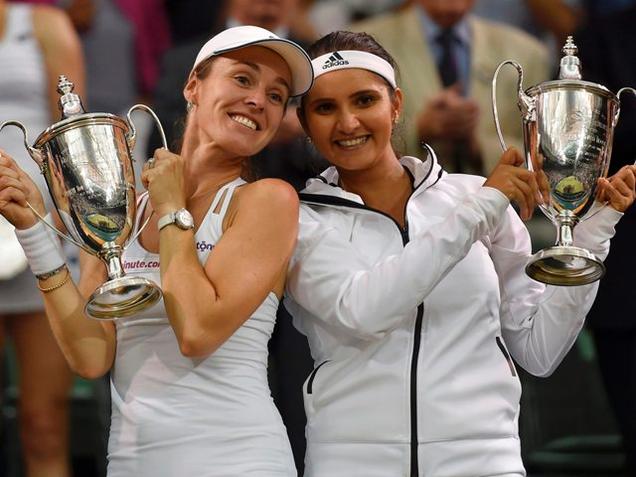

Sania seals historic Wimbledon crown with Hingis

Martina Hingis and Sania Mirza pose with their trophies after winning their Women’s Doubles Final match / Reuters

Sania had come close to winning a women’s doubles Major in 2011 when she reached the French Open final with Elena Vesnina but ended up runners-up.

India’s tennis queen Sania Mirza today created history by becoming the first female player from the country to win a women’s doubles Grand Slam trophy as she clinched the Wimbledon title with Swiss partner Martina Hingis.

More than a decade after turning Pro, 28-year-old Sania laid hands on her first women’s doubles Major title when she and Hingis battled past second seed Russian team of Ekaterina Makarova and Elena Vesnina 5-7 7-6(4) 7-5 in a thrilling final.

In an interesting coincidence it was at these very historic courts that Sania had won women’s doubles junior Wimbledon championship with Russian partner Alisa Kleybanova in 2003.

Sania had come close to winning a women’s doubles Major in 2011 when she reached the French Open final with Elena Vesnina but ended up runners-up.

Already having a long list of firsts, Sania had become India’s first woman player to win a Grand Slam when she won the Australian Open with compatriot Mahesh Bhupathi in 2009.

She later added French Open (2012 with Bhupathi) and US Open (2014 with Bruno Soares) to her mixed doubles collection.

It was a remarkable turn around for the top seeds as they were trailing 2-5 in the deciding set but made a stunning comeback to reel off five straight games to clinch the issue.

Vesnina was all fired up and her smashing volleys at the net put Sania and Hingis in a lot of trouble. The Russian was left distraught as she played out of her skin.

It was third time in recent times that Sania and Hingis played the two Russians in finals — Indian Wells and Miami — and asserted their supremacy again.

Sania was broken in the very first game of the match when Vesnina hit a volley winner from the net but the top seeds immediately broke Vesnina to avoid falling behind. It was a remarkable lob from Hingis that gave them two break chances and they converted the second.

Sania and Hingis put tremendous pressure on the their rivals but the two Russians responded well and it was 5-5.

Hingis was broken in the 11th game at love after a terrific rally of powerful ground strokes from left-handed Makarova. Vesnina pounced on one return from the Swiss and hammered the volley winner close to the body of Sania.

Makarova served for the set and it was Vesnina’s smart play at the net that sealed them the opening set.

It was the first set that Sania and Hingis had dropped in this tournament.

source: http://www.thehindu.com / The Hindu / Home> Sport / by PTI / London – July 12th, 2015

Sania Mirza enters maiden Wimbledon final

SaniaMPOs10jul2015

Indian tennis ace Sania Mirza entered her maiden final at the prestigious Wimbledon with Swiss partner Martina Hingis by earning a straight sets victory in the women’s doubles semifinals at the All England Club here on Friday.
The top seeds needed only 56 minutes to overcome American fifth seeds Raquel Kops-Jones and Abigail Spears 6-1, 6-2 in their semifinal match on No.1 Court to enter the summit clash.
This is Sania’s first final here across all formats in seniors though she had won the girls’ doubles title here 12 years ago with Russian Alisa Kleybanova. Martina, on the other hand, has two doubles (1996, 1998) and one singles title (1997) to her credit that she won at the lone grass court Major.

Though the World No.1 Indian has three mixed doubles Grand Slam titles, she is yet to win the top prize in women’s doubles. The only time she reached a Major final in the category was at the 2011 French Open.

The top seeds totally dominated both the sets.
In the first one, they broke their opponents twice out of four opportunities which was more than enough to seal the set in their favour. Though they gave three breakpoint chances to Raquel and Abigail, they managed to save all three. Also, they dominated by taking 30 of the 46 points played in the set.

The fifth seeds were already rattled by now which led to double fault thrice at crucial moments in the second set. Sania and Martina got two chances to break Raquel and Abigail and utilised both perfectly to clinch the set and match. They were so clinical that they did not even give a breakpoint opportunity to their opponents.

The world’s two highest ranked players will next take on the winners of the match between Russian second seeds Ekaterina Makarova and Elena Vesnina and Hungarian-French fourth seeds Timea Babos and Kristina Mladenovic.

Earlier in the day, another Indian Sumit Nagal, partnering Vietnam’s Nam Hoang Ly, earned a straight sets victory to enter the boys’s doubles semifinals.

The eighth seeds needed only 53 minutes to defeat Japanese combination of Yusuke Takahashi and Jumpei Yamasaki 6-2, 6-3 on Court 6. Nagal and Ly will next take on Serbian-Norwegian pair of Miomir Kecmanovic and Casper Ruud for a place in the final.

source: http://www.deccanherald.com / Deccan Herald / Home> Sports / IANS – Wimbledon,  July 10th, 2015

Encouraging women to become entrepreneurs

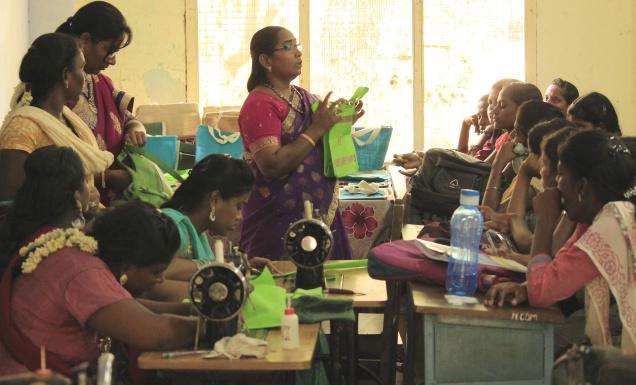
Jute making workshop at Queens Mary's College in the city. Photo: Paul Joshua
Jute making workshop at Queens Mary’s College in the city. Photo: Paul Joshua

Dhanalaxmi teaches jute-bag making and helps student start their own businesses

Over 100 students of Queen Mary’s College learnt the nuances of jute bag-making from Dhanalaxmi, who has been encouraging woman to become entrepreneurs. The owner of IVERS Bags, Dhanalaxmi has been in this business for the past 11years. Five years ago, she started helping others start their own businesses. She has been training self-help groups and NGOs in making and marketing jute bags and jewellery.

“A few years ago, when the IT scene was bad, one couple from the IT industry approached me, asking me to train them in the art. Today, they run a successful jute business,” she said.

In the session conducted at the college, students from corporate secretaryship, sociology, zoology and B.Com departments walked away with certificates presented by Akathar Begum, principal, on successful completion of the workshop.

“These are the bags we have made. Dhanalaxmi ma’am also gave us a kit box with materials to try more designs at home,” said a student showing off a table full of sling bags, pencil pouches and tambulam bags made by her.

Dhanalaxmi is ready to conduct training for groups and individuals . “This is an eco-friendly product and helps reduce the use of plastic. People should make a switch to jute product.”

Dhanalaxmi can be contacted at 92831 35238/98405 33611.

source: http://www.thehindu.com / The Hindu / Home> Features> Downtown / by Flavia Plaidus / Chennai – July 04th, 2015

Living memories and a father’s voice

MUSIC – Payel Sengupta

Pride, aristocracy and tradition: these components of Indian classical music are synonymous with a gharana known as the Agra Gharana. This gharana reached its zenith during the reign, as it were, of the illustrious maestro, Ustad Faiyaz Khan. He had an unparalleled, unique style of singing. The flow of the Agra Gharana had developed a new stream with the blending of another prestigious gharana, Atrauli (especially a gharana of Jaipur).

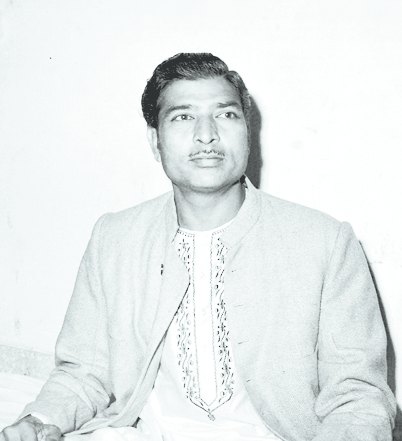
Sharafat Hussain Khan

Ustad Sharafat Hussain Khan, a practitioner of the Atrauli Gharana, was adopted by Ustad Faiyaz Khan at the tender age of eight, and was introduced to the Agra Gharana. The young Sharafat surprised the musical doyen with his voice. But he was only twenty when his mentor died. In the meantime, Sharafat started gaining a reputation as the promising vocalist. After the death of his beloved mentor, Sharafat took his training from Ustad Ata Hussain Khan of the Atrauli Gharan and Vilayat Hussain Khan of the Agra lineage.

That was the post-Independence era of Indian classical music; the arena of classical music was being dominated by names like Bade Ghulam Ali Khan, Roshan Ara Begum, Ustad Nissar Hussain Khan, Ghulam Mustafa Khan and D.V. Paluskar. But Sharafat became the busiest artist at that time for his distinctive potential. The priceless compositions ( bandishes) of the Agra Gharana found a new life in the voice of Sharafat Hussain Khan. His sudden demise was undoubtedly a blow to the glory of the Agra and the Atrauli gharanas. Probably to revive these incomplete, lost memories of Sharafat’s singing, his disciple, Vidushi Purnima Sen, organized a programme in commemoration of her guru’s death anniversary, where the principal attraction was the vocal recital by Sharafat’s son, Shaukat Hussain Khan. But before Shaukat’s performance, the programme commenced with a sitar recital by Agnibha Banerjee. He enchanted the listeners with his simple and sweet alaap, jor and jhala in Poorvi and gats in Shyam Kalyan.

Shaukat commenced his performance with the Raga Shudhha Kalyan. The Agra Gharana has a distinguished feature in which the alaap is sung in an elaborate, vast manner, with the variation of vistaars like Dhrupad and Dhamar. Maintaining this tradition, the artist presented a long alaap and overwhelmed the audience. His touches on a specific note from one octave to another without interruption were especially attractive. His smooth, generous rendition completed a circle of varied moods. The drut kheyal also became interesting for the ornamented taans and vistaars in the antara.

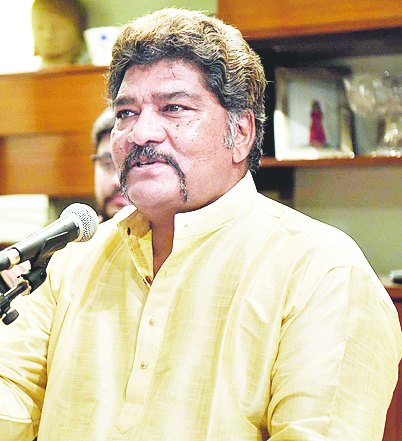
Shaukat Hussain Khan

Shaukat’s next presentation was the Raga Yogkaus. Like the previous performance, the artist again presented an elongatedalaap which brought out the soul and beauty of this particular raga. He made an exceptional utilization of pancham which increased the charm. Shaukat is blessed with a wonderful, generous voice, and has an expert dominance over every octave, which is a very special attribute of his gharana. The munificent gift of his voice brought his ancestor’s memory alive. The kheyals on Yogkaus were a typical, attractive presentation of the Agra Gharana.

Suhaag Sugrai is a very special raga of the Agra Gharana. Shaukat performed this raga with the greatest supremacy. The most enjoyable part was the briefkheyal which was embellished with small vistaars and smart, forceful taans. After a beautiful aochaar, he sang a famous bandish of his gharana, “Gha Gha Ghana Ghana” in the Raga Surmalhaar, which reminded the audience of his father. He made a proper tuning to this composition, which was followed by the Raga Megh. Shaukat’s mighty voice helped in the full bloom of the raga, and the compositions like ” Garaje Ghata Ghana Ghor” and especially the drut bandish, ” Dhume Dhame Aawe“, were able to create an atmosphere of thunderstorms on that sultry summer evening. A robust masculinity is a hidden beauty of the gayaki of the Agra Gharana, and Shaukat Hussain Khan perfectly fits this category. He skilfully shifted to a soulful ambience from the storm and started singing a prominent tappa, “Miyan Bejanewale” based on the Raga Kafi, which portrayed not only the musical prowess of the artist, but also drew up the light of nostalgia. He sang a brief kafi tarana in a cheerful manner. Shaukat concluded with a popular dadra of his ‘Ghar’, ” Banao Batiyan“, which reflected an essence of the golden period of Indian classical music. He touched every note carefully with a mellifluous style. Shaukat was perfectly accompanied by Sujit Saha on the tabla.

Shaukat shared some personal feelings with the audience which included some memories of his father. According to him, Sharafat Hussain Khan used to practise only Bhairav and Yaman, but always sang the tough and rare ragas like Patmanjari, Jhinjhoti and Dhaneshree while performing on stage. He never refused the requests of his listeners. It seemed that his son probably got the same training in the ragas, because he seemed to fulfil the wish lists of his listeners. Perhaps there could have been no better way to commemorate his father’s death anniversary.

source: http://www.telegraphindia.com / The Telegraph, Calcutta, India / Front Page> Opinion> Story / by Payel Sengupta / Saturday – May 23rd, 2015

145 yrs of Hazrat Ali taboot in Lucknow

Lucknow :

Considered the seat of azadari (practices related to mourning the death of Imam Hussain and his family), Lucknow this year completes 145 years of carrying out the taboot (coffin) of Hazrat Ali on the 21st Ramzan, falling this year on Thursday.

As per Shia belief, Ibne Muljim struck Hazrat Ali with a poisoned sword as the latter was offering morning prayers at a masjid in Iraq on 19th Ramzan. After battling for his life, Hazrat Ali succumbed to injuries on 21st Ramzan.

On this day, Shia Muslims observe martyrdom anniversary of Hazrat Ali (son-in-law of Prophet Mohammad) by holding grand majlis and mourning processions, a tradition started by Syed Hasan Mirza from his house in Moulviganj in 1870 and within a decade, it became so popular organizers had to shift to a spacious place.

The procession now starts from Najaf Rauza (Rustamnagar) and culminates at Karbala Talkatora. By the time the procession reaches Haiderganj it is broad daylight and the coffin is covered with a century-old piece of black cloth brought by Hasan Mirza when he visited Najaf (Iraq). Due to this, it is popularly known as Hasan Mirza taboot. A majlis is also organised where Maulana Meesam Qasim Jerveli recites the Hadees.

General Secretary of the anjuman (committee) that prepares the coffin and fourth generation of Hasan Mirza, Syed Mukhtar Hussain Zaidi, said, “Except for the period from 1978 to 1998, when azadari was stopped in Lucknow, the procession has been taken out every single year.”

source: http://www.timesofindia.indiatimes.com / The Times of India / Home> City> Lucknow / by Uzma Talha, TNN / July 09th, 2015

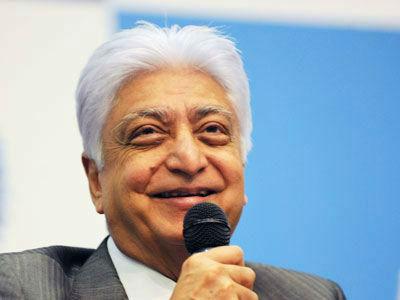
Premji gives half of his stake in Wipro for charity

In Wipro's annual report for the year ended March 2015, Premji said he has now allocated the equivalent of 39% of the company's shares to a trust focussed on philanthropic initiatives, mainly primary education.
In Wipro’s annual report for the year ended March 2015, Premji said he has now allocated the equivalent of 39% of the company’s shares to a trust focussed on philanthropic initiatives, mainly primary education.

Bengaluru :

Wipro’s billionaire chairman Azim Premji, the first Indian to sign the Giving Pledge, has set aside more than half of his wealth for charity by allocating an additional 18% stake in the company to fund philanthropy.

Premji, who will turn 70 this month, controls a 73.39% stake in India’s third-largest software company, which is worth about Rs 99,500 crore ($15.7 billion). In Wipro’s annual report for the year ended March 2015, Premji said he has now allocated the equivalent of 39% of the company’s shares to a trust focussed on philanthropic initiatives, mainly primary education. The additional 18% stake forms the latest tranche of shares Premji has allocated for charity.

The Giving Pledge is an effort to invite the world’s wealthiest individuals and families to commit half of their wealth to philanthropic causes and charitable organisations. In his pledge in 2013, Premji said he believes that those who are privileged to have wealth should contribute significantly to try and create a better world for the millions who are far less privileged. “Over the past 15 years, I have tried to put this belief into action through my personal philanthropic work. Over these years, I have irrevocably transferred a significant part of the shareholding in WiproBSE -0.03 %, amounting to 39% of the shares of Wipro, to a trust (of which ownership of 21.14% was transferred and for the balance, the trust is entitled to the beneficial interest of dividends and sale proceeds),” Premji wrote in a letter to shareholders.

People close to Premji said he has been quietly and steadily been transferring wealth to fund philanthropy.

“Apart from the Tata Trust, nothing comes close to the commitment made by him on this front,” said a person who knows him well. “And now, he has two engines to carry on philanthropy—theAzim Premji Foundation, and the newly formed Philanthropic Initiatives formed to making grants to NGOs.”

Last year, Premji hired Amnesty India head G Anantha Padmanabhan to build an organization that will offer grants to external agencies.

“The new initiative of making grants to NGOs has just started under what we call Philanthropic Initiatives. We are continuing to look at various areas, e.g., nutrition, water — the only area that we have decided on is support to NGOs working with the most vulnerable people — eg, street children, urban homeless, teenage girls from disadvantaged communities, women at risk of violence,” said Anurag Behar, CEO of Azim Premji Foundation and vice-chancellor of Azim Premji University.

“The Foundation’s work continues to expand and deepen in helping improve public (government) school education across seven states, which have about 350,000 schools. The university that we run also continues to expand. This year, we have launched a Master’s in public policy and governance and also our undergraduate programme,” Behar added.

Philanthropy has been on the rise among the rich in India as Microsoft cofounder Bill Gates, the world’s richest person, and business magnate Warren Buffet urged the wealthy to give their fortunes to charitable causes.

According to the Hurun Research Institute, at least 50 individuals donated over Rs 10 crore to philanthropic causes in 2014.

Premji, Anil Agarwal, Shiv Nadar and Ratan Tata were the most generous givers in India, according to the Hurun India Philanthropy List 2014.

source: http://www.timesofindia.indiatimes.com / The Times of India / Home> Business> India Business / by Pankaj Mishra,  ET Bureau / July 08th, 2015

HIDDEN HISTORIES – House of memories

Pokku Moosa Maraykkar was a prosperous merchant of Poovar who had close links with the royals of erstwhile Travancore.

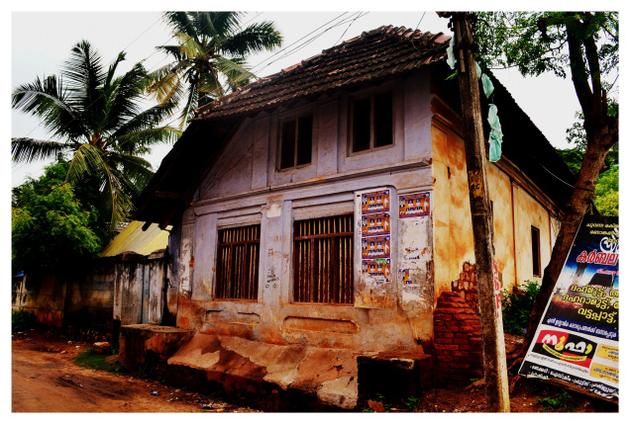
Pokku Moosa Maraykkar, a Muslim merchant who was instrumental in introducing young Kesava Pillai to Karthika Tirunal Rama Varma, is a name that is seldom remembered in popular history. Kesava Pillai began as an accountant in Pokku Moosa Maraykkar’s warehouse. Later, he became a trusted officer to the royals and rose to the position of Dewan. It is said that Raja Kesavadas, as he was later known, had a special place in his heart for his early mentor’s family.

Although Pokku Moosa Maraykkar’s name is often associated with Raja Kesavadas, it seems that Maraykkar was an important person who had sided with Marthanda Varma during one of the most turbulent phase in the history of erstwhile Travancore.

According to local lore, Pokku Moosa was a member of Valiya Kallaraikkal Veedu, a prominent family of traders who operated from Thengapattanam and Poovar. In 1918 A.D., Amshi K. Raman Pillai wrote about Raja Kesavadas and his association with Kallaraikkal Veedu.

Pillai is of the opinion that Maraykkar was the one who supplied goods to Valiya Kottaram in Thiruvananthapuram, and through this connection the merchant entered into the good books of the royals.

he existing wing of the old Kallaraikkal Veedu in Poovar. / Photo: Sharat Sunder Rajeev / The Hindu

Kallaraikkal Veedu, the ancient house of Pokku Moosa, was a landmark structure in Poovar. This structure has now been replaced by a concrete structure. However, local residents still associate the house with Marthanda Varma. It is said that when Marthanda Varma was hounded by the Ettuvettil Pillamar, he had once sought refuge at the Kallaraikkal Veedu in Poovar. Later, after he vanquished his enemies, Marthanda Varma bestowed the family with honours. The patriarchs of the family were granted the title of ‘Maraykkar’, and thereafter they were considered as nobles in their community.

Kallaraikkal family had a branch in Thengapattanam, where an old well, supposedly dug following the order of Raja Kesavadas, was spotted by Amshi K. Raman Pillai.

The ancient buildings associated with the family, unfortunately, fell prey to modernisation.

In Poovar, a stone’s throw away from the site of the Valiya Kallaraikkal Veedu is located a house of a family member who is struggling to keep up with the changing times.

“This house is more than 150 years old,” says Hassan Kannu who occupies the house. According to Hassan Kannu, in olden days the Kallaraikkal family owned many edifices in the locality and his house is perhaps one of the last to survive.

“This house had seen better days when my ancestors had enjoyed royal patronage,” says Hassan, “I still remember my elder brother’s nikâh, when a horse adorned with silver ornaments was sent from the royal stable to take the groom for the procession,” he adds. This tradition has been recorded by Raman Pillai in an article.

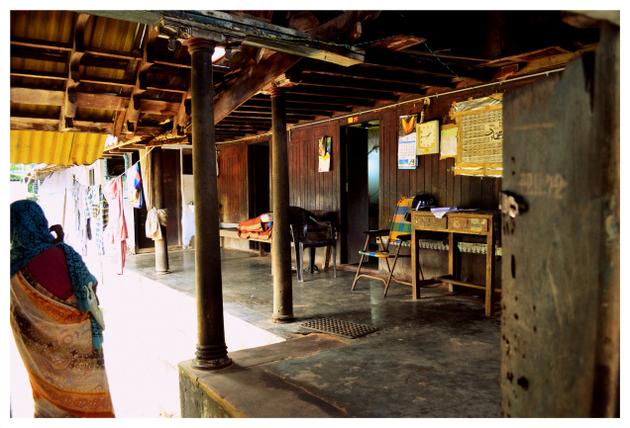
Pillared verandah opening to the inner yard of the existing wing of the old Kallaraikkal Veedu in Poovar./  Photo: Sharat Sunder Rajeev / The Hindu
Pillared verandah opening to the inner yard of the existing wing of the old Kallaraikkal Veedu in Poovar./ Photo: Sharat Sunder Rajeev / The Hindu

The old house, Hassan explains, still retains some traces of its glorious past. The main entrance, a thick wooden door, opens to a spacious yard, with wide verandahs on either side. “Only a small fraction of the house still exists, the padippura, the nalakam, the courtyard wing, and other associated structures have been demolished to make way for new constructions,” says Hassan.

“I don’t know for how long I will be able to maintain the house, but I will do my best,” he adds with a smile.

[The author is a conservation architect and history buff]

source: http://www.thehindu.com / The Hindu / Home> Features> MetroPlus> Hidden Histories / by Sharat Sunder Rajeev / Thiruvananthapuram – July 03rd, 2015

Remembering the ‘Beypore Sultan’ Vaikom Mohammed Basheer

Kozhikode:

It has been 17 years since Vaikom Muhammed Basheer left us. But that wouldn’t serve as a reason not to remember him on his 103rd birth anniversary. The ‘Beypore Sultan’ is indeed always in the minds of Malayalis. And that is precisely why literary figures and critics and even children in schools organize programmes to commemorate him every year, some even visiting his family and home at Beypore.

PhilatelyBeyporeBasheerKerala07jul2015

Basheer was born on January 21, 1908 at Thalayolaparambu in Vaikom. He studied initially in a Malayalam medium school and then went to an English medium school in Vaikom. Attracted to the teachings of Mahatma Gandhi and the Swadesi movement, he left school and joined the freedom struggle when in fifth form. As the princely states of Kochi and Travancore were not much in the freedom movement, Basheer went northwards to Malabar.

In 1930 he went to Kozhikode to take part in the Salt Satyagraha and got arrested along with several others. Basheer was sentenced to three months’ imprisonment at the Kannur jail. He, along with hundreds of other political prisoners, was later released as per the Gandhi-Irwin Pact in 1931.

Soon after his release Basheer again got involved in anti-British struggles and edited a revolutionary journal named ‘Ujjivanam’ (meaning Uprising) for which he was issued an arrest warrant. He soon left Kerala and began his long journey of seven years across the country and abroad.

Basheer wandered doing all sorts of works that helped him keep away from starvation. He worked as a cook, newspaper seller, fruit seller, watchman etc. He even spent a few years at the Himalayas and the Ganges basin with Hindu saints and Sufi mystics.

When he came back to Kerala, he again got involved in political works and got arrested. He was jailed in different places and the stories he heard from the police and fellow prisoners there later appeared in his novels and short stories.

He wrote ‘Premalekhanam’ (Love Letter) from jail in 1943 and published it on release. He wrote ‘Baalyakaalasakhi’ (Childhood Friend) also from jail, but published it only in 1944 after making revisions after his release. The novel is said to be ‘a piece torn from his life’. ‘Mathilukal’ (meaning Walls) is a famous work which tells the story of the love of a male prisoner and a female prisoner who never saw each other as they were on either sides of a wall.

Basheer left active politics after India won freedom. He married Fabi who was much younger to him in his forties. Afterwards, he settled down for a quiet life with his wife and two children Anees and Shahina at Beypore in Kozhikode, though continuing his writings. And the man, born and educated in Vaikom and settled in Beypore, became the ‘Beypore Sultan’. As common with great writers, Basheer too suffered from mental illness and had to undergo treatment in mental hospital twice. He died in Beypore on July 5, 1994.

The writer in Basheer was a strong critic of social customs and practices, as well as superstitions especially in the Muslim community of the time. And he said it all in the down-to-earth style unique to him only, which attracted him to the literary critics as well as the common people alike. Basheer wrote about the social conditions and situations in his own thought-provoking yet humorous style. Highly appreciated is his novel ‘Ntuppooppakkoranaendaarnnu’ (1951) which RE Asher (who translated most of Basheer’s work into English) translated with the title ‘Me Grandad ‘ad an Elephant!’. It deals with the mid 20th century Muslim community in Kerala, such as boasting about the past glory without doing much in the present, through the story of uneducated Kunjippaathumma and poet Nisaar Ahmed. Other notable works are Shabdangal (Voices), Paaththummaayude Aadu (Paathumma’s Goat), Bhaargavi Nilayam, Sthalathe Pradhaana Divyan, Muchcheettukalikkaarante Makal, Aanavaariyum Ponkurishum, Ettukaali Mammoonju etc.

Basheer never differentiated between the written language and the spoken one. He wrote in the language of his characters, who were mostly traditional rural Muslims, and a majority of them were uneducated. Their local dialects and natural style of talking were brought as such into his writings. Basheer gave importance to emotions and telling the story, without considering the grammar and structure of sentence.

Basheer was awarded the Padma Sri in 1982. He got the Kendra Sahitya Academy Fellowship and the Kerala Sahitya Academy Fellowship, besides the Vallathol Award and the Muttathu Varkki Award in 1993, and the Lalithambika Antharjanam Award in 1992.

source: http://www.twocircles.net / TwoCircles.net / Home / by  Najiya O, TwoCircles.net / January 21st, 2011

The Beypore Sultan

Perch Collective’s ‘Under The Mangosteen Tree’ will now play Vaikom Muhammad Basheer’s favourite music.

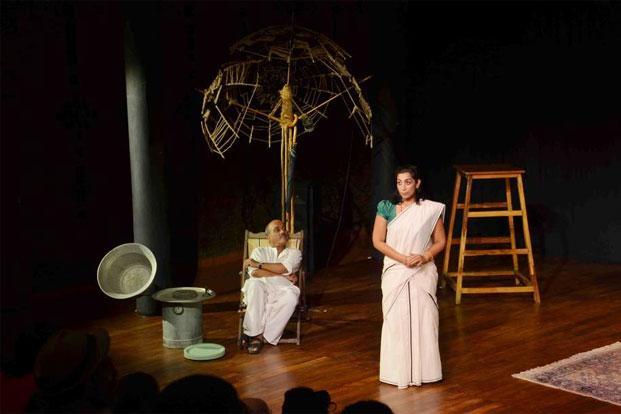
An earlier staging of the play, ‘Under The Mangosteen Tree’

 Malayalam writer Vaikom Muhammad Basheer was known to be an incredible storyteller. When he settled down to a quiet life at Beypore in Kozhikode, visitors would call on him every day. No one was turned away. They would just move to his favourite spot—the author in his easy chair, under the mangosteen tree in his house, and the expectant audience seated around him, waiting to hear his next story.

This is the 10th year of Chennai-based theatre group Perch Collective’s journey with the late Basheer. They opened with a play in 2004, Moonshine And Skytoffee, which was based on two of Basheer’s love stories. Perch’s play Under The Mangosteen Tree (UTMT), a tribute to the iconic writer, opened in 2008, Basheer’s birth centenary year. It weaves together six of Basheer’s short stories, and includes the character of Basheer as narrator, participant and witness.

Perch’s revised UTMT, which will be staged this weekend, has two-three changes. When it premiered, it had a cast of 11; there are seven now. Plus, the play will feature some of Basheer’s favourite musical compositions in the background—Basheer loved his records, stacked in multicoloured buckets in his house; his gramophone; and his easy chair.

“He created a new idiom in Malayalam writing by breaking away from the Sanskritized version of the language and coming up with a vocabulary that was colloquial and accessible. He invented words like badukoos which could mean anything—an idiot, a fool, or anything that you wish to make of it,” says Rajiv Krishnan, the director of the play.

While most of the play is in English, it contains a smattering of Malayalam to keep the flavour of Basheer’s language. The play, which touches upon different aspects of Basheer’s writing, is largely humorous in tone, tinged with sadness and satire.

Poovan Banana, one of the six stories, tells the story of a man who fancies himself as the local gangster but becomes a pawn in the hands of his wife after marriage. He tries to reassert his independence, in the process creating room for a considerable amount of repartee. Voices, the story of a soldier back from war, launches a philosophical enquiry into how human beings can be capable of such brutality. The World Renowned Nose is a rather contemporary story of the media and political attention showered on a man whose nose starts growing, drooping to his navel. Walls, which was made into a film by Adoor Gopalakrishnan, is said to be based on Basheer’s imprisonment by the British for seditious writing. In the story, the character of Basheer hears the voice of a woman named Narayani across the wall of his prison cell, and builds a relationship with her.

“We did a lot of research when we conducted a festival in Chennai to celebrate Basheer’s centenary in 2008. We spoke to several members of his family and friends. One of them told us that Basheer actually looked for Narayani after he was released but he couldn’t find her. Of course, that could be part myth,” says Krishnan.

Under The Mangosteen Tree will be staged on 25-26 April, 3.30pm and 7.30pm, at Edouard Michelin Auditorium, Alliance Française of Madras, 24, College Road, Nungambakkam. Tickets, Rs.200, available onin.bookmyshow.com and www.eventjini.com. For details, call 9445961425.

source: http://www.livemint.com / LiveMint> Hindustan Times / Home> Leisure / by Karthika Gopalakrishnan / Thursday – April 23rd, 2015