Category Archives: Leaders

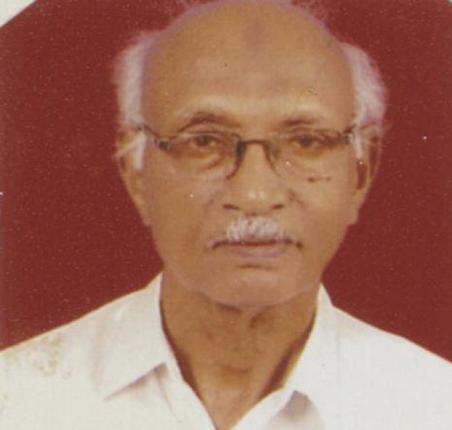
Eminent Muslim educationist Saiyid Hamid dead

Aligarh :

Noted educationist and former vice chancellor of the Aligarh Muslim University Saiyid Hamid, who played a key role in the drafting of the Rajindar Sachar Committee report on the state of Muslims in the country, died on Monday at age 94 in New Delhi. Born in Faizabad in 1920, Hamid, who also headed Jamia Hamdard, a deemed university, in 1999, worked for the educational uplift of Indian Muslims.

AMU spokesman Rahat Abrar, who worked closely with Hamid when he was chairman of the UP Rabita Committee, said, “Saiyid Hamid’s life was devoted to the cause of Muslim education. He spread awareness and addressed the educational backwardness among Muslims. He edited a journal, ‘Nation and the World’, and wrote extensively for the community’s development in the social sphere. I would like to remember him as a visionary, and an institution builder.”

Before Hamid joined AMU, the departments had chairpersons for more than 10-15 years. He introduced the rotation system. A firm believer in education as tool for social change, he encouraged Muslim youth towards higher studies, and dissuaded AMU teachers from leaving the country for petro dollar opportunities.

Hamid’s keen interest in encouraging Muslims to take up civil services led him to establish Hamdard Public School and University, and ensure the UGC conferred “deemed university” status on Jamia Hamdard.

Syed Zafar Mahmood, AMU alumnus and founder of New Delhi-based non-profit organization Zakat Foundation of India, said, “He worked for the educational uplift of the deprived. He led educational caravans across north India. Consequently, dozens of new schools were privately established. As AMU VC he chose to side with merit and justice, even taking cudgels with vested interests. In the Sachar Committee, he was a silent contributor of substantial inputs.”

At the time when Hamid was chancellor of Jamia Hamdard, Zillur Rehman of Ibn Sina Academy in Aligarh was in the academic council. Rehman reminisced, “Hamid sahib was a bureaucrat and head of AMU. He took decisions keeping in mind political realities of the country, and guided us in difficult times. His way of working was above sectarian, communal and regional considerations. That, along with his speeches and writings, kept us all inspired.”

The AMU and its associated institutions will remain closed on Tuesday as a mark of respect, an AMU spokesperson said, adding a condolence meeting will be held in the afternoon.

source: http://www.timesofindia.indiatimes.com / The Times of India / Home> India  / by Eram Agha, TNN / December 30th, 2014

AMU mourns death of its former VC

Aligarh :

Noted educationist and leading Muslim figure Saiyid Hamid, a Sachar Committee member and former VC of Aligarh Muslim University, died on Monday at the age of 94 in New Delhi.

Hamid, who was also chancellor of Jamia Hamdard (1999), succumbed to a cardiac arrest. Born in Faizabad in 1920, he is remembered for his crusading spirit to work for the upliftment and educational development of Indian Muslims.

AMU spokesperson Rahat Abrar, who worked closely with Hamid when he was chairman of the UP Rabita Committee, said, “His life was devoted to the cause of Muslim education. He led to spread awareness and address the educational backwardness among Muslims. In fact, he edited a journal called ‘Nation and the World’, and wrote every word for the community’s development in the social sphere.”

Abrar added, “A visionary, and an institution builder, that is how I would like to remember him (Hamid). Before he joined AMU, the departments would have a chairman for more than 10-15 years. He introduced the rotation system and now there is term to serve. As a staunch believer of education as a tool for change he inspired Muslim youth to pursue higher studies, dissuaded AMU teachers from leaving the country for petro dollar opportunities outside.”

Since Hamid wanted Muslims to take up civil services, he worked hard to establish Hamdard Public School and the University. It was due to Hamid’s purposefulness and vision that UGC agreed to confer deemed university status on Jamia Hamdard.

At the time when Hamid was chancellor of Jamia Hamdard, Zillur Rehman of Ibn Sina Academy in Aligarh was in the academic council. Rehman reminisced: “Hamid sahib had been a bureaucrat and head of AMU. He took decisions keeping in mind political realities of the country, and guided us in difficult times. His way of working was above sectarian, communal and regional considerations. That, along with his speeches and writings, kept us all inspired.”

Syed Zafar Mahmood, AMU alumnus and founder of non-profit organization Zakat Foundation of India, said, “Saiyid Hamid worked for the educational uplift of the deprived. He led educational caravans across north India. Consequently, dozens of new schools were privately established. As AMU VC he chose to side with merit and justice, even taking cudgels with vested interests. In the Sachar Committee, he was a silent contributor of substantial inputs.”

AMU will remain closed on Tuesday to mourn Hamid’s passing.

source: http://www.timesofindia.indiatimes.com / The Times of India / Home> City> Agra / by Eram Agha, TNN / December 29th, 2014

I believe art has no barriers: Kavitha

Telangana Jagruthi Samithi president and MP Kalvakuntla Kavitha sharing a few thoughts with renowned kuchipudi danseuse Shobha Naidu at the International Kuchipudi Dance Convention at GMC Balayogi Stadium in Hyderabad on Saturday. Photo: V.V. Subrahmanyam

Let us live together, forget about the bifurcation’. Taking a cue, Padma Sri recipient Yarlagadda Laxmi Prasad felt that the three-day convention was more than symbolic in many ways of how Telugu-speaking people can live and enjoy all liberties.

The three-day International Kuchipudi Dance Convention at GMC Balayogi Indoor Stadium could not have begun on a more touching note on Friday in terms of how the Telugu-speaking can live together and aspire to prosper.

It was a brief but to-the-point speech by Kalvakuntla Kavitha, Nizamabad MP and president of Telangana Jagruthi Samithi, which clearly floored the select audience at the Convention, organised by Silicon Andhra.

“Not many people liked the idea of me coming over to grace the inaugural of this three-day dance convention as they felt there is a clear tinge of residual Andhra Pradesh in the way the event is being organised. But I insisted that though Andhra Pradesh and Telangana are divided politically and administratively, that should be not the case with arts and culture. I believe art has no barrier,” Kavitha said amidst applause.

“Moreover, this being held in Hyderabad, it is a question of pride for all of us. Like Chandrababu Naidu, Telangana Chief Minister K. Chandrasekhar Rao too is all for the promotion of arts and culture of Telugu-speaking people. Let us live together, forget about the bifurcation, which is for a different cause,” she reminded.

Taking a leaf from the pages of history, Kavitha enthralled the audience by gently reminding them that though Kuchipudi was born in a village in Andhra Pradesh, it took the generosity of the 17th Century king Abdul Hasan Qutub Shah (more popularly known as Tani Shah) to promote this world-famous dance by setting up a ‘kuchipudi agraharam’ in Hyderabad,” she said to repeated cheers from the audience.

Taking a cue, Padma Sri recipient Yarlagadda Laxmi Prasad felt that the three-day convention was more than symbolic in many ways of how Telugu-speaking people can live and enjoy all liberties. “Let me tell you that the Telangana Chief Minister has given this venue free of cost and promised to extend all possible help to the organisers. This speaks of how we can steer clear of petty issues,” he remarked. AP Legislative Assembly Deputy Speaker Mandali Budda Prasad felt it was a question of great pride for the country itself that Kuchipudi had become synonymous with Indian culture.

source: http://www.thehindu.com / The Hindu / Home> News> Cities> Hyderabad / by V.V. Subrahmanyam / Hyderabad – December 26th, 2014

Monumental men who want to preserve Bangalore

Bangalore  :

Bangalore is 477 years old or at least the record books say so. From the times of Kempegowda to its Silicon Valley days, this city has stood witness to several stories, some told, some untold and many forgotten.

In search of this treasure trove of tales, a group of architects and a few likeminded others started some years ago Bygone Bangalore, a group on a social networking site. Their objective is to revive and relieve those forgotten stories. What started as page for sharing old photographs is now turning out to be among the few groups mirroring the city’s heritage.

“Did you know Chhatrapati Shivaji got married in a temple in Malleswaram?” asks Naresh Narasimhan, an architect who has been a part of Bygone Bangalore from its initial days. “In fact, his father owned a huge house in Chickpet. That’s the thing, the more you know about your city’s past, the more you love it,” he says.

From the outset, the group had its goals defined: to bring to the fore old and inspiring photographs of the Garden City, to prompt conversations about the place, especially on social networking forums and among the new migrant population.

“Unlike Chennai, New Delhi or Mumbai, our photo archive is minimal. We wanted members of this group to share old frames from their albums to increase this database. Thanks to the network, we have been able to exhibit some rare photos of Bangalore,” says Kiran Natarajan, another member of Bygone Bangalore.

As was conceived, these photographs soon led to conversations, even explorations. “Recently we found the tomb of Hyder Ali’s maternal uncle, Ibrahim, in Kumbarpet. Ibrahim was instrumental in making Hyder a king and this piece of history was lying unattended there,” says Mansoor Ali, an architect.

Members of the group also looked back to trace the history of Russell Market. And what they found was quite intriguing. Inside the present building, which is almost 133 years old, stands a 150-year-old clock tower. “Earlier it was called the New Market. It was an open ground where hawkers sold goods to British officers. The British later decided to a build a concrete structure there. It was one straight corridor with a clock tower on it.

The market was expanded again in 1921, but the original construction remains. In fact, some people are keen on getting that clock ticking once again,” says Kiran.

As the explorations continue, every trivia from the yesteryears is shared with those interested during heritage works organized by the group. “Recently, we organized a food walk in Basavanagudi. We wanted to explore the history of Basavanagudi through the traditional eateries in the area. This is one part of the city which retains its old-world charm,” says Ali.

The group also delves into issues of conversation. “There were 1,880 documented buildings in Bangalore, today there are less than 400 remaining. While some of these are with government, those owned by individuals are being demolished to accommodate real estate boom,” says Naresh.

Heritage isn’t just about concrete structures. It’s going back in time to Bangalore’s old way of life. If you want to experience it, step out and look for it. Even though places like Madiwala and HSR Layout have turned into concrete jungles, they too have a history. For instance, the temple of old Madiwala village still exists, and the temple fest still happens. What’s heartening is that more people are coming forward to participate in these celebrations that keep the Bangalore of yore alive

Kiran Natarajan | Bygone Bangalore member and what they know is shared to those interested, through heritage walks by the group.

source: http://www.timesofindia.indiatimes.com / The Times of India / Home> City> Bengaluru> Namma Metro / by Arun Dev, TNN / May 05th, 2014

‘Celebrate November 20 as Tipu Sultan Jayanti’

The Tipu Sultan Art and Cultural Trust has condemned the State and Union governments for ignoring Tipu Sultan’s contribution to the struggle against British colonialism. The trust has urged the State and the Centre to celebrate Tipu Sultan Jayanti on November 20 every year, and declare it a public holiday.

Speaking at the 214th death anniversary of Tipu Sultan here on Saturday, trust president Irshad Ahmad Bisti said Tipu Sultan was one of the most neglected icons of the freedom struggle. He was a national leader who should be venerated by all regardless of caste, creed or faith, he said.

Mr. Bisti said it was a pity that some people with communal leanings were trying to defame Tipu Sultan and project him as a fanatic.

The trust had been fighting to make sure that Tipu Sultan received the recognition he deserved.

The trust wanted Tipu Sultan Jayanti to be celebrated as a State function, and had demanded that a train be named after him, and a memorial built in Hubli and Dharwad.

It said it submitted several memoranda to Governor H.R. Bhardwaj and Chief Minister Jagadish Shettar, but there was no favourable response, Mr. Bisti said.

If action was not taken, the trust, in association with like-minded organisations, would intensify the struggle, Mr. Bisti added.

source: http://www.thehindu.com / The Hindu / Home> National> Karnataka / by Staff Correspondent / Dharwad – December 05th, 2013

Government Will Celebrate Tipu Jayanti, Says Siddu

Bengaluru : 
The state government has decided to celebrate Tipu Jayanti henceforth, said Chief Minister Siddaramaiah on Monday.

He was speaking at the book release of Tipu Sultan: A Crusader for Change by historian Prof B Sheik Ali, which has been published by the Karnataka Gazetteer Department.

“There has been a lot of pressure from various quarters to celebrate Tipu Jayanti on the likes of Valmiki Jayanti and others. We have decided to take this into consideration and will announce the date shortly,” Siddaramaiah said. Sources said the date is likely to fall in May.

Referring to the book, Siddaramaiah heaped praise on Ali. “However, the book must also be translated into Kannada as it will have a wider reach. There have been allegations that Tipu was against Hinduism. I would like to clarify that this is false and he was known to have built several temples along with mosques. He was a good administrator. The real fight for freedom against the British actually originated with Tipu Sultan,” he said.

Ali said the book primarily focuses on the achievements of Tipu as an administrator along with details about his life.

“Tipu had said that a state’s structure and its success depended entirely on whether the welfare of its people was guaranteed or not. He imbibed the best qualities of the Renaissance and Reformation and implemented it in the administration. The concept of equal rights for all was first initiated by him,” he said. Principal Secretary of the Kannada and Culture Department Shalini Rajneesh said the book had been written and published with a grant of `10 lakh from the Central government.

MP Rehman Ali, Minister for Infrastructure Development, Information and Haj Roshan Baig, Minister for Energy D K Shivakumar and others were present.

source: http://www.newindianexpress.com / The New Indian Express / Home> Cities> Bengaluru / by Express News Service / December 23rd, 2014

Virasat award to Amjad Ali Khan

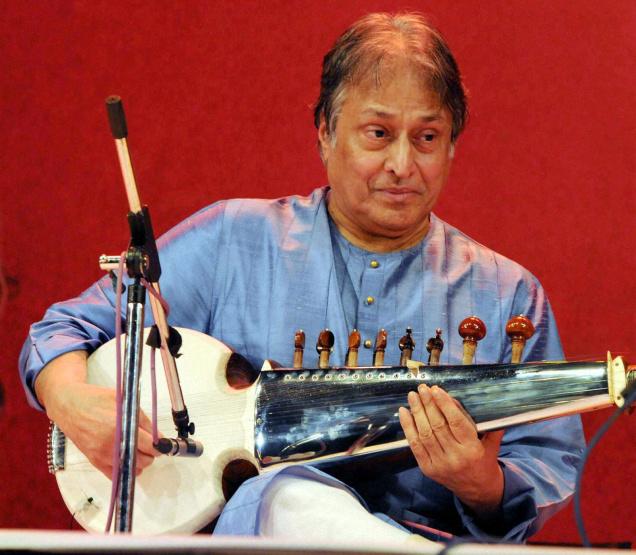
Ustad Amjad Ali Khan

Renowned sarod maestro Amjad Ali Khan will get the Alva’s Virasat 2015 award on the inaugural day of the three-day cultural event at Vidyagiri near Moodbidri on January 8.

A release issued by the Alva’s Education Foundation, which conducts the event, said the award carried a purse of Rs. 1 lakh.

The Padma Vibhushan recipient began performing at the age of six, said the release, adding that his music “spreads emotions of love and peace”.

The release described the man as “epoch-making”, with a personality that did not differ on-stage and off-stage.

Born in the Bangash family of musicians from Gwalior, he is sixth generation artiste. He trained under his father Hafeez Ali Khan and went on to become a legend in his chosen instrument sarod.

He has performed in many countries and is the recipient of many awards.

He has also been a visiting professor for international institutes and has paired with many artistes to present jugalbandis and fusion music programmes.

Two books have been written about him – The World of Amjad Ali Khan and Abba: Gods Greatest Gift To Us. Married to Bharatanatyam exponent Subhalakshmi, the couple’s sons Aman Ali Khan and Ayan Ali Khan are emerging sarod players.

source: http://www.thehindu.com / The Hindu / Home> News> Cities> Mangaluru / by Special Correspondent / Mangaluru – December 25th, 2014

A dawn awaits forgotten people

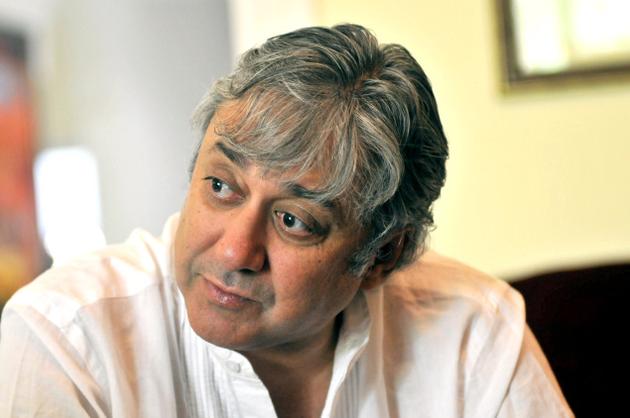
Jungle Tales: Saad Bin Jung loves the wild and the wilderness. Photo: Nagara Gopal / The Hindu

Saad Bin Jung talks about his latest book and what inspired him to pen the thought provoking pages.

Saad Bin Jung is reviving his touch with what we call ‘civilization.’ After spending months in the jungle resorts which he owns in Karnataka and Africa, Saad is seemingly enjoying his life though he would love to return to the jungle at the first instance. After all, holidaying there had never been his intention.

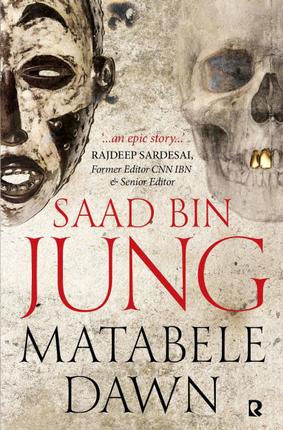
He plays a jungle guide, photographer, observer and lover of the natural life that surrounds him. His visit to the city is with a purpose and closely linked to the life he spends and the thoughts that cross his mind as he watches the animals enjoy the wilderness. He , is currently engaged in a multi-city tour to launch his recently authored book Matabele Dawn. Having dedicated his life to conservation, he has spent time with many tribes, in many parts of Africa and India.

Saad Bin Jung's book
Saad Bin Jung’s book

So is Matabele Dawn a culmination of these experiences? “These fortunate meetings have made me realise that conservation is all about addressing a conflict. The conflict between the authorities and the local people /tribes that live in remote areas of both Africa and India. They are a forgotten people that eke out a living against all odds and live in the buffer regions of our protected forests.” He adds, “It is nice to be back in familiar space for a change. But I would prefer the wilderness any day.” And this wilderness helped Saad complete the book comparing his life in India and Africa. The author and activist describes the book as a thought-provoking journey through the heart of Africa and India. Saad elaborates , “Matabeleland was a thriving nation in erstwhile Zimbabwe. When Cecil Rhodes believed that King Solomon’s mines were located here, he mowed down the tribe. In a matter of months Matabeleland ceased to exist. No such mines were found but beautiful people were annihilated.

The book is about the journey of a few of that tribe, about their trials and tribulations as they move towards Maasailands in search of their destiny. Set deep in the heart of tribal India and Africa, it unfolds an epic saga of two lives in disarray where the solution is more lethal than the problem. Chenjerai is born in the African bush and a nation is wiped out. Shaaz’s birth in Europe heralds World War II. Chaos rule their lives and their search for answers remains elusive. When the veil does lift, it brings them face to face with a terrifying evil, one that threatens not just both their lives but also that of generations to come. From the Matabeles of Lobengula and the Maasai of Mbatiany to the Nawabs of India and the Gonds of Bastar, their quest cuts across the very heart of two mysterious worlds, leaning on each other, creating chaos.

The author claims he wrote the book in a way that enables one to smell the land, touch the wilderness and embrace the people and, above all, be a part of the story that shaped the history of both the regions. Real incidents also went onto inspire the author in Saad. “When I read about our Indian tribal girls in central India being tortured and physically abused, my blood boiled and my mind started to tick. The final straw was when I went to Africa and learnt of the Matabeles. That’s when I knew a book was coming but exactly where and how, I was not certain. Through my travels in Africa, the idea of Chenjerai took final shape and finally when I read the old books on central India, about the Nawabs and the tribes therein, the character of Shaaz was born. That I was upset at the way Africa had been raped is without any doubt. A motive took birth and the final puzzle of the book fell into place,” he says.

The descendant of the Paigah family is also troubled at the ease with which India rescinded on its constitutional assurances. He says, “One such promise being the abolishment of the privy purses; having experienced first hand life among a beautiful set of truly vulnerable people, I witnessed the 5000 year old institution of Indian royalty being wiped out from the face of this earth in but a matter of days. It’s filled me with unending anger and frustration and Matabele Dawn was the culmination of such harsh realities that I was exposed to — both in India and Africa — through my journey of life.”

source: http://www.thehindu.com / The Hindu / Home> Features> MetroPlus / by Prabalika M. Borah / December 18th, 2014

Beary Sahitya Academy honorary awards for three

Awards to be presented at Chikkamagaluru on January 10

The Karnataka Beary Sahitya Academy will confer its annual honorary awards 2014 on B.M. Ichalangodu, B.A. Shamshuddin Madikeri and Y. Mohammed Beary Edapadavu.

While Prof. Ichlangodu is being honoured for his contributions in Beary language research, Mr. Shamshuddin is being honoured in the field of literature and Mr. Mohammed Beary in the field of education, said academy chairman B.A. Mohammed Haneef.

Mr. Haneef told presspersons here on Monday that the awards would be presented at the Beary Language Conference to be held at Chikkamagaluru on January 10. More than 5,000 Beary-speaking people were expected to attend the event, he said.

The Chikkamagaluru District Beary Federation would be co-hosting the event at the Vokkaligara Sabha Bhavana where the language conference would be held from 10 a.m. and the award presentation would be held from 3 p.m.

B.M. Ichlangod
B.M. Ichlangod

Prof. Ichlangod worked in various colleges in the undivided Dakshina Kannada and has written many works including translation of Koran, and Muslims of Tulunadu. He has also been active in the consumer rights movement.

B.A. Shamshuddin Madikeri.


Mr. Shamshuddin has worked as a journalist for many publications in Madikeri and has penned many works in Beary language.

Muhammad Byari Yedapadavu.

Mr. Mohammed Beary, after serving the Syndicate Bank for 22 years, established Ideal English Medium School at Edapadavu and has been the president of the Federation of Dakshina Kannada and Udupi district English Medium Schools. He is also the president of the committee of families of victims of Mangaluru air crash.

The awards carry Rs. 10,000 in cash and citation. The Kannada and Culture Department has proposed to the government to increase the cash purse to Rs. 75,000 each, but the academy is not sure when that would come into effect, Mr. Haneef said.

The academy has also identified nine personalities to be felicitated during the language conference for their contributions to various fields.

They are: Mariam Ismail, Ismail Azad, A.M. Sridharan and Umar Farooq (for literature); K. Mohammed (for defence); Moidin Kunhi (for medicine); Azala Ayub and B.H. Noor Mohammed (for social service) and Mohammed Iqbal (for singing), he said.

source: http://www.thehindu.com / The Hindu / Home> News> Cities> Mangaluru / by Anil Kumar Sastry / Mangaluru – December 16th, 2014

City top Cop holds Mass Counselling for reformed criminals, mob

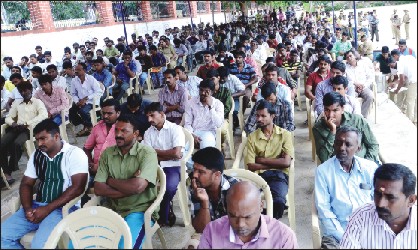
A section of Members of Bureau of Modus Operandi at the Mass Counselling in city this morning.

Mysuru :

In his continued bid to bring listed criminals to the mainstream and aiming to rehabilitate them, now known as Members of Bureau of Modus Operandi (MOB), City Police Commissioner Dr. M.A. Saleem conducted the first-ever mass counselling for nearly 500 members of MOB at CAR grounds here this morning.

Dr. Saleem gave counselling to various categories of members of MOB including those who have been released from prison after serving terms and those accused of crimes ranging from murder, theft, robbery, burglary, dacoity, cheating, criminal breach of trust, circulation of fake currency notes and also minor crimes at all the 16 Police Stations coming under City Police Commissionerate.

There are 4,900 members of MOB in the district including 3,048 from city. Out of them, 500 who attended today’s counselling had been brought from all the Police Stations in city in government vehicles.

Dr. Saleem advised the members saying, “you may have committed crimes in a fit of rage, but you will do well to transform yourselves after serving terms to ensure that the society sees you in a better light.” He also offered to get jobs to transformed members depending upon their educational and technical skills.

Dr. Saleem, further asked the MOB members to change their mindset to gain confidence of the society to look at them as reformed persons and see their family members in a more dignified manner, thus saving their kin from being branded as relatives of criminals.

The Commissioner also collected details on conduct of these members who were divided into nine categories based on the nature of crime committed by them from authorities of all the Police Stations.

DCPs A.N. Rajanna & M.M.Mahadevaiah, ACPs A.K.Suresh, Jai Maruthi and B.T. Kavitha and Inspectors of all the Police Stations coming under the City Police Commissionerate were present during the mass counselling.

source: http://www.starofmysore.com / Star of Mysore / Home> General News /  Saturday , December 13th, 2014