Category Archives: Leaders

A timeless gift from a bygone time

Over a cup of tea

JaveedNayeemMPos25sept2014

by Dr. K. Javeed Nayeem

Some things touch people’s heart strings in a very strange way and the reason for this is not very easily understood or explained. My last week’s article about HMT watches seems to have stirred people’s sense of nostalgia far beyond my expectations. This is evident by the spate of responses I have been getting over the whole of the week. The emotional impact of the closure of HMT’s watch division on people’s minds can be gauged by the many letters that have appeared in Star of Mysore too ever since the news was published last Friday. But some sad stories too can have happy endings as you will see.

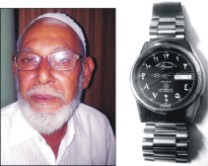
Last evening as I was seeing off the last of my patients for the day, I found a familiar figure walking into my consulting room with a smile. It was Baba Sab, my former neighbour of many years who had sold his house a couple of years ago and moved out to another locality. After exchanging pleasantries for a few moments he complimented me on my writing and said that he was particularly touched by my article on HMT watches. He then removed the wrist watch he was wearing and placed it on my table and said, “This is a watch about which y ou have made a mention in your last article and I have one with me.”

The piece that lay before me was a West End Sowar Prima, an automatic mechanical watch with a black dial and Eastern Arabic numerals. (Incidentally, and perhaps a little interestingly, Arabic numerals are the numerals we use while writing in English while Eastern Arabic numerals are the ones in the actual Arabic script as seen in the picture). I told him that I had indeed mentioned it by name in my article and I knew all about it because my father and grandfather and all my uncles had always worn West End watches. It was a sort of a family tradition and in the good old days, a good watch only meant a West End.

He then surprised me by saying, “I have been wearing it for some years and now I want you to have it because you are one person who knows what it is worth.” I immediately protested and refused his offer to which he said, “I have worn it long enough. Now I want you to accept it as a token of my affection and regard for you. I have always admired your writing and I will be happy if you accept it from me. Please do not refuse my humble offer.” Perplexed, I did not know what to do.

Here was a simple and humble man who thought so highly about me and with his strange and most unexpected gesture of magnanimity he had put me in a very delicate situation if not a real fix. He was indeed an unusual kind of man. When he first thought of selling his house he had come into my consulting room once before and offered it to me at a price considerably lower than the best offer he had received. He very rightly told me that Islam teaches that a good Muslim should give first priority to the welfare and happiness of his or her neighbours in all matters. Only after I reassured him that I had no intention of buying his house did he proceed to sell it to its present owner. And, he did sell it for a sum much higher than for what he had offered it to me.

Now, refusing his gift would have broken his heart and accepting it would have made my own heart heavy. After a few uneasy moments of confused introspection I decided to let his heart have its way and picked up the watch with an uneasy smile. He felt visibly relieved and thanking me profusely for accepting it he quickly left the room leaving me in a daze. My friends are not wrong when they say that interesting things happen to me which provide me interesting writing material!

West End watches came into production in the year 1886 in Switzerland and they were named after the upmarket district of the same name in London. Known for their ruggedness and durability, they quickly became a household name in India and it appears when the Indian Cavalry contingent was dispatched to fight in Mesopotamia during the First World War, the soldiers were provided with West End watches. That is when the model ‘Sowar’ was introduced after the Sowars or Lancers of the cavalry regiment.

We still have my father’s West End Sowar Prima as a family heirloom, along with its original box, user manual, bill and hexagonal spanner. Very oddly, perhaps because they were mechanical watches, every West End watch used to come with a spanner to enable its owner to open its back and make the movement go slow or fast as required to keep the correct time! My friend Ulliada Arun, perhaps has the oldest West End watch that I know of in perfect working condition. It is from the year 1902 and it still keeps the right time and my friend wears it all the time!

A lesson in harmony: Last Wednesday’s SOM had a review by Dr. Manik Bengeri, about the Kannada play ‘Raavi Nadeeya Dandeyelli’ which was recently staged at the Vanaranga theatre of Kalamandira. My wife and I had an occasion to see it at the urging of my friend Sri. K. R. Mohan, a former senior manager of the Syndicate Bank, who had also written a small introductory piece about it in SOM.

Although adding anything to the already very well written piece certainly seems superfluous, what impressed me very much apart from the excellent theme of the play was the portrayal of the way goodness in human nature prevails over baser instincts. The correct presentation of what the Holy Koran says about how we should live in absolute peace and harmony with all those around us, forgetting our castes and creeds, needs to be complimented.

‘Parivarthana’ which presented the play and all those who are responsible for it in some way or the other deserve not only to be congratulated for what they have done but also encouraged to continue to present it before much larger audiences across the length and breadth of the country. Plays like this that can promote communal harmony at a time when it seems to be under great stress should be showcased before the younger generation in schools and colleges and this can be done at a surprisingly modest cost. Therefore managements, parents’ associations and even philanthropic individuals, if not institutions, can do this job if they mind. Do think about it. It certainly is worth a thought.

The play made me recollect an incident that I once heard from the mother of my friend, Mallikarjun Nisty from the turbulent time of partition. It tells a heart touching story of human goodness from a time when goodness seemed to be extinct. It appears a Hindu man and his family from the Pakistan side of the border who were leaving for the Indian side was seated in a crowded train with their belongings. As the train was about to leave, their Muslim neighbour’s wife who was also a very close friend of the man’s wife, rushed into the compartment with an angry expression and began rummaging through their bags, ostensibly to check what they were taking away with them.

Her job done, she left the shell-shocked family but not without taunting and cursing all those who were going away to the other side. As the train steamed out of the station, the man’s wife who was now in tears at her former friend’s unbelievably cruel behaviour put her hand into her bag to find her handkerchief. To her amazement, she found a wad of currency notes with a small note from her friend that said, “I am sorry about the way I behaved. But there was simply no other way I could help you under the watchful eyes of the hostile mobs around. Do keep in touch with us if possible. May God protect you and your family.”

e-mail: kjnmysore@rediffmail.com

source: http://www.starofmysore.com / Star of Mysore / Home> Feature Articles  / September 19th,  2014
Tata Coffee reappoints Hameed Huq as MD

The Board of Directors of Tata Coffee Ltd at its meeting held on November 07, 2013, have reappointed Mr. Hameed Huq as Managing Director on the expiry of his present tenure of office viz from January 03, 2014 to March 31, 2015.

Shares of Tata Coffee Ltd was last trading in BSE at Rs.1054.65, down by Rs.78.40 or 6.92%. The stock hit an intraday high of Rs.1154.95 and low of Rs.1020.

The total traded quantity was 1.69 lakhs as compared to 2 week average of 0.42 lakhs.

source: http://www.equitybulls.com / Equity Bulls / Home> Stock Report / November 07th, 2013 (2013-11-07)

Kashmir gives US its Muslim face

FarahMPOs24sept2014

Srinagar :

The highest-ranked South Asian in the White House traces her roots to the separatist stronghold of Sopore in Kashmir.

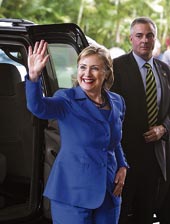
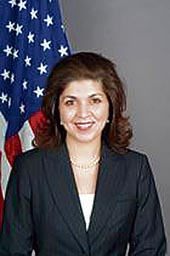
Farah Pandith was today appointed special representative to Muslim communities in the US state department headed by Hillary Clinton.

“This is not just an honour for our family but the entire Kashmir,” said her maternal uncle Mian Mushtaq Ahmad, a former chief engineer of the Jammu and Kashmir government.

“I spoke to her this morning and she was obviously very happy,” added the Srinagar resident.

Farah, in her early 40s according to her relatives, will be in charge of a new office that is responsible for reaching out to Muslims across the world, according to a release by the state department. They will take forward Clinton’s efforts to “engage with Muslims around the world at a people-to-people and organisational level”, it added.

Farah and Hillary : Indian connection

The Pandiths left for the US in 1970, when Farah was only four. Her father, Mohammad Anwar Pandith, is a businessman originally from Sopore, a place that has been in news for all the wrong reasons over the past 20 years. It is the hometown of Hurriyat hawk Syed Ali Shah Geelani and has been a separatist bastion all these years.

Her mother Mehbooba, from Srinagar, is a chest specialist. With their younger son, they live in Boston.

Farah, an alumni of the Fletcher School of Law and Diplomacy, has kept coming back to Kashmir over the years, her uncle said. She even did her postgraduation thesis on the Kashmir insurgency.

Earlier, she was a senior adviser on Muslim engagement at the state department, serving under the assistant secretary of state for European and Eurasian affairs.

“The last time she was here was some three years back. She was not allowed to come to this (troubled) region after that because she was working in the White House,” said Ahmad, many of whose relations are settled in the US.

The Pandiths are a respected business family in Sopore and Farah’s grandfather Abdul Samad Pandith was the first to set up a cinema there. Samad Talkies shut its doors after militants banned cinema in the Valley in 1990.

The appointment comes a year after the George W. Bush administration gave Neel Kashkari, a man of Kashmiri origin, the task of bailing out the US economy as the interim assistant secretary of the treasury for financial stability.

source: http://www.telegraphindia.com /  The Telegraph, Calcutta / Front Page> Nation> Story / by Muzaffar Raina / Srinagar, June 25th / Friday – June 26th, 2009

Ibrahim breaks IB barrier – Opinion divided on first Muslim head of intelligence agency

New Delhi :

Syed Asif Ibrahim broke the glass ceiling to be named the first Muslim Intelligence Bureau chief, but the appointment has divided opinion with some lauding it and others saying the officer who superseded four seniors was picked for political “gain”.

The 59-year-old IPS officer, who has been with the bureau for nearly three decades, will take over the premier internal intelligence-gathering agency at a time Muslims account for only 6 per cent of the country’s police force, according to the Sachar committee.

Security experts, both serving and retired, reacted to the selection. “There could not have been a better choice and Ibrahim is the best suited person to lead the IB,” said Amar Bhushan, former special secretary of external intelligence agency RAW.

Traditionally, Bhushan added, no Muslim officers were earlier appointed to senior posts in either the IB or the RAW. “There is a bias against the community but things are changing now. In fact, we need more Muslim officers in the IB to strengthen intelligence gathering,” he said. “For example, Muslim officers would get better access if they go to (a minority-dominated place like) Azamgarh.”

Former IB director Ajit Doval said Ibrahim was the “best officer in the national interest” and it was “just a coincidence” that he was a Muslim, but added a word of caution for the new chief. “As IB chief he will have to prove himself as it is a highly sensitive posting…. The political system in our country will always try to manipulate and take political advantage from him,” Doval said.

Ibrahim, a 1977-batch, Madhya Pradesh-cadre officer who has served in Kashmir and has exposure to cyber security, will take over from outgoing IB chief Nehchal Sandhu who retires on December 31.

The first Muslim to head the IB since independence, Ibrahim had joined the bureau as a special director (security) after his return from London where he served as minister (co-ordination) in Indian high commission.

Retired judge Rajinder Sachar, who submitted a much-debated report on the economic and social condition of minorities, said the government had sent the right message. “The best thing is that a deserving person has got it and it should not be seen as some favour has been done to him. He superseded officers because the government found him more competent,” he said. “Why should a Muslim be treated as an outsider?”

Sachar’s report had highlighted the poor representation of Muslims in government services, including in the police, and had suggested that the presence of minority officers in the force could help build confidence within the community.

Muslims now account for around 1.1 lakh of the country’s 16.5 lakh-strong police force, which works out to approximately 6 per cent. If the 47,000 in Jammu and Kashmir are excluded, the percentage dips further to 4 per cent.

Ved Marwah, a former governor and National Security Guard director-general, however, said the selection smacked of political opportunism.

“He is a brilliant officer and I do not have anything against him. But what was the need for the government to appoint him after superseding four senior officers. It has been done for political gain,” he said.

“I think this will generate groupism and ill-will among officers whose job is to protect national security. It could also increase communal bias rather than stopping it. This is a sad state of affairs as intelligence officers will have to act under the direction of politicians,” Marwah said.

The government, Marwah added, should recruit more youths at lower levels to improve the low representation of Muslims in the police. “Communal bias will disappear only when we have Muslim officers at all levels.”

Former Mumbai commissioner and counter-militancy star Julio Ribeiro disagreed with Marwah. “There is nothing abnormal that he superseded others to become the IB chief as there are several precedents. The selection committee takes the best competent person out of the lot. I think he is a good officer and the right choice for IB’s top post.”

Ribeiro didn’t think politics influenced the appointment. “I do not think the government will get political dividends from his appointment. Voters are not foolish,” he said.

Outgoing CBI director A.P. Singh also welcomed the selection. “It’s a good thing that an officer who happens to be a Muslim has been selected on the basis of competence.”

Wajahat Habibullah, chairperson of the National Commission for Minorities, said it was “great news” that Ibrahim had been selected on the basis of merit. “And also the fact that him being a Muslim did not come in the way.”

Following the Sachar committee’s report, the Prime Minister’s 15-point programme for the welfare of minorities had advised state governments to give special consideration to minorities while recruiting police personnel. For this purpose, the selection committees should have representatives from the minority community, it said.

“But the situation has not improved,” Habibullah said.

Bhushan, the former RAW special secretary, said there was a “deliberate policy” to exclude Muslims from sensitive and strategic services. “But the glass ceiling,” he added, “has started breaking.”

source: http://www.telegraphindia.com /  The Telegraph, Calcutta / Front Page> Nation> Story / by Imran Ahmed Siddiqui / New Delhi – November 29th / Friday – November 30th, 2012

Book on Muslims living in Assam

Guwahati :

Al-Ameen Welfare Society, an NGO, today announced to take up more initiatives under its project to educate the younger generation about the rich history and heritage of Muslims living in Assam.

The project has come at a time when indigenous Muslims in the state are facing an identity crisis because of unabated influx of immigrant Muslims from Bangladesh.

As part of the comprehensive project, a book on the history and society of Assamese Muslims was released at Srimanta Sankaradeva Kalakshetra here today. Renowned educationist Mohd Taher is the brain behind the project.

Former president of Asam Sahitya Sabha, Birendra Nath Dutta, while releasing the book, said Al-Ameen’s project is very exciting and would highlight how indigenous Muslims have contributed to the assimilation of the greater Assamese society.

Mohd Taher said the project would research and record its findings in the following five volumes, the history and heritage of Muslims of Assam, ethno-cultural study of Muslims in Assam, a study of the old historical mosques, mazars, dargahs, Wakf properties, study of Assamese Islamic literature and geographical distribution of Muslims of Assam and their socio-economic status.

Taufiqur Rahman Borborah, secretary general of Al-Ameen, said though Muslims living in the state for years maintained their religious identity, they assimilated themselves fully with the greater Assamese society in all other aspects and became an important constituent of Assamese culture and heritage. “We felt that the rich cultural heritage and contributions of the Muslims must be recorded for posterity and have thus taken up the project. It is sad that many of the younger generation are not aware of such a rich heritage. We hope that the project would be able to enlighten the future generation of Assamese Muslims about their glorious past,” Borborah said.

Borborah, who was also the principal of Assam Medical College and Hospital in Dibrugarh, said the book on Assamese Muslim history and heritage would be translated into English and published in an e-book format to let the world know about the rich background of Assamese Muslims.

Syed Tanwir Alam, assistant professor of microbiology at Gauhati Medical College and Hospital, who was present during today’s book release function, said Al-Ameen’s project would help the younger and future generation of Assamese Muslims to know their roots. Alam said the history, heritage and contributions of Muslims to the larger Assamese society should be studied, probed and recorded.

source: http://www.telegraphindia.com / The Telegraph, Calcutta / Front Page> North East > Story / by Our Correspondent , Guwahati – November 10th / Monday – November 11th, 2013

NGO to chronicle Muslim history

Guwahati :

The Shillong Muslim Union, an NGO of prominent Muslims, has started a project to chronicle the contributions and history of the Muslims in Meghalaya.

The general secretary of the NGO, Sayeedullah Nongrum, told this correspondent that the union, since its inception in 1905, had been rendering service to the minority community in particular and people in general for social, cultural, religious and humanitarian causes in Meghalaya.

He said the union had been growing and expanding its work right from British India to pre-Partition days and also from undivided Assam to the present state of Meghalaya with its headquarters at Laban, Shillong.

“Right from setting up a college for poor students, an orphanage, a big idgah and a mosque exclusively for women to offer prayers — the union has already several projects. Though Christianity is the main religion in Meghalaya, there are about three lakh Muslims residing in the state. They are hard working and peace-loving people trying whatever they can do — something worthwhile — for the welfare of all people in the state,” Nongrum who is also a sitting MLA said.

The Muslim population particularly in Shillong comprises Khasis, Assamese, Bengali, Hindi and Nepali-speaking people.

Nongrum said the union had now decided to work on a project to chronicle the rich contributions and history of the Muslims in Meghalaya.

He said the union would first publish a comprehensive book highlighting various Muslim individuals and their works.

“So the union requested its members and a Muslim who once resided in Shillong to join the project for its success. If anyone is associated with the union, he or she is requested to give us details of the particulars by either writing to our websitewww.umshyrpicollege.org or to our office address at Laban, Idgah Complex, Shillong,” Nongrum said.

source: http://www.telegraphindia.com / The Telegraph, Calcutta / Front Page> North East > Story / by A Staff Reporter, Guwahati – March 15th / Friday – March 16th, 2012

Former Kodagu ZP Vice-President Iqbal Hassan shot dead

IqbalHassanMPOs24sept2014

Virajpet :

Local Congress leader and former Kodagu ZP Vice-President Iqbal Hassan (46), was shot dead in broad daylight by unidentified assailants at Virajpet town in Kodagu district on Wednesday.

Iqbal was taking his seat for having lunch at a hotel in the busy Gadiyara Kamba area of the town at about 2 pm, when one of the two miscreants who came in a maroon coloured Maruti Alto car shot him in the chest, killing him instantly.

The miscreant reportedly fired another round which hit another person by name Chandrasekhar, a resident of Shivakeri, who was having lunch in the hotel, injuring him on his leg and chest. He was immediately rushed to Virajpet Government Hospital, from where he was shifted to Madikeri Hospital for advanced treatment. The miscreants managed to flee in the car in which they had come.

It is said that Hassan was reportedly involved in a dispute over a property with one Moosa, his neighbour, which had resulted in a clash between the two rival groups a few days ago, with both the groups complaining to the Virajpet Police.

Following the complaint and counter complaint, the Police had summoned both the groups to the Police Station yesterday and had succeeded in making both the groups arrive at a compromise, it is learnt.

The deceased Hassan is survived by wife and two sons aged 15 and 12. On hearing the news, residents of Virajpet town and surrounding areas streamed into the hospital and demanded arrest of the culprits.

Iqbal Hassan, who was associated with the Congress was serving as on office-bearer of the party’s Kodagu District Minority Cell.

He was elected to Kodagu ZP from Kadanur Constituency in Virajpet Taluk and served as ZP Vice-President from July 12, 2000 to March 12, 2002. He had also been ZP incharge-President for some time.

IGP (Southern Range) B.K. Singh, Kodagu SP Varthika Katiyar and other senior officials rushed to the spot. The Police have stepped up security in Virajpet Town following the murder.

source: http://www.starofmysore.com / Star of Mysore / Home> General News / September 18th, 2014

A trip down the memory lane: St. Aloysius High School

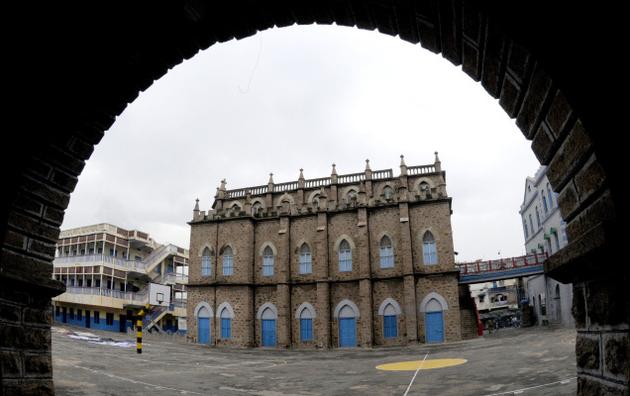
A view of the chapel on the St. Aloysius High School premises, the oldest English medium school in Visakhapatnam./  Photo: C.V. Subrahmanyam / The Hindu
A view of the chapel on the St. Aloysius High School premises, the oldest English medium school in Visakhapatnam./ Photo: C.V. Subrahmanyam / The Hindu

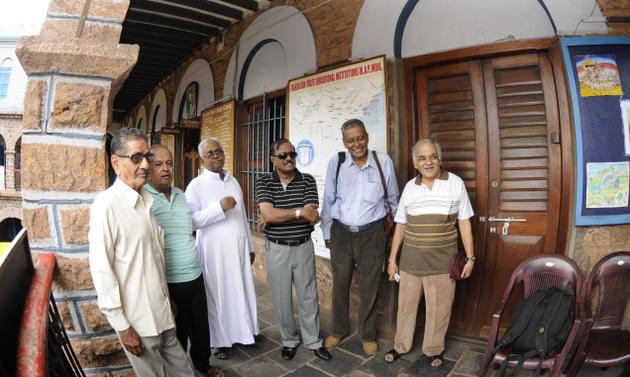
Six classmates of the 1961 batch of St. Aloysius High School met after five decades at their alma mater. Reminiscing the old days, Narayanswami, who played cricket for Andhra, said it was in this courtyard that he picked up the rudiments of the game.

A group of six classmates met after five decades to relive their naughty days at St. Aloysius High School, here on Saturday.

Though, into their late 60s and early 70s none appeared to have lost his youthful vigour. Hopping from one classroom to another, going around the expansive courtyard, and calling their buddies by their nicknames, the six went on a nostalgia drive.

A group of seven friends who studied in St. Aloysius High School meeting after five decades on the school premises to relive the old days in Visakhapatnam on Saturday. Photo: C.V. Subrahmanyam / The Hindu

The old students of the 1961 batch who met were P.R. Narayanswami, former Director of Physical Education in Andhra University, M.A. Raihan, former Commander in the Indian Navy, V.N. Natarajan, Chief Manager of Indian Overseas Bank, Fr. George Kottam, Arun Panse, former Hindustan Shipyard employee, and Md. Ali Khan, a retired officer from the Visakhapatnam Port Trust.

Accompanying them was Rohinton Kapadia, who was a couple of years junior to them in school.

Incidentally, Fr. Kottam was not only an old student but also principal of the school during early 1980s.

Reminiscing the old days, Narayanswami, who played cricket for Andhra, said it was in this courtyard that he picked up the rudiments of the game.

“We are always ahead of the rest in athletics and games. We had the best boxing team in the district. In fact, ours was the only school that had a proper boxing ring. Even the ENC, then INS Circars, would borrow our ring for their tournament,” said Raihan.

We also had a strong NCC contingent and 80 per cent of our students were from the Anglo Indian and Muslim communities. But we never experienced any sort of discrimination based on religion, caste, or creed, said Arun Panse.

On how strict was the school, they came out in chorus, “Fr Eliemeynet, a French national, who was our principal, and our teachers were strict, but they gave us the rope to be mischievous too.”

According to Fr. Kottam, the schooling then was about holistic learning.

For Md. Alikhan, the association with the school has been for three generations. His son also studied in the school and now his grandchildren are studying there

source: http://www.thehindu.com / The Hindu / Home> News> Cities> Visakhapatnam / by Sumit Bhattacharjee / Visakhapatnam – September 21st, 2014

Andhra Univ to Present NSS Awards Today

Visakhapatnam :

The Andhra University is going to host a state-level NSS awards function at BR Ambedkar Assembly Hall here Wednesday from 10.30 am. Human resource development minister Ganta Srinivasa Rao would be the chief guest at the occasion.

Revealing the details to the newsmen here Tuesday, AU vice-chancellor GSN Raju said that NSS cadets from across the state would take part in the awards function.

As many as 16 awards would be given away during the function, of which the AU NSS cadets won four awards. EPS Bhagya Lakshmi and Ch Adinarayana achieved awards in the category of Programme Officers, while Rahul Pal and Md Goush Khan won the best volunteers awards.

NSS regional head R Gokul Krishnan and state coordinator P Ramachandra Rao would be present, he added.

This apart, a blood donation camp will be organised jointly by the Indian Red Cross Society and AUCE at YVS Murthy Auditorium at 9.30 am on Sept 24 during which the NSS cadets and AU officials would donate their blood on the occasion.

source: http://www.newindianexpress.com / The New Indian Express / Home> States> Andhra Pradesh / by Express News Service / September 24th, 2014

Gandhiji’s visit to Bangalore and meeting with Mir Hamza Hussain

Sir,

This is in response to Prof. A.V. Narasimha Murthy’s write-up on Gandhiji’s visit to Bangalore in SOM dated Sept. 7. This is to share one more information with the readers.

The bungalow that Gandhiji stayed in Bangalore was the Kumarakrupa. Gandhiji also made a visit to look up Mir Hamza Hussain, the former Inspector General of Police and the member of the Council of the Princely State of Mysore, at his Binfield residence, No. 87, Richmond Road, Bangalore -25. This was a visit to look up Hamza Hussain who was unwell at that time.

Sajjad Hussain, the grandson of Mir Hamza Hussain, recalls the visit. The family had placed a chair next to the patient’s bed for Gandhiji. But he chose to sit on the bed. The topic of discussion was the Dalit movement which was in its peak.

Mrs. Hamza Hussain handed over the gold bangles she was wearing to Gandhiji for the cause. The grandson also told me that his father, Mir Iqbal Hussain, who was the Chief Justice of the High Court of Karnataka, had written about this in the Deccan Herald long ago.

Prof. Shakira Khan, Teacher Fellow, Department of Political Science, Kuvempu University, Shimoga 

14.9.2014

source: http://www.starofmysore.com / Star of Mysore / Home> Voice of the Reader / September 17th,  2014