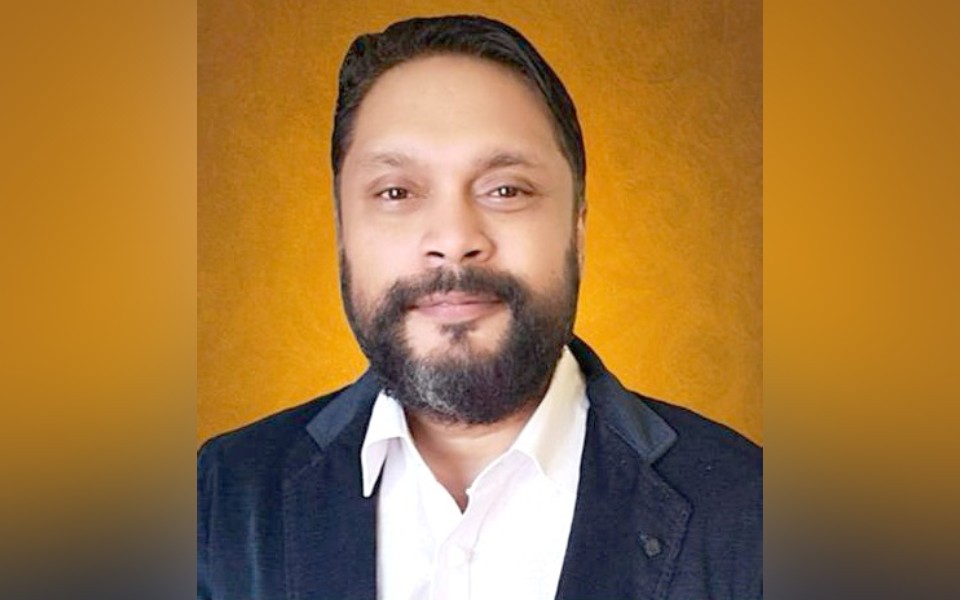
In a historic moment, Hamza Hussain and Altaf Hussain, two brothers serving in Karnataka’s law enforcement, have been honored with the President’s Award for Meritorious Service on India’s 76th Republic Day.
Hamza Hussain, Superintendent of Police (S.P.) Commandant, 12th Battalion, KSRP, Tumkur, has been recognized for his leadership in critical police operations and public safety. His brother, Altaf Hussain, Assistant Sub-Inspector (ASI) at Wilson Garden Police Station, Bangalore, has played a vital role in crime prevention and community policing.
The award, one of the highest honors in Indian law enforcement, acknowledges their dedication, integrity, and commitment to justice. Their achievement is a proud moment for Karnataka and the nation, inspiring future generations of police officers.
The brothers expressed their gratitude, stating, “This award is a tribute to all officers who tirelessly serve the nation. We dedicate it to our department, colleagues, and family for their unwavering support.”
Their recognition on Republic Day underscores their exceptional service in upholding law and order, marking a milestone in Karnataka’s police history.
source: http://www.islamicvoice.com / Islamic Voice / Home> Cover Story / Vol. 37-03, No. 448 March 2025
Maulana S M Rabey Hasani Nadwi, Rector Nadwatul Ulama and President All India Muslim Personal Law Board, was a distinguished scholar of Islam. He was a man of literature and composition.
He passed away on April 13 in Lucknow.
Scion of an illustrious Syed family that produced a host of scholars, thinkers and spiritual preceptors like Shah Alamullah Hasani (d.1685), Syed Ahmad Shaheed (d.1831), Hakeem Syed Abdul Hai Hasani (1923), Dr Syed Abdul Ali Hasani (d.1961 ), Syed Muhammad Al- Hasani (1979), Syed Maulana Abul Hasan Ali Nadwi (d.1999), Maulana S M Wazeh Rasheed Nadwi (d.2019) and so on.
Almighty Allah bestowed upon Maulana Rabey extraordinary knowledge and wisdom. His multifaceted genius can be discussed in various ways. Maulana Rabey was a great Islamic scholar, a thinker, an educationist, a historian, a litterateur, a theologian, a teacher, a reformer, an orator, a journalist, a jurist, a writer, a philanthropist, a biographer of Prophet Muhammad (PBUH), a spokesman of the poor and the like.
He was a true replica of his predecessor Maulana S Abul Hasan Ali Nadwi. He was Maulana Ali Miyan’s nephew and a confidante for several decades.
Maulana Dr Abdullah Abbas Nadwi writes, “Sheikh Rabey was with Sheikh Abul Hasan Ali Nadwi at all times, whether at home or during a journey. He represented Sheikh Nadwi on many occasions and spoke on his behalf. If Sheikh Nadwi accepted any responsibility, it was Sheikh Rabey who was to implement it.
He further says, “Maulana Rabey’s looks had become like that of Sheikh Abul Hasan Ali Nadwi.”
Education qualifications
Maulana Rabey was born in 1929 at Takiya Kalan, Raebareli, U.P. He had his elementary education at home and got higher education at Darul Uloom Nadwatul Ulama, Lucknow. Eminent personalities like Maulana S Abul Hasan Ali Nadwi, Maulana Mohammad Shah Haleem Ata, Maulana Mufti Mohammad Saeed, Maulana Syed Hameeduddin, Maulana Oais Nagrami were his teachers. After completing education at Nadwatul Ulama, he went to Deoband and became a student of Maulana Syed Husain Ahmad Madani and other distinguished Ulama there.
He also spent about one year in Hijaz (Western Saudi Arabia) where he gained considerable benefits from prominent scholars.
Career heights
Maulana Nadwi writes, “My grandfather, Syed Khaliluddin Ahmad Hasani (nephew of Syed Shah Ziaun Nabi Hasani) who was a prominent landlord had made special arrangement for my father to acquire necessary skills to take care of his personal and household needs. Thus, my father’s responsibilities were limited to taking care of matters pertaining to land and agriculture. He made our maternal uncles (Sheikh Nadwi and his older brother Dr Syed Abdul Ali Hasani) responsible for our education and upbringing.”
He derived considerable benefit and inspiration from them. In a true sense, Dr Abdul Ali planted the seed of worthiness in him and Maulana Abul Hasan Ali Nadwi nurtured it.
Undoubtedly, he was a man of noble qualities. He was a paragon of morality. He never showed egotism, pride, and haughtiness. He had a throbbing heart for the entire nation. He met everyone cheerfully.
He was kindhearted and righteous person. He possessed sturdy intellect and common sense.
The most striking aspects of his life were his istighna (expecting nothing from anyone except Allah) sincerity, simplicity, and piety. He meticulously followed Sunnah (traditions of the Prophet). Like his predecessor Maulana S Abul Hasan Ali Nadwi, he led a pious and exemplary life. He was a true descendant of salaf saliheen (pious lineage).
Teacher par excellence
Maulana S M Rabey Hasani Nadwi was appointed as teacher in 1949. He was a dedicated to his profession. He was an embodiment of all sublime qualities and virtues necessary for a good teacher. His method of teaching was unprecedented.
Teaching was his sword that he wielded so effectively that very few people could match. Scores of students quenched their thirst for knowledge from him.
He left a galaxy of students behind who impart education in their respective areas. No doubt, it is an everlasting tribute to him. His myriad contributions in the field of education will always be remembered.
Rector of Nadwatul Ulama
After the demise of Maulana S Abul Hasan Ali Nadwi, Maulana Rabey was elected Rector of Nadwatul Ulama in 2000. Darul Uloom Nadwatul Ulama made great strides in various fields of education under his rectorship. Besides various hostels, separate building for higher classes, grand halls, extension of central Mosque and Matbakh (Mess) have also been constructed under his rectorship. He dedicated his entire life to the cause of Nadwatul Ulama’s growth. He played a constructive role in Nadwa’s progress and development. His remarkable contributions and achievements in the cause of Nadwatul Ulama will always be remembered.
President of Muslim Personal Law Board
After passing away of Maulana Qazi Mujahidul Islam Qasmi, Maulana Rabey was elected the fourth President of the board on June 22, 2002. For two decades, Maulana Rabey held the post. He played a pivotal role in tackling key issues faced by the Board. Accordingly, scores of important issues have been solved during his tenure.
Truly speaking, he was an erudite scholar. The comprehensive knowledge and intellectual brilliance of Maulana Rabey had been acknowledged by his contemporaries. Because of his vast knowledge in all the religious and secular sciences, he had been entrusted with many important positions and offices, and was also conferred several prestigious awards, including President Award for his outstanding service in the arena of Arabic language and literature.
Positions held the Maulana
Rector, Nadwatul Ulama, Lucknow
President, All India Muslim Personal Law Board
President, World Forum of Islamic Literature
Member of Makkah-based Muslim World League
Executive Member of Darul Uloom Deoband
Patron, Islamic Fiqh Academy, New Delhi
President ,Academy of Islamic Research and Publication, Lucknow
Patron, Maulana Azad Memorial Academy, Lucknow
Member Oxford Centre for Islamic Studies (UK)
The awards
President Award in 1982 and; Shah Waliullah Award by Institute of Objective Studies, New Delhi in 2015.
His writings
He was a prolific writer. He authored more than four dozen books in Arabic and Urdu. His literary work is multidimensional. His creative work is complete in itself. He wrote almost in every style in prose. His various books are included in the syllabus of different institutions including Darul Uloom Nadwatul Ulama, Lucknow. Some of his major publications are as under:
He was also an accomplished journalist. Because of his vast knowledge in all religious sciences, including jurisprudence, and a profound knowledge of different languages like Urdu, Arabic, English, Persian and the likes, he forthrightly shed light on every subject at length. Hundreds of articles are to his credit. He was a patron of five magazines published from Nadwatul Ulama.
The passing away of Maulana Rabey Nadwi is also a personal loss to me. Like his younger brother Maulana S.M.Wazeh Rasheed Nadwi(1933-2019), he had also been a great inspiration to me. My first book, “The Plain Truth” had been released by him in 2008. He also gave Rs.5,000 to me as reward. I have been lucky enough that my latest book, “Islam and Education” was also released by him on March 21, 2023 at Guest House of Darul Uloom Nadwatul Ulama.
The most surprising event was his last journey. His funeral prayer was led twice. The first funeral prayer was led by Dr Saeedur Rahman Azami Nadwi at Nadwa and the second was led by Maulana S Bilal Abdul Hai Hasani Nadwi at Takia Kalan. He was laid to rest in his ancestral graveyard at Takia Kalan, Rai Bareli.
Dr Obaidur Rahman Nadwi is a faculty member of Darul Uloom Nadwatul Ulama
source: http://www.siasat.com / The Siasat Daily / Home> Featured Articles / by Dr Obaidur Rahman Nadwi / May 13th, 2023
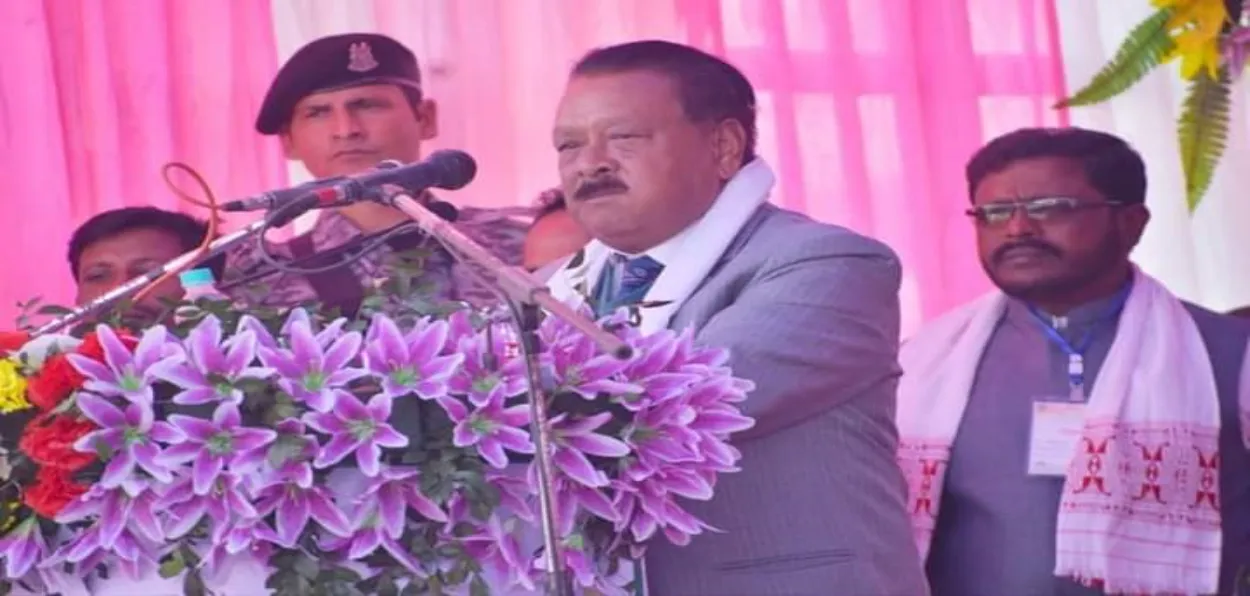
In the heart of Meghalaya, where Christianity is deeply woven into the cultural fabric, Syedullah Nongrum stands as a prominent figure, embracing both his Khasi and Muslim identities.
As the General Secretary of the Shillong Muslim Union (SMU) for the past three decades, Nongrum has played a pivotal role in safeguarding and uplifting the Muslim community while fostering interfaith harmony.
Founded in 1905, the Shillong Muslim Union (SMU) holds a legacy older than the All India Muslim League, which was established a year later in 1906. The union has had a long history of leadership, with none other than India’s former President, Fakhruddin Ali Ahmed, serving as its first president in 1964.
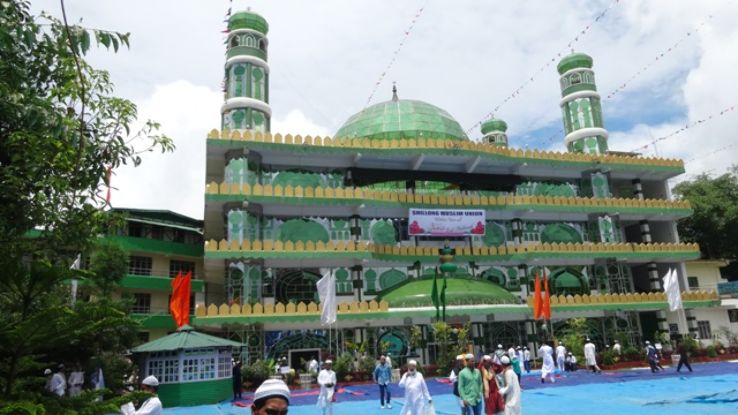
Madina Mosque, Shillong, Meghalaya
“I had extensive discussions with the former President Fakhruddin Ali Ahmed about the welfare of the Muslim community in Meghalaya,” Nongrum recalls. Determined to revive the organization, his first step was to set up a dedicated office in Shillong. Over the years, he has worked relentlessly to protect and enhance SMU’s assets, ensuring its service to all communities, irrespective of caste, creed, or religion.
When Nongrum took over in 1982, SMU’s properties were in disarray, and opportunists had begun to take advantage of the situation. “The guest house and orphanage were dilapidated, and the Idgah ground was in terrible shape,” he says.
Determined to transform these neglected assets into centers of growth and learning, Nongrum spearheaded the construction of Madina Masjid, the only glass mosque in India.
This magnificent structure in Shillong is not just a place of worship, it also has an Islamic learning center; houses a school for underprivileged children, and a higher education college with modern facilities in science, arts, and technology.
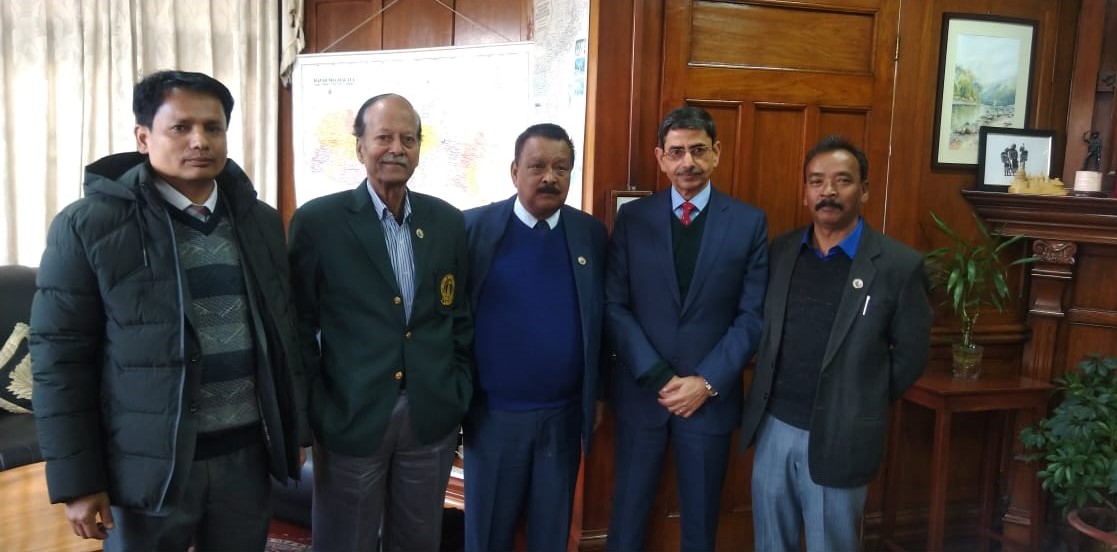
Syedullah Nongrum (third from left) with former Nagaland Governor RN Ravi (second from right)
Beyond Shillong, SMU has successfully sponsored four other mosques and multiple graveyards in different districts of Meghalaya.
Nongrum, son of Subartan Bibi Nongrum and Late S.K. Abdullah, hails from the state’s oldest Khasi-Muslim family. The son of Late Subartan Bibi Nongrum and Late S.K. Abdullah, he holds a unique place in Meghalaya’s political landscape.
He is the only tribal Muslim to have been elected to the Meghalaya State Assembly, representing Rajabala constituency since 1993. He has served as a cabinet minister, advocating for the rights and development of his people.
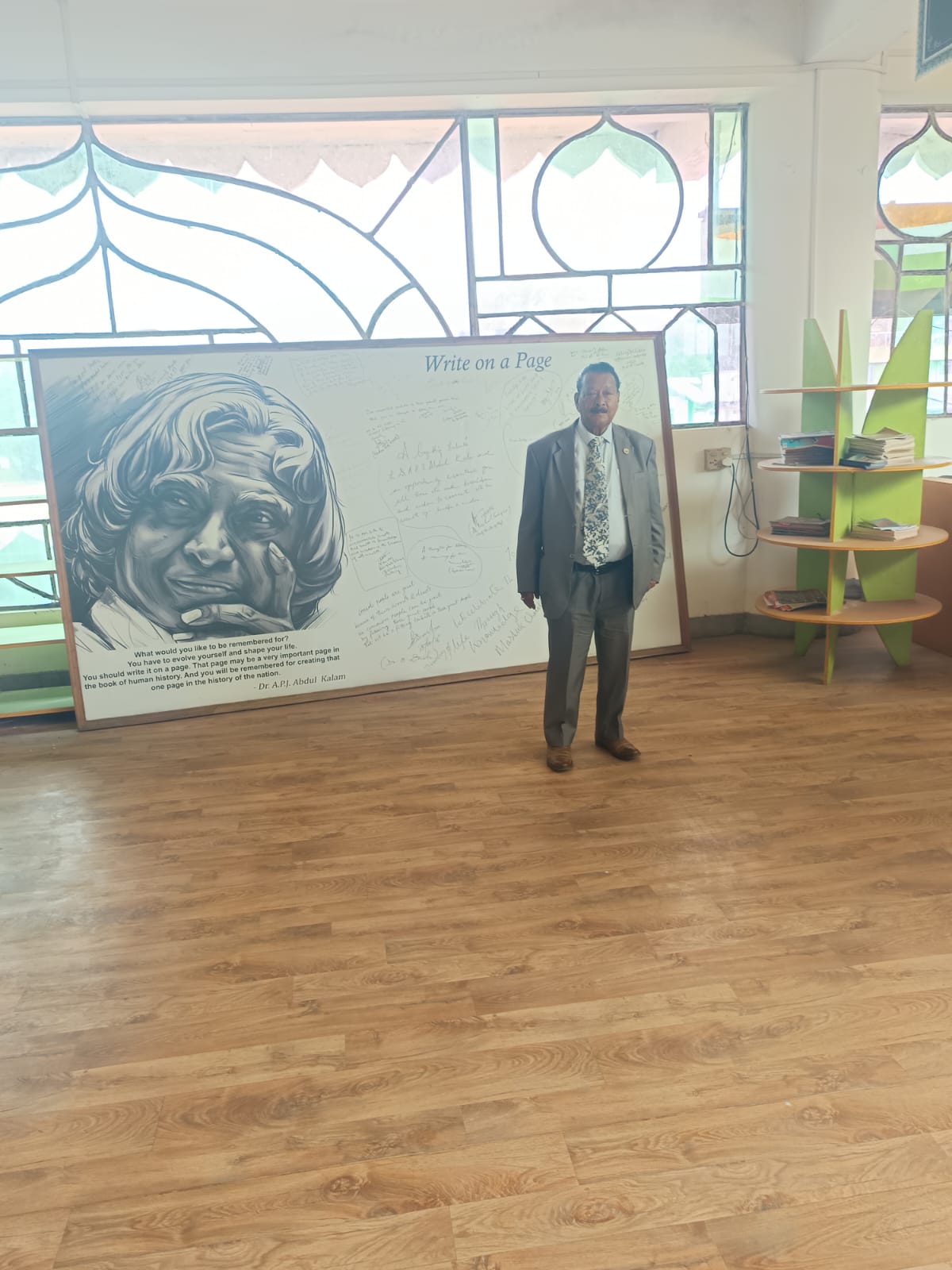
A painting of President APJ Abdul Kalam inside the Madina mosque library
His contributions extend to education. He played a crucial role in establishing Umshyrpi College which has over 3,500 students. “We ensure that education reaches the underprivileged, regardless of their community or background,” he emphasizes.
For Nongrum, SMU is not just an institution for Muslims—it is a platform for all communities. His vision transcends religious boundaries, as reflected in his role as a founder member of the Shillong All Faith Forum, a collective that promotes communal harmony and mutual understanding among different religious groups.
“We follow the traditions of the land. As an obedient Khasi Muslim, I am committed to carrying forward the good work for the betterment of Meghalaya,” Nongrum asserts.
His journey is a testament to resilience, leadership, and inclusivity. In a region where identities are often defined by religion and ethnicity, Syedullah Nongrum has emerged as a bridge between communities rooted in their respective cultures.
(The writer is an independent journalist based in North East India)
source: http://www.awazthevoice.in / Awaz, The Voice / Home> Story / by Jhumur Deb, Shillong / Februarty 26th, 2025
The Southern India Plywood Manufacturers’ Association (SIPMA) held its General Body Meeting on February 22, 2025, bringing together industry leaders and experts to discuss key issues affecting the plywood sector.
The meeting, held in Bangalore, focused on crucial matters such as the QCO order, sustainability initiatives, emission norms, and industry standards. Discussions also included labour welfare and modernization efforts aimed at improving productivity in the sector.
A major highlight of the meeting was the election of new office bearers. Dr. Prashant MA was elected as the President of SIPMA. He is currently the Director of AK Apple Ply, a company founded by the late M. Ahmed in 1984. Originally from Kochi, Dr. Prashant has been associated with AK Apple Ply for over three decades, having joined the company in the 1990s. He gained valuable experience under the mentorship of M. Ahmed and played a key role in expanding the company’s operations. Expressing his gratitude, Dr. Prashant acknowledged the vision of his late mentor and said he was honored to take on the responsibility of leading SIPMA to serve the plywood industry.
Alongside Dr. Prashant, Jitendra R Patel, Managing Director of Raaj Wood Products in Nelamangala, was elected as Vice President, and K. Hariraya Kamath from Karnataka Plywood in Sullia, Karnataka, was appointed as Secretary.
During the event, SIPMA also recognized the contributions of industry veteran Siraj Bhai of Veneer Mills by presenting him with the Lifetime Achievement Award. A member of SIPMA since 1980, he has dedicated his career to the growth of the plywood sector and has been actively involved in its development.
source: http://www.english.varthabharati.in / Vartha Bharati / Home> Karnataka / by Vartha Bharati / February 25th, 2025
A ‘family get-together’ will be organized at Al Qusais Amity School in Dubai on Saturday, February 15, under the auspices of the UAE ‘Sahebaan’ community.
‘Sahebaan’ is an Urdu-speaking Muslim community from Dakshina Kannada and Udupi.
This ‘Family Get-Together’ will be held from 4 PM to 11 PM, and several programs will take place during this time, said program organizer and patron H.M. Afroz Assadi.
He stated that a felicitation program will be held to recognize children studying in the UAE who have scored more than 90% marks, as well as those who have achieved success in sports.
The chief guests of the event will be ‘Sahebaan’ community leaders, businessman and Hidayat Group President Hidayatullah Abbas, non-resident businessman, Philanthropist and owner of Nash Engineering Company in Dubai K.S. Nisar Ahmed, along with several other dignitaries.
source: http://www.english.varthabharati.in / Vartha Bharati / Home> Gulf / by Vartha Bharati / February 12th, 2025
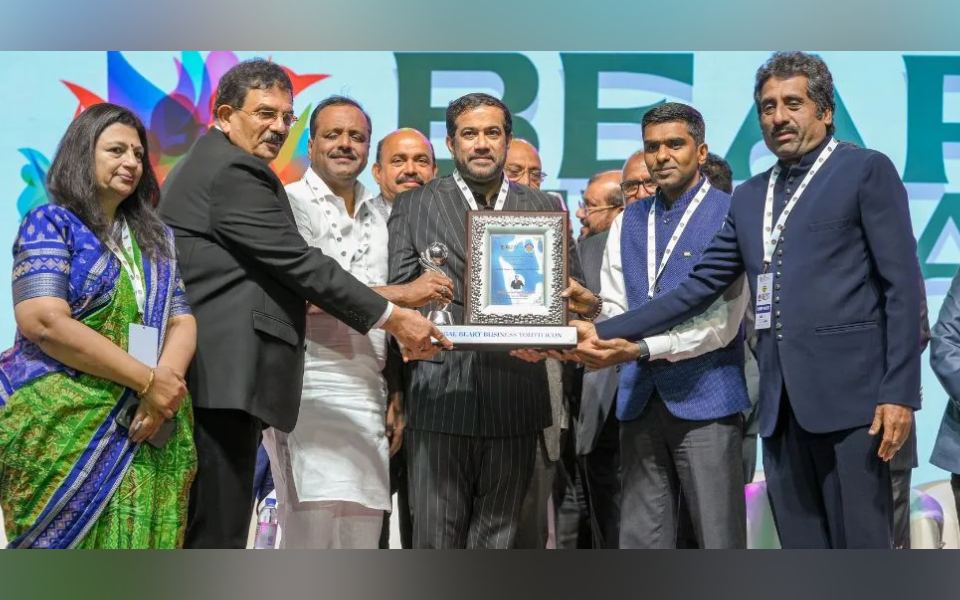
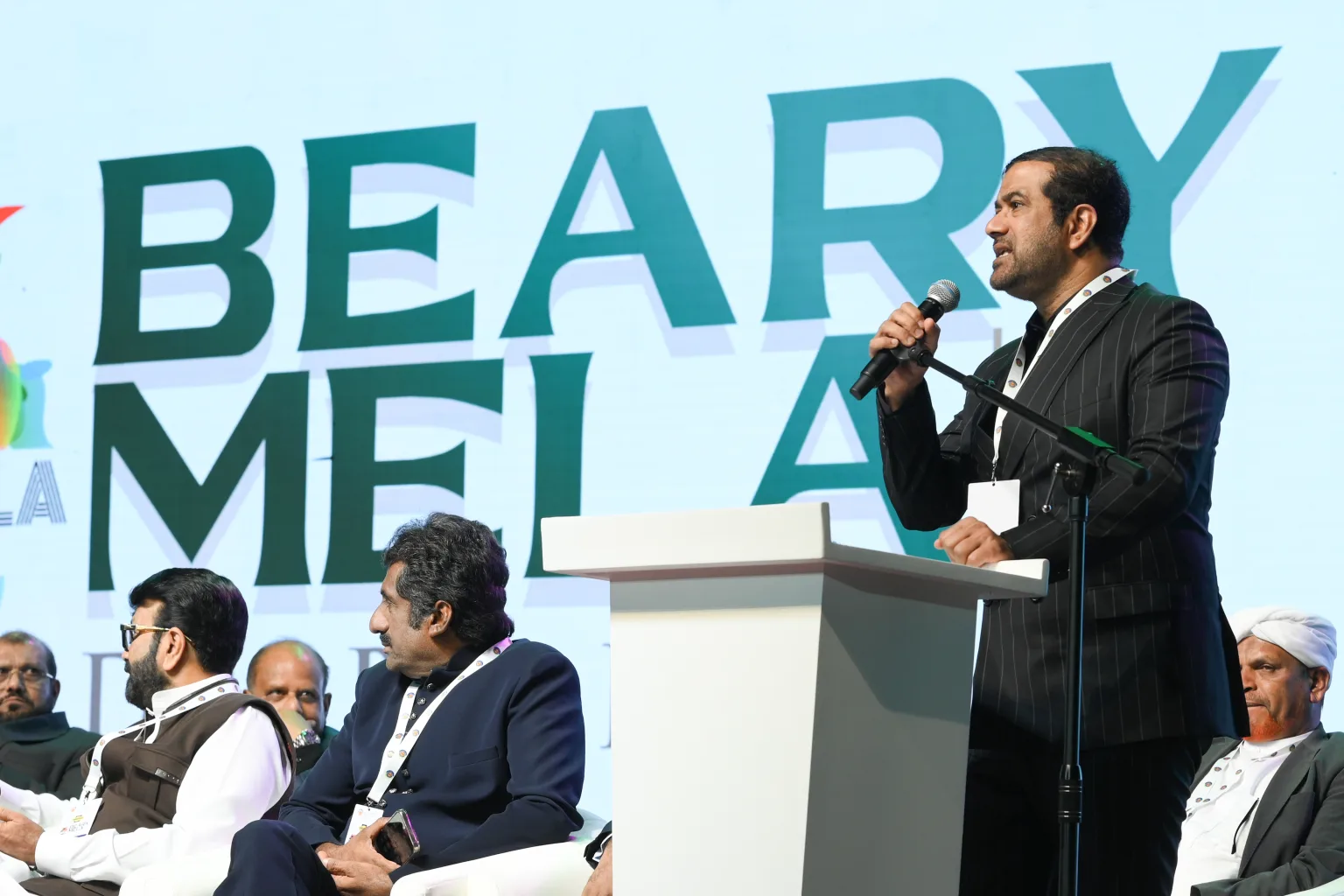
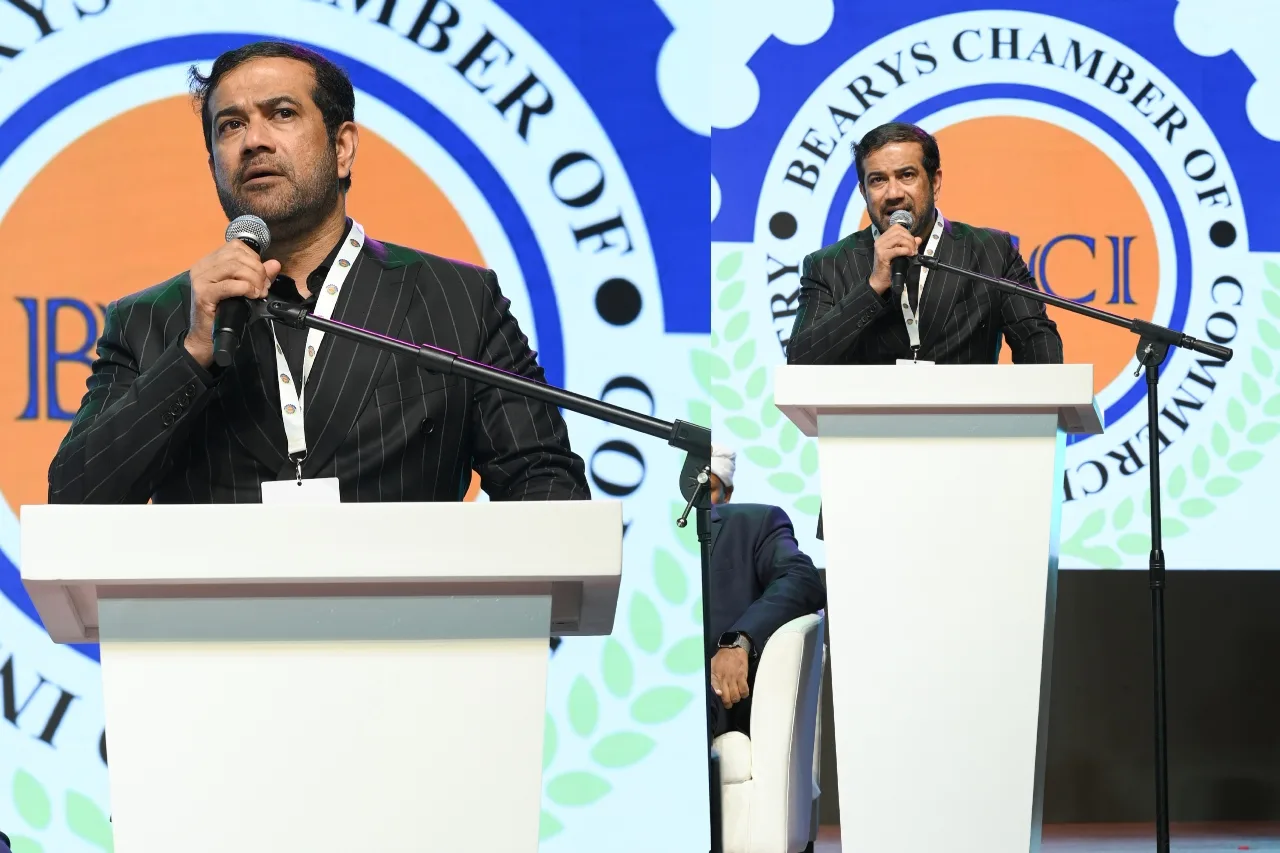
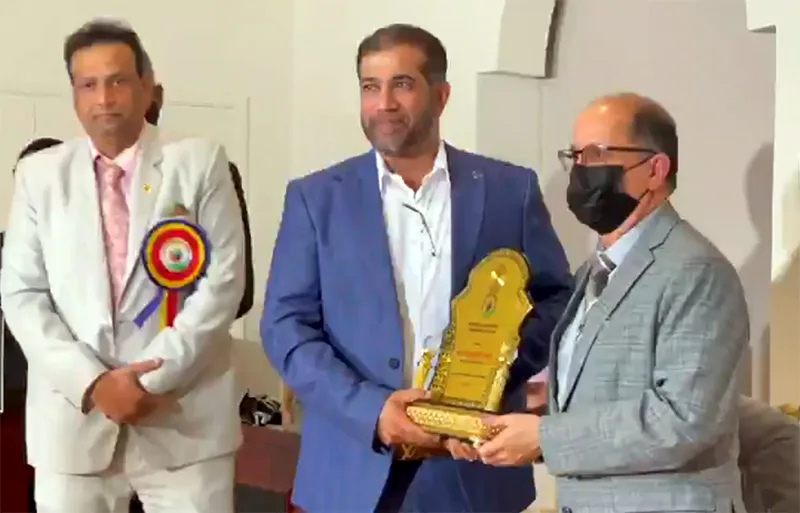
Muhammad Ashif Karnire, CEO of Saudi Arabia-based Expertise Contracting Company Limited, was honoured with the prestigious ‘Global Beary of Business Youth Icon’ award at the Beary Mela 2025. The event was held on Sunday at the Etisalat Academy Grounds under the auspices of the Bearys Chamber of Commerce & Industry (BCCI), UAE.
Karnataka Assembly Speaker UT Khader graced the event as the Chief Guest.
Karnataka Education Minister Madhu Bangarappa, Indian Ambassador to Dubai Satish Kumar Sivan, State Hajj Minister Rahim Khan, Bengaluru Shanthi Nagar MLA NA Haris. Vice-President of the Government’s Non-Resident Indian Directorate Dr. Aarti Krishna, social worker Dr. Ronald Colaco, Thumbay Group founder president Dr. Thumbay Moideen, renowned non-resident Indian businessman and CEO of Al Muzain, Saudi Arabia, Zakaria Jokatte, Expertise Contracting Limited Director K.S. Sheikh Karnire, UAE Bearys Chamber of Commerce & Industry (BCCI) UAE Unit President Hidayat Addoor and others were present on the occasion.
The award recognized Muhammad Ashif Karnire’s exceptional contributions to the industry and his outstanding achievements. Karnire, who heads the prestigious Expertise company in Jubail, Saudi Arabia, had previously been honoured in 2021 by Dr. Ausaf Saeed, the Indian Ambassador to Saudi Arabia, for his community services and professional excellence.
Founded in 2008, Expertise is a leading industrial services provider in Saudi Arabia, employing over 15,000 professionals and operating more than 7,500 pieces of equipment. The company serves a wide range of industries, including petrochemicals, oil and gas, fertilizers, steel, cement, water treatment, and power generation. Headquartered in Jubail Industrial City, Expertise has established a strong presence with branches across Saudi Arabia.
source: http://www.english.varthabharati.in / Vartha Bharati / Home> Gulf / by Vartha Bharati / February 14th, 2025
Doctorates awarded for transformative contributions to Medical Education, Healthcare Innovation
Dubai, UAE :
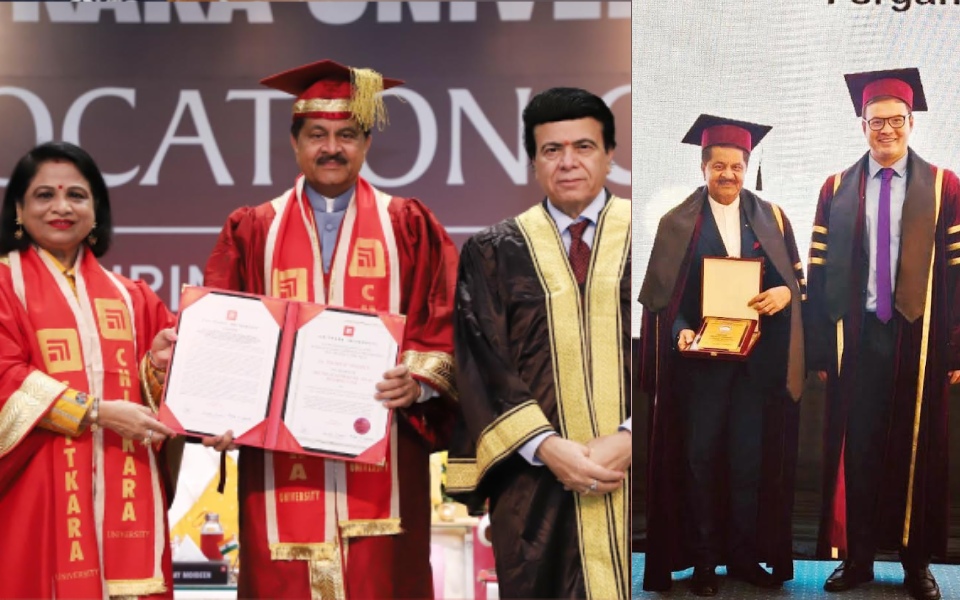
Dr. Thumbay Moideen, Founder President of Thumbay Group, has been awarded two distinguished honorary doctorates in recognition of his outstanding contributions to medical education, healthcare innovation, and philanthropy. The accolades were conferred by Chitkara University, India, and Fergana Medical Institute of Public Health, Uzbekistan, further solidifying his impact on the global healthcare landscape.
At a grand ceremony held at Chitkara University, Chandigarh, India, Dr. Moideen was conferred with the Doctor of Literature (D.Litt) Honoris Causa for his exemplary leadership in advancing medical education, pioneering healthcare initiatives, and fostering innovation in the sector. The award acknowledges his relentless commitment to enhancing healthcare accessibility and shaping future generations of medical professionals.
Additionally, Fergana Medical Institute of Public Health, Uzbekistan, honored Dr. Moideen with an Honorary Doctorate, celebrating his visionary role in international healthcare collaborations and his dedication to fostering academic excellence in the medical field.
With these latest honors, Dr. Moideen now holds a total of four honorary doctorates, a testament to his remarkable leadership and visionary contributions.
Expressing his gratitude, Dr. Thumbay Moideen stated, “I am deeply honored to receive these prestigious recognitions. This is not just a personal achievement but a reflection of the unwavering commitment of the entire Thumbay Group towards transforming healthcare and medical education globally. We will continue to push boundaries in innovation, ensuring accessible, high-quality healthcare and education for all.”
Driving Forward Thumbay Group’s Vision 2028, With these accolades further fueling his mission, Dr. Moideen is steadfast in leading Thumbay Group’s Vision 2028, a strategic roadmap aimed at making Thumbay Group a global leader in healthcare, medical education, research, and wellness innovation.
Through his visionary leadership, Dr. Thumbay Moideen continues to turn this ambitious vision into reality, ensuring that Thumbay Group remains at the forefront of healthcare and education innovation. With its rapid expansion and digital transformation strategies, Thumbay Group is on track to achieving and further cementing its status as a global powerhouse in healthcare and education. His relentless pursuit of excellence, coupled with a commitment to social impact, is driving the group’s expansion and shaping the future of the industry.
source: http://www.english.varthabharati.in / Vartha Bharati / Home> Gulf / by Vartha Bharati / March 03rd, 2025
India’s first Net-Zero (on-site solar energy) Retail Experience Centre, curated by Bearys Innomark, has set a new benchmark in sustainable architecture and green innovation. The project, which houses the globally renowned furniture brand MillerKnoll, is a testament to Bearys’ longstanding commitment to eco-friendly development and responsible urban design.
The launch event, attended by industry leaders, architects, project management consultants (PMCs), and clients, marked a significant milestone in India’s journey toward sustainable commercial spaces. The occasion was graced by Chief Guests N A Haris Nalapad, MLA of Shanthinagar and Chairman of the Bangalore Development Authority (BDA), Kartik Shethia, Managing Director for APMEA, International Contract, MillerKnoll, Syed Mohamed Beary, Founder & CMD, Bearys Group and Mazhar Beary Executive Director, Business Development & Retail, Bearys Group. Their presence highlighted the importance of sustainable infrastructure in shaping the future of urban development.
For decades, Bearys has been at the forefront of green building initiatives, blending innovation with environmental responsibility.
The MillerKnoll Experience Centre is a reflection of this ethos, demonstrating how cutting-edge design can coexist with sustainability. With on-site solar energy ensuring a Net-Zero footprint, the space is more than just a retail hub—it is a model for the future of responsible commercial development.
The event was not just about unveiling a new retail space but reinforcing a collective vision for a greener tomorrow. By championing sustainable design, Bearys continues to inspire the industry, proving that business growth and environmental stewardship can go hand in hand, the group said in a press statement.
source: http://www.english.varthabharati.in / Vartha Bharati / Home> Karnataka / by Vartha Bharati / February 15th, 2025
Former member of the Legislative Council and editor of the Hindi newspaper Bidar Ki Awaaz and the Urdu newspaper Surkh Zameen, Qazi Arshad Ali
Bidar:
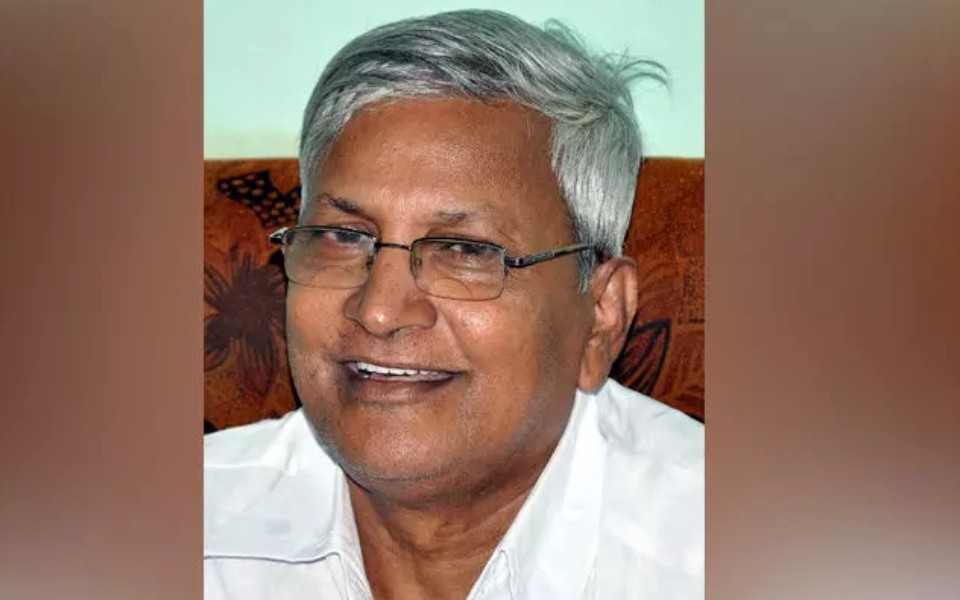
Former member of the Legislative Council and editor of the Hindi newspaper Bidar Ki Awaaz and the Urdu newspaper Surkh Zameen, Qazi Arshad Ali (75), passed away on Monday, March 3, due to a heart attack.
He is survived by his wife, son, and three daughters.
Qazi Arshad Ali had served two terms as a Legislative Council member and had also held positions as Chairman of the Bidar Urban Development Authority and President of the Congress district unit.
Political leaders, journalists, and residents of Bidar have expressed their deep condolences on his demise.
source: http://www.english.varthabharati.in / Vartha Bharati / Home> Karnataka / by Vartha Bharati / March 03rd, 2025
Maraikkayar (Marakkalalaayar/Marakkar) name refers to the community people who drive business belonging to boats, ships, fishing etc. Maraikkayar is the community they belong to TamilNadu, Kerala & Lanka.
The muslim trade community history record is available in pandiyas, portuguese, french, english.
They are also called Maraikka, Naguda, Malumi, Sukkani & Serangu. (4Kunjali Maraikkayar – Kunjali Maraikkayar I = Kutty Ahmad Ali (1507 – 1531 / 1507 – 1538 / 1520 – 1531 / 1520 – 1538), Kunjali Maraikkayar II = Kutty Pokker Ali (1531 – 1569 / 1531 – 1571), Kunjali Maraikkayar III = Pattu Maraikkar (1571 – 1595), Kunjali Maraikkayar IV = Muhammad Ali Maraikkar (1595 – 1600) Kunjali Maraikkayar was the leader of the marine force for the Kozhikode Raja Samoothiri (Zamorin Dynasty).
Maraikkayar people have done the export business such as rice, ginger, cardamon, pepper, turmeric. Vasco Da Gama landed in Kozhikode in 1498 May 17 or 28 From that he stayed for 86 days. The Portuguese and European traders were not like the Arab traders, Europeans expected monopoly business. European objectives like we only should do the business and not others. The Europeans used firearms, which were invented, produced by the Chinese and then exported to Europeans directly.
In the year 1498 Nov he went back to Portugal. In the year 1503 Vasco da Gama again came back to Hindustan with 1200 Dutch forces. Martin De Souza came with 25 navy ships to attack Kozhikode Samoothiri. Samoothiri made the discussions to attack the Portuguese. Kunjali Maraikkayar advised Samoothiri Raja (Maana Vikraman) that he would start the merchant navy force and attack the Portuguese. Kunjali Maraikkayar constructed the ships with his own wealth.
Vasco da Gama asked (Kalappana Nambudiri) the messenger of Samoothiri whether can we do something to defeat Samoothiri, but he was very honest for his Raja so Vasco da Gama slaughtered the messenger’s ear and stitched the dog’s ear in Kalappana Nambudiri. Vasco da Gama was the one who ordered Samoothiri to avoid doing business with Arabs and to do business only with him. So Vasco da Gama went to ask help with Kochin Raja and he helped to attack Zamorin ships.
Kunjali Maraikkayars fought against the Portuguese for 80 years. Kunjali Maraikkayar I fought against Portuguese Robbers in Kunjali Maraikkayar I fought against Portuguese Robbers in Kilakarai & Vedalayam (Rameshwaram), Kayalpattinam, Nagore, Thoothukudi, Kunjali Maraikkayar I In Thoothukudi dist. There is a perumal koil in madavankurichi (Kunjali Maraikkayar) is worshipped as merchant navy god!
*In the year 1510, Portuguese (Martin De Souza) captured the place Goa. *In the year 1520, Youe De Emiliyo (Leader of Portuguese) attacked Kunjali Maraikkayar navy ships. But Kunjali Maraikkayar attacked and defeated Portuguese from Kozhikode till Goa. At this time from the Deccan (South Hindustan) Avvaro Sante Mehri (Portuguese Leader) attacked Kunjali Maraikkayar with the help of (Portuguese Robbers) Viceroy Di Mento’s 36 ships attacked Kunjali Maraikkayar’s ships. Kunjali Maraikkayar attacked back and killed Viceroy Di Mento (Portuguese Trade Robbers).
*In the year 1521, the Portuguese tried to capture ponnani. So Ahmad Maraikkayar, his brother Kunjali Maraikkayar I, their uncle (mama) Muhammad Ali Maraikkayar from Kochi started to stay in Kozhikode.
*In the year 1523,Samoothiri II made an agreement with the Portuguese because of fear. But Kunjali Maraikkayar I was not getting any help from the government even though he prepared 200 navy force ships for the battle against the Paraingyar. *In the year 1524, Kunjali Maraikkayar I Vs Paraingyars fight was furious, Kunjali won the match, he was shown in the eyes of Parangyars Kunjali hero! *In the year 1525, Kunjali Maraikkayar I and his team lost the battle against the Portuguese. *In the year 1526, Portuguese Robbers attacked suddenly in Barkoor (place name) but Kunjali Maraikkayar and his team attacked and defeated Portuguese. But both of them were having losses. *In the year 1528, Kutty Ali & Kunjali Maraikkayar I and his team Vs Portuguese fought in Barkoor but Kutty Ali was prisoned by the Portuguese. *In the year 1528 in Sethvai, Portuguese stealed, robbed many goods and planned to travel by many ships to Portugal but Kunjali Maraikkayar I attacked Portuguese ships, killed all Portuguese enemies and won the battle. *In the year 1531, Kutty Ahmad Maraikkayar fought against Paraingyars, but due to the extreme war event Kutty Ahamd Maraikkayar was martyred in the battle.
*In the year 1535, Admiral Suleiman Batcha went along with (ruler of Kozhikode) Samoothiri fought and won the battle against Parangiyars.
*In the year 1537, the nomad ‘Kunha’ became the governor and tried to capture Kozhikode, also tried to build the fort in Chaliam, this time Kunjali Maraikkayar II fought against them and won the battle. In the Nagapattinam seashore also the war happened, Kunjali Maraikkayar II went with 51 ships that included around 8000 soldiers to attack them. *In the year 1538, Kunjali Maraikkayar I fought against the Portuguese but he lost the battle. (source Prof. MH Jawahirullah)
*In the year 1565, Thirumala Devarayan Vijayanagar Raja (Krishnadevarayan’s 5th Generation/Grandson of Krishnadevans Grandson’s son) helped the Portuguese by providing money to fight with Maraikkayar & Zamorin. Raja told the Portuguese you attack from the sea, we will attack from the land. Even though they can’t handle Kunjali Maraikkayar III = Pattu Maraikkar (source; Portuguese viceroy’s book – The travels of Francois spirad in the East Indies, Morocco and Brazil)
*Kunjali Maraikkayar I was martyred for the country of Lanka.
*After him, his family took incharge of the protest and fought against the enemies, drohis. In the year 1570 Peppur lake, Chaliam Fort battle Kunjali Maraikkayar II fought against enemies of 65 years war, won and controlled them.
*In the year 1572, Parangyars force stealed, robbed the goods from the masjids, temples, kozhikode port, Thirukodi port, Kappakkattu port, Ponnani port and made huge losses.
*In the year 1586, Kunjali Maraikkayar III fought against the enemies and won the battle.
*In the year 1589, Son-in-Law of Kunjali Maraikkayar III Kuwaji Musa fought against Parangyars and won the battle.
*In the year 1595, Kunjali Maraikkayar IV fought against Parangyars. But the ruler of Kozhikode Samuthri had a secret agreement with the grandson of Vasco da Gama – Francisco da Gama. Kunjali Maraikkayar IV was not aware of this secret agreement, he went to meet the Kozhikode ruler Samoothiri, but the Kozhikode ruler prisoned him and gave it to the parangyars (Lanka Burghers). They tortured by chaining him, without providing any food, sleep made him to die.
Source: India Veeramigu Muslimgal Book by Sh. AbdKader Kashifi, Kasimi
Note: Haji Pakkir Muhammad Sett was the one who donated Rs.2,00,000 to buy the Sudeshi Ship, VO Chidambaram was the captain of the ship.
(Kunjali IV also fought for Sultan of Bijapur & Rani of Pulal!)
Kunjali Maraikkayar built 999 ships, finally his last 1000th ship he planned to build it without any screws. He fought against the Portuguese in Lanka, but portuguese were angry with him and got angry with him they used the chance to kill 700 people in Thoothukudi. So Kunjali Maraikkayar came to Thoothukudi to fight against the Portuguese and won the battle.
And then he went to Lanka. After a couple of months he was martyred by a Portuguese gun bullet in Lanka and buried there. For 25 years he has done the trade by ships. Kunjali Maraikkayars and his team have built 4 forts near the seashore. The fort itself 20 mile from the one to another! Portuguese spied in a wrong way to the raja that he will build a new nation for the mopillas. Raja cheated Maraikkayars by handing him to the Portuguese but Portuguese cheated Zomarin Samoothiri Raja by killing them!
Article by :
AlWaris Art & History Project, KONAKIND FOUNDATION (This AlWaris Art & History Project will focus for Indian history, modern India and the comparison with current India.)
Contributions Welcome:
Contribute your wealth to improve & develop the projects for art & history project you can send Rs.1000 for books also you can email us if you can send us the historical books, Rs.1000 for travel expenses & Rs. 2000 to collect and store the historical coins/clothes, etc:
A/c info: KONAKIND FOUNDATION A/c: 42849410432 IFSC Code: SBIN0003994 KONAKIND FOUNDATION Email: konakindfoundation@gmail.com