The All India Ideal Teachers Association (AIITA) has announced a highly anticipated State-level program set to take place on October 1st, 2023, at Gulbarga, Karnataka.
In a recent press conference, Muhammad Raza Manvi, the President of AIITA’s Karnataka Chapter, unveiled the event’s details, highlighting the prestigious State Level Education Award, the Afzal Hussain Shikshan Ratna Award, which will be bestowed upon Dr. Abdul Qadeer the founder of Shaheen group of Institutions, a distinguished figure in the field of education.
Dr. Abdul Qadeer has been selected to receive this distinguished accolade in recognition of his remarkable contributions to the field of education, setting an inspiring example for educators across the state. The award ceremony is expected to draw attention not only to Dr. Qadeer’s accomplishments but also to the importance of education and its transformative power.
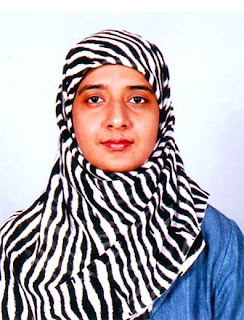
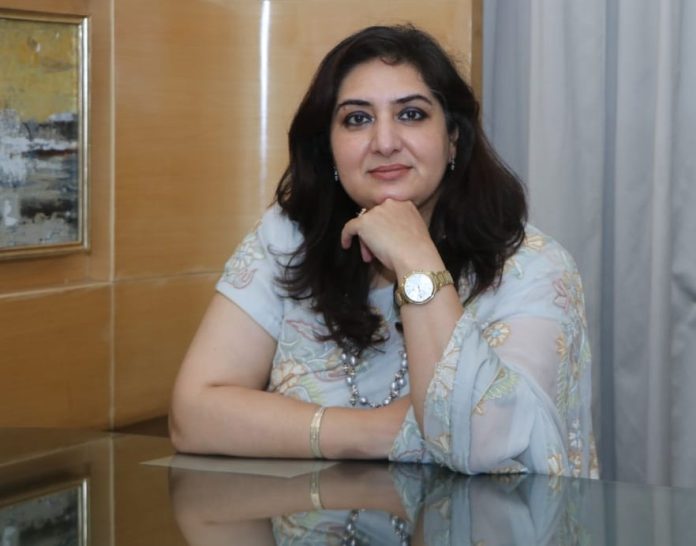
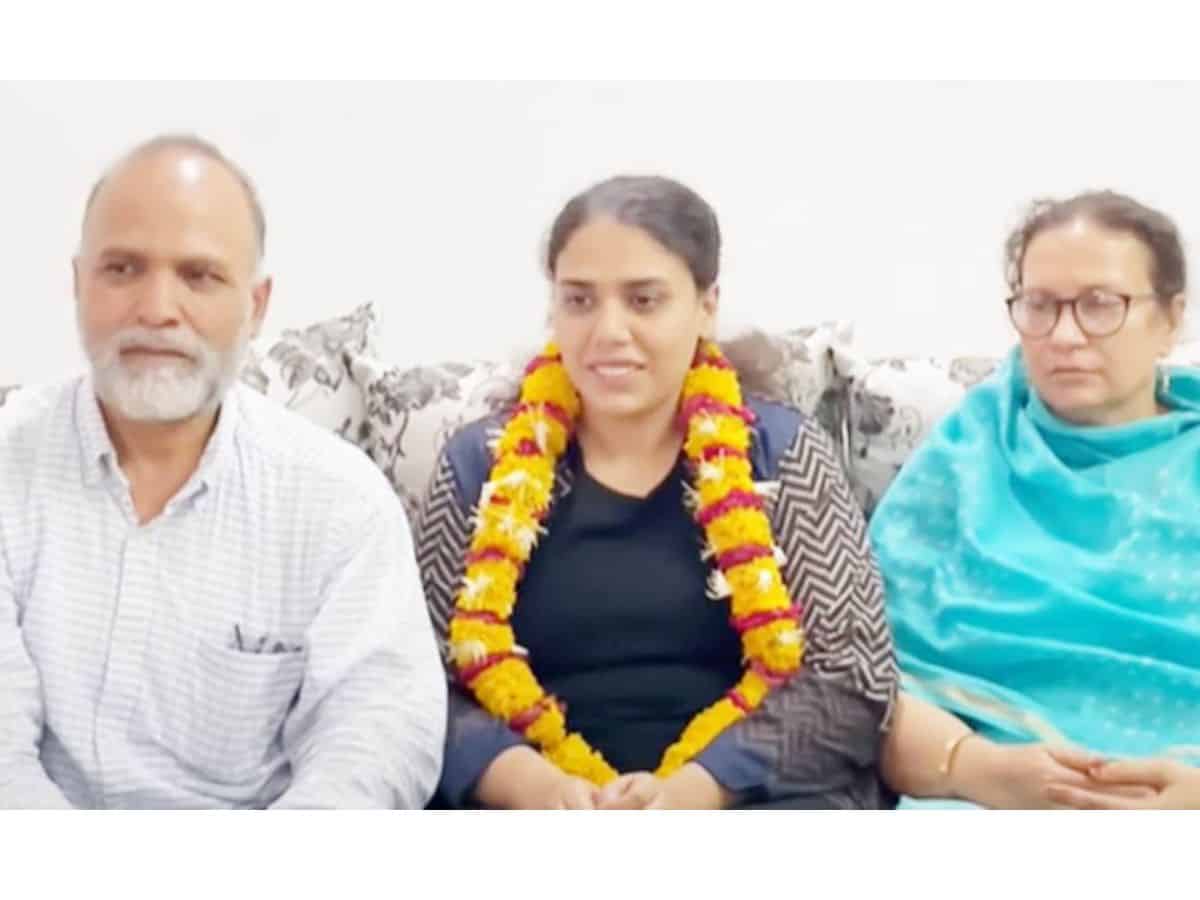
The highlight of the event will be the presence of Dr. Fouziya Tarannum, the District Commissioner of Gulbarga, who has graciously accepted the invitation to serve as the chief guest.
The event is anticipated to be a gathering of educational luminaries, as teachers and educators from across Karnataka are expected to participate. This assembly will not only celebrate Dr. Abdul Qadeer’s exceptional achievements but also provide a unique opportunity for educators to come together, exchange experiences, share knowledge, and gain valuable insights into the evolving landscape of education in India.
The AIITA State-level program on October 1st, 2023, promises to be a momentous occasion, celebrating excellence in education and the dedication of individuals like Dr. Abdul Qadeer, who continue to shape the future of our nation through their unwavering commitment to learning and teaching. The event is expected to inspire and motivate educators, fostering a spirit of innovation and collaboration in the pursuit of educational excellence across Karnataka.
source: http://www.thehindustangazette.com / The Hindustan Gazette / Home> News> Education / by The Hindustan Gazette / September 30th, 2023
Haji Abdul Razak Kote Hejmady, owner of Metalco Group of Companies was conferred with ‘Best Entrepreneur of Bahrain’ award.
Former President of India Ramnath Kovind presented the award to Haji Abdul Razak.
Abdul Razak, who is the president of Dakshina Kannada Muslim Welfare Association in involved in social and religious works since many years.
Abdul Razak has been residing in Bahrain from the past 47 years. He hails from the Kote family of Hejmady in Udupi district.
He has been the voice of Muslim Community of this Island for three decades and with his vision he established Dakshina Kannada Muslim Welfare Association, which continuously works for the betterment of the community.
Abdul Razak has been a tireless advocate for the Tulu and Kannada communities. His contribution towards various programmes to promote Tulu and Kannada languages and culture has been phenomenal.
source: http://www.daijiworld.com / DaijiWorld.com / Home> Top Stories / by Daijiworld Media Network – Bahrain (MS) / September 23rd, 2023
Mr. Abdul Basit Anwar, former Secretary Jamaat-e-Islami Hind and former Ameer Halqua JIH Andhra Pradesh (united) passed away at a hospital in Hyderabad on August 17, following a brief illness. He was 73. While he was conducting a Qur’ān class during the Arkan Ijtima of JIH Hyderabad, he felt some unease and was admitted to hospital on August 16.
He was Zonal President of SIO Andhra Pradesh. During his last days, he was serving the organisation as Patron of Tarbiyatgah, Telangana.
His funeral prayer was offered at Masjid Darus Shifa Hyderabad after Zuhr Prayer and laid to rest at Sultan Shahi Graveyard on August 17.
A large number of Muslims and their leaders including JIH Ameer Syed Sadatullah Husaini, JIH Secretary Muhiuddin Shakir, Ameer Halqua Telangana Dr. Muhammad Khalid Mubashiruz Zafar, Ameer Halqua A.P. Muhammad Rafeeq, President All India Majlis Tameer-e-Millat Ziyauddin Nayyar, Ameer Amarat-e-Millat-e-Islamia Telangana Muhammad Husamuddin Jafar Pasha and others attended Mr. Anwar’s funeral prayer.
Maulvi Baqir was among the first to be arrested when the British Army entered Delhi on September 14, 1857.
Maulvi Muhammad Baqir was Editor, Founder and Owner of “Delhi Urdu Akhbar“. He was shot dead on September 16, 1857 for writing articles in Nationalist tone. Maulvi Muhammad Baqir was the first journalist to lay his life during the Independence Movement of India and the Freedom Struggle of India.
Maulvi Baqir, his name sometimes also spelled as Maulvi Maqar, started the first Urdu newspaper of Delhi, Delhi Urdu Akhbar, in 1835 – a year after the British government amended the “Press Act” and allowed publications.
“Delhi Urdu Akhbar” survived for nearly 21 years, proving to be a milestone in the field of Urdu Journalism. With the help of this newspaper, Maulvi Muhammad Baqar played key role in highlighting social issues as well as bringing political awakening in public and uniting them against foreign rulers.
When the Indian revolutionaries started the first war of national independence in 1857, he dedicated his newspaper to the national cause. Soon after the revolt or mutiny broke out in Meerut on May 10, 1857, Baqir gave his newspaper a new name “Akhbar uz Zafar” (Paper of Zafar) to pay tribute to Mughal Emperor Bahadur Shah Zafar who was leading the mutinying sepoys and the revolt against the British.
A staunch supporter of Hindu Muslim unity, Journalist Maulvi Baqir on June 04, 1857, printed articles in his newspaper appealing to both the communities to unite and come together, “Don’t miss this opportunity, if missed, no one will come to help, this is a good opportunity for you to get rid of British rule”.
Mohammad Baqir was used to publish his newspaper on Sundays, instead of Saturdays as a mark of his own rebellion and protest against the British, who observed Sabbath – a day of religious observance and abstinence from work, kept by Jewish people from Friday evening to Saturday evening, and by most Christians on Sunday.
Baqir was among the first to be arrested when the British Army entered Delhi on September 14, 1857. Two days later, on September 16, he was produced before Major William S.R. Hudson who ordered to shoot him dead without trial. Major Hudson shot dead Maulvi Baqir on the same day, making him the first Indian Journalist to lay his life for the country.
It is said Maulvi Baqir was tied to the mouth of a cannon which is then fired by Major William Hudson. Some historians however have disputed this claim. Nonetheless his contributions and sacrifice were later immortalised in Russian artist Vasily Vereshchagin ‘Suppression of the Indian Revolt by the English’ painting portraying the woes of freedom fighters and the brutal way Maluvi Baqar was claimed to have been executed.
source: http://www.ummid.com / Ummid.com / Home> Life & Style / by Ummid.com News Network / September 16th, 2023
These were the first iron-cased rockets used in the military thus paving the way for rockets use around the world. (Supplied)
More than 1,000 unused rockets of India’s freedom fighter Tipu Sultan’s era found toward the end of July this year, will now be showcased at a newly created rocket gallery at the museum at Shivappa Nayaka Palace in Shivamogga city in the state of Karnataka.
The gallery, named as Bidanur Rocket Gallery after the famous Bidanur Fort at Nagar in Hosanagar taluk of Shivamogga district, will open to receive visitors in October.
Visitors will be able to feast on the rockets used by Tipu Sultan, the illustrious son of Karnataka, who was known as “Tiger of Mysore” for his daring acts against the British who ruled India then.
India rocket musuem
Bidanur served as an important administrative centre of Mysore State (renamed as Karnataka) and Tipu Sultan had even established a mint and an armory here.
Speaking to Al Arabiya English, R. Shejeshwara, Assistant Director of the Department of Archaeology, Museums and Heritage, said that the findings were discovered during a field excavation at a farmer’s well in Nagara village in Hosnagar Taluk, Shivamogga district, conducted by Department of Archeology, Museums and Heritage.
He said, “the shape of a cylinder and having a fuse at one end reveal that these rockets were used during the eighteenth century AD during Tipu’s time. Each unused rocket is of 7 to 10 inches in length and 1 to 3 meter in diameter and are rusted because of continuous exposure to soil moisture”.
India rocket musuem
Shejeshwara further said that like the earlier rockets found in 2002, those recovered recently also are iron-cased with black powder, a mixture of sulfur, charcoal and potassium nitrate filled inside. The 15-member crew of archaeologists, excavators and laborers took three days to unearth the armory and the ammunition.
Shejeshwara said that after the fourth Anglo-Mysore War, it is likely that Tipu’s army, stationed in Nagara, could have dumped the rockets in the well to prevent them from getting into the hands of the East India Company.
The media spotlight on the recent findings speaks volumes about how this powerful 18th century ruler of Mysore is remembered. Mysore under Tipu stood as a bulwark against the British.
Tipu conceptualized, designed and manufactured cylindrical iron tubes that ensured for great compression of the filled gunpowder and consequently, greater range (nearly 2 km). The brave freedom fighter then fastened them to swords or bamboo poles to provide stability, that would, in turn, lead to better accuracy.
Fitted with sharpnels that traveled a considerable distance, these air-borne weapons would target the enemy with edges of the sharpnels facing them.
India rocket musuem
These were the first iron-cased rockets used in the military thus paving the way for rockets use around the world.
The first rocket, which was fired by Tipu Sultan in 1792 against the British forces, is displayed at the British Museum. Though the British lost the war, they have exhibited the rocket.
After being the victims of these innovative locally-crafted rockets, the British eventually adopted the technology. Tipu Sultan wrote a military manual called Fathul Mujahideen in which he explains that 200 rocket men were assigned to each Mysorean cushoon (brigade).
Little wonder then the credit for developing the first-ever iron-clad rockets goes to Tipu Sultan and they were successfully deployed for military use.
In the Battle of Pollilur (the Second Anglo-Mysore War in 1780), Tipu’s rockets set afire the East India Company’s ammunition dumps. It was the British Army’s one of the worst ever defeats in India.
India rocket musuem
It may be recalled that a set of 24 rare and rediscovered preparatory paintings depicting the Battle of Pollilur was sold to a bidder for £769,250 at the Sotheby’s biannual Arts of the Islamic World Sale in 2010. The Britishers described these rockets filled with gunpowder on swords as “flying plagues”.
Tipu took advantage of them and established four taramandalpets (star-cluster bazaars, a name that refers to the pattern of mid-air explosions of these rockets that then pounded shrapnel on the enemy) at Srirangapatna, Bidanur, Chitradurga, and Bangalore to conduct research on Mysore rocket technology.
The armory in Kalasipalyam in Bangalore was among the four that were constructed by Tipu Sultan to store ammunition. The 18th century armory that housed the famed rockets of Tipu Sultan is hardly known.
After the death of Tipu in 1799, the British Army discovered as many as 600 launchers, 700 serviceable rockets and 9,000 empty rockets at Tipu’s fort.
One of the major beneficiary was the Royal Artillery Museum in Woolwich in the UK. The powerful ruler was killed in the fourth Anglo-Mysore war in 1799 after a slew of victories in battle against the British.
http://www.english.alarabiya.net / AlArabiya News / Home> Life > Travel & Tourism / by Aftab Alam Kola / August 09th, 2018
Shoukat Ali is more than just a teacher; he is a social activist and a symbol of hope for many. His story embodies the profound impact that education and dedication can have on individuals and communities.
As we celebrate Teacher’s Day on the 5th of September, we are reminded of the countless educators who have dedicated their lives to shaping young minds and illuminating the path to a brighter future. Among these remarkable individuals, Shoukat Ali, the founder of the HOPE Foundation, shines as a beacon of hope in the world of education.
Shoukat Ali’s journey into teaching began in the slums, where he and his friends started educating underprivileged children. They founded the HOPE Foundation with a mission to provide quality education to these children. For Shoukat, education is not just a profession; it’s a lifelong commitment deeply rooted in his childhood. He recognized the importance of education early on and began teaching children in his community for free during his student days. His passion for teaching only grew stronger as he pursued higher education abroad.
With the unwavering support of his friends, Shoukat Ali’s dream took shape, and the HOPE Foundation was born. This organization’s primary focus is on creating awareness about education in remote and underserved areas, igniting the torch of knowledge and development. The dedication of his friends, who share his commitment, added strength to the foundation.
Today, the HOPE Foundation stands as a shining example of self-sustainability, with every member contributing from their income. The organization’s reach extends to slum-dwelling children across four Indian states, including Uttar Pradesh, Bihar, and West Bengal. Beyond traditional education, the foundation conducts career counseling programs for college students, spreading the message of hope and ambition.
Umran collaborates with such passionate teachers to reach the right to good education for underrepresented and marginalized communities and help them in every possible way. Looking ahead, the HOPE Foundation has ambitious plans, including introducing computer education to young girls in rural areas, equipping them with essential digital skills, and boosting their confidence. Additionally, a library for students preparing for competitive exams is in the pipeline.
The HOPE Foundation’s impact transcends education; they’ve undertaken significant work in health camps, afforestation, and disaster relief efforts. During the COVID-19 pandemic, the organization distributed essential supplies to people in various districts, exemplifying their commitment to the welfare of society.
As we celebrate Teacher’s Day, Shoukat Ali’s journey serves as a reminder of the transformative power of education and the incredible impact teachers can have on their students and communities. His dedication and tireless efforts have brought hope and opportunity to countless young minds.
In this celebration of educators, let us recognize and honor individuals like Shoukat Ali, who, through their unwavering commitment to education, inspire us all to reach for the stars, no matter where we come from. Happy Teacher’s Day!
source: http://www.umran.org.in / Umran.org.in / Home> Blog / September 03rd, 2023
Uncover the remarkable contributions of Muslim freedom Fighters of India to fight for freedom from British colonial rule.
In present times, Indian Muslims find themselves subjected to demonization and unwarranted questioning of their patriotism. Communal elements seek to manipulate history by intentionally excluding Muslims and disseminating false propaganda against them through social media. The vital contributions and sacrifices made by Indian Muslims in the struggle for India’s freedom from British colonial rule are systematically obscured. However, a closer examination of history reveals that not only did Indian Muslims play an essential role in the freedom movement, but they also made significant sacrifices for the cause of anti-colonial nationalism.
Indian Muslims: Unveiling Their Crucial Role
According to a report by the Milli Chronicle, the names of 95,300 freedom fighters are etched on the India Gate in Delhi, and remarkably, 61,945 of these names belong to Muslims, signifying that 65% of these brave individuals were Muslims. The significance of this statistic is eloquently captured by the renowned writer Mr. Kushwant Singh, who boldly states that the story of Indian freedom is etched in the blood of Muslims, emphasizing their disproportionately larger contribution to the struggle, considering their smaller population percentage.
Profiles of Courage: Muslim Freedom Fighters
The annals of history are adorned with the stories of Muslim freedom fighters who put their lives on the line to liberate India from the shackles of British oppression. These individuals, driven by an unwavering determination to secure their homeland’s independence, demonstrated exceptional courage and resilience.
Sultan Haidar Ali Salabat Jung: The First Freedom Fighter
Sultan Haidar Ali, father of Tipu Sultan, pioneered the fight against British colonial forces. A secular leader, he united both Hindus and Muslims in his quest for freedom, although his efforts were eventually betrayed.
Tipu Sultan: A Trailblazer in Battle
Son of India’s first freedom fighter Haider Ali, Tipu Sultan pioneered the use of iron-cased rockets, utilizing them effectively to defeat British forces in several historic battles over two decades.
Shaheed Ashfaqullah Khan: A Martyr’s Legacy
Member of the Hindustan Republican Association (HRA), Ashfaqullah Khan paid the ultimate price for India’s freedom. Notable for his daring attacks on British government trains, his sacrifice remains etched in history.
Maulana Abul Kalam Azad: A Beacon of Unity
Maulana Azad, a key leader in the anti-colonial nationalist movement, became the youngest President of the Indian National Congress. He rallied Hindus and Muslims alike against British oppression and launched Urdu Weekly Al-Hilal to expose British misrule.
Maulana Hasrat Mohani: Champion of Change
Mohani’s powerful Urdu speeches incited Indians to stand up against British rule. His unyielding spirit saw him arrested and jailed, but his impact on India’s fight for freedom remained profound.
Khan Abdul Ghaffar Khan: The Frontier Gandhi
A pivotal figure in the Khilafat movement, Khan Abdul Ghaffar Khan established the Khudai Khitmatgars, promoting peace and unity. Jailed for 13 years by the British, his dedication was unwavering.
Sirajud Daula: Battling Against Betrayal
The last Nawab of Bengal, Sirajud Daula, fought valiantly against British forces. Despite betrayal, he remained a symbol of resistance against British rule.
Vakkom Majeed: Courage Amidst Oppression
Vakkom Majeed’s resilience during the Quit India movement earned him repeated jail terms, highlighting his unwavering commitment to India’s freedom.
Fazl-e-Huq Khairabadi: Life in Exile
Sentenced to life in the notorious Kalapani jail on Andaman, Fazl-e-Huq Khairabadi continued his fight for freedom despite insurmountable odds.
Badruddin Tayabji: Founding the INC
Badruddin Tyabji and Qamruddin Tyabji were instrumental in establishing the Indian National Congress (INC). Badruddin’s wife, Suraiya Tayabji, designed the present Indian flag.
Shah Nawaz Khan: A Triumphant Act
Major of Azad Hind Force, Shah Nawaz Khan was the first to hoist the tricolor at the Red Fort, symbolizing India’s victorious struggle against British imperialism.
Barrister Saifuddin Kitchlew: A Voice for Justice
Jailed for 14 years by the British for protesting against the Jallianwala Bagh massacre and the Rowlatt Acts, Kitchlew’s opposition to the two-nation theory set him apart.
Bakht Khan: A Gallant Defender
Bakht Khan’s courageous defense against the British in Delhi, Bengal, and Lucknow showcased his unwavering dedication to India’s freedom.
Titu Mir: Bengali Rebel
Titu Mir’s armed resistance against British colonial authorities exemplified his determination to free India from British rule.
Syed Ahmad Barelvi: Organizing Resistance
Syed Ahmad Barelvi’s efforts in uniting native armies against the British from Delhi to Kabul showcased his strategic prowess.
Zain-ul-Abideen: INA Officer’s Patriotic Slogan
Zain-ul-Abideen, an officer of the Indian National Army (INA), coined the iconic patriotic slogan “Jai Hind.”
Empowering Women in the Freedom Struggle
The fight for India’s freedom was not limited to men; several Muslim women also contributed significantly to the struggle.
Begum Hazrat Mahal: A Rebel Leader
Rebelling against the British in 1857, Begum Hazrat Mahal seized control of Lucknow from British forces, showcasing her leadership and courage.
Surayya Tyabji: Designing India’s Flag
Wife of freedom fighter Badruddin Tayyabji, Surayya Tyabji designed the Indian flag that we proudly hoist today.
Abadi Bano Begum: A Pioneer in Politics
Abadi Bano Begum, known as Bi Amma, actively participated in politics, matching her male counterparts in the Indian National Movement. Her sons went on to become prominent leaders.
Azizan: A Warrior’s Spirit
Azizan organized a battalion of warrior women, displaying her remarkable skill in the art of war and refusing to yield to British pressure.
A Timeless Legacy
The contributions and sacrifices of Indian Muslims in the fight against British colonialism are immeasurable. While recounting the names of every Muslim freedom fighter may be an impossible feat, their collective impact remains undeniable. The fact that many chose to remain in India underscores their deep-rooted connection to the land. Despite attempts to distort history, India will forever be the cherished home of its Muslim citizens.
Conclusion
Urdu poet Rahat Indori’s words,
“Sabhi ka khoon hai shamil yaha ki mitti me,
Kisi ke baap ka Hindustaan thodi hai,”
encapsulate the essence of Muslim Freedom Fighters of India’ unyielding commitment to their homeland. The sacrifices and contributions of Indian Muslims in the struggle for independence stand as a testament to their unwavering dedication and indomitable spirit. Their stories deserve to be acknowledged and celebrated, inspiring future generations to honor the diverse tapestry of individuals who fought for a free and united India.
source: http://www.munsifdaily.com / The Munsif Daily / Home> News> Indai> Pan India / by Munsif Web Desk / August 18th, 2023
Officials familiar with the operation said that the terrain in the particular area is difficult and “militants fired from a height upon the approaching party”.
Family members mourn the death of DSP of J&K Police Humayun Bhat , who was killed in a gunfight with terrorists in Anantnag district, during his funeral at his residence in Srinagar on Wednesday.(PTI Photo)
As friends and relatives crowded through the gates of Deputy Superintendent of Police Humayun Bhat’s house, distraught family members could barely say a word through their sobs. The 2018 batch J&K Police officer, who wished to carry forward the tradition of the uniform in the family, was killed along with two officers of the Indian Army as their search party was hit by a volley of terrorist gunfire in the Gadool forest in Anantnag.
Bhat’s father, Ghulam Hassan Bhat, served in the J&K Police until his retirement as DIG Central Kashmir in 2018.
An officer who spent his probation year with him described him as an eager and humble officer. “He was always eager to learn, a friend to all his colleagues. He always led his team and yesterday too he did the same,” said the officer.
Officials familiar with the operation said that the terrain in the particular area is difficult and “militants fired from a height upon the approaching party”.
Another officer who served with Bhat at Srinagar said, “He was an exceptional police officer. I remember when he joined the team, I was greatly impressed by his interest in learning practical policing. He was a dedicated team member, always ready to contribute.”
He said that Bhat was the proud son of a retired police officer and “found great joy in carrying on his father’s legacy by wearing the khaki”. “Gone too soon, his absence leaves a void that words can’t express, and our hearts ache with the loss of such a promising officer,” the officer said.
Bhat studied at Srinagar’s Burn Hall School and trained as an engineer at SSM college of engineering in North Kashmir. The family, originally from Pulwama, had been living in Srinagar for many years. He is survived by his parents, a brother, his wife and a son, who is just over a month old.
After joining the force in 2018, Bhat was posted at Srinagar, then at Pattan in North Kashmir, and he was on his third posting, as Sub Divisional Police Officer (SDPO) at Kokernag, Anantnag.
A senior officer he worked with in the early days of his career described him as brave and compassionate. “His father is one of the most outstanding professionals, a man of principle, and Humayun had those same values. He was passionate about the uniform and never brought his father’s rank into his own professional dealings.” He added that his loss at a time when things are relatively calmer in the Valley “makes this immensely difficult to reconcile with”.
A family friend described Bhat as an “extraordinary officer” and added that he was courageous, conscientious and down to earth. “Similar to his father, his qualities of head and heart endeared him to everyone who came in contact with him. His martyrdom is an irreparable loss to all of us who knew him and his father.”
source: http://www.indianexpress.com / The Indian Express / Home> News> India / by Naveed Iqbal, Srinagar (headline edited) / September 14th, 2023
An excerpt from ‘A Most Noble Life: The Biography of Ashrafunnisa Begum (1840–1903)’, by Muhammadi Begum, translated from the Urdu by CM Naim.
Victoria Girl’s School, Lahore was established by Ashrafunnisa Begum. | The school’s Facebook page.
Why was I so eager to read Urdu? At our house, during the 40 observance of Muharram, separate majālis for men and women were held every day. In addition, all year long, a majlis was held every Thursday in fulfilment of someone-or-other’s vow. That was the reason I was so keen to read Urdu. All the ladies in my family knew Urdu quite well. When, on some occasion, happy or sad, they visited other homes, or when other ladies came similarly to our place, my female relatives would read aloud from books on matters of faith and religious observances.
Listening to them, I came to know many of the same by heart – just as one learns stories. It did not, however, lessen my keen desire to be blessed with the gift of reading.
Once I went to all the ladies in the family one by one and implored each to teach me to read. I said, “Teach me just a little bit every day; I would be your slave for life.” But not one was moved in the slightest way by my pleadings. All of them gave the same response: “Have you gone mad, girl? Better find some cure for it. First of all, what would you do with it even if you learned how to read? Secondly, what makes you think it is easy to teach someone to read? It’s not. It is hard work. Who do you think has the time and energy to waste on you?”
I lost all hope when I heard those words, and began to weep. In fact, I felt so hurt that I burst into loud wailing. That made the ladies even angrier. “How nice!” they said, “Now you’re trying to scare us with tears. Well, your silly tears don’t scare anyone. It’s not nice to go around whining all the time just because you want to read. Who ever saw a girl like you? Most girls run and hide if someone even mentions a book. Children your age are scolded and spanked to make them study, but you, on the contrary, weep and wail, wanting to read! Look, you’ve already lost your mother on account of your wretched crying for lessons, who knows what might happen next. Go away! Don’t sit here crying. It gives me the chills.”
I was devastated, and my tears just kept pouring out. Then the ladies said, “For God’s sake, girl, go away! If your grandmother were to see you crying she would immediately assume that one of us had said something nasty to her darling.” God alone knows how I felt when I heard those words. I was not accustomed to such cruel remarks. My parents had brought me up with much love. They had always spoken kindly in my presence, never saying a harsh word to anyone and always treating everyone with patience and civility.
Those words of the ladies were like salt on my already wounded heart. I wiped my tears and, obedient to their command, walked away. But when I was by myself, I prayed to God: “Most Benevolent God, be merciful to me. Guide me to my goal across this dreadful chasm. I promise that if I ever learn how to read, I shall teach that skill to anyone who desires it – even forcibly, God willing, to those who might be unwilling – for so long as I live I shall never forget the pain I feel right now.”
Later one night, when I was beset with similar thoughts, it occurred to me, had I the text of a salām or mujrā, I could myself figure out the words. “It isn’t that great a matter,” I said to myself, “I already know the letters of the alphabet. Let them not teach me. What do I care?” The idea so enhanced my courage and hope that the very next morning I sent a maid to all my friends with this request: “I need some salām and mujre. Please loan me a few. I shall return them after getting them copied.” May God bless them, for each of them sent me one or two.
But who was there to copy them for me? It was only an excuse. I used it again, and said to my grandmother, “Please get me some paper. I shall ask Māmūñ Sahib to make copies of these poems.” She immediately sent someone to the market and got me some paper. Now the question was: how should I make the copies, and where should I hide while I was doing so? I well knew what a disaster it would be if someone became suspicious.
Writing was strictly forbidden to girls, and I had no mother to cover up for me. How was I to reach my goal and also keep it a secret? My aunt was already furious, and called me nasty names for reading the Qur’an so much. “Thank God, this girl hasn’t learned anything else,” she would grumble, “for then she would have time for nothing at all.” God alone knows what my aunt might have said had she ever caught me writing!
Thinking over all this at some length, I finally decided that at midday, when everyone else lay down to rest, I would make some ink with the blacking from the tawā and start copying. And that is exactly what I did. You have to believe me. I scraped some blacking off the tawā, took the ceramic lid from one of the water pots, and grabbed a fistful of twigs from the broom. Thus equipped I went up on our roof, pretending that I was going there to sleep, and excitedly began copying. I cannot describe my happiness at that moment. Childhood is a time of such innocence!
No sooner had I copied a few words than I felt I had won the battle. Before returning downstairs, I broke the lid in which I had made my ink and threw away the pieces. That was the routine I followed every day, using a fresh lid each time to make my ink. The ladies would find the water pot uncovered, and grumble: “What wretch steals the lid every day? May God break her arms!”
I felt so ashamed of my bad deed; I was also scared someone might find out what I was doing. I feared people, for I did not yet have enough sense to consider my misplaced boldness a sin and to fear God. The intensity of my desire made me blind to such matters. I did not give up my improper ways, and continued to blacken sheets of paper with my scribbles. But I had no idea what I was writing. I did not have the sense to know that one cannot learn to read without the help of a teacher. I believed it was like any other skill, that it was something one could learn just by watching others and imitating them. And so I continued to spend much time and effort even if it was for nothing. I still could not read Urdu. Consequently, my crying spells started again. Then God sent me a teacher.
Excerpted with permission from A Most Noble Life: The Biography of Ashrafunnisa Begum (1840–1903), Muhammadi Begum, translated from the Urdu by CM Naim, Orient Black Swan.
source: http://www.scroll.in / Scroll.in / Home> Book Excerpt / by Muhammadi Begum / February 27th, 2023
In the past 75 years a community of Urdu magazines that used to be read by the entire family has disappeared unmourned, so too their journalists and readers. There is also now no major Urdu newspaper or magazine that is edited by a non-Muslim.p
Last year, Urdu institutions in India celebrated a landmark in the history of that language—the 200th anniversary of the publication of Jam-i Jahan-Numa, the first modern newspaper in Urdu. It debuted on 27 March 1822, carrying a name that was clever and most befitting. It referred to the fabled “world-revealing goblet” of the legendary Iranian monarch, Jamshed, into whose depths the regal eyes could peer and see all that was happening in the world.
A big surprise about the new journal was its place of publication, Calcutta (now Kolkata), not known as a major centre of Urdu language and literature. Surprising also was the identity of its publisher, Harihar Dutta, a feisty upper-class Bengali young man with no ties to the north Indian regions more closely identified with Urdu. His grandfather had been the Dewan at the East India Company’s Custom House for 50 years, a position of some status, later held by his father Tarachand Dutta.
Tarachand is better known in records as the co-founder, with Raja Ram Mohan Roy, of the progressive Bangla weekly Sambad Kaumudi in 1821, and the publisher of Roy’s Persian weekly, Mirat-al-Akhbar, arguably the first newspaper in that language, which came out a month after Jam-i Jahan-Numa. Thus, the father and son can rightly be described as the founders of modern journalism in both Urdu and Persian. My account of the Duttas and their journal is based chiefly on Gurbachan Chandan’s Jam-i Jahan-Numa: Urdu Sahafat ki Ibtida (New Delhi: Maktaba Jami’a, 1992), and Nadir Ali Khan’s Urdu Sahafat ki Tarikh (Aligarh: Educational Book House, 1987).
The editor, Munshi Sadasukh Lal, was an equally remarkable man. Hailing from Agra, which had come under British control in 1803, he had travelled to Calcutta to make his fortune, either as a tutor to some foreign employee of the Company, or as a munshi at some business house, handling their formal correspondence. Besides an expertise in Sanskrit, Hindi, Persian, and Urdu, he had some knowledge of Arabic. He also knew English well enough to read and understand official publications, and later translated many professional texts into Urdu and Hindi.
In a few years [after 1828], with the spread of litho technology, Urdu newspapers began to appear all over North India.
We do not know the significant dates of Sadasukh Lal’s life, but he is known to have left Calcutta some years later, travelling first to Allahabad and then to Agra. At both places, he established a printing business and published newspapers and books in both Urdu and Hindi.
The Duttas were not wrong in expecting some demand for the two journals. Persian was still big in Indian upper circles and in the colonial officialdom, and Calcutta was a major trading centre attracting Iranian, Armenian, and Afghan merchants. It also had Warren Hastings’ madrasa that provided instruction to many Indians in Arabic and Persian, and the College of Fort Williams, which trained British and European employees of the Company in whatever Indian language they needed to “command”. But in the 1820s things were also in flux.
After seven issues exclusively in Urdu, Jam-i Jahan-Numa had to include a column in Persian to attract more readers, and after two more issues, it was entirely in Persian. The Calcutta Journal succinctly commented on the change:
The Hindoostani (sic) is merely a popular language, much employed in colloquial discourse, but little used in writing; the taste for reading newspapers is very little among the natives, and perhaps confined entirely to people who have received a polite education. A native newspaper, therefore, can expect little support from those who know only Hindoostani, and those in better circumstances will naturally prefer a paper written in Persian language, which is a necessary part of the education of every person who has any pretentions to respectability.Quoted in M. Aslam Siddiqi (1947): “Persian Press in India”, Indo-Iranica, I: 2, Calcutta, p. 18.
Some months later, a sheet of Urdu was added as a supplement, and a note in English under the title appealed to non-Indian readers: “European Gentlemen, who may wish to be supplied with this paper, either for their own perusal or from a benevolent desire to diffuse knowledge among the native members of their establishment, may be supplied with it […] at three rupees per month, including Ordoo Supplement.” A few years later, it was again an Urdu weekly, but of more general interest than just the news.
In 1828, however, it stopped publication altogether – just two years before Urdu replaced Persian on the colonial pedestal, thus gaining a special appeal. In a few years, with the spread of litho technology, Urdu newspapers began to appear all over north India.
[W]hat had stayed unchanged for well over a century after the appearance of ‘Jam-i Jahan-Numa’ in 1822 has undergone a drastic change in the last 75 years.
The celebrants in India last year noted with a great deal of satisfaction that the very first newspaper in Urdu was edited and published by two non-Muslims. It confirmed their claim that Urdu was not just the language of Muslims.
Urdu had indeed been just like any other Indian language and not restricted to the adherents of any one religion. Like Tamil or Gujarati. Like Braj, Awadhi, or Rajasthani. But I am not sure if the same is true now. I strongly doubt if any ardent ‘Urduwalla’, asked now to name an Urdu newspaper edited by a Hindu or any Urdu journal catering to the needs of a non-Muslim readership, would be able to name either. I may fervently hope I am wrong, but what had stayed unchanged for well over a century after the appearance of Jam-i Jahan-Numa in 1822 has undergone a drastic change in the last 75 years.
Khwaja Hasan Nizami, a self-made man of many talents and varying reputations, was a widely known public figure in the first half of the last century. His weekly, Munadi, was mostly written by him but read by thousands of his admirers across the country. The latter particularly enjoyed his daily “diary”, selections from his correspondence with the high and low, and his polemic against the antagonist of the week—all done in a literary style that was his own.
In 1937, in the Annual Number of his journal, he offered his readers a long list of the Urdu journals that came to his office every month, presumably in exchange for his own. Much to our benefit now, he also provided some information on each of them, including the names of their editors and his view of their politics. Of the 147 titles, 22 were edited by non-Muslims.
We see that no category was restricted in range. Jains and Sikhs, Arya Samaji Hindus and Sanatani Hindus, even Radha Swamis, all found it worth their while to publish their concerns and considerations in Urdu to reach a sizable portion of their respective faith communities. So was the case with political identity, where even the Hindu Mahasabha found it useful to make its views available, at least in Punjab, in Urdu. There are two “medical’ journals, indicating the extent to which Urdu was used by Punjabi practitioners of both the indigenous traditions, Ayurveda and the Greco-Arabic Tibb. Most of the journals on the list were seemingly flourishing and were of a respectable size and quality.
Nizami’s list is by no means exhaustive. It only tells us what he liked to get in exchange for his own magazine, which he described as “Islamic, Non-Congress.” I would interpret it as: concerned in particular with Islam and Muslims, not affiliated with any political party, and not disloyal to the colonial government. Despite being a prolific, almost compulsive, writer with an unmistakable stylistic charm, Nizami apparently received no Urdu literary magazine – not even Daya Narain Nigam’s Zamana (Kanpur), which was then in its 34th year of publication.
And though he received a few general magazines, including the newly started Musavvir (Bombay), a film plus literature magazine edited by none other than Saadat Hasan Manto, Nizami does not seem to have been getting Mast Qalandar, ‘Sufi’ Prithi Singh’s highly popular monthly, which was then in its 19th year. It boasted as its motto, Hindu hai ek ankh Musalman dusri – “The Hindu is one eye of India, the Muslim the other”, an image first made famous by Sir Syed Ahmad Khan (1817-1898) in a speech at Banaras when he was posted there as a judge (1867–1876). The magazine claimed to have “the largest net sales of any Urdu monthly printed in India”. It also looks like Nizami did not receive ‘Sufi’ Lachman Prashad’s Mastana Jogi, which was no less successful and had been going strong longer.
Nand Kishore Vikram was only 18 when his family left Rawalpindi for India. He followed an uncle to Kanpur and joined another budding journalist, a similar refugee, to bring out a semi-literary Urdu monthly.
Arguably, the entire non-Muslim population, young and old, that had been engaged in Urdu journalism and publishing in West Punjab fled to India in 1947. Some found permanent refuge in East Punjab, in places such as Amritsar, Ludhiana, and Jalandhar. The more notable went directly to Delhi, and took not long to get going again. The younger upcoming ones sought their fortunes further away.
Nand Kishore Vikram was only 18 when his family left Rawalpindi for India. He followed an uncle to Kanpur and joined another budding journalist, a similar refugee, to bring out a semi-literary Urdu monthly. The venture did not last long but it nevertheless settled his career choice. Moving to Delhi, he took up various jobs involving Urdu, and completed his formal education. Eventually, he worked for the Information Bureau of the Government of India and was for decades on the editorial staff of its Urdu monthly, Ajkal. Its editor was a senior émigré, Balmukund Arsh Malsiyani.
After retirement, Vikram began publishing a bi-annual literary journal of his own, Alami Adab, and also produced a torrent of translations in both Urdu and Hindi. I never met him but had a couple of long chats over the telephone a few years ago. On learning that he was compiling three separate lists of the non-Muslim writers of Urdu – Hindu, Sikh, and Christian – I asked him to share them with me, and he most graciously did. He was compiling them mostly from memory, having access only to the books and journals in his own library. Sadly, he passed away soon after. Abdur Rashid of Delhi and I hope to complete the work as best we can.
Vikram identifies for us 70 Sikh, 97 Christian, and 531 Hindu writers of Urdu prose and poetry, and makes a point of identifying the journalists. Christian names are more numerous because he may have had the benefit of two previous works – Ram Babu Saxsena’s European and Indo-European Poets of Urdu and Persian and D.A. Harrison Qurban’s Urdu Ke Masihi Shu’ra. To my knowledge, no similar work exists for the Sikhs, despite such prominent writers as Rajendra Singh Bedi, Kirtar Singh Duggal, Mahendra Singh Bedi ‘Sahar’, and Sampooran Singh Kalra ‘Gulzar’.
Two other reasons may also have contributed: the steely allegiance amongst the Sikhs to Punjabi and the Gurumukhi script, and a preference amongst the Sikh elite for advanced proficiency in Persian, the formal language of the Sikh Durbar, that ended only when the British took over in 1849 and literacy in Urdu became necessary for government jobs.
Maftun told his rags-to-riches story in a page-turner autobiography,’ Naqabil-i Faramosh’, which is as ‘unforgettable’ as its title proclaims. Intriguingly, another equally candid and thoughtful autobiography, Gyan Singh Shatir, subtitled “a biographical novel”, was also written by a Sikh.
Though not many took to Urdu journalism, at least one Sikh scribe, Sirdar Diwan Singh Maftun, made a lasting name for himself. His slick weekly, Riyasat, was for a couple of decades a dreaded scourge of the rajas and nawabs of India as it exposed their peccadilloes and serious crimes. Printed on fine paper, it regularly carried eight pages of pictures and cost four annas – a princely price in the 1920s. It was, however, so popular that even car dealers regularly advertised in it. (The one and only instance I know of in Urdu.)
Maftun told his rags-to-riches story in a page-turner autobiography, Naqabil-i Faramosh, which is as “unforgettable” as its title proclaims. Intriguingly, another equally candid and thoughtful autobiography – by Gyan Singh Shatir, subtitled “a biographical novel” – was also written by a Sikh. Both books deserve to reach new readers through English translations.
Among the 97 Christians, there are very few prose writers. But one name is very important historically. Yesudas Ram Chandra, better known as Master Ram Chandra, was orphaned at a very young age but with the support of his mother and sheer hard work he managed to finish his education at the old Delhi College, specialising in mathematics. He was then appointed to teach at the college. In 1853, when he was 32, he converted to Christianity. During his tenure at the college, he edited and published two journals, Fawa’id-ul Nazirin and Muhibb-i Hind.A useful account of his life and times is Sadiqur Rahman Kidwai’s Master Ram Chandra, published by the Department of Urdu of Delhi University in 1961.
Reading an Urdu daily (Delhi) | Jeremy Graham/Alamy Stock Photo
The first Urdu journal published in Delhi is said to be Dahli Urdu Akhbar. Started in 1837; it was a joint project of a Muslim editor and a Kashmiri Hindu printer and publisher. In 1845, the newly appointed Swiss-German principal of the college, Dr Alois Sprenger, started Qiran-us Sa’dain, a weekly journal containing short essays on social issues, scientific news, and new technology, illustrated with line drawings. Its first editor was Dharma Narain Bhaskar, a “senior scholar” in English at the college. The earnest but preachy journal lasted 10 years, but chiefly on the subscriptions of colonial officers.
Ram Chandra’s first foray into journalism was Fawa’id-ul Nazirin (1845), a fortnightly inspired by Qiran-us Sa’dain, but more outspoken, wider in its range of social concerns, and allowing some space to contemporary Urdu and Persian poets. It regularly challenged the more conservative views of other Delhi papers, and at the height of its popularity had close to 200 subscribers – a notable readership, given that the earlier newspapers were not inexpensive.
Coming to Hindu writers, their sheer number on Vikram’s list sufficiently indicates how significant their role was in the development of Urdu literature.
Three years later, Ram Chandra started Muhibb-i Hind, a monthly of a similar nature. Unfortunately, both journals could not gain enough support from the elite of Delhi and were closed by 1852. A second Christian essayist-poet, Pyare Lal Shakir Merathi, gained prominence in the first half of the last century as the editor-publisher of a literary magazine, Al-’Asr. He also wrote much for younger readers, and several of his poems once had a place in school textbooks. (His short-lived magazine for children is on Nizami’s list.)
Coming to Hindu writers, their sheer number on Vikram’s list sufficiently indicates how significant their role was in the development of Urdu literature. That role becomes crucial when we consider just prose fiction. Nazir Ahmad may have written the first “novel” in Urdu, but the real foundation on which the edifice of Urdu fiction later arose was laid down by a Kashmiri Pundit, Ratan Nath Sarshar, whose episodic sagas were serialised in the pages of Awadh Akhbar, a famous weekly published by Munshi Newal Kishore.
The Urdu word for magazine is risala … a typical risala… normally carried in every issue two or three stories, a dozen pieces of poetry, three or four informative/topical articles, and some regular sections…
No doubt, Hindu journalists wrote in Urdu because it was their preferred means of considered expression, but they also wrote confident in the belief that a large Hindu readership, diverse in its literary tastes, political views, and social concerns, awaited them. (The diversity we glimpsed in Nizami’s categorisation.) There was also something else – a seemingly insatiable demand amongst Urdu readers in general for middlebrow writings, both fictional and factual, that had started in the 1880s and tapered off only after 1950. It gradually created a market for all sorts of magazines. (The first thing Vikram and his friend did after reaching Kanpur was to launch one.)
The Urdu word for magazine is risala (treatise; pamphlet; magazine), and a typical risala, unless further qualified as medical, sectarian, or religious, normally carried in every issue two or three stories, a dozen pieces of poetry, three or four informative/topical articles, and some regular sections, two or three pages each, devoted to “scientific discoveries,” “health news,” “films,” and “entertaining tidbits.” Editorial notes were a must in every issue. They established the tenor of the magazine and also gave it a human identity, to which readers could relate, adversely or in agreement, by submitting letters for the final must-have section: “Letters from Our Readers.”
A simple, all-purpose risala was meant for the whole family. Since some were quite inexpensive, a fairly large number of Urdu reading middle-class families bought one or two every month besides a daily newspaper. ‘Sufi’ Prithi Singh’s Mast Qalandar (Lahore; illustrated; multicolour cover; 90 pages) cost five rupees in 1947 for an annual subscription; “Maulana” Zafar Niyazi’s Kamyab (Delhi; monotone cover; 50 pages) cost only one rupee for 12 issues.
All major journalists, however, sooner or later ended up in Delhi, working for their original journals or for the Information Bureau and the Publications Division of the Government of India.
The large cohort of sharanarthi (refugee) journalists, forced in 1947 to abandon lives and careers in Lahore, Sialkot, Rawalpindi or Sargodha, lost little time in building new lives and careers in Delhi, Amritsar, Ludhiana and Jalandhar. The major publishing outfits already had their branch offices there; the minors took their chance wherever they could. All major journalists, however, sooner or later ended up in Delhi, working for their original journals or for the Information Bureau and the Publications Division of the Government of India.
The famous triad of Pratap, Milap, and Tej probably never lost a publication day. ‘Sufi’ Prithi Singh’s Mast Qalandar, ‘Sufi’ Lachhman Prashad’s Mastana Jogi, and (Ram Rakha Mal Chadda) Khushtar Garami’s Biswin Sadi – all three were perfect examples of a simple risala – were soon reaching the eager hands of thousands of their readers. The last named not only outlasted the two oldies, it grew to be the most popular Urdu risala in post-1947 India. (Two other hugely popular Urdu magazines, Sham’a and Jasusi Dunya, specialised in movies and crime fiction respectively.)
When these seniors left the scene, a younger generation that had come with them and, like them, favoured Urdu, took over. But Urdu’s fate was sealed relative to the very young ones. In economic importance, in Delhi and Uttar Pradesh, Hindi was second only to English, and the long communal tussle for power in Punjab, strategically disguised as a struggle for linguistic rights, made certain that there would be no third generation of Urdu-favouring journalists from amongst the Hindus.
It took six decades, but it happened. In the bicentenary year just ended, there was no major Urdu newspaper or magazine in India that was edited and published by a non-Muslim – and it has been the case for some time. One by one, they took their leave, the “Jolly Jogi” and the “Jolly Qalandar.” The great triad of Tej, Milap, and Pratap, my Delhi friends tell me, still exists but only online – none is seen on newsstands.
The situation, actually, is dire overall. Except for the ones published by a few information bureaus and academic or religious institutions, there is no independent Urdu magazine of any kind that comes out regularly or sells more than a few hundred copies. There is no risala now in Urdu that could claim to be read “in every home and by all members of the household.”
Urdu poetry recitals (musha’ira) may still bring out some enthusiastic non-Muslim participants and connoisseurs, but the prose pages of Urdu newspapers and magazines are starkly devoid of them.
Even the long series of exclusively literary (adbi) monthlies that began with Shaikh Abdul Qadir’s Makhzan (Lahore) in 1901, and continued through Mian Bashir Ahmad’s Humayun (Lahore), Daya Narain Nigam’s Zamana (Kanpur), Shahid Ahmad’s Saqi (Delhi), Ejaz Siddiqui’s Sha’ir (Mumbai), Gopal Mittal’s Tehrik (Delhi), and Abid Suhail’s Kitab (Lucknow), ended with Shamsur Rahman Faruqi’s Shabkhoon (Allahabad) in 2006.
When we turn our gaze away from journalism and take note of the larger literary scene in the 21st century, we see that a much greater and quiet tragedy. There is not a single non-Muslim essayist, literary critic, literary researcher, or fiction writer of significance in Urdu. Urdu poetry recitals (musha’ira) may still bring out some enthusiastic non-Muslim participants and connoisseurs, but the prose pages of Urdu newspapers and magazines are starkly devoid of them.
The present generation of Hindus in north India may well produce some interesting Urdu poets down the line, the likes of Bani, Kumar Pashi, or Manmohan Talkh, but it is certain that we may have to wait a long time for another Joginder Pal, Surendra Prakash, Ram Lal or Balraj Mainra. How this happened, and what it means for Urdu language and literature in India is, of course, a separate sad tale.
This article is dedicated to Nand Kishore Vikram.
C.M. Naim is professor emeritus of South Asian languages and civilizations, University of Chicago. His recent book A Most Noble Life (Orient Blackswan, 2021) is about two remarkable Muslim women of the 19th century.
source: http://www.theindiaforum.in / The India Forum / Home> Culture / by C.M. Naim / February 01st, 2023