Category Archives: Leaders

India’s Urdu Press: A Bitter-Sweet Bicentenary

INDIA:

In the past 75 years a community of Urdu magazines that used to be read by the entire family has disappeared unmourned, so too their journalists and readers. There is also now no major Urdu newspaper or magazine that is edited by a non-Muslim.p

Last year, Urdu institutions in India celebrated a landmark in the history of that language—the 200th anniversary of the publication of Jam-i Jahan-Numa, the first modern newspaper in Urdu. It debuted on 27 March 1822, carrying a name that was clever and most befitting. It referred to the fabled “world-revealing goblet” of the legendary Iranian monarch, Jamshed, into whose depths the regal eyes could peer and see all that was happening in the world.

A big surprise about the new journal was its place of publication, Calcutta (now Kolkata), not known as a major centre of Urdu language and literature. Surprising also was the identity of its publisher, Harihar Dutta, a feisty upper-class Bengali young man with no ties to the north Indian regions more closely identified with Urdu. His grandfather had been the Dewan at the East India Company’s Custom House for 50 years, a position of some status, later held by his father Tarachand Dutta.

Tarachand is better known in records as the co-founder, with Raja Ram Mohan Roy, of the progressive Bangla weekly Sambad Kaumudi in 1821, and the publisher of Roy’s Persian weekly, Mirat-al-Akhbar, arguably the first newspaper in that language, which came out a month after Jam-i Jahan-Numa. Thus, the father and son can rightly be described as the founders of modern journalism in both Urdu and Persian. My account of the Duttas and their journal is based chiefly on Gurbachan Chandan’s Jam-i Jahan-Numa: Urdu Sahafat ki Ibtida (New Delhi: Maktaba Jami’a, 1992), and Nadir Ali Khan’s Urdu Sahafat ki Tarikh (Aligarh: Educational Book House, 1987).

The editor, Munshi Sadasukh Lal, was an equally remarkable man. Hailing from Agra, which had come under British control in 1803, he had travelled to Calcutta to make his fortune, either as a tutor to some foreign employee of the Company, or as a munshi at some business house, handling their formal correspondence. Besides an expertise in Sanskrit, Hindi, Persian, and Urdu, he had some knowledge of Arabic. He also knew English well enough to read and understand official publications, and later translated many professional texts into Urdu and Hindi.

In a few years [after 1828], with the spread of litho technology, Urdu newspapers began to appear all over North India.

We do not know the significant dates of Sadasukh Lal’s life, but he is known to have left Calcutta some years later, travelling first to Allahabad and then to Agra. At both places, he established a printing business and published newspapers and books in both Urdu and Hindi.

The Duttas were not wrong in expecting some demand for the two journals. Persian was still big in Indian upper circles and in the colonial officialdom, and Calcutta was a major trading centre attracting Iranian, Armenian, and Afghan merchants. It also had Warren Hastings’ madrasa that provided instruction to many Indians in Arabic and Persian, and the College of Fort Williams, which trained British and European employees of the Company in whatever Indian language they needed to “command”. But in the 1820s things were also in flux.

After seven issues exclusively in Urdu, Jam-i Jahan-Numa had to include a column in Persian to attract more readers, and after two more issues, it was entirely in Persian. The Calcutta Journal succinctly commented on the change:

The Hindoostani (sic) is merely a popular language, much employed in colloquial discourse, but little used in writing; the taste for reading newspapers is very little among the natives, and perhaps confined entirely to people who have received a polite education. A native newspaper, therefore, can expect little support from those who know only Hindoostani, and those in better circumstances will naturally prefer a paper written in Persian language, which is a necessary part of the education of every person who has any pretentions to respectability.Quoted in M. Aslam Siddiqi (1947): “Persian Press in India”, Indo-Iranica, I: 2, Calcutta, p. 18.

Some months later, a sheet of Urdu was added as a supplement, and a note in English under the title appealed to non-Indian readers: “European Gentlemen, who may wish to be supplied with this paper, either for their own perusal or from a benevolent desire to diffuse knowledge among the native members of their establishment, may be supplied with it […] at three rupees per month, including Ordoo Supplement.” A few years later, it was again an Urdu weekly, but of more general interest than just the news.

In 1828, however, it stopped publication altogether – just two years before Urdu replaced Persian on the colonial pedestal, thus gaining a special appeal. In a few years, with the spread of litho technology, Urdu newspapers began to appear all over north India.

[W]hat had stayed unchanged for well over a century after the appearance of ‘Jam-i Jahan-Numa’ in 1822 has undergone a drastic change in the last 75 years.

The celebrants in India last year noted with a great deal of satisfaction that the very first newspaper in Urdu was edited and published by two non-Muslims. It confirmed their claim that Urdu was not just the language of Muslims.

Urdu had indeed been just like any other Indian language and not restricted to the adherents of any one religion. Like Tamil or Gujarati. Like Braj, Awadhi, or Rajasthani. But I am not sure if the same is true now. I strongly doubt if any ardent ‘Urduwalla’, asked now to name an Urdu newspaper edited by a Hindu or any Urdu journal catering to the needs of a non-Muslim readership, would be able to name either. I may fervently hope I am wrong, but what had stayed unchanged for well over a century after the appearance of Jam-i Jahan-Numa in 1822 has undergone a drastic change in the last 75 years.

Khwaja Hasan Nizami, a self-made man of many talents and varying reputations, was a widely known public figure in the first half of the last century. His weekly, Munadi, was mostly written by him but read by thousands of his admirers across the country. The latter particularly enjoyed his daily “diary”, selections from his correspondence with the high and low, and his polemic against the antagonist of the week—all done in a literary style that was his own.

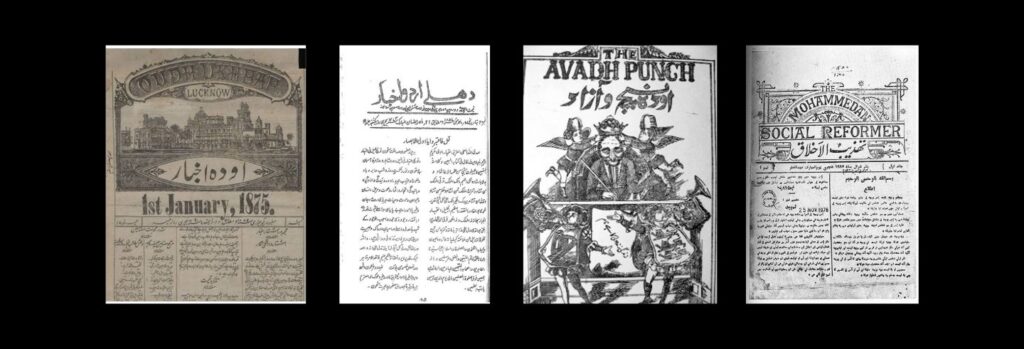
In 1937, in the Annual Number of his journal, he offered his readers a long list of the Urdu journals that came to his office every month, presumably in exchange for his own. Much to our benefit now, he also provided some information on each of them, including the names of their editors and his view of their politics. Of the 147 titles, 22 were edited by non-Muslims.
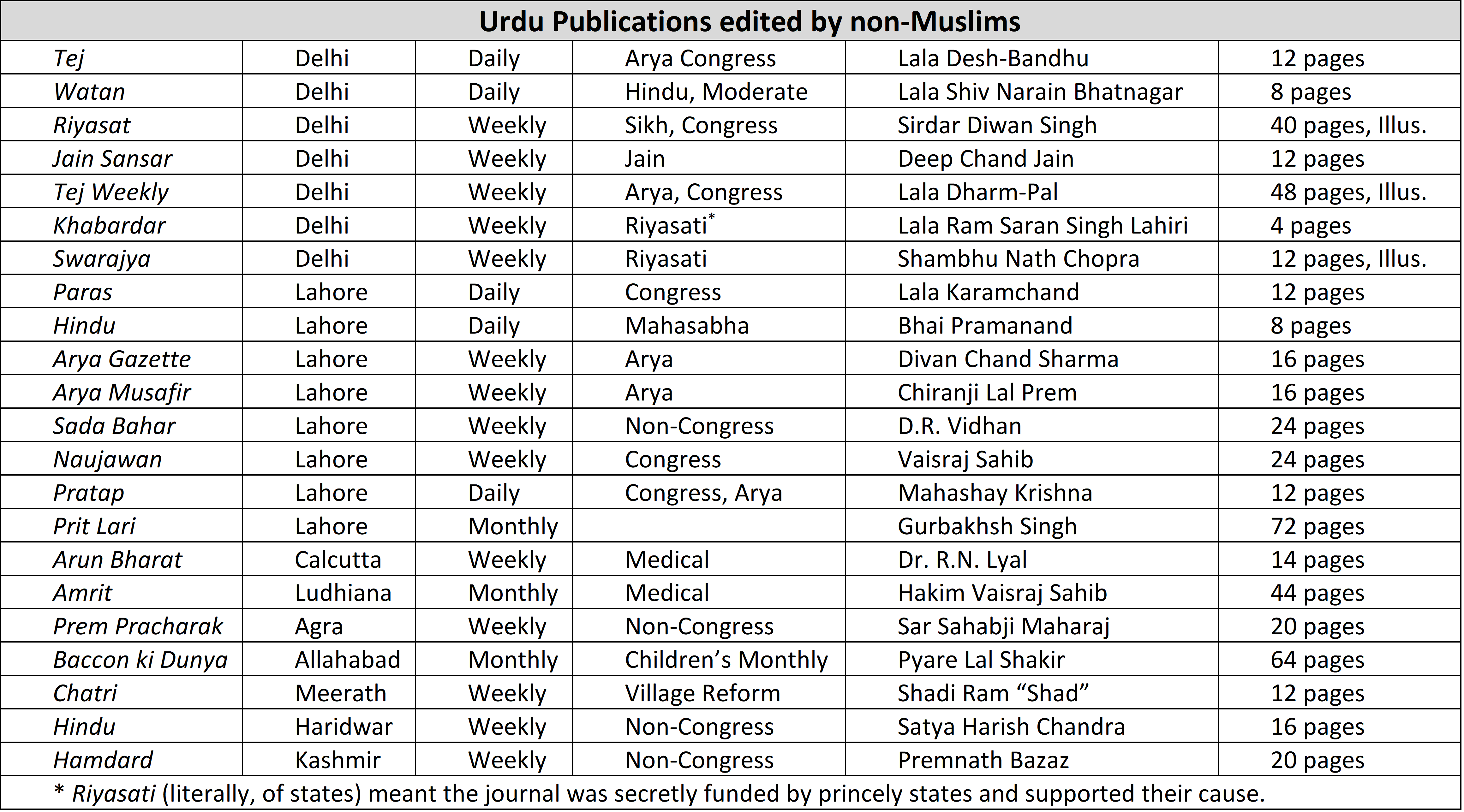
We see that no category was restricted in range. Jains and Sikhs, Arya Samaji Hindus and Sanatani Hindus, even Radha Swamis, all found it worth their while to publish their concerns and considerations in Urdu to reach a sizable portion of their respective faith communities. So was the case with political identity, where even the Hindu Mahasabha found it useful to make its views available, at least in Punjab, in Urdu. There are two “medical’ journals, indicating the extent to which Urdu was used by Punjabi practitioners of both the indigenous traditions, Ayurveda and the Greco-Arabic Tibb. Most of the journals on the list were seemingly flourishing and were of a respectable size and quality.

Nizami’s list is by no means exhaustive. It only tells us what he liked to get in exchange for his own magazine, which he described as “Islamic, Non-Congress.” I would interpret it as: concerned in particular with Islam and Muslims, not affiliated with any political party, and not disloyal to the colonial government. Despite being a prolific, almost compulsive, writer with an unmistakable stylistic charm, Nizami apparently received no Urdu literary magazine – not even Daya Narain Nigam’s Zamana (Kanpur), which was then in its 34th year of publication.

And though he received a few general magazines, including the newly started Musavvir (Bombay), a film plus literature magazine edited by none other than Saadat Hasan Manto, Nizami does not seem to have been getting Mast Qalandar, ‘Sufi’ Prithi Singh’s highly popular monthly, which was then in its 19th year. It boasted as its motto, Hindu hai ek ankh Musalman dusri – “The Hindu is one eye of India, the Muslim the other”, an image first made famous by Sir Syed Ahmad Khan (1817-1898) in a speech at Banaras when he was posted there as a judge (1867–1876). The magazine claimed to have “the largest net sales of any Urdu monthly printed in India”.  It also looks like Nizami did not receive ‘Sufi’ Lachman Prashad’s Mastana Jogi, which was no less successful and had been going strong longer.

Nand Kishore Vikram was only 18 when his family left Rawalpindi for India. He followed an uncle to Kanpur and joined another budding journalist, a similar refugee, to bring out a semi-literary Urdu monthly.

Arguably, the entire non-Muslim population, young and old, that had been engaged in Urdu journalism and publishing in West Punjab fled to India in 1947. Some found permanent refuge in East Punjab, in places such as Amritsar, Ludhiana, and Jalandhar. The more notable went directly to Delhi, and took not long to get going again. The younger upcoming ones sought their fortunes further away.

Nand Kishore Vikram was only 18 when his family left Rawalpindi for India. He followed an uncle to Kanpur and joined another budding journalist, a similar refugee, to bring out a semi-literary Urdu monthly. The venture did not last long but it nevertheless settled his career choice. Moving to Delhi, he took up various jobs involving Urdu, and completed his formal education. Eventually, he worked for the Information Bureau of the Government of India and was for decades on the editorial staff of its Urdu monthly, Ajkal. Its editor was a senior émigré, Balmukund Arsh Malsiyani.

After retirement, Vikram began publishing a bi-annual literary journal of his own, Alami Adab, and also produced a torrent of translations in both Urdu and Hindi. I never met him but had a couple of long chats over the telephone a few years ago. On learning that he was compiling three separate lists of the non-Muslim writers of Urdu – Hindu, Sikh, and Christian – I asked him to share them with me, and he most graciously did. He was compiling them mostly from memory, having access only to the books and journals in his own library. Sadly, he passed away soon after. Abdur Rashid of Delhi and I hope to complete the work as best we can.

Vikram identifies for us 70 Sikh, 97 Christian, and 531 Hindu writers of Urdu prose and poetry, and makes a point of identifying the journalists. Christian names are more numerous because he may have had the benefit of two previous works – Ram Babu Saxsena’s European and Indo-European Poets of Urdu and Persian and D.A. Harrison Qurban’s Urdu Ke Masihi Shu’ra. To my knowledge, no similar work exists for the Sikhs, despite such prominent writers as Rajendra Singh Bedi, Kirtar Singh Duggal, Mahendra Singh Bedi ‘Sahar’, and Sampooran Singh Kalra ‘Gulzar’.

Two other reasons may also have contributed: the steely allegiance amongst the Sikhs to Punjabi and the Gurumukhi script, and a preference amongst the Sikh elite for advanced proficiency in Persian, the formal language of the Sikh Durbar, that ended only when the British took over in 1849 and literacy in Urdu became necessary for government jobs.

Maftun told his rags-to-riches story in a page-turner autobiography,’ Naqabil-i Faramosh’, which is as ‘unforgettable’ as its title proclaims. Intriguingly, another equally candid and thoughtful autobiography, Gyan Singh Shatir, subtitled “a biographical novel”, was also written by a Sikh.

Though not many took to Urdu journalism, at least one Sikh scribe, Sirdar Diwan Singh Maftun, made a lasting name for himself. His slick weekly, Riyasat, was for a couple of decades a dreaded scourge of the rajas and nawabs of India as it exposed their peccadilloes and serious crimes. Printed on fine paper, it regularly carried eight pages of pictures and cost four annas – a princely price in the 1920s. It was, however, so popular that even car dealers regularly advertised in it. (The one and only instance I know of in Urdu.)

Maftun told his rags-to-riches story in a page-turner autobiography, Naqabil-i Faramosh, which is as “unforgettable” as its title proclaims. Intriguingly, another equally candid and thoughtful autobiography – by Gyan Singh Shatir, subtitled “a biographical novel” – was also written by a Sikh. Both books deserve to reach new readers through English translations.

Among the 97 Christians, there are very few prose writers. But one name is very important historically. Yesudas Ram Chandra, better known as Master Ram Chandra, was orphaned at a very young age but with the support of his mother and sheer hard work he managed to finish his education at the old Delhi College, specialising in mathematics. He was then appointed to teach at the college. In 1853, when he was 32, he converted to Christianity. During his tenure at the college, he edited and published two journals, Fawa’id-ul Nazirin and Muhibb-i Hind.A useful account of his life and times is Sadiqur Rahman Kidwai’s Master Ram Chandra, published by the Department of Urdu of Delhi University in 1961.
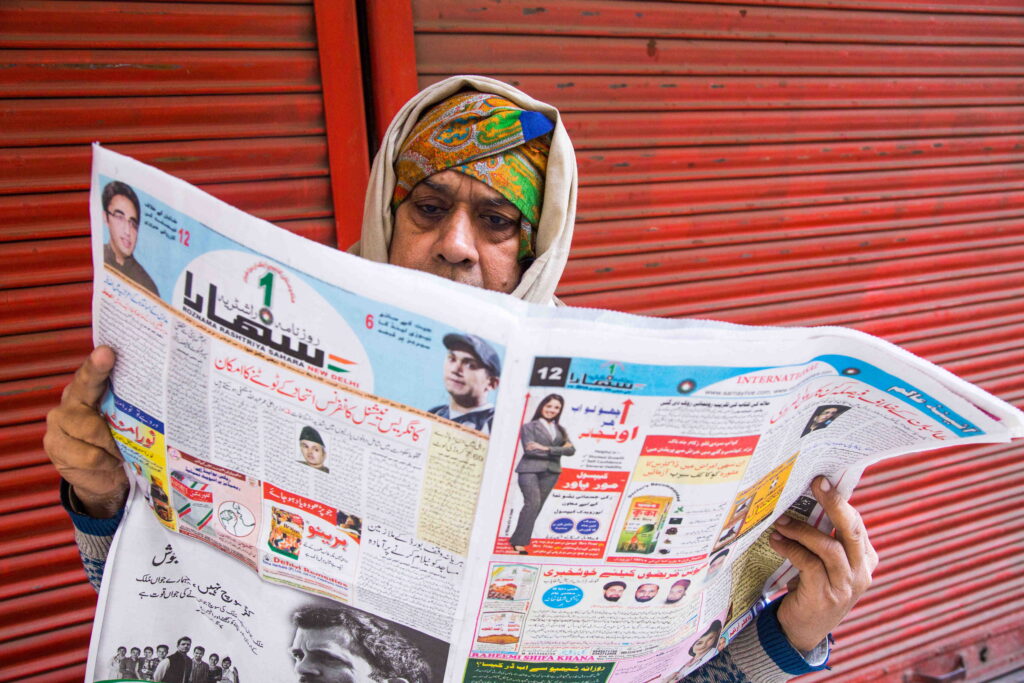
Reading an Urdu daily (Delhi) | Jeremy Graham/Alamy Stock Photo

The first Urdu journal published in Delhi is said to be Dahli Urdu Akhbar. Started in 1837; it was a joint project of a Muslim editor and a Kashmiri Hindu printer and publisher. In 1845, the newly appointed Swiss-German principal of the college, Dr Alois Sprenger, started Qiran-us Sa’dain, a weekly journal containing short essays on social issues, scientific news, and new technology, illustrated with line drawings. Its first editor was Dharma Narain Bhaskar, a “senior scholar” in English at the college. The earnest but preachy journal lasted 10 years, but chiefly on the subscriptions of colonial officers.

Ram Chandra’s first foray into journalism was Fawa’id-ul Nazirin (1845), a fortnightly inspired by Qiran-us Sa’dain, but more outspoken, wider in its range of social concerns, and allowing some space to contemporary Urdu and Persian poets. It regularly challenged the more conservative views of other Delhi papers, and at the height of its popularity had close to 200 subscribers – a notable readership, given that the earlier newspapers were not inexpensive.

Coming to Hindu writers, their sheer number on Vikram’s list sufficiently indicates how significant their role was in the development of Urdu literature.

Three years later, Ram Chandra started Muhibb-i Hind, a monthly of a similar nature. Unfortunately, both journals could not gain enough support from the elite of Delhi and were closed by 1852. A second Christian essayist-poet, Pyare Lal Shakir Merathi, gained prominence in the first half of the last century as the editor-publisher of a literary magazine, Al-’Asr. He also wrote much for younger readers, and several of his poems once had a place in school textbooks. (His short-lived magazine for children is on Nizami’s list.)

Coming to Hindu writers, their sheer number on Vikram’s list sufficiently indicates how significant their role was in the development of Urdu literature. That role becomes crucial when we consider just prose fiction. Nazir Ahmad may have written the first “novel” in Urdu, but the real foundation on which the edifice of Urdu fiction later arose was laid down by a Kashmiri Pundit, Ratan Nath Sarshar, whose episodic sagas were serialised in the pages of Awadh Akhbar, a famous weekly published by Munshi Newal Kishore.

The Urdu word for magazine is risala … a typical risala… normally carried in every issue two or three stories, a dozen pieces of poetry, three or four informative/topical articles, and some regular sections…

No doubt, Hindu journalists wrote in Urdu because it was their preferred means of considered expression, but they also wrote confident in the belief that a large Hindu readership, diverse in its literary tastes, political views, and social concerns, awaited them. (The diversity we glimpsed in Nizami’s categorisation.) There was also something else – a seemingly insatiable demand amongst Urdu readers in general for middlebrow writings, both fictional and factual, that had started in the 1880s and tapered off only after 1950. It gradually created a market for all sorts of magazines. (The first thing Vikram and his friend did after reaching Kanpur was to launch one.)

The Urdu word for magazine is risala (treatise; pamphlet; magazine), and a typical risala, unless further qualified as medical, sectarian, or religious, normally carried in every issue two or three stories, a dozen pieces of poetry, three or four informative/topical articles, and some regular sections, two or three pages each, devoted to “scientific discoveries,” “health news,” “films,” and “entertaining tidbits.” Editorial notes were a must in every issue. They established the tenor of the magazine and also gave it a human identity, to which readers could relate, adversely or in agreement, by submitting letters for the final must-have section: “Letters from Our Readers.”

A simple, all-purpose risala was meant for the whole family. Since some were quite inexpensive, a fairly large number of Urdu reading middle-class families bought one or two every month besides a daily newspaper. ‘Sufi’ Prithi Singh’s Mast Qalandar (Lahore; illustrated; multicolour cover; 90 pages) cost five rupees in 1947 for an annual subscription; “Maulana” Zafar Niyazi’s Kamyab (Delhi; monotone cover; 50 pages) cost only one rupee for 12 issues.

All major journalists, however, sooner or later ended up in Delhi, working for their original journals or for the Information Bureau and the Publications Division of the Government of India.

The large cohort of sharanarthi (refugee) journalists, forced in 1947 to abandon lives and careers in Lahore, Sialkot, Rawalpindi or Sargodha, lost little time in building new lives and careers in Delhi, Amritsar, Ludhiana and Jalandhar. The major publishing outfits already had their branch offices there; the minors took their chance wherever they could. All major journalists, however, sooner or later ended up in Delhi, working for their original journals or for the Information Bureau and the Publications Division of the Government of India.

The famous triad of Pratap, Milap, and Tej probably never lost a publication day. ‘Sufi’ Prithi Singh’s Mast Qalandar, ‘Sufi’ Lachhman Prashad’s Mastana Jogi, and (Ram Rakha Mal Chadda) Khushtar Garami’s Biswin Sadi – all three were perfect examples of a simple risala – were soon reaching the eager hands of thousands of their readers. The last named not only outlasted the two oldies, it grew to be the most popular Urdu risala in post-1947 India. (Two other hugely popular Urdu magazines, Sham’a and Jasusi Dunya, specialised in movies and crime fiction respectively.)

When these seniors left the scene, a younger generation that had come with them and, like them, favoured Urdu, took over. But Urdu’s fate was sealed relative to the very young ones. In economic importance, in Delhi and Uttar Pradesh, Hindi was second only to English, and the long communal tussle for power in Punjab, strategically disguised as a struggle for linguistic rights, made certain that there would be no third generation of Urdu-favouring journalists from amongst the Hindus.

It took six decades, but it happened. In the bicentenary year just ended, there was no major Urdu newspaper or magazine in India that was edited and published by a non-Muslim – and it has been the case for some time. One by one, they took their leave, the “Jolly Jogi” and the “Jolly Qalandar.” The great triad of Tej, Milap, and Pratap, my Delhi friends tell me, still exists but only online – none is seen on newsstands.

The situation, actually, is dire overall. Except for the ones published by a few information bureaus and academic or religious institutions, there is no independent Urdu magazine of any kind that comes out regularly or sells more than a few hundred copies. There is no risala now in Urdu that could claim to be read “in every home and by all members of the household.”

Urdu poetry recitals (musha’ira) may still bring out some enthusiastic non-Muslim participants and connoisseurs, but the prose pages of Urdu newspapers and magazines are starkly devoid of them.

Even the long series of exclusively literary (adbi) monthlies that began with Shaikh Abdul Qadir’s Makhzan (Lahore) in 1901, and continued through Mian Bashir Ahmad’s Humayun (Lahore), Daya Narain Nigam’s Zamana (Kanpur), Shahid Ahmad’s Saqi (Delhi), Ejaz Siddiqui’s Sha’ir (Mumbai), Gopal Mittal’s Tehrik (Delhi), and Abid Suhail’s Kitab (Lucknow), ended with Shamsur Rahman Faruqi’s Shabkhoon (Allahabad) in 2006.

When we turn our gaze away from journalism and take note of the larger literary scene in the 21st century, we see that a much greater and quiet tragedy. There is not a single non-Muslim essayist, literary critic, literary researcher, or fiction writer of significance in Urdu. Urdu poetry recitals (musha’ira) may still bring out some enthusiastic non-Muslim participants and connoisseurs, but the prose pages of Urdu newspapers and magazines are starkly devoid of them.

The present generation of Hindus in north India may well produce some interesting Urdu poets down the line, the likes of Bani, Kumar Pashi, or Manmohan Talkh, but it is certain that we may have to wait a long time for another Joginder Pal, Surendra Prakash, Ram Lal or Balraj Mainra. How this happened, and what it means for Urdu language and literature in India is, of course, a separate sad tale.

This article is dedicated to Nand Kishore Vikram.

C.M. Naim is professor emeritus of South Asian languages and civilizations, University of Chicago. His recent book A Most Noble Life (Orient Blackswan, 2021) is about two remarkable Muslim women of the 19th century.

source: http://www.theindiaforum.in / The India Forum / Home> Culture / by C.M. Naim / February 01st, 2023

Udupi: Karavali fishermen community supportive towards coastal security police: CSP SP Adbul Ahed

Udupi, KARNATAKA:

“The fishermen community of coastal Karnataka is much supportive and co-operative towards the Coastal Security Police and the activities we conduct,” said Adbul Ahed, SP Coastal Security Police Malpe.

Speaking at an interaction programme with the media fraternity organised by Udupi Press Club, Udupi District Working Journalists Association here, Abdul Ahed said, “We have an integral relationship with the fishermen community of the Karnataka coast. Both of us are interdependent and share a mutual relationship. They themselves identify and inform us about any suspicious activity at the mid sea. Often at times they themselves have brought the suspicious persons to the coast and have handed over them to us for further proceedings. We also take their boats for rescue operations when in need. We have been a model for coastal security. We, the coast guard and Indian navy work as a team for coastal security. This has resulted positively in our workings.”

“During last year we responded to 13 rescue operations. Our team is equipped with 80 power terrain vehicles, binoculars and even drones. The drones will be used for monitoring the activities in the island areas. We are expecting high powered boats also as this will equip the coastal security police in reaching the incident spots very quickly,” Abdul Ahed added.

Rajesh Shetty Alevoor, president, Udupi District Working Journalists Association, Ajith Aradi, convenor, Udupi Press Club, Ankith Shetty, co – convenor and Nazeer Polya, secretary were present. 

source: http://www.daijiworld.com / Daijiworld.com / Home> Karnataka / by Daijiworld Media Network – Udupi (JD) / August 22nd, 2023

Newsmaker | BJP’s first Muslim MLA in Tripura who won with record margin: Meet Tafajjal Hossain

Kalamchowra Village (Boxanagar), TRIPURA:

Hossain says people of all faiths voted for him, and he will work for everyone; CPI(M) blames Hossain’s 30,000-plus margin victory from Boxanagar, a seat held by it for 25 years, on rigging.

Tripura Boxanagar bypolls
Sepahijala: BJP candidate Tafajjal Hossain celebrates his victory in the Boxanagar assembly bypoll, at Sonamura in Sepahijala district of Tripura, Friday, Sept. 8, 2023. (PTI Photo)

THE BIG Boxanagar victory has ensured that the BJP now has its first ever Muslim MLA in Tripura, Tafajjal Hossain.

The 49-year-old won the seat that had been held by the CPI(M) for the last 25 years by more than 30,000 votes in the Septembe 5 bypoll, making it the biggest-ever victory margin in Tripura.

Hossain had lost to CPI(M) candidate Mohd Shamshul Haque from Boxanagar in the Assembly elections held in February this year, by a narrow margin of 4,849 votes. The BJP reposed its faith in him when Haque’s death necessitated the bypoll. The CPI(M) candidate was Haque’s son Mijan Hossain.

With nearly 80% of the votes cast going to Hossain, the CPI(M) has been claiming large-scale rigging and electoral manipulation.

Dismissing such allegations , Hossain says he will work for people of all faiths in his constituency – Hindus, Muslims, Buddhists or Christians – as everyone had voted for him. “I happen to be the first minority legislator of the BJP in Tripura, but all the voters in my constituency voted for me in large numbers,” Hossain told The Indian Express.

He attributes his win from Boxanagar, a seat either won by the Congress or Left so far, as a factor of people being aware of things now, thanks to smartphones, the Internet and the Modi government’s Digital India campaign. People are reluctant to join pointless movements and agitations now, and are instead interested only in development, he says.

Congress to BJP to giant-killer

Hossain’s political journey is not uncommon in these parts. He used to be a Congress leader, having served as vice-president of the Congress for Sonamura district, and became a member of the Tripura PCC in 2011.

Two years later, Hossain defected to the party. This was around the time Biplab Kumar Deb at the time was leading an aggressive push for the BJP in the state, making it a party to look out for from one that was electorally irrelevant in Tripura. By 2016, Hossain was state secretary of the BJP Minority Morcha.

In 2015, Hossain plunged full-time into politics, passing on his profession of a government contractor for 15 years. Between 2017 and 2018, he served as member of the BJP’s state-level booth formation committee and in-charge of booth verification for Sonamura and Boxanagar mandals (constituency-level committees).

Till last year, Hossain was the BJP’s Sepahijala South district vice-president. Before the 2023 Assembly elections, he was appointed mandal prabhari (in-charge) of Boxanagar, before being named BJP candidate from the same seat.

While he lost the February elections, Hossain’s win came despite the CPI(M) having the advantage of the Congress by its side while the TIPRA Motha did not field a candidate. In February, the Motha candidate had got 3,000-plus votes. Both CPI(M) and Congress leaders campaigned for the Left candidate, but could not make a dent in Hossain’s performance.

High on his victory, Hossain lists his agenda to be providing Boxanagar road connectivity, electricity transmission and services, sufficient teachers in schools and fire brigade services. “During the campaign, Chief Minister Manik Saha promised he would extend his support to all the developmental initiatives I undertake,” he says.

On the top of Hossain’s agenda list is improving schools. A native of Kalamchowra village in Boxanagar, Hossain, who studied up to Class 10, has two school-going children.

Smarting from the poll loss, the CPI(M) said the huge margin of Hossain’s win was questionable. CPI(M) state secretary Jitendra Chaudhary said: “We won in February by a margin of nearly 5,000 votes. Six months later, we lost by over 30,000 votes. This is ridiculous. Voters were obstructed from going out to vote. There is sufficient evidence of fake voting, which we furnished to the Election Commission, and demanded that the polls be countermanded. But nothing happened.”

Tripura Congress president Ashish Kumar Saha claims rigging and poll violations “on a massive scale”, reducing the by-election to a mockery.

The Motha ironically blames the CPI(M) for the results , accusing the Left of running away from the field in the face of violence during counting. “If a party does not have the courage to fight for the people, backing out at the last moment to leave its own loyal workers to suffer, then why contest? The TIPRA Motha has withstood the pressures of being a party that speaks up for the rights of the indigenous people,” Motha founder and royal scion Pradyot Kishore Manikya Debbarma posted on X, soon after the bypoll results.

Rubbishing the allegations, Hossain says the CPI(M) got the votes it did in February only by creating a “false vibe” that it was going to win, amid rumours that the Motha would align with it. “The BJP dispelled the confusion this time, so people voted wholeheartedly in favour of development, resulting in my massive win.”

source: http://www.indianexpress.com / The Indian Express / Home> News> Political Pulse / by Debraj Deb, Agartala / September 12th, 2023

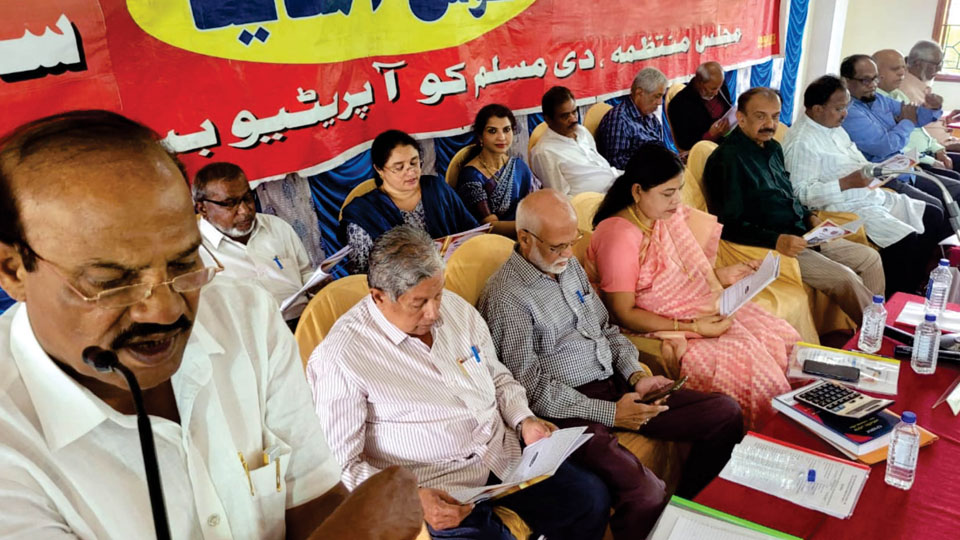
108th Annual General Body Meeting Of Muslim Co-Operative Bank Held

Mysuru, KARNATAKA:

Mysore/Mysuru:

The 108th Annual General Body Meeting (AGM) of the Muslim Co-operative Bank Limited was held on Sunday in the 2nd floor of the Main Branch Building on New Sayyaji Rao Road in city.

Bank President Dr. Abdul Ravoof, who is also an Orthopaedic Surgeon, presented the Directors’ Report and Audited  financial statements for the year 2022-2023.

He also spoke in detail about the overall development of the Bank and requested the loanees to repay their monthly instalments on time to reduce the percentage of NPA, which is very important for the expansion activities and overall development of the Bank, which is serving the community since 108 years.

Dr. Abdul Ravoof informed the share holders that the Bank has earned Rs. 1.66 crore profit during the year 2022-2023. The Board of Management proposed 15 percent as dividend for the year 2022-2023 which was raised to 20 percent on the demand from  share holders.

The meeting began with the recitation of verses from the Holy book of Quran by young Moulana and Hafiz Umez Saheb.

On the occasion, children of the Members of the Bank who excelled in II PUC and SSLC examination held in the year 2022-2023 and senior share holders of the Bank were felicitated.

Bank Director Abdur Rahman Shariff welcomed.

Manager of Main Branch Md Khaleel-ulla Shariff  presented the proceedings of the previous AGM.

Bank Director Md Akram proposed a vote of thanks.

Directors Rahmath Ulla Sharifff and Abdur Rahman Shariff were also present.

source: http://www.starofmysore.com / Star of Mysore / Home> News / September 06th, 2023

Laal Wunnar | Documentary on Syed Abdul Rahman Geelani

NEW DELHI:

Geelani goes on to become one of the best human rights defenders of his time. He campaigned for prisoners, vulnerable communities, and individuals. Photo: Shaheen Abdulla/Maktoob

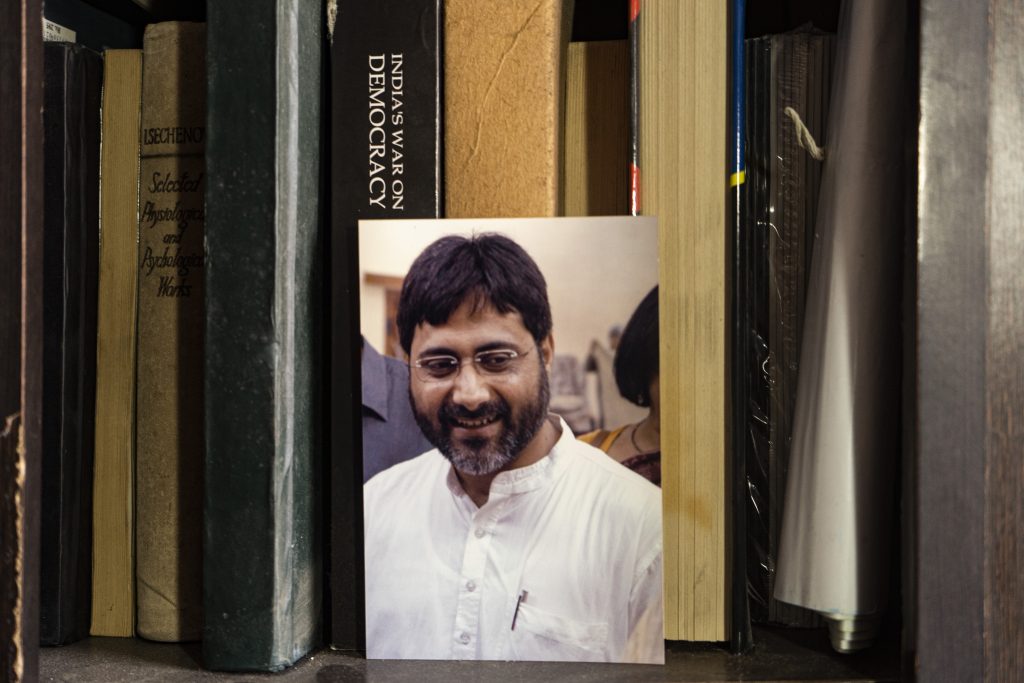
Syed Abdul Rahman Geelani was a professor at Zakir Hussain College, Delhi University. He was convicted for his alleged role in the 2001 Indian Parliament attack and sentenced to death by the trial court. Later, Delhi High Court acquitted him of all draconian charges in 2003, after 18 months of imprisonment.

Geelani goes on to become one of the best human rights defenders of his time. He campaigned for prisoners, vulnerable communities, and individuals.

Geelani died on 24 October 2019 at the age of 50, leaving behind a legacy of resistance against wrongful incarceration.

A documentary by Shaheen Abdulla, Madhuraj Kumar, Farkhanda Ashfaq, and Babrah Tabassum Naikoo.

Footage courtesy: AP News, Dalit Camera

Watch on YouTube:

source: http://www.maktoobmedia.com / Maktoob / Home> Features> India> Video / by Shaheen Abdulla / October 24th, 2021

Khan Study Group (KSG): The Best IAS Coaching Institute in India Founded by Dr. A.R. Khan

NEW DELHI :

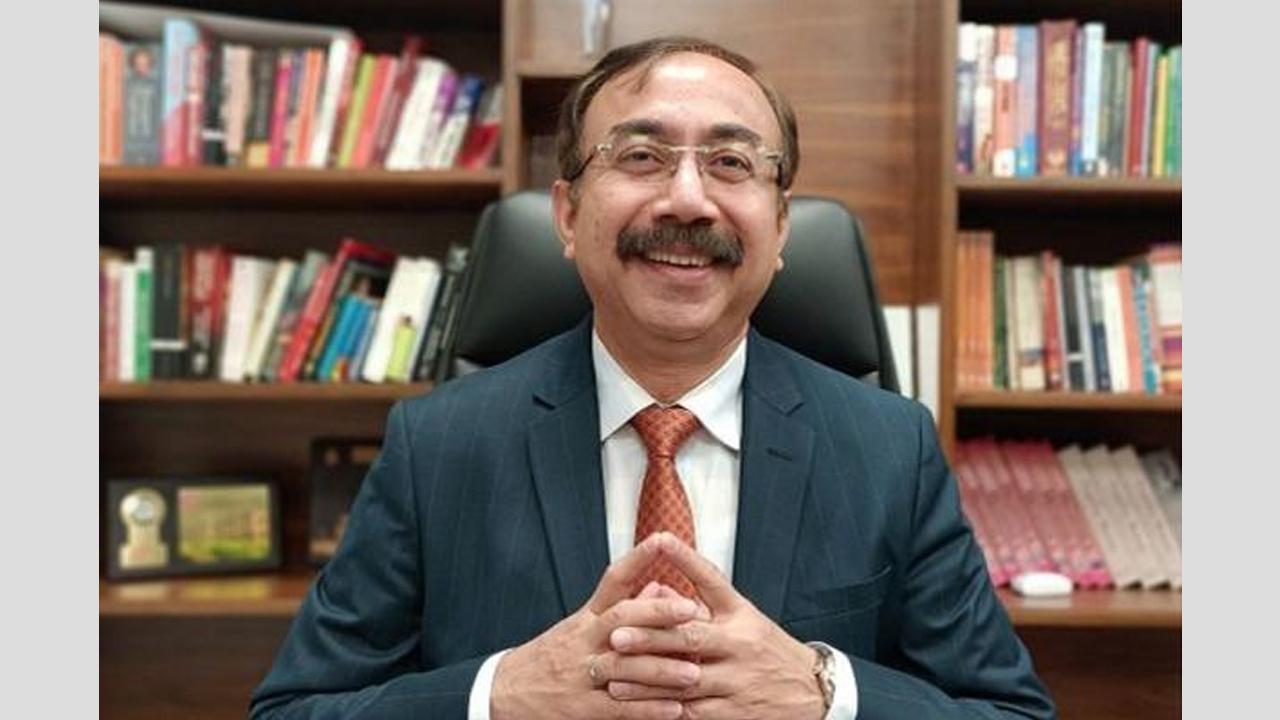
Khan Study Group (KSG): The Best IAS Coaching Institute in India Founded by Dr. A.R. Khan
Dr. A.R. Khan

For decades, the Indian Administrative Service (IAS) has been one of the most coveted careers for young graduates in India. However, the IAS exams are considered one of the country’s toughest competitive exams, requiring extensive preparation and guidance. This is where Khan Study Group (KSG), one of India’s best IAS coaching institutes, comes in.

Established in 2008 by Dr. A.R. Khan, popularly known amongst Civil Services aspirants as Dr. Khan, KSG India has quickly risen to become a leading institution in the field of IAS coaching. Its unique teaching methodologies, experienced faculty, and comprehensive curriculum have helped thousands of students achieve their dream of becoming civil servants.

Dr. A.R. Khan, the founder of KSG, is a well-known personality in the field of civil services coaching. With over 30 years of experience in the industry, he has trained and mentored thousands of aspirants. His expertise in the field of IAS coaching is unparalleled, and he is widely recognized as one of the best faculty members in the country.

KSG’s success is primarily attributed to its holistic approach toward IAS coaching. The institute not only focuses on the academic aspect of IAS preparation but also the overall personality development of its students. The curriculum is designed to cover all aspects of the IAS exam, including the preliminary, mains, and interview stages.

The institute’s faculty members are experts in their respective fields, with years of experience in civil services coaching. They are dedicated to helping students achieve their goals and provide personalized attention to each student. Their faculty members believe in imparting knowledge and the skills and strategies required to crack the IAS exam.

KSG’s curriculum is comprehensive and covers all the subjects that are a part of the IAS exam. The institute provides study material that is specifically designed to meet the requirements of the exam. The material is regularly updated to ensure that it remains relevant and up-to-date. KSG also conducts regular mock tests, which help students understand the exam pattern and evaluate their progress.

The institute also offers a range of specialized courses that cater to the specific needs of students. These courses include crash courses, weekend courses, and online courses. Online courses are top-rated among students who cannot attend regular classes due to time constraints or geographical barriers. The online courses are designed to provide the same quality of coaching as the regular classes, and students can interact with the faculty members through online platforms or speak to them over the phone.

The institute has a strong focus on personality development and communication skills. The institute provides soft skills, public speaking, and interview skills training. This training is designed to help students overcome their fear of public speaking and improve their communication skills, which is an essential part of the IAS exam.

It also has a dedicated team of mentors who guide and support students. The mentors help students identify their strengths and weaknesses and provide personalized advice on improvement. The institute also has a library that is well-stocked with books and study material related to the IAS exam.

In conclusion, Khan Study Group (https://www.ksgindia.com/) is undoubtedly one of India’s best IAS coaching institutes. Its unique teaching methodologies, experienced faculty, comprehensive curriculum, and focus on personality development and communication skills have helped thousands of students achieve their dream of becoming civil servants. If you are an aspirant looking for quality civil services exam coaching, KSG is worth considering.

source: http://www.mid-day.com / mid-day / Home> Brand Media News / by brandmedia@mid-day.com mumbai / April 12th, 2023

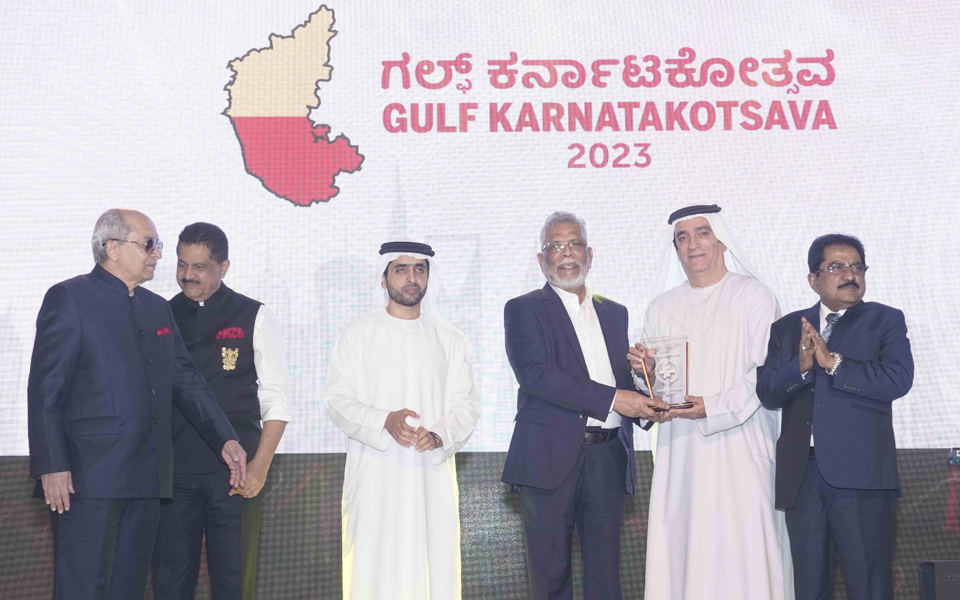
21 ‘Most Influential Business individuals’ feted with ‘Gulf Karnataka Ratna Awards

KARNATAKA / DUBAI, UAE:

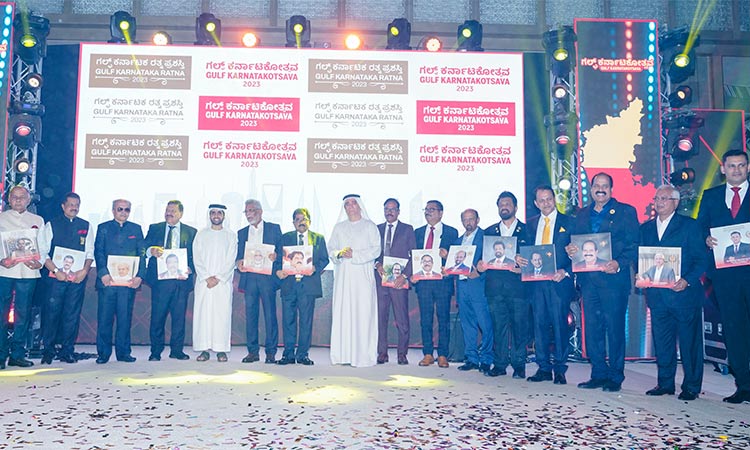
The distinguished honorees pose for a group photo during the mega event in Dubai.

The Gulf Karnatakotsava, an event dedicated to honouring the outstanding contributions and work of Karnataka-origin business icons in the Gulf region, concluded on a grand note.

The mega event marked a significant milestone as it paid tribute to a total of 21 exemplary ‘Most Influential Business individuals’.

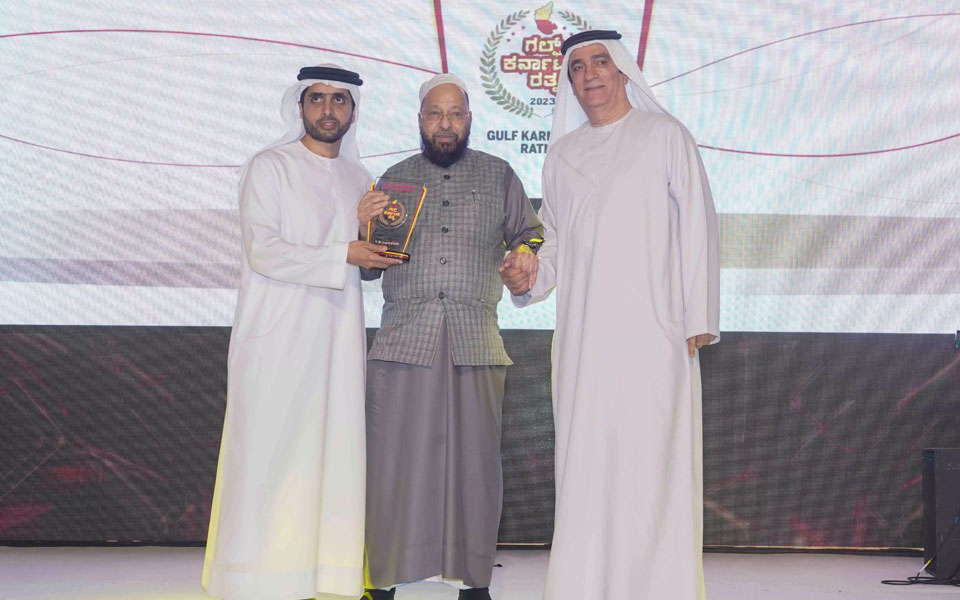
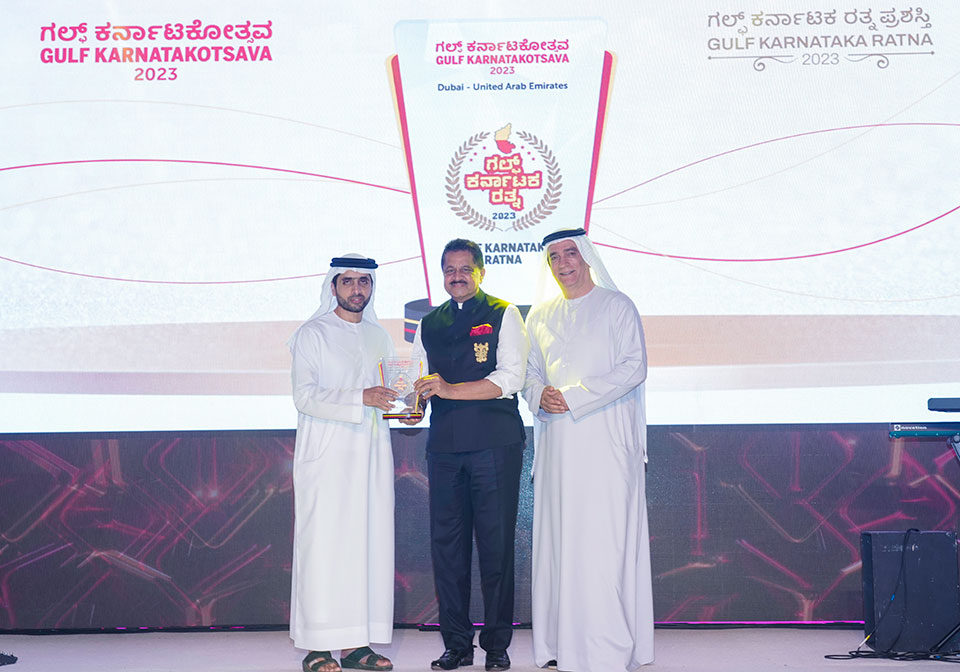
These distinguished honorees, recognised as ‘Gulf Karnataka Ratna,’ received their recognition from the esteemed Chief Guest, Sheikh Mohammed Maktoum Juma Al Maktoum, a Member of the Royal Family of Dubai and the Chairman of MBM Group. The heart of this momentous event was a coffee table book launch, capturing their achievements and dedication to both the Gulf nations and their home state of Karnataka.

The Gulf Karnatakotsava was a resounding success, drawing more than 1000 attendees from all walks of life and capturing the essence of Karnataka’s rich culture, heritage, and business prowess. The event served as a platform to acknowledge and celebrate the remarkable success stories of these individuals who have made a significant impact on the economic and social fabric of both the Gulf countries and Karnataka.

The highlight of the event was the felicitation of the 21 distinguished individuals who were honoured as ‘Gulf Karnataka Ratna Awards.’ These business icons, representing the most influential and powerful leaders from a wide array of industries, who have achieved tremendous success but have also contributed significantly to the welfare of their communities and the betterment of Karnataka.

The list of notable icons featured in the coffee table book and ‘Gulf Karnataka Ratna 2023’ awardees included Dr. Thumbay Moideen, emerging as the number one contributor in Medical Education and Healthcare sector of UAE. Notably he’s the only businessman from Karnataka who holds the distinction of being world’s only businessman from Karnataka to own a private medical University outside of India, the leader in healthcare and medical education in UAE.

Other awardees included: Hidayatullah Abbas, Founder & Chairman, Hidayath Group; Mohammed Meeran, Chairman of EMCO International and Electric Way; James Mendonca, Founder & Chairman, Reliable Group of Companies; Nissar Ahmed, Chairman, Nash Engineering; Ramchandra Hegde, Managing Director, Spraytek Coatings; Joseph Mathias, Managing Director, Merit Freight Systems; Vasudeva Bhat Puthige, Owner, Venus Group of Restaurants; Mohammed Naveed Magundi, Intignis Naveed Company; Mansoor Ahmed, Chairman, Saara Group; M. Syed Khalil, Founder Chairman, K&K Enterprises; Michael D’Souza, Managing Director, Ivory Grand Real Estate; Ibrahim Gadiyar, Managing Director – Gadiyar Group of Companies and Director Projects – Pantheon Development Group; Dr. B.K Yousuf, Executive Chairman, Air Chateau International; Dr. Sathish P Chandra, CEO, Global Tech Park; Zafrullah Khan Mandya Chairman and Founder, ZGC Global / Zain Group of Hotels; Devid Frank Fernandes, Chancellor General MEA, Peace Ambassador & Chief of Mission (UAE) ICDRHRP IGO, Martin Aranha, Managing Director, Globelink West Star Shipping, John Sunil, Group Chief Executive Officer, Burjeel Holdings, Mohammed Ashif, Co-president and CEO, Expertise contracting and Ravi Shetty, Managing Director, Advanced Technical Services. Their stories of perseverance, innovation, and commitment to excellence served as an inspiration to all attendees.

The Gulf Karnatakotsava was not just about awards and accolades; it was a true celebration of Karnataka’s vibrant culture and artistic heritage. The event featured a captivating blend of cultural performances, musical concerts, and comedy acts that left the audience enthralled. Traditional dances such as Pili Vesha were showcased, transporting the audience to the heart of Karnataka.

Hidayathullah Abbas, Founder and Chairman, Hidayath Group told Gulf Today that he is honoured to have been recognised at this Gulfkarnatakotsava platform, alongside so many accomplished individuals who share a connection with Karnataka and have made remarkable contributions in the Gulf.

“The Gulf Karnataka Ratna Awards event celebrates our shared heritage and showcases the incredible achievements that have taken shape from this cultural bridge.”

“The launch of the coffee table book emphasizes the stories, journeys, and legacies of Karnataka’s business icons in the Gulf. It serves as a testament to the entrepreneurial spirit of our community and the lasting impact we’ve made across industries and borders. I hope that these stories inspire future generations to continue the legacy of excellence and compassion that our community represents.” Abbas added.

The musical segment of the event witnessed renowned artists and musicians such as, Santosh Venky, Guru Kiran and noted playback singer Chaitra HG, was a testament to the harmonious coexistence of cultures and the bond between Karnataka and the Gulf countries.

Comedy, often regarded as the universal language of laughter, also played a pivotal role in the event. Comedian Kannada actors Prakash Thuminad and Deepak Rai Panaje had the audience in splits, providing moments of pure joy and amusement amidst the grandeur of the evening.

The Gulf Karnatakotsava was a celebration of success and a testament to the strong ties between Karnataka and the Gulf countries. It highlighted the importance of recognizing and honoring the contributions of individuals who have bridged the gap between these two regions, fostering cultural exchange, economic growth, and mutual understanding. As the curtains closed on the Gulf Karnatakotsava, it left behind a legacy of inspiration and pride. The ‘Gulf Karnataka Ratna’ awardees serve as an encouragement for aspiring entrepreneurs and a reminder that Karnataka’s heritage and success stories continue to shine on the global stage.

source: http://www.gulftoday.ae / Gulf Today / Home> Business / by Inayat-Ur-Rahman, Business Editor / September 11th, 2023

Udupi’s prominent NRI businessman Hidayathullah Abbas honored with ‘Gulf Karnataka Ratna’ award

Udupi, KARNATAKA / DUBAI, UAE:

Dubai:

Hidayathullah Abbas, a distinguished Non-Resident Indian (NRI) businessman hailing from Uchila, Udupi, was bestowed with the prestigious ‘Gulf Karnataka Ratna’ award at the Gulf Karnatakotsava event held in Dubai on Sunday, September 10, 2023. The event’s Chief Guest, His Highness Sheikh Mohammed Maktoum Juma Al Maktoum, a member of the Royal Family of Dubai and Chairman of MBM Group, graced the occasion.

Hidayathullah Abbas embarked on his entrepreneurial journey in the 1970s, initially engaging in hardware trading. Over time, he diversified into the supply of stainless steel materials and gradually emerged as a market leader in trading, processing, project supplies, manufacturing, and services related to architectural and industrial products in stainless steel and allied metals.

As the founding chairman of the Hidayath Group, he played a pivotal role in its remarkable growth. In just four decades, the group achieved global recognition in the stainless steel industry. His visionary leadership, hard work, unwavering commitment, risk-taking acumen, and dedication were instrumental in propelling the group to success. Hidayathullah Abbas’s strategic focus and understanding consistently aligned with the group’s objectives. His emphasis on continuous technological advancement, strategic acquisitions, and well-planned expansions into new markets enabled the group to make substantial inroads into the architectural and industrial sectors.

In addition to his remarkable business achievements, Hidayath is also a prominent philanthropist, actively supporting religious, educational, and social institutions. His contributions extend beyond the business realm, reflecting his commitment to the betterment of society.

source: http://www.english.varthabharati.in / Vartha Bharati / Home> Gulf / by Vartha Bharati / September 11th, 2023

Eminent NRI businessman from Bhatkal Syed Khalil ur Rahman honored with ‘Gulf Karnataka Ratna’ award

Bhatkal (Uttara Kannada District) KARNATAKA / SHARJAH-DUBAI, UAE:

Dubai: 

In a remarkable celebration of exemplary contributions and achievements, Syed Khalil ur Rahman, a distinguished NRI businessman and community leader from Bhatkal, was bestowed with the prestigious ‘Gulf Karnataka Ratna’ award. This honor was conferred upon him during the Gulf Karnatakotsava event held in Dubai on Sunday, September 10, 2023. The Chief Guest for this momentous occasion was His Highness Sheikh Mohammed Maktoum Juma Al Maktoum, a member of the Royal Family of Dubai and Chairman of MBM Group.

Syed Khalil, affectionately known as ‘C A Khalil’ among the general public, hails from the Nawayat community of Bhatkal. His exceptional journey to prominence and distinction has not only brought pride to the Nawayat community but also to Kannadigas and Indians at large. Khalil is renowned for his remarkable achievements and dedication to international trade, social service, and the education of underprivileged children.

Having ventured to the Gulf in 1978, Khalil’s unwavering faith and dedication to the Galadari family propelled the Galadari Company to unparalleled success over three decades. Presently, he serves as the Founder Chairman of K&K Enterprises General Trading Company in Sharjah. Khalil also holds positions in numerous educational and social service organizations in Karnataka and beyond.

His passionate commitment extends to addressing the issue of youth unemployment. In his public addresses, he emphasizes the need for medical education and the establishment of a reputable hospital in the region. Khalil has received numerous awards and honors, including the prestigious ‘Rajyostava Award’ from the Karnataka government, an honorary doctorate from Aldersgate College, Ireland, and countless felicitations that showcase his outstanding accomplishments and exemplary character.

Syed Khalil stands as one of the town’s first chartered accountants, renowned for his financial expertise. He is also a respected leader in social service, religious, and educational circles. His leadership roles have included the presidency of prominent organizations such as Anjuman Hami-e-Muslimeen and Rabita Society. Khalil is an advocate for girls’ education and has played a pivotal role in establishing extensive educational institutions.

source: http://www.english.varthabharati.in / Vartha Bharati / Home> Gulf / by Vartha Bharati / September 11th, 2023

Dr. Thumbay Moideen honored with ‘Gulf Karnataka Ratna’ Award at Gulf Karnatakotsava

Mangaluru, KARNATAKA / AJMAN-DUBAI, UAE:

Dubai (UAE):

 In a testament to extraordinary achievements and contributions, Dr. Thumbay Moideen was bestowed with the ‘Gulf Karnataka Ratna’ Award, emphasizing his leadership in healthcare delivery and medical education. Notably, Dr. Moideen holds the distinction of being the only Indian in the world to own and operate the biggest private medical university outside India. This recognition reflects his dedication to enhancing healthcare and nurturing the future of medical professionals. Alongside him, 20 other distinguished businessmen were also honored for their remarkable contributions at the festivities of the Gulf Karnatakotsava- the United Arab Emirates’ most prominent platform for celebrating business excellence and recognizing the remarkable contributions of Karnataka’s businessmen in the Gulf region.

The award was presented by the esteemed Chief Guest, His Highness Sheikh Mohammed Maktoum Juma Al Maktoum, a Member of the Royal Family of Dubai and the Chairman of MBM Group to Dr. Thumbay Moideen.

In 1997, Dr. Thumbay Moideen founded the Thumbay Group in 1997, which has grown from a private medical college to a prominent conglomerate in medical education, healthcare delivery research, diagnostics, pharmacies, and hospitality sectors. With over 110 locations across seven emirates, the group partners with over 70 institutions.

Speaking about receiving the award, Dr. Thumbay Moideen, founder president, Thumbay Group stated, “I am grateful to God Almighty, the support of the Rulers and the government, and my own sincere team. This recognition will inspire me to do more in driving positive change.”

Beyond business excellence, Dr. Moideen has been an ardent advocate for the importance of healthcare accessibility and quality education globally. His philanthropic efforts have reached communities in need, providing medical services and educational opportunities to those who would otherwise lack access.

The Gulf Karnataka Ratna Award is a testament to Dr. Thumbay Moideen’s commitment to improving the well-being of people and his dedication to nurturing the future leaders of the medical field.

source: http://www.english.varthabharati.in / Vartha Bharati / Home> Gulf / by Vartha Bharati / September 11th, 2023