Category Archives: Leaders

Prof. Sheik Ali Had Contributed A Lot For Urdu Language Growth

Mysuru, KARNATAKA:

Mysore/Mysuru:

Maintaining that former Vice-Chancellor of Goa and Mangalore Universities Prof. B. Sheik Ali was a highly talented scholar and a renowned historian, Rajyotsava awardee Dr. Maher Mansur said that Prof.Ali severely opposed the partition of the country during the freedom struggle.

He was speaking after inaugurating the one-day seminar on “Prof. B. Sheik Ali Hayath Aur Khidmaath – His life and views” organised at Kaveri auditorium in KSOU premises on Hunsur road here recently.

Maintaining that Prof.Sheik Ali strongly opposed the partition of the country at the end of British rule, Dr. Mansur said that Prof.Ali was well-versed in languages such as Urdu, Kannada, Hindi and English and has 55 works to his credit.

Highlighting the contributions of the former VC to the growth and promotion of Urdu language, he said that his (Ali) work ‘British rule in Mysore Kingdom’ has documented many important happenings then. Noting that the erstwhile Mysore Maharajas had lauded the knowledge of Prof.Ali, he said that the late VC, after his return from England, scripted 12 books in Urdu.

KSOU Finance Officer Khader Pasha, in his address, said that Prof.Ali had great concerns for education of poor Muslims and established educational institutions at Ghousianagar and other parts of the city. Prof.Ali had contributed a lot for the language when he served in the Department of Urdu, University of Mysore, he added.

KSOU Dean Prof. N. Lakshmi too spoke. KSOU Vice-Chancellor Dr. Sharanappa V. Halse, Registrar Prof. K.N. Murthy, Urdu Department Dean Prof. Ramanath Naidu, Registrar (Evaluation) Prof. K.B. Praveen, Dr. M.D. Nasrulla Khan, Dr. Syed Ishrath Fatima and others were present at the seminar.

source: http://www.starofmysore.com / Star of Mysore / Home> News / July 17th, 2023

Omer Jaleel appointed as Secretary & Commissioner of the Telangana Minority Welfare Department

TELANGANA:

Hyderabad:

Syed Omer Jaleel has been appointed as the Secretary and Commissioner of the Telangana Minority Welfare Department. The Telangana government has reappointed the retired IAS officer, Mr. Syed Omer Jaleel, to serve as the Secretary of the Minority Welfare Department and the Commissioner Director of Minority Welfare for a two-year term.

This appointment comes after the former Vikarabad collector, Syed Omer Jaleel, was suspended in 2019 for opening sealed EVMs and VVPATs, which was a violation of an Election Commission order. It was alleged that Jaleel unsealed 122 EVMs in the strong room pertaining to the Vikarabad assembly constituency, claiming to inspect their availability for the upcoming parliament elections. At the time, there was a pending petition regarding the assembly polls in Vikarabad in the high court, and Jaleel’s actions violated the court’s order.

After serving a seven-month suspension, Jaleel was later appointed as the Secretary of the Intermediate Board and the Commissioner of Intermediate Education. However, he retired from these positions in September 2022.

As of now, Syed Omer Jaleel has been entrusted with the responsibility of leading the Telangana Minority Welfare Department as its Secretary and Commissioner.

source: http://www.munsifdaily.com / The Munsif Daily / Home> News> Regional> Hyderabad / by Munsif Web Desk / July 11th, 2023

Presidency University Chancellor Nissar Ahmed awarded honorary doctorate by B’luru City University

Bengaluru, KARNATAKA:

Bengaluru:

Presidency University Chancellor Nissar Ahmed and two other achievers were awarded honorary doctorates by Karnataka Governor Thaawar Chand Gehlot at the 2nd convocation ceremony of the Bengaluru City University on Monday.

During the program organized at the Jnanajyothi auditorium of the Bengaluru City University, Nissar Ahmed, who is a native of Mangaluru and also chairman of the Presidency Group of Institutions, was awarded a Doctor of Literature (D.Lit) degree.

Writer Tarini Chidananda and social activist Dr. Wooday P Krishna were also awarded D.Lit degrees by the Bengaluru City University during the convocation ceremony on Monday.

Renowned cardiologist and director of the Sri Jayadeva Institute of Cardiovascular Sciences and Research Dr CN Manjunath and Vice-chancellor of the Bengaluru City University Prof. Lingaraja Gandhi were present on the occasion.

source: http://www.english.varthabharati.in / Vartha Bharati / Home> Karnataka / by Vartha Bharati / July 10th, 2023

Forgotten role of Saudi Arabia in the Indian Freedom Struggle

SAUDI ARABIA / INDIA:

Maulana Obdaiullah Sindhi (Second from left) in Turkey

It’s a little-known fact that Saudi Arabia played an important role in the Indian Freedom Struggle. This country was the only one outside British India to provide support to the Indian revolutionaries during the 150 years of freedom struggle.

At the outset of the Second World War, Netaji Subhas Chandra Bose planned to send his men for Haj, and under that cover, they were to recruit anti-British people in Azad Hind Fauj. At that time Indian revolutionaries were operating from Hejaz (now Saudi Arabia).

Before announcing his fight against the British during World War II, Bose met Maulana Ubaidullah Sindhi in 1939. Sindhi was an Indian revolutionary who had formed a Free India Government in exile with Raja Mahendra Pratap and Barkatullah at Kabul in 1915. After World War I he toured countries like Russia, Germany, Italy, etc to create an alliance for the next war of Indian independence. In the 1930s, Sindhi settled down at Makkah after being granted asylum. However, British intelligence alleged that he was preaching Indian Nationalism among Muslim pilgrims visiting the holy city.

A grand plan was prepared at Makkah. The city provided one of the best communication channels to other parts of the world because of Haj. Sindhi returned to India in 1938. According to a letter written by Maulana Abul Kalam Azad to Maulvi Zahirul Haque, Sindhi had told him that he wanted to send Bose abroad for a final battle against the British. Azad wrote that Bose and Sindhi met in Delhi to talk about the future of the Indian Freedom Struggle. They again met in Calcutta (Kolkata) after a few months. Ubaidullah handed over important letters of reference and documents to be given to the Japanese authorities.

Sindhi wasn’t the first Indian revolutionary to use Saudi as his ground of action. The government he formed in 1915 in Kabul was part of a larger plan known as the Silk Letter Movement. This was a collaboration of Ulema, Ghadarites, Bengali revolutionaries, and others to free India by an armed revolution. The leader of the movement was Maulana Mahmood Hasan. He was arrested in 1916 from Hejaz along with  Maulana Husain Ahmad Madani, Anzer Gul, Wahid Ahmad, Hakim Nasrat Husain, and others.

Hasan and Madani were teaching at Makkah and Medina and also influencing pilgrims. They were sent to Malta as Prisoners of War because the British believed,  “if they were kept in confinement in the Hedjaz for a long period they might become interesting and exciting objects of pilgrimage or schemes for help or rescue to many fanatical Muhammadans in India and Afghanistan”.

Maulana Mahmood Hasan, the head of Darul Uloom, Deoband, was also a member of this group. Deoband considers Haji Imdadullah as its spiritual head; Imdadullah’s disciples founded the Madrasa at Deoband after 1857 to prepare revolutionaries.

Imdadullah went for Haj in 1845, where another Indian Shah Muhammad Ishaq directed him to fight the British. Imdadullah wrote, “The conditions of India are not hidden as India is my motherland” and returned to India in 1846. In the districts of Muzaffarnagar, Saharanpur, and Shamli, he started raising an army with the help of his students like Hafiz Muhammad Zamin, Maulana Qasim Nanautvi, Maulana Rashid Ahmad Gangohi, Maulana Mazahar, Maulana Munir Nanautvi.

This army led by Imdadullah fought the British forces in 1857 and liberated Shamli. A civil government governed the town for a few days before the British recaptured it. Thousands of people were killed, and Imdadullah took refuge in Makkah. He reached Makkah in 1859 and used it as a ground to preach anti-colonial ideas among the pilgrims.

Why did Ishaq, who lived in Makkah, ask Imdadullah to fight for Indian independence? In 1821, Syed Ahmad Shahid undertook a journey to Makkah and Medina. He was an Islamic scholar and soldier in Maratha forces. When Marathas signed a treaty with the British, Syed left their army and left for Makkah with a group of people. On his return from Haj, he attained martyrdom while fighting the British.

In the 1920s, 30s, and 40s, British intelligence raised several alarms with the Saudi authority to check Indian revolutionaries in Makkah, Medina, and Jeddah. Indian revolutionaries in the name of Haj visited Saudi Arabia to meet each other freely. British intelligence kept an eye on them. Memoirs of all these revolutionaries show that the local Arabs fully supported their cause and mission.

source: http://www.awazthevoice.com / Awaz, The Voice / Home> Stories / by Saquib Salim / July 10th, 2023

Human Welfare Foundation & Railtel Corporation Of India Join Hands To Implement CSR Projects

NEW DELHI :

New Delhi:

Human Welfare Foundation (HWF), in collaboration with RailTel Corporation of India Limited, has signed a Memorandum of Understanding (MoU) to carry out a corporate social responsibility (CSR) project aimed at promoting healthcare and women’s empowerment in selected villages of the Jalna District of Maharashtra.

The project will include two interconnected initiatives. The first will address menstrual hygiene in a few selected villages in Jalna District, while the second will run a mobile unit staffed by healthcare professionals to facilitate special online consultations and offline solutions for common people in selected villages.

RailTel Corporation of India Limited will provide funding support for the project, which will be implemented over a period of one year in six villages in the Jalna District, namely Chikali, Dalegaon, Kedarkheda, Loangaon, Chandai, and Rajur.

The project’s activities will include the formation of two self-help groups comprising 60 women who will be responsible for the distribution of sanitary napkins in the villages. The project will also create a source of livelihood for the women, sensitizing and raising awareness among young girls and women in these villages about the health benefits of the use of sanitary napkins, menstrual hygiene, and health-related issues.

The project’s goal is to empower people in the selected villages to address health and nutrition issues and set up income-generating plants for women. The project will focus on two areas of activity, namely self-help group formation for menstrual hygiene management (MHM) and tele-health medicine.

The project aims to provide infrastructure, training, health, and medical facilities in Jalna District villages, promote hygienic menstrual practices among rural women and adolescent girls, eliminate stigmas and taboos related to menstruation, facilitate authentic information and guidance to reduce hospitalization, empower girls by addressing gender issues, provide comprehensive mobile health care services, and enhance the physical and psychological well-being of rural women. The project also offers free tele-consultations by an expert panel of doctors to all beneficiaries.

source: http://www.indiatomorrow.net / India Tomorrow / Home> Economy / by admin India Tomorrow / March 08th, 2023

PAI Academy of Pune becomes a beacon of hope for thousands of underprivileged children

Pune, MAHARASHTRA :

Sawleha Shaikh, a PAI Academy student playing the role of a news reporter

The PAI Academy of Spoken English, founded in 2007 by noted educationalist Dr. P.A. Inamdar, is making a profound impact on the lives of underprivileged students. Driven by a deep commitment to education, Dr. Inamdar recognized the need to address the educational disparities faced by students in Pune Municipal Corporation schools, where English and computer education opportunities were limited compared to their peers.

PAI Academy of Spoken English

The primary objective of the academy is to provide a life-changing opportunity for students from economically disadvantaged backgrounds. By equipping them with essential English communication skills, the academy aims to empower these marginalized students and level the playing field for their growth and development.

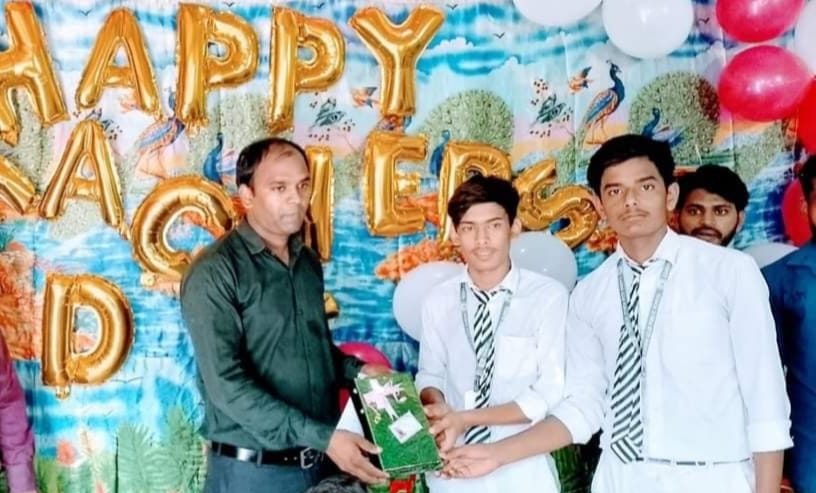
Teacher’s Day function of  PAI Academy of Spoken English.

Dr. Inamdar shared his vision for the project, stating, “Through this initiative, we aspire to instill hope and self-confidence in students belonging to the most deprived sections of society.” He emphasized the transformative power of computer education, not only boosting the students’ confidence but also inspiring their families and nurturing their dreams.

Since its establishment, the PAI Academy has successfully set up over 80 centers across Maharashtra and beyond. These centers cater to students studying in Marathi, Hindi, and Urdu mediums, ensuring that language barriers do not hinder their educational progress.

“While teaching these students, I experience immense pleasure and satisfaction. It fills me with joy to see these students, who may not have many resources, still eager to learn and succeed in life. I feel a strong sense of responsibility towards them, as I recognize that without our intervention, their circumstances may not improve. Above all, I am inspired by the hope and determination that shines on their faces. Teaching these students is truly a life-changing experience for me, ” said Sama Sayyed, the project’s leader.

Impressively, the Academy has provided training to more than 45,000 students through its Spoken English program, without any financial burden on the Pune Municipal Corporation schools administration. The academy takes pride in its selection and training of dedicated teachers who share the vision of empowering underprivileged students.

The tireless efforts of the PAI Academy in raising hope and transforming the lives of underprivileged students through education serve as a beacon of inspiration. By bridging educational gaps and offering equal opportunities, the academy is paving the way for a brighter future for these deserving students, empowering them to overcome obstacles and achieve their aspirations.

source: http://www.muslimmirror.com / Muslim Mirror / Home> Education> Indian Muslim> Positive Story / by Muslim Mirror Special Correspondent / July 06th, 2023

Omar Khalidi’s Personal Library Finds A Home At MANUU, Hyderabad

Hyderabad, TELANGANA / Boston (Massachusetts), U.S.A.:

Photo: twitter.com/swachhhyd/

Omar Khalidi Hall, named after the late renowned Hyderabadi scholar, was inaugurated at Maulana Azad National Urdu University (MANUU) on Thursday. The hall, which now houses Khalidi’s personal library comprising scores of rare books, marks a significant milestone for the university.

The collaborative efforts of Khalidi’s daughter Aliya Khalidi, his wife Nigar Sultana Khalidi, historian Prof Salma Farooqui leading MANUU’s H.K. Sherwani Centre for Deccan Studies, the United States Consulate General in Hyderabad, and admirers of the Hyderabad scholar based in the USA made it possible to bring his personal library back to his hometown of Hyderabad.

Khalidi’s library is an impressive collection with over 1,000 Urdu, English, Persian, French, German, and French titles. It covers a wide range of subjects including the history, culture, and administration of the Deccan, Hyderabad State, Golconda, religion, Sufis and Sufism, heritage, and numerous journals. Notably, the collection includes rare books such as L’Inde Anglaise, published in 1845, The Hindu reported.

Khalidi’s strong connection with his hometown led him to compile an exhaustive list of books on Hyderabad’s history, culture, and archaeology. Many of these books were either unknown or had faded from public memory due to the passage of time.

Apart from his personal library, Khalidi was also renowned for his authored works. His book Khaki and Ethnic Violence in India explored the complexities of religious composition within the armed forces and police, as well as the Muslim community. L.K. Advani had verbally attacked Khalidi for the book and reportedly acknowledged that the book provided “inspiration to the Sachar Committee to seek a communal census in the Armed forces.”

Among his other important works were Muslims in Indian Economy and Hyderabad: After the Fall, a collection of essays edited by Khalidi.

Khalidi, who worked at the Massachusetts Institute of Technology as part of the Aga Khan Programme for Islamic Architecture, passed away on November 29, 2010, leaving behind a significant intellectual legacy.

The inauguration of Omar Khalidi Hall at MANUU on Thursday not only celebrates the life and work of this distinguished scholar but also provides a valuable resource for students and researchers. The inclusion of Khalidi’s personal library in the hall will serve as a source of inspiration, enabling a deeper understanding of Hyderabad’s history, culture, and heritage.

source: http://www.thecognate.com / The Cognate / Home> Culture / by The Cognate News Desk / June 16th, 2023

Renowned Islamic Scholar And Translator, Maulana Muhammad Farooq Khan Passes Away, Leaves A Profound Legacy

Karpi Village (Sultanpur), UTTAR PRADESH:

Renowned Islamic Scholar and Senior Member of Jamaat-e-Islami Hind, Maulana Muhammad Farooq Khan, has passed away, leaving behind a legacy of exceptional contributions to the Islamic literary world. Known for his profound knowledge and expertise in translating and explaining the Holy Quran, Maulana Muhammad Farooq Khan was a highly respected figure within the Islamic community.

Born in Karpi village in Sultanpur, Uttar Pradesh, in 1932, Maulana Muhammad Farooq Khan pursued a Masters in Hindi Literature. Although he initially began his career as a teacher in Azamgarh, his passion for writing and disseminating Islamic knowledge soon took precedence.

Maulana Muhammad Farooq Khan gained recognition with his Hindi translation of the Holy Quran, which marked a significant milestone in his career. His translation made the sacred text accessible to a wider audience, bridging the gap between Arabic and Hindi literature. The clarity and precision with which he conveyed the Quranic teachings garnered him immense respect and established him as a prominent figure in the field.

Expanding his literary endeavours, Maulana Muhammad Farooq Khan authored a notable four-volume collection of Hadith commentary called Kalameh Nabuwat. This work, too, received widespread acclaim and further solidified his position as an authority on Islamic literature. His insightful explanations and interpretations of the hadiths provided valuable guidance to scholars and practitioners alike.

In addition to his translations and commentaries, Maulana Muhammad Farooq Khan penned numerous books on various subjects, including da’wah (Islamic propagation), guidance, personality development, and comparative study of religions. These works not only enriched the Islamic literary landscape but also reached a broader audience through his Hindi translations. Maulana Muhammad Farooq Khan’s dedication to promoting Islamic teachings and his efforts in making them accessible to people of diverse linguistic backgrounds were unparalleled.

The passing of Maulana Muhammad Farooq Khan is an irreplaceable loss to the Islamic literary world. His extensive contributions and profound understanding of religious texts have left an indelible mark on the community. The impact of his work will continue to guide and inspire generations to come.

As the news of his demise spreads throughout the Islamic community, heartfelt tributes pour in, acknowledging the significant role Maulana Muhammad Farooq Khan played in disseminating knowledge and fostering a deeper understanding of Islam. Scholars, students, and devotees express their gratitude for his contributions and remember him as a beacon of wisdom and enlightenment.

Maulana Muhammad Farooq Khan’s funeral prayers were held today, attended by a multitude of mourners who came to pay their respects. His passing leaves a void in the hearts of those who admired his scholarship, but his legacy will live on through his writings, translations, and the countless lives he touched.

The Islamic world mourns the loss of Maulana Muhammad Farooq Khan, and his memory will forever remain as a testament to his outstanding contributions and unwavering dedication to spreading Islamic knowledge.

source: http://www.thecognate.com / The Cognate / Home> News / by The Cognate News Desk / June 30th, 2023

Mansoor Ali takes charge as the Commissioner of Mangaluru Urban Development Authority

Mangaluru, KARNATAKA:

Mansoor Ali

Mangaluru: 

In a latest development, Mansoor Ali took charge as the Commissioner of Mangaluru Urban Development Authority (MUDA) on Wednesday.

Meanwhile, The Mangaluru Urban Development Authority (MUDA) earlier in the day announced in a press release, that the public can directly contact the authority during office hours to discuss their grievances and any matters falling within the authority’s jurisdiction.

source: http://www.varthabharati.in / Vartha Bharati / Home> Karavali / June 21st, 2023

How businessman Manzoor Wangnoo restored Khushal Sar Lake of Kashmir

Srinagar, JAMMU & KASHMIR:

Manzoor Wangnoo leading school Children during an environmental campaign in Srinagar

About two and a half years ago when Manzoor Ahmad Wangnoo, a prominent businessman of Kashmir  was asked by the anchor during a television show that he must say in 20 seconds what inspired him to work for saving and restoring Kashmir’s water bodies, he replied “Ehsaas”.

His reply explained how realization and concern on seeing the water bodies of the Valley shrink and gets degraded due to human greed and official negligence became the key to his massive efforts to awaken the public and undertaking the work to restore the Lakes to health.

He remembers visiting the 1.6 km by 0.6 km Khushal Sar Lake located on Srinagar outskirts in February 2021 for the first time. “It was in bad shape, choked with solid waste and smelling foul”, he told Awaz-the Voice at his office in Kashmir Mahal Resorts in the Nishat area overlooking the Dal lake.

“When I told the residents that it needs efforts to clean up the lake, they laughed”, he said, as he was accompanied by his team of volunteers of the Nigeen Lake Conservation Organisation (NLCO), established in 2000. He remember his three counsins – Latief, Riyaz and Muzaffar also joining him from the beginning of his campaign. 

NLCO started with cleaning up the Nigeen Lake, and is currently focused on Khushal Sar, Manzoor Wangnoo recalled the oft-quoted couplet from India’s 20th century famous Urdu poet, Majrooh Sultanpuri (Asrar-ul-Hassan Khan): Meein akela hi chalaa thaa janibe manzil magar’; Loag Saath aatey gaye aur karwaan banta gaya”.“That actually happened”, he said.  The target of cleaning Khushal Sar was completed in 100 days under the “Mission Ehsaas” (phase 1), which began on February 21, 2021. With the help of SMC (Srinagar Municipal Corporation) and other agencies, NLCO removed “3000 truckloads of muck from the Lake till date”, Wangnoo said.

Wangnoo with local resident at Gilsur bridge

“Now this (Khushal Sar) is not a dustbin”, he said and appealed to the Government to provide a drainage system and demarcation on the lake peripheries. The traditional navigational route, Zadibal-Sazgaripora in the lake was restored in phase 2 of “Mission Ehsaas” last year. Wangnoo said that the lake was orphaned and had been neglected for the past 30 years.

Without the efforts of the Lake Conservation and Management Authority (LCMA), which keeps Nallah Amir Khan clean, the restoration work of Khushal Sar and Gilsar would not have been possible, Manzoor Wangnoo said. The authorities have prevented solid waste from flowing into the twin water bodies. He also praised successive Divisional Commissioners for supporting his work.

He called for a “competent authority” to take responsibility of the lake’s conservation, though J&K Lake Conservation and Management Authority (LCMA) looks after Dal Lake. “It (Khushal Sar) needs complete attention”, Manzoor Wangnoo told Awaz-the Voice, as phase 3 of clearing the muck began earlier this year.

“The mission received an encouraging response”, Wangnoo said and referred to its mention by Prime Minister Narendra Modi in his Mann Ki Baat last year. Lt Governor, Manoj Sinha also expressed his “gratitude” to Wangnoo at least on three occasions in the last two years. “The idea of cleaning the Khushal Sar was of a prominent businessman of Srinagar city, Manzoor Ahmad, and the cleaning process was started with the help of the administration coupled with the efforts of the locals. It is a great example of public participation,” Sinha commented on one occasion.

“People in the vicinity (of Khushal Sar) have started to realize the importance of the conservation of the water body. Administration lent its support for the cause, especially SMC has been there to collect the waste from day one”, he commented.

The restoration of choked Khushal Sar to its pristine glory is not the first venture undertaken by Manzoor Ahmad Wangnoo, who has established his business in carpet and Kashmir handicrafts over the last nearly five decades. The 70 years old businessman, who was educated at Tyndale Biscoe School and S P College, Srinagar, learned the trade from his father in his early childhood.

Wangnoo in his office

As a businessman over the decades, what concerned him was the need “to create awareness regarding environment and saving water bodies of Kashmir, endangered by pollution”. Thus, he constituted a local NGO, Nigeen Lake’s Conservation (NLCO) in 2000 for the restoration of water bodies. “I took the challenge to restore the glory of the lake with the active participation of peoples… it aims to save the (Nigeen) lake from becoming a cesspool”, he said.

“This is our (team’s) identity wherever we go with efforts of saving the environment”, the devout Muslim pointing towards his white round cap, commented. “NLCO has taken on the role of a watchdog organization, to check vandalism, create awareness about the importance of conservation of water bodies in particular and the environment in general”.

Speaking of challenges, Manzoor Wangnoo said “land mafia and encroachers tried their best to stop us. But when three people, administration and NGOs – join hands everything becomes possible.”

After several years there was a sea change in the Nigeen Lake as “the people became aware of the importance of the pollution-free lake”, he said. Wangnoo has also contributed to helping the 2005 quake-hit people of Uri and Tangdhar by constituting Kashmir Welfare Trust and in the education sector by setting up Bilaliya Educational Institute.

Educational Institute, Srinagar

Nigeen Lake is connected via a narrow strait flowing beneath the Ashai Bagh bridge on the Lal Chowk-Rainawari-Hazratbal road. It is further connected to Khushal Sar and Gilsar through Nallah Amir Khan.

While he was continuing with his mission “to help enrich the quality of life of the community and preserve ecological balance and heritage through a strong environment conscience”, the October 2005 earthquake posed another challenge to him.

With the support of the concerned persons to deliver, he initiated the relief measures in the quake-hit areas of North Kashmir, which led to the formation of Kashmir Welfare Trust (KWT), an NGO to undertake the relief operations. The KWT, which initiated with the adoption of 69 earthquake victims from Tangdhar in 2005 has set up the Bilaliya Educational Institute in Srinagar where 1900 boys and girls are today enrolled. Also, it’s one of the leading schools in Srinagar.

He proudly says that some of the students of the school have shown excellent results with scoring distinction in the board examinations.

It Trust has also contributed to the relief and rehabilitation of the 2014 floods in Kashmir.

source: http://www.awazthevoice.in / Awaz The Voice / Home> Stories / by Ehsan Fazili, Srinagar / June 26th, 2023