Category Archives: Leaders

Website On The Life & Works Of Late Maulana Mufti Ashraf Ali Baqavi, Former ‘Ameer-E-Shariat’ Of Karnataka, Launched

Virinjipuram (Bilanjpur) North Arcot District, TAMIL NADU / Bengaluru, KARNATAKA:

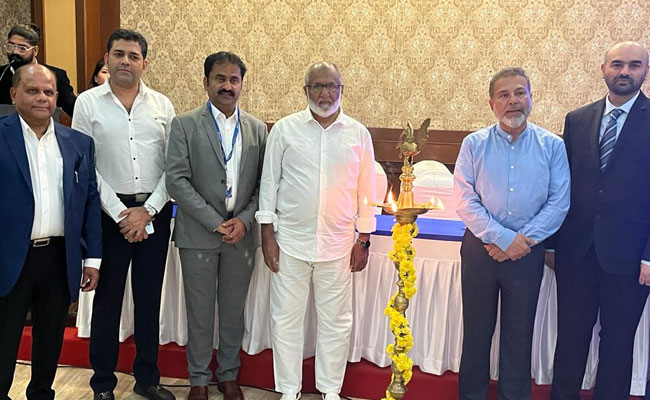
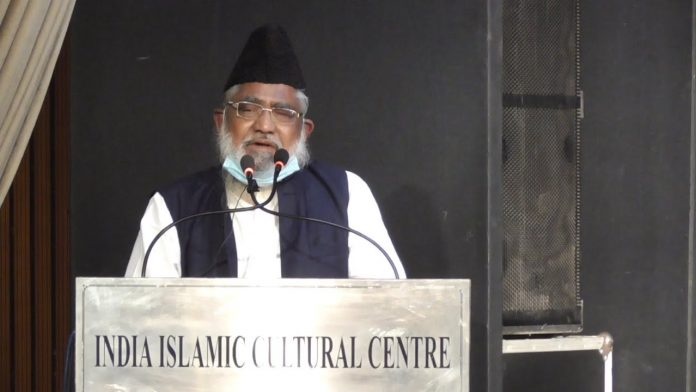
A website documenting the life and works of the late Maulana Mufti Ashraf Ali Baqavi, former ‘Ameer-e-Shariat’ (Head of the Shariah) of Karnataka, was launched today in Bengaluru.

The website www.muftiashrafali.org, which is aimed at keeping the legacy of the late Islamic scholar alive was launched in the presence of the current Ameer-e-Shariat Maulana Sageer Ahmed, Dr Rahi Fidai, Maulana Dr Maqsood Imran and Hafiz L. Mohammed Yusuf, among others.

“The primary purpose behind creating this website was to introduce to the younger generation a scholar, a mentor, a social activist and a self-effacing person who made such a difference to the people who had the privilege to know him closely,” said writer and researcher Khalid Noor Mohammed, who is behind the launch of the online repository.

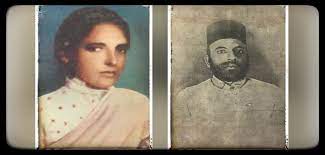
Maulana Mufti Ashraf Ali Baqavi

Mufti Ashraf Ali was born on February 26, 1940, at Virinjipuram (Bilanjpur) in the North Arcot district, in Tamil Nadu, India. After completing his Aalimiyat course at Madrasa Al-Baqiyath us Salihath, Vellore, he went on to complete his Fazilat and Ifta courses at the prestigious Darul Uloom, Deoband, UP, India, after which he was appointed the Shayk-ul-Hadith at the Darul-Uloom Sabeelur Rashaad, Bangalore, India.

Mufti Sab, as he was fondly called, took over the rectorship of Darul Uloom Sabeelur Rashaad, while continuing to serve as Shaykh-ul-Hadith (Master teacher of Hadith), after the demise of his father, Maulana Abus Sauood Ahmed. Owing to his sagacity and learning, as well as his accommodating nature, he was unanimously elected Ameer-e-Shariat of Karnataka, a position he held until his passing away on 8th September 2017.

Mufti Ashraf Ali rose to eminent positions at both the national and international levels. He was a founding member of the All India Muslim Personal Law Board, Vice-president of the All India Milli Council, an executive member of the prestigious Islamic Fiqh Academy; in addition to being an honorary member in numerous academic boards and governing councils of prestigious Islamic Institutions.

“Mufti Saheb was an embodiment of the lofty teachings of Islam and a great role model. Despite his teaching assignments, he would be at the forefront of social causes, never losing his calm and disarming smile,” said Khalid Noor Mohammed reminiscing his association with the late scholar.

Khalid hopes that the website will serve as a template for documenting the lives and works of other illustrious scholars and statesmen of the Muslim community. “Eventually, these collections of ‘stories’ will serve as an encyclopedia of the stalwarts who shaped the destiny of the community and left it richer and more dignified.”

source: http://www.thecognate.com / The Cognate / Home> News / b y Shaik Zaker Hussain / September 20th, 2020

Why Jamia Millia’s recent Republic Day Mushaira is making headlines?

NEW DELHI:

VC Prof Najma Akhtar with poets on Republic Day

On India’s Republic Day, a Mushaira was organized in the Engineering and Polytechnic Auditorium of Jamia Milia Islamia University, Delhi. This event saw some of India’s most prominent Hindi and Urdu literary voices as Ashok Chakrdhar, Ahmad Mahfooz, Dinesh Raghuvanshi, Salma Shaheen, Ahmad Naseeb Khan, Aleena Itrat Rizvi, Majid Deobandi, Shehpar Rasool, Khalid Mubashir, Khalid Mehmood, Chandradev Yadav, Durga Prasad, Shahid Anjum, Moeen Shadab, and Khan M Rizwan.

Patriotic poems remembering heroes of India’s national freedom struggle, and India’s democratic values, diversity, and unity were recited. This event coincided with many universities across India experiencing student unrest over issues that can distract students from their studies.

Dinesh Raghuvanshi said, ‘apni mitti pe agar naaz nahi kar sakte, zindagi hum tera aaghaz nahi kar sakte’ or when Majid Debandi recited ‘Jis ke dil mein watan ki azmat hai, hum usey apni jaan kehte haen’, the hall resounded with applause. That was the true culmination of this event meant to send a message of solidarity and unity from this most important educational institution of the country.

It was a well-attended event Presided over by the Vice Chancellor Professor Najma Akhtar.

The message from the poetic symposium was clear – a vocal minority cannot be allowed to hijack the peaceful and progressive atmosphere of the University. The University has always played a significant role in nation-building through quality education and, giving good professionals to the country. It also conducts research and promotes cultural diversity, and encourages students to become informed and socially responsible citizens who can contribute to the development of the country.

Jamia Millia Islamia was founded in 1920 as a non-government, secular university in Delhi, India. It was established as a response to British colonial rule and the Indian independence movement. It played a significant role in the independence struggle by educating and empowering the youth to participate in the freedom movement. In the post-independence era, Jamia has continued to be a center of excellence in education, research, and cultural exchange, serving as a model for an inclusive and equitable society.

Jamia Millia Islamia has produced many noted alumni who have made significant contributions in various fields such as politics, arts, media, and academics. Some of the notable alumni include Salman Khurshid, former Union Minister of India, and Shah Rukh Khan, a Bollywood actor, and film producer. Mukul Kumar, aerospace engineer and former NASA scientist, Saeed Akhtar Mirza, film director and screenwriter, and Nafisa Ali, actor, and social activist.

Jamia Millia Islamia was recently ranked as one of the top universities in India by several national and international ranking agencies.

The University has a vibrant student political culture and is known for its strong student activism and political engagement. Various student groups play an important role in shaping the discourse on important national and local issues, and in advocating for student rights and interests.

source: http://www.awazthevoice.in / Awaz, The Voice / Home> Story / by ATV / posted by Aasha Khosa / January 31st, 2023

List of Muslim Candidates Qualified UPSC 2021

INDIA :

The Union Public Service Commission (UPSC) declared the Civil Services Final Result today 30 May 2022.


The UPSC/CSE preliminary exam was held on 10 October 2021, and the results of the examination were released on 29 October. The Main examination was conducted between 7 to 16, January 2022, and its results were declared on 17 March 2022.

The Interview was the last round of the examination which began on April 5 and was shortlisted on May 26. The interview was conducted at UPSC at Dholpur House, Shahjahan Rd, New Delhi.


The recruitment drive will fill up 712 posts in the organization out of which 22 vacancies are reserved for persons with disability.

Shruti Sharma


Shruti Sharma has secured all India Rank 1 in the final result. All the top three positions have been secured by girl candidates this year. Shruti is an alumnus of St Stephens College & Jawaharlal Nehru University & has been preparing for the UPSC Civil Services exam at Jamia Millia Islamia Residential Coaching Academy.


Following Muslim Candidates cracked the UPSC.

1) 109 AREEBA NOMAAN
2) 125 MOHD SUBOOR KHAN
3) 162 SYED MUSTAFA HASHMI
4) 274 AFNAN ABDU SAMED
5) 276 ARSHAD MUHAMMED
6) 279 MOHD SAQUIB ALAM
7) 287 ASRAR AHMAD KICHLOO
8) 305 ASHIK ALI
9) 309 MOHAMMED ABDUL RAWOOF SHAIK
10) 344 NAZISH UMAR ANSARI
11) 364 FAISAL KHAN
12) 368 SHUMAILA CHOUDHARY
13) 386 MAVIS TAK
14) 414 MD QAMARUDDIN KHAN
15) 419 MOHD SHABIR
16) 441 FAISAL RAZA
17) 457 MASOOM RAJA KHAN
18) 464 ASHIF A
19) 474 MUSKAN DAGAR
20) 482 TAHSEENBANU DAWADI
21) 496 SHAIKH MOHD ZAIB ZAKIR
22) 516 MOHAMMED SIDDIQ SHARIFF
23) 545 MOHAMMED SHAUKATH AZEEM
24) 575 MAKAKMAYUM HOSNI MUBARAK
25) 600 ANWAR HUSSAIN

Shaikh Akhlaque is an educationist and he can be contacted at sakhlaque@ymail.com

source: http://www.thehindustangazette.com / The Hindustan Gazette / Home> News> Education / by Shaikh Akhlaque / May 30th, 2022

A look at Sania Mirza’s Grand Slam title wins across her illustrious career

Hyderabad, TELANGANA:

 Sania Mirza

Sania Mirza is truly the first female tennis superstar from India.While Leander Paes led Indian tennis into the new millennium with his 1996 Atlanta Olympics bronze medal and several honours, tennis fans all around the nation yearned for a woman to represent the tricolour on the women’s court.Hyderabad-born, Sania Mirza gave the country just that.Here is a list of Sania Mirza’s Grand Slam titles, which helped her become India’s top female tennis player and a household name in the world of sports.

Source: Olympics Website

Australian Open 2009 mixed doubles

Her first victory came in 2009 when she teamed up with Mahesh Bhupathi to win the Australian Open mixed doubles championship.The pair was on a mission after falling short at the last hurdle at Melbourne Park the previous year and didn’t drop a set until making it to the quarterfinals.To win the title, the pair defeated Andy Ram of Israel and Nathalie Dechy of France 6-3, 6-1. 

Source: Olympics Website

French Open 2012 mixed doubles 

Three years later, the pair would team up once more to represent India with pride, this time on the revered clay of Roland Garros.Sania Mirza and Mahesh Bhupathi, who were the seventh seeds for the 2012 French Open, breezed through the competition.They won the title match 7-6, 6-1 against the Polish-Mexican team of Klaudia Jans-Ignacik and Santiago Gonzalez to win their second Grand Slam.

Source: Olympics Website

US Open 2014 mixed doubles

At the 2014 US Open, she teamed up with Brazilian player Bruno Soares to win her third mixed doubles championship at a Slam.The top-seeded pair lived up to their reputation by defeating Abigail Spears of the USA and Santiago Gonzalez of Mexico in the title bout, which required a tie-breaker.

Source: Instagram

Wimbledon 2015 Women’s doubles 

Sania Mirza and Martina Hingis partnered in 2015 and won three consecutive Grand Slam doubles championships. They won their 1st Grand Slam title at Wimbledon in 2015. Without dropping a set, the pair advanced to the championship match against Sania Mirza’s previous partner, the Russian team of Ekaterina Makarova and Elena Vesnina.Sania Mirza and Martina Hingis persevered to win a closely contested three-set match in the final.

Source: Twitter

US Open 2015 Women’s doubles 

The duo continued their rich vein of form and seemed almost unstoppable over the course of the next few months as they picked up the US Open 2015. Martina Hingis and Sania Mirza won their second Grand Slam doubles title together, defeating Casey Dellacqua and Yaroslava Shvedova in the final, 6–3, 6–3. 

Source: Twitter

Australian Open 2016 Women’s doubles

In 2016, at the Australian Open, Sania Mirza captured her final Grand Slam. With Hingis, she had won three straight major championships.The top-seeded Indo-American team defeated Andrea Hlavackova and Lucie Hradecka of the Czech Republic 7(7)-6(1), 6-3, to claim the championship in Melbourne.

source: http://www.siasat.com / The Siasat Daily / Home> Photos / by Asian New International / posted by Abdul Rahman / January 28th, 2023

Giants Udupi gets appreciation award, rocks at group’s International Conference in Jodhpur

KARNATAKA:

Giants Group Udupi was awarded an appreciation award by Shaina M.C, World Chairperson of the group at a backed crowd at the 47th Giants Convention held at Jodhpur, Rajasthan on Friday.

M. Iqbal Manna, President of Udupi Giants, Director Vadiraj, Central committee member Dinkar Amin and Pushpa were present at the award ceremony.

Manna was recently awarded several awards at Belgum Conference of the group, including Best President Award, Best Team award, and other awards.

source: http://www.english.varthabharati.in / Vartha Bharati / Home> Karavali / January 20th, 2023

Why Khwaja Garib Nawaz outlived the fame and glory of emperors

Ajmer, RAJASTHAN:

The Ajmer Sharif Dargah at night during the Urs (Courtesy Rajasthan Tourism)

We are celebrating the 811 annual Urs (death anniversary) according to the lunar calendar of Khwaja Gharib Nawaz of Ajmer who was born on February 1 1143 AD  in Sijz, Sistan, Iran. He left the world on March 15, 1236 AD in Ajmer, Rajasthan. Since that time his disciples and followers have been celebrating his death anniversary as per the Sufi traditions.

The Sufi mystics celebrate the death and not birth as for them death means a reunion with Almighty Allah.

He was brought up in Khurasan, Iran, while his father Ghayasuddinn died when he was 15. He studied in Isfahan, Samarqand, and Bukhara, and went to Baghdad in search of a spiritual mentor. There, he met Hazrat Khawaja Usman Harooni. Thereafter, he went to visit the two holy cities of Mecca and Medina. Eventually, he came to Ajmer in India via Lahore where he lived for the rest of his life and became his resting place after death.

It’s a surprising truth that Muslim kings ruled for around 800 years over India and built many historical monuments such as the Taj Mahal, Red Fort, Humayun Tomb, and Qutub Minar, and yet none of them is alive in the hearts of people except in the history books. Unlike kings and rulers, Khwaja Gharib Nawaz won the hearts of millions of helpless, poor, weaker, and underprivileged people and seekers of truth. With divine mercy, he became Gharib Nawaz (supporter of the poor), though his original name is Moinuddin (helper of the religion).

He fulfilled Huqooq ullah (God’s rights) and Huqooqul ibad (human rights) equally and served the weak and poor, loved the unloved, and fed the hungry irrespective of caste, creed, gender, and religion. It was his outstanding service and love towards humanity that attracted people from across the society, unlike any rulers. They loved and followed this Sufi mystic and therefore he was called “Sultanul Hind”, the king of the Indian subcontinent. He then developed the Chishti Sufi order in this subcontinent and became the Sufi mystic with the highest following in the world.

The scene outside the Ajmer Sharif dargah

The uniqueness of his Sufi order and his character was that he greatly impacted others with his pious character and selfless service and he accepted and accommodated the local traditions and made them part of his Sufi order.The message of universal fraternity, harmony, and brotherhood spread by the Sufis saints was so loud and inclusive that even after their union with God (Wisal-e-ilahi), their hospices remain abuzz with the people of all walks of life.

On top of all Indian shrines, the Dargah of Khwaja Moinuddin Chishti known as Daghah Khwaja Gharib Nawaz in the heart of Ajmer city surrounded by Tara Gadh hills is the shining example of love, harmony, unity, and fraternity.

Maulana Rumi beautifully talks about the human heart:

Ek dil behtar hazaran Ka’be ast

(One heart is far better than a thousand Ka’baas).

He further says (Translated version):

Bring your heart in your hand; your soothing is more important than a pilgrimage. A single heart is better than a thousand Ka’abas. The K’aba was built by Allah’s Khalil (friend) Prophet Hazrat Ibrahim (Abraham), while the heart, in contrast, was created and tested by the Almighty God Himself.

The great Sufi saint of India Khwaja Moinuddin Chishty who is also known as Gharib Nawaz of Ajmer often taught the people: love towards all and malice towards none. His disciples and successors held this message of their mentor by tooth and their hospices became the center for spreading universal love and affinity. His disciple Khwaja Nizamuddin Auliya of Delhi often recited the following couplets of Persian poet Abu Said Abul Khair:

“If people spread thorns in your path, you just put flowers in their way; otherwise the entire path would become thorny”.

Sufi saints in a prayers at the Dargah during the Urs

Today, we Muslims in India must not forget what Khwaja Gharib Nawaz of Ajmer Sharif and Hazrat Nizamuddin Auliya of Delhi taught us.

The love, fraternity, and affection shown by the Sufi saints to the common people won their hearts, and their hospices (khanqahs were the center of love where people from all walks of life began to flock to seek succor for their miseries. These Sufi saints respected the local customs and culture to the extent that even many of them became vegetarian due to respect for their non-Muslim brothers. Khwaja Gharib Nawaz, Khawaja Nizamuddin Aulia, Sarmad Shaheed, Bu Ali Shah Qalandar, and many others had become pure vegetarians in respect of their non-Muslim brethren. Their philosophy was simple: live and let live; love and compassion to all, no hate or discrimination on the ground of caste, creed, culture, religion, and gender.

Chishty Sufis continued to adopting of local traditions. For instance in Delhi, Hazrat Amir Khusrau was the one who started celebrating Basant Panchami to make his mentor Nizamuddin Auliya happy. Since then, the Basant celebration is continuing on the premises of Dargah Hazrat Nizamuddin Auliya.

Being a Persian scholar and follower of a Sufi order, I came across the anthology of Sufi poets like, Rumi, Jami, Khusro, Shah Niaz be Niaz, Baba Bulle Shah, Shah Zaheen Taji, Bedam Shah Warsi in both Urdu and Persian languages. Their metaphysical and mystic poems were very impressive, moving, and touching. This has increased my curiosity to know more about it, I got a chance to attend a 3-day-long Sufi music concert in Delhi, organized by famous music composer and film director Muzaffar Ali with the title of Jahan-e-Khusrau in Humayun tomb. This concert is organized by him every year and attended by world-famous Sufi musicians and vocals from India, Pakistan, Afghanistan, Iran, Turkey, and many other countries. However, every year the well-known vocalist Abida Parveen of Pakistan steals the show.

As soon as she starts her melody in the most fascinating and moving voice, the people begin crying in their hearts. It seems as if she is on the direct hotline with the Almighty God. Though more than 2 decades have passed, I still remember the rhythm of her voice and her selection of poems from the anthologies of Amir Khausrau, Baba Bulle Shah, Shah Zaheen Taji, and Shah Niaz Bareilvi.

The following metaphysical mystic poems of Shah Niaz Barelvi recited by Abida Perveen attracted my special attention:

Yaar ko hum ne ja baja dekha, kahin zahir kahin chupa dekha…

I saw my beloved everywhere, somewhere apparent and somewhere hidden.

Kahin mumkin hua kahin wajib, Kahin fani kahin baqi dekha.

Somewhere He was merely a possibility and somewhere He was imperative. Somewhere I saw Him ephemeral, and somewhere I found him eternal.

Kahin wo badshah takht nashin, Kahin kasa liye gada dekha.

Somewhere, I saw Him a king sitting on His throne, and sometimes I saw Him mendicant with a begging bowl.

Kahin wo dar libas e mashooqan, Bar sare naz aur ada dekha.

Somewhere He was in the most beautiful attire, displaying His unique charm and attraction.

Kahin ashiq Niaz ki surat, Seena giryan to dil jala dekha.

Prime Minister Narendra Modi handing over a Chadar for offering at the tomb of Moinuddin Chisty for the Urs

Somewhere He was like a lover Niaz, beating his chest and his heart was in flame.

This unique hymn of God almost mesmerized the entire audience. There was a pin-drop silence as the people felt that divine light is pervading from all sides. After hearing this fabulous hymn, I decided to pay my obeisance at his shrine built about 300 years ago in Bareilly.

Though he associated himself with both the Chishti and Qadri orders of the Sufis, he favoured the Chishty order in which the saints were encouraged to reach the maximum number of people whoever they may be. In the footsteps of his predecessors, he also followed the local customs and traditions to win the hearts of people from all creeds and castes. His main emphasis was to clean the heart instead of cleaning the apparent body and clothes.

The Chishty Sufi order was established in Indian Sub-Continent by Khwaja Gharib. It’s organised by Baba Fariduddin Ganj Shakar Pak Patan and it flourished to the highest level by Hazrat Nizamuddin Auliya of Delhi. The basic philosophy of Chishty Sufis is to love the unloved, welcome the ignorant, and serve the unserved. They united the human heart and lived in harmony by their nature of acceptance of others’ good things from local tradition and influenced others by their pious and selfless character. They said that whoever comes to us give them food and don’t ask about their religion. that’s the beauty behind flourishing their Sufi order even though it’s increasing day by day after 800 years. Khwaja Gharib Nawaz shrine is 5th largest gathering spiritual place in the world after the holy cities of Mecca and Medina in Saudia Arabia and Najaf and Karbala in Iraq..

Right from Khwaja Gharib Nawaz of Ajmer to Baba Farid Pak Patan, Nizamuddin Auliya Delhi,   Sabir e pak in Peeran Kaliyar, Amir khusrau Dehlavi,

Sarmad Shaheed, Bande Nawaz Gesu Daraz in Gulbaga, Baba Tajuddin in Nagpur, Makhdoom Ashraf Jahangir Simnani in kichowcha and Alaul Haq Pandvi in Bengal, Shah Niaz in Bareilly and Haji Waris Ali shah in Dewa have their respective chains of Sufi shrines spread all over the Indian Sub-Continent. They continue to rule over millions of hearts through their unique philosophies of unconditional love and compassion.  Anyone observes the impact of local traditions in their shrines’ rituals and amongst their followers.

Dr. Hafeezur Rahman is an author, Islamic scholar, TV host and the founder of Sufi Peace Foundation.

source:http://www.awazthevoice.in / Awaz, The Voice / Home / by Dr Hafeezur Rahman / posted by Aasha Khosa / January 29th, 2013

Shah Rukh Khan only Indian to feature on British magazine’s list of 50 greatest actors of all time

Mumbai, MAHARASHTRA:

Bollywood actor Shah Rukh Khan (File Photo | PTI)

London : 

Bollywood superstar Shah Rukh Khan has become the only Indian to be named in an international list of 50 greatest actors of all time by a prominent British magazine.

The 57-year-old actor is included in Empire magazine’s list which also recognises Hollywood giants like Denzel Washington, Tom Hanks, Anthony Marlon Brando, Meryl Streep, Jack Nicholson and many others.

In the accompanying short profile, the magazine said Khan has a career that has now spanned four decades of “near unbroken hits, and a fanbase of pretty much billions”.

“You don’t do that without outrageous amounts of charisma and absolute mastery of your craft. Comfortable in almost every genre going, there’s pretty much nothing he can’t do,” it added.

From his extensive filmography, the publication highlighted Khan’s notable characters from four movies — Sanjay Leela Bhansali-directed “Devdas”, Karan Johar’s “My Name Is Khan” and “Kuch Kuch Hota Hai”, and “Swades”, directed by Ashutosh Gowarikar.

His dialogue from the 2012 movie “Jab Tak Hai Jaan” — “Zindagi toh har roz jaan leti hai… Bomb toh sirf ek baar lega” (Every day life kills us a little. A bomb will kill you only once) — has been recognised as the “iconic line” of his career.

“Jab Tak Hai Jaan” was filmmaker Yash Chopra’s swansong and featured Khan as an Indian Army Major named Samar Anand. The film also starred Katrina Kaif and Anushka Sharma.

The actor will be next seen in the actioner “Pathaan”, set to be released worldwide on January 25, 2023. Directed by Siddharth Anand, the movie also stars John Abraham and Deepika Padukone.

Khan will also star in two more movies — action-entertainer “Jawan” with filmmaker Atlee and the Rajkumar Hirani-directed “Dunki”.

“Jawan”, a pan-India project, is set to come out on June 2, 2023, while “Dunki”, also starring Taapsee Pannu, will release in December 2023. 

source: http://www.varthabharati.in / Vartha Bharati / Home /December 20th, 2022

Bhatkal: Majlis-e-Islah wa Tanzeem organises panel discussion on “Understanding Indian Constitution”

Bhatkal, KARNATAKA:

Majlis e Islah wa Tanzeem on Thursday held a panel discussion to mark the 74th Republic Day on the topic understanding Constitution of India and our fundamental rights.

The event was held at the Rabita Hall here in Bhatkal.

Academician and lawyer Yaseen Mohtesham, Advocate Imran Lanka, senior journalist Syed Salik Barmavar, and Prof Sahil Mujavar participated as the panelists while former Majlis e Islah wa Tanzeem General Secretary Dr. Haneef Shabab moderated the event.

Several aspects of Indian Constitution and the current scenario of the country were discussed during the panel discussion.

Prior to the event, Jamat-e-Islami Hind Karnataka Secretary, Akbar Ali addressed the event and shed lights on the values and principles of Constitution of India.

Majlis-e-Islah wa Tanzeem President Inayathullah Shabandri, General Secretary Abdul Raqeeb MJ, prominent NRI businessman Yunus Kazia, senior journalist Aftab Kola, and others were also present during the event.

The event concluded with a quiz program compiled by Aftab Kola on Constitution of India.

source: http://www.english.varhabharati.in / Vartha Bharati / Home / January 27th, 2023

Watch: Pres Ali receives India’s highest honour for overseas Indians

GUYANA:

https://caribbean.loopnews.com/content/watch-pres-ali-receives-indias-highest-honour-overseas-indians-641731

click on link above to watch the video

President Dr Mohammed Ifraan Ali receiving the Pravasi Bharatiya Samman Award from Indian President Droupadi Murmu.

Guyanese President Dr Mohamed Irfaan Ali was conferred today with the Pravasi Bharatiya Samman Award (PBSA).

The award is India’s highest honour for members of the Indian diaspora.

Indian President Droupadi Murmu presented Ali with the award at a special ceremony in Indore, India

President Dr Mohammed Ifraan Ali after receiving the Pravasi Bharatiya Samman Award.
Photo: Office of the President

Ali, Trinidadian judge, Justice Frank Arthur Seepersad and Suriname’s Dr Dewanchandrebhose Sharman are the three Caribbean nationals of Indian origin, who were presented with the PBSA this year.

source: http://www.caribbean.loopnews.com / Carribean Loop News / Home> Loop Carribean News / January 10th, 2023

Hyderabad State: Tracing lineage of the Nizams

Hyderabad, INDIA:

Ever since the death of Prince Mukarram Jah on 14th January 2023, who was considered the last and titular Nizam, Hyderabad’s Nizams, the rulers of the Asaf Jahi dynasty are in the news on every tabloid, newspaper and news channel. A lot is being debated about the Nizams from their lineage to titles to connections to inheritance.

Let us understand their lineage and the use of the title Nizam-ul-Mulk Asaf Jah. Basing my views on Henry George Briggs book The Nizam: His History and Relations with the British Empire published in 1861 and Roper Lethbridge’s book The Golden Book of India: A Genealogical and Biographical Dictionary of the Ruling Princes, Chiefs, Nobles, and Other Personages, Titled or Decorated, of the Indian Empire, with an appendix for Ceylon, published in 1893, when we look at the remote ancestry of the Nizams, their lineage is traced to two lines of descent.

The first line of descent is from Shaikh Shah Abudin Suharwardi, a lineal descendent of Caliph Abu Bakr, the father-in-law, of Prophet Muhammad. Shaikh Shah Abudin Suharwardi who lived in Persia was a contemporary of the Persian poet Sadi and finds reference in his thirteenth century poetic composition, Bostan, as his murshad or spiritual guide. It is believed that some of the immediate descendants of the shaikh settled in Turkey and also some of them travelled to Samarqand, and became ulema there. The popular ulema from this line were Khwaja Ismail, his son Khwaja Abid who later on was designated as Qazi and Shaikh-ul-Islam.

The second lineage of the Nizams of Hyderabad’s ancestry is traced to the family of Tartars and claim descent from Bahauddin who was the founder of the Naqshbandi Sufi silsilah. Most Naqshbandis prefix the word Khwaja to their names to imply an honourable position of a learned person. Bahauddin was a contemporary of the Turko-Mongol conqueror Timur and his descendent was Khwaja Abid who was the first from the family to visit India. He travelled from Samarqand to Delhi during Mughal emperor Shah Jahan’s reign. Whichever lineage is looked at, we see that Khwaja Abid ultimately travelled to India.

Khwaja Abid was given the title of Sadr-us-Sadr by the Mughal emperor Aurangzeb for his services rendered and was also made the Subedar of Multan. Soon, he was awarded more titles of Azeem Khan and Qillich Khan. Qillich also spelt as Kulij or Qulij in Turkish and Qillich in Persian denoted shamsher, a sword in both languages.  Qillich Khan also led campaigns into Bijapur and Golconda during which he was injured badly on his right arm and eventually after battling for his life, he died. He was well-known for his military exploits and was buried at Attapur near Hyderabad in 1686.

Qillich Khan left behind a son, Mir Shahabuddin, born in 1644, who was also later employed by the Mughals. Like his father, he too exhibited exceptional bravery and was awarded by Aurangzeb with the title of Ghaziuddin as he was one of the greatest of the generals of Aurangzeb. For his military and administrative services rendered in the Deccan, he received another title Feroz Jung and Aurangzeb even referred to him as Ghaziuddin Bahadur Feroz Jung Farzand Arjumand meaning dear son.

When Aurangzeb died in 1707, Ghaziuddin was the subedar of Berar and Elichpur. The next Mughal successor, Bahadur Shah, made him the Subedar of Gujarat before the latter died in 1711. Ghaziuddin had married the daughter of Saadaullah Khan, a minister of Shah Jahan, in Delhi and a son had been born to them in 1671 who was named Mir Qamaruddin who came to be known in Deccan’s history as Asaf Jah I.

In 1699, Mir Qamaruddin had received the title of Chin Qilich Khan commanding the imperial troops at Bagul Kota.

He then became Faujdar of the Carnatak at Bijapur and also the Subedar of Bijapur. He was given one of Aurangzeb’s own horses on the battle field in one of the campaigns he led in the Deccan. He remained loyal to Prince Azam but eventually differences arose and they went separate ways. But under Bahadur Shah, he was again invited to the Mughal court and was conferred the Subedari of Oudh and Faujdari of Lucknow with the title Khan-e-Dowran, but soon he was disgusted with the politics at the court and retired by relinquishing all his appointments he was holding under the Mughals.

Next, when Farrukh Siyyar started contesting for the Mughal throne, Chin Qilich Khan was roped in once again and he started to fight on the side of Farrukh Siyyar. He was rewarded in 1713 by Farrukh Siyyar with the title of Nizam-ul-Mulk Asaf Jah and Viceroy of the Imperial Dominions in the Deccan and as Faujdar of Carnatak.  He continued to fight against the Marathas for the Mughals. There were a series of rapid developments and conflict with the Syed brothers who had emerged as the king makers to the Mughal throne. This finally led to his independently laying the foundation of his own administration in the Deccan with the battle of Shaker Kheda near Aurangabad in 1724.

Asaf Jah had won battles east, west, north and south, dealt effectively with the kingmaker Syed brothers and successfully established his authority over a vast region that came to be called the Asaf Jahi or Asafiya state.

The title of Asaf Jah was named after the rank of Asaf who was supposed to be a minister of Solomon, the Hebrew king. The title of Asaf was not new; the Mughals had used it many a time earlier.  The name Asaf was conferred in Mughal India on Nurjahan’s brother and Mumtaz Mahal’s father and in other instances. It was but natural that the Mughal titles were retained by the nobles of the Deccan. These titles were conferred in ascending order of Jung, Daula, Mulk, Umara or Jah. The British equivalent of Jah or Umara was the English Dukes and Marquesses, Mulk was equivalent to Earl, Daula was equivalent to Viscount, and Jung was like a baron. All the successors of the Nizams have the word Jah appended to their name. The only officer or Prime Minister on whom the title of Jah was conferred was Arastu Jah.

Until the Nizams started ruling independently of the Mughals in the Deccan, they were known as Subedars of the Deccan showing their allegiance to higher authority in Delhi. While the British referred to them out of respect as Nawabs of Hyderabad or Bundagan-e-alee meaning slaves of the highest rank.

Professor Salma Ahmed Farooqui is Director at the H.K.Sherwani Centre for Deccan Studies, Maulana Azad National Urdu University, Hyderabad.

source: http://www.siasat.com / The Siasat Daily / Home> Featured News / by Salma Ahmed Farooqui / January 23rd, 2023