Category Archives: Sports

HarperCollins presents ‘Riding Free An Olympic Journey’ by Imtiaz Anees

Nargol, GUJARAT :

HarperCollins is proud to present the story of an Indian equestrian rider and his Olympic dream ‘RIDING FREE: MY OLYMPIC JOURNEY’ by Imtiaz Anees.

“The story of a true sportsman whose heart beats for his country. The pulse and emotion of this book are totally relatable. A beautiful real-life story of struggle, relationships, dreams and how Imtiaz overcame all hurdles to reach his goal.” – Sania Mirza, Indian Tennis Player, Olympian, Arjuna Awardee.

“A gentleman’s gentleman, Imtiaz’s cool and clam disposition hides the grit and determination – the dedication and discipline that built the foundation for him to compete with the best at an international level.” – Karan Johar, Film Director.

“It’s one thing to have a dream. It’s entirely another thing to follow your dream with passion and courage. Don’t miss this story of Imtiaz in his quest towards his Olympic dream.” – Viren Rasquinha, Former Indian Hockey Captain, Olympian, Arjuna Awardee.

“Imtiaz’s story is as heart-warming as it is inspiring. It’s so much more than sports – it’s about the power of dreams, self-belief, teamwork and perseverance. I must admit I have a soft spot for any story with animals in it. The bond between man and horse makes this story truly special.” – Alia Bhatt, Film Actor.

“The gap between the impossible and possible is your commitment to do what you want to achieve and enjoy the journey. Think unreasonable, believe, work hard and see how the universe comes together to make it happen. My memoir is about achieving the impossible and I truly hope it inspires you enough to ‘Never give in’.”- Imtiaz Anees.

“Imtiaz’s single-minded pursuit of his Olympic dream, the challenges he counters, the people who offer support to him and the milestones he achieves reads like a work of fiction. Riding Free proves that nothing is impossible if you dare to dream and match it with hard work. We are excited to be publishing this incredible story on the eve of the Tokyo Olympics.” – Sachin Sharma, Senior Commissioning Editor, HarperCollins India.
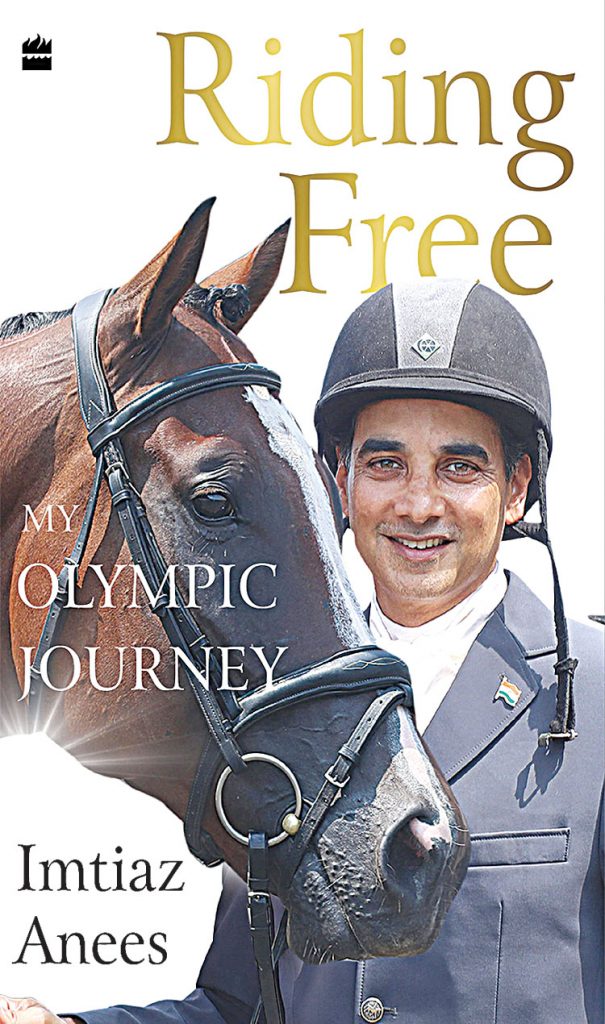
Here is an extract from the book:

My heart was pounding as the starter began the countdown: ’10-9-8-7-‘

This was the most exciting moment of my life-the realization of my boyhood dream and the culmination of many hours of hard work, figuring out how to tackle whatever obstacles the course threw at me.

I was where thousands of eventing riders around the world dreamt of being. At the greatest sporting event in the world-the 2000 Sydney Olympics-and ready to start the cross-country event.

‘6-5-4-3-‘ the countdown continued, and then it was ‘2-1’ and off we went! Spring Invader, my horse, leapt forward on cue and we were thundering down the course, while I had thoughts for nothing but the first jump coming up and getting the take-off and landing right.

About the book

‘My heart was pounding … yet I was sitting still! This was the most exciting moment in my life and the culmination of my boyhood dream. I was where thousands of eventing riders around the world had dreamt of being-the Olympics.’

This is the story of a young boy with an impossible dream-competing at the Olympics. From the age of four, Imtiaz Anees took to horse-riding like fish to water. It soon became a passion, one that continued through his life, beginning with his first competitive win at the age of six, eventually winning multiple equestrian events both nationally and internationally. Imtiaz is the only Indian rider to complete an equestrian three-day event at the Olympics, in Sydney in 2000, at the age of thirty, in an elite sport long associated with royalty and wealth and primarily the army in India.

In Riding Free, Imtiaz re-traces the major milestones of his riveting twenty-year-long journey. The stories he tells are heartfelt, emotional and inspirational for the next generation of dreamers-a way to ‘give back’, in small measure, the enormous goodwill and help he received from all kinds of people in his Olympics journey. Behind Imtiaz’s success are also the struggles and setbacks that pushed him to work harder and achieve peak performance. In a sport where the result depends on both man and animal, the deep bond Imtiaz shares with his horses will leave animal lovers spellbound. Here is a story that will inspire every athlete to ‘never give in’

Pre-order now: https://www.amazon.in/dp/9354227481

About the author

Imtiaz Anees is an equestrian Olympian, trainer, competitor, NBC commentator, qualified Level 2 instructor and coach educator. As the only equestrian Olympian in India, he wants to share his knowledge and experience with all other riders and offers internship programmes to teach equine management. He runs an equestrian training centre-Seahorse Equestrian, a boutique stable with sixteen horses, located on a beautiful beach in a small fishing village in Nargol, Gujarat.

source: http://www.theweek.in / The Week / Home / by PTI / by PR Newswire prnewswire.com / July 12th, 2021
My refusal may have affected Bhopal hockey

Bhopal, MADHYA PRADESH :

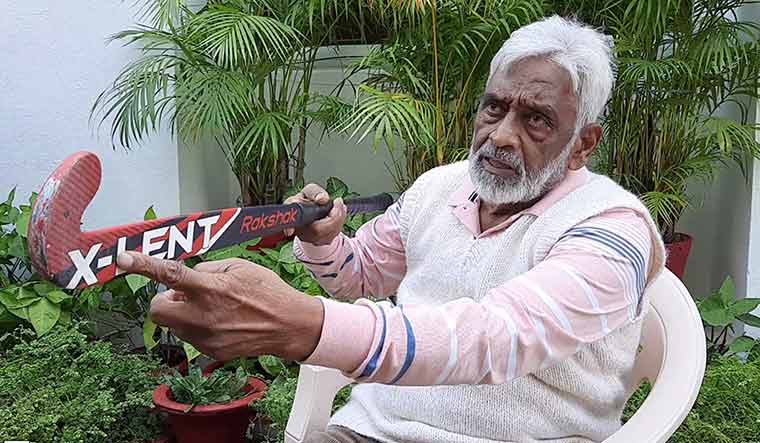
Great memories: Olympian hockey player Inam ur Rehman | Mujeeb Faruqui

We came from a modest background and my father (Abdur Rahim Siddiqui) was a religious, honest, disciplined and upright man. I got the virtues of devoutness, honesty and truthfulness from him and they have stood me in good stead. I would like to narrate an incident from my early playing days as an example. I was playing for East Bengal in 1963. A night before we were scheduled to play a crucial match against arch rivals Mohun Bagan, which was the top club then, I was called to the home of the Mohun Bagan president Dhiren Dey, the owner of Dey’s Medicals.

I was offered a Rolex to not score the next day. I said: ‘Dada, you keep the watch and if a goal is to be scored tomorrow, I will score it.’ As it turned out, I scored and East Bengal went on to become champions that season. This incident later became public and brought all the Bhopal players a lot of respect in Bengal. I played 10 years in Bengal, though I joined Mohun Bagan the next year at higher wages.

I was instrumental in Mohun Bagan winning all four major national tournaments in 1964. As a result, I was called up to the 1964 Olympic trial camp. During the camp in Jalandhar, Ashwini Kumar, the president of the Indian Hockey Federation, offered me a job with the Punjab Police (Kumar was a senior cop) though I was still only a student. But, keeping in mind the focus on education in my family—my siblings studied till doctorate level—I refused as I was not yet a graduate.

Kumar was unhappy and this resulted in me not being selected in the Olympic side despite being highly rated and performing outstandingly against Olympics host Japan the previous year. There was also the historic reason of Bhopali players migrating to, and doing well for, Pakistan. The resultant negative sentiment further hampered my chance of making it to the 1964 team.

In retrospect, I feel that my decision to refuse Kumar’s offer turned out to be a historic blunder not only for me, but for all Bhopal hockey players. He had made me an irresistible offer that would have allowed me to continue my studies. I was also offered an attendant to take care of all my needs, but naive as I was, I simply decided to say no. Had I said yes, the negative sentiment against Bhopal players may have reduced and many more talented Bhopal players would have found places in international and Olympic tournaments.

I was included in the Mexico 1968 camp and this time, luckily, our coach was dada Dhyan Chand. I was dropped again, but Dhyan Chand refused to sign the team list unless I was selected. Thus, a Bhopali made it to the Olympic squad after 20 years. But, I was not fielded in any of the initial matches. Then there came a crucial match against Japan, which we had to win to get into the semi-final and I was included in the team given my record against them.

The Japanese team walked off to protest a penalty stroke awarded to us after I was pushed down, and were disqualified. The movements by me that could have led to goals were then calculated and we were awarded five goals. I was not fielded in the semifinal and the Indian team lost to Australia. Then for the bronze medal, I played again and we easily beat Germany (2-0). Pakistan won gold; we were far better than Pakistan and would have easily beaten them had we reached the finals. I later joined Indian Airlines and formed its first team by drafting in seven boys from Bhopal. I captained the team for many years and it became one of the top teams in India.

As told to Sravani Sarkar

source: http://www.theweek.in / The Week / Home> The Week / by Inam Ur Rehman – as told to Sravani Sarkar / July 18th, 2021

Reviving Forgotten Memories

Kolar / Mysuru, KARNATAKA:

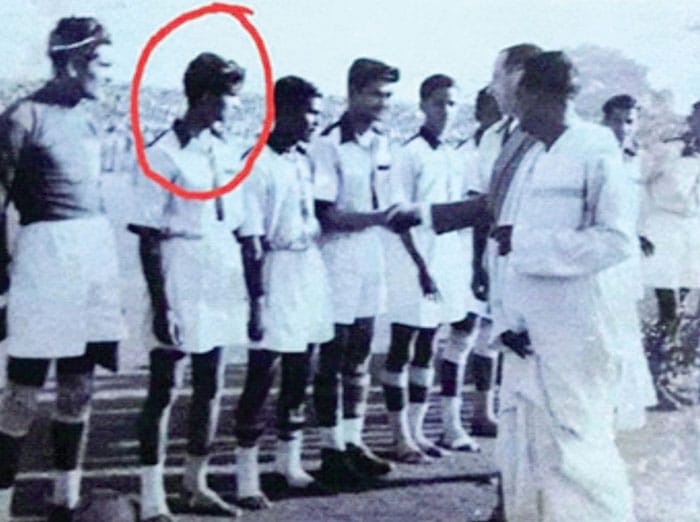
A grand-daughter connects with her nonagenarian grandfather Mohammed Nizamuddin, a trend-setter of football in Mysore State

Indians have seen many names coming forth. It could be in the field of science, technology, freedom struggle, sports etc. — few known, few unknown and a few remained in oblivion.

One such sportsman was a young boy from Kolar, my grandfather Mohammed Nizamuddin, who was a terrific football player and was the trend-setter of football in Karnataka, then called the Mysore State. He played and won many matches. Now as a nonagenarian, he is leading a simple life as a retired Tahsildar, enjoying his success in life with utmost gratitude faraway from fandom.

Journey of football dream

It was a normal day. Out of boredom (lockdown effect) I just thought of talking to my grandfather about his football days. But looking at the sparkle in his eyes and hearing his excited voice, my time-pass conversation became one of the most enlightened high voltage story-telling session. He began with his life as a kid who played football as a mere game, but it was in his teens that football became his passion. He started playing for his University first and then for his State.

Mohammed Nizamuddin (standing second from left) and his team seen with the Secretary of All India Football Federation.

Born on June 20, 1929, his football career as such started with Mysore University, where he was the captain of his football team and he, along with his team, won many trophies. His University Professors and those who used to see his matches started encouraging him. He was also much appreciated among his team members and slowly his popularity began to grow. 

Looking at his skills, a well-known team of Karnataka at that time “The Bangalore Blues” approached him and he became a part of that team. As the saying goes “It takes a right moment to strike”, that moment in my grandfather’s life came as an opportunity to play the Santosh Trophy for his State (then Mysore State).

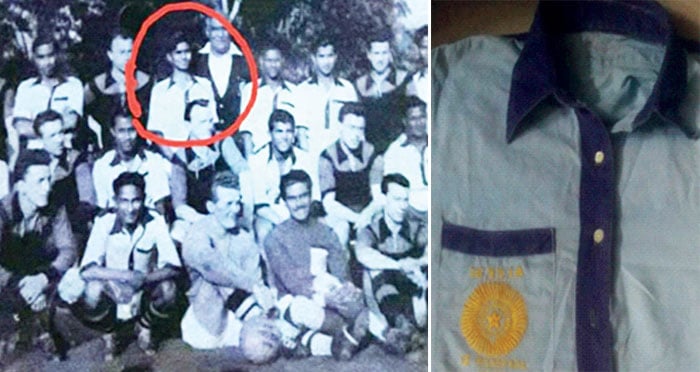
Mohammedan Sporting Club members with the Austrian team at All India Football Federation in 1953. The encircled person is Mohammed Nizamuddin.

1952 – SANTOSH TROPHY

Santosh Trophy is a State-level Football Tournament where many States participate. My grandfather played for the Mysore State. Mysore State in 1956 had won this trophy after a wait of 6 long years. The State was playing well and had entered the semi-finals. It was an interesting nail-biting match. The match was against Orissa (now, Odisha) and Mysore State (now, Karnataka) won by two goals — both scored by my grandfather (Lo, a new star was born in Mohammed Nizamuddin).

Then came the finals. As usual there was a lot of expectancy from the star goal scorer. The match was against Bengal (a very strong team of that time). Mysore won by a goal (again a right goal at right time) and guess what? That one winning goal was scored by none other than Mohammed Nizamuddin.

After six years, Mysore had finally won the Santosh Trophy and so the celebration went on for days. He became a sensation among the youths, who copied his walking style and waited for hours just to shake their hands with him. Such was his euphoria. He also played for the Netaji Club in Mysore.

Later he was invited by Mohammedan Sporting Club (Kolkata) to play for their Club. For nearly 8 years he was with the Mohammedan Sporting Club playing several tournaments like Rover’s Cup, National Championships and scoring many winning goals. 

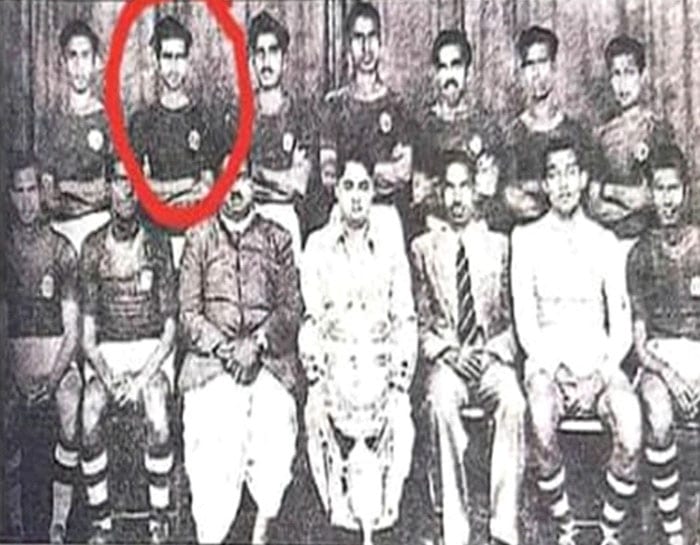
Bangalore Blues team (Pic. courtesy: Times of India).

In 1956, Mohammedan Sporting Club made a major come back in the Rover’s Cup. They won the trophy after a gap of 12 years and Mohammed Nizamuddin was responsible for the major goals scored, which led to the lifting of the Rover’s Cup in 1956 and 1959 matches.

Throughout his career span of 15-20 years in the national football, he had come across many people from different backgrounds like general public, celebrities etc. and not to forget the numerous countries he has visited. All of these have had a great influence on him (he keeps telling me and my sister about the different places he visited, their culture etc.). For great achievements it requires great support too. One such strong pillar of support to my grandfather was his father Abdul Razaq. Along with his father, there were many people like his University College Principal, his Professors, his coaches etc., who encouraged and supported him to the fullest. They played a key role in his success too and he is forever grateful to them.

In the 1960s, he gracefully retired from his football career. A very simple man with simple but strong principles, he never took his celebrity status to his head. He did not crave for limelight instead he opted for a simple life as a Government servant (Tahsildar) and discharged his duties with utmost sincerity.

Even today, when he looks back at his life, he says with pride in his eyes that he was neither dependent nor a burden to anybody in the family and that God blessed him with the best.

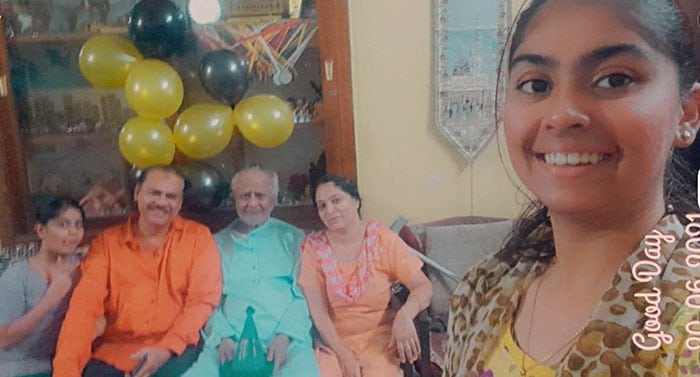
Mohammed Nizamuddin with his family members on his birthday celebration this year.

A BA graduate from University of Mysore, Mohammed Nizamuddin served as Tahsildar in many places including Gundlupet, Yadgir, Sullia and Malavalli. After his retirement, he served as Estate Officer of WAKF Board in Srirangapatna.

His wife passed away 9 years ago. He has 4 children (1 son and 3 daughters). He stays in Bannimantap A Layout in Mysuru with his son, daughter-in-law and two grand-daughters.

source: http://www.starofmysore.com / Star of Mysore / Home> Feature Articles / by Areebah Tasdeeq / July 07th, 2021

India’s Motor Sports Body ‘nominates’ its own president Akbar Ebrahim for Dronacharya Award

Chennai, TAMIL NADU :

Akbar Ebrahim. (TOI Photo)

New Delhi :

Indian motorsports’ governing body FMSCI has nominated its own president Akbar Ebrahim for the Dronacharya Award besides sending Jehan Daruvala’s name to the government for Arjuna Award after inexplicably ignoring him last year.

Racer turned coach Ebrahim’s name was also recommended for Dronacharya last year but none of FMSCI’s nominations for the national sports awards was short-listed by the government appointed selection panel.

However, Ebrahim was not heading the FMSCI back then and some within the FMSCI feel his name should not have been included in the nominations this time as he is holding office.

“It is ironical isn’t it. Effectively the president only decides on the nominations and he has nominated himself . Two names were discussed initially but the Council decided to send only Ebrahim’s name.

“Last year was fine but his name shouldn’t have been gone this year as he is holding office. As far as Jehan’s nomination is concerned, I am glad it has happened this year as his named should have been there last year itself,”  a FMSCI official told PTI.

Top rally driver Gaurav Gill is Indian motorsports’ first and only recipient of a national sports award, having got the Arjuna in 2019. His co-driver Musa Sherif has been nominated for the Rajiv Gandhi Khel Ratna but he is highly unlikely to be considered for the country’s highest sporting honour.

Jehan’s name on the other hand should have been sent last year. India’s biggest racing star at the moment, Jehan stands the best chance of getting the award.

“He is one deserving candidate and should be honoured by the government,” the FMSCI official added.

The 22-year-old is into his second year in Formula 2 and has multiple podium finishes to his name. He won the sprint race in Bahrain last year and has scored two podiums, a second and third place, this season.

He is also a Red Bull junior driver.

In 2019, Jehan finished third in the Formula 3 Championship, which is another support series to Formula 1.

source: http://www.timesofindia.indiatimes.com / The Times of India / Home> News> Sports News> Racing News / by PTI / June 29th, 2021

Rohan Bopanna-Sania Mirza pair wins historic all-Indian Wimbledon match

Hyderabad, TELANGANA :

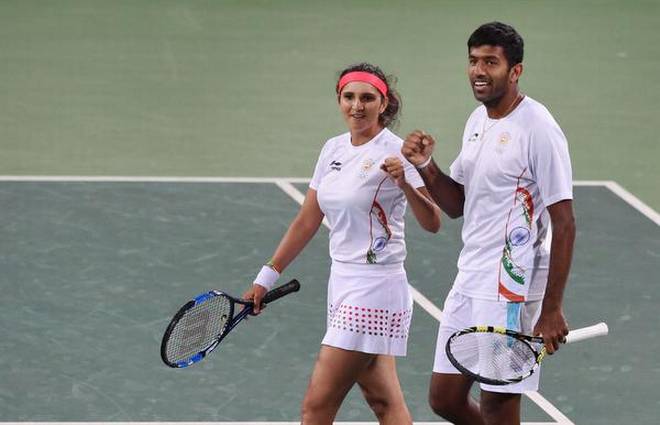
File photo of Sania Mirza and Rohan Bopanna.   | Photo Credit: PTI

It was the first time in open era that two Indian teams competed against each other at a Grand Slam tournament.

The experienced pair of Rohan Bopanna and Sania Mirza defeated the brand new combination of Ramkaumar Ramanathan and Ankita Raina 6-2 7-6 (5) in the historic all-Indian mixed doubles first round match at the Wimbledon here on Friday.

It was the first time in open era that two Indian teams competed against each other at a Grand Slam tournament.

The contest finally brought a Grand Slam debut for Ramkumar, who has made 21 attempts to qualify for the singles main draw of a tennis major.

While the first set ended quickly in favour of the veterans, Ramkumar and Raina presented a good fight in the second set, which even they led for a brief period with a break of serve.

Bopanna was clearly the best player on the court with his powerful serve and solid ground strokes from the baseline as well as the ability to execute a superior net game.

On expected lines, Ramkumar served big while Raina gave her all after growing in confidence.

Mirza’s serve is still not at its best and would improve as she plays more matches.

Mirza has moved has also moved to women’s doubles second round with Bethanie Mattek-Sands while Raina and her American partner Lauren Davis lost in straight sets to the US pair of Asia Muhammad and Jessica Pegula on Thursday night.

The 14th seeds disposed off the challenge from the Raina-Davis pair 6-3 6-2 in 70 minutes.

Bopanna and Divij Sharan are already out, having lost their men’s doubles opening round match.

source: http://www.thehindu.com / The Hindu / Home> Sport> Tennis / by PTI / London, July 02nd, 2021

How a dry fish seller’s son from Kasaragod became most sought after navigator in motorsports world

Mogral Village (Kasaragod), KERALA :

Another proud moment for Kasaragod as Musa Sharif gets nominated for Rajiv Gandhi Khel Ratna, announced district collector D Sajith Babu on his Facebook page.

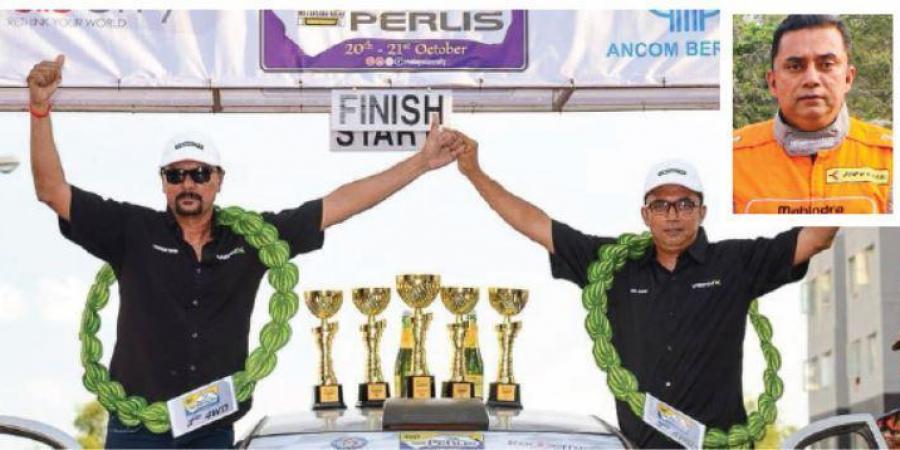
Musa Sharif (right and inset) with Karamjith Singh, Malaysia’s most-decorated rally driver, at the Rally of Perlis in 2018

Kasargod :

Another proud moment for Kasaragod, announced district collector D Sajith Babu on his Facebook page.

Congratulations to the pride of Kasaragod Musa Sharif, said Kasaragod MLA Nellikkunnu.

“Let’s hope the Rajiv Gandhi Khel Ratna will reach Kasaragod through Musa Sharif,” he said.

For Kasaragod — a district with few sporting heroes —  Asia’s ace navigator Musa Sharif, 49, is a legend. He is the most experienced and sought-after co-driver in India’s motorsports world.

Acknowledging his contributions to motorsports in India, the Federation of Motor Sports Clubs of India (FMSCI) has nominated Sharif for the highest sporting honour of India.

“I am honoured by the nomination for Rajiv Gandhi Khel Ratna. Normally, drivers get all the attention. But navigators enjoy the blind trust of the drivers and share the podium with them,” he said. 

Since 2007, he has been the navigator of champion Gaurav Gill, who won the Arjuna Award in 2019, the year when the government recognised FMSCI as the national federation for motorsports. Musa has been a navigator for 29 years. “Coming January, it will be 30 years,” he says.

In these three decades, he has navigated for 49 drivers in 296 rallies, of which 67 were international rallies.

“I never had an off-year,” he chips in.

He has won 21 championships, including eight national championships — seven of them with Gill. Musa has travelled long rough terrains to be where he is today.

He was born to the late Zainuddin Perwad and Aysha in Mogral, a fishing village in Kasaragod. His father used to sell dry fish. 

He got hooked to driving when he got admission for Bachelor of Business Management in Badriya College in Mangaluru, 40km from his home.

Thrice in a week, he used to take his TVS Shogun or Yamaha RX100 to the college. Rest of the days, he would take the bus.

When he came to know of racing events in the city, he thought of giving it a try.

The first race he took part in was the rally organised by Karavali Auto Sports Club in Mangaluru in 1993. Congress’s Mangaluru MLA U T Khader was one of his co-racers.

He won the first championship in his fourth rally. In two years, Team MRF signed him as a navigator and he shifted gear to four-wheel racing.

He started his career as a navigator with Satish Bhat.  In 1997, he joined JK Tyre and then returned to Team MRF in 2001.

In 2013, he joined Mahindra Adventure. Since 2007, Musa Sharif and Gill are together, participating in 63 rallies, and winning in 36 rallies.

Together, they won the Rally of Coimbatore for Mahindra Adventure in January — to emerge national champions again.

His international wins came with Lohitt Urs (Asia Cross Country); Arjun Rao (Malaysian Rally Group N); Sanjay Takle (Malaysian Rally Championship) and Saneem Sani of Thrissur (UAE Rally Championship).

Every driver has a different call sign and navigators have to get adjusted to it. “Before the race, the driver and the navigator take the road twice, and prepare a ‘pace note’. It will be like a story of the road, the turns, and dips, the rise, the angle of the curves,” he said.

On the first trip, the driver gives the notes and the navigator takes them own.

On the second trip, the navigator will guide the driver based on the notes and will make corrections, if needed.

“On the race day, the driver would blindly trust the navigator and go by his command,” he said. 

The navigator
The Federation of Motor Sports Clubs of India (FMSCI) nominated Musa Sharif from Mogral in Kasaragod for the Rajiv Gandhi Khel Ratna

The stats
29 years | 49 drivers
296 rallies | 67 international rallies | 21 championships
8 National championships
7 with Gaurav Gill

source: http://www.newindianexpress.com / The New Indian Express / Home> Good News / by George Poikayil / Express News Service / July 03rd, 2021

Hyderabad FC sign young winger Abdul Rabeeh

Malappuram, KERALA :

Hyderabad (IANS): 

Hyderabad FC (HFC) have signed young winger Abdul Rabeeh AK for the upcoming Indian Super League (ISL) season, the club announced on Tuesday.

The 20-year-old from Malappuram becomes the second new addition to the club this season.

Rabeeh has featured in the All India Football Federation (AIFF) Youth Leagues at the U-16 and U-18 levels, apart from the 2nd Division League.

He spent the 2020/21 season with Luca SC, Malappuram, playing a crucial role for his side in the Kerala Premier League, where he was zeroed in upon by the HFC scouts.

Speaking after joining HFC, Rabeeh said, “Hyderabad FC is currently a club where most young footballers would love to play. The opportunity they are offering to youngsters like me is something I cannot let go. Their major contribution to the national team gives all young players belief, and I cannot wait to be a part of the club and show my quality.”

A versatile winger, who can also function as a full-back, Rabeeh joins as a developmental player. While he aims to break into the first team, reserve team coach, Shameel Chembakath, believes the youngster will be a valuable addition to the squad.

“I have seen a lot of youngsters with potential come and go. But Rabeeh is one player that has always stood out. He has the ability to control the tempo of the game even against tougher opponents. Also, he has potential in terms of speed, acceleration and skill, and puts in a lot of hard work every day,” said Shameel.

source: http://www.daijiworld.com / DaijiWorld.com / Home> Sports / June 22nd, 2021

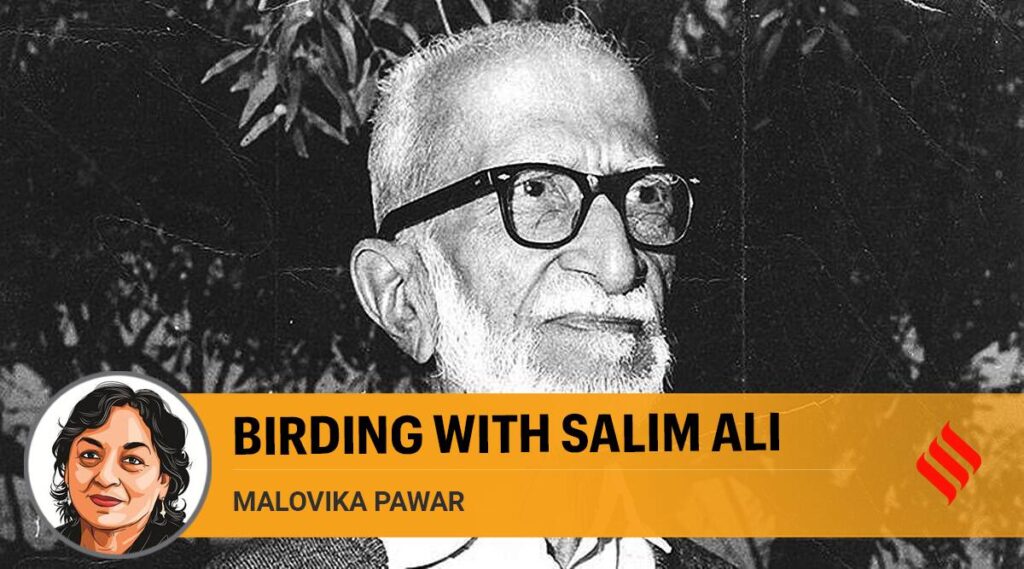
Why Salim Ali’s ‘The Book of Indian Birds’ is Indian birdwatchers’ favourite guide

Mumbai, MAHARASHTRA :

Glossier, more attractive birding books have been published in the 80 years since Ali’s guide first appeared, but it remains indispensable.

The first edition of Salim Ali’s book appeared in 1941. (Source: Wikimedia Commons)

It is a small book, my copy of Salim Ali’s The Book of Indian Birds — a hardcover version, bound in green, a mere 187 pages. I have the 1979 edition. The cover is long gone, leaving behind a few tatters of the original, but I am hard put to think of a book I have treasured and used as much. The book and an old pair of Bushnell binoculars acquired some 20 years ago are a part of my essential travelling kit, as essential as a toothbrush and comb.

The first edition of the book appeared in 1941. Jawaharlal Nehru , a keen nature lover, gifted a copy to his daughter while lodged in Dehradun jail.

Ali was quite matter-of-fact in his autobiography, The Fall of a Sparrow. According to him, the book was “acknowledged as largely responsible for creating and fostering much of the interest in birds and birdwatching seen in the country today”. Indeed, for people of a certain generation, no other guide has been valued and loved in the same way, and even among Ali’s other classic works, it is this book that has iconic status among Indian birdwatchers. While setting off on a birding trip, we would ask each other: “Have you taken your Salim Ali?” Or: “Oh, no, I forgot my Salim Ali.” It was always the small green book that we were talking of. It is the essential — the foundational — field guide for Indian birders. It is now in its 13th edition. No other book can take its place.

I came to birdwatching by serendipity. No one on either side of my family was even remotely interested in birds. By a throw of the dice, I was allotted Bharatpur for my district training in the IAS. The Keoladeo Ghana National Park beckoned. I was hooked. Ali, who had done more than anyone alive to create this “Garden of God” out of a Maharaja’s private wetlands reserve, was still alive, and visited a few times while I was there. Two bird guides, Sohan Lal and Bholu Khan, still active today, were being trained by him and other naturalists. They were to mature into fine birding guides, much in demand.

The Book of Indian Birds is where we learned our basic vocabulary of birdwatching. For instance, we learned that “pied” meant black and white, that “rufous” meant reddish-brown as in rust or oxidised iron, and that “fulvous” indicated tawny. Every carefully chosen word signified something. The clarity and the precision of expression meant that in a short half-page entry, we would have all the necessary information about a species. Each write-up was organised around five or six points — size, field characters or appearance, distribution, habits, food, call and nesting. Size was always charmingly described as myna plus, or house crow minus, or with reference to a sparrow, a bulbul or other common bird. Under “field characters”, Ali beautifully and accurately described the appearance: Colour of the feathers, the shape of the bill, silhouette in flight. A crimson-breasted barbet was “heavy-billed”, a blue-throated barbet “a gaudily coloured, dumpy green, arboreal bird” and the common grey hornbill a “clumsy brownish-grey bird”. Birds are described variously as handsome, squat, soft-plumaged, lively, dapper, dainty, spruce, slim, perky, well-groomed. The common roller or blue jay (neelkanth) is described as a “striking, Oxford and Cambridge blue bird”.

People who have always noticed the easy readability of the prose might not be aware that Ali himself gave credit to his wife, Tehmina, for ironing out the “stilted passages” and for “moderating the language”. He did not fail to praise her “remarkable feeling for colloquial English prose style”.

My Salim Ali bears the marks of the trajectory of my life, where I went, what I did. It is not merely well-worn and well-thumbed, with an unravelling spine and precarious binding; it also bears the added signs of pickle stains and tick marks in ink and pencil. Like me, it has seen better days. I know that many bird guides have been subsequently published with much better production values and better colour plates. I am aware that many of the illustrations in the Salim Ali book are decidedly not true to life. For instance, never did a rosy pastor look as pink in real life as it does in the book. But this is mere quibbling. The core and kernel of the book is that it communicates to us so successfully the magical universe of the birds of India.

The international jury which selected Ali for the J Paul Getty Wildlife Conservation Prize of the World Wildlife Fund in 1975 said in its citation: “Your message has gone high and low across the land and we are sure that weaver birds weave your initials in their nests, and swifts perform parabolas in the sky in your honour.”

On his 34th death anniversary on June 20, it is time to remember the book that Ali gave us, which took us on this magical journey to the birds.

This column first appeared in the print edition on June 19, 2021 under the title ‘Birding with Salim Ali’. The writer is a former IAS officer.

source: http://www.indianexpress.com / The Indian Express / Home> Opinion> Columns / by Malovika Pawar / June 19th, 2021

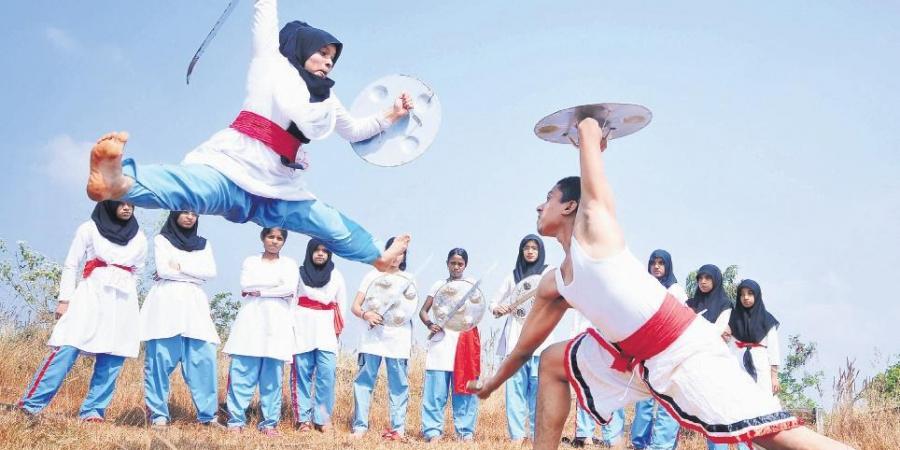
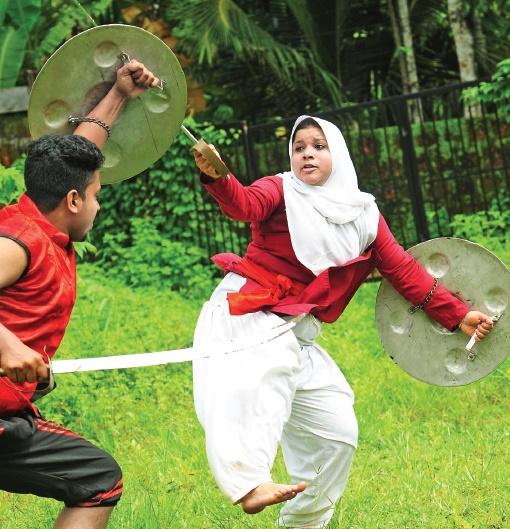
With hijab around her head, this Kerala Muslim girl has conquered Kalaripayattu

When Arifa Kodiyil, a Muslim woman started learning Kalaripayattu at the age of five, it raised many eyebrows. Now, the five-time-national champion is an example to strong women who fight their ground.

Mallapuram, KERALA :

Arifa can effortlessly handle many weapons including, Urumi, Vaal and Paricha, katara (dagger), kathi, kuntham (spear), kuruvadi (blunt wood stick) and neduvadi.

Kochi : 

Kalaripayattu, the traditional martial art form that originated in Kerala, has always been a man’s game. But veteran Kalari trainer, Hamzathali Gurukkal brought a change to this custom when he decided to introduce his five-year-old granddaughter Arifa Kodiyil to the artform. The Malapuram-native didn’t have a good start. A Muslim girl learning Kalari did raise many eyebrows. 

Having turned 26 recently, hijab-clad Arifa slays her competitors, flashing her urumi with all might, following the footsteps of legendary warrior Arackkal Ayesha. “Growing up, I used to watch the men in my family practice and teach Kalari. I used to think everyone needed to learn Kalaripayattu. At the age of five, seeing my interest in the art form, my uppuppa decided to train me,” says Arifa. 

Road less taken
This five-time national champion was the first girl from Malapuram to master the art form. “Since I didn’t have any women to practice with, my brother Ashif used to spar with me. At most competitions too, I was the only girl, or rather, the only Muslim who represented Malapuram back in the day,” says Arifa. 

After the demise of Gurukkal Hamzathali, his son K M Haneefa Gurukkal runs the Hamzathali Gurukkal Smaraka Kalari. “When Arifa was introduced to Kalari lessons, many people from the community asked us to not let her perform on stage, that Kalari is not ideal for a woman to practice. We, as a family never paid heed to those words. We always asked our kids not to get bogged down by the comments,” says Haneefa. 

The ones who pointed fingers soon clapped for the family when they realised the importance of self-defence techniques. “We are living in a time when both genders need to know how to protect themselves. More parents have started sending kids in the age of four to our centre,” adds Haneefa.


A woman’s game
Arifa believes it is essential for women to learn martial arts. “In the women-only batch, around 50 girls are being trained at the gurukulam by my father, sister Anshifa, and me,” says Arifa.

Arifa claims that if you know the right moves, a woman can use anything — bag, umbrella, pen or purse — to protect herself. “After undergoing training in ‘Drishti’ a woman will be able to intimidate an attacker or an eve teaser with just a sharp gaze,” says Arifa. 

Arifa can effortlessly handle many weapons including, Urumi, Vaal and Paricha, katara (dagger), kathi, kuntham (spear), kuruvadi (blunt wood stick) and neduvadi. Kalaripayattu trainees can wield weapons only after gaining several years of practice in Meytaari, the first step of training which focuses on grip. 

Eyes Forward
Arifa, an optometry graduate is now living with her spouse in Chekkannor, Palakkad. Her sister, 21-year-old Ashifa, manages the women’s batch. Arifa steps in during special classes and competitions. “My students bagged gold at the recent state competition held in Thiruvananthapuram. Due to Covid, classes are being now conducted online. The training for the upcoming national event is underway,” said Arifa.  

The Central Government’s decision to include Kalaripayattu in the Khelo India Youth Games will benefit many students, says Arifa “It will be a major boost to Kerala’s centuries-old art form. A few of my students have secured scholarships as well,” says Haneefa.

source: http://www.newindianexpress.com / The New Indian Express / Home> Good News / by Mahima Anna Jacob, Express News Service / May 29th, 2021

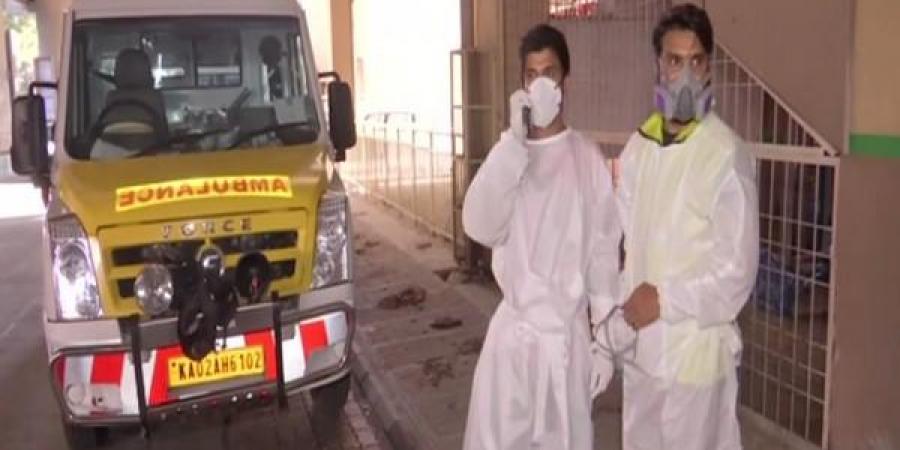
Bengaluru biker-brothers turn ambulance drivers to help COVID-19 patients

Bengaluru, KARNATAKA :

I have seen visuals where people were running from pillar to post for hospitals.I did not want to sit back and complain, so we started volunteering, one of the biker brothers Muteeb Zoheb said.

Bike-brothers Muteeb Zoheb and Murthaza Junaid volunteer as ambulance drivers.

Bengaluru :

While India grapples with the second wave of COVID-19, common people across the country are stepping up to help others in distress.

Among these are two biker brothers from Bengaluru, Murthaza Junaid and Muteeb Zoheb, who have been volunteering as ambulance drivers.

“I have seen visuals where people were running from pillar to post for hospitals and there is a scarcity of beds and oxygen. I could see the pain of people. I did not want to sit back and complain, so we started volunteering,” Muteeb Zoheb told ANI.

“As we travel across India and neighbouring countries on our bikes, we have been trained on evacuation. Ladakh is at a high altitude. On the saturation level, we have been using oximeters there also and checking the physical condition of the riders. We are using the same tools and we are getting a similar experience to check patients and give them first aid,” Zoheb said.

He further said that they have been volunteering as ambulance drivers for the last three weeks.

“People used to get the patients in two-wheelers and autos because they could not afford ambulance service,” he added.

Zoheb also urged people to volunteer and help people in distress.

Junaid said, “It is the need of the time. We have taken the opportunity to help people on the ground. The transformation is heartwarming.”

“Either we can watch, or we can do something. We chose to do,” Junaid said.

According to official data issued on Tuesday, India recorded 2,63,533 fresh infections of COVID-19 in the last 24 hours. There are 33,53,765 active cases of COVID across the country. 

source: http://www.newindianexpress.com / The New Indian Express / Home> Cities> Bengaluru / by ANI / May 19th, 2021