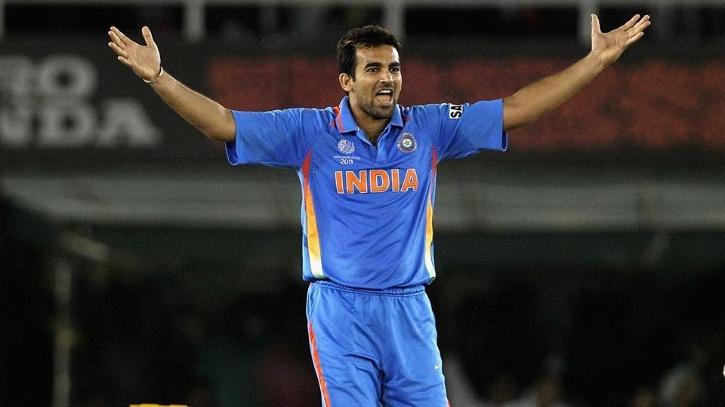
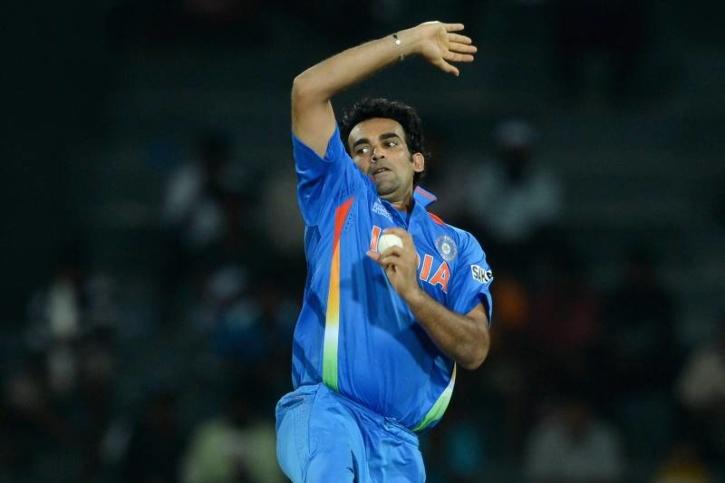
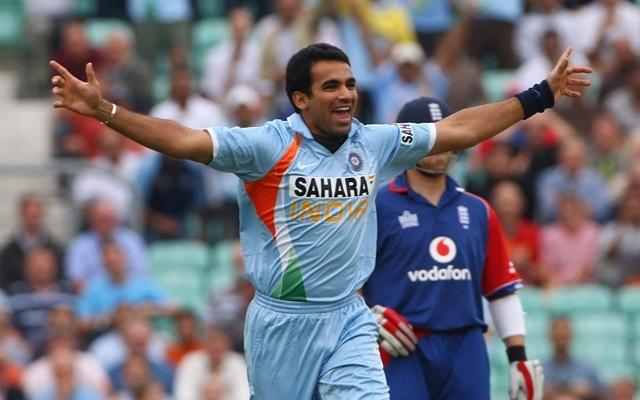
Zaheer Khan enjoyed one of the most illustrious careers for Indian pacers. His ability to swing the ball at pace was a sparkling feature in his armoury.
For someone who was India’s talisman in bowling department for years, his contributions on pitch have always been less appreciated. Whenever Zaheer stepped out on the pitch to represent India, he wore his heart on the sleeve.
But his significant service to Indian cricket have finally been honoured with Padma Shri, country’s fourth highest civilian honour. It is a rich deserved recognition for the former Indian pacer.
The left-armer, who has a winners’ medal from the 2011 World Cup , is India’s joint leading wicket-taker in World Cups. With 311 wickets, he’s only behind Kapil Dev for most wickets by an Indian seamer in Tests, while also boasting of 282 wickets in ODIs – the fourth-highest for an Indian.
Zaheer made his debut for India in 2000, and – for the most part of his 13-year career – remained a vital cog in the team in the Test and one-day formats.
For such illustrious career, it feels though Zaheer wasn’t given enough credit during his playing days. His major contribution to his country came at the biggest stage of it all – World Cup. He was India’s go-to man in critical situations.
His 21 scalps were the joint-most with Shahid Afridi at the 2011 World Cup, and he was key in giving India those breakthroughs at right junctions. He has finally seen his services rewarded in the best way possible – Padma Shri awardee now, he can be proud of his career.
source: http://www.indiatimes.com / India Times / Home> Sports / by Basit Aijaz / January 26th, 2020
Indian tennis ace Sania Mirza made a winning return to the professional tennis circuit as she clinched her first tournament after childbirth.
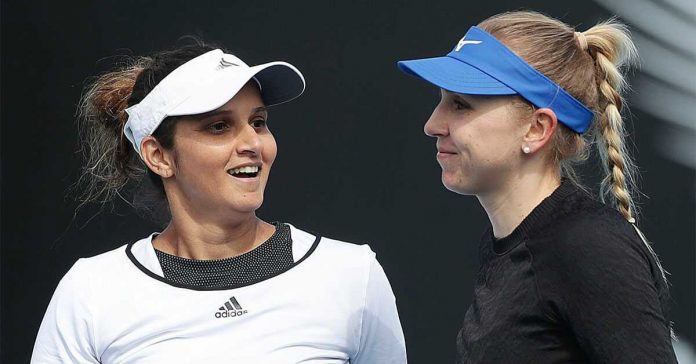
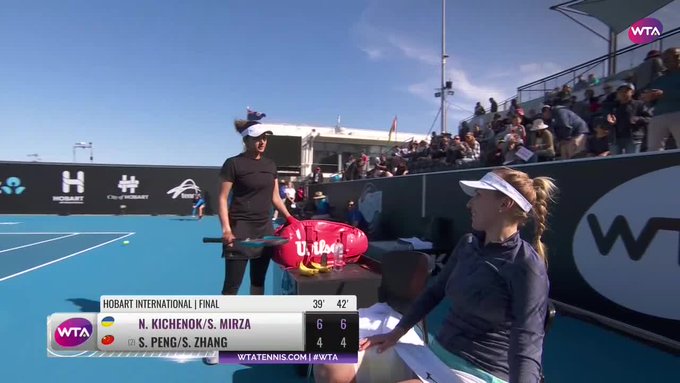
Indian tennis ace Sania Mirza made a winning return to the professional tennis circuit as she clinched her first tournament after childbirth. Partnering Ukranian Nadiia Kichenok, the duo defeated the Chinese pair of S Zhang and S Peng in the women’s doubles finals in the Hobart International 6-4, 6-4 to kick start the year on a triumphant note.
Sania and Kichenok were hardly troubled in the summit clash, as they took the game without breaking into much of a sweat. The Indian now gears up for the Australian Open, where she will team up with Rohan Bopanna in the mixed doubles category. She was expected to play the Grand Slam with American Rajeev Ram, who has, since, pulled out of the tournament.
WTA
✔@WTA
Straight sets win
Nadiia Kichenok and @MirzaSania are your @HobartTennis Doubles Champions after defeating Peng/Zhang, 6-4, 6-4!
This would also be the first time that Mirza and Bopanna would be playing mixed doubles together since they teamed up in the Rio Olympics 2016, where they had finished fourth.
Mirza, who had emerged as an inspiration to young girls in India when she forayed into the competitive world of tennis and started returning with impressive results that even saw her clinch the world number 1 ranking in the doubles circuit, had taken a break when she was at the peak of her career to have a child. Her son Izhaan was born to Mirza and Pakistani cricketer Shoaib Malik in 2018, after which the tennis star spent another year getting fit to return to the professional world.
Her fitness regime, her inspiring videos on Instagram, where she is committed to losing weight and not getting bogged down, have been a hit, and with this win, Mirza has also sent out another vocal message to the youth in India. She stands as an icon of strength, one who has not been afraid to take on the naysayers, proving them wrong with results on the field.
source: http://www.thebridge.in / The Bridge / Home> News / by Sarah Waris / January 18th, 2020
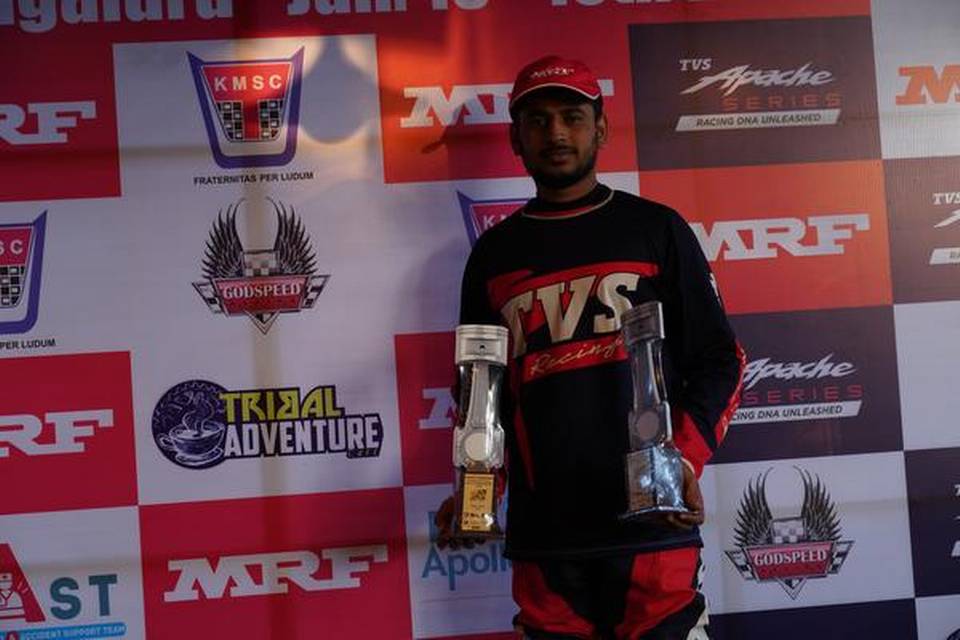
Imran Pasha of TVS Racing emerged victorious in the sixth and final round of the MRF Mogrip FMSCI Indian National Rally Championship for two-wheelers at Devanahalli near here on Sunday.
Riding an Apache RTR 200, Imran finished in 53 minutes 52.817 seconds, ahead of privateer Yuva Kumar (54:01.915) and teammate D. Sachin (54:25.149).
With the win, Imran was also crowned National champion in Class 4 as title rival Adnan Ahmed logged a DNF (did not finish).
Mangaluru’s Ishan Chandra (56:25.5) won the Class 3 event while local lad Rakesh Kumar triumphed in Class 2.
On January 7, Hadiya approached the school authorities to display her freestyle skills during the ongoing annual soccer tournament.
Hadiya Hakeem displays freestyle football at Chendamangallur HSS ground | Express
Kozhikode :
Everyone knows that Malabar is football crazy. But little is known about the soccer frenzy of women here.
Hadiya Hakeem, a Plus II student at Chendamangallur Higher Secondary School near Mukkam proves that women folks are no lesser die-hard football fans.
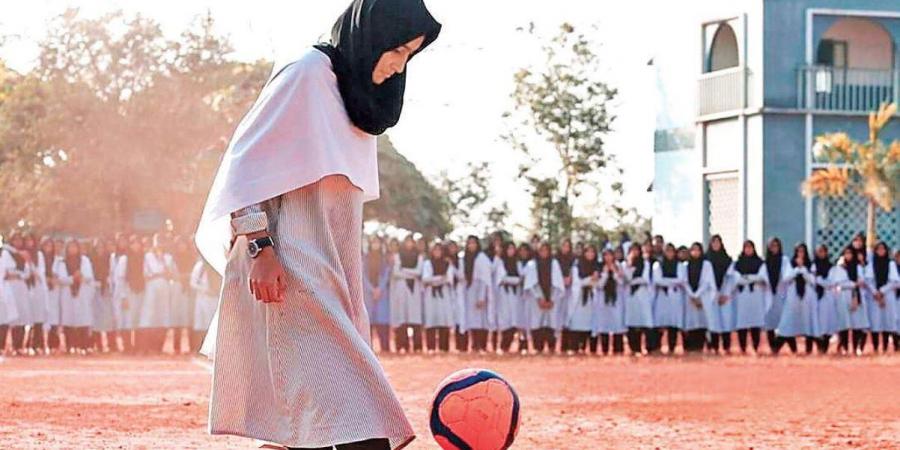
The video of her freestyle football (the art of juggling a football using any parts of the body) at a school ground has gone viral and the girl is now flooded with invites for inaugurating football tourneys.
On January 7, Hadiya approached the school authorities to display her freestyle skills during the ongoing annual soccer tournament.
The school management and teacher gave the nod and they were stunned by the skills of the 17-year-old girl.
“I was keen to play football but there’s no opportunity for girls here. There is not even a girl’s football team here. So, I wished to make use of the interval of the tournament and exhibit my skill,” says Hadiya.
The girl juggled the ball between her two-foot and in the air without allowing the ball to touch the ground. Hadiya’s talents and courage to go for it has encouraged many other girls.
“She has given goosebumps to all of us. Hadiya is a big motivation for not only students but also teachers,” said Saleem N K, Hadiya’s teacher.
Skill that sprouted in Qatar
Since childhood, Hadiya was interested in football. She learned the skills watching her brothers playing the game. She was in Qatar then and developed a bonhomie with the ball. She was a player at her school in Qatar till Class X after which her family shifted to their home place Chendamangallur.
After leaving the Gulf country, Hadiya found that she had no opportunities here to pursue her sporting dreams.
“Our school too does not have a football team for girls. But I never stopped my bonding with the ball as I practised freestyle indoors,” she says.
She is now getting invites from several tournaments in Malabar to inaugurate and display her skills. Her father Abdul Hakeem is a former football player.
“Mohammed Salah and Christiano Ronaldo are my heroes. Team-wise, Brazil and club-wise Real Madrid are my favourites,” she chuckles.
source: http://www.newindianexpress.com / The New Indian Express / Home> Good News / by Jouhara Begum / Express News Service / January 12th, 2020
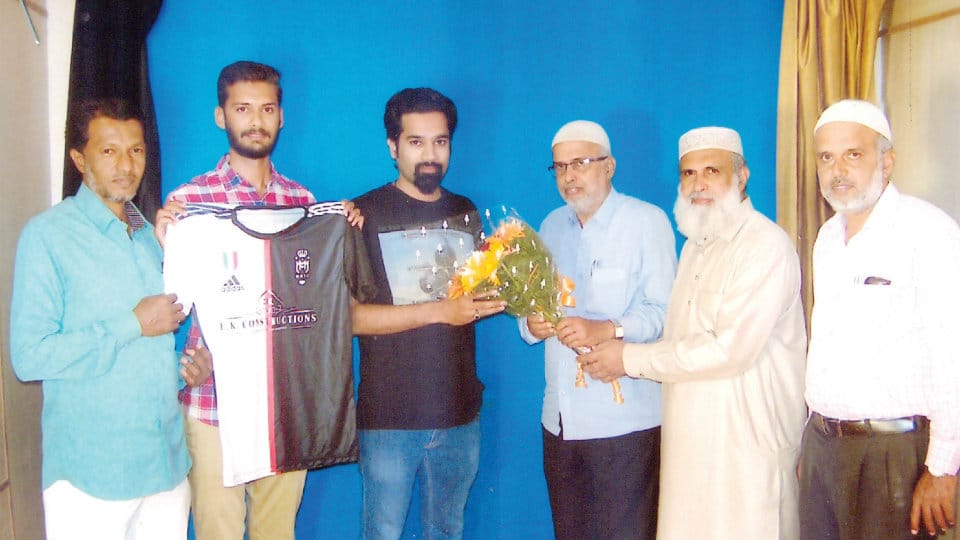
The new team of office-bearers of Mysore Muslim Football Club were elected recently.
Seen are (from left) Mohammed Irshad Ahmed (Club Representative), Mohammed Owayaz Khan (MD – EK Constructions), Farhan Baig (New Secretary), Mohammed Javeed Khan (New President), Mohammed Jamel Khan (former President, Lucky XI FC), Mohammed Shakeel Ahmed (President, Lucky XI FC).
source: http://www.starofmysore.com / Star of Mysore / Home> Sports / January 05th, 2020
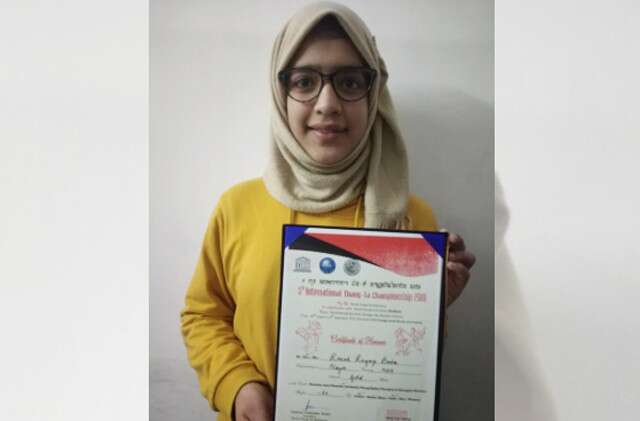
Some overcome all odds to achieve their goals and dreams, and Ronak Reyaz is the perfect embodiment of this. Even though the situation in Kashmir is still uncertain, Reyaz has not allowed it to deter her from achieving laurels. Reyaz bagged a gold medal at the 5th International Thang-Ta championship held in South Korea recently. With this, she has created a mark in a sport which has been traditionally dominated by men and is serving as an inspiration to many women.
Every Sunday Reyaz and her mother would travel from Baramulla to Srinagar for practice at the Gojwara Club, a portal covering women’s issues stated. And despite not having a practice hub nearby, nothing could break the young sportswoman’s resolve and routine of two years. Reyaz is a 16-year-old from SRM Welkin School in Sopore and belongs to Magraypora, a small village in the Baramulla district.
For Reyaz, her mother Hafeeza, has been a pillar of strength and support. But she worries about arranging funds for her daughter’s trips to various championships. “Her South Korea trip cost us Rs 2,00,000. We had to arrange Rs 75,000 entry fee for South Korea meet in August when everything was shut,” Hafeeza told The Tribune.
Reyaz has still not been approached by any authority for help, despite her consistent performances and bringing accolades to the country. Hence, she feels that sports in rural areas are still a neglected sphere by the government.
source: http://www.femina.in / Femina / Home> Trending> In the News / by Femina / January 02nd, 2020
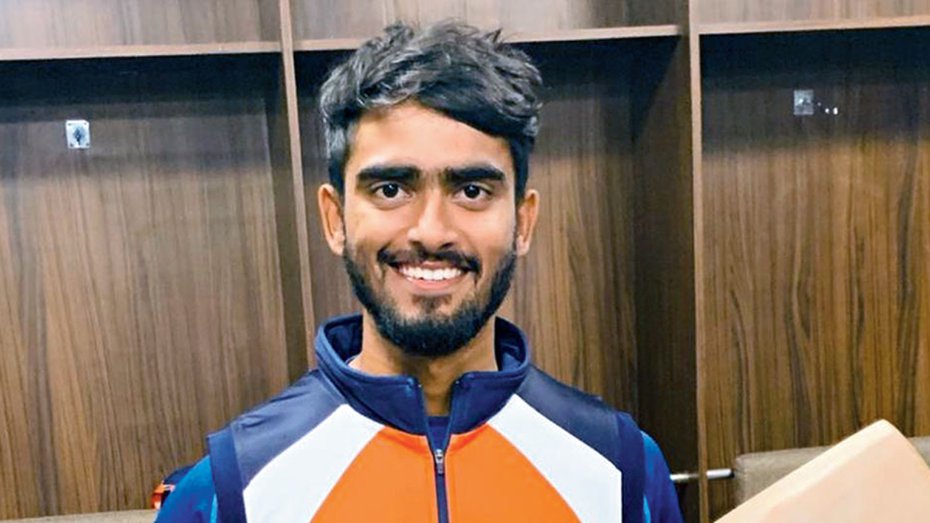
Arslan Khan has been in the news at the Sector 16 Cricket Stadium in Chandigarh on the first two days of the ongoing Ranji Trophy Plate Group match between Chandigarh and Arunachal Pradesh.
The left-handed Chandigarh opener, who has been going through a purple patch, has scored 699 runs in 11 innings, including five centuries and two fifties, in the under-23 one-day championship.
But to top it all, Arslan scored 233 not out in his first Ranji Trophy match. He could have broken the record of Ajay Rohera, who scored 267 for Madhya Pradesh against Hyderabad in Indore in 2018-19, the highest by any Indian batsman on first-class debut.
Arslan, however, does not have any regrets. “I do not have any complaints about the decision taken by the team management. It was decided that we would declare once we reach the 500-run mark. I only came to know about the record after the day’s play,” Arslan told The Telegraph on Tuesday.
“I have had a memorable Ranji Trophy debut. As a player my aim is to help the team. We would love to wrap up things quickly in the morning session of the third day. The team’s success is most important,” he said.
“It was on my mind that I need to play long. I was losing my wicket soon after reaching the century in the U-23 tournament. Today I made sure that I would go on and convert the century into a double ton. I am glad that I was able to do it,” Arslan said.
Batting first, Arunachal Pradesh were bundled out for 147. In reply, Chandigarh, who are playing their first Ranji match, declared after reaching 503 for two. At the end of the second day’s play, Arunachal were 164 for six in their second innings, still 192 runs behind.
“I would like to thank all my teammates and coach for my performance,” Arslan, who loves to watch David Warner bat, said.
“I would like to thank my first coach Sukhwinder Bawa, who helped me to learn the basics of the game. I am still very young and learning everyday,” he said.
“I never thought of playing the game seriously but Sukhwinder sir always inspired me and one day suddenly my mind changed,” Arslan recalled.
Former India player VRV Singh, who is the coach of Chandigarh, praised Arslan. “He has been doing very well. We picked him up in the senior team for his beautiful performances at the U-23 level. He has done remarkably well… hope his form will continue.
“It was our first match and we have done decently well. Our captain Manan Vohra (124) and Shivam Bhambri (105) also scored centuries. Bowlers also did well, hope our good run will continue,” VRV said.
“We didn’t get much time before the start of the Ranji Trophy. We just had a ten-day camp. As the tournament progresses, I believe we will improve,” VRV said.
source: http://www.telegraphindia.com / The Telegraph, online edition / Home> Cricket / by Arindam Bandyopadhyay in Calcutta / December 11th, 2019
Playing on hard mud surfaces, Nasreen’s early coach would ask her to train with boys’ teams, a daunting prospect given they were stronger and faster, and she was often left bruised.
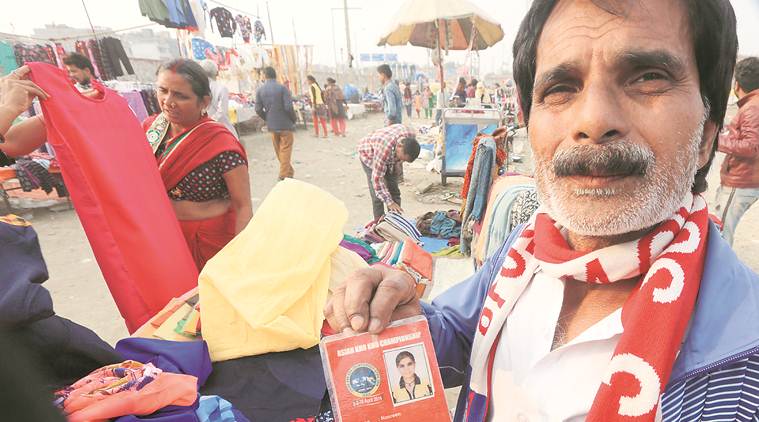
Mohammad Gafoor, Nasreen’s father, flaunts a scarf her daughter brought from Nepal. Despite financial woes, he fully supported her. (Express Photo: Premnath Pandey)
India’s South Asian Games (SAG) gold-winning kho-kho captain Nasreen says she learnt the art of eluding chasers while rising to challenges life threw at her.
Playing on hard mud surfaces, Nasreen’s early coach would ask her to train with boys’ teams, a daunting prospect given they were stronger and faster, and she was often left bruised. “’Taang pakadke giraa do usko’ (pull her down by the leg) would be the standard instruction. I got so good at running fast and diving out of their grasp, I became fearless against tough chasing packs,” she recalls.
India’s ace diver in kho-kho, who is said to escape chasers like a pashmina slides through a ring, got even better at diving when she moved from mud to the cushioned mat.
A bigger leap had been taken by the family from Shakurpur in Delhi earlier. Her father Mohammad Gafoor sells steel utensils on the streets on most days. He is at the Monday market in Jahangir Puri near Machi market, selling thick, bright winter clothing material, proudly donning the scarf Nasreen brought from Nepal’s South Asian Games.
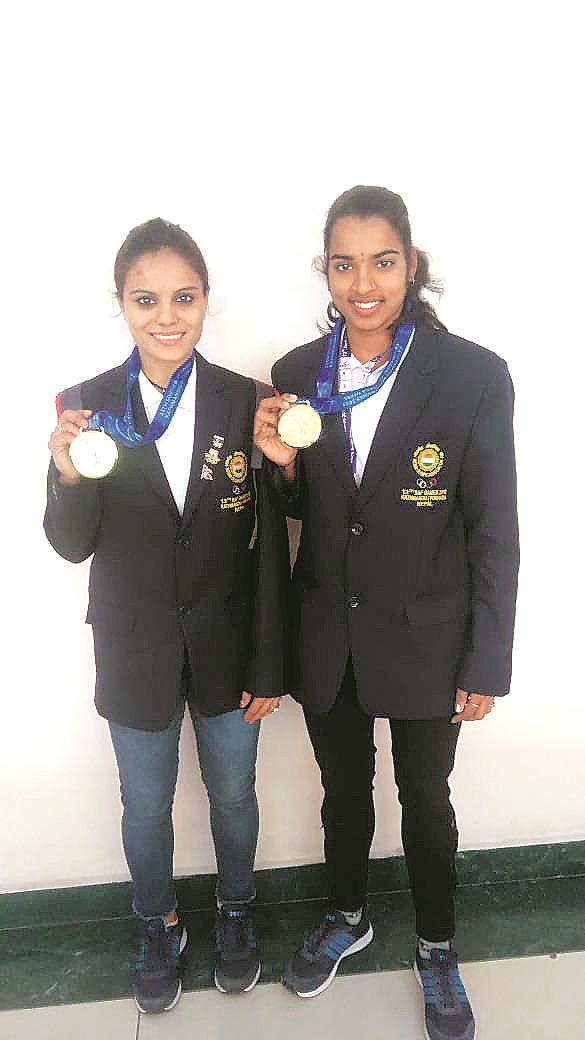
Nasreen (left) with South Asian Games medal
On some days, he earns a maximum margin of Rs 30 in the weekly markets, lugging his wares – bunches of stainless steel spoons and a pack of dozen water drinking glasses.
As soon as it became clear at school that Nasreen was exceptionally speedy on the kho-kho ground (she also participated in athletics and kabaddi), Gafoor knew he had to isolate her from ordinary woes that befall street sellers – from cops and municipality officials chasing away hawkers to unsteady income on lean days. “Khaane ki dikkat, police ke dande, karza, udhaari, thelaa uthaake le jaaneka dar, yeh sab dimaag ke tension se door karna tha usko,” he explains.
Nasreen recalls her father telling her that only her opponents were her enemies for the duration of the match. “Agar India khelegi to desh humaare liye sochega” (if you play for India, the country will think about us), Gafoor reckoned when the 21-year-old debuted a few years ago.
The father would also put his foot down against societal pressures holding her back. “We are Muslims. From childhood, we have been treated badly by all people, and nobody came to our help. When someone talked about purdah, I discussed with my wife and decided that we’ll not listen to anyone,” he says. His daughter’s dedication and stubbornness were infectious, he adds.
“Relatives had a problem with everything,” Nasreen recalls. “’Girls shouldn’t play, they can’t wear shorts, how did you let her go out for the Asian Championships for a week? How did you allow her to be at the national camp for a month in far-off Gujarat?’ My parents never got demotivated. They said ‘let people keep talking, we trust you’.”
Nasreen was fourth among seven sisters and four brothers. Gafoor had come to Delhi from Araria district in Bihar, after being orphaned by age 14, and robbed of his ancestral property by relations. After Nasreen won gold at SAG, Gafoor says with pride: “Pehle woh Gafoor ki chhori thi. Ab main Nasreen ka papa karke jaana jaata hoon. (Earlier, she was Gafoor’s daughter. Now I’m known as Nasreen’s father.)”
In Nepal, Nasreen’s team came up against a home team coached by Indians Munni Joon and Sheetal Chauhan. “They surprised us by showing our skills. We’ll have to up our game,” Nasreen says ahead of the inaugural franchise-based kho-kho league in February.
Now she brings home a monthly salary of Rs 26,000 from her Airport Authority of India job. Night markets meant renting out tables, lights and corners. “2000 in, 500 Rs out,” Gafoor laughs.
Having played age-group nationals and seniors simultaneously and shining at all levels, Nasreen started enjoying basic luxuries – like national holidays. “Earlier holidays meant markets closed for my father, and chances of no food on that day. As an athlete, I was always hungry, so we would dread holidays. Now I celebrate holidays like others,” she says.
Kho-kho also fulfilled a dream she hadn’t dared to dream as a municipal school girl in Class 3. “Properly London hoke aaye!” England plays kho-kho at the university level, so we went for an international series. I sat in a plane for the first time. My father laminated the entire newspaper page though my news was just two bars,” Nasreen laughs.
The father-daughter duo also gathered courage to travel to Bihar and meet local officials to reclaim their snatched property earlier this year. Gafoor says Nasreen is India’s gold-winning captain and speaks confidently “like an officer.” As India captain, she likes forging team bonds and camaraderie, and solving language problems of players from across the country as she is quick to grasp different tongues.
Nothing significant was achieved on the last visit to their native village, but Gafoor insists he was proud of how fearlessly his daughter put forward her point in front of highly-educated officials. “I’ve trained with men trying to drag me down by my feet in my sport. I can dive out of everyone’s reach. I’m also confident of talking to anyone,” says the second-year student.
source: http://www.indianexpress.com / The Indian Express / Home> Sports> Sport Others / by Shivani Naik / December 10th, 2019
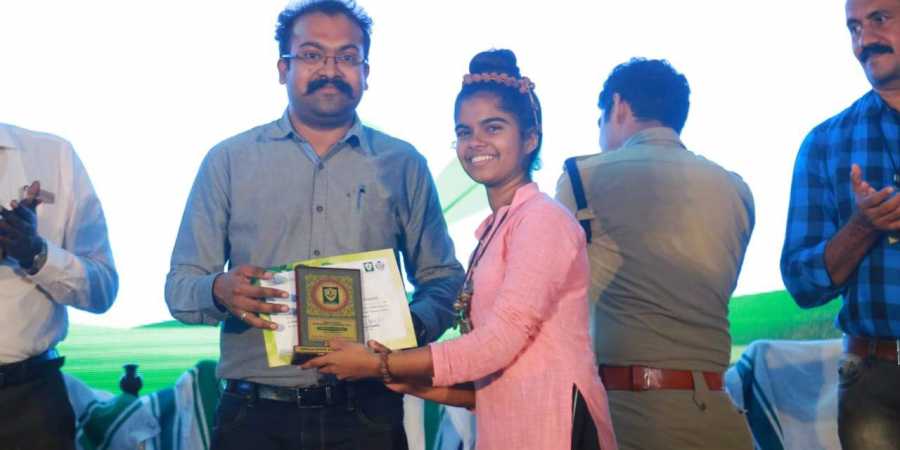
An ardent apiculturist, Jodha was presented with a horse named Aman Chand by her mother Amiya Taj who is also a horse rider.
Oli Aman Jodha
Thiruvananthapuram :
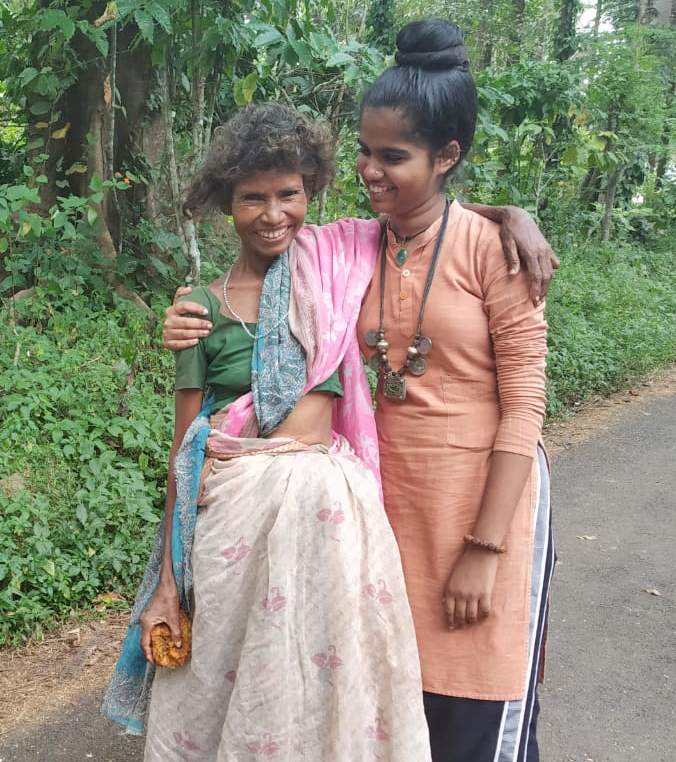
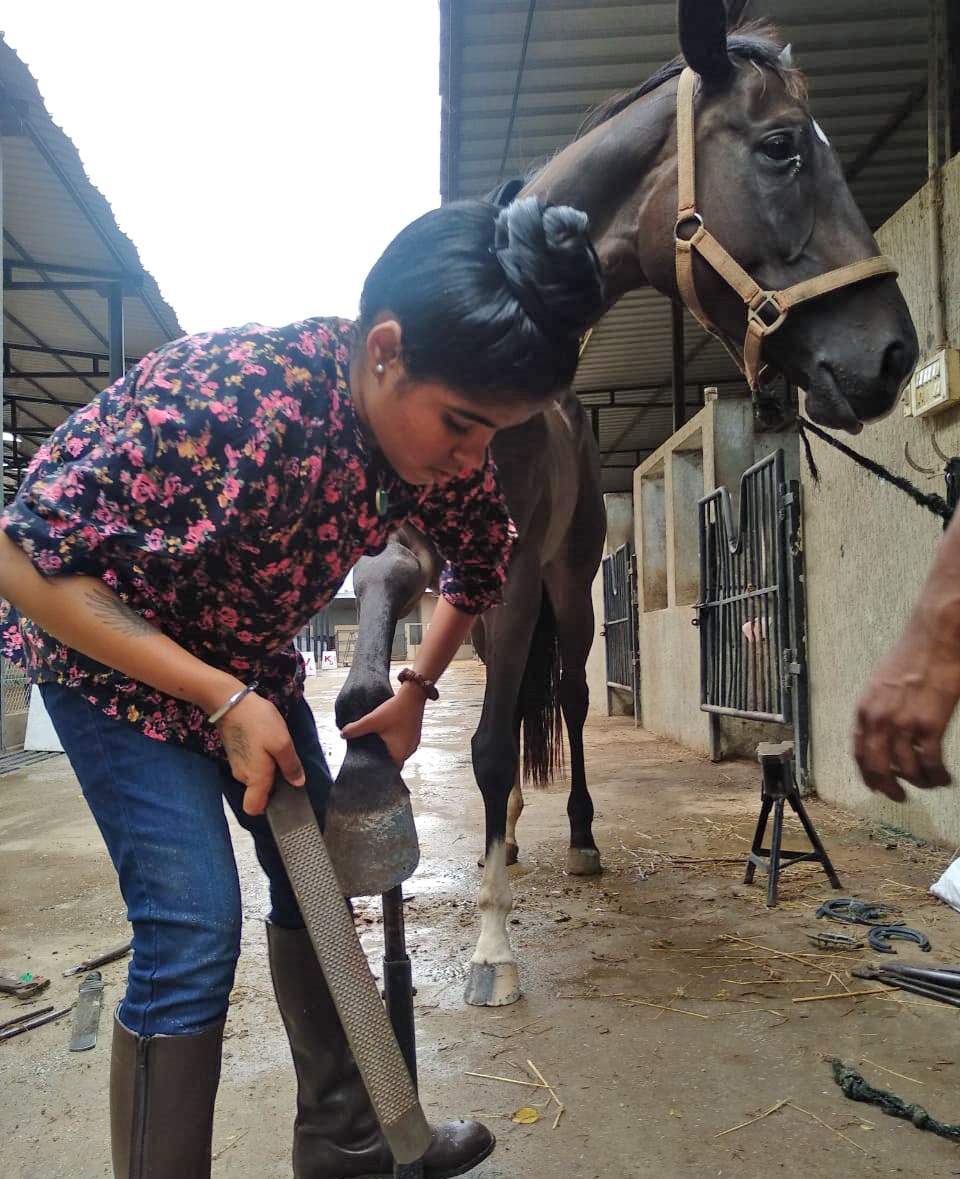
Breaking gender barrier is not uncommon these days. But Oli Aman Jodha has set a new milestone by becoming arguably the first woman farrier in the country. She is just 14. Jodha, who hails from an orthodox Muslim family from North Kerala, has been leading a nomadic life for the past few years because of her love of horses and bees.
An ardent apiculturist, Jodha was presented with a horse named Aman Chand by her mother Amiya Taj who is also a horse rider. Though riding has been her passion, an incident of fixing a horse shoe on Aman by an amateur farrier drew Oli to the profession.
Right after the farrier from Tamil Nadu fixed the shoe on her horse’s hoof, there was profuse bleeding.
Following this, the next time Aman needed a horseshoe, Oli tried fixing the shoe with the help of family friend Sukumaran, a forest guard at Kallar in Ootty. She was just nine at the time. Later, her mother sent her to Nepal where she trained in fixing horseshoe under the tutelage of farrier Thaj at Kohalpur.
In the meantime, a national award came Oli’s way for her expertise in apiculture and even got an invitation to be the resource person in apiculture at Swaminathan Research Foundation, Wayanad, and National Institute of Rural Development and Panchayati Raj, Hyderabad. Her stay in Hyderabad opened a new vista for her in fixing horse shoes as the place has a plenty of horses.
“In the peak time, I used to fix shoes on around 20 horses a month. I have done this in Tamil Nadu, Karnataka, Gujarat, Andhra Pradesh and Rajasthan. A farrier’s focus would always be on ensuring that the shoe perfectly matches the horse’s hoof,” she said.
It’s not an easy task to prepare a custom-made shoe. The farrier must have a sound knowledge of forging and basics of metallurgy.
Oli used to shape the metal with the help of an anvil, hammer, nipper, cutter and tongs like a blacksmith. She also has to bear some of the horse’s weight while fixing the shoe. In the case of oxen, the shoeing can be done by holding the animal to the ground, but it is done on horses in standing position. And if the farrier makes a wrong move or is in the wrong place, he/she can get trodden on easily. All the factors make the profession challenging, especially for women.
Oli has had her share of rough life at this young age. She is a class 1 dropout and had to continue her studies till class 8 through open education. Now, she is planning to write her class 10 exams. She is looked after by her mother after her father left the family. She doesn’t even have a permanent house to reside.
Future plans
Oli wants to be an equine veterinarian and is ready to tread an extra mile to achieve the dream. Not many Indian universities offer equine veterinarian course. But she is hopeful of God bringing luck in her life.
source: http://www.newindianexpress.com / The New Indian Express / Home> States> Kerala / by Dhinesh Kulkarni / Express News Service / November 12th, 2019
Rofikul Islam is a professional wildlife guard and much in demand for his amazing knowledge of birds and animals. Delhi’s Deputy Chief Minister Manish Sisodia is among his top clients.
Quack! The gander gives away the nest’s position behind an arbour of foliage. Mrs White-Winged Duck responds with a quick quack-quack. Rofikul Islam raises an arm, winks at his team. And they, finger on trigger, behold Assam’s state bird—so elusive and endangered that perhaps only 200 pairs remain in the wild on this planet—with unabashed sideways glances of looky-loos. They go click, click, click. But the light is low; the sun has just yawned out on this island in the Jia Bhoroli, the livewire of Nameri national park straddling Assam and Arunachal Pradesh.
____________________________________
Will he stop prying into Mr and Mrs DUck’s private moments? He won’t.
____________________________________
Rofikul, a professional wildlife guide with AllIndiaBirdingTours, has prepared well for the sortie. This morning is a long trek—boating, fording, and pushing their trusty legs to their limits. Waking up to a burst of tweets, retweets, pa-chip-chip-pa-tip (sounds like potato chip and dip?), breakfast is hearty in the camp. “By noon, the team logs nearly 80 species of birds,” says Rofikul, a Kaziranga native who turned 30 this November. Growing up near the famous park helped him hone a guide’s primary asset: like telling a Crested Kingfisher from a finch by their calls. Booked through the year, his adventures are on unplumbed land—jungles on the Assam plains, in the Northeast’s hills and snowcapped Sikkimese mountains. His guest list? Long and impressive; includes Delhi deputy CM Manish Sisodia.
Back to camp, lunch, another expedition (short; sundown gathers pace), tea/cookies/Maggi, and it’s almost time for dinner around a bonfire. The thatch-and-bamboo cottages, the snug beds wait invitingly. But the guardian owl is on his nightly run. Hoot hoot! Everything screeeeeee-s to a halt.
source: http://www.outlookindia.com / Outlook / Home> Magazine> National / by Rituparna Kakoty / November 21st, 2019