Their medals ensured India secured a record 15 quota places for the 2020 Tokyo Olympics, easily surpassing the 12 for the 2016 Rio Games and 11 for London 2012.
FILE PHOTO: There was a shoot-off for the gold medal and Angad Vir Singh Bajwa prevailed 6-5 against Mairaj Ahmad Khan, after both were tied on 56 at the Lusail Shooting Complex.
Gold medallist Angad Vir Singh Bajwa and silver winner Mairaj Ahmad Khan added to India’s rich Olympic quota haul with a sensational 1-2 finish in the men’s skeet event at the 14th Asian Championships on Sunday.
Their medals ensured India secured a record 15 quota places for the 2020 Tokyo Olympics, easily surpassing the 12 for the 2016 Rio Games and 11 for London 2012.
There was a shoot-off for the gold medal and Bajwa prevailed 6-5 against his compatriot after both were tied on 56 at the Lusail Shooting Complex.
India won three quotas on Sunday, including teenager Aishwary Pratap Singh Tomar’s bronze in men’s 50m rifle 3 positions.
“15 quotas and a very special 1st & 2nd in Skeet. Angad and Mairaj – Bravo boys super proud of you two. Way to go team India you exceeded my estimate by an additional quota!” National Rifle Association of India (NRAI) president Raninder Singh tweeted.
Raninder Singh@RaninderSingh
15 quotas and a very special 1st & 2nd in Skeet. Angad and Mairaj – Bravo boys super proud of you two. Way to go team India you exceeded my estimate by an additional quota!
Meanwhile, continuing India’s impressive performance at the prestigious championships, the duo of Manu Bhaker and Abhishek Verma got the better of compatriots Saurabh Chaudhary and Yashaswini Singh Deswal 16-10 to win the gold medal in the 10m air pistol mixed team event.
Bhaker and Verma shot 577 and 387 in the two qualifications, while Chaudhary and Deswal managed 576 and 387.
Before India’s exploits in the mixed event, the 18-year-old Tomar shot 449.1 in the eight-man final to finish third on the podium, behind gold medallist Kim Jonghyun (459.9) of Korea and Chinese Zhonghao Zhao (459.1).
source: http://www.sportstar.thehindu.com / SportStar / Home> Shooting / by PTI / Doha, November 10th, 2019
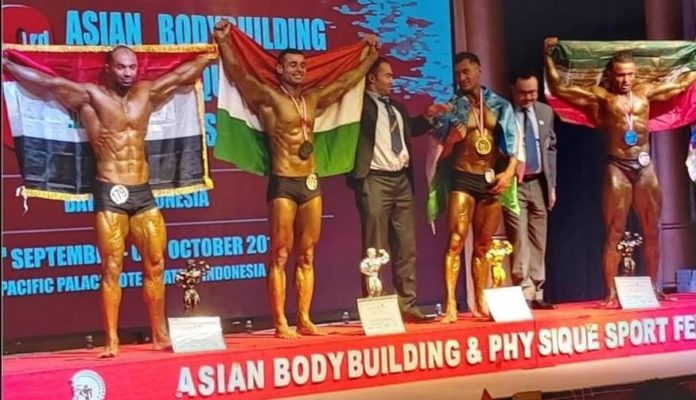
Maj Abdul Quadir Khan of the Corps of Signals won a silver medal at the 53rd Asian Body Building and Physique Sports Championship.
Major Abdul Qadir Khan of the Corps of Signals gave India a reason to smile after he walked away with a silver medal dangling from his neck at the 53rd Asian Bodybuilding and Physique Sports Championships on Wednesday. Despite a busy regimental schedule, Major Abdul fueled his interest in bodybuilding in the year 2014. His decision to train at 1 Signals Training Centre in Jabalpur helped him establish himself on the national bodybuilding scene. The excellent training infrastructure with experienced coaches triggered his interest in the discipline.
ANI
✔@ANI
Indian Army’s Major Abdul Quadir Khan won a Silver Medal at 53rd Asian Body Building and Physique Sports Championship held at Batam in Indonesia on 2 Oct.
Maj Abdul Quadir Khan of the Corps of Signals won a silver medal at the 53rd Asian Body Building and Physique Sports Championship.
It was not very long ago that the stature of fitness sports in India was confined to wrestling and martial training centres alone. But with several thousand strength training centres across the country, India now seems to be poised for glory in bodybuilding , as it has come to bank on its ever-growing crop of dexterous bodybuilders. Major Abdul was privileged with a chance to represent India following a commendable performance in the Indian Bodybuilding and Fitness Federation (IBBFF) selection trials that were held at Khammam, Telangana in July this year.
Having come a long way since his early days in Jabalpur, Major Abdul refuses to rest on the past accomplishments and is looking to improve himself every day. Considering that this was his maiden event, Major Abdul’s successful venture is no serendipity. His grit, determination, and commitment to his passion for bodybuilding have what today made him long-jump over all metaphoric hurdles that came in the way. His accomplishment will most definitely resonate with athletes who aspire to march several steps ahead to climb newer heights in India’s sporting ecosystem.
Held at Batam in Indonesia, the Championships featured a total of 51 events running for a period of three days. Considered as the first continental association, the Asian Bodybuilding and Physique Sports Federation has seen its foundation exuding a steep growth from six to 40 national affiliates.
source: http://www.thebridge.in / The Bridge / Home> Bodybuilding / by The Bridge Desk / Octobter 05th, 2019
Living in a world where most dreams crash before they can take flight, the journey of Mohamed Azarudeen sketches a trajectory that has vaulted him to the place he always aspired to be in!
Nearly a year back when this 24-year-old athlete turned coach had spoken to The Bridgeabout his potent dreams of opening his own Academy and promoting home-grown talent in athletics, little did he know that success would come knocking on his door so soon.
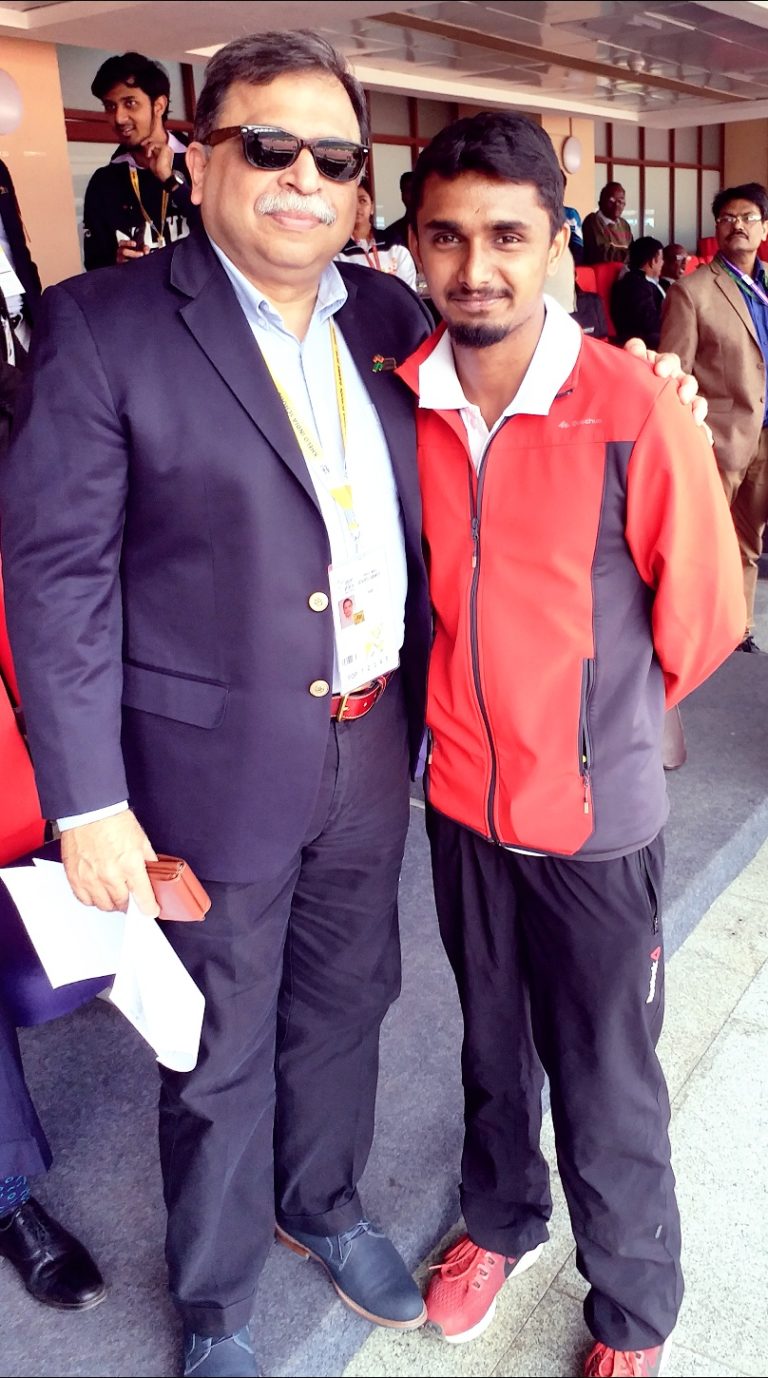
Azarudeen with AFI President Adille Sumariwalla
Exhilarated at how brilliant the last two years have been for him, Mohamed Azarudeen, who is now the youngest coach in the field of athletics in the country is a torchbearer for the future generation of athletes.
Partnering with Sreekiran
Hailing from the blue-mist shrouded region of the Nilgiris in Tamil Nadu, Azarudeen has been dedicated in his goal for forwarding the position of India on the tracks. Scouting for a ‘big break’ in the January of 2017, Azarudeen spotted teen sensation Sreekiran Nandakumar, who he inspired and took under his wing. Sreekiran and Azarudeen struck an instant bond, and the 16-year-old from the Southern hills stunned the country by winning gold at the Youth Olympics Qualifications Meet at Bangkok, clocking the win in 1:50:93 seconds.
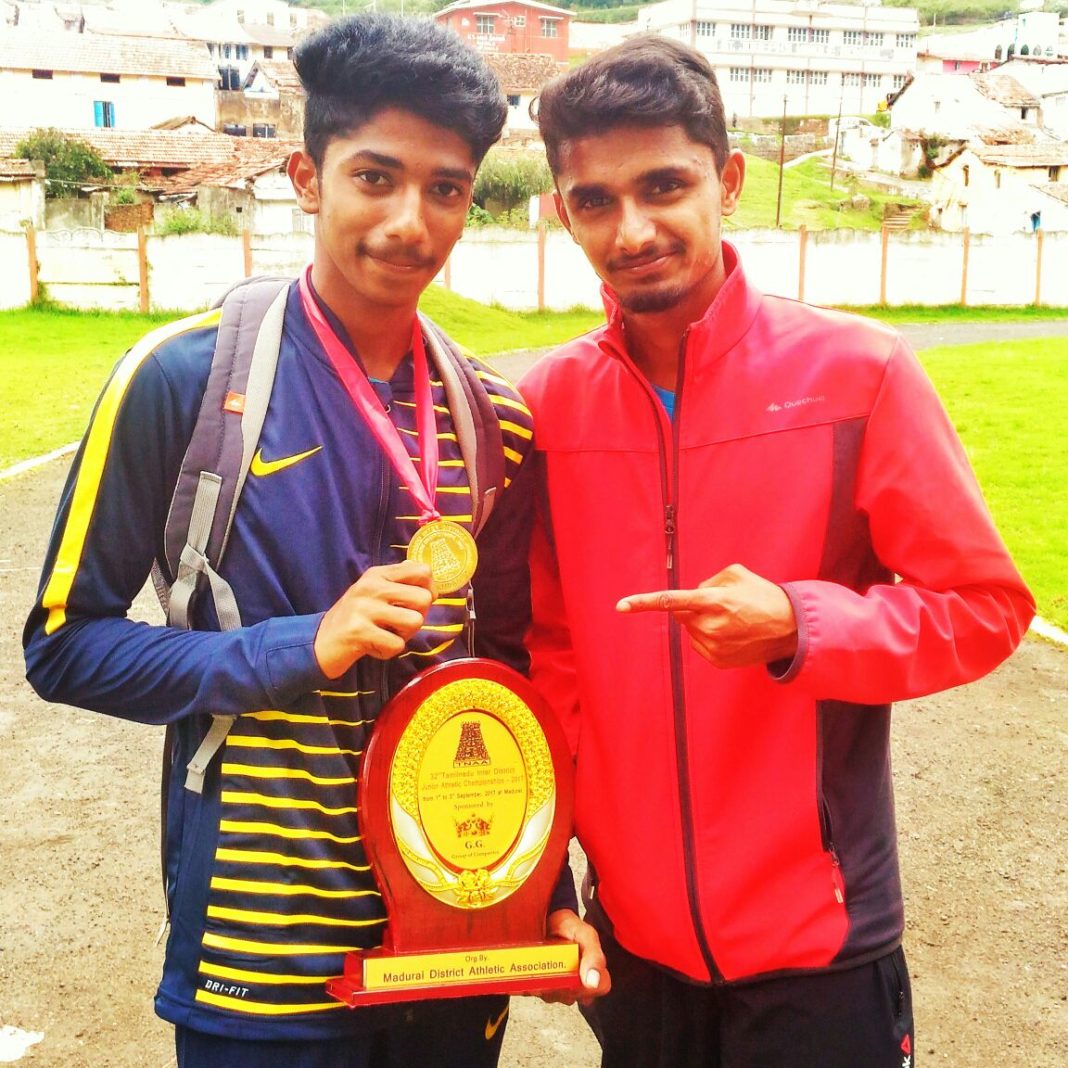
Sreekiran & Azarudeen
Speaking to The Bridge and reflecting on his journey so far and the coming first anniversary of the Aspire Academy which he ably runs amidst the scenic landscape of Coonoor, the youngest coach of Indian athletics inspired us with his words.
“The Academy was started after the Youth Olympics qualification meet and Sreekiran Nandakumar’s gold medal win,” informed Azarudeen. Since then he proudly claimed, “We have produced two-three national athletes over the last year and State Champions.”
The journey from athlete to coach
There was a major pull at the Aspire Academy right after this sensational win by his star pupil, and currently, Azarudeen is working hard with 15 talented athletes. A year back, Azarudeen had told The Bridge that he wanted the cloudy fog to lift from the Nilgiris and reveal itself wholly and a year later, the dream is alive and burning. Azarudeen, himself has been an athlete first and a coach later. He tells us, “It was in late 2009 that I started my career when I was in my ninth standard, as a professional athlete.” He was coached by Mr Jaychandran, who was to become a very key figure in his life. A silver medalist at the State Junior Championships in 2011 and a medalist at the 2012 University Games, Azarudeen has been to several national level tournaments and won several accolades before injury tolled the bell to bring his career to an end.
The year 2016 was exceptionally hard for Azarudeen. “I got injured in my knee in 2016 due to all the hard training, and since I come from a financially weak background it was difficult for me to get back on the tracks full-fledged again,” he explains. However, the feisty coach made sure that he turned this obstacle into a major boon.
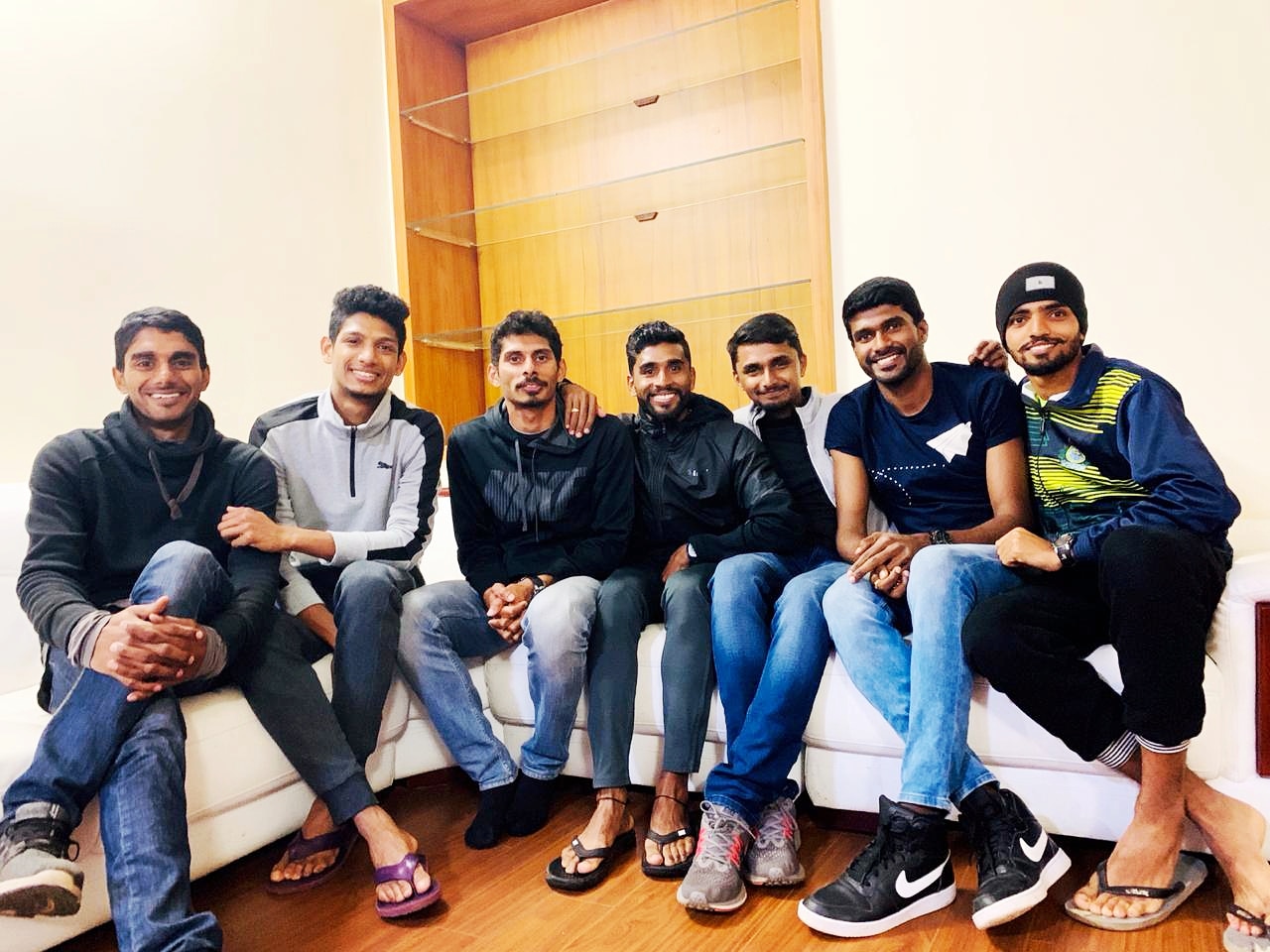
Azarudeen with a group of young athletes
Instead of brooding over his stunted career, Azarudeen refocused, “Injury made me sit back and think about the coaching facilities in India. Back then, I had met and worked with middle-distance coach Kunhi Mohammed who also trained Jinson Johnson,” which matured into a turning point in his career.
“It was in 2016 that I met Jinson. Currently, he holds the national record for 800m and 1500m. His coach, Kunhi Mohammed was away in France, and Jinson had come down here for high-altitude training before the Olympics qualifications meet which was to be held in Bangalore,” Azarudeen categorically explained.
Jinson Johnson met Azarudeen, and yet again, the army man casually asked the injured athlete if he would like to assist him in his training for the Olympic trials. Azarudeen governs himself by the philosophy of, “If I’m not able to play for the country, then I must ensure somebody else does. Jinson was playing for the country. My assistance will always be there for the nation,” as he readily embarked on a 6-month long training program with Johnson.
His interest in coaching piqued from this activity as he helped out Jinson and Azarudeen’s coach, Jayachandran also explained how the world of coaching works to him. Azarudeen says, “I was an assistant coach for Jinson Johnson during the 2016 Olympics qualification and that time I started learning about coaching. What it’s like to be a coach…the gap between junior and elite athletes and how to train them. I researched a lot and looked out for potential athletes,” he remarked.
Azarudeen with Jinson Johnson
The final inspiration for Azarudeen came when Jinson broke the national records when he qualified for the Olympics, clocking a timing of 145.98 seconds in the trials. “I was very happy when that happened. This motivated me to get into coaching. I should give back to the sport what it has given to me, I decided,” he tells us.
A go-getter attitude
There were a lot of challenges that had come his way, but he always had an “I can do it!” attitude from the get-go. However, being a coach, this young is not an easy task, and people often tend to criticize it. Azarudeen reflects on that and says, “I started coaching at a very early age. I was just 22. Many people would wonder how I do this. They would say a lot of things. But I always ignored it.”
To put all the questions to a stop, in 2018, Azarudeen decided to take the Certification course. “I did my Level 1 U-16 coaching certification training for the international level, and I was the class topper of that batch!”, he exclaimed. “I am eagerly waiting for Level 2 of Coaching Certification now. It’ll be held in November,” an enthusiastic Azarudeen revealed.
“When you start producing medallists and seeing good performances, it feels incredibly good, and you feel responsible for the sport then,” he tells us which reveals his true love for the job as a coach to budding athletes.
Several questions have been raised about why senior athletes fail to perform at the international level and Azarudeen the coach offered a different perspective, “The basic thing is people don’t see the performance. They only see the medals at this stage. As a coach, I look at the performance of the athlete. There is a lack of facilities here, and if an athlete gets those in and around India, then it will be very helpful in the tournaments they compete in.”
India’s athletics is making big strides
However, India has introduced a lot of new schemes, and the Khelo India initiative is the most brilliant one. Azarudeen applauds that and admits, “But right now we are stepping up, the government is doing a lot for the athletes. Hima Das is doing so well, and so is Dutee Chand.”
Back at this Academy in Coonoor which is helped by the Madras Regimental Centre, Wellington, Azarudeen has been able to train athletes efficiently for a year now almost. Although his Academy does not have the spick-and-span quality of high-end training centres, it boasts of a rigid training program at 3000 meters above the sea level.
Specialising in middle-distance running, Azarudeen explains, “At the Aspire Academy, we have everything required for middle-distance running requirements. The high altitude helps immensely. We are focussing on my program here. Also, all the basic facilities are available here. I am an 800m and 1000m athlete coach, and I am inspired by that. My goal lies in getting achievements there.” In his training centre at Coonoor, bright athletes are waiting to take on the world. There is a budding athlete Mujamil among the boys and Gowthamee among the girls whilst Vikas, Arvind and Sudhir are all male athletes with a lot of promise who are practising hard at the Aspire Academy.
Challenges for an athlete
The challenges in the field of athletics are several with the most dangerous one being that of doping. Doping had been a major issue for India during the 2018 Commonwealth Games, but Azarudeen, who feels for the cause voiced that,
“A lot of awareness needs to be created. At Aspire Academy, we take all the measures required to keep doping in check. Nowadays, athletes don’t trust their coaches, and they look for fast results. Training is a long process, usually. You should believe yourself. Trust the coach and follow what he says,” he recommends.
In this fast-paced world where everybody is in the quest for instant results, it’s difficult to explain the value of a lengthy training process. “The problem is, nowadays, the athletes are concerned with short-term performance rather than long-term performance. The awareness should be created through coaches,” Azarudeen feels. He also recommends the organization of awareness camps against doping before any tournament-be it small or big, so that the information precipitates to the grassroots level too. Other than that, Azarudeen feels “There should be high-performance training centres in every State so that athletes from all over can come there and train.”
The journey ahead is long for the youngest coach for athletics in India, and he has no plans of stopping any time soon. “Any opportunity which comes to me, I’ll want to make my country proud all the time,” he urgently tells us showing his love for the nation which is rapidly becoming a strong force in the field of athletics. With his students from the Aspire Academy, Azarudeen has his eyes set on 2022. Affectionately he says, “My little champs are training for the 2022 Youth Olympics now! Next year the Junior World Championships is also there,” he tells us excitedly.
Azarudeen firmly believes that with the right funding and sponsorship as well as strategic training programs, any talented athlete can be elite and win the elusive medals. In a country which is slowly, reluctantly learning to turn their eye away from cricket and football and rest it briefly on athletics in the burst of Hima Das, Jinson Johnson, Dutee Chand, Gomathi Marimuthu on the international sphere, Mohamed Azarudeen cuts out an important figure for India’s future. He is on the road to becoming the face behind the medals we are about to see in the coming years! The youngest coach for Indian athletics, Azarudeen, who is on a self-proclaimed mission to bring glory to India on the tracks and serve the nation in every possible way promises to be a torchbearer for budding athletic talents and aspire newer heights through his tireless dedication to the mother-of-all sports, athletics.
source: http://www.thebridge.in / The Bridge / Home> Athletics / by Sohinee / July 25th, 2019
With a master’s degree in innovation and management from UK, Mohsina’s exceptional work has been showcased in a series of coffee table books.
Mohsina Mirza (HT Photo)
Driven by a passion to excel, this teacher by profession wants to give every child wings to fly high.
Meet Mohsina Mirza, a drone pilot who is motivating millions of children across the country. A pioneer in drone piloting, Mohsina has introduced the concept of aviation and flying technology in schools.
Talking about her interest in the field, she says, “When I completed my BTech-PGDBM from UK, I realised that my interest in robotics and drones has increased manifolds. I knew I wanted to do this in future but as I learnt and explored the subject I realised it was time to pass on the knowledge to kids. I knew the concept will be of interest to many children who have nothing but books on the topic. Practical is equally important as theory and this was my mantra.”
Talking about her choice of an out of the box subject, she says, “I always had this in mind that I would do something different. Being a female, I wanted to bring in more girls along with me. I knew this was not something routine and it would be difficult for me to make people understand its importance. But I also had firm belief that with one right step everything will fall into place.”
“I fail to understand why people stick to conventional and routine in any profession. Why do they shy away or are afraid to explore? I decided to deviate from regular teaching stuff and innovate something interesting and think beyond books,” she remarks.
With a master’s degree in innovation and management from UK, Mohsina’s exceptional work has been showcased in a series of coffee table books – ‘Secret of Mart’, ‘Mausoleum of Boulone Lise’ and ‘The Lat’. At present, her passion for aerial photography is taking most of her time other than training children in the subject.
Speaking about her new venture, she adds, “I launched my new dream venture Techno Kids in collaboration with InveroTech. This is a one-of-its-kind robotics and aviation flying club where children in the age group of 6 to 18 years get exposure to aviation and flying technology. Children are trained to pilot their own self-made flying robots and fixed wings, and become future ready.”
With 10 exclusive flying robots and aircrafts of various sizes, she is teaching skills to countless school-going boys and girls of the city who have interest in technology and robotics. She takes regular classes at La Martiniere College that are open to students of all the schools.
“My classes are for all students irrespective of their school or city. My club provides basic knowledge to students who aspire to take up piloting, engineering and aerial photography as their profession after 10+2,” she says. “We use world class drones, variables and more for practical usage. We also use automated drones for all age groups and segments. In senior techno group, we have everything for aero modelling, scratch building of RC models, glider aircrafts, assembling and flying of different aircraft and remote controlled models. I strive to help children develop and pursue their interest in aerial photography or robotics,” says Mohsina.
Speaking about her love for innovation, she says: “I am excited about my new invention, an air selfie chip, which is set to roll out in a couple of months. I am waiting for little support from some company. With this chip in the phone, you can click selfies by lifting your hand and leaving the phone in the air.”
source: http://www.hindustantimes.com / Hindustan Times / Home> India> Cities> Lucknow / by S. Farah Rizvi , Lucknow, Hindustan Times / April 17th, 2017
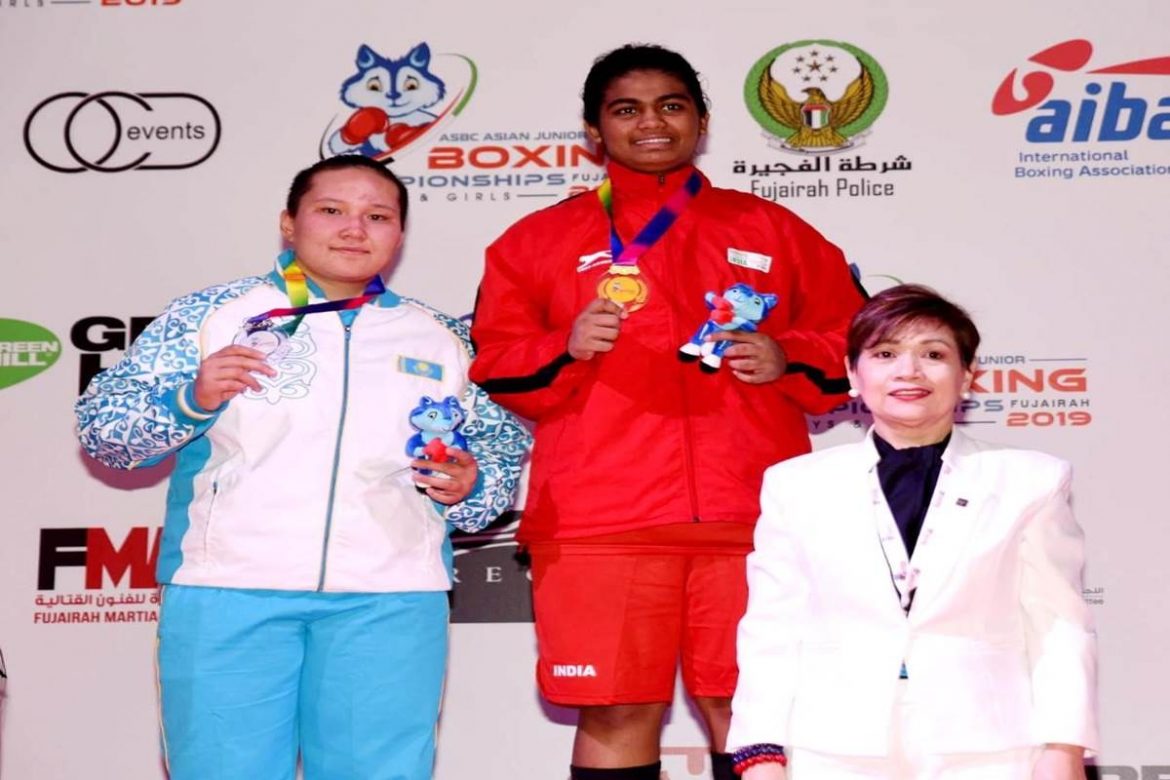
City boxer Alfiya Khan Pathan made the country proud by winning a gold medal in above 80 kg category in at the Asian Junior Championships in Fujairah, UAE on Friday.
Indian boxers clinched total 21 medals — including six gold and nine silver — to end with the best medal haul among 26 competing countries.
Earlier international boxer Alfiya Khan Pathan won the bronze medal for India in the 80+ kg category in the 3rd Nations Cup International Boxing Championship in Vrbas, Serbia.
source: http://www.thelivenagpur.com / The Live Nagpur / Home> Sports / written by TLN Team / October 18th, 2019
Nadeem, who plays for local team Jharkhand, has been a India A regular recently.
File image of Shahbaz Nadeem
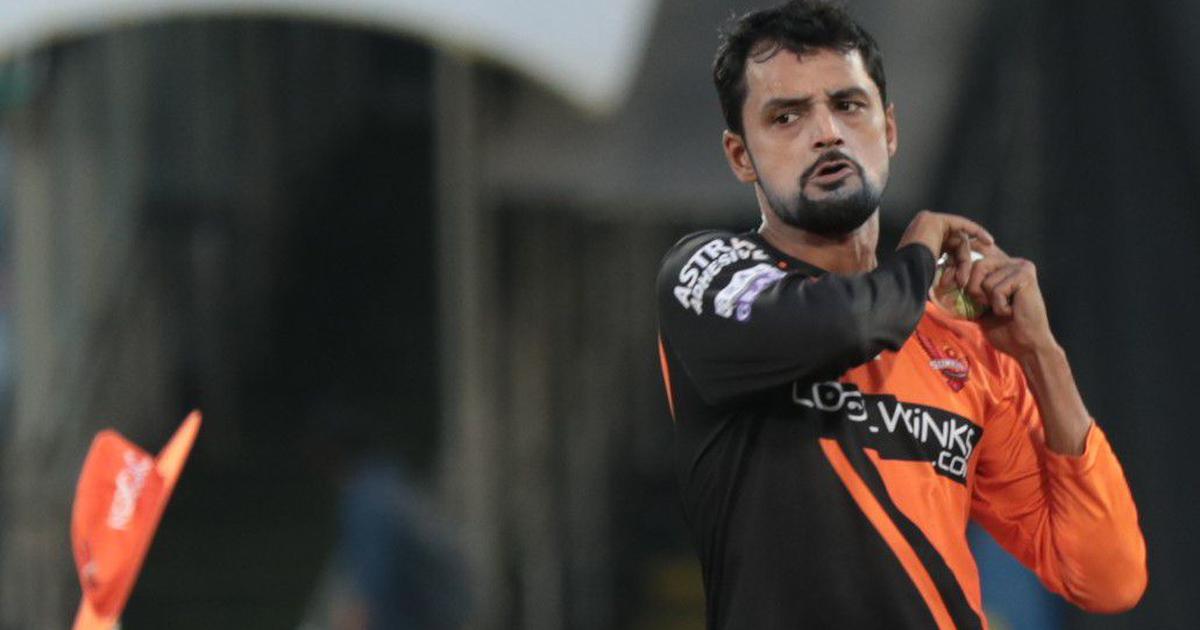
Left-arm spinner Shahbaz Nadeem has been added to India’s Test squad for the third and final match of the series against South Africa, starting in Ranchi on Saturday.
The decision to add Nadeem was made after Kuldeep Yadav complained of shoulder pain on his left hand on Friday, the Board of Control of Cricket in India confirmed on Friday.
Yadav has not played in the series yet, with Ravichandran Ashwin and Ravindra Jadeja being preferred in Vizag and Pune. But with a turning track expected in Ranchi, there were talks of India using a third spinner.
The left-arm wrist-spinner is still part of the squad as confirmed by chief selector MSK Prasad in the statement released by BCCI but it remains to be seen if either Nadeem or Yadav get selected in the XI.
Nadeem, who plays for local team Jharkhand, has been a India A regular recently and has been in action for the state side in Karnataka for the Vijay Hazare Trophy. Jharkhand have not qualified for the quarter-finals in the 50-over tournament. India lead the three-match series 2-0 after convincing wins in Vizag and Pune.
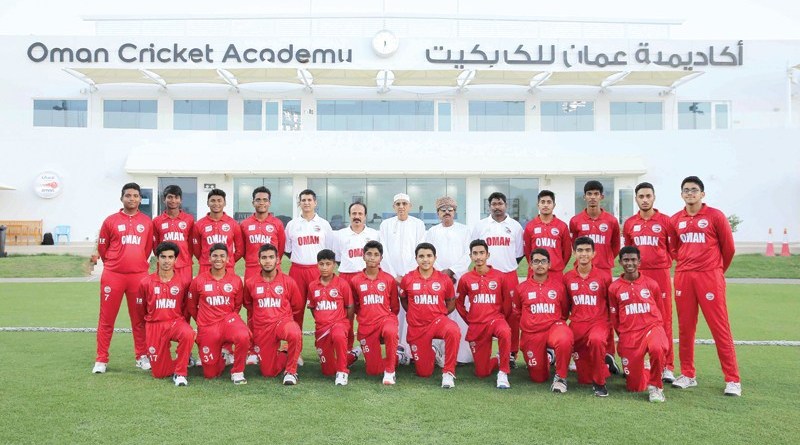
Soon after successfully hosting the Pentangular T20 Series, Oman is now gearing up to hold the Asian Cricket Council’s Under-16 Western Region Championship, starting on October 21 at its picturesque twin grounds in Al Amerat.
Having won the five-nation T20 series at senior level, Oman are now looking to repeat the feat at junior level too but this time the matches will be a 35-over a side affair.
Group A comprises UAE, Saudi Arabia, Iran and Bahrain while Group B consists of Oman, Qatar, Maldives and Kuwait.
With top class indoor and outdoor training and practice facilities, apart from the two wonderful grassy grounds, Oman is now emerging as a busy international cricket venue. Many bilateral and multilateral tournaments are going to be held here in the coming months.
Young Amanpreet Singh Sirah has been appointed captain of Oman team for the tournament and will be assisted by wicketkeeper batsman Shanmugarajan.
The team is being coached by Syed Tariq Hussain who is being assisted by Pervez al Balushi. Packed with plenty of penetrating spinners and all-rounders, Oman is expected to reach the semifinals.
“The boys have been training hard for the tournament and I am quite confident we will do fairly well,” said Oman coach Tariq Hussain.
Two games are scheduled to be held at 9.30 am daily, one each on OC ground 1 and 2.
The first day will see UAE taking on Bahrain and Saudi Arabia facing Iran on October 21. Oman will play their first game on Tuesday, October 22, against Kuwait while Qatar will take on Maldives on the adjacent ground.
The semifinals will be held on Monday, October 28, followed by the final the next day at OC ground 1.
Oman squad:
Amanpreet Singh Sirah (captain), Shanmugarajan (wicketkeeper, vice-captain), Mohammed Nihal Siraj, Yash Verma, Bilal Asim, Arjun Dhiman, Siddh Mehta, Ayman Ayaz, Jayesh Anil, Sanjaya Ravindra, Zayed Ali Khan, Viraj Ashar, Abdullah Iftikhar and Tanuj Sivakumar. Reserves:
Navneeth Krishnan, Aditya Gurumukhi, Qais Khalid al Balushi and Ishan Jabir. Officials:
Sher Mohammed (manager), Syed Tariq Hussain (coach), Parvez al Balushi (assistant coach), Suresh Kumar (physio).
source: http://www.omanobserver.com / Oman Daily Observer / Home / by Shahzad Raza / October 16th, 2019
Fouaad is currently the highest ranked in Group G for Asia Pacific Zone with 34 points on Fernhill Facetime, 30 points on Touchingwood and at present qualifying his third horse, Dajara.
Fouaad Mirza will next compete at the events in Montelibertti ITY CCI3*S (Italy) and Le Pouget FRA CCI4*S (France). – SPECIAL ARRANGEMENT
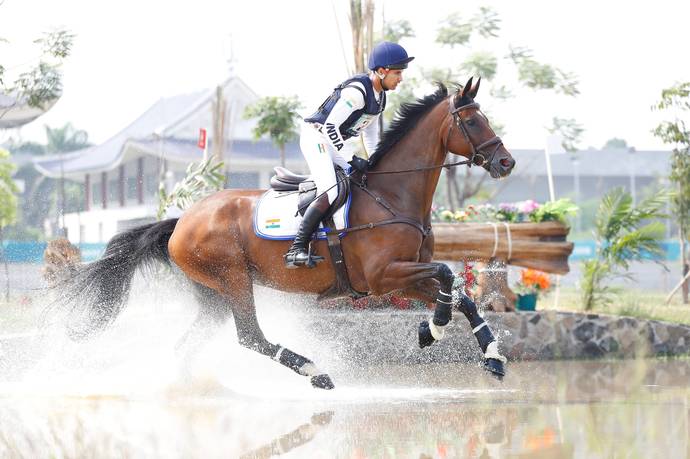
India’s double Asian Games silver medallist Fouaad Mirza bagged the top honours at the CCI3*S, an Olympic qualifying event, held in Strzegom, Poland.
Fouaad is currently the highest ranked individual in Group G for Asia Pacific Zone with 34 points on one horse Fernhill Facetime, 30 points on the second horse Touchingwood and at present qualifying his third horse, Dajara.
The eight-year-old Dajara, procured by the Embassy Group, is a promising German Holsteiner with an excellent track record of wins including a German National Championship, Bundeschampionat.
“I am very excited about our new horse Dajara, which has immense potential for success at the Olympics. Through the event CCI3*S, we were able to level up the horse rider combination to 4* and building up my points to qualify for the Olympics,” Fouaad said on Sunday.
Fouaad started the week with a solid dressage score of 26.8 which placed him second with a very close score to Germany’s Antonia Baumgart, who was one penalty better at 25.8.
This was followed by the showjumping event where Fouaad maintained the second position with a clear round. He finished the deciding cross-country round in four seconds over time, leading him to the gold in the Strezgom CCI3*S in Poland.
Fouaad has completed Renswoude NED CCI 4*S placed 11th, Jardy FRA CCI4*S, Strzegom POL CCI4*S placed 15th, Sopot POL CCI4*S placed seventh so far for Olympic Qualifying Events.
He will next compete at the events in Montelibertti ITY CCI3*S (Italy) and Le Pouget FRA CCI4*S (France).
source: http://www.sportstar.thehindu.com / SportStar / Home> More Sports / by PTI / Bengaluru – October 14th, 2019
Syed Mohammad Hadi was nicknamed Rainbow for his prowess in cricket, tennis, field hockey, football, table-tennis, chess, and polo.
Syed Mohammad Hadi scored 132 not out in his team’s score of 227, becoming the first ever centurion in Ranji Trophy cricket. Photo courtesy: Wikimedia Commons.
One of the main issues under discussion during the July 1934 meeting of BCCI, held in Bombay, was a detailed discussion regarding the introduction of a nation-wide First-Class cricket competition, where teams representing the different local cricket associations of the nation would participate to ultimately determine the national champion. It was founded as “The Cricket Championship of India”. The tournament kicked off in 1934-35. The handsome trophy was donated by His Highness Sir Bhupinder Singh, Maharaja of Patiala, in memory of Ranji to cricket lovers all over the world.
As all students of Indian First-Class cricket history are aware, the very first Ranji Trophy match of all, between Madras and Mysore at Madras on November 4, 1934 turned out to be a bit of a letdown, the whole match being completed in one day. It remains the first of only 2 First-Class matches played in India to be completed in a day till date (the second being Saurashtra vs Baroda at Rajkot on December 5, 1959).
This match will forever be remembered for the wonderful bowling performance that resulted in a match of such short duration, 6 for 19 (out of total of 48) and 5 for 16 (out of 59) by the doyen of Madras cricket at the time, the great left-handed all-rounder, AG Ram Singh, patriarch of the first family of contemporary Madras cricket.
Perhaps a little overshadowed by AG Ram Singh was a right arm medium-pace and off-break bowler from the Mysore team, appropriately named Mysore Vijayasarathi, who picked up 6 for 23 in the only Madras innings of 130. Vijayasarathi would later cause a flutter among lovers of cricket trivia by umpiring a Ranji Trophy match between Mysore and Andhra in Dec/1960 at Bangalore along with his son, MV Nagendra.
The sad but undeniable fact was that there were no outstanding batting performances in the first two Ranji Trophy matches played.
The third Ranji Trophy match of the inaugural season began on the Friday, November 23, at Secunderabad. Hosts Hyderabad, led by Syed Mohamad Hussain, were taking on the Madras team, led by M Venkataramanjulu.
The hosts won the toss and decided to take strike. They reached a competitive score of 256 in their 1st innings, captain SM Hussain top-scoring with 80 and F Toorkey, opening the innings, making 72 runs. As if it were pre-ordained, Ram Singh captured 5 for 88. The Madras 1st innings finished at 301, with only Ram Singh (74) and Cotar Ramaswami (61) reaching double figures.
The Hyderabad 2nd innings was in disarray when the 3rd wicket fell at the team score of 12. Syed Mohammad Hadi then arrived at the crease to take strike. He scored 132 not out in his team’s score of 227, becoming the first ever centurion in Ranji Trophy cricket. This match was his Ranji Trophy debut match as well, and this century his maiden First-Class century.
In a surprising turn of events, the visitors were dismissed for 169 in their 2nd innings. That man Ram Singh (70) scored another half-century and MJ Gopalan made 58. The man who wrecked the Madras 2nd innings was one Tata Rao (8 for 73), and Hyderabad won by 13 runs.
Born August 12, 1899 in India, Hadi was a right-hand batsman who has no record of ever bowling in this format of cricket. In a span of 1930-31 to 1940-41, SM Hadi played 24 First-Class matches aggregating 1,043 runs with a highest of 132 not out (as mentioned above) and an average of 32.59. He was to later score another century and 3 fifties, and to take 9 catches.
Hadi’s profile informs us that his father Captain Syed Mohammed, erstwhile officer in army of Hyderabad state, had passed away when Hadi was just about two years of age. Hadi’s subsequent upbringing was through the support and supervision of the family of Sir Asman Jah, former Prime Minister in the court of the Nizam of Hyderabad.
He was brought up alongside the son of Sir Jah, Nawab Moin-ud-Dowlah, after whom the famous cricket tournament was to be named and who would become a famous patron of the sports of the region. Hadi had the opportunity of learning horse riding as a youngster and was sufficiently good at soccer to play for Nizam College. In view of the boy’s obvious aptitude for a number of sports, the family of Sir Jah decided to send him over to England to continue his studies.
In the newsletter VARSITY, dated June 12, 2016 from Cambridge is an article by Matt Worth, in which he comments, “The wardrobe in his room at Peterhouse must have been bursting with light blue jackets, as he shone at polo, tennis, soccer, field hockey, cricket and table tennis. A particularly fine tennis player, it is at the racket game that his sporting career perhaps hit its greatest heights, as he played at Wimbledon five times, reaching the doubles quarter final in 1926. He also represented India at the 1924 summer Olympics and in the Davis Cups of 1925 and 1926. The run of representative appearances for his country must have more than made up for his frustration at being denied the Light Blues’ tennis captaincy on account of his nationality.” He had an MA from Cambridge and a Masters from the University of Pennsylvania.
Hadi made his First-Class debut for Hyderabad against Maharaj Kumar of Vizianagram’s XI in the Moin-ud-Dowlah Gold Cup semi-final of 1930-31, played at Secunderabad in 1930-31, under the leadership of wicketkeeper SM Hussain, who was also keeping wickets.
He was well past the age of 30 at that time, and scored 17 and 42 not out against a team captained by Jack Hobbs, and for whom Herbert Sutcliffe scored 165 in the side’s only innings of 329. Hyderabad managed totals of 265 and 194 in a drawn match that was awarded to the visiting team on the basis of their 1st-innings lead.
It may be mentioned here that Hyderabad batted against the bowling of the brothers CK and Cs Nayudu and Ghulam Mohammad, among others. An interesting sidelight of this match was the fact that while Naoomal Jaoomal kept wickets in the home team’s first innings, he not only bowled but took 2 for 7 from his 3 overs while one P Shankerdas, who was not in the playing eleven for the visiting team, was allowed to keep wickets as a substitute.
In the Ranji Trophy clash with Madras at Chepauk in December 1935, Hadi, captaining the Hyderabad team, scored 85 and 0 in a match that Madras won by 6 wickets, Ram Singh being the undisputed hero of the match, scoring 121 and 57, both not out, and taking 2 for 77 and 6 for 32.
It was at Chepauk in February 1936 that India took on an Australian team in an “unofficial Test”. The home team was led by Wazir Ali and included luminaries like Kartick Bose, Mushtaq Ali, Lala Amarnath, Amar Singh, Ram Singh, Hadi and Mohammad Nissar. The Australian team was led by the ageing Jack Ryder and included, among others, ‘Stork’ Hendry, ‘Hammy’ Love (though he did not keep wickets in this match), and the one and only ‘Governor-General’ — Charlie Macartney.
India batted first and put up 189, thanks to 45 by Amar Singh and 43 by Mushtaq Ali. Macartney took 3 for 52. The Australian 1st innings ended at 162, with a good 48 from Fred Mair. Nissar (5 for 61) and Amar Singh (5 for 54) shared the wickets.
India managed only 113 in their 2nd knock, the top-scorer being Hadi with 19 not out (he had also made 19 not out in the 1st innings). Once again, it was Macartney among the wickets with 6 for 41.
The Australian 2nd innings was an even feebler effort — 107, with the only worthwhile score being 41 by captain Jack Ryder. Nissar (6 for 36) and Amar Singh (2 for 54) ensured an Indian victory by 33 runs. It must be said, however, that for the visitors, Hendry, Ryder, Love, wicketkeeper John Ellis, Macartney, Joe Davis, and Harry Alexander were past their prime and playing their last First-Class match. For the home team, Wazir Ali completed 1,000 First-Class runs for the season, and Hadi completed 500 career First-Class runs.
It was against the old foes, Madras again, that Hadi scored his other First-Class century, in the Ranji Trophy match at Secunderabad in December 1939, with a score of 106 (his 100 coming in 120 minutes) in a total of 443. Hyderabad batted only once in a match and won by an innings and 2 runs. Ram Singh, however, had still not finished with them, capturing 5 for 136 and scoring a solid 44 in the Madras 1st innings of 262. When he had scored 81, in this match, Hadi completed 1,000 First-Class runs.
His final First-Class match, again against Madras, was at Chepauk in December 1940. As captain of Hyderabad, his contributions were 2 (out of 98) and 16 (out of 132). Ram Singh, perennial nemesis of the team, turned in another stellar performance with 27 and 53, and picked up 6 for 30 and 4 for 26, as Madras won by 254 runs.
Retirement from his active playing days did not diminish his interest in sports. Along with his step-brother, Col. Ali Raza and with Nawab Mahmood Yar Jung, SA Rahim and Ahmed Mohiuddin, Hadi founded the Hyderabad Cricket Association and Hyderabad Football Association in 1934, with himself as the first Secretary.
He became the Director of Physical Education in Hyderabad and later, Joint Secretary of Education of the Indian Government. He was National Commissioner of Boy Scouts of India and, when the All-India National Council of Sports was founded in 1959, he was the first Secretary. The runners-up trophy of the Mon-ud-Dowlah Gold Cup tournament is now called the SM Hadi Memorial Trophy.
This multidisciplinary sportsman died in his native Hyderabad on July 14, 1971 of lung cancer. For his extraordinary skill at the seven sports of cricket, tennis, field hockey, football, table-tennis, chess, and polo, SM Hadi is fondly remembered by all Indian lovers of sport as ‘Rainbow’ Hadi.
(Pradip Dhole is a retired medical doctor with a life-long interest in cricket history and statistics)
source: http://www.cricketcountry.com / Cricket Country / Home> English> Features> Moments in History / by Pradip Dhole / June 16th, 2016
Baqa Jilani was the first bowler to take a hat-trick in Ranji Trophy.
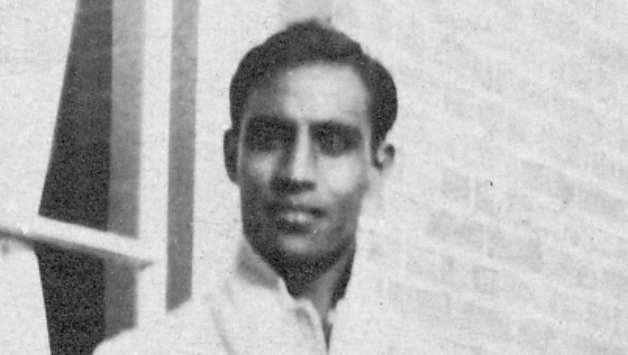
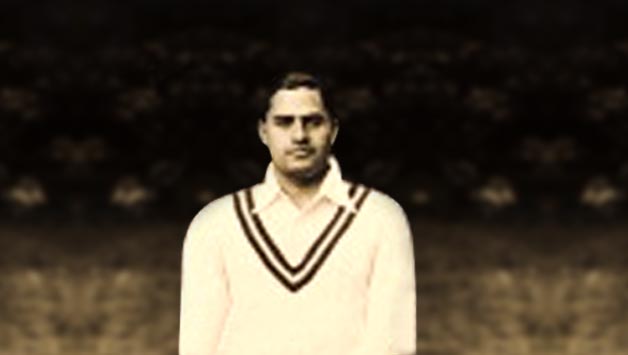
Baqa Jalani. Photo Courtesy: Post Card World
Baqa Jilani, born July 20, 1911, was the first bowler to take a hat-trick in Ranji Trophy. Abhishek Mukherjee looks at a man controversial in life and death.
Had Mohammad Baqa Khan Jilani been a more renowned person, they would probably have made a movie on him. In fact, though he did not live to see an age of 30, he had a life too eventful to ignore, both on and off the field. He played in an era when India were in its nascent stage of Test cricket, and could have had a significant career had he not been plagued by numerous physical ailments.
Baqa Jilani was a decent batsman with 928 runs at 18.56 with a hundred from 31 First-Class matches. For a man of 6 feet it was surprising that he bowled leg-breaks and medium-paced leg-cutters, but he captured 83 wickets at 19.93 with 3 five-fors and a ten-for; if we go by the usual definition of a good all-rounder (the closer the batting and bowling averages are to each other, the better the all-rounder he is) then his numbers were certainly not poor.
“There was no doubting his class,” wrote David Frith. Charlie Macartney hailed him a “champion”. Despite that, Baqa Jilani is known more for his off-the-field activities than his class.
He also played a solitary Test with not much of an impact, but more of that later.
Early days
Born in Jullundur, Baqa Jilani made his First-Class debut for Northern India in 1934-35. It was as spectacular a debut as one can think of: opening bowling he routed Sind for 114 and 155 with figures of 7 for 37 (his best figures) and 5 for 50, making it his only First-Class ten-wicket haul. Playing against Parsees in the Bombay Quadrangular next month he returned figures of 4 for 30 and 3 for 55, leading Muslims an innings victory.
Then came the big match, against Southern Punjab: Northern India scored 142 before Baqa Jilani’s 4 for 46 gave them an 11-run lead. Then, when Southern Punjab were set a target of a mere 118, he took charge: Dev Puri and Amir Elahi contributed in bowling out the opposition (that had five cricketers who played Tests at some point of time or the other) for 22, which remained the lowest Ranji Trophy score till 2010-11.
Baqa Jilani, however, stole the show with figures of 4.1-1-7-5. In the process he also registered the first hat-trick in Ranji Trophy, dismissing Joginder Singh, Yuvraj of Patiala, and Lall Singh.
The next season started on a high note as well. Baqa Jilani claimed 2 for 45 and 4 for 16 in the first “Test” against the touring Australians at Lahore. There was also a 4 for 32 against Delhi at Kotla, and a consecutive second season with the ball earned Baqa Jilani a spot on the 1936 tour of England.
Baqa Jilani’s bowling was never the same. His first two seasons, which included 16 matches, had resulted in 66 wickets at 15.85. The next 15 yielded a mere 17 at 35.82.
The controversial Test debut
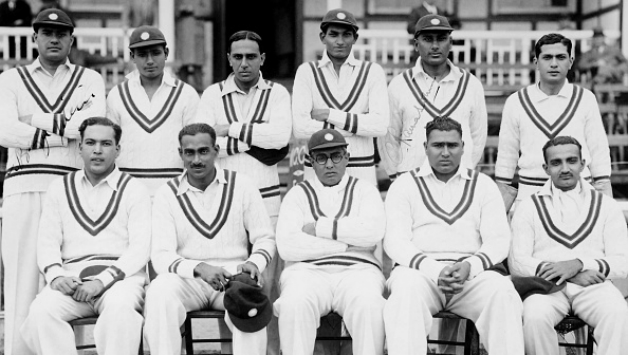
The murk of the 1936 tour has been discussed at lengths by every student of Indian cricket. Once Maharajkumar of Vizianagram had his way to national leadership, he had his way in every possible matter throughout the Test series. He led India in all three Tests and scored 33, but his antics had a deeper impact in dampening the spirit of the squad.
Sending Lala Amarnath back home was enough to set any team back, but Vizzy went a bit further: he had created a rift in the dressing-room, splitting the team into two sections. The majority of the team backed CK Nayudu as the obvious leader, much to Vizzy’s dislike: he wanted his way, and slowly created a band of loyal supporters.
Mushtaq Ali later wrote in Cricket Delightful: “It may not be possible today to apportion the respective parts played by the captain and the manager, but the job was successfully done with Nissar, Dilawar Hussain, Baqa Jilani Khan and PE Palia effectively estranged from CK Nayudu. Costly and lucrative presents were lavishly distributed to favourites by the Maharajkumar and this created further rifts in the team.”
One of these was Mohammad Nissar : when Vizzy was being knighted, news had gone out that Nayudu was leading Indians to a victory against Lancashire at Liverpool. Vizzy cabled Nissar to bowl full-tosses; the moment Nayudu realised what was going on, he took Nissar off, and won the match for the tourists himself in a partnership with Jahangir Khan.
This did not go very well with Vizzy. He took things a bit too far. As Mihir Bose wrote in A History of Indian Cricket, “Those in the Vizzy party received all sorts of favours including a trip to Paris and they could curry favour with Vizzy by insulting Nayudu.”
On the morning of the Test, Baqa Jilani obliged. Ramachandra Guha later in Wickets in the East: “Shute was replaced by Baqa Jilani [a vastly inferior cricketer] for the Oval Test of 1936 only because Jilani had fulfilled his captain Vizzy’s desire by abusing CK Nayudu at the breakfast table.”
Mushtaq was in agreement: “It was widely believed that Baqa Jilani Khan earned his place in the third Test by fulfilling the condition of insulting CK Nayudu in the presence of other players inside the dressing room. In fact, when the team was announced Shute Banerjee had been shown among the first eleven players with Baqa Jilani specifically mentioned as the 12th man.”
Bose’s version was the same: “Baqa Jilani did that [insulted CK Nayudu] before the Oval Test: coming down to breakfast one day he insulted Nayudu and was rewarded with his first Test cap.”
Boria Majumdar’s version in Lost Histories of Indian Cricket: Battles Off the Pitch is slightly different, but he is in agreement with Baqa Jilani’s action: “With Vizzy forever keen to humiliate Nayudu, he had even ordered Baqa Jilani to abuse Nayudu at the breakfast table promising him his maiden Test cap if he carried out the orders.”
Baqa Jilani played at The Oval — a Test that started, somewhat ironically, on August 15, exactly 11 years before India’s Independence. He conceded 55 runs from 15 overs, being at the receiving end of a majestic 217 from Wally Hammond; and as India plummeted to an innings defeat and a 0-2 loss in the series, Baqa Jilani scored four not out and 12. He never played another Test.
It was not a great tour for him either. He scored the only hundred of his career against Leicestershire, scoring 113 and taking the score from 233 for 7 to 426, and added 24* and 2 wickets for good measure. Against Gloucestershire he scored 59 not out and returned match figures of 5 for 78, but he failed in the other ten matches he played.
The final few matches and deteriorating health
Baqa Jilani career lasted for three more matches after his return. He missed the winter of 1936-37, but did a decent job the next season with 4 for 33 against United Provinces and 74 against Southern Punjab, both at Patiala. By this time illness had already been creeping in.
In Personalities of the 1936 Tour of England, Cota (or Cotah, or Cotar) Ramaswami had written of Baqa Jilani’s strange behaviour: “Nobody could say when he was normal and when he got into uncontrollable temper. He was constantly undergoing treatment during the tour.” He suffered from high blood pressure, insomnia, and somnambulism. He was also an epileptic.
In Silence of the Heart: Cricket Suicides David Frith cited more incidents: “During the Indians’ final match (of the 1936 tour), against Indian Gymkhana at Osterley, Jilani viciously hurled the ball at his friend Gopalan and displayed temper when moved from slip to cover [Ramaswami was captain for this game]. Baqa Jilani sat down in the field, kicked the ball towards the boundary instead of fielding it and deliberately threw wide of the bowler.”
Ramaswami did not react. As he wrote in Ramblings of a Games Addict, “knowing fully well that he was slightly off his head, I ignored his presence in the field.”.
He came back to play a single match — his last — in 1938-39 against Hindus in the final of the Lahore tournament but did not do much of note.
Personal life and controversy regarding death
Baqa Jilani was the brother-in-law of Jahangir Khan, and was an Extra Assistant Commissioner in Jullundur. In 1941 he suffered an epileptic fit, fell down from the balcony of his residence, and met with an instant death eighteen days before his 30th birthday. He was the second Indian Test cricketer to die after Amar Singh (who had passed away on May 21, 1940); he also remains the second-youngest Indian Test cricketer to die after Amar Singh (29 years 169 days).
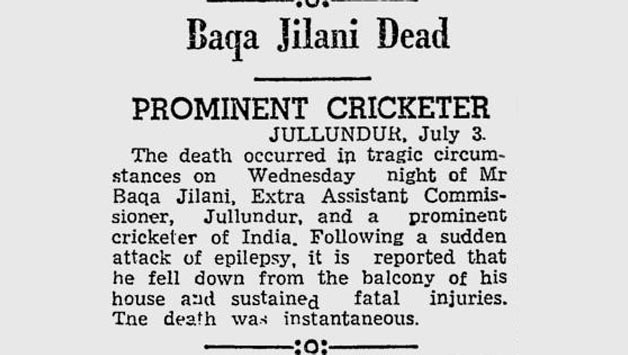
The report of Baqa Jilani’s death was published in Indian Express as the same. Strangely, there were rumours that he had hanged himself out of depression.
Baqa Jalani died tragically. Photo Courtesy: Indian Express
It was not until much later that the truth came out (though Indian Express archives were always available). As Frith wrote, “The great Vijay Merchant told statistician Anandji Dossa, who told young writer Mudar Patherya, who told the author, that Jilani had suffered an epileptic fit, lost his balance on the veranda of his house in Jullundur and fallen to his death.”
(Abhishek Mukherjee is the Deputy Editor and Cricket Historian at CricketCountry. He blogs here and can be followed on Twitter here .)