Category Archives: Sports

2018 JK Tyre Hornbill Rally : Gagan Sethi and Sabatullah Khan win The Open Category

xxxxxxx

Gagan Sethi and Sabatullah Khan

Defending champion Gagan Sethi lived up to his top billing and won the 2018 JK Tyre Hornbill Motor Rally alongside co-driver Sabatullah Khan. The duo completed the 55 km TSD rally with a penalty of 29 seconds to emerge victorious.

Following them in the Open category, at some distance, were other national level competitors. The second place was taken by Bijo Awom and Chandrasekhar (1:44 minutes penalty), while Tali Akang and Nirav Mehta finished third with a penalty of 2:05 minutes.

The event was being held in the backdrop of the Hornbill Festival. The event was flagged off from IG Stadium, following which participants traversed dirt roads, broken tarmac and winding hilly roads around Kohima. The drivers crossed seven time controls before making it to the finish in Kisama village.

Sethi contended with a last minute car change and navigators, including Khan, faced a bigger challenge with the ban on high level odometers. They used basic mobile-based odo’s, which were trickier. The presence of other top competitors made him work harder still for this win.

“It was a difficult rally and I was facing a lot of problems with the car. But my navigator was brilliant and he helped us cruise past the field to claim the title,” Gagan said after the rally.

“Even though we were driving together for the first time, we hit it off instantly and our co-ordination was really very great,” he added.

In the North East category of the event, Alex Suohu and Akhrielie Vizo took the first place with a penalty of 9:44 minutes. Thezakkielie Zuyie (co-driver Moamarimsong) with a total penalty of 10.5 mins finished second while Anguzo Sekhose and Mengu Yhome (12:29 mins) claimed third.

The chief minister of Nagaland Neiphiu Riphu commented, “I am really thankful to JK Tyre for their support in promoting motorsports in the country. The CMD of the company Dr. Raghupati Singhania reposed his faith in us and we shall walk together to make Nagaland the new motorsports hub of the country.” He also called the event a grand success and vowed to make it even bigger in the years to come.

A number of special category prizes were also given out. Kevin Puro/Neihu Dzuvichu were facilitated for having the best decorated car. The Couple Team award went to Atoka Awomi and Mercy Mezhatsu. Other winners were the “most disciplined team” of Mikrio Kyina/Arun Kyina and the Nagaland Adventure Club was adjudged the “best club”.

source: http://www.overdrive.in / OverDrive / Home> News / by Tuhin Guha / December 04th, 2018

Bareilly’s ‘Bolt’ sprints past odds but official apathy still a hurdle

Bareilly, UTTAR PRADESH :

Deaf and mute by birth, Mehtab Hussain, in his 30s, is an athlete of international repute and has won a number of national and international tournaments, including Asia Pacific Deaf Games.

Mehtab Hussain, a daily wager at a meat factory in Bareilly, is locally famous as ‘Bolt’— the last name of Jamaican sprinter and nine-time Olympic gold medallist Usain Bolt – for his athletic prowess.

Deaf and mute by birth, Hussain, in his 30s, is an athlete of international repute and has won a number of national and international tournaments, including Asia Pacific Deaf Games.

However, his sporting talent and achievements have failed to fetch him a job and the fame he deserves, thanks to official apathy. Despite overcoming his physical disability, financial constraints have forced him work at a local meat factory to support his family in Chak Mehmood area of Bareilly.

Gritty to the core, Hussain still wakes up at 4am and runs at least 10km a day to keep himself fit as he never knows when his financial condition permits him to participate in sporting events.

Hussain’s mother Ashraf Jahan says, “As my daughter was already suffering from hearing and speech impairment, we did not take long to understand that Hussain was also suffering from the same problem. He was only three then.”

“His behaviour was very much like his sister. He hardly responded to any sound,” she recalls. Hussain is the youngest among three brothers and a sister. Soon after Hussain’s birth, his father Latafat Hussain, a teacher at a primary school, passed away.

However, Ashraf Jahan didn’t lose hope and got Hussain admitted to a school for differently-abled students in Bareilly where he showed much interest in athletics.

“During his school days, he never hired a rickshaw or public transport to reach his school which was 7 kms away. He always preferred to go by foot. Once he bought me a present from the money I gave him for conveyance,” she recalls.

After winning innumerable interschool athletic championships, he participated in state-level championship in Faizabad and stood first.

“I couldn’t believe that I had overpowered all the other athletes there,” says Hussain, using sign language.Winning the championship fetched him entry to national-level championship and he became a member of the All-India Sports Council for Deaf (AISCD), the apex body for sports for the deaf.

“I participated in national level athletic meet in West Bengal in 1995 and won the 400-metre relay. I was on cloud nine. This was what I wanted,” says Hussain. The period from 1995-2000 proved to be the golden one for Hussain as during this time he participated in about 22 state and 19 national athletic meets.

In 2000, he was informed by AISCD that he has been selected in the 6th Asia Pacific for Deaf, to be held in Taiwan.

“I had to sell a piece of land for Rs 50,000 to bear the expenses. Representatives of the council assured us that the money we spent would be reimbursed but they did not keep their word,” Ashraf Jahan says.

Hussain, who was the only player from the state to participate in the event, bagged third position in 5000-metre race. Later, Hussain received several calls from the council informing him about his entry in several international championships but his financial condition did not permit him.

Showing letters from the council, Hussain says he got calls from Australia, Italy, Kuwait, Canada and Turkey but could not go there for the want of money.

“I don’t have any problem in playing providing I get help from the government, which seems to be a distant dream,” says Hussain. In the hope of playing for his state and country again, Hussain still continues to practice daily before leaving for his 12-hour shift in the meat factory.

source: http://www.hindustantimes.com / Hindustan Times / Home> Lucknow / by Hindustan Times,Lucknow / November 30th, 2018

62nd National Shotgun championship: Asab bags gold

Meerut, UTTAR PRADESH :

Mohd. Asab and Ahvar Rizvi pipped the reigning World champion Ankur Mittal to win the double trap gold and silver in the 62nd National Shotgun championship on Sunday.

Asab shot 134 to beat Ahvar by one point, while Ankur shot 128, following scores of 23 and 24 in the second and fifth rounds. No finals were held as the event has been taken off the Olympics.

The results: Double trap: Men: 1. Mohd. Asab 134; 2. Ahvar Rizvi 133; 3. Ankur Mittal 129.

Junior men: 1. Ahvar Rizvi 133; 2. Shardul Vihan 120; 3. Vinay Pratap Singh 118.

Women: 1. Prabsukhman Kaur 84; 2. Shalini Yashwant 75; 3. Anam Basit 73.

Junior women: 1. Pravjot Kaur Panesar 66; 2. Anushka Singh Bhati 64; 3. Hitasha 60.

Veterans: 1. Yadavendra Singh 91; 2. DV Seetharama Rao 88; 3. Mohd. Yaqoob 78.

source: http://www.thehindu.com / The Hindu / Home> Sport> Other Sports / by Sports Bureau / Jaipur, November 18th, 2018

A tale of gutsy women boxers

Kolkata, WEST BENGAL :

MaryKomMPOs19nov2018

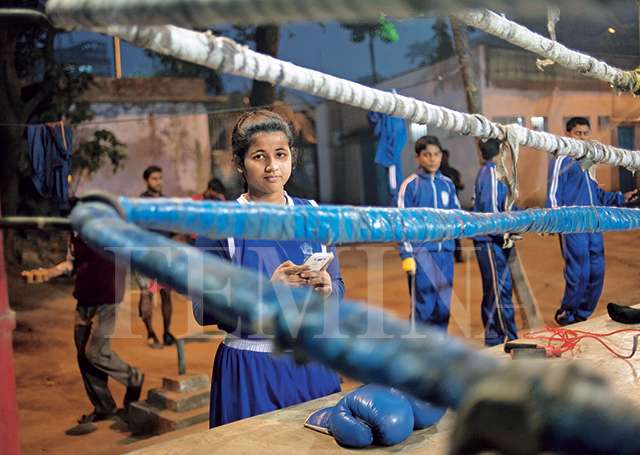
It’s a chilly winter evening. A group of young women, mostly teenagers, is getting ready to enter a makeshift boxing ring at the Kidderpore School of Physical Culture, located in a non-descript courtyard in Kolkata’s Ekbalpore. Before putting on their boxing gloves, they opted for a rigorous warm-up session. There are around 17 young Muslim women boxers enrolled at the Kidderpore school. They all train under their coach, Cheena Bhai (aka Mehrajuddin Ahmed). Cheena Bhai’s students mainly come from underprivileged backgrounds, fighting stereotypes and social conventions. Ask them, who their role model is and they would sing in unison, Mary Kom.  They say Mary is truly a living legend. This year, Mary had once again silenced her critics by winning a gold in women’s 45-48 kg category at the Commonwealth Games in Gold Coast, Australia. Last November, when Mary Kom claimed her fifth Asian Championships gold in Vietnam, it was hailed as one of the greatest comebacks in Indian sports. The Padma Shri and Padma Bhushan awardee was also nominated to the Rajya Sabha. The celebrated pugilist, who had to bear the brunt of racism during her journey to the top, has time and again proved that she is made of no mean mettle. A native of Manipur, Mary rose from extreme poverty to become a five-time world amateur boxing champion. Motherhood too did not deter her from scaling heights of success in a demanding sport.

The eldest of four siblings, Mary, was born to farm labourer parents. She started working at the fields from a young age to fend for her big family. In 1998, when Manipuri boxer Dingko Singh won a Gold at the Asian Games, an inspired Mary decided to take up boxing and travelled to Imphal to request coach, M. Narjit Singh at Manipur State Boxing to train her. In 2000, she won the Best Boxer Award at the First State Level Invitation at the women’s boxing championship in Manipur and there was no looking back. She went on to win National Championships five times from 2000 to 2005. Mary won the AIBA (International Boxing Association) world boxing championship thrice in 2002, 2005 and 2006, and came second in 2001.
SimiParveen01Nov192018

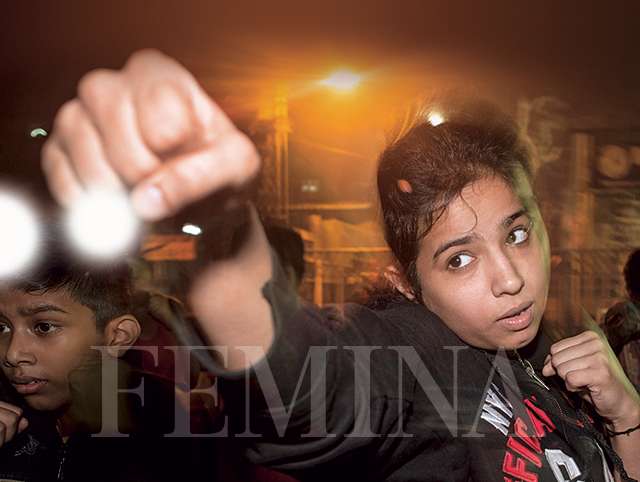
Like her peers, Simi Parveen, 19, worships Mary Kom as well. Slim and attractive, Simi feels more at home in track pants, shorts and boxing gloves. The soft-spoken arts student, who is the youngest of eight siblings living with their parents in Kolkata’s Ekbalpore area, is an up-and-coming boxer who loves the power and the punches the game offers. She is loath to call herself a ‘burqa boxer’ because she says there are no constraints on her boxing career even as she belongs to a fairly conservative family. Her parents support her in every possible way. She represented West Bengal and won a bronze medal at a women’s boxing national held in Patna in 2012. But her career hit a hurdle, thanks to the suspension of the Indian Boxing Federation by AIBA (International Boxing Association) in 2012 and subsequent internecine squabbles in the country’s boxing bodies. No boxing national was being held in the next few years following suspension. Simi is practising hard so that she can play more and more nationals in future. Needless to say, she hopes to become as big as her favourite boxer, Mary Kom, some day and make her family as well as her country proud of her.
SimiParveen02Nov192018

“Women are ideal for the game of boxing – they have the patience and killer instinct,” says Asit Banerjee, director of Competition Boxing 35th National Games, Indian Olympic Association. He says that the Sports Authority of India is very keen on maintaining domestic boxing competitions and related activities. Banerjee says that women boxing started in India way back in 2000. As per an unofficial estimate, there are about 150 women boxers, hailing from all communities, in Bengal. Statistics regarding Muslim women boxers are hard to come by. “In the late 90s, there were a couple of Muslim women boxers in my club, but now more and more girls are coming forward,” says Mehrajuddin, adding that they have to overcome a lot of hurdles from their relatives and parents to learn the game

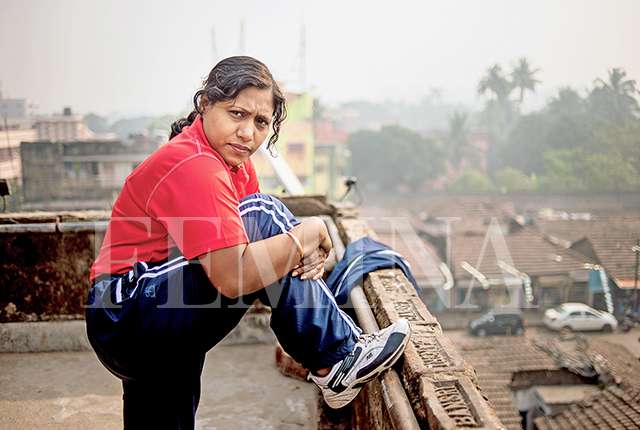
Razia Shabnam, 37
RaziaShabnamMPOs19nov2018

It’s a dingy lane that leads to boxer Razia Shabnam’s house in Kolkata’s Ekbalpore. Shiny, green festoons welcome you into the narrow path. If you ask bystanders about the exact location of Shabnam’s house, they will, in all probability, draw a blank. But ask them about referee/boxer Shabnam’s coordinates and they will immediately point to a rundown grey-black threestoreyed building right at the T-junction of the malodorous lane. Shabnam lives with her husband, a fitness expert who sells mobile phones, and her two sons, aged eight and two.

Shabnam, who started learning boxing in 1997 when she was just a first-year arts student at a Calcutta University college, is now a coach, handling local and national teams, and a referee, supervising matches at the state and national level. She has even refereed matches that have featured Mary Kom. She has great admiration for Mary, whom she has seen grow as a boxer from her early days. But Shabnam was clear about her mission in life — she wanted to be a coach who could train men and women to fetch gold medals for India in international meets. Shabnam was the first Muslim woman from her neighbourhood to become a graduate and then a boxer. “There was hardly any woman boxer, from any community for that matter, from Bengal in those days,” recalls 37-year-old Shabnam, who learnt boxing in local clubs in Ekbalpore and Rashbehari Avenue. “I was good in sports and used to watch my brother learn boxing. I was encouraged to join the sport by Asit da (Banerjee).” Although her father supported her decision, her mother had reservations about boxing becoming a hindrance to marriage. After three years of rigorous training, when she finally became a certified coach, she had to put up with “jealous” male boxing coaches. “I had just three years of experience and how could I become a coach when most of my male colleagues were mere players?” says Shabnam. “So they heckled me in every possible way.” But she was unfazed.

In 2003, she coached a team from Bengal that participated in the National Games held in Hyderabad. “I was just 48 kg. Most of my team members were men and older than me. But I had no problem making them listen to me,” laughs Shabnam. She stresses that more than her community, it’s the gender discrimination prevalent in society and sports that is an obstacle to Muslim women boxers. But the situation is changing. “Women in north India get more financial support from their states — our state lacks infrastructure for women boxers.” But the situation is changing as more and more women boxers are joining the sports. “Women in North India have a bigger advantage as they get more financial support from their states – our state lacks infrastructure for women boxers,” says Shabnam, adding that many of her peers have quit boxing because of paucity of funding and social pressure. Shabnam is bent on continuing her mission. She trains young people through NGOs as well. “I do my best to convince parents to let their daughters join boxing as it’s the safest sport for women,” says Shabnam.

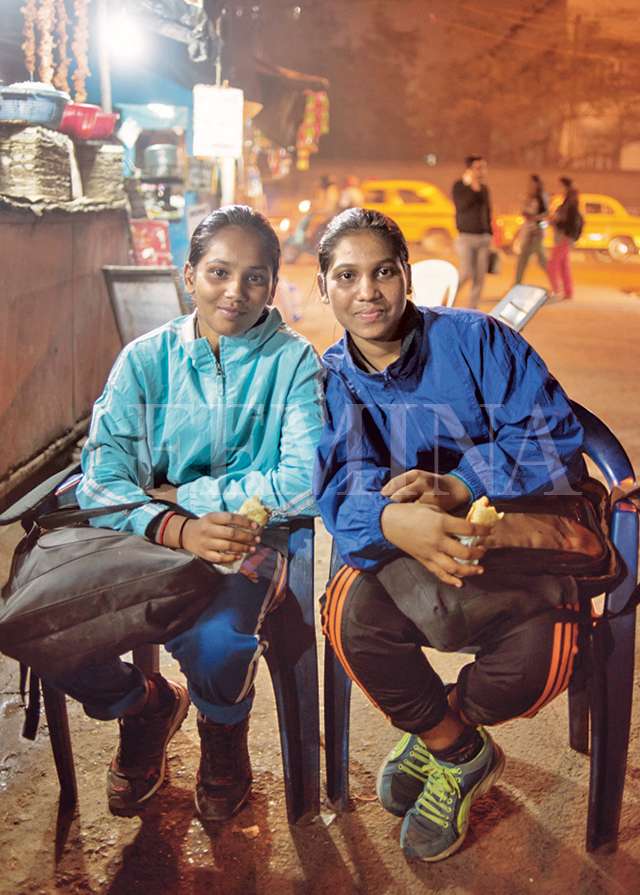
Ajmera, 19, and Kashmera Khatun, 16
AjmeranKashmeraMPOs19nov2018

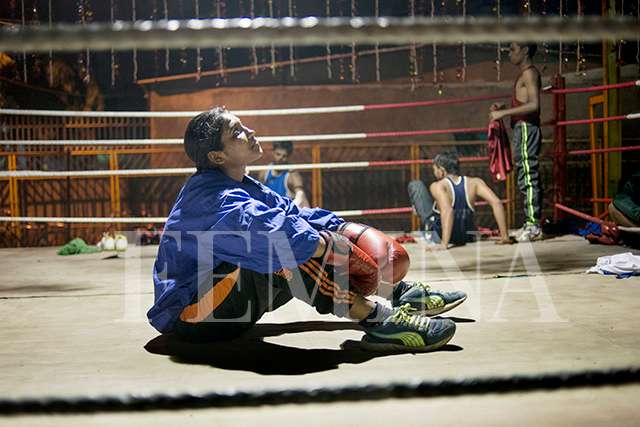
You can call boxers Ajmera, 19, and her younger sister, Kashmera, 16, Venus and Serena Williams of their neighbourhood in Canning – their sporting prowess is well known in the area. They want to participate in the Olympics some day. Of course, it has never been easy for them. They have to overcome insurmountable odds to make their boxing dreams come true. Both sisters commute for about two hours every day to reach their training club in Kidderpore. “We walk from our home to the nearest railway station and then it takes one-and-a-half hours to reach Kolkata. It’s quite an ordeal for us,” says Ajmera, who has won five golds at state and national levels so far. But this is nothing compared to the odds they have to fight at home. “Our aunt is strictly against us taking up boxing as a career. She and our other relatives object to our wearing shorts in the boxing arena saying that Muslim girls shouldn’t do this,” says Kashmera. Things came to such a pass that Ajmera had to report mental torture by her aunt to police. Even, they add, men in their neighbourhood taunt them for being boxers.
KashmeraKhatun19nov2018

“But we make it amply clear to them that they better not mess with us!” says Kashmera. Their father is a fish seller in the Kidderpore market. Funds constraint is a big hurdle to their dreams. They don’t even have enough funds to buy boxing gloves. Ajmera, who started learning the sport in 2009, has already played at the national level. She wants to be a graduate in order to secure a job in the sports quota so that she can continue being a boxer.

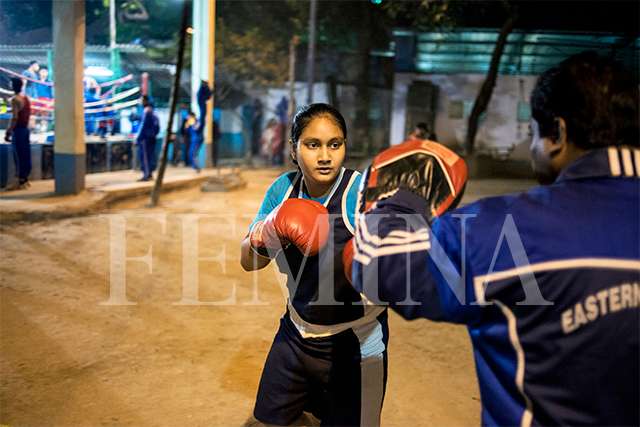
Sarita Khatun, 19
SaritaKhatunMPOs19nov2018

Sarita has had to face many hardships due to her love for boxing. Her father is a mason in Nungi, about an hour from Kolkata. Sarita, 19, loved sports and watched her elder brother learn boxing at a local club when she was just a child. Club officials noticed a spark in her and encouraged her to take up the sport. But her father was not convinced. He warmed up to the idea of his daughter taking up boxing as a profession only when she won a gold medal at a state level championship held in collaboration with the Indian Olympic Association. She was in Std 7 at that time. After that, there was no looking back. She has so far won nine medals, including a bronze at a national meet in 2012. “My relatives say that since I am a Muslim girl, I shouldn’t be a boxer,” says Sarita. But her mother supports her passion – in fact. it’s mainly because of her that she is being able to train under boxing coaches and make every effort to fulfil her dreams. She accompanies her to training sessions and tournaments. She runs from pillar to post to arrange for funds for her daughter, so that she can get gloves, uniform, shoes and a proper diet. Sarita is studying for her board exams this year. “I am not really interested in academics; I am totally focused on the game,” she says. She strongly feels that boxing is an ideal game for women since it helps them stay fit and build a career.

Sabina Yasmeen, 16
SabinaYasmeenMPOs19nov2018

Sabina, 16, has so far won three gold medals at district, state and national level championships. She trains at a local club near Botanical Gardens in Kolkata. Her father, Sheikh Mansur Ali, who is in government service, has six daughters – Sabina is the youngest. Sabina’s elder sisters play football – in fact, one of them plays for the national team. Her father wanted to be a sportsman, but couldn’t fulfil his dream. So he wants his daughters to devote themselves completely to sports. The family originally hails from Bagnan, about a couple of hours from Kolkata. But Mansur was forced to shift to Shibpur, Howrah because his neighbours were heckling his daughters for playing football and other sports. When his daughters practised at local clubs, they had to bear a lot of adverse comments from their peers as well. “Our relatives and neighbours in Bagnan were quite miffed with the fact that we wore shorts and showed such a strong interest in sports. They were contsntly making an issue of it,” says Sabina, who lives with her parents and sisters in a one-bedroom flat in a government residential building in Shibpur. But, of course, barbs and taunts are hardly going to make her break her steely resolve. Sabina wants to be a coach. Quitting the game for marriage is – good for her – clearly not on her agenda.
SabinaYasmeen02MPOs19nov2018

Kolkata Boxers Photo: Arindam Mukherjee

source: http://www.femina.in / Femina / Home> Achievers / by Hemchhaya De / may 08th, 2018
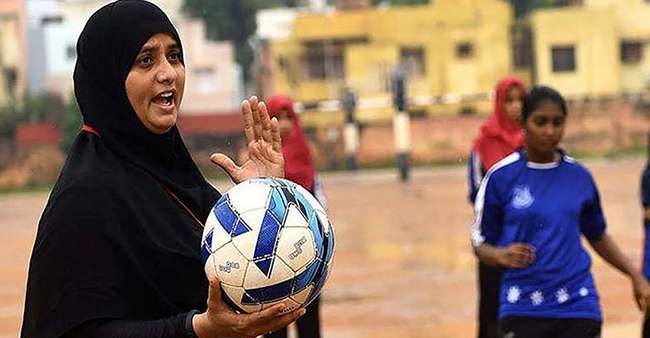
Meet 35 YO Burqa-Clad Football Coach Thamim Who Is Training Girls In Chennai

Chennai, TAMIL NADU :

ThamimMPOs18nov2018

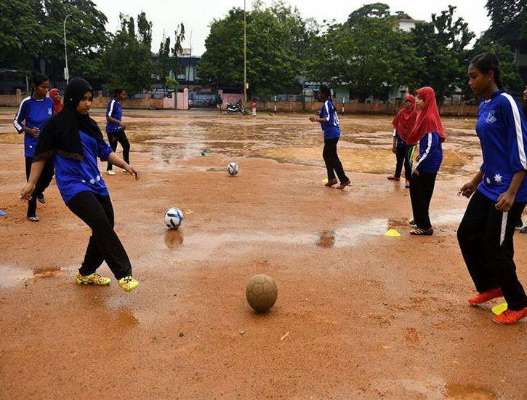
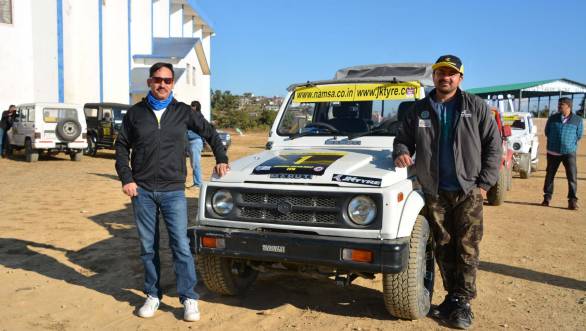
The 14-year-old Abida is one of the most spirited forwards in the football squad of the Muslim Women’s Association (MWA) School.

On the turf, she is fiery, motivated and a big advantage for the squad in more than 25 games they have played in a period of 3 years.

“Her family wouldn’t appreciate her being known for playing a sport,” says Thamimunissa Jabbar, lovingly recognized as ‘Thamim’, the 35-year-old football trainer from the city has become the supporter for scores of girls such as Abida, who belongs to traditional Muslim families but find individuality and liberty in football.

‘Playing with hijab and full pants in no way deters their performance on the field’.

For this reason, Thamim, who also works as the PT coach at MWA School, personally guarantees that the girls wrap up practice in time for class, reach home before sunset, outshine in examinations and can enjoy the game with the hijab on.

“For most families opposed to girls playing sports, the hijab is one of the contentious issues,” said Thamim.

Thamim02MPOs18nov2018

For her, whose uncle is an imaum, it has taken Thamim over a dozen rounds of talks with her family members to persuade them of the girl’s brilliant ability and what it could do for her.

The coach added, “I understand this better than anyone else, because when I was striving to make a career out of football, my struggle was two-fold: to make it to the school team and make my family understand. Now, there’s nothing more validating for me than making this transition smoother for young girls from similar backgrounds.”

Thamim was a pupil in Chengelpet during the nineties when she chanced upon her first football. In less than 2 years, she went on to help her team win a state-level match in Kanchipuram.

“If it wasn’t for my coach, who assured my family that I had a promising future in this game, my years after class X would have been spent sitting at home waiting to get married the moment I turned 18,” she says.

Her perseverance to keep playing brought one conquest after the other, like the 1999 state contest in Ooty, accompanying which local newspapers gave her the name, ‘Lady Baichung Bhutia’.

“My father had tears in his eyes when he read these reports and he said he was glad I had stood my ground. This inspired me to become a coach and mentor these girls.

source: http://www.m.dailyhunt.in / Daily Hunt / Home> English News> Laughing Colours> News / October 15th, 2018

Ranji Trophy, day 2: Jammu and Kashmir bowler Mohammed Mudhasir scripts history against Rajasthan

JAMMU & KASHMIR :

Mudhasir trapped Chetan Bist, Tajinder Singh Dhillon, Rahul Chahar, and Tanvir Mashart Ul-Haq to become the only the second player to take wickets in four successive balls in Ranji Trophy history.

History was created on the second day of the ongoing Ranji Trophy season as Jammu and Kashmir bowler fast bowler Mohammed Mudhasir took the first hat-trick of the season against Rajasthan in Jaipur.

Mudhasir trapped Chetan Bist, Tajinder Singh Dhillon, Rahul Chahar, and Tanvir Mashart Ul-Haq to become the only the second player to take wickets in four successive balls in Ranji Trophy history.

He also became the first bowler in professional cricket to get rid of 4 batsmen by trapping them in front.

From 329 for 3 Rajasthan collapsed spectacularly to 330 for 8. They were eventually dismissed for 379 as Mudhasir finished with 5 for 90 in his 29 overs. Chetan Bist starred with the bat as he scored 159 runs and Ashok Menaria gave him good support with a bright 59.

However, Jammu and Kashmir could not drive home the momentum as the batting collapsed and they were tottering at 186 for seven at stumps. Mudhasir was unbeaten on 15 and he will be the key man with the bat on day 2.

Tanvir Mashart Ul-Haq and Rahul Chahar were the pick of the bowlers for Rajasthan with three wickets each. Irfan Pathan, who now plays for Jammu and Kashmir, could not shine with either the bat or ball.

source: http://www.hindustantimes.com / Hindustan Times / Home> Cricket / by HT Correspondent, HindustanTimes,New Delhi / November 02nd, 2018

Hockey: Asian Hockey Federation honours OHA veteran

OMAN :

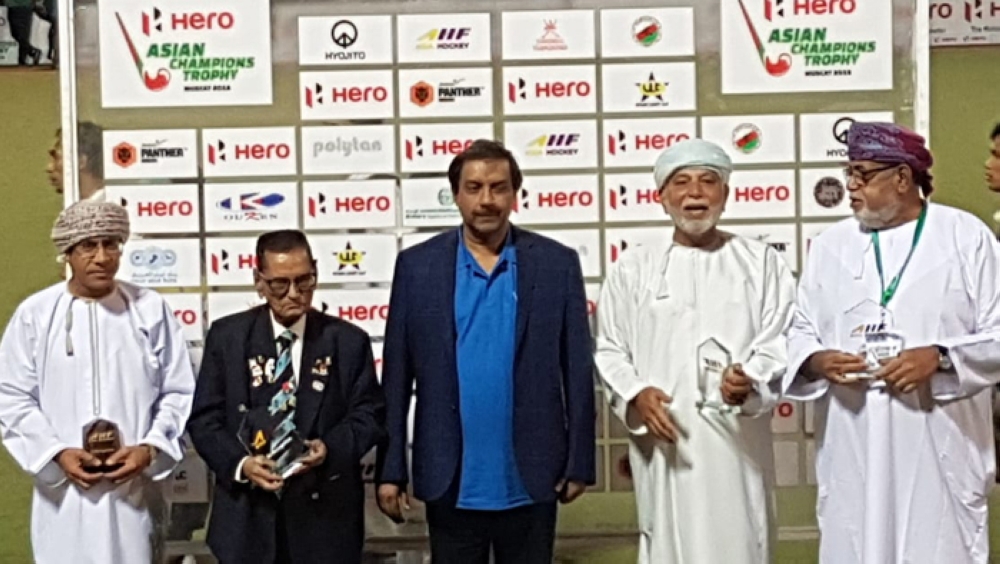
CEO of Asian Hockey Federation, Dato Tayyab Ikram aong with OHA veterans Eng. Dawood Al Raisi, SAS Naqvi, Mohammed Shambeh Al Raisi and Abdul Rahman Al Raisi.Supplied Photo

Muscat :

In recognition of their excellent contribution towards the development of hockey in the Sultanate of Oman, Dato Tayyab Ikram, CEO of Asian Hockey Federation (AHF) and member of Federation of International Hockey (FIH), in rare and unique gesture, presented mementos on behalf of the AHF to Eng. Dawood Al Raisi, SAS Naqvi, Mohammed Shambeh Al Raisi and Abdul Rahman Al Raisi.

Eng. Dawood Ahmed Al Raisi a former chairman of Oman Hockey Association and vice-president of Asian Hockey Federation, and a member of the Federation of International Hockey Umpiring Committee, represented Oman National Hockey team, as well as the Moscow University team in hockey. He was a student of Al Saidia School, Muscat, which is considered as the nursery of talented hockey players in Oman.

In 1982, Eng Dawood was deputed by Abdullah Hamed Al Ali, then director general of youth affairs to negotiate with the Indian Hockey Federation (IHF) to appoint a hockey coaches, as Oman had decided to participate in the 1982 Asian Games at New Delhi.

Eng Dawood signed an agreement with the Late K. L Passi, then secretary of the IHF to deputise S. A. S. Naqvi as coach and Joe Antic as assistant coach for Oman National Hockey team, the rest is history.

Oman participated in 1982 Asian Games in hockey at New Delhi and awarded the Fair Play Trophy apart from being placed sixth out of 12 teams.

Oman was the first country from GCC to participate in Asian Games hockey. Eng Dawood Ahmed Al Raisi was the head of Oman delegation for the 1982 Asian Games. Eng Dawood is now fondly regarded as the father of hockey in the Sultanate of Oman. He represented Al Ahli Sidab in hockey for several years.

In 1982, Saiyed Ali Sibtain Naqvi popularly known as SAS Naqvi was assigned as the first official National Hockey Coach of Oman by Indian Hockey Federation for a two years along with Olympian Joe Antic (1960 Rome Olympics) as his assistant coach.

The Oman Olympic Committee through which Games participation is ensured was not formed till 1982. Sheikh Fahad Al Sabha, then president of Asian Games Federation (now Olympic Council of Asia) granted recognition to Oman Olympic Committee (OOC) which made it possible for Oman to participate in International Games.

In 1983, Dr Hammad Hamed Al Ghafri was appointed by Royal Decree by His Majesty Sultan Qaboos bin Said as the president of Oman Olympic Committee.

A new head office of the Oman Olympic Committee was established with assistance of SAS Naqvi who was nominated as Technical Advisor.

SAS Naqvi had qualified from National Institute of Sports, Patiala, India in1976 and begun his playing career in 1947 until 1972 when he started coaching and umpiring.

SAS Naqvi was the coach of the Indian team at the 1973 World Cup training camp at NIS Patiala. In 1978, he was nominated as the coach of 1978 Indian women’s team for the World Cup at Madrid, Spain. In 1979 he had been appointed as coach of Indian women’s team for the pre-Olympics at Moscow.

From 1979 to 1982 he coached the Bombay XI, Bombay Customs, Punjab Sports Club, Western Railways, Air India, Teksons Sports, Maharashtra State Police and Don Bosco School.

SAS Naqvi accompanied the Oman delegation to the Asian Games in 1982 in Delhi, then again in 1986 at Seoul, 1990 at Beijing, 1994 at Hiroshima and 1998 at Bangkok.

He was also part of the Oman delegation to the Olympic Games in 1988 which was held in Seoul, then to Barcelona in 1992, at Atlanta in 1996 and in 2000 to Sydney, Australia.

SAS Naqvi has served as a Sports Consultant to OHA and FMEC for the last 15 years. Recently he established the Sports Museum in Muscat, Sultanate of Oman.

Mohammed Shambeh Al Raisi is one of the senior most hockey players of Oman and is a former treasurer of Oman Hockey Association. He has also been a member Asian Hockey Federation and a committee member of the International Hockey Federation (FIH). Mohammed Shambeh, a former chairman of the Oman Veteran’s Hockey Committee had represented Al Ahli Sidab in hockey for several years.

Abdul Rehman Al Raisi is also a former international hockey player and an International Hockey Umpire of Oman, he has been promoting the game for several years now in Oman. Khalid Al Raisi, his son, is an assistant coach of the Oman National Team while Marwan Al |Raisi is a prominent member of the Oman National Team.

source: http://www.timesofoman.com / Times of Oman / Home> Sports> Hockey / by Times News Service / October 30th, 2018

‘The scooter was my Boeing’

Aligarh, UTTAR PRADESH / NEW DELHI :

ZafarIqbalMPOs25oct2018

Zafar Iqbal, former India hockey captain, shares his memories of what may have been his first ‘vehicle’ and what actually was

Like most people at that time, I also learnt to use a cycle. The first vehicle I ‘owned’ was a bicycle that was presented to us (the Indian hockey team) in 1980 for winning the Olympic gold at Moscow. I was so happy. But when I went to claim my prize, I discovered the cycle had no accessories. I was asked to pay for the accessories, which I politely declined. I returned home without my prize, but the same year I bought a scooter.

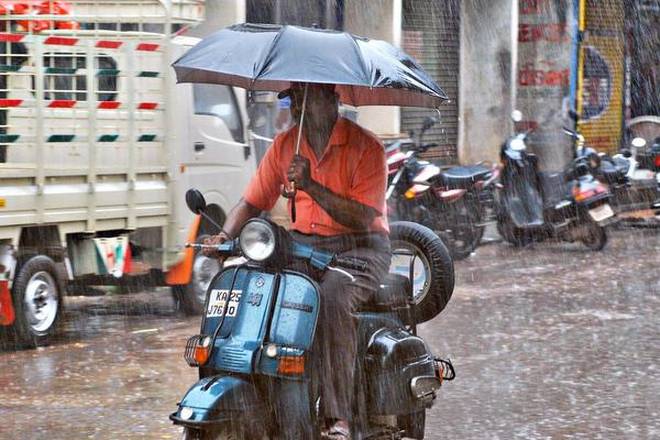
The acquisition of the scooter is an interesting story. It was a Bajaj which I grabbed without having gone through the process of bookings. The waiting period was more than a year. It so happened that we were playing a tournament (Scindia Gold Cup) in Gwalior and one gentleman from the organising committee wanted to sell his scooter. The demand was huge and one had to shell out double the original price. I haggled and struck a decent deal. It was a greenish colour and the scooter was driven home to Delhi from Gwalior, by a mechanic. I remember the registration number to this day: GPW 737. I was employed with Indian Airlines (now Air India) and this scooter was my Boeing (737).

My best memory of the scooter was, by the grace of God, the fact that I never suffered a fall or an accident. For ₹20, I could fill up the tank. It would last me for ages really. I drove the scooter for five years, using it to travel for practice at the National Stadium, or taking my wife to the Karim’s near Jama Masjid. Shanti Path was a great place to drive around. I have also driven to Aligarh on it.

In 1985, I purchased a Maruti Suzuki. The car was a luxury. It served me well before I shifted to an Innova Crysta (automatic) recently. I also drive a Mahindra Thar now, exclusively for my golfing trips to the Noida Golf Club every morning.

Driving is no more a pleasure in Delhi. But I can’t take public transport either, because they are too crowded. At some point, it was fun travelling by bus from my home in Vasant Vihar to the Indian Airlines office at Parliament Street. I remember the route number (640) too. Sometimes people, hockey lovers who would have seen me in action at the Shivaji Stadium, would recognise me.

I felt sad when last year I had to dismantle my dear Bajaj scooter. Maybe I could have had it painted and preserved it as a souvenir. It is a memory now, but a pleasant one of my early years of driving.

source: http://www.thehindu.com / The Hindu / Home> Life & Style> Motoring / by Vijay Lokapally / October 23rd, 2018

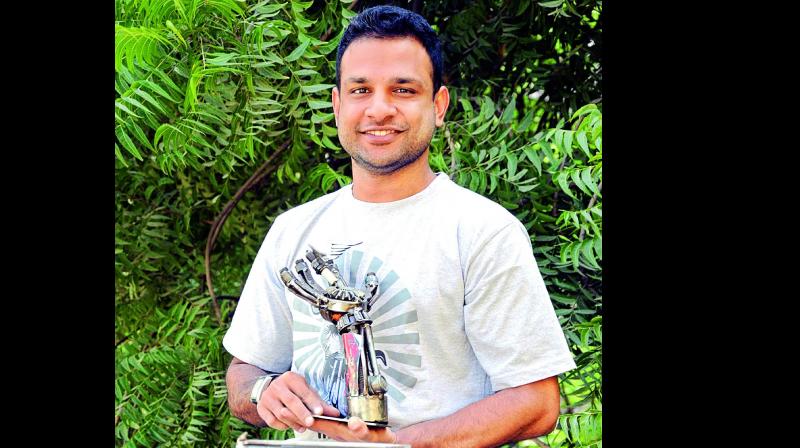
Md Saaduddin a scrap metal artist

Hyderabad, TELANGANA :

Md Saaduddin is on an artsy journey where he utilises scrap metal to construct purely artistic as well as functional sculptures.

I was always inclined towards art but I never had the nazakat that is needed to wield a paint brush. The hammer and grinder are a better fit for me. (Photo: DC)

It is quite common for a young boy to fall in love with machines. But what is not so common is translating that love into beautiful art. Although Md Saaduddin is today an artist, he does not work on canvases, but with scrap iron, steel and sometimes copper to make beautiful sculptures and functional art pieces like lamps and furniture, some set in the backdrop of interesting storylines.

With Saad’s father being a vintage car restorer, he, along with his brother Hamzauddin, grew up around machines, albeit with a unique perspective. On how he took up the hobby, the mechanical engineer and  self-made artist says, “I was always inclined towards art but I never had the nazakat that is needed to wield a paint brush. The hammer and grinder are a better fit for me. I love it also because of the physical work that is involved in creating it.” Saaduddin spends time on his artwork in the evenings, after work, and has made furniture for a couple of breweries in the city.

Explaining his style of work, he shares, “I try to incorporate a sense of movement. A bird just about to take flight, for instance! I’ve learnt the art by watching other people online and practicing. I used to help my dad in his workshop, and that’s how I got introduced to it. Just once a year, my brother and I collect all our savings and build a modified bike. We ride it around to our heart’s content and then sell it.”

He further reveals, “I’m also getting into blacksmithery now; I usually make the handles of spatulas and ladels with this. People appreciated my work and said I should get on Instagram. That’s how I started IRONic”

His brother, Md Hamzauddin is another bundle of talent, whose digital art is recognised around the world. He goes by the name ‘Hamerred’. Hamzauddin’s works have been showcased in countries like the US, Mexico and many others. In fact, he was also one of the only 13 artists from around the world to display their art at the Oil and Ink Expo, a motorcycle art show.  Hamza’s signature style features paint dripping from motorbikes.

source: http://www.deccanchronicle.com / Deccan Chronicle / Home> Lifestyle> Books and Art / by Nikhita Gowra, Deccan Chronicle / December 04th, 2017

Mohd. Ghufran, Kajal Kumari bag men’s, women’s crowns

Mumbai, MAHARASHTRA :

Starting with the white coins, Ghufran quickly settled into a rhythm

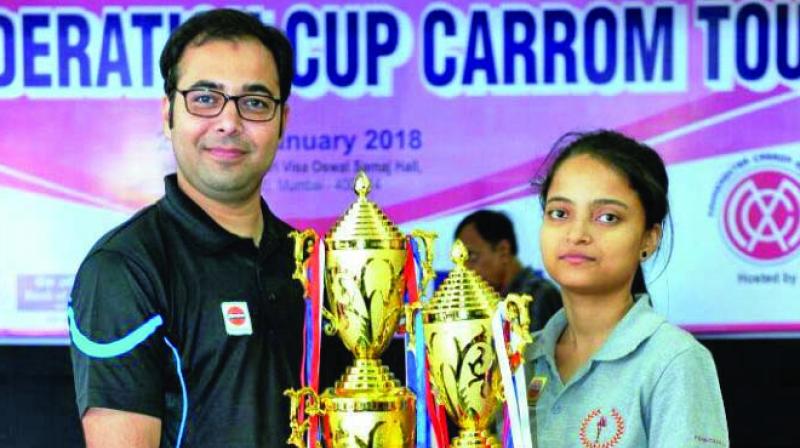
Mohd. Ghufran and Kajal Kumari winners of men's & women's singles.
Mohd. Ghufran and Kajal Kumari winners of men’s & women’s singles.

Kajal Kumari and Mohd. Ghufran, both representing Petroleum Sports Promotion Board (PSPB), registered contrasting wins to bag the women’s singles and men’s singles crowns respectively in the LIC of India sponsored 24th Federation Cup All India Carrom Championship, organized by the All India Carrom Federation and hosted by the Maharashtra Carrom Association, at the Halari Visa Oswal Samaj Hall, Dadar (East).

In the women’s final Kajal played fluently and was in complete control and went on to score an authoritative 25-13, 25-12 victory against Aisha Mohd of Jain Irrigation. On the other hand, Ghufran started with a flourish, but later faced quite a strong challenge from World Champion Prashant More of Reserve Bank of India before scraping through by a close 25-13, 12-25, 22-19 scoreline in a tense and thrilling men’s final showdown.

Starting with the white coins, Ghufran quickly settled into a rhythm. Showing calm and steady nerves, he exhibited good control with his shots to grab the upper hand by pocketing the first game against the current world champion More.

The Mumbai-based More, backed by a large gathering of local vociferous supporters, did not disappointment them as he bounced back into contention with some steady and clever play, taking the second game to force the third game.

In the decider, the scores ran close, before More raced to a 19-11 lead at the end of the sixth board. But the local player made a couple of mistakes and missed opportunities in the next which his rival cashed in to narrow the gap to 18-19 going into the final board. In the last board, both players were nervous and started to miss simple shots before Ghufran managed to steadily pocket the queen and his coins to win four points which helped him win the contest 22-19 and emerge champion.

In the men’s doubles competition, which was a fight between PSPB pairs, K.Srinivas and Sandeep Deorukhkar rallied from the loss of the first game to overcome Yogesh Pardeshi and K. Ramesh Babu 22-25, 25-16, 25-15 to emerge champions.

The women’s doubles final also contested between PSPB pairs, witnessed a similar trend as Nagajyoti and I. Ilavazhki, after tamely losing the opening game, gave a strong fighting reply to brush aside the challenge from Rashmi Kumari and Kajal Kumari (PSPB) 4-25, 25-11, 25-7.

Results
Women’s singles Final: Kajal Kumari (PSPB) beat Aisha Mohd (Jain Irrigation) 25-13, 25-12. Third place: Rashmi Kumari (PSPB) bt M. Parimala Devi (PSPB) 25-7, 17-25, 25-11. Semi-finals: Kajal Kumari (PSPB) bt M. Parimala Devi (PSPB) 25-17, 25-1; Aisha Mohd (Jain Irrigation) bt Rashmi Kumari (PSPB) 11-25, 25-20, 25-12.
Men’s singles – Final: Mohd. Ghufran (PSPB) beat Prashant More (RBI) 25-13, 15-25, 22-19. Third place: Riyaz Akbarali (AI) bt Rahim Khan (Jain Irrigation) 25-8, 25-10. Semi-finals: Mohd. Ghufran (PSPB) bt Rahim Khan (Jain Irrigation) 25-18, 25-6; Prashant More (RBI) bt Riyaz Akbarali (AI) 16-25, 25-12, 25-14.
Men’s doubles – Finals: K.Srinivas/Sandeep Deorukhkar (PSPB) bt Yogesh Pardeshi/K. Ramesh Babu (PSPB) 22-25, 25-16, 25-15. Third place: Prashant More/L. Suryaprakash (RBI) bt Zaheer Pasha/Ravi Waghmare (RBI) 25-10, 25-12.
Women’s doubles – Finals: Nagajyoti/I. Ilavazhki (PSPB) bt Rashmi Kumari/Kajal Kumari (PSPB) 4-25, 25-11, 25-7. Third place: Sangeeta Chandorkar/Kavita Somanchi (RBI) bt R. Gayatri/L. Amshavarthini (TN) 25-4, 8-25, 25-10.

source: http://www.asianage.com / The Asian Age / Home> Sports> In Other Sports / January 08th, 2018