Category Archives: Sports

Siyadutt— The unsung hero in Gopichand’s support staff

Hyderabad, TELANGANA :

Hyderabad :

He has been the silent performer in Indian badminton for long. Mohd. Siyadutallah, more familiar as Siyadutt in badminton circles, has always been the unsung No. 2 of the support staff in Gopi’s absence for many majors including the Super Series.

In fact, when Rio Olympics silver medallist, P.V. Sindhu won her maiden China Open recently, he was there along with women’s coach Madhumita Bist to don the role of a mentor. Significantly, he was there when Sindhu won her first major international title too in 2010 Maldives Challenge Series.

For someone who was with Gopi since 2004, Siyadutt knows every player from Gopi Academy and has a better rapport with them than many.


Great opportunity

“It’s nothing like a challenge for me but it is always a great opportunity for me to accompany players like Saina Nehwal, Sindhu, Kidambi Srikanth,” says Siyadutt now in the Asian circuit with the Indian team.

“Yes, sometimes I do speak in Telugu with players during the match. And, this also meant I had to explain to Saina (when she was with Gopi Academy) to explain her in Hindi later on,” he says with a big smile.

“Well, when it comes to intensity in preparations, my first objective is to ensure exactly what Gopi Bhaiyya would have done if he were to be there. See the weather, whether the courts are fast or slow, the quality of shuttles and then shift the focus to the strong points of our players and the weaknesses of opponents lined up for the day,” the soft-spoken coach explains.

“I just enjoy my work a lot and don’t feel any pressure, because I have been watching these players from the age group category. So, there is that comfort zone for me to work with them,” remarked Siyadutt.

“Definitely, exchanging views on the game during breaks and giving whatever little advice I can is a huge responsibility,” admits the coach. “Yes, this job also reminds of the kind of trust in me. This itself is a huge morale-booster and helps me stay focused,” he says.

“And there is no better joy than seeing the players produce the results and the fact that Gopi Academy continues to be the assembly-line in producing champion shuttlers is also an indicator of the kind of scientific training programme we have in place for all age groups,” reminds Siyadutt.

Memorable moments

For Siyadutt, whose best individual performance as player was making it to the Nationals quarterfinal once, Kidambi Srikanth and Saina Nehwal completing an Indian ‘double’ by winning the 2014 China Open men’s and women’s singles titles respectively remains the “most memorable, especially Srikanth beating five-time world champion and crowd favourite Lin Dan in the final”. “Working with someone like Gopi always makes you richer in experience and knowledge. I always believe learning is a continuous process and I am lucky to work under him,” he says.

“Yes, I never thought that I will be in this position and I owe everything to Gopi Anna,” says a grateful Siyadutt, who adores Lin Dan.

And, he recalls the 2014 China Open when he struggled to find any weaknesses in Lin Dan’s game before the final featuring Lin Dan and Srikanth.

“I was watching all his matches and confused to spot weakpoints. But later during the final, it was more easier to understand his weak points and accordingly guided Srikanth. Glad that he won the title. The best part being Gopi sincerely appreciating my efforts. These are the kind of gestures which keep you going,” he signs off before joining his players in Macau Open.

source: http://www.thehindu.com / The Hindu / Home> Sport> Other Sports / by V.V.Subrahmanyam / Hyderabad – December 02nd, 2016
7-yr-old B’pora boy wins Asian youth Karate championship

JAMMU & KASHMIR :

Governor, Naeem Akther congratulate Mansoor

GK Photo
GK Photo

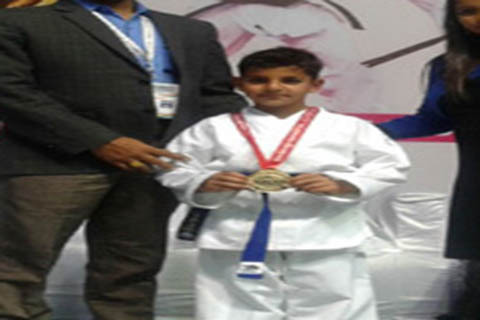
After seven-year-old girl it’s now seven year old boy from north Kashmir’s Bandipora district who has brought laurels not only to the state but India as well by winning gold in Asian Youth Karate Championship in New Delhi.

Hashim Mansoor, 7 son of Mansoor Ahmad Shah resident of Nadihal area of Bandipora has won gold in Asian Youth Karate Championship by beating his Sri Lankan rival on Tuesday.

Earlier, a seven year old, Tajamul Islam from the district had won a gold medal in world Kick-boxing championship held in Italy early this month.

Hashim Mansoor, who represented India in Sub-Junior below 25 kg weight category in the championship, won a gold medal by beating a Sri Lankan in finals at Talkatora stadium in New Delhi.

Hashim a second standard student of Symbiosis School in Plan Bandipora got selected for the championship during trials that were held in Indoor Stadium Srinagar early this month.

The championship was organized by the All India Youth Karate Federation at Talkatora stadium in New Delhi in which 19 countries participated.

“Earlier, Mansoor defeated his Bhutanese and Malaysian rivals,” Ghulam Nabi Tantray, President J&K Youth Karate Federation told Greater Kashmir. “This was possible due to hard work of Mansoor’s coach Fasil Ali Dar,” added Tantray.

He also said that Hashim has qualified for World Youth Karate Championship to be held in Europe next year, where he is going to represent India. “He can only participate in the world championship after he gets sponsorship. I hope he gets a sponsorship so that he could make whole country proud like Tajamul did,” he said.

Pertinently, both Tajamul and Hashim have been trained in Ali’s academy-local Martial Arts training school run by Faisal Ali Dar in Bandipora.

Meanwhile, Hashim’s coach Faisal Ali Dar also received Dr. B.R. Ambedkar National Award on Monday in “Sport and Peace” category for his contribution in “Peace Building Activities” through Jammu and Kashmir Kick-boxing Association. Faisal Ali who hails from Bandipora was presented the award by Dr. B.R. Ambedkar Sports Foundation.

source: http://www.greaterkashmir.com / Greater Kashmir / Home> Sports / by Ejaz-ul-Haq Bhat / Bandipora – November 30th, 2016

Hockey: Affan Yousuf scores twice in India’s 3-2 win over Australia

Bhopal,  MADHYA PRADESH :

_________________________________________________________

HIGHLIGHTS

  • Affan Yousuf slotted two goals as the Indian men’s hockey team claimed a 3-2 win over Australia
  • Skipper VR Raghunath struck the winner just seconds after Australia equalised in the third quarter
  • Overall, this was the 22nd time an Indian men’s hockey team beat Australia, in 117 head-to-head matches
  • ____________________________________________________

affanyousufmpos29nov2016

New Delhi  :

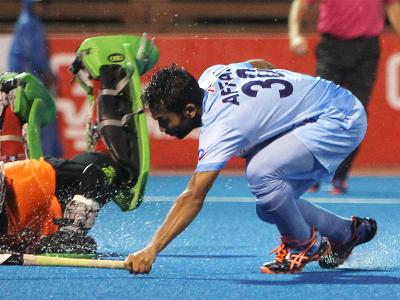
Talented youngster Affan Yousuf slotted two huge goals during the first half and skipper VR Raghunath struck just seconds after Australia equalised in the third quarter, as the Indian men’s hockey team claimed a 3-2 win over the world No 1 in the first of two Tests in Bendigo, Victoria on Tuesday.

The win came just days after the tourists claimed bronze in the Four Nations Invitational Tournament, and helped Raghunath’s team extract revenge on hosts Australia who beat them 3-2 during that tournament. Overall, this was the 22nd time an Indian men’s hockey team beat Australia, in 117 head-to-head matches.

Australia’s goals came from shots from the field by Matthew Willis and Trent Mitton in the 36th and 43rd minutes, but Raghunath’s penalty corner in the 44th minute put India ahead for good.

This was Affan’s second stand-out performance this month, following on from his late goal during the nail-biting victory over Pakistan which won India the Men’s Asian Champions Trophy in Malaysia. The 22-year-old struck twice in the 21st minute with two excellent field goals after the first quarter ended with the teams yet to score.

In the second half, Australia hit back through Willis and Mitton but Raghunath’s goal ensured the deadlock was snapped quickly. The final quarter was a tense period in which defenders on both ends were made to scurry but India did enough to shut the door on Australia.

After scoring four goals during the ACT, Tuesday’s performance against Australia was another feather in the car of Yousuf, who was born into hockey. His father Mohammed Yousuf, grandfather Khuda Dad and uncle Sameer Dad have each represented India.

The Kangaroos are the No 1 ranked hockey team in the world. In the span of ten days, they beat New Zealand to lift the Trans-Tasman Trophy in Auckland and the Four Nations in Melbourne. India are ranked sixth.

The second Test is on December 1.

Mohammed Shami and Co show India can pack a pace punch

UTTAR PRADESH :

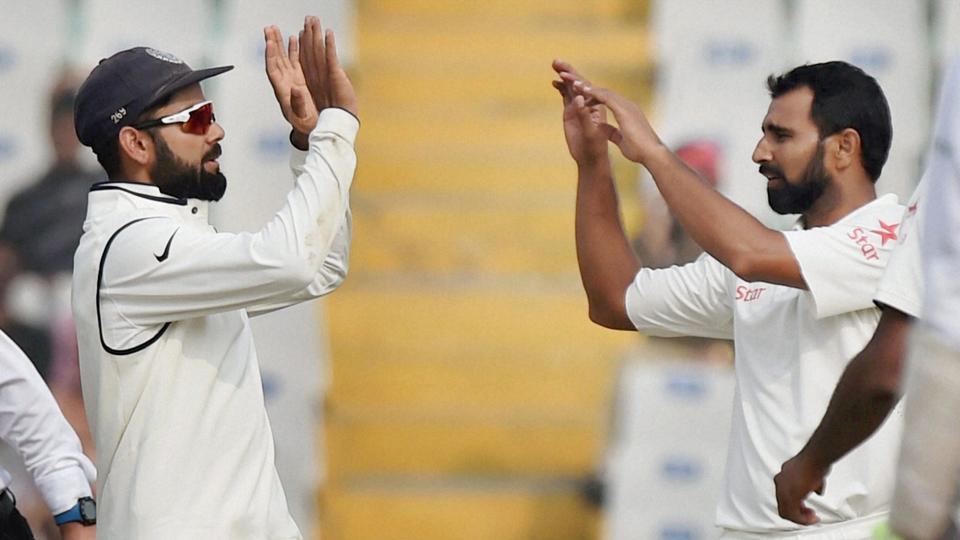
India captain Virat Kohli celebrates with Mohammed Shami the wicket of England batsman Adil Rashid, on the fourth day of the third Test match between India and England in Mohali on Tuesday. PTI Photo by Vijay Verma(PTI11_29_2016_000081B) (PTI)

The one great feature for India under Virat Kohli’s Test captaincy has been collective victories, even when individuals stand up and deliver that bit extra. This has allowed the team to make constant changes in the playing eleven forced by injuries.

With India playing all but six of the 20 Tests under his captaincy in the sub-continent — 10 at home — the spin attack, led by Ravichandran Ashwin, has dominated.

However, India’s pace bowlers have provided real value with their wicket-taking ability. No longer content with playing the support role to spin on slow pitches, pace bowlers, Mohammed Shami, Umesh Yadav and Ishant Sharma in particular, have showed they have come of age as a strike unit.

It is not that India pacers have not done well at home. Kapil Dev, Javagal Srinath and Zaheer Khan have produced crucial spells.

But the England series has shown the pace department has taken it to a different level.

In Mohali, India could easily have been left chasing a tricky target but for Mohammed Shami’s double strike in one over with the second new ball. Two perfect short deliveries induced awkward shots from Chris Woakes and Adil Rashid.

Shami bowled perhaps the ball of the second Test in Visakhapatnam, pitched up and swinging in to shatter skipper Alastair Cook’s off-stump.

Of the 20 games under Kohli, only two Tests in Australia in the 2014-15 series were played on pitches conducive to seam. The rest have been on slow tracks.

Shami and Umesh have consistently cranked up their pace to 140 kph plus on slow pitches. And Kohli has used them as attacking options, to provide breakthroughs and not just relief to Ashwin and Co.

Shami has been at his metronomic best since returning to the side in the West Indies, after more than a year out following knee surgery. In the Caribbean, his 11 wickets were only next to Ashwin’s series-leading 17.

Sharing the workload

In this series too, Shami’s 10 wickets again are only next to Ashwin’s 15 and level with Ravindra Jadeja. More importantly, he has bowled 103 overs and Umesh Yadav 94.5 overs, sharing the workload with the spinners (Ashwin 173.4 overs, Jadeja 161 and Jayant 50.3).

Umesh has only five wickets against England, but four catches were dropped off his bowling on a flat Rajkot pitch. Still, he accounted for Joe Root and Ben Stokes, England’s best batsmen so far in this series.

In Visakhapatnam, his dismissal of Jonny Bairstow broke a crucial partnership as England lost their last four wickets for 65 runs. That gave India a 200-run lead and a firm grip on the match.

The spinners may be carrying the day with ball and bat, but Indian pace bowlers have become an integral unit.

source: http://www.hindustantimes.com / Hindustan Times / Home> Sports> Cricket / by N Ananthanarayanan, Hindustan Times / November 29th, 2016

A Single Swallow : Of Karim, grit and toil

BIHAR / WEST BENGAL / Noida, UTTAR PRADESH  :

Saba Karim
Saba Karim

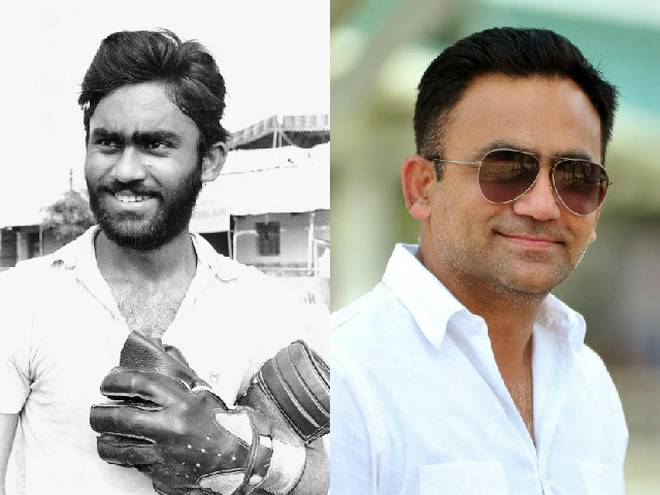
Saba Karim was one of the unsung heroes of Indian cricket team. A freak eye injury meant his first Test was also his last.

His first-class debut came at 15, against Assam. His farewell game happened against the same opponent 18 seasons later. He went on his first tour with India in 1989 to the West Indies but waited eight more years before playing his first ODI. And then three more years to earn a Test cap. Within months of playing a Test, at 33, Saba Karim bowed out of the game, an injury to his right eye cutting short his career.

The eye injury was a freak incident at Dhaka during the Asia Cup in 2000. It was India’s first match of the tournament and Karim was keeping to Anil Kumble, an exercise he was not familiar with. Kumble was giving a tough time to the batsmen, bowling quicker, and this particular delivery kissed the flap of the batsman’s pad and Karim had no time to avoid the path of the ball. “It slammed into the socket of my right eye,” recalled Karim.

His world seemed to have crashed in that heart-breaking moment “My vision was blurred and I thought I had lost my vision. It was indeed a hard time,” said Karim. He received treatment at the Sankara Nethralaya in Chennai and recovered to get back to the Indian team for the one-off Test against Bangladesh. The team captain, Sourav Ganguly, was willing to back him. So were the National selectors.

Karim prepared for the Test by playing some club matches in Mumbai. “My vision had improved and I thought I was ready,” he remembered. But obviously he was not. “When the game started I realised I couldn’t cope with the speed of the delivery. And then I was having problems with the sweat coming into my eyes.” He played the Test but not in ideal conditions even though India beat Bangladesh in the latter’s debut as a Test nation.

He developed a love for cricket when studying at St. Xavier’s and later at St. Michael’s in Patna. The facilities were hardly encouraging but Karim made steady progress, taking to wicket-keeping on the advice of Sudhir Das, a former state and zone medium-pacer. He went on his first international tour as part of the Indian Schools squad to the West Indies in 1982. The same year he was included in the East Zone team for the Deodhar Trophy before making it to the Bihar squad for the Ranji Trophy.

Within a season of making his mark at the first-class level, Karim shot into national reckoning as a wicketkeeper-batsman of quality. He was still playing school cricket when the zonal selectors picked him for the tour match against Clive Lloyd’s West Indians at Cuttack in 1983. Two catches and a stumping in the only innings that West Indies batted was a “huge inspiration” for Karim, who now nurtured dreams of making it big.

The tour to the West Indies in 1989 paved the way for Karim to showcase his talent but the opportunities were sparse. “The tour was an eye-opener. I knew little about international cricket and I tried to absorb as much as possible. It was a huge experience,” Karim noted. All he played were three side games. On return, he did not get a look in. “The selectors had forgotten me,” he smiled. And then churning started and in his words his career stood “rejuvenated.”

Help for Karim came from seniors like Hari Gidwani and Arun Lal. “I gained in values and improved my temperament.” Seven years of toil helped Karim stage a comeback when he was picked to go to South Africa in 1996-97. He had shifted to Bengal from Bihar in 1994-95. “I made the move at the right stage. I was not getting opportunities beyond my zone. When Tata Steel transferred me to Calcutta I made my shift too. It is true that your performances don’t get to be noticed when you play for emerging teams.”

In Bengal, Karim made rapid progress. “The facilities were amazing. Lots of clubs matches and the league for well organised too. The practice facilities for the Ranji team were excellent. Most important was that I was never made to feel like an outsider.”

Karim was making waves. He figured in two tour matches against visiting Australian and South African teams in 1996-97. Interestingly, his debut came at Bloemfontein in early 1997. “Nayan (Mongia) injured his finger and indicated to me. (Coach) Madan Lal told me I was in the playing XI and that was one of my most unforgettable days.” Karim played six ODIs in that tri-series and figured in 19 more ODIs before the year ended. Only one ODI each in 1998 and 1999 and another seven in 2000 was all that Karim could add to his career.

Among his memorable moments on the cricket field was pulling off a sensational victory against Pakistan at Karachi in 1997. He contributed a priceless 26 before Rajesh Chauhan sealed it with a six off Saqlain Mushtaq. “I can never forget the stone pelting from the crowd,’ he recalled. A commerce graduate from Hindu College, Karim, like Sunil Gavaskar, is a voracious reader with “Love In The Times Of Cholera” by Gabriel Garcia Marquez his favourite book. The 47-year-old Karim, who played two first-class matches following his Test debut before calling it a day, is currently a National selector and lives in Noida with (wife) Rashmi and (son) Fidel, an avid footballer.

(Saba Karim played 1 Test (15 runs); 34 ODIs (362 runs, 1 fifty, 27 catches, 3 stumpings); 120 first Class Matches (7310 runs, 22 centuries, 33 fifties); Career span: 1982-83 to 2000-01.

source: http://www.thehindu.com / The Hindu / Home> Metroplus / by Vijay Lokapally / April 19th, 2015

Shamim Khan wins CG Open

NEW DELHI :

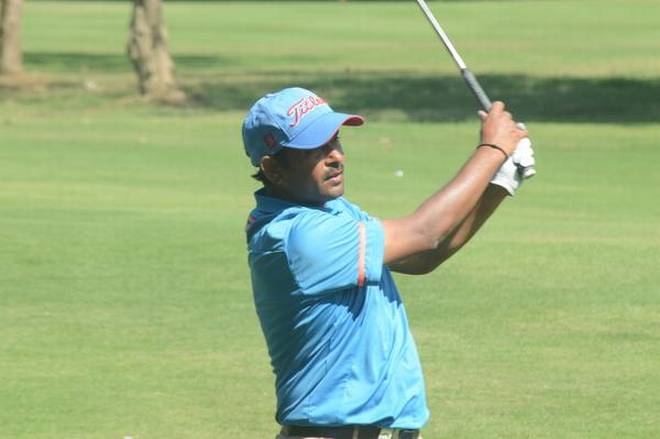
SURPRISE WINNER: Shamim Khan sank a 35-foot putt for a birdie to finish with an unblemished eight-under-62 and an overall 19-under-261.

Mumbai:

Delhi’s Shamim Khan upset all calculations to win the ₹1 crore CG Open at the Bombay Presidency Golf Club (BPGC) on Saturday. The 38-year-old professional of 21 years sank a 35-foot putt for a birdie to finish the tournament deciding day with an unblemished eight-under-62 and an overall 19-under-261, the lowest score for a four-round competition at this course.

The previous best was Jyoti Randhawa’s 18-under-261 in 2011. Khan has also taken the lead in the Rolex Ranking.

Bengaluru’s Khalin Joshi with a final-round card of 65 ended the tournament with an overall 18-under-262 to finish runner-up. Khan won ₹15 lakhs and Joshi ₹10 lakhs.

Khan, trailing by two points at the conclusion of the third round, struck putting form in the second and fourth holes and again in the 10th, 11th and 12th on the back nine to become joint leader with Joshi and Kapil Kumar.

A jubilant Khan said: “It’s been an incredible week. I dropped just three bogeys in the whole tournament. I had lost my touch with the long range putts in the last few months, but it came back at the CG Open. I made three 15-footers today and two putts from 30 to 35 feet. That made all the difference.

“I knew I was in the race once I made three consecutive birdies on the 10th, 11th and 12th. But I decided not to check the leader-board till the 17th. That worked for me.

“Once I saw I was two ahead after the 17th, I went for the birdie on the 18th. It’s great to win after so long. I owe a lot to my caddie ‘Gullu’ for this win. He was a great support. My ball-striking was also terrific through the week. I’m now looking to winning my second Rolex Player of the year title after 2012.”

Leading scores (72 holes): 261: Shamim Khan (67, 66, 66, 62), 262: Khalin Joshi (67, 67, 63, 65), 265: Kapil Kumar (64, 67, 67, 67).

source: http://www.thehindu.com / The Hindu / Home> Sport> Other Sports / by Special Correspondent / November 26th, 2016

Zaheer Khan: 5th Muslim cricketer to win Arjuna

Mumbai, MAHARASHTRA :

Finally Zaheer Khan, the spearhead of the Indian Bowling attack got the reward for his contribution in international Cricket. The selection panel has decided to give Arjuna Award to Zaheer Khan. He will be the fifth Muslim Cricketer to receive the Arjuna Award. The Prestigious Arjuna award was instituted in 1961 by the Indian government to recognize outstanding achievement in the national sport. In total till now 30 Muslim players of different sports have been awarded the Arjuna. The list of Arjuna Awardees Muslim Cricketers includes Salim Durrani, Mansoor Ali Khan Pataudi, Syed Mustafa Hussain Kirmani, Mohammad Azharuddin and Zaheer Khan.

Born on 7 October 1978, in Ahmednagar district of Maharashtra, Zaheer is a member of Indian cricket team since 2000. He is known for his ability to swing the ball both ways. After doing well with the bat he is now considered as an all rounder. He holds the world record for the highest Test score by a number 11 batsman when he scored 75 against Bangladesh in 2004. At the time he was batting with the star cricketer Sachin Tendulkar; the pair amassed 133 runs and set a new record of partnership for India’s tenth-wicket. Zaheer made his Test debut in 2000 against Bangladesh at Dhaka and one day international  debut against Kenya at Nairobi during the ICC KnockOut Trophy the very  same year. Despite many injuries on different occasions now Zaheer Khan is the key player of Indian Cricket team. As a test player he played 78 tests and has taken 271 wickets with an average of 31.94. As a batsman he scored 1045 runs with 75 as his highest score. In one day international he played 191 matches claimed 273 wickets and as a batsman scored 781 runs. Cricket experts say that if Zaheer keeps injuries at bay, he will be India’s greatest fast bowler of all time. Now after getting the Arjuna award hope he will get more energy and will do better than before.

Salim Durrani was the first Muslim Cricketer who was given this prestigious award. He got the Arjuna Award in 1961. He was famous for hitting sixes on public demand. An aggressive batsman who was also a fine spinner, he was born in Kabul on 11 December 1934. He made his debut in 1959 against Australia.  He played 29 tests in all, scored 1202 runs including a hundred (104) against West Indies at Port of Spain. He also captured 75 wickets including three hauls of 5 or more wickets in an inning.

The second Muslim who was given the Arjuna Award was Mansoor Ali Khan Pataudi. He got this award in 1964. Nawab Pataudi, who is commonly known as Junior Pataudi, holds the record of the youngest captain of the world. He played 46 tests for India and scored 2793 runs including a 203 (not out) as his highest score. He made his debut against England in 1961. He suffered a car accident in which he lost an eye and stopped playing cricket. In 1974 he returned to cricket and led the team. Under his captaincy India won 9 tests.

Syed Mustafa Hussain Kirmani was the third Muslim Cricketer who got the Arjuna Award. He was given this award in 1980-81. He is still the best wicket-keeper of India. MS Dhoni is very close to his record. He was also a good batsman. Born on 29 December 1949, he holds the record for highest dismissals by an Indian wicket-keeper and also for having played highest number of tests for India as a wicket-keeper. He made his debut in 1975 against the West Indies. In all he played 88 tests for India, scored 2759 runs with  two centuries and 12 half-centuries. He dismissed 198 batsmen behind the wickets. He also played in 49 one-day matches, scored 373 runs and dismissed 36 players as a wicket-keeper. He was in the world cup win of 1983.

Mohammed Azharuddin(now the Congress member of Parliament from Moradabad)  is the most successful Muslim cricketer of India. He was the fourth Muslim who got Arjuna Award. He got this award in 1986. Born on 8 Feb, 1963 in Hyderabad, Azhar made his test debut against England at Kolkata in 1984-85 series and hit 110 runs and became only the eighth Indian to do so. This inning was followed by 105 at Madras and 122 at Kanpur. He is the only player in the history of test cricket to score centuries in three consecutive tests. He is the only Indian to score a century in one session of a day’s play, he moved from 59 to 162 between lunch and tea on the third day of the second test against England in 1990. His highest test score is 199 which he scored against Srilanka at Kanpur in 1986-87. He is among the successful Indian Captains. Under his captaincy, India won many series. He played 99 tests for India and scored 6206 runs.
List of Muslim Arjuna Awardees:
1961 :                  Saleem Durrani (Cricket)
1964 :                  Mansur Ali Khan Pataudi (Cricket)
1966 :                  Yusuf Khan (Football)
1969 :                  Mir Kasim Ali (Table Tennis)
1970 :                 Abbas Moontasir (Basketball)
1970 :                 S. Naeemuddin (Football)
1973 :                 A. Kareem (Ball Badminton)
1973 :                 Afsar Hussain (Yachting)
1973 :                 Dafadar Khan M. Khan (Equestrian)
1975 :                 L.A. Iqbal (Ball Badminton)
1980-81:            Mohammed Habib (Football)
1980-81:            Mohd. Shahid (Hockey)
1980-81:            Syed Modi (Badminton)
1980-81:            Syed M.H. Kirmani (Cricket)
1981 :                Sabir Ali (Atheletics)
1982 :                Farokh Tarapore (Yachting)
1983 :                Zafar Iqbal (Hockey)
1984 :               Capt. G. Mohd. Khan (Equestrian)
1986 :               M. Azharuddin (Cricket)
1989 :               Abdul Basith (Volleyball)
1996 :               Moraad A. Khan (Shooting)
1997 :               Asif Ismail (Tennis)
1998 :               Mohd. Riyaz (Hockey)
2000 :               Akhtar Ali (Tennis)
2000 :              Jalaluddin Rizvi (Hockey)
2002 :              Anwer Sultan (Shooting)
2002 :             Md. Ali Qamar (Boxing)
2003 :            Akram Shah (Judo)
2004 :            Sania Mirza (Tennis)
2010:             Zaheer Khan (Cricket)

This article appeared in The Milli Gazette print issue of 1-15 October 2011 on page no. 16

source: http://www.milligazette.com / The Milli Gazette / Home> Online News> Community News / by A N Shibli / Published online October 01st, 2011 / Print Issue 01-05 October 2011

India’s forgotten boxing legend – Mohammed Ali Qamar

Kidderpore, WEST BENGAL :

Mohammed Ali Qamar
Mohammed Ali Qamar

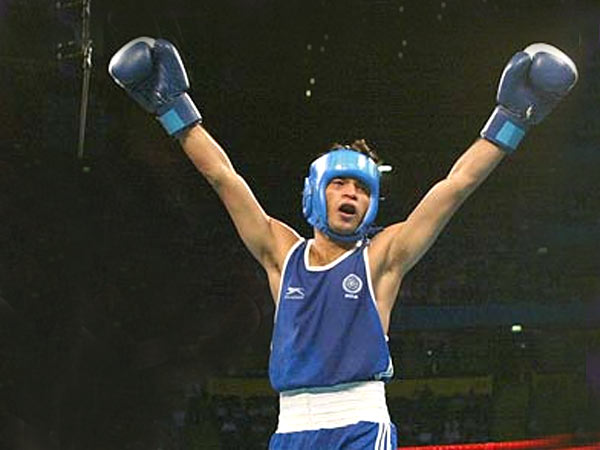
Mohammed Ali Qamar helped India win it’s first gold medal in boxing at the Manchester Commonwealth Games in 2002. It was far from an easy journey for the talented boxer from Kidderpore in Kolkata. Qamar’s father enrolled him into boxing at a very young age at Kidderpore School of Physical EducationHe was trained by Cheena Bhai in his early years.

Qamar started showing signs of improvement at the junior level by winning important matches that would go on to shape his career. His first big win came in 1991 when we was crowned the Inter-district champion in West Bengal. He extended his winning run to the national sub-junior levels as he was undefeated for four straight years 1992-1996. The Indian showed immense resolve before losing to Ron Siler in the quarterfinals of the 1999 World Amateur boxing championships in Houston.

Qamar took on home favorite Darren Langley in the finals in the Light Flyweight category at the Commonwealth Games. Langley was leading for most part of the summit clash, but the Indian did not give up as he outscored his British opponent 10-3 in the latter stages of the match. He also survived a standing count before he outmanoeuvred the Brit 27-25 to clinch the gold.

He lost in the quarterfinals of the 2002 Busan Asian Games.

A career that promised so much was cut short by injuries. Qamar, who shares his name with the legendary boxer Muhammad Ali slipped into oblivion after his historic win in Manchester.

Kidderpore is now the hub of women’s boxing in India. Boxers who train at the place consider Qamar as their inspiration. Indian fans can only hope that these women can go on to win medals for India.

source: http://www.sportskeeda.com / SportsKeeda / Homepage> Boxing / by Jaiprakash  @jaiprakashmr / December 27th, 2014

Eight-year-old Kashmiri girl wins gold in kickboxing

Bandipura District, JAMMU & KASHMIR :

Tajamul Islam. / PTI


A resident of Tarkpora village in Bandipora district, Islam is a student of the Army Goodwill School.

Eight-year-old Kashmiri girl on Friday created history by winning the gold medal for India in the world Kick Boxing Championship of under-eight players in Italy’s Andria.

“In five days, Tajamul Islam won six games,” said her coach Master Fasil Ali.

She defeated her rival from the U.S. to become the world champion in the kick boxing championship. She is first such player to achieve the feat from the volatile Kashmir Valley.

A Class 2 student, Islam represented India in Italy where the World Kick Boxing Championship, in which 90 countries participated, was underway.

“She (Islam) has created history by winning a gold medal in the game at the age of eight,” said PDP leader Waheed Parra, who is also J&K State Sports Council secretary.

In 2015, Islam won the national recognition after bagging the gold medal in sub-junior category National Kickboxing Championship in New Delhi.

A resident of Tarkpora village in Bandipora district, 65 km from Srinagar, Islam is a student of the Army Goodwill School.

Ms. Islam’s brother and two sisters also practice kickboxing.

Appreciating the talent, State Education Minister Nayeem Akhtar said, “It’s a proud moment”.

source: http://www.thehindu.com / The Hindu / Home> Sport> Other Sports / by Peerzada Ashiq / Srinagar – November 11th, 2016

Meet England’s newest recruit Haseeb Hameed, or the Bolton Boycott

Lancashire, UNITED KINGDOM :

Haseeb Hameed, cricket of Indian origin, made his debut for England against India at the age of 19.

Touted as the most promising batsman teenager around, Haseeb Hameed made his U-19 debut at the age of 17.

Ismail Hameed had an unusual hero, while growing up as a cricket-obsessed youngster in Gujarat in the mid 70s. It was the usual Kapil Dev or Sunil Gavaskar. Or Kris Srikkanth or Dilip Vengsarkar. It was that stodgy English technician, Geoffrey Boycott, who by then was treading the sunset of his career.

In the late 80s, he shifted to Bolton for a better livelihood. He might have been busy yarning a better livelihood in a textile factory, though he still squeezed in time to represent semi-professional leagues in his locality. And when he expanded his household, he dusted up that old fixation for Boycott.

He bought old video tapes of Boycott and religiously showed them to his three sons, Safwaan, Numan and Haseeb. He would then make them “bat like Boycott” for hours on end in the neighbouring park. Soon, Ismail gave up his job in the factory and became a driving instructor so that he could spend more time drilling the technique of Boycott into his sons. The third son, though, showed more inclination to bowling and he would join his brothers and father in the park after school.

To his credit, Ismail straightaway made them bat and bowl with the leather ball. So the boys shed the fear of the leather ball at a young age. The older boys were in the Lancashire U-15 team as pure batsmen. But Haseeb’s first love was always leg-spin bowling, and it was as a leggie who could bat that he was picked for the Lancashire U-15 team, when he was just eight.

Maybe Haseeb was such a naturally talented batsman that his batting potential couldn’t be obscured for long. During a club game, he made an unbeaten 19 for his club Tong CC, which wowed the coach and senior players in the side. In a couple of seasons, he showed such precocious potential that he was opening the innings for his club and Lanchasire. His narrative was just beginning to unfold.

Hours of watching Boycott’s footages and twice as many hours of technical finetuning under his father’s gaze—his father is still his coach and mentor—helped him evolve into a fine batsman with a composure and belief that belied his age. The conditions back home too helped develop a compact technique. “The nature of the pitches, typical league cricket up north where it rains a lot; it’s slow and low, helped me. You’ve got to be careful driving on the up and the like. I had to wait for the ball and not leave my bubble, be patient. It’s always been that way for me,” he told The Guardian in an interview early this year.

Touted as the most promising batsman teenager around, he made his U-19 debut at the age of 17, and soon he was touring Australia for an U-19 Test series. In the first innings in Perth, he made a duck, but in the second he epitomised all the virtues his father’s idol had embodied in his career. Trailing by 300-odd runs, he engineered a resillient reardguard operation, soaking up 256 balls for an unbeaten, eventually match-saving 91.The effort earned him the moniker “Lancashire Wall”. That was only a preface.

Soon, he was blooded into the Lancashire first team. Last August, he was handed out his debut, against Glamorgan. He composed 28 off 119 balls in difficult conditions. However, for all his crease-occupation, a century eluded him, until his 11th match, against Warwickshire when he scored a crabby 103 off 295 balls, spending six-and-a-half hours at the crease against a rounded attack comprising former England bowler Samit Patel and Boyd Rankin.

More centuries flowed from his bat. He then became the first Lancashire batsman to score back-to-back hundreds against Yorkshire, showing again his fondness for occupying the crease. He batted for five hours for 114 in the first innings before reeling off, to show his other side of batsmanship, with a brisk 100 off 124 balls, against a bowling firm that featured Tim Bresnan, Ryan Sidebottom and Adil Rashid.

The knock fetched him instant applause from present and former players was a match-saving 122, occupying the crease for more than six hours, in the second dig against Nottinghamshire, whose bowling unit featured Stuart Broad and Imran Tahir. Thus in 31 innings, he racked up 1411 runs at an average of 50.39. And per innings, he consumes an average of 117 balls.

Among those wowed by his batting is former English skipper and opener Mike Atherton, who has dubbed his batting “Atherton-like”. Former Lancashire colleague and South Africa batsman Ashwell Prince says “he’s born to bat”. In the county circuit, he is called “Bolton Blocker” and “Bolton Boycott”.

If he makes his England debut against Bangladesh or later against India, he will be the youngest English debutant since Ben Hollioke and only the second teenager to play for England in the last 67 years.

While his father wants his son to keep producing Boycott-like knocks, Haseeb has bigger ambitions. “I want to emulate guys Kohli, Root, Williamson, players who play very organised cricket across the three formats extremely well. If you’ve got the basics and you’re strong in your basics, then you can develop your game very quickly. You just need to watch Kohli, the way he manipulates gaps so well and times the ball. I’m confident that down the line I’ll be able to do that as well.”

source:  http://www.indianexpress.com / Indian Express / Home> Express Sports / by Sandeep G / November 09th, 2016