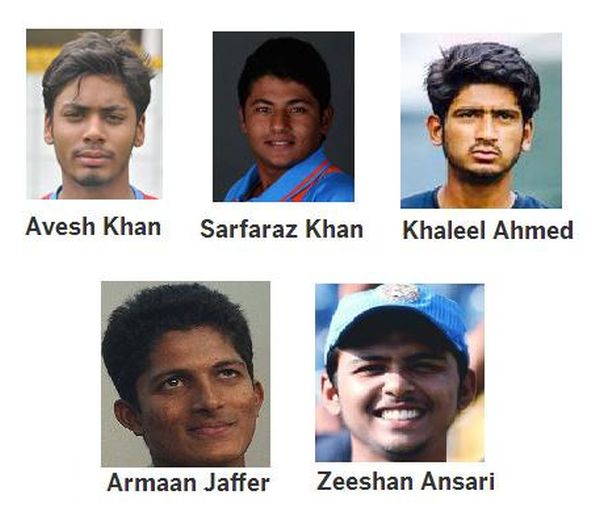
For the first time in the history of Indian cricket, five Muslim cricket players have been selected to represent India at International Cricket Council (ICC) Under 19 cricket World Cup 2016 in Bangladesh underway from 27 Jan. The name of these five players are Arman Jaffer, 17, Sarfaraz Khan, 18, Avesh Khan, 19, Khaleel Ahmed, 18 and Zeeshan Ansari, 16.
It may be noted that there were only three Muslims in Indian team that played Under 19 cricket World Cup 2014 in UAE.
Sarfaraz khan,the most prominent among these five,has performed well even in 2014 Under 19 world cup played in UAE. His consistence performance has earned his name in Royal Challenger Bangalore (RCB) and he was paid for Rs 50 lakh in the Indian Premier League (IPL) auction in 2015 where he showed superb batting that gave him more recognition.
At a very young age of 12, Sarfaraz from Mumbai got noticed when he scored a magnificent 439 in his maiden Haris Shield game in 2009. His father is a coach who has mentored players like Iqbal Abdullah and Kamran khan.
Another player, Armaan Jaffer is nephew of well known Test cricketer Wasim Jaffer. He also lives in Mumbai and is a class fellow of Sarfaraz. He created history in U-19 tournaments when he scored back to back three consecutive double centuries.
Avesh Khan, the other member of the squad,who hails from Indore, MP is a brilliant fast bowler. He created are cord of his own when bowled a delivery with 139.8 kmph against arch rival Pakistan in the last Under-19 World Cup played in UAE.
Zeeshan Ansari from Lucknow is a spinner and is known for throwing leg break googly. His father, Naeem Ansari is a tailor and specialises in Ladies Suit & Salwar.
Khaleel Ahmed, a left arm seamer is from Tonk, Rajasthan.He picked up 26 wickets in four matches in the under-14 Rajsingh Dungarpur Trophy.His 26 wicket haul got him selected for a camp at the BCCI Specialist Academy in Mohali. His father Khurshid Ahmed is a nurse in a village near Tonk, Rajasthan.
This time 16 teams are playing, split into four groups. While nine Test-playing nations — England, South Africa, West Indies, New Zealand, India, Pakistan, Sri Lanka, Zimbabwe, and Bangladesh — will take part, Australia Under-19’s have pulled out of the tournament citing security issues in Bangladesh.
source: http://www.muslimmirror.com / Muslim Mirror / Home> Indian Muslim / by admin / January 31st, 2016
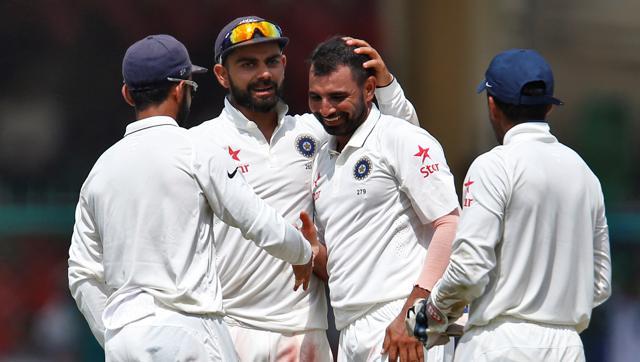
India’s Mohammed Shami celebrates with teammates after taking the wicket of New Zealand’s Mark Craig. (REUTERS)
When New Zealand drafted Neil Wagner in the XI here, it was hoped he would trouble the India batsmen with reverse swing, as he is known to do on dry pitches.
Wagner did get reverse swing in the second innings but couldn’t make a mark and remained wicket-less. He got two wickets in the first innings, but not off reverse swing. The India batsmen, especially Rohit Sharma and Ravindra Jadeja negotiated Wagner’s reverse swing well and made things tough for the Black Caps.
When it came to the India bowlers, Mohd Shami worked magic with reverse swing, especially when it mattered.
After 20 overs on Monday, India tasted success when Jadeja claimed Luke Ronchi, who tried to hit against the turn from outside off stump and gave R Ashwin an easy catch at point.
India had to wait thereafter. It was Shami who broke through as he cleaned up Mark Craig with reverse swing — the ball sneaking through bat and pad to send the off-stump flying. Bowling from wide of the crease, he kept the batsman in doubt.
Shami’s magic didn’t stop, and his second wicket opened the floodgates for Ashwin, who then ripped through the Kiwi innings with a six-wicket haul. Shami got one to swing back to catch BJ Watling, known for his defence, plumb in front.
“His (Shami’s) magic with reverse swing is natural as he was never allowed to bowl with the new ball during his early days in his village,” coach Barauddin told HT from Amroha, from where the bowler hails.
“He (Shami) used to bowl with the old ball in tournaments and even after a match used to rub it for further practice against young kids. He always wanted to be called a fast bowler. That’s why he used to get the old ball. It was disappointing initially, but he made the most of it,” he added.
Rare happening
The pavilion end of Green Park produced a record for India as the bowlers claimed all the wickets of the New Zealand second innings from this end.
The only run out of the match was when TV umpire AK Chaudhary declared Ross Taylor out off a direct throw from Umesh Yadav, with the batsman running to the pavilion end.
“There were some solid footmarks for the bowlers near the stumps at the media end and that’s the reason why Ashwin and Jadeja could spin the ball while bowling from the pavilion end,” said curator Shiv Kumar.
source: http://www.hindustantimes.com / Hindustan Times / Home> Sports / Sharad Deep, Hindustan Times, Kanpur / September 26th, 2016
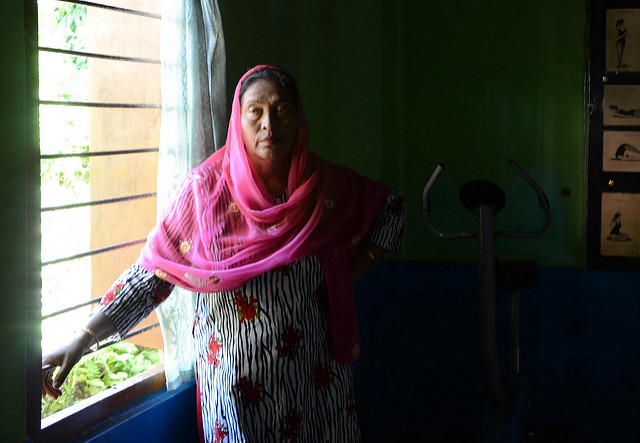
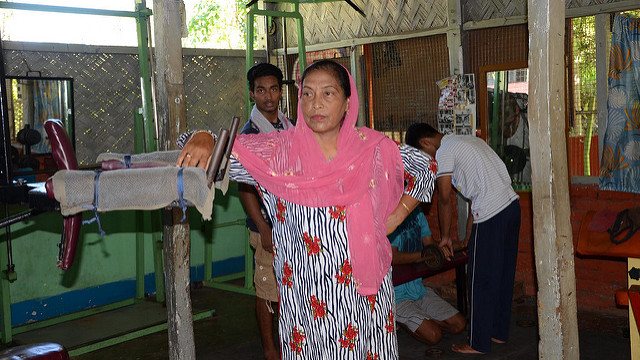
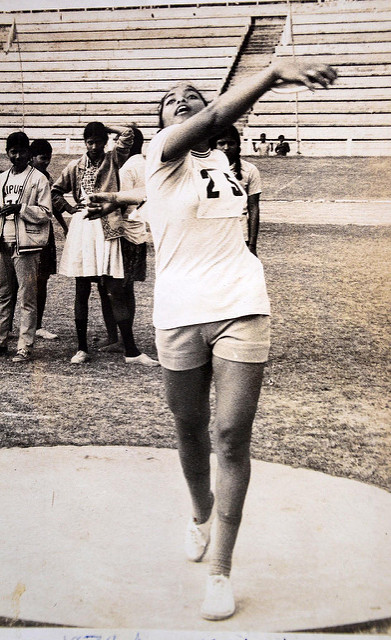
It was the love for chocolates which dragged her to the field of athletics and she went on to become the first woman athlete to win a medal for Assam at the national platform. She is Tayabun Nisha who broke a national record in discuss throw in 1971 and represented the country in several international events across the globe.
“When I look back to my childhood, it seems so funny. There used to be some village level competitions in my native place at Dhaiali in Sivasagar district on various occasions like Independence Day, Republic Day or on Bihu. Those days the winners used to get a box of chocolates. The love for the chocolates made me work harder to win medals as we could not afford chocolates. But gradually, I realized winning a medal also gives a recognition and later on I took it seriously,” Nisha told TwoCircles.net.
This how it started but the journey was not that easy as it seems. Belonging to a conservative Muslim family was another hurdle for her to take part in sports activities but could not deter her from the goal.
“Losing my parents at an early age was a setback but it gave me the courage to fight back the odds in life. I lost my father in 1970 when I was a class VIII student. It doubled the responsibility on my shoulders to look after my siblings. There were people in our neighbourhood who used to say things about girl going out to take part in outdoor activities. But I simply didn’t care because I knew in the hour of crisis these people never came forward to help us,” said Nisha.
But earlier, her father was encouraging. All these developments always motivated her to be even stronger. “We did not have much facility to practice but I used to be always prepared mentally. I knew only my dedication can lead me to the success,” she said.
Then even when she was going through a bad phase, Nisha started working for the Railways at a salary of Rs 250 in 1970s.
In 1971 Nisha took part in the 9th Inter State Athletic Meet to make her debut in Ahmedabad. Bronze in that tournament created a history in sports as she became the first woman athlete from the state to won a medal in a national championship.
In 1974 in Jaipur broke a 12 year old national record in discuss throw throwing a distance of 29.32 metre.
In 1982 Asian Games she missed medals but it did not hamper her mental strength.
“Though we worked hard before the games, I could not win a medal. But I was upset as I knew the reality. We were not up to the mark of other countries,” she said.
But a thought always haunts her that if they were provided better facilities, there would have been more medals. “We never had proper training. We did not have idea about the proper diets. But our contemporaries from other countries were well ahead than us. So I sometimes feel that we could have done much better,” Nisha added.
Now, she is planning to set up a sports academy and hostel especially for girls who are from poor families.
“As we have experienced lack of proper facilities for the rural girls, I’m planning to start a hostel where a young will be taken care of to build her sports career. But I’m not sure when we can start it,” she said.
On the present generation, the veteran athlete said that the determination is must. “One has to be determined to achieve. But unfortunately that kind of determination and hunger for success is missing among the today’s youngsters,” she said.
source: http://www.twocircles.net / Two Circles.net / Home> India News / by Abdul Gani , Two Cirlcles.net / September 18th, 2015
“For a girl to pick up a tennis racquet and to want to be a professional—it was unheard of,” Sania Mirza says. “People thought it was a joke.” PHOTOGRAPH BY GREG WOOD / AFP / Getty
On the last day of August, Sania Mirza, currently the No. 1 women’s doubles player in the world, was on one of the smaller side courts at the U.S. Open grounds, in Flushing Meadows, about to play her first match in this year’s tournament. She and her partner, Barbora Strýcová, of the Czech Republic, were squaring off against the Americans Jada Myii Hart and Ena Shibahara. The sun had begun to sneak behind the bleachers, where a few dozen fans had settled in. Occasionally, a roar from Arthur Ashe Stadium or the grandstands could be heard over their polite clapping. Mirza’s black hair was tied back in its usual businesslike bun, her dark eyes focussed beneath a neon-pink headband. Mirza’s gruelling summer had included her third Olympics, which had ended just a couple of weeks before, with a fourth-place finish in mixed doubles. Her longtime partnership with the tennis icon Martina Hingis was also coming to an end. Now she was gearing up again, knowing that millions were paying attention in her native India, even if only a handful were watching in New York.
Mirza, who will be thirty in November, is wildly famous in one hemisphere and virtually unknown in the other. She has nearly twelve million Facebook fans – more than double the number that Serena Williams has—plus four million followers on Twitter, and two million more on Instagram. She is, without hyperbole, one of the most popular athletes on Earth. She has, to date, earned $ 6.3 million in career prize money, a fraction of what Williams has made, but more than a thousand times the annual per-capita income in her home country.
She is also Muslim, and has sparked the ire of clerics for competing in tennis clothes that leave her arms and legs exposed. Though roughly one in twelve people on the planet is a woman from India, few Indian women have succeeded in professional sports, for reasons that are not hard to pinpoint. Last year, in the World Economic Forum’s Global Gender Gap Report, India ranked No.108, out of a hundred and forty-five countries listed. For years, women in India were largely discouraged from participating in high-level sports—and, unless the women were wealthy, good facilities were hard to come by, anyway.
Mirza is helping to change this. She’s an advocate for women’s rights, and has spoken up about ending the practice of female feticide in India. She has criticized government policies on domestic violence and sexual assault, as well as lopsided pay schemes, including in sports. She was the first South Asian woman to be appointed as a Goodwill Ambassador for the United Nations, and she often calls out reporters for asking her, and not her male counterparts, about her “family plans.” She told me that, after she and Hingis won Wimbledon last year, she was asked by a reporter when she’d be having a child. “I was, like, ‘I won Wimbledon two days ago!’ ”
Though Mirza makes light of her reputation, in India, for what some there see as arrogance, the truth is that her outspokenness has only made her more popular back home. Her stardom is an unlikely outcome, considering where she started. “For a girl to pick up a tennis racquet and to want to be a professional—it was unheard of,” she told me. “People thought it was a joke.”
Mirza grew up in Hyderabad, a city of nearly seven million. It was only half that size when she was a child, and, back then, sanitation, let alone access to a tennis court, was not a given—only a handful of courts existed, and many that did were riddled with potholes or made with cow dung (a surface that was thought to offer a middle ground between clay and hard courts). Today, as Mirza is well aware, the city center of Old Hyderabad is a hub for human trafficking, and domestic violence is an urgent problem. Though technically illegal, child marriage persists. Local police blotters in and around Hyderabad regularly carry gruesome stories: a woman who hanged herself by her sari when a dowry went sour, a husband setting his wife on fire. Just a few weeks after last year’s U.S. Open came news, from south of Hyderabad, in Bengaluru, that a woman had been raped by two security guards outside of tennis courts in Cubbon Parks. It was the third such attack in the city in a month. According to local reports, the victim later told police, “I want to be like Sania Mirza.”
The Mirzas moved to Hyderabad, from Mumbai, when Sania was an infant, one of many families drawn to the burgeoning technology mecca. Mirza’s father, Imran, held a number of jobs, working mostly as a printer and, later, in construction. Mirza’s mother, Naseema, also had a mind for business, and she and her husband often worked together. They were ambitious, and forward-thinking in their attitude toward girls; still, they tried to avoid placing too much stress on their daughters. (Sania’s sister Anam is seven years younger.) It was on a whim that Imran signed up Sania, then six years old, for tennis lessons, at Hyderabad’s Nizam Club. There were cricketers in the Mirza family, but women’s cricket had not yet taken off in India. Tennis seemed like something she might enjoy.
A couple of months later, Sania’s coach suggested that Imran come to watch his daughter play. He put it off. When he finally saw her on the court, he immediately realized that she was a standout talent. Soon, the sport became as much a part of her childhood routine as brushing her teeth or doing her homework. Sania attended the Nasr School, a progressive all-girls private school, which adapted her academic schedule to accommodate her tennis travels. “Always in tracksuits, coming directly from practice straight to school!” Nirmal Gandhi, a teacher at Nasr who had Mirza as a student, said. “I don’t think I ever saw her serious. She was always laughing with her friends.” At the time, the Indian system for youth tennis was, Imran said, “nonexistent.” It’s not unheard of for the parents of tennis players to spend fifty thousand to a hundred thousand dollars, or more, annually on coaching, travel, and equipment, an expense that was far beyond the Mirza household budget at the time. So Imran began to coach his daughter, and set about researching local tournaments, learning what he could through word of mouth and follow-up phone calls. Sania’s mother stayed at home “to hold down the ranch,” tending to Mirza’s little sister and various pieces of family business, a pattern that would continue for twenty years—Sania’s tennis career becoming another joint family venture.
Mirza eventually won a berth in the 2003 Wimbledon junior girls’ competition, as a doubles player with Russia’s Alisa Kleybanova. They won the tournament. When Mirza stepped off the plane back in India, a mob of people greeted her and her family at the airport, fanfare that surprised them. Government dignitaries took photos with her and bestowed her with awards. The Indian press began to cover her every move, and it hasn’t stopped since. “At fifteen or sixteen, you’re still trying to get in touch with yourself as a person, as a teenager,” Sania Mirza said. “You have pimples. You have baby fat, in front of millions of people. You have to kind of grow up in front of the media, and you’re growing older and the following is getting larger and larger. You’re still getting in touch with who you are.”
“The Indian media, too, was just growing up,” Imran said. “They grew up along with Sania. They were really not geared or didn’t know how to handle a female sporting icon. They might have handled a film star, but here was the first sporting woman from India. It wasn’t easy for her, but it probably wasn’t easy for the media to deal with, either.” In 2005, as she was competing on the international circuit, a group of clerics issued a fatwa against Mirza, calling her skirts and T-shirts “un-Islamic” and “corrupting.” The cleric Haseeb-ul-hasan Siddiqui told the Guardian that the clothing she wore on court “ leaves nothing to the imagination .”
“You get hate mail,” Mirza told me. “You get love mail, but hate is a lot harder to digest than love. That’s the way it is.” She continued to wear Western-style pants and heels, and slogan-bearing T-shirts, including a popular one that declared, “Well-behaved women rarely make history.” The increased attention, and Mirza’s handling of it, gained her even more Muslim fans, a broad demographic that had largely been overlooked by the tennis-marketing establishment. And she excelled on the court. As a professional singles player, she reached a ranking of twenty-seven, the highest spot achieved by an Indian woman.
Privately, though, Mirza was battling a series of injuries. The hypermobile joints that helped give her flexibility on the court also led to extreme pain, which she often hid. She underwent operations on both knees and a wrist. Upon examining her body and her demanding competition schedule in 2010, doctors gave her the devastating news: she was done playing singles.
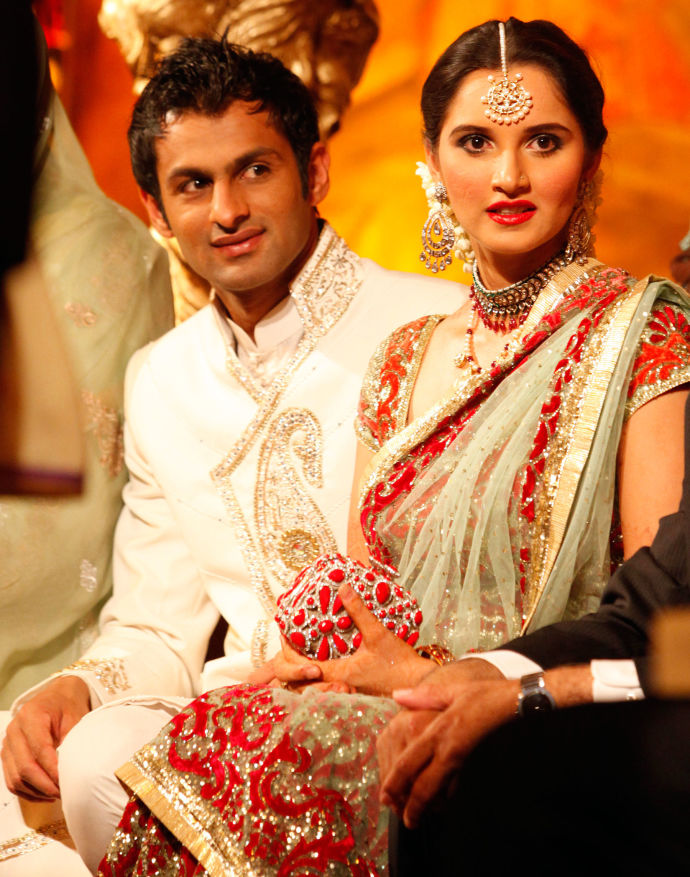
Mirza had been engaged to a longtime family friend, but in January of that year it was reported that she had called off the engagement. Then, in April, she became engaged to the Pakistani cricketer Shoaib Malik, whom she had met through mutual friends and had seen occasionally thereafter on various sports-related travels. The new wedding plans were a major story in India: Malik had served for two years as a captain of the Pakistani national cricket team, and cricket is something of a religion in that part of the world. Ordinarily, this would have made Mirza and Malik the Beyoncé and Jay Z of South Asian sports—but marriage to a Pakistani, even one who is an élite athlete in a treasured national pastime, is still “a huge taboo” in India, according to Bappa Majumdar, the Hyderabad bureau chief for the Times of India, who has covered Mirza. “It showed huge guts on her part,” Majumdar said.
The couple had planned an Islamic wedding ceremony in Hyderabad, with another ceremony to follow in Pakistan, adhering to that country’s customs. Within hours of the announcement, dozens of journalists had camped out in front of the Mirza home, to cover the tale of the star-crossed lover-athletes. The story then took an additional soap-opera turn: a woman from Mirza’s home town went to the press, saying that she was already married to Malik, and had been since 2002. He initially disputed this; they had merely met online and exchanged photographs—though, he said, the pictures she sent him were of someone else. But he ultimately admitted to the marriage and got a quick divorce, according to local news reports, days before his wedding to Mirza.
Mirza at her second wedding to the Pakistani cricket star Shoaib Malik, in his home country. His nationality drew criticisim of Mirza in India./ PHOTOGRAPH BY FAISAL MAHMOOD / REUTERS
On account of her marriage, some of Mirza’s critics in India have called her the “daughter-in-law of Pakistan.” In an interview with a New Delhi television station, in 2014, she burst into tears, saying she was exhausted by the need to “keep asserting my Indianness.” “I have no problem if they attack me about my tennis or they attack me about what I’m doing,” Mirza told me, adding, “I come from a country of 1.2 billion people, and I’ve accepted the fact that I’m not going to be liked by all of them.” Her family, in any case, approved of the union, Imran said. “She wasn’t getting married to a country but a person.”
Mirza and her father spend much of the year on the road, but when they’re not travelling they can often be found at the Sania Mirza Tennis Academy, a set of nine hard courts nestled among farmland and jungle, with a sweeping view of Hyderabad. The family bought the plot of land four years ago, with the goal of making it a hub for tennis in India. Some hundred children are now enrolled in the academy, almost all of them having heard about it by word of mouth. Some are the children of Hyderabad’s rising middle and upper-middle classes, but others have never seen a tennis court prior to joining, and rely on scholarships, which are offered according to financial need. Backing from sponsors was not forthcoming when the academy opened, in March of 2013, so the program was jump-started with funding from the Mirza Family Trust.
Here Mirza can practice in relative seclusion. She and her father also talk to parents about the nuances of a good backhand, what competition is like internationally, and the grit required to make it as a professional. Some aspiring players have shown up at the academy’s gates on rickshaw, their parents willing to relocate some or all of the family to Hyderabad or nearby villages solely in pursuit of tennis. “They thought Sania was an overnight success, and they want results in six months,” Imran told me when I visited the academy last year. “And I keep telling them it takes ten years to find out whether they even have a chance. It cannot be done for the money or the fame. It has to be done for the passion.”
When I spoke with Mirza in Flushing, a year later, she said it had been two months since she’d been home to India. She and Strýcová won their first match at the U.S. Open, convincingly, 6–3, 6–2, and she noted afterward that the dynamic she shares with Strýcová on the court is not dissimilar from her partnership with Hingis: Mirza is strong and powerful, sweeping the back of the court, while Strýcová is nimble and poppy at the net. The two have known each other since they were teen-agers on the junior circuit, which has helped with the transition. But earlier this week they were knocked out of the Open by Caroline Garcia and Kristina Mladenovic, the tournament’s top seeds. (Garcia is ranked No. 3 in the world in women’s doubles, and Mladenovic is No. 4. Hingis is No. 2.)
Mirza published an autobiography in India this summer. She said she doesn’t know how long she’ll play, or what the future holds for Indian women, but she pointed to India’s victories at the Rio Games as a sign of progress. The Indian Olympic Committee, which had been banned, was reinstated in 2014, and the country sent its largest-ever delegation, a hundred and seventeen athletes. They won two medals: a silver in badminton, for Pusarla Venkata Sindhu, and a bronze in wrestling, for Sakshi Malik. “It was amazing,” Mirza said. “And it was the women who won!”
Mary Pilon is the author of “ The Monopolists,” a book about the board game Monopoly. She previously worked as a staff reporter at the Times and the Wall Street Journal, where she wrote about sports and business.
source: http://www.newyorker.com / The New Yorker / Home> Sections> The Sporting Scene / by Mary Pilon / September 10th, 2016
The uncertainty over the state’s Class XII examinations, scheduled from Monday, has not curbed the “sporting” instincts of the Assam Higher Secondary Education Council.
The council has roped in former five-time national discus champion Tayabun Nisha to train 12 athletes, who were picked up from among the participants at the first higher secondary and junior college students meet here in December. The shortlisted athletes will attend a special coaching camp under Nisha at the NF Railway stadium in Maligaon.
The council’s novel brainchild, the three-day meet at the Nehru Stadium had attracted 297 boys and 146 girls in seven disciplines — 100m, 200m and 1,500m-sprint, high jump, long jump, discus and shotput events.
It had formed a four-member committee — comprising Nisha, Assam Amateur AthleticsAssociation secretary Sarif Ullah, Thaneswar Saikia and district sports officer of Nalbari, Bhupen Choudhury — to spot talent at the meet.
“The council should be lauded for its efforts. I will contribute my mite to make the camp more meaningful. The trainees will be accommodated at the railway sports hostel. We need more such initiatives for the state to do well in the National Games,” Nisha said.
“The camp will begin after the higher secondary exams. It will be a short camp of maximum 10 days,” chairman of the council D.K. Kakati said. The next course of action will be taken after the council’s physical education committee is formed.
“We hope the sports administrators of the state will take a look at our selected players because some of them could be groomed for the 2005 National Games,” he said.
THE SELECTED PLAYERS
Boys: Kamal Hainary (Darrang); Robin Baishya (Nalbari); Gagan Baruah (Kamrup); Dwipen Rabha (Darrang); Biju Barman (Kokrajhar) and Tultul Saikia (Dibrugarh). Girls:Mina Deka (Nalbari); Jonali Devi (Kokrajhar); Sundari Barman (Kokrajhar); Rupamoni Bora (Jorhat); Puspha Bora (Golaghat); Gitanjal Bora (Golaghat).
source: http://www.telegraphindia.com / The Telegraph, Calcutta,India / Front Page> Northeast> Story / by Umanand Jaiswal / Guwahati – February 19th(20th), 2003
Indian men’s and women’s 4x400m relay race teams virtually qualified for Rio Olympics after clocking impressive timings at the 3rd Indian Grand Prix athletics event on Sunday.
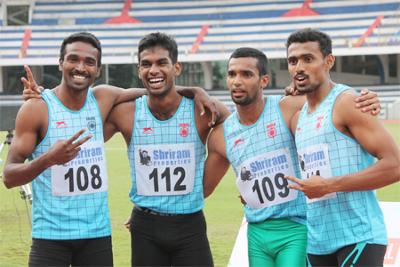
The men’s 4x400m relay quartet of Kunhu Muhammed , Muhammed Anas , Ayyasamy Dharun and Arokia Rajiv (running as India A) smashed the national record by finishing the race with a timing of 3:00.91secs at Sree Kanteerava Stadium here.
The quartet clipped more than one second from their four-week old earlier national record of 3:02.17secs which they clocked at Erzurum, Turkey.
The men’s 4X400m relay team today leaped to 13th spot in the current world rankings from last night’s 18th. The top 16 countries in the world at the deadline of July 11 will qualify for Rio Olympics.
The women’s 4x400m relay quartet of Nirmala Sheoran, Tintu Luka, M R Poovamma and Anilda Thomas (running as India A) also made tremendous improvement in their timing, clocking 3:27.88secs – the fourth best time ever – to also virtually qualify for Rio Olympics.
The women’s 4x400m relay team, which yesterday slipped to 14th spot due to the ongoing European championships in Amsterdam, today bounced back to its original 12th place after this performance.
Athletics Federation of India Secretary C K Valson said that both the men’s and women’s 4x400m relay teams are certain to qualify for Rio Olympics.
“The women’s and men’s 4x400m relay team have virtually qualified for Rio Olympics. The women’s and men’s relay teams, are now placed 12th and 13th position,” Valson said.
To make the event eligible for Olympic qualification, athletes from Sri Lanka and Maldives have been invited to take part in the relay races. At least, two international teams are required to make the event counted for Olympic qualification.
With the addition of the men’s and women’s 4x400m relay teams, the Indian track and field contingent is likely to swell to 33 as 24 have already qualified for the Rio Games.
Muhammad Anas (men’s 400m) and Nirmala Sheoran (women’s 400m) and Tintu Luka (women’s 800m) have already qualified for the Olympics in their individual events and since they are expected to be in the relay teams, another nine will be part of the two relay squads of six each.
This will take the total number of Indian sportspersons for Rio Olympics to 114 as 105 have already qualified.
Today’s results meant that Athletics Federation of India’s idea to provide another chance to its athletes with Olympic ambitions paid off well. The 3rd and 4th (to be held tomorrow) Indian Grand Prix events were hurriedly decided to be held here with this idea.
Mohammad Kunhi, the men’s 4x400m relay team coach, said his boys did really good to virtually qualify for Rio.
“I had the target of 3:01.31s, but the boys did extremely well to clock 3:00.91s. I am very happy that the boys will make it to Rio Olympics because right now we are placed 13th, which makes us a strong contender for qualifying. Only a miracle performance by other countries’ athletes trying to qualify can better our timing and position,” Kunhi said.
Asked what preparation went into the sterling performance put up by the boys, Kunhi said their participation in international meets in Poland, Turkey and France had given them good exposure, which helped them to achieve this feat.
On whether the team stands a good chance of winning a medal in Rio, Kunhi said, “If my boys are able to clock 2.58.57s, we stand good chance to win a medal. I will work on the aspects of speed endurance.”
Asked about other competitions in the run up to the Rio Olympics, Kunhi said he would take his boys to Columbia for training as the climate there is similar to Rio.
In other events of the day, Railways’ V Neena, who has been dominating the long jump scene in the current season, was once again on the spotlight as she produced a wind-aided 6.57m (+2.3 m/s) to win the gold.
Neena, the National Inter-state Championships winner with 6.45m, had also clinched the gold in Thailand Open with another personal best 6.46m less than a week ago.
The men’s long jump event witnessed keen contest between Inter-state victor Yugant Shekhar Singh and Muhammed Anees.
Anees opened with 7.78m and Shekhar responded by improving his personal best to 7.76m in the fourth round. Both the jumpers had an identical 7.80m in the fifth round.
However, Anees was adjudged the winner with his better series of jumps at the end and hence avenged his defeat at the National Inter-state Championships.
Fresh from his Inter-State victory, Amit Kumar (Services) once again toppled Rajinder Singh (75.40m) and Vipin Kasana (73.85m) in men’s javelin throw with 76.25m.
In other events, Rio qualifier Inderjeet Singh (Oil India) was an easy winner in men’s shot put as he tossed the iron ball to 19.85m. That effort was more than a metre ahead of second placed Tejinder Pal Toor (Punjab, 18.66m) and national record-holder Om Prakash Singh Karhana (ONGC, 18.64m).
National record-holder Siddhant Thingalaya failed in his bid to qualify for Rio in 110m hurdles as he hit the third hurdle very hard that cost him dearly in his timing (13.75 secs) in a thin field.
Kerala’s Shilpa Chacko (13.41m) outclassed her Kerala team-mate N V Sheena (13.29m) in women’s triple jump. Sheena, having a season best of 13.58m registered during the Kosanov international meet at Almaty, Kazakhstan last month could not find her rhythm today.
Maldives’ Hassan Saaid was the fastest man of the meet as he ran the 100m dash in 10.37secs ahead of Krishna Kumar Rane (Customs, 10.46secs) and national record-holder Amiya Kumar Mallick (Odisha, 10.49secs).
Some of the biggest names in Indian athletics, who also have qualified for Rio, took part in the Grand Prix. Among them were Dutee Chand (women’s 100 metres), Ankit Sharma (men’s long jump), Tintu Luka (women’s 800m), Mohammad Anas (men’s 400m) and Srabani Nanda (women’s 200m).
Other prominent athletes who took part in the event include two-time Olympian Renjith Maheshwari (men’s triple jump), Amiya Kumar Malik (men’s 100m), Jyoti HM, Merlin Joseph (both women’s 100m), M R Poovamma, Priyanka Panwar, Ashwini Akkunji, Juana Murmu (all women’s 400m) and Sahana Kumari (women’s high jump).
source: http://www.timesofindia.indiatimes.com / The Times of India / News Home / PTI / July 10th, 2016
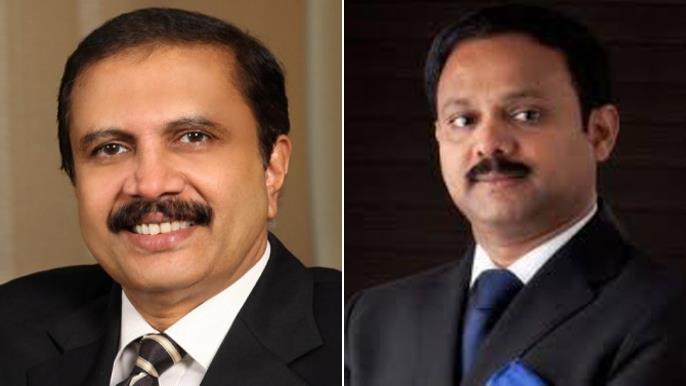
Dr Azad Moopen ( left) and Dr. Siddeek Ahmed (right)
Two prominent non-resident Indian (NRI) businessmen from the Gulf, one from the UAE and the other from Saudi Arabia, have joined hands to revive the legendary Sait Nagjee Football Tournament in Kozhikode in Kerala after over two decades with the aim to “restore the old glory” of the sport in the state.
Two prominent non-resident Indian (NRI) businessmen from the Gulf, one from the UAE and the other from Saudi Arabia, have joined hands to revive the legendary Sait Nagjee Football Tournament in Kozhikode in Kerala after over two decades with the aim to “restore the old glory” of the sport in the state.
Dr Azad Moopen of the Aster DM Healthcare group in Dubai and Dr. Siddeek Ahmed, who heads the Eram Group in Saudi Arabia, have also roped in Brazilian football star Ronaldinho as its goodwill ambassador and are getting top European and Latin American teams to play in India. The announcement was made recently in Dubai in the presence of Ronaldinho who arrived in Kozhikode Sunday to a rousing welcome from fans, including hundreds of escort bikers from Kochi airport to Kozhikode.
The Aster MIMS Nagjee International Club Football promoted by Mondial Sports LLP will start on February 5 at the Kozhikode Corporation Stadium.
For the first time in India, seven international club football teams from South America and Europe will play in the tournament whose final is on February 21.The UK-based charitable trust, Football for Peace Global (FfP), is the charity partner, undertaking a legacy programme for school children in Kozhikode, supported by the United Nations and the Duke of Cambridge.
The participating teams include Argentina (U-23), Watford F C (U-23), England, Levante UD (U-23) Spain, Club Atletico Paranaense (U-23) Brazil, TSV 1860 München (U-23) Germany, Rapid Bucharest, Romania, Shamrock Rovers F C, Ireland and I-League (U-23), India.
“Football has the power to unite people. It has given me an opportunity and taught me universal values of friendship and unity,” Ronaldinho said in a statement.
“I am supporting the work carried by Football for Peace Global and proud today to be the guest of honour of Nagjee International Club Football Tournament 2016 and becoming a Footballer for Peace.”
Acclaimed footballer Kashif Siddiqi, a co-founder of FfP, will also support the event actively.
“It is a great privilege for me to partner with my football friend Ronaldinho to achieve our visions for peace and undertake an FfP legacy programme in Kerala,” Siddiqui said.
The organisers say their primary goal is to “restore the old glory, revive the sport in its pure form (unlike the franchise model) and last, but not the least, continue its legacy of promoting peace” in a new form “which will be seen for the first time ever in the nation.”
Dr Moopen is the chairman and managing director of Aster DM Healthcare, a healthcare conglomerate in the Middle East and India. Headquartered in Dubai, the Aster DM network now encompasses more than 13,000 employees, 1500+ doctors with clinics and diagnostic centres. In 2010 and 2011, Dr Moopen was awarded the Pravasi Bharatiya Samman and Padma Shri by the Indian government respectively.
Dr. Siddeek Ahmed is the chairman and managing director of Eram Group, one of the region’s most diverse conglomerates, with over 40 plus entities spread across 12 countries, which is a powerh0use in industrial contracting, project management solutions, automotive, healthcare, travel, IT, manufacturing, power electronics, trading, floor covering and other commercial ventures.
The news naturally got prominent attention in the Gulf media with newspapers like the Gulf Times carrying a big report on it. An estimated seven million Indians live in the Gulf region and send back over $ 35bn in annual remittances.
The Indian Diaspora ( feedback: info@theindiandiaspora.com)
source: http://www.theindiandiaspora.com / The Indian Diaspora / Home> In the News> Primary News / January 25th, 2016
Sangam city is famous not only for its brilliant academicians and towering political personalities, but also because of its sportspersons who have made it big on the national and international stage in various disciplines. Cricketers, gymnasts, hockey players or shuttlers, Allahabad lads have always made their presence felt whenever they have got an opportunity.
Heading the list is Mohammad Kaif who made it to the national squad and soon found a place in the record books with his match-winning knock at NatWest trophy in 2002 where he scored an unbeaten 87 in partnership with another cricket hero, Yuvraj Singh, to clinch the trophy for India at Lord’s cricket ground.
Kaif was the most successful captain of UP in the Ranji Trophy, as under his leadership the home team won their maiden Ranji Trophy title, beating Bengal in a thriller played at Lucknow in 2006. Kaif has played 13 Tests, 125 one-day internationals and 177 first class matches. However, donning a new role Kaif will now lead his new state, Chattisgarh, which will make its debut in Ranji Trophy in the 2016-17 domestic season.
Another cherished moment for Allahabad was when five of its cricketers including Ashish Winston Zaidi, Obaid Kamal, Jyoti Yadav, Mohd Saif and Mohd Kaif represented UP in the 1998 Ranji Trophy final against Karnataka.
The history of gymnastics in Allahabad dates back to 1989 when the National Sports Academy (NSA), headed by its chief patron Dr UK Mishra, made a beginning in the sport with a handful of boys. His efforts bore fruits when the 2010 Commonwealth Games made gymnast Ashish Kumar an instant star, as he created history and became the first Indian to win medals in gymnastics for the country.
In badminton, the city has produced number of outstanding players like Suresh Goel, Damayanti Tambe, TN Seth, Abhinn Shyam Gupta, Sushant Saxena and few others. Goel was the men’s national singles champion on five occasions from 1962 to 1970 and he also won national titles in men’s doubles and mixed doubles.
The story of local sporting heroes’ march to glory would be incomplete without the mention of Danish Mujtaba who became the captain of Indian team at the young age of 23 and produced some memorable performances at international level. He was the only player from the city who participated in the Rio Olympics, 2016.
source: http://www.timesofindia.indiatimes.com / The Times of India / News Home> City> Allahabad / TNN / August 29th, 2016
Bowls 32.2 overs unchanged in match against Krishna District
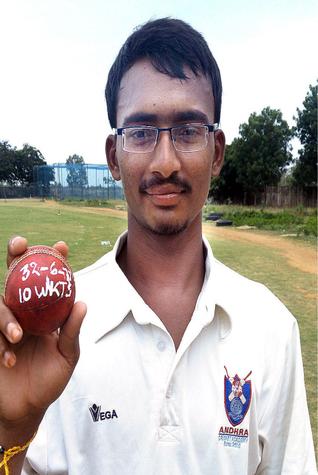
Claiming 10 wickets is big achievement in any form of cricket more so if the bowler is a medium pacer.
The feat was achieved by Suleman of Kadapa in an under-19 inter-district match against Krishna at the newly laid wicket at Venkatgiri in Nellore district on Sunday. He bowled 32.2 overs from one end unchanged to run through the rival side.
Though Krishna District went on to win the match, the 18-year-old pacer from Dhuvur mandal grabbed the attention of both coaches and administrators looking for talented young cricketers.
Earlier, for Andhra Cricket Association, players like Sk. Mahaboob Basha (Guntur), Naresh (Anantapur), Suraj Preetham (Srikakulam) and Rambabu (East Godavari) scalped all 10 wickets both in the board and State matches.
“This boy is playing his fourth match of the season. Last year though he was in the team he could not play. He is 5 feet 7 inches tall and has a gentle run-up to the wicket. He sticks to his basics by bowling wicket to wicket,” said Rehman, an umpire from Kadapa, who saw induction of Suleman in cricket.
Mr. Rehman said that Suleman was a product of sub-centres spruced by the Kadapa District Cricket Association to promote the game in rural areas. “We have sub-centres at Proddatur, Pulampeta, and Nandalor. He was spotted in the selection trials staged to identify rookie players”.
Mr. Yugandhar Reddy, an administrator from Anantapur, felt that Suleman should be inducted into ACA academies to hone skills in a more methodical manner. “He appears to have the wherewithal and temperament to make it to the big league. Experienced coaches should groom him as a quality spearhead.”
Suleman adds income to his family by taking up sundry agricultural work and during cricket season he gives his best as a medium pacer.
source: http://www.thehindu.com / The Hindu / Home> Andhra Pradesh / by J.R. Shridharan / Vijayawada – August 16th, 2016
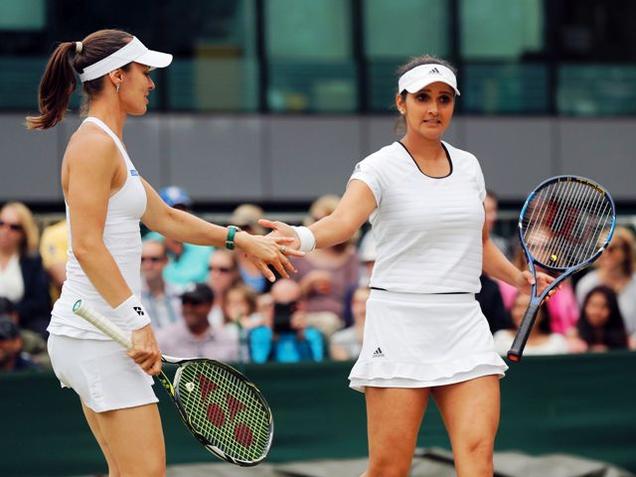
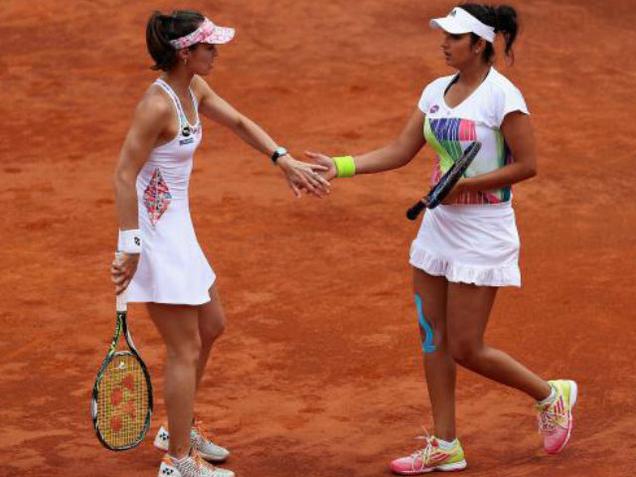
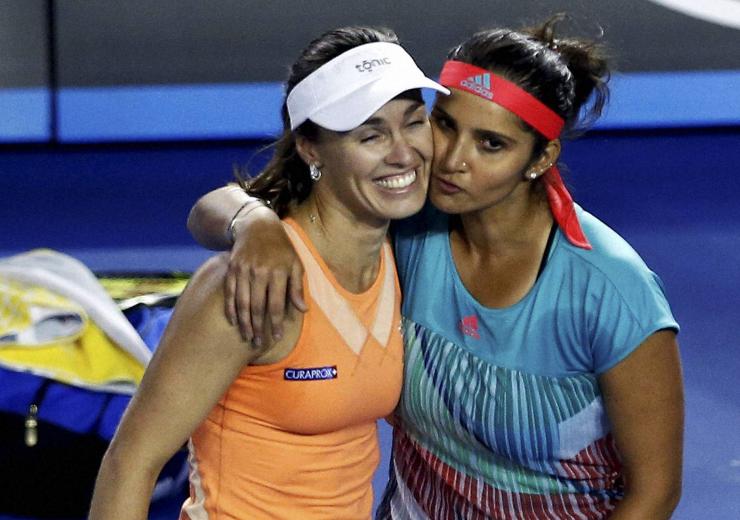
It is official. India’s six-time Grand Slam winner Sania Mirza has decided to part ways with Swiss great Martina Hingis. The World No. 1 duo has won 3 Grand Slams and 14 WTA titles together since they paired up in 2015.