Category Archives: Travel & Tourism

Heritage marks this mosque

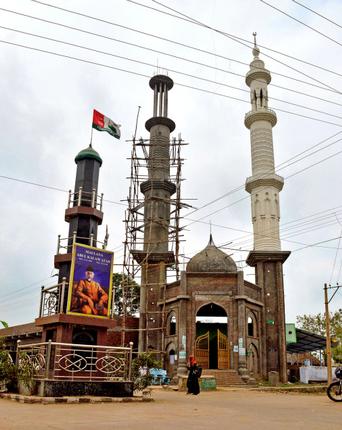
It reminds one of the oldest mosque in Kerala in Calicut, maybe even in India – a quiet nondescript house sitting serenely in one of the most crowded areas in Mangalore called Bunder. We had been searching for it and so understated was it that we were directed to two other mosques before we actually found it.

The Zeenath Baksh Mosque is thousand years old

Maybe we should have asked for Jumma Masjid for that is its other name. We went through bustling alleys and streets, most of whom had their own mosques, new ones with domes of different shades of glistening green domes and minarets.

Finally we reached Bunder. The street was lined with shops selling a plethora of goods ranging from groceries to bicycle parts. By sheer happenstance we asked a particular shop owner where this mosque was and he pointed next door to say” It’s here only”. Here? We were surprised as it seemed like just another house.

It is housed a little inside from the road. We were conspicuous by our presence, my friend and I, for there were hardly any women going in or out. A young man in a kurta pajama and white cap came forward and my friend asked if we could take a picture. He agreed instantly and asked if we would like to come inside. But he said, you will have to cover your heads. We agreed and he took us around , very patiently explaining to us its history.

He said that it was a thousand years old; Islam in Kanara dates back to the twelfth century, as it had become the regional center for thriving international trade with Africa and Arabia. There are purportedly letters from Cairo assumed to be from an Abraham Ben Yiju, a North African Jew who settled here for twenty years.

This was unlike the other fellow traders who came and went intermittently, but ultimately went back to their land of origin. These missives are part of the Genizah documents (so called because they were found in the Genizah which is the back room of a synagogue) prove the existence of trade between Africa and Arabia and India. Author Amitav Ghosh researched these scholarly documents for his story in his brilliant novel “In an Antique Land”.

In a similar fashion, Muslim Arab traders had a cordial relationship with the rulers of the western coastal belt of India. This is attested to also by the writing of Ibn Batuta, the intrepid North African traveller who passed through India in 1342 who estimates that the Muslims in this region amounted to 4000.

The Masjid Zaynath Baksh in Bunder is said to have been established in Mangalore in 644 A.D and was inaugurated in February 644 A.D.

In the seventeenth century, Tipu Sultan renovated the mosque adding beautifully carved rosewood pillars and also a carved ceiling. The mosque was renamed after his daughter Zeenat Baksh. The prayer hall is on a plinth with an open colonnade running around the building under heavy overhanging eaves. The renovation coexists in harmony with the older, more ancient structure.

Men were praying with quiet intensity, some standing with stretched hands and some were sitting and praying. I traced the curlicues  in the carved ornamentation of the pillars, standing solid and reassuring.

There is a pellucid ablution pool at the back and around the building is a cemetery.The façade of the mosque has green pillars supporting it.

Overall it gives the appearance of a dignified house of worship, providing a sacred sanctuary for both the dead and the living.

Maya Jayapal

source: http://www.deccanherald.com / Deccan Herald / Home> Supplements> Spectrum / by Maya Jayapal / February 25th, 2014

Rare Tipu coins to be auctioned this weekend

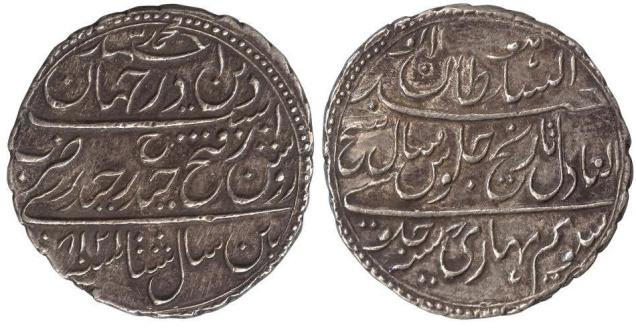
The silver coin issued by Tipu Sultan, minted at Srirangpatanam. / The Hindu

Extremely rare and unique silver coins issued by Tipu Sultan will come under the hammer in Bangalore this weekend as a Silver Double Coin, also called as “Haidari”, and a half Anna, have been put on the block by a Delhi-based collector.

These two coins are among many other rare coins from the collectors’ kitty that will be auctioned during the three-day National Numismatic Exhibition, organised by the Bangalore-based auction house Marudhar Arts, starting from Friday.

The “Haidari”, which weighs 23 grams, according to Rajendra Maru of the auction house, has come for auction in India for the first time in several decades. “The last time we heard about the coin was some years back when a fake Haidari was in circulation. There are less than 100 such coins known to be with collectors,” he added. It is being auctioned with a base price of Rs. 1.5 lakh.

The Haidari was issued on March 16, 1790 by Tipu Sultan in honour of his father Hyder Ali. The coin minted in Srirangapatna was equivalent to 32 copper coins. The other coin issued by Tipu Sultan is an extremely rare half Anna silver coin issued in 1785 that weighs just half a gram and is 7.33 mm in size.

First time

A nearly 3,000-years-old silver coin belonging to Pauravas (Kura dynasty) of Kausambi region has also come for auction for the first time and has been categorised as extremely rare. The other first timer on the block is a punch marked Gold Pagoda coin issued by King Barma Bhopala (1187 AD -1188 AD) of Toragale dynasty in Dharwad region. According to a release, Bhopala ruled for just four to five months.

A lead coin issued by the Marathas of Tanjore that is categorised as exceedingly rare is also being auctioned along with very rare Re. 1 and Rs. 5 currency note of King George VI that was in use even after independence.

The exhibition will be held at Bell Hotel, next to the Bangalore City railway station between 10 a.m. and 6 p.m. and entry is free.

source: http://www.thehindu.com / The Hindu / Home> News> Cities> Bangalore / by Special Correspondent / Bangalore – February 19th, 2014

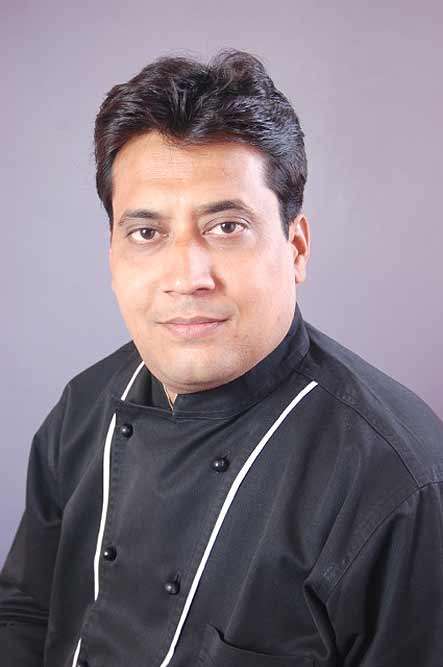
Chef M. Rehman, that rare Awadhi specialist, has one mission: to take the cuisine all over India

ChefRehmanMPos17feb2014

 Society / Interview / 10 Questions

How did you get into Awadhi style cooking?

It is because of my grandfather, who was a connoisseur of Awadhi delicacies. Plus, I am from Lucknow so it came naturally to me.

Now you have become its missionary.

I wanted to popularise Awadhi food. After starting a festival in Mumbai about 10 years ago, I have now taken it to other cities.

What are its popular, signature dishes?

Galauti Kabab, sheermal, gosht do pyaza, lagan ka murgh, gosht dum pulao, gobhi musullum, ahamri paneer, dal sultani, nazakati baingan, zafrani kheer and shahi tukra etc.

The primer question: how exactly is Awadhi different from Mughlai and Hyderabadi?

It’s super-fine, delicate, marked by rich aroma and limited use of spices. It’s a comparatively less rich cuisine than Mughlai and Hyderabadi.

And the response at these festivals?

People are interested in Awadhi food but there are not many chefs. In big hotels, it’s usually Continental or Chinese.

You’re researching Awadhi vegetarian….

Yes, many vegetarian dishes are specific to the region. Everyone equates Awadhi Muslim cooking with non-veg. I’ve been talking to people, ferreting recipes from royal khansamas.

How key is vegetarian to Muslim cuisine?

Very. ‘Only-meat’ is a misconception. Take  gobhi musullum, nawabi baingan bhurta, talmakhane ka salan, lahsuni palak paneer, dum ka paneer, dal sultani, kathal pulao, subz dum pulao.

Have you adapted to modern times? Are you in favour of these changes?

Yes, in terms of richness and spices. Also, we have to remember that people during those days had different levels of physical activity.

Do you plan to start a speciality hotel?

I have one in Lucknow and plan to start more. There are challenges.

What’s the biggest challenge?

Every young star chef wants to work on international cuisines. Specialists in traditional are hard to find.

source: http://www.outlookindia.com / Outlook Magazine / Home> Society> Interview> M. Rehman> Food & Beverages> 10 Questions / by Prachi Pinglay-Plumber / February 24th, 2014

Holy revival

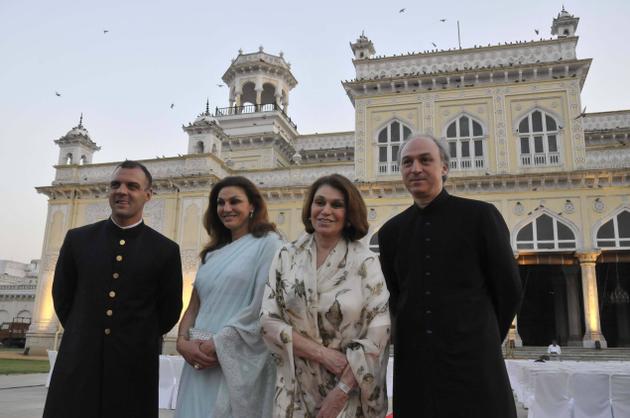
Azam Jah , Shehkar Jah, Princess Esra Jah and Azmet Jah ./ PHOTO: P.V.SIVAKUMAR

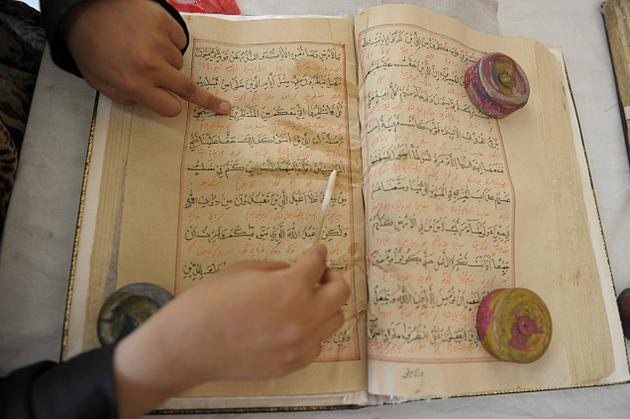
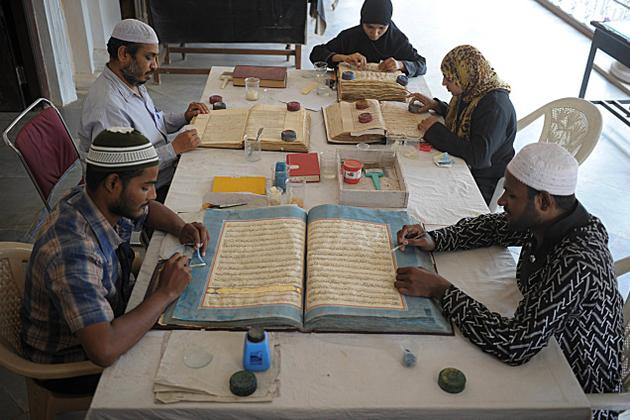
36 restored Nizam-era Qurans complete with precious gold and gem stone ink are on display at Chowmahalla

Today Chowmahalla palace will be teeming with visitors and lovers of history to see the unveiling of numerous Qurans some of which date back to early 1400 A.D. Princess Esra, of the erstwhile royal family, who has been an important part of the revival and restoration of the Qurans says, “It was a Herculean task but worth the sweat and effort. These valuable Qurans couldn’t have been let to rot in the state they were found. Once we discovered the collection we took notice of the work it needed and set out with a serious pace,” she revealed .

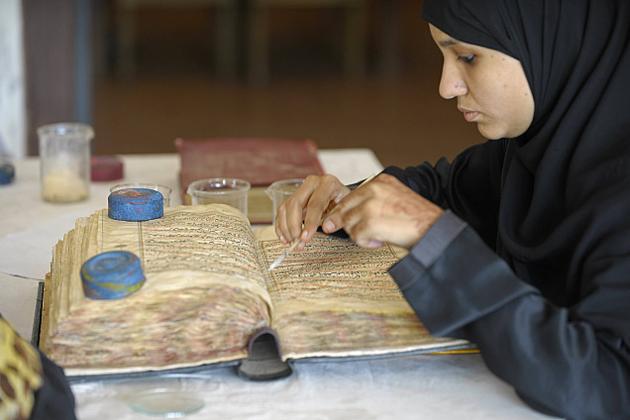
A conservator restores an antique copy of the Quran at Chowmahalla Palace in Hyderabad / AFP

Esra adds, “It’s only for the sake of culture and heritage. When I came here as a bride I was shown night pictures of the lanes and areas and I was in awe of the silenceand solitude . My mother used to tell me ‘you will know once you get there,’ and after I came to Hyderabad I realised what it meant to be a part of the royal family,” she smiled. In awe of the grandeur and the luxury as well as the love that people had for the royal family, she felt humbled. “When I returned after years to see the dilapidated state of the things I had touched and felt, including the Qurans, I was grief-stricken; I couldn’t let them rot away. I am sure even the Nizams themselves didn’t know how many of the precious holy book of scriptures they owned. When the final discovery was made, the total number of the Qurans, of all sizes, stood at 36. There are some very tiny ones as well,” she says.

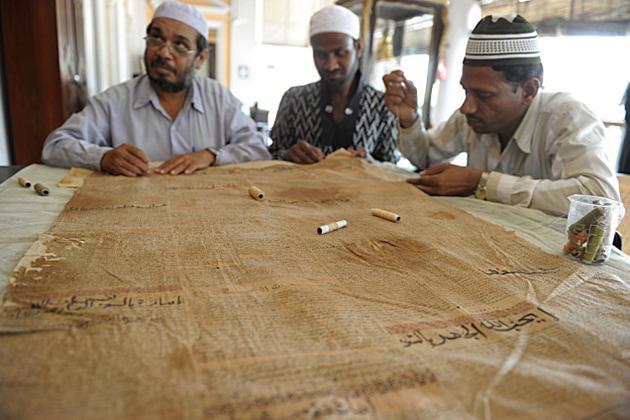
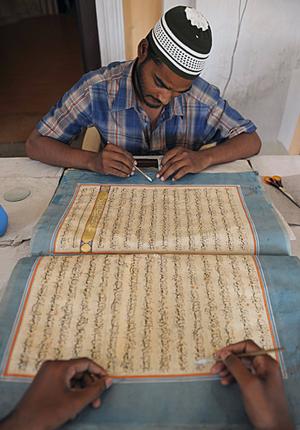
Conservators working on the antique cloth quran / AFP

Esra also speaks with pride of another cloth Quran that was found; the entire Quranwritten on cloth. The cloth’s dimensions stood at 9.5 feet x 5 feet. The Qurans are of immense value not only because of their heritage but also the quality of ink used in them. “Besides gold and silver ink, inks made from powdered gems and semi precious stones were also used. In some Qurans mother-of -pearl has also been used as ink,” informs G. Kishan Rao, director of Chowmahalla Palace.

Indian paper conservators restore antique copies of the Quran at Chowmahalla Palace / AFP
A conservator restores an antique copy of the Quran at Chowmahalla Palace / AFP
Restoration work of the Quran at Chowmahalla Palace / AFP

Since no royal item is permitted to go outside the Palace, specialists from The Indian National Trust for Art and Cultural Heritage (INTACH) have been approached. “They worked continuously for two years to revive the precious books, with Esra’s continual monitoring. The restored Qurans will be displayed in the room opposite the Council Hall in the palace,” informs Kishan Rao.

The Qurans will be unveiled by Esra and Muffakham Jah’s son at Chowmahalla Palace today.

source: http://www.thehindu.com / The Hindu / Home> Features> MetroPlus> Events / by Prabalika M. Borah / Hyderabad – February 06th, 2014

Chennai gets Hi-tech women-only autos

ChennaiAutosMPos13feb2014

ChennaiAutos2MPos13feb2014

Makkal auto or people’s auto was launched in Chennai by social entrepreneur Manzoor Ali Khan. yesterday. The unique auto, meant for women only, includes an Android tablet enclosed in a steel casing which is water, tamper, and theft resistant.

The device acts as a fare calculator and is also equipped with GPS tracking, 3G data communication with a centralised call centre and a panic button in case of emergency. In addition, passengers can pay with their credit and debit cards.

source: http://www.punemirror.in / Pune Mirror / Home> News> Pune> Nation> Story / Thursday – February 13th, 2014

Three-Day workshop on Sanjhi Mast Art from tomorrow

MysoreHuseiniMPos06feb2014

Mysore :

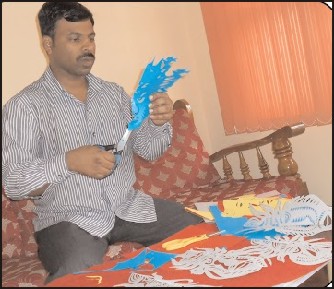
Mysore Art Gallery and Saanjhi Kala Loka have jointly organised a three-day workshop and exhibition on ‘Sanjhi Mask Art’ by artist S.F. Huseni (Mysore Huseini) at Mysore Art Gallery premises on Ramanuja road in city from tomorrow.

The programme will be inaugurated tomorrow by D. Mahadevappa, Chief Editor of ‘Prajanudi’ at 11 am.

Nirmala Matapati, Assistant Director, Dept. of Kannada and Culture and Littereteur P.M. Subramanya will be the chief guests.

A workshop and training programme on Sanjhi art will be held on Feb. 2 and those interested may register their names through Mob: 98451-53277.

The exhibition and the workshop will conclude on Feb. 3.

Artist’s Profile

S.F. Huseni (Syed Fakruddin Huseni), was born on April 15, 1976 to Syed Peer and Zeenatunnisa Bi at Shivana Samudram (Bluff) in Mandya district.

He completed his Diploma in Fine Arts, Art Master (A.M) and BFA in painting at K.P.J. Prabhu Artisan’s Training Centre (Canara Bank PRJD Trust).

Huseni, who is gifted with this art, received encouragement from his parents right from his study time. The present theme of paintings created by the artist mainly depict the theme “Home in every Heart.”

Huseni has participated in many solo exhibitions and group exhibitions besides conducting camps and is a recipient of various State Awards and scholarships. For details, log on to mysorehuseini.blogspot.com or call Mob: 98451-53277.

source: http://www.starofmysore.com / Star of Mysore / Home> General News / January 31st, 2014

3-Day Flower show at Balyatri Estate near Madikeri from tomorrow

BalaytreEstateMPos31jan2014

Madikeri :

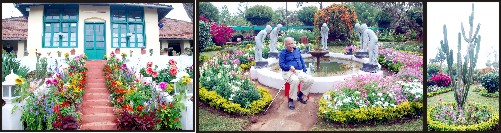
 An eye-catching flower show has been organised from Jan. 26 to Jan. 28 from 10 am to 5 pm at the Yousuf Ali Khan memorial flower garden at the premises of Balyatri Coffee Estate near Boikeri on Madikeri-Suntikoppa Road in Kodagu.

The estate belongs to former Rajya Sabha member F.M. Khan. Briefing the press on the annual flower show, Khan said that “over 90 varieties of flowers and fruits have been grown in the garden which is the only private flower garden in the country. The garden took shape about 50 years ago and for the last 15 years the flower show is being organised annually for the public. The garden houses Philia, Lorsper, Khel, kelen chus, cactus, dahlia, daisy, roses, pinks, kupia and other exotic varieties including bonsais.

He said that horticulture was bifurcated from agriculture when Indira Gandhi was the Prime Minister to boost the growth of horticulture which has not happened to the desired level yet. Continuing, he opined that Congress needed young leaders like Rahul Gandhi and Priyanka.

However he felt that Rahul should address more public rallies instead of closed-door meetings to reach the masses.

source:http://www.starofmysore.com / Star of Mysore / Home> General News / January 25th, 2014

Kalam inaugurates centenary celebrations of Pamban bridge

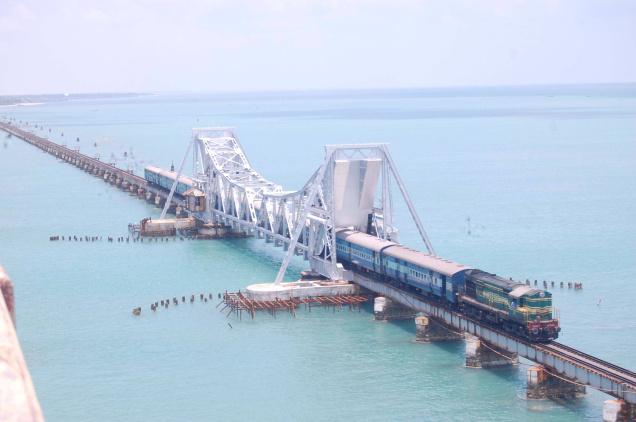
ENGINEERING MARVEL: The special train carrying former President A.P.J. Abdul Kalam at Pamban railway bridge./  Photo: L. Balachander / The Hindu
ENGINEERING MARVEL: The special train carrying former President A.P.J. Abdul Kalam at Pamban railway bridge./ Photo: L. Balachander / The Hindu

India’s first cantilever bridge connects Rameswaram with mainland

A long-time resident of Rameswaram and former President A.P.J. Abdul Kalam inaugurated the centenary celebrations of the Pamban railway bridge — India’s first cantilever bridge, connecting the pilgrim-island of Rameswaram with the mainland. He turned nostalgic as a two-coach special train took him from Mandapam across the bridge. “Pamban bridge is part of my life,” Mr. Kalam said. As a young boy, he had travelled hundreds of times on the bridge to take newspapers to the island for distribution.

Mr. Kalam unveiled a plaque and released a book Marvels of South Indian Railway, marking the inauguration of the nearly month-long celebrations.

Southern Railway General Manager Rakesh Misra said the bridge was an engineering marvel that had withstood corrosion and a violent sea for over a century. The 65.23-metre-long rolling central lift span (the bridge is 2.06 km long), named after Scherzer, German engineer who designed and built the span, has been given a fresh coat of paint and decorated with lights. It opens up like a pair of scissors to allow vessels to pass through under the bridge.

Mr. Kalam had played a vital role in preserving the bridge. After the Railways announced its uni-gauge policy in 2006, and almost gave up gauge conversion at the bridge, he brought in IIT-Madras expertise to thrash out an engineering solution.

The bridge was put to test for the first time in December 1964, when a severe cyclonic storm hit this part of the area. All girders, both RCC and steel, were washed away. Two of the 141 piers were also damaged. But, Scherzer’s span withstood nature’s fury.

source: http://www.thehindu.com / The Hindu / Home> National / by Walter Scott / Pamban – January 29th, 2014

The man who knows the carriage by heart

Feast for the eyes:Mohd. Aqib worked for days to get the carriage (right) used by President Pranab Mukherjee at Beating Retreat ceremony ready.—  / Photos: S. Subramanium & Sandeep Saxena / The Hindu
Feast for the eyes:Mohd. Aqib worked for days to get the carriage (right) used by President Pranab Mukherjee at Beating Retreat ceremony ready.— / Photos: S. Subramanium & Sandeep Saxena / The Hindu

Aqib has spent decades looking after President’s buggy

The coach will head outside Rashtrapati Bhavan for the first time in two decades on Wednesday

On Wednesday, when President Pranab Mukherjee rode out to witness the Beating Retreat ceremony at Vijay Chowk in the horse-drawn carriage, known as the President’s Coach, one man intently observed every turn of the wheel.

Mohd. Aqib, a master craftsman who has spent decades looking after the six-horse carriage, worked relentlessly for days to get the carriage ready for the President.

Familiar with every part, he knows how to clean and maintain the handcrafted leather seats and how to add shine to the gold inlay work on the wheels. The red velvet of the mounting steps has to be just right and the canopy has to open with a single tug of the hooks.

“Just as doctors read the pulse, I can feel the veins of this wood and metal carriage. For years now I have been maintaining this coach… ,” he said.

There is a team of skilled workers to help the octogenarian, but Mohd. Aqib will not trust anyone. He oversees the work with hawkish vigil and, from the repository of his memory, recalls the tiniest of detail.

MohdAqibMPos30Jan2014

Armyman to the core

“I retired from the Army in 2001, but my association with it continues and I get to work on the carriages at Rashtrapati Bhavan. I am still an obedient solider of the Army and whenever they need me I will be present. My children sometimes worry for me, but I tell them, a soldier never says no,” he laughed.

When not working on the carriages at the President’s Estate, Mohd. Aquib’s skills take him across the country to places where carriages once owned by the Maharajas await repair and restoration. “I am responsible for looking after the buggies of several royal families, including that of Vasundhara Raje, some of these carriages have been presented to the Army.”

Having worked his magic on some of the oldest and decrepit carriages, Mohd. Aqib can build a gleaming new coach in as little as three months. “My first restoration work was the carriage of the Nawab of Aligarh. He wanted me to restore the wagon so that it could be presented to the Army; he was particular that it should not be disrespected after he was gone.”

“The Maharajas and even the British officers were very particular about their carriages. They would not hesitate to spend large sums of money. The Maharaja of Patiala got a carriage made with 10 kg of silver in Paris and presented it to his daughter who was married into the Kapurthala royal clan. The coach used by the President was made from raw material procured from London and great attention was paid to ensure that it was not just beautiful, but comfortable as well. It is a rare coach with low steps for allowing women to climb in without having to raise their feet too high,” he said.

Buggy-making and maintenance is a dying art he says. Even though he is among the very few who have mastered the skill, Mohd. Aqib feels awkward negotiating a fee.

“I do it out of a sense of love and duty. It is not a trade….” The President’s Coach left Rashtrapati Bhavan for the first time in two decades on Wednesday.

Owing to security concerns, the carriage is limited to use only at Rashtrapati Bhavan.

source: http://www.thehindu.com / The Hindu / Home> National> New Delhi / by Smriti Kak Ramachandran / New Delhi – January 30th, 2014

Karnataka tableau will be Tipu Sultan and his sword

​Karnataka hopes to maintain its winning streak at the Republic Day parade

TipuMPos22jan2014

The Congress government in Karnataka will roll out the tableau of ‘Tipu Sultan—the first ruler of India to see the evil designs of the East India Company’ at the Republic Day parade.

Karnataka has been winning accolades every year during Republic Day parade. Sources in the Information Department told Bangalore Mirror that this year, it was unanimously decided to have Tipu’s battle against East India Company as the theme of the tableau. While one part reflects his valour with a life-size bust and an unsheathed sword, another part story depicts his humiliating defeat at the hands of Lord Cornwallis who took away Tipu’s two sons as captives in the Second Mysore War (1780-84).

“Tipu was one of the first rulers who saw the evil designs of the East India Company. He repeatedly said that he would rather live two days as a tiger than live 200-years like sheep. Tipu’s personality also has qualities of a good diplomat, visionary and a planner. He had a vision for missile technology and the first-ever rocket centre was set up in Srirangapatna. He had embassies with France, Amirs of Afghanistan and Sultan of Turkey and established trade contacts,” explained a source from the Information Department.

The scene that the government has recreated in the form of tableau was adopted from the painting of Brown who has pictured a lame Vakeel escorting two sons of Tipu. The children, dressed in muslin cloth with blue slashes and white turban, look towards Lord Cornwallis, reflecting a poignant moment in the history of India. The tableau also depicts Tipu’s famous sword measuring 91 cms with an impressive and ornate hilt carrying an Arabic inscription which reads ‘Sword of the Ruler’.

The state won President’s awards for its tableaux in the past four years.

source: http://www.bangaloremirror.com / Bangalore Mirror / Home> Bangalore> Others / by Niranjan Kaggere, Bangalore Mirror Bureau / January 22nd, 2014